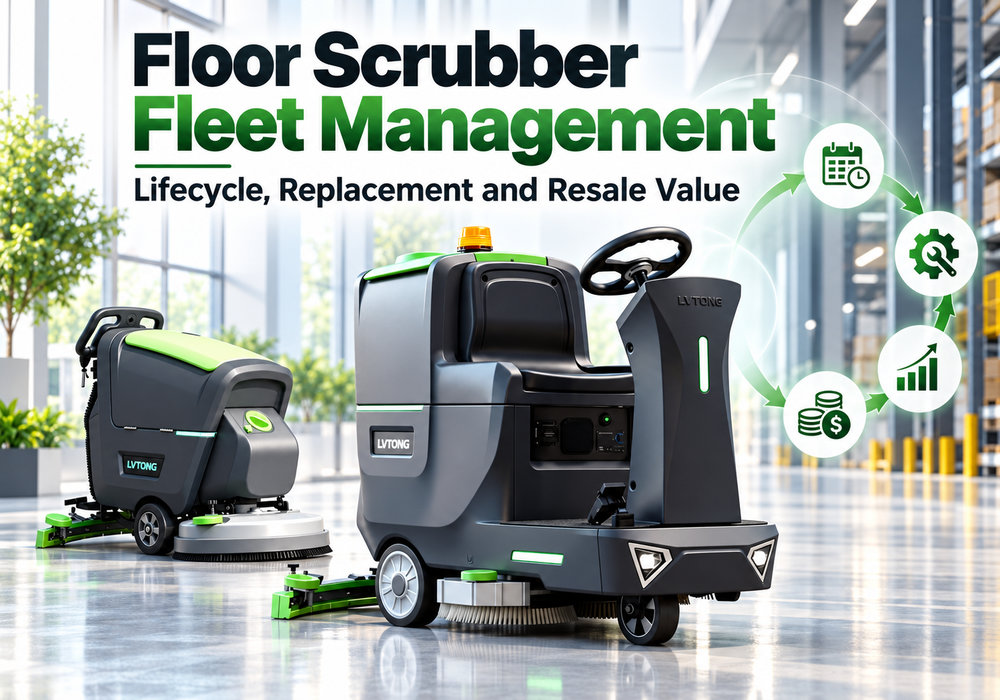
إجابة سريعة
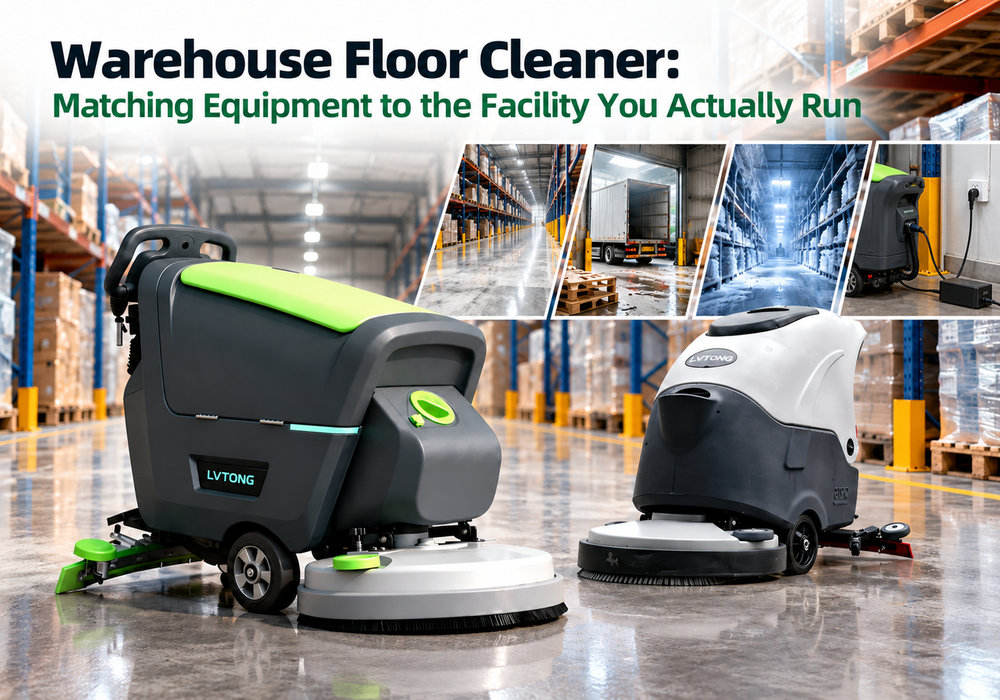
A warehouse floor cleaner is chosen by facility type before it is chosen by size — a distribution center, a manufacturing warehouse, a cold store and a fulfillment center punish the same machine in four different ways. Floor area tells you the format; the operation tells you the configuration.
- Distribution and 3PL centers — narrow cleaning windows between shifts; dock grit and pallet debris favor high-capacity ride-on work at night.
- Manufacturing warehouses — oil, swarf and mixed debris demand pre-sweeping, tough squeegees and a compliant wash-water route.
- Cold storage — sub-zero floors challenge batteries, hydraulics and squeegees; confirm low-temperature specifications with the manufacturer in writing.
- Fulfillment centers — cleaning must coexist with constant picking: zone-by-zone rotation, not shutdowns.
Below: the three constraints every plan shares, five facility profiles with configuration routes, and a six-line checklist to send suppliers.
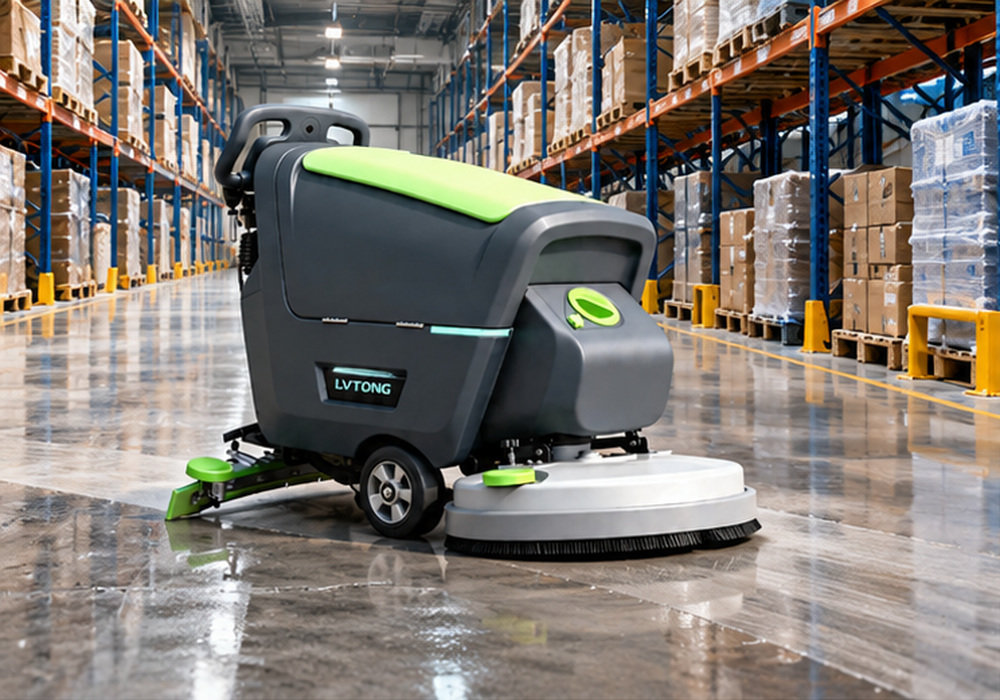
Why Facility Type Beats Square Meters in Equipment Decisions
Two warehouses with identical floor areas can need completely different machines — the operation run inside them, not the square meters, decides the configuration.
Most buying guides stop at size, aisle width and floor material, and our دليل تنظيف أرضيات المستودعات covers that geometry in depth. But export buyers rarely fail on geometry — they fail on operations. A machine specified for a quiet storage hall gets stranded in a 3PL hub that never stops receiving; a standard setup corrodes its squeegees in a plant where coolant drips off returning pallets. Choosing a warehouse floor cleaner by facility type is the step that prevents both outcomes, and it comes before any coverage calculation.
The Three Constraints Behind Every Warehouse Cleaning Plan
Every warehouse cleaning plan balances three constraints — floor area against shift structure, and the contamination the operation produces — and each constraint eliminates certain configurations early.
| قيد | The question it answers | How it reshapes the configuration |
|---|---|---|
| Area × shift structure | Which windows exist, and how long do they stay open? | Decides walk-behind vs ride-on, and whether one machine can double up |
| Contamination profile | What lands on the floor — dust, grit, oil, or all three? | Decides sweeping first vs scrubbing first, brush choice, squeegee material |
| Operation rhythm | Can cleaning pause operations, or must it weave around them? | Decides machine noise, water logistics and whether cleaning runs zone-by-zone |
Write the three answers down before comparing models. They are also the first thing a serious supplier will ask for, because a warehouse floor cleaning machine specified without them is a guess wearing a part number.
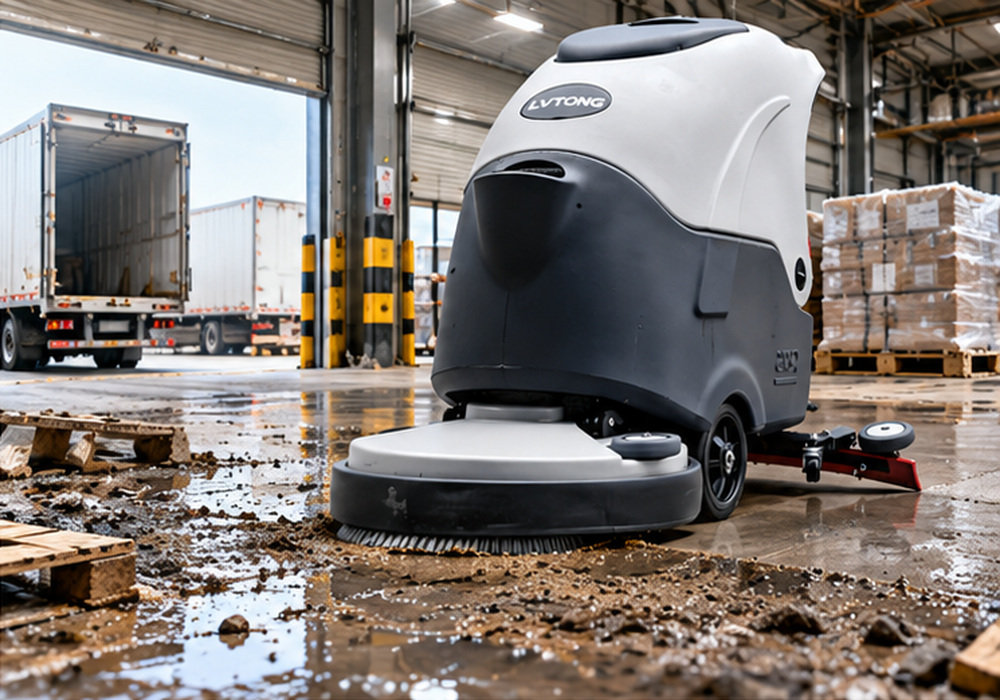
Distribution and 3PL Centers: Cleaning in Narrow Windows
In 24-hour distribution, cleaning does not get its own shift — it gets the 30-minute gaps between them, so capacity and water logistics decide everything.
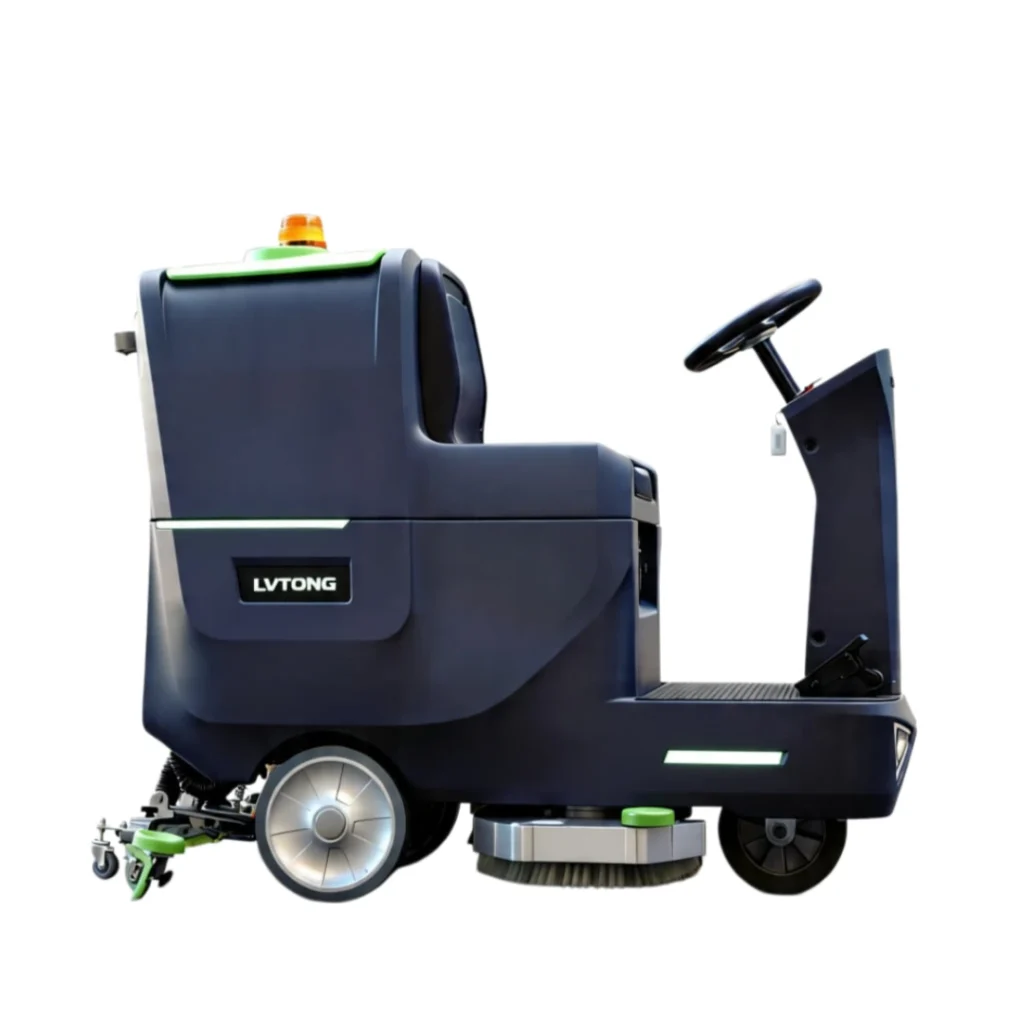
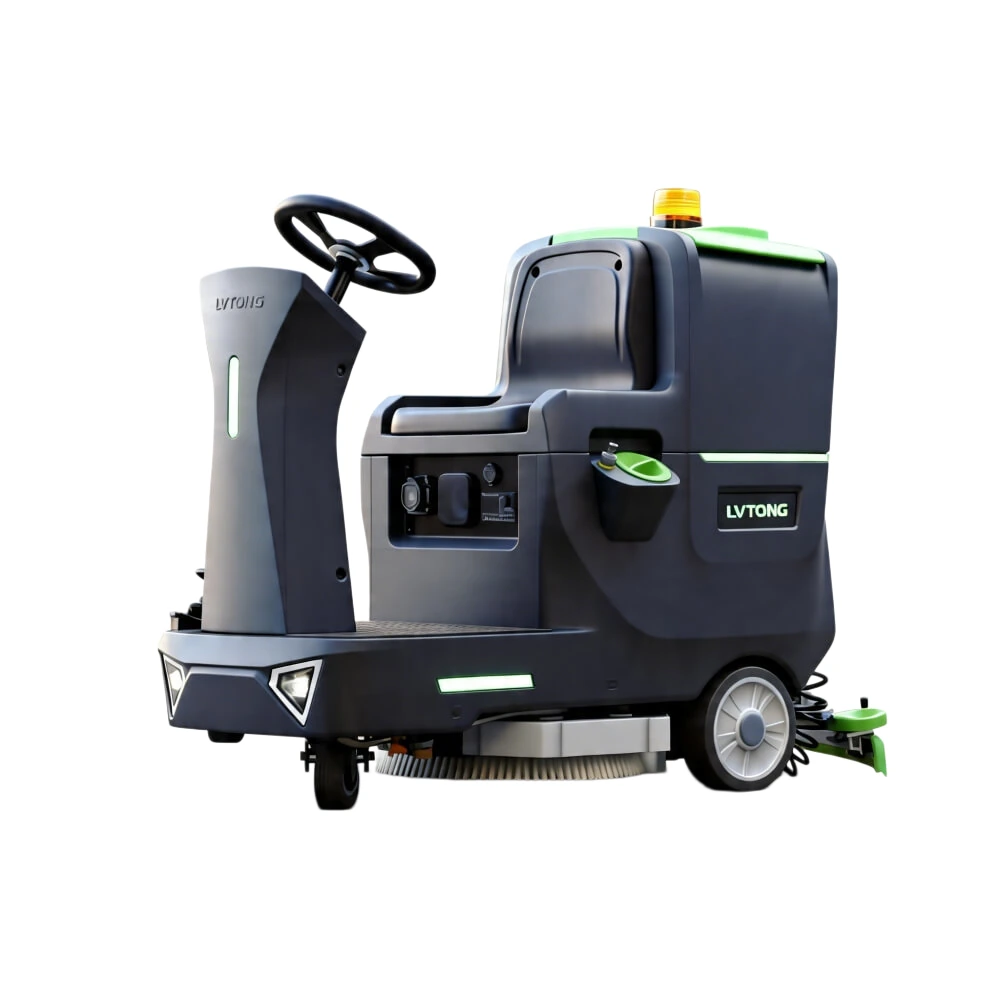
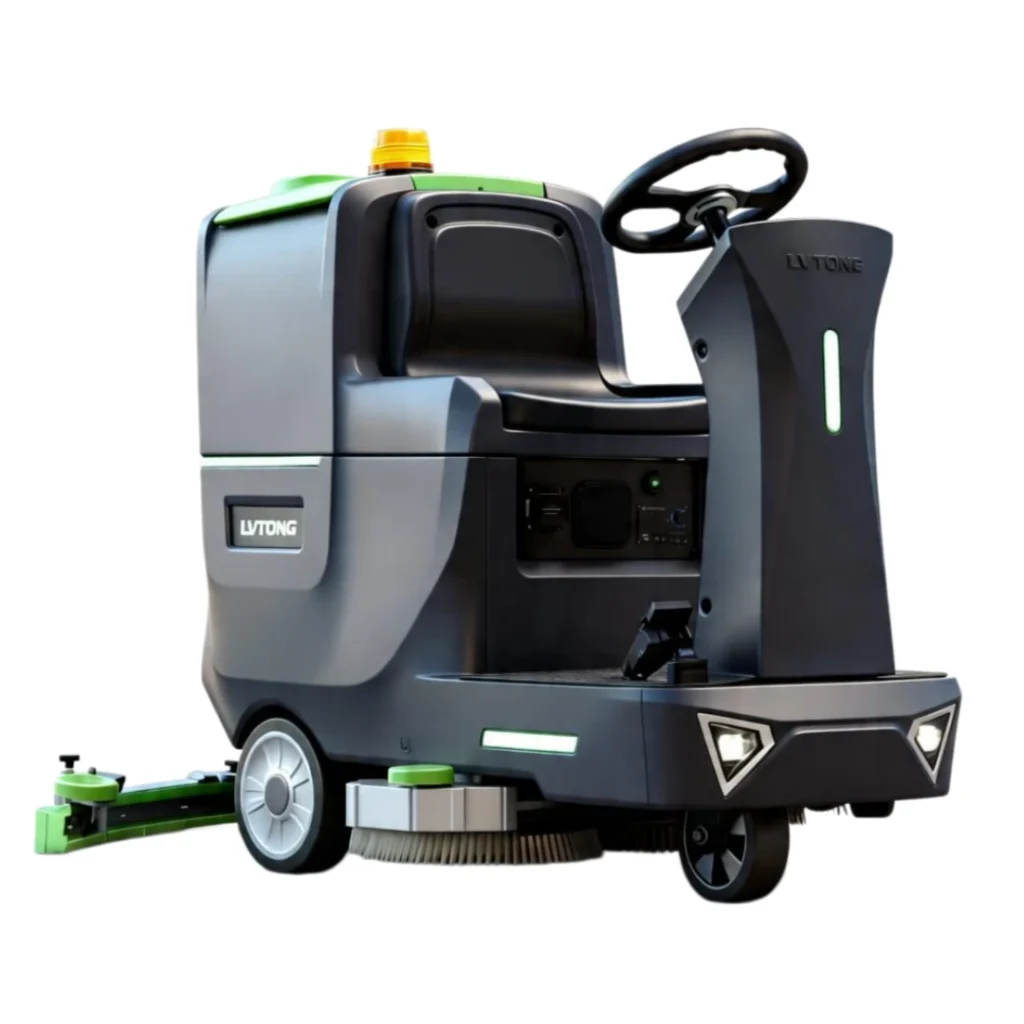
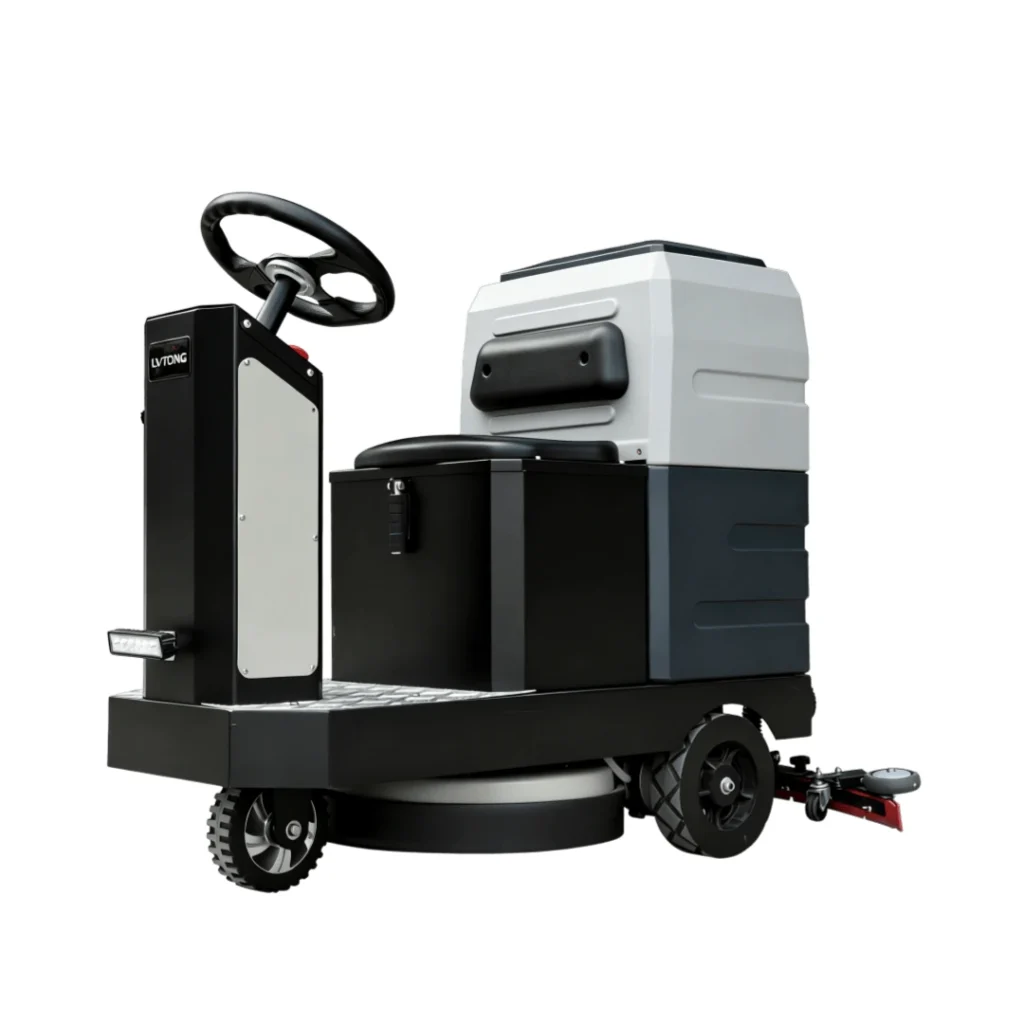
Dock areas drag in sand and rainwater with every trailer, and pallet traffic sheds wood splinters and cardboard dust along the main aisles. The work splits naturally: dry debris first, wet scrubbing second. That is why warehouses at this pace often run a warehouse sweeper in one pass and a scrubber behind it, or specify warehouse floor sweepers and scrubbers for different shifts entirely. The configuration test is simple: can one machine cover the scrubbing area inside the longest window between the last trailer and the first? Ride-on machines exist precisely for this math — a V6-class scrubber’s rated output covers a mid-size hub’s aisles in a night window where a walk-behind machine would still be mid-facility. Water logistics are the second half of the answer: refill and dump points placed on the cleaning route, not at its far end, are what keep the window from evaporating into fill-and-drive time.
Manufacturing Warehouses: Oil, Swarf and Mixed Debris
Oil film and metal chips break standard cleaning setups in two places — the squeegee that must pick up oily water and the disposal route that must accept it legally.
Where production feeds the warehouse, the floor collects cutting fluid mist, hydraulic drips, metal swarf and packaging debris in the same square meters. A standard squeegee blade rides over oil film and leaves it behind; a soft pad loads up with swarf in minutes. Configurations that hold up here share three traits: a pre-sweep or heavy-duty brush pass before scrubbing, abrasion-tolerant squeegee liners, and a wash-water route that treats oily water as what it is — process wastewater. Draining it to a storm drain is illegal in most jurisdictions; settling and approved discharge routes under programs such as نظام التصريف الوطني للملوثات التابع لوكالة حماية البيئة are the reference point for US-bound operations. Budget extra squeegee and brush consumables from day one — in mixed-debris plants they are wear items, not accessories.
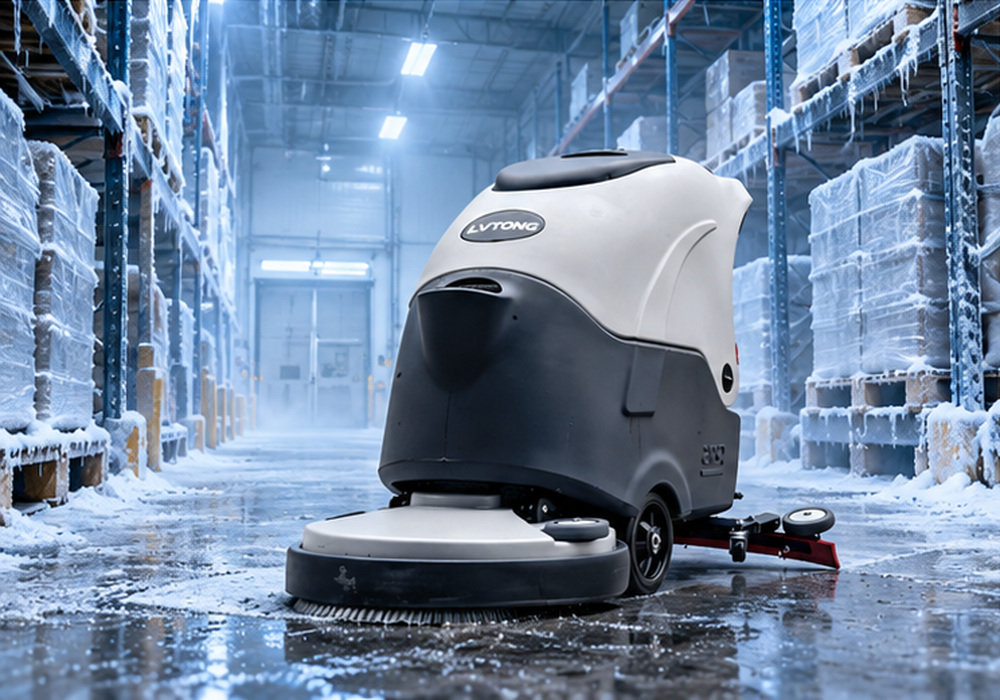
Cold Storage and Freezer Facilities: Cleaning Below Zero
Sub-zero operation is a specification question, not a willpower question — batteries, hydraulics, squeegee rubber and floor condensation each behave differently below freezing, and the manufacturer must confirm all four in writing.
Cold stores concentrate failure modes. Lithium batteries lose usable capacity in deep cold; hydraulic and pump oils thicken; squeegee rubber goes rigid and stops sealing; and moisture migrating through the slab condenses into a thin ice film that defeats suction. None of these are deal-breakers — they are specification items. Ask the manufacturer explicitly for low-temperature ratings on battery, pump and squeegee components, and for the minimum operating temperature of the whole machine. Charging deserves its own discipline: batteries are charged in a warmed area, never in the freezer aisle, and charging-station fire protection follows recognized fire-code bodies such as NFPA. Where floors stay wet near docks and anterooms, traction-rated surfaces documented by bodies like the المعهد الوطني لسلامة الأرضيات matter as much as the machine itself — a clean cold-store floor that is also an ice rink has failed the operation.
E-Commerce Fulfillment Centers: Cleaning Around Constant Picking
A fulfillment floor never pauses, so the cleaning plan must rotate around picking — zone by zone, in short blocks, with machines small enough to yield to pedestrians.
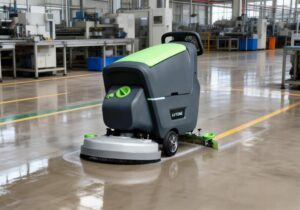
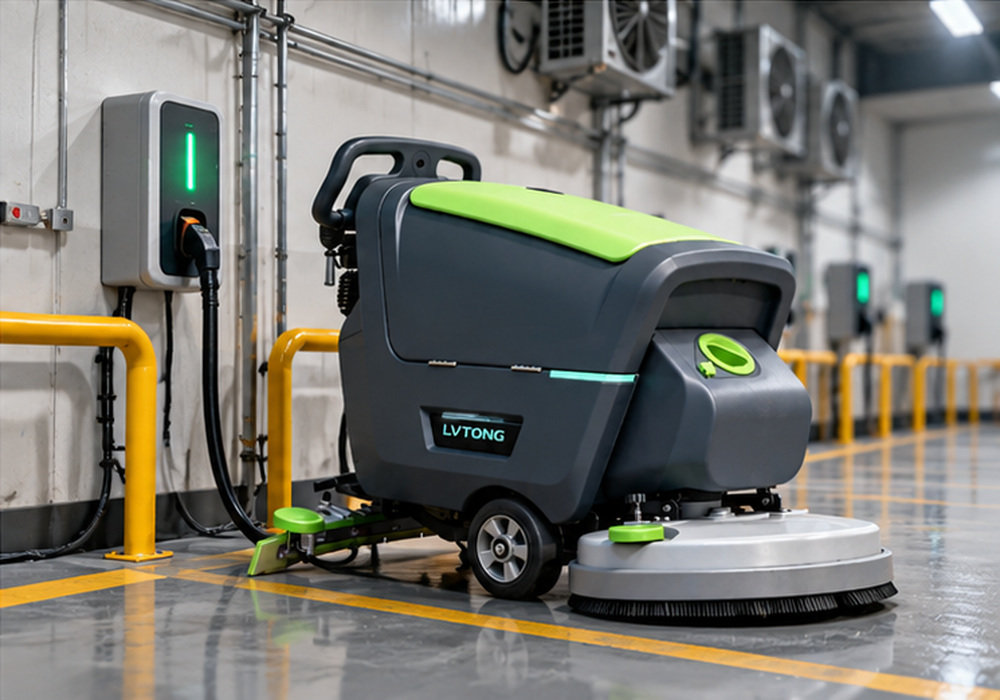
Fulfillment operations run pick faces around the clock and treat every aisle closure as lost throughput. The working pattern is rotational: clean one zone while its pickers are scheduled elsewhere, keep a compact machine that can clear an aisle on short notice, and confine heavier ride-on work to genuine gaps. Cardboard dust is the signature contaminant — it loads brushes fast, so brush inspection moves from weekly to daily. Machine choice leans compact for exactly this reason: a walk-behind unit such as the LVTONG LT-S530X warehouse floor cleaning machine, with a 50 cm body width and a 2,100 m²/h rated output, can service pick-face zones that a ride-on machine would dominate all night. The trade-off is honest: compact machines buy access with capacity, which is why fulfillment centers often pair one compact unit for dense zones with a rider for the bulk aisle network.
Aging and Multi-Tenant Warehouses: Retrofit Realities
Older buildings rarely lack floor problems — they lack power, water and level surfaces, and the retrofit list is what actually determines which machine works there.
Stock-age buildings bring three predictable constraints. First, electrical: charging infrastructure competes with legacy loads, and the circuit math — charger draw against available supply — belongs in the order conversation, as covered in our voltage and plug configuration guide. Second, the slab itself: decades of traffic leave worn, dusty concrete, and the surface condition deserves a professional assessment before machine commitments — guidance from bodies such as the المعهد الأمريكي للخرسانة applies to existing-slab evaluation. Third, geometry: mezzanines, ramps and older lifts limit machine weight and turning radius in ways new builds do not. A warehouse cleaning machine specified for a retrofitted building is chosen as much by its charging footprint and weight as by its cleaning path — and multi-tenant sites add one more filter, because cleaning hours are negotiated with neighbors, not set by a single operator.
One Machine or Two: Building the Cleaning Combination
Most warehouses above a few thousand square meters end up with a combination, not a single machine — the real decision is how sweeping and scrubbing divide the shifts.
| Combination | How it works | Fits when |
|---|---|---|
| Single scrubber, pre-swept by hand | One machine, dry debris removed manually first | Under ~2,000 m², light debris, tight budget |
| Sweeper + scrubber, same shift | Dry pass clears grit, wet pass follows | Heavy dust plus wet soil, windows of 2+ hours |
| Sweeper + scrubber, split shifts | Night crew sweeps, day crew scrubs (or reverse) | 24/7 operations with no single long window |
| Compact walk-behind + ride-on pair | Compact serves dense zones, rider serves bulk aisles | Fulfillment layouts with mixed aisle geometry |
Where a single combined machine tempts, compare honestly against the two-machine route — our sweeper-scrubber combination guide dissects that trade at machine level, and our industrial sweeper-scrubber decision guide maps the debris conditions that justify each. As a rule of thumb, warehouse scrubbers pay for themselves once wet soil dominates; a standalone warehouse sweeper machine wins where dry debris is the whole problem, and warehouse floor sweepers are usually the first machine a growing operation buys. The combination table is also a procurement tool: it tells a supplier which two specifications you need quoted together, and where the machines can share chargers, consumables and storage.
A Six-Line Configuration Checklist for Your Warehouse
Six lines, sent to suppliers as written, eliminate most back-and-forth — and expose vendors who quote before they understand the facility.
| # | خط | What to state |
|---|---|---|
| 1 | Facility type and layout | Distribution / manufacturing / cold store / fulfillment; dock count, aisle widths, mezzanines |
| 2 | Area and shift structure | Total m², cleaning windows, number of passes expected per 24 h |
| 3 | Contamination profile | Dominant debris (cardboard dust, grit, oil, swarf), wet vs dry share |
| 4 | Power and water points | Charging location and circuit capacity; refill/dump point positions on the route |
| 5 | Environmental limits | Lowest floor temperature; ventilation; any food-grade or ESD requirements |
| 6 | Consumables and support | Brush/squeegee wear rate expectation, spare-part lead times, training |
A supplier who answers these six lines with specific machine recommendations — and asks follow-up questions about the two or three answers that matter most — is worth shortlisting. A supplier who replies with a brochure has answered a different question. If you want the six lines reviewed against your floor plan, send them to our configuration team with the facility profile, and we will return a machine and consumable plan matched to the operation you actually run.
الأسئلة الشائعة
What is the best warehouse floor cleaner for a large distribution center?
For wet-scrubbing duty in narrow night windows, the best warehouse floor cleaner is a ride-on scrubber sized to the longest aisle run — verified against the facility’s real coverage window, not brochure output. Pair it with sweeping capacity if dock grit and pallet debris are heavy.
Can one machine handle both dust and wet soil in a warehouse?
Combined sweeper-scrubber machines exist, but on mixed debris they force compromises in both passes. Two machines — a warehouse sweeper for dry work and a scrubber for wet — usually clean better and wear slower for comparable investment.
Are lithium battery warehouse scrubbers suitable for cold storage?
Only when the manufacturer confirms low-temperature ratings for the battery, pumps and squeegee assembly in writing. Charging always takes place in a warmed area, and condensation on the slab must be managed separately from machine specs.
How do I clean a fulfillment center without stopping picking operations?
Rotate by zone against the pick schedule, use a compact walk-behind machine for dense pick faces, and reserve ride-on work for true gaps. Brush checks move to daily because cardboard dust loads brushes quickly.
What should I check before buying a used warehouse cleaning machine?
Battery health first, then squeegee and brush wear — the two consumable systems that reveal how hard the machine actually worked. The full pre-purchase inspection is covered in our used-equipment checklist.