Wood floors show up in more commercial buildings than most buyers expect — hotel lobbies, boutique retail, office reception areas, event halls, and upper floors of mixed-use properties. They also fail faster than any other hard floor when cleaned with the wrong equipment. Too much water, the wrong brush, or a machine set for concrete can turn a sealed wood floor into a cupped, cloudy repair job within weeks.
Kurzantwort
A floor scrubber can be used on hardwood floors — but only on sealed wood, and only with the right configuration.
- Sealed hardwood only. Pass the water bead test first; never machine-scrub unfinished, waxed, or oil-finished wood.
- Safe configuration: soft brush or white pad, minimum brush pressure, low water flow, and squeegee pick-up that leaves the floor dry within seconds.
- Best machine type: a compact or walk-behind scrubber — 50–530 mm widths with adjustable brush settings cover lobbies and corridors without the weight of a ride-on unit.
- Before full deployment: run a 2 × 2 m test patch and re-inspect the floor at 24 and 48 hours to protect the finish and the warranty.
Full specifications, the step-by-step first-pass protocol, and machine matching follow below.
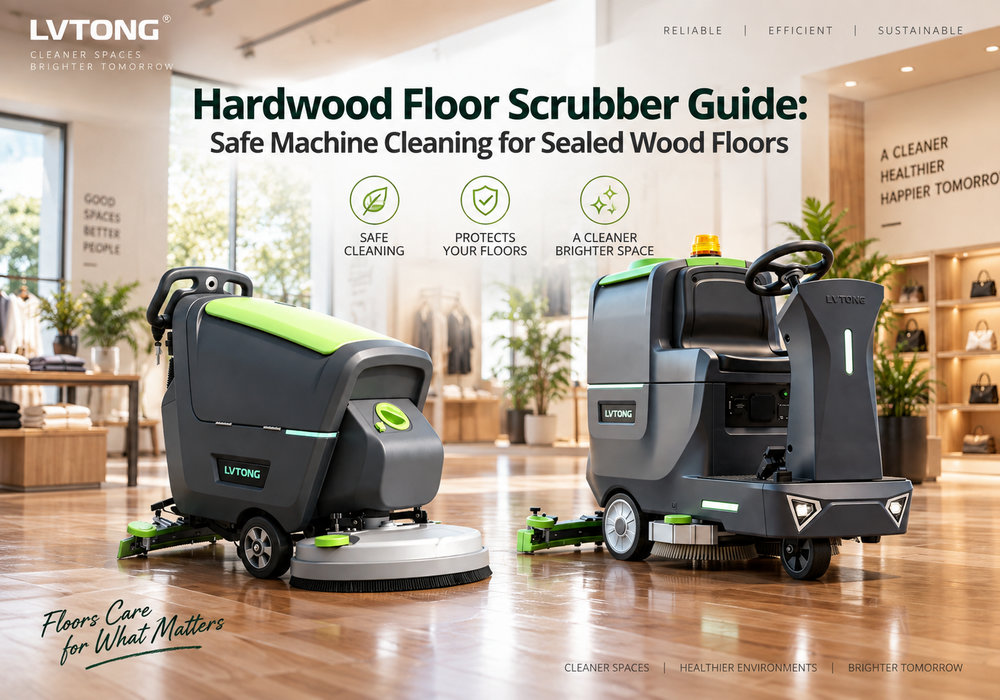
Can You Use a Floor Scrubber on Hardwood Floors?
Yes — on sealed hardwood only, with a soft brush or pad, reduced water flow, and immediate pick-up. On unfinished or wax-finished wood, machine scrubbing is not safe, and no walk-behind or ride-on scrubber changes that.
That single distinction — sealed versus everything else — decides whether a hardwood floor scrubber is an investment or a liability. The care principles referenced here follow guidance from the National Wood Flooring Association, whose technical resources are the reference standard for commercial wood floor maintenance.
Sealed vs. Unfinished Hardwood: The Line That Decides Everything
Drop a bead of water on the floor. If it beads up after 60 seconds, the seal is intact and machine cleaning is on the table. If it soaks in and darkens the wood, stop — that floor needs a dry or solvent-based method, not a water-based machine.
Most wood floors installed in commercial buildings after the 1990s carry a factory-applied polyurethane or aluminum-oxide finish. These surfaces tolerate water briefly as long as it is not left standing. Unfinished wood, wax, and oil finishes behave the opposite way: they absorb moisture, and once water gets into the grain, damage shows up as dark spots, raised grain, and cupped boards that only refinishing can fix.
| Bodenbeschaffenheit | Water bead test | Machine scrubber | Anmerkungen |
|---|---|---|---|
| Polyurethane / aluminum-oxide sealed | Beads, no darkening | Yes, with soft brush or pad | Confirm seal age; recoated floors qualify |
| Recently recoated (1-part refresh coat) | Beads | Yes, after full cure | Wait for manufacturer cure time before wet cleaning |
| Oil-finished | Partial absorption | No wet scrubbing | Needs oil-specific maintenance program |
| Wax-finished | Soaks or spotty | Nein | Wax spreads and smears under water; strip-and-wax only |
| Unfinished / raw wood | Soaks immediately | Nein | Refinishing crews handle these; not a cleaning task |
What Water, pH, and Pressure Do to a Wood Floor
Three parameters damage sealed hardwood: standing water, high-alkaline chemistry, and aggressive brush pressure. A machine configured for tile or concrete can exceed all three limits in a single pass.
Water is the obvious one. A scrubber that leaves a wet film because its squeegee or pick-up lags behind the brush deposit is failing the floor even when the operator never sees a puddle. Chemistry is quieter: many industrial degreasers sit at pH 10 or higher, and high-alkaline products attack polyurethane finish, dulling it pass by pass. Pressure is the least visible — a stiff nylon brush set for grout lines will burnish marks into softwood species like pine that look like scuffs and never buff out.
For buyers, the practical translation: the specification sheet matters more here than for almost any other floor type. Einstellbarer Bürstendruck, soft brush or pad options, Und suction that keeps pace with brush delivery are the three lines to check before anything else.
Which Machine Types Work on Hardwood
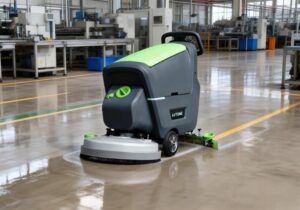
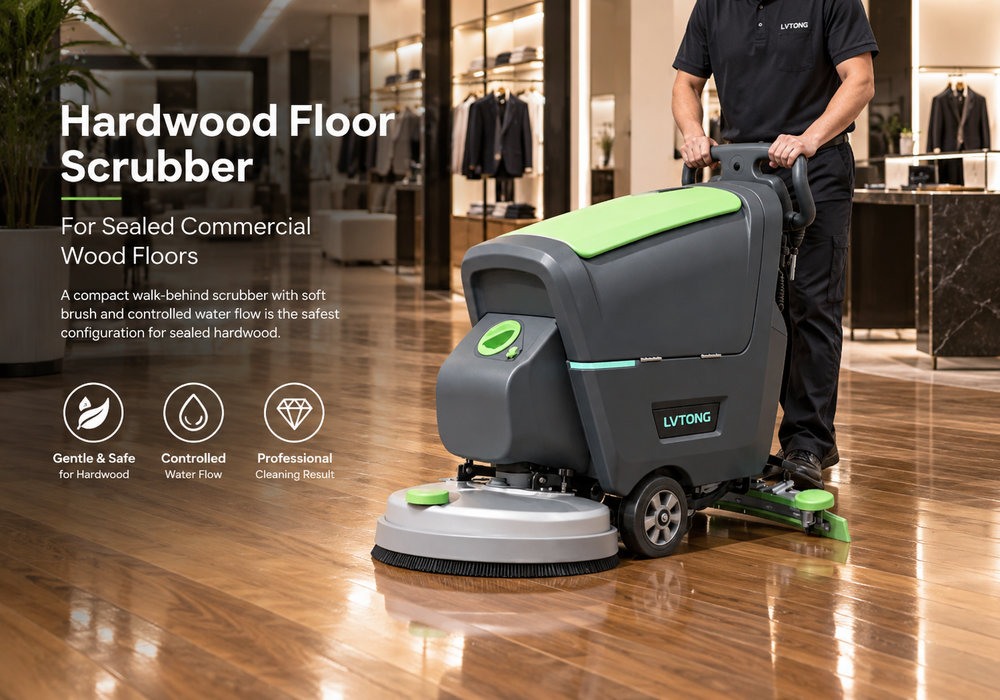
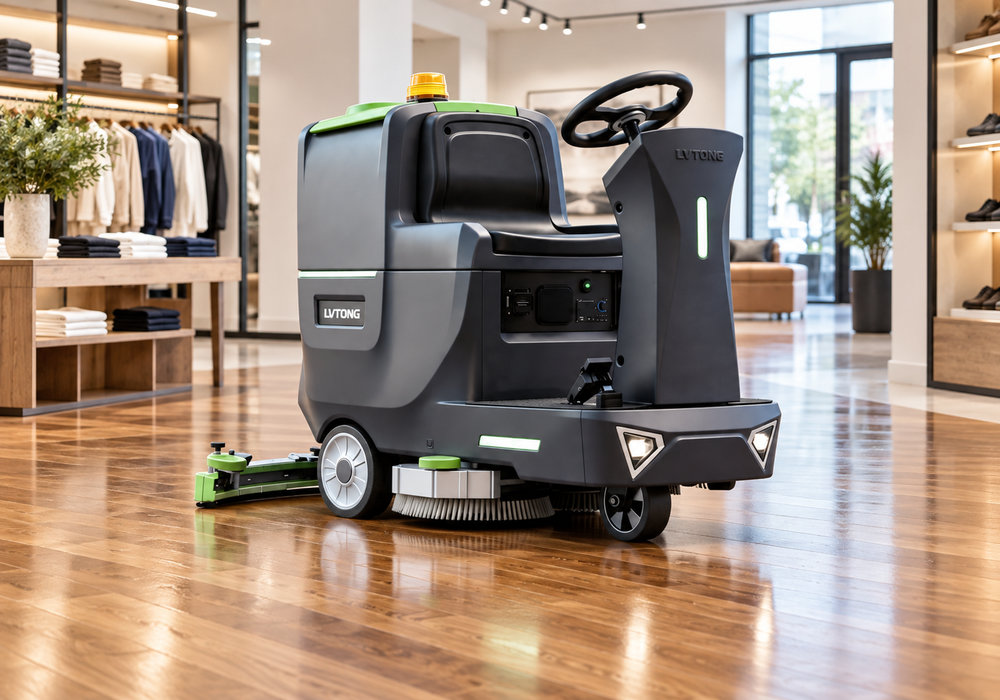
Compact and walk-behind machines are the default choice for wood floors. Ride-on scrubbers belong on sealed hardwood only in wide, open areas with low-obstacle layouts — their weight makes them a poor match for narrow wood-floored spaces.
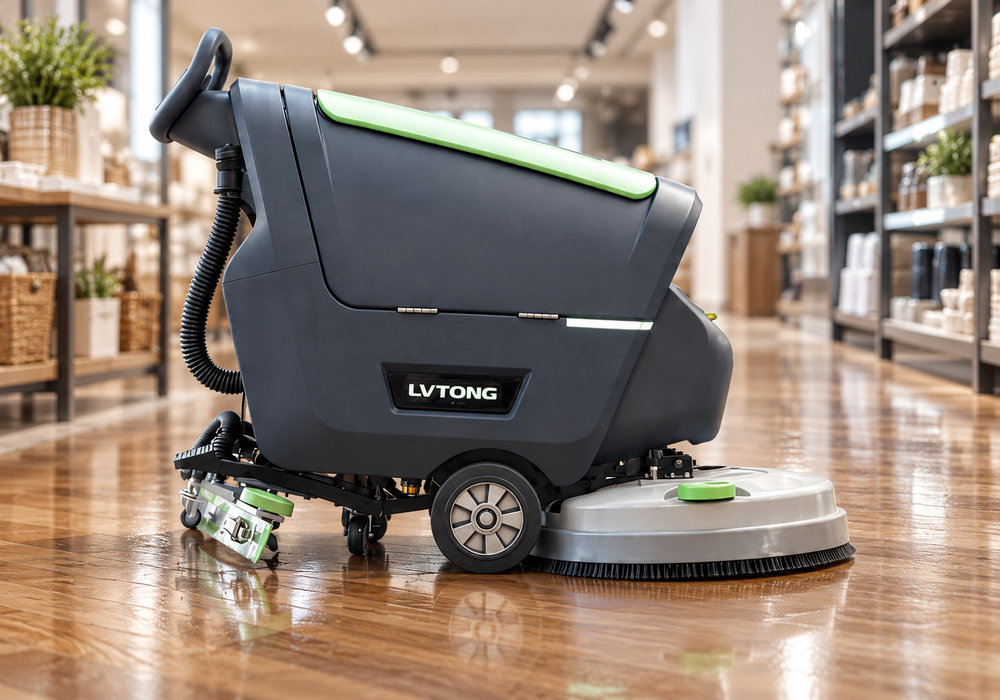
A commercial hardwood floor cleaner in machine form is usually a compact walk-behind unit. Smaller machines carry less water, which caps the worst-case damage if something goes wrong, and their lighter weight keeps point-load stress on the finish low. They also fit the spaces where wood floors actually live: lobbies, corridors, retail aisles.
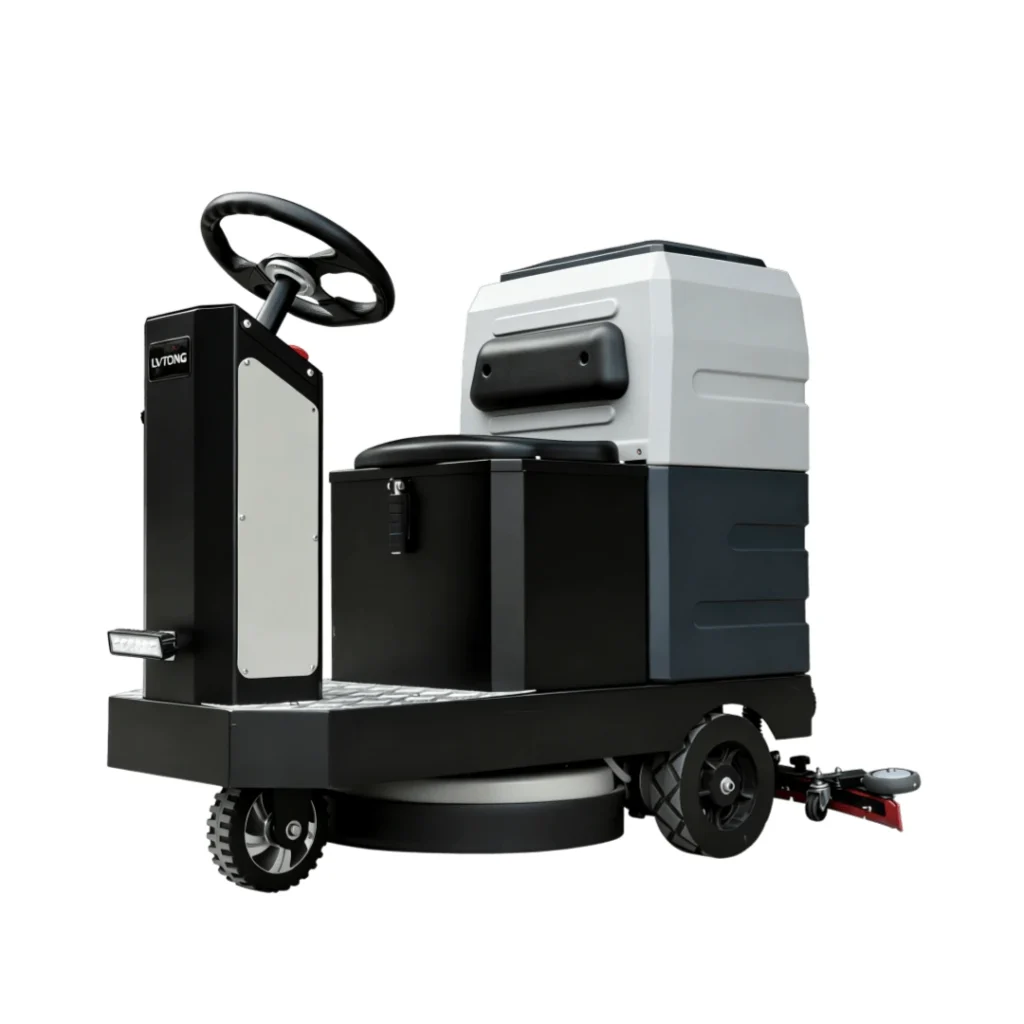
Ride-on machines change the math. Their tanks and operator stations add weight, and their scrub widths are built for square meters, not narrow wood runs. If a facility has both concrete warehouse floor and a wood-floored front area, the right answer is usually two machines or one machine used in different configurations — not one ride-on unit for everything.
Specifications to Check Before You Buy
Four specification groups decide whether a hardwood floor cleaning machine is safe: brush system, water delivery and recovery, weight, and chemistry compatibility.
Bürstensystem
Look for machines that ship with or accept soft nylon brushes or white pads, and that let the operator adjust brush pressure downward. The Q5 walk-behind auto scrubber, for example, uses an adjustable brush disc component whose angle and height are set for different floor types — exactly the kind of configuration range a wood floor needs, paired with a 50 cm cleaning width that fits retail and lobby layouts.
Water delivery and recovery
Smaller solution flow with strong vacuum recovery beats large tanks on wood. The LT-S530X walk-behind scrubber pairs a 62 L solution tank with a 65 L recovery tank and a curved squeegee system designed for close-edge pickup — the recovery tank being equal or larger than the solution tank is the detail that matters, because it means the machine is built to pick up what it puts down.
Weight and power
Lithium battery machines hold consistent suction across the full runtime instead of fading as voltage drops, which matters when the last 20 minutes of a shift are still over wood floors. Both Q5 and LT-S530X run lithium options with roughly four to five working hours, enough for a lobby-and-corridor circuit on one charge.
| Spec line | Q5 | LT-S530X |
|---|---|---|
| Reinigungsbreite | 50 cm | 530 mm |
| Reinigungseffizienz | 2,100 m²/h | 2,100 m²/h |
| Lösungs-/Rückgewinnungstank | Compact layout | 62 l / 65 l |
| Working time | ~4 h | 3–5 h |
| Batterie | Lithium | 24V 100Ah lithium or lead-acid |
| Brush configuration | Adjustable disc (angle + height) | High-density disc brush |
First-Pass Test Protocol Before Full Deployment
Run every new machine on a 2 × 2 meter inconspicuous area first — behind a reception desk, not the main aisle. Check the floor again after 24 and 48 hours before committing to a full schedule.
- Confirm the seal. Water bead test on at least three spots, including the oldest and most walked area of the floor.
- Dry sweep or vacuum first. Grit under a brush acts like sandpaper regardless of brush softness.
- Set minimum pressure with a soft brush or white pad, and use a neutral cleaner (pH 6–8) diluted per label.
- Run at walking speed with overlap, watching the squeegee line — the floor behind the machine should be visibly dry within seconds.
- Inspect at 24 and 48 hours. Any cloudiness, hazing, or dulling means the configuration is wrong: lower pressure, softer pad, less water, or stop and call the finish manufacturer.
Mistakes That Damage Hardwood (and Warranties)
The five costliest mistakes: using the machine on unconfirmed seal, high-alkaline chemicals, stiff brushes, letting solution pool at edges and transitions, and skipping the test patch.
Wood floor finish warranties almost universally exclude water damage and chemical damage — which are exactly the two failure modes of a misconfigured scrubber. That makes operator training part of the equipment decision, not an afterthought. Facilities that skip the test patch routinely discover the problem only after the machine has covered thousands of square meters, by which point the dulling pattern is visible everywhere and the repair is a full recoat.
Edge and transition zones deserve special mention. Doorways, floor registers, and wood-to-tile transitions concentrate water where wood is most exposed. Operators should lift the squeegee or shut off solution flow when approaching these zones — a habit worth rehearsing during training, not discovering during a warranty dispute.
Hardwood Compared with Concrete and Tile Cleaning
Hardwood sits at the sensitive end of the hard-floor spectrum: same machine category as concrete and tile, but the tightest limits on water, chemistry, and pressure.
If your facility manages mixed floor types, it helps to see the limits side by side. Concrete tolerates high pressure and aggressive chemistry — the step-by-step concrete floor scrubbing guide covers settings that would ruin wood in one pass. Tile sits in the middle, with grout lines needing pressure that hardwood must never see. Hardwood asks for the least aggressive configuration of the three, which is why a compact machine with adjustable settings earns its place in mixed-floor facilities.
For a worked example of how one machine maps onto different floor conditions at commercial scale, see how walk-behind scrubbers are matched to small and medium facilities — the sizing logic there applies to wood-floored front-of-house areas as much as to back corridors.
Matching a Machine to Your Facility
Wood floor under 2,000 m² or fragmented into rooms and aisles → compact walk-behind. Mixed facility with wide sealed wood areas → walk-behind for wood plus a separate machine for hard-service floors.
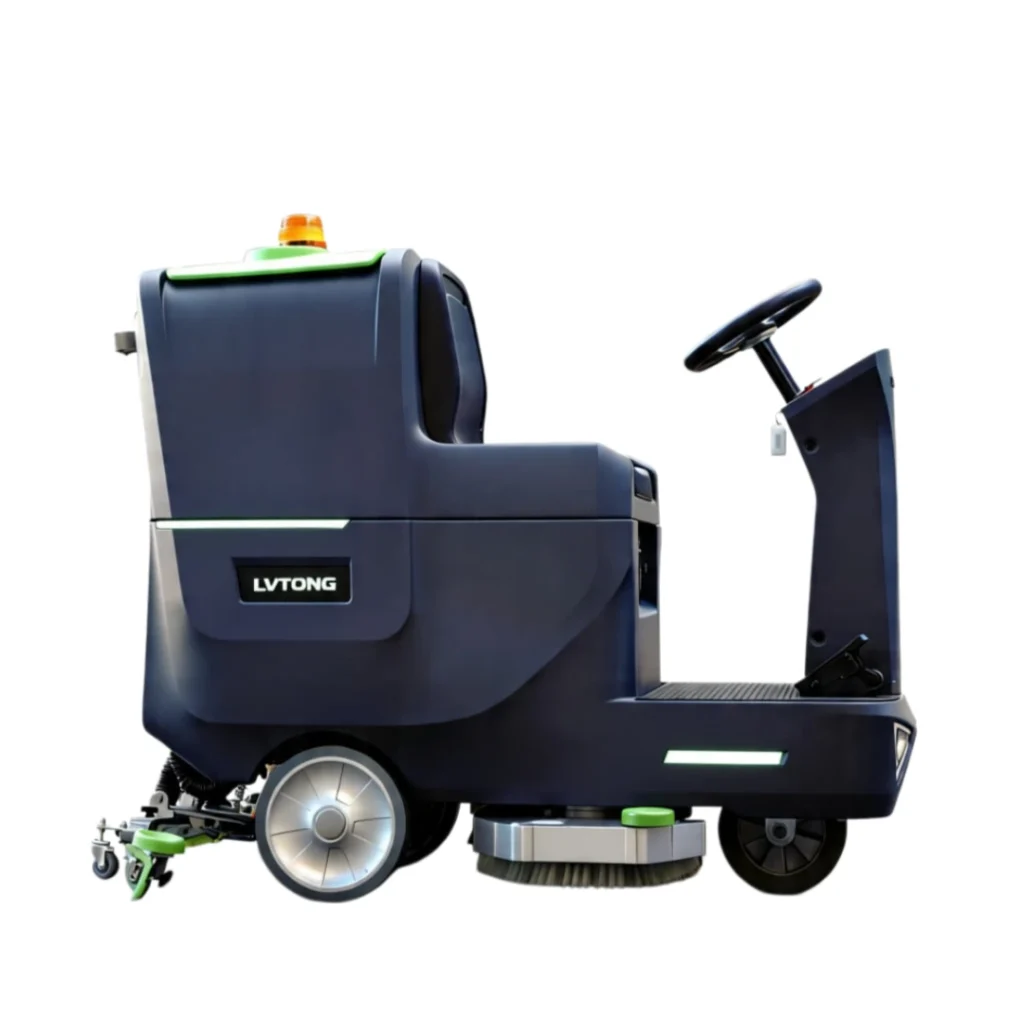
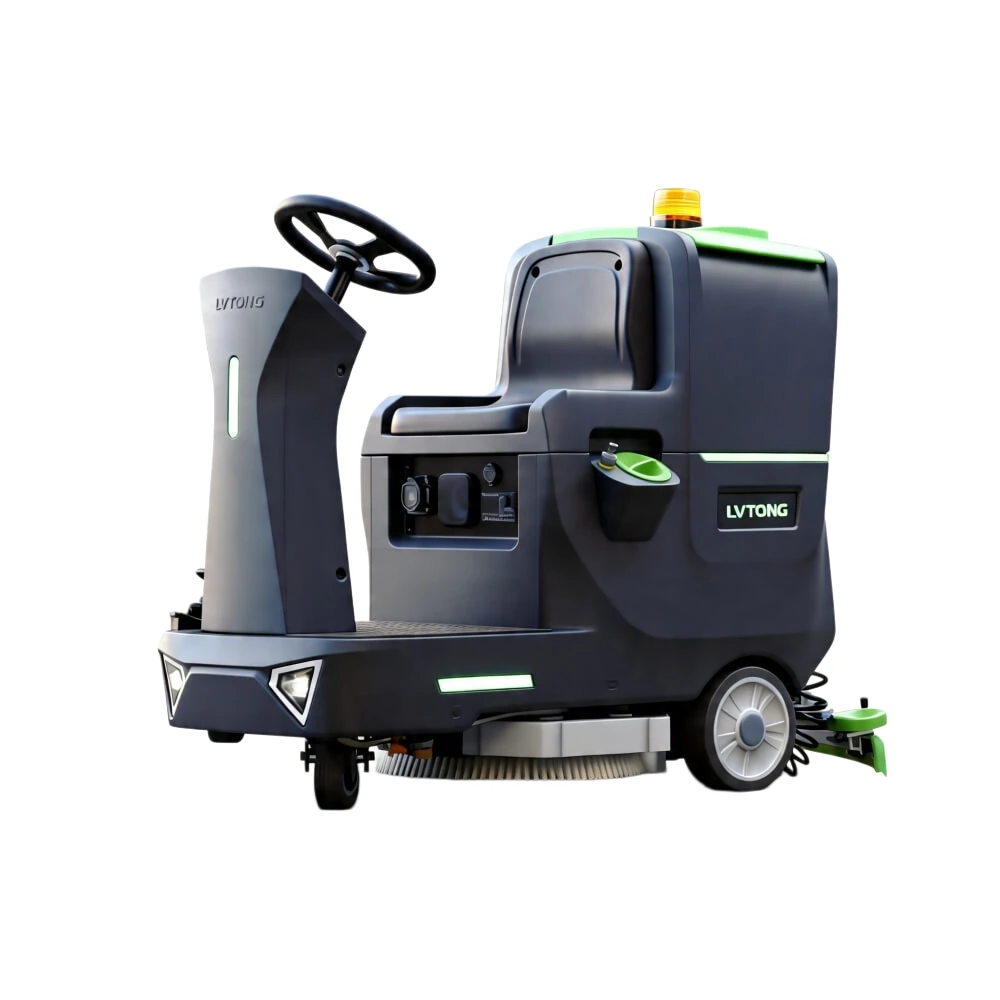
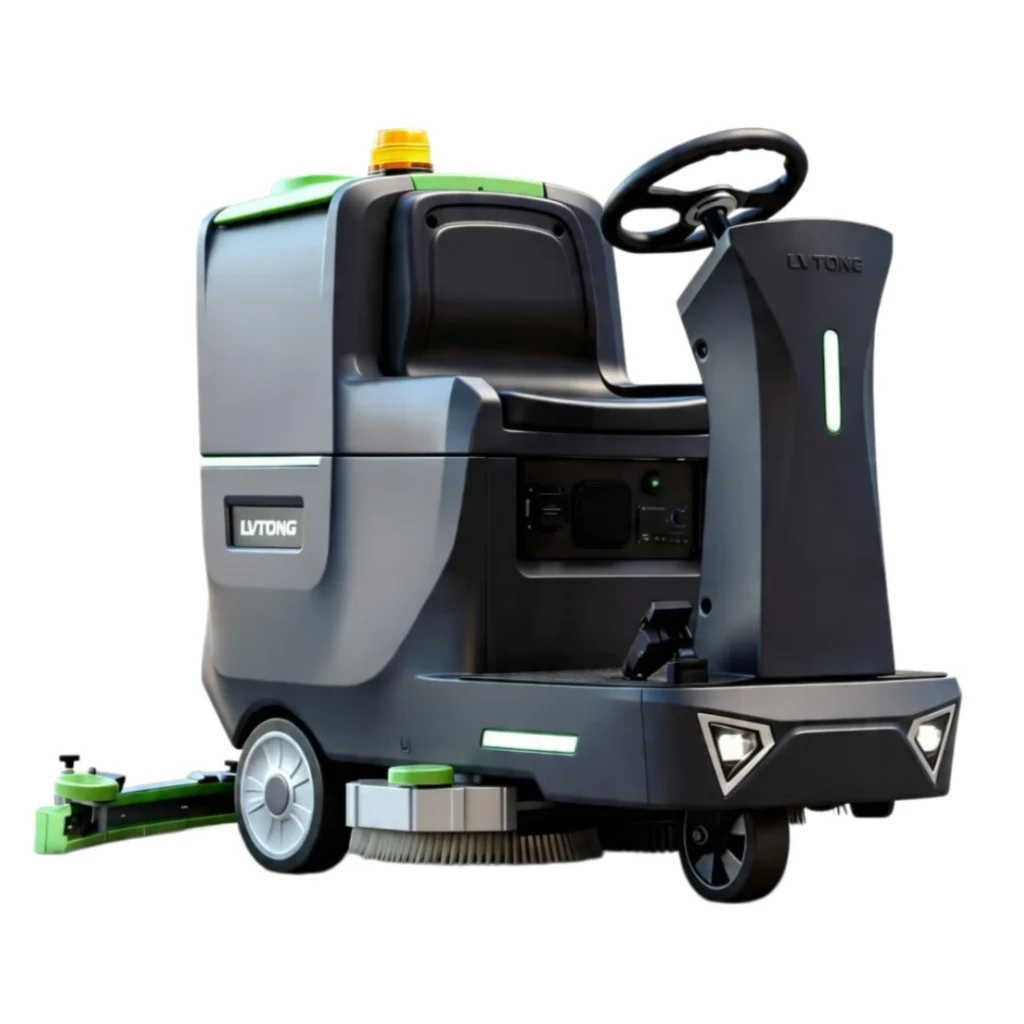
Der Q5 walk-behind auto scrubber fits the first profile: 50 cm width, lithium runtime around four hours, and an adjustable brush disc for switching between floor types. Facilities with larger continuous areas can step up to the LT-S530X Aufsitz-Scheuersaugmaschine, whose 62/65 L tank pair and 530 mm width cover more square meters per fill while keeping the walk-behind weight profile that wood floors prefer. The full scrubber and sweeper range lays out both lines side by side for mixed-floor sites.
Buyers comparing a hardwood floor scrubber machine across suppliers should ask each one three questions in writing: what brush options ship with the unit, what the minimum effective water flow is, and whether brush pressure is adjustable on the standard model. Suppliers who answer all three precisely are the ones who have actually put machines on wood floors before. For OEM or private-label programs, confirm the same points apply to the customized configuration — a spec change for one market can silently remove a wood-safe option from another.
Häufig gestellte Fragen
Kann man eine Bodenschrubbmaschine auf Hartholzböden verwenden?
Yes on sealed hardwood, with a soft brush or pad, low pressure, controlled water flow, and immediate pick-up. Never on unfinished, waxed, or oil-finished wood.
Welche Art von Bodenschrubber ist für versiegeltes Hartholz geeignet?
A compact or walk-behind machine with adjustable brush pressure, soft brush options, and a recovery system that keeps the floor dry behind the machine.
Führt die Verwendung einer Bodenreinigungsmaschine zum Verlust der Garantie für meinen Holzboden?
Finish warranties typically exclude water and chemical damage. A correctly configured scrubber used per the finish maker’s guidelines does not, but a misconfigured one leaves no recourse — which is why the written confirmation and test patch matter.
Wie oft sollten gewerbliche Hartholzböden maschinell geschrubbt werden?
High-traffic areas typically run weekly to biweekly; low-traffic areas monthly. Daily cleaning should stay dry (dust mop or microfiber) unless the seal and traffic pattern justify more.
Sind Aufsitz-Scheuersaugmaschinen auch für Hartholzböden geeignet?
Only on wide, open, sealed wood areas — and only with soft-brush, low-pressure configuration. Their weight and width make them a poor fit for the lobbies and corridors where wood floors usually appear.