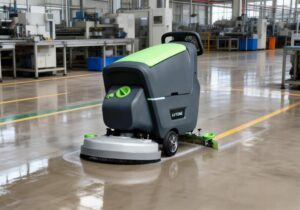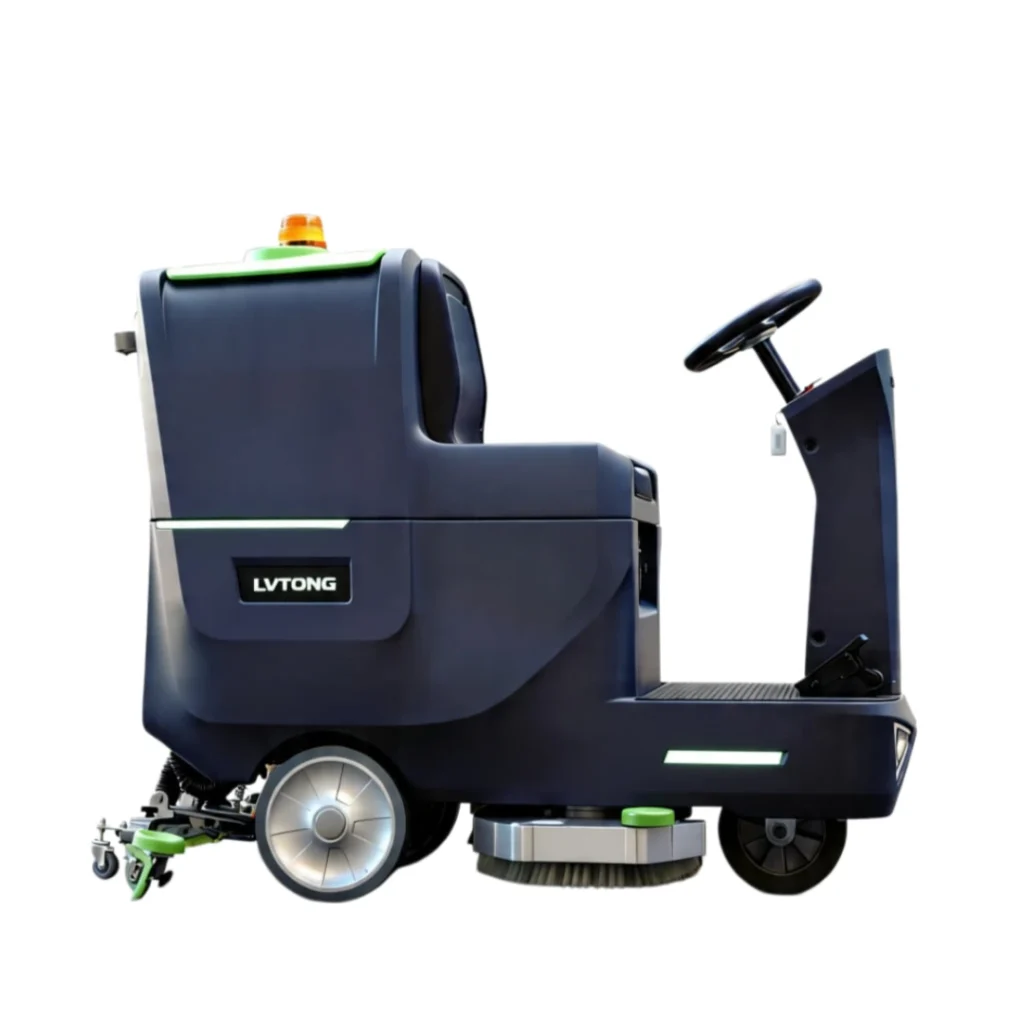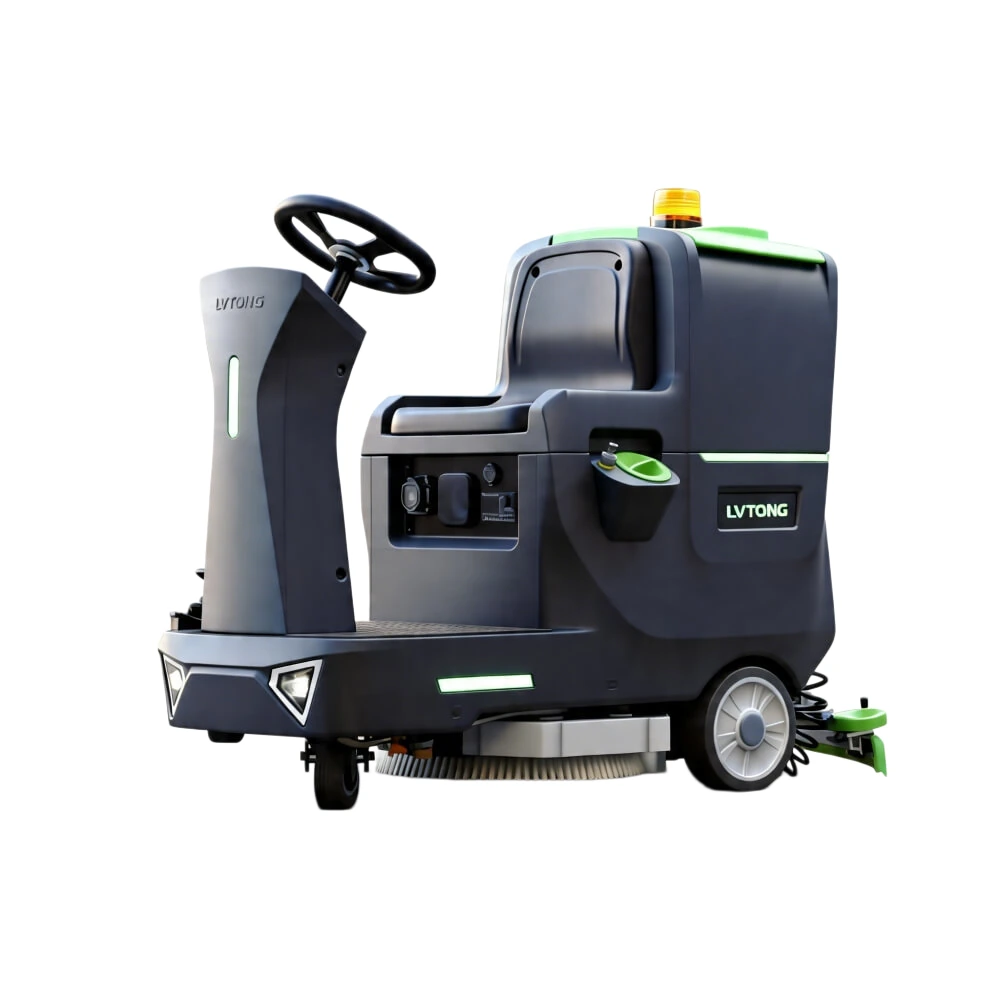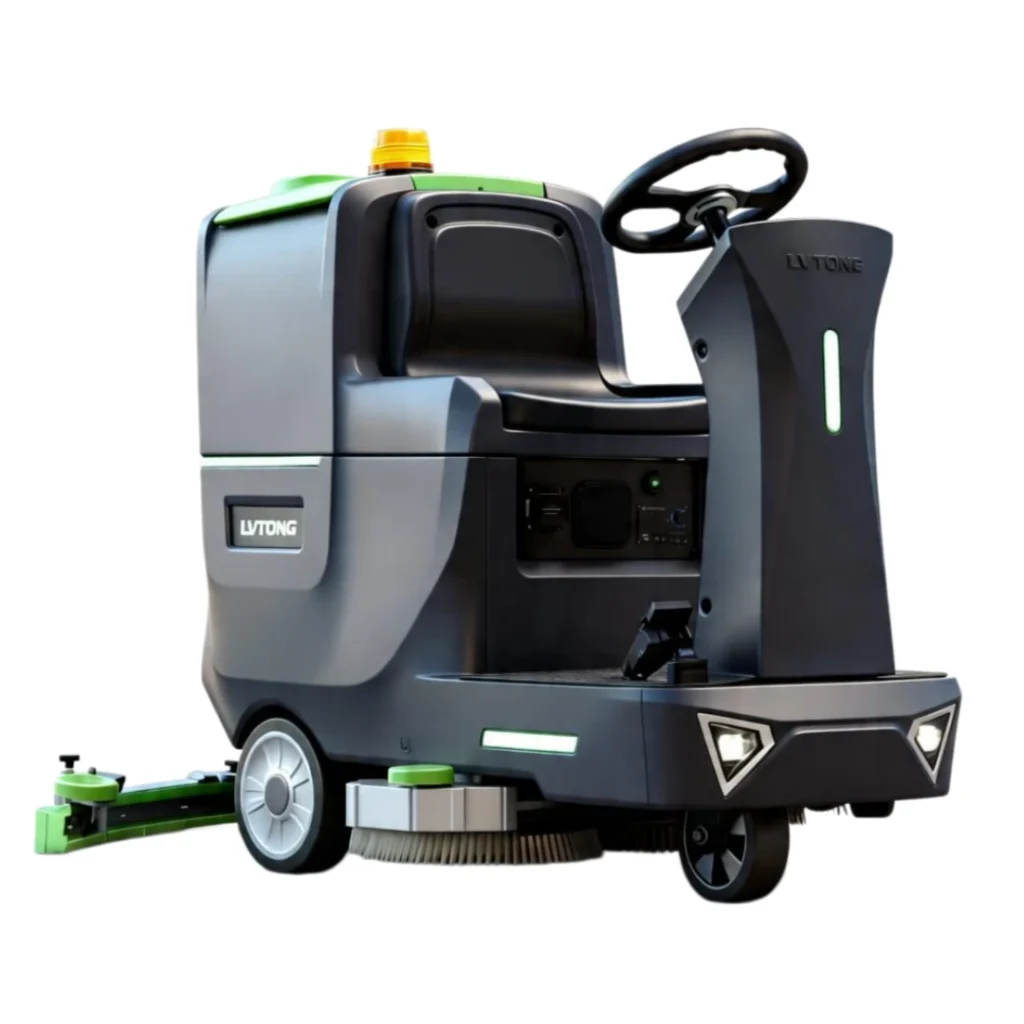


Machines rarely fail alone; they fail the way they were operated. A facility that buys a floor scrubber and hands the keys to whoever is free that morning will spend the difference on repairs, chemicals and re-cleaning. Floor scrubber operator training is the cheapest performance upgrade a fleet can get, and this guide turns it into a program: who to train, which modules to run, how to verify competence, and how training quietly protects your warranty and your safety record.
إجابة سريعة
Effective floor scrubber operator training is a five-module program with a daily floor scrubber operator checklist, hands-on verification and written records — not a one-time demonstration.
- Train four roles, not one: operators, supervisors, charging and storage staff, and the service hands who replace wear parts.
- Run the modules in a show–do–check cycle — demonstration, supervised practice, then an unaided check scored against the module sheet — and sign off every trainee separately.
- Most first-month failures trace to five beginner mistakes, from wrong detergent to skipped drain-down, and all five are preventable in module one.
- Training records double as warranty evidence, as proof of safe operation and as the paper trail auditors ask for.
Below: the five-module table, the daily checklist, the mistake list and a four-week rollout plan for a new machine or a new team.
1. Why Training Decides What Your Machine Returns
Two identical machines in similar buildings can differ by a factor in output — the variable is almost always operator practice.
Coverage rates, water usage and breakdown frequency are all operator-dependent, which is why productivity benchmarks such as the ISSA cleaning-time standard assume a competent hand at the controls. An untrained operator scrubs slower, uses more solution, leaves streaks that require re-work, and wears parts unevenly. A trained one hits the rated area, drains and rinses correctly, and flags faults early. Before designing the program, pick machines that match the team’s size and skill base — the selection logic in كيفية اختيار آلة تنظيف الأرضيات لمنشأتك also determines how much training the machine will demand.
2. Who Needs Training: Four Roles, Not One
Floor scrubber operator training that covers only the person who drives the machine leaves the other three failure paths uncovered.
A workable program names its audience explicitly:
- المشغلون — daily running, routes, shutdown and drain-down.
- Supervisors — planning coverage, reading fault codes, deciding when a symptom is a fault or a technique problem.
- Charging and storage staff — battery care, charging windows and storage conditions, which is its own discipline covered in the battery charging guide.
- Service or maintenance hands — wear-part replacement and the first-line diagnosis that keeps small faults small.
In distributor and rental businesses this map matters even more: every customer site repeats all four roles, so the training material must be designed to travel — a point developed in section 9.
3. The Five Modules of a Training Program
Structure the curriculum into five modules, each with an objective, a practical task and an evidence of completion.
| Module | Objective | Practical task | Completion evidence |
|---|---|---|---|
| 1. Machine familiarization | Name every control, deck and tank | Walk-around identification on the actual unit | Verbal quiz, signed by supervisor |
| 2. Pre-operation inspection | Catch faults before they become downtime | Full inspection against the daily checklist | Completed inspection sheet |
| 3. Safe operation | Routes, speed, slopes, pedestrians, wet-floor control | Supervised run through the real route | Route sign-off with observations |
| 4. Solution and drainage | Correct detergent dosing, tank discipline | Prepare solution, run, drain and rinse | Drain-down demonstrated unaided |
| 5. Shutdown and care | End-of-shift routine and fault reporting | Full shutdown, charging handover, log entry | First logbook entry written |
That table is the practical answer to how to train floor scrubber operators: keep each module short and hands-on. Machines sold into export markets are built around recognized safety frameworks such as IEC 60335-2-72 for floor treatment machines — the machine is engineered for safe use, but the standard presumes an instructed operator, which is exactly what these modules produce.
4. Show, Do, Check: The Session Structure That Sticks
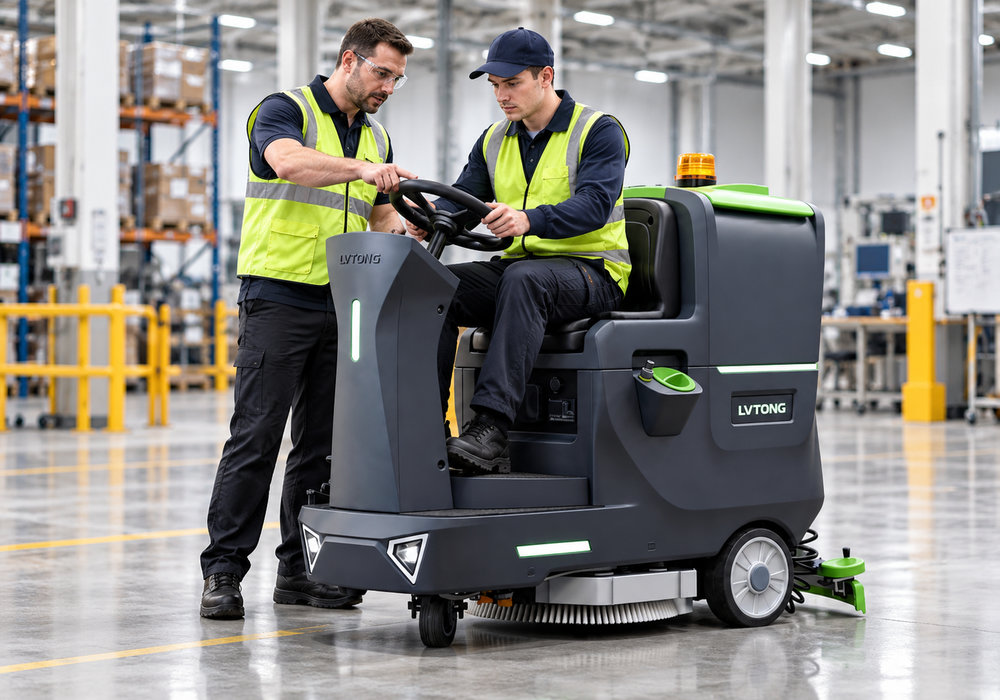
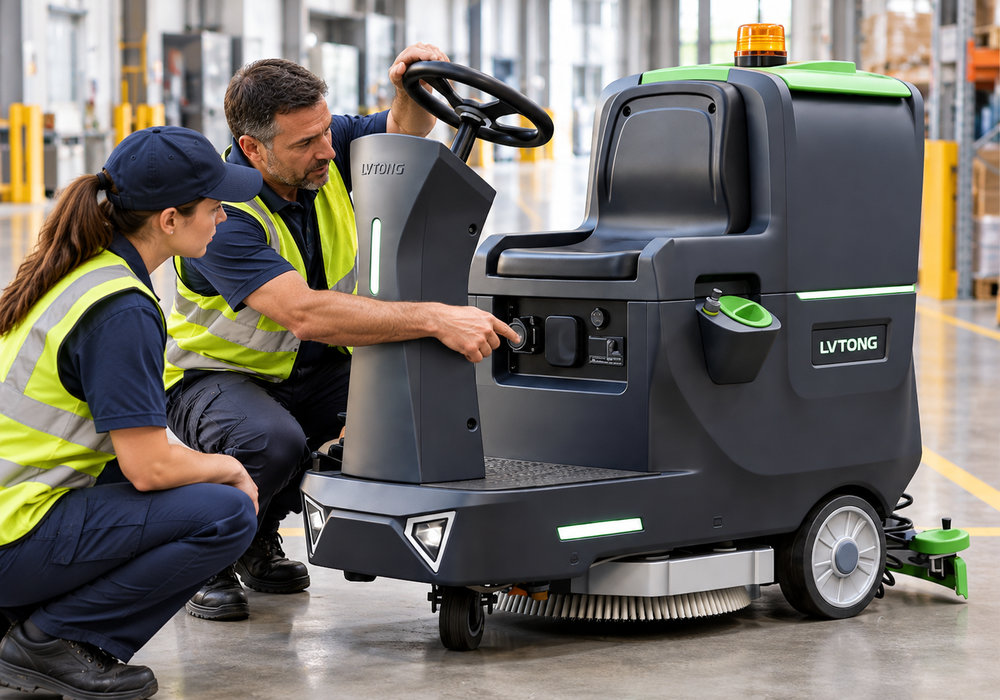
One demonstration is not training — knowledge appears on the third pass, when the trainee performs alone and is checked against the sheet.
Each module runs the same three-beat cycle. Show: the trainer performs the task at working speed, narrating decision points. Do: the trainee repeats it under supervision, once slowly and once at working speed. يفحص: the trainee performs solo while the trainer scores against the module’s task sheet. Only a passed check moves the trainee to the next module; anything failed repeats the cycle the next day. Sessions of roughly an hour per module, spread across several days, outperform a single long session — spacing, not duration, is what makes skills stick.
5. The Daily Floor Scrubber Operator Checklist
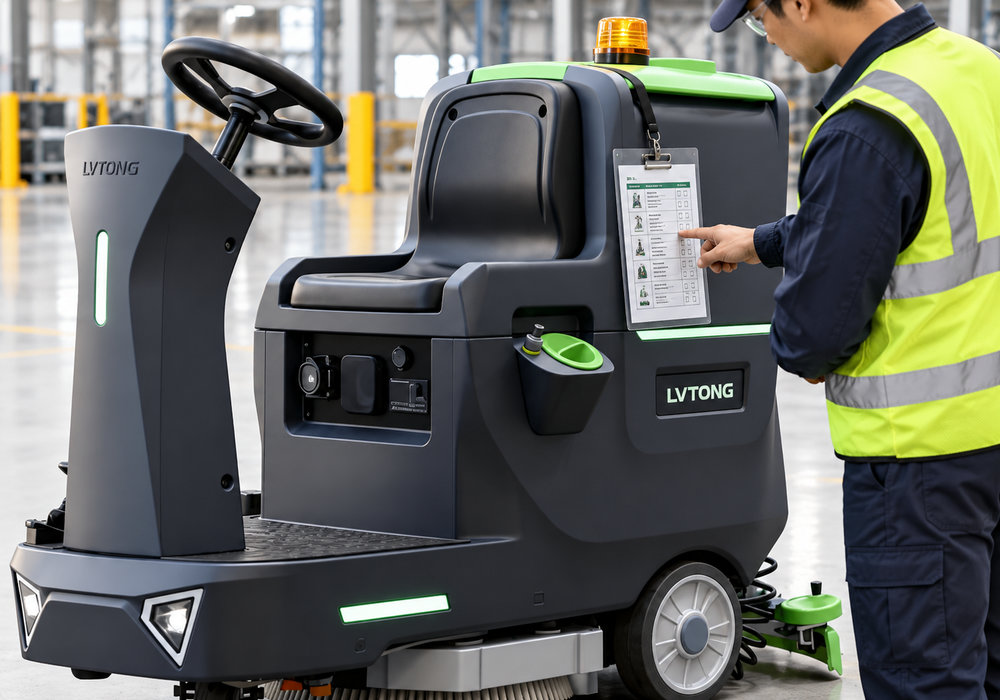
A one-page floor scrubber training checklist used every shift is worth more than any training manual nobody reopens.
| Phase | Checks |
|---|---|
| قبل | Battery level or charge state; brush and squeegee wear; tanks clean; no visible leaks; route and warning signs staged |
| During | Steady speed; overlapping passes; solution flow matched to soil; obstacles and slopes handled per module 3 |
| بعد | Drain and rinse both tanks; squeegee lifted; machine parked dry; charge started; faults and usage logged |
Laminate the checklist to the machine and make the log entry part of the shift, not an afterthought. The charging line on the list follows its own routine — the charging discipline guide covers it in depth, so the checklist only anchors the handover.
6. The Five Beginner Mistakes Training Must Kill First
Most first-month damage traces to five predictable mistakes — name them explicitly in module one, with photos of the consequences.
- Undiluted or wrong detergent — foams the recovery tank and can damage seals.
- Dry running — scrubbing without solution burns pads and glazes floors.
- Dragging the squeegee over debris — the fastest way to destroy a blade in week one.
- Slope and speed errors — turning across ramps or braking hard on wet floors.
- Skipping drain-down — stale solution breeds odor and clogs the next shift.
Each mistake costs a specific component or a re-clean, which makes the cost story concrete for trainees: the lesson lands when the squeegee blade in hand is the exhibit.
7. Records: Competence Cards and the Refresher Cycle
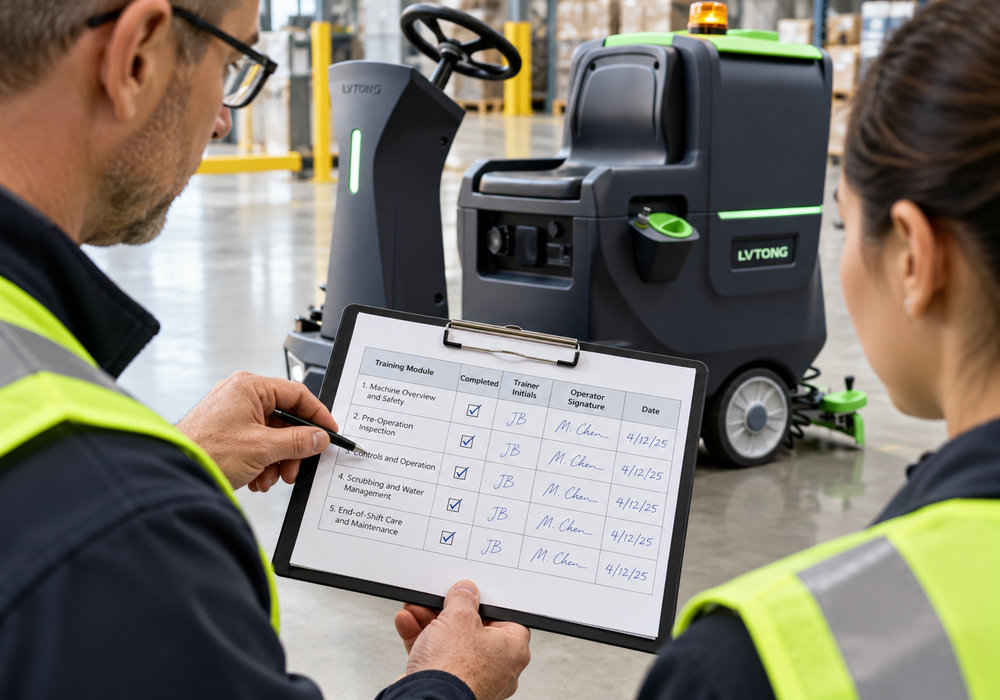
If a training session leaves no record, it never happened — write a card per operator and re-verify on a fixed cycle.
Issue every trained operator a one-page competence card: name, machine type (walk-behind or ride-on), modules passed with dates, and the supervisor’s signature. Set a refresher cycle — after long absence, after a new machine type arrives, or after any avoidable incident. When staff rotate across sites, the card travels with them. This is also how multi-machine fleets avoid the silent downgrade where a ride-on trained hand is assigned to a walk-behind with different geometry and simply improvises.
8. Training as Warranty and Safety Protection
Training records are the paper trail that keeps warranty claims alive and keeps people safe on the same floors.
Warranty documents commonly exclude damage from improper use, and the difference between a defect and improper use is precisely what your training and log records show — one more question to put to suppliers in the vendor evaluation covered by كيفية اختيار شركة مصنعة لآلات تنظيف الأرضيات. Safety runs on the same evidence: wet floors, pedestrian traffic and ramp work are everyday risks around scrubbers, and workplace walking-surface rules such as the US walking-working surfaces provisions presume controlled operation, while slip-resistance guidance from bodies like the المعهد الوطني لسلامة الأرضيات presumes floors are cleaned correctly rather than left streaked. Certification of the machine itself by bodies such as يو ال covers the equipment — only the program covers the hands.
9. Distributors and OEM Buyers: Training as Part of the Sale
For resellers, a train-the-trainer package is the difference between customers who renew and customers who churn.
If you sell under your own brand or through a channel, every delivery repeats the floor scrubber operator training problem in a new language and a new building. The fix is a train-the-trainer arrangement: the factory certifies your in-house trainer, your trainer rolls the program out to end users, and the materials — module sheets, checklists, mistake posters — are localized once and reused. Request these materials as a deliverable when you negotiate the supply relationship, alongside service and warranty terms; the channel-side questions to raise are outlined on the صفحة أن تصبح موزعًا. Customers who were trained by someone they know call about small faults early, instead of posting one-star reviews late.
10. A Four-Week Rollout Plan
Four weeks from delivery to steady state — one module group per week, with the first supervised solo shifts in week three.
| Week | Focus |
|---|---|
| 1 | Modules 1–2 for all operators; checklists printed; charging staff briefed |
| 2 | Modules 3–5 in pairs; first supervised runs on the real route |
| 3 | Solo shifts with spot checks; supervisors learn fault-code triage |
| 4 | Refresher on weak modules; competence cards issued; logs reviewed and rules adjusted |
Run this plan for the first machine and you own it forever — every future unit, from the same family or a different one, slots into the same structure. When you want the training package and materials to arrive with your order, start the conversation on the صفحة الاتصال.
الأسئلة الشائعة حول تدريب مشغلي آلات تنظيف الأرضيات
How to train floor scrubber operators?
Run the five-module program — familiarization, pre-operation inspection, safe operation, solution and drainage, shutdown and care — using a show–do–check cycle, and record each module sign-off on a competence card.
How long does basic operator training take?
Roughly one hour per module, spread across two to four weeks with hands-on practice. Spacing beats a single long session, and the first solo shifts should still be spot-checked.
What should a daily operator checklist include?
Pre-shift battery and wear checks, route and signage preparation, correct dosing during the run, and a full shutdown routine with drain-down, charging and a log entry.
Does operator training affect warranty claims?
Indirectly, yes. Warranties exclude improper use, and training plus usage logs are the evidence that distinguishes a genuine defect from operator damage.