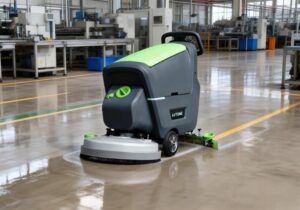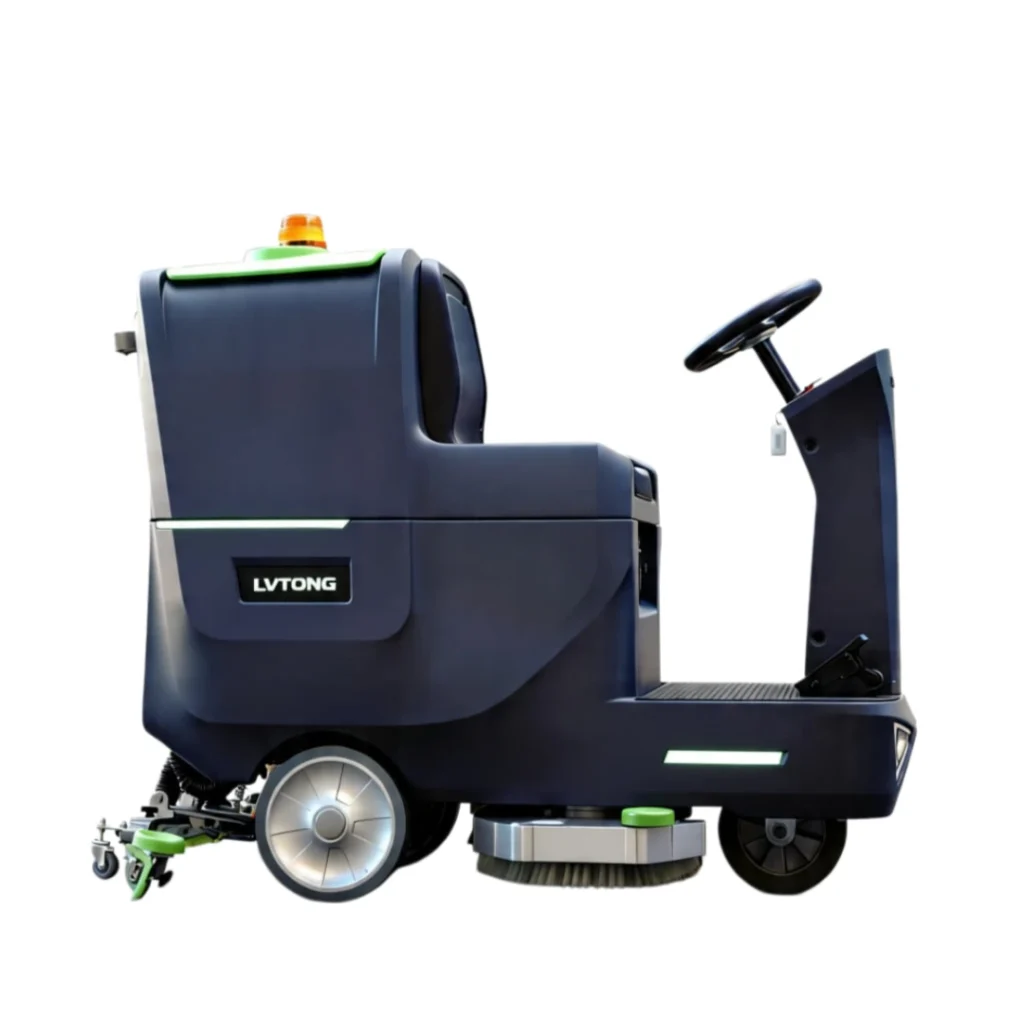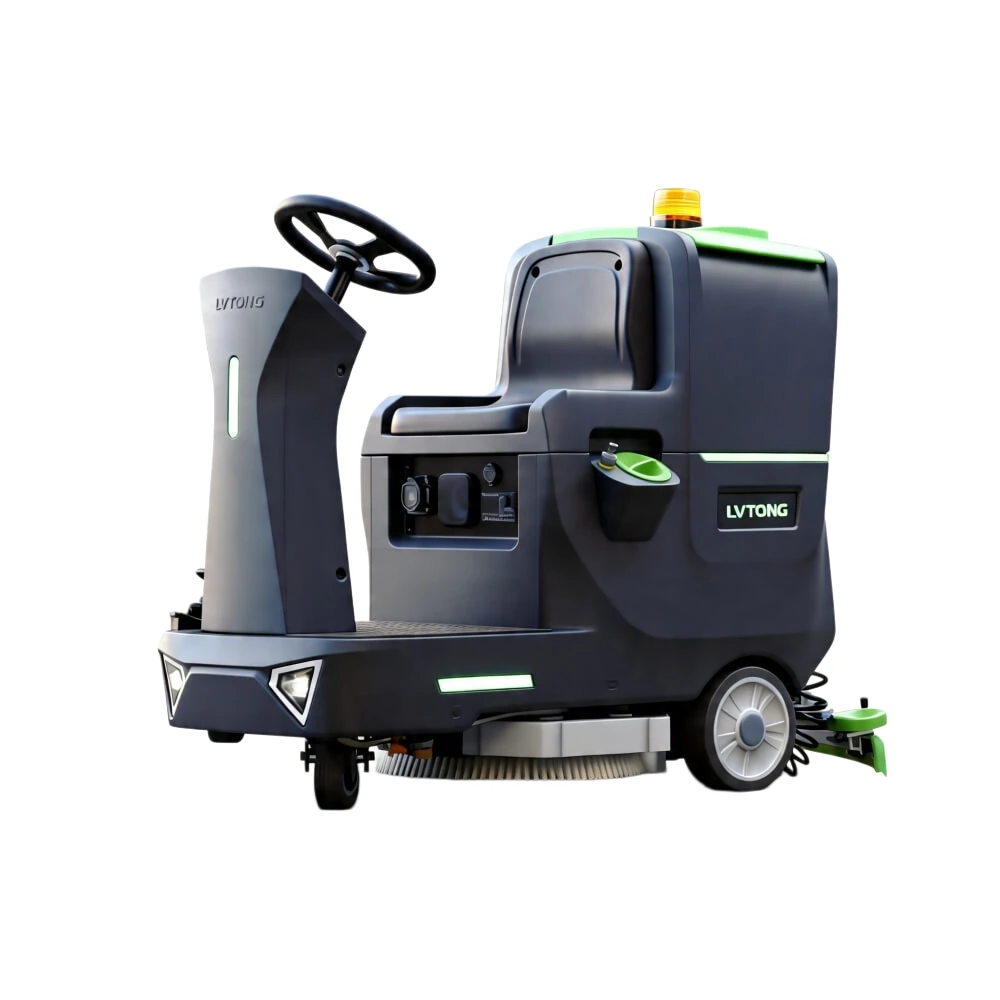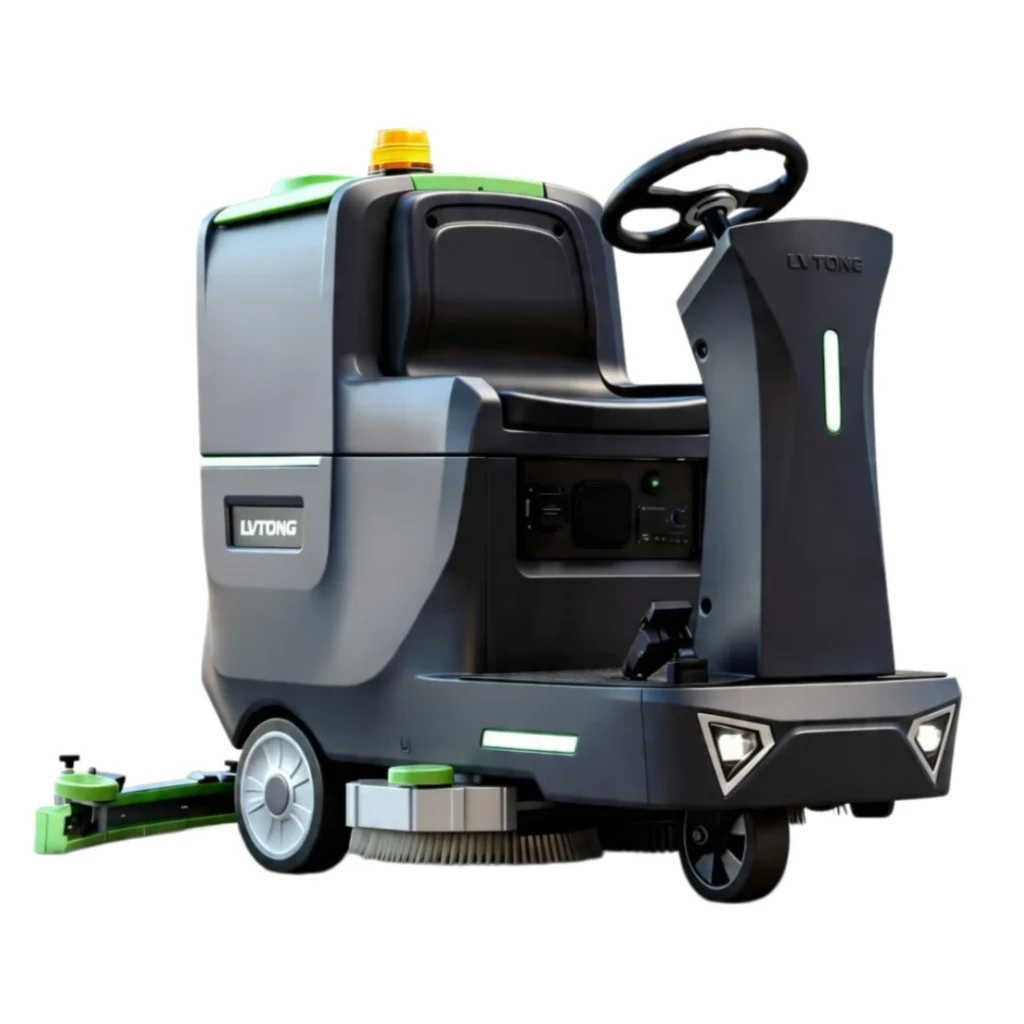
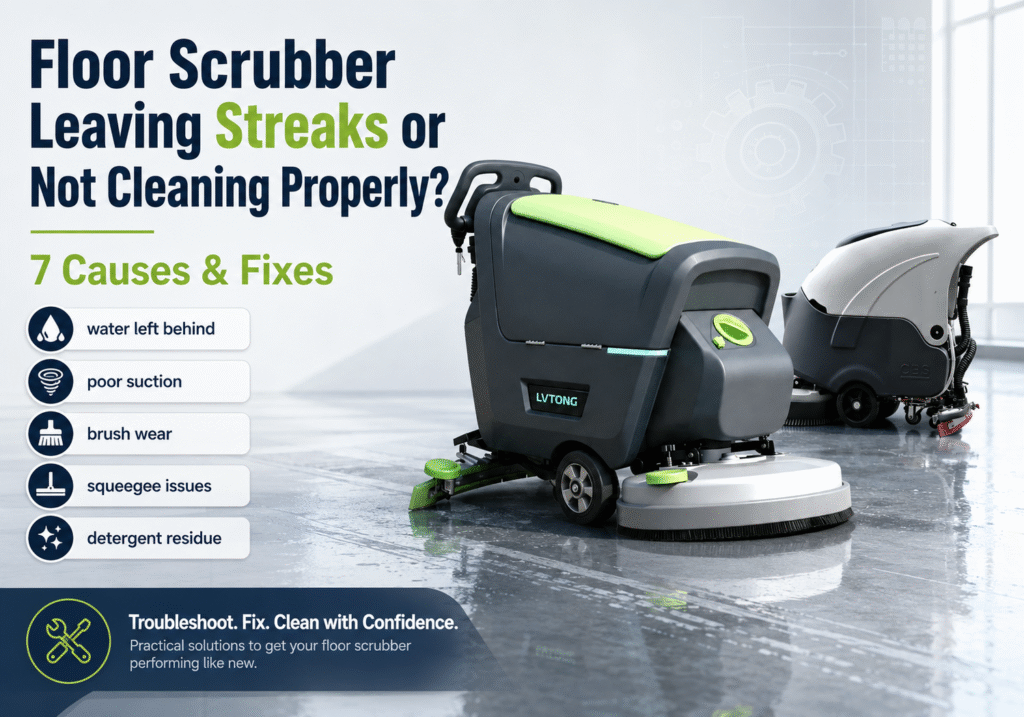
At LVTONG, we match floor scrubber and auto scrubber options to the workload each site needs to finish. A warehouse with long epoxy lanes and a school with narrow corridors can ask about similar equipment, but the cleaning route is different. We check whether the machine can complete the on-site process with steady solution release, mechanical scrubbing, dirty-water recovery, enough tank capacity, suitable battery runtime, workable turning space, and acceptable operator effort. In real purchasing conversations, floor scrubber often covers several hard-floor cleaning formats. Auto scrubber usually points to one-pass solution release, scrubbing, and dirty-water recovery. Many modern floor scrubbers already perform that same process, so the terms overlap during model selection.
| Comparison point | منظف الأرضيات | جهاز تنظيف آلي |
|---|---|---|
| Term use | Covers hard-floor scrubbing machines across walk-behind, ride-on, and scrubber-dryer formats. | Points to one-pass washing, powered scrubbing, squeegee pickup, and dirty-water recovery. |
| Overlap | Modern floor scrubbers can already release solution, scrub, and recover wastewater during the same route. | Auto scrubbers are often listed inside floor scrubber or scrubber dryer product ranges. |
| Selection boundary | Format, scrub deck, tanks, runtime, access, recovery result, and operator effort against the assigned workload. | After powered scrubbing and recovery are confirmed, route fit, tank setup, runtime, and operating cost decide the match. |
The Cleaning Process Behind Floor Scrubbers and Auto Scrubbers
Two machines with similar labels can behave differently on the same floor. Some models scrub effectively but create more refill stops. Others recover dirty water more steadily but require more turning space, closer drain access, or stronger battery planning. The useful comparison is the process the machine can finish on the assigned floor.
Long routes with few drains are often slowed by tank capacity and wastewater recovery, while tight routes are slowed by turning and edge touch-up. The right floor scrubber or auto scrubber keeps cleaning steady enough for the operator to finish the assigned zone without repeated stops or manual recovery work.
When both options already scrub and recover water in one pass, the next filter is configuration. Compact routes with doors, shelves, corners, equipment gaps, and short travel sections suit machines that keep the scrub deck close to the operator. Longer open areas call for steadier movement, fewer interruptions, and enough space for turning, refilling, draining, charging, and storage.
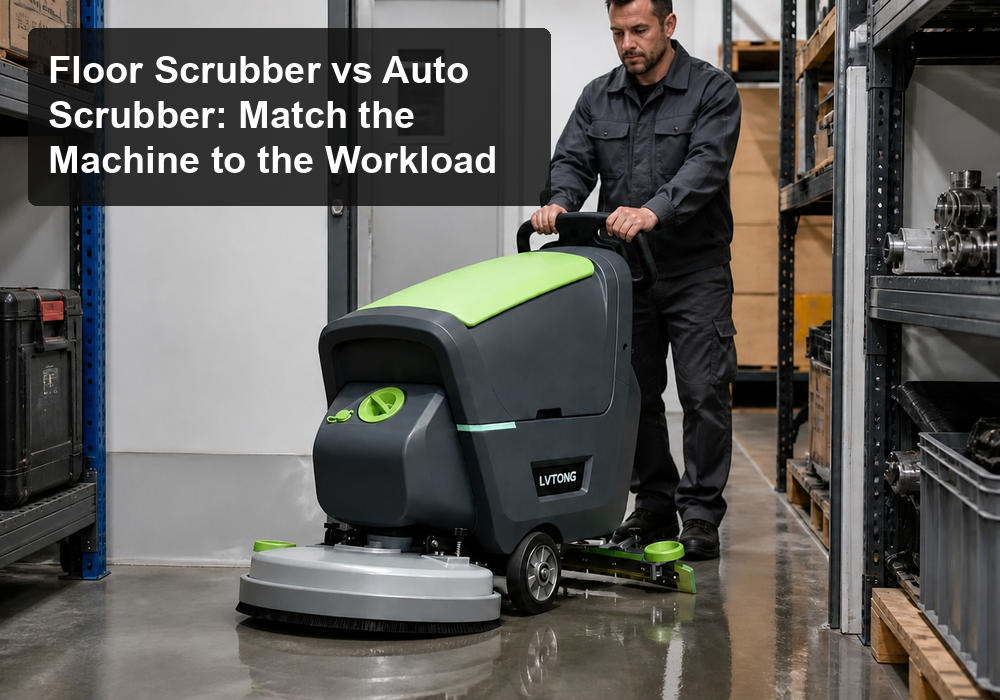
ملكنا مجموعة آلات تنظيف الأرضيات التي تُدفع يدويًا supports one-pass cleaning: applying solution, scrubbing the floor, and picking up dirty solution as the operator moves. Use that one-pass process as the baseline, then compare route fit, floor condition, tank demand, runtime, and recovery requirement.
Cleanable Area, Aisles, and Turning Space Decide the Scrubber Type
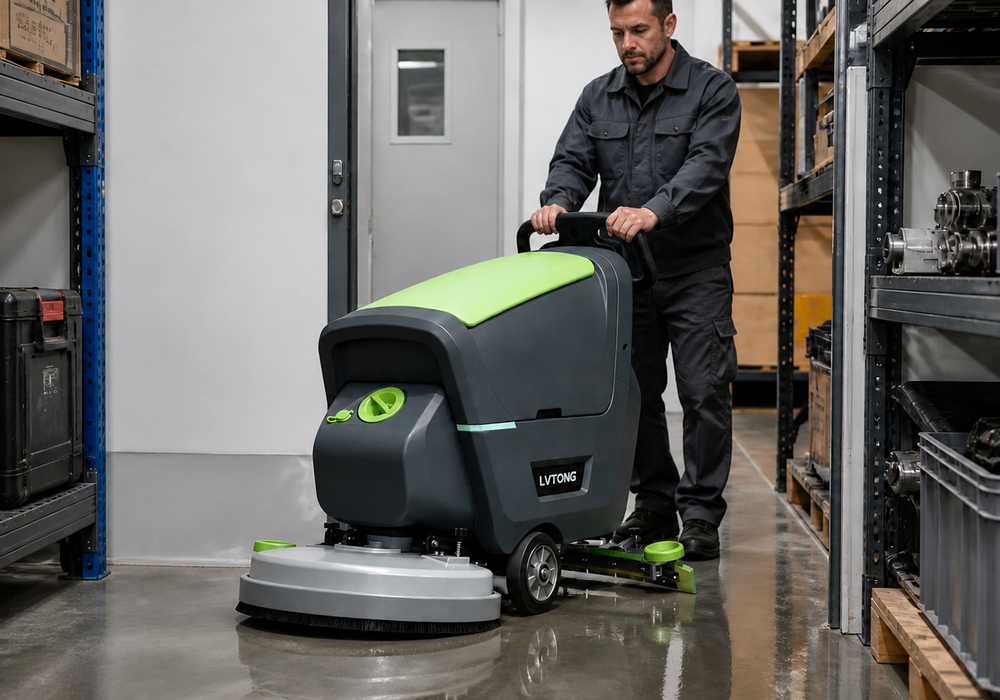
Route shape can change the scrubber type before model size does. In real inquiries, model selection often changes after the buyer sends a route photo or floor plan. A ride-on scrubber can look stronger by area, then lose time at aisle ends, door crossings, drain distance, or storage access. Compact walk-behind equipment stays closer to corners and equipment gaps when one operator has to clean several separated zones in one shift.
Wider cleaning paths improve output only when the operator can keep moving. When narrow aisles limit access, the LT-S530X narrow-aisle scenario supports the route judgment for racks, production lanes, and equipment gaps.
| موديل LVTONG | Machine format | Verified LVTONG data and source note | Route judgment |
|---|---|---|---|
| آلة تنظيف الأرضيات الأوتوماتيكية Q5 التي تُدفع باليد | آلة تنظيف الأرضيات ذاتية الدفع | Q5 product page FAQ lists 50 L tank capacity and 1,980 m²/h cleaning efficiency. LVTONG product listings show 500-2,000 m² applicable area and 510 mm listed width. | Compact commercial routes, food-production areas, workshops, stores, and divided spaces where turning, doorway access, and stop-start cleaning matter. |
| آلة تنظيف الأرضيات الصناعية LT-S530X التي تُدار يدويًا | ماكينة تنظيف الأرضيات الصناعية | LT-S530X product page FAQ lists 62 L solution tank / 65 L recovery tank and 2,100 m²/h cleaning efficiency. Its narrow-aisle scenario lists 50 cm body width and 0.8 m aisle access. LVTONG homepage lists 530 mm scrubbing width, while product listings show 1,000-4,000 m² applicable area and 550 mm sweeping width. | Narrow industrial aisles, production lanes, equipment gaps, and rack areas where walk-behind capacity matters without losing access. |
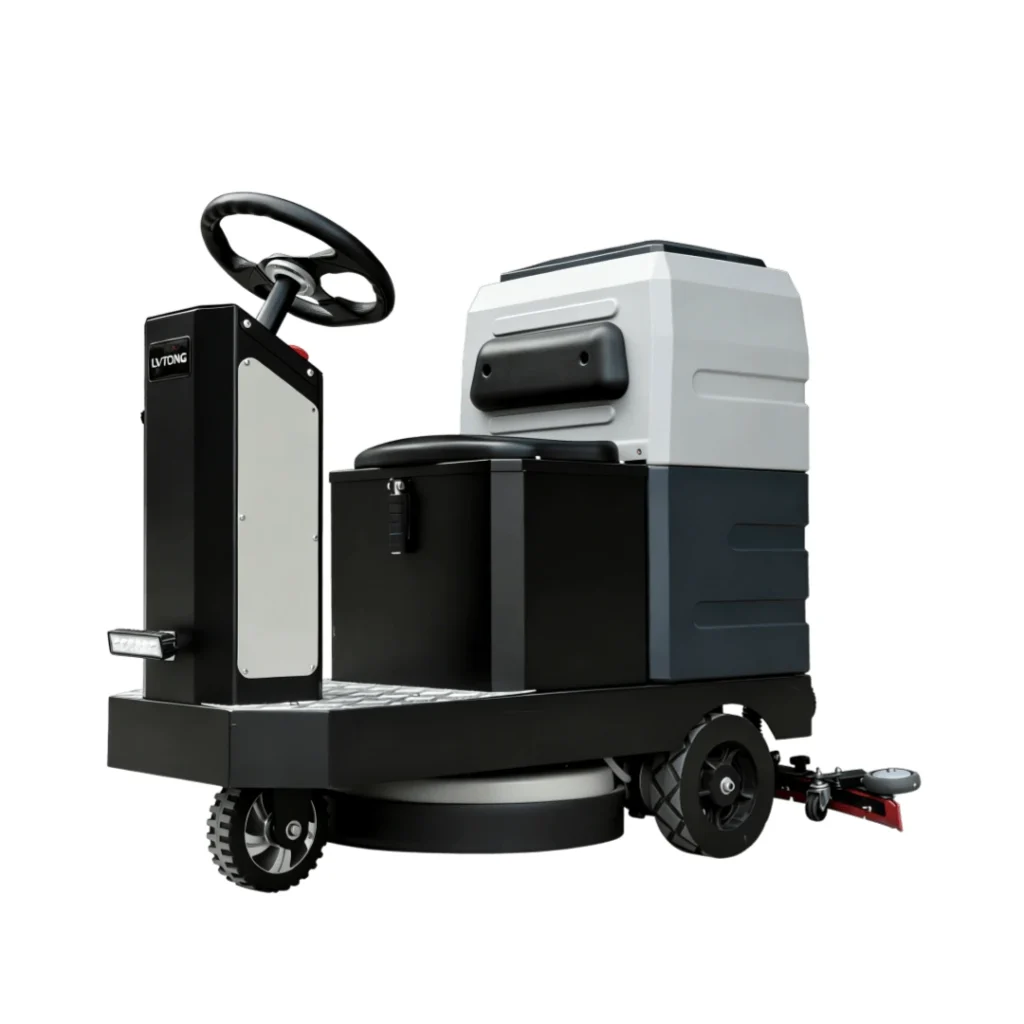
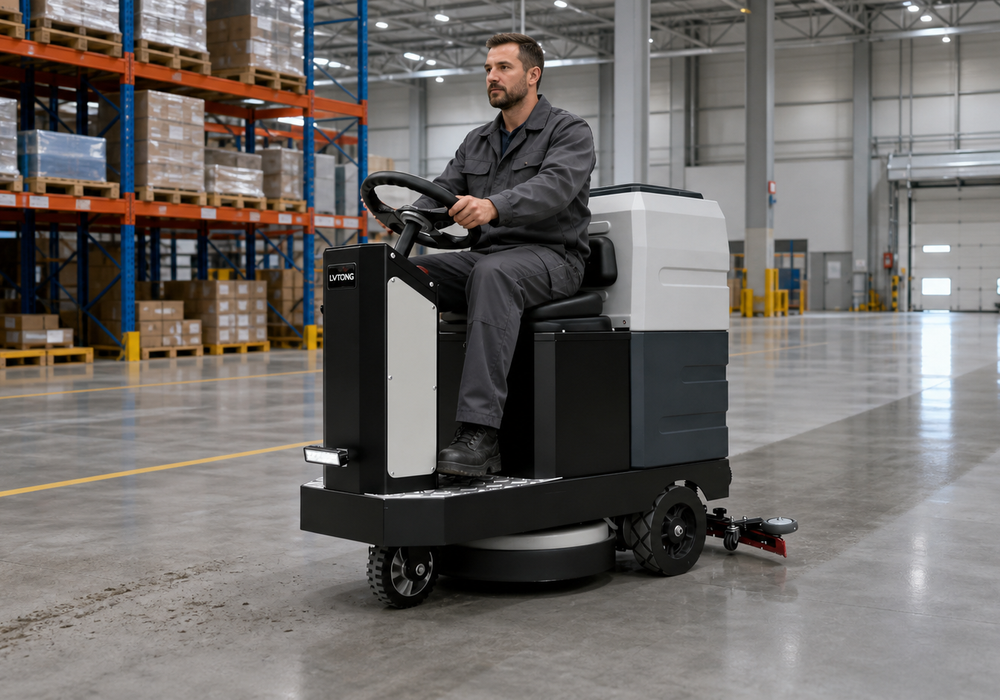
| ماكينة تنظيف الأرضيات V6 القابلة للركوب في السيارة | آلة تنظيف الأرضيات التي يتم ركوبها | LVTONG ride-on floor scrubber listing data lists 60 L solution tank, 55 L recovery tank, 4,600 m²/h work efficiency, and 15% gradeability for V6. The same listing shows 2,000-4,000 m² applicable area and 1,050 mm listed width. | Open industrial routes where the wider cleaning path has enough operating space and seated operation reduces operator fatigue. |
| جهاز تنظيف LT-S860X للركوب | آلة تنظيف الأرضيات التي يمكن ركوبها | LVTONG homepage lists 860 mm scrubbing width, 130 L water tank, and 6,800 m²/h work efficiency for LT-S860X. LVTONG ride-on floor scrubber listing data lists 130 L solution tank, 135 L recovery tank, 6,800 m²/h work efficiency, and 860 mm washing width. The same listing shows 10,000-15,000 m² applicable area and 860 mm listed width. | Larger open routes with enough turning clearance, storage space, drain access, and shift demand for steady ride-on movement. |
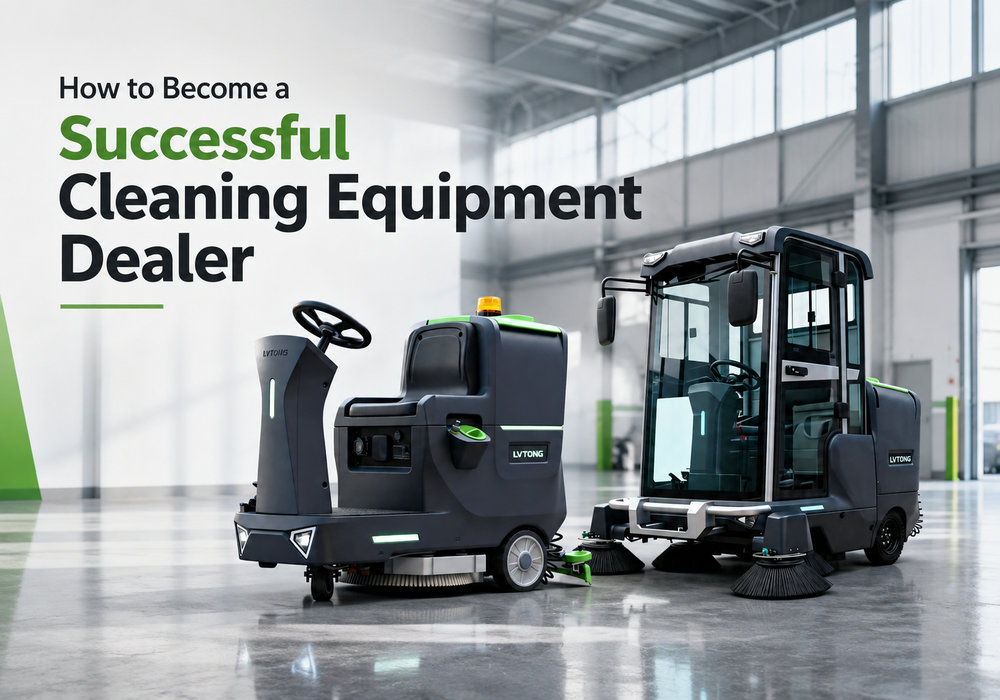
If the main zone allows steady ride-on movement, keep it in the ride-on scrubber comparison. Tight side zones stay in the walk-behind comparison because missed edges, repeated reversing, and hand touch-up can cancel out the advantage of a wider machine. Mixed facilities often work better with ride-on equipment on the main route and a compact walk-behind scrubber in side zones.
Compare Upfront Cost Against Labor, Productivity, and Water Recovery
Walk-behind auto scrubbers keep the first purchase lower and take less storage space. This works well on smaller hard-floor routes with shelves, counters, production equipment, wall edges, and frequent turns. Cost can rise on long open routes because the operator walks the full distance and stops more often for tanks, battery limits, or zone changes.
Ride-on floor scrubbers carry a higher initial budget, but they reduce operator walking across longer open routes. Cost becomes clearer when the route is converted into time. For one shift, count paid walking time, refill and drain stops, battery or charging interruptions, mop-up work, and reopening delay, then multiply that time by cleaning frequency and labor cost. The machine with the lower total operating cost is the one that cuts those route interruptions after daily use begins, even when its purchase price is higher.
On the ماكينة تنظيف الأرضيات V6 القابلة للركوب في السيارة page, we give a 10,000 m² epoxy-floor warehouse scenario where two V6 scrubber dryers were used for forklift tire marks and dust. The page reports a 50% increase in cleaning efficiency, a 60% reduction in labor cost, and cleaning time shortened by 2 hours. These results belong to that published scenario, and they support one practical point: route time and labor cost belong in the cost review before purchase price decides the machine.
Water recovery also changes the real cost. Poor recovery leaves wet streaks, slows reopening, adds mop-up work, and affects walking safety in public or production areas. For U.S. workplaces, the OSHA walking-working surfaces standard requires workroom floors to be kept clean and, where feasible, dry, with walking-working surfaces kept free from hazards such as leaks and spills. This does not replace local safety rules in other markets, but it shows why recovery performance belongs in the same cost review as labor, productivity, and purchase price.
Match the Scrub Deck and Cleaning Process to Soil and Floor Surface
Floor material and soil type can change the scrubber choice before machine size does. Epoxy dust, oily concrete, ceramic tile, marble, tire-marked warehouse lanes, and anti-slip tiles call for different brush pressure, water flow, detergent, operator speed, and recovery setup.
| Floor / soil | عملية التنظيف | Model reference | Site checks |
|---|---|---|---|
| Cement, ceramic tile, epoxy flooring, and marble with routine dirt | Disc brush, steady water release, squeegee pickup, and regular wastewater recovery | آلة تنظيف الأرضيات الأوتوماتيكية Q5 التي تُدفع باليد | Floor photos; cleaning frequency; aisle width |
| Epoxy flooring, cement flooring, wear-resistant flooring, anti-slip tiles, ceramic tile, and marble in narrow industrial routes | Stronger walk-behind scrubbing, stable recovery, and access through tighter lanes | آلة تنظيف الأرضيات الصناعية LT-S530X التي تُدار يدويًا | Narrowest aisle; equipment gaps; recovery tank demand |
| Forklift tire marks, oil, grease, and bonded dirt | Brush choice, detergent, water volume, contact time, operator speed, and recovery setting | ماكينة تنظيف الأرضيات V6 القابلة للركوب في السيارة | Oil area photos; tire mark depth; loose debris |
| Long open industrial floors with dust, oil, and vehicle traffic | Ride-on route, continuous movement, recovery performance, and shift schedule | جهاز تنظيف LT-S860X للركوب | Turning clearance; drain access; cleaning window |
On industrial sites, loose packaging waste, stones, large debris, and metal fragments belong in a pre-cleaning review before wet scrubbing begins. These site checks help confirm the scrub deck, water flow, detergent, recovery setting, and route format before a machine is recommended.
Choose Walk-Behind or Ride-On by Route Length and Shift Pressure
Short routes with many turns favor close control. Long open routes with limited cleaning time favor steady movement.
- Route length alone does not settle the format. Mixed facilities often combine a long main lane with small rooms, side aisles, entrances, and production-side areas. The main lane can suit a ride-on scrubber, while divided zones still call for a walk-behind unit.
- Ride-on scrubbers lose their advantage when the operator cannot keep a steady cleaning line. Frequent door crossings, short aisles, parked equipment, blocked corners, elevator use, and limited drain access can make a larger machine slower than expected. A compact walk-behind scrubber fits better where access and edge cleaning matter more than seated travel speed.
- Shift pressure changes the choice when cleaning must finish before opening time, production restart, or traffic return. A short cleaning window favors the format that finishes the assigned zone with fewer interruptions, not simply the larger machine. For mixed facilities, assign each zone separately, using ride-on scrubbers for long open lanes and walk-behind scrubbers for entrances, tight aisles, corners, and separated rooms.
إن LT-S860X Guangzhou Airport Cargo Area example is useful as a route-shape reference, not a universal productivity promise. For a new site, compare the length of uninterrupted travel, refill and drain access, traffic control, parking space, and charging plan before treating a ride-on scrubber as the better choice.
Common Mistakes When Comparing Floor Scrubbers and Auto Scrubbers
Most bad matches show up after the first week as extra turns, refill stops, wet streaks, missed edges, or manual touch-up. The quote stage works better with a clear daily path, access points, recovery result, debris load, and maintenance plan.
- Wrong size for the route. A compact auto scrubber can lose efficiency on long open routes, while an oversized ride-on scrubber can slow down in tight spaces. Map the daily route, narrowest passage, turning area, refill point, drain point, and storage entrance before comparing walk-behind or ride-on formats.
- Cleaning width without access. A wider cleaning path improves output only when the machine can pass, turn, recover water, and keep moving. Doorways, aisle ends, turning points, and wet streaks after recovery give a clearer productivity picture than width alone.
- Separate loose debris from wet scrubbing work. Oil, grease, tire marks, metal chips, stones, and packaging waste call for different cleaning steps. Remove unsuitable loose debris before wet scrubbing. Routes with frequent dry debris work better with pre-sweeping before the scrubber enters the area.
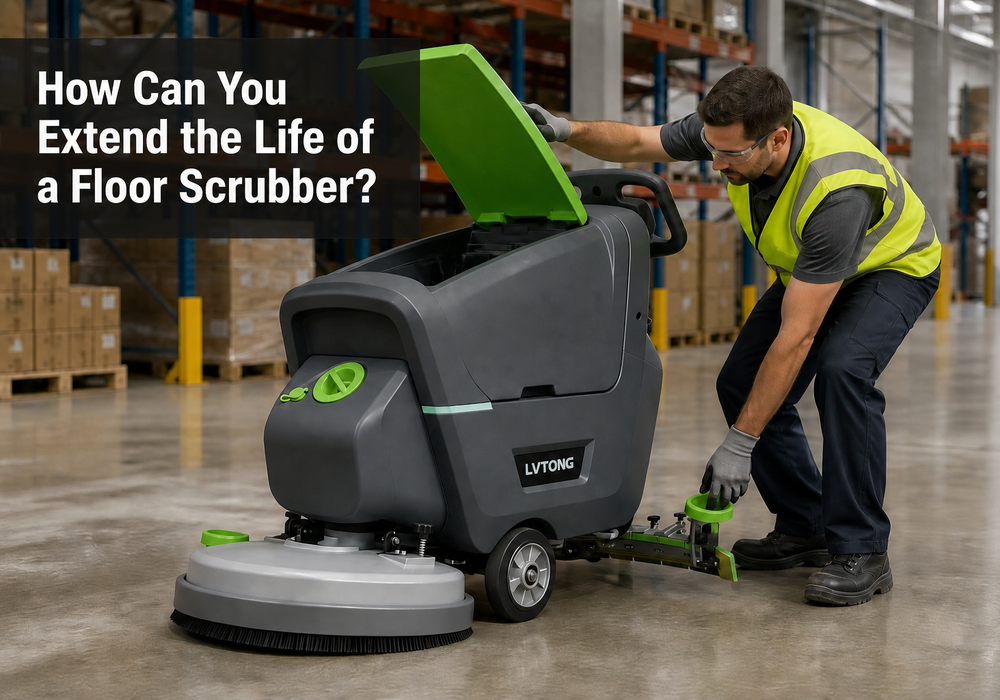
- Maintenance left out of cost. Brush discs, pads, squeegee blades, hoses, filters, batteries, chargers, and drain lines affect daily availability. The Q5 page lists cleaning the brush disc, emptying the sewage tank, and checking the battery and filter as daily maintenance actions, with brush disk and suction scraper replacement linked to usage frequency and ground conditions.
What to Send Before Requesting a Quote
Before recommending a floor scrubber or auto scrubber, our team checks the route, floor condition, cleaning window, water access, and site restrictions.
| Information to send | What to include | Why it matters for selection |
|---|---|---|
| Route and area | Cleanable hard-floor area per shift, narrowest aisle, doorway width, turning space, ramps, elevators, and storage entrance | Confirms whether a walk-behind scrubber or ride-on scrubber can pass through the route without wasting time. |
| Floor and soil | Floor material, main soil type, tire marks, oil areas, dust buildup, grout lines, floor damage, loose debris, and photos of hard-to-clean zones | Guides scrub deck, water flow, detergent, recovery setting, and cleaning process. |
| Cleaning schedule and labor | Cleaning frequency, available cleaning window, current labor arrangement, operator count, and whether cleaning happens during public or production hours | Shows whether higher productivity justifies a larger machine and higher upfront cost. |
| Water, charging, and disposal | Charging location, clean water access, refill points, drain points, wastewater emptying area, and storage space | Identifies refill, drain, charging, and storage points that slow the cleaning route. |
| Site restrictions | Noise limits, dry-floor requirements, food-processing rules, indoor air limits, chemical restrictions, ramps, traffic control, and areas the machine cannot enter | Filters out configurations that cannot meet site limits before model selection. |
At LVTONG, we use these details to match the route, floor condition, and recovery requirement with our آلات تنظيف وتجفيف الأرضيات التجارية والصناعية, then recommend a suitable model such as Q5, LT-S530X, V6, or LT-S860X.
الأسئلة الشائعة
Is an auto scrubber the same as a floor scrubber?
In many buying conversations, the two terms overlap. Floor scrubber is the broader term for machines that scrub hard floors. Auto scrubber emphasizes an integrated process where solution release, mechanical scrubbing, and dirty-water recovery happen in one pass. For selection, compare the scrub deck, solution and recovery tanks, battery runtime, wastewater pickup, and operator format.
Is a walk-behind unit still useful after buying a ride-on scrubber?
Yes, when the facility has both open lanes and divided areas. A ride-on scrubber can handle the main route, while a walk-behind scrubber works around doorways, corners, small rooms, shelves, production equipment, and tight aisles. Splitting the route this way reduces forced turns, missed edges, and manual touch-up.
Which site photos make quotation more accurate?
Send photos of the narrowest aisle, doorways, turning points, ramps, drains, refill points, charging area, storage entrance, tire marks, oil spots, dust buildup, floor damage, and areas where the current cleaning method leaves water or dirt behind. These photos make access limits, recovery demand, and scrub deck choice clearer before quotation.
How often are scrubber brushes and squeegee blades replaced?
The Q5 product FAQ lists 3-6 months as a general interval for brush disk and suction scraper replacement, with actual timing linked to usage frequency and ground conditions. Long routes, rough floors, heavy soil, and weak daily cleaning can shorten the replacement cycle.
الخاتمة
The right floor scrubber or auto scrubber is the machine that lets the operator finish the route cleanly within one shift, with stable recovery and acceptable touch-up work.
Walk-behind formats stay closer to the work area on compact or divided routes. Ride-on equipment fits long open lanes with enough turning, refill, drain, parking, and charging space.
At LVTONG, our team can review your route map, floor photos, water access, and cleaning window before recommending a suitable floor scrubber or auto scrubber. Send your site details through our Contact Us page for a quote matched to the actual workload.