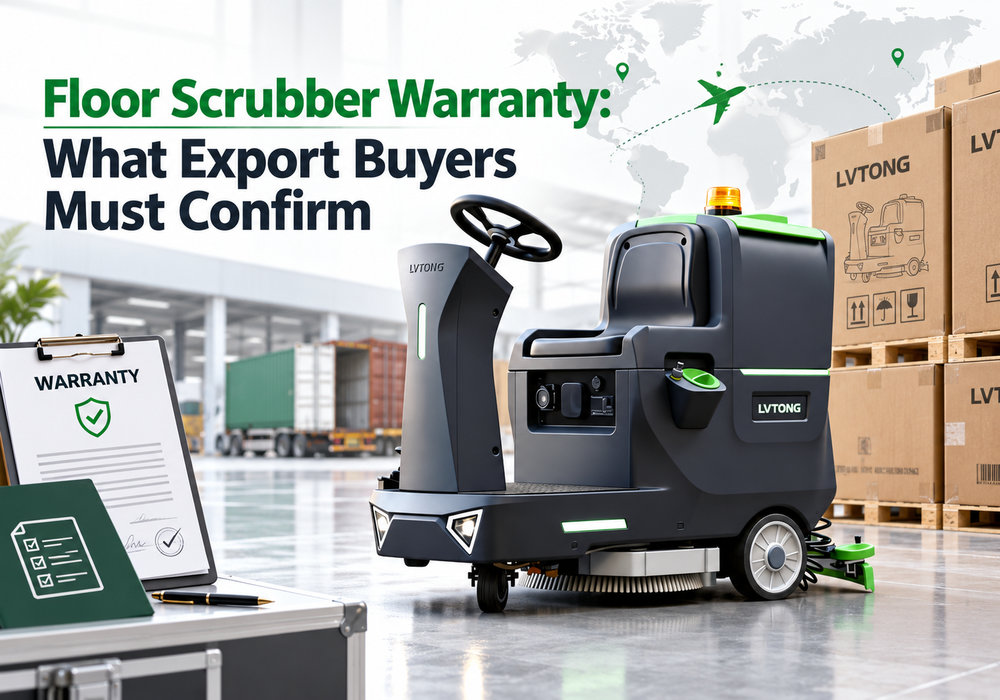

A floor scrubber bought from an overseas factory crosses an ocean before it crosses your floor, and the floor scrubber warranty is the only document that travels with it. Most disputes between buyers and manufacturers do not come from machines that fail — they come from warranty documents that were never actually read. This guide decodes the warranty the way a service manager would: what it covers, what silently voids it, where it stops at wear parts, and how a claim actually gets paid.
KURZE ANTWORT
A floor scrubber warranty is a contract with three layers — parts, labor and freight — and its real value sits in the exclusions, the start date and the claim procedure.
- Coverage is typically expressed in months for the machine and separately for the battery, charger and motors.
- Wear parts — squeegee blades, brushes, filters — are excluded by design; battery coverage is its own agreement with its own term.
- Transit damage is a carrier claim, not a warranty claim; inspect before signing the delivery note.
- OEM and private-label buyers must confirm warranty pass-through to their own customers in writing.
Below: each layer explained, the seven-line checklist to confirm before signing, and the evidence pack that a floor scrubber warranty claim actually needs.
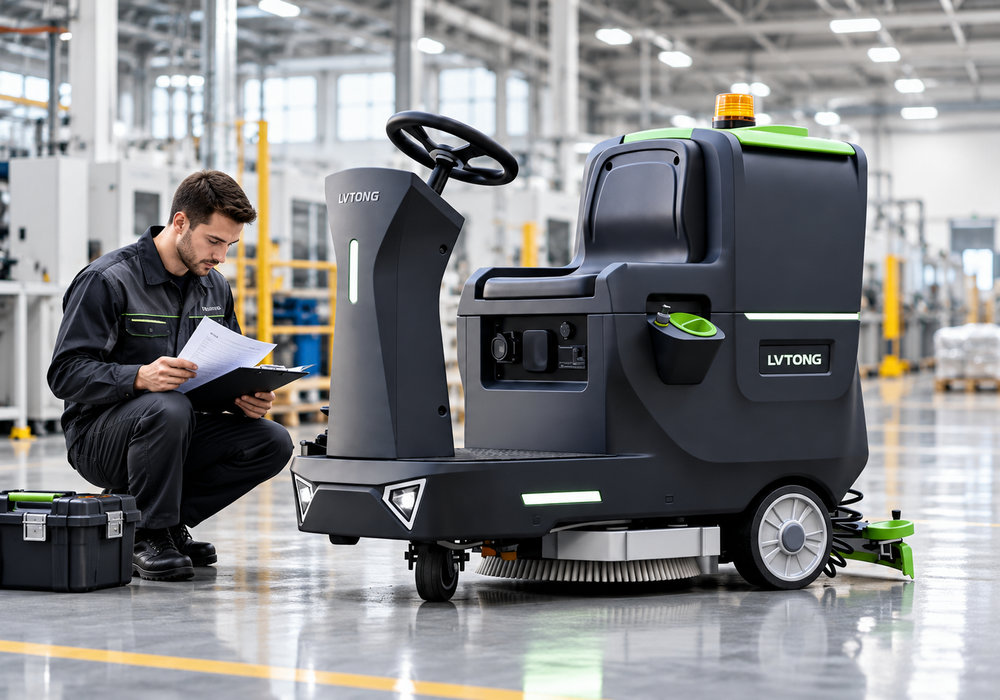
1. What a Floor Scrubber Warranty Actually Promises
A warranty is a repair promise with conditions attached — the floor scrubber warranty coverage list matters less than the conditions around it.
In this industry, warranties are typically expressed as a period of coverage on the complete machine, with separate shorter periods on high-load components such as drive motors, pumps and the charger. What the document is really promising is narrower than buyers assume: it promises to repair or replace defective parts under defined conditions — not to guarantee uptime, not to cover consumables, and not to pay for your downtime. Reading it as a parts-repair promise with conditions is the correct frame, and every condition in it deserves a sentence of scrutiny before you sign.
2. The Three Layers: Parts, Labor and Freight
Ask which layer each remedy sits in — a “free parts” warranty can still cost you the labor and the freight.
An export-grade warranty has three distinct cost layers, and manufacturers may scope them differently:
| Layer | What it pays for | What to confirm |
|---|---|---|
| Teile | Defective components, shipped from the factory | Who pays shipping of the replacement part — air or sea, and who pays for the failed part’s return if required |
| Arbeit | A technician’s time, if offered at all | Many export warranties exclude on-site labor entirely; confirm whether remote diagnosis counts |
| Fracht | Movement of parts (rarely whole machines) | Confirm the trade term under which freight responsibility transfers — see Incoterms at the ICC |
When you compare two suppliers, compare the three layers separately. A 24-month parts promise with paid labor and freight can be worth less than an 18-month promise that covers all three.
3. What a Commercial Floor Scrubber Warranty Does Not Cover
Exclusions, not coverage, decide whether a commercial floor scrubber warranty ever pays out — read that section first.
Typical exclusions cluster into four groups, and most of them are behaviors, not bad luck:
- Improper use: surfaces or environments outside the machine’s stated application, or cleaning tasks the model was not designed for.
- Wrong consumables and water quality: detergents outside specification, or water hardness that scales the pump — several manufacturers condition coverage on approved chemicals.
- Unauthorized repair: opening the controller or swapping components without written approval is the fastest way to void the remaining term.
- Missing records: some conditions require maintenance evidence; no logbook, no claim.
Because cross-border sales of goods fall under international frameworks such as the CISG administered by UNCITRAL, remedies for genuine defects exist even where a warranty is silent — but enforcing them across borders costs far more than reading exclusions before signing.
4. Where Wear Parts End and Warranty Begins
Wear parts are excluded by design: a warranty that covered squeegee blades would just be a parts subscription.
Squeegee blades, brushes, pads, filters and skirts degrade by use — no manufacturer covers them as warranty items. What matters at the contract level is the boundary line: confirm the wear-parts list is explicit in the warranty annex, so a disputed component cannot be reclassified as “wear” after a failure. Batteries deserve a separate line: lithium packs on industrial machines are usually warranted on a different schedule from the machine itself, sometimes cycle-based rather than time-based. For the replacement logic of parts after the warranty term, see the dedicated Teileliste für Bodenreinigungsmaschinen — this article stops where the parts list begins.
5. Battery Warranty Is Its Own Agreement
Treat the battery warranty as a separate contract with its own term, its own exclusions and its own evidence rules.
Lithium battery coverage typically splits into the cells, the pack and the battery management system, and exclusions often include deep discharge caused by storage without charging, charging outside the specified temperature window, and physical damage. Two clauses repay close reading. First, capacity: some warranties promise replacement only below a stated capacity threshold (often expressed as a percentage of rated capacity), which is a very different promise from “battery fails to work”. Second, certification: a pack built to recognized cell standards — the kind of work validated by laboratories such as TÜV — travels with test documentation you should demand alongside the warranty text, because future claims and future shipments both depend on it.
6. The Warranty Clock: Start Date, Registration and Records
Confirm in writing when the warranty starts — bill-of-lading date, arrival date or commissioning date can differ by more than a month.
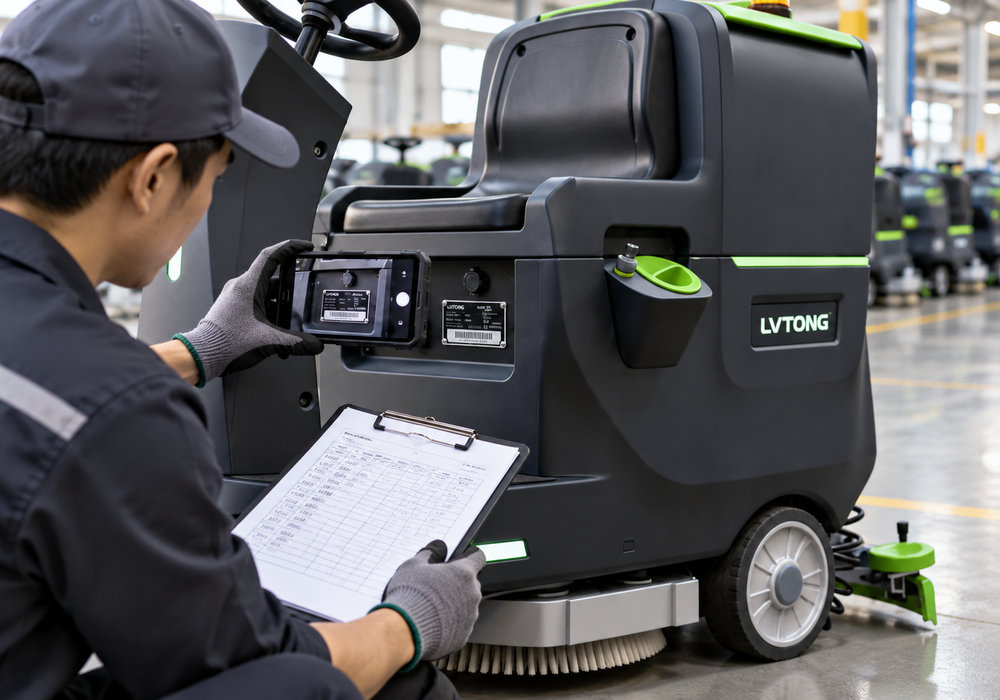
On export machines the start date is ambiguous by default, and an ambiguous start date is a month or more of coverage silently lost. Three conventions exist: from the invoice date, from the bill of lading, or from commissioning at the destination. Ask which applies, then build the paper trail that the clock depends on: the serial number recorded on the invoice, a start-of-warranty confirmation in writing, and an operating log from day one. The log is not bureaucracy — it is the difference between a covered failure and a “no maintenance evidence” refusal.
7. Transit Damage Is Not a Warranty Claim
Damage found on arrival belongs to the carrier claim process — file it before signing the delivery note, not after the machine fails.
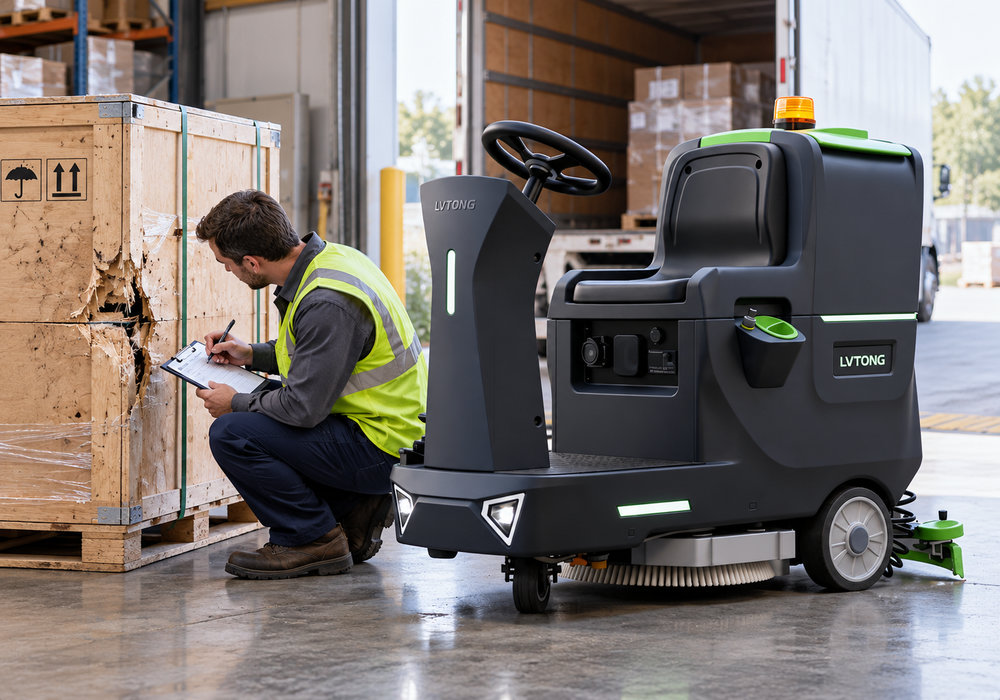
Buyers routinely discover dents or leaks weeks after delivery and call it warranty; by then the evidence window has closed. Transit damage is handled against the carrier, under the risk-transfer rules set by the delivery term, and the claim rests on what was noted at receipt. The discipline is simple: inspect the crate against photos the factory took before loading, note any damage on the delivery document before signing, and photograph the packaging before opening. The full shipping-document workflow is covered in the lithium battery shipping guide — a warranty claim starts where a transit claim ends, and the two must not be mixed.
8. Warranty Pass-Through in OEM and Private Label Deals
OEM buyers inherit every warranty obligation they sign for — confirm the factory’s terms first, then mirror them into your own customer promise.
If you sell the machine under your own brand, your customers’ warranty is your liability even when the defect sits in the factory’s component. Three clauses define the exposure. Pass-through: can you transfer the factory warranty to your customers, or only to your legal entity? Component warranties: motors, chargers and battery packs often carry the component maker’s own terms — get copies, not summaries. Support period: how many years after production will the factory still supply the parts your warranty obliges you to honor? Distributors carry the same exposure at retail level; the channel-side questions are laid out on the become a distributor page. None of this is standard across factories — each point is negotiated, which is exactly why it must be written.
9. Filing a Floor Scrubber Warranty Claim: The Evidence Pack
A floor scrubber warranty claim is decided by paperwork: five pieces of evidence, assembled in the first week, not the month after.
Claims succeed when the evidence arrives as a package. Assemble it early and keep it current:
- Serial plate photo — proves the machine and its build date.
- Invoice and start-of-warranty confirmation — proves the clock.
- Short fault video with sound — proves the symptom better than any description.
- Operating and charging log extracts — proves the exclusions do not apply.
- Photos of the failed part, retained until the factory rules on disposal.
For disputed cases, third-party inspection reports from bodies such as SGS convert an argument into a documented finding — agreeing in advance on this mechanism costs a sentence in the contract and saves a standoff later.
10. A Seven-Line Checklist Before You Sign
If the warranty document cannot answer these seven lines, the document is not finished.
| # | Confirm in writing |
|---|---|
| 1 | Term for the machine, and separately for battery, charger, motors |
| 2 | Which of parts / labor / freight each remedy includes |
| 3 | Start-date convention: invoice, B/L or commissioning |
| 4 | Wear-parts list, explicitly annexed |
| 5 | Claim procedure: evidence required, response time, part dispatch mode |
| 6 | OEM pass-through and spare-parts support period, if you resell |
| 7 | Dispute mechanism, including third-party inspection if contested |
Use this checklist inside the broader vendor evaluation described in Wie man einen Scheuersaugmaschinenhersteller auswählt, and compare the written answers side by side on the Seite für Anbieter von Bodenreinigungsmaschinen before deciding. A supplier who answers all seven lines in writing has already told you how they will behave after the sale; for the rest, the Kontaktseite is where the questions start.
Floor Scrubber Warranty FAQs
What does a floor scrubber warranty cover?
Typically defects in materials and workmanship on the complete machine for a stated period, with separate terms on battery, charger and motors. Wear parts, consumables, labor and freight may be excluded — confirm each layer in the document.
How long is a typical commercial floor scrubber warranty?
Terms vary by manufacturer and market, and battery coverage is usually shorter than machine coverage. Treat any figure you read online as illustrative and confirm the actual term in the contract.
Can a warranty be voided by the user?
Yes — unauthorized repairs, off-specification chemicals, storage without charging, and missing maintenance records are the four most common grounds for refusal.
Is shipping damage covered by warranty?
No. Transit damage is a carrier claim under the delivery term; note it on the delivery document at receipt. Warranty covers defects that appear in normal operation afterward.