Meta title: Commercial Cleaning Equipment List: Tools & Machines
Description: Build a commercial cleaning equipment list with floor machines, PPE, restroom tools, disinfectants, and sourcing tips for safer, more productive facilities.
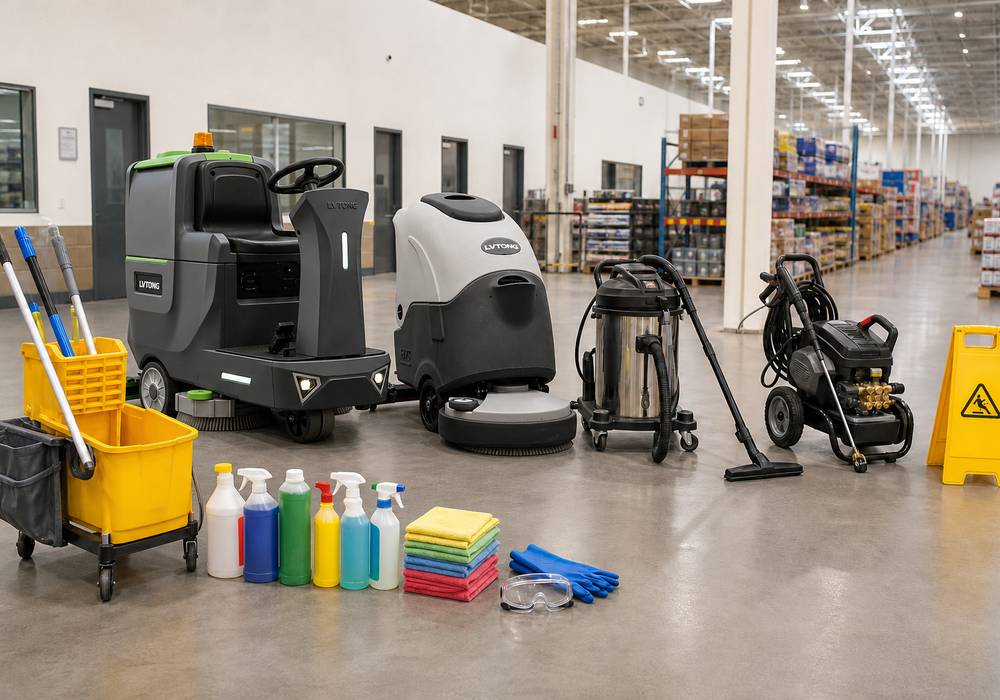
A working commercial cleaning equipment list covers five core machine categories, three classes of disinfection tools, and the personal protective gear required to operate them under federal safety rules. Procurement teams need machines built for daily output, rather than residential models pressed into professional duty. The right combination decides labor cost per square foot, compliance status, and how long each machine survives in service.
What to Include on a Commercial Cleaning Equipment List
The full list runs across five working categories:
- Floor machines: Scrubbers, sweepers, burnishers, vacuums
- Restroom equipment: Caddies, brushes, dispensers, tile machines
- Window and exterior: Squeegees, poles, pressure washers, outdoor sweepers
- Disinfection systems: Electrostatic sprayers, foggers, UV-C devices
- Safety gear: PPE, signage, spill kits, lockout/tagout
Facility type drives what gets prioritized inside each category.
A large distribution center loads its budget on ride-on scrubber-sweepers and dust-collection equipment.
The hospital needs EPA-registered hospital disinfectants and HEPA-filtered vacuums.
Shopping malls weigh toward ride-on scrubbers, escalator cleaners, and high-capacity restroom dispensers.
Hotels need compact walk-behind scrubbers and carpet extractors to handle the mix of surfaces across guest rooms, corridors, and back-of-house areas.
Floor Cleaning Machines
Floors absorb most of the cleaning labor in commercial buildings, which is why floor machines drive the biggest productivity gains.
EnISSA cleaning times reference is the standard benchmark used in the industry. The cleaning time in the guide is calculated according to the reference.
1. Walk-behind floor scrubbers
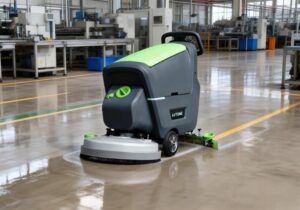
Walk-behind units suit retail aisles, hospital corridors, school cafeterias, and warehouse staging areas, where the compact frame turns inside tight obstacles in ways a ride-on unit cannot match.
Key specs to consider:
- Scrubbing path width: For tight aisles and corner work, 400 to 500 mm is enough. Open retail floors and warehouse staging require 600 to 700 mm.
- Brush pressure: Adjustable pressure is the only spec worth buying. A fixed setting either fails on dense grime or hurts softer vinyl and rubber over months of use.
- Recovery vacuum strength: Look for 1,000+ mm water lift on high-traffic floors. Weaker vacuums leave wet streaks that become slip hazards.
- Battery type: Lithium-ion with a 2 to 3 hour runtime and fast recharge is the default when shift windows are tight. Lead-acid costs less per amp-hour but adds weight and stretches recharge time.
- Tank capacity: Match tank size to fill-point spacing rather than total area. 5 to 8 gallons works where water access is nearby; the places without convenient fill points need 10 to 15 gallons.
A 4,000 sq ft regional distribution warehouse cut daily cleaning from 8 to 10 hours of manual mopping down to a single scrubber pass after deploying an LT-S530X walk-behind unit with a 530 mm path and 62 L tank.
Tire marks on polished concrete were cleared in one pass, and floors dried fast enough to skip the wet-floor downtime that had been a slip-risk problem.
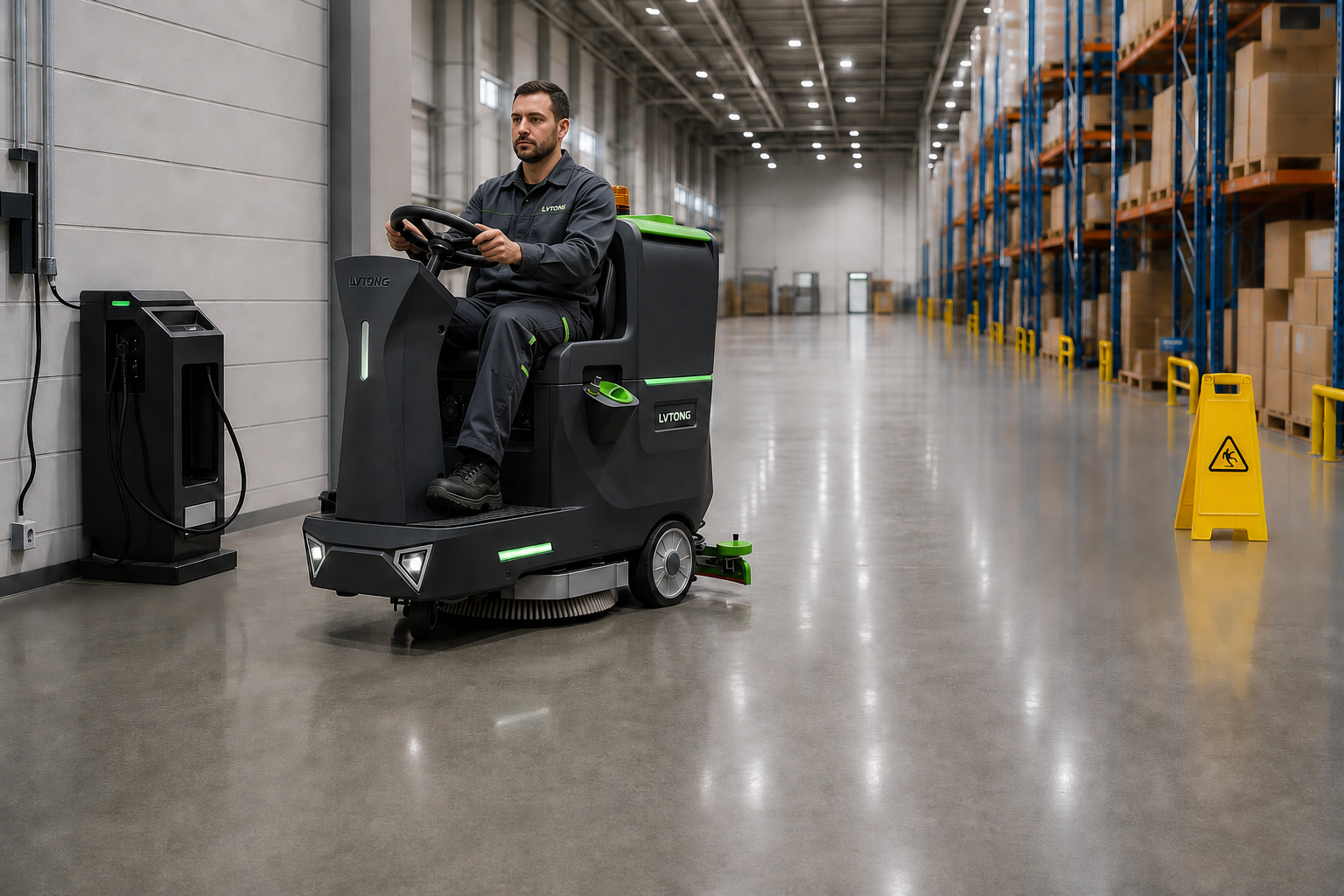
2. Ride-on scrubbers and sweepers
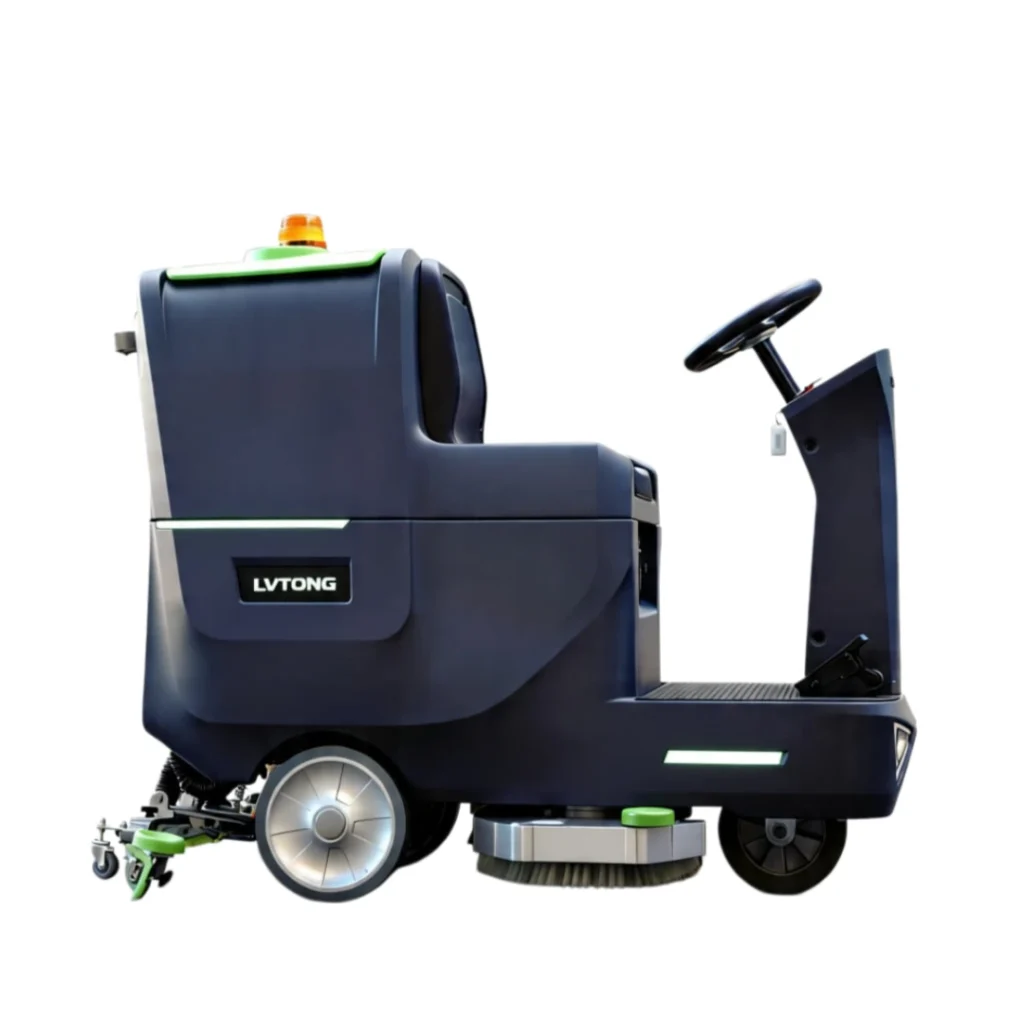
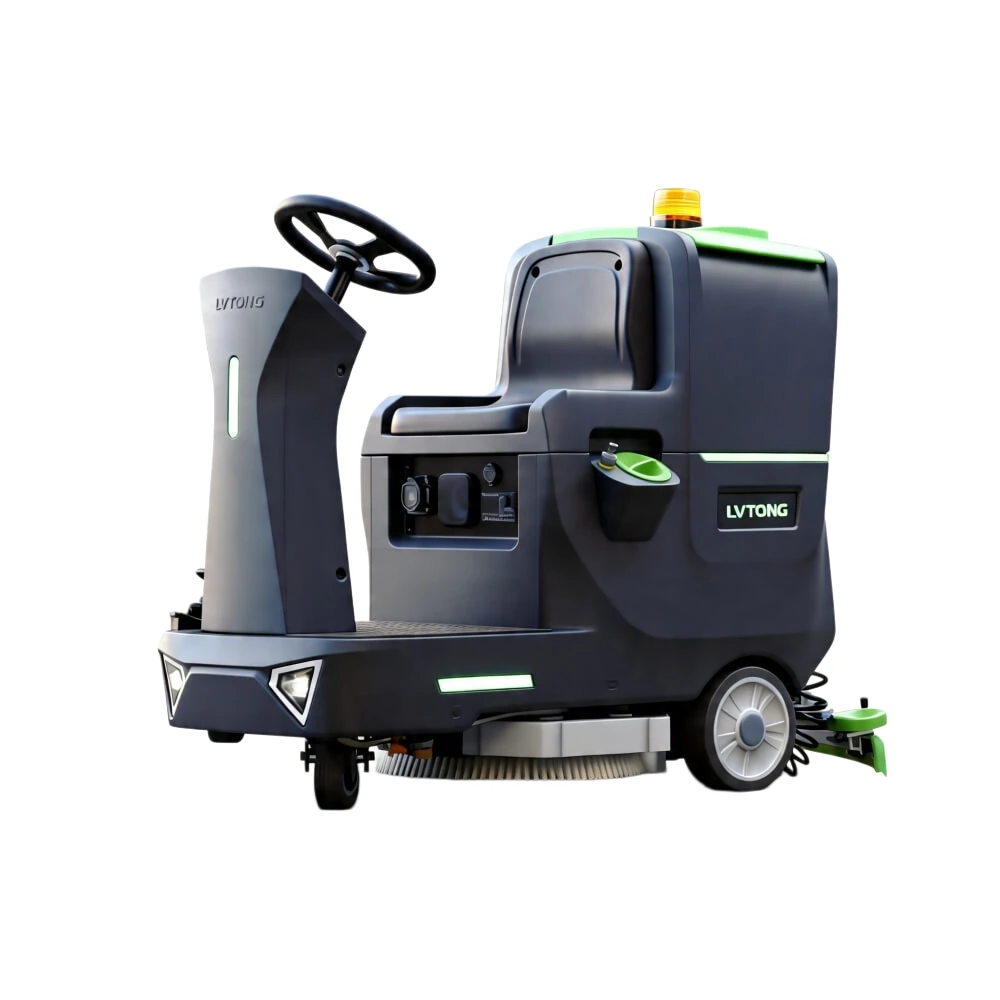
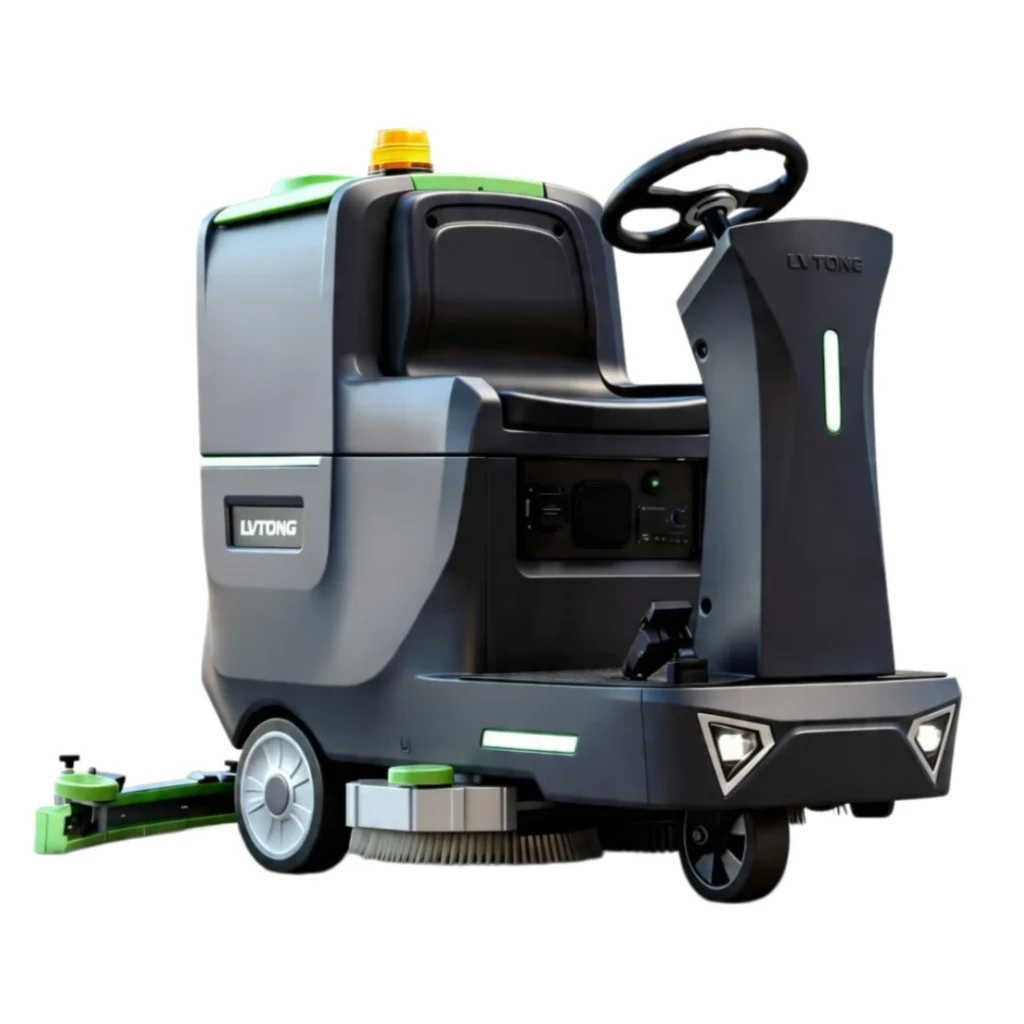
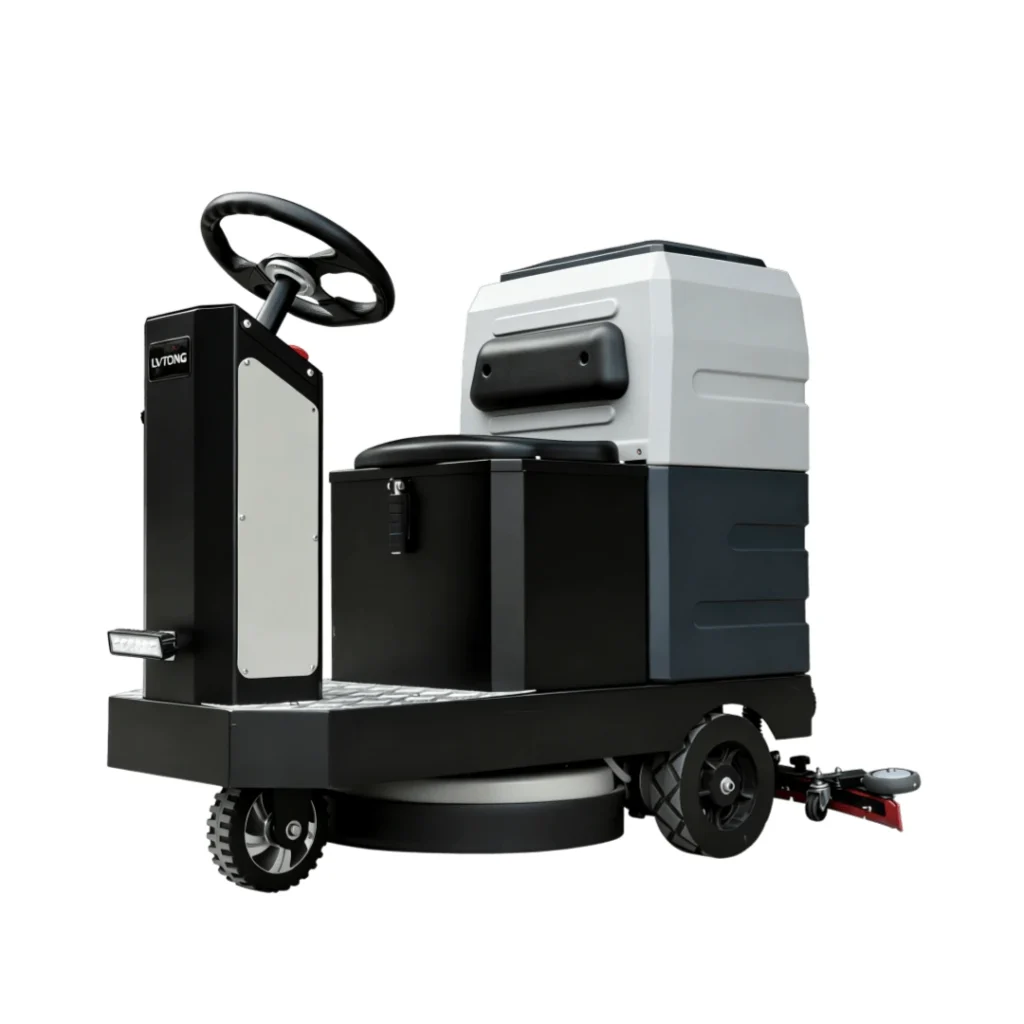
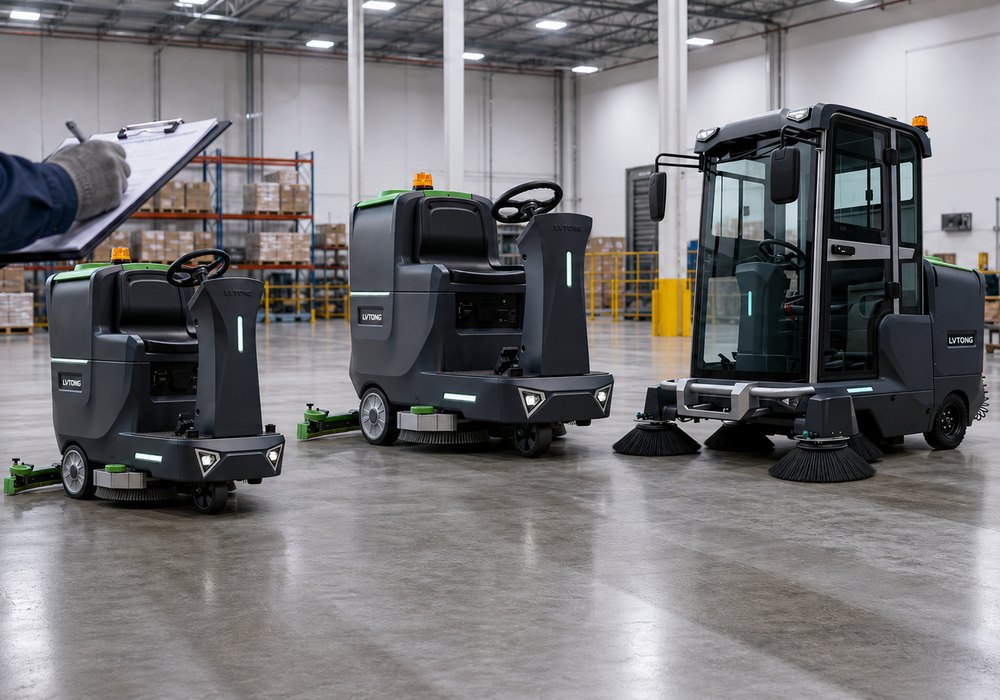
It is used for floor areas above 30,000 sq ft. One operator on a ride-on floor scrubber covers ground that previously took three workers on walk-behind units, with seated operation cutting fatigue across long shifts.
Match equipment to facility size:
- 5,000 to 10,000 sq m site: Walk-behind at 1,500 to 3,000 sq m per hour is enough.
- 10,000 to 30,000 sq m site: Mid-size ride-on at 5,000 to 8,000 sq m per hour.
- 30,000+ sq m site: Large ride-on at 12,000 to 25,000 sq m per hour with continuous operation.
A national retail chain reported a 52% reduction in overall cleaning time and 87% drop in bacterial residue after switching to an Fregadora con operador a bordo LT-S710X. The 860 mm path and large tank capacity cut both shift hours and chemical use.
Choosing the power source for the working environment:
- Batería: It suits the indoor work in hospitals, schools, and food production that requires low emissions and noise. Lithium-ion now leads new fleet purchases because of weight and lifespan.
- Propane: A fit for mixed indoor-outdoor or rough-terrain work where battery range falls short. Indoor use requires proper ventilation.
- Diesel: Reserved for heavy-duty outdoor cleaning in parking lots and industrial yards. At this scale, battery recharge cycles make electric impractical.
3. Burnishers and polishers
- High-speed burnishers (1,500 to 2,500 RPM): The choice for restoring gloss on wax- or polish-finished hard floors. Fast pad rotation reflows the finish through friction heat.
- Low-speed buffers (under 350 RPM): A better fit for wax stripping and deep scrubbing where the operator needs control over heavily soiled or sealed surfaces.
- Dual-speed machines: Switch between 175 and 300 RPM for facilities that need one machine for both scrubbing and light polishing.
4. Carpet extractors
- Hot-water carpet extractors: Use on low-pile carpet in offices and hotels that hold embedded soil and oils. Heated solution lifts more than cold extraction.
- Portable spot extractors: Compact units sized for stain treatment and small-area work. A practical fit for spill response between scheduled deep cleans.
- Encapsulation cleaners: Suited to interim carpet care between deep cleans. The carpet stays walkable within 30 minutes.
- Truck-mounted extractors: External pump and vacuum source with hoses run into the building. Higher PSI and recovery rates suit stadium, casino, and large-venue work.
Restroom Cleaning Equipment
Restrooms generate more cleaning complaints and contamination risk per square foot than any other space in a commercial facility.
1. Dedicated tools
Cross-contamination control starts with separating restroom tools from the others.
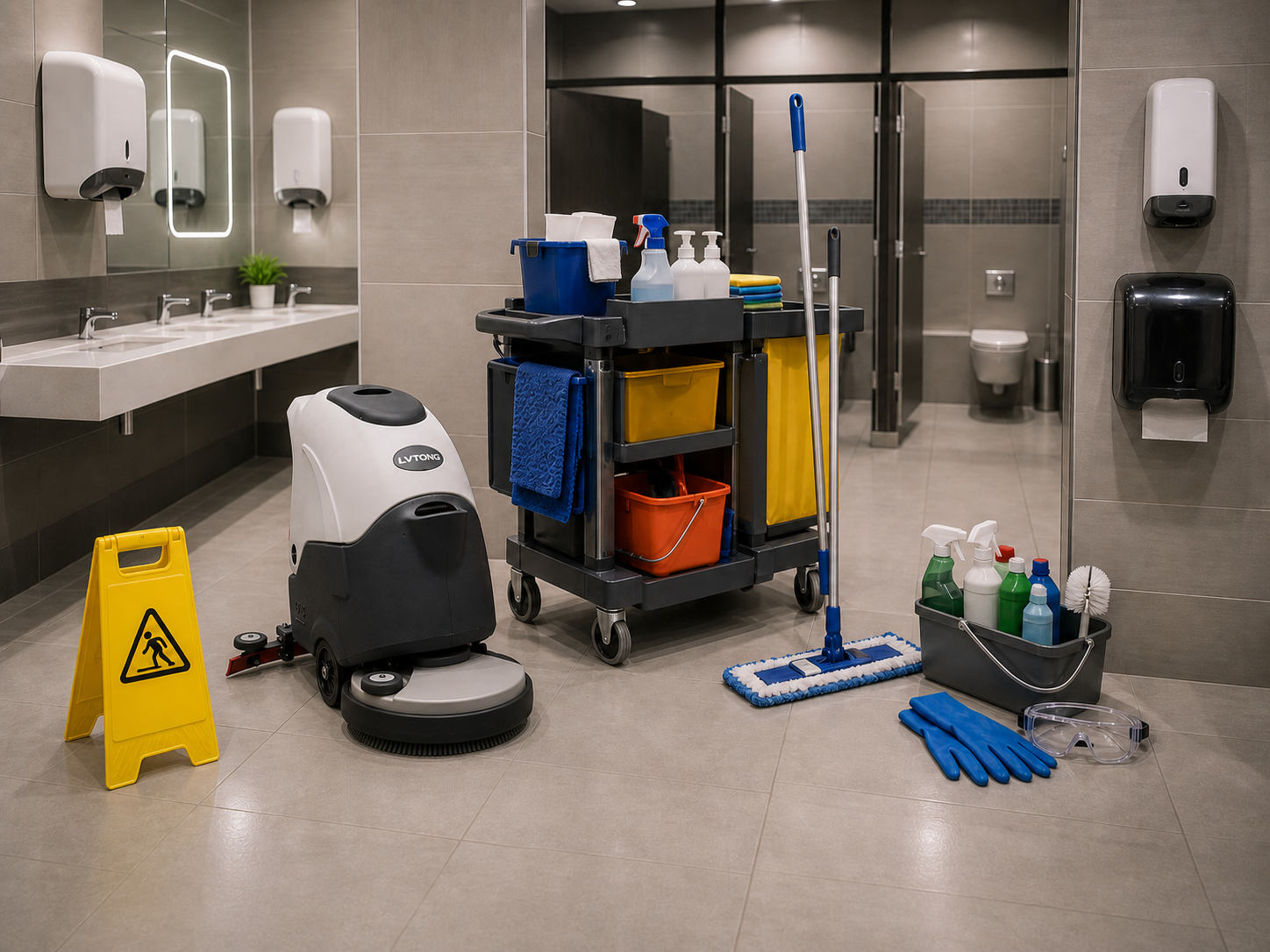
Standard restroom kit:
- Color-coded mop system: Red goes to restrooms by industry convention. This single discipline closes the most common cross-contamination path on a janitorial cart.
- Toilet bowl brushes and holders: One set for a certain restroom, never shared across spaces. The drip holder keeps stagnant water and pathogens off cart surfaces.
- Tile and grout brushes: Stiff bristles dig into floor seams that a mop cannot reach. Carry both a 4-inch hand brush and a long-handled version for full coverage.
- Urinal screens and splash guards: Anti-splash screens cut floor splash by 30 to 50 percent. Quarterly replacement keeps the deodorizer fragrance and antimicrobial coating effective.
- Touchless dispensers: Match reservoir capacity to peak traffic. Airports, malls, and stadiums need larger units serviced more frequently than office floors.
2. Machines for deep restroom cleaning
Tile floors clean faster with a compact walk-behind floor scrubber than with a mop and bucket.
Other deep-clean machines:
- Steam cleaners: A fit for facilities with chemical sensitivity restrictions or food adjacency rules. Steam cuts grout discoloration and biofilm without harsh chemistry.
- Pressure washers: Reserved for stadium, transit hub, and entertainment venue restrooms where intensity matters more than precision.
- Tile and grout sprayers: Apply the chemical evenly before scrubbing. Pre-treatment dwell time matters more than scrub pressure in most cases.
Window and Exterior Cleaning Equipment
Window and exterior cleaning has its own equipment set because the safety profile and tool types differ from interior cleaning.
1. Window cleaning tools
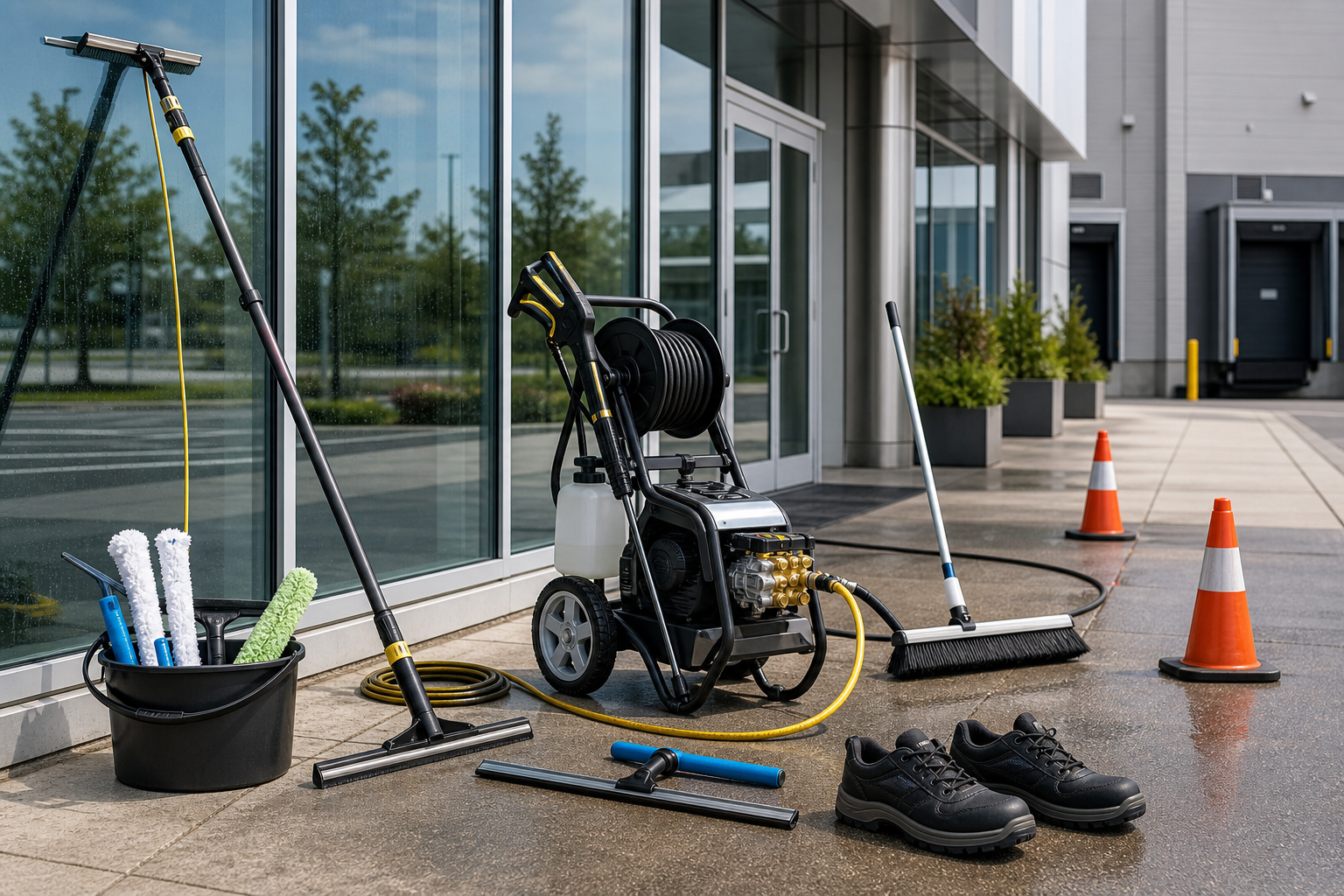
Manual window cleaning core kit:
- Squeegees (12 to 22 inches): Silicone blades for heavy-duty exterior work, rubber for streak-free interior glass. Silicone lasts longer; rubber gives a cleaner finish on smooth surfaces.
- T-bars and washer sleeves: Microfiber sleeves outperform cotton, holding more solution and releasing it gradually for better coverage on tall windows.
- Telescopic poles (up to 30 ft): Aluminum suits short-reach interior use; carbon fiber holds steady at full extension for exterior work.
- Water-fed pole systems with deionized water: A good fit for exterior facades up to 60+ ft because they skip the scaffolding step. Deionized water leaves no mineral residue when it air-dries.
2. Pressure washers and exterior sweepers
Choose a pressure washer by use case:
- Cold-water 2,000 to 3,000 PSI: The standard for sidewalks, entrances, awnings, and most parking lot stains. Cold systems cost less to run and need no fuel beyond the power source.
- Hot-water 3,000+ PSI: Required for restaurant exterior grease and dumpster pad buildup. Heated water cuts dwell time and detergent volume.
- Steam units: For chewing gum, oil, and graffiti on softer substrates. Steam works without etching the surface.
For outdoor work at scale, a single ride-on sweeper typically replaces multiple manual crews across parking lots, factory roads, and loading docks.
A manufacturing facility operating large outdoor workshop areas and internal access roads documented a 50% gain in cleaning efficiency after deploying the LT-S2050SF industrial ride-on sweeper.
The unit delivers a 2,050 mm sweeping path, 20,000 sq m per hour productivity, 5 to 8 hours of continuous battery operation, and a 180L hopper paired with a 100L dust-suppression water tank.
Disinfection and Sanitation Equipment
Disinfection equipment must align with EPA-registered chemistry to meet professional standards. CDC environmental infection control guidance directs facilities to clean noncritical medical equipment surfaces with a detergent or disinfectant, then apply an EPA-registered hospital disinfectant according to label instructions. Contact time and dwell time are part of the label, and the equipment has to support them.
1. Disinfection delivery systems
Choose by space type and frequency:
- Electrostatic sprayers: Handheld units cover desks and small fixtures; backpack models handle classrooms, gyms, and food service areas. The charged mist wraps around irregular geometry that spray-and-wipe misses.
- Foggers: Ultra-low volume foggers are the right pick for gyms, lobbies, and food production rooms. Finer droplets stay airborne longer for better surface contact.
- UV-C systems: Mobile towers fit vacated patient rooms and operating theaters. In-duct UV-C reduces airborne contaminants inside HVAC systems.
- Handheld disinfectant sprayers: Use for high-touch surfaces between deeper cleaning cycles, especially during business hours when bringing larger equipment in becomes disruptive.
One CDC constraint matters here. Facilities should avoid disinfectant fogging in patient-care areas, along with any large-surface cleaning methods that produce mists or aerosols or disperse dust in those settings.
2. Chemistry and cart systems
Working core for daily disinfection:
- EPA-registered hospital disinfectants: Verify the EPA registration number matches the active ingredient and the kill claim covers your target pathogens. Label dwell time is non-negotiable.
- Color-coded microfiber: Choose a color system that matches your facility zones. The color of the cloth tells anyone on the floor which area the towel belongs to.
- Low-foam, scrubber-compatible chemistry: Pick formulations labeled compatible with automatic scrubbers. High-foam chemistry damages vacuum motors and reduces suction over time.
Safety Gear and PPE
Personal protective equipment is required under federal rules. OSHA's general PPE standard (29 CFR 1910.132) requires employers to conduct a hazard assessment, provide appropriate PPE, and train workers on its use, with the employer paying for required PPE.
Slip and fall prevention sits inside OSHA's Walking-Working Surfaces standard (29 CFR 1910.22).
The Bureau of Labor Statistics recorded 844 fatal falls, slips, and trips in 2024, which is why wet-floor signage, slip-resistant footwear, and prompt drying procedures belong on every compliant equipment list.
Standard PPE inventory by task
- Nitrile or latex gloves:They protect hands from cleaning chemicals, dirt, and germs, and also help prevent skin irritation and cross-contamination.
- N95 respirator:It helps filter dust, mold spores, and other small particles from the air. It does not protect against most chemical vapors, so stronger fumes may require a different respirator.
- Safety goggles or a face shield:Use them to protect the eyes and face from chemical splashes and spray.
- Slip-resistant footwear:It helps workers keep a stable footing on wet or slippery floors and reduces the risk of slips and foot injuries.
Other safety items beyond PPE:
- Wet floor signs and barriers: OSHA-compliant signs with multi-language warnings.
- Spill kits: Stock chemical, biological, and oil grades for each likely spill type. Keep kits within 2 minutes of likely spill points.
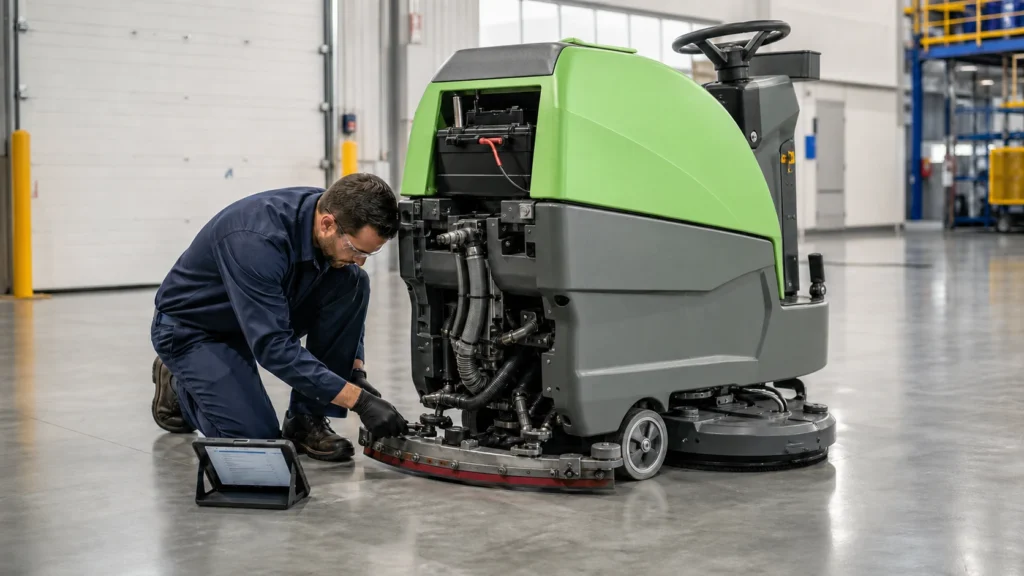
- Lockout/tagout equipment: Required for machine servicing and battery work under OSHA 1910.147. Skipping this step ranks among the most cited violations in cleaning operations.
Sourcing and Budget Planning
Commercial machines and consumer machines sit in two different cost universes, and the lifecycle math favors commercial-grade. A residential vacuum runs 200 to 400 hours before failure. A commercial upright runs 1,500 to 3,000 hours. A well-maintained commercial walk-behind scrubber runs 8,000 to 12,000 hours.
Buying criteria
Five questions settle most equipment decisions.
- Start with the daily cleanable area in square feet.
- Surface type matters as much as area, because epoxy and polished concrete behave differently from sealed wood or vinyl.
- The cleaning window length decides whether one tank gets through a shift.
- Local power and water access affect cordless versus corded selection.
- The last question, often skipped, is who will service the machine over its working life.
Vendor selection
Sourcing strategy matters as much as model selection. Manufacturers offering ISO 9001 certification, factory parts inventory, and 24-hour service response reduce downtime risk. OEM and private-label options carry weight with distributors and large contract cleaners that need branded or customized equipment.
This is the profile LVTONG is built to fit. Twenty-one years of manufacturing experience, ISO, CE, FCC, and UL certifications, a defect rate held under 1%, and a 20-person after-sales team running 24-hour response cover the operational requirements that drive most procurement decisions.
Preguntas frecuentes
Is a walk-behind or ride-on scrubber better for warehouse cleaning?
Ride-on scrubbers fit warehouses above 30,000 sq ft because of faster coverage and operator endurance. Walk-behind units are more cost-effective for smaller spaces, aisles, and areas with tight corners.
What is the minimum PPE required for a commercial cleaning crew?
Gloves, slip-resistant footwear, and eye protection are the baseline under OSHA 29 CFR 1910.132. Respirators are added when chemical fumes or airborne dust are present.
What equipment is needed for commercial restroom cleaning?
A dedicated color-coded caddy, compact walk-behind or tile-and-grout scrubber, toilet bowl brushes, and EPA-registered disinfectants. Touchless soap and paper dispensers plus slip-resistant signage complete a compliant restroom kit.
Are EPA-registered disinfectants required for commercial cleaning?
In healthcare, food service, and any facility making public health claims, EPA-registered disinfectants are required. General commercial cleaning still benefits from EPA-registered chemistry because of label-backed kill claims and dwell times.
¿Cuál es la vida útil típica de una fregadora de pisos comercial?
A well-maintained commercial scrubber runs 8 to 12 years or 8,000 to 12,000 operating hours. Battery replacement in years 4 to 5 is common. Brush and squeegee replacements occur every 200 to 400 hours.
What pressure washer PSI is right for commercial exterior cleaning?
Cold-water units at 2,000 to 3,000 PSI handle sidewalks, entries, and most parking lot stains. Hot-water or steam units above 3,000 PSI are needed for grease removal at restaurant exteriors and dumpster pads.
Resumen
A commercial cleaning equipment list earns its value when it maps to facility size, surface mix, and the standards that apply, including OSHA Walking-Working Surfaces, OSHA PPE rules, and EPA disinfectant registration. Floor machines drive the largest productivity gains. Restroom, window, and disinfection equipment drive compliance and customer experience. The total cost of ownership decides which models last. Build the list from the facility outward, working from cleaning demands to machine specs.
Sources & References
- U.S. Bureau of Labor Statistics, Census of Fatal Occupational Injuries 2024
- OSHA Personal Protective Equipment Overview
- CDC Environmental Infection Control Recommendations
- CDC Environmental Infection Control in Healthcare-Facilities
- ISSA Cleaning Times Methodology
- EPA Selected EPA-Registered Disinfectants