RESPUESTA RÁPIDA
A floor scrubber fleet is a group of depreciating assets, and it is managed well only when hours, condition and cost per operating hour are written down for every machine. Purchase price is the smallest number in the ledger.
- Cost per operating hour — divide yearly depreciation, repairs, parts, consumables and energy by real run hours; the number rises as machines age.
- Repair-or-replace threshold — when a year of repairs approaches the annualized cost of a newer machine, replacement wins; illustrative thresholds below.
- Resale value is built during ownership — charging discipline, operator training and complete maintenance records are what a second owner pays for.
- Stagger the lifecycle — replacing machines in the same year concentrates capital risk; planned renewal spreads it.
The sections below give you the ledgers, the replacement rule, the resale habits and a seven-line annual review you can run this quarter.
What Fleet Management Means for Floor Scrubbers
Floor scrubber fleet management is the practice of tracking every machine’s hours, condition and cost so that replacement decisions are made on numbers, not on the day a machine finally stops.
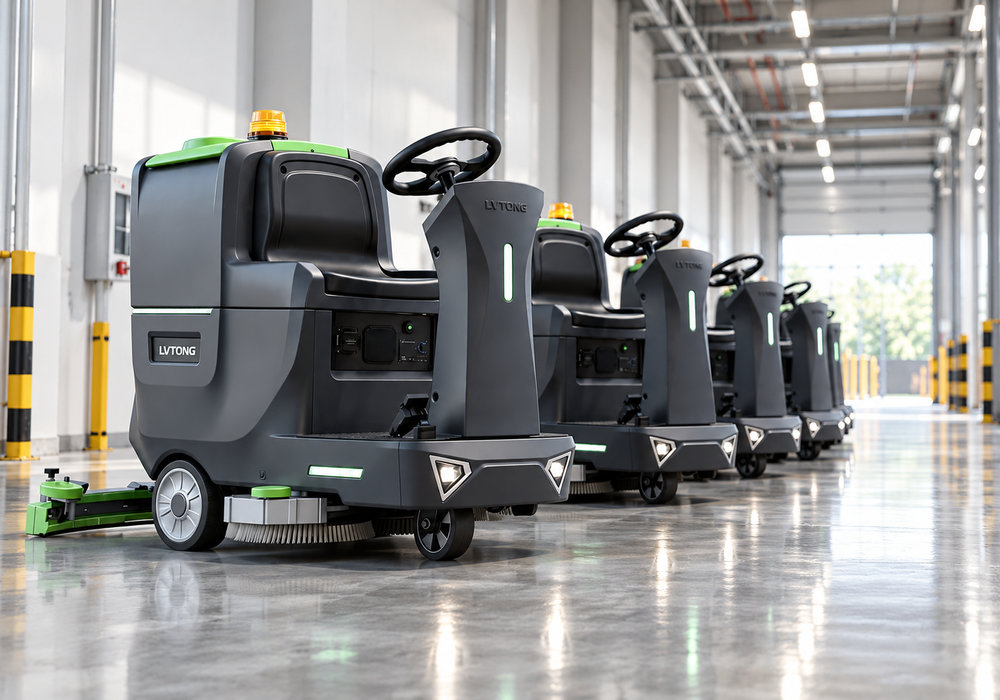
Most export buyers buy machines one at a time as sites expand. Three years later they own eight machines of three different ages, and nobody can say which one costs the most to run or which one will fail next quarter. That is the gap fleet management closes. It treats each machine as an asset with a measurable lifecycle: hours in, condition out, cost per hour rising along the way.
The buyer-side math — purchase price, total cost of ownership and the used-vs-new comparison — is already covered in our buyer guide to scrub machine cost effectiveness. This article starts where that one ends: the machine is on your floor. Everything from here is about the years between purchase and disposal.
The Three Ledgers: Hours, Condition and Cost per Hour
Keep three ledgers per machine — run hours, condition events and cost per operating hour — and the lifecycle cost of your fleet stops being a guess.
Ledger one is hours. Every scrubber counts run time somewhere — a controller, an hour meter, or at minimum a charging log. Ledger two is condition events: every repair, part replacement and unplanned downtime, with date, cost and hours at the time. Ledger three is derived, not recorded:
Cost per operating hour = (annual depreciation + repairs + parts + consumables + energy) ÷ run hours in the same period.
An illustrative shape of that number: a machine in years one to three carries mostly depreciation and consumables; from year four or five, repair and downtime lines grow faster than depreciation falls. When the third ledger’s trend line steepens for two consecutive years, the machine has entered the decision zone discussed below — and the floor scrubber lifecycle cost of the whole fleet becomes visible. The consumables and downtime lines in that formula link directly to spare parts planning — our floor scrubber parts guide lists which components to stock so a worn squeegee never becomes a day of downtime.
Track Utilization Against a Realistic Duty Cycle
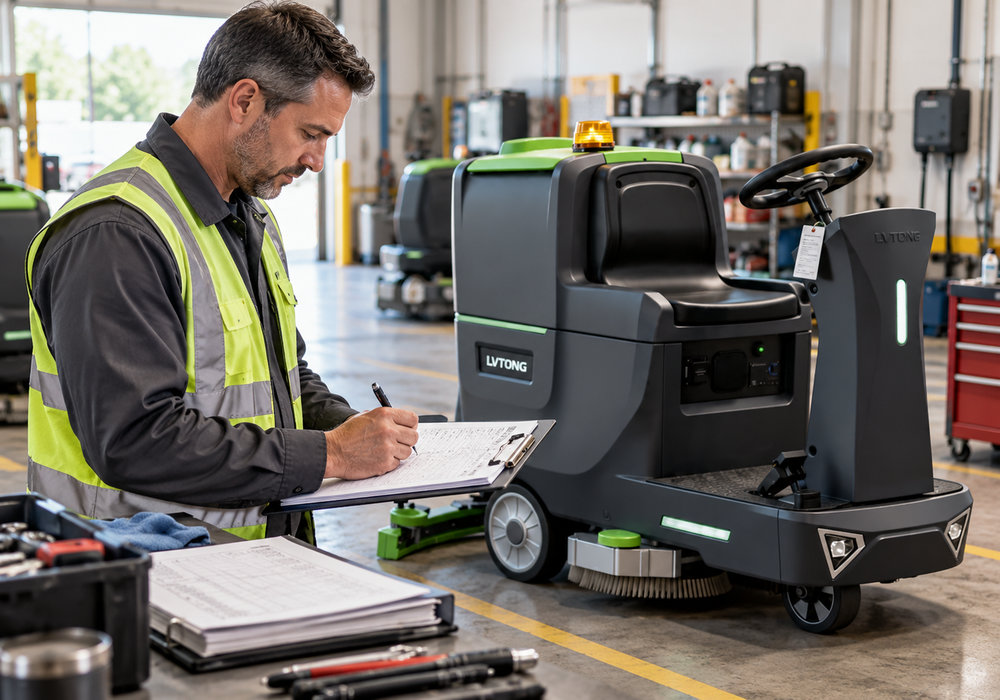
A machine that runs 30 minutes a day is not underperforming — but it may be the wrong asset in that location, and floor scrubber fleet management is what makes that visible.
Utilization divides recorded run hours by the hours the site actually demands. A machine assigned to a small clinic lobby will never match a warehouse dock’s duty cycle, and that is fine; the point of the comparison is to find mismatches in both directions. Chronically idle machines tie up capital, storage and charging infrastructure, while overloaded machines age early and drag the fleet’s cost per hour up.
For export buyers the honest number is usually lower than expected: machines shared across shifts, machines parked because a battery charger is occupied, machines waiting for a part. Each idle cause has a different owner — power infrastructure, staffing or spares — and the utilization ledger tells you which. Where charging capacity is the bottleneck, the operating disciplines in our floor scrubber battery charging guide typically recover hours without spending capital.
The Repair-or-Replace Decision
A workable rule for when to replace a floor scrubber: start comparing replacement seriously in the year when expected repairs plus expected downtime approach the annualized cost of the newer machine.
There is no universal mileage at which a floor scrubber dies; lithium-battery machines of recent design age differently from the lead-acid fleets many buyers cut their teeth on. What holds across fleets is the shape of the decision. Repairs grow with age, and near the end of a lifecycle they stop being separate events and become a standing cost. Replacement compares that standing cost against the annualized cost of the alternative: depreciation on a new machine plus its (near-zero) repair line, minus what the old machine would still return at resale.
Three checks make the comparison honest. First, price the downtime, not just the invoice — an unplanned outage during peak season can cost more than the repair that prevented it. Second, check what the warranty still covers; a machine inside its coverage window fails this test differently, which is why the exclusions and claim process in our floor scrubber warranty guide should be read before the repair decision, not after. Third, remember that floor scrubber replacement is not all-or-nothing — the next section gives the middle option.
Repairs themselves carry a safety dimension: electrical work on the machine belongs to trained hands, and walkway conditions around the work area are regulated territory. The US rule text at eCFR 29 CFR 1910 Subpart D is the usual reference point for walking-working surfaces during maintenance work.
Four Habits That Protect Floor Scrubber Resale Value
Resale value is not created at the sale — it is the discounted sum of how the machine was charged, trained, maintained and documented during ownership.
- Charging discipline. The battery is the single most valuable wearable component, and its health is a direct function of routine. The second owner will test it first; the habits in our charging guide are also resale habits.
- Operator training. Machines operated by trained staff show less frame damage, fewer brush-pressure scars on floors and cleaner tanks. Training records themselves raise the price a buyer will pay.
- Scheduled maintenance, not reactive. Squeegee blades, brushes and filters replaced on schedule keep the drivetrain and vacuum system from compensating — the expensive failures are almost always downstream of cheap neglect.
- Honest hours. Machines that run within their designed duty cycle age slower than overloaded ones; the utilization ledger above is also a resale document.
Documentation That Survives the Sale
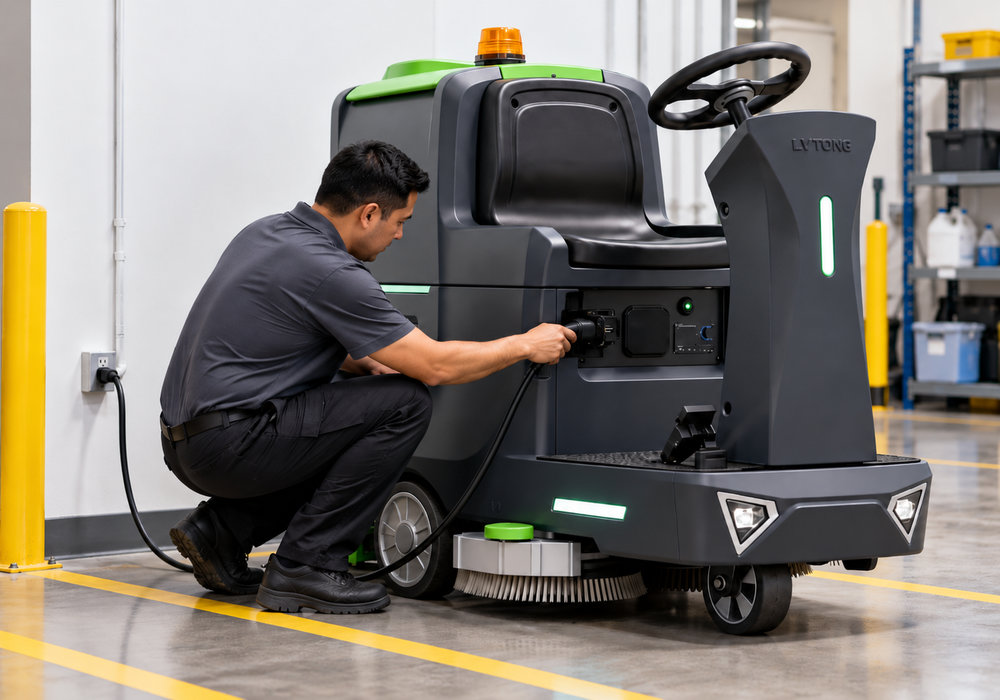
The files that raise used floor scrubber resale value are the same files a careful second owner will demand before paying: maintenance records, battery history and compliance papers.
Buyers of used machines check battery condition, suction performance and refurbishment quality before they pay — the full checklist lives in our guide to buying a used floor scrubber. If you are the seller, that checklist is your preparation sheet. Assemble the floor scrubber maintenance records in one folder: dated service events, replaced parts with invoices, battery charging history if the charger logs it, and the original delivery documents.
Compliance papers matter as much as service history. A machine whose safety test reports are traceable — for example a third-party inspection from a body such as TÜV, or conformity evidence against the household and similar machine safety standard IEC 60335-2-72 — is easier to resell across borders, because the second owner inherits paperwork instead of problems. For a cross-border sale, the contract itself falls under international sale-of-law frameworks such as the La Convención de las Naciones Unidas sobre los Contratos de Compraventa Internacional de Mercaderías (CISG) es administrada por la CNUDMI; stating inspection, handover and acceptance terms in writing protects both sides of a used-machine deal.
Replace, Downgrade or Add: A Fleet Matrix
Not every aging machine is a replacement candidate — downgrading a sound older machine to light duty is often the cheapest way to add capacity.
| Fleet situation | Older machine’s condition | Typical move |
|---|---|---|
| Site demand grew | Sound, hours moderate | Keep; add a machine for the new area |
| Site demand grew | Repairs accelerating | Replace the old machine; new machine takes the heavy site |
| Heavy site closed / demand shifted | Sound, hours high | Downgrade to light duty (lobbies, small zones); defer capital |
| Repair costs trending up | Downtime rising two years running | Plan floor scrubber replacement on your schedule, not the machine’s |
| New site, short commitment | — | Compare renting or buying used before buying new |
The matrix assumes one thing: that hours and condition ledgers exist. Without them, every row defaults to guessing.
Stagger the Lifecycle Across the Fleet
A fleet bought in one year fails in one year — stagger purchases so capital, training and spare-parts needs never peak together.
Fleets formed by opportunistic purchases tend to synchronize: several machines reach end-of-life together, forcing a concentrated capital outlay, a training wave and a spare-parts spike in the same quarter. Planned renewal breaks the pattern. Machines bought in different years retire in different years, which smooths budgets and lets each incoming machine inherit an experienced operating crew instead of training everyone at once.
Standardization amplifies the effect: when the fleet shares battery platforms, brush formats and consumable sizes, the spare-parts pool shrinks and any machine can borrow from any shelf. For buyers working with us directly, this is a specification conversation at order time — one more reason the deciding happens before delivery, not after.
A Seven-Line Annual Fleet Review
One hour per machine per year, seven lines, keeps floor scrubber fleet management from sliding back into firefighting.
| # | Línea | Qué grabar |
|---|---|---|
| 1 | Run hours | Total and year-on-year change |
| 2 | Refacción | Count and cost this year |
| 3 | Unplanned downtime | Days or shifts lost, cause |
| 4 | Cost per operating hour | Formula output, trend vs last year |
| 5 | Estado de la batería | Runtime vs delivery baseline |
| 6 | Documents | Maintenance records complete? compliance papers on file? |
| 7 | Verdict | Keep / downgrade / replace — and the planned year of the move |
Preguntas frecuentes
¿Cuánto tiempo dura una fregadora de suelos?
No single number fits all fleets — usage intensity, charging routine, water quality and maintenance discipline move the answer more than the badge. Judge each machine by its own cost-per-hour trend, not by fleet averages or marketing years.
When is a floor scrubber not worth repairing?
When expected annual repairs plus downtime approach the annualized cost of a newer machine, and the warranty no longer covers the failing systems. Structural rust, motor failure and controller faults late in life usually tip the math toward replacement.
What raises used floor scrubber resale value the most?
Battery health first, then complete maintenance records and intact compliance paperwork. All three are produced by habits during ownership, not by preparations in the month before the sale.
Should I replace several machines at once to get a better price?
Bulk pricing is real, but synchronizing lifecycles concentrates capital, training and spare-parts risk in one period. If a batch purchase makes sense, plan the next batch deliberately offset by several years.
Floor scrubber fleet management at this level does not require software — three ledgers, a threshold rule and one review hour a year per machine are enough to replace machines on your schedule. If you are planning fleet renewal, standardization or a mixed-voltage expansion, talk to our team about a fleet specification before the next order, not after the next breakdown.