
Введение
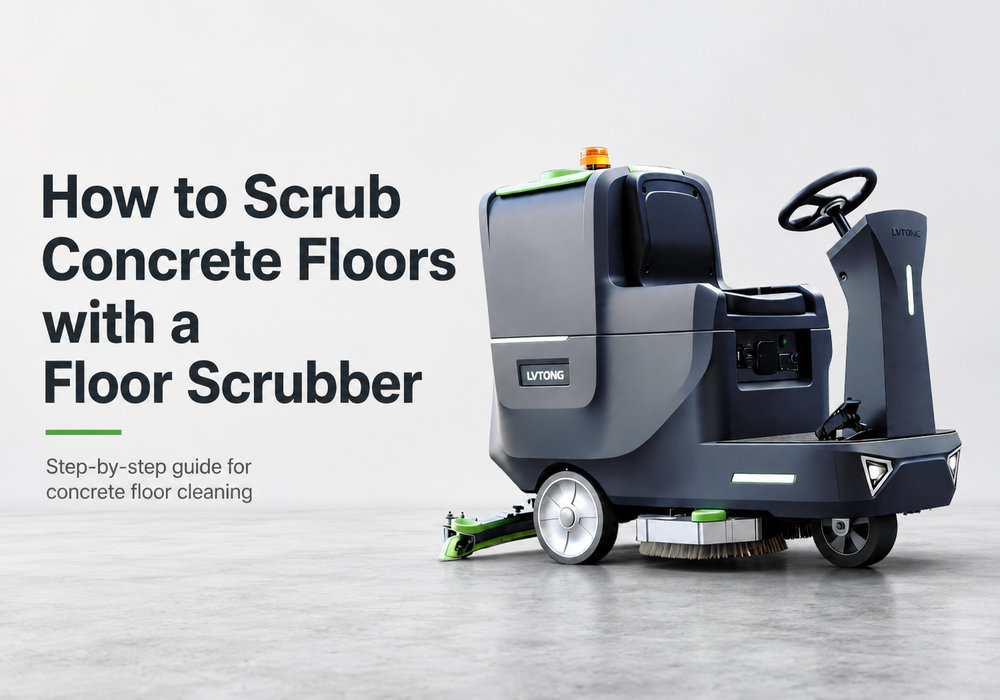
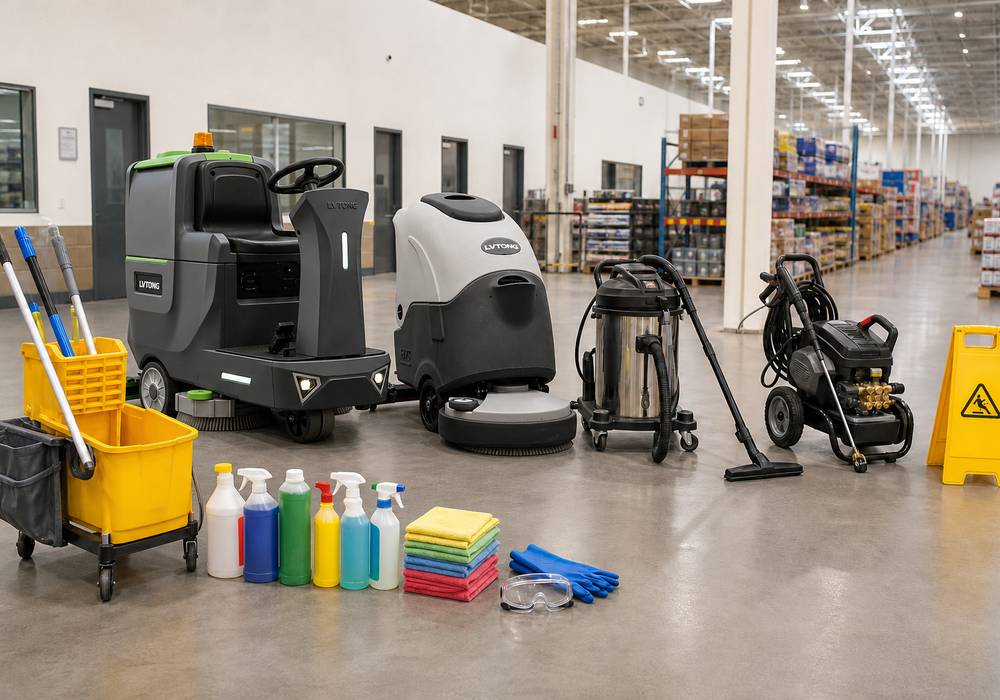
Scrubbing concrete floors effectively requires more than choosing a powerful поломоечная машина. The cleaning method must match the concrete surface, contamination type, brush or pad, detergent, water flow, and wastewater recovery conditions.
Before scrubbing, remove loose debris and identify whether the floor is unsealed, sealed, polished, rough, or epoxy-coated. Oil and chemical residue should be pre-treated, while dust, sand, and metal particles should be vacuumed or swept before wet cleaning.
This guide explains how to scrub concrete floors step by step, choose the right floor scrubber and brush, remove common industrial contaminants, and solve problems such as remaining dust, oil stains, water streaks, scratches, and poor wastewater recovery.
Быстрый ответ
To scrub concrete floors with a floor scrubber, first sweep or vacuum loose debris, pre-treat oil or chemical residue, select a brush or pad suitable for the surface, and scrub the floor in overlapping passes. Recover wastewater immediately and inspect the floor before reopening the area. Use a walk-behind scrubber for narrow or obstructed spaces and a ride-on scrubber for large open areas.
| Шаг | Action |
|---|---|
| 1 | Identify the concrete surface |
| 2 | Sweep or vacuum loose debris |
| 3 | Pre-treat oil or chemical residue |
| 4 | Select the brush, pad, and detergent |
| 5 | Set water flow and brush pressure |
| 6 | Scrub in overlapping passes |
| 7 | Recover wastewater |
| 8 | Inspect the floor and clean the machine |

Можно ли использовать поломоечную машину на бетонных полах?
Yes. A floor scrubber can be used on most concrete floors, but the brush, pad, detergent, water flow, and brush pressure must be selected according to the surface condition. Unsealed concrete is more porous and sensitive to excessive water, while sealed, polished, and coated surfaces usually require less aggressive brushes and cleaning chemicals.
Identify the Concrete Surface Before Scrubbing
Different concrete surfaces respond differently to water, detergent, brush pressure, and mechanical scrubbing. Identify the surface before selecting the cleaning method.
| Concrete Surface | Main Characteristic | Cleaning Risk | Recommended Approach | Additional Inspection |
|---|---|---|---|---|
| Unsealed concrete | Porous and absorbent | Oil, dirty water, and cleaning solution may penetrate the surface | Use controlled water flow and recover wastewater quickly | Check for sanding, cracks, open pores, and heavily worn areas |
| Герметичный бетон | Lower permeability | Aggressive brushes or excessive pressure may wear the sealer | Use a nylon brush or suitable scrubbing pad with moderate pressure | Inspect the sealer for wear, peeling, scratches, and damaged joints |
| Полированный бетон | Smooth and dense | Abrasive brushes or pads may reduce gloss or leave visible scratches | Use a soft pad or non-abrasive nylon brush with low pressure | Check gloss level, surface scratches, cracks, and joint condition |
| Densified concrete | Hardened and wear-resistant surface | Incompatible detergents may affect appearance or leave residue | Use a neutral detergent and moderate brush pressure | Inspect for chemical residue, uneven finish, cracks, and worn areas |
| Rough or broom-finished concrete | Textured, uneven, and more difficult to scrub evenly | Dirt, dust, and wastewater may remain in surface grooves | Use a stiff nylon brush that can reach the textured surface | Check grooves, low spots, cracks, joints, and areas with trapped dirt |
| Epoxy-coated concrete | Smooth surface protected by a resin coating | Excessive pressure, aggressive pads, or unsuitable chemicals may scratch or damage the coating | Use a soft nylon brush or non-aggressive pad with low pressure | Inspect for peeling, bubbling, scratches, coating damage, and exposed concrete |
| Damaged or sanding concrete | Loose surface particles and weakened concrete | Excessive water and brush pressure may worsen sanding or surface damage | Reduce water flow and brush pressure, and recover wastewater immediately | Check the severity of sanding, loose particles, cracks, and structural damage |
| Highly porous concrete | Rapidly absorbs water, detergent, and contaminants | Dirty solution may penetrate deeply and become difficult to remove | Use minimal water, clean in small sections, and recover wastewater quickly | Test water absorption in a small area before full-floor scrubbing |
Match the Cleaning Method to the Contamination
Concrete floors in different industries collect different types of contamination. The right cleaning method depends on whether the floor mainly has dust, oil, chemical residue, or mixed dirt.
Follow the chemical supplier’s safety data and site procedures before neutralization. Do not mix cleaning chemicals unless compatibility has been confirmed.
| Contamination Type | Common Scenarios | Main Cleaning Difficulty | Recommended Treatment |
|---|---|---|---|
| Tire marks | Parking areas, loading bays, factories | Rubber marks adhere to smooth surfaces | Apply a compatible cleaner, allow dwell time, then scrub with a suitable pad |
| Cement and mineral dust | Construction areas, cement plants | Fine dust spreads and turns into slurry when wet | Vacuum thoroughly before wet scrubbing |
Which Floor Scrubber Is Best for Concrete Floors?
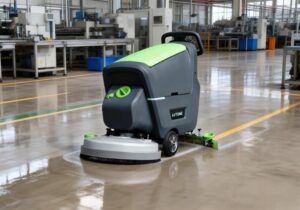
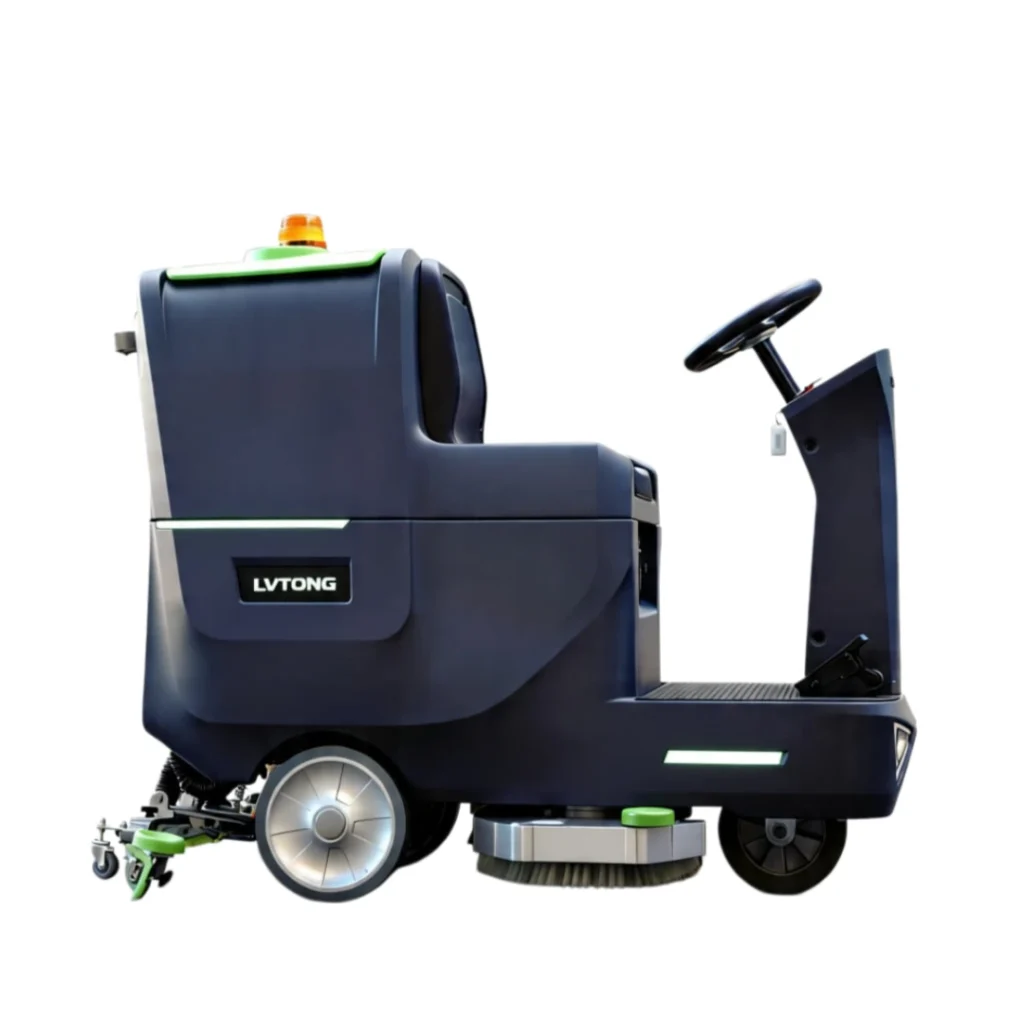
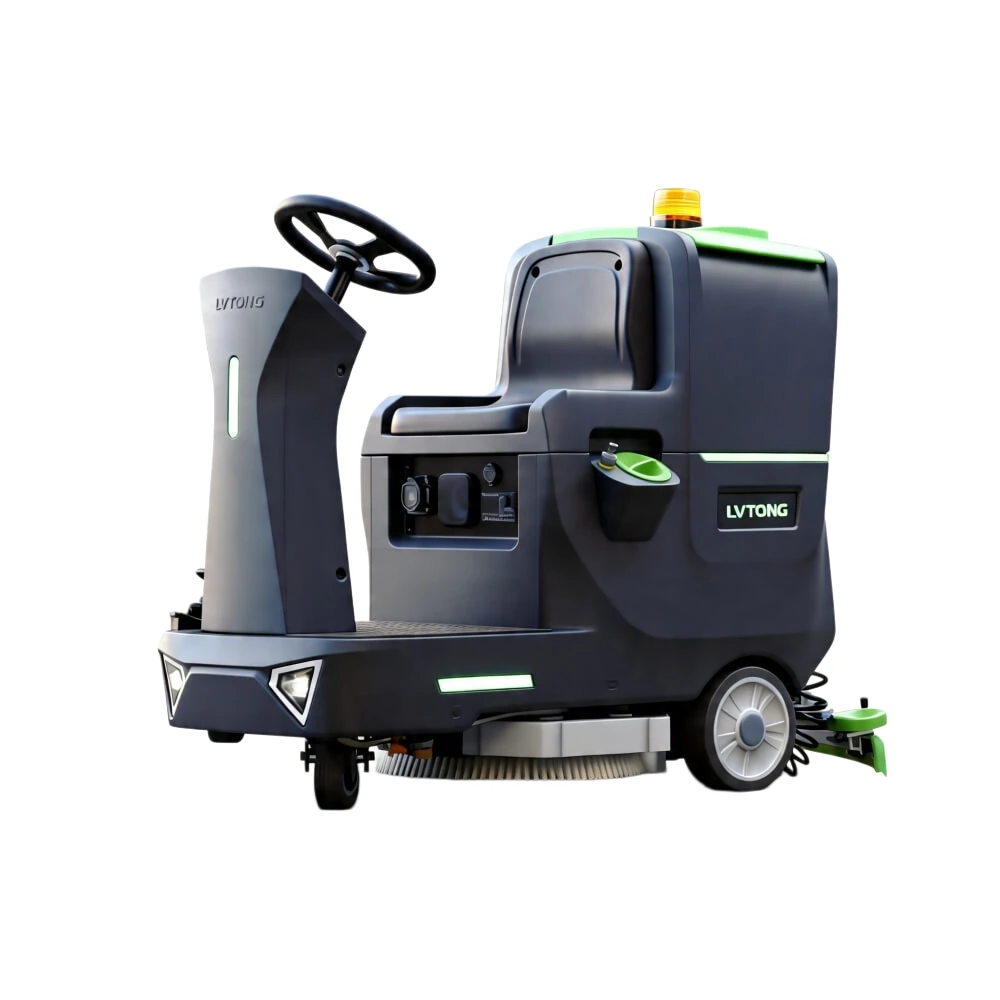
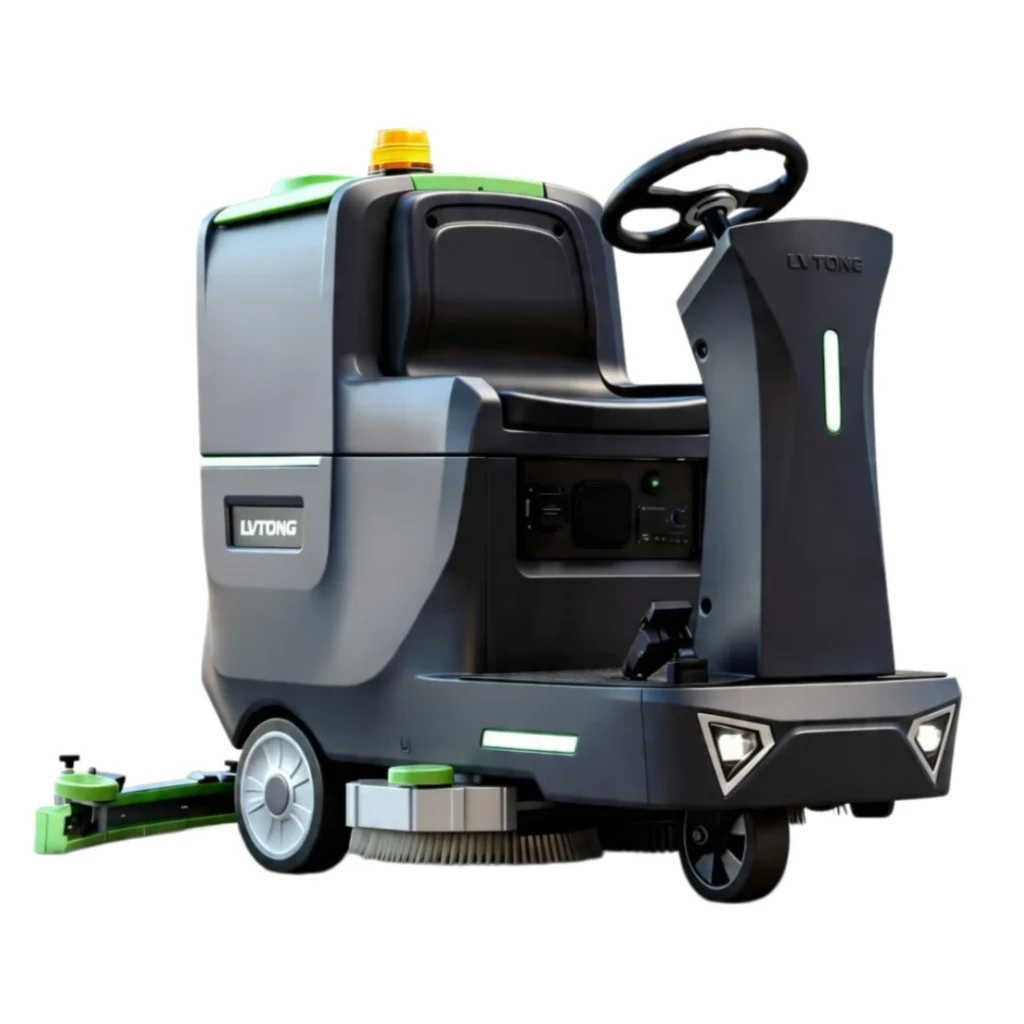
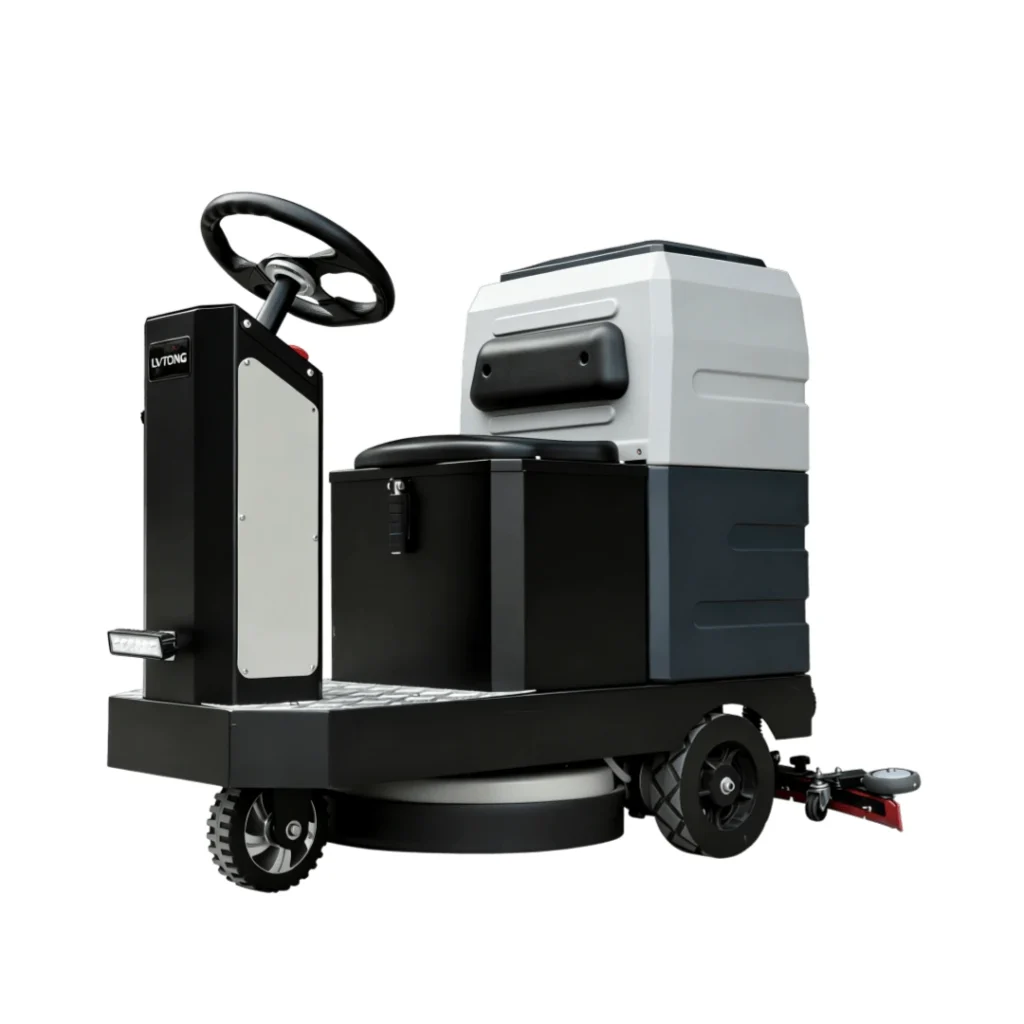
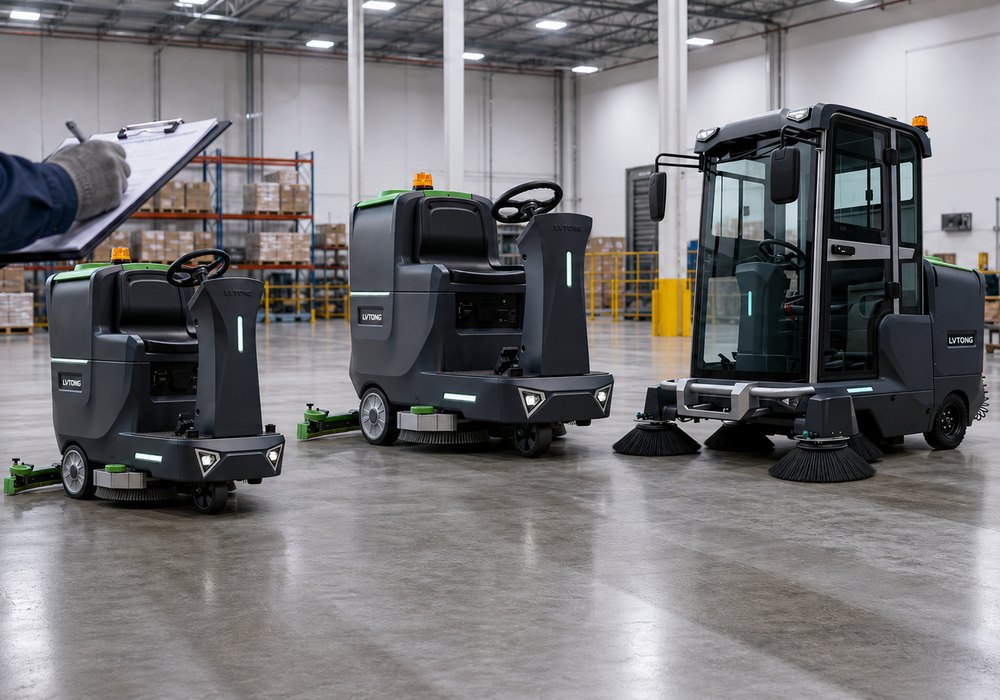
The best floor scrubber depends on the floor area, aisle width, obstacles, surface texture, contamination level, cleaning frequency, and required operating time. Поломоечные машины с ручным управлением are generally more suitable for narrow or obstructed spaces, while поломоечные машины are better suited to large open floors and longer cleaning shifts.
Walk-Behind vs Ride-On Concrete Floor Scrubber
Промышленные поломоечные машины в основном делятся на две категории: поломоечные машины с ручным приводом и поломоечные машины на колесах. Они существенно различаются по эффективности уборки, сценариям применения и сложности эксплуатации. Выбор подходящего варианта зависит от ваших конкретных потребностей.
| Фактор отбора | Поломоечная машина с ручным управлением | Поломоечная машина |
|---|---|---|
| Наиболее подходит для | Narrow aisles, small rooms, and obstructed areas | Large warehouses, factories, and parking areas |
| Маневренность | Лучше подходит для стесненных условий. | Requires more turning space |
| Operator effort | Оператор идёт за станком. | Operator remains seated |
| Cleaning duration | Better for shorter cleaning tasks | Better for longer cleaning shifts |
| Первоначальные инвестиции | В целом ниже | В целом выше |
| Основное ограничение | Lower productivity in large open areas | Less suitable for narrow or crowded areas |
Actual cleaning productivity depends on the machine model, floor condition, turning frequency, operator speed, water refill time, and wastewater disposal time.
Recommended Scrubber and Brush by Floor Condition
| Concrete Floor Condition | Рекомендуемый скруббер | Brush / Pad Type |
|---|---|---|
| Light dust on sealed concrete | Поломоечная машина с ручным управлением или с сиденьем для оператора | Nylon brush |
| Сильная пыль и мусор | Industrial concrete floor scrubber | Nylon or wire brush |
| Масляные пятна | Scrubber with detergent system | Scrubber pad or hard brush |
| Chemical residue | Scrubber after neutralization | Nylon brush or pad |
| Large warehouse above 3,000㎡ | Ride-on concrete floor scrubber | Nylon brush or pad |
| Небольшая мастерская или узкий проход | Walk-behind concrete floor scrubber | Nylon brush |
Best Brush or Pad for Concrete Floor Scrubbing
| Brush or Pad | Suitable For | Avoid Using On | Примечания |
|---|---|---|---|
| Мягкая нейлоновая щетка | Polished, sealed, or coated concrete | Heavy embedded debris | Suitable for routine cleaning |
| Medium nylon brush | General concrete floors and mixed dirt | Delicate high-gloss coatings | Good general-purpose choice |
| Stiff nylon brush | Rough uncoated concrete | Easily scratched surfaces | Helps clean textured surfaces |
| Чистящая подушечка | Smooth concrete, oil films, and tire marks | Deeply textured floors | Select pad aggressiveness carefully |
| Проволочная щетка | Limited heavy-duty applications on rough uncoated concrete | Epoxy, polished, sealed, or decorative concrete | Test a small area before full use |
Always test an aggressive brush, pad, or detergent on a small, inconspicuous area before cleaning the full floor.
Before Scrubbing: Concrete Floor and Machine Checklist
Inspect the Concrete Floor
- Remove large obstacles such as cardboard, metal debris, tools, and equipment parts.
- Mark sharp objects, uncured concrete, deep cracks, and uneven joints.
- Check oil penetration, sanding areas, and chemical residue before scrubbing.
- Pre-treat serious stains before using the floor scrubber.
Inspect the Floor Scrubber
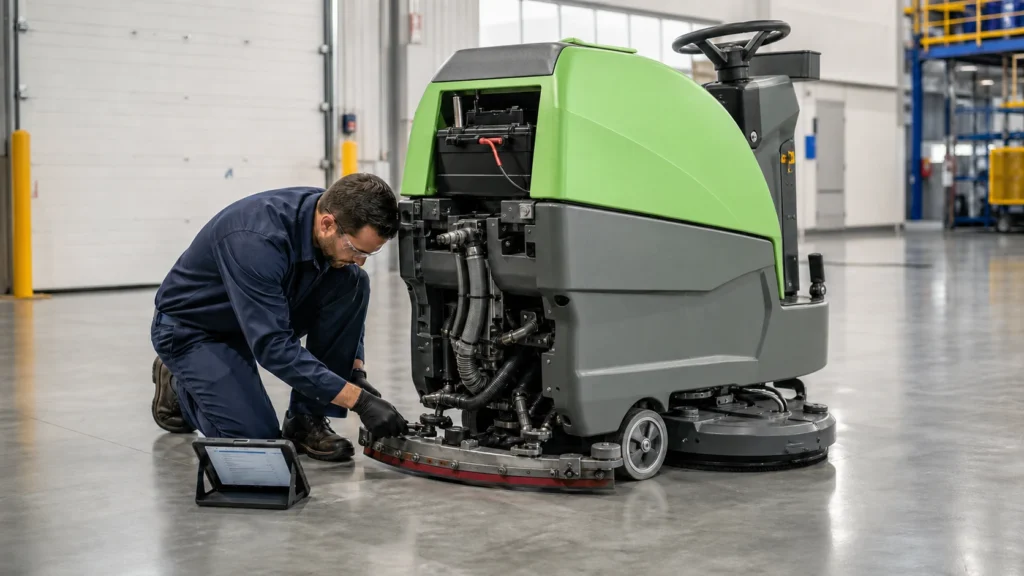
- Check the brush or pad condition.
- Check the squeegee blade and wastewater recovery system.
- Check the clean water tank and sewage tank.
- Test brush rotation, suction power, and control panel display.
- Make sure there is no water leakage or electrical issue.

How to Scrub Concrete Floors Step by Step
Different concrete surfaces require different cleaning settings, but the basic process includes inspection, dry debris removal, stain pretreatment, brush selection, controlled scrubbing, wastewater recovery, and machine care.
Step 1: Inspect and Identify the Concrete Surface
Identify whether the floor is unsealed, sealed, polished, densified, rough, or epoxy-coated. Check for cracks, damaged joints, loose coatings, sanding areas, oil penetration, and chemical residue.
Test the selected brush, pad, detergent, and machine settings on a small, inconspicuous area before cleaning the full floor.
Step 2: Sweep or Vacuum Loose Debris
Remove sand, metal fragments, stones, packaging material, and fine dust before wet scrubbing. Large or sharp debris can damage the brush, block the suction system, reduce squeegee contact, and scratch the floor.
В dusty industrial areas, vacuuming is preferable because sweeping may redistribute fine particles.
Step 3: Pre-Treat Oil, Tire Marks, and Chemical Residue
Oil and Grease
Remove free-standing oil with absorbent material before applying a compatible degreaser. Allow the cleaner to remain on the stain for the recommended dwell time, but do not allow it to dry. Agitate the affected area before full-area scrubbing.
Tire Marks
Apply a cleaner compatible with the concrete surface and allow sufficient dwell time. Use a suitable pad or nylon brush to agitate the marks before recovering the dirty solution.
Chemical Residue
Identify the spilled material and follow the site’s chemical handling procedure and safety data before cleaning. Confirm floor and detergent compatibility, neutralize only when appropriate, and rinse the area before using the scrubber.
Step 4: Select the Brush, Pad, and Detergent
Use a stiff nylon brush for rough uncoated concrete, a medium nylon brush for general concrete cleaning, and a soft brush or non-aggressive pad for polished or epoxy-coated floors.
For oil films or tire marks on smooth concrete, use a compatible detergent and suitable scrubbing pad.
Step 5: Set Water Flow and Brush Pressure
Start with the lowest effective brush pressure and water flow. Increase them gradually only if soil remains.
Porous or damaged concrete generally requires stricter water control, while coated or polished surfaces require lower mechanical aggressiveness.
Step 6: Scrub in Straight Overlapping Passes
Divide the floor into manageable cleaning zones. Start at the farthest point and work toward the exit.
Move at a consistent speed and overlap adjacent passes by approximately 5–10 cm, or according to the machine’s cleaning width and visibility conditions.
Slow down before turning so the squeegee remains in contact with the floor and continues recovering wastewater.
Step 7: Recover Wastewater and Inspect the Floor
Monitor the recovery tank indicator, suction performance, and wastewater level during operation. Empty the tank before it reaches the machine’s specified maximum level.
Stop immediately if water remains behind the machine, suction weakens, or the recovery system produces abnormal noise.
Inspect the cleaned area under adequate lighting. Check for water streaks, remaining dust, oil shadows, missed strips, and residue around joints or walls.
Step 8: Rinse and Store the Floor Scrubber
After cleaning, switch off the solution flow and brush system, recover the remaining wastewater, and park the machine in the designated maintenance area.
Empty and rinse the recovery tank, clean the squeegee and suction hose, rinse the brush or pad, and leave the tank covers open to dry. Charge and store the machine according to the manufacturer’s instructions.

Recommended Starting Settings for Different Concrete Surfaces
| Concrete Surface | Brush or Pad | Water Flow | Давление кисти | Main Precaution |
|---|---|---|---|---|
| Unsealed concrete | Medium or stiff nylon brush | Low to moderate | Start low and increase if needed | Recover wastewater quickly |
| Герметичный бетон | Nylon brush or compatible pad | Низкий | Low to moderate | Avoid damaging the sealer |
| Полированный бетон | Soft pad or soft nylon brush | Низкий | Низкий | Protect gloss and finish |
| Densified concrete | Nylon brush or pad | Low to moderate | Умеренный | Use a compatible neutral cleaner |
| Шероховатый бетон | Stiff nylon brush | Умеренный | Умеренный | Inspect grooves and uneven areas |
| Epoxy-coated concrete | Soft brush or non-aggressive pad | Низкий | Низкий | Avoid scratching or delamination |
After Cleaning: Inspection and Machine Care
After scrubbing concrete floors, inspection and machine care are necessary to confirm cleaning quality, reduce slip risks, and extend the service life of the floor scrubber.
Inspect the Cleaned Concrete Floor
- After scrubbing, check whether stains, dust, water marks, or dirty water remain on the floor. Pay special attention to wall corners, equipment bottoms, joints, and cracks. Wipe the floor with tissue or a dry cloth to confirm whether wastewater recovery is working properly. Make sure there is no obvious slip risk before the area returns to normal use.
Clean and Store the Floor Scrubber
- Turn off the brush, water spray, suction motor, and main power in the correct order. Remove and rinse the brush or pad, clean the squeegee blade, empty the clean water and wastewater tanks, and store the floor scrubber in a dry and ventilated area. If the machine will not be used for a long time, empty the tanks, fully charge the battery, and cover the equipment to prevent dust buildup.

Concrete Floor Scrubbing Problems and Solutions
The following problems often appear when scrubbing concrete floors. Most issues are related to incomplete pre-cleaning, wrong brush selection, poor water recovery, excessive brush pressure, or incorrect detergent use.
Cleaning Result Problems
| Проблема | Possible Causes | Решения |
| Dust remains after scrubbing | Incomplete pre-cleaning, low brush pressure, poor squeegee adjustment | Vacuum or sweep first, increase brush pressure properly, adjust the squeegee |
| Oil stains remain | Degreaser concentration is too low, contact time is too short, wrong brush or pad | Pre-treat with degreaser, extend contact time, use a scrubber pad or hard brush |
| Water stains remain | Too much water, weak suction, full wastewater tank, clogged hose | Reduce water flow, check suction motor, empty wastewater tank, clean the hose and squeegee |
| Squeegee leaves streaks | Dirty or worn blades, debris under the blade, incorrect angle | Clean and inspect the blades, reverse or replace worn blades, and adjust the squeegee position |
| Water remains behind the scrubber | Weak suction, blocked hose, damaged blade, or excessive speed | Check suction airflow, clean the hose, inspect the blades, and reduce operating speed |
| Dust returns after the floor dries | Dust trapped in pores, incomplete vacuuming, dirty solution, or surface sanding | Vacuum before scrubbing, replace dirty solution, repeat cleaning, and inspect the floor condition |
Concrete Floor Damage Problems
| Проблема | Possible Causes | Решения |
|---|---|---|
| Scratches on concrete | Wrong brush type or excessive brush pressure | Use nylon brush or suitable pad, reduce brush pressure |
| Concrete sanding becomes worse | Too much pressure, too much water, strong acid or alkaline cleaner | Reduce water flow, recover wastewater quickly, use neutral detergent |
| Floor discoloration | Chemical residue, excessive detergent concentration, dirty water left too long | Neutralize residue, dilute detergent correctly, recover wastewater immediately |
How to Keep Concrete Floors Clean After Scrubbing
Inspect the concrete surface and sealer regularly. Resealing frequency should be determined by traffic level, chemical exposure, visible wear, cleaning frequency, and the sealer manufacturer’s recommendations.
Avoid heavy impact: Do not drag heavy equipment directly across concrete floors, as this may create scratches, cracks, or surface damage.
Clean spills quickly: Oil stains and chemical leaks should be treated as soon as possible to prevent penetration and discoloration.
Keep the floor dry: After scrubbing, make sure wastewater is fully recovered and the floor is dry enough for safe use.

FAQs About Scrubbing Concrete Floors
Можно ли использовать поломоечную машину на бетонных полах?
Да. Большинство незапечатанных, запечатанных, полированных, уплотненных и покрытых бетонных полов можно чистить с помощью поломоечной машины. Щетка, насадка, моющее средство, напор воды и давление должны соответствовать состоянию поверхности.
Как чистить бетонные полы с помощью поломоечной машины?
Подметите или пропылесосьте рыхлый мусор, предварительно обработайте остатки масла или химических веществ, выберите подходящую щетку или насадку, очистите поверхность в перекрывающихся проходах, соберите сточные воды и осмотрите пол перед повторным открытием участка.
Какая щетка лучше всего подходит для чистки бетонных полов?
Для многих типов бетонных полов подходит нейлоновая щетка средней жесткости. Для шероховатого бетона без покрытия может потребоваться более жесткая нейлоновая щетка, в то время как для полированных или покрытых эпоксидной смолой поверхностей обычно требуется более мягкая щетка или неагрессивная подушечка.
Может ли поломоечная машина для бетонных полов удалить масляные пятна?
Поломоечная машина может удалить многие поверхностные масляные пятна, но для удаления проникающих масляных загрязнений обычно требуется предварительная обработка подходящим обезжиривающим средством. Сначала необходимо впитать незакрепленные масляные пятна, чтобы они не распространялись во время чистки.
Подходит ли поломоечная машина с одной щеткой для бетонных полов?
Поломоечная машина с одной щеткой подходит для многих небольших и средних бетонных площадок, особенно там, где важна маневренность. Для больших открытых пространств, длительных смен уборки или сильного загрязнения более эффективной может оказаться поломоечная машина с ручным управлением или с сиденьем для оператора.
Почему после чистки бетонного пола на нем все еще остается пыль?
The floor may not have been vacuumed thoroughly, the brush may not be reaching the surface texture, the cleaning solution may be overloaded with dust, or the concrete itself may be sanding. Inspect both the cleaning process and the floor condition.
Can a floor scrubber damage concrete floors?
Yes. Excessive brush pressure, aggressive brushes, incompatible chemicals, or standing wastewater can scratch coatings, affect polished finishes, or worsen damaged and sanding concrete. Test the cleaning method on a small area first.
How often should concrete floors be scrubbed?
Cleaning frequency should be based on traffic, dust generation, oil exposure, safety requirements, and appearance standards. High-traffic factory and складские помещения may require daily spot cleaning and scheduled full-area scrubbing.
Заключение
Scrubbing concrete floors successfully depends on matching the cleaning method to the surface and contamination. Start by identifying the concrete type, removing loose debris, and pre-treating oil or chemical residue. Then select the appropriate brush or pad, use controlled water flow and pressure, and recover wastewater before it penetrates the floor or leaves streaks.
Walk-behind scrubbers are generally better suited to narrow or obstructed areas, while ride-on machines are more efficient on large open floors. The final selection should also consider aisle width, floor texture, cleaning frequency, contamination level, required operating time, and wastewater capacity.
Need help selecting a floor scrubber for your concrete floor? Send LVTONG your floor area, surface type, aisle width, main contamination, and daily cleaning schedule. Our team can recommend a suitable machine, brush, and cleaning configuration.
To recommend a suitable floor scrubber, please provide:
– Total cleaning area
– Concrete surface type
– Narrowest aisle width
– Main contamination
– Cleaning frequency
– Required operating time
– Photos or videos of the floor