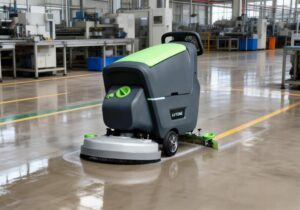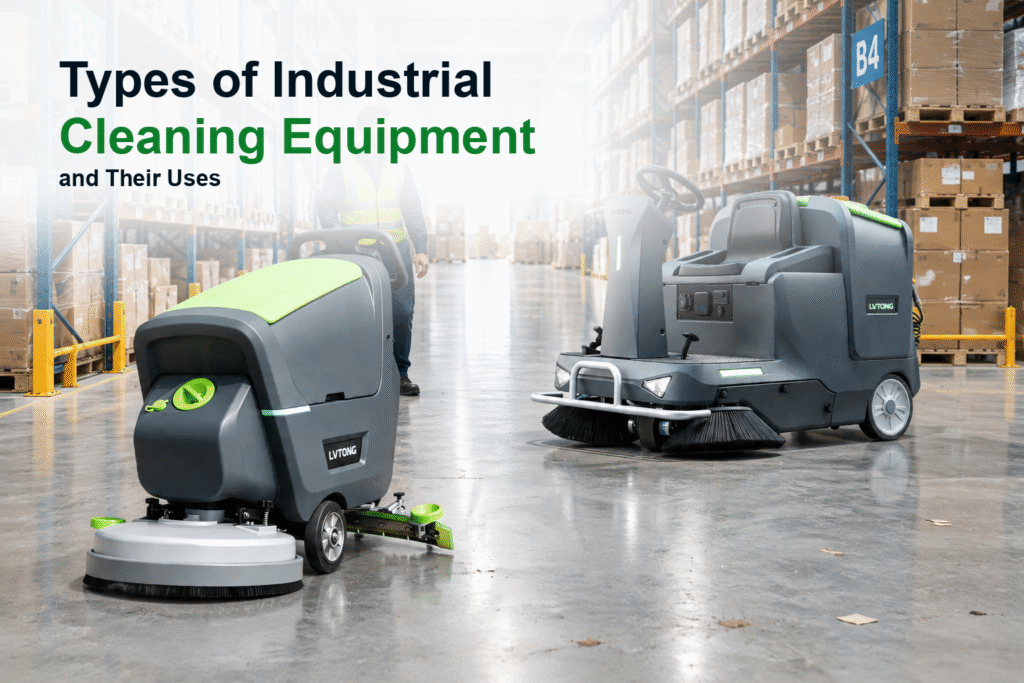
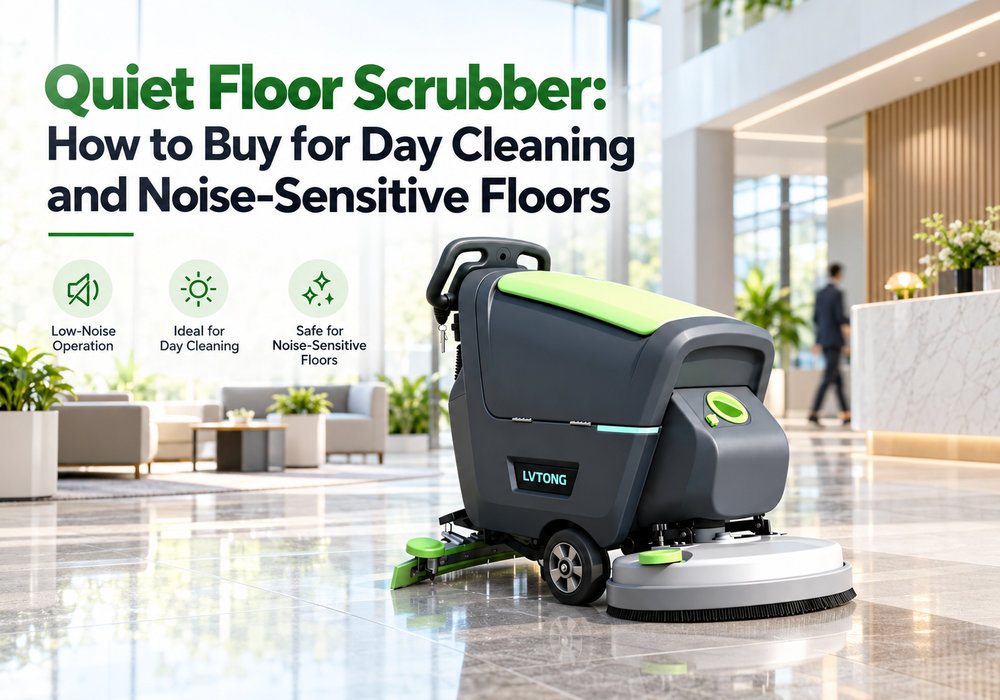
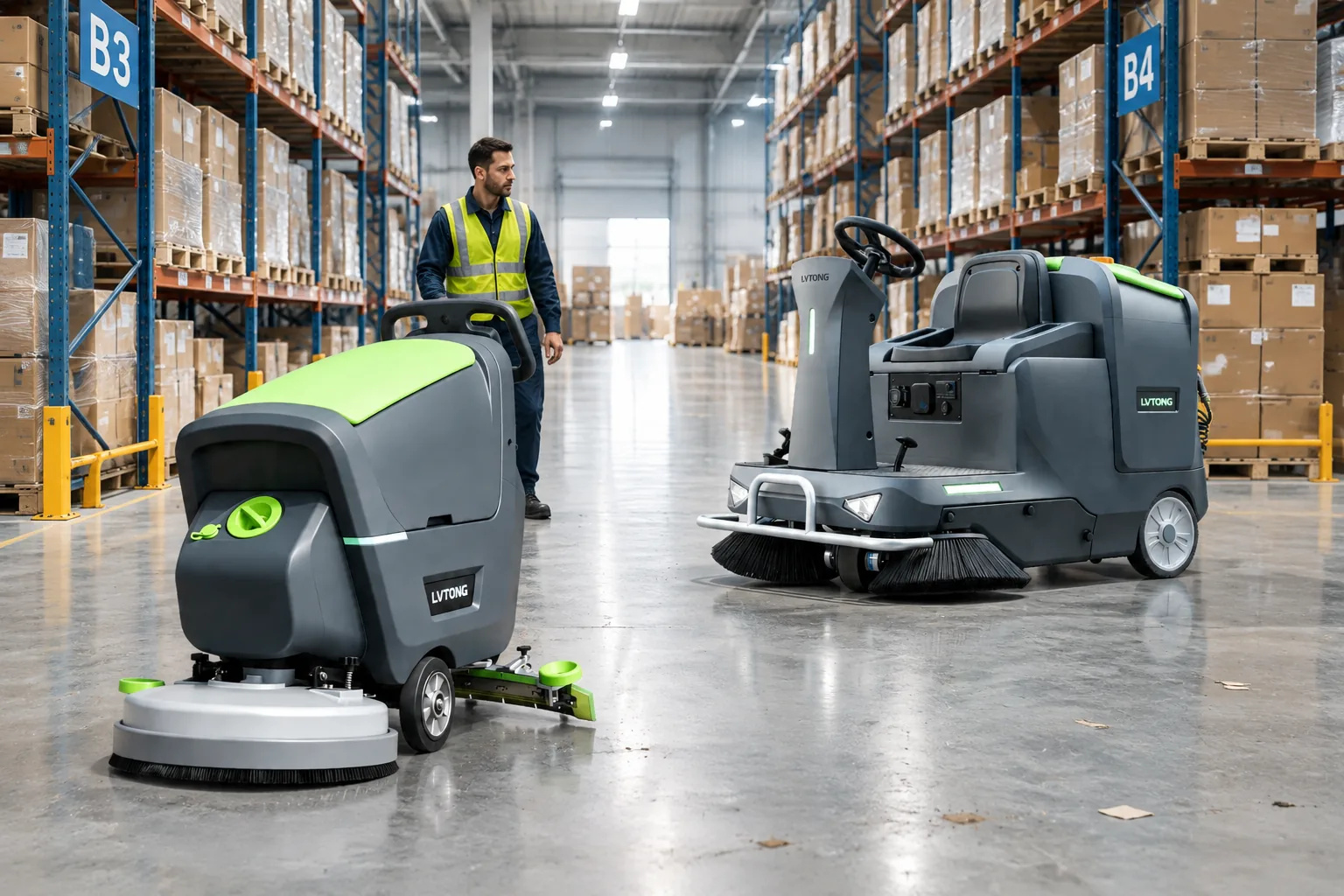
Industrial cleaning equipment helps facilities manage loose debris, stubborn floor grime, and production waste. On a loading dock, a sweeper collects grit and packaging scraps. Oily warehouse floors need a scrubber dryer to loosen the grime and recover dirty water in one pass.
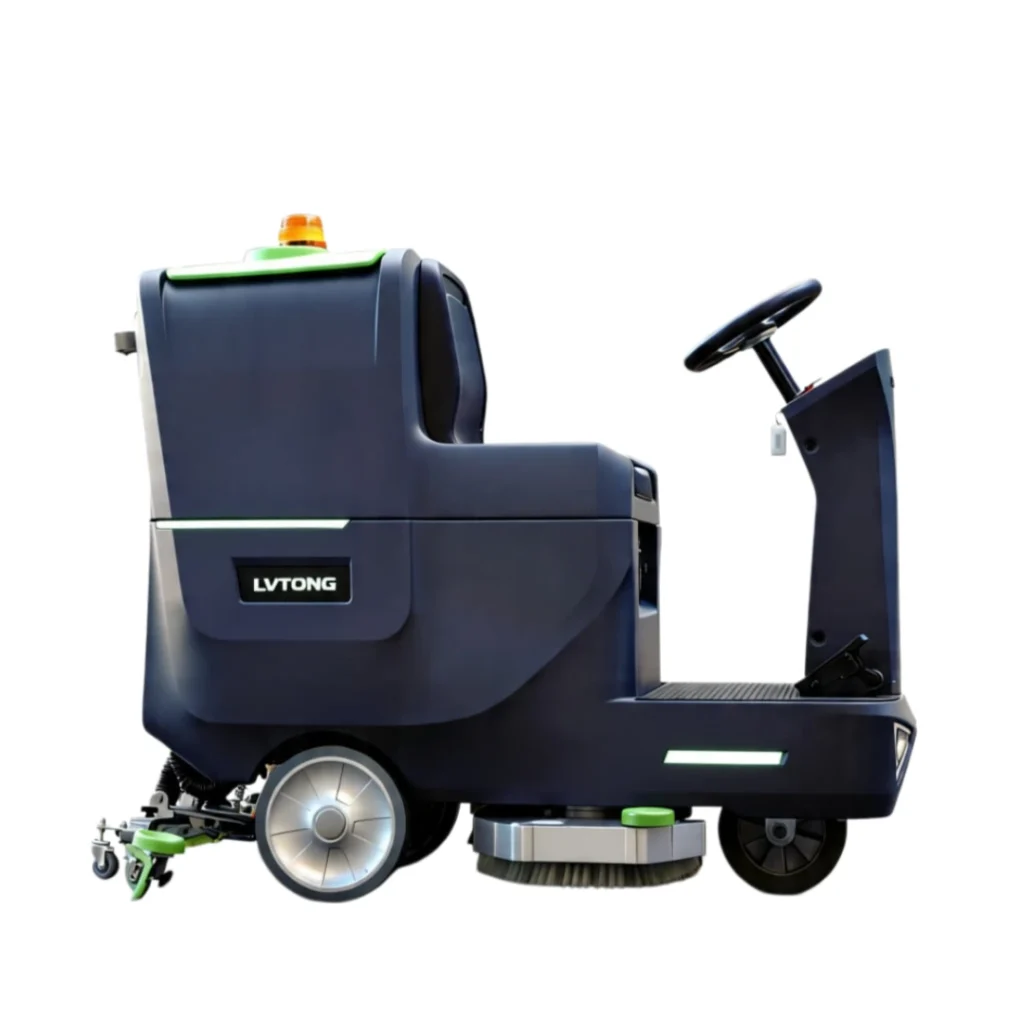
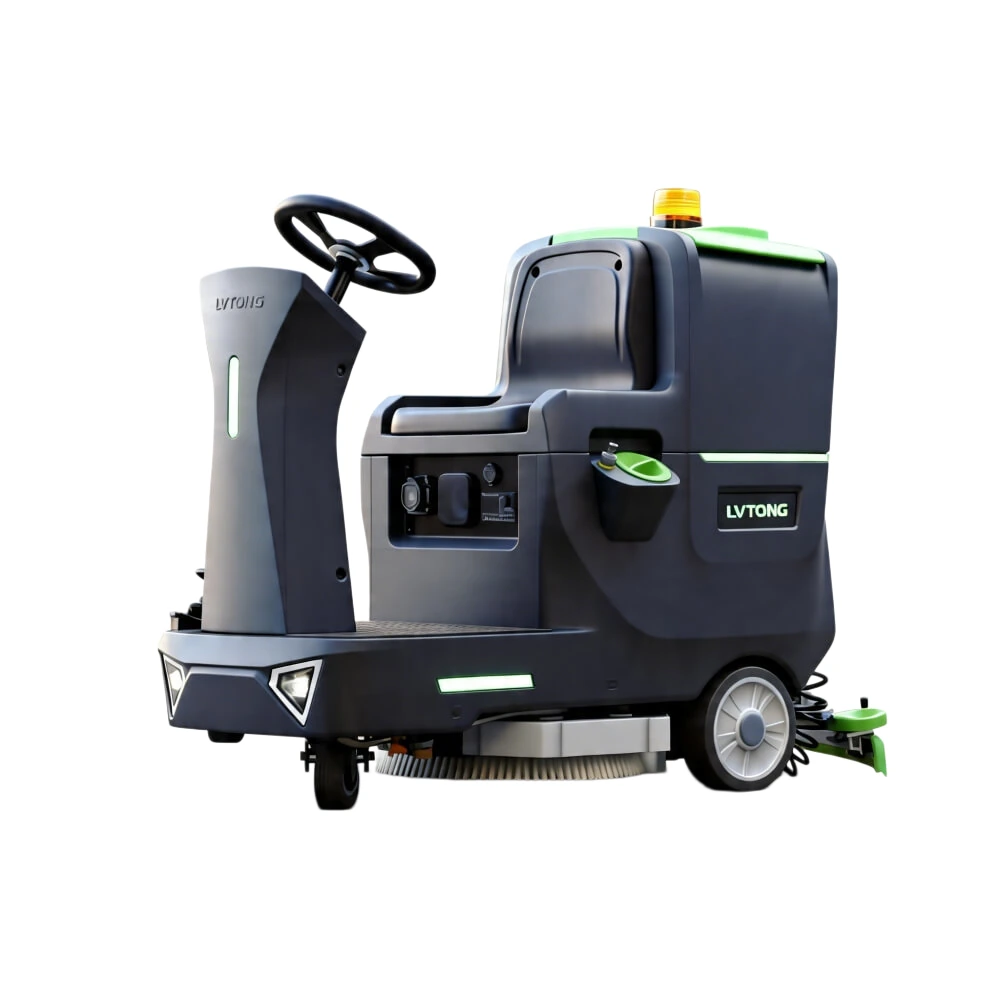
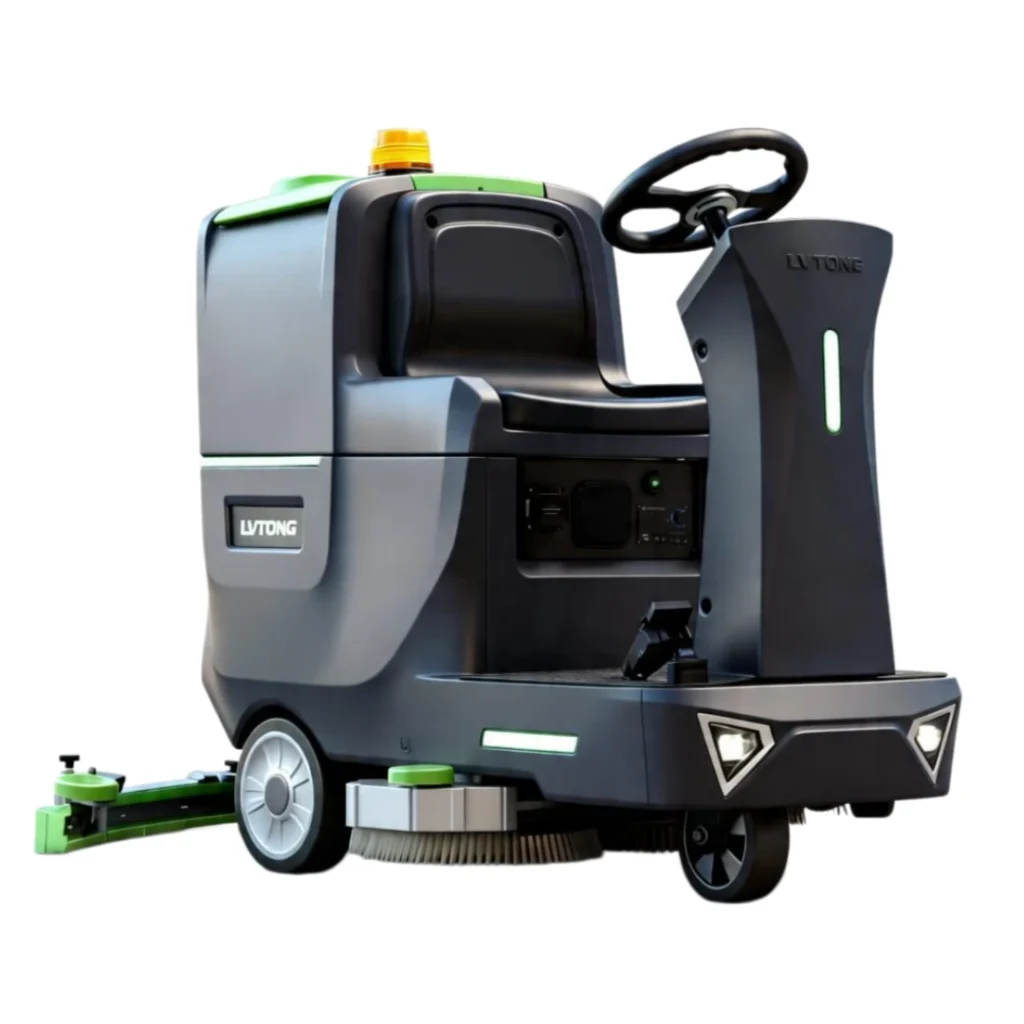
Our LVTONG range includes floor scrubber dryers and sweepers in walk-behind and ride-on formats. These machines handle routine floor cleaning across warehouses, factories, commercial buildings, and outdoor areas.
What Are the Main Types of Industrial Cleaning Equipment?
The most useful classification follows the cleaning task. For routine facility care, three equipment families do most of the work:
Поломоечная машина для полаs: Oil and tracked-in grime can cling to hard floors. Scrubbing loosens this buildup, and dirty-water recovery removes it in the same pass.
Промышленная подметальная машина для полаs: Best suited to loose debris such as sand, grit, and packaging scraps, these machines collect material in a hopper for disposal.
Промышленный пылесосs: Their hoses and attachments reach beneath machinery and into narrow gaps. Typical jobs include collecting production dust, cleaning up small piles of waste, and recovering liquid spills with wet/dry models.
Other types of industrial cleaning equipment serve more specialized tasks:
Equipment type | Cleaning targets | Типичное использование |
|---|---|---|
Мойки высокого давления | Washable exterior walls, vehicles, and equipment exteriors | A directed water jet lifts built-up dirt from exposed surfaces. |
Пароочистители | Tile, stainless steel surfaces, and fittings | Steam loosens stubborn grime for wiping away. |
Parts-cleaning systems | Gears, bearings, and other machine parts | Oil and grease removal during component maintenance. |
Compared with household tools, industrial machines are built around larger workloads, longer cleaning routes, and greater collection capacity. Their brushes, recovery systems, filters, and service components need to suit the material being collected. A small office vacuum and a production-area vacuum may look similar while serving very different duties.
Our guide to floor scrubbers versus floor sweepers explains the central distinction: sweeping collects loose material, while scrubbing lifts dirt attached to the floor.
Floor Scrubber Dryers for Washing and Drying Hard Floors
A scrubber dryer washes the floor and picks up dirty water in one pass. Brushes or pads loosen grime with a cleaning solution, and the machine collects the wastewater in a separate tank. This makes it useful for routine dirt and oily buildup across large hard-floor areas.
Common applications include factory floors, warehouse aisles, shopping centers, hospitals, and schools. Concrete, epoxy, and tile each need a suitable brush or pad and cleaning solution. A coated corridor, for example, needs gentler treatment than a heavily soiled workshop floor.
For everyday warehouse cleaning, our Поломоечная машина LT-S530X с ручным управлением provides a 530 mm cleaning width. Logistics supervisor Robert Wilson says it makes warehouse aisles and loading areas easier to clean. His feedback highlights two practical benefits: effective water pickup and simple daily upkeep.
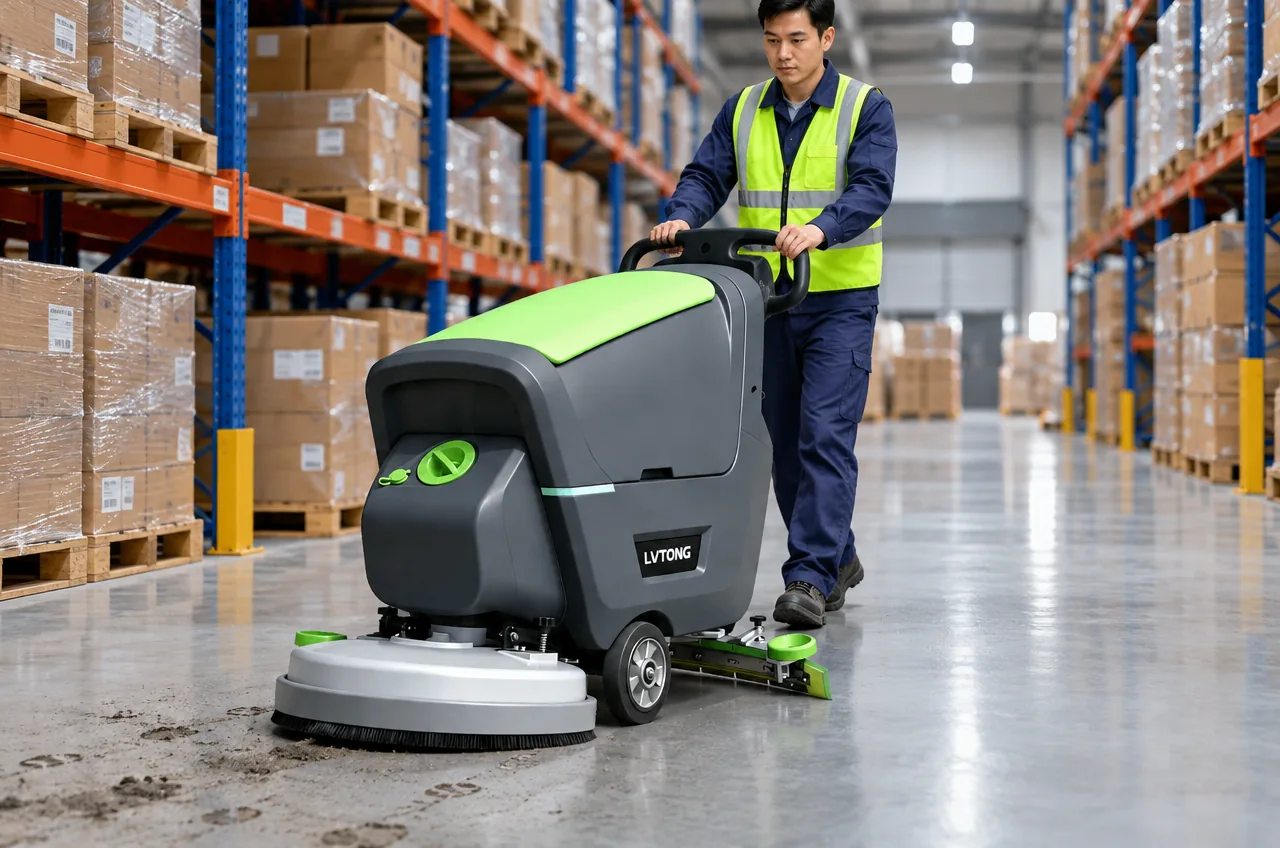
Good water pickup helps keep a freshly cleaned floor from staying wet. Worn rubber blades or a clogged hose can leave streaks and puddles behind. Our article on floor scrubber vacuum and recovery systems explains how the suction motor, squeegee, and recovery tank work together.
This also supports everyday floor care in US facilities. OSHA’s walking-working surface requirements call for clean floors that are dry to the extent feasible.
Industrial Floor Sweepers for Dust and Debris Removal
Sand collects near warehouse entrances, paper scraps build up around packing stations, and vehicle traffic spreads loose grit along the aisles. These materials accumulate throughout the working day. Industrial floor sweepers gather them into a hopper before they spread into nearby work areas.
Наш Подметальная машина LT-S1350S с сиденьем для оператора supports morning and evening cleaning in an e-commerce warehouse where frequent goods movement leaves dust and paper scraps. It combines a 1,350 mm sweeping width with a 100 L debris hopper. This regular schedule addresses the recurring debris load between busy periods. Dust buildup also affects how often the hopper needs emptying and the filters need cleaning.
Outdoor routes bring leaves and tracked-in dirt across larger areas. Procurement manager David Thompson describes using our Промышленная подметальная машина LT-S2050SF с сиденьем для оператора on factory roads and outdoor workshop areas. Its 2,050 mm sweeping width suits these wider routes, where debris is spread across open ground.
Sweeping clears loose material so the remaining floor-cleaning task is easier to identify. Oil films and sticky residues need scrubbing to lift them from the surface. On sweepers equipped with water spray, the water helps control dust during collection; floor washing remains a separate task.
Industrial Vacuum Cleaners for Dust, Dirt, and Liquid Recovery
Dust and production waste often collect beneath workbenches, beside machinery, and along narrow edges. Industrial vacuums reach these areas through hoses and attachments, making them useful for cleaning around equipment and in tight spaces.
Dry models collect dust and solid debris. Wet/dry vacuums also handle suitable liquid spills. Fine powder, metal chips, and coolant residue each place different demands on the machine, so the collection system needs to suit the material.
With fine dust, filtration matters as much as pickup. NIOSH’s guidance on silica dust collection recommends HEPA final filtration for vacuums used to capture silica dust during mortar removal. A clogged filter also reduces airflow, leaving the vacuum less effective as dust accumulates. Combustible dust and hazardous materials need dedicated collection systems.
Daily use also involves emptying the collected waste. Container capacity affects how often cleaning stops, and easy access makes disposal simpler. Together with suction and filtration, these details help determine how well industrial cleaning equipment fits a production area’s workload.
Ride-On vs. Walk-Behind Cleaning Equipment
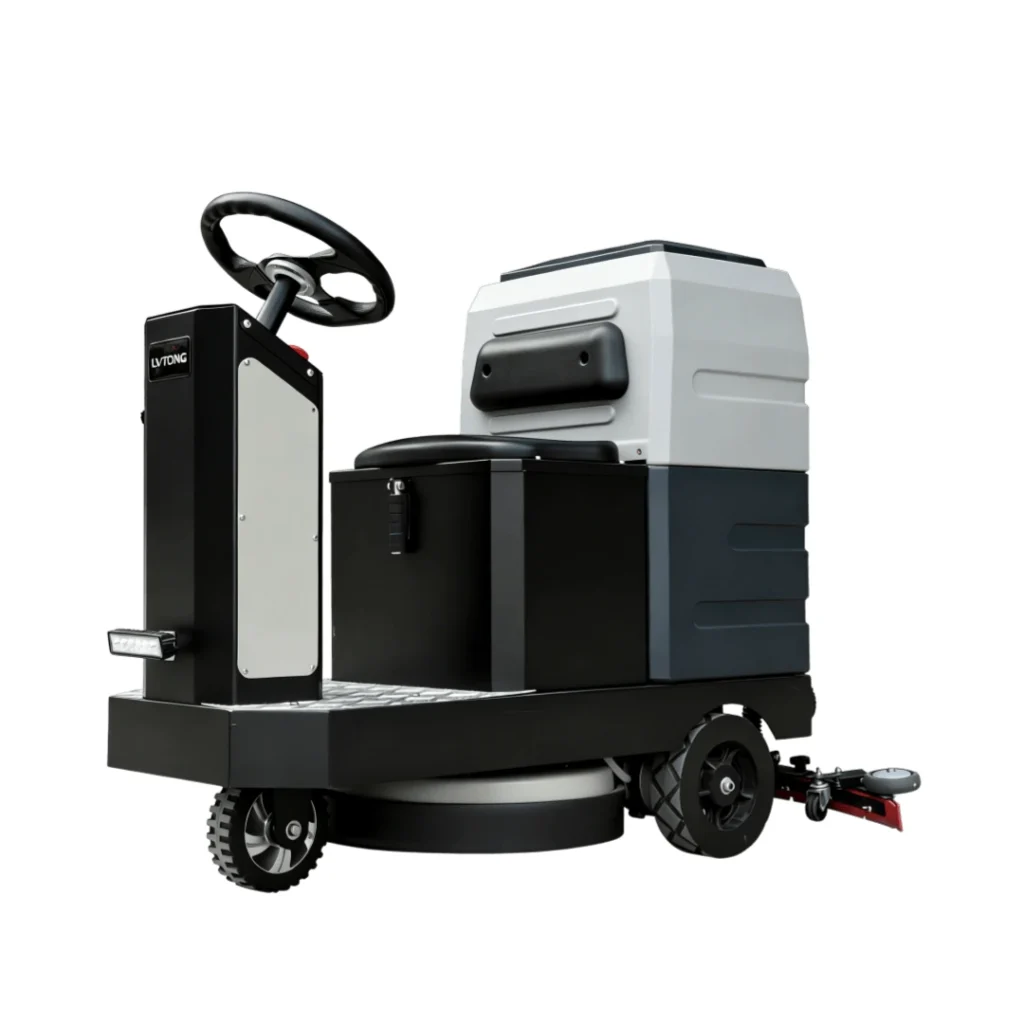
Walk-behind machines keep the operator on foot, steering from behind. Self-propelled models provide powered travel. Ride-on equipment seats the operator, reducing walking on long cleaning routes.
Наш Поломоечная машина LT-S860X с сиденьем для оператора has an 860 mm scrubbing width, compared with the LT-S530X’s 530 mm path. On open warehouse floors, the wider path reduces the number of passes needed. The compact LT-S530X suits routes around shelving, doorways, and fixtures, where maneuverability matters more than coverage per pass.
In facilities with both open halls and small service rooms, the two formats serve separate tasks: ride-on equipment covers the main floor, and walk-behind machines handle tighter spaces.
How to Choose the Right Industrial Cleaning Equipment for Your Facility
Use these checks in order to narrow your shortlist:
The starting point is the material being removed: dirt, loose debris, liquid, or a mixture that creates more than one cleaning task.
Floor material and finish place limits on brush, pad, and detergent choices.
A narrow doorway or tight corner can rule out an otherwise suitable machine. Overall dimensions and turning requirements need to fit the entire route.
Net floor area divided by the available cleaning hours gives the required cleaning rate. Each model’s practical hourly coverage can then be assessed against that target.
A long trip to refill or empty the machine can disrupt a tight cleaning window. Tank or hopper capacity, access to water and suitable disposal points, and recharging time therefore matter alongside runtime. Our LT-S860X has a listed runtime of four to six hours.
Over the machine’s working life, cleaning labor, consumables, battery replacement, and servicing all contribute to the total cost.
We provide technical troubleshooting, maintenance assistance, and replacement parts. These include brushes, squeegees, filters, and charging components for routine upkeep and repairs.
Часто задаваемые вопросы
Can industrial floor-cleaning equipment be used on carpet?
Yes, with equipment designed for carpet. Carpet vacuums remove loose dirt, while carpet extractors apply cleaning solution and recover moisture from washable carpet fibers. Standard hard-floor scrubber dryers serve a different surface and cleaning task.
When is a pressure washer more suitable than a scrubber dryer?
The handheld lance on a pressure washer reaches vertical surfaces and equipment contours. For routine hard-floor cleaning that needs dirty-water recovery, a scrubber dryer combines washing and pickup in one pass.
What is the difference between theoretical and practical cleaning coverage?
When a specification lists theoretical coverage, the figure uses cleaning width and travel speed to calculate uninterrupted straight-line coverage. Turns and working stops reduce the area completed in an hour. Specifications may list theoretical and practical coverage separately. The practical figure is more useful for planning daily cleaning time.
Заключение
Each machine should have a clear role in the facility’s cleaning routine. To narrow the shortlist, compare models against the work they need to complete within the available cleaning time. Daily labor, maintenance, and consumable costs then help determine which option is practical to operate.
Наш промышленное чистящее оборудование range includes walk-behind and ride-on scrubber dryers and sweepers. If you’re weighing options for your facility, связаться с нами to discuss which models suit your floors, layout, and cleaning schedule. To help us recommend suitable options, please share the total floor area to be cleaned, floor material, type of dirt or debris, narrowest aisle width, and available cleaning window.