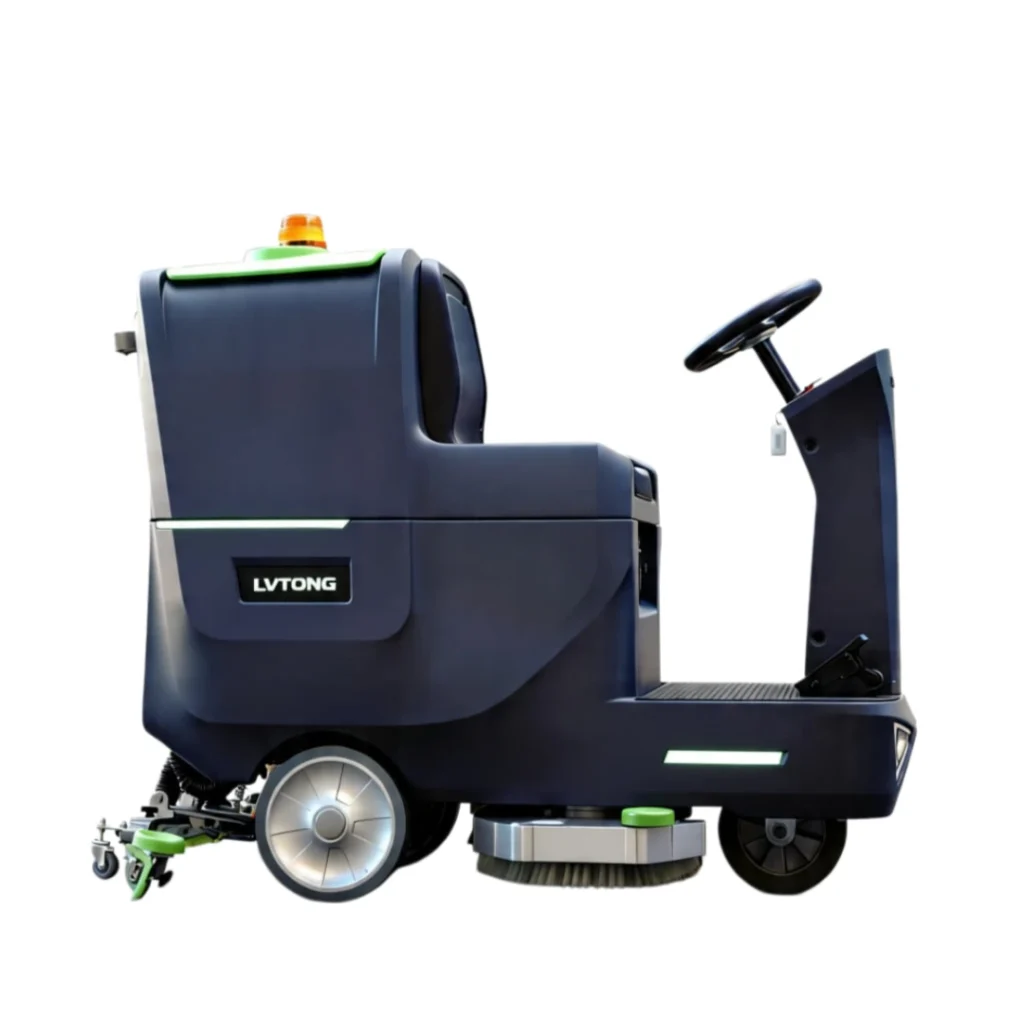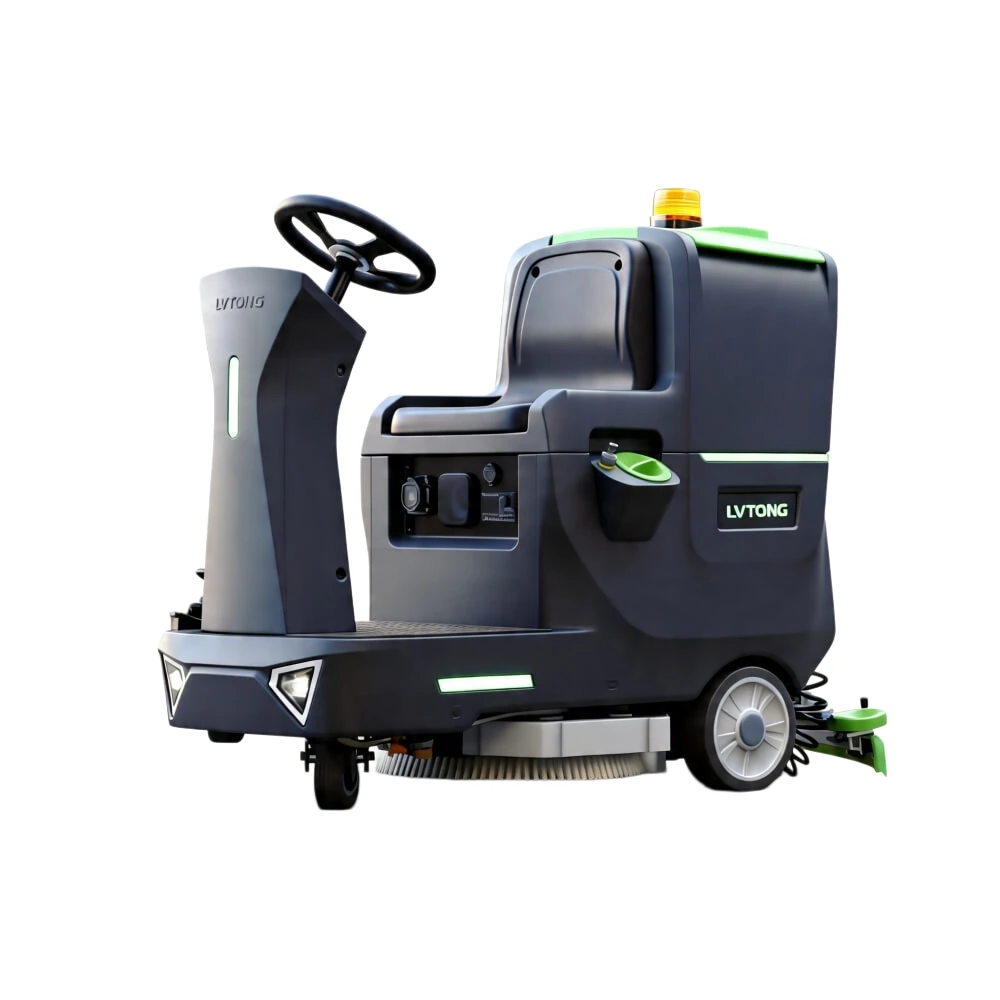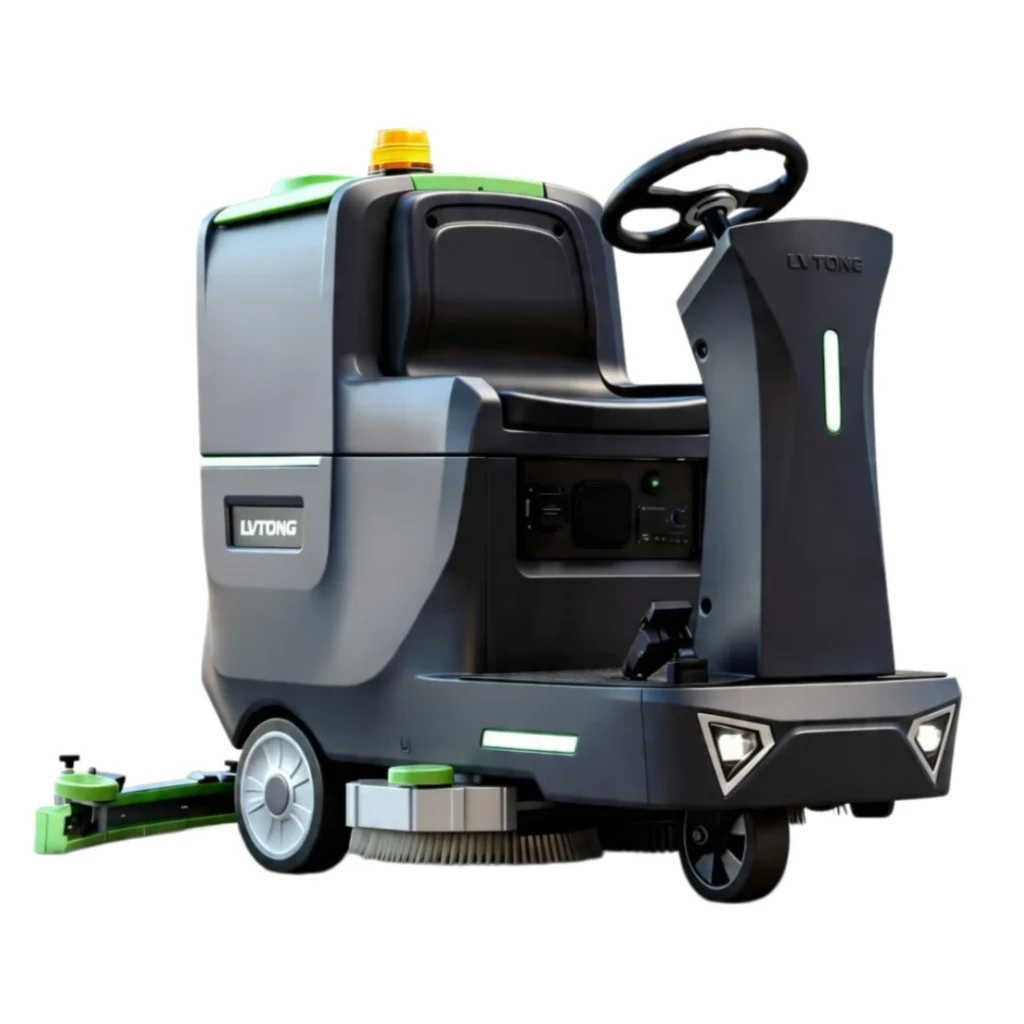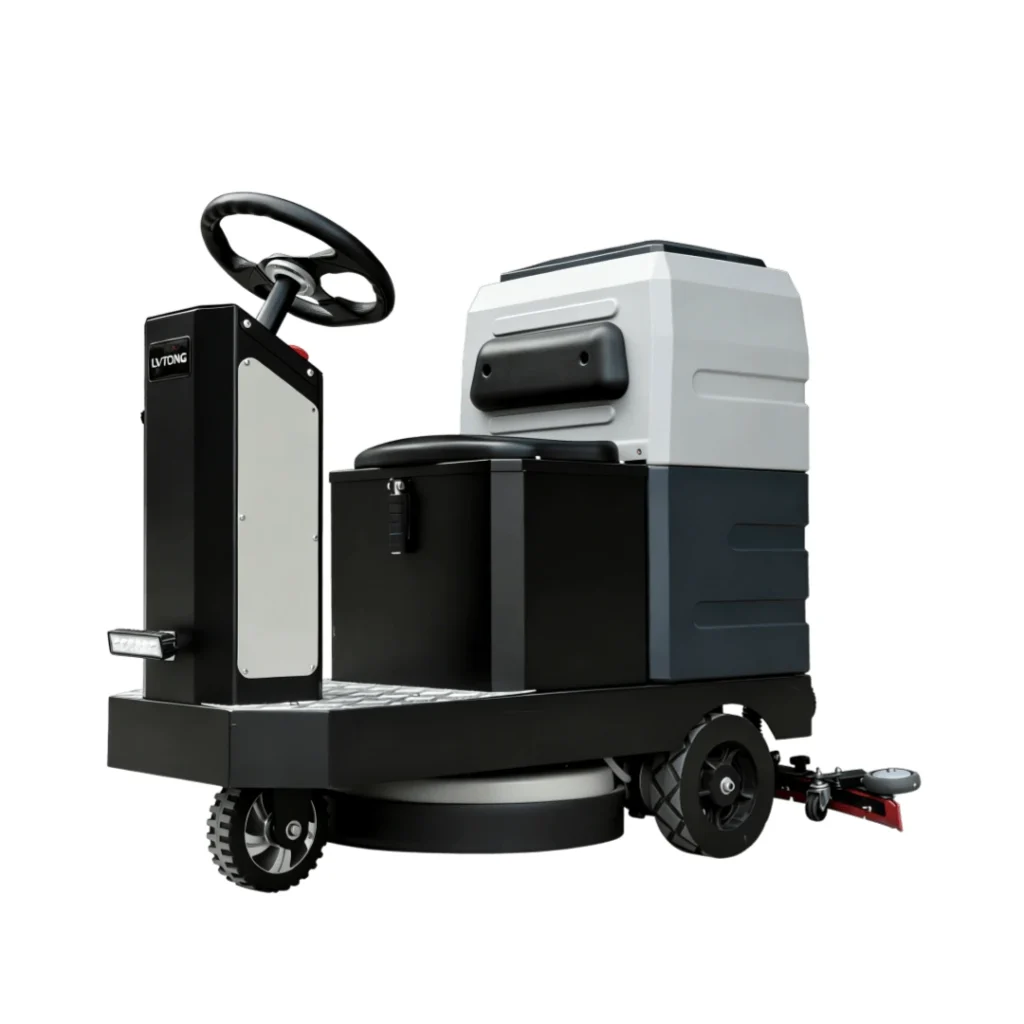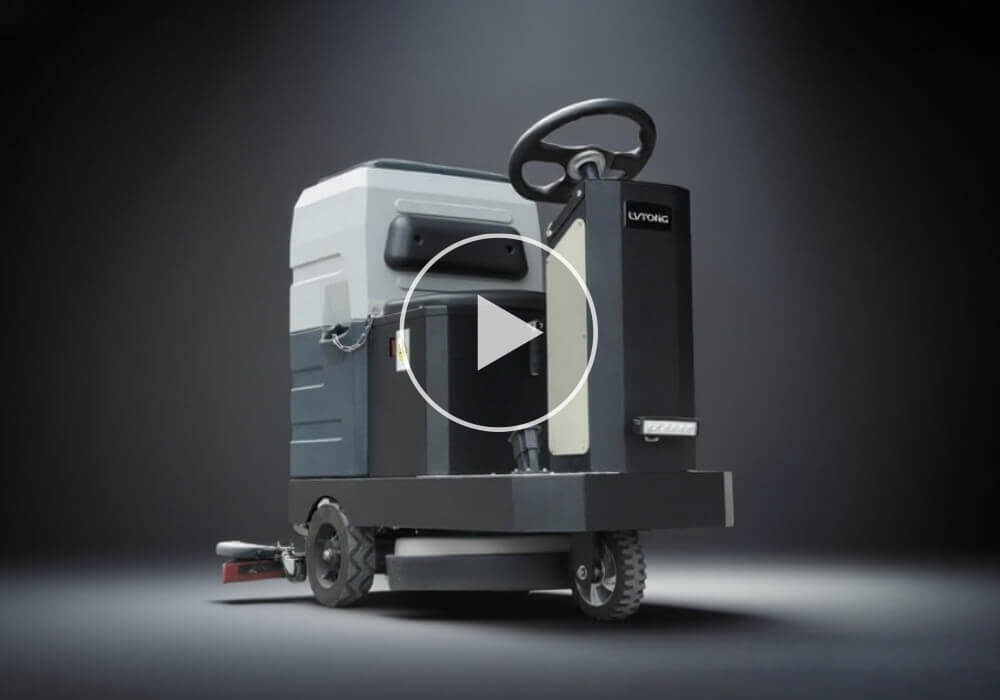
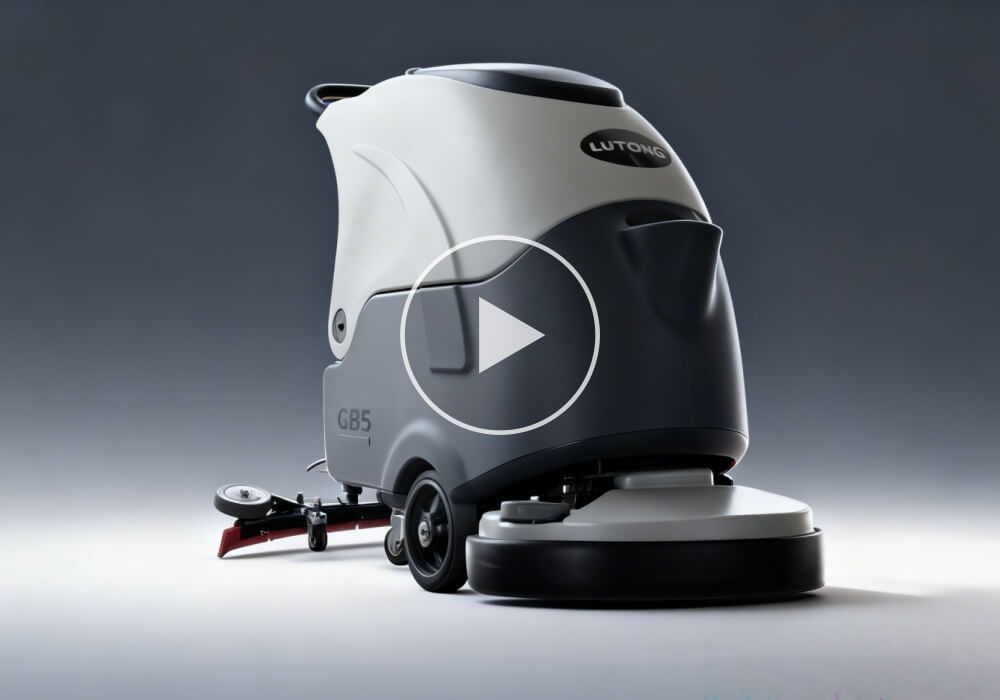
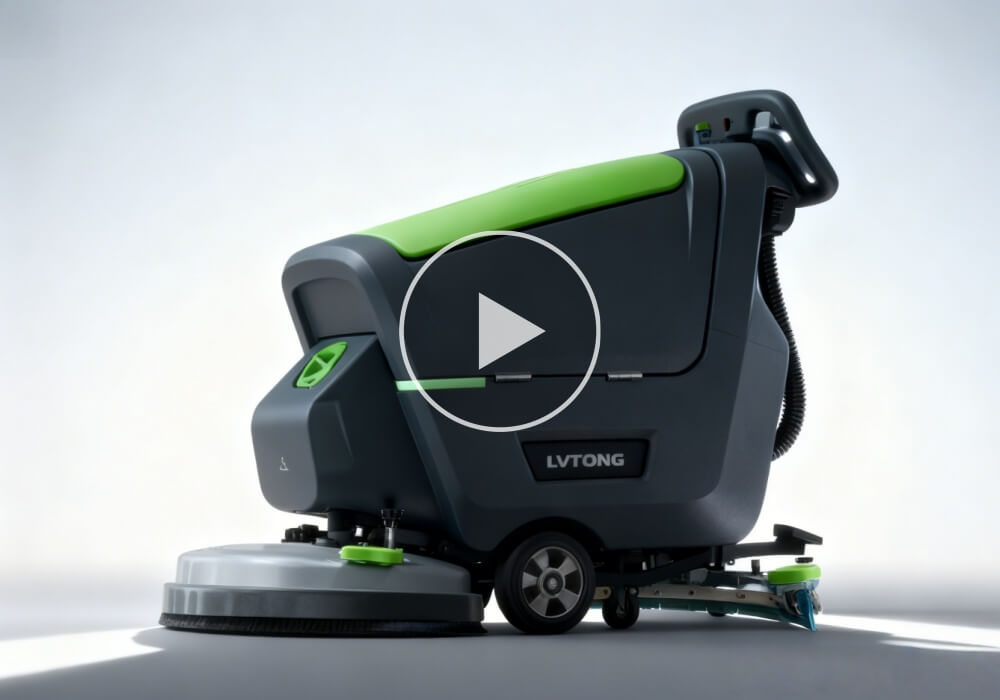
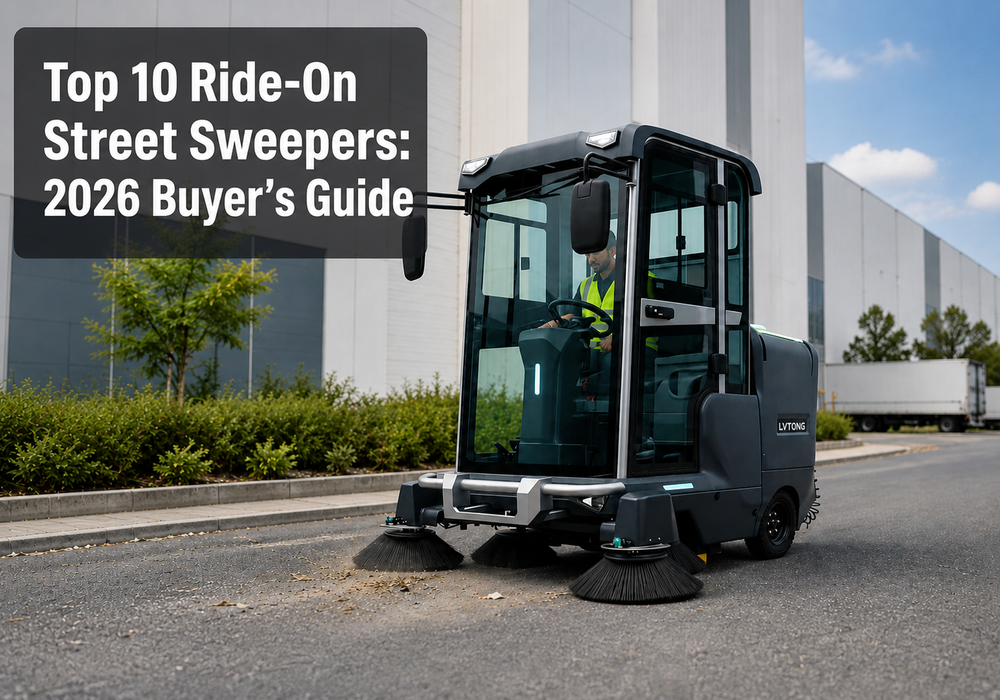
At LVTONG, we believe choosing a ride-on street sweeper starts with the route. Warehouse projects call for compact turning, tight-access clearance, and effective dust control. Logistics parks place greater emphasis on runtime, slope performance, and outdoor durability. Municipal work requires road-transfer capability, adequate water capacity, and safety features suited to public spaces.
We compare ten machines covering narrow warehouse aisles, dust-heavy production areas, large outdoor industrial sites, and municipal streets. For each machine, we identify the buyer and project it suits, explain how the main specifications support the work, and highlight the points to confirm before purchase.
Quick Comparison of the 10 Models
| Model | Machine Class | Best For | Buyer Type | Not Ideal For | Key Published Data |
|---|---|---|---|---|---|
| LVTONG 1250 | Compact industrial | Narrow warehouse aisles | Warehouse and facility managers | Public roads; long open routes | 1,250 mm width; 100 L bin; 3–5 h; 8,500 m²/h |
| Tennant S20 | Compact mid-size industrial | Compact routes with high dump | Manufacturing and distribution sites | Low ceilings; very narrow aisles | 1,270/1,575 mm path; 310 L; 15,120 m²/h |
| LVTONG LT-S1350S | Medium industrial | Frequent indoor dust control | Warehouses, parking, event venues | Greasy or wet residue | 100 L bin; 4–6 h; vacuum and spray |
| LVTONG 1950 | Semi-closed industrial | Dust-intensive manufacturing | Production and EHS teams | Small, low-debris warehouses | 14,000 m²/h; slope up to 15% |
| LVTONG 1950S | Industrial variant | Airports and long routes | Airport, logistics, and port teams | Short confined routes | 160 L bin; 5–8 h; 14,000 m²/h |
| LVTONG LT-S2050S | Large industrial | Mixed heavy debris | Ports, logistics parks, construction | Tight indoor routes; adhered oil | 2.05 m width; 20,000 m²/h; battery options |
| Nilfisk SW8000 | Large industrial | Wide routes with side-brush dust | Airports, hangars, docks, parking | Restricted obstacle-heavy routes | 1.3 m main broom; up to 2 m configured width |
| LVTONG LT-S2050SF | Outdoor industrial | Slopes and uneven outdoor sites | Industrial parks and factory roads | Narrow indoor aisles; public-road work | 180 L bin; 100 L water; 5–8 h; 20% slope |
| Kärcher KM 150/500 R D Classic | Heavy-duty diesel | Harsh ground and heavy debris | Foundries, steelworks, construction | Enclosed emission-sensitive areas | 500 L; 18,000 m²/h; 18% slope |
| Bucher CityCat V20e | Compact municipal | Public streets and low-emission zones | Municipal and campus contractors | Private indoor warehouses | 80 kWh; 2 m³; up to 2,700 mm |
The table shows where each machine works best and where it may be a poor fit. Buyers can quickly compare the main uses, target users, limitations, and key specifications before reading the full model reviews.
Top 10 Ride-On Street Sweepers for 2026
1. LVTONG 1250 — Best for Narrow Warehouse Aisles
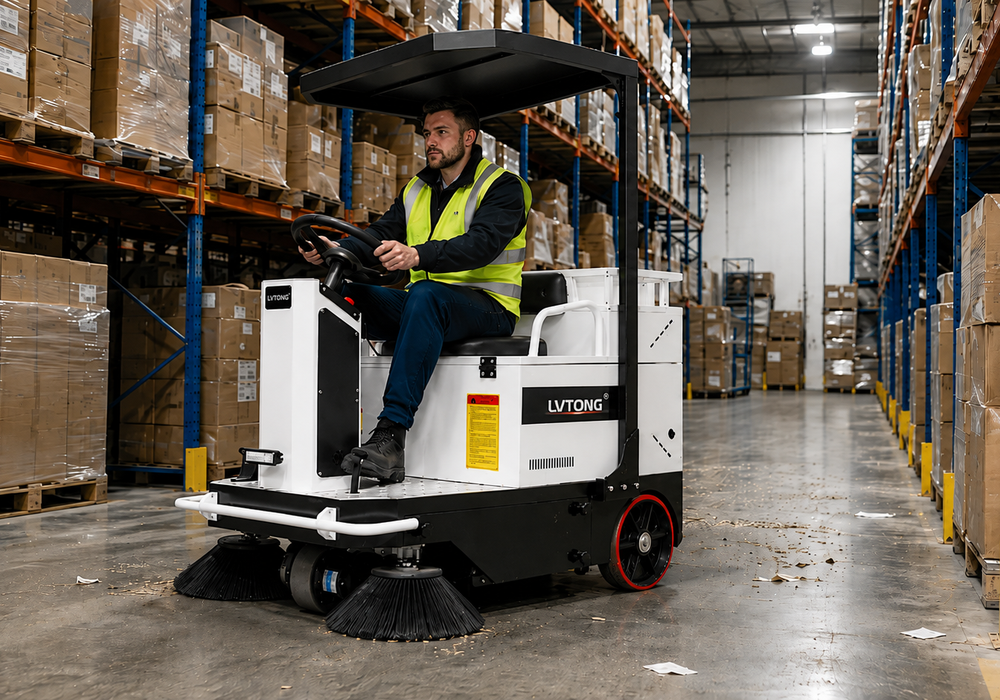
The LVTONG 1250 suits warehouse managers, e-commerce storage teams, workshop supervisors, and parking-facility operators working with narrow aisles, restricted doorways, and tight turns around racks or columns. Its 1,250 mm sweeping width reduces the reversing and repositioning that a wider machine may require on these routes.
The 1250 specifications list a 100 L debris bin, 3–5 hours of working time, and a rated output of 8,500 m²/h for regular cleaning across compact facilities. The machine is intended for dry dust, packaging waste, and light industrial debris rather than public roads or high-volume outdoor material. Before ordering, confirm that its overall width fits the narrowest doorway on the route.
The same product page also describes an aircraft-maintenance project where the 1250 was configured for a more demanding debris mix. Two to three units were used to collect dust and metal shavings inside the hangar, with a 6 m² filtration configuration selected for that application. The filtration setup should be confirmed separately for each quotation.
2. Tennant S20 — Best for Compact Routes Requiring High Dump
Frequent trips to the waste point can slow a cleaning route, especially in manufacturing plants, distribution centers, and arenas with a steady flow of dry debris. The Tennant S20 addresses this with a 310 L hopper and a high-dump system that empties directly into a larger container.
With one side broom, the sweeping path is 1,270 mm; adding a second increases it to 1,575 mm. Tennant’s published output is up to 15,120 m²/h, making the machine well suited to routes where debris builds up throughout the shift.
The disposal area determines whether the high-dump feature is practical. The raised hopper needs enough ceiling height and space beside the waste container. Sites with low ceilings, very tight aisles, or small floor-level bins may gain little from this setup. Battery, gasoline, diesel, and LPG versions are available for different indoor and outdoor operating conditions.
3. LVTONG LT-S1350S — Best for Frequent Indoor Dust-Control Work
Dust can return quickly on busy indoor routes as vehicles, equipment, and foot traffic disturb the floor again. The LT-S1350S combines sweeping, vacuum collection, and water spray for facilities that clean the same areas several times during the day. The LT-S1350S product page lists a 100 L debris bin, and our large-area sweeper guide lists 4–6 hours of working time for this model.
The LT-S1350S application examples show how this setup is used in practice. A 30,000 m² e-commerce warehouse scheduled cleaning in the morning and evening, while a 20,000 m² underground parking area used the machine for regular dust and litter removal. At a 50,000 m² sports center, two units were assigned to clean after events. These routes combine repeated use, short cleaning windows, and areas that return to operation soon after cleaning.
The spray and vacuum systems work together as loose debris is collected, helping control dust around the brushes on active indoor routes. Buyers should confirm which dust-control and filtration components are included in the quoted configuration.
4. LVTONG 1950 — Best for Dust-Intensive Manufacturing Areas
On battery-plant floors and steel raw-material yards, operators work close to dust, loose material, and moving equipment. The 1950 semi-closed model gives the operator more separation than an open ride-on sweeper. This makes it a stronger fit for wide production lanes and outdoor material yards.
Its 1,950 mm sweeping width covers broad routes with fewer passes. Our published specifications list a rated output of 14,000 m²/h and climbing ability of up to 15%, which is useful on ramps and routes linking indoor workshops with outdoor storage areas.
The wider path becomes less practical in small warehouses with tight turns. The semi-closed layout is also different from a sealed cab, so sites with strict airborne-dust rules should confirm the filter and operator-protection setup before ordering.
5. LVTONG 1950S — Industrial Variant for Airports and Long Facility Routes
The 1950S industrial variant is separate from the 1950 above, which is the semi-closed model for dust-intensive production lanes and yards. The 1950S fits airport facility teams, logistics centers, ports, and large industrial sites where route length makes charging and emptying interruptions important. Its published 160 L debris bin, 5–8 hours of working time, rated output of 14,000 m²/h, and slope capability up to 15% support longer cleaning cycles.
Official applications include factories, warehouses, parking lots, logistics centers, and airports. Our published scenarios also cover a 50,000 m² airport, an 8,500 m² university sports field, and a 30,000 m² logistics and port operation. These examples help show route scale without turning reported savings into universal expectations.
The 1950S is less suitable for short confined routes where the machine spends too much time turning. Buyers should check charging location, disposal distance, route width, and the amount of debris collected during a full shift.
6. LVTONG LT-S2050S — Best for Mixed Heavy Industrial Debris
The LT-S2050S is separate from the 1950S industrial variant above and is intended for larger industrial routes where heavy and mixed debris matter more than compact turning. The LT-S2050S specifications include a 2.05 m sweeping width, 180 L debris bin, and rated productivity of 20,000 m²/h, making it a better fit for ports, logistics parks, construction sites, and broad factory roads than for tight indoor aisles.
Our published configuration options include 4–8 hour endurance and lithium or lead-acid battery choices. When our team checks this model for a quotation, we look at the actual debris mix: iron filings, welding slag, dust, oil stains, leaves, stones, and other material that affects brush selection, filtration, tire protection, and bin capacity.
The trade-off is route space and residue type. A 2.05 m sweeping width works best on open or semi-open routes with enough turning room, while adhered oil or wet residue may still need a floor scrubber or another wet-cleaning process. Before ordering, confirm the narrowest turn, largest debris, battery type, charging location, and disposal access.
7. Nilfisk SW8000 — Best for Wide Routes with Side-Brush Dust
On a dry parking lot or hangar floor, the most visible dust can appear around the side brooms before the main broom reaches it. The SW8000 uses its DustGuard system to spray a fine mist around the front and side brooms, targeting dust at the point where the rotating brushes disturb it.
The main broom covers 1.3 m. With both side brooms fitted, the full sweeping path reaches up to 2 m. This allows the machine to clear wide lanes with fewer shifts across airports, docks, distribution yards, and large parking areas.
That extra width loses value on crowded routes with closely spaced equipment or columns. The quotation should state whether both side brooms, the DustGuard water system, and the required filter are included in the selected version.
8. LVTONG LT-S2050SF — Best for Sloped and Uneven Outdoor Routes
Outdoor industrial roads challenge the driver as well as the sweeping system. Ramps, damaged asphalt, parked vehicles, and poor lighting create frequent speed changes and reversing movements. The LT-S2050SF adds a rear camera, bumper protection, larger tires, and rear LED lighting for these conditions.
The LT-S2050SF product FAQ lists a 180 L debris bin, a 100 L water tank, 5–8 hours of working time, rated productivity of 20,000 m²/h, and climbing capability up to 20%. Because some site summary cards may show a different hopper figure, buyers should treat the final quotation as the active configuration record. This combination supports extended work on factory roads, airport service areas, industrial parks, and other dusty outdoor routes.
The slope figure needs to be checked on the actual site. Surface grip, machine load, travel direction, and nearby vehicle traffic all affect how the machine handles a ramp. A short trial on the steepest and roughest section provides a clearer answer before purchase.
9. Kärcher KM 150/500 R D Classic — Best for Harsh Industrial Ground
In a foundry, steel yard, or building-material plant, the machine has to deal with sharp debris, heavy loads, and rough ground. The KM 150/500 R D Classic uses a corrosion-protected steel chassis, solid rubber tires, a 500 L hopper, and hydraulic high dump. These features reduce puncture risks and limit manual handling when coarse debris builds up.
The main working width is 1,200 mm and expands to 1,800 mm with two side brooms. Kärcher’s published data lists 18,000 m²/h productivity and 18% slope capability, giving the machine enough coverage for broad yard lanes, loading areas, and ramps.
Its diesel engine keeps the model in outdoor and well-ventilated industrial work. Enclosed facilities with strict exhaust rules require another power source. The waste area also needs enough height and access for the raised hopper to empty safely.
10. Bucher CityCat V20e — Best for Public Streets and Low-Emission Zones
A city sweeper may leave the depot, travel on public roads, clean curbs and pedestrian areas, and then move to another district. The CityCat V20e supports this type of route with a top speed of 50 km/h, articulated steering, suction collection, and an optional third brush for curbs and hard-to-reach edges.
Current CityCat V20e specifications list an 80 kWh battery, up to 10 hours of operation, a 2 m³ hopper, 425 L of water capacity, and a sweeping width of up to 2,700 mm. The floating suction intake follows uneven road surfaces, while the straight suction hose helps larger litter and leaves move into the hopper with fewer bends in the airflow path.
These features are intended for municipal streets, campuses, pedestrian areas, and other public routes. An indoor-only warehouse should compare industrial ride-on sweepers instead. Battery size, optional equipment, and road approval should be confirmed for the country where the machine will be used.
Project Scenario Matching
| Project Scenario | Selection Priority | Better-Matched Models |
|---|---|---|
| Narrow warehouse aisles | Compact size, turning space, doorway clearance, dry-dust control | LVTONG 1250; Tennant S20 |
| Frequent indoor dust-control work | Filtration, spray, operator exposure, daily route frequency | LVTONG LT-S1350S; LVTONG 1950; Nilfisk SW8000 |
| Long airport or logistics routes | Runtime, hopper capacity, route length, charging and disposal access | LVTONG 1950S; LVTONG LT-S2050S; Nilfisk SW8000 |
| Outdoor industrial roads | Slope, tires, lighting, water tank, uneven-surface handling | LVTONG LT-S2050SF; Kärcher KM 150/500 R D Classic |
| Heavy debris and harsh ground | Chassis durability, hopper capacity, brush strength, tire protection | Kärcher KM 150/500 R D Classic; LVTONG LT-S2050S |
| Public streets and low-emission zones | Municipal platform, road transfer, water capacity, public-space safety | Bucher CityCat V20e |
How to Narrow the List to One Machine
The comparison table and project scenarios can reduce the list to two or three models. The final choice should be made against the actual route. A machine remains on the shortlist only when it can pass through the site, collect the real debris, complete the shift, and finish within the available cleaning window.
Remove Machines That Cannot Complete the Route
Record the overall machine width, narrowest doorway, aisle width, turning space, ramps, and access to the waste area. Sweeping width only shows the area covered by the brushes; it does not include the full machine body, side brooms, guards, or steering movement.
A 1,250 mm sweeping path does not confirm that a machine can pass through a 1,300 mm doorway. Remove any model that cannot enter the narrowest area or turn at the end of an aisle. Wider machines remain suitable for long, open lanes with little reversing.
Match the Machine to the Actual Debris
Start with what the machine will actually pick up. Fine dust needs good suction and a filter that operators can clean easily. Leaves and packaging scraps need enough airflow and bin space. Metal chips, welding slag, stones, and broken pallet pieces require stronger brushes, protected tires, and a collection system built for heavier material.
Once the debris type is clear, check whether dust control is also needed. If the side brooms throw fine particles into the air, a water-spray system can help keep the dust down during sweeping. Grease, syrup, and wet residue still require a floor scrubber or another wet-cleaning process. Remove any model that cannot safely collect the largest or heaviest debris found on the route.
Check One Complete Working Cycle
Count how often each machine would have to leave the cleaning area for emptying or charging. A larger hopper saves time when the waste container is nearby and the raised hopper can clear its rim. A distant disposal point or limited overhead space can turn every emptying stop into a long interruption.
Check the battery or fuel supply against the same route under its actual slope, surface, and debris load. The better fit is the machine that completes the work within the cleaning window with fewer charging and emptying stops.
Make the Final Choice on the Actual Route
The shortlist should contain only machines that fit the site access, debris type, and working cycle. Test the remaining models on the same difficult section of the route, such as a tight turn, a dusty aisle, a ramp, or an area with heavy debris.
Compare the time taken, reversing required, debris left behind, dust around the side brooms, and visibility around obstacles. The final decision should be based on which machine performs best on the actual route, with the least rework and enough capacity to complete the full route within the available cleaning window. Use the published m²/h figure only as a comparison reference.
Finding the Right LVTONG Sweeper for the Route
Our ride-on sweeper lineup covers tight indoor routes, dusty manufacturing areas, and larger outdoor roads. Each route calls for a different setup, so we check the route, debris, and cleaning schedule before confirming a model.
For example, in one of our LT-S1350S projects, a 30,000 m² e-commerce warehouse scheduled sweeping every morning and evening. Frequent goods movement left dust and paper scraps on the floor throughout the day. For this site, the twice-daily schedule and debris mix were key parts of the model selection.
When buyers send us the route width, debris photos, slope, and required working time, we use those details to confirm the model and core configuration. The quotation then sets out the battery, brush and filtration package, dust-control and emptying options, together with the spare parts, training, and technical support included.
What to Prepare Before Requesting a Quote
A useful quotation needs the sweepable route, narrowest access point, minimum turning space, maximum slope, floor material, debris photos, cleaning frequency, available work time, shift length, charging location, and disposal method. A route drawing or short site video can make the recommendation more accurate. In our technical review, we usually ask for aisle width, route area per shift, debris photos, ramp percentage, battery preference, and dumping method before recommending brush, filter, and power configurations.
Seasonal work, construction projects, or a temporary increase in workload may support local rental. Repeated daily or weekly routes often support ownership because machine availability and configuration control become more important. Our public equipment offer focuses on equipment supply, configuration, technical support, maintenance, and spare parts rather than a stated rental program.
Send our team the route dimensions, representative debris, dust conditions, and working window. We can use that information to recommend a suitable model from our ride-on sweeper lineup and prepare a configuration proposal around the actual cleaning task. When the project requirements are ready, you can contact our team to request a tailored quotation.
FAQs About Ride-On Street Sweepers
What is the difference between an industrial ride-on sweeper and a municipal street sweeper?
An industrial ride-on sweeper mainly works inside facilities, yards, parking areas, and private roads. A municipal sweeper adds road-transfer capability, a street-oriented chassis, larger suction and water systems, and features intended for public spaces.
Can an industrial ride-on sweeper operate on public roads?
Suitability for a factory road does not confirm legal approval for public traffic. Walking-working surface duties are separate from public-road approval. Registration, lighting, braking, operator licensing, and road-equipment requirements vary by market. Local rules should be checked before an industrial machine leaves private property.
Can water spray remove oil and sticky residue?
Water spray controls dust around the brushes. Oil, grease, syrup, and adhered soil require a floor scrubber, suitable chemistry, or another wet-cleaning process that can recover dirty liquid.
Is the machine with the largest hopper always the most productive?
A large hopper reduces emptying frequency when the route produces enough debris to use that capacity. It can also increase machine size, turning requirements, and disposal complexity. Hopper size, route layout, and emptying method need to work together.
Can one brush and filter setup handle fine dust and heavy metal debris?
A general-purpose configuration may collect both, but fine dust and sharp heavy material create different requirements. A site trial with representative debris is the safest way to confirm the brush, filter, tire, and hopper setup.
Conclusion
A strong shortlist starts with the route, debris, and cleaning window. Compact machines suit restricted access. Larger industrial sweepers make better use of open factory roads, ports, parking areas, and logistics yards. Heavy-duty diesel equipment addresses coarse debris and harsh surfaces, while municipal platforms serve public streets and road-transfer work.
At LVTONG, we use route dimensions, debris composition, dust level, floor condition, slope, shift length, emptying access, and charging conditions to prepare a suitable configuration. Complete site information leads to a more accurate model recommendation and a quotation that reflects the actual job.