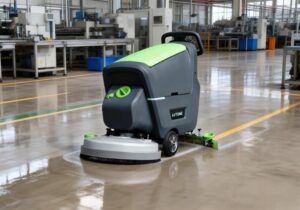
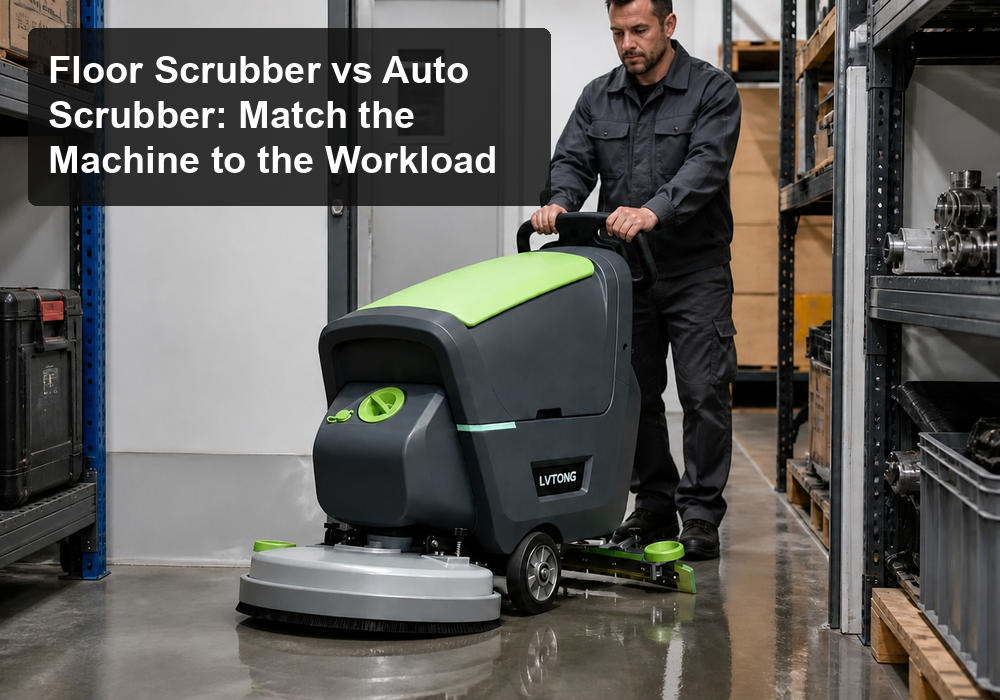
Bodenreinigungsmaschinen reinigen Hartböden und sammeln das Schmutzwasser in einem einzigen Reinigungsvorgang auf. Allerdings werden unterschiedliche Maschinenkonfigurationen für verschiedene Bodenflächen, Grundrisse, Oberflächenbeschaffenheiten und Produktivitätsanforderungen entwickelt.
Die Auswahl der richtigen Maschine erfordert die Berücksichtigung der zu reinigenden Fläche, der Gangbreite, des Bodenmaterials, des Verschmutzungsgrades, der Reinigungshäufigkeit, der Akkulaufzeit und der Arbeitskosten.
Kurze Antwort:
Zu den wichtigsten Arten von Scheuersaugmaschinen zählen Kompakt-, Mitgänger-, Stand-, Aufsitz- und Roboter-Scheuersaugmaschinen. Sie lassen sich außerdem nach ihrer Reinigungstechnologie klassifizieren, beispielsweise in Scheiben-, Zylinder- und Orbital-Scheuersaugmaschinen.
Die Wahl der optimalen Scheuersaugmaschine hängt von der Größe der Anlage, dem Grundriss, der Oberflächenbeschaffenheit, der Reinigungshäufigkeit und den Produktivitätsanforderungen ab. Handgeführte Scheuersaugmaschinen eignen sich in der Regel für enge oder hindernisreiche Bereiche, während Aufsitz-Scheuersaugmaschinen für große, offene Anlagen mit hohem Reinigungsbedarf bevorzugt werden.
LVTONG ist ein Hersteller von Industriereinigungsmaschinen, spezialisiert auf gewerbliche und industrielle Scheuersaugmaschinen. Das Produktsortiment umfasst handgeführte und aufsitzbare Scheuersaugmaschinen sowie Scheuersaugtrockner, die für Fabriken, Lagerhallen, Logistikzentren, Einkaufszentren und Gewerbeimmobilien konzipiert sind.
Welche Haupttypen von Scheuersaugmaschinen gibt es?
Die wichtigsten Arten von gewerblichen Bodenreinigungsmaschinen sind:
- Kompakte oder Mikro-Bodenschrubber
- Begehbare Scheuersaugmaschinen
- Aufsitz-Scheuersaugmaschinen
- Aufsitz-Scheuersaugmaschinen
- Roboter- oder autonome Bodenreinigungsmaschinen
Bodenschrubbmaschinen können auch nach ihrem Schrubbdeck klassifiziert werden:
- Scheiben-Scheuersaugmaschinen
- Zylindrische Bodenschrubbmaschinen
- Orbitale Bodenreinigungsmaschinen
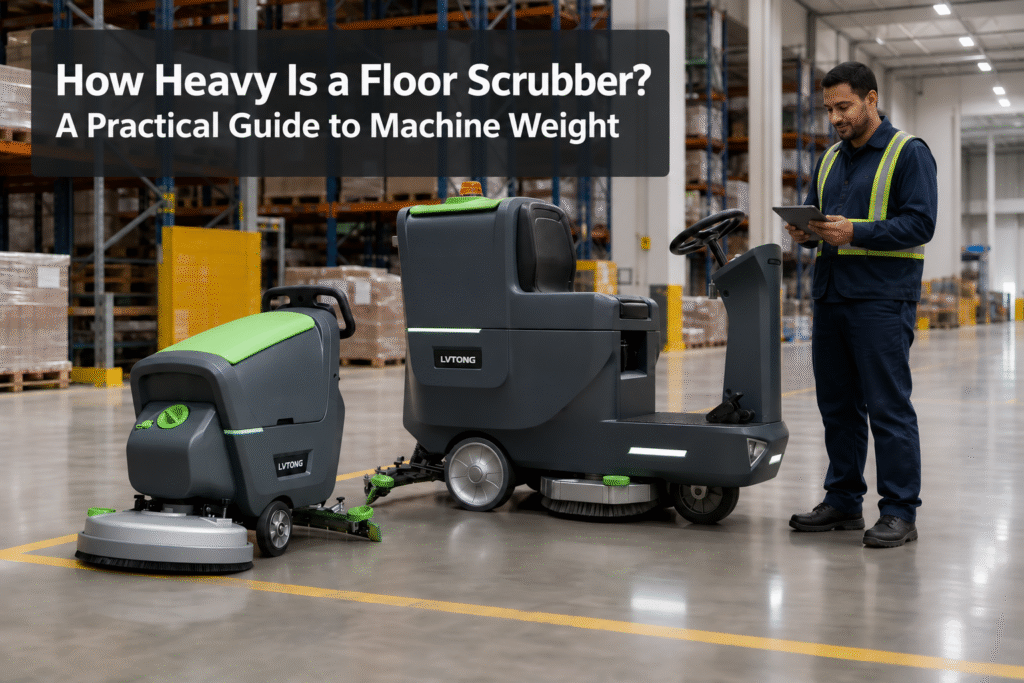
Diese verschiedenen Arten von Scheuersaugmaschinen sind für unterschiedliche Reinigungsumgebungen konzipiert. Kompakte Maschinen legen Wert auf Wendigkeit, handgeführte Modelle bieten ein ausgewogenes Verhältnis von Flexibilität und Produktivität, Aufsitzmaschinen maximieren die Reinigungseffizienz und Roboter-Scheuersaugmaschinen konzentrieren sich auf automatisierte, sich wiederholende Reinigungsrouten.
Die Betriebsweise beeinflusst maßgeblich Produktivität, Manövrierfähigkeit, Arbeitsbelastung des Bedieners und Lagerbedarf. Das Scheuerdeck hat vor allem Einfluss darauf, wie die Maschine mit Schmutz, losem Material, Fugen, strukturierten Oberflächen und Bodenbelägen umgeht.
Bodenreinigungsmaschinen im Überblick
| Bodenschrubber-Typ | Bedienerposition | Geeignete Anwendungsbereiche | Hauptvorteil | Hauptbeschränkung |
|---|---|---|---|---|
| Kompakt oder Mikro | Geht hinter oder neben der Maschine | Toiletten, kleine Läden, Küchen und beengte Räume | Hervorragende Manövrierfähigkeit | Kleine Tanks und schmaler Reinigungsweg |
| Hinterher | Geht hinter der Maschine her | Schulen, Einzelhandelsgeschäfte, Kliniken, Werkstätten und schmale Gänge | Präzise Steuerung um Hindernisse herum | Mehr Laufarbeit für die Bediener während langer Schichten. |
| Stehen auf | Steht auf einer integrierten Plattform | Mittelgroße Anlagen und gemischte Layouts | Kompakte Stellfläche bei gleichzeitig höherer Produktivität | Kleinere Produktpalette als andere Formate |
| Aufsitzen | Setzt sich hin und fährt die Maschine | Lagerhallen, Fabriken, Flughäfen und große öffentliche Einrichtungen | Größere Abdeckung und geringere Ermüdung des Bedieners | Benötigt mehr Wende- und Lagerfläche |
| Roboter | Überwacht den autonomen Betrieb | Vorhersagbare und wiederholbare Reinigungsrouten | Reduziert sich wiederholendes manuelles Fahren | Erfordert die Eignung der Route und menschliche Aufsicht |
Bodenschrubber vs. Bodenkehrmaschine: Worin liegt der Unterschied?
Eine Scheuersaugmaschine trägt Reinigungslösung auf, bearbeitet den Boden mit einer Bürste oder einem Pad und saugt die verschmutzte Lösung mit einem Saug- und Abziehersystem wieder auf.
Eine Kehrmaschine sammelt hauptsächlich trockenen Staub, Sand, Verpackungsmaterial und andere lose Partikel auf. Sie reinigt den Boden normalerweise nicht so gründlich wie eine Scheuersaugmaschine.
Manche Industriemaschinen vereinen Kehr- und Scheuerfunktionen. Von einer herkömmlichen Scheuersaugmaschine ist jedoch nicht zu erwarten, dass sie große Mengen losen Schmutzes aufnimmt. In Betrieben mit erheblichem Staubaufkommen, Holzspänen, Metallfragmenten oder Verpackungsabfällen ist es ratsam, vor dem Scheuern zu kehren oder eine zylindrische oder kombinierte Maschine mit geringer Schmutzaufnahmekapazität einzusetzen.
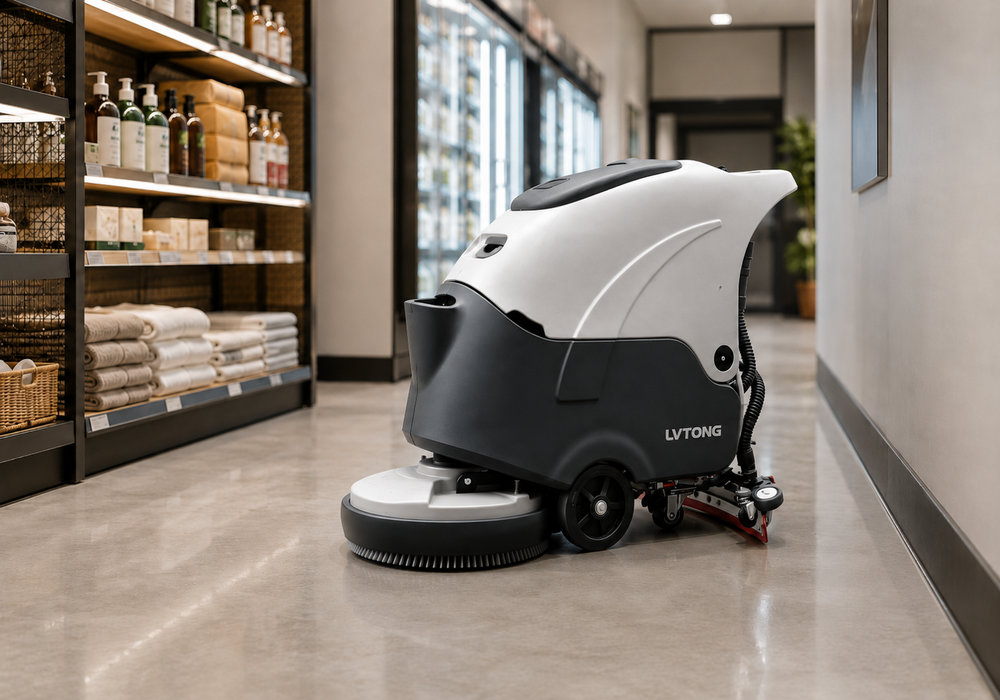
Arten von Scheuersaugmaschinen nach Bedienerkonfiguration
1. Kompakte und Mikro-Bodenreinigungsmaschinen
Kompakte Scheuersaugmaschinen sind für kleine oder stark frequentierte Bereiche konzipiert, in denen der Einsatz einer herkömmlichen gewerblichen Maschine schwierig sein kann.
Sie werden häufig verwendet in:
- Toiletten
- Kleine Einzelhandelsgeschäfte
- Gewerbeküchen
- Cafés und Restaurants
- Klinikräume
- Eingänge
- Aufzüge
- Bereiche um Möbel oder fest installierte Geräte
Ihr Hauptvorteil liegt in der Manövrierfähigkeit. Eine kompakte Maschine kann in enge Räume fahren, auf kleinem Raum wenden und benötigt weniger Lagerplatz.
Der Nachteil liegt im Fassungsvermögen. Kleinere Reinigungs- und Schmutzwassertanks müssen häufiger befüllt und entleert werden. Ein schmaler Reinigungsweg bedeutet außerdem, dass die Reinigung einer großen, offenen Fläche länger dauert als mit einer größeren handgeführten oder aufsitzbaren Maschine.
Kompakte Geräte sind daher am effektivsten, wenn die Reinigungsstrecke kurz, unterteilt oder schwer zugänglich ist – und nicht einfach nur, wenn das gesamte Gebäude klein ist.
2. Aufsitzende Scheuersaugmaschinen
Eine Scheuersaugmaschine wird von einem Bediener gesteuert, der hinter der Maschine hergeht. Einige Geräte sind bürstenunterstützt, während größere Modelle über einen motorisierten Antrieb verfügen können, um den Kraftaufwand beim Bewegen der Maschine zu reduzieren.
Handgeführte Scheuersaugmaschinen werden häufig eingesetzt in:
- Supermärkte und Einzelhandelsgeschäfte
- Schulen und Bildungseinrichtungen
- Krankenhäuser und Kliniken
- Kleine und mittlere Fabriken
- Workshops
- Lebensmittelverarbeitungsbereiche
- Lagerhallen mit schmalen Gängen
- Anlagen mit vielen Säulen, Regalen oder festen Hindernissen
Der Hauptvorteil einer handgeführten Maschine liegt in der Kontrolle. Der Bediener bleibt nah am Scheuerdeck und kann schnell auf Ecken, Geräte, Regale und wechselnde Bodenverhältnisse reagieren.
Handgeführte Reinigungsgeräte benötigen im Allgemeinen auch weniger Wende- und Lagerplatz als Aufsitzgeräte. Daher können sie in relativ großen Anlagen die bessere Wahl sein, wenn die Reinigungsroute stark unterteilt ist oder viele Hindernisse aufweist.
Die größte Einschränkung ist die Arbeitsbelastung des Bedieners. Bei langen Schichten muss der Mitarbeiter die gesamte Reinigungsstrecke zu Fuß zurücklegen. Tankinhalt und Reinigungsbreite sind in der Regel ebenfalls geringer als bei größeren Aufsitzmaschinen. Einrichtungen, die Wert auf Wendigkeit, präzise Bedienerführung und die Zugänglichkeit schmaler Wege legen, können die LVTONG-Maschinen vergleichen. Sortiment an handgeführten Scheuersaugmaschinen.
Zu den handgeführten Modellen von LVTONG gehören der Q5 und der LT-S530X. Der Q5 ist ein kompaktes Scheibenbürstenmodell für gewerbliche und leichte industrielle Einsatzbereiche, während der LT-S530X für Anwendungen konzipiert ist, die eine höhere Kapazität bei gleichzeitig guter Manövrierfähigkeit erfordern.
3. Aufsitz-Scheuersaugmaschinen
Eine Aufsitz-Scheuersaugmaschine verwendet anstelle eines herkömmlichen Sitzes eine kleine, integrierte Plattform. Der Bediener steht auf der Maschine und kann schnell auf- und absteigen.
Dieses Format nimmt eine Mittelstellung zwischen handgeführten und aufsitzbaren Geräten ein.
Aufsitz-Scheuersaugmaschinen eignen sich möglicherweise für:
- Mittelgroße Anlagen
- Gemischte offene und dichte Grundrisse
- Strecken, die häufiges Ein- und Ausfahren erfordern
- Engere Bereiche, in denen ein vollwertiges Aufsitzfahrzeug unpraktisch ist
- Für Arbeitsvorgänge, die eine höhere Produktivität als mit einem herkömmlichen Handfahrzeug erfordern.
Der Hauptvorteil besteht in der Kombination aus relativ kompakter Stellfläche und reduziertem Laufaufwand für den Bediener.
Stehgeräte sind jedoch weniger verbreitet als handgeführte und Aufsitzgeräte. Produktverfügbarkeit, lokaler Kundendienst und die Präferenzen des Bedieners sollten daher vor der Auswahl berücksichtigt werden.
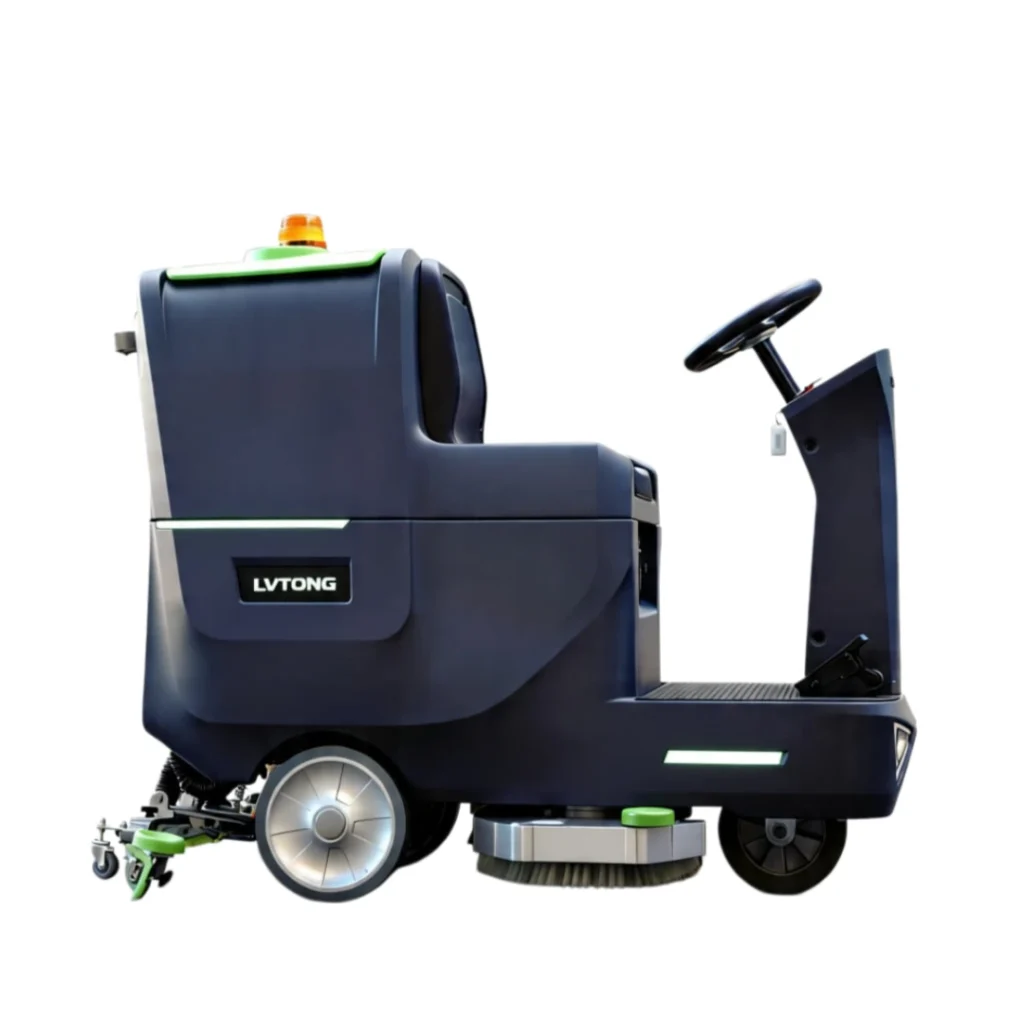
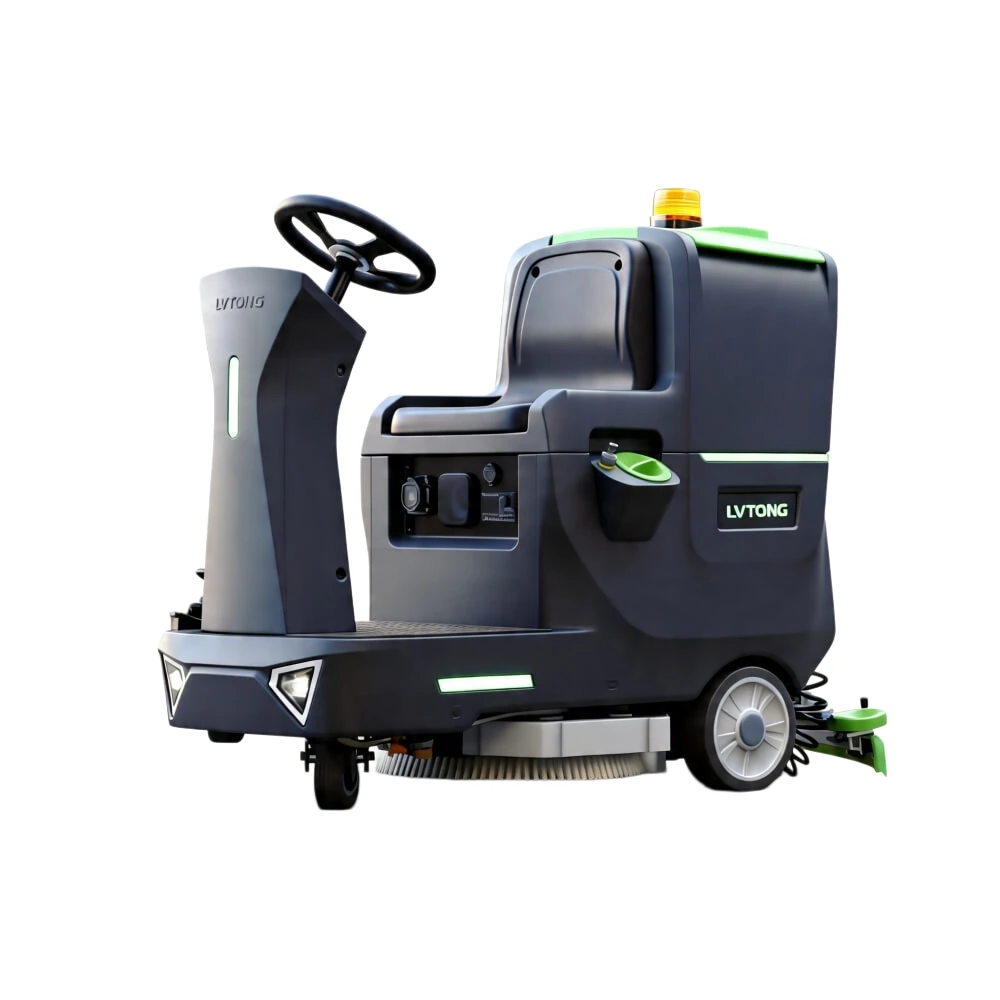
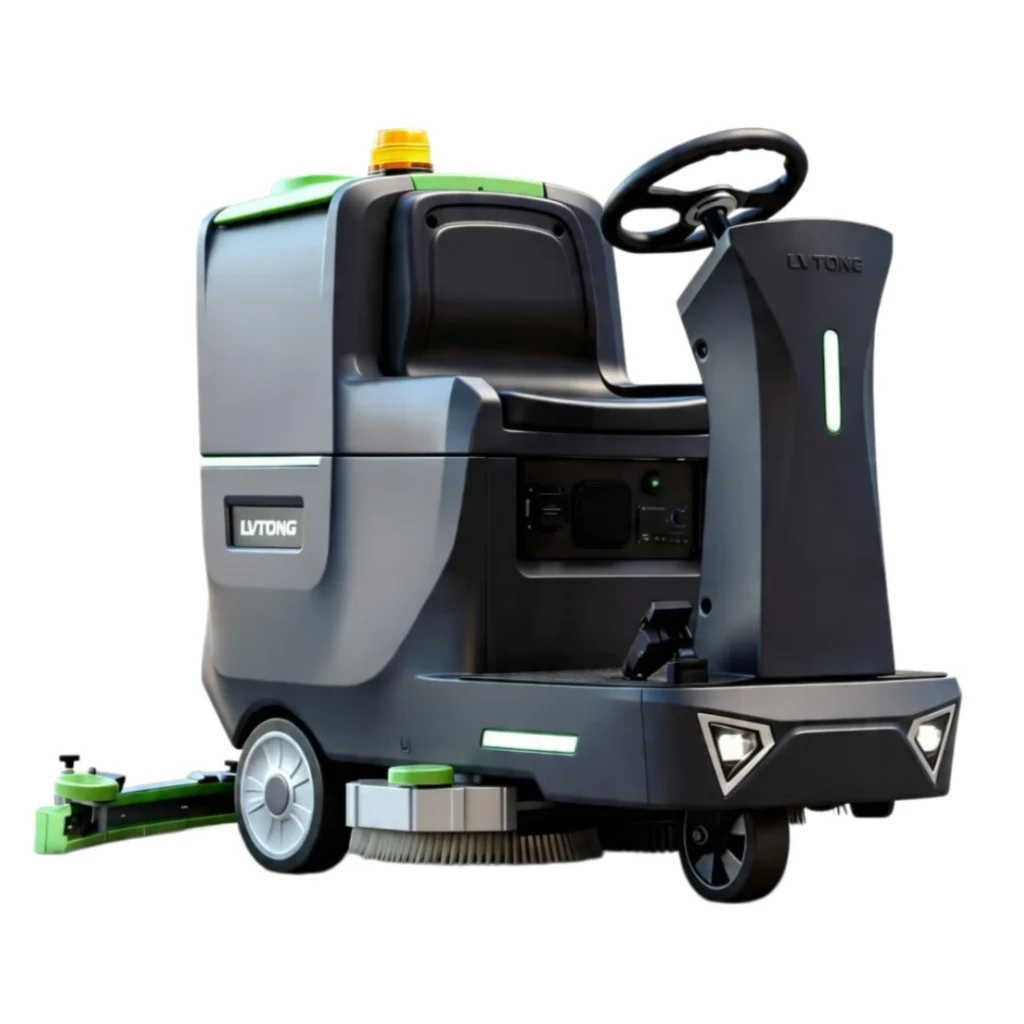
4. Aufsitz-Scheuersaugmaschinen
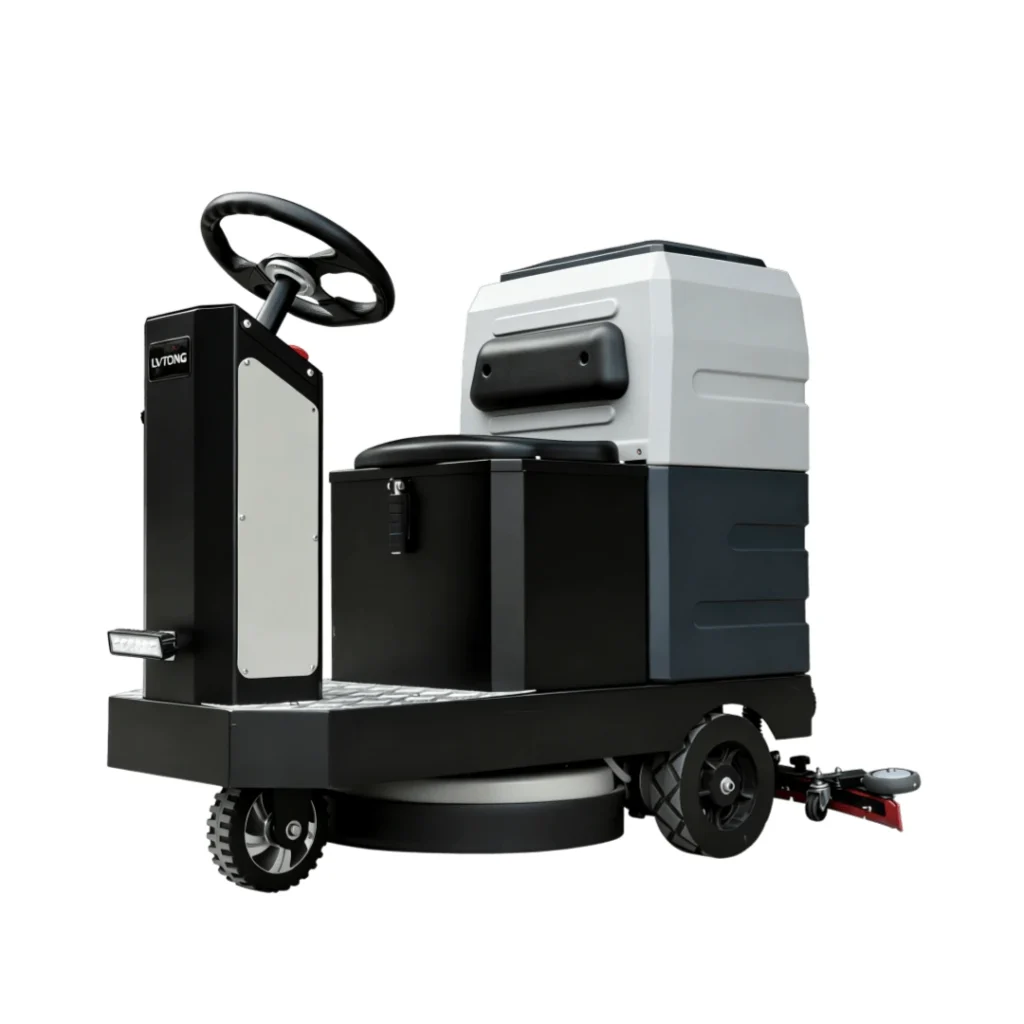
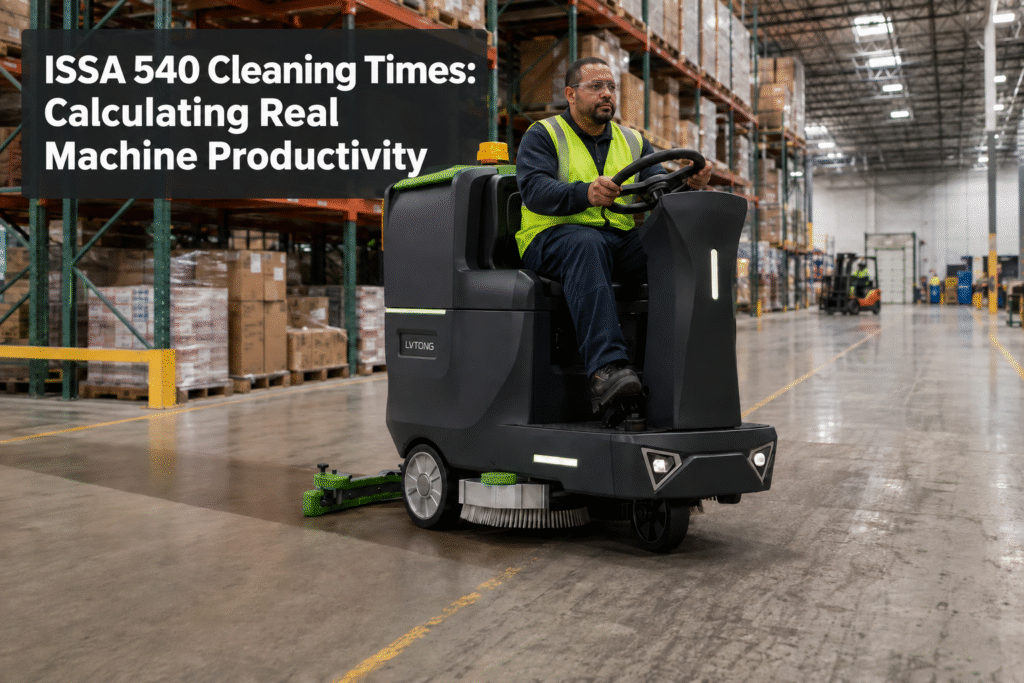
Eine Aufsitz-Scheuersaugmaschine ermöglicht es dem Bediener, im Sitzen die Maschine zu steuern. Diese Geräte bieten in der Regel breitere Reinigungswege, größere Tanks und eine höhere Akkukapazität als handgeführte Geräte.
Aufsitz-Scheuersaugmaschinen werden häufig eingesetzt in:
- Lagerhallen
- Logistik- und Vertriebszentren
- Produktionsanlagen
- Flughäfen
- Einkaufszentren
- Parkmöglichkeiten
- Ausstellungshallen
- Große Schulen und öffentliche Gebäude
Ihr Hauptvorteil liegt in der Produktivität auf langen, ununterbrochenen Strecken. Größere Tanks reduzieren die Unterbrechungen durch Nachfüllen und Entleeren, während die sitzende Arbeitsposition die Laufwege bei längeren Reinigungsschichten verringert.
Ein Aufsitzgerät ist jedoch nicht automatisch die richtige Wahl für jedes große Gebäude. Das Gerät muss durch Türen passen, in Gängen wenden, um Geräte herumfahren und den benötigten Lager- und Ladebereich erreichen können.
In einer mittelgroßen Anlage mit offenen Wegen kann ein kompaktes Aufsitzmodell effektiv eingesetzt werden, während in einem großen Gebäude mit engen, unübersichtlichen Gängen möglicherweise noch handgeführte Geräte erforderlich sind.
Die Aufsitz-Reinigungsmaschinen von LVTONG umfassen die Modelle LT-S560X, LT-S710X, V6 und LT-S860X. Diese Modelle eignen sich für unterschiedliche Reinigungsbreiten, Tankkapazitäten und Einsatzumgebungen. Die Auswahl sollte daher auf der tatsächlichen Reinigungsroute und nicht allein auf der Gesamtfläche des Gebäudes basieren.
Für große oder kontinuierliche Reinigungsrouten vergleichen Sie die Produkte von LVTONG. Aufsitz-Scheuersaugmaschinenmodelle durch Reinigung von Breite, Tankkapazität, Laufzeit und Wendeanforderungen.
5. Robotergestützte und autonome Scheuersaugmaschinen
Robotergestützte Bodenreinigungsmaschinen nutzen Sensoren, Kartierungssysteme und Navigationssoftware, um definierte Routen mit minimalem direkten Fahraufwand durch einen Bediener zu reinigen.
Sie eignen sich am besten für:
- Große, vorhersehbare Grundrisse
- Wiederkehrende Reinigungsrouten
- Einrichtungen mit festen Tagesabläufen
- Bereiche, in denen Arbeitskräfte für die detaillierte Reinigung umverteilt werden können.
- Betriebsabläufe zur Überwachung autonomer Anlagen
Ein Reinigungsroboter ersetzt nicht die gesamte manuelle Reinigung. Mitarbeiter werden weiterhin benötigt, um die Route vorzubereiten, auf Störungen zu reagieren, die Maschine zu warten, Tanks aufzufüllen oder zu entleeren und Bereiche zu reinigen, die der Roboter nicht erreichen kann.
Robotergestützte Reinigungsgeräte sollten daher am besten als ein Bestandteil eines Reinigungsparks betrachtet werden. Eine Einrichtung kann eine autonome Maschine für offene Strecken einsetzen und kompakte oder handgeführte Geräte für Ecken, Räume und beengte Bereiche beibehalten.
Für einen detaillierteren Einblick in Navigation, Kartierung, Hindernisvermeidung und Routenplanung lesen Sie unseren Leitfaden zu autonome Bodenreinigungstechnologie.
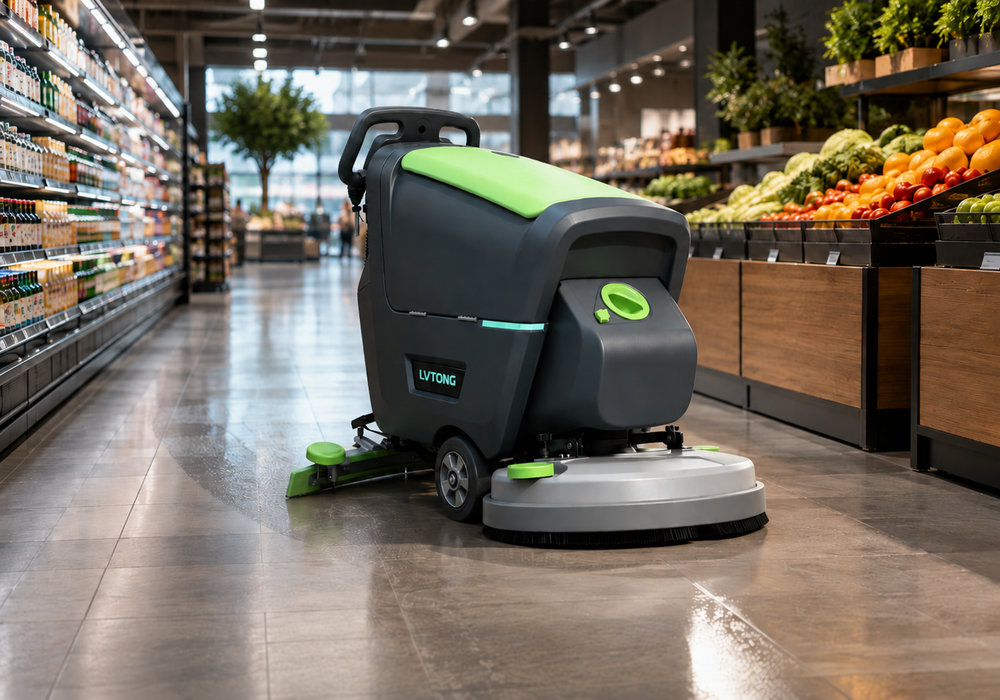
Arten von Scheuersaugmaschinen von Scrub Deck
Die Konfiguration des Bedienpersonals und die Wahl des Waschdecks sind separate Entscheidungen.
Eine handgeführte, stehende, aufsitzende oder robotergestützte Reinigungsmaschine kann unterschiedliche Bürstentechnologien verwenden. Die Wahl des Betriebsmodus ohne vorherige Prüfung des Scheuerdecks kann zu einer unzureichenden Reinigungsleistung auf dem jeweiligen Bodenbelag führen.
Die drei gebräuchlichsten Scheuerdecktypen sind Scheiben-, Zylinder- und Orbitalschrubber.
Scheiben-Bodenreinigungsmaschinen
Scheuersaugmaschinen verwenden eine oder mehrere horizontal rotierende Bürsten oder Pads. Sie werden häufig zur routinemäßigen Reinigung glatter Hartböden eingesetzt.
Typische Anwendungsgebiete sind:
- Glatter Beton
- Polierter Beton
- Epoxidböden
- Vinyl-Kompositionsfliesen
- Keramikfliesen
- Marmor und andere versiegelte harte Oberflächen
Scheibensysteme bieten eine breite Kompatibilität mit Pads und Bürsten. Anwender können je nach den Vorgaben des Bodenherstellers weichere Materialien für die routinemäßige Reinigung oder aggressivere Optionen für stärkere Verschmutzungen wählen.
Scheibenschrubber eignen sich besonders gut für bereits gefegte Böden. Sie sind weniger geeignet, um größere Mengen losen Schmutzes aufzunehmen, da der rotierende Kopf größere Partikel eher wegschiebt als aufnimmt.
Wählen Sie einen Scheibenreiniger, wenn:
- Der Boden ist relativ glatt.
- Lose Trümmer sind begrenzt
- Eine allgemeine Reinigung ist erforderlich.
- Die Flexibilität von Bürste oder Pad ist wichtig
- Für anhaftenden Boden ist ein höherer Kontaktdruck erforderlich.
Zylindrische Bodenreinigungsmaschinen
Zylindrische Scheuersaugmaschinen verwenden horizontale Walzenbürsten, die sich über den Boden drehen. Die Bürstenwirkung dringt effektiver in Oberflächenstrukturen, flache Rillen und Fugen ein als manche Flachscheibensysteme.
Sie werden häufig für Folgendes in Betracht gezogen:
- Strukturierter Beton
- Sicherheitsbodenbeläge
- Fliesen und Fugen
- Industrieböden mit Oberflächenunebenheiten
- Bereiche mit geringen Mengen an kleinem, losem Schutt
Einige zylindrische Scheuersaugmaschinen verfügen über eine Schmutzauffangschale, die leichte Partikel während des Schrubbens auffängt. Unter geeigneten Bedingungen kann dies die Notwendigkeit eines separaten Vorreinigungsdurchgangs reduzieren.
Eine zylindrische Scheuersaugmaschine ist jedoch kein Ersatz für eine Industriekehrmaschine, wenn der Boden erhebliche Mengen an Verpackungsmüll, Metallfragmenten oder grobem Schutt enthält.
Wählen Sie einen zylindrischen Scheuerschwamm, wenn:
- Der Boden weist eine Struktur, Fugen oder flache Rillen auf.
- Es müssen begrenzte Mengen an kleinen Abfällen gesammelt werden.
- Das Aufrühren der Fugenmasse ist wichtig
- Die Reinigungsroute kombiniert Waschen und das Aufsammeln von leichtem Schmutz.
Orbitale Bodenreinigungsmaschinen
Orbitalbürsten verwenden ein Pad, das sich in einer schnellen, kleinen Kreisbewegung bewegt. Anstatt sich nur auf eine kreisförmige Rotation zu verlassen, erzeugt das Pad eine gleichmäßige mechanische Bewegung über die gesamte Kontaktfläche.
Orbitalsysteme können nützlich sein für:
- Glatte, harte Böden
- Kantenorientierte Reinigung
- Gründliche Reinigung mit anwendungsspezifischen Pads
- Oberflächenvorbereitung
- Ausgewählte Verfahren zur Entfernung von Bodenbelägen
- Anwendungen, die einen kontrollierten Pad-Kontakt erfordern
Die Leistung hängt maßgeblich vom gewählten Pad, der Bodenbeschaffenheit, dem chemischen Verfahren und der Maschinenkonstruktion ab. Aussagen zur chemikalienfreien Reinigung oder zu erheblichen Wassereinsparungen sollten daher für die jeweilige Maschine und Anwendung geprüft werden und nicht allgemeingültig für alle Exzenterscheuersaugmaschinen gelten.
Wählen Sie einen Orbitalwäscher, wenn:
- Edge-Zugriff hat Priorität
- Ein spezielles, auf Pads basierendes Verfahren ist erforderlich.
- Eine gleichmäßige Bewegung der Matte ist wichtig.
- Der Hersteller von Bodenbelägen und Oberflächenbehandlungen genehmigt das Verfahren.
Scheiben-, Zylinder- und Orbital-Scheuersaugmaschinen
| Schrubben | Am besten geeignete Oberfläche | Umgang mit losem Schutt | Strukturierte Böden und Fugen | Hauptstärke | Hauptbeschränkung |
|---|---|---|---|---|---|
| Scheibe | Glatte, harte Böden | Niedrig | Mäßig | Vielseitige Bürsten- und Padoptionen | Erfordert in der Regel ein effektives Vorkehren. |
| Zylindrisch | Strukturierte oder unebene Böden | Mäßig | Hoch | Erreicht Rillen und kann leichten Schmutz aufnehmen | Weitere Bürstenkomponenten, die überprüft und gewartet werden müssen |
| Orbital | Glatte Böden und spezielle Pad-Prozesse | Niedrig | Mäßig | Gleichmäßige Bewegung und verbesserter Randzugang | Die Ergebnisse hängen stark von der Auswahl des Pads und des Prozesses ab. |
Handgeführte vs. Aufsitz-Scheuersaugmaschinen
Eine handgeführte Scheuersaugmaschine eignet sich im Allgemeinen besser für enge, unterteilte oder hindernisreiche Bereiche. Eine Aufsitz-Scheuersaugmaschine eignet sich im Allgemeinen besser für lange, offene Reinigungsstrecken, da die größere Abdeckung und der geringere Laufaufwand für den Bediener die größere Maschine rechtfertigen.
Es gibt keine allgemeingültige Flächenschwelle, ab der jede Einrichtung von handgeführten auf mitfahrende Geräte umsteigen sollte.
Die richtige Wahl hängt von der tatsächlich pro Schicht zu reinigenden Fläche, dem Layout, der Reinigungshäufigkeit, den Arbeitskosten, der Türbreite, dem Wenderaum, dem Tankvolumen, der Laufzeit und den Lagerbedingungen ab.
| Auswahlfaktor | Aufsitz-Scheuersaugmaschine | Aufsitz-Scheuersaugmaschine |
|---|---|---|
| Bevorzugtes Layout | Eng, geteilt oder voller Hindernisse | Groß, offen und durchgehend |
| Wendigkeit | Hoch | Mäßig |
| Bediener geht | Erforderlich | Minimal |
| Reinigungspfad | Normalerweise schmaler | Normalerweise breiter |
| Tankkapazität | Normalerweise kleiner | Normalerweise größer |
| Nachfüllhäufigkeit | Normalerweise höher | Normalerweise niedriger |
| Anfangsinvestition | Im Allgemeinen niedriger | Im Allgemeinen höher |
| Komfort bei langen Schichten | Mäßig | Höher |
| Speicherbedarf | Untere | Höher |
| Hauptauswahlvorteil | Kontrolle und Flexibilität | Produktivitäts- und Arbeitszeitreduzierung |
Entscheidungstabelle zur Auswahl von Bodenschrubbmaschinen
| Anlagensituation | Empfohlener Bodenreinigungsmaschinentyp | Grund |
|---|---|---|
| Kleine Zimmer, Toiletten und enge Bereiche | Kompakte oder handgeführte Scheuersaugmaschine | Bessere Manövrierfähigkeit und leichterer Zugang |
| Mittelgroße Fabriken und Werkstätten | Handgeführter oder kompakter Aufsitz-Scheuersaugroboter | Ausgewogene Flexibilität und Produktivität |
| Große Lagerhallen und Produktionsstätten | Aufsitz-Scheuersaugmaschine | Höhere Reinigungseffizienz und geringere Ermüdung des Bedieners |
| Wiederkehrende Reinigungsrouten | Roboter-Bodenreinigungsmaschine | Reduziert sich wiederholende manuelle Bedienung |
| Strukturierte Böden und Fugen | Zylindrische Bodenschrubbermaschine | Bessere Reinigungsleistung auf unebenen Oberflächen |
| Glatte Epoxid- oder polierte Böden | Scheiben-Bodenschrubber | Flexible Auswahl an Bürsten und Pads |
Die Maschinengröße ist nur ein Aspekt der Kaufentscheidung. Eine vollständige Bewertung von Maschinengröße, Bürstensystem, Tankkapazität, Akkulaufzeit, Gesamtkosten und Kundendienst finden Sie in unserer [Website-Link einfügen]. Kaufberatung für gewerbliche Bodenreinigungsmaschinen.
Wie man die richtige Bodenschrubbmaschine auswählt
Auswahlrahmen für Scheuersaugmaschinen
Die Auswahl der richtigen gewerblichen Scheuersaugmaschine lässt sich in sechs Schritten vereinfachen:
- Messen Sie die tatsächlich zu reinigende Bodenfläche und nicht nur die Gesamtgröße des Gebäudes.
- Prüfen Sie die Gangbreite, die Türöffnungsbreite, den Wenderaum und die Lagerbedingungen.
- Identifizieren Sie das Bodenmaterial und die Art der Verunreinigung.
- Ermitteln Sie die erforderliche Reinigungsproduktivität und die täglichen Betriebsstunden.
- Vergleichen Sie Akkulaufzeit, Ladeanforderungen und Wartungsaufwand.
- Ermitteln Sie die gesamten Besitzkosten, einschließlich Arbeitskosten, Verbrauchsmaterialien, Reparaturen und Ausfallzeiten.
Durch die Anwendung dieses Rahmens können Unternehmen eine Bodenreinigungsmaschine auswählen, die besser zu ihren tatsächlichen Arbeitsumgebungen passt, anstatt sich nur nach Größe oder Kaufpreis zu richten.
1. Berechnen Sie die tatsächlich zu reinigende Fläche
Wählen Sie eine Maschine nicht allein anhand der Gesamtfläche des Gebäudes aus.
Ein 10.000 m² großes Gebäude kann Büros, Lagerregale, Ausrüstung, Teppichböden und unzugängliche Bereiche umfassen. Die tatsächlich zu reinigende Hartbodenfläche kann deutlich kleiner sein.
Aufzeichnen:
- Gesamtfläche des Hartbodens
- Der Bereich wird während jeder Schicht gereinigt.
- Reinigungshäufigkeit
- Verfügbare Reinigungszeit
- Bereiche, die wiederholte Durchgänge erfordern
- Bereiche, die eine andere Maschine erfordern
Dies führt zu einer aussagekräftigeren Anforderung als die Gesamtgröße der Anlage.
2. Gänge, Türen und Wendeflächen ausmessen
Messen Sie die engsten Stellen entlang der gesamten Reinigungsstrecke, einschließlich:
- Türöffnungen
- Lagergänge
- Aufzüge
- Rampen
- Zwischenräume zwischen Maschinen
- Lagerzugänge
- Batterieladebereiche
- Entwässerungs- und Wiederauffüllungsstellen
Vergleichen Sie diese Maße mit der Gesamtbreite, der Abstreiferbreite, der Länge und dem Wenderadius der Maschine – nicht nur mit ihrer nominellen Reinigungsbreite.
Eine Maschine, die zwar den Hauptboden reinigen kann, aber nicht in einen Lagerraum fahren, durch eine Tür passen oder am Ende eines Ganges wenden kann, wird zu betrieblichen Problemen führen.
3. Boden und Schutt identifizieren
Der Zustand des Bodens beeinflusst sowohl den Maschinentyp als auch die Bürstenauswahl.
Zu den häufigsten Verunreinigungen gehören:
- Feinstaub
- Sand und Kies
- Nahrungspartikel
- Verpackungsfragmente
- Fett und Öl
- Gabelstaplerreifenspuren
- Metallstaub
- Chemische Rückstände
- Allgemein eingeschleppter Boden
Scheibenreinigungssysteme eignen sich im Allgemeinen gut für anhaftenden Schmutz auf relativ glatten, vorgekehrten Böden. Zylinderreinigungssysteme können auf strukturierten Oberflächen oder Wegen mit wenig leichtem Schmutz Vorteile bieten.
Grobe, lose Abfälle sollten normalerweise mit einer Kehrmaschine oder durch einen separaten Vorreinigungsprozess entfernt werden.
4. Passen Sie die Maschine an die Bodenoberfläche an.
Prüfen Sie das Bodenmaterial und dessen Zustand, bevor Sie eine Bürste oder ein Pad auswählen.
Wichtige Oberflächen sind:
- Glatter Beton
- Polierter Beton
- Epoxidharz
- Keramikfliesen
- Fliesen und Fugen
- Vinyl-Kompositionsfliesen
- Marmor
- Strukturierter Sicherheitsboden
- Versiegelte Industrieböden
Bürstenmaterial, Padagurität, Anpressdruck, Reinigungsmittel und Wasserdurchfluss müssen mit der Oberfläche kompatibel sein.
Es ist vorzuziehen, die vorgeschlagene Konfiguration in einem repräsentativen Bereich zu testen, anstatt sich nur auf allgemeine Empfehlungen zu verlassen.
5. Vergleichen Sie die tatsächliche Produktivität, nicht nur die angegebene Produktivität.
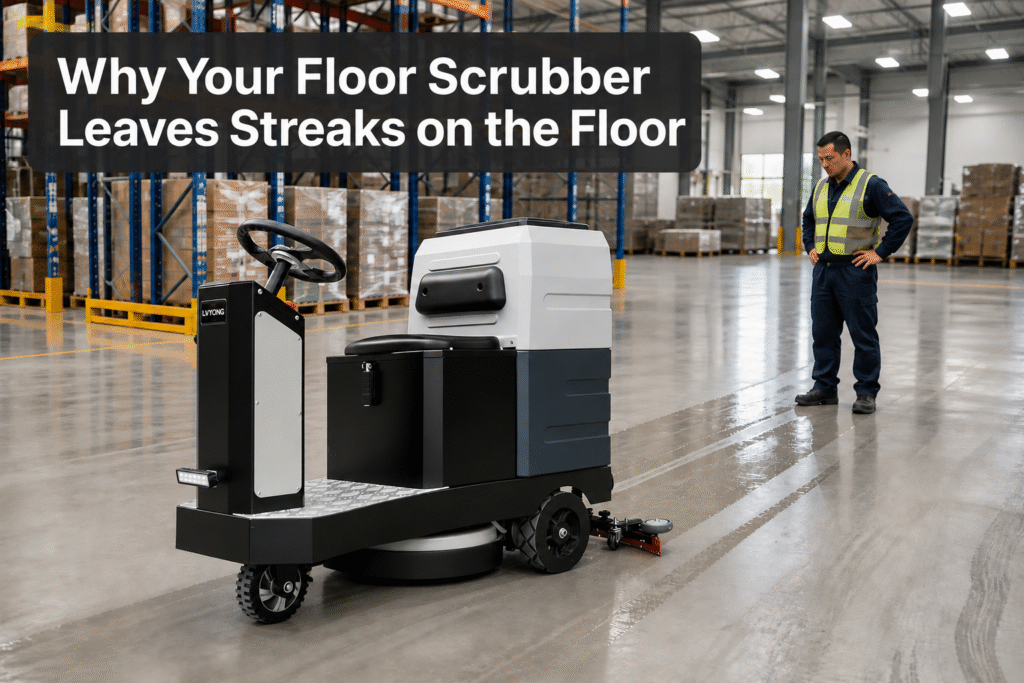
Hersteller veröffentlichen üblicherweise die theoretische Produktivität basierend auf Reinigungsbreite und Fahrgeschwindigkeit. Die tatsächliche Produktivität ist geringer, da die reale Reinigung Folgendes umfasst:
- Abbiegen
- Hindernissen ausweichen
- Nachfüllen des Lösungsbehälters
- Entleeren des Auffangbehälters
- Wiederholte stark verschmutzte Abschnitte
- Wechsel zwischen Reinigungszonen
- Bürsten oder Pads wechseln
- Akku laden oder austauschen
- Bedienerprüfungen
Eine praxisnahe Bewertung sollte vergleichen, wie viel Boden die Maschine während einer normalen Schicht unter realen Betriebsbedingungen reinigen kann.
Eine breitere Maschine erzielt möglicherweise keine besseren Ergebnisse, wenn sie in engen Gängen viel Zeit beim Wenden verliert. Umgekehrt kann eine kompakte Aufsitzmaschine die Reinigungszeit auf einer durchgehenden, offenen Route deutlich reduzieren.
6. Akkulaufzeit und Infrastruktur bewerten
Bei batteriebetriebenen Maschinen sollten Sie Folgendes beachten:
- Erforderliche Betriebsstunden pro Schicht
- Akku-Typ
- Ladezeit
- Ladeort
- Stromversorgung
- Anforderungen an die Batteriewartung
- Opportunitätskosten
- Wiederbeschaffungskosten
- Verfügbarkeit von Ersatzbatterien
Die erforderliche Laufzeit sollte einen angemessenen Betriebsspielraum beinhalten. Eine Maschine, die die Tourendauer nur unter idealen Bedingungen erreicht, kann die Schicht möglicherweise nicht abschließen, wenn Bürstendruck, Steigung, Akkualter oder wiederholte Reinigungen den Energieverbrauch erhöhen.
Die Batteriechemie, das Ladeverhalten, die Entladetiefe, die Temperatur und die Wartung können die nutzbare Laufzeit und die Austauschintervalle beeinflussen. Siehe unsere Leitfaden zur Akkulaufzeit von Scheuersaugmaschinen für einen detaillierten Vergleich von Lithium- und Bleiakkumulatoren.
7. Vergleich der Gesamtbetriebskosten
Der niedrigste Kaufpreis führt nicht immer zu den niedrigsten Betriebskosten.
Ein Gesamtkostenvergleich sollte Folgendes umfassen:
- Anschaffungspreis der Ausrüstung
- Bedienerarbeit
- Batteriewechsel
- Bürsten und Pads
- Abzieherklingen
- Waschmittel und Wasser
- Vorbeugende Wartung
- Reparaturen
- Ausfallzeit
- Ausbildung
- Erwartete Nutzungsdauer
- Wiederverkaufswert oder Restwert
Bevor Sie eine Scheuersaugmaschine kaufen, sollten Sie folgende Informationen bereithalten:
Vor der Auswahl einer gewerblichen Scheuersaugmaschine sollten Käufer folgende Informationen vorbereiten:
- Gesamtgeschossfläche
- Tatsächlich reinigungsfähige Bodenfläche
- Bodenbelag
- Hauptverunreinigungen wie Staub, Öl, Fett oder Schmutz
- Schmalste Gangbreite und Türöffnungsgröße
- Erforderliche Reinigungsstunden pro Tag
- Batterieladebedingungen
- Wartungserwartungen
- Verfügbares Reinigungsbudget
Die Bereitstellung dieser Details ermöglicht es den Herstellern, den richtigen Bodenreinigungsmaschinentyp, die richtige Reinigungsbreite, die richtige Batteriekonfiguration und die richtige Maschinenkapazität zu empfehlen.
Eine Aufsitzmaschine mag in der Anschaffung teurer sein, reduziert aber den Arbeitsaufwand auf einer großen, offenen Strecke. Ein handgeführtes Modell kann in einem dicht bebauten Gebiet, wo eine Aufsitzmaschine ihre breitere Reinigungsstrecke nicht effektiv nutzen kann, wirtschaftlicher bleiben.
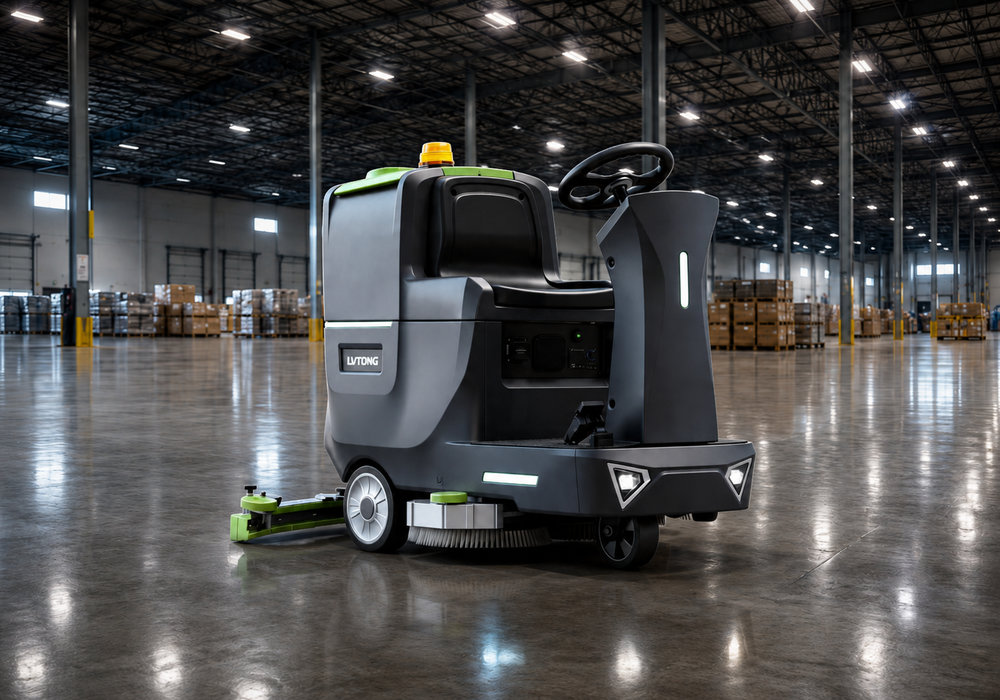
Auswahl von Scheuersaugmaschinen nach Anlagentyp
| Anlage oder Layout | Empfohlener Ausgangspunkt | Wichtige Bedingungen |
|---|---|---|
| Toiletten und sehr kleine Bereiche | Kompakt- oder Mikro-Schrubber | Lagerung, Randzugang und Tankgröße |
| Einzelhandelsgeschäfte | Kompakt oder handgeführt | Kundenverkehr, Lärm und Hindernisse |
| Schulen und Kliniken | Handgeführtes oder kompaktes Aufsitzfahrzeug | Manövrierfähigkeit, Geräuschentwicklung und Trocknungsleistung |
| Schmale Lagerhallengänge | Handgeführtes oder kompaktes Aufsitzfahrzeug | Gesamtmaschinenbreite und Wenderadius |
| Großes offenes Lager | Aufsitz- oder Roboterfahrzeug | Trümmerniveau, Routenkontinuität und Laufzeit |
| Produktionsstätte | Hinterhergehend oder zum Mitfahren | Bodenart, Bodenbeschaffenheit und Geräteanordnung |
| Flughafen oder Messehalle | Aufsitz- oder Roboterfahrzeug | Lange Strecken, öffentlicher Verkehr und Betriebsplan |
| Anlage mit gemischtem Layout | Kombinationsflotte | Trennen Sie offene Wege von geschlossenen Zonen |
| Fliesen- und Fugenbereiche | Zylindrisches oder geeignetes Scheibensystem | Fugentiefe, Bürstentyp und Oberflächenbeschaffenheit |
| Glatte Epoxidharz- oder polierte Betonoberfläche | Scheiben- oder Orbitalsystem | Bodenart, Auswahl der Unterlage und Anforderungen an die Oberflächenbearbeitung |
Kann eine Einrichtung mehr als einen Bodenreinigungsmaschinentyp benötigen?
Ja. Viele Einrichtungen erzielen bessere Ergebnisse mit einem gemischten Maschinenpark, als wenn eine einzige Maschine jeden Bereich reinigen muss.
Zum Beispiel:
- Eine Aufsitz-Scheuersaugmaschine kann den Hauptlagerboden reinigen.
- Eine handgeführte Reinigungsmaschine kann schmale Gänge und Produktionsbereiche reinigen.
- Ein kompakter Scheuersaugroboter eignet sich zur Reinigung von Toiletten und kleinen Räumen.
- Ein Reinigungsroboter kann eine vorhersehbare, offene Route bewältigen.
- Eine Kehrmaschine kann vor dem Schrubben einen Großteil des trockenen Schmutzes entfernen.
Eine gemischte Fahrzeugflotte kann die Routenabdeckung verbessern und die Kompromisse reduzieren, die durch den Einsatz einer Maschine entstehen, die für beengte Bereiche zu groß oder für durchgehend offene Flächen zu klein ist.
Beispiele für LVTONG-Bodenschrubbmaschinentypen
LVTONG liefert handgeführte und aufsitzbare Scheuersaugmaschinen für gewerbliche und industrielle Anwendungen.
Q5 Aufsitz-Scheuersaugmaschine
Der Q5 Aufsitz-Scheuersaugmaschine ist eine kompakte, handgeführte Scheibenwaschmaschine, die für Strecken konzipiert wurde, die Manövrierfähigkeit, kontrollierte Wasserapplikation und Wasserrückgewinnung in einem Arbeitsgang erfordern.
Es eignet sich möglicherweise für Einzelhandelsgeschäfte, Werkstätten, Lebensmittelverarbeitungsbetriebe und andere Einrichtungen mit mäßigen Reinigungsabläufen und begrenztem Platzangebot.
LT-S530X Aufsitz-Scheuersaugmaschine
Der LT-S530X industrielle, handgeführte Scheuersaugmaschine bietet ein größeres, handgeführtes Format für industrielle und gewerbliche Umgebungen.
Es richtet sich an Anwender, die mehr Kapazität als eine Kompaktmaschine benötigen und gleichzeitig eine präzise Bedienerführung in Gängen, Werkstätten und hindernisreichen Bereichen gewährleisten wollen.
LT-S560X Aufsitz-Scheuersaugmaschine
Der LT-S560X 560mm Aufsitz-Scheuersaugmaschine ist ein kompaktes Aufsitzmodell für Einrichtungen, die einen Sitzbetrieb benötigen, aber nicht die größten Industriefahrer aufnehmen können.
Es kann für Einkaufszentren, Werkstätten und mittelgroße bis große befestigte Wege evaluiert werden, bei denen der Wenderaum eine wichtige Einschränkung darstellt.
LT-S710X Aufsitz-Scheuersaugmaschine
Der LT-S710X Aufsitz-Scheuersaugmaschine ist für größere, kontinuierlichere Reinigungsanwendungen vorgesehen.
Durch seine Aufsitzkonfiguration und das größere Tanksystem eignet es sich für Anwender, die Ausrüstung für Lagerhallen, Produktionsstätten, Logistikeinrichtungen und andere Strecken mit hoher Abdeckung vergleichen.
Die Maschinenauswahl sollte anhand der tatsächlichen Bodenmaße, Gangabmessungen, Oberflächenbeschaffenheit, Verschmutzungsart, Reinigungsplan und erforderlicher Betriebszeit bestätigt werden.
Häufig gestellte Fragen
Abschluss
Bodenreinigungsmaschinen sollten zuerst nach der Bedienerkonfiguration und dann nach dem Scheuerdeck klassifiziert werden.
Kompakte, handgeführte, stehende, aufsitzbare und robotergestützte Reinigungsmaschinen erfüllen unterschiedliche Anforderungen an Layout, Produktivität und Personaleinsatz. Scheiben-, Zylinder- und Orbitaldecks eignen sich für verschiedene Bodenbeläge, Verschmutzungsgrade und Reinigungsprozesse.
Für beengte oder unterteilte Bereiche empfiehlt sich zunächst die Prüfung einer kompakten oder handgeführten Scheuersaugmaschine. Für lange, offene Strecken und längere Schichten sollten Sie Aufsitzmaschinen vergleichen. Bei stabilen, sich wiederholenden Strecken können Reinigungsroboter Teil des Fuhrparks werden.
Die endgültige Entscheidung sollte auf der Grundlage der tatsächlich zu reinigenden Fläche, der Gangbreite, des Wenderaums, der Bodenoberfläche, des Schmutzes, des Tankvolumens, der Batterielaufzeit und der gesamten Betriebskosten getroffen werden.
Um eine passende Maschinenempfehlung zu erhalten, teilen Sie LVTONG bitte Ihre Bodenfläche, die schmalste Gangbreite, das Bodenmaterial, die Hauptverunreinigungen, die erforderliche Reinigungshäufigkeit und die verfügbare Betriebszeit mit.