
KURZE ANTWORT
A floor scrubber with squeegee cleans with its brush and dries with its squeegee, and the two must be matched to each other and to the floor. Getting the pairing right matters more than the brand name on the housing.
- Brush architecture: disc brushes concentrate vertical pressure; cylindrical (roller) brushes carry debris and scrub in one pass.
- Bristle stiffness must match the floor — soft for polished stone and epoxy, medium for tile, aggressive for rough concrete.
- Pads have their place: a pad driver wins on polish days and delicate finishes.
- The squeegee decides dryness: squeegee width should exceed the brush path, and blade condition decides whether water lifts in one pass.
The sections below compare the two brush architectures, match bristles to common floors, explain down pressure, and close with a five-line buying specification.
Every floor scrubber does the same two jobs: it agitates soil off the floor, and it picks the slurry back up. The brush does the first, the squeegee does the second, and a machine that is strong at one and weak at the other fails in a very visible way — a clean floor that is still wet. Choosing a floor scrubber with squeegee components that match your floors, and adjusting them as they wear, is therefore a maintenance-and-selection question, not a catalog question. This guide walks through both halves of the floor-contact system and the decisions that connect them.
The Brush and the Squeegee Are One System
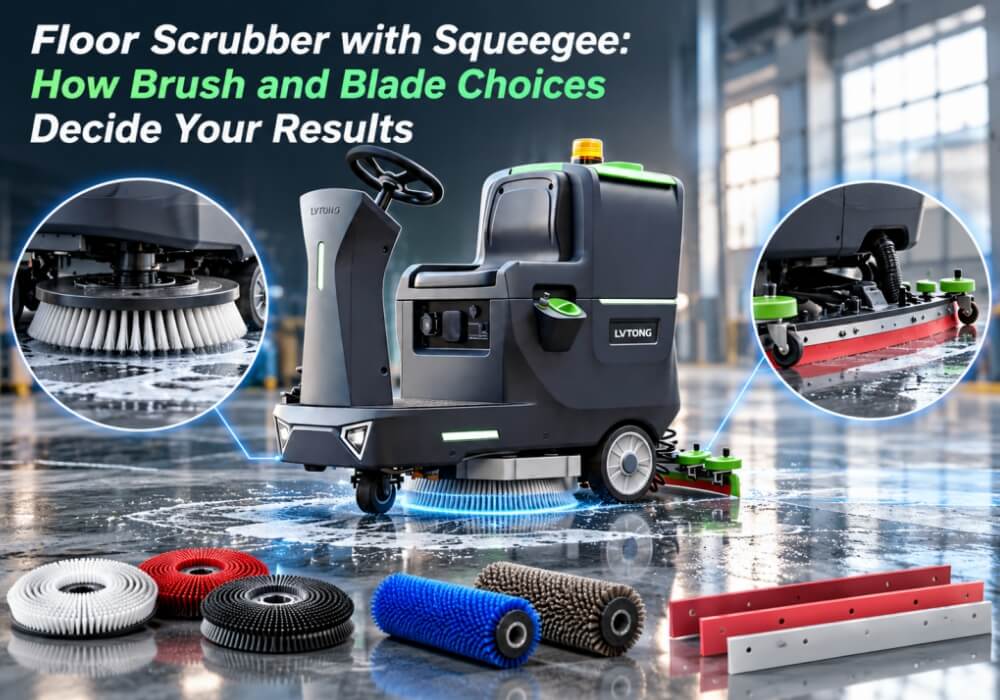
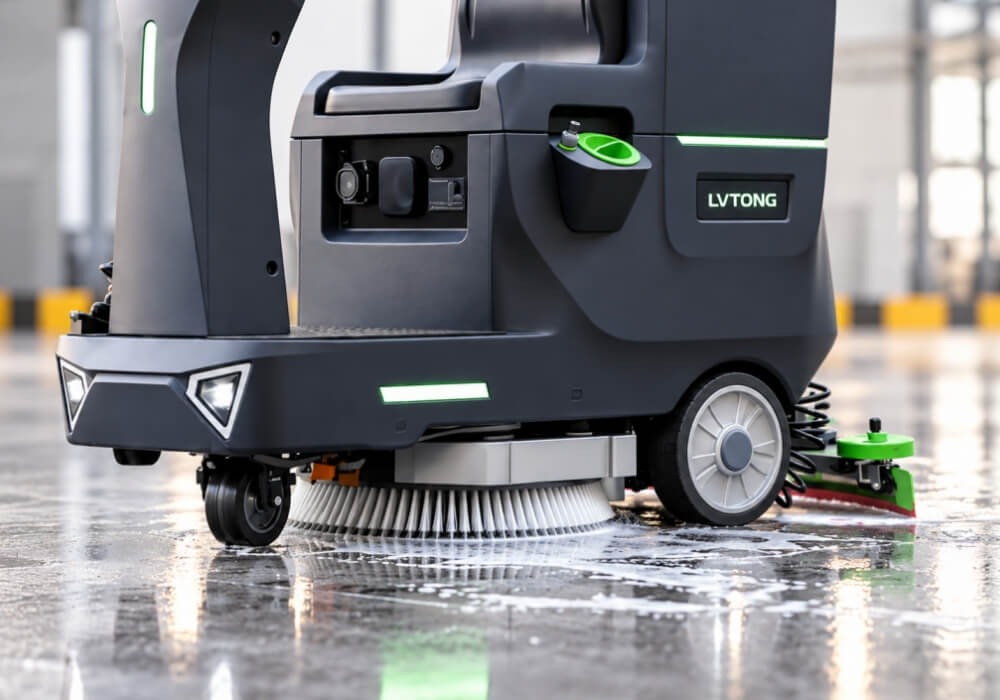
A floor scrubber with squeegee hardware only delivers results as a pair: the brush determines how much soil leaves the floor, and the squeegee determines whether the floor is safe to walk on afterwards.
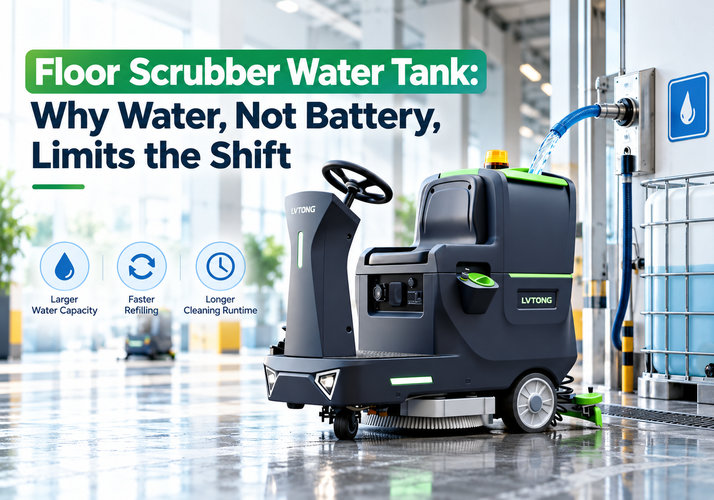
The two components are coupled by water. The brush needs solution to float soil; the squeegee needs a vacuum path to lift it. If the brush floods more water than the squeegee geometry can recover, streaks follow the machine down the aisle. If the squeegee blades are worn, even a perfectly matched brush leaves a wet film that becomes a slip hazard — the reason walking surfaces are regulated under OSHA-Regeln für begehbare Arbeitsflächen and why traction bodies such as the Nationales Institut für Bodensicherheit treat residual water as a primary slip factor. When you compare machines, evaluate the pair together: brush width, squeegee width, vacuum power and tank volumes as one hydraulic circuit, the same way we treat the water side in our Anleitung zum Wassertank der Bodenschrubbermaschine.
Floor Scrubber Brush Types: Disc vs Cylindrical
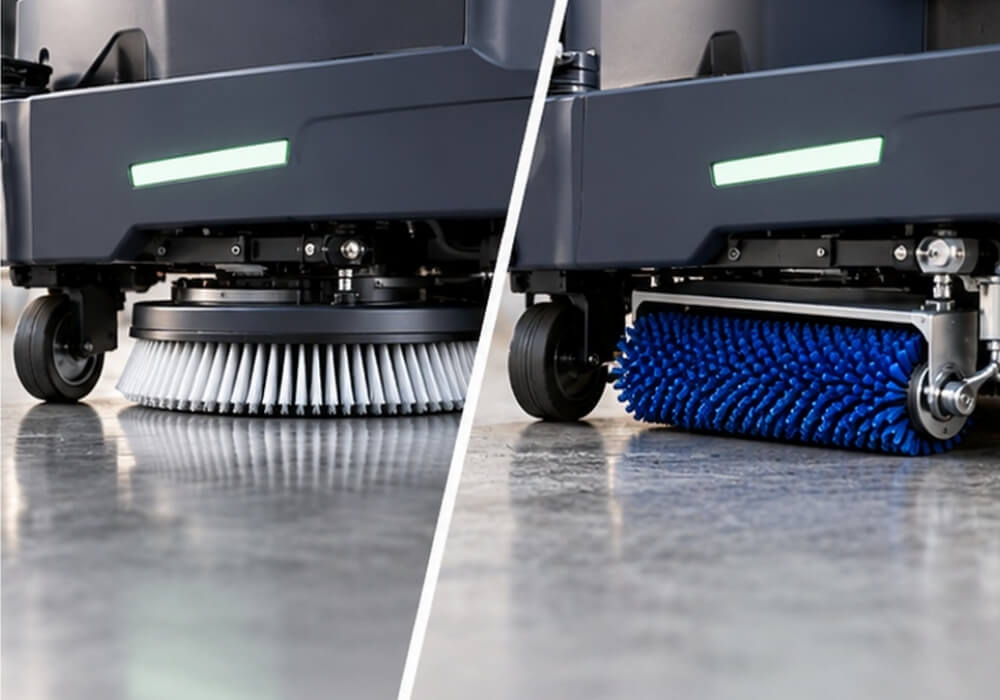
The disc vs cylindrical floor scrubber decision is about contact geometry: a disc brush presses straight down, while a cylindrical brush sweeps soil sideways into an integrated tray — the second one can replace pre-sweeping in debris-heavy areas.
The main floor scrubber brush types differ in how they touch the floor. A disc brush rotates flat, so its force is vertical: strong pressure on a defined circle, effective on bonded soil, and compatible with pads. A cylindrical (roller) brush rotates with its axis parallel to the floor, so the bristles rake the surface and flick debris — sand, paper clips, litter — into a collection tray ahead of the squeegee. This is why roller-deck machines are marketed as “sweep and scrub in one pass” for workshops and loading areas. Our V6 product page describes exactly this division: machines are separated into roller brush type and disc brush type by cleaning method.
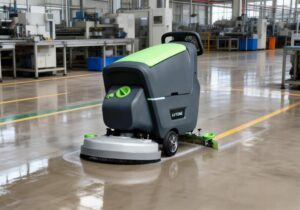
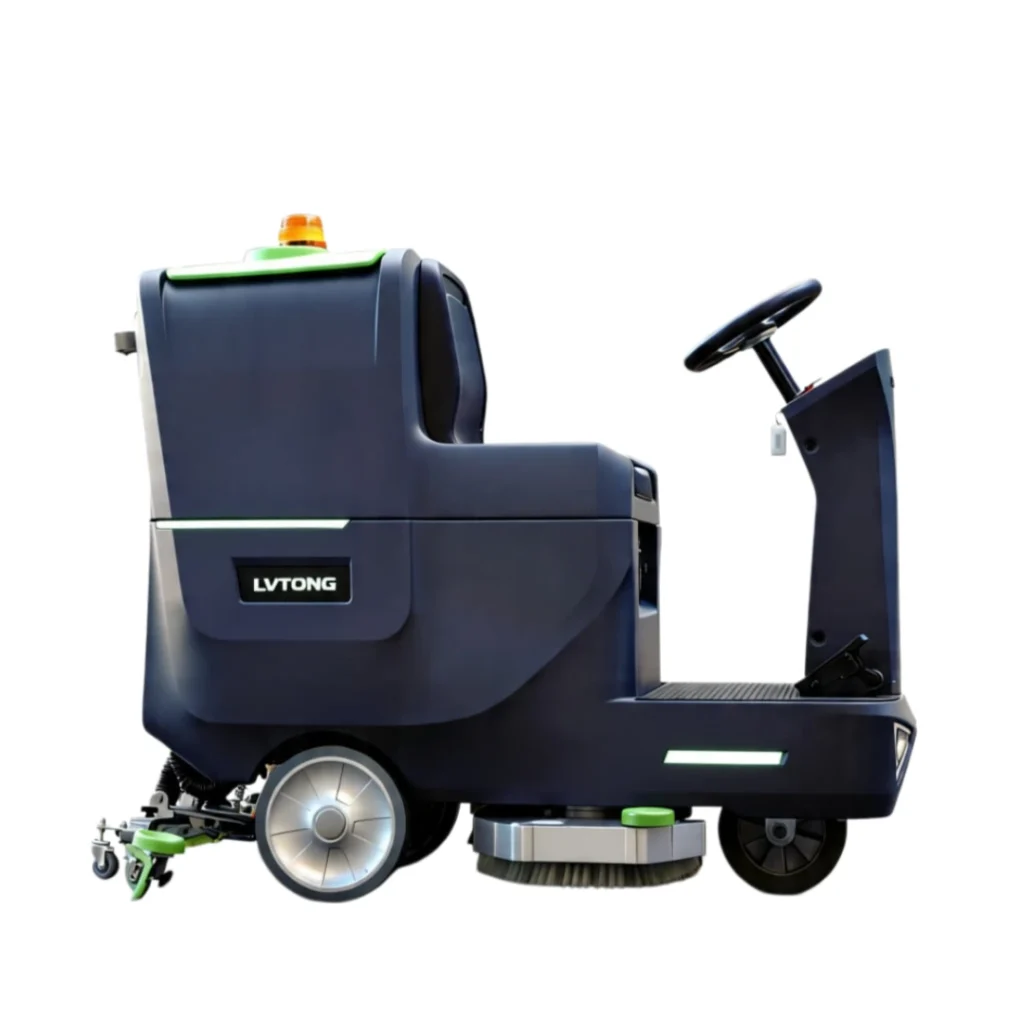
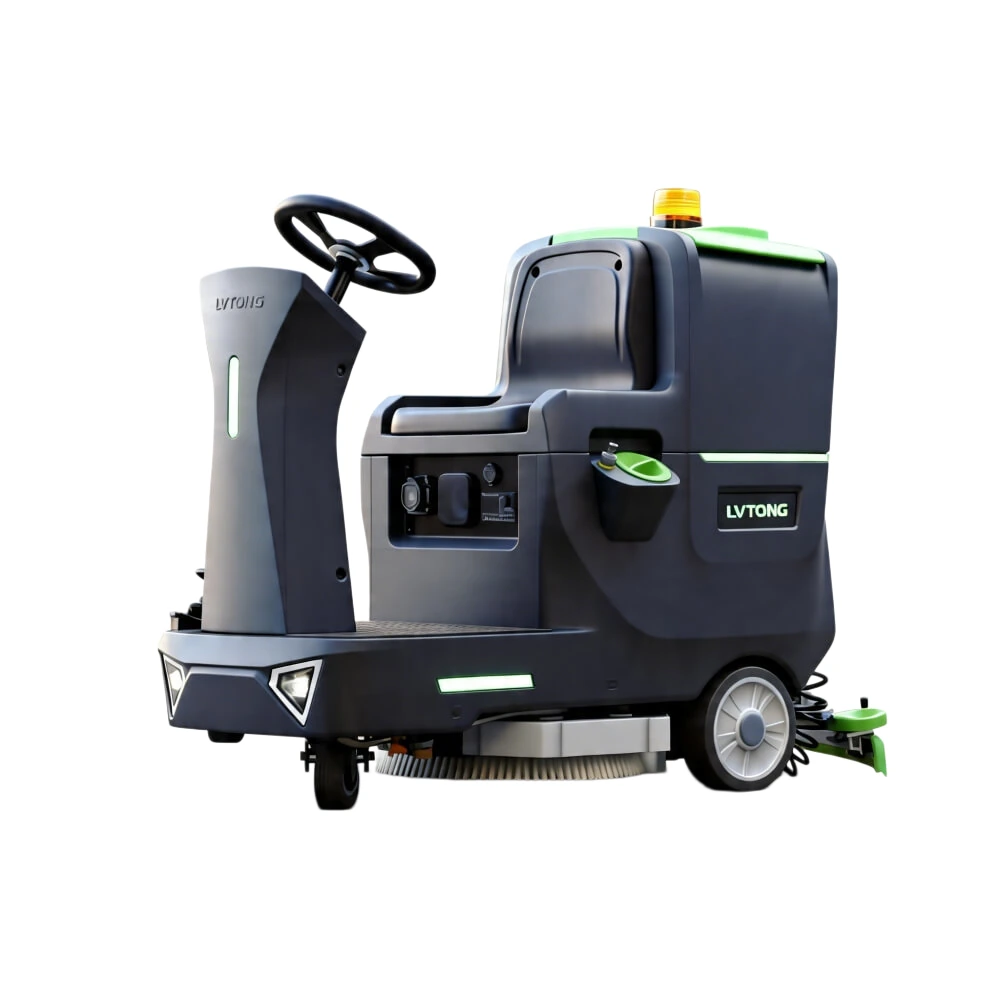
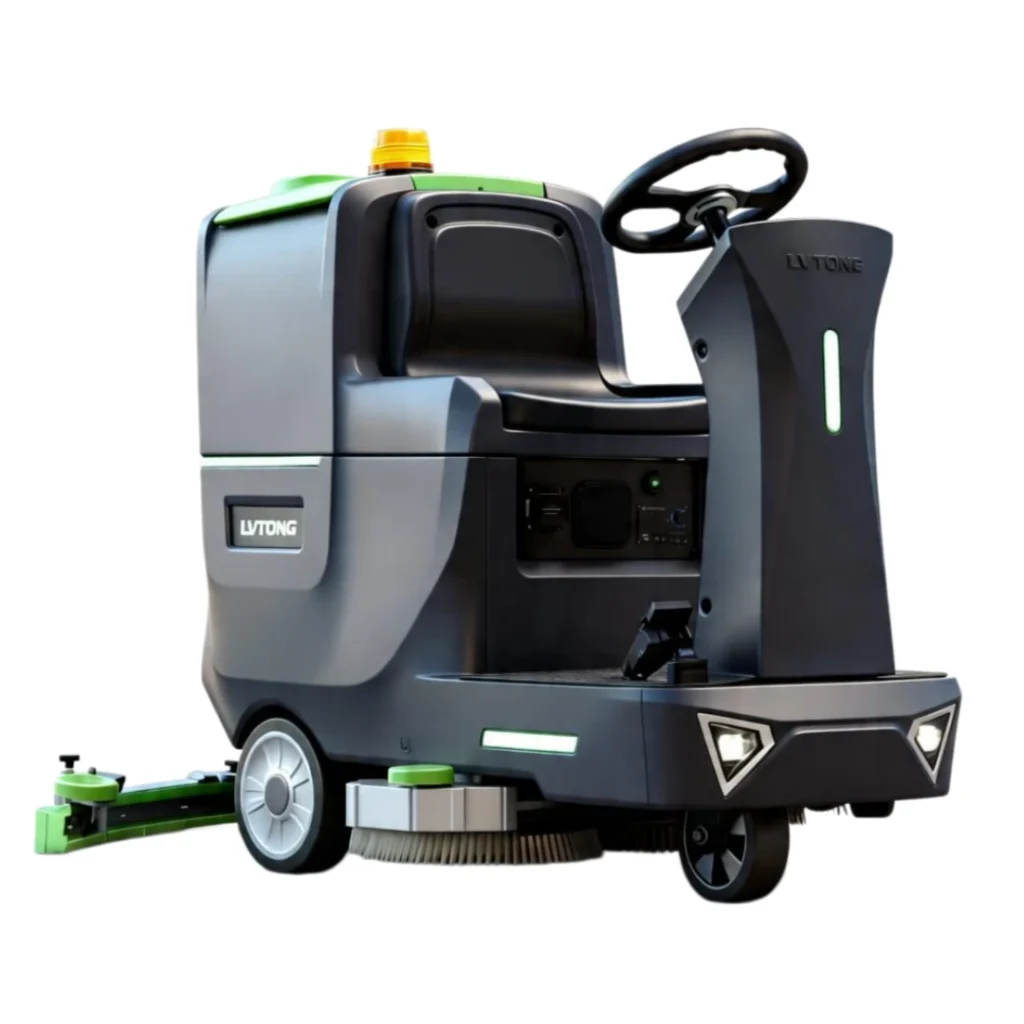
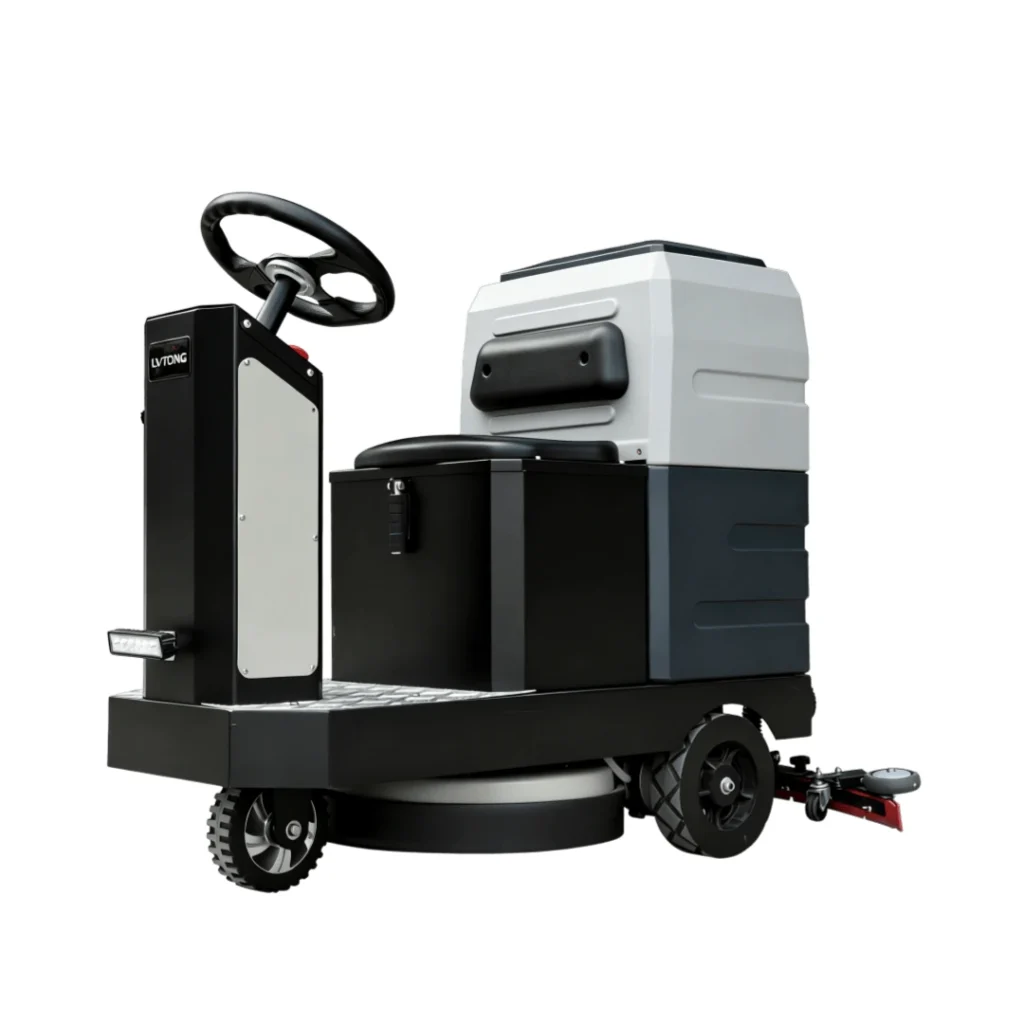
The consequences are practical. Disc decks need the floor pre-swept in debris-heavy zones; cylindrical decks chew through litter but cost more and need tray emptying. Disc machines dominate the general-purpose market — including LVTONG’s line, where the LT-S530X ships as a floor scrubber with squeegee hardware built around a high-density disc brush — because they are simpler, cheaper per brush and accept pads.
Matching Brush Stiffness to the Floor
Bristle selection follows one rule: the softer the finish, the softer the filament — and the faster the brush wears out on purpose.
| Boden | Bristle / filament | Warum |
|---|---|---|
| Polished stone, terrazzo | Soft white nylon | Preserves the polished surface; stone care bodies such as the Natursteininstitut warn against abrasive contact on polished finishes |
| Epoxy, painted concrete | Soft-to-medium, no grit | Grit filaments scour the coating — see our Leitfaden für Reinigungsmaschinen für Epoxidharzböden |
| Ceramic, porcelain tile | Medium nylon | Grout lines need moderate aggression |
| VCT / LVT | Medium or red pad | Flexible finish; too stiff causes dulling |
| Rough concrete (workshop, warehouse) | Aggressive grit brush | A floor scrubber brush for concrete carries embedded grit to cut bonded soil |
Buy at least two brush sets per machine class if your facility mixes finishes, and label the storage rack — a stiff concrete brush run over polished stone for ten minutes does visible damage. Chemistry belongs in this matching exercise too; pair the brush with the right dilution using our Leitfaden für Reinigungslösungen instead of compensating a soft brush with undiluted chemical.
Pad vs Brush: When a Pad Driver Wins
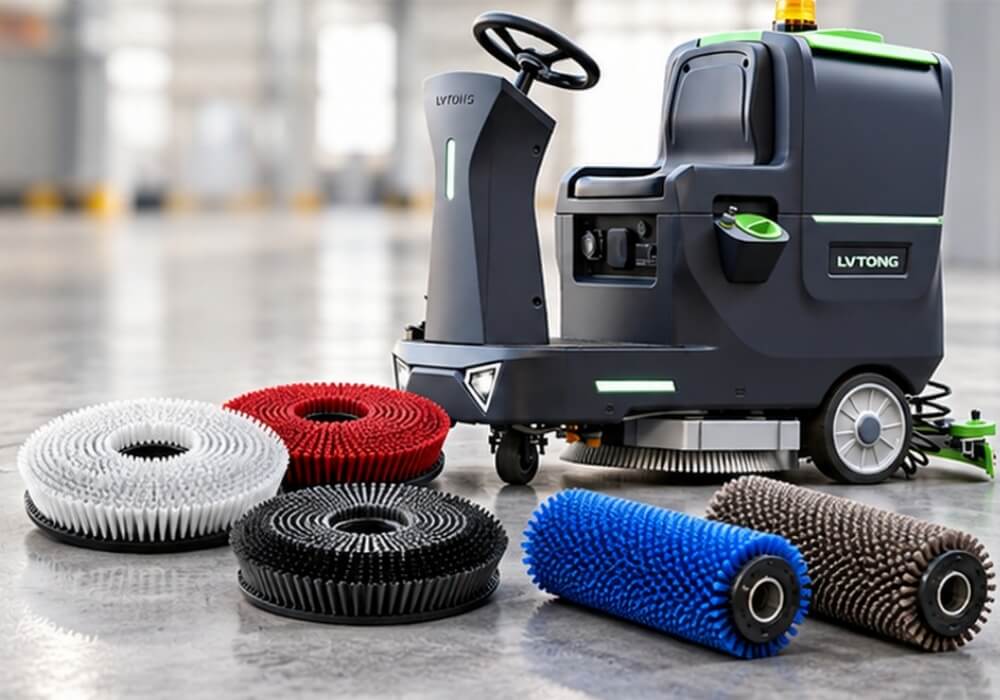
The pad vs brush floor scrubber trade-off is flexibility: brushes last longer and scrub harder; pads cost less per piece, come in a graded color system, and are the right tool on polish days and delicate finishes.
Most disc machines accept a pad driver — a flat plate with hooks that holds a polishing pad. The graded pad system (white through brown) lets one machine move from buffing VCT to deep scrubbing in the same shift. Pads wear out faster than brushes but cost a fraction of one, which suits facilities that already buy consumable chemistry. Choose pads when the priority is finish quality or when a single deck must serve several floors; choose brushes when the priority is scrubbing aggression and long service intervals.
Down Pressure: Where Clean Meets Damage
More down pressure cleans faster until it doesn’t — past the floor’s tolerance, the same force that lifts soil produces swirl marks, dull stone and scoured coatings.
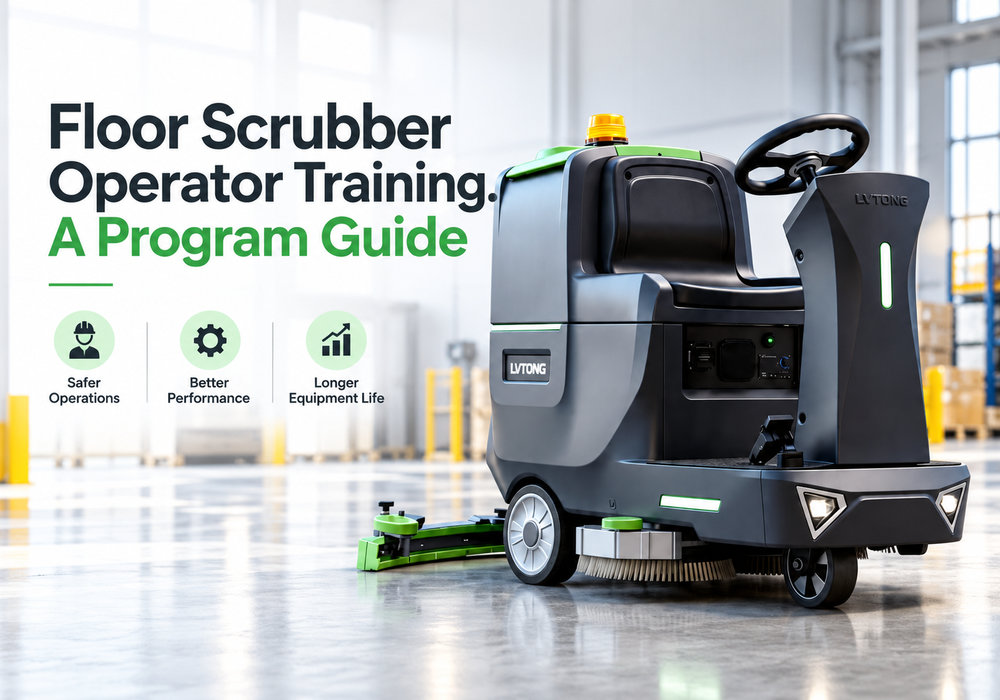
Scrubbing is a pressure-and-time problem. Machines let you set brush pressure in a range; the right setting is the lowest one that still lifts soil in a single pass, verified by watching the recovered water rather than the floor. On coated and polished surfaces, excess pressure shows up within days as a loss of gloss. Treat pressure as a specification you verify at handover: ask the vendor to state the adjustable range and demonstrate on your own floor, and keep the daily pressure setting written into the operator checklist from our operator training program guide so the setting survives staff turnover.
Squeegee Geometry: Width, Blade and Curve
Squeegee width should exceed the brush path by a comfortable margin — a typical figure is five to ten centimeters per side — because any floor the brush touches but the squeegee misses stays wet.
Three numbers define squeegee performance. First, squeegee width: it must clear the full scrubbing path including swing, or the edges of every pass stay wet. Second, blade material: natural rubber seals better on rough, pitted concrete; polyurethane lasts longer on smooth floors. Illustrative, typical guidance — confirm with the vendor for your surface. Third, curvature: a curved squeegee channels the recovered slurry to the center pickup mouth, which is the design LVTONG specifies for the LT-S530X — a 65 L recovery tank fed by a curved squeegee system — because straight blades tend to leave corner trails at the ends of the pass. Floor scrubber squeegee blades are also the single fastest-wearing part of the recovery side, which is why our Teileliste für Bodenreinigungsmaschinen lists them first among wear items.
Squeegee Adjustment and the Symptoms of Wear
Floor scrubber squeegee adjustment is a weekly two-minute check: the blade must deflect evenly across its length, and the moment streaks or water trails appear, the blade is worn, mis-set or fouled.
Adjustment is deliberately simple: a knurled knob sets down-force so both blades touch the floor with equal pressure, and a four-edge blade is flipped or swapped when one edge wears. Read the symptoms before you read the machine. Water trails at the edge of the pass mean width or angle is off; a thin film over the whole path means the blades have glazed or the vacuum is starved; a chattering sound means a fouled or torn blade. Each symptom points to a two-minute fix — or to the replacement-ordering process covered in our parts guide. Worn squeegees quietly waste the machine’s other investments: battery runtime is spent re-cleaning floors that were never dried the first time.
A Five-Line Buying Specification
Put the floor-contact system on the purchase order as five explicit lines, and require the vendor to confirm each one against your actual floor.
| Line | What to specify | Warum es wichtig ist |
|---|---|---|
| 1. Brush architecture | Disc or cylindrical, matched to debris load | Decides whether pre-sweeping stays on your labor budget |
| 2. Brush width & bristle | Width plus the filament for your floor type | Coverage rate and floor safety |
| 3. Down pressure range | Adjustable range, stated and demonstrated | One range must serve your softest and hardest floor |
| 4. Squeegee width & blade | Width versus brush path; blade material; curved or straight | Dryness per pass and slip safety |
| 5. Spares | One spare blade set and one brush set per floor class | Wear parts are consumables, not emergencies |
Safety belongs in the specification too: brush guards, automatic shut-off when the squeegee is lifted, and the electrical safety framework of IEC 60335-2-72 for walk-behind and ride-on floor treatment machines. If you want these five lines reviewed against a specific model, Kontaktieren Sie uns with your floor types and debris load.
Häufig gestellte Fragen
Do all floor scrubbers come with a squeegee?
Effectively yes on modern disc and cylindrical machines — the squeegee and vacuum are what make it a “scrubber-dryer”. Sweepers and some specialized machines do not recover water, which is why our sweeper-versus-scrubber guide treats them as different tools.
How often should squeegee blades be replaced?
It depends on hours and surface roughness, so judge by symptom rather than calendar: streaking, water trails or a glazed blade edge mean it is time to flip or replace. A four-edge blade carries four usable edges before replacement.
Can one brush handle every floor in a mixed facility?
No. Keep at least a soft set for polished or coated floors and an aggressive set for concrete, and change brushes as deliberately as you change chemistry. The brush-to-floor table above is the minimum mapping.
Is a cylindrical brush always better because it replaces sweeping?
Not always. Cylindrical decks earn their cost in debris-heavy areas; on finished floors with regular dust-mopping, a disc machine with the right pads delivers the same result at lower purchase and upkeep cost.