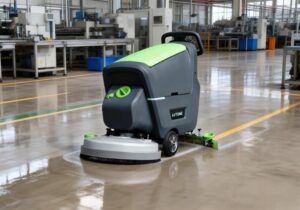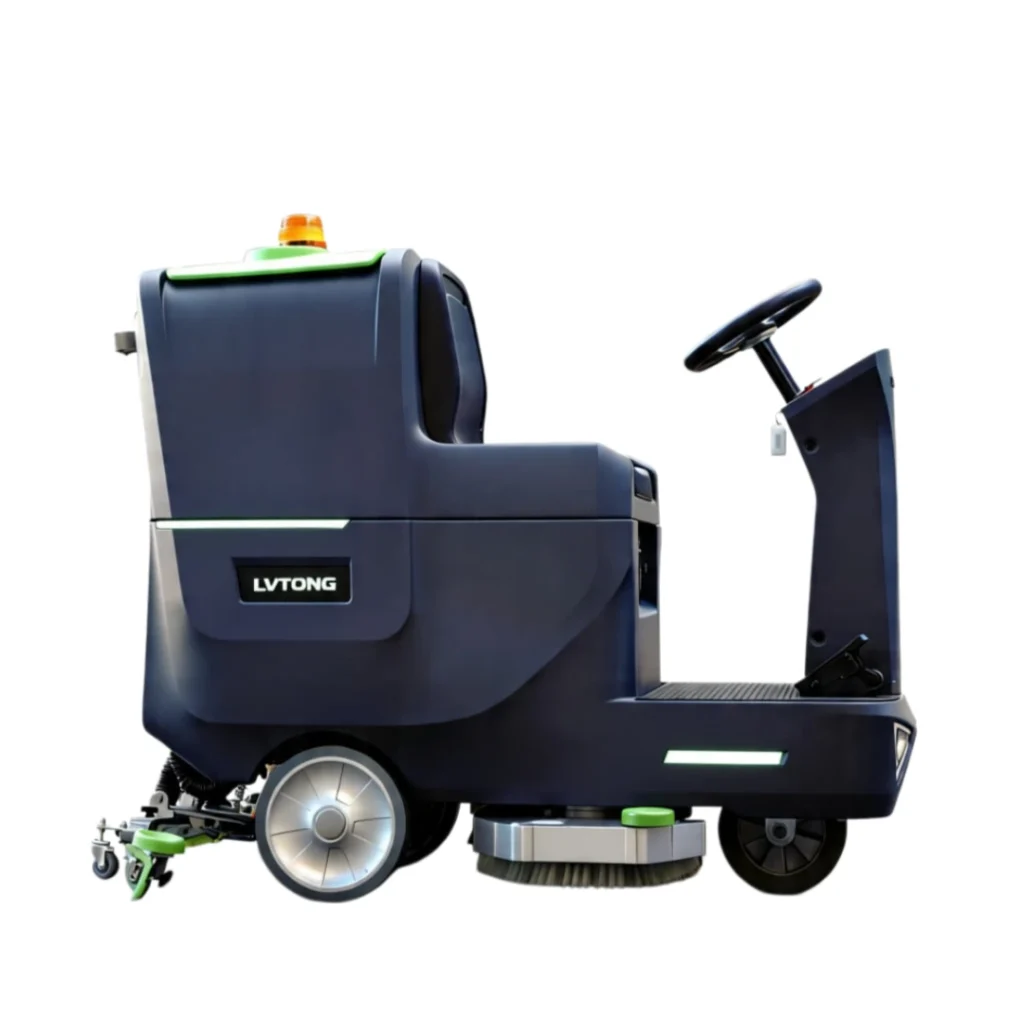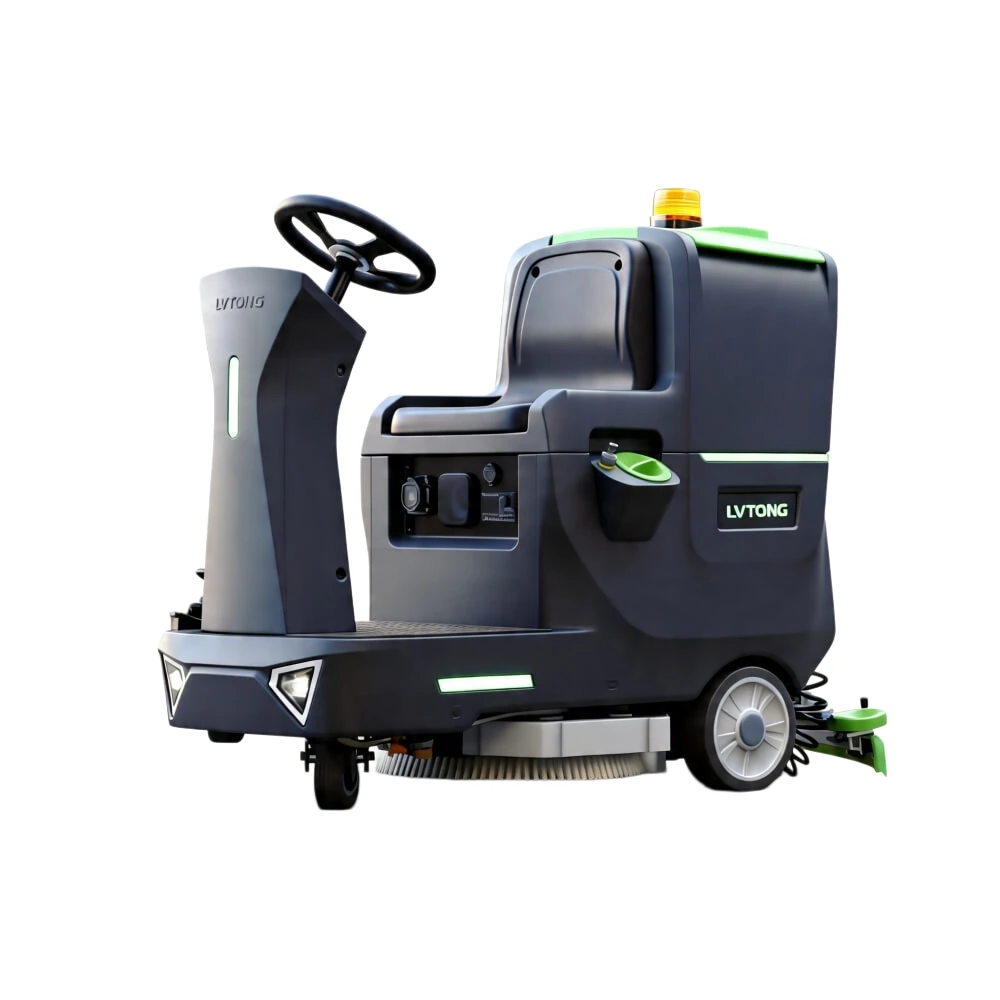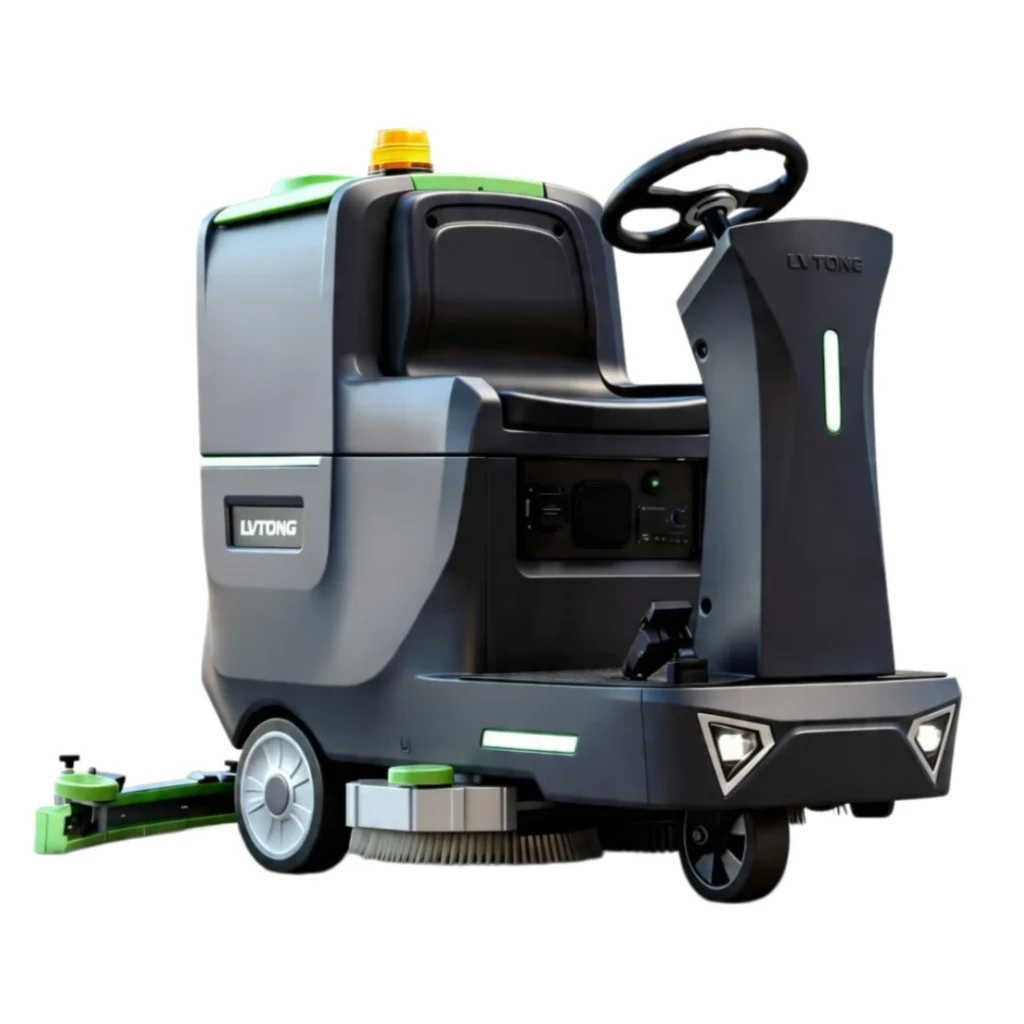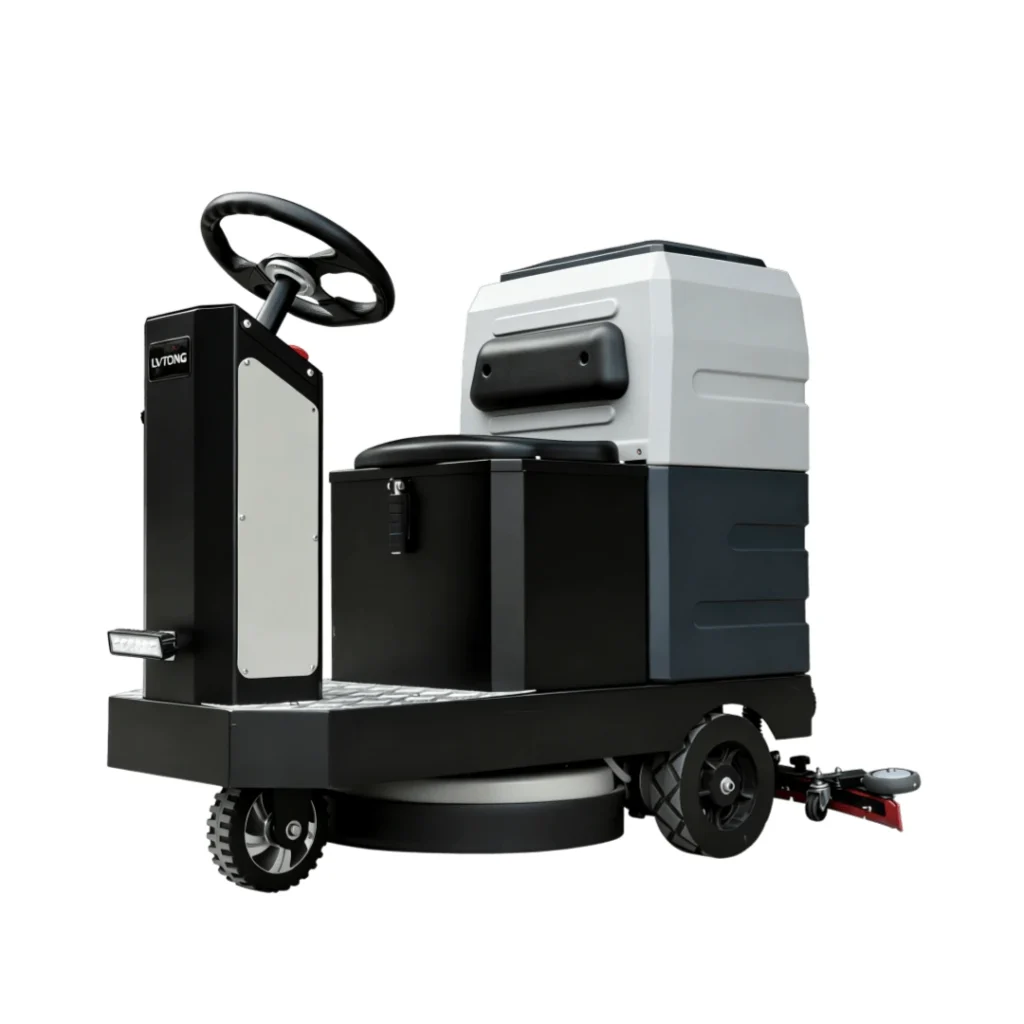
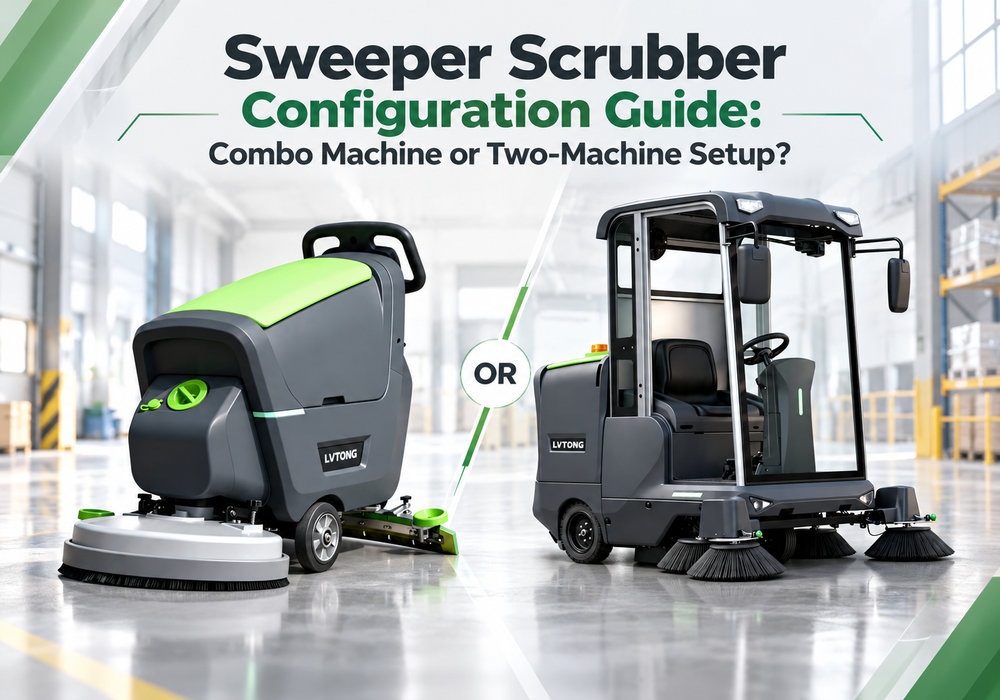
Die Wahl der richtigen Scheuersaugmaschine für Lagerhallen hängt von der Größe der Halle, der Gangbreite, dem Bodentyp, dem Verschmutzungsgrad, der Reinigungshäufigkeit und der erforderlichen Reinigungsleistung ab. Für ein kleines Lager mit schmalen Gängen eignet sich möglicherweise eine kompakte, handgeführte Scheuersaugmaschine, während in einem großen Distributionszentrum oder einer offenen Lagerhalle in der Regel eine Aufsitz-Scheuersaugmaschine für höhere Produktivität benötigt wird.
Eine gute Lagerhallenbodenreinigungsmaschine sollte nicht nur den Boden reinigen, sondern auch die Ermüdung des Bedieners verringern, die Wasserrückgewinnung verbessern, die Reinigungszeit kontrollieren und die Gesamtbetriebskosten über die gesamte Lebensdauer der Maschine senken.
Dieser Leitfaden erklärt, wie Sie die richtige Scheuersaugmaschine für Ihr Lager auswählen – abhängig von Lagergröße, Gangbreite, Bodenart, Verschmutzungsgrad, Bürstensystem, Tankinhalt, Reinigungsleistung und Gesamtbetriebskosten. Er vergleicht außerdem handgeführte und aufsitzbare Scheuersaugmaschinen, damit Facility Manager eine fundierte Kaufentscheidung treffen können.
Kurzantwort
Die Wahl der richtigen Scheuersaugmaschine für ein Lager sollte von der Größe der Lagerhalle, der Gangbreite, dem Bodentyp, dem Verschmutzungsgrad und der erforderlichen Reinigungsleistung abhängen. Handgeführte Scheuersaugmaschinen eignen sich besser für kleine Lagerhallen und schmale Gänge, während Aufsitz-Scheuersaugmaschinen für große, offene Flächen ab 20.000 Quadratfuß effizienter sind.
Entscheidungsrahmen für Scheuersaugmaschinen in Lagerhallen
Dieser Leitfaden soll als praktischer Entscheidungsrahmen für Lagerleiter, Instandhaltungsteams in Fabriken, Logistikmitarbeiter und Einkäufer dienen.
Vor dem Vergleich verschiedener Modelle sollte zunächst der tatsächliche Reinigungsablauf definiert werden, nicht nur die Gesamtgröße des Gebäudes. Käufer sollten die zu reinigende Bodenfläche, die Gangbreite, das Bodenmaterial, die Verschmutzungsmenge, den Gabelstaplerverkehr, die tägliche Reinigungshäufigkeit, den Wasserrückgewinnungsbedarf und die verfügbare Reinigungszeit bestätigen.
Bei der Auswahl einer Lagerhallenbodenreinigungsmaschine sollte darauf geachtet werden, ob sie den eigentlichen Reinigungsablauf sicher, gleichmäßig und mit akzeptablen Arbeits-, Wartungs- und Ausfallkosten bewältigen kann.
Was ist eine Lagerhallenbodenreinigungsmaschine?
Eine Scheuersaugmaschine ist eine Bodenreinigungsmaschine, die zum Waschen und Trocknen von Lagerhallenböden mithilfe von Bürsten oder Pads, Wasser, Reinigungsmittel und einem Rückgewinnungssystem entwickelt wurde. Sie wird häufig eingesetzt, um Gabelstaplerreifenspuren, Staub, Schmutz, verschüttete Flüssigkeiten und klebrigen Schmutz von Beton-, Epoxid- und anderen Industriebodenbelägen zu entfernen.
Im Gegensatz zu Trockenkehrmaschinen wird eine Scheuersaugmaschine für Lagerhallen eingesetzt, wenn der Boden nass gereinigt werden muss, einen hohen Scheuerdruck benötigt und das Abwasser aufgefangen werden muss. Dadurch eignet sie sich besonders für Einrichtungen, die im täglichen Betrieb sauberere, trockenere und sicherere Böden benötigen.
Lagerhallen-Scheuersaugmaschine vs. allgemeine gewerbliche Bodenscheuersaugmaschine
Eine Lagerhallen-Scheuersaugmaschine ist eine anwendungsspezifischere Reinigungslösung als eine allgemeine gewerbliche Bodenscheuersaugmaschine.
Allgemeine gewerbliche Scheuersaugmaschinen werden häufig in Schulen, Krankenhäusern, Supermärkten, Büros und öffentlichen Gebäuden eingesetzt. Scheuersaugmaschinen für Lagerhallen müssen in der Regel größere, offene Flächen, Gabelstaplerspuren, Staub, Verpackungsreste, Beton- oder Epoxidböden, lange Reinigungswege und den häufigen täglichen Einsatz bewältigen.
Aus diesem Grund sollten Lagerhauskäufer mehr Wert auf die praktische Abdeckungsrate, das Tankvolumen, die Wasserrückgewinnung, den Bürstendruck, den Wenderadius, die Batterielaufzeit, die Wartungsfreundlichkeit und die Gesamtbetriebskosten legen.
Wie man die richtige Scheuersaugmaschine für Lagerhallen anhand von Größe, Gangbreite und Bodenart auswählt
Der erste Faktor ist die Lagergröße. Für Lagerhallen zwischen 5.000 und 20.000 Quadratfuß eignen sich in der Regel handgeführte Scheuersaugmaschinen gut, da diese flexibel in engen Gängen und auf kleinem Raum eingesetzt werden können. Bei Lagerhallen über 20.000 Quadratfuß sind Aufsitz-Scheuersaugmaschinen meist die bessere Wahl, da sie eine höhere Reinigungsleistung, größere Tanks und eine geringere Ermüdung des Bedieners bieten.
Die Gangbreite ist ebenso wichtig. Schmale Gänge, beengte Lagerbereiche und Randzonen erfordern kompakte Maschinen mit kleinem Wenderadius. Weitläufige Flächen, Versandbereiche und große Distributionszentren benötigen breitere Reinigungswege und größere Lösungs- und Rückgewinnungstanks.
Auswahl nach Lagerbodentyp und Schuttniveau
| Zustand des Lagerbodens | Empfohlener Scheuermitteltyp | Warum es funktioniert |
|---|---|---|
| Glatte Betonböden | Scheibenwaschmaschine für Lagerhallenböden | Höherer Bürstendruck für ebene Oberflächen |
| Epoxidböden | Scheibenreiniger mit geeignetem Pad oder weicher Bürste | Reinigt ohne übermäßige Oberflächenbeschädigung |
| Lagerhallenböden mit hohem Schuttanteil | Zylindrischer Wäscher | Fegt kleine Verschmutzungen vor dem Schrubben zusammen |
| Rauher oder unebener Beton | Scheibenreiniger mit Schleifbürste oder flexiblem Pad-Treiber | Besserer Kontakt mit unebenen Oberflächen |
| Schmale Lagerhallengänge | Handgeführter oder kompakter Scheuersaugautomat | Leichteres Wenden und besserer Zugang |
| Weitläufige Lagerhallenböden | Aufsitz-Scheuersaugmaschine für Lagerhallen | Höhere Abdeckungsrate und geringere Ermüdung des Bedieners |
Anwendungsszenarien für Fabriken und Werkstätten
Scheuersaugmaschinen für Lagerhallen werden auch häufig in Fabriken, Produktionswerkstätten und Logistik-Industrieanlagen eingesetzt.
Unterschiedliche Fabrikbereiche erfordern möglicherweise unterschiedliche Reinigungskonfigurationen.
In Produktionswerkstätten ist oft ein starker Bürstendruck und eine zuverlässige Wasserrückgewinnung erforderlich, um Staub, Öl, Kühlmittelreste, Fußabdrücke und Reifenspuren zu entfernen.
Ladebereiche und Materialumschlagszonen erfordern in der Regel eine höhere praktische Abdeckungsrate, größere Tanks und eine robuste Konstruktion, da die Reinigungswege länger sind und der Verkehr häufiger auftritt.
In der Lebensmittel-, Medizin- oder Präzisionsfertigung werden möglicherweise bessere Trocknungsleistungen, eine sauberere Wasserrückgewinnung und eine einfachere Maschinenwartung benötigt, um die Hygiene am Arbeitsplatz und die Betriebssicherheit zu gewährleisten.
Für Fabriken und Werkstätten sollte die beste Scheuersaugmaschine auf das Bodenmaterial, die Art der Verschmutzung, die Reinigungshäufigkeit, das Können des Bedieners und den verfügbaren Kundendienst abgestimmt sein.
3 Faktoren, die die Effizienz von Scheuersaugmaschinen in Lagerhallen bestimmen
Eine Lagerhallenbodenreinigungsmaschine sollte anhand von drei praktischen Faktoren bewertet werden:
- Praktische Abdeckungsrate: Die tatsächliche, pro Stunde gereinigte Fläche nach Kurven, Überlappungen, Tanknachfüllungen und Hindernissen.
- Manövrierfähigkeit und Zugänglichkeit: Die Maschine ist in der Lage, schmale Gänge, Randbereiche, Ladezonen und beengte Lagerhallen zu reinigen.
- Gesamtbetriebskosten: Die gesamten Kosten der Maschine, einschließlich Kaufpreis, Arbeitskosten, Wartung, Verbrauchsmaterialien und Nutzungsdauer.
Handgeführte vs. aufsitzbare Scheuersaugmaschine für Lagerhallen: Welche sollten Sie wählen?
Für kleinere Lagerhallen, enge Gänge und beengte Lagerbereiche sind handgeführte Scheuersaugmaschinen in der Regel leichter zu manövrieren. In großen Lagerhallen, Distributionszentren und weitläufigen Flächen bieten Aufsitz-Scheuersaugmaschinen üblicherweise eine höhere Produktivität und geringere Ermüdung des Bedieners.
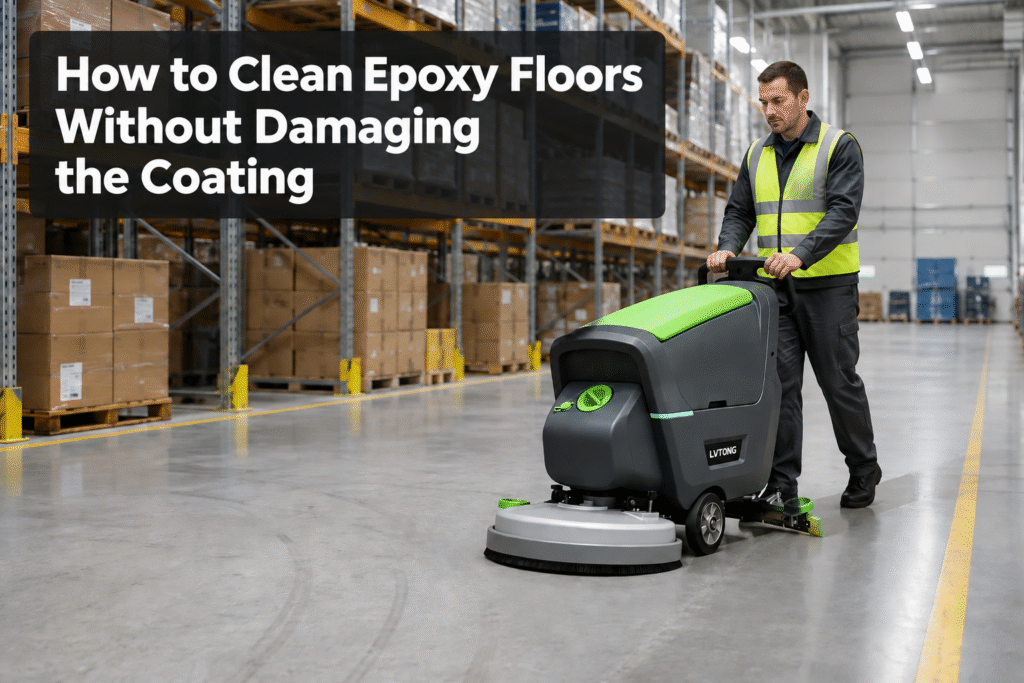
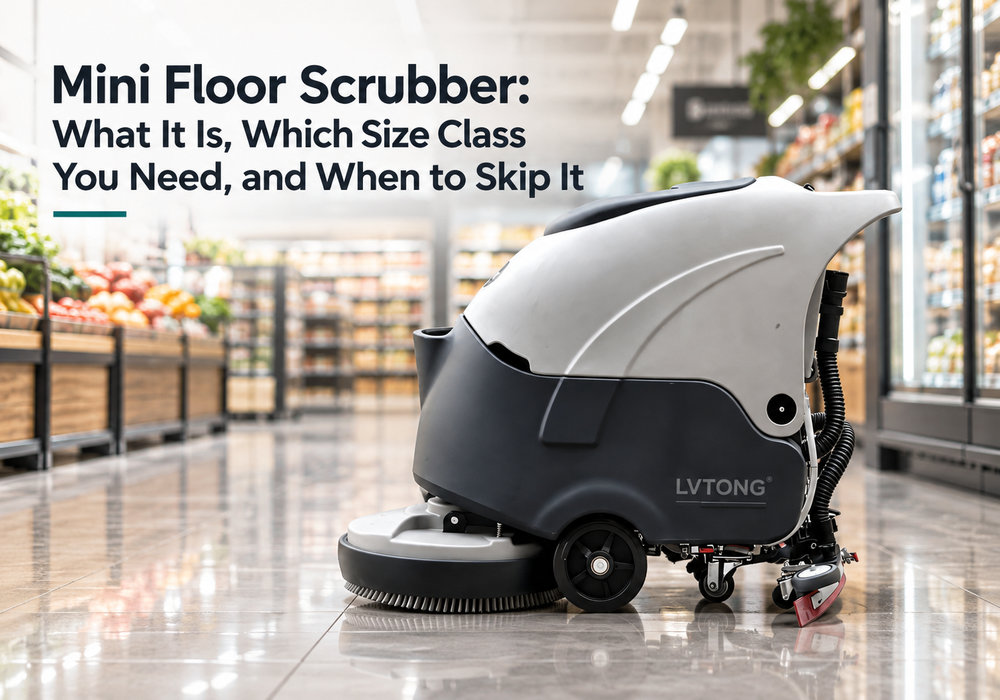
Für schmale Gänge, kompakte Lagerbereiche und beengte Lagerlayouts, Begehbare Lagerhallen-Scheuersaugmaschinen sind in der Regel leichter zu handhaben und praktischer für die tägliche Bodenreinigung.
| Besonderheit | Begehbare Lagerhallen-Scheuersaugmaschine | Aufsitz-Scheuersaugmaschine für Lagerhallen |
|---|---|---|
| Reinigungsbreite | 17 – 32 Zoll (43–81 cm) | 28 – 48 Zoll (71–122 cm) |
| Theoretische Abdeckungsrate | 18.000 – 35.000 Quadratfuß/Stunde | 30.000 – 96.800 Quadratfuß/Stunde |
| Praktische Deckungsrate (IVSS-Schätzung) | Ca. 10.000 – 20.000 Quadratfuß/Stunde | Ca. 22.000 – 65.000 Quadratfuß/Stunde |
| Lösungs-/Rückgewinnungstankkapazität | 10 – 25 Gallonen | 30 – 70+ Gallonen |
| Abwärtsdruckbereich | 50–150 lbs (manuell oder per Stellantrieb) | 150 – 400+ lbs (Maschinengewicht) |
| Ideale Anlagengröße | 5.000 – 20.000 Quadratfuß | 20.000 – 200.000+ Quadratfuß |
| Anschaffungskosten (geschätzt) | $8.000 – $15.000 | $20.000 – $50.000+ |
| Ermüdung des Bedieners | Mittel bis hoch | Niedrig |
| Wendigkeit | Hervorragend geeignet für enge, überfüllte Bereiche | Hervorragend in offenen Räumen, eingeschränkt in engen Gängen (< 6 Fuß) |
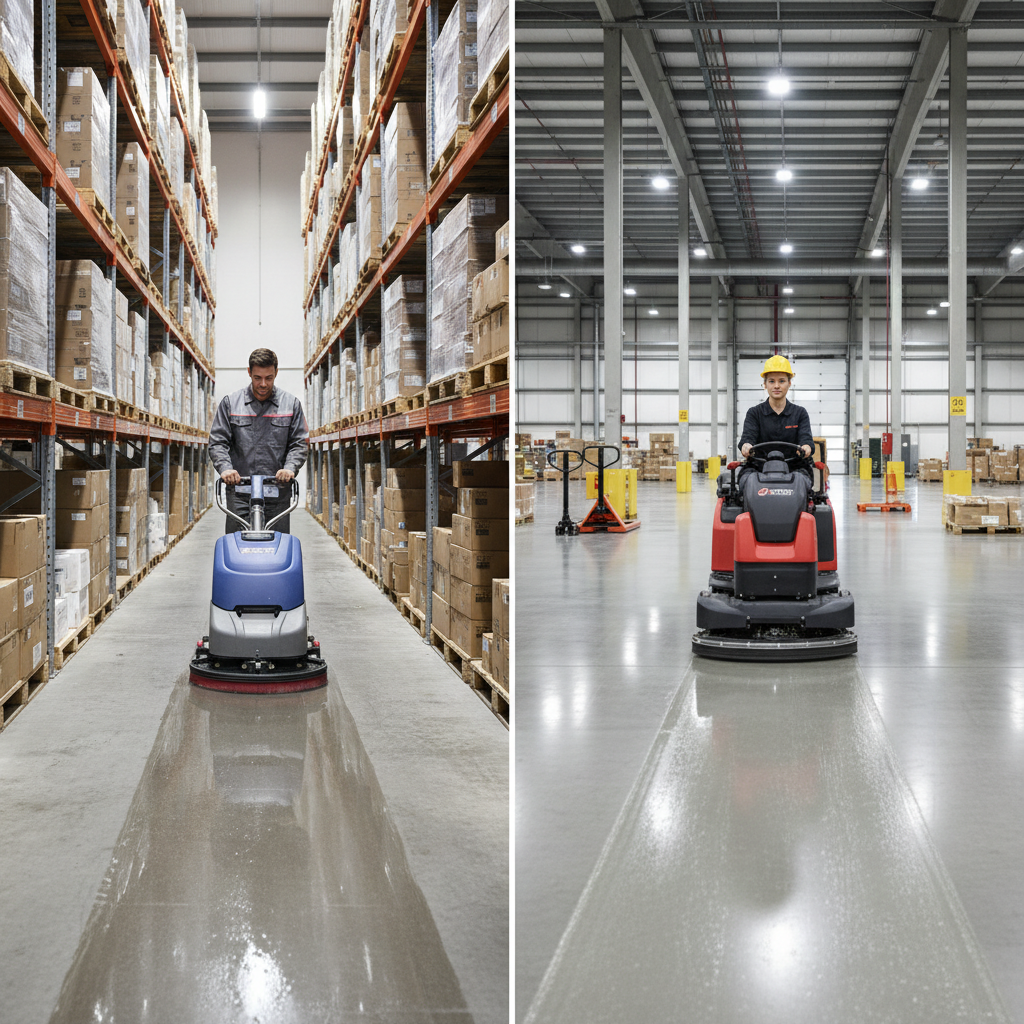
Um reale Produktoptionen zu vergleichen, können Sie kompakte Produkte überprüfen. Begehbare Lagerhallen-Scheuersaugmaschinen für schmale Gänge und Aufsitz-Scheuersaugmaschinen für Lagerhallen Für größere, offene Flächen. Die beste Wahl hängt von Ihrer Bodenfläche, der Ganganordnung, dem Tankvolumen und der benötigten Reinigungszeit ab.
Wie viel Bürstendruck benötigt eine Scheuersaugmaschine für Lagerhallen?
Der Bürstendruck sollte dem Bodentyp und dem Verschmutzungsgrad angepasst werden. Leichter Staub auf glatten Lagerhallenböden erfordert in der Regel einen mittleren Bürstendruck. Reifenspuren von Gabelstaplern, öliger Schmutz und stark verschmutzte Bereiche benötigen möglicherweise einen höheren Bürstendruck, ein geeignetes Reinigungsmittel und eine geringere Reinigungsgeschwindigkeit.
Handgeführte Scheuersaugmaschinen arbeiten in der Regel mit geringerem Druck und eignen sich besser für beengte Flächen. Aufsitz-Scheuersaugmaschinen für Lagerhallen nutzen das Maschinengewicht und größere Bürstensysteme, um in stark frequentierten Lagerbereichen eine stärkere Reinigungsleistung zu erzielen.
Wie berechnet man die Abdeckungsrate von Lagerhallenbodenreinigungsmaschinen?
Die tatsächliche Produktivität einer Scheuersaugmaschine für Lagerhallen sollte anhand der praktischen Reinigungsleistung und nicht nur der theoretischen Reinigungsleistung gemessen werden. Die theoretische Reinigungsleistung gibt zwar die maximal mögliche Reinigungsleistung an, die tatsächliche Reinigungsleistung wird jedoch durch die Gangführung, Kurven, Hindernisse, sich überschneidende Wege, Tanknachfüllungen, Abwasserentsorgung und die Geschwindigkeit des Bedieners beeinflusst.
1. Theoretische Abdeckungsrate
Die theoretische Reinigungsleistung gibt die maximale Fläche an, die eine Lagerhallenbodenreinigungsmaschine unter idealen Bedingungen in einer Stunde reinigen kann.
Formel:
Theoretische Abdeckungsrate = Reinigungsbreite (in) × Betriebsgeschwindigkeit (mph) × 440
In dieser Formel, 440 ist ein Umrechnungsfaktor, der die Reinigungsbreite und die Maschinengeschwindigkeit in Quadratfuß pro Stunde umrechnet.
Wenn beispielsweise eine Aufsitz-Scheuersaugmaschine für Lagerhallen eine Reinigungsbreite von 36 Zoll hat und mit 3,5 Meilen pro Stunde arbeitet:
Theoretische Abdeckungsrate = 36 × 3,5 × 440 = 55.440 Quadratfuß/Stunde
Diese Zahl ist nützlich, um Maschinen zu vergleichen, sollte aber nicht als endgültige Schätzung für die tatsächliche Reinigungszeit im Lager verwendet werden.
2. Praktische Deckungsrate
Die praktische Flächenabdeckung ist für die Planung der Lagerreinigung die aussagekräftigere Kennzahl. Sie schätzt die tatsächliche Fläche, die eine Scheuersaugmaschine reinigen kann, unter Berücksichtigung von Wendemanövern, Überlappungen, Nachfüllen, Entleeren und Einschränkungen durch die Lageranordnung.
Formel:
Praktische Abdeckungsrate = Theoretische Abdeckungsrate × Effizienzfaktor
Bei vielen Lagerlayouts ist ein Effizienzfaktor von 0.45–0.65 ist realistischer als das theoretische Maximum.
| Lagerlayout | Empfohlener Effizienzfaktor | Grund |
|---|---|---|
| Stark überfülltes Lager | 0.45 | Mehr Kurven, Hindernisse und unterbrochene Reinigungswege |
| Standard-Regallager | 0.55 | Normale Gangkurven, Überlappungen und Tanknachfüllzeit |
| Offenes Lager oder Vertriebszentrum | 0.65 | Weniger Kurven und längere gerade Reinigungswege |
Am Beispiel einer 36-Zoll-Aufsitz-Scheuersaugmaschine für Lagerhallen:
Praktische Abdeckungsrate = 55.440 × 0,55 = 30.492 Quadratfuß/Stunde
Diese praktische Abdeckungsrate ist die Kennzahl, die Facility Manager bei der Schätzung von Reinigungszeit, Arbeitskosten und Maschinenproduktivität verwenden sollten.
3. Wie Sie die Abdeckungsrate bei der Auswahl einer Lagerhallen-Scheuersaugmaschine berücksichtigen.
Um die richtige Scheuersaugmaschine für Ihr Lager auszuwählen, vergleichen Sie die praktische Reinigungsleistung der Maschine mit Ihrer tatsächlichen Reinigungsfläche und Ihrem Reinigungsplan.
Wenn beispielsweise Ihr Lagerhaus täglich 100.000 Quadratfuß reinigen muss und die praktische Reinigungsleistung der Scheuersaugmaschine etwa 30.000 Quadratfuß pro Stunde beträgt, dauert die Reinigungsaufgabe etwa 3,3 Stunden, bevor die Zeit für Inspektion, Nachfüllen, Entleeren und Maschinenpflege hinzugerechnet wird.
In weitläufigen Lagerhallen ist eine hohe praktische Reinigungsleistung meist wichtiger als der niedrigste Kaufpreis. In engen Gängen oder beengten Lagerbereichen sind Manövrierfähigkeit und Wendekreis unter Umständen wichtiger als die maximale Reinigungsbreite.
Tankkapazität, Betriebszeit und Nachfüllhäufigkeit
Bei der Reinigung von Lagerhallenböden reduzieren größere Reinigungsmittel- und Abwassertanks die Ausfallzeiten. Dies ist besonders wichtig in großen Anlagen, wo der Bediener unter Umständen weite Strecken zurücklegen muss, um sauberes Wasser nachzufüllen oder Abwasser zu entleeren.
Die Tankkapazität beeinflusst die Betriebszeit direkt. Eine Scheuersaugmaschine mit einem größeren Reinigungsmitteltank kann länger reinigen, bevor sie nachgefüllt werden muss. Ein größerer Schmutzwassertank hilft zudem, mehr Abwasser vor der Entleerung aufzufangen. Dies reduziert Unterbrechungen und verbessert die Reinigungsproduktivität.
Typische Tankkapazitäten umfassen:
- Kompakte, handgeführte Scheuersaugmaschinen: 10–15 Gallonen
- Große, handgeführte Scheuersaugmaschinen: 20–30 Gallonen
- Aufsitz-Scheuersaugmaschinen für Lagerhallen: 40–70+ Gallonen
Mit dieser Formel können Sie die Nachfüllhäufigkeit abschätzen:
Zeit zwischen den Nachfüllungen = Lösungsbehälterkapazität ÷ Lösungsdurchflussrate
Eine Lagerhallenbodenreinigungsmaschine mit einem 40-Gallonen-Lösungstank, die 0,75 Gallonen pro Minute verbraucht, kann beispielsweise etwa 53 Minuten lang laufen, bevor sie nachgefüllt werden muss:
40 ÷ 0,75 = 53,3 Minuten
Ein kleinerer Wäscher mit einem 10-Gallonen-Tank, der 0,5 Gallonen pro Minute verbraucht, muss nach etwa 20 Minuten nachgefüllt werden:
10 ÷ 0,5 = 20 Minuten
Dieser Unterschied ist in großen Lagerhallen relevant, da jede Nachfüllung oder Abwasserentsorgung die produktive Reinigungszeit verkürzt. Für kleine Lagerhallen oder enge Gänge kann ein kompakter Tank ausreichen. In großen Lagerhallen, Distributionszentren und weitläufigen Bereichen verbessern größere Tanks in der Regel die Betriebszeit und reduzieren den Arbeitsaufwand.
Beim Vergleich von Scheuersaugmaschinen für Lagerhallen sollte neben der Tankkapazität auch die Reinigungsbreite, die praktische Abdeckungsrate, die Wasserrückgewinnungsleistung und der tägliche Reinigungsplan bewertet werden.
Was professionelle Einkäufer vor der Bestellung prüfen sollten
Professionelle Einkäufer sollten vor der Bestellung einer Lagerhallenbodenreinigungsmaschine mehr als nur den Maschinenpreis und die maximale Produktivität berücksichtigen.
Zu den wichtigsten Faktoren gehören die Akkulaufzeit, die Ladezeit, die Wasserrückgewinnungsleistung, die Kompatibilität von Bürsten oder Pads, die Qualität des Abziehers, die Verfügbarkeit von Ersatzteilen, der Garantieumfang, die Bedienerschulung, der technische Fernsupport und die zu erwartenden Wartungskosten.
Für europäische, nordamerikanische und andere professionelle B2B-Käufer sind die langfristigen Betriebskosten oft wichtiger als der niedrigste Anschaffungspreis. Eine Maschine mit höherer Zuverlässigkeit, einfacherer Wartung und schnellerer Ersatzteilversorgung kann Ausfallzeiten reduzieren und den Gesamtwert über die gesamte Nutzungsdauer steigern.
Wesentliche Merkmale für die Bodenreinigung in stark frequentierten Lagerhallen
Bürstensysteme
- Scheibenreinigungsmaschinen: Geeignet für glatte Beton- und Epoxidböden, bei denen ein höherer Bürstendruck erforderlich ist.
- Zylindrische Wäscher: Geeignet für Lagerhallenböden mit hohem Schmutzaufkommen, da sie kleine Schmutzpartikel vor dem Schrubben aufnehmen können.
- Synthetische Bürsten: Nützlich, wenn chemische Beständigkeit erforderlich ist.
- Scheuerschwämme: Geeignet zur Entfernung von Reifenspuren, Schmutz und leichten Flecken auf glatten Böden.
Wasserrückgewinnung
Ein leistungsstarkes Wasserrückgewinnungssystem trägt dazu bei, die Rutschgefahr und die Trocknungszeit zu reduzieren. In Lagerhallen mit Gabelstaplerverkehr, Ladezonen und kontinuierlichem Betrieb ist eine schnelle Wasserrückgewinnung wichtig, da nasse Böden die Arbeit verzögern und Sicherheitsrisiken bergen können.
Bürsten und Abzieher
Der Austausch von Bürste und Abzieher erfolgt üblicherweise nach diesem Zeitplan:
- Bereiche mit hohem Verkehrsaufkommen: Monatliche Auswertung
- Standardverwendung: Vierteljährlicher Austausch
- Leichte Beanspruchung: Halbjährliche Inspektion
Welche Lagerhallenbodenreinigungsmaschine sollten Sie je nach Anlagengröße wählen?
| Lagergröße oder -layout | Empfohlener Scheuerschwamm | Warum |
|---|---|---|
| 5.000–20.000 Quadratfuß | Begehbare Lagerhallen-Bodenreinigungsmaschine | Besser geeignet für enge Gänge und kompakte Räume |
| 20.000–50.000 Quadratfuß | Großer handgeführter oder kompakter Aufsitz-Scheuersaugroboter | Ausgewogene Balance zwischen Manövrierfähigkeit und Produktivität |
| 50.000–200.000+ Quadratfuß | Aufsitz-Scheuersaugmaschine für Lagerhallen | Höhere Abdeckungsrate und geringere Ermüdung des Bedieners |
| Weite, offene Flächen | Aufsitz-Scheuersaugmaschine | Bessere praktische Abdeckungsrate |
| Schmale Gänge unter 1,80 m | Handgeführter oder kompakter Scheuersaugautomat | Bessere Wendemanöver und bessere Zugänglichkeit |
Kleine Lagerhallen (5.000-20.000 Quadratfuß)
Für kleinere Lagerhallen zwischen 5.000 und 20.000 Quadratfuß ist eine handgeführte Scheuersaugmaschine meist die beste Wahl, da sie sich in engen Gängen, Lagerzonen, Ladeecken und beengten Bereichen leichter manövrieren lässt. Ein kompaktes Modell mit schmaler Reinigungsbahn kann um Regale und Hindernisse herum reinigen, ohne einen großen Wendekreis zu erfordern.
Beispielsweise eignet sich eine kompakte, handgeführte Scheuersaugmaschine für Lagerhallen mit begrenzter Gangbreite und häufigen Layoutänderungen.
Mittelgroße Anlagen (20.000-50.000 Quadratfuß)
Für mittelgroße Lagerhallen zwischen 1.860 und 4.640 Quadratmetern können Facility Manager eine große, handgeführte Scheuersaugmaschine mit einer kompakten Aufsitz-Scheuersaugmaschine vergleichen. Die Entscheidung sollte von der Gangbreite, der Reinigungsfrequenz, der Arbeitsbelastung des Bedieners und der täglich zu reinigenden offenen Bodenfläche abhängen.
Großbetriebe (über 50.000 Quadratfuß)
Für große Lagerhallen ab 50.000 Quadratfuß (ca. 4.650 m²) ist eine Aufsitz-Scheuersaugmaschine in der Regel effizienter, da sie eine breitere Reinigungsbahn, größere Reinigungsmittel- und Schmutzwassertanks, eine höhere effektive Reinigungsleistung und eine geringere Ermüdung des Bedieners bietet. Diese Maschinen sind besonders nützlich in Distributionszentren, Güterterminals und Lagerhallen mit großen, offenen Flächen.
Ist eine Einbürsten-Scheuersaugmaschine für Lagerhallen geeignet?
Eine Scheuersaugmaschine mit einer einzigen Bürste eignet sich für kleine Lagerhallen, schmale Gänge und leichte bis mittlere Bodenverschmutzungen. Sie ist in der Regel einfacher zu bedienen und kompakter als größere Maschinen. Für große Lagerhallen, Logistikzentren und weitläufige Flächen, Aufsitz-Scheuersaugmaschinen für Lagerhallen bieten in der Regel eine höhere praktische Abdeckungsrate, ein größeres Tankvolumen und eine geringere Ermüdung des Bedieners.
Scheuersaugmaschine vs. Kehrmaschine: Welche brauchen Sie?
Eine Scheuersaugmaschine für Lagerhallen nutzt Wasser, Reinigungsmittel, Bürsten und ein Rückgewinnungssystem zum Waschen und Trocknen des Bodens. Sie eignet sich besonders für Reifenspuren, Schmutz, klebrige Verschmutzungen, Nassreinigungen und Bereiche, die eine Wasserrückgewinnung erfordern.
Eine Kehrmaschine für Lagerhallen ist für trockene Abfälle wie Staub, Verpackungsmüll, Holzspäne und lose Partikel konzipiert. Wenn sich in Ihrer Lagerhalle sowohl trockene Abfälle als auch Bodenflecken befinden, erzielt man in der Regel bessere Ergebnisse, wenn man zuerst kehrt und anschließend schrubbt.
Beispiel: Wie ein Distributionszentrum die Reinigungszeit reduzieren kann
In großen Logistikzentren mit hohem Gabelstaplerverkehr treten häufig Reifenspuren, Staub und nasse Böden auf. Ist die Reinigungsfläche zu groß für kleine, handgeführte Scheuersaugmaschinen, kann der Einsatz einer Aufsitz-Scheuersaugmaschine die Reinigungszeit verkürzen, die Wasserrückgewinnung verbessern und die Ermüdung des Bedieners verringern.
Bei Anlagen dieser Art sollten die wichtigsten Vergleichskriterien die praktische Abdeckungsrate, die Tankkapazität, der Bürstendruck, die Wasserrückgewinnungsleistung und der gesamte Arbeitsaufwand pro Reinigungszyklus umfassen.
Gesamtbetriebskosten von Lagerhallen-Scheuersaugmaschinen: Wie man die langfristigen Kosten vergleicht
Bei einer strategischen Anschaffung sollten die Gesamtbetriebskosten und nicht nur der Kaufpreis berücksichtigt werden. Eine günstigere Scheuersaugmaschine für Lagerhallen kann im Laufe der Zeit teurer werden, wenn sie mehr Arbeitsstunden, mehr Wartung, häufigeren Bürstenwechsel oder längere Reinigungszyklen erfordert.
TCO-Formel:
TCO = Anschaffungskosten + [(Jährliche Lohnkosten + Jährliche Wartungskosten + Jährliche Verbrauchsmaterialkosten) × Nutzungsdauer der Anlage]
Der Kaufpreis ist nur ein Teil der Kosten einer Scheuersaugmaschine für Lagerhallen. Arbeitszeit, Wartung, Verbrauchsmaterialien, Batteriewechsel, Verschleiß von Bürsten und Abstreifer, Ausfallzeiten und Kundendienst können die tatsächlichen Langzeitkosten beeinflussen.
Die jährlichen Arbeitskosten sind in der Regel der größte Kostenfaktor. Eine produktivere Scheuersaugmaschine für Lagerhallen kann die Arbeitsstunden reduzieren, indem sie die effektive Reinigungsleistung erhöht, die Nachfüllzeit verkürzt, die Wasserrückgewinnung verbessert und die Ermüdung des Bedieners verringert.
Wenn beispielsweise ein Lagerhaus täglich 100.000 Quadratfuß Fläche zu einem Stundensatz von $20 reinigen muss:
- Eine handelsübliche Scheuersaugmaschine mit einer praktischen Flächenleistung von 15.000 Quadratfuß pro Stunde benötigt etwa 6,7 Stunden pro Reinigungszyklus.
- Jährliche Arbeitskosten: 6,7 Stunden × $20 × 260 Arbeitstage = etwa $34.840 pro Jahr.
- Eine Aufsitz-Scheuersaugmaschine für Lagerhallen mit einer praktischen Flächenleistung von 30.000 Quadratfuß pro Stunde benötigt etwa 3,3 Stunden pro Reinigungszyklus.
- Jährliche Arbeitskosten: 3,3 Stunden × $20 × 260 Arbeitstage = etwa $17.160 pro Jahr.
In diesem Beispiel kann die Aufsitzmaschine jährlich etwa 17.680 TP4T an Arbeitskosten einsparen. Daher sollten die Gesamtbetriebskosten einer Lagerhallen-Scheuersaugmaschine neben dem Anschaffungspreis auch Arbeitskosten, Wartung, Verbrauchsmaterialien und die Nutzungsdauer berücksichtigen.
Beim Vergleich der Maschinen sollten Facility Manager die Anschaffungskosten, die praktische Abdeckungsrate, das Tankvolumen, den Austausch von Bürsten und Abziehern, die Batterielebensdauer, den Wartungsaufwand und die zu erwartende tägliche Reinigungszeit berücksichtigen.
Neue vs. gebrauchte Lagerhallen-Scheuersaugmaschine: Welche sollten Sie wählen?
Manche Unternehmen vergleichen neue und gebrauchte Lagerhallenbodenreinigungsmaschinen vor dem Kauf.
Eine gebrauchte Scheuersaugmaschine kann die Anschaffungskosten senken, Käufer sollten jedoch sorgfältig den Zustand des Akkus, den Verschleiß des Bürstendecks, das Abstreifsystem, den Saugmotor, das Ladegerät, das Steuerungssystem, die Wartungshistorie und die Verfügbarkeit von Ersatzteilen prüfen.
Eine neue Lagerhallenbodenreinigungsmaschine bietet in der Regel eine besser vorhersagbare Leistung, eine aktualisierte Konfiguration, Garantieleistungen, Bedienerschulungen und eine einfachere langfristige Wartungsplanung.
Für Einrichtungen mit täglichem Reinigungsaufwand, langen Betriebszeiten, strengen Anforderungen an die Bodensicherheit oder geringer Toleranz gegenüber Ausfallzeiten ist eine Neumaschine in der Regel die sicherere Langzeitlösung. Bei temporären Projekten oder seltener Reinigung sollte eine Gebrauchtmaschine erst nach einer gründlichen Prüfung in Betracht gezogen werden.
Welche Informationen sollten Sie vorbereiten, bevor Sie ein Angebot für eine Lagerhallenbodenreinigungsmaschine anfordern?
Um eine genauere Empfehlung für eine Lagerbodenreinigungsmaschine zu erhalten, halten Sie bitte folgende Informationen bereit, bevor Sie LVTONG kontaktieren:
Reinigbare Bodenfläche.
Gangbreite und Wendefläche.
Bodenbeläge wie Beton, Epoxidharz, Fliesen oder beschichtete Böden.
Hauptverunreinigungen wie Staub, Gabelstaplerreifenspuren, Öl, Schmutz, Verpackungsreste oder klebriger Dreck.
Reinigungshäufigkeit: täglich oder wöchentlich.
Verfügbare Reinigungszeiten während der Arbeitszeit, Nachtschichten oder Betriebspausen.
Erforderliche Wasserrückgewinnungs- und Trocknungsleistung.
Bevorzugter Maschinentyp, z. B. handgeführte, Aufsitz- oder Kompakt-Scheuersaugmaschine.
Akkulaufzeit und Ladebedingungen.
Budgetbereich, Lieferland und erwarteter Kundendienst.
Sie können die gewerblichen Scheuersaugmaschinen von LVTONG vergleichen, um die Optionen für handgeführte und Aufsitz-Scheuersaugmaschinen zu prüfen, bevor Sie eine individuelle Empfehlung anfordern.
Fazit: Datengestützte Entscheidungen zur Auswahl von Abgasreinigungsanlagen
Die Auswahl der richtigen Scheuersaugmaschine für Lagerhallen erfordert mehr als nur den Vergleich von Maschinengröße und Kaufpreis. Facility Manager sollten Bodenfläche, Gangbreite, Bodenart, Verschmutzungsgrad, Reinigungsfrequenz, praktische Abdeckungsrate, Tankkapazität, Wasserrückgewinnung, Bedienerermüdung und die Gesamtbetriebskosten berücksichtigen.
Für kleinere Lagerhallen, enge Gänge und beengte Bereiche eignen sich handgeführte Scheuersaugmaschinen in der Regel besser. Aufsitz-Scheuersaugmaschinen sind hingegen meist effizienter für große Anlagen, Logistikzentren und weitläufige Flächen.
Ein datenbasierter Auswahlprozess hilft Lagerhäusern, die Reinigungsproduktivität zu steigern, Ausfallzeiten zu reduzieren, die Arbeitskosten zu kontrollieren und sicherere Bodenbedingungen zu gewährleisten.
Benötigen Sie Hilfe bei der Auswahl der richtigen Scheuersaugmaschine für Ihr Lager? Kontaktieren Sie LVTONG, um passende Modelle anhand Ihrer Lagergröße, Gangbreite, Bodenart, Verschmutzungsgrad, Tankkapazität und Ihres Reinigungsplans zu vergleichen.
Als Lieferant von Reinigungsmaschinen in China, LVTONG kann Lagerhallen, Fabriken und Logistikeinrichtungen bei der Auswahl praktischer Bodenreinigungsgeräte für den täglichen Betrieb unterstützen.
Häufig gestellte Fragen zu Lagerbodenreinigungsmaschinen
Welche Scheuersaugmaschine eignet sich am besten für ein Lagerhaus?
Die beste Scheuersaugmaschine für Lagerhallen hängt von der Größe der Anlage, der Gangbreite, der Bodenart, dem Verschmutzungsgrad, der Reinigungshäufigkeit und der praktischen Abdeckungsrate ab.
Für kleine Lagerhallen, schmale Gänge und beengte Lagerbereiche ist eine handgeführte Scheuersaugmaschine in der Regel leichter zu manövrieren.
Für große Lagerhallen, Distributionszentren, Logistikzentren und weitläufige Freiflächen ist eine Aufsitz-Scheuersaugmaschine in der Regel effizienter, da sie eine breitere Reinigungsbahn, ein größeres Tankvolumen, eine höhere praktische Abdeckungsrate und eine geringere Ermüdung des Bedieners bietet.
Wie wähle ich die passende Scheuersaugmaschine für mein Lagergebäude je nach Größe der Anlage aus?
Wählen Sie eine Lagerhallen-Scheuersaugmaschine anhand der tatsächlich zu reinigenden Bodenfläche und nicht nur anhand der Gesamtgröße des Gebäudes.
Für Lagerhallen mit einer Fläche zwischen 5.000 und 20.000 Quadratfuß ist eine handgeführte Scheuersaugmaschine in der Regel praktisch, da sie schmale Gänge, Lagerzonen und beengte Räume reinigen kann.
Für Lagerhallen mit einer Fläche von über 20.000 Quadratfuß ist eine Aufsitz-Scheuersaugmaschine in der Regel ein besserer Ausgangspunkt, da sie die Reinigungszeit und die Laufwege des Bedieners reduziert.
Bei sehr großen Anlagen mit einer Fläche von über 50.000 Quadratfuß sollten Käufer Aufsitz-Scheuersaugmaschinen anhand der praktischen Abdeckungsrate, des Tankvolumens, der Batterielaufzeit, der Wasserrückgewinnung, des Wenderaums und des Wartungssupports vergleichen.
Ist für Lagerhallen eine handgeführte oder eine Aufsitz-Scheuersaugmaschine besser geeignet?
Eine handgeführte Scheuersaugmaschine eignet sich besser für kleine Lagerhallen, schmale Gänge, unterteilte Räume, Ladezonen und Bereiche mit vielen Hindernissen.
Eine Aufsitz-Scheuersaugmaschine eignet sich besser für große, offene Lagerhallen, Distributionszentren, Logistikparks und Einrichtungen, in denen die Bediener täglich lange Strecken reinigen müssen.
Die richtige Wahl hängt von der Gangbreite, dem Wenderadius, der Reinigungshäufigkeit, dem Tankvolumen, der Ermüdung des Bedieners, dem Lagerraum und der tatsächlich für die Reinigung verfügbaren Zeit ab.
Welche Scheuersaugmaschine eignet sich am besten für Betonböden in Lagerhallen?
Für glatte Betonlagerhallenböden ist eine Scheibenwaschmaschine mit geeignetem Bürstendruck in der Regel eine praktikable Wahl.
Bei rauem oder unebenem Beton sollten Käufer den Bürstenkontakt, die Flexibilität des Padantriebs, die Wasserrückgewinnung und die Fähigkeit der Maschine, eine gleichbleibende Reinigungsleistung über die gesamte Oberfläche aufrechtzuerhalten, bewerten.
Bei Betonböden mit Gabelstaplerreifenspuren, Öl, Schmutz oder starker Verschmutzung kann ein stärkeres Bürstensystem, ein geeignetes Reinigungsmittel, eine langsamere Reinigungsgeschwindigkeit und eine zuverlässige Schmutzwasserrückgewinnung erforderlich sein.
Soll ich eine Scheiben- oder eine Zylinder-Scheuersaugmaschine für Lagerhallen wählen?
Eine Scheibenwaschmaschine für Lagerhallenböden eignet sich in der Regel für glatte Betonböden, Epoxidharzböden und die allgemeine Reinigung von Hartböden, bei denen der Bürstendruck wichtig ist.
Für stark verschmutzte Lagerhallenböden eignet sich möglicherweise eine zylindrische Scheuersaugmaschine besser, da sie kleine Schmutzpartikel vor dem Schrubben auffangen kann.
Wenn sich im Lager loser Staub, Verpackungsabfälle, kleine Steine, Holzspäne oder Produktionsrückstände befinden, kann das Fegen vor dem Schrubben die Reinigungsergebnisse verbessern und das Schrubbsystem schonen.
Wie berechne ich die Produktivität einer Lagerhallen-Scheuersaugmaschine?
Die Produktivität von Lagerhallenbodenreinigungsmaschinen sollte anhand der praktischen und nicht nur der theoretischen Abdeckungsrate berechnet werden.
Die theoretische Abdeckungsrate kann mit dieser Formel abgeschätzt werden:
Theoretische Abdeckungsrate = Reinigungsbreite × Betriebsgeschwindigkeit × 440
Die tatsächliche Produktivität ist jedoch in der Regel geringer, da die Lagerreinigung Wenden, Überlappungen, Hindernisse, das Nachfüllen von sauberem Wasser, das Entleeren von Rückgewinnungswasser, die Kantenreinigung und Geschwindigkeitsänderungen der Bediener umfasst.
Für die meisten Lager ist die praktische Abdeckungsrate aussagekräftiger, um Reinigungszeit, Arbeitskosten und Maschinenauswahl abzuschätzen.
Worin besteht der Unterschied zwischen einer Lagerhallenbodenschrubbmaschine und einer Lagerhallenkehrmaschine?
Eine Lagerhallenbodenreinigungsmaschine wird zur Nassreinigung eingesetzt. Sie trägt Wasser oder Reinigungslösung auf, schrubbt den Boden mit Bürsten oder Pads und saugt das Schmutzwasser mithilfe eines Abziehers und eines Vakuumsystems ab.
Eine Kehrmaschine für Lagerhallen dient der Sammlung von trockenem Abfall. Sie entfernt Staub, Blätter, Verpackungsmüll, Holzspäne und lose Partikel.
Wenn sich in Ihrem Lager sowohl trockener Schmutz als auch Flecken auf dem Boden befinden, empfiehlt es sich in der Regel, zuerst zu fegen und anschließend zu schrubben. Dies verbessert die Reinigungsqualität und reduziert unnötigen Verschleiß an der Scheuermaschine.
Welche Tankkapazität benötige ich für eine Scheuersaugmaschine für Lagerhallen?
Die Tankkapazität sollte der Größe Ihres Lagers, Ihrer Reinigungsroute und der verfügbaren Reinigungszeit entsprechen.
Kleine, handgeführte Scheuersaugmaschinen haben in der Regel kleinere Tanks und eignen sich möglicherweise für kompakte Lagerhallen oder schmale Gänge.
Aufsitz-Scheuersaugmaschinen für Lagerhallen verfügen in der Regel über größere Reinigungs- und Rückgewinnungstanks, was die Nachfüll- und Abwasserentsorgungszeiten in großen Anlagen reduziert.
Bei großen Lagerhallen sollte die Tankkapazität zusammen mit der praktischen Abdeckungsrate, der Batterielaufzeit, dem Wasserdurchfluss, der Nachfülldistanz und dem täglichen Reinigungsplan verglichen werden.