Introducción
La limpieza a fondo de los suelos de los almacenes es una parte fundamental del mantenimiento diario de las instalaciones. En almacenes, centros logísticos, fábricas y zonas de almacenamiento comercial, los suelos están expuestos a polvo, marcas de neumáticos, manchas de aceite, residuos de embalaje, el paso de carretillas elevadoras y el constante movimiento de personal. Si el suelo no se limpia correctamente, puede afectar a la seguridad en el lugar de trabajo, a la eficacia de la limpieza, a las condiciones de almacenamiento de los productos y a la imagen general de las instalaciones.
Los métodos de limpieza manuales tradicionales, como fregonas y cubos, pueden funcionar para áreas pequeñas, pero a menudo son demasiado lentos y requieren mucha mano de obra para los suelos de grandes almacenes. Una fregadora de suelos profesional puede fregar, lavar, secar y recuperar el agua sucia en una sola pasada, lo que ayuda a los gestores de instalaciones a mejorar la eficiencia de la limpieza de los suelos del almacén y a reducir la carga de trabajo. Para los compradores que comparan diferentes máquinas de limpieza de almacenes, esta guía de fregadoras de suelos de almacén Puede ayudarle a comprender cómo elegir el equipo según el tamaño del almacén, el ancho del pasillo y la frecuencia de limpieza.
Este artículo explica qué es la limpieza de suelos en almacenes, por qué es importante elegir la fregadora adecuada y los 6 factores clave a tener en cuenta antes de seleccionar una fregadora para la limpieza de almacenes.
Respuesta rápida
La limpieza de pisos de almacén consiste en utilizar una fregadora o fregadora-secadora para lavar, fregar, secar y recuperar el agua sucia de los pisos. Para elegir la fregadora adecuada, los responsables de las instalaciones deben comparar el área de limpieza, el ancho de los pasillos, el tipo de piso, el nivel de suciedad, el tamaño de la máquina, la capacidad del tanque, la duración de la batería y el soporte de mantenimiento.
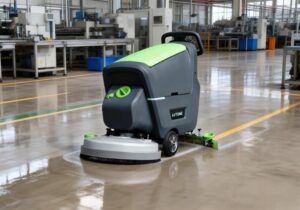
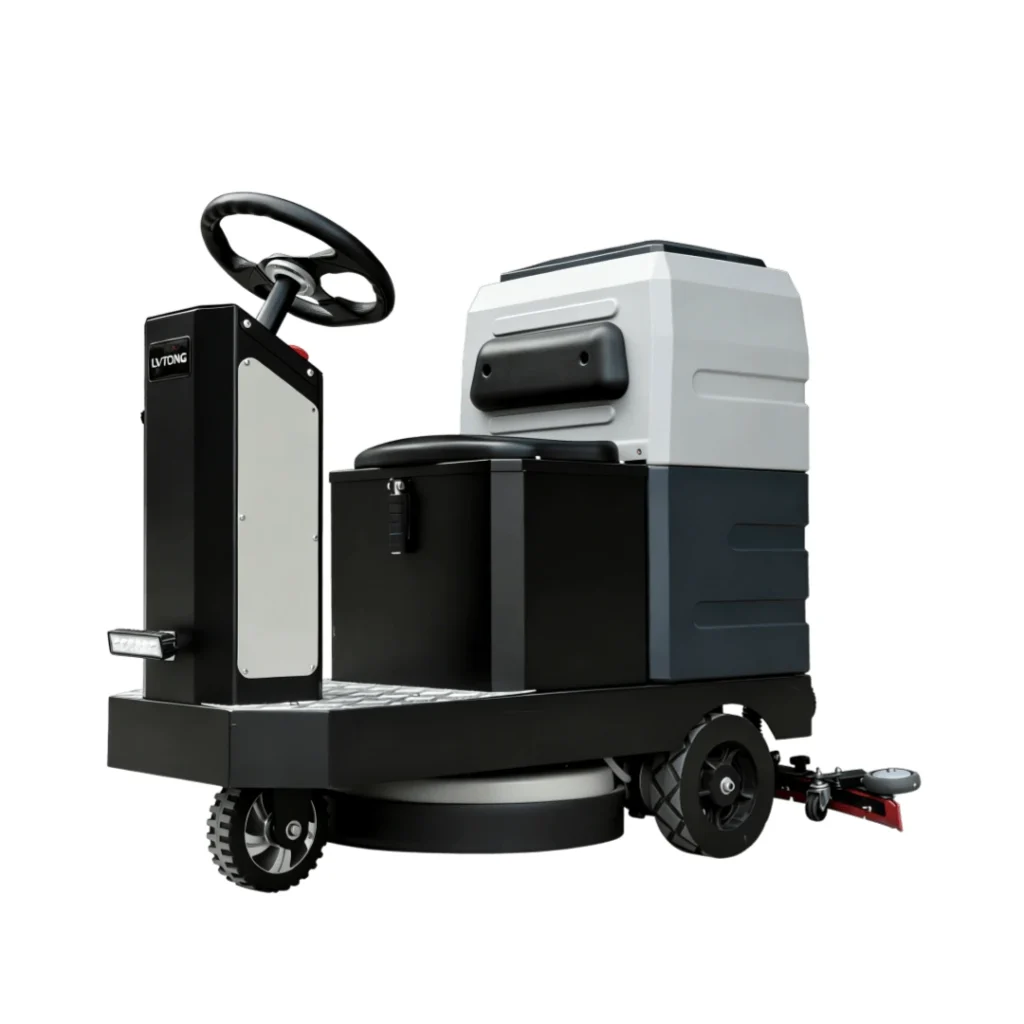
Para almacenes pequeños o pasillos estrechos, una fregadora de suelos de conductor acompañante puede ser más adecuada. Para grandes áreas de almacén abiertas, centros logísticos y tareas de limpieza de alta frecuencia, una fregadora de suelos con conductor Por lo general, proporciona una mayor eficiencia de limpieza y requiere menos mano de obra.
¿Qué es la limpieza a fondo de los suelos de un almacén?
El fregado de suelos en almacenes se refiere al proceso de limpieza mecánica utilizado para eliminar el polvo, la suciedad, las manchas, las marcas de aceite y las aguas residuales. A diferencia del simple barrido o fregado, el fregado utiliza la presión del cepillo, agua, una solución de limpieza y aspiración para limpiar el suelo en profundidad.
Una fregadora de suelos suele completar tres pasos en una sola operación:
- Rociar agua o solución de limpieza sobre el suelo.
- Frotar la superficie con un cepillo o una almohadilla.
- Recuperación de agua sucia mediante un sistema de escobilla y aspiradora.
Este proceso ayuda a que el suelo se seque más rápido y reduce el riesgo de que queden residuos de agua sucia o superficies resbaladizas. En almacenes con grandes superficies, la limpieza regular del suelo puede mejorar la higiene, la seguridad y la eficiencia operativa.
Por qué la limpieza de pisos de almacén requiere el equipo adecuado
La limpieza de almacenes es diferente a la limpieza de pisos comerciales convencionales. Los almacenes suelen tener grandes espacios, pasillos largos, mucho tránsito de maquinaria y distintos tipos de contaminación en el suelo. La limpieza manual puede ser ineficiente, ya que los trabajadores deben rellenar el agua repetidamente, mover las herramientas de limpieza y recorrer largas distancias.
Utilizar la fregadora de suelos industrial adecuada puede ayudar a los almacenes:
- Limpia áreas grandes más rápido
- Reducir el trabajo manual
- Mejora la velocidad de secado del suelo.
- Elimina el polvo, las manchas de aceite y las marcas de neumáticos de forma más eficaz.
- Reduzca los riesgos de resbalones causados por suelos mojados.
- Mantenga más limpios los pasillos y las áreas de trabajo.
- Mejorar el entorno laboral general
Sin embargo, no todas las fregadoras de suelos son adecuadas para todos los almacenes. Elegir la máquina incorrecta puede resultar en baja eficiencia, malos resultados de limpieza, mayores costes de mantenimiento o dificultades para operar en espacios reducidos. Por ello, los responsables de almacén deben evaluar los siguientes 6 factores antes de tomar una decisión.
6 factores a considerar para la limpieza de pisos de almacén
1. Área y distribución de la limpieza del almacén
El primer factor es el tamaño y la distribución del almacén. Un área de almacenamiento pequeña, un pasillo estrecho o unas instalaciones congestionadas pueden requerir una máquina diferente a la de un gran centro logístico con un amplio espacio diáfano.
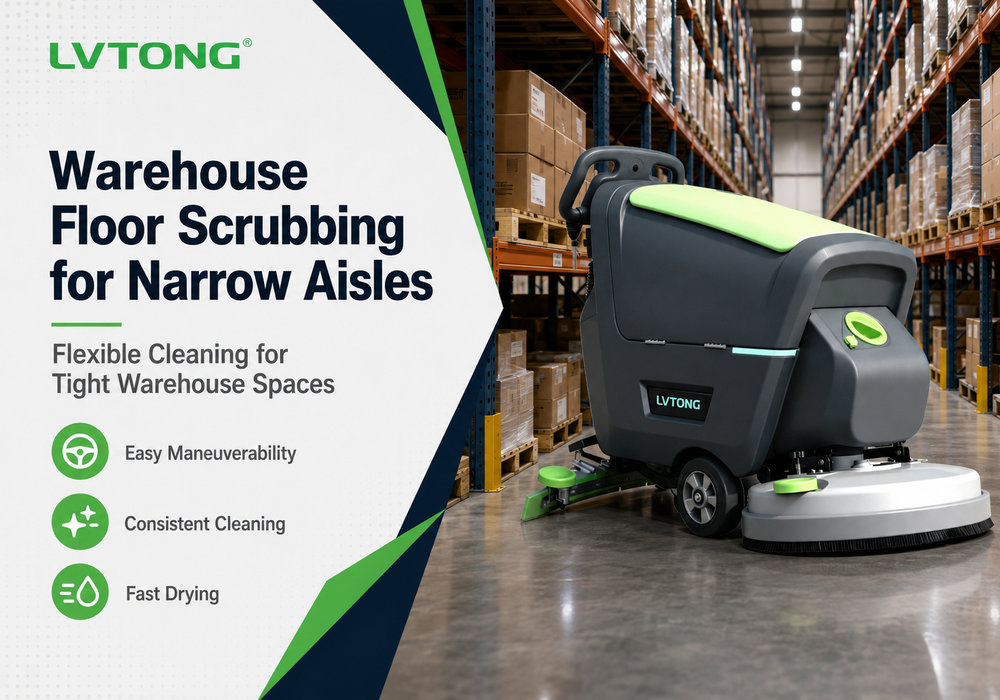
Para áreas más pequeñas, una fregadora de suelos de conductor acompañante suele ser más práctica porque es compacta, flexible y más fácil de operar alrededor de estantes, esquinas y obstáculos. Para espacios compactos y pasillos estrechos de almacenes, Máquinas fregadoras de suelos autopropulsadas Suelen ser más fáciles de operar y mantener.
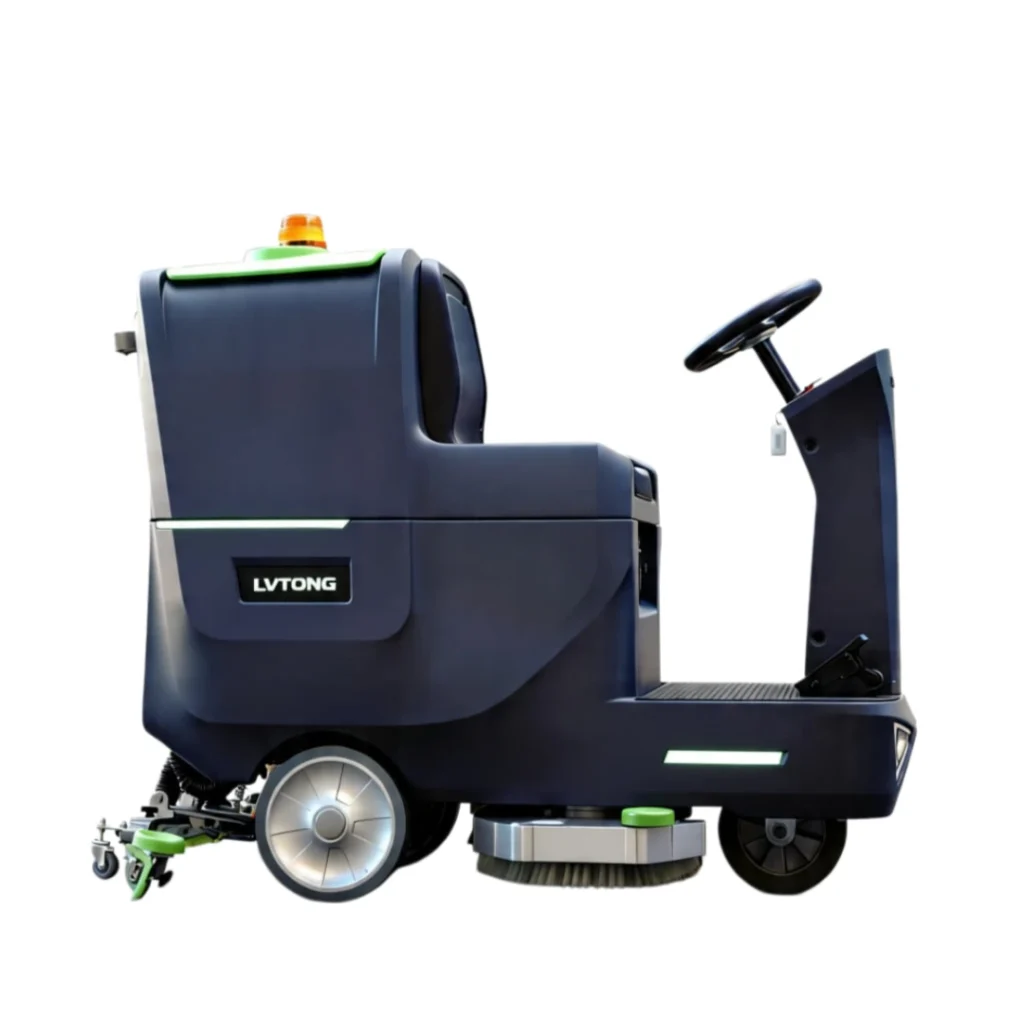
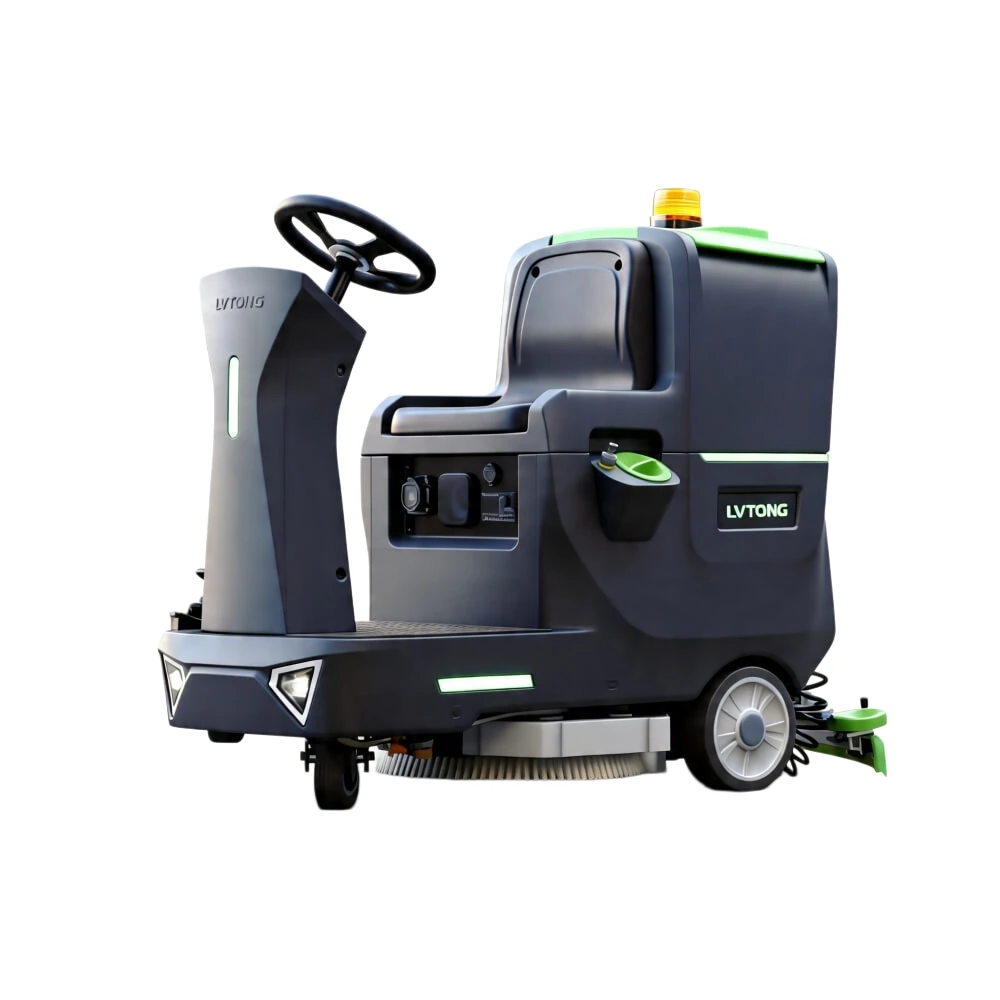
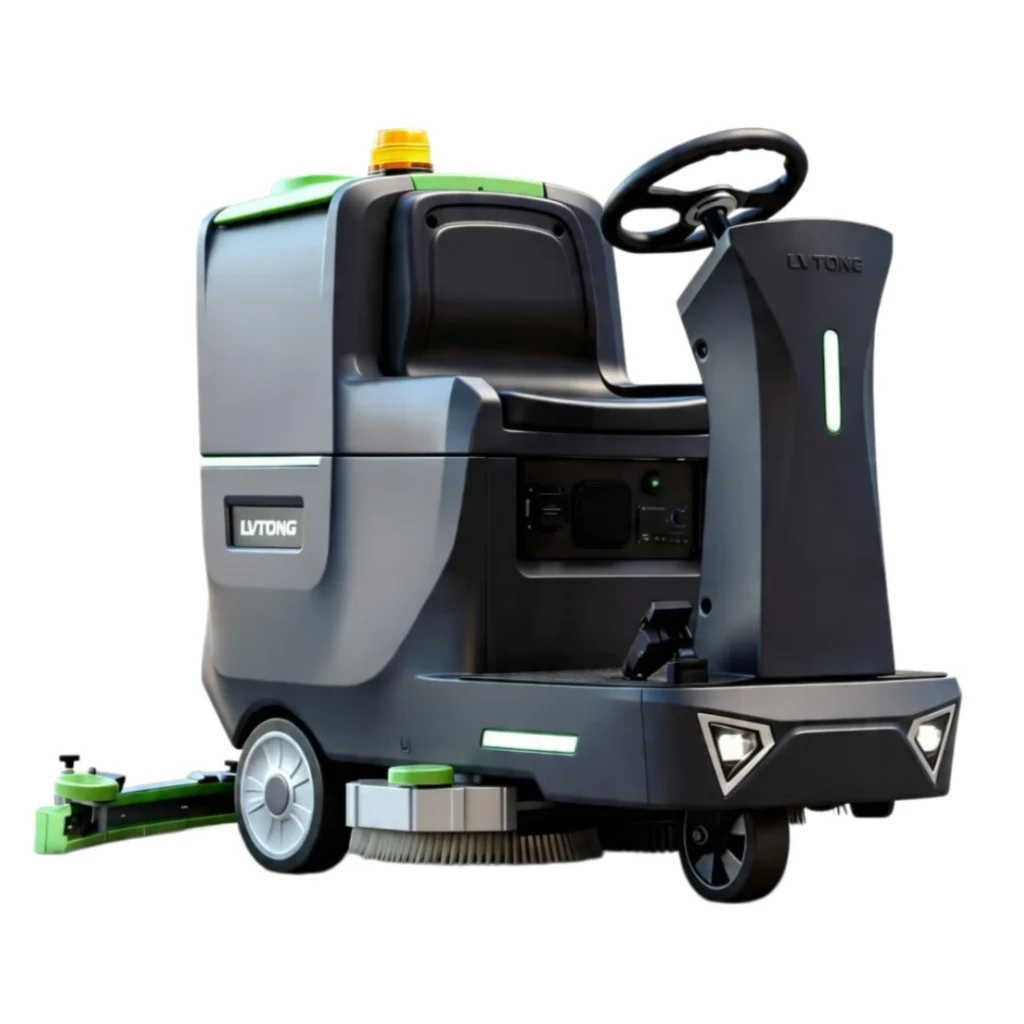
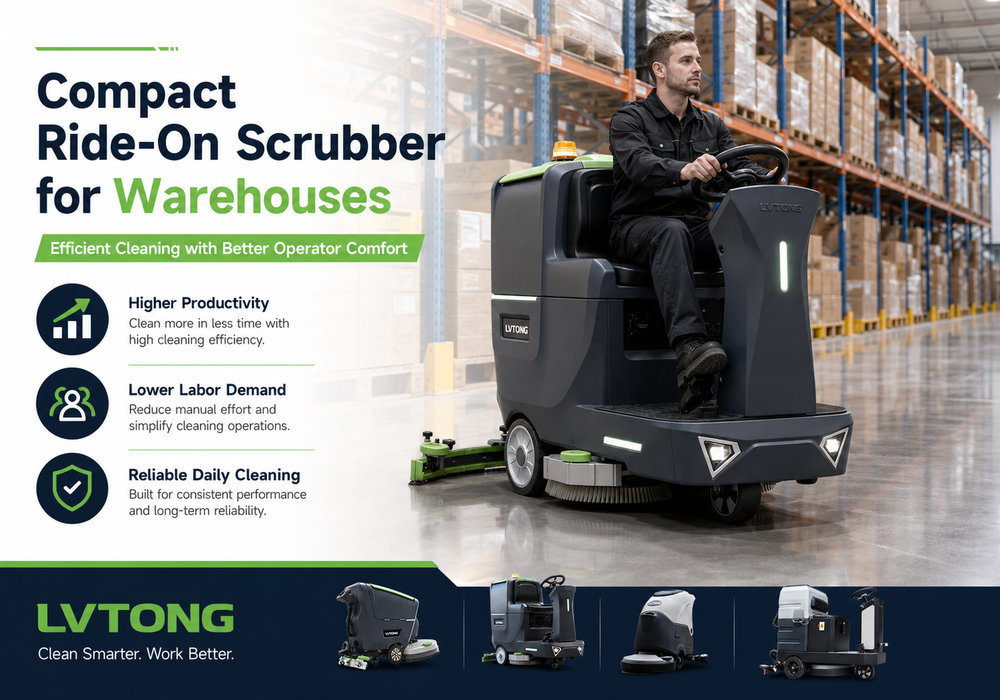
Para almacenes de mayor tamaño, una fregadora de suelos con conductor suele ser más eficiente. El operario puede sentarse y conducir la máquina, lo que reduce la fatiga y permite limpiar una mayor superficie en menos tiempo.
Una referencia de selección simple es:
| Área de almacén | Tipo de máquina sugerido |
|---|---|
| Espacios reducidos y pasillos estrechos | Fregadora de suelos de empuje manual |
| pisos de almacén medianos | Fregadora de gran tamaño con conductor a pie o compacta con asiento. |
| Grandes áreas de almacén abiertas | fregadora de suelos con conductor |
| Limpieza diaria de alta frecuencia | Fregadora autopropulsada con depósito más grande y mayor autonomía de la batería. |
Antes de elegir una máquina, mida la superficie total a limpiar, el ancho del pasillo, el espacio para maniobrar y la distribución del almacenamiento. Esto ayudará a garantizar que la fregadora de suelos se desplace con fluidez y limpie de forma eficiente.
2. Tipo de suelo y estado de la superficie
Los distintos tipos de suelos de almacén requieren diferentes cepillos, almohadillas y métodos de limpieza. Los tipos de suelos más comunes en almacenes incluyen hormigón, epoxi, baldosas, vinilo y suelos industriales sellados.
Para suelos lisos de epoxi o baldosas, pueden bastar con almohadillas suaves o cepillos estándar. Para suelos de hormigón rugoso, es posible que se necesiten cepillos más resistentes para eliminar la suciedad incrustada y las marcas de neumáticos. Para suelos manchados de aceite, puede ser necesario un producto de limpieza adecuado y una mayor presión de fregado.
Recomendaciones comunes para pisos:
| Tipo de suelo | Configuración de limpieza sugerida |
|---|---|
| Piso epoxi | Almohadilla suave o cepillo estándar |
| Suelo de hormigón | Cepillo de nailon o cepillo más resistente |
| Suelo de baldosas cerámicas | Cepillo o almohadilla estándar |
| Suelo de vinilo | Almohadilla suave |
| Suelo manchado de aceite | Modo de fregado más potente y solución de limpieza adecuada. |
Elegir el cepillo o la almohadilla adecuados puede mejorar los resultados de la limpieza y proteger el suelo del desgaste innecesario.
3. Nivel de suciedad, polvo, aceite y escombros
No todos los almacenes presentan los mismos desafíos de limpieza. Algunos se ocupan principalmente del polvo y los restos de embalaje, mientras que otros necesitan eliminar manchas de aceite, marcas de neumáticos de montacargas, barro o residuos químicos.
Antes de seleccionar una fregadora de suelos, evalúe el tipo principal de suciedad que hay en su almacén:
- Polvo y suciedad ligera
- Marcas de neumáticos de carretillas elevadoras
- manchas de aceite o grasa
- Barro y tierra de exterior
- Restos de embalaje
- Derrames de comida o líquidos
- Residuos industriales
Para suciedad y polvo ligeros, una fregadora de suelos estándar puede ser suficiente. Para la limpieza profunda de suelos de almacén, es posible que necesite mayor presión de cepillado, un depósito de agua más grande, mayor potencia de succión o una máquina diseñada para limpieza industrial.
Si el almacén tiene tanto residuos secos como manchas húmedas, barrer antes de fregar puede mejorar la limpieza. En algunas instalaciones grandes, se utilizan barredoras y fregadoras-secadoras conjuntamente para una limpieza completa del suelo.
4. Fregadora de suelos de empuje frente a fregadora de suelos con asiento
Una de las decisiones más importantes es si elegir una fregadora de suelos de empuje o una con asiento.
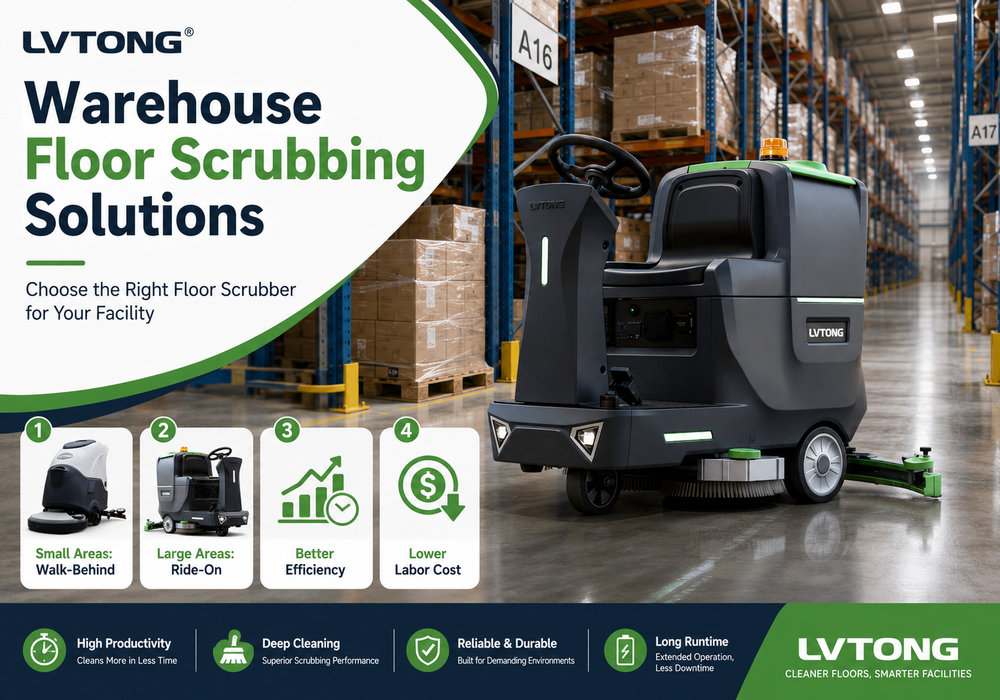
Una fregadora de suelos autopropulsada es compacta y versátil. Es ideal para áreas pequeñas, pasillos estrechos, almacenes comerciales e instalaciones con muchos obstáculos. Suele tener un precio de compra más bajo y es más fácil de mantener.
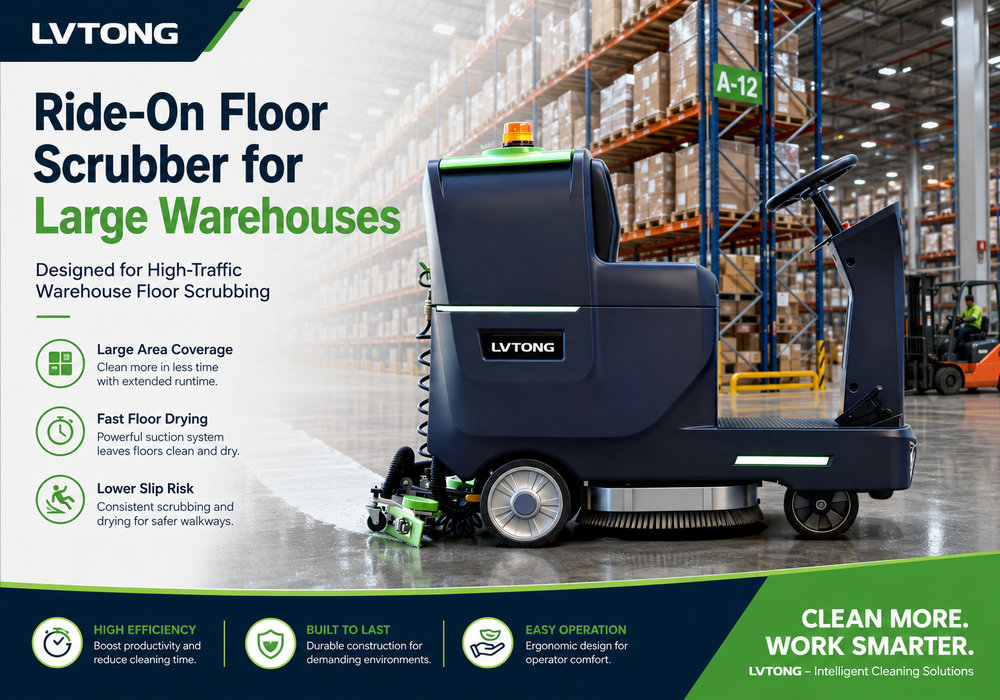
Una fregadora de suelos con conductor es más adecuada para la limpieza de suelos de grandes almacenes. Tiene un ancho de limpieza mayor, un depósito de agua más grande, mayor comodidad para el operador y mayor productividad de limpieza. Puede reducir la fatiga del operador y mejorar la eficiencia de la limpieza en grandes áreas abiertas. Para grandes suelos de almacenes y centros logísticos, Máquinas fregadoras de suelos con conductor Puede proporcionar una mayor productividad de limpieza y una mayor comodidad para el operario.
| Factor | Fregadora industrial de operador a pie | Fregadora con operador a bordo |
|---|---|---|
| Mejor para | Áreas pequeñas y medianas | Grandes almacenes |
| Maniobrabilidad | Alto | Medio |
| Eficacia de la limpieza | Medio | Alto |
| Comodidad del operador | Medio | Alto |
| Capacidad del tanque | Menor | Más grande |
| Costo de compra | Baja | Más alto |
| Complejidad del mantenimiento | Baja | Más alto |
| Diseño adecuado | Pasillos estrechos y obstáculos | Espacios abiertos y amplios |
Para almacenes con espacio limitado, una máquina de empuje suele ser suficiente. Para grandes centros logísticos, centros de distribución y fábricas con requisitos de limpieza diarios, un modelo con conductor suele ser la mejor opción a largo plazo.
5. Capacidad del tanque y duración de la batería
La capacidad del depósito y la duración de la batería afectan directamente a la eficiencia de la limpieza de suelos en almacenes. Si el depósito es demasiado pequeño, los operarios tendrán que detenerse con frecuencia para rellenarlo con agua limpia y vaciar el agua sucia. Si la duración de la batería es demasiado corta, la limpieza podría interrumpirse antes de finalizar.
Al comparar fregadoras de suelos, preste atención a:
- Capacidad del tanque de agua limpia
- Capacidad del tanque de aguas residuales
- Duración de la batería por carga
- Tiempo de carga
- Ancho de limpieza
- Productividad de limpieza estimada
- Frecuencia de limpieza diaria
Para la limpieza de grandes almacenes, un depósito de mayor capacidad y una batería de mayor duración pueden reducir el tiempo de inactividad y mejorar la productividad. Si el almacén necesita limpiarse a diario o varias veces al día, el rendimiento de la batería cobra aún mayor importancia.
Las baterías de litio ofrecen una carga más rápida y una mayor vida útil, mientras que las baterías tradicionales suelen tener un menor coste inicial. La mejor opción depende de tu rutina de limpieza, tu presupuesto y tus horas de trabajo.
6. Mantenimiento y soporte técnico
El mantenimiento es otro factor importante a la hora de elegir una fregadora de suelos para la limpieza de suelos de almacén. Incluso una máquina de alto rendimiento necesita limpieza, inspección y sustitución de piezas de desgaste periódicas.
El mantenimiento diario suele incluir:
- Limpieza del tanque de aguas residuales
- Comprobación de la hoja del limpiacristales
- Limpieza del cepillo o almohadilla
- Revisión de filtros y mangueras
- Cargar la batería correctamente
- Inspección de ruedas y piezas móviles
Una máquina sencilla y de fácil mantenimiento puede reducir el tiempo de inactividad y prolongar su vida útil. Antes de comprar, los responsables de almacén también deben considerar si el proveedor ofrece repuestos, asistencia técnica, capacitación para los operarios y servicio posventa.
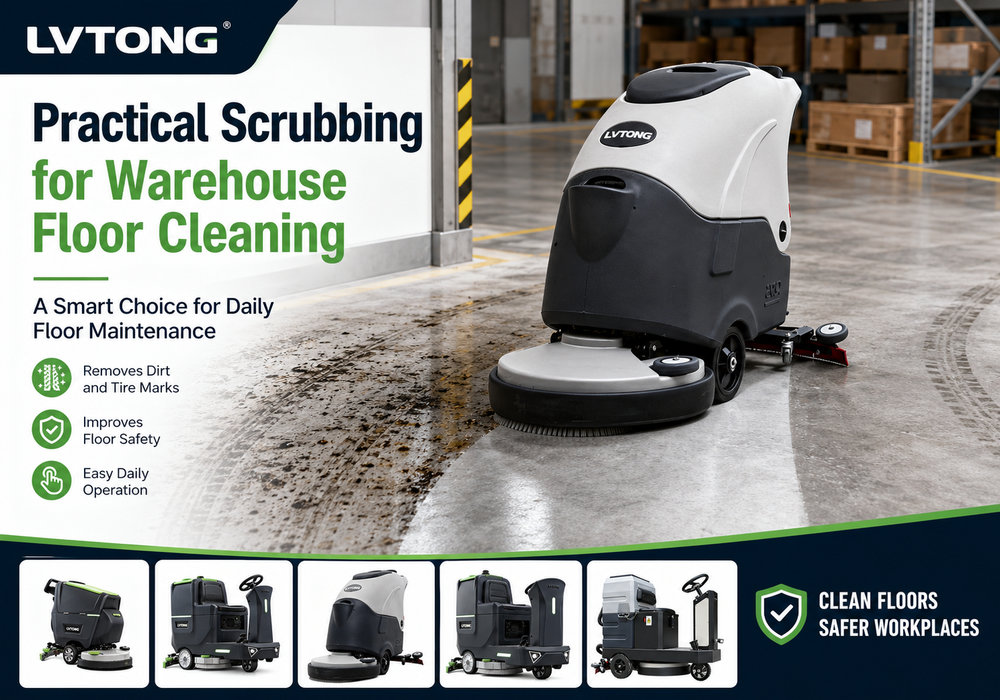
Un buen soporte de mantenimiento ayuda a proteger el retorno de la inversión a largo plazo y mantiene estables las operaciones de limpieza del almacén. Antes de comprar, también es importante comprobar si el proveedor ofrece un servicio fiable. Soporte técnico y mantenimiento para fregadoras de suelos.
Fregado de suelos de almacén frente a limpieza manual
La limpieza manual puede parecer más económica al principio, pero a menudo requiere más mano de obra, más tiempo y limpiezas repetidas. Para grandes almacenes, el fregado mecánico suele ser más eficiente y uniforme.
| Factor | Limpieza con fregadora de suelos | Limpieza manual |
|---|---|---|
| Velocidad de limpieza | Más rápido | Más lento |
| Requisitos de mano de obra | Baja | Más alto |
| consistencia de limpieza | Más estable | Depende de la experiencia del trabajador. |
| Recuperación de aguas residuales | Sí | Limitado |
| Velocidad de secado del suelo | Más rápido | Más lento |
| Riesgo de resbalón | Baja | Mayor si queda agua |
| Costo laboral a largo plazo | Baja | Más alto |
| Área adecuada | Áreas medianas a grandes | Áreas pequeñas |
Una fregadora de suelos aplica agua y solución limpiadora al suelo, lo frota y luego elimina el agua sucia mediante aspiración. Esto ayuda a evitar el problema común de esparcir el agua sucia por el suelo, algo que puede ocurrir con el fregado tradicional.
En almacenes con tráfico frecuente de carretillas elevadoras o con operaciones diarias, un secado más rápido y una limpieza más uniforme pueden ayudar a reducir los riesgos de seguridad y mejorar el flujo de trabajo.
Tipos de fregadoras de suelos recomendadas para almacenes de diferentes tamaños
Los distintos entornos de almacén requieren diferentes configuraciones de fregadoras de suelos. La siguiente tabla ofrece una referencia práctica.
| Escenario de almacén | Tipo de estropajo recomendado | Razón |
|---|---|---|
| Pequeño trastero | Fregadora compacta de conductor acompañante | Fácil de mover en espacios reducidos. |
| Pasillos estrechos en el almacén | Fregadora de empuje | Mejor maniobrabilidad |
| Almacén mediano | Fregadora de gran tamaño con conductor a pie o compacta con asiento. | Eficiencia y flexibilidad equilibradas |
| Gran centro logístico | fregadora de suelos con conductor | Mayor productividad en áreas extensas |
| Almacén de alto tránsito | Fregadora autopropulsada con depósito de mayor capacidad | Mayor tiempo de trabajo y menos paradas. |
| Almacén industrial manchado de aceite | Fregadora con mayor presión de cepillo | Mejor eliminación de manchas |
| Zona de polvo y escombros mixtos | Barredora y fregadora-secadora | Mejor resultado de limpieza completa |
La mejor máquina no siempre es la más grande. Debe ajustarse al área de limpieza real, el tipo de suelo, el ancho del pasillo, el nivel de suciedad y la frecuencia de limpieza diaria. Para entornos de almacenes medianos y grandes, la Fregadora de suelos con conductor V6 Es una opción práctica para mejorar la eficiencia de la limpieza y reducir la mano de obra.
Preguntas frecuentes sobre la limpieza de suelos de almacenes
¿Qué es la limpieza a fondo de suelos de almacén?
El fregado de suelos de almacén consiste en utilizar una fregadora o fregadora-secadora para lavar, fregar, secar y recuperar el agua sucia de los suelos. Ayuda a eliminar el polvo, las manchas, las marcas de aceite y la suciedad de forma más eficaz que el fregado manual.
¿Cuál es la mejor máquina para fregar suelos de almacén?
La máquina más adecuada depende del tamaño y la distribución del almacén. Las fregadoras de suelos de conductor acompañante son apropiadas para áreas pequeñas y pasillos estrechos, mientras que las fregadoras de suelos con conductor son mejores para grandes almacenes abiertos y tareas de limpieza de alta frecuencia.
¿Con qué frecuencia se deben fregar los suelos de los almacenes?
La frecuencia de limpieza depende del nivel de tránsito, el polvo, el estado del suelo y las exigencias del sector. Los almacenes con mucho tránsito pueden necesitar una limpieza diaria del suelo, mientras que las instalaciones más pequeñas o con menos tránsito pueden limpiarse varias veces por semana.
¿Es mejor una fregadora con conductor para la limpieza de suelos en grandes almacenes?
Sí. Para grandes almacenes, una fregadora con conductor suele ser más eficiente porque ofrece mayor productividad de limpieza, mayor capacidad del depósito, mayor comodidad para el operario y menor intensidad de trabajo.
¿Puede una fregadora de suelos limpiar los suelos de hormigón de un almacén?
Sí. Una fregadora de suelos puede limpiar los suelos de hormigón de un almacén, pero el cepillo o la almohadilla deben seleccionarse según la superficie y el nivel de suciedad. Los suelos de hormigón rugoso o manchados de aceite pueden requerir una mayor presión del cepillo y una solución de limpieza adecuada.
¿Qué factores afectan la eficacia del fregado de suelos en los almacenes?
Los principales factores incluyen el área de limpieza, el ancho del pasillo, el tipo de suelo, el nivel de suciedad, el tamaño de la máquina, el ancho de limpieza, la capacidad del tanque, la duración de la batería, la habilidad del operador y el estado de mantenimiento.
¿Es mejor fregar el suelo del almacén que trapearlo manualmente?
Para almacenes medianos y grandes, el fregado de suelos suele ser mejor que el fregado manual. Es más rápido, más uniforme, reduce la mano de obra, recupera el agua sucia y ayuda a que los suelos se sequen más rápido.
¿Cómo elijo entre fregadoras de empuje y fregadoras con asiento para un almacén?
Elija una fregadora de empuje si su almacén tiene pasillos estrechos, áreas pequeñas o muchos obstáculos. Elija una fregadora con asiento si su almacén tiene grandes espacios abiertos, requiere limpieza diaria o exige mayor productividad.
¿Cuál es la diferencia entre una fregadora-secadora y una barredora?
Una fregadora-secadora se utiliza para la limpieza en húmedo, la eliminación de manchas y la recuperación de aguas sucias. Una barredora se utiliza para recoger polvo y residuos secos. En algunos sistemas de limpieza de almacenes, ambas máquinas se utilizan conjuntamente para obtener mejores resultados.
¿Por qué es importante el servicio de asistencia técnica al comprar una fregadora de suelos?
El servicio de asistencia técnica es fundamental, ya que las fregadoras de suelos requieren mantenimiento regular y la sustitución de piezas de desgaste como rasquetas, cepillos, almohadillas, filtros y baterías. Un servicio posventa fiable ayuda a reducir el tiempo de inactividad y a garantizar la eficacia de la limpieza a largo plazo.
Conclusión
La limpieza a fondo de los suelos del almacén es fundamental para mantener operaciones limpias, seguras y eficientes. En comparación con la limpieza manual, una fregadora de suelos acelera el proceso, reduce la mano de obra, recupera el agua sucia, facilita el secado de los suelos y proporciona resultados de limpieza más uniformes.
A la hora de elegir una fregadora de suelos para la limpieza de almacenes, los responsables de las instalaciones deben tener en cuenta 6 factores clave: la zona de limpieza, la distribución del almacén, el tipo de suelo, el nivel de suciedad, el tipo de máquina, la capacidad del depósito, la autonomía de la batería y el soporte de mantenimiento.
Para almacenes pequeños o pasillos estrechos, una fregadora de empuje puede ser la opción adecuada. Para grandes centros logísticos, fábricas y tareas de limpieza frecuentes, una fregadora de suelos con conductor ofrece mayor productividad y mejor relación calidad-precio a largo plazo.
Si necesita una solución práctica para la limpieza de suelos de almacenes, póngase en contacto con Lvtong Cleaning Equipment para obtener recomendaciones sobre fregadoras de suelos, asistencia en la selección de maquinaria y asesoramiento personalizado sobre la limpieza de sus instalaciones.