Introduction
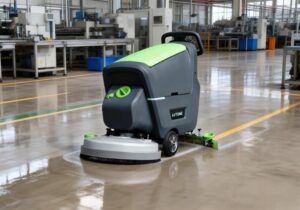
Warehouse floor scrubbing is an important part of daily facility maintenance. In warehouses, logistics centers, factories, and commercial storage areas, floors are exposed to dust, tire marks, oil stains, packaging debris, forklift traffic, and frequent staff movement. If the floor is not cleaned properly, it can affect workplace safety, cleaning efficiency, product storage conditions, and the overall image of the facility.
Traditional manual cleaning methods, such as mops and buckets, may work for small areas, but they are often too slow and labor-intensive for large warehouse floors. A professional floor scrubber can scrub, wash, dry, and recover dirty water in one pass, helping facility managers improve warehouse floor scrubbing efficiency while reducing labor pressure. For buyers who are comparing different warehouse cleaning machines, this warehouse floor scrubber guide can help you understand how to choose equipment by warehouse size, aisle width, and cleaning frequency.
This article explains what warehouse floor scrubbing is, why the right floor scrubber matters, and the 6 key factors to consider before choosing a floor scrubber for warehouse cleaning.
Quick Answer
Warehouse floor scrubbing is the process of using a floor scrubber or scrubber dryer to wash, scrub, dry, and recover dirty water from warehouse floors. To choose the right floor scrubber, facility managers should compare cleaning area, aisle width, floor type, dirt level, machine size, tank capacity, battery runtime, and maintenance support.
For small warehouses or narrow aisles, a walk-behind floor scrubber may be more suitable. For large open warehouse areas, logistics centers, and high-frequency cleaning tasks, a ride-on floor scrubber usually provides higher cleaning efficiency and lower labor demand.
What Is Warehouse Floor Scrubbing?
Warehouse floor scrubbing refers to the mechanical cleaning process used to remove dust, dirt, stains, oil marks, and wastewater from warehouse floors. Unlike simple sweeping or mopping, floor scrubbing uses brush pressure, water, cleaning solution, and vacuum recovery to clean the floor more deeply.
A floor scrubber usually completes three steps in one operation:
- Spraying water or cleaning solution onto the floor
- Scrubbing the surface with a brush or pad
- Recovering dirty water through a squeegee and vacuum system
This process helps the floor dry faster and reduces the risk of leaving dirty water, residue, or slippery surfaces behind. For warehouses with large floor areas, regular floor scrubbing can help improve hygiene, safety, and operational efficiency.
Why Warehouse Floor Scrubbing Requires the Right Equipment
Warehouse cleaning is different from ordinary commercial floor cleaning. Warehouses often have large spaces, long aisles, heavy equipment traffic, and different types of floor contamination. Manual cleaning can be inefficient because workers need to repeatedly refill water, move cleaning tools, and cover long distances.
Using the right industrial floor scrubber can help warehouses:
- Clean large areas faster
- Reduce manual labor
- Improve floor drying speed
- Remove dust, oil stains, and tire marks more effectively
- Reduce slip risks caused by wet floors
- Keep aisles and working areas cleaner
- Improve the overall working environment
However, not every floor scrubber is suitable for every warehouse. Choosing the wrong machine can lead to low efficiency, poor cleaning results, higher maintenance costs, or difficulty operating in narrow spaces. That is why warehouse managers should evaluate the following 6 factors before making a decision.
6 Factors to Consider for Warehouse Floor Scrubbing
1. Warehouse Cleaning Area and Layout
The first factor is the size and layout of the warehouse. A small storage area, narrow aisle, or crowded facility may require a different machine from a large logistics center with wide open floor space.
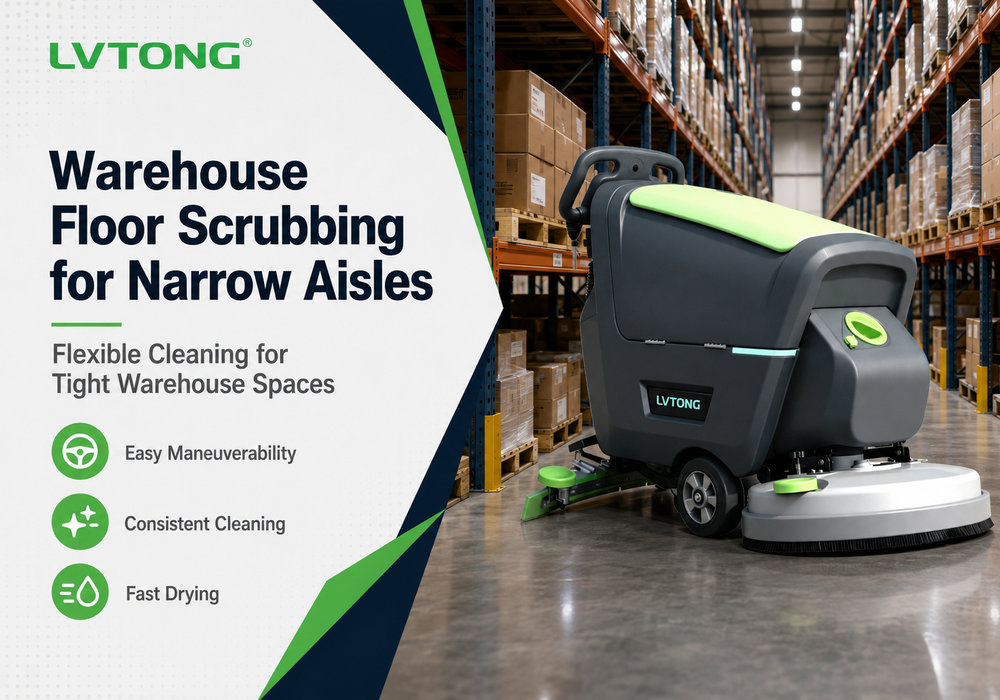
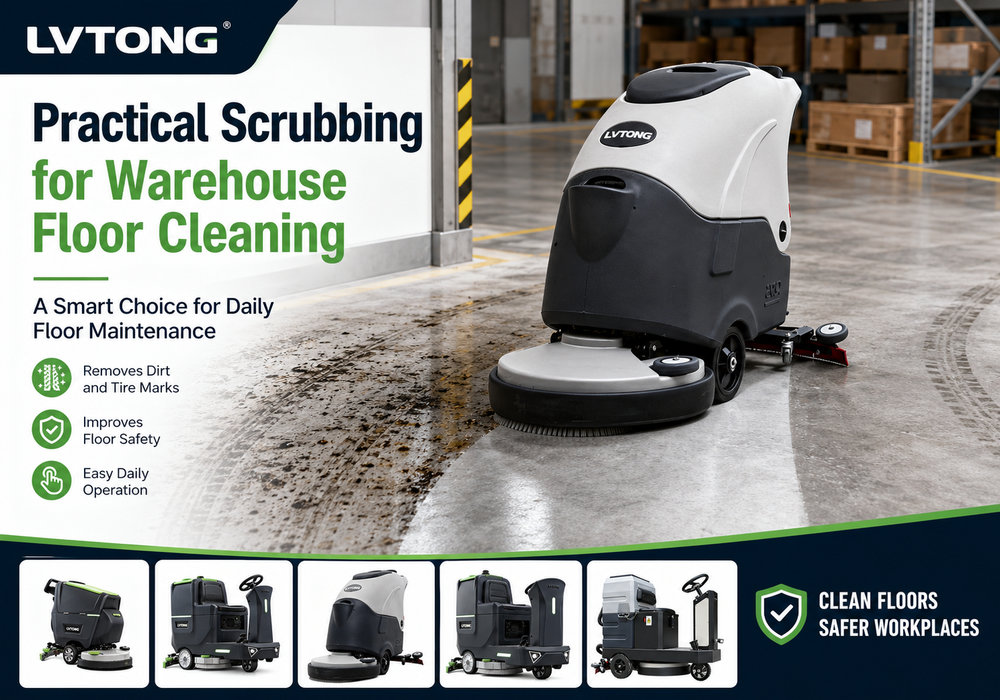
For smaller areas, a walk-behind floor scrubber is often more practical because it is compact, flexible, and easier to operate around shelves, corners, and obstacles. For compact spaces and narrow warehouse aisles, walk behind floor scrubber machines are usually easier to operate and maintain.
For larger warehouses, a ride-on floor scrubber is usually more efficient. The operator can sit and drive the machine, which reduces fatigue and allows more floor area to be cleaned in less time.
A simple selection reference is:
| Warehouse Area | Suggested Machine Type |
|---|---|
| Small areas and narrow aisles | Walk-behind floor scrubber |
| Medium warehouse floors | Large walk-behind or compact ride-on scrubber |
| Large open warehouse areas | Ride-on floor scrubber |
| High-frequency daily cleaning | Ride-on scrubber with larger tank and longer battery runtime |
Before choosing a machine, measure the total cleaning area, aisle width, turning space, and storage layout. This helps ensure the floor scrubber can move smoothly and clean efficiently.
2. Floor Type and Surface Condition
Different warehouse floors require different brushes, pads, and cleaning methods. Common warehouse floor types include concrete, epoxy, tile, vinyl, and sealed industrial flooring.
For smooth epoxy or tile floors, soft pads or standard brushes may be enough. For rough concrete floors, stronger brushes may be needed to remove embedded dirt and tire marks. For oil-stained floors, a suitable cleaning solution and stronger scrubbing pressure may be required.
Common floor recommendations:
| Floor Type | Suggested Cleaning Setup |
|---|---|
| Epoxy floor | Soft pad or standard brush |
| Concrete floor | Nylon brush or stronger brush |
| Ceramic tile floor | Standard brush or pad |
| Vinyl floor | Soft pad |
| Oil-stained floor | Stronger scrubbing mode and suitable cleaning solution |
Choosing the correct brush or pad can improve cleaning results and protect the floor from unnecessary wear.
3. Dirt, Dust, Oil, and Debris Level
Not all warehouses have the same cleaning challenges. Some warehouses mainly deal with dust and packaging debris, while others need to remove oil stains, forklift tire marks, mud, or chemical residue.
Before selecting a floor scrubber, evaluate the main type of dirt in your warehouse:
- Dust and light dirt
- Tire marks from forklifts
- Oil or grease stains
- Mud and outdoor dirt
- Packaging debris
- Food or liquid spills
- Industrial residue
For light dirt and dust, a standard floor scrubber may be enough. For heavy-duty warehouse floor scrubbing, you may need stronger brush pressure, a larger water tank, higher suction power, or a machine designed for industrial cleaning.
If the warehouse has both dry debris and wet stains, sweeping before scrubbing may improve cleaning performance. In some large facilities, sweepers and scrubber dryers are used together for complete floor cleaning.
4. Walk-Behind vs Ride-On Floor Scrubber
One of the most important decisions is whether to choose a walk-behind or ride-on floor scrubber.
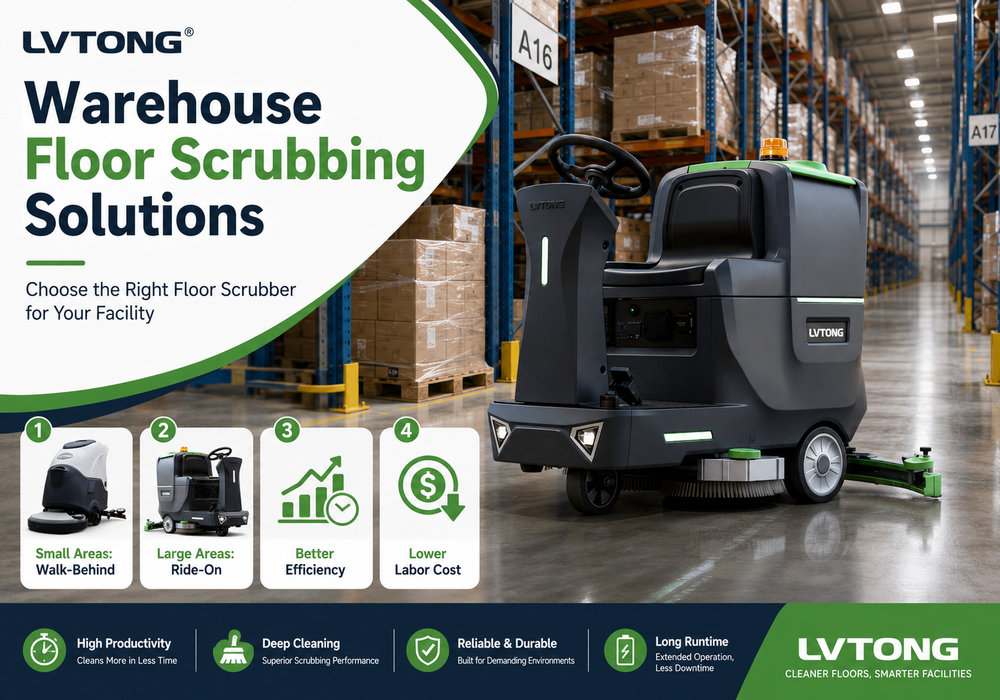
A walk-behind floor scrubber is compact and flexible. It is suitable for smaller areas, narrow aisles, retail storage rooms, and facilities with many obstacles. It usually has a lower purchase cost and is easier to maintain.
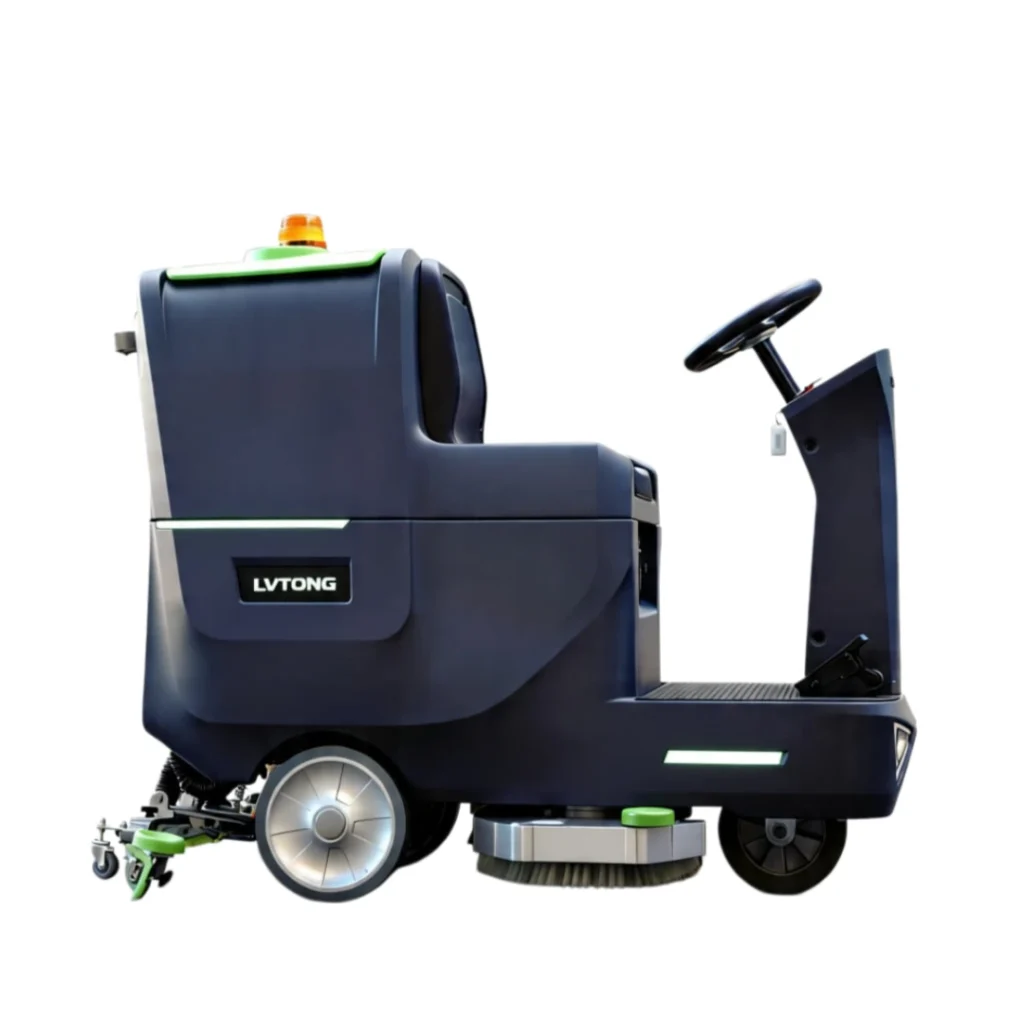
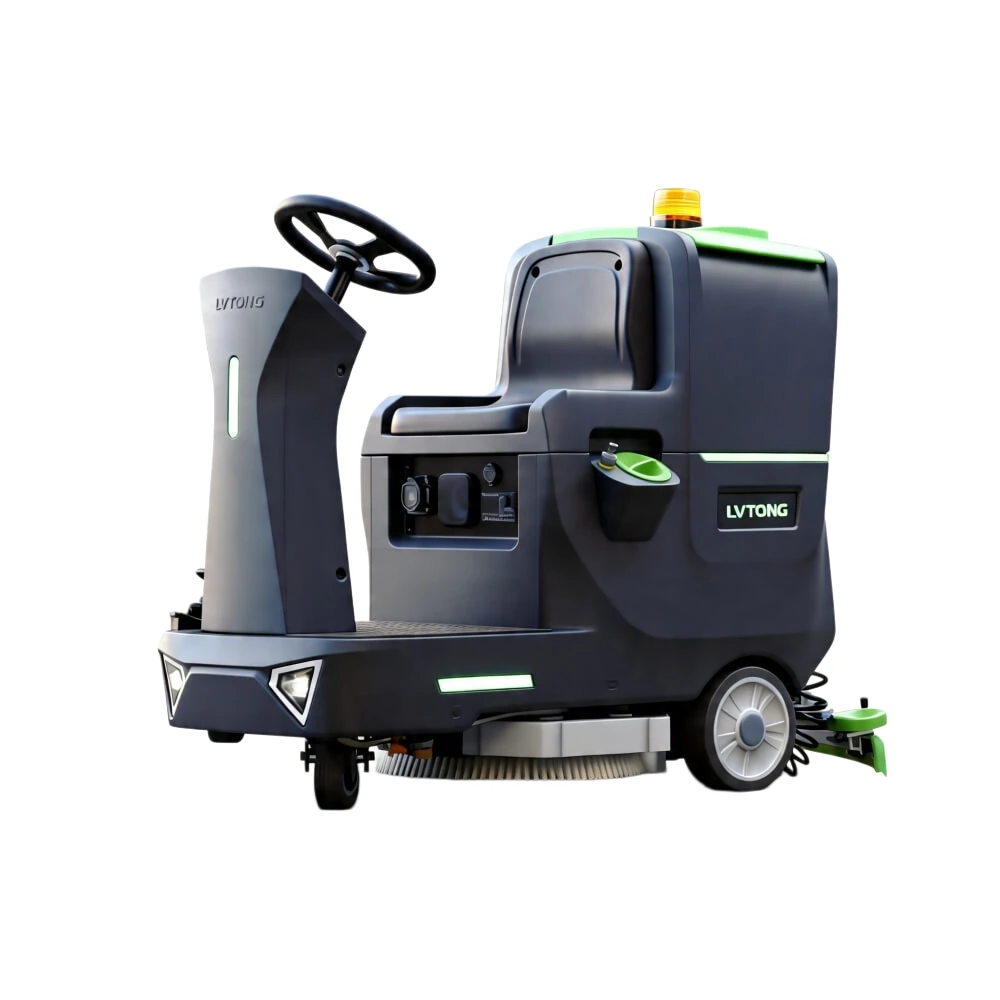
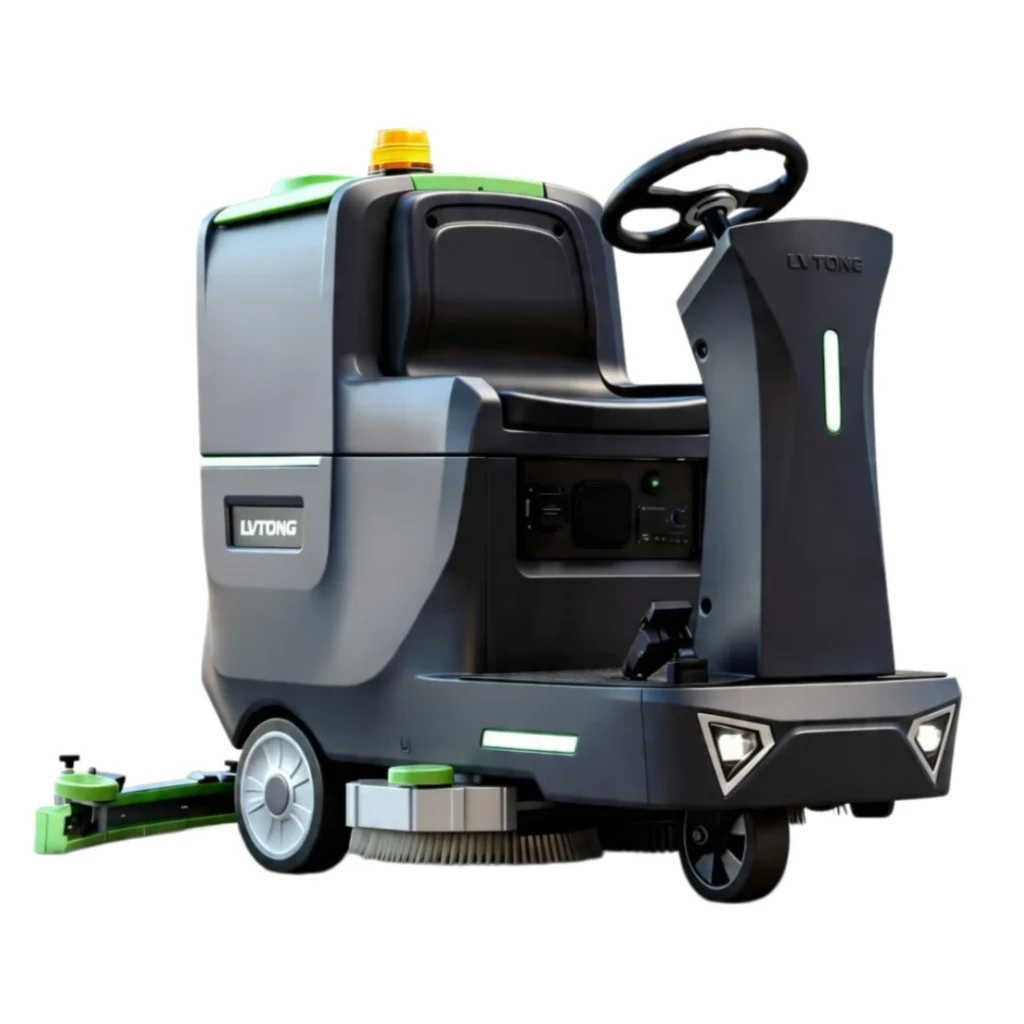
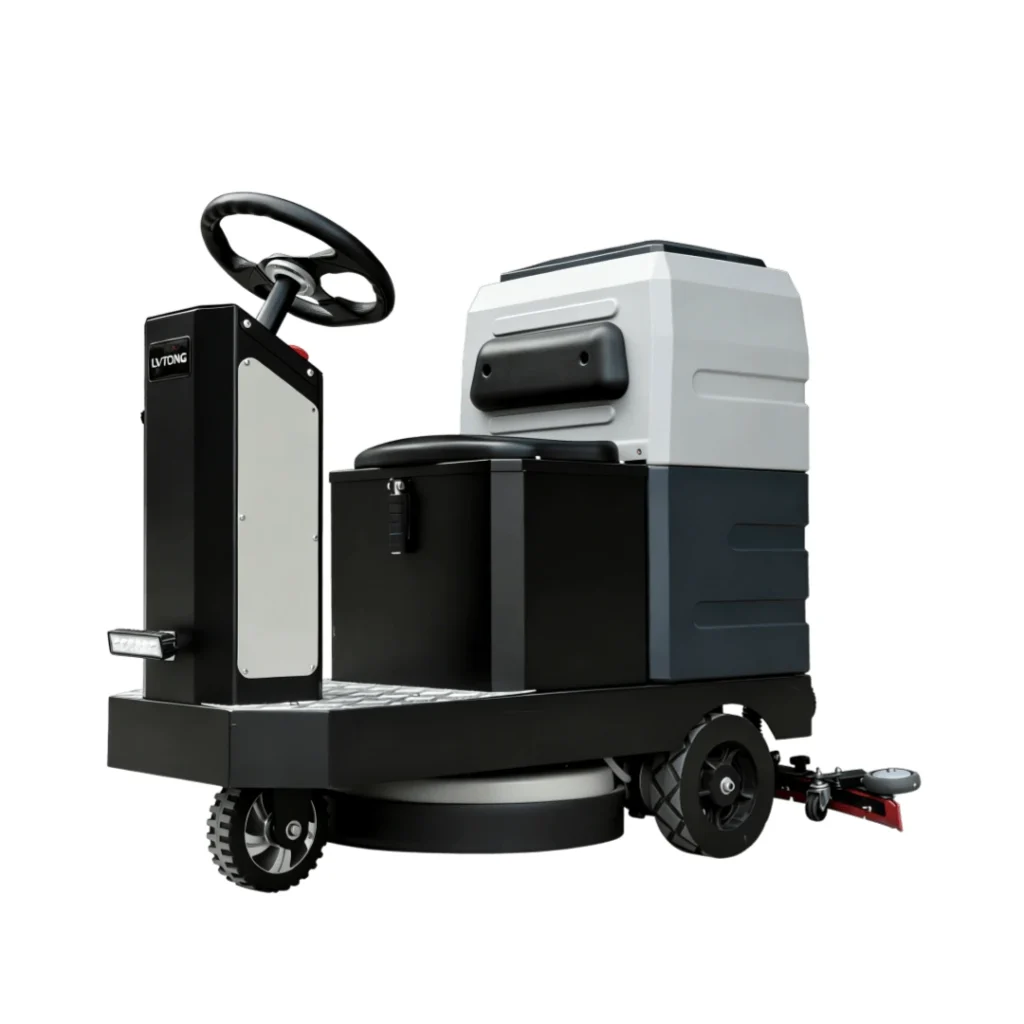
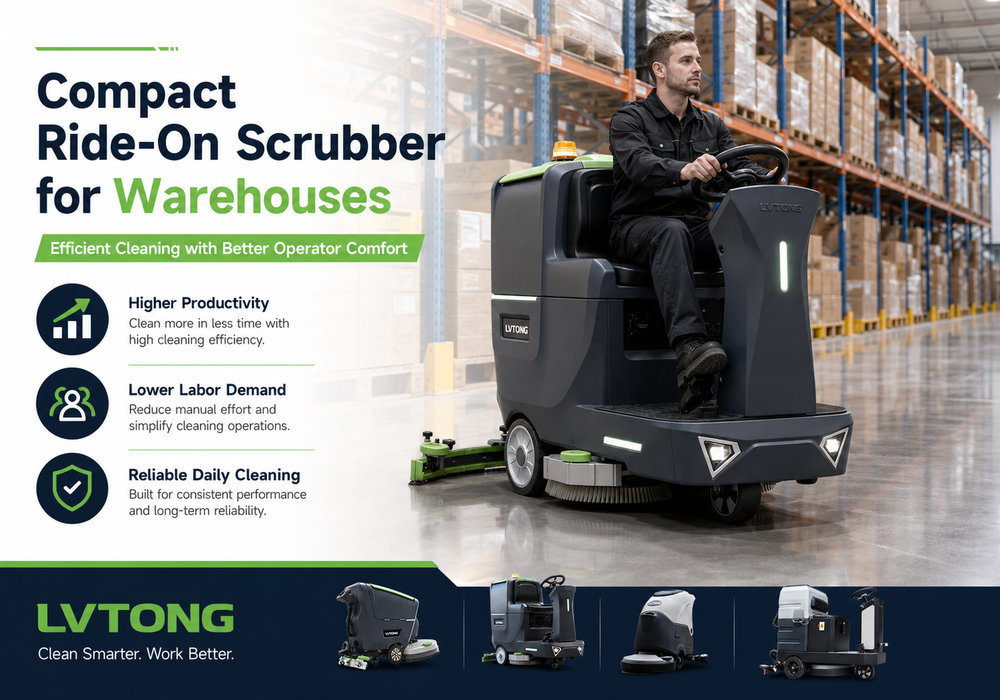
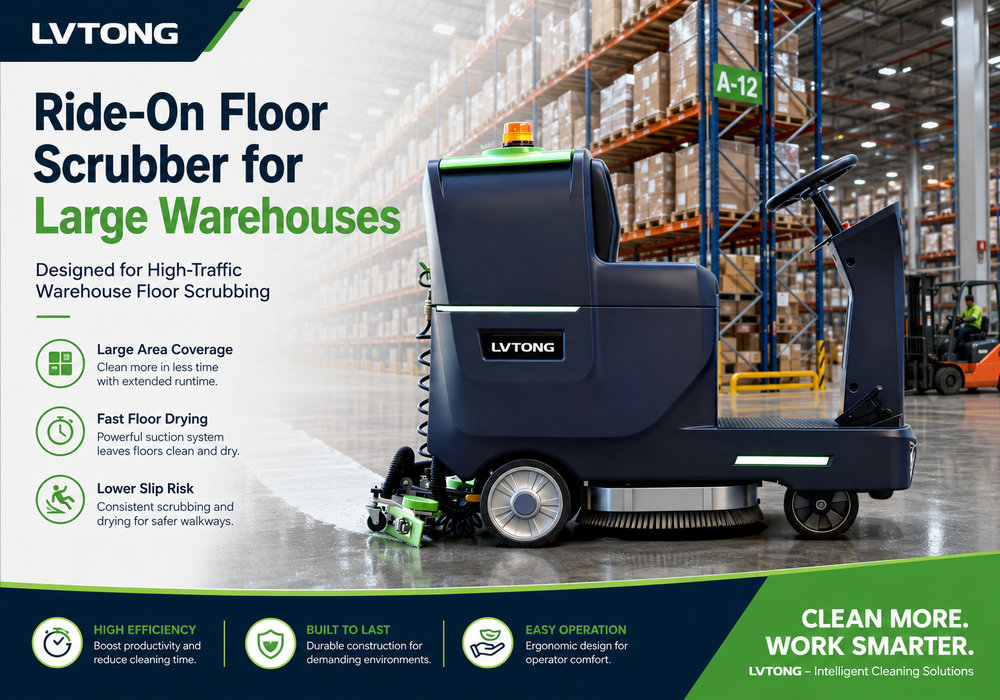
A ride-on floor scrubber is more suitable for large warehouse floor scrubbing. It has a larger cleaning width, larger water tank, better operator comfort, and higher cleaning productivity. It can reduce operator fatigue and improve cleaning efficiency in large open areas. For large warehouse floors and logistics centers, ride on floor scrubber machines can provide higher cleaning productivity and better operator comfort.
| Factor | Walk-Behind Floor Scrubber | Ride-On Floor Scrubber |
|---|---|---|
| Best for | Small and medium areas | Large warehouse floors |
| Maneuverability | High | Medium |
| Cleaning efficiency | Medium | High |
| Operator comfort | Medium | High |
| Tank capacity | Smaller | Larger |
| Purchase cost | Lower | Higher |
| Maintenance complexity | Lower | Higher |
| Suitable layout | Narrow aisles and obstacles | Wide open spaces |
For warehouses with limited space, a walk-behind machine is often enough. For large logistics centers, distribution centers, and factories with daily cleaning requirements, a ride-on model is usually the better long-term choice.
5. Tank Capacity and Battery Runtime
Tank capacity and battery runtime directly affect warehouse floor scrubbing efficiency. If the water tank is too small, operators need to stop frequently to refill clean water and empty dirty water. If the battery runtime is too short, the cleaning task may be interrupted before the job is complete.
When comparing floor scrubbers, pay attention to:
- Clean water tank capacity
- Wastewater tank capacity
- Battery runtime per charge
- Charging time
- Cleaning width
- Estimated cleaning productivity
- Daily cleaning frequency
For large warehouse cleaning, a bigger tank and longer battery runtime can reduce downtime and improve productivity. If the warehouse needs to be cleaned every day or several times per day, battery performance becomes even more important.
Lithium battery options may support faster charging and longer service life, while traditional batteries may have lower initial cost. The best choice depends on your cleaning schedule, budget, and working hours.
6. Maintenance and Service Support
Maintenance is another important factor when choosing a floor scrubber for warehouse floor scrubbing. Even a high-performance machine needs regular cleaning, inspection, and replacement of wear parts.
Daily maintenance usually includes:
- Cleaning the wastewater tank
- Checking the squeegee blade
- Cleaning the brush or pad
- Checking filters and hoses
- Charging the battery correctly
- Inspecting wheels and moving parts
A simple and easy-to-maintain machine can reduce downtime and extend service life. Before purchasing, warehouse managers should also consider whether the supplier can provide spare parts, technical support, operator training, and after-sales service.
Good maintenance support helps protect long-term ROI and keeps warehouse cleaning operations stable. Before purchasing, it is also important to check whether the supplier provides reliable floor scrubber maintenance and service support.
Warehouse Floor Scrubbing vs Manual Cleaning
Manual cleaning may seem cheaper at first, but it often requires more labor, more time, and repeated cleaning work. For large warehouse floors, mechanical floor scrubbing is usually more efficient and consistent.
| Factor | Floor Scrubber Cleaning | Manual Cleaning |
|---|---|---|
| Cleaning speed | Faster | Slower |
| Labor requirement | Lower | Higher |
| Cleaning consistency | More stable | Depends on worker experience |
| Dirty water recovery | Yes | Limited |
| Floor drying speed | Faster | Slower |
| Slip risk | Lower | Higher if water remains |
| Long-term labor cost | Lower | Higher |
| Suitable area | Medium to large areas | Small areas |
A floor scrubber applies water and cleaning solution to the floor, scrubs the surface, and then removes dirty water through vacuum recovery. This helps avoid the common problem of spreading dirty water across the floor, which can happen with traditional mopping.
For warehouses with frequent forklift traffic or daily operations, faster drying and more consistent cleaning can help reduce safety risks and improve workflow.
Recommended Floor Scrubber Types for Different Warehouse Sizes
Different warehouse environments require different floor scrubber configurations. The table below provides a practical reference.
| Warehouse Scenario | Recommended Scrubber Type | Reason |
|---|---|---|
| Small storage room | Compact walk-behind scrubber | Easy to move in tight spaces |
| Narrow warehouse aisles | Walk-behind scrubber | Better maneuverability |
| Medium warehouse | Large walk-behind or compact ride-on scrubber | Balanced efficiency and flexibility |
| Large logistics center | Ride-on floor scrubber | Higher productivity for wide areas |
| High-traffic warehouse | Ride-on scrubber with larger tank | Longer working time and fewer stops |
| Oil-stained industrial warehouse | Scrubber with stronger brush pressure | Better stain removal |
| Mixed dust and debris area | Sweeper plus scrubber dryer | Better complete cleaning result |
The best machine is not always the largest one. It should match the actual cleaning area, floor type, aisle width, dirt level, and daily cleaning frequency. For medium and large warehouse environments, the V6 ride-on floor scrubber is a practical option for improving cleaning efficiency and reducing labor input.
FAQ About Warehouse Floor Scrubbing
What is warehouse floor scrubbing?
Warehouse floor scrubbing is the process of using a floor scrubber or scrubber dryer to wash, scrub, dry, and recover dirty water from warehouse floors. It helps remove dust, stains, oil marks, and dirt more efficiently than manual mopping.
What is the best machine for warehouse floor scrubbing?
The best machine depends on the warehouse size and layout. Walk-behind floor scrubbers are suitable for smaller areas and narrow aisles, while ride-on floor scrubbers are better for large open warehouse floors and high-frequency cleaning tasks.
How often should warehouse floors be scrubbed?
The cleaning frequency depends on traffic level, dust, floor condition, and industry requirements. High-traffic warehouses may need daily floor scrubbing, while smaller or lower-traffic facilities may clean several times per week.
Is a ride-on scrubber better for large warehouse floor scrubbing?
Yes. For large warehouse floors, a ride-on scrubber is usually more efficient because it offers higher cleaning productivity, larger tank capacity, better operator comfort, and lower labor intensity.
Can a floor scrubber clean concrete warehouse floors?
Yes. A floor scrubber can clean concrete warehouse floors, but the brush or pad should be selected according to the floor surface and dirt level. Rough concrete or oil-stained floors may require stronger brush pressure and suitable cleaning solution.
What factors affect warehouse floor scrubbing efficiency?
The main factors include cleaning area, aisle width, floor type, dirt level, machine size, cleaning width, tank capacity, battery runtime, operator skill, and maintenance condition.
Is warehouse floor scrubbing better than manual mopping?
For medium and large warehouses, floor scrubbing is usually better than manual mopping. It is faster, more consistent, reduces labor demand, recovers dirty water, and helps floors dry faster.
How do I choose between walk-behind and ride-on scrubbers for a warehouse?
Choose a walk-behind scrubber if your warehouse has narrow aisles, small areas, or many obstacles. Choose a ride-on scrubber if your warehouse has large open spaces, daily cleaning needs, or higher productivity requirements.
What is the difference between a scrubber dryer and a sweeper?
A scrubber dryer is used for wet cleaning, stain removal, and dirty water recovery. A sweeper is used to collect dry dust and debris. In some warehouse cleaning systems, both machines are used together for better results.
Why is service support important when buying a floor scrubber?
Service support is important because floor scrubbers require regular maintenance and replacement of wear parts such as squeegees, brushes, pads, filters, and batteries. Reliable after-sales support helps reduce downtime and protect long-term cleaning efficiency.
Conclusion
Warehouse floor scrubbing is essential for maintaining clean, safe, and efficient warehouse operations. Compared with manual cleaning, a floor scrubber can improve cleaning speed, reduce labor demand, recover dirty water, help floors dry faster, and provide more consistent cleaning results.
When choosing a floor scrubber for warehouse cleaning, facility managers should consider 6 key factors: cleaning area, warehouse layout, floor type, dirt level, machine type, tank capacity, battery runtime, and maintenance support.
For smaller warehouses or narrow aisles, a walk-behind scrubber may be the right choice. For large logistics centers, factories, and high-frequency cleaning tasks, a ride-on floor scrubber can deliver stronger productivity and better long-term value.
If you need a practical warehouse floor cleaning solution, contact Lvtong Cleaning Equipment for floor scrubber recommendations, machine selection support, and customized cleaning advice for your facility.