Introduction
Industrial buyers rarely choose a floor scrubber brand by machine price alone. Product range, cleaning application, local service coverage, spare-parts availability, warranty terms and long-term operating support can be just as important as cleaning width or tank capacity.
This guide compares 10 floor scrubber brands for 2026, including established international groups and value-focused equipment brands. The purpose is not to claim that one brand is best for every buyer, but to help factories, warehouses, logistics centers and commercial facilities build a practical shortlist based on application, service requirements and budget.
Because product availability and dealer support vary by country, buyers should verify the exact models, warranty coverage, replacement-parts lead time and local service capability before making a final decision.
Quick Answer: What Are the Best Floor Scrubber Brands for 2026?
The best floor scrubber brand depends on the buyer’s application, operating intensity, budget and local service requirements.
Brands such as Tennant, Nilfisk, Kärcher, Hako, Comac and IPC offer established professional cleaning portfolios and may suit buyers who prioritize broad product ranges, industrial applications and structured dealer support.
Value-focused brands such as LVTONG, Cleanwill and Gaomei may suit buyers who prioritize competitive equipment pricing, direct supplier communication and practical machine configurations. Viper is positioned as a value-focused professional cleaning brand within the Nilfisk Group.
For factories and large warehouses, compare ride-on machine capacity, brush system, runtime, water recovery, parts availability and service response. For schools, offices, retail areas and divided layouts, compare compact walk-behind models, noise level, maneuverability and ease of maintenance.
No brand should be selected by reputation alone. Local dealer capability, spare-parts lead time, warranty terms and the suitability of the actual machine model are more important than a general brand ranking.
How We Evaluated These Floor Scrubber Brands
The brands in this guide were compared using the same core criteria:
- Product range, including walk-behind, ride-on and automated options
- Suitability for commercial and industrial applications
- Availability of official product and technical information
- Dealer, distributor or direct-support model
- Spare-parts and consumables availability
- Maintenance and operator-support resources
- General market positioning
- Best-fit buyer and application
- Important limitations buyers should verify
This article compares brands rather than individual machine models. Actual cleaning performance, reliability and operating cost depend on the selected model, battery, brush system, floor condition, cleaning schedule and local service support.
Editorial Disclosure
LVTONG is included in this comparison and is also the publisher of this article. LVTONG should be assessed using the same criteria as every other brand, and buyers should independently verify product specifications, warranty terms and service availability.
Source and Verification Policy
Brand ownership, product range and corporate information should be checked against official brand or parent-company sources. Local service and parts availability should be verified in the buyer’s country because global brand presence does not guarantee identical support in every market.
Last reviewed: June 2026.
Floor Scrubber Brand vs Manufacturer vs Supplier: What’s the Difference?
A floor scrubber brand, manufacturer, supplier and distributor are not always the same company. Understanding the difference helps buyers compare equipment more accurately.
A floor scrubber brand is the name under which machines are marketed and sold. A manufacturer is the company that actually produces or assembles the equipment. A supplier may be a manufacturer, exporter, trading company or distributor, while a distributor or dealer normally provides products and local support within a specific market.
For industrial buyers, the company type matters because it affects customization, technical communication, spare-parts supply, warranty responsibility and after-sales service.
When comparing floor scrubber manufacturers and brands, verify:
- Who actually manufactures the machine
- Who is responsible for warranty service
- Whether spare parts are stocked locally or supplied from the factory
- Whether technical documentation and training are available
- Whether the supplier supports OEM or customized configurations
- Which certifications apply to the exact model and destination market
Direct manufacturers may offer closer technical communication and greater configuration flexibility, while established distributors may provide stronger local service and faster on-site support. Neither model is automatically better; buyers should evaluate the complete support structure behind the machine.
Manufacturer Capability Checklist: Production, R&D and Quality Control
After identifying whether a company is a brand, manufacturer, supplier or distributor, buyers should evaluate the manufacturer’s real production and technical capability.
A reliable industrial floor scrubber manufacturer should be able to support more than basic machine assembly. Professional buyers should check whether the manufacturer has stable production lines, quality-control procedures, engineering capability, product testing records and long-term spare-parts support.
Key areas to verify include:
Production capability: Does the manufacturer have its own factory, assembly process, quality inspection procedure and production records?
R&D capability: Can the manufacturer improve machine structure, electronic controls, battery systems, water-recovery systems and operator interface based on customer feedback?
Core components: Are motors, controllers, batteries, chargers, squeegee systems, tanks and brush decks selected and tested for industrial cleaning conditions?
Product line coverage: Does the manufacturer offer walk-behind, ride-on, compact, heavy-duty or application-specific scrubber options?
Quality and certification: Can the supplier provide applicable certifications, inspection procedures, technical documentation and final approved specifications?
Customization capability: Can the manufacturer support battery configuration, brush system, color, branding, packaging, voltage or other OEM/ODM requirements when needed?
A manufacturer with stronger production, engineering and quality-control capability is more likely to provide stable machine performance and long-term support.
What Buyers Should Expect from Floor Scrubber Brands in 2026
Floor scrubber brands are increasingly differentiated by more than basic machine size and cleaning width. Buyers should also compare automation options, battery configurations, digital controls, water-management features and service capability.
Automation Options
Some brands offer autonomous or semi-autonomous scrubbers for facilities with repetitive routes and stable layouts. Buyers should compare navigation reliability, obstacle handling, software support, remote monitoring and the need for on-site supervision.
Battery and Charging Options
Lead-acid and lithium battery packages may differ by model and market. Compare charging time, usable runtime, battery maintenance, replacement cost and local availability rather than assuming one battery type is automatically better.
Service Diagnostics and Support
Digital diagnostics, maintenance reminders and remote-support tools can reduce troubleshooting time, but their value depends on technician availability and the local service network.
Parts Availability
Consumables such as brushes, pads, squeegee blades, filters, hoses and batteries affect long-term equipment availability. Buyers should ask for expected parts lead times before choosing a brand.
International vs Value-Focused Floor Scrubber Brands
International brand groups may offer broader regional dealer networks, established technical documentation and a wide range of professional cleaning machines. However, product pricing, parts cost and service response can vary significantly between countries.
Value-focused brands may offer more competitive quotations, direct factory communication and flexible product configurations. Their main limitation may be uneven dealer coverage or differences in service capability between markets.
The correct comparison is not simply “international versus Chinese.” Buyers should compare the actual supplier, local distributor, warranty terms, parts inventory, technician availability and response time in the country where the machine will operate.
A well-supported value-focused machine may be a better operational choice than a premium machine with limited local service. The opposite may also be true in markets where an established international dealer keeps parts and technicians locally available.
Country of Origin Is Not Enough to Judge Floor Scrubber Quality
A floor scrubber should not be selected only because it is made in a certain country or sold under a well-known brand name.
Chinese-made floor scrubbers may offer competitive pricing, flexible configuration, direct factory communication and accessible replacement parts. Established international brands may offer mature dealer networks, standardized documentation, familiar product platforms and stronger local recognition in some markets.
However, country of origin alone does not determine machine quality.Professional buyers should compare the exact machine model, not only the brand category. Important comparison factors include motor quality, battery configuration, frame construction, water-recovery performance, electronic controls, testing procedures, warranty terms, product documentation, spare-parts availability and service capability.
The best value does not always come from the lowest quotation or the most famous brand. It comes from a machine and supplier combination that can support the buyer’s real cleaning environment, operating schedule, maintenance needs and total cost of ownership.
Product Range Differences Between Floor Scrubber Brands
Floor scrubber brands do not all compete in the same product categories. Some concentrate on compact walk-behind scrubbers, while others offer complete ranges covering walk-behind, ride-on, heavy-duty and autonomous machines.
Buyers should first determine the machine type required and then compare brands that are strong in that specific category. A brand with an extensive ride-on range may not be the best choice for a small office, while a compact-machine specialist may not suit a large industrial cleaning route.
When comparing product ranges, check:
- Available cleaning widths
- Solution and recovery tank sizes
- Disc, cylindrical or orbital brush options
- Battery and charging configurations
- Walk-behind and ride-on availability
- Autonomous or connected-machine options
- Consumables and compatible accessories
Floor Scrubber Brands vs Floor Sweeper Manufacturers
Some buyers compare floor scrubber brands and floor sweeper manufacturers during the same sourcing process, especially when they manage factories, warehouses, logistics centers, parking areas or industrial parks.
A floor scrubber is mainly used for wet cleaning. It applies water or cleaning solution, scrubs the floor and recovers dirty water with a squeegee and vacuum system.
A floor sweeper is mainly used for dry debris collection. It removes dust, sand, packaging waste, leaves, small stones and other loose debris.
For industrial facilities, both product categories may be needed. Warehouses with pallet dust, packaging waste or outdoor debris may need a sweeper before scrubbing. Factories with oil, stains, grime or sticky residue usually need a floor scrubber or scrubber dryer.
When comparing manufacturers, keep the product category clear. A strong sweeper manufacturer may not automatically be the best floor scrubber supplier, and a strong floor scrubber brand may not cover every sweeping application.
Buyers who need both sweepers and scrubbers should check whether the supplier can provide suitable machines for dry sweeping, wet scrubbing, dust control, water recovery, spare parts and operator training.
Best Floor Scrubber Brands by Application
| Application | Brand Capability to Prioritize | Questions Buyers Should Ask |
|---|---|---|
| Factories and warehouses | Heavy-duty ride-on range and industrial service support | Are parts, batteries and technicians available locally? |
| Logistics centers | Long-runtime models, strong water recovery and rapid service response | How quickly can common wear parts be supplied? |
| Hospitals and schools | Low-noise machines, effective water recovery and simple controls | Are noise and safety specifications documented? |
| Malls and supermarkets | Compact ride-on or maneuverable walk-behind range | Can the machine work safely around customers and fixtures? |
| Small workshops and offices | Compact machines with simple maintenance | Is the model easy to store, charge and transport? |
| Repetitive large-area routes | Autonomous or connected-machine options | What software, supervision and service costs are required? |
Top 10 Floor Scrubber Brands for 2026
| Brand | Brand or Group Base | Main Product Range | General Positioning | Best Fit | Main Point to Verify |
|---|---|---|---|---|---|
| Tennant | United States | Walk-behind, ride-on and autonomous cleaning equipment | Established industrial and commercial cleaning brand | Large facilities and buyers prioritizing structured support | Local dealer coverage and total ownership cost |
| Nilfisk | Denmark | Broad professional cleaning range | Global professional cleaning group | Commercial and industrial buyers needing a broad product portfolio | Exact model and local service availability |
| Kärcher | Germany | Walk-behind, ride-on and autonomous scrubber dryers | Broad professional cleaning portfolio | Buyers seeking multiple machine sizes and configurations | Regional product and dealer availability |
| Hako | Germany | Professional floor-cleaning machines | Industrial and municipal cleaning positioning | Large commercial and industrial applications | Service, parts lead time and available models |
| Comac | Italy | Compact, walk-behind and ride-on floor scrubbers | Floor-care specialist with a broad scrubber range | Buyers comparing multiple machine sizes | Local distributor and parts support |
| IPC | Italy; part of Tennant Company | Scrubber dryers and broader professional cleaning equipment | Professional cleaning brand within Tennant’s organization | Commercial users seeking multiple cleaning categories | Regional IPC product and service coverage |
| LVTONG | China | Walk-behind and ride-on floor scrubbers | Value-focused industrial and commercial equipment | Importers, distributors and cost-conscious facility buyers | Local technician coverage and final configuration |
| Cleanwill | China | Professional cleaning equipment | Value-focused equipment supplier | Buyers prioritizing factory-direct communication | Official specifications, warranty and regional support |
| Viper | Nilfisk Group brand | Walk-behind and ride-on professional floor-cleaning machines | Value-focused professional cleaning brand | Small and medium commercial facilities | Local Nilfisk/Viper dealer and parts availability |
| Gaomei | China | Walk-behind, ride-on and other cleaning machines | Value-focused cleaning-equipment range | Buyers seeking multiple equipment categories | Product certification, distributor and service coverage |
This table describes general brand positioning rather than ranking every machine from first to tenth. Product range, service capability and parts availability may differ by country. Buyers should verify the exact offer available in their market.
1. Tennant — Best for Buyers Prioritizing Established Industrial Support and Automation
Brand Overview
Tennant is an established professional cleaning-equipment brand offering floor scrubbers, sweepers, sweeper-scrubbers and other commercial and industrial cleaning machines. Its floor-scrubber portfolio includes walk-behind, stand-on, ride-on and robotic models for different facility sizes and cleaning requirements.
Product Range
Tennant offers equipment for applications ranging from retail, healthcare and education to warehouses, manufacturing facilities and large industrial sites. Buyers can compare compact walk-behind machines, mid-size ride-on scrubbers, heavy-duty industrial machines and autonomous floor-cleaning options.
The company also offers machine parts, consumables and service resources in supported markets.
Best Suited For
Tennant may be a suitable floor scrubber brand for:
- Large factories and warehouses
- Manufacturing and distribution facilities
- Multi-site facility operators
- Buyers considering robotic floor scrubbers
- Organizations prioritizing structured service and parts support
- Facilities requiring a broad range of machine sizes
Main Strengths
- Broad walk-behind, ride-on and robotic scrubber portfolio
- Equipment for both commercial and industrial applications
- Access to official technical documentation
- Parts, consumables and service programs in supported markets
- Multiple cleaning technologies and machine configurations
Limitations
Tennant machines may involve a higher initial investment than some value-focused alternatives. Product pricing, dealer capability, parts availability and response times vary by country.
A well-known brand name does not guarantee that every model is suitable for every facility. Buyers should compare the exact machine configuration, cleaning width, tank capacity, battery package and service contract.
What Buyers Should Verify
Before purchasing, confirm:
- Authorized dealer availability
- Local technician coverage
- Parts and consumables lead times
- Battery and charger configuration
- Warranty coverage
- Software and service costs for robotic models
- Total cost of ownership
Official information source: Tennant Company machine, floor-scrubber, parts and service resources.
Last verified: June 2026. (tennantco.com)
2. Nilfisk — Best for a Broad Professional Cleaning Portfolio
Brand Overview
Nilfisk is a professional cleaning-equipment group offering floor scrubbers, sweepers, vacuums, carpet extractors and other commercial and industrial cleaning solutions.
Its floor-scrubber range includes walk-behind and ride-on machines designed for facilities ranging from small commercial areas to warehouses, airports, distribution centers and manufacturing plants.
Product Range
Nilfisk offers scrubber dryers for different cleaning-area sizes, floor conditions and operating requirements. Its portfolio includes compact walk-behind scrubbers, larger traction-driven machines and ride-on scrubbers for open commercial and industrial floors.
Nilfisk also owns the Viper brand, which is positioned separately as a value-focused professional cleaning-equipment range.
Best Suited For
Nilfisk may be suitable for:
- Warehouses and distribution centers
- Supermarkets and shopping facilities
- Hospitals and healthcare environments
- Schools and public buildings
- Manufacturing facilities
- Buyers sourcing several cleaning-equipment categories from one group
Main Strengths
- Broad professional cleaning-equipment portfolio
- Walk-behind and ride-on scrubber options
- Machines for both compact and large-area applications
- Support for multiple hard-floor types
- Established product documentation and accessory resources
Limitations
Nilfisk model names, battery packages and product availability can differ between regions. A model shown on one country website may not be available with the same configuration or service package in another market.
Buyers should also distinguish between Nilfisk, Advance, Clarke and Viper products when comparing brand positioning, service channels and parts.
What Buyers Should Verify
Before selecting a Nilfisk scrubber, confirm:
- The exact regional model number
- Battery, charger and brush configuration
- Local parts inventory
- Authorized service coverage
- Warranty terms
- Availability of suitable pads, brushes and squeegee blades
- Expected delivery time for major components
Official information source: Nilfisk professional floor-cleaning and floor-scrubber product resources.
Last verified: June 2026. (Nilfisk)
3. Kärcher — Best for Buyers Comparing Multiple Machine Formats
Brand Overview
Kärcher offers a wide range of professional floor scrubbers for commercial and industrial facilities. Its current portfolio includes compact walk-behind machines, conventional walk-behind scrubbers, stand-on models, ride-on scrubbers and robotic floor-cleaning machines.
This variety makes Kärcher relevant to buyers who operate facilities with different floor areas, layouts and cleaning requirements.
Product Range
Kärcher floor scrubbers are available with different machine formats, brush systems, working widths and power configurations. Depending on the model, buyers can compare disc or cylindrical cleaning systems, battery-powered machines, dosing systems and equipment designed for narrow or large open spaces.
Its professional range covers applications such as restaurants, hotels, retail facilities, warehouses, airports, production halls and distribution centers.
Best Suited For
Kärcher may be suitable for:
- Organizations with several facility sizes
- Buyers comparing compact and large-area machines
- Retail, hospitality and commercial facilities
- Warehouses and distribution centers
- Airports and transportation facilities
- Facilities interested in robotic or stand-on equipment
Main Strengths
- Compact, walk-behind, stand-on, ride-on and robotic formats
- Multiple brush-head and accessory choices
- Equipment for both tight spaces and large open floors
- Broad professional cleaning-equipment portfolio
- Regional dealer and service channels in many markets
Limitations
The Kärcher range varies significantly by country. Models, warranties, accessories and service terms shown on one regional website may not apply globally.
The large number of configurations may also make comparison difficult. Buyers should avoid choosing a model based only on theoretical productivity or the largest available cleaning width.
What Buyers Should Verify
Confirm:
- Regional model availability
- Disc or cylindrical brush configuration
- Machine dimensions and turning requirements
- Local dealer capability
- Warranty and service terms
- Consumables and replacement-parts availability
- Whether optional technologies are included in the quotation
Official information source: Kärcher professional commercial and industrial floor-scrubber portfolio.
Last verified: June 2026. (凯驰)
4. Hako — Best for Industrial, Logistics and Large-Facility Applications
Brand Overview
Hako offers professional scrubber dryers under its Scrubmaster range. Its portfolio includes compact walk-behind machines, larger walk-behind scrubbers, ride-on equipment, combination machines and autonomous scrubber dryers.
The range serves applications including retail, healthcare, food-production facilities, warehouses, logistics centers, production halls and industrial floors.
Product Range
Hako’s walk-behind models cover confined, small, medium and larger cleaning areas. Its ride-on machines are intended for larger commercial and industrial routes, while selected models combine sweeping and wet scrubbing.
The brand is also expanding its autonomous cleaning range for recurring professional cleaning tasks.
Best Suited For
Hako may be suitable for:
- Industrial production facilities
- Logistics centers and warehouses
- Shopping centers
- Transportation buildings
- Food-production environments
- Buyers needing heavy-duty ride-on or combination machines
- Facilities evaluating autonomous scrubbers
Main Strengths
- Walk-behind, ride-on and autonomous scrubber options
- Models for compact and large industrial applications
- Combination sweeping and scrubbing options
- Equipment designed for logistics and production environments
- Multiple working widths and configurations
Limitations
Hako’s service and product availability may differ considerably between markets. Some models or options shown in Europe may not be available through local distributors in other regions.
Large Hako machines also require adequate aisle width, storage, charging facilities and trained technical support.
What Buyers Should Verify
Confirm:
- Local distributor and technician coverage
- Available Scrubmaster models
- Brush and squeegee consumables
- Parts lead times
- Battery service capability
- Machine dimensions and turning space
- Support requirements for autonomous models
Official information source: Hako Scrubmaster walk-behind, ride-on and autonomous scrubber-dryer resources.
Last verified: June 2026. (Hako)
5. Comac — Best for Buyers Seeking a Specialist Floor-Scrubber Range
Brand Overview
Comac is an Italian professional floor-cleaning equipment brand with a floor-scrubber range covering small commercial spaces, medium-sized facilities and large industrial areas.
Its product portfolio includes compact walk-behind scrubbers, larger walk-behind machines and ride-on scrubbers for different floor areas and operating conditions.
Product Range
Comac offers compact models for shops, offices, schools and restaurants, as well as larger machines for supermarkets, hospitals, warehouses, production environments and other commercial or industrial facilities.
The range allows buyers to compare different cleaning widths, tank sizes, machine dimensions and operating formats within a floor-care-focused product portfolio.
Best Suited For
Comac may be suitable for:
- Cleaning contractors
- Retail and hospitality facilities
- Hospitals and public buildings
- Warehouses and industrial sites
- Buyers seeking both compact and large scrubber options
- Distributors looking for a specialized floor-care brand
Main Strengths
- Floor-cleaning specialization
- Broad range from compact to large ride-on scrubbers
- Machines for multiple commercial and industrial applications
- Different machine sizes and configurations
- Official application and product information
Limitations
Comac’s local dealer presence, parts availability and technician coverage vary by country. Buyers should not assume that every model shown on the global website is stocked locally.
The final value of a Comac machine depends on the distributor’s parts inventory, service response and ability to support the selected model.
What Buyers Should Verify
Confirm:
- Local distributor authorization
- Model availability
- Battery and charger package
- Consumables stock
- Technician response time
- Warranty responsibility
- Delivery time for imported components
Official information source: Comac professional floor-scrubber range and corporate history resources.
Last verified: June 2026.
6. IPC — Best for Buyers Seeking Multiple Professional Cleaning Categories
Brand Overview
IPC, or Integrated Professional Cleaning, offers scrubber dryers, sweepers, vacuum cleaners, pressure washers, single-disc machines and other professional cleaning equipment.
IPC has been part of Tennant Company since 2017. However, IPC continues to operate as a distinct professional cleaning brand with its own product portfolio and regional distribution channels.
Product Range
IPC offers compact, walk-behind and ride-on floor scrubbers. Its range includes machines for confined commercial areas, medium-sized facilities and large industrial or logistics environments.
The broader IPC portfolio may be useful for buyers who want to source floor-care, vacuum, pressure-washing and manual-cleaning equipment through the same brand or distributor.
Best Suited For
IPC may be suitable for:
- Cleaning contractors
- Hotels, restaurants and commercial facilities
- Healthcare and educational buildings
- Warehouses and manufacturing sites
- Buyers sourcing multiple cleaning-equipment categories
- Facilities requiring compact and ride-on scrubbers
Main Strengths
- Compact, walk-behind and ride-on scrubber range
- Broader professional cleaning-equipment portfolio
- Product options for both commercial and industrial use
- Part of Tennant Company’s organization
- Brush, consumable and maintenance information
Limitations
IPC is marketed differently across regions, including through IPC Eagle in the United States. Product names, dealer channels and service arrangements may therefore vary.
Being part of Tennant Company does not mean that every Tennant dealer automatically stocks or services every IPC machine.
What Buyers Should Verify
Confirm:
- Regional IPC or IPC Eagle distributor
- Exact model availability
- Responsibility for warranty service
- Brush and squeegee availability
- Parts lead times
- Technician training for the selected model
- Whether service is provided by IPC, Tennant or an independent distributor
Official information source: IPC scrubber-dryer portfolio, corporate information and regional floor-scrubber resources.
Last verified: June 2026. (IPC)
7. LVTONG — Best Value-Focused Option for Direct Equipment Sourcing
Brand Overview
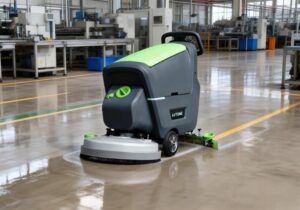
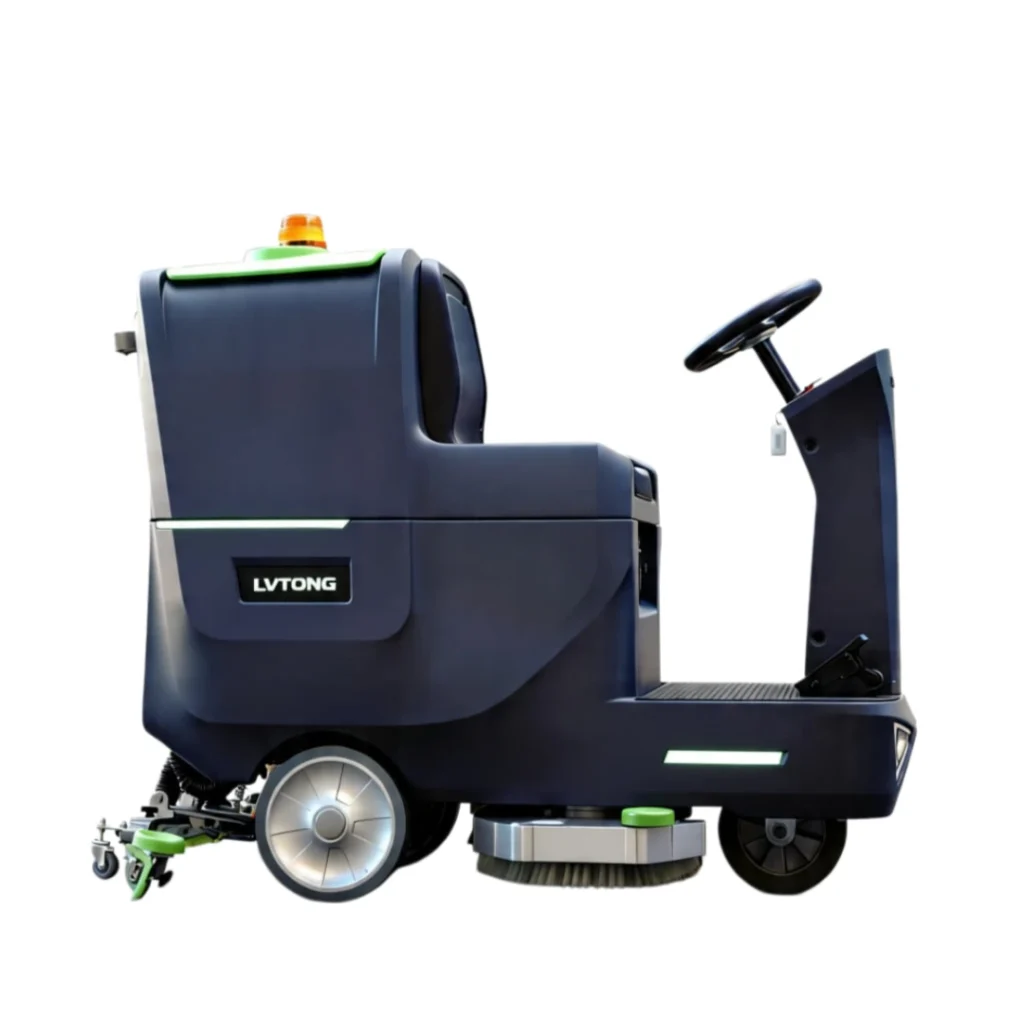
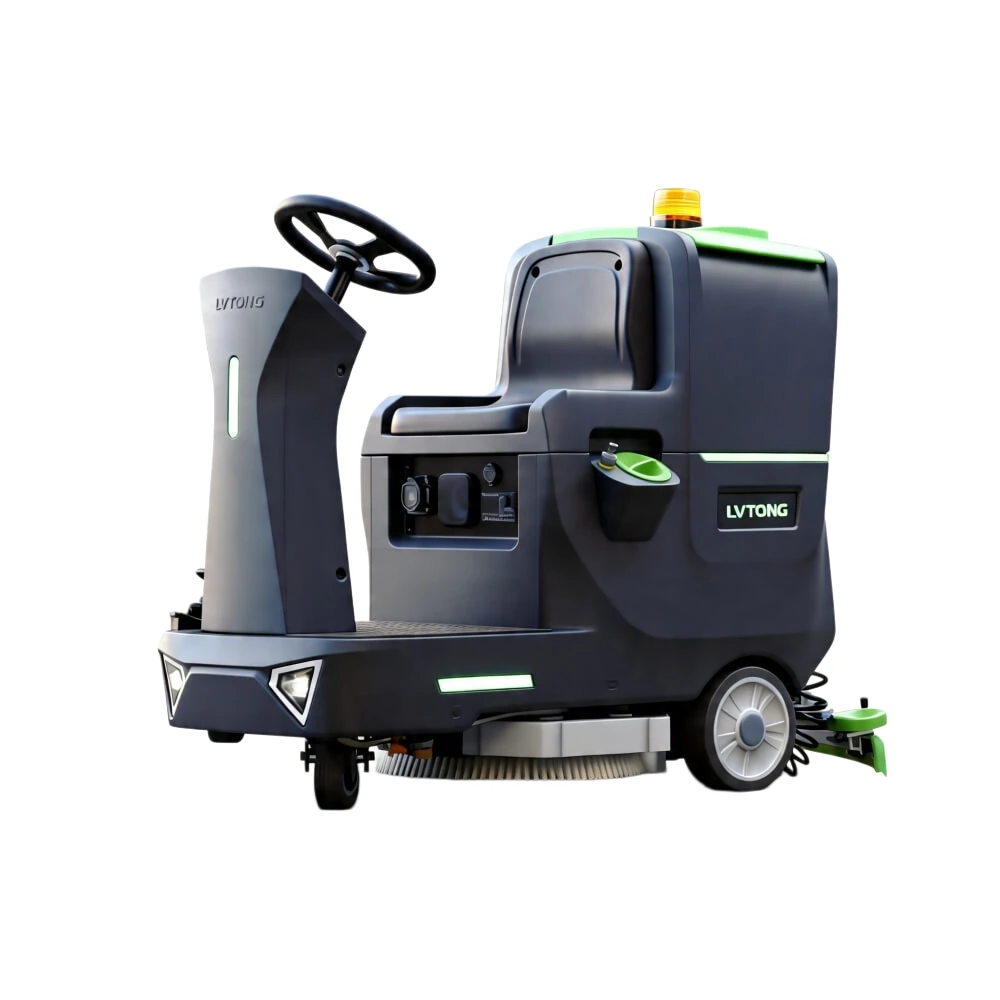
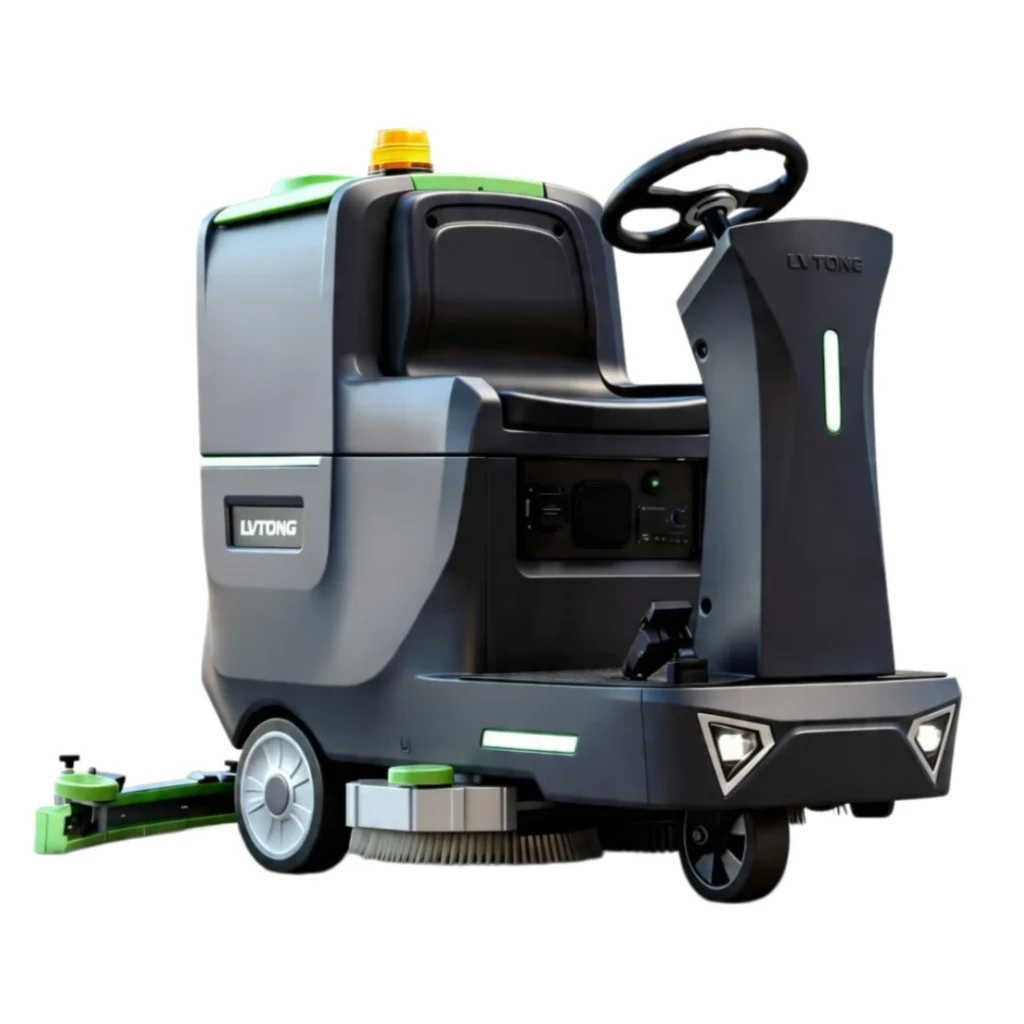
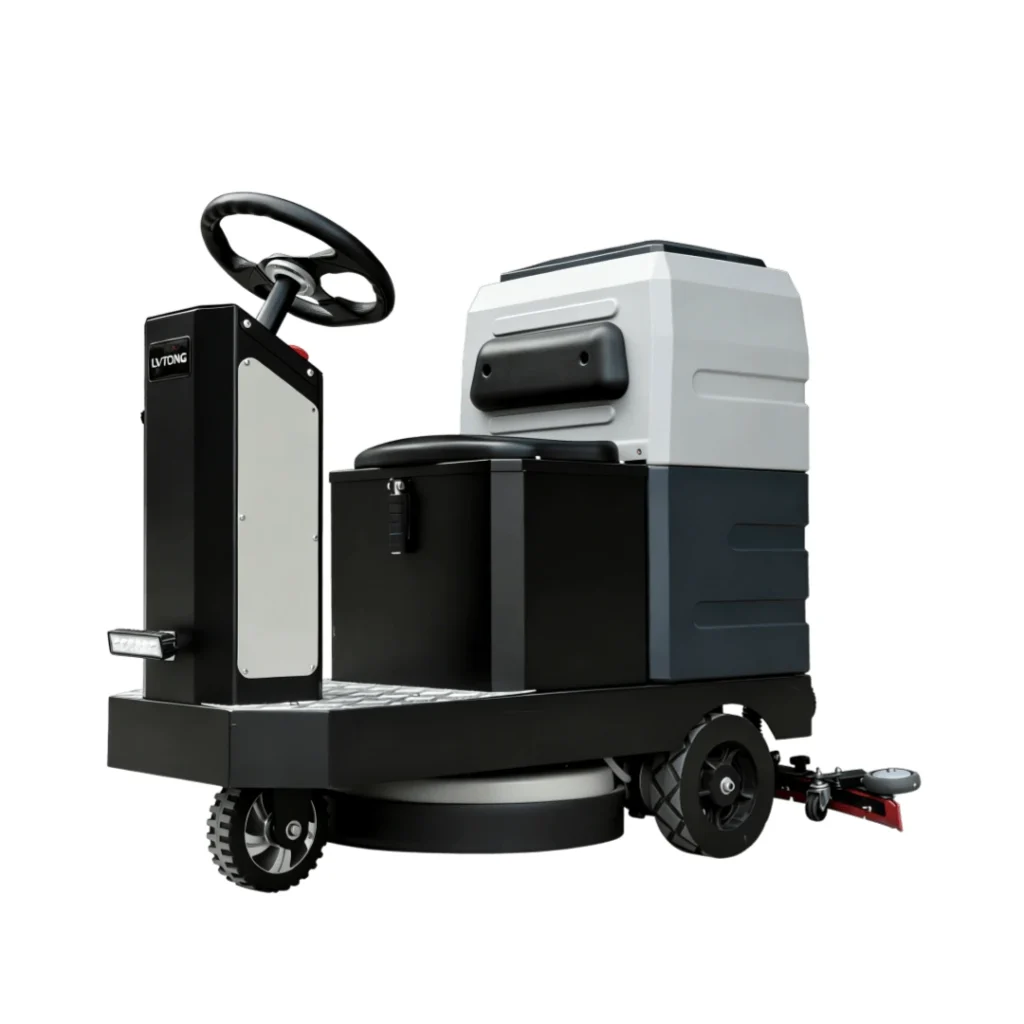
LVTONG is a China-based cleaning-equipment manufacturer offering commercial and industrial floor scrubber dryers, ride-on floor scrubbers, walk-behind scrubbers and ride-on sweepers.
The brand is positioned toward factories, warehouses, airports, supermarkets, hospitals and other facilities seeking practical machine configurations and direct supplier communication.
Product Range
LVTONG’s floor-scrubber range includes compact walk-behind equipment and multiple ride-on models for larger cleaning areas. Its current product categories also include commercial ride-on sweepers and application-specific cleaning solutions.
Buyers can request model recommendations based on cleaning area, floor condition, aisle width, tank requirements and operating schedule.
Best Suited For
LVTONG may be suitable for:
- Importers and cleaning-equipment distributors
- Factories and warehouses
- Buyers seeking direct manufacturer communication
- Businesses comparing value-focused equipment
- Facilities requiring walk-behind and ride-on options
- Buyers requesting model or configuration guidance
Main Strengths
- Walk-behind and ride-on scrubber options
- Equipment for commercial and industrial applications
- Direct manufacturer contact
- Multiple machine sizes and configurations
- Product categories for scrubbers and sweepers
- Application guidance for different facility types
Limitations
LVTONG is also the publisher of this comparison. Therefore, buyers should independently verify LVTONG specifications and compare its machines with equivalent models from other brands under the same operating conditions.
Local service coverage, parts inventory and technician availability may depend on the distributor or country. Direct factory support does not automatically replace local on-site service.
What Buyers Should Verify
Confirm:
- Final approved technical specification
- Battery and charger package
- Product certification required in the destination market
- Warranty scope and claim procedure
- Spare-parts package
- Local distributor or technician availability
- Shipping and delivery responsibility
- Operator and maintenance documentation
Editorial Disclosure
LVTONG is included in this article and is also the company publishing it. The brand should be evaluated using the same product-range, application, parts, service and limitation criteria applied to all other floor scrubber brands.
Official information source: LVTONG corporate and commercial floor-scrubber product resources.
Last verified: June 2026. (lvtongclean.com)
8. Cleanwill — Best for Buyers Comparing Conventional and Robotic Cleaning Equipment
Brand Overview
Cleanwill is a China-based professional cleaning-equipment supplier whose published product range includes scrubbers, sweepers, vacuum cleaners, carpet-cleaning equipment and commercial cleaning robots.
The company presents itself as integrating research, production, sales and service, with an increasing focus on smart and automated commercial cleaning.
Product Range
Cleanwill offers conventional cleaning equipment alongside robotic cleaning products. This may make the brand relevant to buyers comparing manually operated floor scrubbers with automated or semi-automated cleaning systems.
However, the exact floor-scrubber portfolio, specifications and regional availability should be evaluated model by model.
Best Suited For
Cleanwill may be considered by:
- Buyers comparing conventional and robotic cleaning machines
- Importers seeking direct supplier communication
- Commercial cleaning-equipment distributors
- Warehousing and transportation facilities
- Buyers exploring value-focused automation
- Organizations sourcing several cleaning-equipment categories
Main Strengths
- Product categories covering scrubbers, sweepers and vacuums
- Conventional and robotic cleaning options
- Direct supplier communication
- Equipment for several commercial cleaning applications
- Potential sourcing option for distributors and importers
Limitations
Public product information may not provide the same level of detail for every model. Buyers should avoid making decisions based only on marketing descriptions or broad company claims.
Regional service, software support, spare-parts availability and certification must be verified, especially for robotic machines.
What Buyers Should Verify
Confirm:
- Exact product model and technical specification
- Navigation and obstacle-handling capability for robots
- Software fees and update policy
- Battery and charging system
- Regional certification
- Local service responsibility
- Spare-parts lead time
- Warranty and remote-support terms
Official information source: Cleanwill corporate and scrubber-product resources.
Last verified: June 2026. (cleanwill.com)
9. Viper — Best Value-Focused Professional Brand within the Nilfisk Group
Brand Overview
Viper is a professional cleaning-equipment brand within the Nilfisk Group. It should not be described simply as an independent Chinese floor scrubber brand.
Viper is positioned toward buyers seeking reliable, accessible and relatively straightforward professional cleaning equipment.
Product Range
The Viper portfolio includes walk-behind and ride-on scrubber dryers, sweepers, vacuum cleaners and carpet-care equipment.
Its scrubber range covers compact commercial cleaning and larger ride-on applications, including machines intended for high-traffic areas, warehouses, car parks, offices and manufacturing environments.
Best Suited For
Viper may be suitable for:
- Small and medium-sized businesses
- Retail and commercial facilities
- Warehouses and light industrial environments
- Cleaning contractors
- Buyers seeking a value-focused professional brand
- Customers who already work with a Nilfisk distributor
Main Strengths
- Part of the Nilfisk Group
- Walk-behind and ride-on floor-scrubber options
- Professional cleaning-equipment focus
- Products designed for straightforward operation
- Access to Nilfisk-related distribution in supported markets
Limitations
Viper and Nilfisk should not be treated as identical product lines. Model specifications, positioning, warranty and service channels may differ.
Some Nilfisk distributors may carry only selected Viper products, so local availability must be confirmed.
What Buyers Should Verify
Confirm:
- Whether the local Nilfisk dealer supports Viper
- Exact machine and battery configuration
- Parts and consumables stock
- Warranty responsibility
- Technician availability
- Differences between comparable Viper and Nilfisk models
Official information source: Nilfisk Group and Viper professional cleaning-equipment resources.
Last verified: June 2026. (Nilfisk)
10. Gaomei — Best for Small-to-Mid-Sized Professional Equipment within the Tennant Group
Brand Overview
Gaomei is a professional cleaning-equipment brand based in Hefei, China. Tennant Company acquired Gaomei in 2019.
According to Tennant’s published Gaomei product information, the brand focuses on small- to mid-sized commercial and industrial cleaning equipment and related floor-care solutions.
Product Range
Gaomei offers floor scrubbers, sweepers, scrubber-sweepers and other professional cleaning equipment. Its scrubber portfolio includes walk-behind and compact ride-on machines intended for commercial and industrial applications.
Because Gaomei is part of Tennant Company, buyers should distinguish between Gaomei-branded products and Tennant-branded machines when comparing specifications, pricing and service arrangements.
Best Suited For
Gaomei may be suitable for:
- Small and medium commercial facilities
- Light and medium industrial applications
- Buyers seeking compact ride-on scrubbers
- Buyers comparing brands within the Tennant organization
- Distributors serving value-conscious professional users
- Facilities requiring walk-behind and smaller ride-on options
Main Strengths
- Part of Tennant Company since 2019
- Focus on small- to mid-sized cleaning equipment
- Walk-behind and ride-on floor-scrubber options
- Commercial and industrial application coverage
- Broader floor-care and cleaning-machine portfolio
Limitations
Gaomei availability, branding and distribution vary by country. The fact that Tennant owns Gaomei does not mean every Tennant dealer sells or services every Gaomei model.
Buyers should not assume that Gaomei and Tennant machines use identical parts, warranties or service procedures.
What Buyers Should Verify
Confirm:
- Authorized Gaomei distribution in the market
- Whether service is provided by Tennant or another distributor
- Exact model specifications
- Parts compatibility
- Warranty terms
- Battery and charger package
- Product certification
- Replacement-parts lead time
Official information source: Tennant Company’s Gaomei product guide and Gaomei cleaning-equipment resources.
Last verified: June 2026. (tennantco.com)
Which Floor Scrubber Brand Should You Shortlist?
There is no universal floor scrubber brand that is best for every factory, warehouse or commercial facility.
Buyers prioritizing established industrial support, automation and broad machine portfolios may begin by comparing Tennant, Nilfisk, Kärcher, Hako, Comac and IPC.
Buyers prioritizing direct sourcing, competitive equipment quotations or value-focused configurations may also compare LVTONG, Cleanwill, Viper and Gaomei.
The final shortlist should be based on:
- The required machine type
- Actual floor area and layout
- Cleaning frequency
- Floor and contamination type
- Battery and runtime requirements
- Local parts availability
- Technician response time
- Warranty responsibility
- Total cost of ownership
Select two or three brands that can support your market, then compare equivalent machine models under the same cleaning conditions. Do not compare a compact walk-behind scrubber from one brand with a heavy-duty ride-on machine from another and treat the result as a brand-level comparison.
How to Compare Floor Scrubber Brands
Product Range and Application Fit
Compare whether each brand offers the machine type required for the actual cleaning route. A broad product range can be useful, but the selected model must still match aisle width, floor condition, tank requirements and operating frequency.
Build Quality and Maintenance Access
Brand reputation does not replace model-level inspection. Buyers should compare chassis construction, brush-deck design, squeegee access, tank cleaning, wiring protection and the ease of replacing common wear parts.
Parts and Service Availability
Ask which parts are stocked locally, which components must be imported and how long common repairs normally take. Service capability should be evaluated in the country where the machine will operate.
Price and Total Cost of Ownership
Compare purchase price together with batteries, chargers, consumables, labor, scheduled maintenance, repair costs, downtime and expected machine life. A lower quotation does not automatically mean lower long-term cost, while a premium brand does not automatically guarantee better value in every market.
Labor Cost Reduction Depends on the Right Machine Fit
Many industrial buyers consider floor scrubbers because they want to reduce manual cleaning time and labor pressure. However, labor savings depend on whether the selected machine fits the actual cleaning route.
A ride-on industrial floor scrubber may reduce operator walking and improve productivity in large factories, warehouses, logistics centers and other open areas. But it only creates real value when the machine has suitable cleaning width, tank capacity, battery runtime, water recovery, turning space and maintenance support.
If the machine is too large for the aisles, too small for the cleaning route, difficult to maintain or unsupported by local spare parts, the expected labor savings may be reduced by refilling time, downtime, operator training problems or poor cleaning results.
When comparing brands, buyers should ask:
How much cleanable area can the selected model cover in real working conditions?
How often will the operator need to refill clean water or empty recovery water?
Can the battery support the planned shift?
Can the machine turn safely in the actual aisles and loading areas?
Are brushes, squeegee blades, batteries and chargers easy to obtain?
Does the supplier provide operator training and maintenance guidance?
The most cost-effective floor scrubber brand is not simply the brand with the lowest machine price. It is the brand that helps reduce labor time, downtime and maintenance risk over the full service life of the equipment.
Floor Scrubber Manufacturer & Supplier Due-Diligence Checklist
After shortlisting several floor scrubber brands, buyers should evaluate the company that will actually supply and support the machine.
| Evaluation Area | What Buyers Should Verify | Why It Matters |
|---|---|---|
| Manufacturing Capability | Factory or distributor status, production experience, quality-control process and technical documentation | Helps verify whether the supplier can consistently support the selected machine |
| Product Documentation | Final model specification, battery and charger configuration, manuals, parts diagrams and applicable certifications | Prevents differences between quoted and delivered configurations |
| Spare Parts | Recommended spare-parts package, common wear-part availability and expected lead times | Reduces downtime after purchase |
| Technical Support | Operator training, maintenance guidance, remote troubleshooting and local technician availability | Affects equipment uptime and maintenance efficiency |
| Warranty Responsibility | Coverage, exclusions, claim procedure and responsibility for labor, shipping and replacement parts | Avoids disputes after equipment failure |
| OEM / Customization | Branding, battery configuration, brush options, packaging and market-specific requirements | Important for distributors, importers and private-label buyers |
| Application Experience | Similar factory, warehouse or commercial projects, application videos or references | Shows whether the supplier understands real operating conditions |
| Total Cost of Ownership | Equipment price, batteries, consumables, maintenance, labor, downtime and expected service life | Provides a more realistic comparison than purchase price alone |
OEM, ODM and Distributor Partnership Checklist
Importers, distributors and private-label buyers should evaluate more than the machine price when choosing a floor scrubber brand or manufacturer.
A long-term supplier should be able to support product configuration, technical communication, spare parts, documentation, branding requirements and after-sales cooperation.
| Partnership Area | What Buyers Should Check | Why It Matters |
|---|---|---|
| OEM / ODM capability | Logo, color, packaging, voltage, battery configuration, brush system and market-specific requirements | Helps distributors or private-label buyers build a localized product offer |
| Production stability | Production capacity, quality-control process, delivery schedule and model continuity | Reduces supply interruption and makes long-term sales planning easier |
| Technical documentation | User manuals, maintenance guides, parts diagrams, specification sheets and training materials | Helps dealers train customers and solve basic service questions |
| Spare-parts package | Brushes, pads, squeegee blades, batteries, chargers, hoses, filters and electronic parts | Keeps machines operating after sale and reduces downtime |
| Warranty responsibility | Warranty scope, claim process, replacement responsibility and excluded parts | Avoids disputes between buyer, dealer and manufacturer |
| Training support | Operator training, maintenance training, video guidance and remote troubleshooting | Improves customer satisfaction and reduces misuse |
| Application knowledge | Experience with factories, warehouses, schools, hospitals, logistics centers and commercial buildings | Helps the supplier recommend the right machine instead of only selling available stock |
| Market support | Product photos, videos, catalogs, specification sheets and sales guidance | Helps dealers promote the machines more professionally |
For distributors, a floor scrubber brand should not only provide machines. It should also help the dealer build product knowledge, spare-parts capability, customer trust and long-term service value.
Supplier Red Flags
Buyers should be cautious when a supplier cannot clearly provide final specifications, warranty responsibilities, parts information, technical documentation or evidence of similar applications.
The lowest quotation should not automatically determine the final supplier. A lower purchase price can be offset by longer downtime, expensive parts, weak technical support or a shorter equipment life.
After-Sales Service and Parts Availability
After-sales support can be more important than small differences in machine specifications. A floor scrubber that cannot operate because of an unavailable squeegee blade, battery, charger or electronic component may create greater cost than a slightly slower machine with reliable local support.
Before selecting a brand, ask:
- Is there an authorized dealer or direct technical contact in the market?
- Which consumables are stocked locally?
- What is the expected delivery time for major replacement parts?
- Are remote troubleshooting and operator training available?
- What does the warranty include and exclude?
- Who is responsible for labor, shipping and on-site service?
- Are service manuals and parts diagrams available?
International and value-focused brands may both provide strong support in some markets and limited support in others. Buyers should evaluate the actual service package rather than relying on brand category alone.
| Brand Type | Advantages | Possible Limitations |
| International brands | Established service systems, standardized accessories, strong brand recognition, and stable product quality | Higher spare parts cost and longer response time in some non-core markets |
| Domestic and value-focused brands | Easier access to accessories, lower maintenance cost, faster local response, and practical usage support | Entry-level models may need careful selection for heavy-duty or high-frequency use |
For buyers, the best floor scrubber brand is not only the one with the strongest machine specifications. It should also provide reliable after-sales service, accessible spare parts, and practical support for your real cleaning environment.
Supplier Red Flags Buyers Should Avoid
A floor scrubber supplier may look attractive because of a low quotation, but buyers should be cautious when important information is unclear.
Common warning signs include:
The supplier cannot provide final approved technical specifications.
The battery, charger, brush system or squeegee configuration is not clearly confirmed.
Warranty terms are vague or only explained verbally.
Spare-parts lead time is not available.
There are no user manuals, maintenance documents or parts diagrams.
The supplier cannot explain which model fits the buyer’s floor area, contamination type and cleaning frequency.
The quotation does not show included accessories, spare parts or charger details.
The supplier cannot provide operator training, remote support or after-sales guidance.
The product is described only with general marketing claims instead of measurable specifications.
For industrial buyers, weak documentation and unclear service responsibility can create higher long-term cost than a higher initial purchase price. A reliable floor scrubber supplier should make the machine configuration, support process and warranty responsibility clear before the order is confirmed.
How to Choose the Right Floor Scrubber Brand
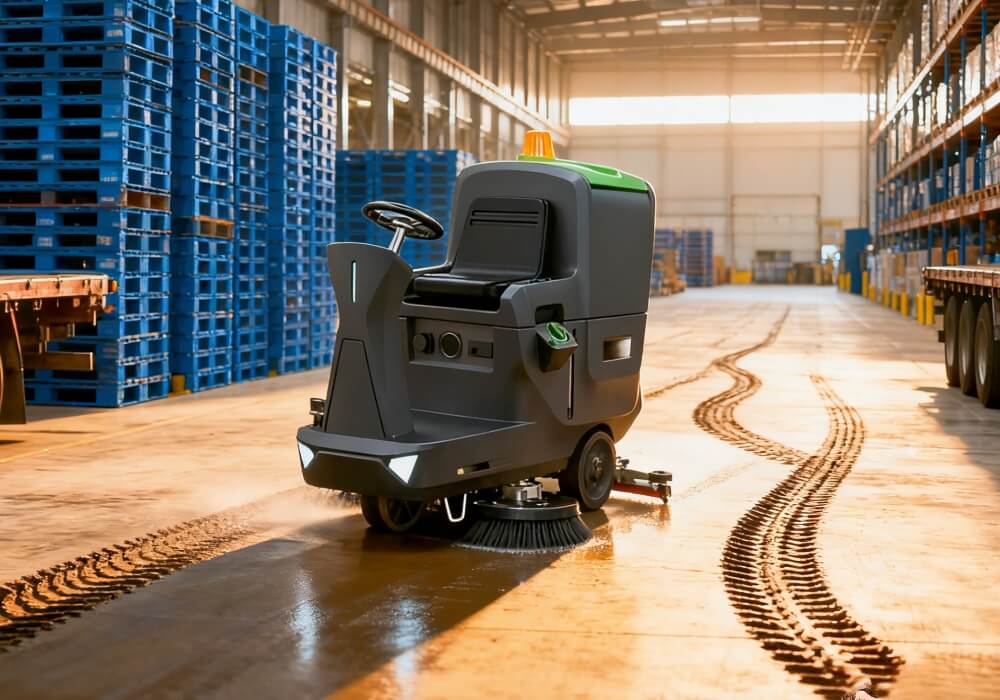
The right floor scrubber brand depends on your facility type, cleaning area, budget, service expectations, and maintenance capability.
| Buyer Priority | Brand Capability to Look For | Verification Required |
|---|---|---|
| Heavy-duty daily cleaning | Industrial ride-on range and documented service support | Duty cycle, brush system, warranty and parts stock |
| Large warehouse routes | Wide cleaning paths, large tanks and reliable batteries | Turning space, runtime and local battery support |
| Small or divided facilities | Compact walk-behind range | Machine width, storage and maneuverability |
| Multi-site operations | Consistent models and support across regions | Dealer network and standardized parts |
| Limited capital budget | Value-focused equipment and accessible consumables | Build quality, warranty and expected service life |
| Autonomous cleaning | Navigation, software and remote support | Subscription cost, supervision and local technicians |
| Importer or distributor sourcing | Direct factory communication and product documentation | Certifications, training, spare-parts package and territory terms |
Create a shortlist of two or three brands, then compare equivalent machine models under the same operating conditions. Avoid comparing a compact walk-behind machine from one brand with a heavy-duty ride-on model from another.
What Information Should You Provide Before Requesting a Floor Scrubber Quote?
A supplier can recommend a more suitable floor scrubber when buyers provide detailed operating information instead of requesting only a general price.
Before requesting a quotation, prepare:
- Cleaning area: total floor area and approximate area cleaned per shift
- Facility layout: open floor, narrow aisles, ramps, elevators or congested areas
- Floor type: concrete, epoxy, tile, terrazzo or other hard flooring
- Contamination type: dust, oil, grease, tire marks, food residue or general dirt
- Cleaning frequency: occasional, daily or multi-shift operation
- Required runtime: expected operating hours between charges
- Machine preference: walk-behind, ride-on or autonomous equipment
- Destination market: country or region where the machine will operate
- Service expectations: local technician support, remote support or direct factory assistance
- Special requirements: battery type, charger voltage, brush system, OEM branding or other customization
Providing this information allows manufacturers and distributors to compare equivalent machine configurations rather than quoting models that differ significantly in capacity or intended application.
For an accurate brand comparison, request quotations from two or three suppliers using the same operating requirements and compare the complete configuration, warranty, spare-parts package and service responsibility—not only the machine price.
How to Request a Floor Scrubber Brand or OEM Recommendation from LVTONG
To help LVTONG recommend a suitable floor scrubber model, brand cooperation option or OEM solution, buyers can provide the following information when sending an inquiry:
Buyer type: end user, importer, distributor, cleaning contractor, private-label brand or project buyer.
Application: factory, warehouse, logistics center, school, hospital, supermarket, airport, parking facility or other commercial site.
Cleaning task: daily maintenance cleaning, heavy-duty industrial cleaning, oil removal, tire-mark cleaning, dust control or large-area floor washing.
Preferred machine type: walk-behind floor scrubber, ride-on floor scrubber, compact scrubber, heavy-duty industrial scrubber or combined cleaning solution.
Floor condition: concrete, epoxy, tile, terrazzo, PVC, marble, rough concrete or mixed surfaces.
Operating requirement: cleaning area per shift, available cleaning time, operator number, runtime requirement and charging condition.
Market requirement: destination country, voltage requirement, certification requirement, language requirements and local service expectations.
OEM requirement: logo, color, packaging, battery configuration, brush type, spare-parts package, documentation or other customization needs.
Providing this information allows LVTONG to compare the correct machine configuration and recommend a more practical solution instead of offering only a general product price.
Conclusion
Choosing between floor scrubber brands requires more than comparing company names or purchase prices. Buyers should evaluate product range, application fit, machine configuration, spare-parts availability, warranty terms and local service capability.
Established international brands may be suitable for buyers who value broad product portfolios and structured dealer support. Value-focused brands may be suitable for buyers seeking competitive pricing, direct communication and practical machine configurations. Neither category is automatically better in every market.
Build a shortlist based on the actual cleaning route, then compare equivalent models from two or three brands. Confirm the final specifications, battery package, warranty, parts lead time and service responsibility before requesting a purchase contract.
LVTONG can provide model recommendations and application guidance for factories, warehouses, logistics centers and other commercial facilities. Buyers should still compare the proposed machine with alternative brands using the same operating and service criteria.
Floor Scrubber Brands FAQs
What are the best floor scrubber brands?
The best brand depends on the required machine type, cleaning intensity, budget and local service support. Established professional brands include Tennant, Nilfisk, Kärcher, Hako, Comac and IPC. Value-focused options include LVTONG, Cleanwill, Viper and Gaomei. Buyers should compare actual models and local support rather than selecting by brand name alone.
What is the best industrial floor scrubber brand for factories?
Factories should prioritize brands offering suitable heavy-duty ride-on machines, strong water recovery, appropriate brush systems and reliable parts support. The best choice depends on floor condition, cleaning frequency, aisle width and local service availability.
Which floor scrubber brands are best for warehouses?
Warehouse buyers should compare brands by ride-on product range, tank capacity, runtime, turning requirements, battery support and replacement-parts availability. A smaller machine may be more practical than a high-capacity model when warehouse aisles are narrow.
Which floor scrubber brand has the best after-sales service?
There is no universal answer because service quality varies by country and distributor. Compare technician availability, response time, warranty coverage, local parts inventory and the expected lead time for major components.
Are Chinese floor scrubber brands reliable?
Chinese brands can be suitable when the machine configuration matches the cleaning task and the supplier provides clear specifications, warranty terms, spare parts and technical support. Buyers should verify build quality, certifications, service arrangements and references for the specific model.