News

Table of Contents

More Posts

Floor Scrubber vs Auto Scrubber: Match the Machine to the Workload

Floor Scrubber vs Auto Scrubber: Match the Machine to the Workload

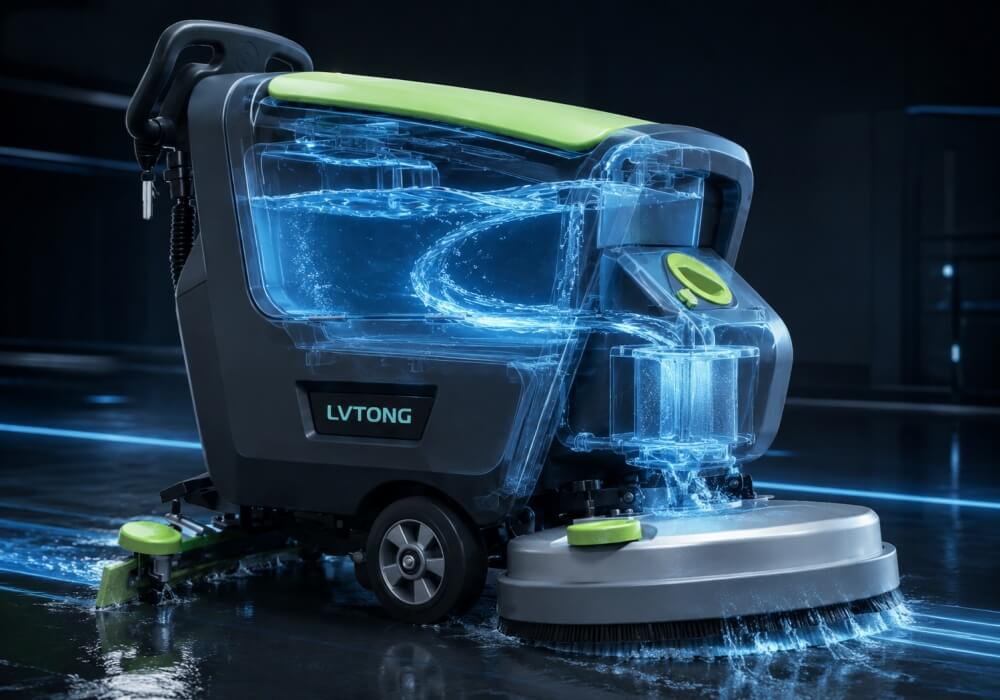
LVTONG cleaning equipment dealer guide featuring ride-on floor cleaning machines in an industrial facility

How to Become a Successful Cleaning Equipment Dealer

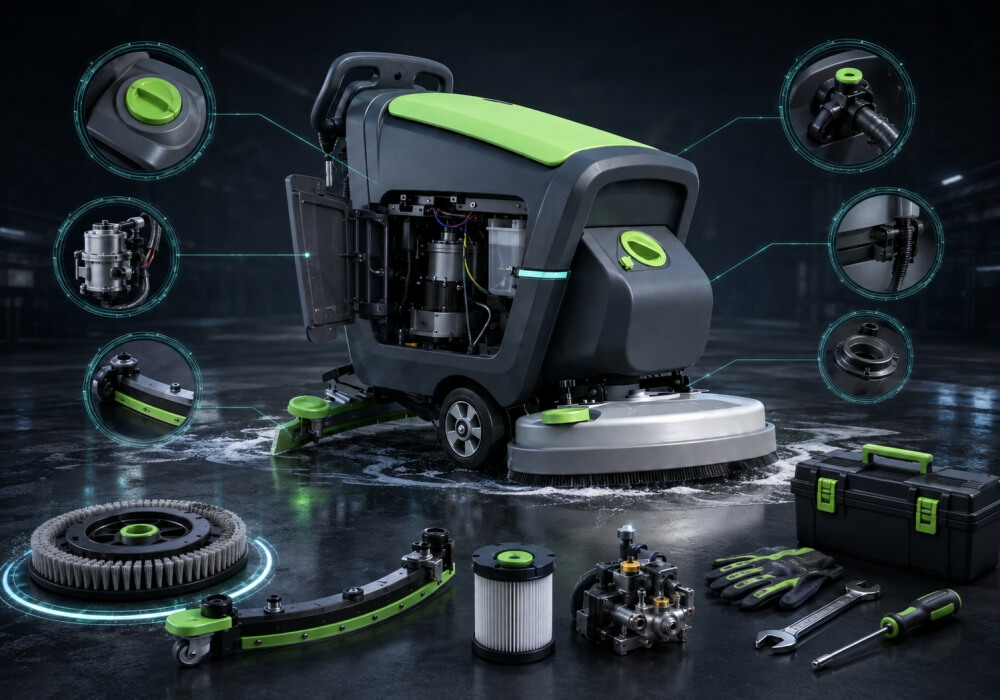
Facility technician performing routine maintenance on a LVTONG floor scrubber in a modern warehouse.

How Can You Extend the Life of a Floor Scrubber?

floor scrubber leaving streaks causes and fixes

Floor Scrubber Leaving Streaks or Not Cleaning Properly? 7 Causes & Fixes

Contact Us

Share your project details. Get a customized solution and quote within 24 hours.

Floor Scrubber Specifications Explained: Sizing, Productivity, and ROI

Keeping a large commercial or industrial floor clean is not simply a matter of buying a bigger cleaning machine. The real question is whether the machine’s specifications match your floor area, cleaning window, surface conditions, aisle layout, and operating schedule.

Understanding floor scrubber specifications helps facility managers compare machines based on real cleaning performance instead of relying only on machine size, price, or theoretical productivity.

A ride-on floor scrubber can significantly improve cleaning efficiency in warehouses, factories, distribution centers, airports, hospitals, supermarkets, and other large facilities when its cleaning width, tank capacity, battery runtime, maneuverability, and productivity are matched to actual operating requirements.

This guide explains the most important floor scrubber specifications, how to calculate the productivity your facility needs, and how to estimate the return on investment of a ride-on scrubber.

Quick Answer: Which Floor Scrubber Specifications Matter Most?

The most important floor scrubber specifications are:

  • Cleaning or scrub width
  • Squeegee width
  • Theoretical and practical productivity
  • Solution tank capacity
  • Recovery tank capacity
  • Battery runtime
  • Charging time
  • Scrub deck type
  • Brush pressure
  • Turning radius
  • Machine dimensions
  • Noise level
  • Gradeability and traction requirements

The best specifications for your facility depend primarily on how much floor must be cleaned, how quickly it must be cleaned, what type of surface you have, and how much downtime your operation can tolerate.

Do not select a floor scrubber by cleaning width or machine size alone. Start with the productivity your facility actually requires, then evaluate the specifications needed to achieve it.

Walk-behind and ride-on floor scrubbers illustrating floor scrubber specifications, sizing, productivity, and ROI.
Compare walk behind and ride on floor scrubber specifications to choose the right machine size improve cleaning productivity and maximize ROI

What Is a Ride-On Floor Scrubber?

A ride-on floor scrubber is a powered floor cleaning machine that allows an operator to sit and drive while the machine applies cleaning solution, mechanically scrubs the floor, and recovers dirty water during the same cleaning process.

Unlike a ride-on floor sweeper, which is primarily designed to collect dry dust and debris, a floor scrubber uses water, cleaning solution, brushes or pads, and a vacuum recovery system to wash hard floors and leave them substantially dry after cleaning. If you are comparing the two technologies, see our detailed guide to floor scrubber vs floor sweeper.

Ride-on scrubbers are commonly used where large floor areas make manual cleaning or smaller walk-behind machines inefficient.

Typical applications include:

  • Warehouses
  • Manufacturing plants
  • Logistics and distribution centers
  • Airports
  • Hospitals
  • Shopping centers
  • Supermarkets
  • Parking facilities
  • Large commercial buildings

The important question, however, is not simply whether you need a ride-on machine. It is what floor scrubber specifications your facility requires.


How to Read Floor Scrubber Specifications

A specification sheet can contain dozens of numbers. Some directly affect productivity, while others determine whether the machine can physically operate inside your facility.

The following specifications deserve the most attention.

1. Cleaning Width

Cleaning width, also called scrub width or working width, is the width of floor the scrub deck cleans in one pass.

A wider cleaning path can cover more floor with fewer passes and can therefore increase productivity.

However, wider is not automatically better.

The machine still needs to:

  • Enter your narrowest cleaning area
  • Turn at the end of aisles
  • Navigate around racks and equipment
  • Pass through doorways
  • Operate safely around workers and inventory

For large open floors, a wider deck can significantly improve cleaning efficiency. In narrow warehouse aisles or congested facilities, maneuverability may be more important than maximum scrub width.

What cleaning width should you choose?

Start with two questions:

  1. What practical productivity does the facility require?
  2. What is the narrowest space the machine must regularly enter?

The correct cleaning width should satisfy both.


2. Squeegee Width

The squeegee sits behind the scrub deck and collects dirty water so the vacuum system can recover it.

Squeegee width is usually wider than the scrub path because it must collect water during straight cleaning and while the machine is turning.

This specification matters because poor water recovery can leave:

  • Wet areas
  • Streaks
  • Dirty water behind the machine
  • Increased slip risk
  • Additional cleanup work

When evaluating a scrubber, do not focus only on how aggressively it scrubs.

A floor that has been washed but left wet can still create an operational and safety problem.

Effective water recovery is therefore just as important as brush performance.


3. Floor Scrubber Productivity

Productivity tells you how much floor a scrubber can theoretically or practically clean within a given period.

This is one of the most important floor scrubber specifications for large facilities.

Manufacturers may provide productivity in:

  • Square feet per hour
  • Square meters per hour

However, buyers should distinguish between theoretical productivity and practical productivity.

Theoretical Productivity

Theoretical productivity assumes the machine operates continuously at its rated speed and full cleaning width without stopping.

When cleaning width is measured in inches and travel speed in miles per hour:

Theoretical Productivity (ft²/hour) = Cleaning Width (inches) × Travel Speed (mph) × 440

For metric measurements:

Theoretical Productivity (m²/hour) = Cleaning Width (m) × Travel Speed (km/h) × 1,000

This is useful for comparing machines, but it does not represent a normal working shift.

Real facilities contain:

  • Corners
  • Aisles
  • Obstacles
  • Pedestrian traffic
  • Turning points
  • Refilling stops
  • Tank-emptying stops
  • Battery changes or charging
  • Operator pauses

That is why practical productivity is more useful when sizing a floor scrubber.


Theoretical vs Practical Floor Scrubber Productivity

A machine may have impressive theoretical output but deliver considerably less coverage during normal operation.

Practical productivity reflects real operating conditions more closely.

When comparing machines, ask the supplier whether the productivity number represents:

  • Maximum theoretical output
  • Estimated practical output
  • Tested operating productivity

Do not assume these values are interchangeable.

For facility planning, practical productivity should normally be the more important figure.

comparison between manual floor cleaning and ride-on floor scrubber

How Much Floor Scrubber Productivity Do You Need?

Instead of choosing a machine simply because your facility is “large,” calculate the productivity your cleaning schedule actually requires.

Use this formula:

Required Practical Productivity = Total Cleanable Floor Area ÷ Available Cleaning Time

Example

Assume a facility has:

80,000 sq ft of cleanable hard flooring

and the cleaning team has:

4 hours available per shift

Required productivity is:

80,000 ÷ 4 = 20,000 sq ft/hour

The floor scrubber therefore needs to deliver at least approximately 20,000 sq ft/hour of practical productivity under your operating conditions.

A machine with a much higher theoretical rating may still fail to meet this requirement if excessive time is lost through refilling, maneuvering, battery charging, or poor facility layout.

This calculation is more useful than choosing a ride-on scrubber based on facility area alone.


4. Solution and Recovery Tank Capacity

Ride-on floor scrubbers normally have separate tanks:

Solution tank: holds clean water and cleaning solution.

Recovery tank: collects the dirty water removed from the floor.

Larger tanks can increase productive cleaning time because the operator spends less time:

  • Refilling
  • Draining dirty water
  • Traveling to service areas
  • Interrupting the cleaning cycle

However, larger tanks also make the machine physically larger and heavier.

Tank capacity should therefore be matched to:

  • Floor area
  • Cleaning width
  • Water flow rate
  • Distance to refill points
  • Drain locations
  • Available cleaning time

For a large open warehouse, increased tank capacity may significantly reduce downtime.

For a facility with narrow aisles and conveniently located refill stations, a more compact machine may provide better overall performance.


5. Battery Runtime and Charging Time

Battery specifications directly affect how long a floor scrubber can work before cleaning must stop.

Important battery specifications include:

  • Rated runtime
  • Battery capacity
  • Battery chemistry
  • Charging time
  • Charger type
  • Opportunity-charging capability
  • Battery maintenance requirements
  • Expected service life

Common battery technologies include lead-acid, AGM, and lithium-ion.

Lead-Acid Batteries

Traditional flooded lead-acid batteries generally have a lower initial cost but require more maintenance, including periodic inspection and water management.

They may be suitable where:

  • Purchase cost is a major priority
  • Machines operate on predictable shifts
  • Staff can perform regular battery maintenance

AGM Batteries

AGM batteries are sealed and generally require less routine maintenance than flooded lead-acid batteries.

They may provide a useful middle ground between initial cost and maintenance convenience.

Lithium-Ion Batteries

Lithium-ion systems can be attractive for facilities with:

  • Multiple cleaning shifts
  • Limited charging time
  • Frequent machine use
  • Opportunity charging during breaks
  • A need to reduce battery maintenance

Do not select a battery only by advertised runtime.

Do not select a battery only by advertised runtime. Consider whether the battery can complete your required cleaning cycle without creating charging-related downtime. Battery chemistry, charging habits, discharge depth, maintenance, and operating conditions can also affect long-term battery performance. For more detail, see our floor scrubber battery life guide.


6. Scrub Deck Type

Two common scrub deck configurations are disc and cylindrical systems. Two common scrub deck configurations are disc and cylindrical systems. Floor scrubbers can also be classified by operator configuration and cleaning technology. For a broader overview of walk-behind, ride-on, robotic, disc, cylindrical, and other configurations, see our guide to the types of floor scrubbers.

Disc Scrubbers

Disc decks use rotating circular brushes or pads.

They are commonly used on relatively smooth floors such as:

  • Sealed concrete
  • Epoxy floors
  • Vinyl flooring
  • Finished commercial flooring

They are widely used for routine wet scrubbing.

Cylindrical Scrubbers

Cylindrical systems use rotating cylindrical brushes and can provide additional debris pickup while scrubbing.

They can be useful on:

  • Textured floors
  • Uneven surfaces
  • Floors with grooves
  • Areas containing light loose debris

Deck type matters, but it should be treated as one part of the specification decision rather than the only factor.

For a deeper comparison of brush and deck technologies, evaluate brush systems separately from the overall machine-sizing decision.


7. Brush Pressure

Brush pressure determines how much downward force the scrub deck applies to the floor.

Higher pressure can improve cleaning performance on heavily soiled surfaces, but maximum pressure is not always required.

The correct pressure depends on:

  • Floor material
  • Soil level
  • Cleaning chemical
  • Brush or pad type
  • Surface coating
  • Desired cleaning result

Heavy industrial contamination may require greater mechanical action than routine supermarket or hospital cleaning.

Excessive pressure can also increase:

  • Brush wear
  • Pad consumption
  • Battery use
  • Risk of damaging sensitive surfaces

For this reason, adjustable brush pressure is often more useful than simply choosing the machine with the highest maximum pressure.


8. Turning Radius and Maneuverability

Your facility is rarely an empty rectangle.

Warehouses and factories often contain:

  • Racking
  • Pallets
  • Production equipment
  • Columns
  • Narrow aisles
  • Loading areas
  • Pedestrian zones

That makes turning radius one of the most overlooked floor scrubber specifications.

A machine with excellent theoretical productivity may perform poorly if the operator constantly needs to reverse and reposition it.

When comparing machines, check:

  • Overall machine width
  • Overall machine length
  • Turning radius
  • Minimum aisle width
  • Visibility from the operator position
  • Access around obstacles

For facilities with narrow aisle ends, a compact ride-on scrubber may outperform a much larger machine even if the larger model has a wider cleaning path.


9. Machine Dimensions

Before purchasing a floor scrubber, confirm that the complete machine can physically access all required areas.

Measure:

  • Doorway width
  • Elevator dimensions
  • Aisle width
  • Storage space
  • Charging area
  • Turning space
  • Floor loading limitations where relevant

Do not compare scrub width alone.

A 32-inch cleaning deck does not mean the complete machine is only 32 inches wide.

The body, wheels, squeegee, protective components, and operating position all affect overall dimensions.


10. Noise Level

Noise can be a major specification in facilities that clean while people are still present.

This is particularly important in:

  • Hospitals
  • Hotels
  • Airports
  • Schools
  • Retail environments
  • Offices
  • Public buildings

If daytime cleaning is required, compare the manufacturer’s rated operating noise level and any available quiet-mode settings.

Lower operating noise can allow cleaning teams to work during business hours rather than waiting for an overnight cleaning window.

That can affect both staffing flexibility and total operating cost.

disc scrubber vs cylindrical scrubber floor cleaning applications

How to Size a Floor Scrubber for Your Facility

Choosing the correct machine can be reduced to a practical sequence.

Step 1: Measure the Cleanable Floor Area

Do not use total building size.

Exclude areas that the floor scrubber will not actually clean, such as:

  • Offices with carpet
  • Racking footprints
  • Machinery footprints
  • Storage zones that are permanently inaccessible
  • Restricted spaces

Use the actual cleanable hard-floor area.


Step 2: Determine the Cleaning Window

Ask:

How many hours are realistically available to clean the floor?

For example:

  • 100,000 sq ft in 8 hours requires 12,500 sq ft/hour.
  • 100,000 sq ft in 4 hours requires 25,000 sq ft/hour.

The facility size has not changed, but the required machine productivity has doubled.

This is why floor area alone should not determine machine size.


Step 3: Calculate Required Practical Productivity

Use:

Cleanable Floor Area ÷ Available Cleaning Hours

Then compare the result with practical machine productivity rather than relying only on maximum theoretical output.


Step 4: Check the Narrowest Operating Area

The machine must be productive without becoming too large for the building.

Measure:

  • Aisles
  • Doorways
  • Turning points
  • Obstacles
  • Elevators where applicable

Step 5: Match Tank Capacity to the Cleaning Cycle

A machine that requires frequent refilling can lose a significant portion of its theoretical productivity.

Consider:

  • Distance to the nearest water point
  • Distance to the drain
  • Water consumption
  • Recovery tank volume
  • Number of expected refill cycles

Step 6: Match Battery Runtime to the Shift

Ideally, the machine should complete the planned cleaning cycle without unnecessary charging interruptions.

For multi-shift facilities, charging strategy can be just as important as nominal battery runtime.


compact ride-on floor scrubber maneuvering in warehouse aisles

Floor Scrubber Specification Checklist

Use the following table when comparing machines or discussing requirements with a floor scrubber supplier.

SpecificationWhy It MattersWhat to Evaluate
Cleaning widthDetermines coverage per passProductivity vs aisle width
Squeegee widthAffects water recoveryDrying performance and turning
Practical productivityDetermines real cleaning capacityFloor area ÷ cleaning window
Theoretical productivityUseful for machine comparisonDo not use alone for staffing calculations
Solution tankControls refill frequencyCleaning cycle and water access
Recovery tankControls dumping frequencyMust support expected operating cycle
Battery runtimeDetermines uninterrupted cleaning timeMatch to shift length
Charging timeAffects machine availabilityImportant for multiple shifts
Brush pressureAffects soil removalMatch pressure to floor and contamination
Deck typeAffects floor compatibilityDisc vs cylindrical
Turning radiusDetermines maneuverabilityMeasure aisles and turning areas
Machine dimensionsDetermines accessDoors, elevators, storage and aisles
Noise levelDetermines daytime suitabilityImportant in occupied facilities

Once you have calculated the cleaning width, practical productivity, tank capacity, battery runtime, and other specifications your facility requires, you can compare available commercial floor scrubber dryers by machine configuration and technical specifications.


Matching Floor Scrubber Specifications to Operating Conditions

The right specification depends on the problem you are trying to solve.

Facility RequirementSpecification to Prioritize
Large open floorPractical productivity + cleaning width
Narrow warehouse aislesTurning radius + machine dimensions
Long cleaning shiftsBattery runtime + charging time
Limited refill pointsSolution and recovery tank capacity
Heavy industrial soilBrush pressure + deck configuration
Textured flooringAppropriate brush/deck system
Daytime cleaningNoise level
Safety-sensitive areasSqueegee and water recovery performance
Multiple shiftsBattery technology + charging strategy
Frequent cleaningDurable components + easy maintenance

This approach is more reliable than choosing a machine according to a single specification.


Ride-On Floor Scrubber vs Walk-Behind Floor Scrubber

Floor area is important, but it should not be treated as an absolute dividing line between walk-behind and ride-on machines.

A ride-on scrubber generally becomes more attractive as:

  • Cleanable floor area increases
  • Available cleaning time decreases
  • Labor costs increase
  • Operator fatigue becomes a concern
  • Tank refilling becomes inefficient
  • Cleaning occurs frequently
  • Productivity targets become more demanding

A walk-behind machine may still make sense in smaller or highly congested facilities.

A ride-on machine usually becomes more valuable when reducing labor hours and increasing coverage are more important than minimizing initial equipment size.

FeatureWalk-Behind Floor ScrubberRide-On Floor Scrubber
Typical environmentSmall to medium areasMedium to very large areas
ProductivityModerateHigher
Operator fatigueHigher on long shiftsLower
Tank capacitySmallerLarger
ManeuverabilityExcellent in tight spacesDepends on machine size
Cleaning speedModerateFaster
Best decision factorAccess and compactnessProductivity and labor efficiency

Floor Scrubber ROI: Looking Beyond Purchase Price

The purchase price is only one part of the economic decision.

A floor scrubber can create value by reducing:

  • Cleaning labor hours
  • Overtime
  • Repeated cleaning
  • Water consumption
  • Chemical consumption
  • Operator fatigue
  • Cleaning-related disruption

It can also create additional costs through:

  • Batteries
  • Chargers
  • Brushes
  • Pads
  • Squeegee blades
  • Preventive maintenance
  • Repairs
  • Downtime

For that reason, buyers should evaluate total cost of ownership, not simply purchase price.


How to Calculate Floor Scrubber Labor Savings

A practical starting formula is:

Annual Labor Savings = Hours Saved Per Day × Loaded Labor Cost Per Hour × Working Days Per Year

For example, assume:

  • Previous cleaning time: 6 hours/day
  • New cleaning time: 3 hours/day
  • Time saved: 3 hours/day
  • Loaded labor cost: $25/hour
  • Operating days: 250/year

Annual labor savings would be:

3 × $25 × 250 = $18,750 per year

This is a hypothetical example, but it shows why productivity can matter more than equipment price over the full ownership period.


Calculate Annual Net Savings

Labor savings alone do not show the entire economic picture.

A more useful calculation is:

Annual Net Savings = Labor Savings + Other Operating Savings − Additional Annual Machine Costs

Other operating savings may include:

  • Reduced water consumption
  • Reduced chemical consumption
  • Reduced overtime

Annual machine costs may include:

  • Maintenance
  • Replacement brushes or pads
  • Squeegee blades
  • Battery allocation
  • Energy
  • Repair allowance

Calculate Payback Period

Once annual net savings are estimated:

Payback Period = Initial Equipment Investment ÷ Annual Net Savings

A machine with a higher purchase price may still provide a better financial result if it significantly reduces cleaning time and downtime.

This is why comparing floor scrubber specifications and productivity is essential before comparing purchase prices.


Total Cost of Ownership Checklist

When comparing machines, consider the following costs over several years:

Initial Costs

  • Machine purchase
  • Battery
  • Charger
  • Optional accessories

Operating Costs

  • Labor
  • Electricity
  • Water
  • Cleaning chemicals

Consumables

  • Brushes
  • Pads
  • Squeegee blades
  • Filters

Maintenance

  • Preventive servicing
  • Replacement parts
  • Technician labor
  • Battery maintenance

Preventive maintenance of batteries, tanks, filters, brushes, squeegees, hoses, and electrical systems helps protect machine performance and reduce unexpected repair costs. Our floor scrubber maintenance checklist explains the routine maintenance tasks that can help reduce downtime.

Downtime

Downtime is often overlooked.

If the machine cannot operate because a critical part is unavailable, the facility may need to:

  • Pay overtime
  • Use slower backup equipment
  • Delay cleaning
  • Rent another machine

Parts availability and supplier support can therefore affect total ownership cost even if they do not appear on the original specification sheet.


Floor Scrubber Specifications for Different Facility Types

Warehouses and Logistics Centers

Large warehouses normally place a high priority on:

  • Practical productivity
  • Cleaning width
  • Tank capacity
  • Runtime
  • Maneuverability around racking
  • Effective cleaning of concrete floors

Do not automatically choose the widest machine available. The scrubber still needs to move efficiently through aisle intersections and loading areas.


Manufacturing Facilities

Factories may need to handle:

  • Dust
  • Grease
  • Oil
  • Tire marks
  • Production residue
  • Uneven concrete

Important specifications may include:

  • Brush pressure
  • Deck configuration
  • Chemical compatibility
  • Traction
  • Water recovery
  • Component durability

The level and type of contamination should be considered before selecting the scrub system.


Retail and Supermarkets

Retail environments often prioritize:

  • Maneuverability
  • Quiet operation
  • Excellent water recovery
  • Compact machine dimensions
  • Consistent floor appearance

The machine may also need to operate around customers, displays, and narrow aisles.


Healthcare Facilities

Hospitals and healthcare environments may place greater emphasis on:

  • Low operating noise
  • Maneuverability
  • Effective water recovery
  • Easy-to-clean machine components
  • Consistent cleaning procedures

Leaving floors as dry as possible after scrubbing is particularly important where pedestrian traffic continues during cleaning.


Common Mistakes When Comparing Floor Scrubber Specifications

Mistake 1: Choosing the Widest Machine

A wider scrub deck increases theoretical productivity but can reduce practical performance if the machine cannot turn efficiently or access required areas.


Mistake 2: Comparing Only Maximum Productivity

Theoretical output assumes ideal operating conditions.

Use practical productivity whenever possible for real facility planning.


Mistake 3: Ignoring Refill Time

Small tanks can create repeated interruptions during a large cleaning cycle.

Tank capacity should be considered together with water consumption and refill-point location.


Mistake 4: Ignoring Battery Charging Strategy

A battery that works well for one cleaning shift may be unsuitable for a multi-shift facility.

Evaluate runtime and charging together.


Mistake 5: Choosing by Purchase Price Alone

A lower-cost machine can become more expensive over time if it requires:

  • More labor
  • More downtime
  • More frequent repairs
  • More consumables
  • More cleaning passes

Evaluate total cost of ownership instead.


Mistake 6: Confusing a Floor Scrubber with a Floor Sweeper

A floor scrubber washes hard floors using liquid, mechanical scrubbing, and water recovery.

A floor sweeper primarily removes dry dust and loose debris.

Some facilities need both processes, so identify your contamination type before selecting equipment.


Frequently Asked Questions About Floor Scrubber Specifications

What are the most important floor scrubber specifications?

The most important specifications are cleaning width, practical productivity, solution and recovery tank capacity, battery runtime, charging time, brush pressure, turning radius, machine dimensions, deck type, and water recovery performance.


How do I read a floor scrubber specification sheet?

Start with practical productivity, cleaning width, tank capacity, battery runtime, turning radius, and overall machine dimensions. Then evaluate brush pressure, deck type, noise level, and other features according to the floor and operating environment.


How much area can a ride-on floor scrubber clean per hour?

Cleaning capacity varies significantly by machine size, scrub width, travel speed, facility layout, refill frequency, and operating conditions.

For planning purposes, use practical productivity rather than relying only on maximum theoretical productivity.


How do I calculate the floor scrubber productivity my facility needs?

Use:

Required Practical Productivity = Cleanable Floor Area ÷ Available Cleaning Time

For example, cleaning 80,000 sq ft within four hours requires approximately 20,000 sq ft/hour of practical productivity.


What size floor scrubber do I need for 50,000 sq ft?

There is no single machine size that is correct for every 50,000 sq ft facility.

First determine how many hours are available for cleaning.

If 50,000 sq ft must be cleaned in five hours, the operation requires approximately 10,000 sq ft/hour of practical productivity.

If the same floor must be cleaned in two hours, the required productivity increases to approximately 25,000 sq ft/hour.

Aisle width, tank capacity, battery runtime, and floor type should then be evaluated.


What size floor scrubber do I need for 100,000 sq ft?

Divide the cleanable area by your available cleaning window.

For example:

100,000 sq ft ÷ 4 hours = 25,000 sq ft/hour

You would therefore look for a scrubber capable of delivering at least the required practical productivity while still fitting your aisles, doorways, and operating environment.


What is the difference between theoretical and practical floor scrubber productivity?

Theoretical productivity assumes continuous operation at rated speed and full cleaning width.

Practical productivity reflects real conditions such as turning, obstacles, refilling, dumping recovery water, traffic, and other interruptions.

Practical productivity is generally more useful when estimating cleaning time.


What cleaning width do I need for a floor scrubber?

Choose cleaning width according to your required productivity and the narrowest areas the machine must enter.

Large open facilities can benefit from wider cleaning paths, while congested facilities may achieve better real productivity with a smaller, more maneuverable machine.


How much battery runtime does a ride-on floor scrubber need?

The battery should support the expected cleaning cycle without creating unnecessary charging interruptions.

Facilities operating several cleaning shifts should also consider charging speed, opportunity charging, and battery technology rather than runtime alone.


How do I calculate floor scrubber ROI?

Start with labor savings:

Hours Saved Per Day × Loaded Labor Cost × Working Days Per Year

Then subtract additional annual ownership costs such as maintenance and consumables.

Finally calculate:

Payback Period = Initial Investment ÷ Annual Net Savings


Key Takeaways

Understanding floor scrubber specifications makes it easier to select equipment according to actual operating requirements instead of relying on machine size or advertised maximum productivity.

The most important principles are:

  • Calculate required practical productivity before choosing machine size.
  • Compare practical and theoretical productivity separately.
  • Match cleaning width to both floor area and aisle dimensions.
  • Select tank capacity according to cleaning-cycle requirements.
  • Match battery runtime and charging strategy to working shifts.
  • Evaluate turning radius and overall machine dimensions.
  • Match brush pressure and deck type to floor conditions.
  • Consider water recovery performance where safety is important.
  • Compare total cost of ownership instead of purchase price alone.
  • Calculate ROI using actual labor hours saved.

A well-sized ride-on floor scrubber is not simply a larger cleaning machine. It is a productivity tool that should be specified around the facility’s floor area, cleaning window, layout, surface conditions, labor requirements, and operating schedule.

Conclusion: Choose Specifications Based on Real Cleaning Requirements

The right floor scrubber should solve a measurable operational problem.

Instead of starting with the largest machine, the lowest price, or the highest theoretical productivity number, start with your facility.

Calculate:

How much floor needs to be cleaned?

How many hours are available?

What practical productivity is required?

Then evaluate cleaning width, tank capacity, battery runtime, turning radius, brush system, water recovery, and total ownership cost.

This specification-based approach makes it easier to compare equipment objectively and avoid buying a machine that is either too small for the workload or unnecessarily large for the facility.

If you are evaluating ride-on floor scrubber machines for a warehouse, factory, logistics center, retail facility, or other large commercial environment, LVTONG can help you compare cleaning width, tank capacity, battery configuration, productivity, and other technical specifications according to your floor plan and operating requirements.

Picture of LVTONG
LVTONG

A visionary in industrial cleaning technology with 12+ years of expertise. David specializes in high-efficiency mechanical systems and AIoT-integrated cleaning robotics, dedicated to empowering global facilities with smarter, more durable fleet solutions.

Cleaning Solutions

With 21 years of production experience, Lvtong is one of the largest floor cleaning equipment manufacturers in China. We cover hundreds of sites around the world. Among them, sweepers and scrubbers are our main products. Our cleaning machine involves medical, warehousing, education, shopping malls, industry, retail and other fields.

Contact Us

Get a Professional Solution

Ready to optimize your operations? Fill out the form below to request a custom quote or partnership details. We are here to provide seamless support for your expert global business.

Start your cleaning machine business now