Introduction
Choosing an industrial floor scrubber doesn't mean that finding the lowest price. It's about understanding the total cost of ownership. In this comprehensive guide, we'll reveal the seven most costly mistakes buyers make and offer actionable strategies to avoid them. Ultimately, you will gain the relevant knowledge to make the right choices that will save you money for years to come.

Mistake One: Focusing only on Price
Choosing an industrial scrubber machine based solely on the initial lowest price without considering long-term operating costs. It will actually result in greater cost losses. Industrial scrubbers have many hidden costs. Only after multiple comparisons can a reliable solution be obtained. The main implicit costs include:
- Energy consumption (electricity/fuel)
- Maintenance and repair frequency
- Part replacement cost
- Downtime and productivity loss
- Low manual efficiency

Cost Category | Low-End Industrial Scrubber | High-End Industrial Scrubber Machine |
Purchase Price | $1715 | $2500 |
Annual Maintenance Cost | $350 | $115 |
Annual Energy Cost | $175 | $85 |
Estimated Downtime Cost | $428 | $70 |
Residual Value (Year 5) | $285 | $850 |
Total Cost of Ownership (5 Years) | $3900 | $2500 |
Mistake Two: Selecting the Wrong Model and Size
Each industrial scrubber machine has a different application scenario. Different types of floor scrubbers are required for cleaning areas of different sizes. Otherwise, the following problems will occur:
- Excessive cleaning time
- Operator fatigue and injury risk
- Incomplete cleaning
- Resource waste
Scenario | Recommended Type | Reason |
Area<5000m² Narrow passageways<1.8 meters Multi-story facilities | Walk-behind floor scrubber | With good mobility, low cost, and convenient transportation |
Area>5000m² Wide passageway > 1.8m Single-story facilities | Ride-on floor scrubber | Fast speed, comfortable operation, high efficiency |
Area>10000m ² | Automatic navigation floor scrubber | No need for manual labor, continuous stability, large processing capacity |
- Walk behind floor scrubber: 3000-10000m ²/hour
- Driving floor scrubber: 10000-25000m ²/hour
Mistake Three: Ignoring Battery Technology
Choosing outdated battery technology without understanding the running time requirements. This will actually delay the cleaning time.
Characteristics | Lead-acid battery | Lithium-ion battery |
Lifespan | 500-1,000 cycles | 2,000-5,000 cycles |
Charging Time | 8-12 hours | 2-4 hours |
Maintenance Requirements | High | Almost maintenance-free |
Performance | Decays over time | Consistently lightweight |
Weight | Very heavy | 30-50% lighter |
5-Year Total Cost | Higher | Even lighter |

Mistake Four: Underestimating the Water Tank Capacity and Cleaning Width
Choosing a machine with an excessively small water tank or a narrow cleaning width is not suitable for the factory layout. The cleaning equipment spends more time adding or draining water than cleaning itself.
Facility scale
| Minimum capacity of clear water tank | Minimum sewage tank capacity | Best cleaning width |
<2000m² | 40-60 L | 60-80 L | 50-80 cm |
2000-5000m² | 80-120 L | 120-160 L | 80-110 cm |
>5000m² | >120 L | 160 L or more | 110-140 cm |
Suggestion: Choose an industrial floor scrubber machine with a cleaning width that matches the narrowest aisle.

Mistake Four: Underestimating the Water Tank Capacity and Cleaning Width
Facility scale
| Minimum capacity of clear water tank | Minimum sewage tank capacity | Best cleaning width |
<2000m² | 40-60 L | 60-80 L | 50-80 cm |
2000-5000m² | 80-120 L | 120-160 L | 80-110 cm |
>5000m² | >120 L | 160 L or more | 110-140 cm |
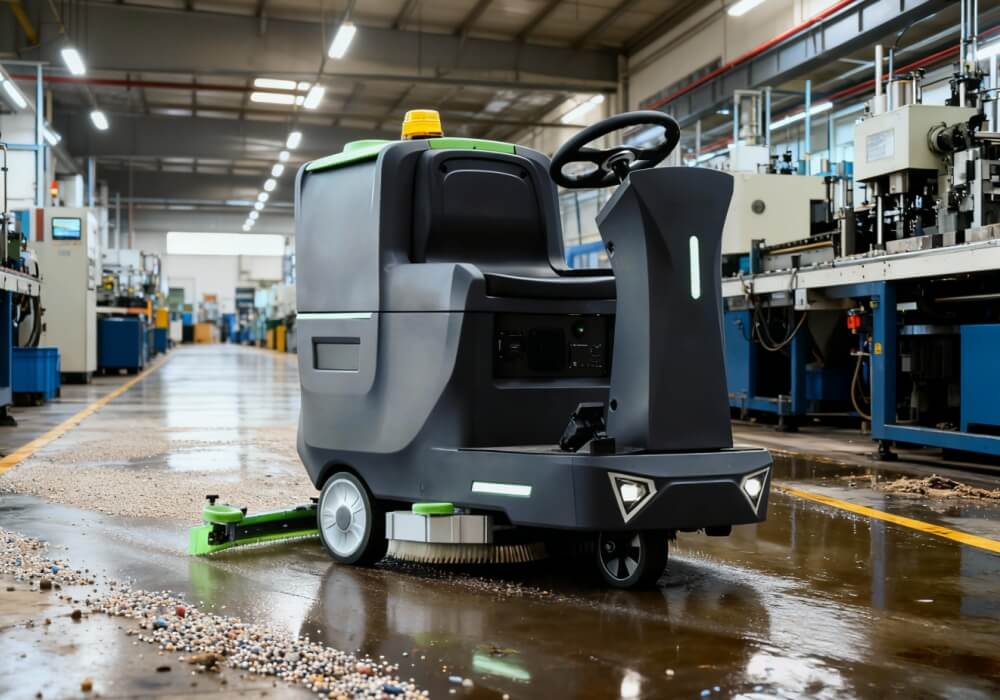
Mistake Five: Brushing System is Incompatible with the Ground Type
If the brush of a floor scrubber is not compatible with the type of floor surface, it can cause problems such as scratches on the floor, incomplete cleaning, and premature wear and tear on both the floor and the machine.
Ground Type | Pollutant Type | Recommender System |
Epoxy/sealed concrete | Dust, mild dirt | Soft brush or scouring pad |
Exposed concrete | Heavy dirt and oil stains | Hard brush, high-pressure water spray |
terrazzo | General cleaning | Medium hardness brush, neutral cleaner |
non-slip surface | Stubborn stain | High pressure water spray and strong suction system |
Food processing area | Organic matter | FDA certified disk brushing and disinfection system |
- Mild cleaning: 7-14 kg/brush plate
- Moderate cleaning: 14-27 kg/brush plate
- Heavy cleaning: 27-45+kg/brush plate
Recommendation: Provide ground samples to suppliers. Request to conduct cleaning tests on your actual ground materials using your typical pollutants.
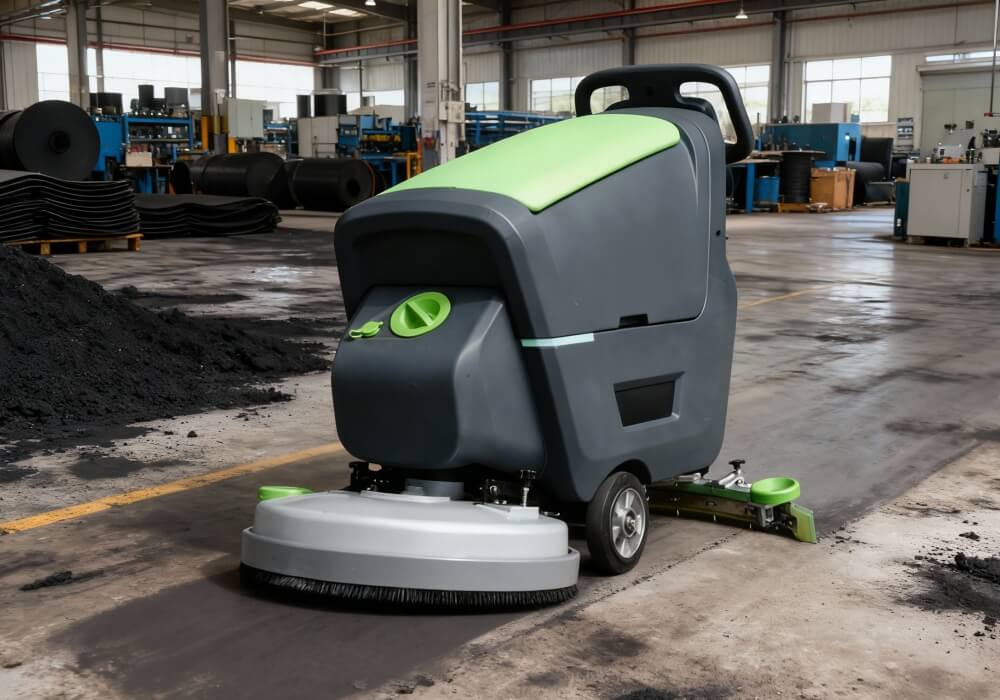
Mistake Six: Neglecting After-Sales Service and Technical Support
Don't choose manufacturers who lack after-sales service just to save a small portion of costs. Once there is a problem with the floor scrubber, the losses will be even greater.
- Local service team: Respond within 2 hours
- Accessories inventory: 80%+ commonly used accessories available locally
- Preventive maintenance plan: Customized according to your usage situation
- Training plan: Targeting Operators and Maintenance Personnel
- Backup machine policy: For long-term maintenance
- Online support platform: Accessory ordering, manual, troubleshooting

Mistake Seven: Skip the Live Demonstration
When purchasing a floor scrubber, it is best to go to the site to see a demonstration of the equipment. Even if purchasing through online channels, merchants still need to publish display videos of their devices. Otherwise, it will cause the following problems:
- Excessive real noise, affecting normal use
- The mobility and flexibility of floor scrubbers fall short of expectations
- Inappropriate floor scrubbers have poor effectiveness in cleaning dirt
- There are issues with the comfort and acceptance of the operator
Suggestion: Make on-site demonstrations a necessary condition. Any reputable supplier would be happy to provide. If they refuse, please consider it a major danger signal.
Conclusion
Choosing an industrial scrubber is one of the most influential decisions made by facility managers. The right choice can transform cleaning from a necessary cost into a productivity multiplier. All seven mistakes stem from one fundamental reason: Short-term thinking. By shifting your focus to total cost of ownership, considering actual operational conditions, and demanding real-world performance proofs, you are prepared for the long-term success of your organization.