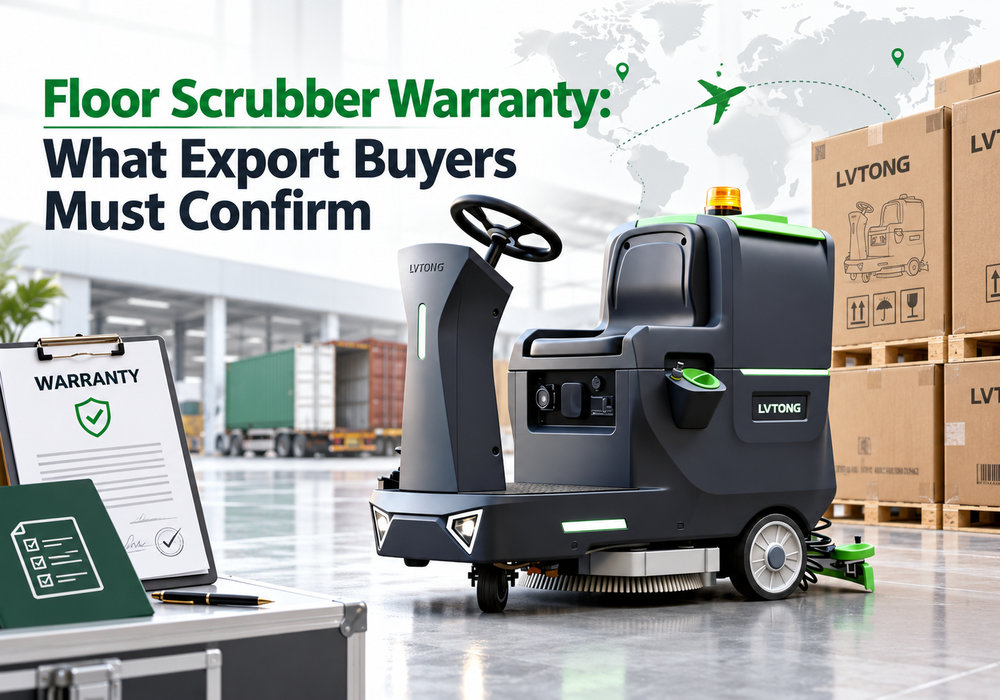
Quick Answer: Floor Buffer vs Floor Scrubber
A floor scrubber applies cleaning solution, agitates dirt and recovers dirty water through a squeegee and vacuum system. A floor buffer uses a rotating pad for light scrubbing, stripping, spray buffing or maintaining the appearance of finished floors, but it normally does not recover wastewater.
Choose a floor scrubber for routine cleaning and dirty-water recovery. Choose a floor buffer for periodic surface maintenance. Facilities that need both cleanliness and shine may scrub the floor first and buff it after it is completely dry.
Floor Buffer vs Floor Scrubber: Which Machine Do You Need?
A floor scrubber removes dirt, grease and cleaning solution, then recovers the dirty water with a squeegee and vacuum system. A floor buffer uses a rotating pad to remove light scuff marks and restore the appearance of an already-clean finished floor.
Choose a floor scrubber when the main goal is cleaning. Choose a floor buffer when the floor is already clean but needs surface maintenance or improved shine. Facilities with finished floors may use both machines: scrub first, then buff after the floor is completely dry.
Floor Buffer vs Floor Scrubber: Quick Comparison
| Comparison | Floor Scrubber | Floor Buffer |
|---|---|---|
| Primary purpose | Remove dirt, grease and contaminants | Restore appearance and remove light scuffs |
| Uses cleaning solution | Yes | Sometimes, depending on the task |
| Recovers dirty water | Yes | No |
| Leaves the floor nearly dry | Yes | No wastewater recovery system |
| Main working component | Brush or scrubbing pad | Rotating floor pad |
| Best floor condition | Dirty, stained or contaminated | Already clean but dull or lightly marked |
| Typical use frequency | Daily or frequent cleaning | Periodic floor maintenance |
| Common applications | Warehouses, factories, hospitals and supermarkets | Hotels, retail stores, schools and office buildings |
| Can replace the other machine? | No | No |
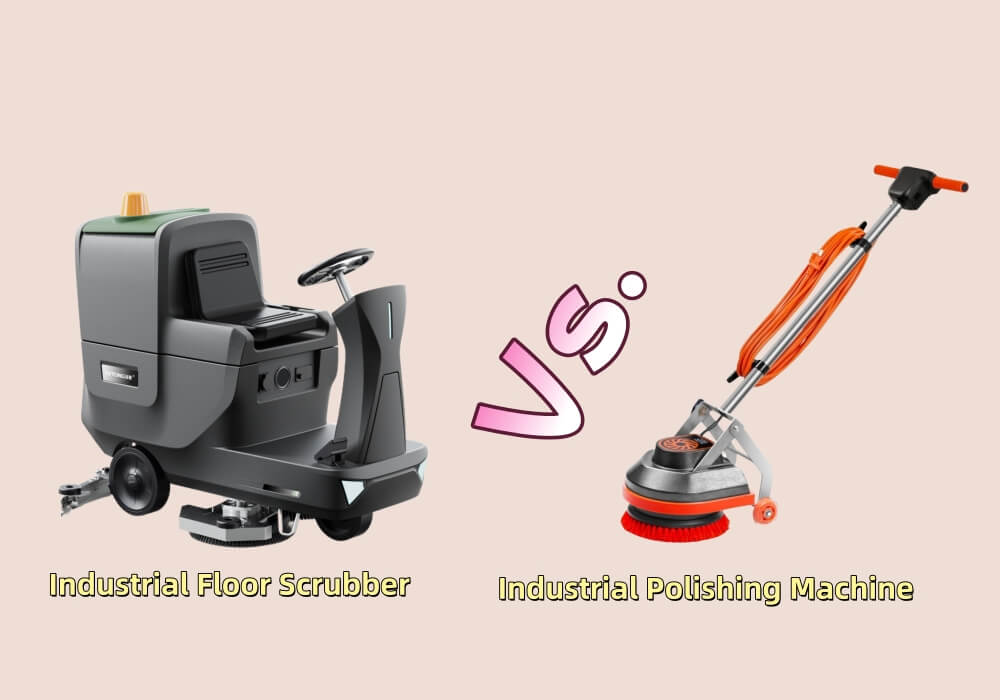
What Is a Floor Scrubber?
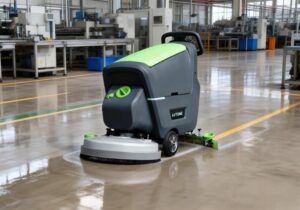
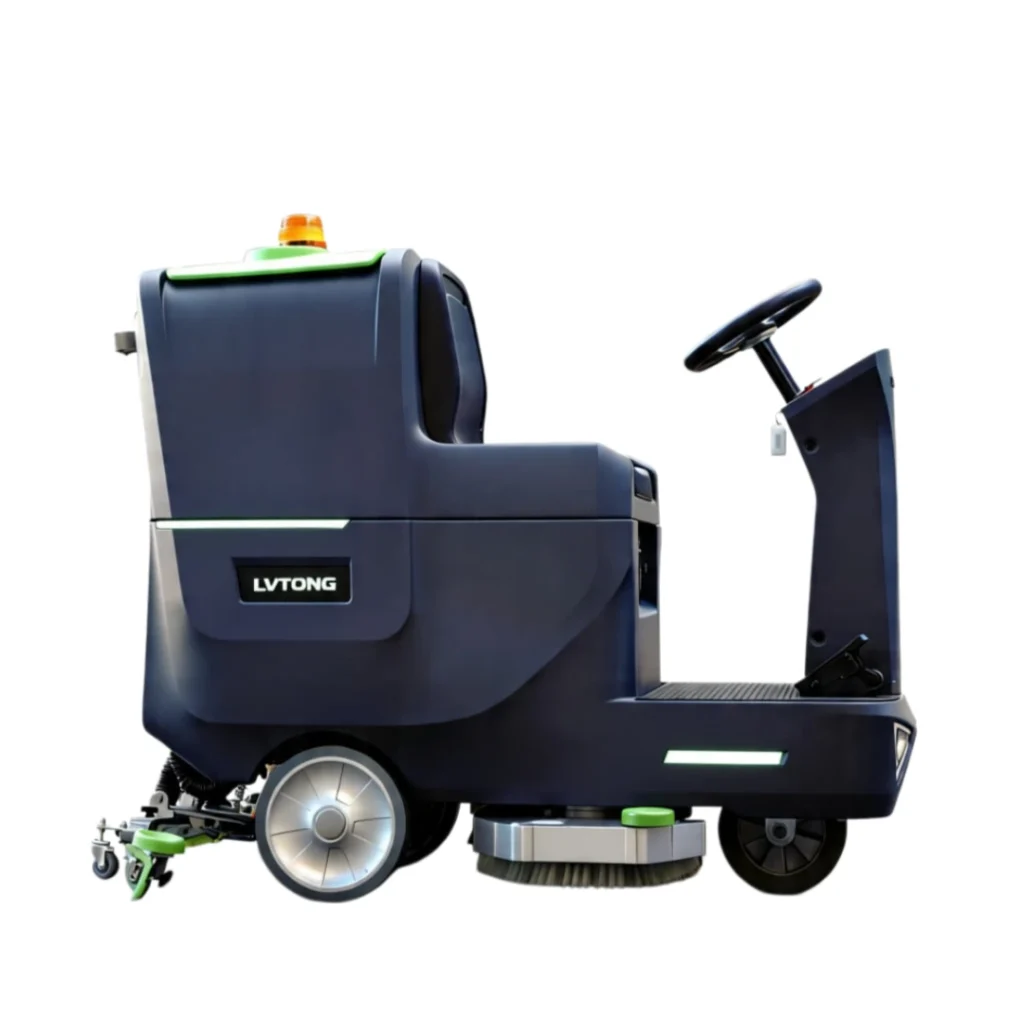
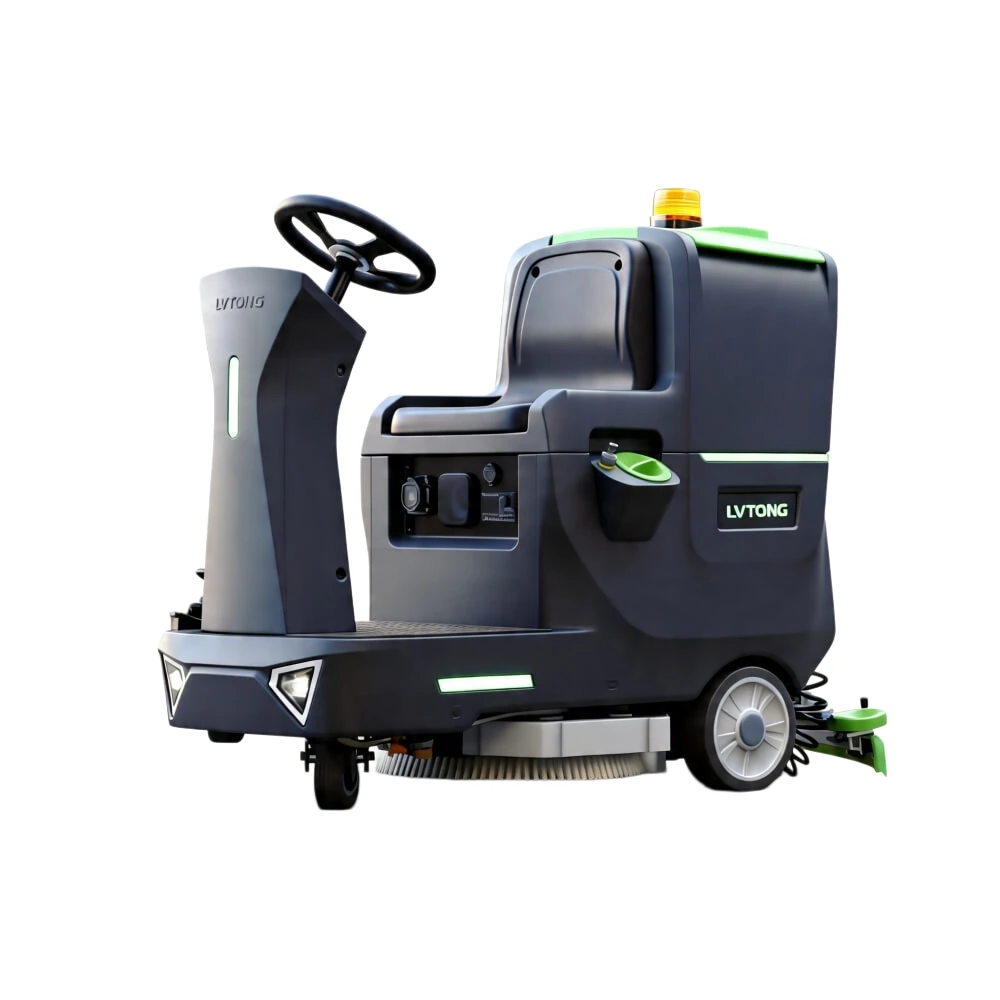
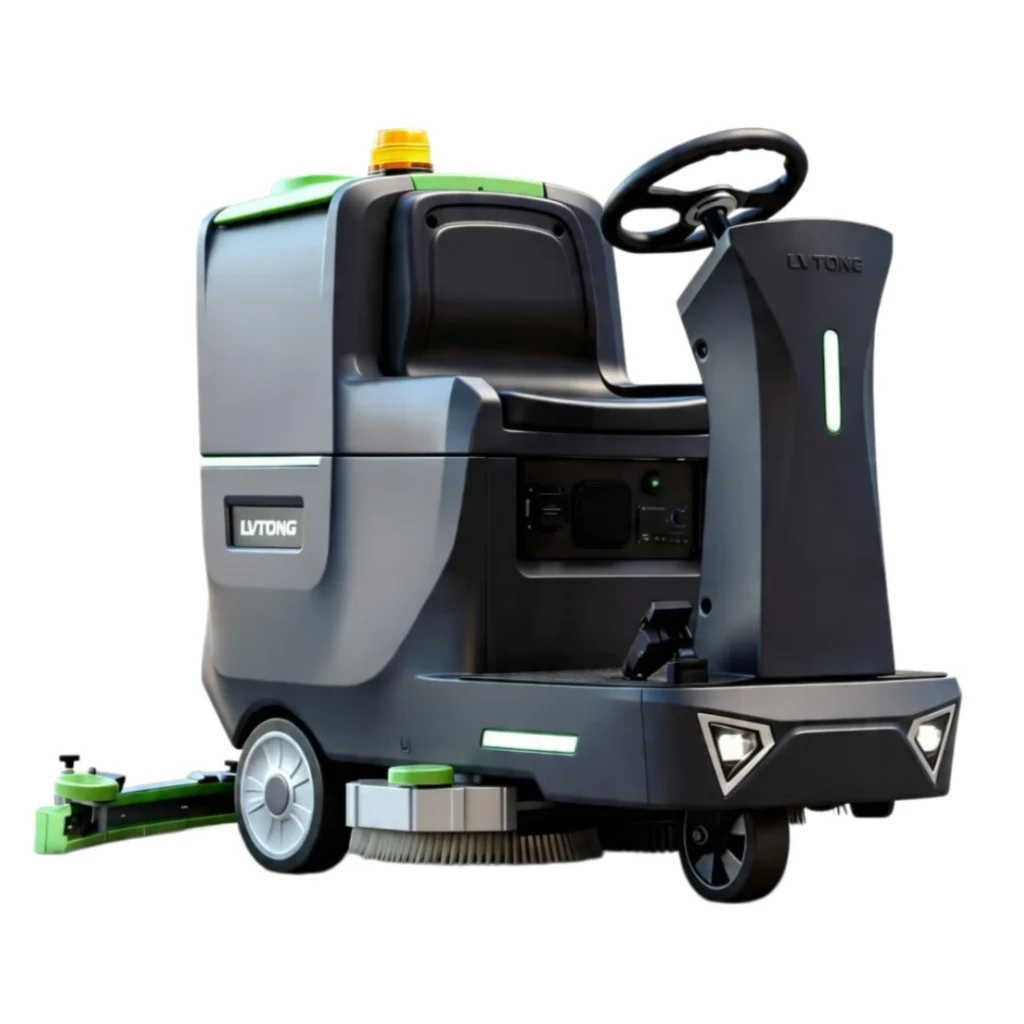
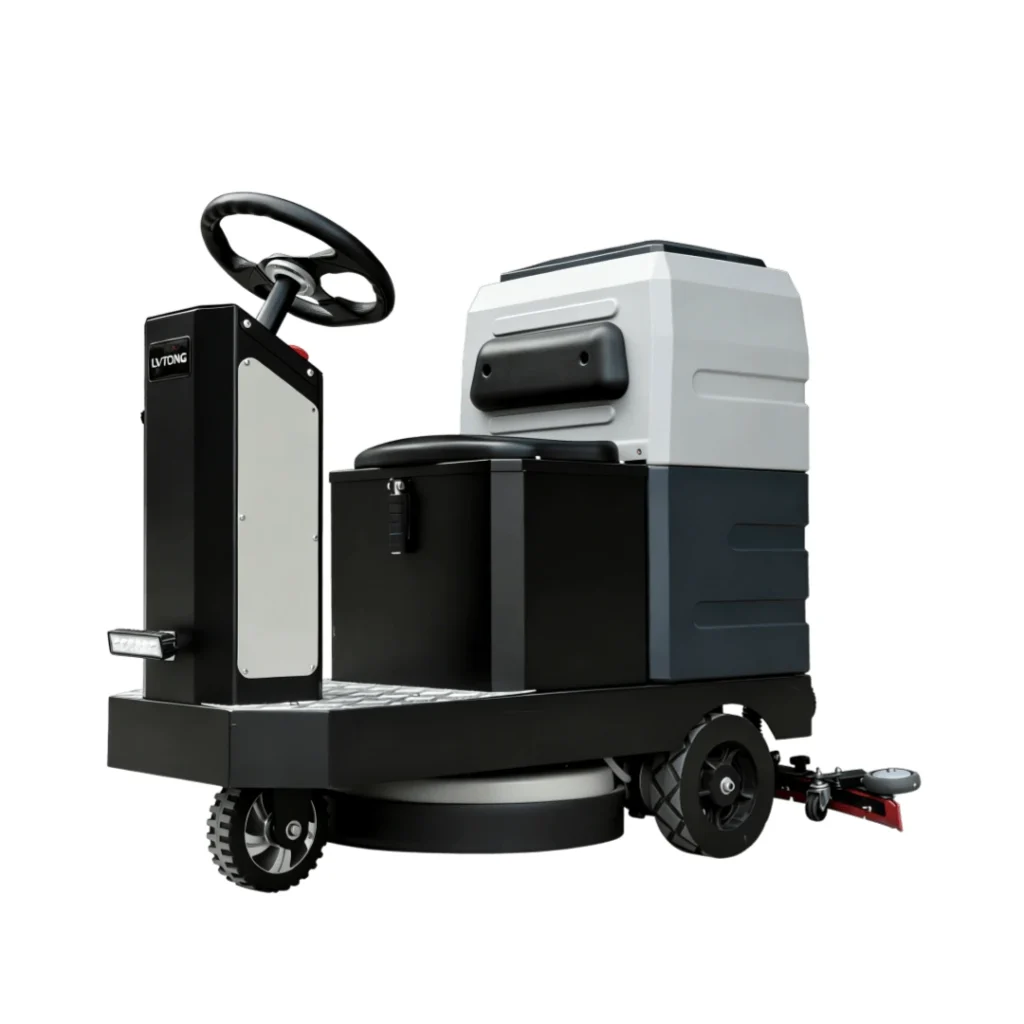
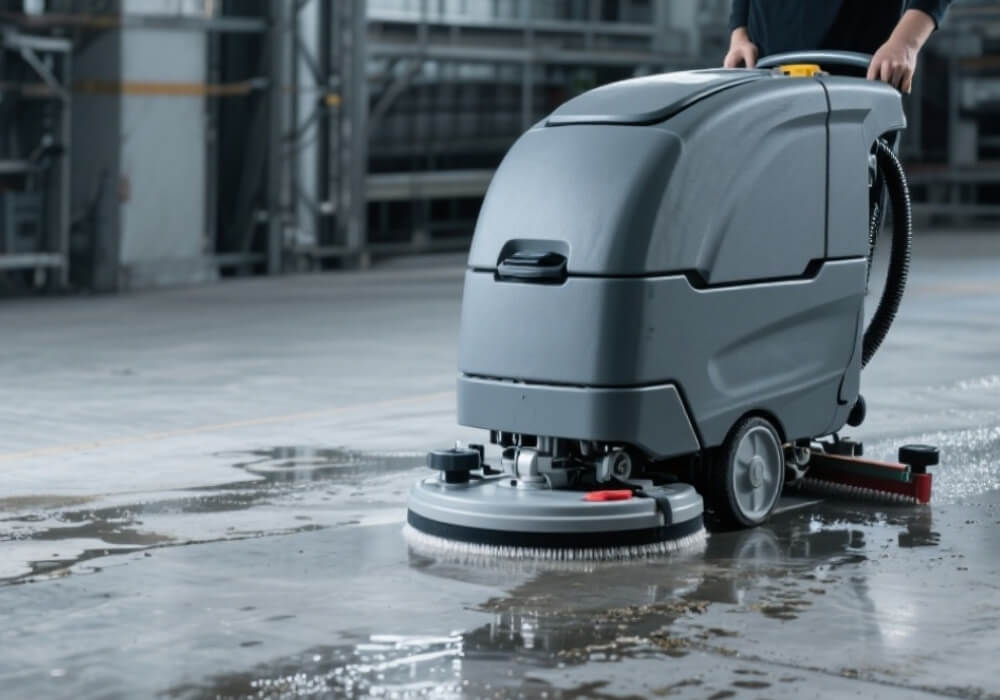
A floor scrubber is a floor cleaning machine that dispenses water or cleaning solution, agitates the floor with brushes or pads, and recovers the dirty water through a rear squeegee and vacuum system. It is designed for routine or deep cleaning rather than surface polishing.
Walk-behind scrubbers are commonly used in smaller or congested areas, while ride-on scrubbers are better suited to large warehouses, factories and commercial facilities.
What Is a Floor Buffer?
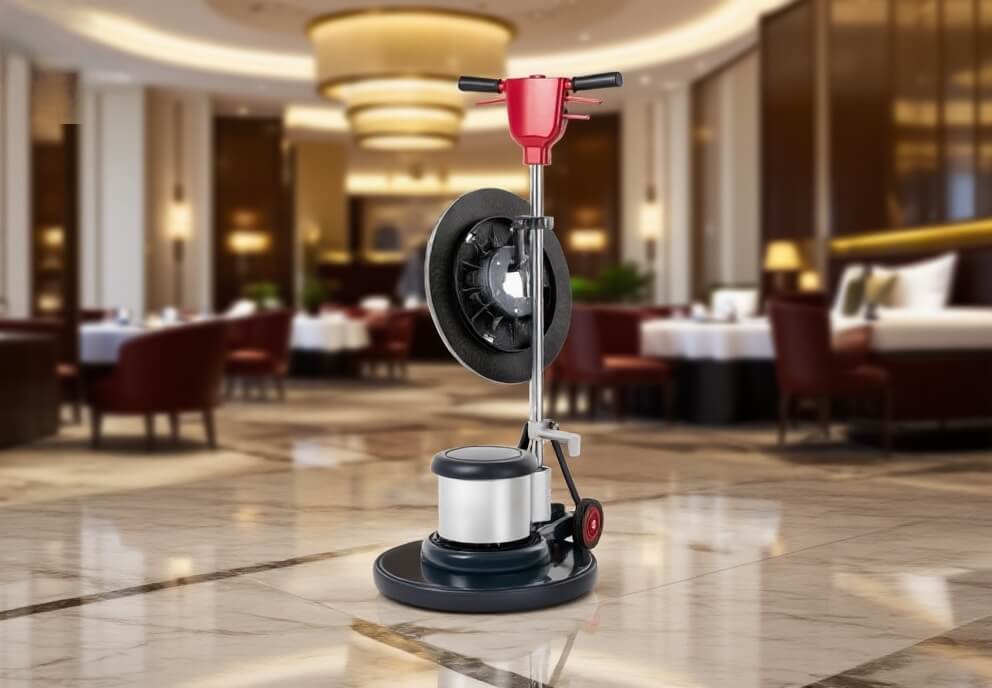
A floor buffer is a rotary floor machine that uses a pad or brush to maintain a floor surface. Depending on the machine speed, pad and chemical used, it may perform spray buffing, light scrubbing, floor finish removal or surface polishing.
Unlike an automatic floor scrubber, a standard floor buffer does not normally include a squeegee or vacuum recovery system. Any liquid and loosened soil must therefore be collected separately.
Floor Buffer vs Floor Polisher vs Burnisher
The terms floor buffer, floor polisher and floor burnisher are sometimes used interchangeably, but they are not always identical.
- A floor buffer usually refers to a rotary machine used for scrubbing, stripping or spray buffing.
- A floor polisher is a broader term for equipment used to improve surface appearance.
- A floor burnisher is generally designed for high-speed gloss restoration on a clean, finished floor.
- A concrete grinder or concrete polisher removes or refines the concrete surface and should not be treated as a standard commercial floor buffer.
In this article, “floor buffer” refers to a commercial rotary floor machine used for floor surface maintenance, not a heavy-duty concrete grinding machine.

How Floor Scrubbers and Floor Buffers Work
Based on different positioning, two types of devices are different in working technology paths.
How a Floor Scrubber Works: Dispense, Scrub and Recover
- Dispense cleaning solution
The solution system applies water and detergent to the floor. - Agitate the soil
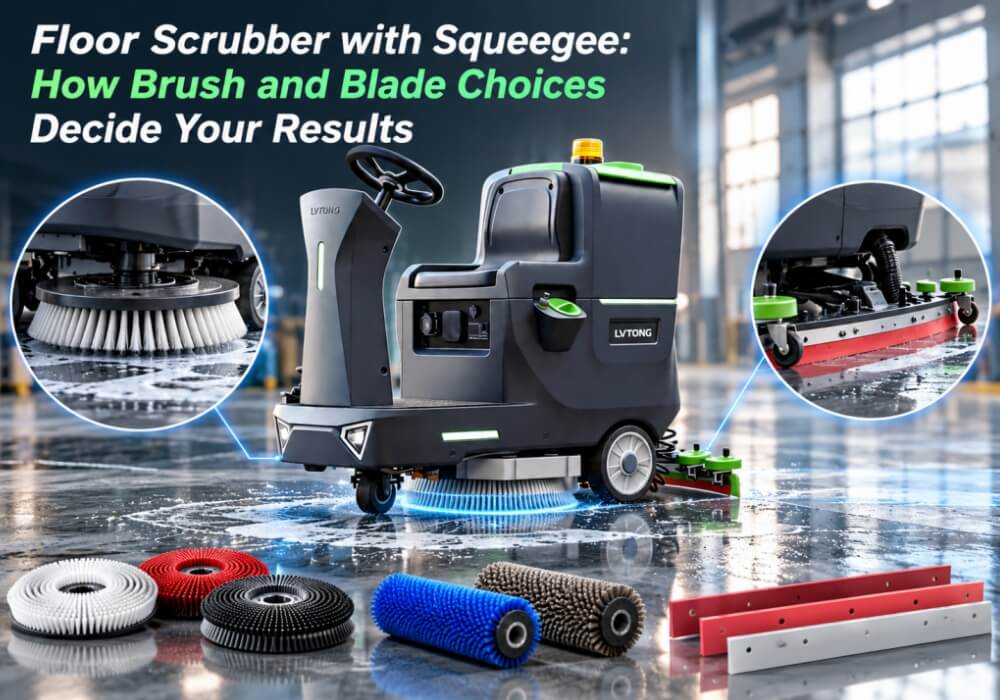
A disc brush, cylindrical brush or scrubbing pad loosens dirt, grease and residue. - Recover dirty water
The rear squeegee directs the wastewater toward the vacuum inlet. - Leave the floor nearly dry
The recovered wastewater is stored in a separate recovery tank.
How a Floor Buffer Works: Rotate, Treat and Restore
- Select the correct pad or brush
The pad must match the floor material, floor finish and maintenance task. - Rotate the pad against the floor
The machine uses mechanical action to remove light marks, clean the surface or work on the floor finish. - Apply the appropriate chemical when required
Spray buffing or stripping may require a compatible floor care chemical. - Collect residue separately
Because most buffers do not recover wastewater, dust or liquid residue must be removed with a vacuum, mop or other extraction equipment.
Core Structure
In order to achieve different work goals, there are significant differences in the design of core components between floor scrubbers and polishers.
| Component | Floor Scrubber | Floor Buffer |
|---|---|---|
| Floor contact system | Disc brushes, cylindrical brushes or scrubbing pads | Pad driver, floor pad or rotary brush |
| Solution system | Built-in solution tank and delivery system | Optional solution tank or external spray application |
| Water recovery | Squeegee, vacuum motor and recovery tank | Normally not included |
| Drive system | Walk-behind or ride-on traction system | Operator-guided rotary movement |
| Main controls | Water flow, brush pressure, vacuum and travel speed | Pad speed, handle position and machine control |
| Main consumables | Brushes, pads and squeegee blades | Buffing, scrubbing or stripping pads |
| Main purpose | Cleaning and wastewater recovery | Surface treatment and floor finish maintenance |
The most important structural difference is wastewater recovery. A floor scrubber applies and recovers cleaning solution in one pass, while a standard floor buffer does not.
Key Specifications to Compare
The performance indicators for the two types of cleaning equipment are completely different. So companies need to focus on core parameters when selecting equipment.
Floor Scrubber Specifications
- Cleaning path: Determines the width cleaned in one pass.
- Practical productivity: Should reflect turning, tank filling, water disposal and obstacle avoidance, not only theoretical square meters per hour.
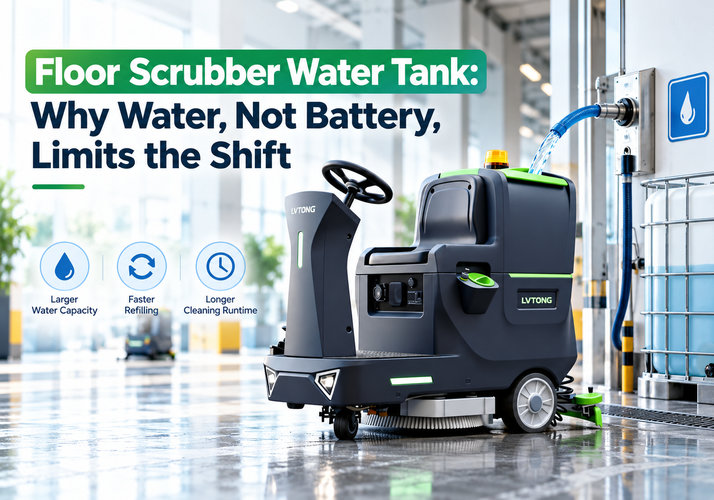
- Solution and recovery tank capacity: Larger tanks reduce refill and drain interruptions.
- Battery runtime: Must match the required cleaning shift.
- Brush pressure: Higher pressure may help with difficult soil, but the correct brush or pad is equally important.
- Turning radius: Particularly important in warehouses, stores and congested facilities.
- Squeegee and vacuum performance: Determines how effectively dirty water is recovered.
Floor Buffer Specifications
- Pad diameter: Affects working width and maneuverability.
- Machine speed category: Must match the intended task, such as scrubbing, spray buffing or burnishing.
- Motor power: Influences performance under load.
- Machine weight and pad pressure: Affect contact with the floor.
- Pad compatibility: Pads must match the floor finish and maintenance task.
- Power source: Corded and battery-powered machines suit different working environments.
- Dust control: Some burnishing machines may include dust collection, but this is not the same as wastewater recovery.
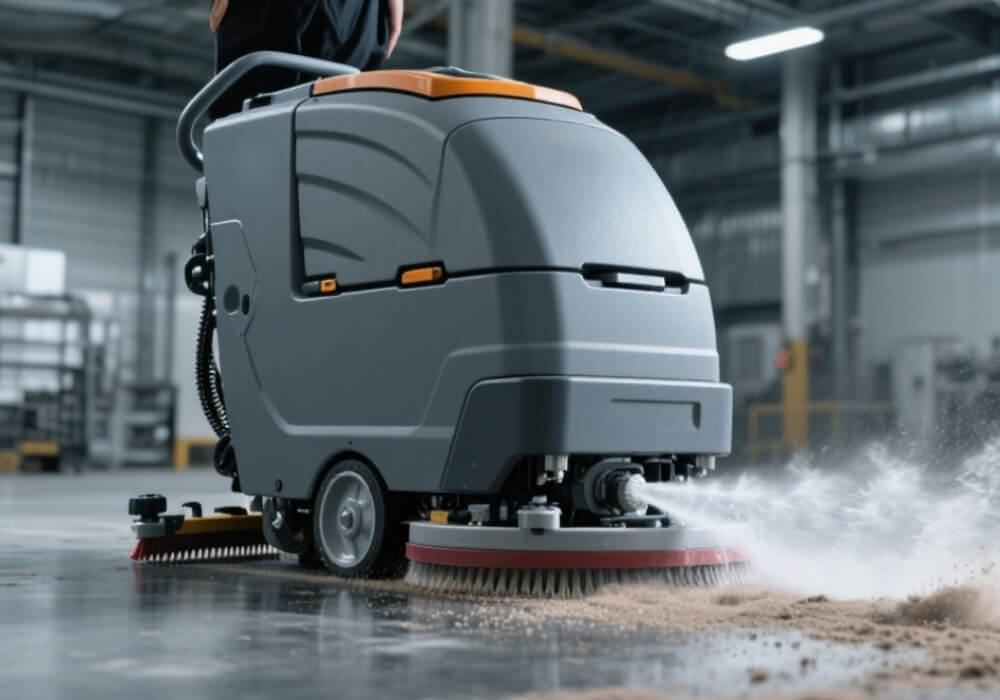
Floor Buffer vs Floor Scrubber by Application
The two types of industrial cleaning equipment also have differences in the subdivision of application scenarios.
| Application | Recommended Machine | Reason |
|---|---|---|
| Manufacturing workshop with oil and dirt | Floor scrubber | Removes contaminants and recovers dirty water |
| Logistics warehouse | Floor scrubber | Supports frequent large-area cleaning |
| Food processing facility | Floor scrubber | Wet cleaning and wastewater recovery are essential |
| Basement parking garage | Floor scrubber | Suitable for dust, tire marks and tracked-in soil |
| Retail store with finished VCT | Scrubber + buffer or burnisher | Scrub for cleanliness, then maintain gloss periodically |
| Hotel lobby | Scrubber + buffer or burnisher | Daily cleaning and periodic appearance maintenance |
| Office corridor | Scrubber or buffer, depending on the floor | Choose based on whether the problem is dirt or dull finish |
| Unsealed industrial concrete | Floor scrubber | Cleaning is normally more important than buffing |
| Sealed concrete | Floor scrubber; buffer only if compatible | Follow coating and pad recommendations |
| Epoxy floor | Floor scrubber with a suitable pad | Avoid aggressive pads that may damage the coating |
| Terrazzo or finished stone | Scrubber + specialist polishing system | Floor material and finish determine the process |
Floor Buffer vs Floor Scrubber Cost Considerations
| Cost Factor | Floor Scrubber | Floor Buffer |
|---|---|---|
| Initial equipment cost | Usually higher because of tanks, vacuum and recovery systems | Often lower for a basic rotary machine |
| Labor | Can clean and recover water in one pass | May require separate cleaning or residue collection |
| Consumables | Brushes, pads and squeegee blades | Floor pads, brushes and floor care chemicals |
| Maintenance | Solution system, recovery tank, vacuum, battery and squeegee | Pad driver, motor, cable or battery and handle controls |
| Floor care chemicals | Detergent and defoamer where required | Buffing, stripping or floor finish products where required |
| Productivity | High for routine wet cleaning | Depends heavily on the maintenance task |
| Additional equipment | Usually not required for dirty-water recovery | May require a wet vacuum, mop or separate scrubber |
Conclusion: From a long-term cost perspective, industrial floor scrubbers have lower overall costs and are suitable for companies that focus on cleaning efficiency. On the other hand, Industrial polishing machines are more expensive, but they can bring long-term value in situations where high appearance is required.

Operation and Maintenance Differences
The operation difficulty and maintenace cost directly affect the company’s manpower input and long-term use costs.
Floor Scrubber Operation and Maintenance
- Empty and rinse the recovery tank after use.
- Clean the squeegee and inspect the blades.
- Remove hair and debris from the brush or pad.
- Check the solution filter and hoses.
- Charge and maintain the battery according to the manufacturer’s instructions.
- Leave tanks open to dry when the machine is stored.
Floor Buffer Operation and Maintenance
- Select the correct pad for the floor finish and task.
- Center and install the pad correctly.
- Inspect the power cable or battery before use.
- Clean or replace loaded and worn pads.
- Do not allow the rotating pad to remain stationary on one area.
- Remove dust and chemical residue after the task.
- Follow the floor finish manufacturer’s recommendations.
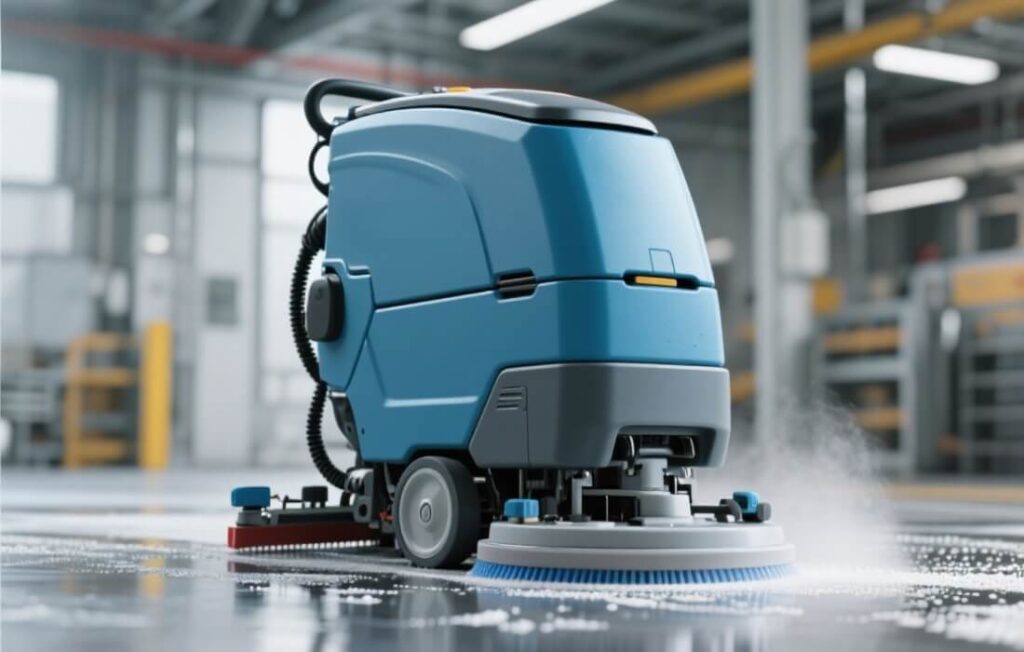
Should You Choose a Floor Buffer or Floor Scrubber?
Choose a floor scrubber if:
• The floor has dirt, oil, grease, food residue or cleaning solution.
• Dirty water must be recovered immediately.
• The area requires frequent routine cleaning.
• Slip risk and floor drying time are important.
• You clean warehouses, factories, supermarkets or healthcare facilities.
Choose a floor buffer if:
• The floor is already clean.
• The main problem is dull appearance or light scuff marks.
• The floor has a compatible finish or coating.
• You need periodic surface maintenance rather than daily wet cleaning.
• Wastewater recovery is not required.
Choose both if:
• The facility requires both cleanliness and a polished appearance.
• Finished floors must be scrubbed regularly and buffed periodically.
• High-traffic areas need daily cleaning and scheduled gloss restoration.
Simple rule: If the problem is dirt, use a floor scrubber. If the problem is a dull but clean floor finish, use a floor buffer.

Frequently Asked Questions
What is the difference between a floor buffer and a floor scrubber?
A floor scrubber applies cleaning solution, agitates dirt and recovers the dirty water in one process. A floor buffer uses a rotating pad for surface maintenance, light scuff removal, scrubbing or gloss restoration, but it normally does not recover wastewater.
Is a floor buffer the same as a floor scrubber?
No. A floor buffer is a rotary surface-treatment machine, while an automatic floor scrubber combines solution application, scrubbing and wastewater recovery. They may use similar pads, but they perform different cleaning processes.
Can a floor buffer clean a dirty floor?
A low-speed floor buffer can perform some scrubbing tasks with the correct brush, pad and chemical. However, it does not normally recover the dirty solution, so a wet vacuum or another collection method is required. For routine wet cleaning, a floor scrubber is usually more efficient.
Can a floor scrubber polish a floor?
A floor scrubber fitted with an appropriate pad may improve the appearance of some finished floors, but it does not replace a dedicated buffer or burnisher when high-gloss restoration is required. Always follow the floor finish and pad manufacturer’s recommendations.
Should you scrub or buff a floor first?
Scrub the floor first to remove dirt and residue. Allow the floor to dry completely, then buff or burnish it if the floor finish requires gloss restoration.
Conclusion
A floor buffer and a floor scrubber are not interchangeable. A floor scrubber is the correct choice when dirt, grease, liquid residue and wastewater must be removed. A floor buffer is more suitable when an already-clean finished floor requires light surface maintenance or improved appearance.
Many commercial facilities use the two machines in sequence: first scrub and recover the dirty water, then buff or burnish the completely dry floor when required.
Before selecting equipment, identify the floor material, floor finish, soil type, cleaning frequency and required result. For large facilities that require regular wet cleaning, explore LVTONG commercial floor scrubber dryers or contact our team for a machine recommendation based on your cleaning area.