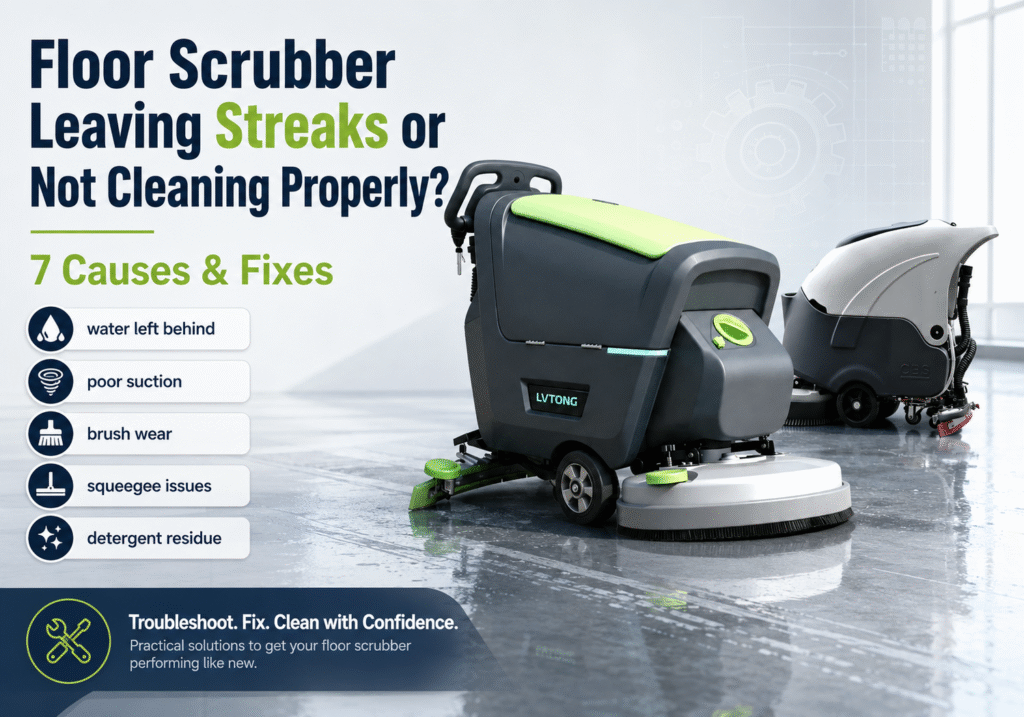
Réponse rapide : Polisseuse ou autolaveuse ?
Une autolaveuse applique une solution de nettoyage, déloge la saleté et récupère l'eau sale grâce à un système de raclette et d'aspiration. Une polisseuse utilise un disque rotatif pour le nettoyage léger, le décapage, le lustrage par pulvérisation ou l'entretien des sols finis, mais elle ne récupère généralement pas les eaux usées.
Choisissez une autolaveuse pour le nettoyage courant et la récupération des eaux usées. Choisissez une polisseuse pour l'entretien périodique des surfaces. Les établissements qui exigent à la fois propreté et brillance peuvent d'abord laver le sol, puis le polir une fois complètement sec.
Polisseuse ou autolaveuse : quelle machine vous faut-il ?
Une autolaveuse Elle élimine la saleté, la graisse et les résidus de produit nettoyant, puis récupère l'eau sale grâce à un système de raclette et d'aspiration. Une polisseuse utilise un disque rotatif pour estomper les légères éraflures et redonner à un sol déjà propre son aspect d'origine.
Choisissez une autolaveuse lorsque l'objectif principal est le nettoyage. Choisissez une polisseuse lorsque le sol est déjà propre mais nécessite un entretien de surface ou une brillance accrue. Les établissements dotés de sols finis peuvent utiliser les deux machines : autolaver d'abord, puis polir une fois le sol complètement sec.
Polisseuse vs autolaveuse : comparaison rapide
| Comparaison | Laveuse de sol | Polisseuse de sol |
|---|---|---|
| Objectif principal | Éliminer la saleté, la graisse et les contaminants | Restaurer l'aspect et éliminer les éraflures légères |
| Utilise une solution de nettoyage | Oui | Parfois, selon la tâche |
| Récupère l'eau sale | Oui | Non |
| Laisse le sol presque sec | Oui | Système de récupération des eaux usées absent |
| Composant fonctionnel principal | Brosse ou éponge à récurer | tapis de sol rotatif |
| État optimal du sol | Sale, taché ou contaminé | Déjà propre mais terne ou légèrement marqué |
| Fréquence d'utilisation typique | nettoyage quotidien ou fréquent | Entretien périodique des sols |
| Applications courantes | Entrepôts, usines, hôpitaux et supermarchés | Hôtels, commerces de détail, écoles et immeubles de bureaux |
| Peut-on remplacer l'autre machine ? | Non | Non |
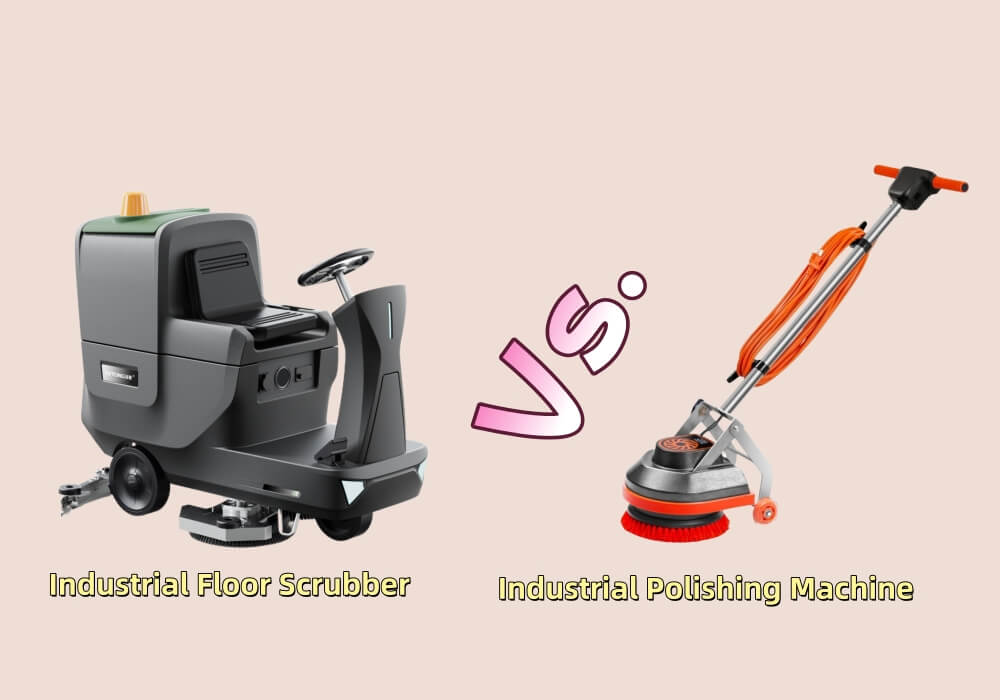
Qu'est-ce qu'une autolaveuse ?
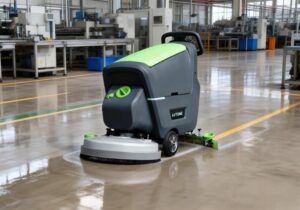
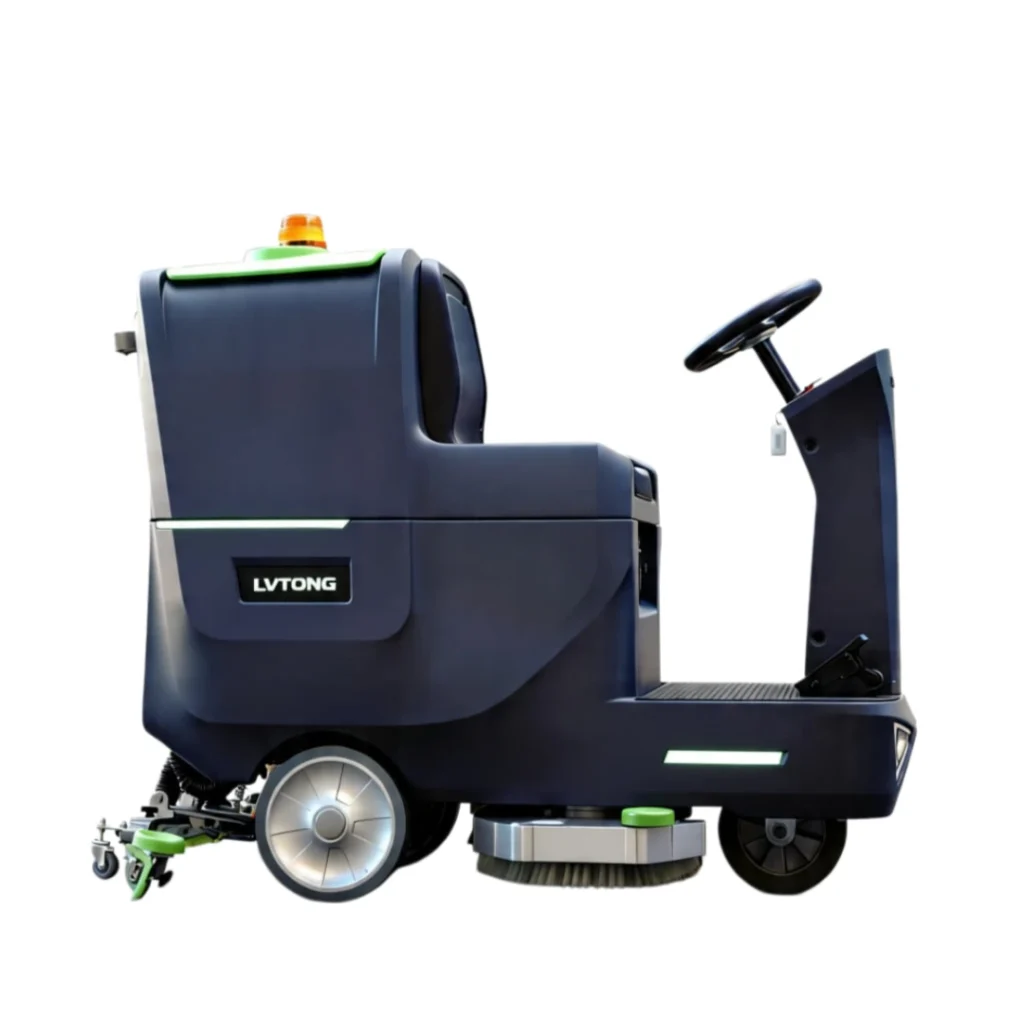
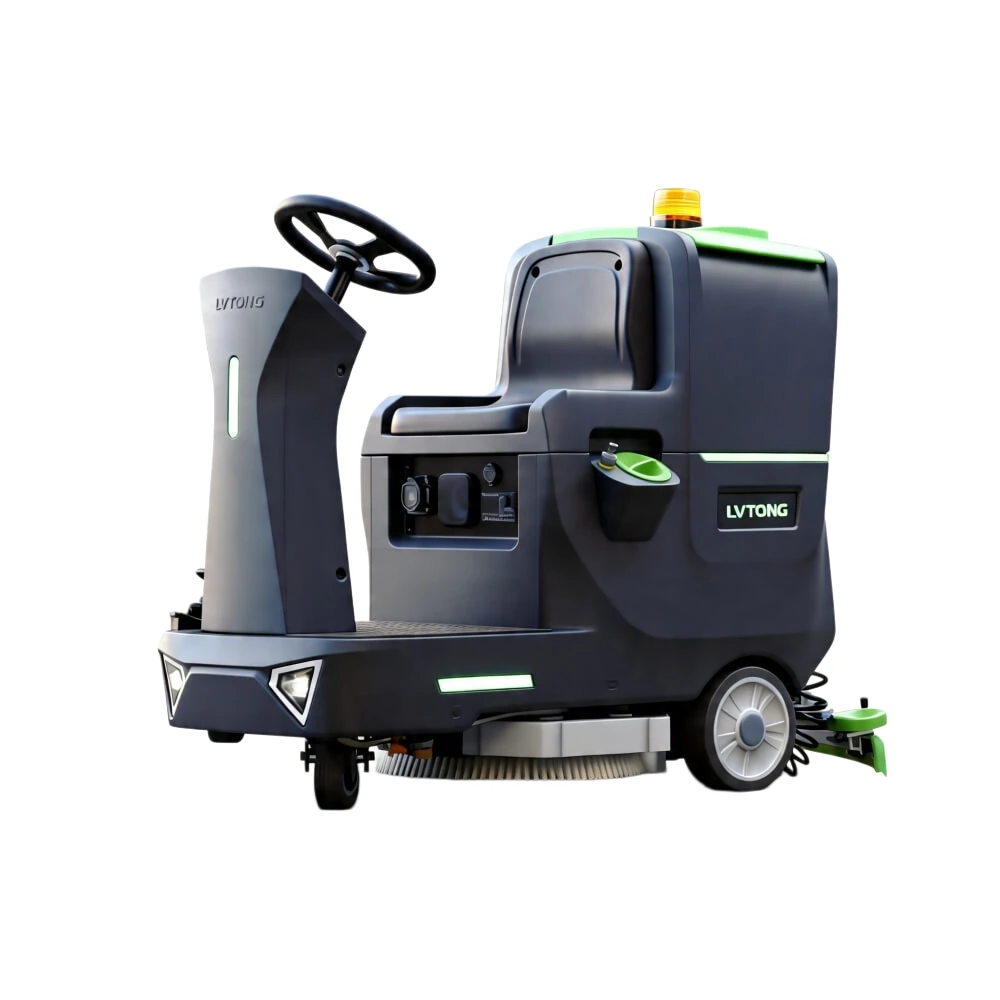
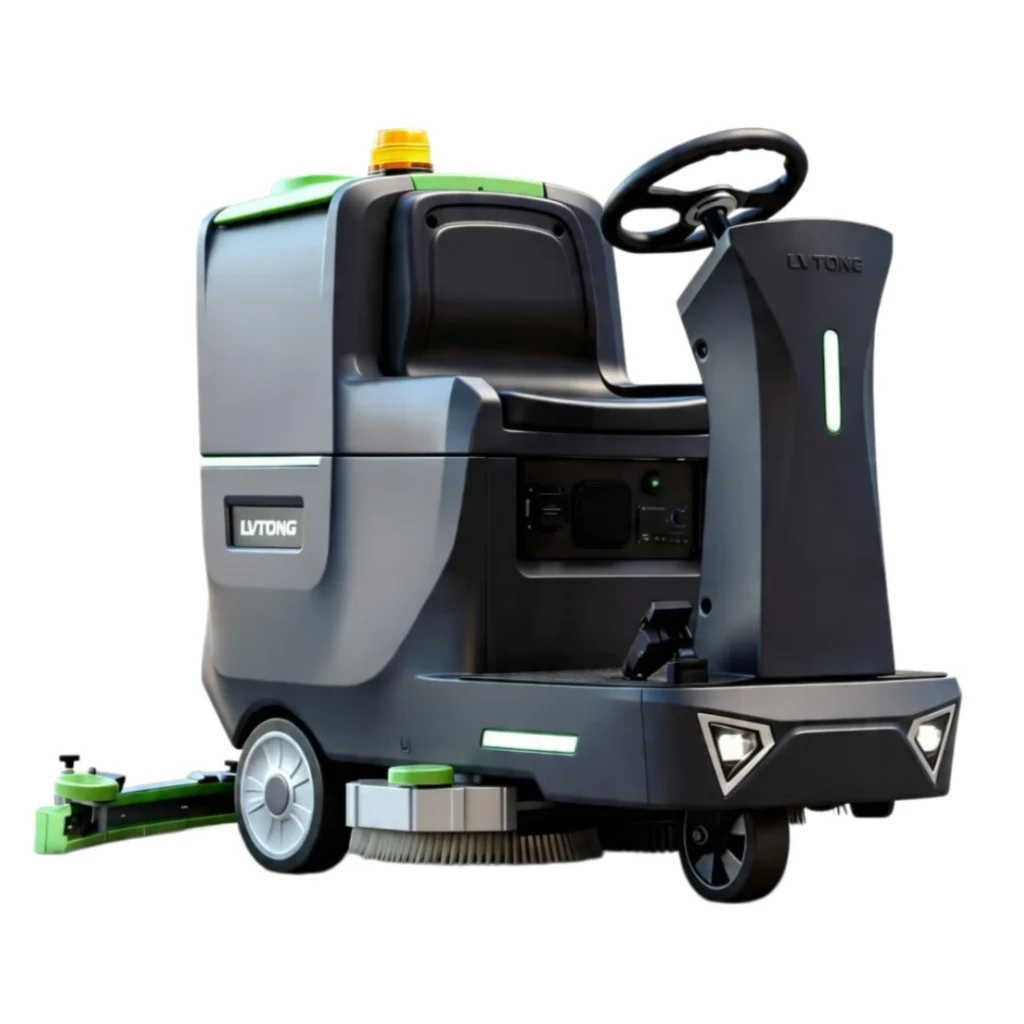
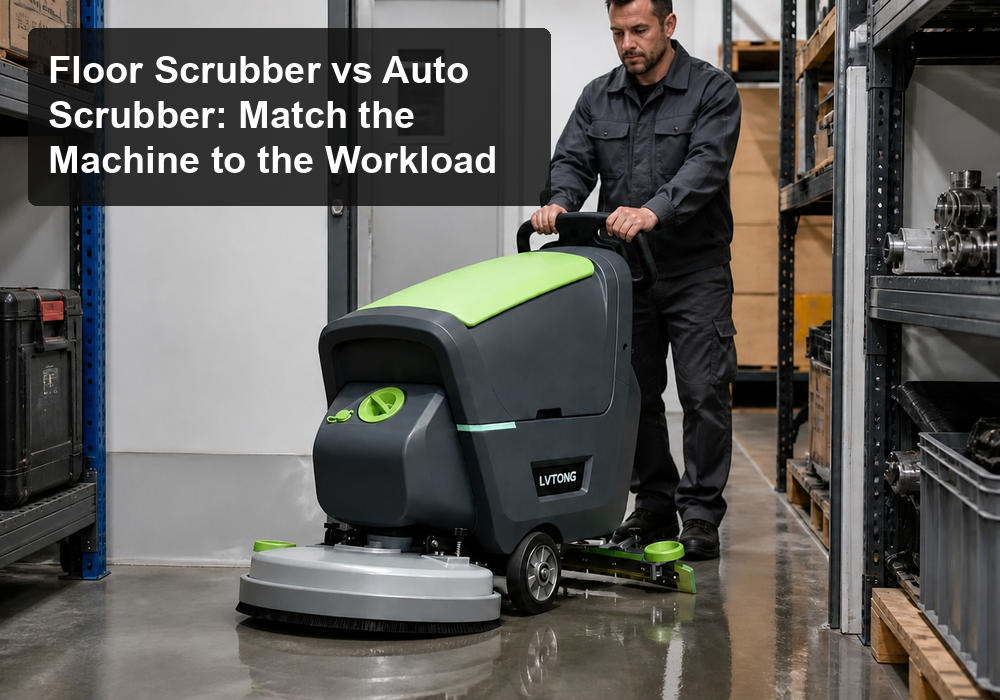
Une autolaveuse est une machine de nettoyage de sols qui distribue de l'eau ou une solution nettoyante, frotte le sol à l'aide de brosses ou de disques, et récupère l'eau sale grâce à un système d'aspiration et de raclette situé à l'arrière. Elle est conçue pour le nettoyage régulier ou en profondeur, et non pour le polissage des surfaces.
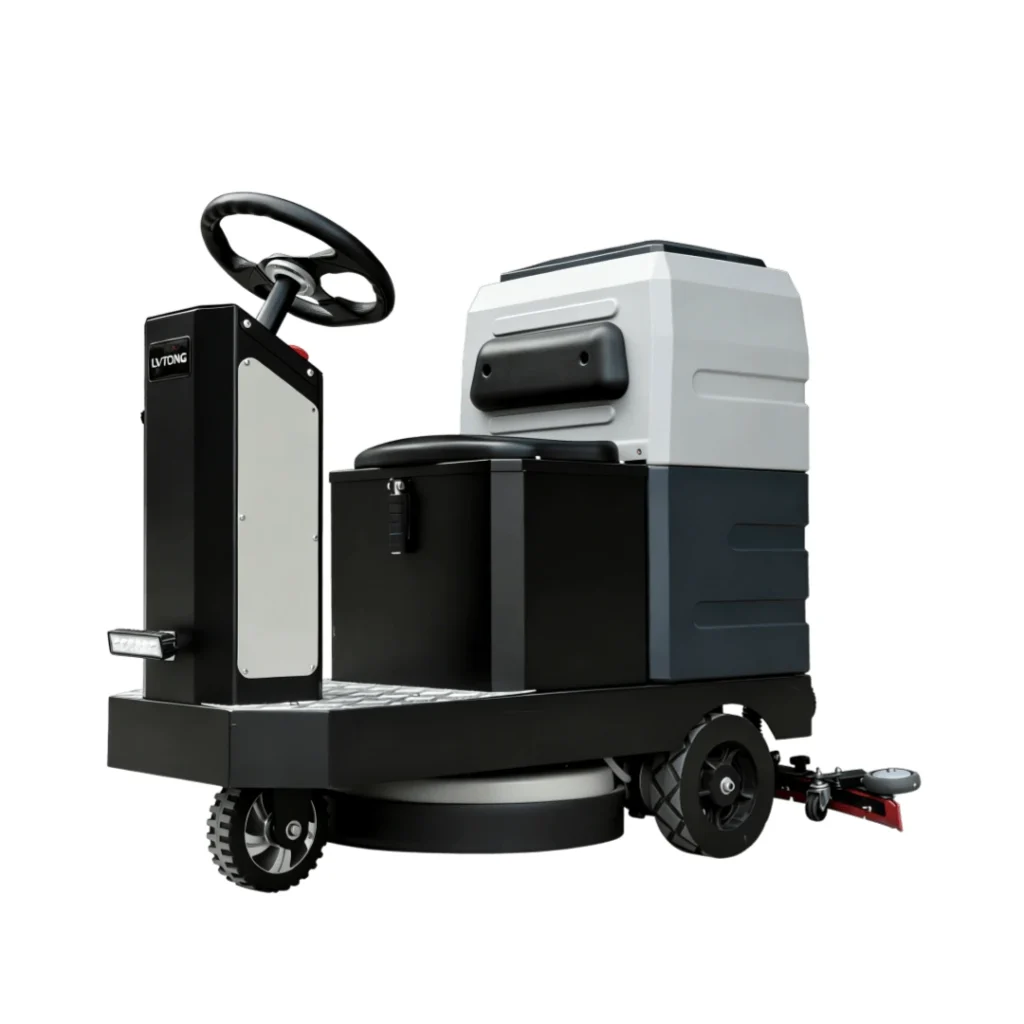
Les autolaveuses autoportées sont couramment utilisées dans les zones plus petites ou encombrées, tandis que les autolaveuses autoportées sont mieux adaptées aux grands entrepôts, usines et installations commerciales.
Qu'est-ce qu'une polisseuse de sol ?
Une polisseuse de sol est une machine rotative qui utilise un disque ou une brosse pour entretenir la surface d'un sol. Selon sa vitesse, le disque et le produit chimique utilisé, elle peut effectuer un lustrage par pulvérisation, un léger décapage, le décapage ou le polissage de surface.
Contrairement à une autolaveuse, une polisseuse standard ne comprend généralement pas de raclette ni de système d'aspiration. Les liquides et les saletés ramollies doivent donc être collectés séparément.
Polisseuse de sol vs polisseuse de sol vs brunisseuse
Les termes «polisseuse de parquet», «polisseuse de parquet» et «brosse à parquet» sont parfois utilisés indifféremment, mais ils ne sont pas toujours identiques.
- Une polisseuse de sol désigne généralement une machine rotative utilisée pour le nettoyage, le décapage ou le lustrage par pulvérisation.
- Une polisseuse de sol est un terme plus général désignant un équipement utilisé pour améliorer l'aspect des surfaces.
- Une polisseuse de parquet est généralement conçue pour restaurer rapidement le brillant d'un sol propre et fini.
- Une ponceuse à béton ou une polisseuse à béton enlève ou affine la surface du béton et ne doit pas être considérée comme une polisseuse de sol commerciale standard.
Dans cet article, le terme “ polisseuse de sol ” désigne une machine rotative commerciale utilisée pour l'entretien des sols, et non une ponceuse à béton industrielle.

Comment fonctionnent les autolaveuses et les polisseuses de sols ?
Sur la base de différents positionnements, deux types de dispositifs sont différents dans les voies technologiques de travail.
Comment fonctionne une autolaveuse : distribution, nettoyage et remise en état
- Distribuer la solution de nettoyage
Le système de traitement applique de l'eau et du détergent sur le sol. - Agiter le sol
Une brosse à disque, une brosse cylindrique ou une éponge à récurer délogent la saleté, la graisse et les résidus. - Récupérer l'eau sale
La raclette arrière dirige les eaux usées vers l'entrée d'aspiration. - Laissez le sol presque sec.
Les eaux usées récupérées sont stockées dans un réservoir de récupération séparé.
Comment fonctionne une polisseuse de sol : rotation, traitement et restauration
- Sélectionnez le tampon ou la brosse appropriée
Le tapis de sol doit être adapté au matériau, à la finition et à l'entretien du sol. - Faites pivoter le coussin contre le sol
La machine utilise une action mécanique pour éliminer les marques légères, nettoyer la surface ou travailler sur la finition du sol. - Appliquer le produit chimique approprié lorsque nécessaire
Le polissage ou le décapage par pulvérisation peut nécessiter un produit chimique d'entretien des sols compatible. - Collecter les résidus séparément
Comme la plupart des bassins tampons ne récupèrent pas les eaux usées, les poussières ou les résidus liquides doivent être éliminés à l'aide d'un aspirateur, d'une serpillière ou d'un autre équipement d'extraction.
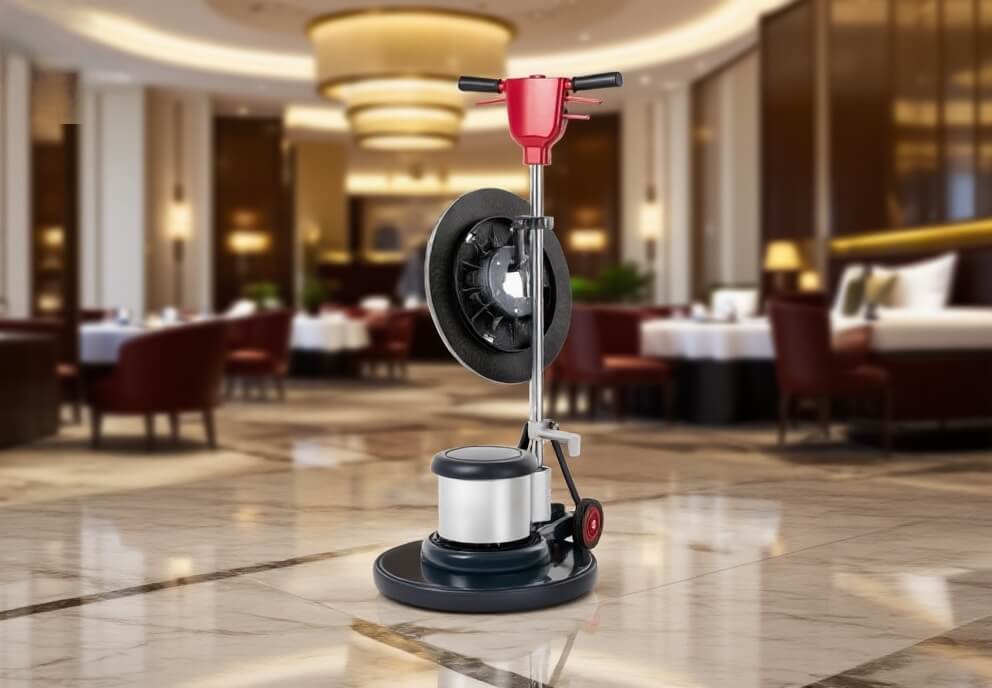
Structure de base
Afin d'atteindre des objectifs de travail différents, il existe des différences significatives dans la conception des composants de base entre les laveuses et les polisseuses de sols.
| Composant | Laveuse de sol | Polisseuse de sol |
|---|---|---|
| Système de contact au sol | Brosses à disque, brosses cylindriques ou tampons à récurer | Porte-disque, disque de sol ou brosse rotative |
| Système de solution | Réservoir de solution et système de distribution intégrés | Réservoir de solution optionnel ou application par pulvérisation externe |
| Récupération de l'eau | Raclette, moteur d'aspiration et réservoir de récupération | Normalement non inclus |
| Système d'entraînement | Système de traction à conducteur marchant ou à porteur | Mouvement rotatif guidé par l'opérateur |
| Commandes principales | Débit d'eau, pression de la brosse, aspiration et vitesse de déplacement | Vitesse du tampon, position de la poignée et commande de la machine |
| Principaux consommables | Brosses, tampons et lames de raclette | Tampons à polir, à frotter ou à décaper |
| Objectif principal | Nettoyage et récupération des eaux usées | entretien des traitements de surface et des finitions de sols |
La principale différence structurelle réside dans la récupération des eaux usées. Une autolaveuse applique et récupère la solution de nettoyage en un seul passage, contrairement à une polisseuse classique.
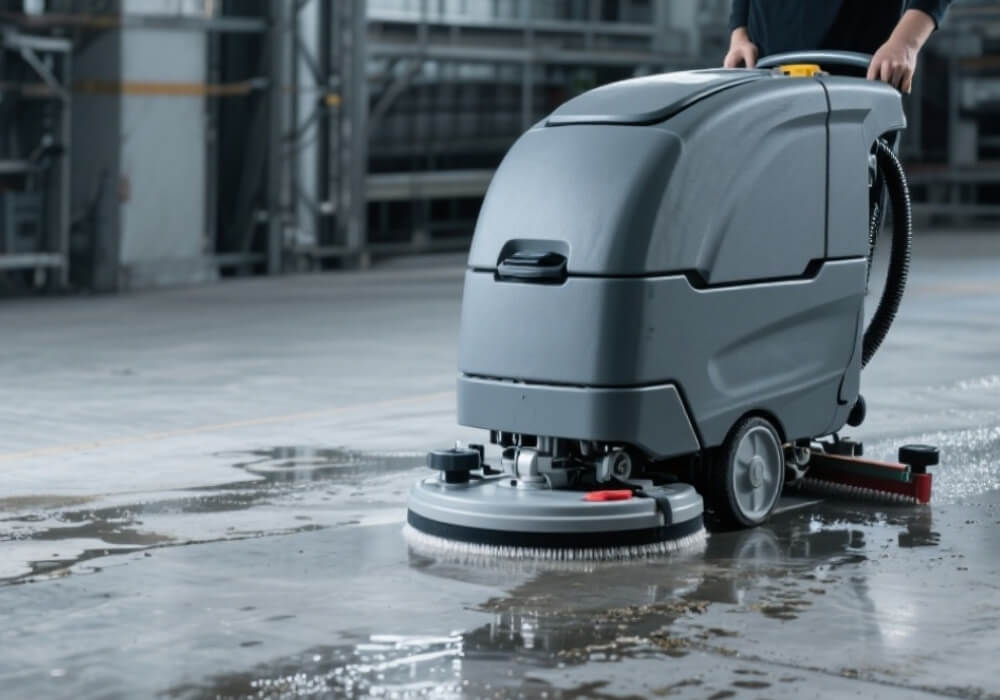
Caractéristiques principales à comparer
Les indicateurs de performance des deux types d'équipement de nettoyage sont complètement différents. Les entreprises doivent donc se concentrer sur les paramètres essentiels lorsqu'elles choisissent un équipement.
Spécifications des autolaveuses
- Chemin de nettoyage : Détermine la largeur nettoyée en un seul passage.
- Productivité pratique : Il convient de prendre en compte les virages, le remplissage des réservoirs, l'évacuation de l'eau et l'évitement des obstacles, et non pas seulement les mètres carrés théoriques par heure.
- Capacité des réservoirs de solution et de récupération : Les réservoirs de plus grande capacité réduisent les interruptions liées au remplissage et à la vidange.
- Autonomie de la batterie : Doit correspondre au quart de travail de nettoyage requis.
- Pression de la brosse : Une pression plus élevée peut aider sur les sols difficiles, mais le choix de la brosse ou du tampon approprié est tout aussi important.
- Rayon de braquage : Particulièrement important dans les entrepôts, les magasins et les installations encombrées.
- Performances de la raclette et de l'aspirateur : Détermine l'efficacité du traitement des eaux usées.
Spécifications de la polisseuse de sol
- Diamètre du tampon : Affecte la largeur de travail et la maniabilité.
- Catégorie de vitesse de la machine : Doit correspondre à la tâche prévue, comme le frottage, le polissage par pulvérisation ou le lustrage.
- Puissance du moteur : Influence les performances en charge.
- Poids de la machine et pression du tampon : Affecter le contact avec le sol.
- Compatibilité avec les tapis de souris : Les patins doivent être adaptés au type de revêtement de sol et à la tâche d'entretien.
- Source d'alimentation : Les machines filaires et celles alimentées par batterie conviennent à différents environnements de travail.
- Contrôle de la poussière : Certaines machines à polir peuvent inclure un système de dépoussiérage, mais cela ne constitue pas la même chose que la récupération des eaux usées.
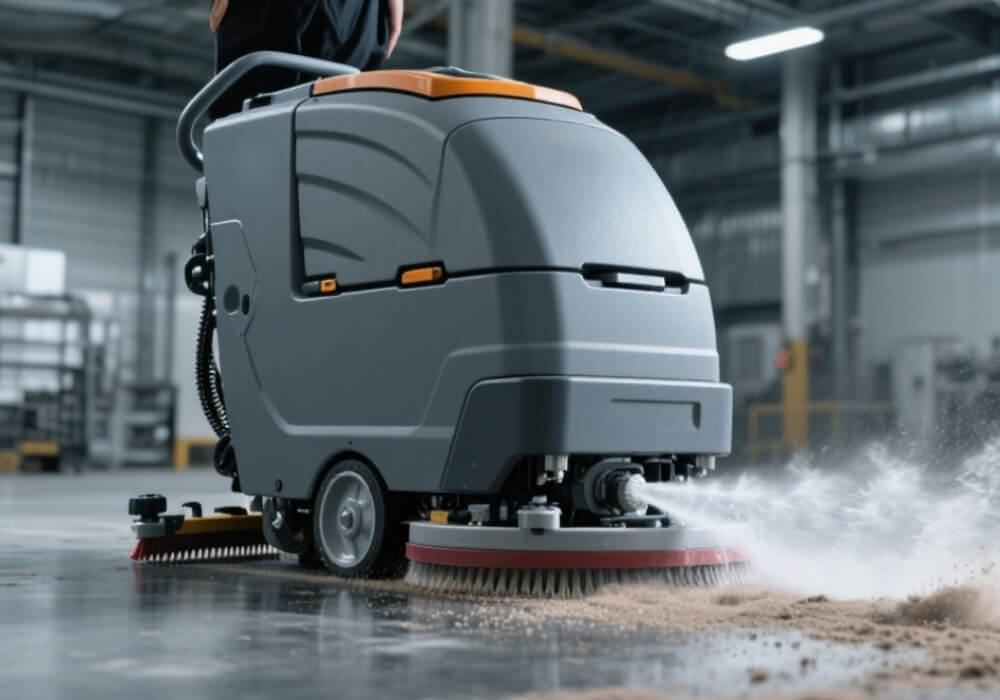
Polisseuse ou autolaveuse : selon l’application
Les deux types d'équipement de nettoyage industriel présentent également des différences dans la subdivision des scénarios d'application.
| Application | Machine recommandée | Raison |
|---|---|---|
| Atelier de fabrication avec de l'huile et de la saleté | autolaveuse | Élimine les contaminants et récupère l'eau sale |
| Entrepôt logistique | autolaveuse | Permet un nettoyage fréquent des grandes surfaces |
| usine de transformation alimentaire | autolaveuse | Le nettoyage humide et la récupération des eaux usées sont essentiels |
| garage de stationnement en sous-sol | autolaveuse | Convient pour la poussière, les traces de pneus et la terre ramenée à l'intérieur des bâtiments. |
| Magasin de détail avec VCT fini | Éponge + polisseuse | Nettoyez soigneusement, puis entretenez la brillance régulièrement. |
| hall d'hôtel | Éponge + polisseuse | Nettoyage quotidien et entretien périodique de l'aspect |
| Couloir de bureaux | Autolaveuse ou polisseuse, selon le type de sol | Choisissez en fonction du problème : saleté ou finition terne |
| Béton industriel non scellé | autolaveuse | Le nettoyage est généralement plus important que le polissage. |
| Béton scellé | Autolaveuse ; polisseuse uniquement si compatible | Suivez les recommandations concernant le revêtement et le tampon |
| Sol en époxy | Autolaveuse avec tampon adapté | Évitez les tampons abrasifs qui pourraient endommager le revêtement. |
| Terrazzo ou pierre finie | Autolaveuse + système de polissage spécialisé | Le matériau et la finition du revêtement de sol déterminent le processus |
Comparaison des coûts entre une polisseuse et une autolaveuse
| Facteur de coût | Laveuse de sol | Polisseuse de sol |
|---|---|---|
| coût initial de l'équipement | Généralement plus élevé en raison des réservoirs, des systèmes de vide et de récupération | Souvent inférieur pour une machine rotative de base |
| Travail | Permet de nettoyer et de récupérer l'eau en un seul passage | Peut nécessiter un nettoyage séparé ou une collecte des résidus |
| Consommables | Brosses, tampons et lames de raclette | Tampons de nettoyage, brosses et produits chimiques pour l'entretien des sols |
| Maintenance | Système de solution, réservoir de récupération, aspirateur, batterie et raclette | Commandes du pilote de la plaquette, du moteur, du câble ou de la batterie et de la poignée |
| Produits chimiques pour l'entretien des sols | Détergent et antimousse si nécessaire | Polissage, décapage ou application de produits de finition pour sols, le cas échéant |
| Productivité | Idéal pour le nettoyage humide de routine | Cela dépend fortement de la tâche de maintenance |
| Équipement supplémentaire | Généralement non requis pour la récupération des eaux usées | Peut nécessiter un aspirateur à eau, une serpillière ou une brosseuse séparée. |
Conclusion : Du point de vue des coûts à long terme, laveuses de sols industriels ont des coûts globaux moins élevés et conviennent aux entreprises qui mettent l'accent sur l'efficacité du nettoyage. En revanche, les machines de polissage industriel sont plus chères, mais elles peuvent apporter une valeur ajoutée à long terme dans les situations où une grande qualité esthétique est requise.

Différences en matière d'exploitation et de maintenance
La difficulté d'exploitation et les coûts de maintenance ont une incidence directe sur les besoins en main-d'œuvre de l'entreprise et sur les coûts d'utilisation à long terme.
Fonctionnement et entretien des autolaveuses
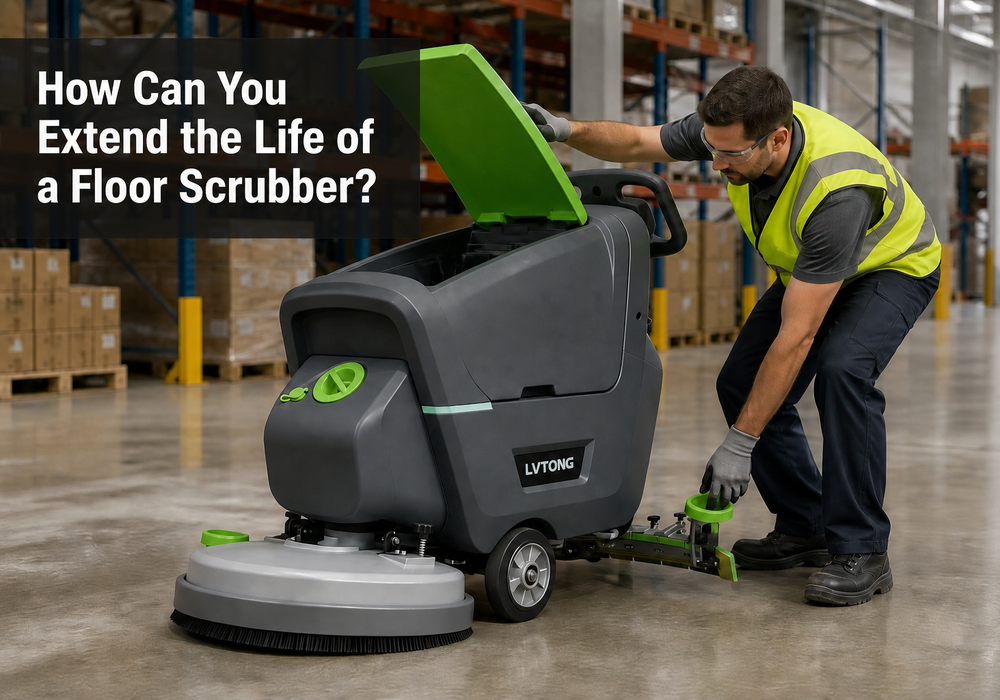
- Vider et rincer le réservoir de récupération après utilisation.
- Nettoyez la raclette et inspectez les lames.
- Enlevez les cheveux et les débris de la brosse ou du tampon.
- Vérifiez le filtre de solution et les tuyaux.
- Chargez et entretenez la batterie conformément aux instructions du fabricant.
- Laissez les réservoirs ouverts pour qu'ils sèchent lorsque la machine est entreposée.
Fonctionnement et entretien des polisseuses de sol
- Choisissez le tampon adapté au revêtement de sol et à la tâche.
- Centrez et installez correctement le coussinet.
- Vérifiez le câble d'alimentation ou la batterie avant utilisation.
- Nettoyer ou remplacer les coussinets usés ou saturés.
- Ne laissez pas le plateau rotatif immobile sur une même zone.
- Enlever la poussière et les résidus chimiques après la tâche.
- Suivez les recommandations du fabricant du revêtement de sol.
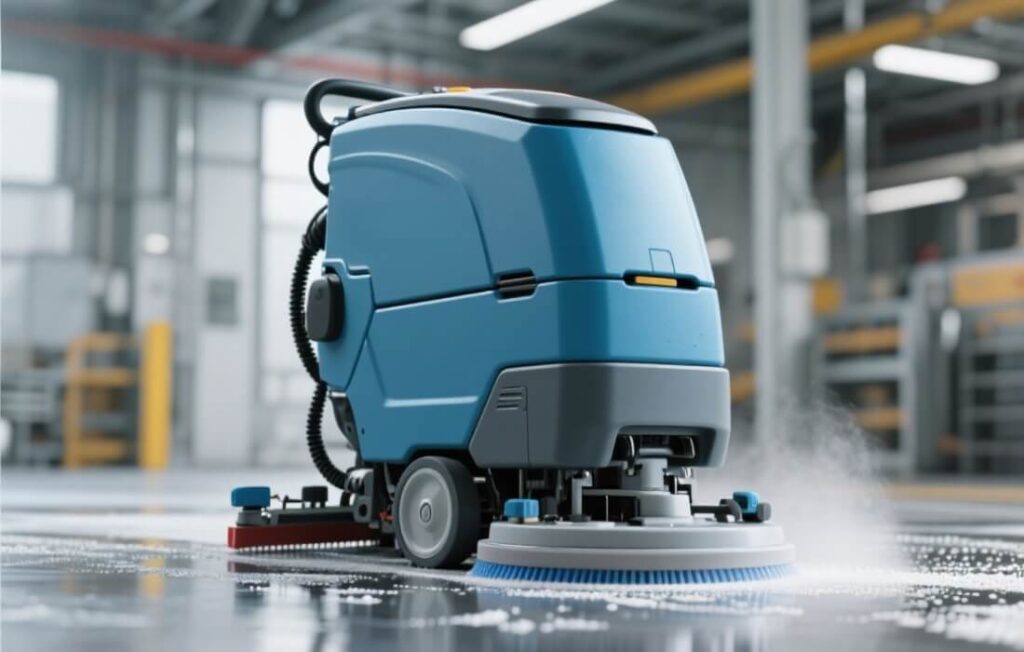
Faut-il choisir une polisseuse ou une autolaveuse ?
Choisissez une autolaveuse si :
• Le sol est sale, huileux, gras, souillé de résidus alimentaires ou de produit de nettoyage.
• Les eaux usées doivent être récupérées immédiatement.
• Cette zone nécessite un nettoyage régulier et fréquent.
• Le risque de glissade et le temps de séchage du sol sont importants.
• Vous nettoyez des entrepôts, des usines, des supermarchés ou des établissements de santé.
Choisissez une polisseuse de sol si :
• Le sol est déjà propre.
• Le principal problème est un aspect terne ou de légères éraflures.
• Le sol possède une finition ou un revêtement compatible.
• Vous avez besoin d'un entretien périodique des surfaces plutôt que d'un nettoyage humide quotidien.
• La récupération des eaux usées n'est pas nécessaire.
Choisissez les deux si :
• L’établissement doit être à la fois propre et avoir une apparence soignée.
• Les sols finis doivent être frottés régulièrement et lustrés périodiquement.
• Les zones à fort passage nécessitent un nettoyage quotidien et une restauration régulière de leur brillance.
Règle simple : Si le problème est la saleté, utilisez une autolaveuse. Si le problème est un revêtement de sol terne mais propre, utilisez une polisseuse.

Questions fréquemment posées
Quelle est la différence entre une polisseuse de sol et une autolaveuse ?
Une autolaveuse applique une solution de nettoyage, déloge la saleté et récupère l'eau sale en une seule opération. Une polisseuse utilise un disque rotatif pour l'entretien des surfaces, l'élimination des rayures superficielles, le récurage ou la restauration du brillant, mais elle ne récupère généralement pas les eaux usées.
Une polisseuse de sol est-elle la même chose qu'une autolaveuse ?
Non. Une polisseuse de sol est une machine rotative de traitement de surface, tandis qu'une autolaveuse combine l'application de la solution, le brossage et la récupération des eaux usées. Elles peuvent utiliser des disques similaires, mais leurs procédés de nettoyage diffèrent.
Une polisseuse de sol peut-elle nettoyer un sol sale ?
Une polisseuse de sol à basse vitesse peut effectuer certains travaux de nettoyage avec la brosse, le tampon et le produit chimique appropriés. Cependant, elle ne récupère généralement pas la solution sale ; un aspirateur eau et poussière ou un autre système de collecte est donc nécessaire. Pour un nettoyage humide régulier, une autolaveuse est généralement plus efficace.
Une autolaveuse peut-elle polir un sol ?
Une autolaveuse équipée d'un disque adapté peut améliorer l'aspect de certains sols finis, mais elle ne remplace pas une polisseuse ou une lustreuse dédiée lorsqu'une restauration haute brillance est nécessaire. Suivez toujours les recommandations du fabricant du revêtement de sol et du disque.
Faut-il frotter ou polir un sol en premier ?
Commencez par frotter le sol pour enlever la saleté et les résidus. Laissez-le sécher complètement, puis polissez-le ou lustrez-le si sa finition nécessite une restauration de son brillant.
Conclusion
Une polisseuse et une autolaveuse ne sont pas interchangeables. L'autolaveuse est le choix idéal pour éliminer la saleté, la graisse, les résidus liquides et les eaux usées. Une polisseuse est plus appropriée pour un sol déjà propre nécessitant un léger entretien de surface ou une amélioration de son aspect.
De nombreuses installations commerciales utilisent les deux machines successivement : d'abord le nettoyage et la récupération de l'eau sale, puis le polissage ou le lustrage du sol complètement sec si nécessaire.
Avant de choisir l'équipement, identifiez le matériau du sol, sa finition, le type de salissure, la fréquence de nettoyage et le résultat souhaité. Pour les grandes installations nécessitant un nettoyage humide régulier, explorez Autolaveuses-sécheuses commerciales LVTONG ou contactez notre équipe pour obtenir une recommandation de machine en fonction de votre zone de nettoyage.