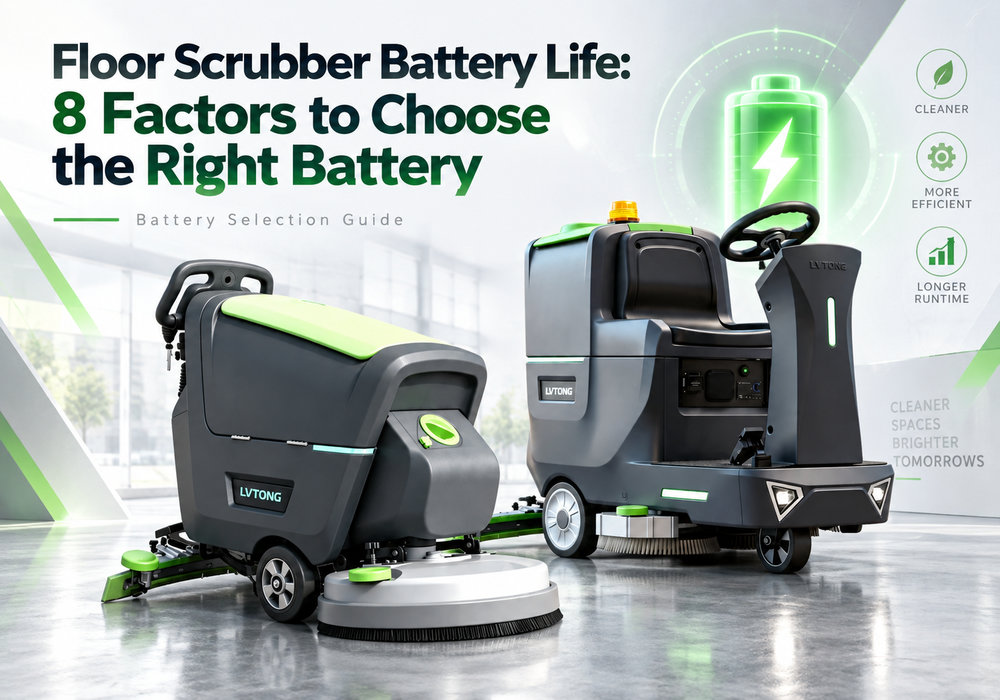
Floor scrubber battery life directly affects cleaning runtime, charging frequency, maintenance cost, replacement cycle, and total operating cost. For factories, warehouses, logistics centers, supermarkets, hospitals, and other commercial or industrial facilities, choosing the right battery is not only about the purchase price.
A good floor scrubber battery should match the machine voltage, cleaning frequency, working hours, charging conditions, safety requirements, and long-term cost expectations. This guide compares lithium vs lead acid floor scrubber batteries and explains the key factors that affect battery life, runtime, charging speed, safety protection, and replacement needs.
Quick Answer: What Affects Floor Scrubber Battery Life?
Floor scrubber battery life mainly depends on battery type, cycle life, charging habits, discharge depth, operating temperature, maintenance quality, and cleaning frequency. Lithium floor scrubber batteries usually last longer, charge faster, and require less maintenance than lead-acid batteries.
For high-frequency commercial or industrial cleaning, lithium batteries often provide better long-term value because they offer longer cycle life, faster charging, lower maintenance needs, and more stable runtime. For low-frequency use or limited budgets, lead-acid batteries may still be a practical option.
Floor Scrubber Battery Market Trends
The floor scrubber battery market is shifting from traditional lead-acid batteries to lithium-ion and LiFePO4 batteries because commercial and industrial buyers want longer battery life, faster charging, lower maintenance, and better long-term return on investment.
For cleaning teams using scrubbers every day, battery performance has a direct impact on labor efficiency and machine uptime. This is why buyers now compare battery life, charging time, cycle life, safety protection, carbon emissions, and replacement cost before choosing a floor scrubber battery.
Types of Floor Scrubber Batteries
There are several common battery types used in floor scrubbers. The most important comparison for most buyers is lithium vs lead acid floor scrubber battery, because these two options differ in price, battery life, charging speed, maintenance needs, safety, and long-term cost.
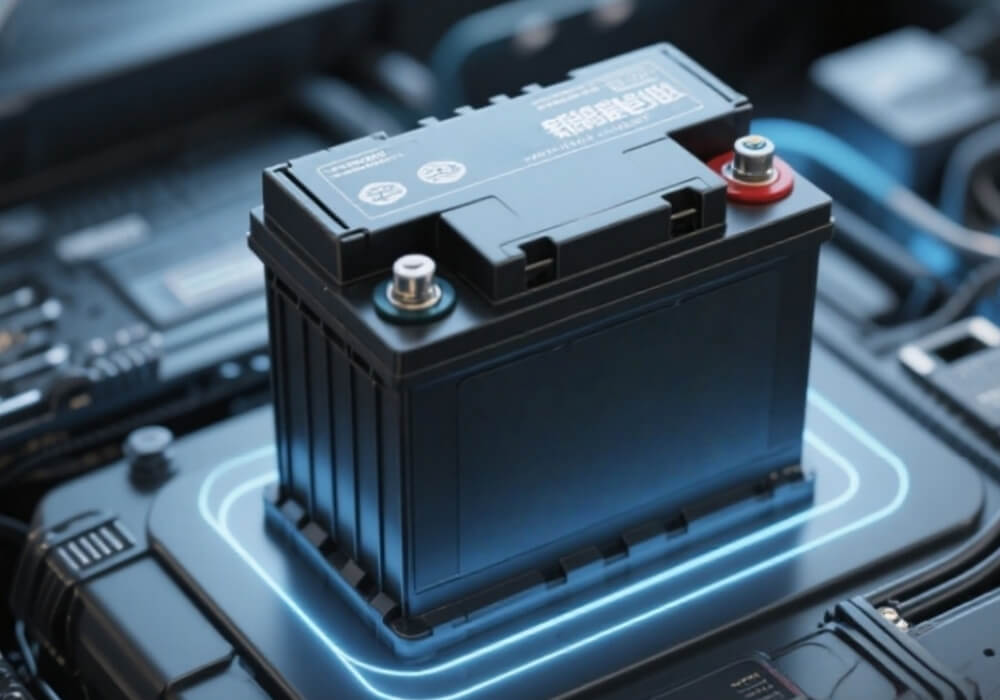
Lead-Acid Floor Scrubber Batteries: Flooded, AGM, and Gel
As a traditional technology, lead-acid batteries have low cost, mature technology and a complete recycling system advantages.
Flooded Lead-Acid Battery: With the lowest price, but requires regular addition of distilled water for maintenance, and produces hydrogen and oxygen gases during charging, requiring a well-ventilated environment.
AGM Sealed Lead-Acid Battery: Using glass fiber diaphragm to absorb electrolyte, doesn’t require water addition for maintenance, can be installed horizontally, and has better leakage prevention performance.
Gel Lead-Acid Battery: The electrolyte is gelled to further enhance vibration resistance and deep cycle performance, but the cost is relatively high.
Quick Answer
Lithium batteries are becoming the preferred floor scrubber battery choice because they offer longer runtime, faster charging, and lower maintenance requirements than traditional lead-acid batteries.
Lithium Floor Scrubber Batteries: LiFePO4 and Ternary Lithium
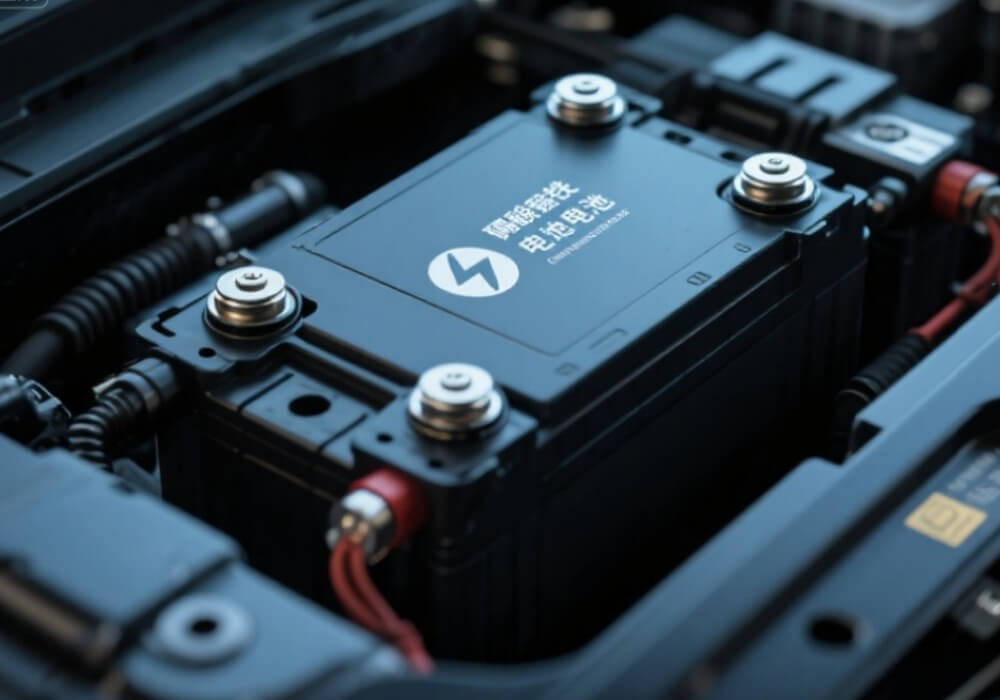
As an emerging technology, lithium batteries have high energy density, long cycle life and fast charging speed advantages.
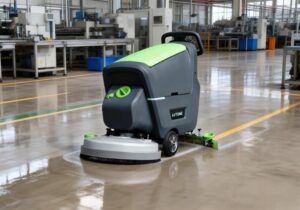
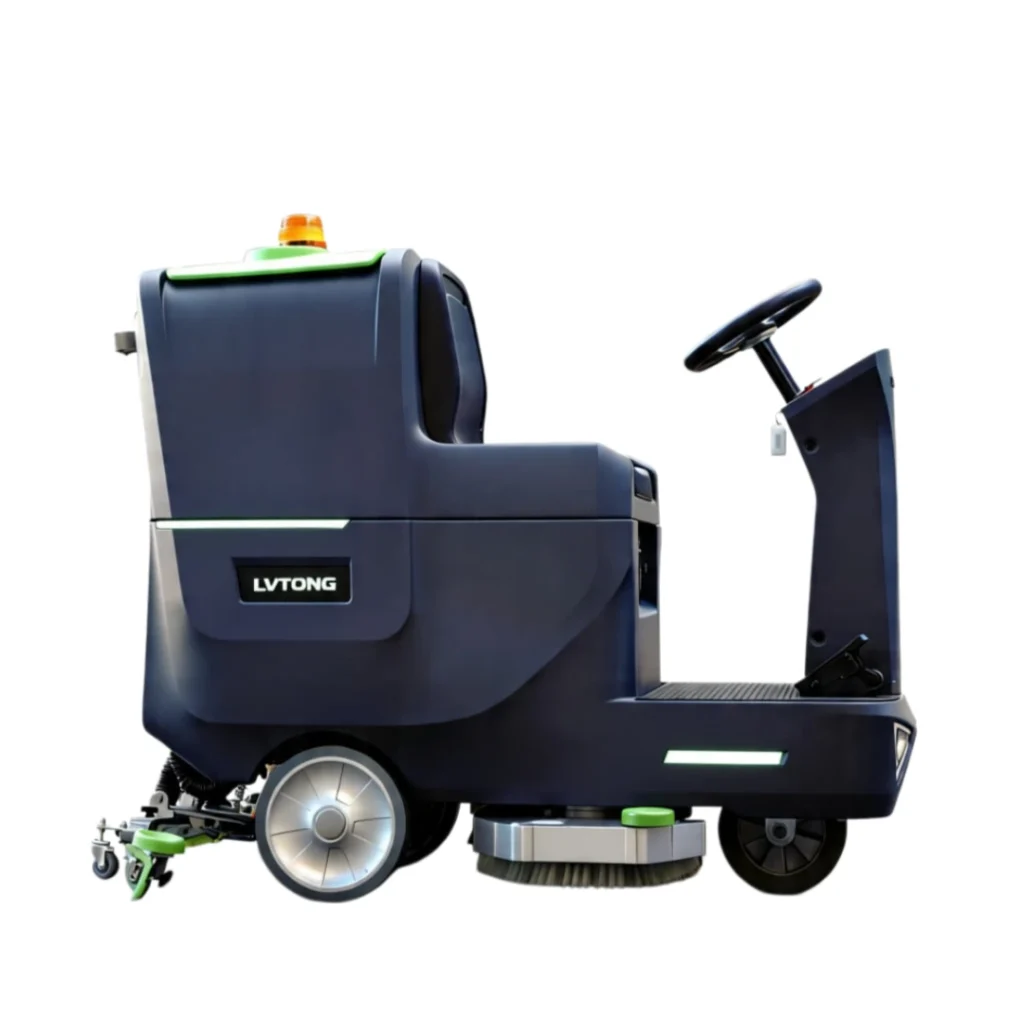
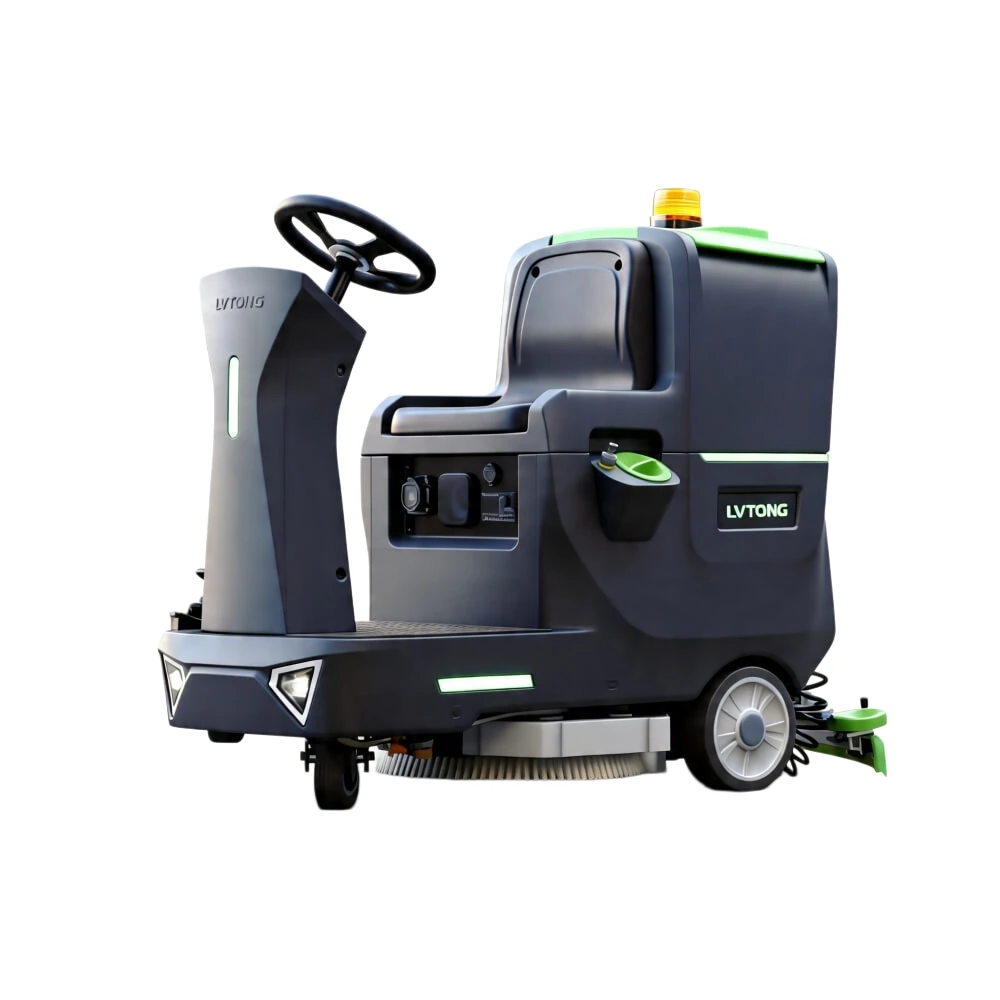
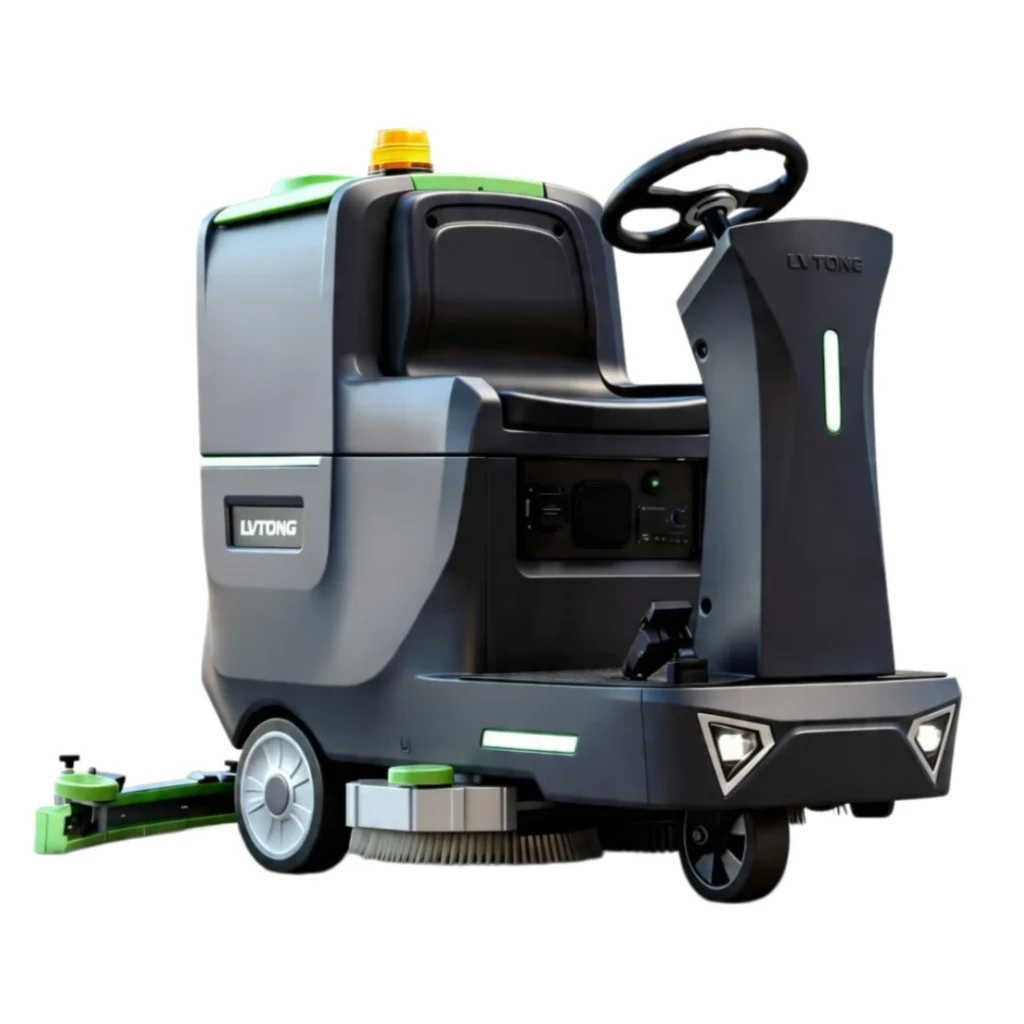
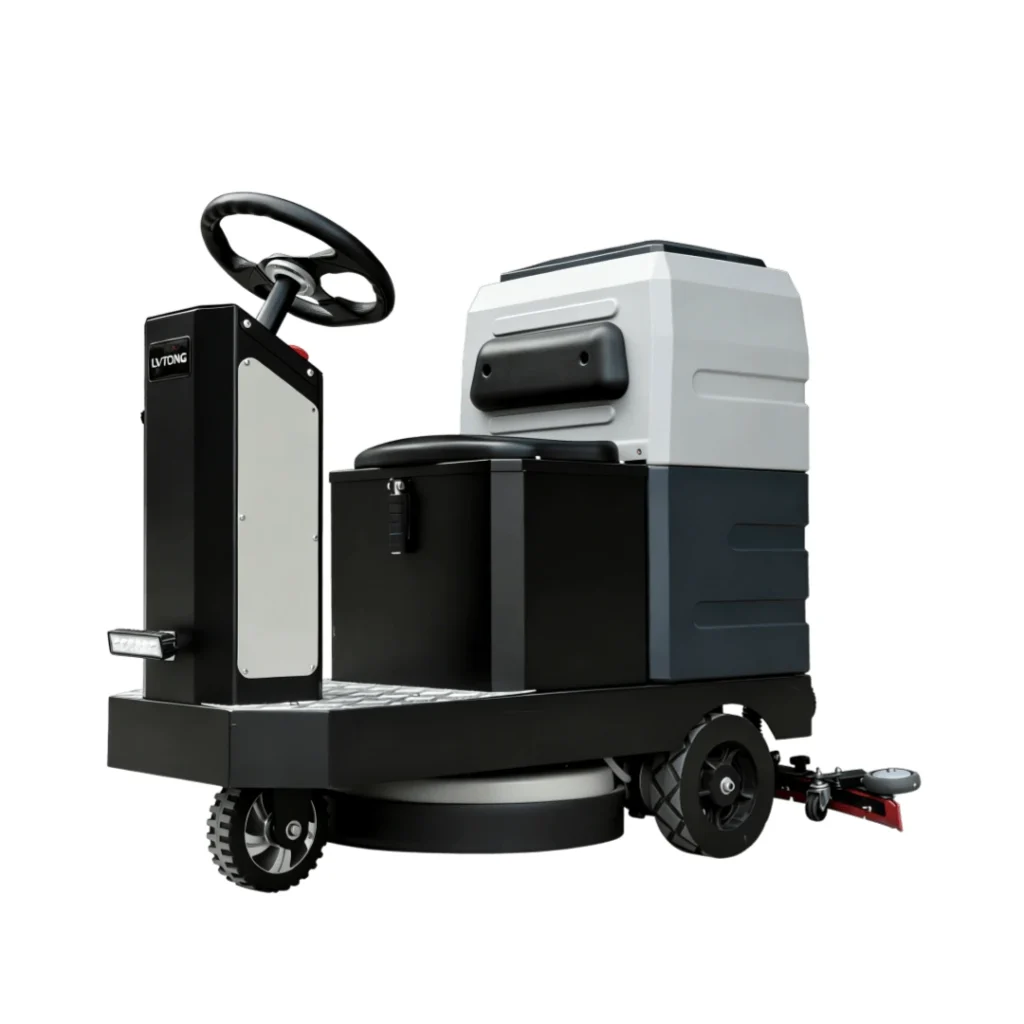
Lithium Iron Phosphate Batteries: With excellent thermal stability and safety featues, they are the preferred choice for industrial equipment. Their cycle life can reach 2,000-5,000 times, far exceeding the 300-500 times of lead-acid batteries. Taking LVTONG S5 Industrial Floor Scruuber as an example, it is using 24V 100AH Lithium Battery.
Ternary Lithium Battery: It has higher energy density, higher requirements for the battery management system (BMS), and requires strict control of the charging and discharging temperature range.
Nickel-Cadmium Batteries
This type of battery offers good performance and a long cycle life. However, its memory efficiency decreases over time and due to environmental issues. Therefore, it has not been widely used.
For most industrial floor scrubber applications, lithium batteries are now preferred because of their efficiency, lifespan, and lower long-term operating costs.
Lithium vs Lead Acid Floor Scrubber Battery
Lithium and lead-acid batteries are the two most common choices for floor scrubbers. Lead-acid batteries usually have a lower purchase price, while lithium batteries usually provide longer battery life, faster charging, higher efficiency, and lower maintenance needs.
| Factor | Lithium Floor Scrubber Batt ery |
Lead-Acid Floor Scrubber Battery |
| Initial cost | Higher | Lower |
| Battery life | Longer cycle life | Shorter cycle life |
| Charging time | Faster charging | Slower charging |
| Maintenance | Low maintenance | Requires more maintenance |
| Runtime stability | More stable output | Performance may drop faster |
| Energy efficiency | Higher | Lower |
| Best for | Daily or high-frequency cleaning | Low-frequency or budget-sensitive use |
| Long-term cost | Often lower over time | May require more replacement and maintenance |
For high-frequency cleaning operations, lithium batteries are usually worth considering because they reduce charging downtime and maintenance work. For occasional use, lead-acid batteries may still be suitable when initial budget is the main concern.
Recommended Floor Scrubber Battery Type by Application Scenario
Choosing the right floor scrubber battery depends not only on battery technology, but also on the facility type, cleaning frequency, operating hours and maintenance requirements.
Different applications require different battery solutions. A battery that works well for occasional commercial cleaning may not be the best choice for intensive industrial environments.
The following guide helps buyers select the most suitable battery type based on real operating conditions.
| Application Scenario | Recommended Battery Choice | Why This Battery Fits |
|---|---|---|
| Small commercial facilities with occasional cleaning | Lead-acid battery | Lower initial investment and suitable for limited cleaning schedules |
| Offices, retail stores and light commercial environments | Sealed lead-acid or lithium battery | Provides reliable performance with moderate maintenance requirements |
| Warehouses with daily cleaning operations | Lithium battery | Faster charging, longer service life and reduced maintenance compared with traditional batteries |
| Factories and industrial facilities | High-capacity lithium battery system | Suitable for longer working hours and frequent cleaning cycles |
| Multi-shift cleaning operations | Lithium battery | Helps reduce charging interruptions and improves machine availability |
| Facilities requiring low maintenance | Lithium battery | Reduces routine battery service work and improves operational convenience |
| Cost-sensitive applications with limited usage | Lead-acid battery | Practical when initial purchase cost is the main priority |
Before selecting a floor scrubber battery, buyers should evaluate:
• Required cleaning hours per shift
• Available charging time
• Cleaning area size
• Machine workload
• Battery replacement frequency
• Total cost of ownership
The best floor scrubber battery is not simply the battery with the highest specifications. It is the battery configuration that matches the facility’s actual cleaning workflow.
How Long Do Floor Scrubber Batteries Last?
Floor scrubber battery life depends on battery type, cycle life, charging habits, discharge depth, operating temperature, maintenance, and how often the machine is used. In general, lithium floor scrubber batteries last longer than lead-acid batteries.
Lead-acid batteries are often suitable for lower-frequency cleaning, but they usually require more maintenance and may need replacement sooner. Lithium batteries, especially LiFePO4 batteries, usually offer longer cycle life, faster charging, and better long-term value for daily commercial or industrial cleaning.
To extend floor scrubber battery life, avoid over-discharge, use the correct charger, keep the charging area dry and ventilated, avoid extreme temperatures, and inspect the battery regularly for swelling, leakage, odor, or abnormal heat.
Battery Performance Factors: Capacity, Voltage, Charging, and Cycle Life
Battery performance directly affects floor scrubber battery life, runtime, charging efficiency, and cleaning productivity. When choosing a battery, pay attention to capacity, voltage, charging speed, cycle life, self-discharge rate, and energy density.
Capacity and Runtime
The battery capacity determines the battery life of the floor scrubber. It is usually expressed in ampere hours (Ah) such as 24V100AH, 24V120AH, etc. In general, the larger the capacity, the longer the floor scrubber can continue to operate after a single charge.
In addition, for industrial floor scrubbers, the required battery capacity varies for different types of scrubbers. Walk behind floor scrubber power is relatively small, and it can generally meet daily needs with batteries of specifications such as 24V 100AH and 24V 120AH. On the other hand, the power of ride on floor scrubber is relatively high, and it needs to be matched with large-sized batteries such as 24V200AH and 24V240AH to ensure the battery life of the cleaning machine.
Battery Runtime: Specification vs Real Working Conditions
Battery capacity is one of the most important factors when choosing a floor scrubber battery, but the rated capacity does not always represent real cleaning time.
Manufacturers usually provide battery runtime under controlled conditions. However, actual working time can change depending on floor conditions, cleaning intensity and machine operation.
The following factors can influence real battery performance:
| Factor | How It Affects Battery Runtime |
|---|---|
| Floor condition | Rough, uneven or damaged floors may require more cleaning power |
| Dirt level | Heavy soil, oil and industrial contamination increase machine workload |
| Brush pressure | Higher brush pressure consumes more battery energy |
| Cleaning route | Frequent stopping, turning and restarting can reduce efficiency |
| Vacuum recovery system | Higher water recovery demand may increase power consumption |
| Operator habits | Incorrect operation may create unnecessary battery usage |
| Machine settings | Higher cleaning intensity settings usually require more energy |
For industrial facilities, battery selection should not be based only on Amp-hour (Ah) capacity.
A practical calculation should consider:
Required Runtime = Cleaning Hours per Shift + Real Operating Conditions + Safety Margin
A suitable floor scrubber battery should complete the planned cleaning route without unexpected charging interruptions.
A battery that looks sufficient on paper may not provide enough working time in real warehouse, factory or logistics environments.
Voltage Compatibility
The voltage needs to match the rated voltage of the floor scrubber motor. Common voltages include 12V, 24V, 36V and 48V. In addition, series batteries should be selected from the same brand, batch, and consistent performance to avoid overall performance degradation caused by mismatched performance.
Charging Speed and Efficiency
Charging speed is an important factor affecting the efficiency of industrial floor scrubbers. The charging speed of lithium batteries is fast, with taking 3-5 hours to fully charge. On the contrary, lead-acid batteries have a slower charging speed, with taking 7-8 hours to fully charge.
Cycle Life and Battery Lifespan
Cycle life refers to the number of charge and discharge cycles a battery undergoes under certain conditions. The longer the cycle life, the longer the battery’s lifespan, and the lower the long-term usage cost. The cycle life of lead-acid batteries is generally 300-500 times, while the cycle life of lithium batteries is 1000-2000 times.
Self-Discharge Rate
The self discharge rate represents the speed at which the battery automatically loses power when it is idle. The monthly self discharge rate of lead-acid batteries is about 3% -5%, while that of lithium batteries is only 1% -2%.

Energy Density
It refers to the energy stored in a battery per unit volume or weight. The higher the energy density, the more electricity a battery can store under the same volume or weight. For industrial floor scrubbers, lithium batteries energy density is higher than that of lead-acid batteries.
Floor Scrubber Battery Cost and Long-Term ROI
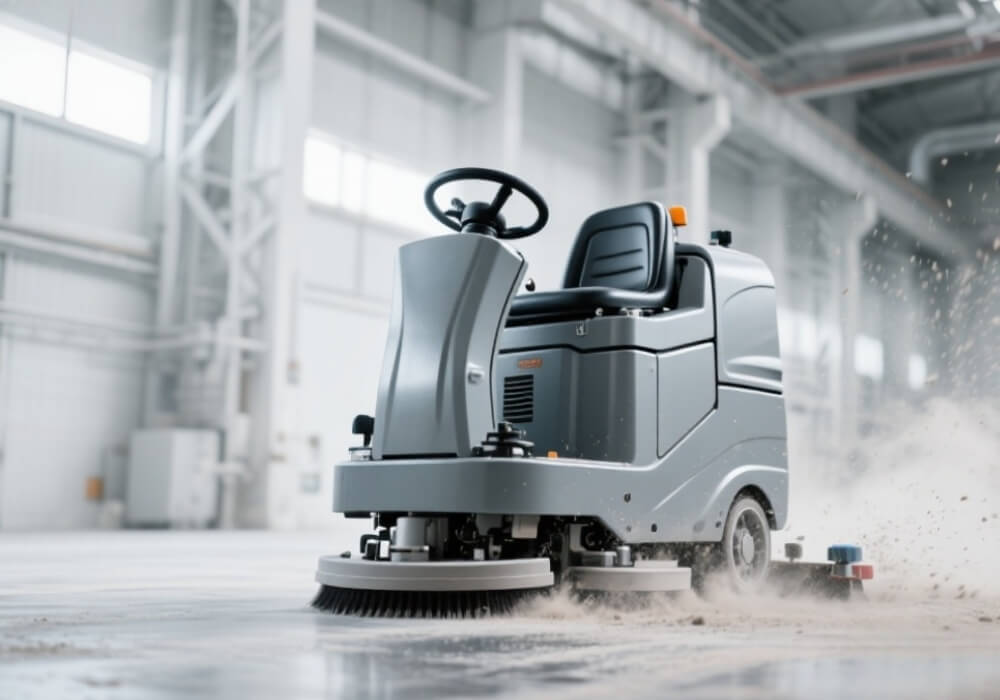
Floor scrubber battery cost should not be judged only by the initial purchase price. Buyers should also compare charging efficiency, replacement cycle, maintenance cost, energy consumption, downtime risk, and long-term return on investment.
| Lithium Battery | Lead-Acid Battery | |
| Procurement Cost | 1400-2100$ | 400-700$ |
| Cycle Life | 2000 Times | 500 Times |
| Maintenance Cost | Replace 3 Times (5 Years) | Replace Once (5 Years) |
| Energy Consumption Cost | Charging efficiency is about 95% | Charging efficiency is about 80% |
Total Cost of Ownership: Lithium vs Lead Acid Floor Scrubber Batteries
When comparing floor scrubber batteries, the lowest purchase price does not always represent the best long-term value.
Industrial buyers should consider the complete ownership cost, including:
• Initial battery investment
• Charging time
• Maintenance requirements
• Battery replacement frequency
• Equipment downtime
• Labor costs related to maintenance
The total cost of ownership often provides a more accurate comparison than the initial purchase price.
| Cost Factor | Lithium Battery | Lead-Acid Battery |
|---|---|---|
| Initial purchase cost | Higher upfront investment | Lower initial cost |
| Charging speed | Faster charging capability | Longer charging time |
| Maintenance requirement | Low maintenance | Requires more regular maintenance |
| Battery lifespan | Generally longer service life | Shorter replacement cycle |
| Downtime risk | Lower downtime risk | Higher downtime possibility |
| Daily intensive operation | Excellent choice | Less suitable for frequent heavy use |
| Occasional cleaning | Suitable but may have higher upfront cost | Practical budget option |
For warehouses, factories and facilities operating floor scrubbers every day, lithium batteries can provide better long-term value because reduced maintenance and downtime can offset the higher initial investment.
For occasional cleaning applications where budget is the main concern, lead-acid batteries may still be a practical solution.
The correct battery choice should be based on total operating cost rather than purchase price alone.
Investment Return Analysis
Lithium floor scrubber batteries usually have a higher initial purchase cost than lead-acid batteries, but they can provide better long-term value in high-frequency cleaning operations. Faster charging, longer cycle life, higher energy efficiency, and lower maintenance requirements can help offset the higher upfront cost over time.
For low-frequency use, such as cleaning less than three times per week, lead-acid batteries may be more cost-effective. For daily or high-frequency cleaning, lithium batteries are often a better choice because they reduce downtime, replacement frequency, and maintenance labor.
Environmental Impact and Carbon Emissions of Floor Scrubber Batteries
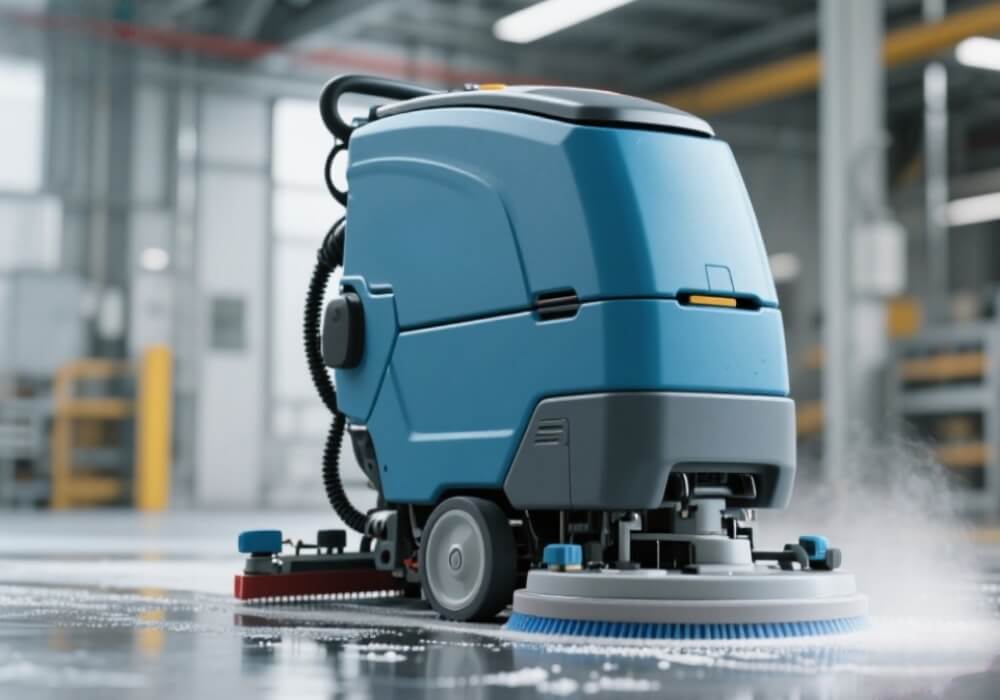
Battery selection also affects environmental performance, carbon emissions, recycling, and long-term sustainability. Buyers should compare not only battery life and cost, but also energy efficiency, raw material impact, recycling systems, and operating environment.
Temperature Adaptability
Lead acid batteries will experience a 20% -30% decrease in battery life and charging efficiency in low-temperature environments. Moreover, in high temperature environments, it will accelerate grid corrosion and water evaporation, shortening the lifespan. Similarly, lithium batteries are also affected by temperature conditions. Under low or high temperature conditions, the battery capacity will decrease. Overall, lithium batteries have better adaptability than lead-acid batteries, with a working temperature range of -20℃ to 60℃.
Sustainable Development
Lithium batteries don’t contain heavy metals such as lead and cadmium, and they have less environmental pollution than lead-acid batteries. However, its recycling system is not as perfect as lead-acid batteries.
| Dimension | Lead Acid Battery | Lithium Battery |
| Raw Material Extraction | Lead is highly toxic and poses a serious health threat | High water consumption |
| Manufacturing | Relatively low energy consumption & carbon emissions | High energy consumption and carbon emissions |
| Usage Phase | Low efficiency (70-85%), Heavy | High efficiency (>95%) , High energy density |
| Scrap and Recycle | Extremely high recovery rate (>99%) | Low recovery rate |
| Durability | Short sustainable use time | Good durability |
Battery Safety Protection: Overcharge, Over-Discharge, Overcurrent, and Temperature Control
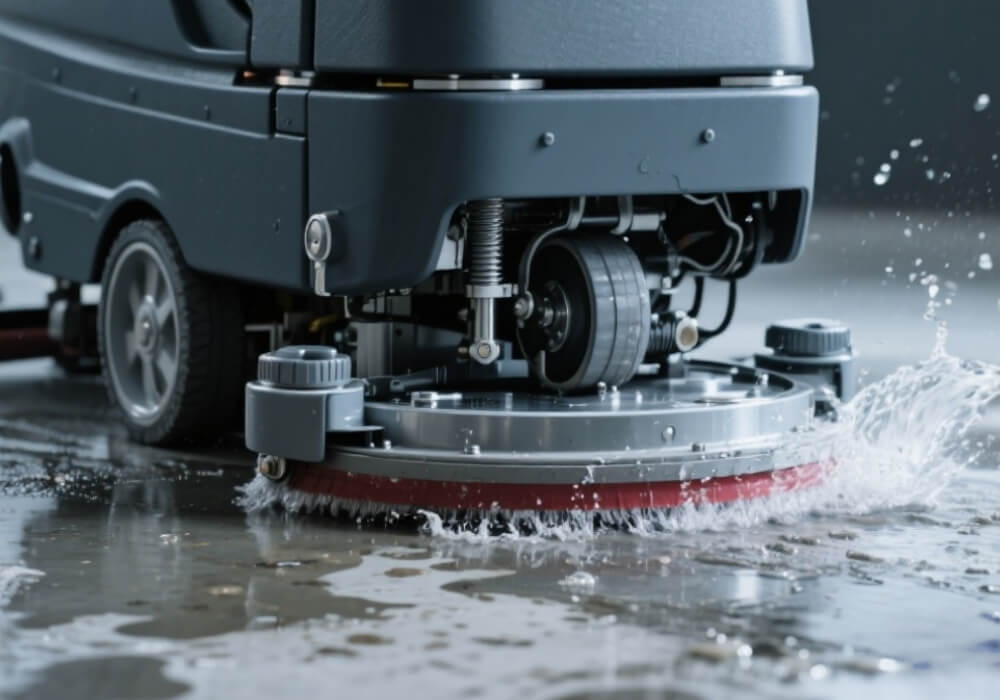
Battery safety protection is one of the most important factors affecting floor scrubber battery life and machine reliability. A safe battery system should include overcharge protection, over-discharge protection, overcurrent protection, short-circuit protection, and temperature control.
Lead-Acid Battery
The main risks are electrolyte leakage, corrosiveness, and explosive gases generated during charging. Therefore, during use, it need to pay attention to several details:
- Ensure the charging area is well ventilated.
- No fireworks allowed.
- Avoid metal contact between the positive and negative terminals, which could cause a short circuit.
- Always open the water filler cap during charging to allow gas to escape.
Lithium Battery Safety
Lithium batteries require a reliable battery management system, also known as BMS. The BMS helps monitor voltage, current, temperature, charge status, and discharge status. It can protect the floor scrubber battery from overcharge, over-discharge, overcurrent, overheating, and short-circuit risks.
Over-discharge protection is especially important because deep discharge can shorten battery life, reduce usable capacity, and affect long-term performance. If a floor cleaner machine frequently runs until the battery is completely empty, battery aging may accelerate.
Safe Use Recommendations
- The charging area should be set up in a ventilated, dry and away from flammable materials.
- It is strictly forbidden to mix batteries of different models or with different age levels.
- Check the battery appearance regularly to see if there is swelling, leakage, or odor. If any of these symptoms are found, stop using the battery immediately.
- Proper firefighting equipment (Fire extinguishers for electrical fires)
Service, Warranty, and Battery Charger Compatibility
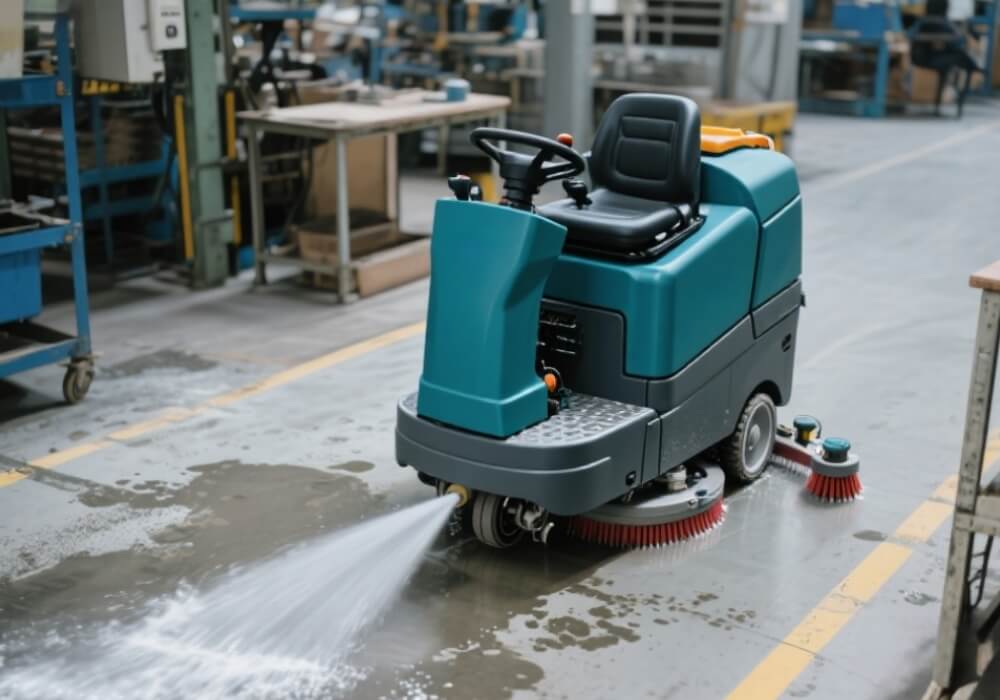
Floor scrubber battery quality directly affects machine uptime, cleaning efficiency, safety, and total cost. When choosing a battery, buyers should also check charger compatibility, warranty period, technical support, replacement availability, and recycling service.
When evaluating a battery supplier, consider technology and R&D capability, CE, UL, RoHS, or other relevant certifications, application cases, after-sales service, repair support, and spare parts availability. A reliable battery supplier should provide clear warranty terms, correct charging guidance, and long-term technical support.
Floor Scrubber Battery Maintenance Checklist
Proper battery maintenance directly affects cleaning performance, equipment reliability and battery service life.
A well-maintained battery helps reduce unexpected downtime and keeps commercial floor scrubbers operating consistently.
| Maintenance Item | Recommended Action |
|---|---|
| Charger compatibility | Always use the correct charger designed for the battery voltage and chemistry |
| Charging habits | Avoid unnecessary deep discharge and follow recommended charging procedures |
| Battery terminals | Keep terminals clean and inspect for corrosion or loose connections |
| Charging environment | Keep charging areas dry, ventilated and away from extreme temperatures |
| Battery condition | Check for abnormal heat, swelling, leakage or unusual performance changes |
| Storage condition | Follow recommended storage procedures when equipment is unused |
| Daily operation | Avoid unnecessary overload and inefficient cleaning practices |
A preventive maintenance routine should include regular inspection, correct charging procedures and monitoring of battery performance.
Battery maintenance should be considered part of overall floor scrubber maintenance because battery condition directly affects cleaning productivity and operating costs.
How to Choose the Right Floor Scrubber Battery
Choosing the right floor scrubber battery requires a balance of battery life, runtime, charging speed, safety, maintenance, cost, and machine compatibility.
Use this checklist before making a decision:
- Choose lithium batteries for daily or high-frequency cleaning.
- Choose lead-acid batteries for low-frequency use or limited budgets.
- Match battery voltage with the floor scrubber motor and charger.
- Select battery capacity based on working hours and cleaning area.
- Compare cycle life and expected replacement needs.
- Check charging time and charging environment.
- Make sure the battery has overcharge, over-discharge, overcurrent, and temperature protection.
- Evaluate long-term cost, not only initial purchase price.
- Confirm warranty, technical support, and replacement availability.
- Build a battery management plan for charging, use, maintenance, storage, and recycling.
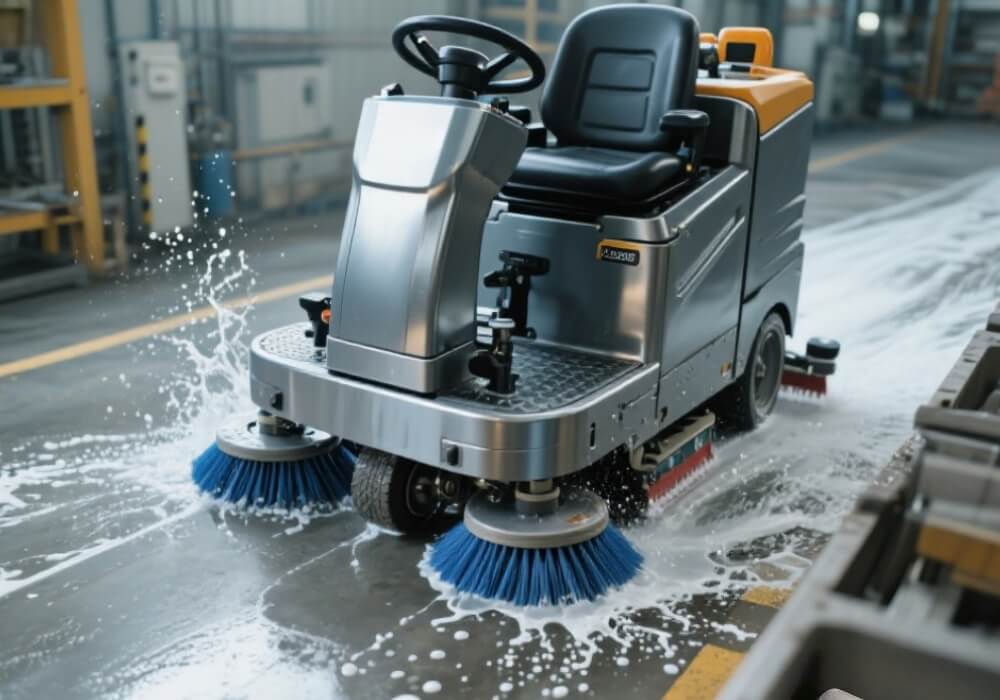
Battery selection affects runtime, maintenance cost, and cleaning efficiency. The right floor scrubber battery depends on usage frequency and operating requirements.
Floor Scrubber Battery Buying Checklist
Before purchasing a battery-powered floor scrubber, buyers should evaluate more than battery type and capacity.
The following checklist helps ensure the selected battery matches the facility requirements.
| Buying Checklist | Why It Matters |
|---|---|
| Battery voltage compatibility | Ensures the battery works correctly with the floor scrubber system |
| Battery capacity | Determines whether the machine can complete the required cleaning route |
| Expected runtime | Helps avoid unexpected charging interruptions |
| Charging time | Affects daily cleaning schedules and productivity |
| Battery lifespan | Influences replacement frequency and long-term cost |
| Charger compatibility | Prevents charging problems and battery damage |
| Safety protection features | Improves operational reliability |
| Replacement battery availability | Reduces future downtime |
| Technical support | Helps solve operational issues quickly |
| Total ownership cost | Provides a realistic long-term investment comparison |
Choosing the correct floor scrubber battery configuration helps improve productivity, reduce downtime and create more predictable cleaning costs.
For industrial cleaning applications, battery selection should always consider the complete operating environment rather than a single specification.
Floor Scrubber Battery Life FAQs
What is the best floor scrubber battery for industrial use?
For high-frequency industrial cleaning, lithium floor scrubber batteries are usually the better choice because they offer longer battery life, faster charging, lower maintenance, and more stable runtime. For low-frequency use or limited budgets, lead-acid batteries may still be practical.
How long do floor scrubber batteries last?
Floor scrubber battery life depends on battery type, cycle life, charging habits, temperature, discharge depth, and maintenance. Lithium batteries generally last longer than lead-acid batteries and are better suited for daily cleaning operations.
Which is better: lithium or lead acid floor scrubber battery?
Lithium batteries are better for daily or high-frequency cleaning because they charge faster, last longer, and require less maintenance. Lead-acid batteries are usually cheaper upfront and may be suitable for occasional use.
What battery size does a ride-on floor scrubber need?
A ride-on floor scrubber battery should match the machine voltage, motor power, working hours, and cleaning area. Larger ride-on scrubbers usually need higher-capacity batteries to maintain stable runtime during long cleaning tasks.
What voltage do floor scrubber batteries use?
Common floor scrubber battery voltages include 12V, 24V, 36V, and 48V. The battery voltage must match the rated voltage of the machine motor and charger. Mismatched voltage may reduce performance or damage the equipment.
What is the best battery for an industrial floor scrubber?
The best battery for an industrial floor scrubber depends on cleaning frequency, working hours and facility requirements.
Lithium batteries are usually preferred for daily industrial cleaning because they provide faster charging, longer service life and lower maintenance requirements.
Lead-acid batteries can still be suitable for occasional cleaning applications where initial purchase cost is the main consideration.
How long does a floor scrubber battery last?
The service life of a floor scrubber battery depends on battery type, charging habits, operating environment and maintenance quality.
Lithium batteries generally provide longer service life compared with traditional lead-acid batteries, especially in high-frequency commercial and industrial cleaning applications.
Are lithium floor scrubber batteries worth the higher cost?
Lithium floor scrubber batteries usually require a higher initial investment, but they can provide better long-term value through faster charging, lower maintenance requirements, reduced downtime and longer replacement intervals.
For facilities operating cleaning machines frequently, the total cost advantage can become significant over the equipment lifetime.
Can I replace a lead-acid floor scrubber battery with lithium?
In many cases, upgrading from lead-acid to lithium is possible, but compatibility must be confirmed.
Before upgrading, buyers should check battery voltage, charger compatibility, installation space, battery management system requirements and manufacturer recommendations.
Conclusion: Choosing the Right Battery for Longer Floor Scrubber Battery Life
Choosing the right floor scrubber battery depends on cleaning frequency, runtime requirements, charging conditions, safety protection, maintenance capability, and long-term operating cost. For high-frequency cleaning operations, lithium batteries usually provide longer battery life, faster charging, lower maintenance, and better long-term value. For low-frequency use, lead-acid batteries may still be a cost-effective option.
Before making a decision, compare lithium vs lead acid floor scrubber batteries by capacity, voltage, charging speed, cycle life, safety protection, environmental impact, service support, and replacement needs. The right battery can improve cleaning efficiency, reduce downtime, extend machine life, and lower total operating cost.