Introduction
A Nilfisk floor scrubber is often considered by factories, warehouses, logistics centers, shopping facilities, healthcare environments and other professional cleaning operations because Nilfisk is an established global cleaning equipment brand.
However, choosing a floor scrubber should not be based on brand recognition alone.
For B2B buyers, the more important questions are:
- Does the machine fit the facility?
- Is the cleaning width suitable for the layout?
- How often must the solution and recovery tanks be serviced?
- What battery configuration is required?
- Are spare parts readily available in the destination market?
- How will technical problems be handled?
- What are the ongoing consumable costs?
- Is autonomous cleaning actually necessary?
- What is the total cost of ownership?
- Would another manufacturer provide a better fit for the project?
This guide explains how to compare a Nilfisk floor scrubber with alternative machines, including LVTONG walk-behind and ride-on floor scrubbers, without assuming that one brand is automatically better for every buyer.
Quick Answer: Should You Consider a Nilfisk Floor Scrubber Alternative?
Yes. A Nilfisk floor scrubber alternative may be worth evaluating if it provides a better match for your operating, service or commercial requirements.
Buyers commonly evaluate alternatives when they need:
- A different acquisition-cost level;
- Another spare-parts or service model;
- Different battery configurations;
- A machine better suited to narrow or large spaces;
- Manufacturer-direct technical communication;
- OEM or private-label options;
- A second supplier for an existing equipment portfolio.
However, Nilfisk may still be the better fit when a company already operates a standardized Nilfisk fleet, has strong local dealer support, requires specific Nilfisk technologies or prioritizes advanced robotic and connected cleaning capabilities.
The best approach is simple:
Compare machines model by model, market by market and application by application—not brand name against brand name alone.

How We Compare Nilfisk Floor Scrubbers and Alternatives
This guide does not assume that Nilfisk, LVTONG or another manufacturer is universally better.
A professional comparison should use measurable procurement criteria:
- Cleaning application;
- Machine type;
- Working width;
- Tank capacity;
- Battery configuration;
- Brush or pad system;
- Water recovery;
- Machine dimensions;
- Spare-parts availability;
- Technical support;
- Warranty;
- Total cost of ownership.
Price should only be compared after the required machine configuration has been defined.
A lower-priced machine is not necessarily the better investment if it creates more labor, downtime or maintenance.
Likewise, a higher-priced machine is not automatically the better choice if the buyer pays for functions that are rarely used.
What Does Nilfisk Offer?
Nilfisk has a broad professional floor-cleaning portfolio covering different facility sizes and operating requirements.
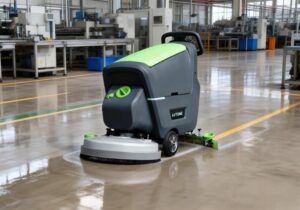
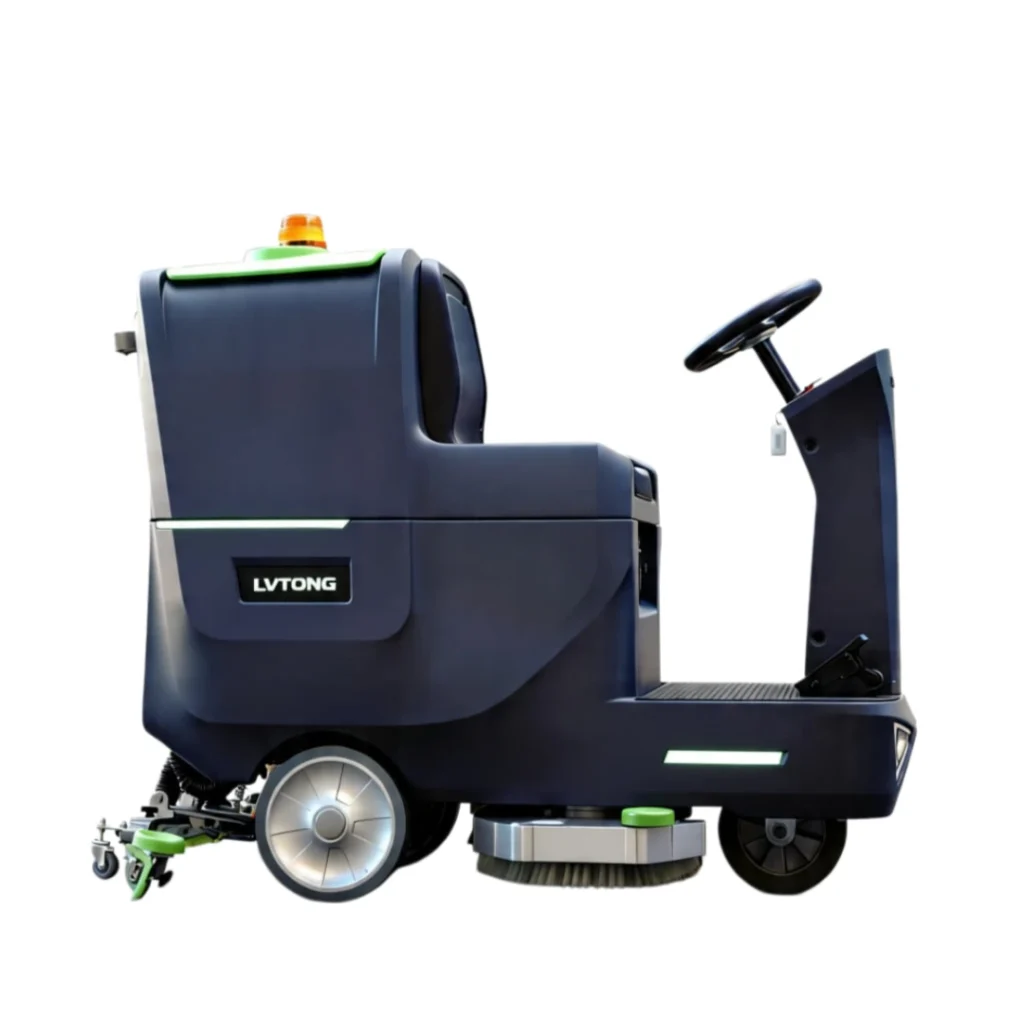
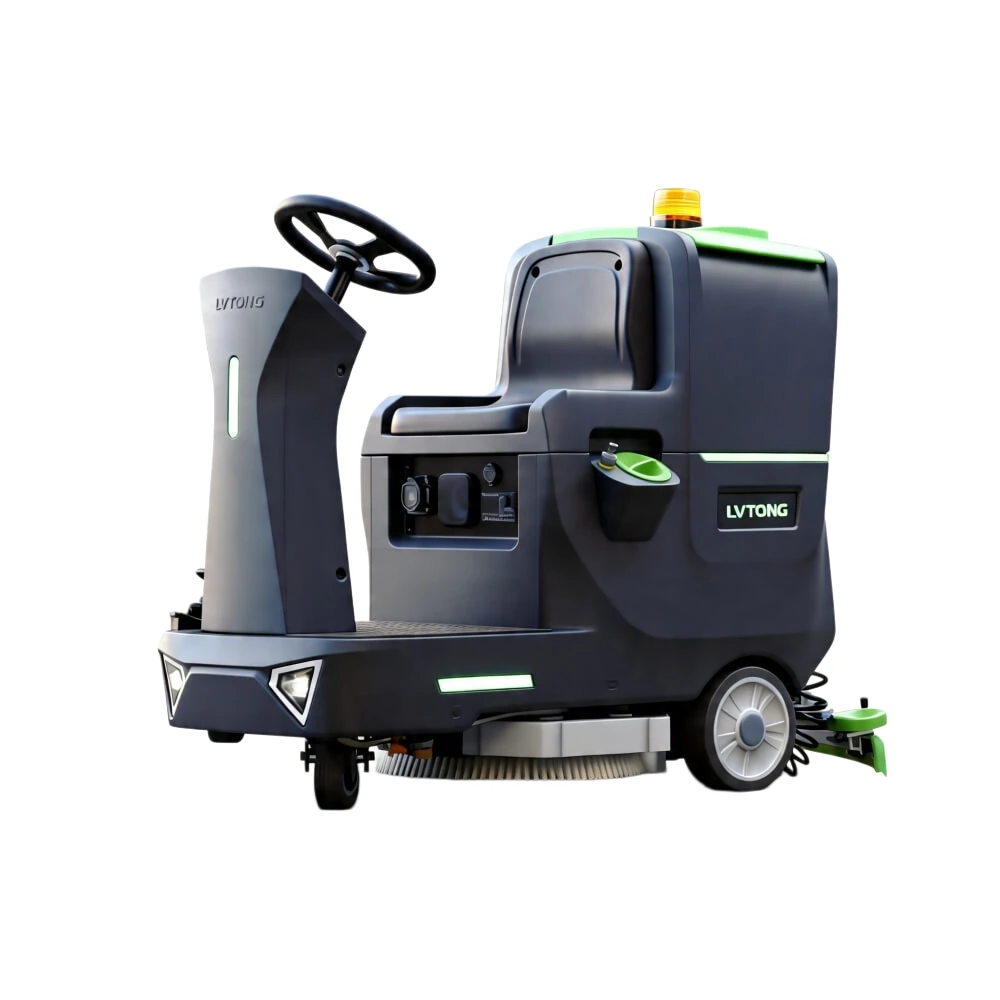
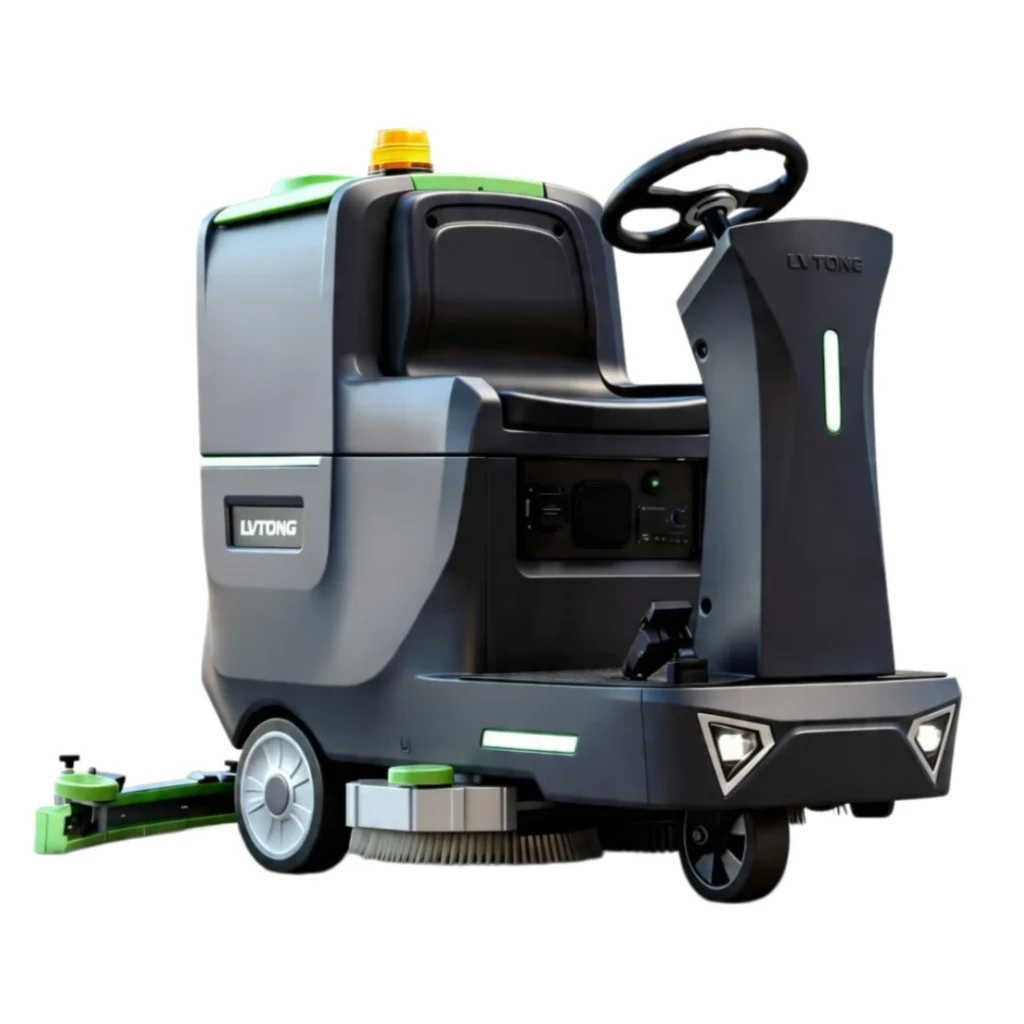
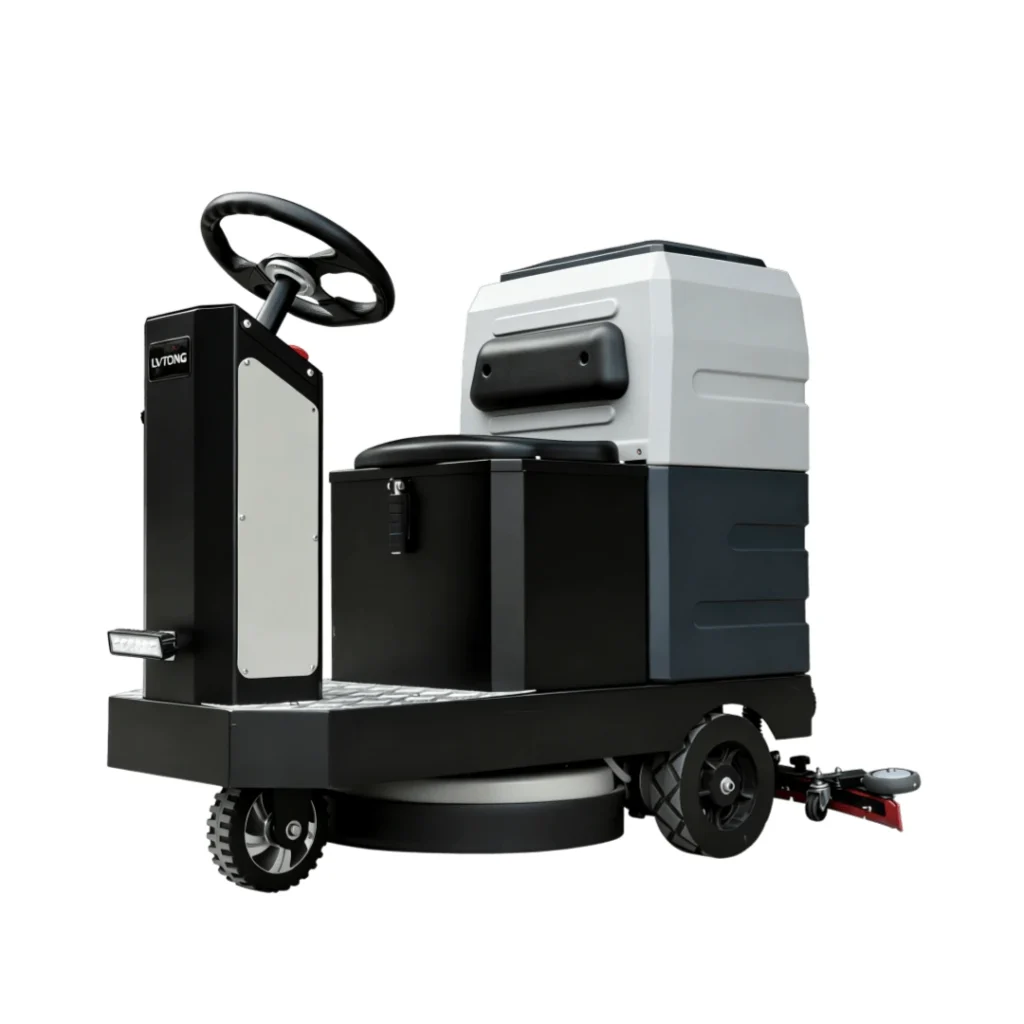
Buyers comparing alternative machine platforms can also review LVTONG’s commercial floor scrubber dryers, including walk-behind and ride-on models for different commercial and industrial applications.
Walk-Behind Nilfisk Floor Scrubbers
Walk-behind floor scrubbers are generally suitable where:
- Aisles are narrow;
- Maneuverability is important;
- Cleaning areas are relatively compact;
- Operators need to work around shelving or equipment;
- Machine storage space is limited.
When comparing a Nilfisk walk-behind scrubber with an alternative, evaluate the actual machine width, cleaning path, turning space, tank capacity and battery runtime rather than comparing brand names alone.
Ride-On Nilfisk Floor Scrubbers
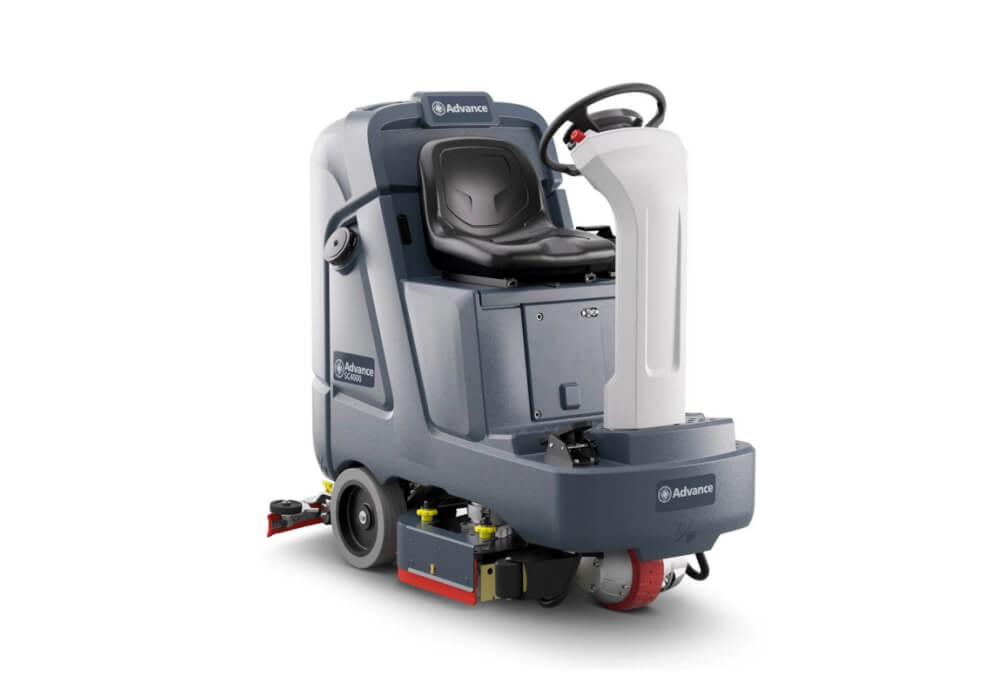
Ride-on floor scrubbers are commonly considered for larger cleaning areas where operator productivity and comfort are important.
They can be suitable for:
- Warehouses;
- Factories;
- Logistics centers;
- Shopping facilities;
- Large commercial buildings;
- Large indoor industrial areas.
The buyer should compare practical productivity, working width, tank capacity, turning requirements, battery runtime and operator visibility.
Nilfisk Autonomous Floor Scrubbers
Nilfisk also offers robotic and autonomous floor-cleaning solutions.
Autonomous cleaning can be valuable where:
- Cleaning routes are predictable;
- Large areas require repetitive cleaning;
- Labor availability is limited;
- Facilities want more standardized cleaning routines.
However, autonomous capability should only be purchased when it creates practical value for the actual site.
A conventional walk-behind or ride-on machine may remain more practical in facilities with constantly changing layouts, frequent temporary obstacles or highly variable cleaning tasks.
Buyers who need a deeper comparison of navigation technology, deployment conditions, ROI and conventional versus robotic cleaning can review our autonomous floor scrubber guide.
When May a Nilfisk Floor Scrubber Be the Better Fit?
A Nilfisk floor scrubber may be worth prioritizing when several of the following conditions apply.
You Already Operate a Nilfisk Fleet
Existing users may already have:
- Trained operators;
- Maintenance procedures;
- Spare-parts inventory;
- Dealer relationships;
- Standardized consumables;
- Familiar service processes.
Changing brands can introduce additional training, inventory and maintenance complexity.
Strong Local Nilfisk Support Is Available
Service conditions vary by country and region.
If a local Nilfisk distributor provides reliable spare-parts availability, technical support and service response in your market, that infrastructure should be included in the purchasing decision.
Advanced Cleaning Technology Is Important
Some buyers prioritize:
- Automated solution control;
- Fleet information;
- Usage monitoring;
- Connected cleaning systems;
- Robotic operation.
If these capabilities are mandatory, define them in the technical requirement before requesting alternative quotations.
Your Procurement Policy Prioritizes Established Global Brands
Some multinational companies use approved-vendor systems or global equipment standards.
In these situations, supplier standardization may be more important than achieving the lowest acquisition price.

When Should Buyers Evaluate a Nilfisk Floor Scrubber Alternative?
An alternative becomes worth investigating when the existing option does not fully match the project’s commercial or operating requirements.
1. You Need More Supplier Options
Depending on one equipment supplier can reduce procurement flexibility.
A second qualified supplier allows buyers to compare:
- Machine configurations;
- Production lead times;
- Commercial terms;
- Battery options;
- Spare-parts planning;
- Technical support.
2. You Want a Different Cost Structure
Instead of asking:
Which machine is cheaper?
Ask:
Which machine provides the required cleaning result at the most appropriate lifecycle cost?
Lifecycle cost may include:
purchase + battery + consumables + labor + energy + maintenance + spare parts + downtime
3. Spare-Parts Availability Is a Priority
Parts availability can differ significantly by country and supplier.
Before ordering, ask:
- Which parts are normal consumables?
- Which parts should be stocked locally?
- What are expected lead times?
- Are part numbers available?
- Is a recommended spare-parts package available?
- How are urgent parts shipped?
4. You Need Manufacturer-Direct Support
Some distributors, importers and fleet buyers prefer direct technical communication with the manufacturer.
This can be valuable when managing:
- Multiple machines;
- Batch purchases;
- Custom configurations;
- Distributor networks;
- Technical documentation;
- Spare-parts planning.
5. You Need OEM or Private Label Options
Distributors developing their own equipment brands may require:
- Logo customization;
- Color options;
- Packaging;
- Manuals;
- Battery configurations;
- Accessories;
- Spare-parts kits.
In these cases, OEM and private-label capability becomes an important supplier-selection factor.

Nilfisk Floor Scrubber vs. Alternative: What Should Buyers Compare?
Do not start with the brand logo.
Start with the cleaning task.
| Evaluation Factor | What Buyers Should Compare |
|---|---|
| Cleaning application | Warehouse, factory, retail, healthcare or mixed facility |
| Machine type | Walk-behind, ride-on or autonomous |
| Cleaning width | Productivity versus maneuverability |
| Machine dimensions | Aisles, doors, elevators and storage |
| Solution tank | Refill frequency |
| Recovery tank | Wastewater disposal frequency |
| Battery | Type, runtime, charging and replacement |
| Brush system | Disc, cylindrical or pad requirements |
| Brush pressure | Soil-removal requirements |
| Water recovery | Squeegee and vacuum performance |
| Controls | Simplicity versus advanced functions |
| Automation | Whether autonomous operation creates practical value |
| Consumables | Brushes, pads, squeegees and filters |
| Spare parts | Stock availability and lead time |
| Service | Dealer or manufacturer support |
| Warranty | Coverage, exclusions and claim process |
| Total cost of ownership | Purchase + operation + service + downtime |
Use written specifications and actual model information whenever possible.
Nilfisk vs. LVTONG: Procurement-Level Comparison
The goal of comparing Nilfisk with LVTONG should not be to declare one universal winner.
The useful question is:
Which supplier better matches this specific project?
Brand and Market Position
Nilfisk is an established international cleaning-equipment brand with a broad professional product portfolio.
LVTONG is a Chinese manufacturer of commercial and industrial floor-cleaning equipment, including walk-behind and ride-on scrubber dryers.
Brand recognition should therefore be evaluated separately from technical suitability.
Product Portfolio
A buyer comparing the two suppliers should first define whether the project requires:
- Compact walk-behind cleaning;
- Larger walk-behind machines;
- Ride-on cleaning;
- Long operating hours;
- High tank capacity;
- Autonomous cleaning;
- OEM customization.
If autonomous operation is mandatory, buyers should specifically compare robotic capabilities rather than assuming that every alternative manufacturer offers equivalent functionality.
Cleaning Performance
Do not compare vague claims such as:
- Powerful;
- High efficiency;
- Better cleaning.
Instead compare measurable specifications such as:
- Working width;
- Brush diameter;
- Brush pressure;
- Solution tank;
- Recovery tank;
- Squeegee width;
- Battery system;
- Practical runtime;
- Machine dimensions.
Where possible, conduct a demonstration or test under comparable floor conditions.
Price
There is no universal answer to:
Is Nilfisk more expensive than LVTONG?
The final cost depends on:
- Country;
- Dealer;
- Machine model;
- Battery;
- Charger;
- Accessories;
- Shipping;
- Taxes;
- Warranty;
- Order quantity.
Request comparable quotations based on the same cleaning requirement.
Spare Parts
Do not assume imported-brand parts are always difficult to obtain or manufacturer-direct parts are always faster.
Ask both suppliers for:
- Consumable list;
- Spare-parts list;
- Part numbers;
- Typical lead times;
- Recommended stock;
- Shipping methods.
Technical Support
Service conditions differ by destination market.
Before ordering from either supplier, confirm:
- Technical contact method;
- Warranty process;
- Troubleshooting support;
- Service documentation;
- Spare-parts support;
- Operator training availability.

Which Alternative Machine Type Fits Your Facility?
The right alternative depends more on the facility than on the competitor being replaced.
1. Narrow Factory or Production Areas
Start by evaluating a compact walk-behind scrubber when the site contains:
- Narrow aisles;
- Machinery;
- Columns;
- Doorways;
- Frequent turns.
What to Compare
- Machine width;
- Cleaning width;
- Turning space;
- Tank capacity;
- Battery runtime;
- Squeegee width;
- Storage dimensions.
A smaller machine may provide better practical productivity in a complex layout even if its theoretical cleaning rate is lower.
2. Large Warehouses and Logistics Centers
For larger open floors, ride-on scrubbers are usually worth comparing.
What to Compare
- Practical productivity;
- Cleaning path width;
- Solution and recovery tanks;
- Battery runtime;
- Turning radius;
- Operator comfort;
- Refill frequency.
A machine that is too small may increase labor requirements.
A machine that is too large may lose efficiency around racks, columns and narrow traffic lanes.
3. Long Daily Operating Hours
Do not choose a machine simply because it is described as battery powered.
Compare:
- Battery chemistry;
- Battery capacity;
- Expected runtime;
- Charging requirements;
- Number of shifts;
- Charger compatibility;
- Replacement cost.
The correct battery is the one that supports the real operating schedule.
For a deeper comparison of battery type, runtime, charging, cycle life and replacement considerations, review our floor scrubber battery life guide before comparing final machine configurations.
4. Facilities With Dry Debris and Floor Stains
A scrubber dryer may not be the only machine required.
Industrial facilities can contain:
- Dust;
- Packaging fragments;
- Sand;
- Metal debris;
- Tire marks;
- Oil contamination.
In these environments, the cleaning workflow may be:
Sweep → Remove Loose Debris → Scrub → Recover Dirty Solution
rather than expecting one scrubber to handle every type of contamination.
How to Compare Nilfisk Floor Scrubber Total Cost of Ownership
Purchase price is only the first cost.
For a more realistic comparison, divide total cost of ownership into four areas.
Initial Cost
Include:
- Machine;
- Battery;
- Charger;
- Accessories;
- Shipping;
- Taxes or import costs.
Operating Cost
Include:
- Operator labor;
- Electricity;
- Water;
- Cleaning solution;
- Brushes;
- Pads;
- Squeegee blades.
Maintenance Cost
Include:
- Routine service;
- Replacement components;
- Battery replacement;
- Repairs.
Downtime Cost
Ask:
What happens if the machine cannot operate for several days?
Downtime may create:
- Additional manual labor;
- Rental costs;
- Reduced cleaning frequency;
- Production disruption;
- Delayed facility maintenance.
For professional buyers, the strongest purchasing decision is often based on:
productivity + reliability + service + lifecycle cost
rather than invoice price alone.
What Should You Verify About Spare Parts?
Spare-parts planning should happen before the purchase order.
Fast-Wear Parts
Identify items such as:
- Brushes;
- Pads;
- Squeegee blades;
- Filters.
Common Service Parts
Ask which components are commonly replaced during normal machine ownership.
Recommended Startup Stock
For distributors or companies operating multiple machines, maintaining common parts locally can reduce downtime.
Parts Identification
Ask whether the supplier provides:
- Part numbers;
- Exploded diagrams;
- Service manuals;
- Component photos;
- Technical references.
The easier a component is to identify, the easier long-term fleet management becomes.
Buyers managing long-term machine uptime can also use our floor scrubber parts guide to understand common wear parts, replacement planning and maintenance considerations.
What Should You Verify About After-Sales Support?
Before choosing any Nilfisk floor scrubber alternative, confirm:
- Who provides first-line technical support?
- Is support local or manufacturer-direct?
- What languages are supported?
- Is video troubleshooting available?
- Are service manuals available?
- Who handles warranty claims?
- How are spare parts shipped?
- Is operator training available?
- Is remote technical diagnosis available?
These questions provide more useful information than a general promise of “good after-sales service.”
Buyers evaluating LVTONG as an alternative supplier can review our cleaning equipment maintenance and service support, including technical assistance, maintenance guidance and spare-parts service.
Where May LVTONG Be Worth Evaluating?
LVTONG may be worth adding to a procurement shortlist when buyers prioritize several of the following factors.
Walk-Behind and Ride-On Applications
LVTONG provides walk-behind and ride-on scrubber-dryer configurations for commercial and industrial cleaning applications.
These can be evaluated for:
- Factories;
- Warehouses;
- Logistics facilities;
- Commercial buildings;
- Parking facilities;
- Other hard-floor environments.
Manufacturer-Direct Communication
Importers and distributors may value direct manufacturer communication for:
- Technical configuration;
- Batch orders;
- Product documentation;
- Spare-parts planning;
- Product updates.
OEM and Private Label Projects
Distributors building their own cleaning-equipment portfolio may require:
- Branding;
- Packaging;
- Color customization;
- Manuals;
- Battery options;
- Accessories;
- Spare-parts kits.
This creates a different purchasing requirement from a facility simply replacing one machine.
Cost-Focused Procurement
When acquisition cost is important, buyers should request a matched configuration and compare:
- Machine;
- Battery;
- Charger;
- Consumables;
- Spare parts;
- Warranty;
- Shipping.
The comparison should always be like-for-like.
Where Might LVTONG Not Be the Best Fit?
A credible comparison should also identify situations where changing supplier may not be practical.
Existing Nilfisk Standardization
If a company already has:
- Nilfisk technicians;
- Spare-parts stock;
- Operator training;
- Internal maintenance procedures;
- Fleet systems;
changing brands may create additional operational complexity.
Strong Local Nilfisk Dealer Infrastructure
If a local Nilfisk dealer provides reliable service and rapid parts access, buyers should include that value in the comparison.
Advanced Robotic Requirements
If autonomous navigation, mapping, obstacle detection, robotic operation or connected fleet functionality are mandatory, compare those specific capabilities separately.
A conventional ride-on scrubber should not be presented as a direct equivalent to a robotic machine.
Global Corporate Purchasing Standards
Some international companies require approved global vendors.
In these situations, corporate procurement policy may influence the decision as much as machine specifications.

Common Mistakes When Comparing Nilfisk Floor Scrubber Alternatives
Mistake 1: Comparing Brand Against Brand
Compare actual models and configurations instead.
Mistake 2: Comparing Only Purchase Price
A lower-cost machine can become expensive if productivity, reliability or service is poor.
Mistake 3: Ignoring Facility Layout
Cleaning area alone does not determine machine size.
Check:
- Aisles;
- Doors;
- Elevators;
- Turning space;
- Obstacles.
Mistake 4: Ignoring Consumables
Brushes, pads and squeegee blades contribute to long-term ownership cost.
Mistake 5: Assuming All Battery Systems Are Equivalent
Runtime and charging requirements should match the actual cleaning shift.
Mistake 6: Ignoring Spare Parts Until a Failure Occurs
Build a spare-parts plan before equipment deployment.
Mistake 7: Paying for Automation You Do Not Need
Autonomous cleaning can create value in suitable facilities, but conventional machines may remain more practical in changing or complex layouts.
Mistake 8: Assuming an Alternative Must Match Every Feature
An alternative only needs to match the features required by your actual application.
Nilfisk Floor Scrubber Alternative Buyer Checklist
Before making a final decision, verify the following:
| Question | Confirm Before Ordering |
|---|---|
| What floor must be cleaned? | Material and condition |
| How large is the cleanable area? | Actual cleaning area |
| How wide are aisles and doors? | Minimum clearance |
| What contamination is present? | Dust, grease, marks or debris |
| How quickly must cleaning be completed? | Available cleaning window |
| Walk-behind or ride-on? | Layout and operator requirements |
| What cleaning width is required? | Productivity vs. maneuverability |
| What battery system is required? | Runtime and charging |
| What brush or pad is required? | Floor compatibility |
| Are spare parts available? | Stock and lead time |
| What warranty applies? | Written coverage |
| Who provides technical support? | Contact and process |
| What is the total ownership cost? | Not only purchase price |
What Information Should You Send for a Matched Alternative?
If you already use a Nilfisk floor scrubber or are considering a specific Nilfisk model, providing that model information makes an alternative comparison more accurate.
Send:
- Current or proposed Nilfisk model;
- Facility type;
- Cleaning area;
- Floor material;
- Floor photos or videos;
- Main contamination;
- Narrowest aisle;
- Door width;
- Required cleaning time;
- Daily operating hours;
- Battery preference;
- Required accessories;
- Destination country;
- Expected quantity.
This allows the supplier to compare a real machine requirement instead of recommending equipment based only on the phrase “Nilfisk alternative.”
Frequently Asked Questions
What is a good alternative to a Nilfisk floor scrubber?
There is no universal best alternative.
A suitable alternative should match the required cleaning width, tank capacity, battery runtime, floor type, facility layout, water recovery, spare-parts requirements and service expectations.
For professional procurement, compare specific models rather than brands alone.
What should I compare before replacing a Nilfisk floor scrubber?
Compare:
- Machine dimensions;
- Cleaning width;
- Tank capacity;
- Battery;
- Brush system;
- Water recovery;
- Practical productivity;
- Consumables;
- Spare parts;
- Warranty;
- Technical support;
- Total cost of ownership.
If you already operate Nilfisk machines, also consider the cost of changing existing spare-parts inventory, operator training and maintenance procedures.
Is Nilfisk or an alternative better for a warehouse?
The answer depends on the warehouse layout, cleaning workload and support available in the destination market.
Large open warehouses often benefit from ride-on machines, while narrower storage environments may require a more compact scrubber.
Compare practical productivity and maneuverability rather than brand alone.
How do I compare Nilfisk floor scrubber total cost of ownership?
Use the same operating period and workload for every machine.
Include:
machine + battery + charger + labor + energy + detergent + consumables + maintenance + spare parts + downtime
This provides a more realistic comparison than purchase price alone.
Should I choose a walk-behind or ride-on alternative?
Choose a walk-behind scrubber when compact dimensions and maneuverability are important.
Consider a ride-on machine where the facility has larger open areas and reducing operator walking is a priority.
What should I check about spare parts and service?
Request:
- Consumable list;
- Common spare-parts list;
- Part numbers;
- Expected lead times;
- Warranty process;
- Technical contact;
- Service documentation;
- Recommended parts inventory.
Confirm important details before placing the order.
Can an autonomous Nilfisk scrubber be compared with a conventional alternative?
Only when autonomous cleaning is not a mandatory project requirement.
If the application specifically requires mapping, autonomous routes, obstacle detection or robotic operation, compare the Nilfisk machine with another machine providing the required autonomous capabilities.
What information should I send to get a matched alternative?
Send the Nilfisk model you are considering or replacing together with:
- Cleaning area;
- Facility type;
- Floor material;
- Main contamination;
- Layout;
- Operating hours;
- Battery requirements;
- Destination country;
- Expected quantity.
This allows the supplier to recommend a more accurate alternative.
Key Takeaways
When comparing a Nilfisk floor scrubber with an alternative:
- Do not assume one brand is universally better.
- Compare exact models and configurations.
- Consider whether existing Nilfisk fleet standardization creates value.
- Evaluate alternatives when commercial, service or configuration requirements differ.
- Match machine size to the facility layout.
- Compare battery and charging requirements.
- Verify spare-parts availability before purchasing.
- Evaluate after-sales support in the actual destination market.
- Compare total cost of ownership instead of purchase price alone.
- Treat autonomous cleaning as a separate technical requirement.
- Request a matched configuration before making the final purchasing decision.
Conclusion
A Nilfisk floor scrubber can be a strong option for professional cleaning operations, particularly where buyers value an established brand, existing fleet standardization, local support or advanced cleaning technologies.
However, strong brand recognition does not remove the need for procurement comparison.
Warehouses, factories, logistics centers, distributors and other B2B buyers should evaluate whether the selected machine fits their:
- Floor conditions;
- Facility layout;
- Cleaning workload;
- Battery requirements;
- Service expectations;
- Spare-parts strategy;
- Budget;
- Long-term operating plan.
LVTONG can be evaluated as one alternative supplier for buyers seeking walk-behind and ride-on commercial or industrial floor scrubbers, manufacturer-direct communication and OEM or private-label cooperation.
The final purchasing question should not simply be:
Nilfisk or LVTONG—which brand is better?
A better question is:
Which specific machine, supplier and support model provides the best fit for this facility and this procurement project?
Request a Nilfisk Floor Scrubber Alternative Comparison
Already using a Nilfisk machine or considering a Nilfisk floor scrubber for your next project?
Send LVTONG:
- Current or proposed Nilfisk model;
- Facility type;
- Cleaning area;
- Floor photos or videos;
- Floor material;
- Main contamination;
- Required cleaning time;
- Aisle and doorway dimensions;
- Daily operating hours;
- Battery requirements;
- Destination market;
- Expected quantity.
LVTONG can review your current or proposed Nilfisk model, cleaning area, facility layout, battery requirements and operating conditions to recommend a corresponding LVTONG configuration. Request a matched floor scrubber alternative and send us your project information for a model-to-model comparison.