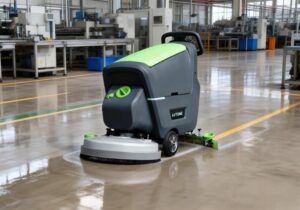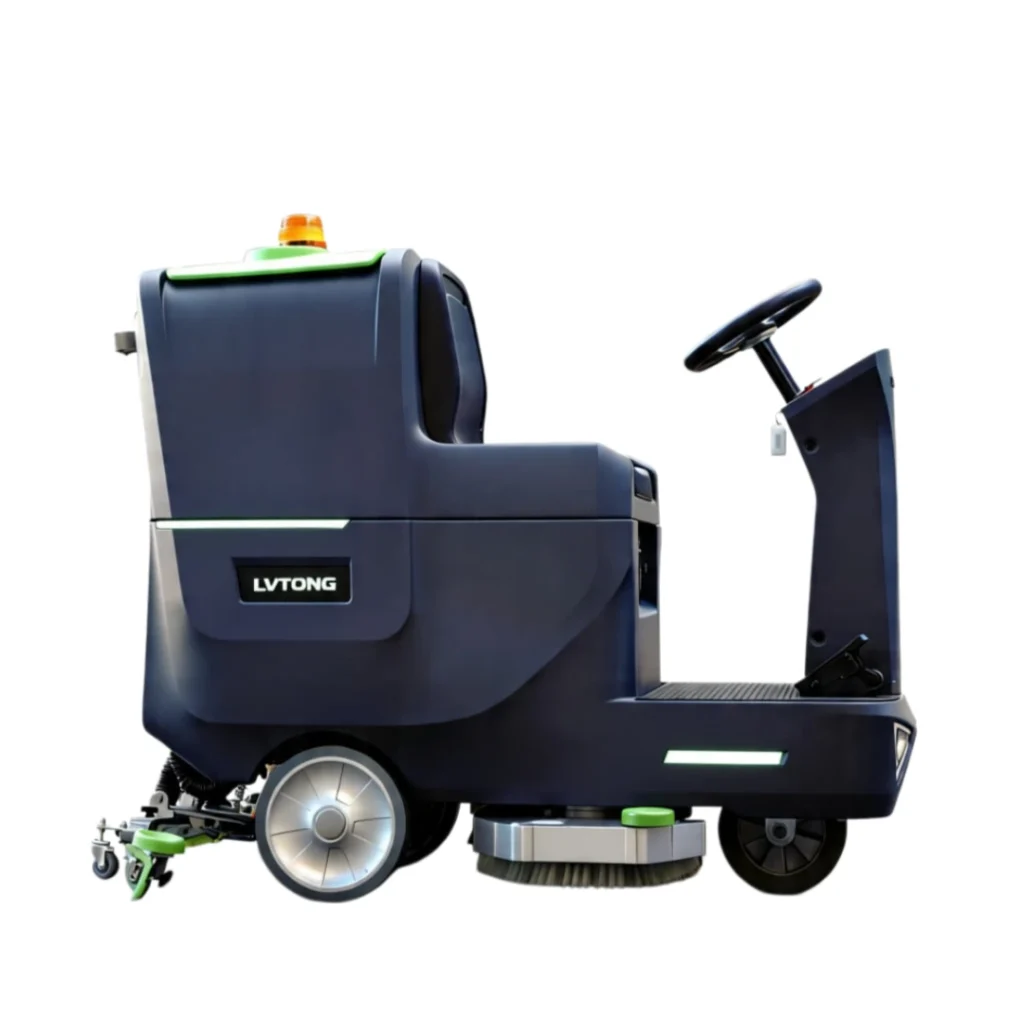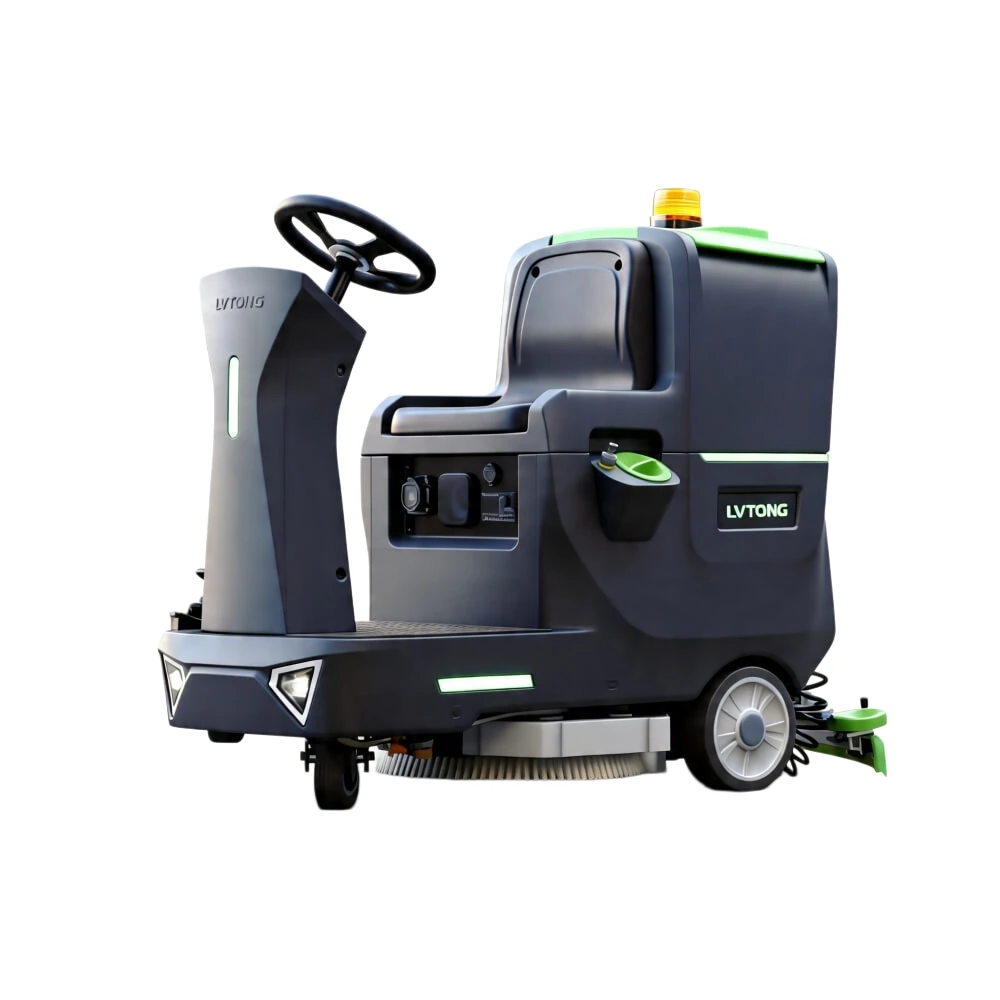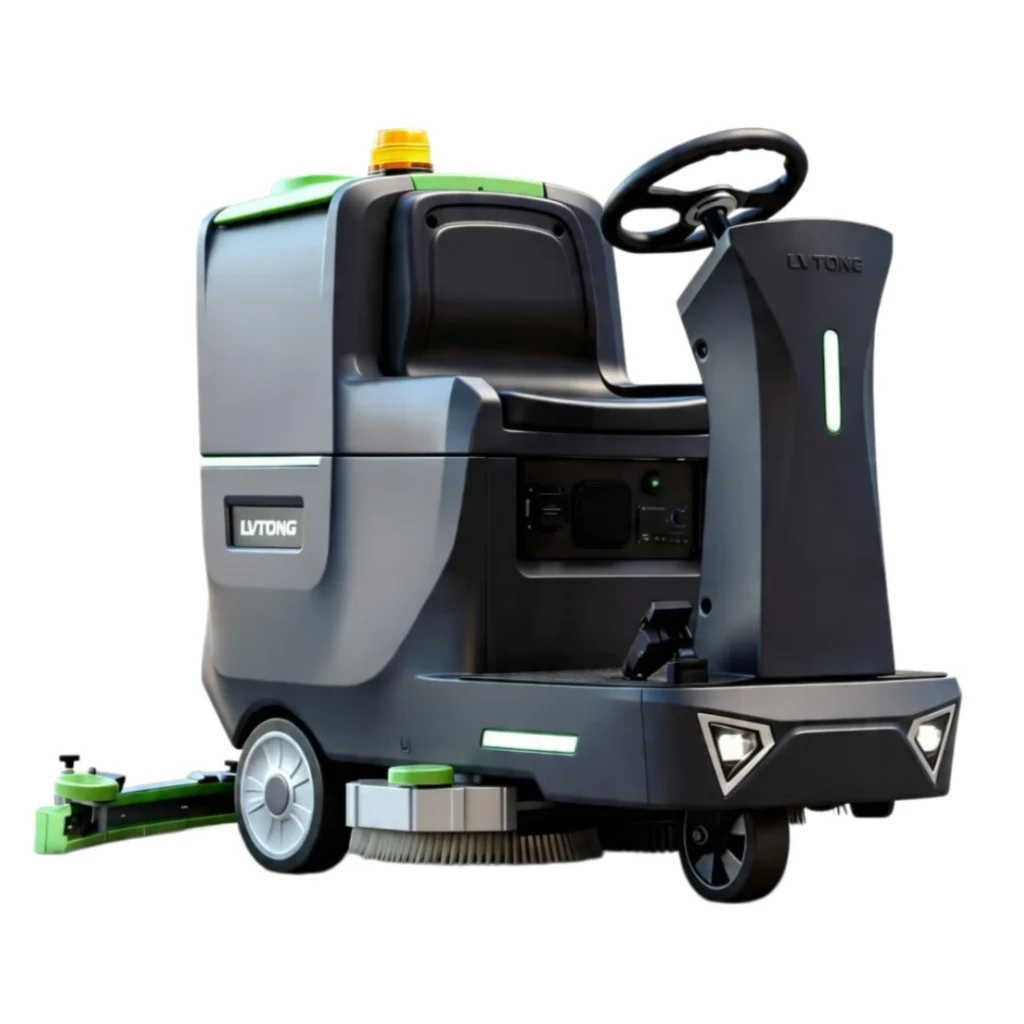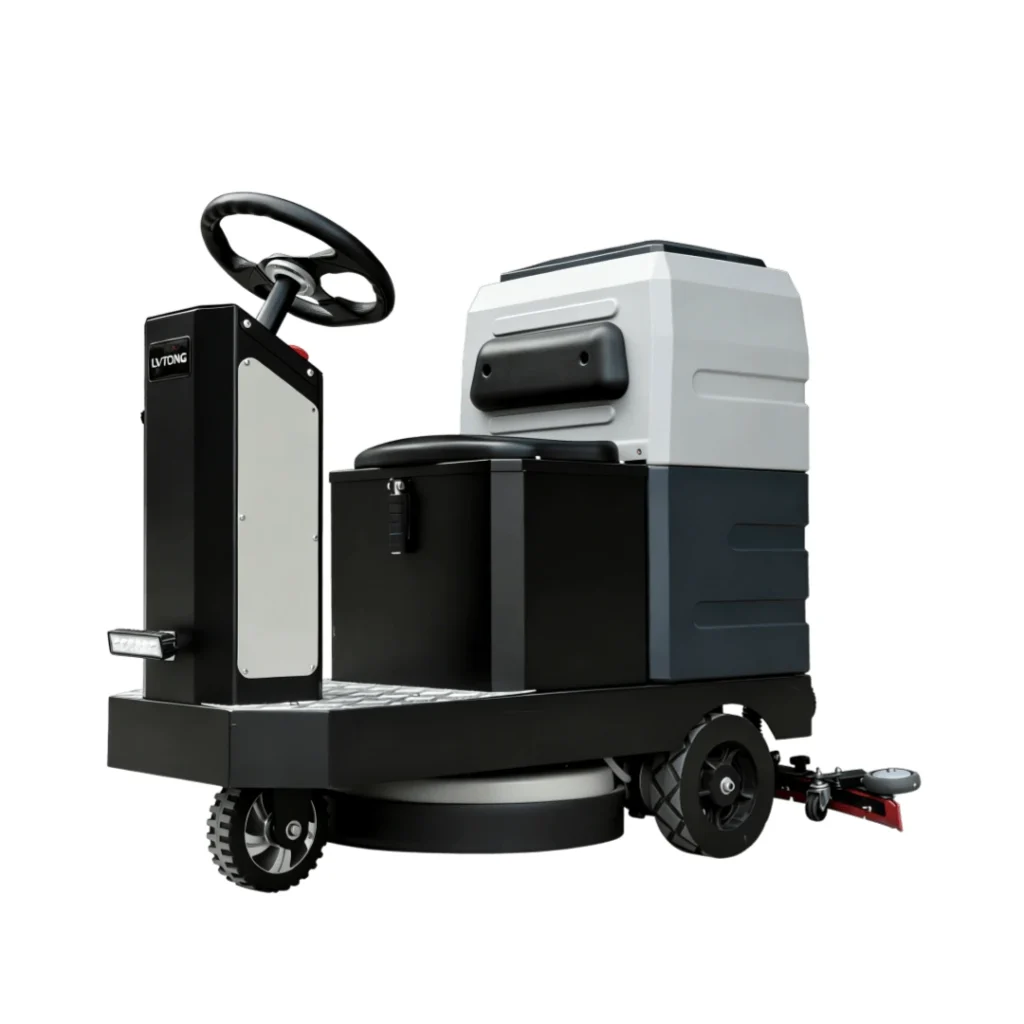

Industrial floor scrubber parts are the components that keep commercial and industrial cleaning machines operating efficiently, including brush decks, squeegee assemblies, vacuum systems, solution tanks, recovery tanks, batteries, motors, filters, hoses, wheels, and electronic controls. Some parts are regular wear items that require scheduled replacement, while others should only be replaced after inspection confirms a fault.
Understanding what each component does makes it easier to diagnose cleaning problems, plan spare-parts inventory, and avoid unnecessary repairs. This guide explains the functions of the main parts, common wear signs, replacement timing, compatibility checks, and the differences between OEM and aftermarket floor scrubber replacement parts.
It is designed for facility managers, cleaning contractors, service technicians, distributors, and fleet operators who need to keep industrial cleaning equipment available and productive.
As a professional industrial cleaning equipment manufacturer, LVTONG provides floor scrubber machines and replacement parts solutions for commercial and industrial applications. Our solutions cover common floor scrubber replacement parts, wear parts, electrical components, batteries, and machine-specific components to help customers reduce downtime and improve cleaning efficiency.
Quick Answer: Which Floor Scrubber Parts Need Regular Replacement?
The most frequently replaced industrial floor scrubber parts are squeegee blades, brushes, cleaning pads, filters, hoses, seals, and selected wheels or casters. These floor scrubber wear parts should be inspected regularly and replaced when visible damage or reduced cleaning performance appears.
Replacement timing depends on operating hours, floor conditions, chemical exposure, maintenance practices, and machine usage. Replacing worn components at the right time helps prevent cleaning problems and unexpected equipment downtime.

Industrial Floor Scrubber Parts List and Functions
An industrial floor scrubber combines mechanical, water-delivery, vacuum, electrical, and control components. Some parts are consumable wear items, while others are long-life assemblies that should only be replaced after proper troubleshooting.
The following floor scrubber parts list summarizes the function of each major component and the signs that may indicate service or replacement is required. These industrial floor scrubber parts can be divided into four major systems: the scrubbing system, solution delivery system, recovery system, and power and control system. Understanding these systems helps maintenance teams identify problems faster and choose the correct floor scrubber replacement parts.
| Floor Scrubber Part | Primary Function | Common Wear or Failure Sign | Typical Action |
|---|---|---|---|
| Squeegee blades | Collect dirty water from the floor | Streaks, cracks, curling, or uneven edges | Clean, rotate, adjust, or replace |
| Squeegee assembly | Holds and positions the blades | Uneven floor contact or poor tracking | Adjust or inspect mounting components |
| Disc or cylindrical brushes | Loosen soil from the floor | Short, bent, or uneven bristles | Replace or correct deck setup |
| Cleaning pads | Scrub, polish, or strip floor surfaces | Thin, glazed, torn, or heavily loaded material | Replace |
| Pad driver | Holds the cleaning pad | Loose pad, vibration, or uneven rotation | Inspect and replace if damaged |
| Brush deck | Supports brushes, pad drivers, and motors | Uneven cleaning, noise, or vibration | Inspect alignment, bearings, and mounting points |
| Solution tank | Stores clean water and cleaning solution | Leakage, contamination, or damaged fittings | Clean, reseal, repair, or replace if cracked |
| Recovery tank | Stores recovered dirty water | Leakage, odor, or poor vacuum sealing | Clean and inspect the lid, seals, and fittings |
| Vacuum hose | Transfers dirty water and airflow | Weak suction, leakage, or visible cracks | Clear the blockage or replace |
| Drain hose | Allows the recovery tank to be emptied | Leakage, cracking, or damaged cap | Repair or replace |
| Vacuum motor | Produces suction for water recovery | Abnormal noise, overheating, or weak pickup | Test the complete vacuum path before replacement |
| Solution filter | Prevents debris from entering the water system | Restricted or uneven solution flow | Clean or replace |
| Solution valve or pump | Controls solution delivery | No water flow or irregular output | Diagnose the valve, pump, hose, and wiring |
| Battery | Supplies power to the machine | Short runtime, voltage drop, or charging faults | Test before replacement |
| Battery charger | Recharges the battery system | Incomplete charging or repeated fault indications | Check battery condition and charger compatibility |
| Brush motor | Rotates the brush or pad driver | Brush stops, rotates slowly, or produces unusual noise | Inspect wiring, fuses, controller, and motor |
| Drive motor | Moves self-propelled and ride-on machines | Poor acceleration, irregular movement, or noise | Diagnose the drive system before replacement |
| Wheels and casters | Support movement, stability, and tracking | Flat spots, vibration, pulling, or loose bearings | Adjust or replace |
| Controller and wiring | Manage machine functions | Error codes or intermittent operation | Professional electrical diagnosis |
| Switches and sensors | Detect operating conditions and control functions | Inconsistent activation or warning messages | Inspect connections and test the component |
These parts can be grouped into four main systems:
- Solution delivery system: solution tank, filter, pump, valve, and hoses
- Scrubbing system: brush deck, brushes, pads, pad drivers, and brush motors
- Recovery system: squeegee assembly, vacuum hose, recovery tank, filters, and vacuum motor
- Power, drive, and control system: batteries, charger, drive motor, controller, switches, sensors, and wiring
If you are comparing machine sizes, tank capacities, brush systems, or walk-behind and ride-on configurations, read our industrial floor scrubber buying guide.
Which Floor Scrubber Parts Wear Out Most Often?
Wear parts are components that make regular contact with the floor, dirty water, debris, or cleaning chemicals. They normally require more frequent inspection and replacement than motors, tanks, and electronic assemblies.
| Wear Part | What to Inspect | Replace When |
|---|---|---|
| Squeegee blades | Cuts, curling, hardening, and uneven edges | Cleaning and adjustment no longer prevent streaks |
| Disc or cylindrical brushes | Short, bent, missing, or uneven bristles | Floor contact becomes uneven or cleaning performance declines |
| Cleaning pads | Thinning, glazing, tearing, or heavy soil buildup | The pad no longer cleans evenly |
| Filters and debris screens | Clogging, damage, or restricted airflow | Cleaning no longer restores normal flow |
| Vacuum and drain hoses | Cracks, leaks, soft spots, or permanent blockage | Air or water leakage affects recovery |
| Seals and gaskets | Flattening, cracking, swelling, or loss of elasticity | The tank or hose connection no longer seals correctly |
| Wheels and casters | Flat spots, looseness, and bearing wear | Machine tracking, movement, or stability is affected |
Squeegee Blades
Squeegee blades are among the most frequently replaced industrial floor scrubber parts because they maintain continuous contact with the floor and recovered water. A worn squeegee blade is one of the most common reasons an industrial floor scrubber leaves water streaks behind. Checking blade condition regularly helps maintain effective water recovery and cleaning performance.
Inspect them when the machine begins leaving:
- Water streaks
- Narrow wet lines
- Dirty water behind the machine
- Unevenly dried areas
- Water at one end of the squeegee
Before replacing the blades, clean both edges, remove trapped debris, check the blade orientation, and verify the squeegee angle and floor contact. Many blades can be rotated to expose an unused edge before a new set is required.
Replace a blade when it is cracked, permanently curled, hardened, torn, or too unevenly worn to maintain continuous floor contact.
Brushes and Pads
Brush wear limits vary by brush design and machine model. Compare the remaining bristle length with the manufacturer’s specified limit rather than applying one measurement to every machine.
A brush may require replacement when:
- Bristles are noticeably shorter than the original length
- Wear is significantly greater on one side
- Bristles are bent, missing, or permanently deformed
- The machine requires excessive pressure to achieve normal results
- Cleaning performance remains poor after correct setup
Uneven brush wear can also indicate excessive pressure, an unlevel brush deck, incorrect installation, worn bearings, or unsuitable operating practices. Replacing the brush without correcting the cause may lead to rapid wear of the new part.
Common brush and pad options include:
| Brush or Pad Type | Typical Application |
|---|---|
| Soft brush | Sensitive or lightly soiled floor surfaces |
| Medium brush | Routine cleaning on durable floors |
| Stiff brush | Textured surfaces and heavier soil |
| Polishing pad | Floor-finish maintenance |
| Scrubbing pad | Routine or deep cleaning |
| Stripping pad | Removal of coatings or old finish |
Select brushes and pads according to the floor material, soil type, chemical compatibility, required finish, and machine specifications. When selecting replacement brushes or pads, do not choose only based on size. Confirm the machine model, brush connection type, floor material, cleaning requirement, and expected wear resistance to ensure compatibility.

Long-Life Components That Should Be Diagnosed Before Replacement
How to Decide Whether to Repair or Replace a Floor Scrubber Part
Before replacing expensive floor scrubber spare parts, evaluate three key factors:
1. Part Condition
Replace wear parts when visible damage, reduced cleaning performance, or safety issues appear. Major components should be replaced only after inspection confirms failure.
2. Repair Cost
Compare the replacement part cost with labor expenses, machine downtime, and possible damage caused by continued operation.
3. Machine Value
For newer machines, replacing individual components is usually more economical. For older machines with multiple failing systems, rebuilding or replacing the machine may provide better long-term value.
Unlike blades, brushes, pads, and filters, components such as vacuum motors, brush motors, drive motors, tanks, chargers, and electronic controllers are not routine consumables.
A decline in performance does not automatically mean that a major component has failed. Before ordering an expensive replacement, inspect the related hoses, filters, seals, wiring, connectors, switches, fuses, and control settings.
For example, weak water pickup does not always indicate a failed vacuum motor. It may be caused by:
- A blocked or damaged vacuum hose
- A clogged filter or debris screen
- A leaking recovery-tank lid seal
- An open drain-hose cap
- An incorrectly adjusted squeegee assembly
- A loose hose connection
- An overfilled recovery tank
If a scrub brush does not rotate correctly, check the brush installation, fuse, wiring connection, switch, motor cable, and controller before replacing the brush motor.
If a self-propelled or ride-on floor scrubber moves unevenly, inspect the wheels, drive connections, wiring, sensors, controller fault indications, and mechanical linkages before assuming that the drive motor has failed.
Solution and recovery tanks are also designed for long-term use. A leak may come from a damaged drain hose, loose fitting, worn gasket, or tank-lid seal rather than a crack in the tank itself.
Battery chargers should also be tested before replacement. Charging problems may result from:
- Loose or corroded battery terminals
- A damaged battery connector
- An unsuitable power supply
- Battery deterioration
- Incorrect charger settings
- Incompatibility between the charger and battery chemistry
Major motors, controllers, chargers, and electrical assemblies should be diagnosed by qualified personnel. Replacing a component without confirming the cause may increase repair costs without correcting the original problem.
If several major systems have deteriorated at the same time, compare the cost of individual repairs, a partial scrubber rebuild, and complete machine replacement before making a decision.
When Is a Floor Scrubber Battery a Replacement Part?
A floor scrubber battery should be considered for replacement when testing confirms that it can no longer provide the required capacity or operating time. Choosing the correct floor scrubber battery replacement requires more than matching voltage. Buyers should confirm battery chemistry, capacity, physical dimensions, terminal position, charger compatibility, and machine requirements before ordering.
Short runtime alone is not always enough to justify replacement. Charging practices, temperature, loose connections, machine workload, charger performance, and excessive brush pressure can also reduce operating time.
Common signs that a battery may require replacement include:
- Runtime remains significantly reduced after a complete charging cycle
- A capacity or load test confirms substantial performance loss
- Voltage drops abnormally under load
- The battery repeatedly fails to complete a normal charge
- The casing shows swelling, cracking, or leakage
- Terminals overheat or develop severe corrosion
- The battery produces unusual heat, odor, or repeated warnings
Stop using a battery immediately if it is swollen, leaking, excessively hot, or physically damaged.
Before ordering a replacement floor scrubber battery, confirm:
| Specification | Why It Matters |
|---|---|
| System voltage | Must match the machine’s electrical system |
| Battery capacity | Affects runtime and charging requirements |
| Battery chemistry | Determines charger and battery-management compatibility |
| Physical dimensions | Confirms that the battery fits the compartment |
| Terminal position | Prevents cable-routing and connection problems |
| Connector type | Must match the machine wiring harness |
| Charger compatibility | Prevents incomplete charging or battery damage |
| Battery weight | May affect machine balance and operating performance |
Do not select a battery based only on voltage or price. Batteries with the same voltage may have different capacities, dimensions, terminals, discharge characteristics, and charging requirements.
For more information about charging practices and lifespan factors, read our complete floor scrubber battery life guide.

Safety and Certification Considerations for Electrical Parts
Electrical replacement parts must match the requirements of the specific machine. When replacing a battery, charger, motor, controller, wiring harness, switch, fuse, connector, or sensor, verify the technical specifications rather than relying only on appearance.
Check the following information before ordering or installing an electrical part:
| Specification | Why It Matters |
|---|---|
| Rated voltage | Incorrect voltage may damage the part or machine |
| Rated current and power | The part must support the required electrical load |
| Battery chemistry | Chargers and control systems must match the battery type |
| Connector and terminal type | Prevents incorrect or insecure connections |
| Wiring configuration | Ensures that polarity, signal, and power connections match |
| Mounting dimensions | Confirms that the component can be installed correctly |
| Protection or enclosure rating | Supports use in wet, dusty, or demanding conditions |
| Machine model and serial number | Identifies the correct production version |
| Original part number | Provides the most reliable compatibility reference |
| Applicable certification | Helps maintain the intended safety status of the machine |
For machines sold or operated in North America, buyers may encounter certification marks such as UL, ETL, or CSA. However, the presence of one of these marks does not automatically mean that a component is suitable for every industrial floor scrubber.
Requirements vary according to the machine design, electrical system, battery configuration, application, and market. A certified component is not necessarily a direct replacement for another certified component.
Compatibility still depends on:
- Voltage and current
- Connector type
- Wiring design
- Mounting arrangement
- Protection features
- Control communication
- Operation within the complete machine
Do not select electrical floor scrubber parts solely by price, appearance, or certification logo. Match the original part number or obtain compatibility confirmation from the manufacturer or an experienced supplier before installation.
Disconnect the power source and follow the machine manual before opening electrical compartments. Repairs involving batteries, chargers, motors, controllers, or internal wiring should be completed by qualified personnel.

How to Identify Compatible Floor Scrubber Replacement Parts
Floor scrubber parts are not universally interchangeable. Machines with similar cleaning widths may use different voltages, mounting points, connectors, motors, squeegee dimensions, controllers, or production revisions.
Before requesting a quotation or placing an order, collect the following information:
| Information to Check | Why It Matters |
|---|---|
| Manufacturer or brand | Identifies the original equipment system |
| Machine model | Narrows the compatible parts range |
| Serial number | Distinguishes production versions and revisions |
| Original part number | Provides the most accurate matching reference |
| Part name and position | Distinguishes front, rear, left, or right components |
| Voltage and power rating | Prevents electrical incompatibility |
| Physical dimensions | Confirms that the replacement will fit |
| Connector type | Confirms the electrical or hose connection |
| Brush or squeegee size | Confirms the correct cleaning width |
| Material specification | Affects chemical resistance and service life |
| Clear photographs | Helps identify damaged or unmarked parts |
Do not order a battery, charger, motor, controller, brush, or squeegee assembly based only on machine appearance.
Serial numbers are especially important because a manufacturer may change connectors, brackets, controllers, or other components during a model’s production life.
When a part number is unavailable, provide clear photographs of:
- The complete component
- The product label
- Electrical connectors
- Mounting holes or brackets
- Hose fittings
- Relevant measurements
- The machine model and serial-number plate
Providing complete information reduces ordering errors and helps the supplier verify compatibility before shipment.
Which Floor Scrubber Part May Be Causing the Problem?
The following table connects common machine symptoms with the parts that should be inspected first. It is intended as a preliminary diagnostic guide rather than a substitute for the machine service manual.
| Machine Symptom | Check First | Possible Part Involved |
|---|---|---|
| Water streaks remain behind the machine | Debris, blade edges, squeegee angle, and hose blockage | Squeegee blade, assembly, or vacuum hose |
| Weak water pickup | Tank lid, seals, filter, drain cap, and hose connections | Tank seal, hose, filter, or vacuum motor |
| Floor remains dirty | Brush or pad condition, chemical use, and deck pressure | Brush, pad, pad driver, or brush motor |
| No solution reaches the floor | Solution level, filter, hose, valve, and pump | Filter, valve, pump, or solution hose |
| Brush does not rotate | Brush installation, fuse, switch, and wiring | Brush motor, controller, cable, or switch |
| Runtime is unusually short | Charging result, terminal condition, and battery voltage | Battery, charger, or electrical connection |
| Machine pulls to one side | Brush wear, wheel condition, and deck alignment | Brush, wheel, caster, or drive system |
| Excessive noise or vibration | Loose parts, bearings, and rotating components | Brush, pad driver, bearing, wheel, or motor |
| Machine does not move | Emergency stop, drive controls, wiring, and wheel obstruction | Drive motor, controller, sensor, or switch |
| Recovery tank leaks | Tank lid, drain hose, fittings, and gaskets | Seal, hose, fitting, or damaged tank |
Use only the brush pressure recommended for the floor, brush type, and machine model. Excessive pressure can accelerate brush wear, increase electrical load, and reduce battery runtime.
Disconnect power and follow the machine manual before removing guards or inspecting internal components. For more detailed diagnostic procedures, see our floor scrubber troubleshooting guide.
Maintenance Checks That Extend Floor Scrubber Part Life
Routine inspection helps identify wear before one damaged part affects other components. A blocked filter may overload the vacuum system, while a damaged squeegee may reduce water recovery and leave unsafe wet areas.
Use the machine manual as the primary maintenance reference because inspection intervals vary by model, operating hours, floor conditions, and application.
| Frequency | Parts to Inspect | Main Action |
|---|---|---|
| Before or after each shift | Squeegees, brushes, pads, hoses, and tanks | Clean and inspect for visible damage |
| Weekly | Filters, debris screens, drain hoses, and tank seals | Remove buildup and check for leakage |
| Monthly | Wheels, casters, cables, connectors, and brush deck | Check wear, looseness, damage, and alignment |
| According to operating hours | Motors, bearings, belts, and electrical systems | Complete model-specific inspection or service |
| Before ordering a part | Model, serial number, specifications, and part number | Confirm compatibility |
Daily checks should focus on parts that contact the floor, dirty water, debris, and cleaning chemicals. Regularly cleaning these components can help prevent premature wear and make changes in performance easier to identify.
For a complete daily, weekly, and monthly service schedule, read our floor scrubber maintenance guide.
OEM vs. Aftermarket Floor Scrubber Parts
Both OEM and aftermarket floor scrubber parts may be suitable, but the correct choice depends on the component, application, warranty requirements, technical documentation, and cost of downtime.
| Factor | OEM Parts | Aftermarket Parts |
|---|---|---|
| Fit and compatibility | Usually matched to the original machine specification | Must be independently verified |
| Availability | Depends on manufacturer inventory and distribution | May provide more supplier options |
| Purchase price | Often higher | Often lower |
| Warranty implications | Usually clearer | Must be confirmed before installation |
| Technical documentation | Normally machine-specific | Quality and detail vary by supplier |
| Material options | Original specification | May offer alternative materials |
| Best suited for | Proprietary, electronic, or safety-related assemblies | Standardized wear items with verified specifications |
OEM parts are generally the safer option for:
- Proprietary controllers
- Battery chargers
- Wiring assemblies
- Software-dependent components
- Model-specific motor assemblies
- Components that may affect certification or warranty coverage
Quality aftermarket parts may be suitable for common wear items such as:
- Squeegee blades
- Brushes
- Cleaning pads
- Filters
- Hoses
- Seals and gaskets
- Selected wheels and casters
Before choosing an aftermarket part, verify:
- Dimensions
- Material composition
- Chemical resistance
- Hardness or flexibility
- Mounting design
- Voltage and power requirements
- Connector compatibility
- Supplier warranty
- Expected service life
Do not select a replacement solely by price. A low-cost component that fits poorly, wears quickly, or causes another shutdown may have a higher total cost than a correctly specified part.

In general, OEM floor scrubber parts are preferred for proprietary electrical and safety-related components, while verified aftermarket floor scrubber replacement parts can be a practical option for common wear items such as blades, brushes, pads, filters, and hoses.
Which Floor Scrubber Spare Parts Should You Keep in Stock?
Facilities that depend on daily cleaning should maintain a small inventory of frequently used and model-specific wear parts.
The right inventory level depends on:
- Fleet size
- Daily operating hours
- Supplier lead time
- Part replacement history
- Availability of backup machines
- Cost of unplanned downtime
| Recommended Spare Part | Why Keep It in Stock? |
|---|---|
| Front and rear squeegee blades | Frequently worn and relatively easy to replace |
| Brushes or cleaning pads | Directly affect cleaning performance |
| Filters and debris screens | Low-cost parts that can restrict flow or suction |
| Vacuum and drain hoses | Cracks or blockage may stop water recovery |
| Tank seals and gaskets | Small parts that may cause major suction loss |
| Model-approved fuses | Useful for approved electrical replacement |
| Wheels or casters | Important for movement, stability, and tracking |
| Common connectors and fittings | May reduce delays caused by small damaged parts |
| Model-specific consumables | May have longer supplier lead times |
Expensive and highly model-specific components such as motors, controllers, chargers, and batteries are not always suitable for general inventory. Keeping them in stock may be justified when:
- The facility operates a large fleet of identical machines
- Supplier lead times are long
- No backup machine is available
- A shutdown would interrupt essential operations
- Previous maintenance records show repeat demand
Review spare-parts use periodically. Inventory should be based on actual machine history rather than keeping large quantities of parts that may never be required.
Why Spare Parts Cost Less Than Unplanned Downtime
The cost of a failed component includes more than its purchase price.
A practical downtime calculation may include:
Downtime cost = replacement part + technician labor + lost operator time + temporary equipment + operational disruption
Consider a simplified example:
- Replacement component: $100
- Repair and installation time: 4 hours
- Technician labor: hourly rate multiplied by repair time
- Operator reassignment: additional labor cost
- Temporary machine: rental or backup-equipment cost
- Cleaning delay: site-specific operational impact
Even before lost productivity or temporary equipment is included, the real cost already exceeds the price of the replacement component.
For hospitals, warehouses, factories, supermarkets, airports, and other high-traffic facilities, delayed cleaning may also create:
- Wet-floor or slip risks
- Interrupted production schedules
- Delayed opening or closing procedures
- Reduced hygiene compliance
- Additional manual-cleaning labor
- Customer or employee complaints
A small inventory of frequently used wear items is therefore a risk-control measure rather than simply an added parts expense.
How to Order the Correct Floor Scrubber Replacement Parts
Before purchasing floor scrubber replacement parts, collect accurate machine information to avoid compatibility issues.
Prepare:
- Machine brand and model
- Serial number
- Original part number
- Component photos
- Voltage and specifications
- Dimensions and mounting information
Providing complete information helps suppliers identify compatible industrial floor scrubber parts faster and reduces incorrect orders.
Floor Scrubber Parts Ordering Checklist
Collect the following information before contacting a parts supplier:
- Machine manufacturer or brand
- Machine model
- Serial number
- Original part number
- Name of the component
- Front, rear, left, or right position
- Voltage, current, and power rating
- Battery chemistry, where applicable
- Physical dimensions
- Connector or terminal type
- Mounting-hole spacing
- Hose or fitting diameter
- Material requirement
- Quantity required
- Clear photographs
- Required delivery date
For squeegee blades, also provide:
- Overall length
- Width and thickness
- Number and position of mounting holes
- Front or rear blade position
- Material, if known
- Floor type and chemical exposure
For brushes and pad drivers, provide:
- Diameter or working width
- Connection or drive type
- Number of mounting points
- Bristle material
- Bristle stiffness
- Disc or cylindrical configuration
For batteries, motors, chargers, and controllers, always provide a clear photograph of the technical label.
Complete information helps the supplier verify specifications, avoid incorrect shipments, and respond more quickly.
FAQ
The following FAQs answer common questions about industrial floor scrubber parts, replacement timing, compatibility, maintenance, and purchasing decisions.
Need Help Identifying a Floor Scrubber Replacement Part?
Choosing the correct replacement part begins with accurate machine information.
Send the LVTONG service team:
- Machine model
- Serial number
- Original part number
- Voltage and power rating
- Component dimensions
- Connector type
- Mounting information
- Clear photographs
Our team can help review part specifications, compatibility requirements, wear-item options, and expected availability before you place an order.
Request floor scrubber parts and service support, or explore our complete range of commercial and industrial floor scrubber dryers.