Introduction
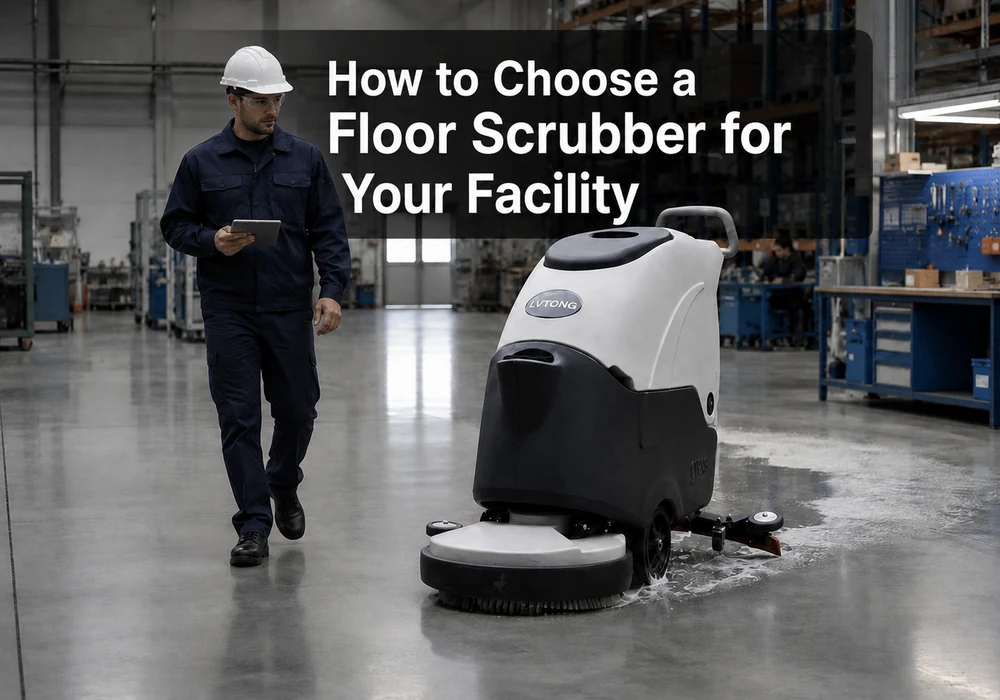
Choosing the right floor tile scrubber machine depends on more than cleaning width or price. Tile material, surface texture, grout depth, soil type, floor area, brush selection and water recovery all affect the final cleaning result.
A machine that performs well on textured ceramic tile may be too aggressive for polished or glazed surfaces. Likewise, a compact walk-behind scrubber may be more practical in congested commercial areas, while a ride-on model can provide higher productivity on large open floors.
This guide explains six practical steps for selecting a tile floor scrubber machine for commercial and industrial facilities, including shopping malls, hotels, schools, factories, warehouses and public buildings.
Quick Answer: How Do You Choose a Floor Tile Scrubber Machine?
Choose a floor tile scrubber machine according to tile type, soil level, grout condition, cleaning area, brush or pad material, tank capacity, runtime and water recovery.
For polished or glazed tiles, a softer non-abrasive brush or pad is generally safer. Textured and non-slip tiles usually require stronger mechanical agitation to reach surface recesses. Compact walk-behind machines are suitable for smaller or congested areas, while ride-on scrubbers are more practical for large open commercial floors.
Always test the selected brush or pad on a small inconspicuous area before cleaning the entire floor.
Floor Tile Scrubber Selection at a Glance
| Cleaning Requirement | Recommended Direction |
|---|---|
| Polished or glazed tile | Soft, non-abrasive brush or pad |
| Standard ceramic or porcelain tile | Medium nylon brush |
| Textured or non-slip tile | Brush with stronger mechanical contact |
| Tight or congested areas | Compact walk-behind scrubber |
| Medium commercial floors | Walk-behind or compact ride-on scrubber |
| Large open floors | Ride-on floor scrubber |
| Visible grout contamination | Check grout depth and brush contact |
| Frequent daily cleaning | Prioritize runtime, tank capacity and easy maintenance |
| Public or high-traffic areas | Prioritize water recovery and maneuverability |
Why Use a Floor Tile Scrubber Machine?
Compared with routine manual mopping, a commercial floor scrubber combines mechanical agitation, solution application and wastewater recovery in one cleaning process. This can improve cleaning consistency and reduce residual water on large tiled floors.
The actual productivity improvement depends on floor layout, machine size, soil level, cleaning frequency and the manual method being replaced.
| Benefit | Practical Value |
|---|---|
| Mechanical scrubbing | Helps remove attached soil more consistently |
| Wastewater recovery | Leaves less residual water after cleaning |
| Consistent brush pressure | Improves repeatability between operators |
| Larger cleaning path | Supports commercial-scale floor maintenance |
| Multiple brush options | Allows adaptation to different tile surfaces |
Which Type of Tile Floor Scrubber Machine Do You Need?
Floor tile scrubbers are generally selected according to floor area, layout and cleaning frequency rather than tile material alone.
Buyers who are still comparing machine configurations can first review the main types of floor scrubbers and how each design fits different facility layouts.
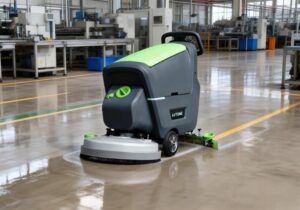
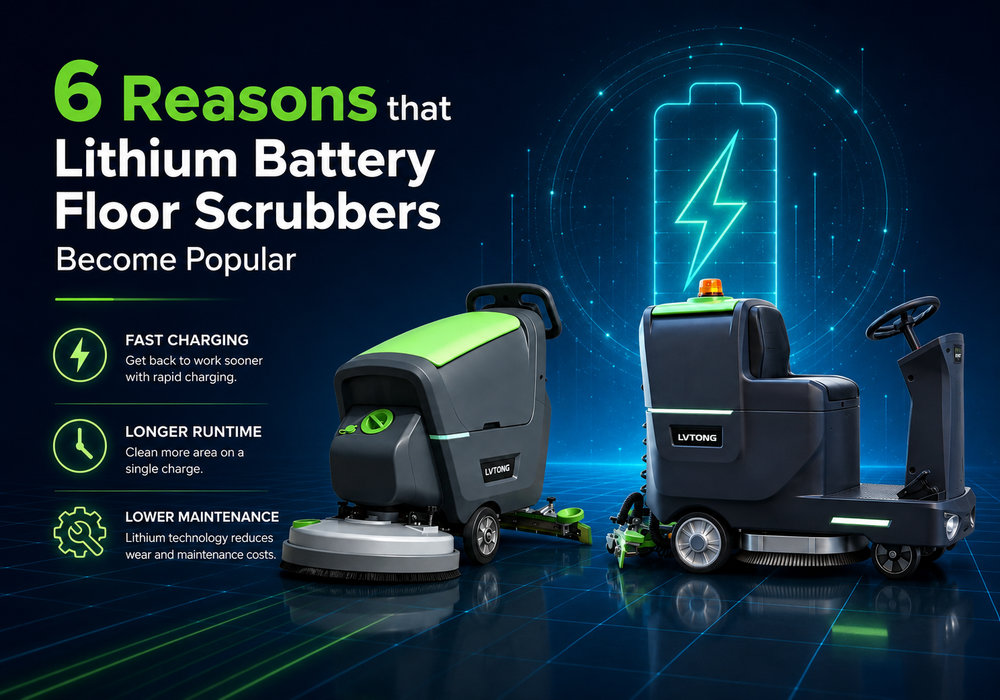
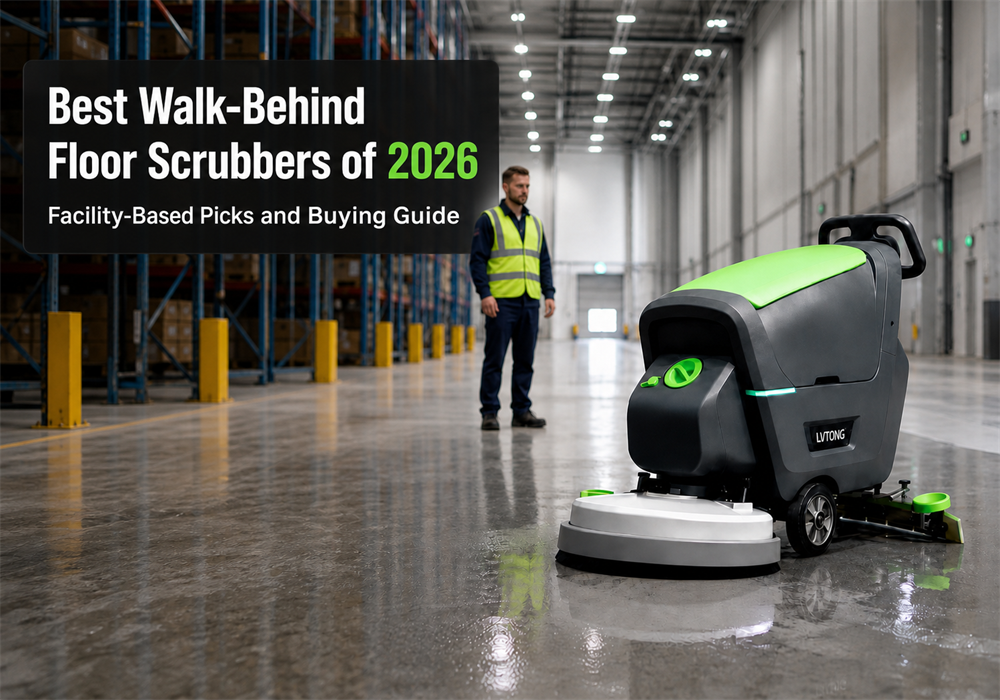
Compact walk-behind floor scrubber machines are useful for small or congested tiled areas where maneuverability is important.
Medium walk-behind or compact ride-on scrubbers offer a balance between productivity and control in shopping malls, hotels, schools and other medium-sized facilities.
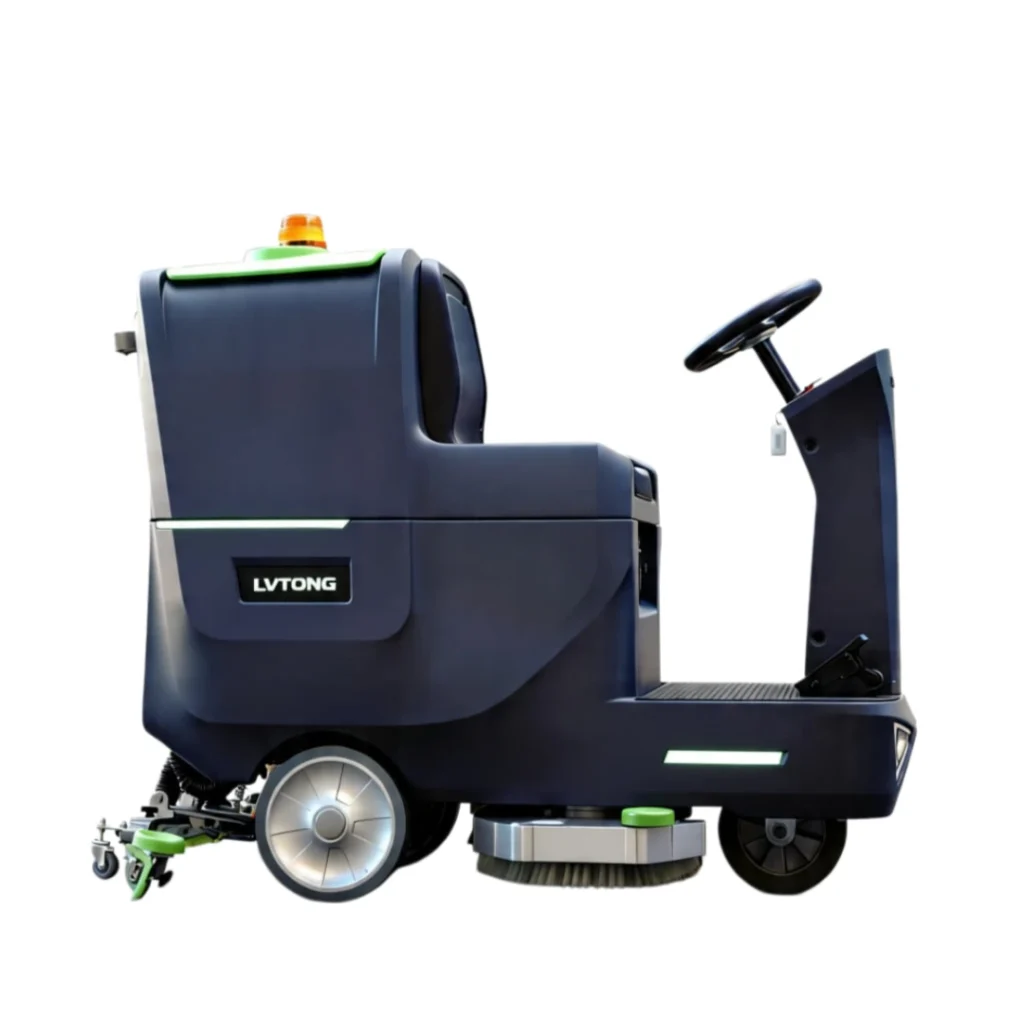
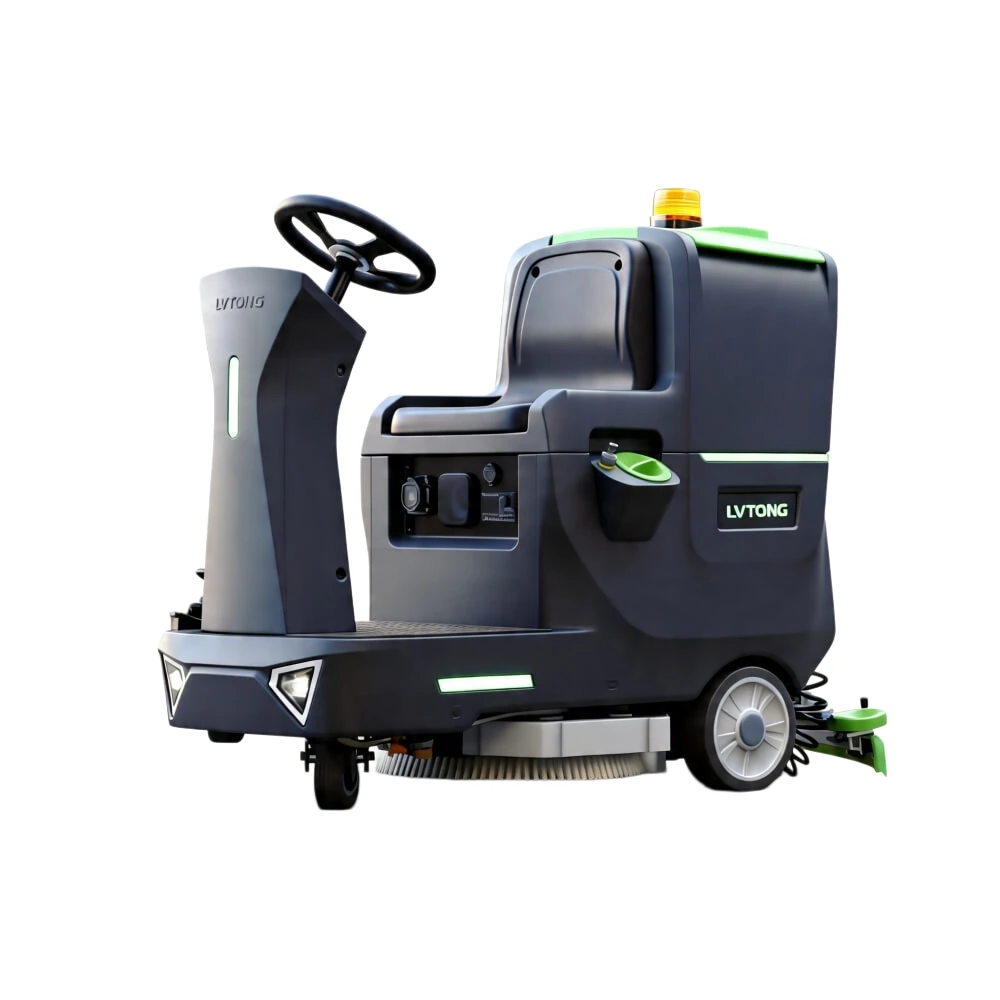
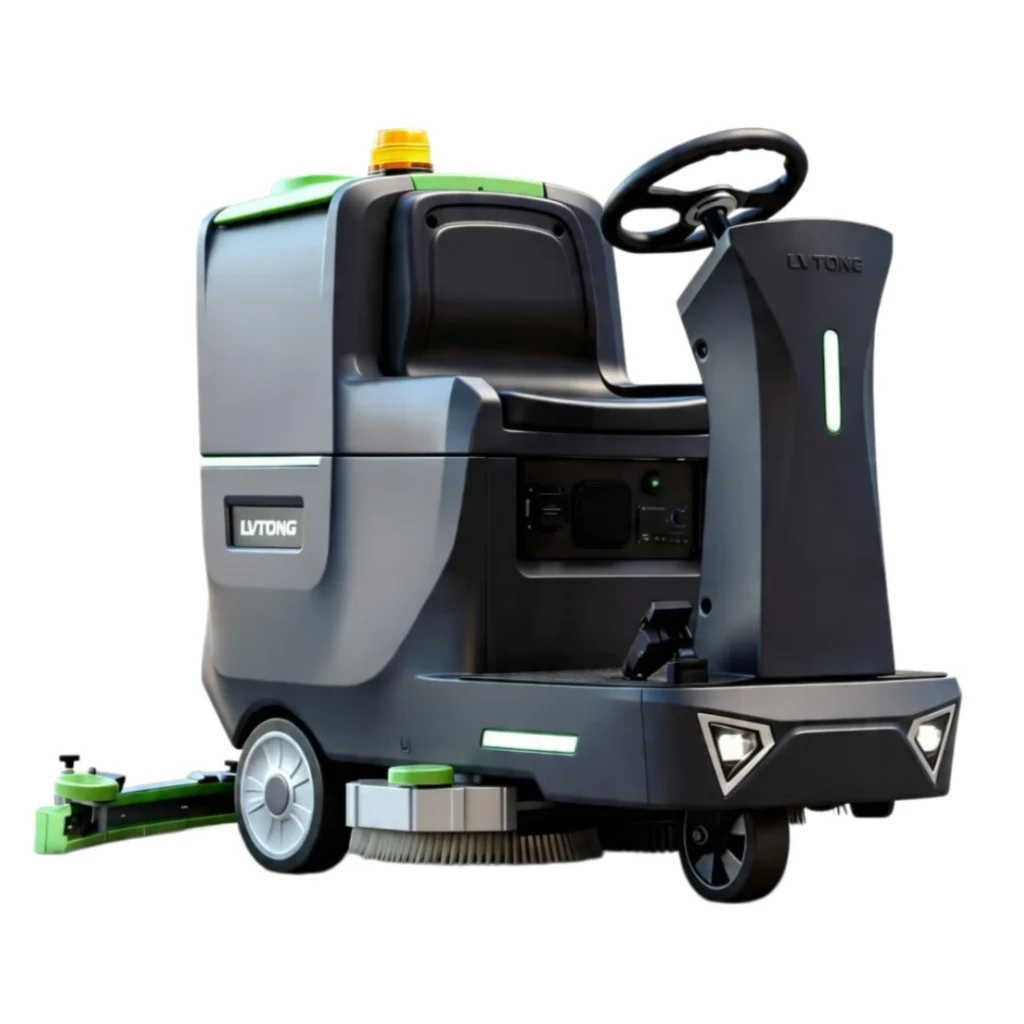
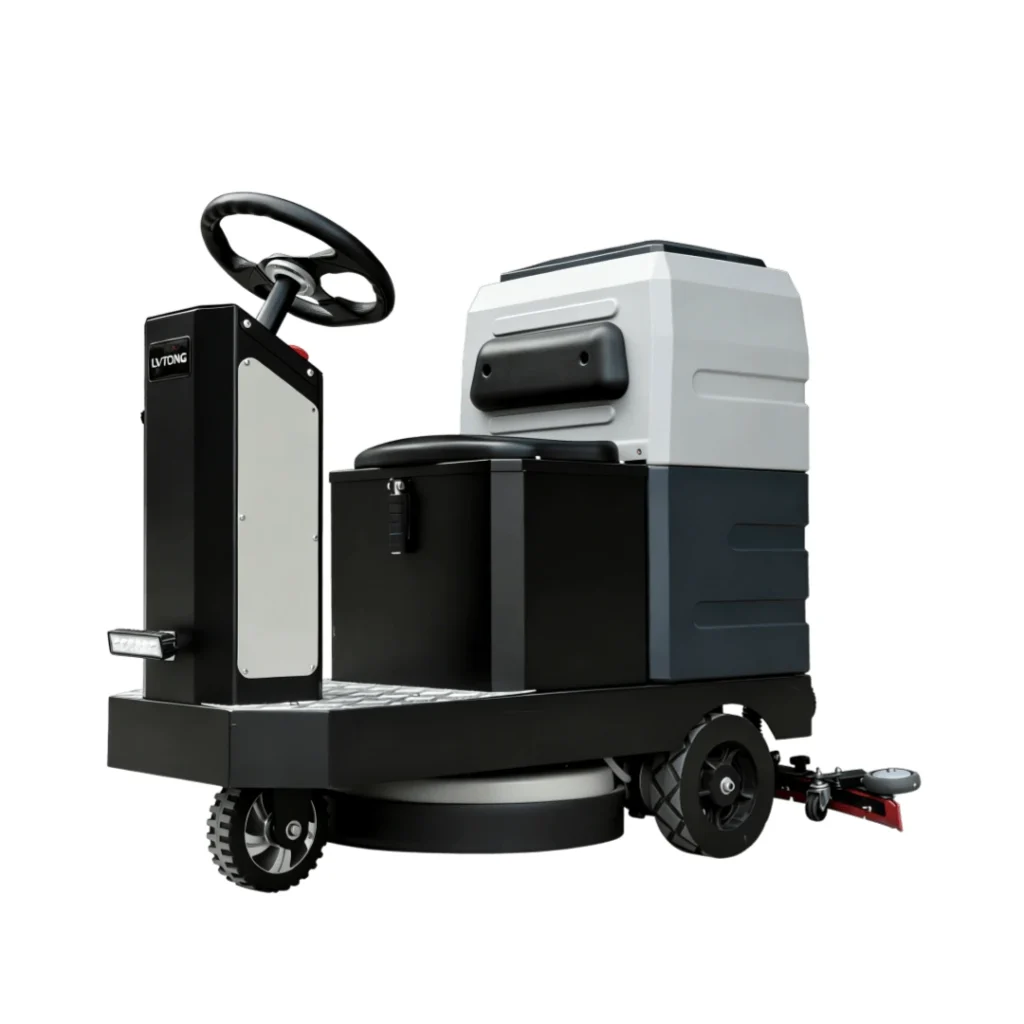
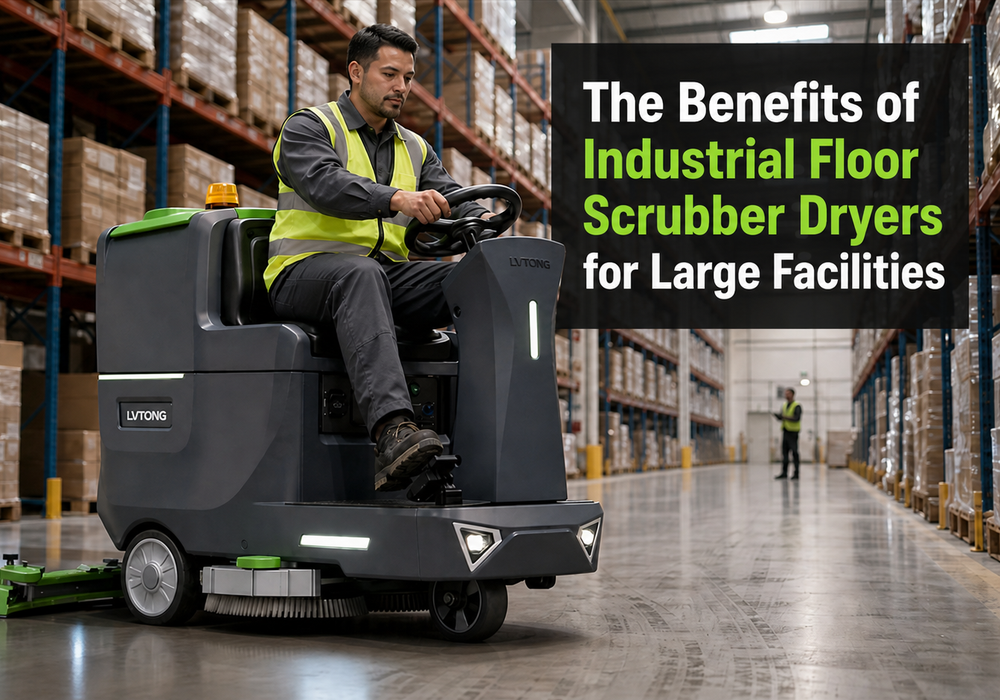
Ride-on floor scrubber machines are more suitable for large open tiled floors where longer cleaning paths, larger tanks and reduced operator walking can improve practical productivity.
Autonomous or highly automated machines can be considered for repetitive routes, but they are not required for every tile-cleaning application.
Step 1: Identify Your Tile Type and Surface Condition
Tile type should be the first consideration because different surfaces respond differently to brush pressure, pad material and cleaning chemicals.
The goal is to generate enough mechanical agitation to remove soil without scratching, dulling or otherwise damaging the surface.
| Tile Type | Typical Cleaning Challenge | Recommended Starting Point | Main Risk |
|---|---|---|---|
| Ceramic tile | Routine dirt and traffic soil | Medium nylon brush | Excessive abrasion |
| Porcelain tile | Fine surface residue and marks | Soft to medium brush | Surface dulling |
| Polished tile | Visible marks and streaks | Soft non-abrasive brush or pad | Scratching |
| Glazed tile | Surface dirt on smooth finish | Soft brush or pad | Damage to glaze |
| Textured tile | Dirt trapped in surface texture | Medium or firmer nylon brush | Incomplete soil removal |
| Non-slip tile | Soil inside recessed texture | Brush with good surface contact | Brush not reaching recesses |
Ceramic and Porcelain Tile
Standard ceramic and porcelain floors can usually be cleaned with a medium nylon brush for routine commercial soil. Brush stiffness should still be adjusted according to surface finish and contamination.
Polished and Glazed Tile
Polished and glazed surfaces require greater caution. Start with a soft, non-abrasive brush or pad and test the cleaning system on a small area before full-scale operation.
Textured and Non-Slip Tile
Textured and non-slip surfaces usually need greater mechanical contact because soil can remain inside shallow recesses even when the visible surface appears clean.
Step 2: Evaluate Dirt, Stains and Grout Conditions
The same tile surface may require a different scrubber configuration depending on the type of contamination.
Routine dust and foot-traffic soil generally require less aggressive agitation than grease, oil, dried food residue or deeply embedded dirt. Before selecting a machine, identify the contaminant and confirm that the brush, pad and cleaning process are suitable for it.
Can a Floor Tile Scrubber Machine Clean Grout?
A floor scrubber can clean some grout lines, but performance depends on grout depth, width and brush contact.
If the grout is nearly level with the tile surface, a standard disc or nylon brush may provide useful agitation. If the grout is significantly recessed, a standard flat pad may pass over the tile without reaching deeply into the grout line.
For a more detailed comparison of brush systems, grout depth and machine configuration, see our floor scrubber for tile and grout guide.
Step 3: Match the Machine Size to the Cleaning Area
A wider cleaning path can increase theoretical productivity, but real cleaning productivity also depends on travel speed, turning space, obstacles, refill frequency, battery runtime and operator workflow.
Selecting a machine that is too large can reduce maneuverability, while a machine that is too small can increase cleaning time on large open floors.
| Facility Condition | Typical Machine Direction | Main Reason |
|---|---|---|
| Small or congested floor | Compact walk-behind scrubber | Easy maneuvering |
| Narrow aisles | Compact machine with tight turning radius | Better access |
| Medium commercial floor | Medium walk-behind or compact ride-on | Balance of control and productivity |
| Large open tile floor | Ride-on scrubber | Higher practical coverage |
| Frequent multi-shift cleaning | Higher-capacity machine | Longer runtime and fewer interruptions |
Step 4: Choose the Right Brush or Pad for Tile
Brush or pad selection can affect tile-cleaning performance as much as the machine itself. A more aggressive cleaning tool does not automatically produce a better result.
The correct choice depends on surface finish, soil level and whether the floor contains textured or recessed areas.
Soft Brush or Non-Abrasive Pad
Suitable as a starting point for polished, glazed or delicate tile surfaces where avoiding scratches and loss of gloss is a priority.
Medium Nylon Brush
A practical option for many ceramic and porcelain tile floors with routine commercial dirt and foot-traffic residue.
Firmer Brush for Textured Tile
Textured or non-slip tile may require stronger mechanical contact to reach dirt trapped below the highest points of the surface.
Always test the selected brush or pad on a small inconspicuous area and follow the tile manufacturer’s maintenance recommendations before full-scale cleaning.
Step 5: Compare Tank Capacity, Runtime and Water Recovery
Tank capacity should be evaluated together with cleaning width, battery runtime, refill distance and wastewater recovery. A larger tank can reduce interruptions, but it also increases machine size and weight.
Commercial buyers should compare the complete operating system rather than one specification.
| Specification | Why It Matters for Tile Floors |
|---|---|
| Cleaning width | Affects coverage per pass |
| Solution tank | Influences refill frequency |
| Recovery tank | Determines wastewater capacity |
| Battery runtime | Affects uninterrupted operating time |
| Charging time | Important for frequent or multi-shift cleaning |
| Squeegee width | Affects wastewater recovery behind the machine |
| Turning radius | Important in aisles and congested layouts |
| Brush pressure | Influences mechanical agitation |
| Noise level | Important in hotels, schools and public areas |
| Practical productivity | More useful than theoretical productivity alone |
Step 6: Compare Maintenance, Service and Total Cost
The lowest purchase price does not necessarily result in the lowest long-term cleaning cost.
Commercial and industrial buyers should evaluate the cost and availability of consumables, batteries, maintenance and technical support over the expected service life of the machine.
Buyers should also review the supplier’s cleaning equipment maintenance and service capabilities before making a long-term purchasing decision.
| Cost Factor | What to Check |
|---|---|
| Purchase price | Machine configuration and included accessories |
| Brushes and pads | Replacement cost and availability |
| Squeegee blades | Expected wear and replacement frequency |
| Battery | Type, replacement cost and local availability |
| Maintenance | Routine service requirements |
| Spare parts | Stock and delivery time |
| Training | Operator and technician support |
| Downtime | Service response and replacement-machine options |
| Expected service life | Long-term value rather than initial cost alone |
What Affects Tile Floor Scrubber Cost?
Tile floor scrubber pricing depends on machine size, cleaning width, battery configuration, tank capacity, automation level, accessories, certification, shipping and after-sales support.
Buyers should compare total operating cost rather than selecting a machine only by initial quotation.
Recommended Tile Floor Scrubber Configurations
Small Commercial Spaces
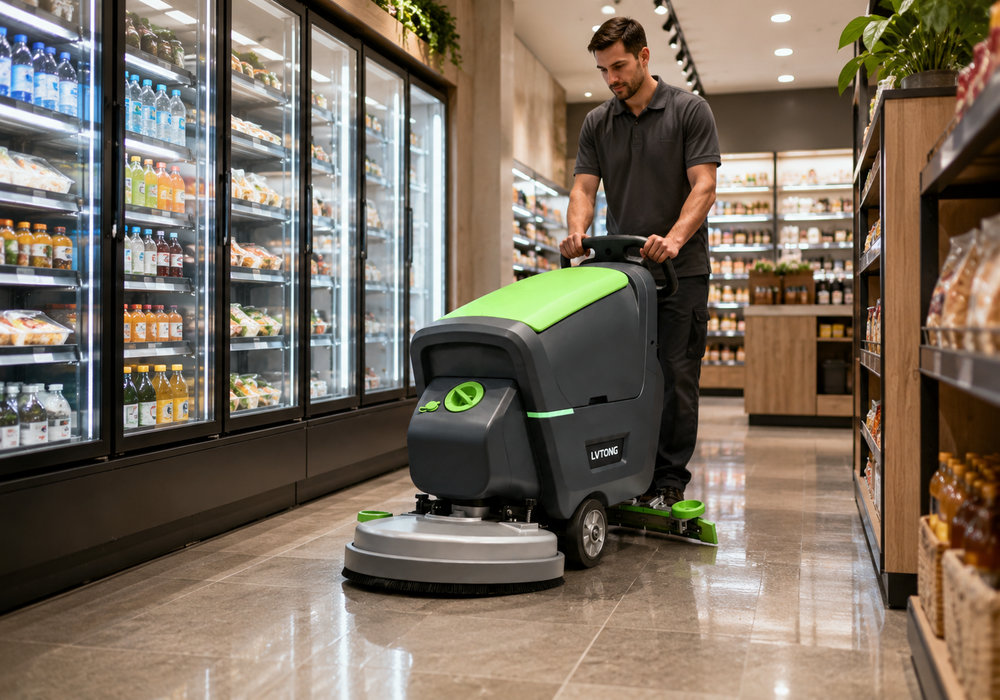
For shops, offices, hotel corridors and other compact tiled areas, prioritize maneuverability, simple controls and reliable water recovery. A compact walk-behind scrubber is often the practical starting point.
Shopping Malls, Hotels and Schools
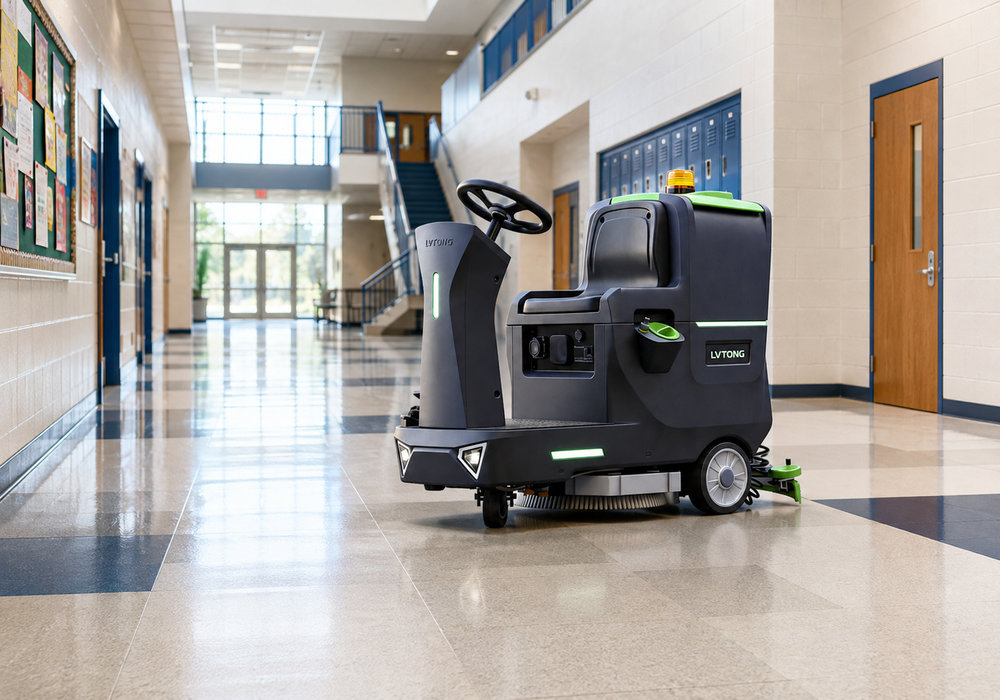
Medium-sized facilities usually require a balance between cleaning width, runtime, noise level and maneuverability. Medium walk-behind or compact ride-on machines can work well where cleaning routes include both open floors and tighter areas.
Factories and Large Commercial Facilities
Large open floors usually benefit from ride-on machines with greater tank capacity, longer runtime and higher practical productivity. Brush configuration should still be selected according to tile finish and contamination.
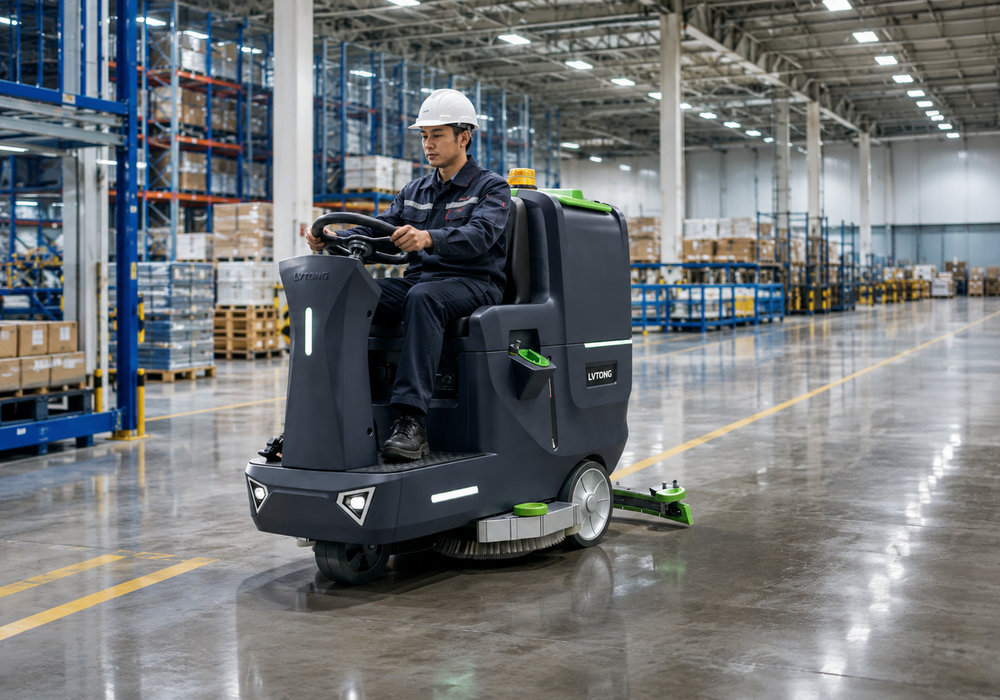
After determining the required machine size and brush configuration, buyers can compare LVTONG’s range of commercial floor scrubber dryers for different tiled commercial and industrial environments.
Success Stories
Case 1: Shopping Mall Tile Floor Cleaning
Facility: Large shopping mall in Southeast Asia
Floor Type: Polished ceramic tile
Machine: 3 × LT-S530X walk-behind floor scrubbers
Challenge: Heavy foot traffic, visible stains and frequent daily cleaning
Previous Method: Manual mopping and spot cleaning
Why This Configuration Was Selected
The customer needed a compact commercial floor tile scrubber machine that could move easily through public areas while providing reliable water recovery and sufficient tank capacity.
A medium-soft brush was selected to clean polished ceramic tile while reducing the risk of scratching or dulling the surface.
Results
According to customer feedback:
- Cleaning productivity improved by approximately 65%;
- Fewer repeated cleaning passes were required;
- Less residual water remained after cleaning;
- Operator workload was reduced;
- Floor appearance became more consistent during daily operation.
Source: LVTONG customer application record

Case 2: Factory Tile Floor Deep Cleaning
Facility: Manufacturing warehouse in South America
Floor Type: Industrial ceramic tile / hard tile floor
Machine: 3 × V6 ride-on floor scrubbers
Challenge: Oil stains, dust accumulation and inefficient manual cleaning
Previous Method: Manual floor cleaning
Why This Configuration Was Selected
The facility required a ride-on floor tile scrubber machine capable of covering a large floor area while handling heavier industrial contamination.
The V6 was selected for its larger cleaning capacity, extended operating time and customized brush configuration. The brush system was matched to the floor condition to provide stronger mechanical agitation on oil-contaminated areas.
Results
According to customer feedback:
- Cleaning time was reduced from approximately 4 hours to 1.5 hours;
- Heavy oil and dust residue was significantly reduced;
- Fewer repeated cleaning passes were required;
- Operator walking and physical workload were reduced;
- Daily floor-cleaning consistency improved.
Source: LVTONG customer application record

Case 3: Hotel Lobby Tile Floor Cleaning
Facility: Five-star hotel
Floor Type: Imitation marble tile
Machine: 2 × LT-S710X ride-on floor scrubbers
Challenge: Maintaining a clean, glossy floor appearance in a high-traffic lobby
Previous Method: Manual cleaning and routine floor maintenance
Why This Configuration Was Selected
The hotel required a floor tile scrubber machine that could clean a large lobby efficiently while maintaining a high-quality visual finish.
The LT-S710X was selected for its ride-on operation, stable cleaning performance and effective wastewater recovery. A suitable non-abrasive brush or pad was used to reduce the risk of scratching or dulling the imitation marble tile surface.
Results
According to customer feedback:
- Floor appearance and gloss consistency improved;
- Cleaning agent consumption was reduced;
- Less residual water remained after cleaning;
- Large lobby areas could be cleaned more efficiently;
- Daily cleaning results became more consistent.
Source: LVTONG customer application record

FAQ
1. What is a floor tile scrubber machine?
A floor tile scrubber machine is professional cleaning equipment that applies cleaning solution, mechanically agitates the tile surface and recovers dirty water. It is commonly used in commercial and industrial facilities with large tiled floors.
2. What type of floor scrubber is suitable for ceramic tile?
Many ceramic tile floors can be cleaned with a floor scrubber using a medium nylon brush. The correct brush stiffness depends on tile finish, soil level and whether the surface is smooth or textured.
3. Can a floor scrubber be used on porcelain tile?
Yes. Floor scrubbers can be used on many porcelain tile floors when the correct brush or pad is selected. Polished porcelain should generally be cleaned with less aggressive, non-abrasive tools.
4. Can a floor scrubber clean grout lines?
It can clean some grout lines, but performance depends on grout depth and brush contact. Deep or recessed grout may require a brush that reaches below the tile surface or a dedicated grout-cleaning process.
5. What brush should I use on polished tile floors?
Start with a soft, non-abrasive brush or pad. Always test the selected cleaning tool on a small inconspicuous area before full-scale cleaning.
6. Can a floor scrubber damage tile?
Incorrect brush stiffness, aggressive pads, unsuitable chemicals or excessive pressure can damage some tile finishes. Matching the cleaning system to the tile type reduces this risk.
7. Should I use a walk-behind or ride-on scrubber for tile floors?
Walk-behind scrubbers are generally more practical in compact or congested areas, while ride-on machines are better suited to large open floors where higher productivity is required.
Conclusion
Choosing the right floor tile scrubber machine starts with the floor rather than the machine.
Tile material, surface texture, grout depth, contamination, cleaning area and operating frequency should determine the brush system and equipment configuration. Polished and glazed tiles generally require gentler cleaning tools, while textured and non-slip surfaces may require stronger mechanical contact.
Machine size should then be matched to the facility layout. Compact walk-behind scrubbers work well in congested commercial areas, while ride-on machines can improve productivity on large open floors.
Finally, compare water recovery, battery runtime, maintenance requirements, spare-parts availability and total operating cost before making a purchasing decision.
A short on-site cleaning test under real operating conditions is often the most reliable way to confirm that the selected machine, brush and cleaning process are suitable for the tile surface.
Get a Tile Floor Scrubber Recommendation
Not sure which scrubber, brush or machine size is suitable for your tiled facility?
Send LVTONG the following information:
- Tile type or floor photo;
- Approximate cleaning area;
- Main dirt or contamination;
- Grout condition;
- Daily cleaning hours;
- Preferred walk-behind or ride-on configuration;
- Country or destination market.
Our team can recommend a suitable tile floor scrubber configuration for your application.