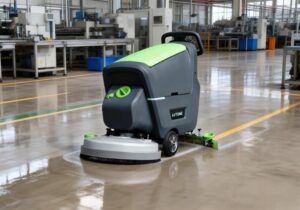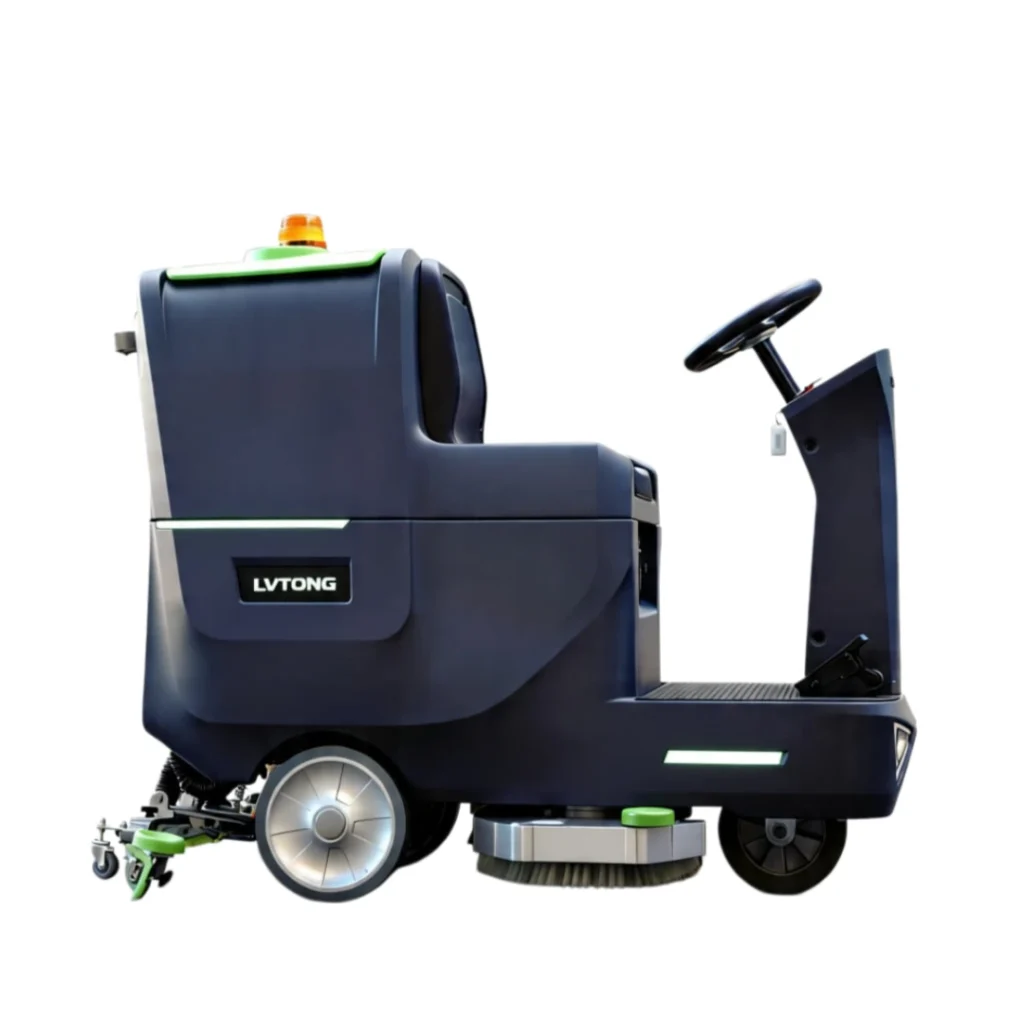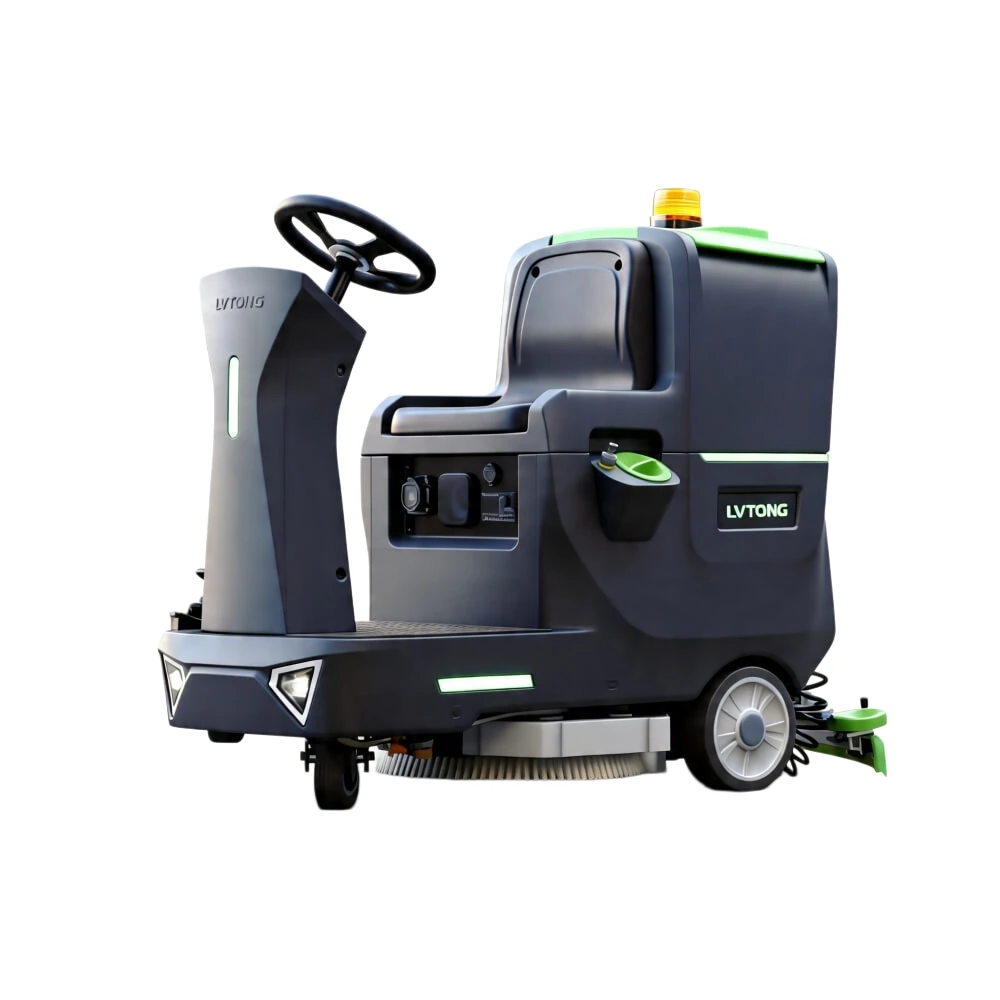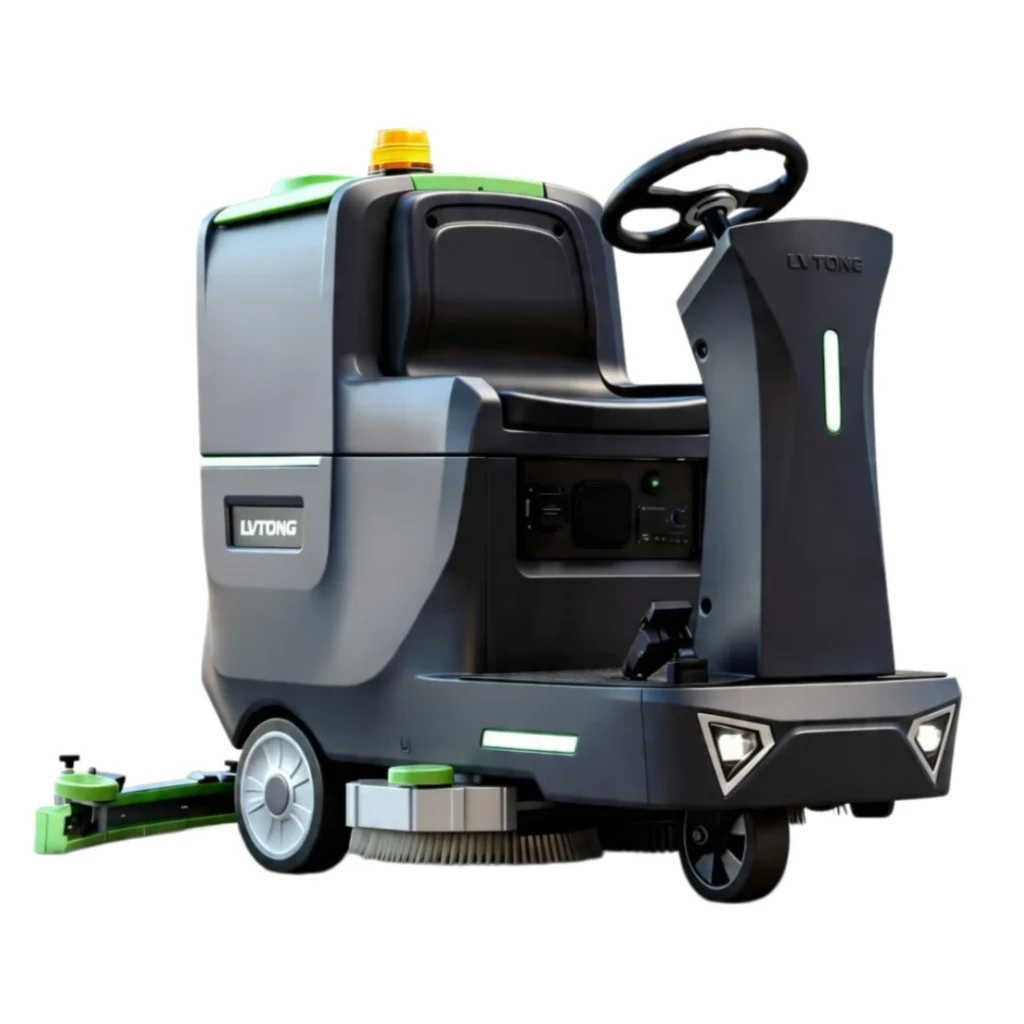
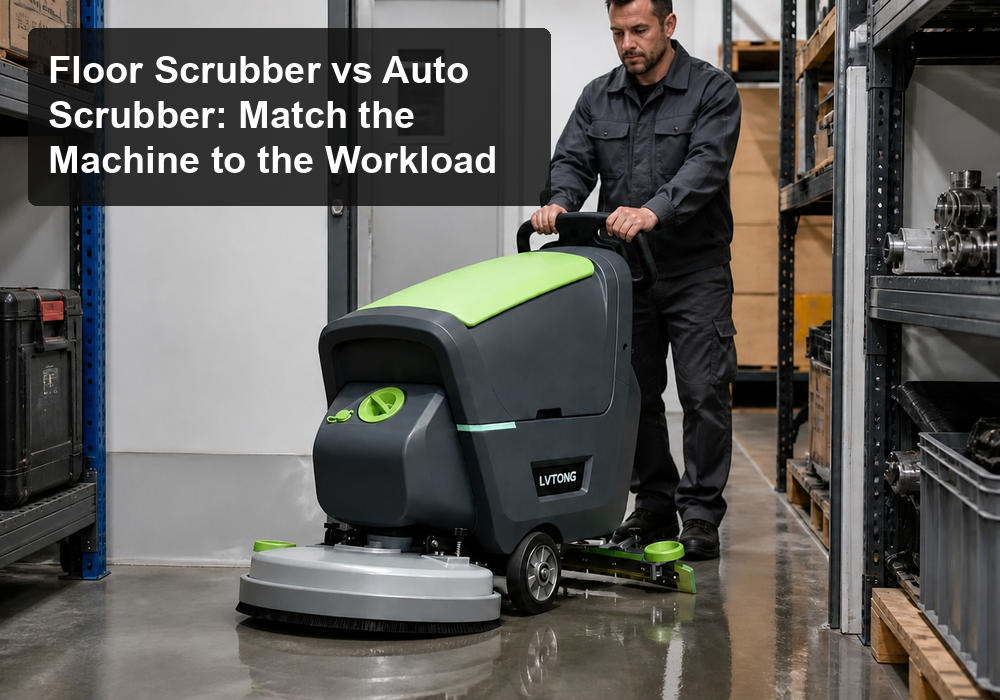
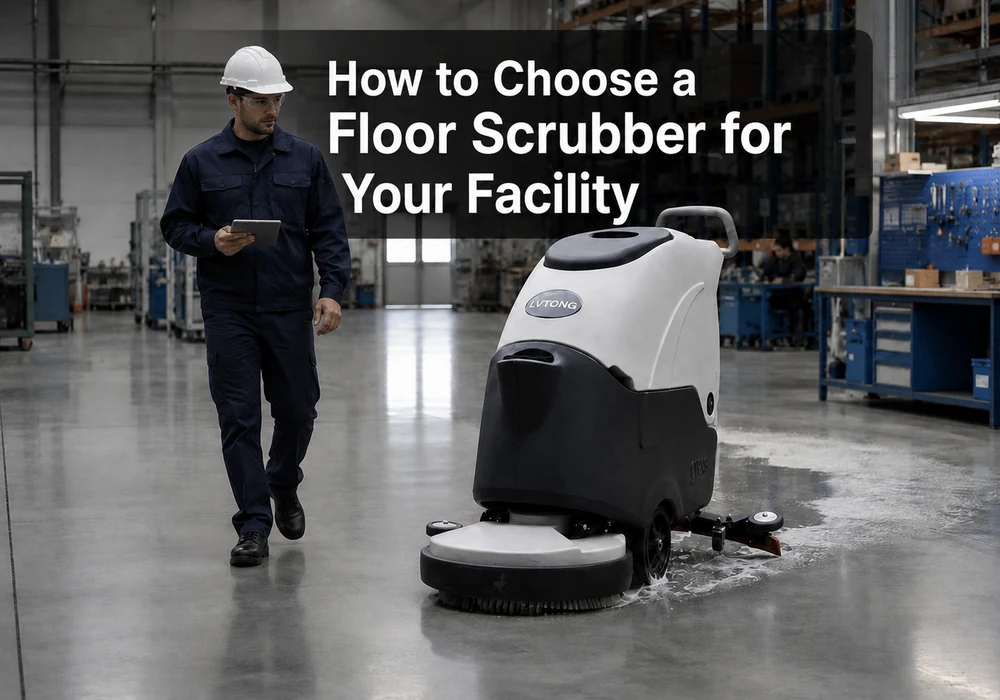
At LVTONG, we start floor scrubber selection with the cleaning route rather than the model list. Before recommending a walk-behind or ride-on model, we assess the daily cleanable area, narrowest clearance, soil conditions, cleaning window, refill and drain access, and the time required before the floor can return to traffic.
These conditions vary significantly by facility. Long warehouse aisles, wet supermarket zones, and factory floors with oil, dust, or loose debris place different demands on maneuverability, brush selection, water recovery, and runtime. A machine may look strong on a specification sheet yet still be a poor operational fit if it requires excessive maneuvering, frequent refill or drain stops, or repeated manual touch-up cleaning.
This route-first review helps us judge whether published productivity, tank capacity, runtime, and water-recovery performance can translate into a workable cleaning plan. The model table later in this guide is a shortlist reference; the final configuration should follow the current product page, approved technical datasheet, and quotation.
What Should You Consider Before Buying a Floor Scrubber?
Before comparing models, review five conditions: total cleanable area, layout and clearances, soil or debris type, cleaning frequency, and the required dry-back time.
Floor area tells you how much productivity you need, but it should not be used alone. A 4,000㎡ open workshop may be faster to clean than a 4,000㎡ store with shelves, corners, customers, and narrow passages. Layout affects machine size, turning radius, and operator comfort. Soil type affects brush pressure, detergent choice, and water recovery. Cleaning frequency affects runtime, tank size, and maintenance needs.
The most useful question is simple: can the operator finish the route without repeated delays? If the machine must stop often for refilling, draining, turning, charging, or hand-cleaning missed areas, the real productivity will be much lower than the rated number.
Selection factor |
What to check |
Why it matters |
|---|---|---|
Floor area |
Daily cleanable area, not only total building size |
Helps estimate productivity and tank needs |
Layout |
Aisle width, doors, corners, ramps, obstacles |
Decides whether compact or ride-on makes sense |
Soil type |
Dust, oil, mud, tire marks, food residue, metal debris |
Affects brush, detergent, and suction requirements |
Cleaning frequency |
Once daily, multiple shifts, night cleaning, spot cleaning |
Affects runtime, battery type, and maintenance planning |
Drying requirement |
Public traffic, forklifts, workers, customers |
Makes water recovery and squeegee performance critical |
A practical floor scrubber should fit the way your facility actually works. If you clean during business hours, low noise and fast drying may matter more than maximum speed. If you clean after production, tank capacity and runtime may matter more.
Which Type of Floor Scrubber Is Right for Your Facility?
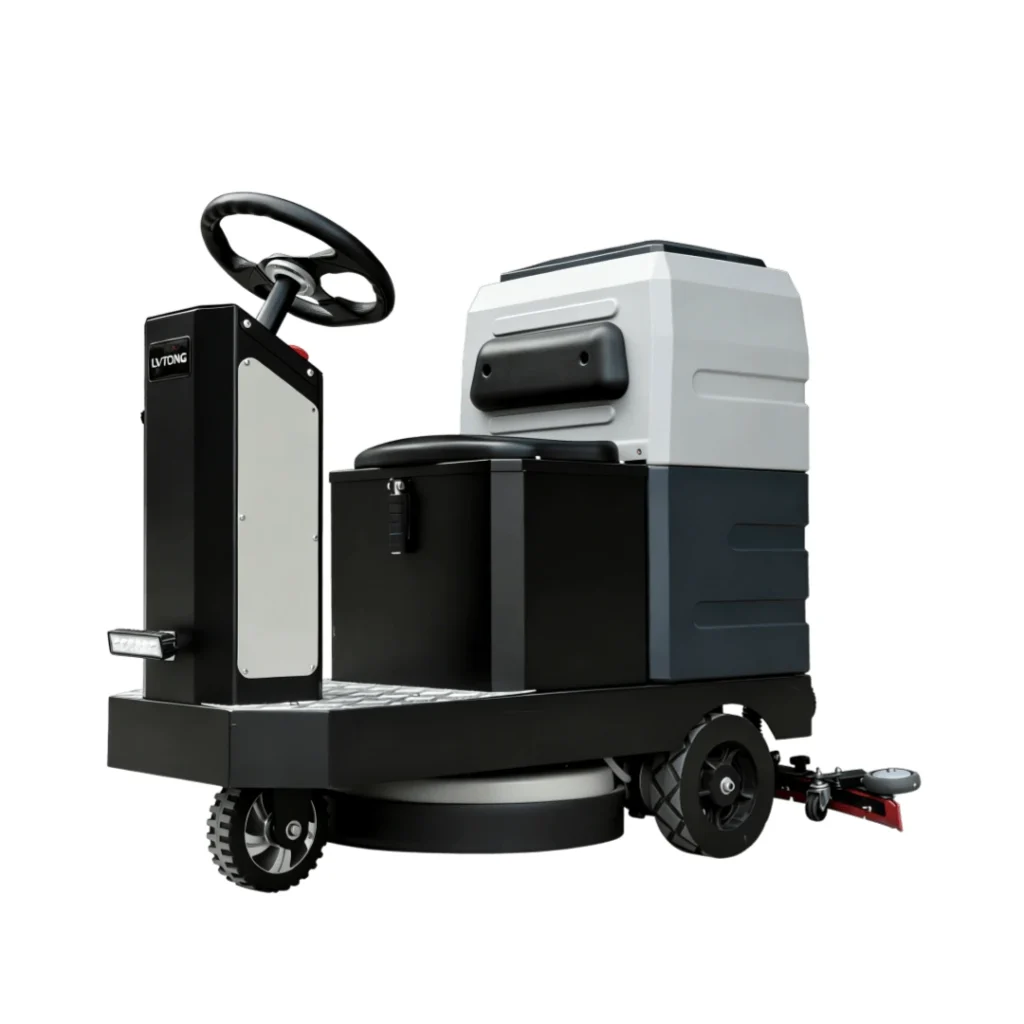
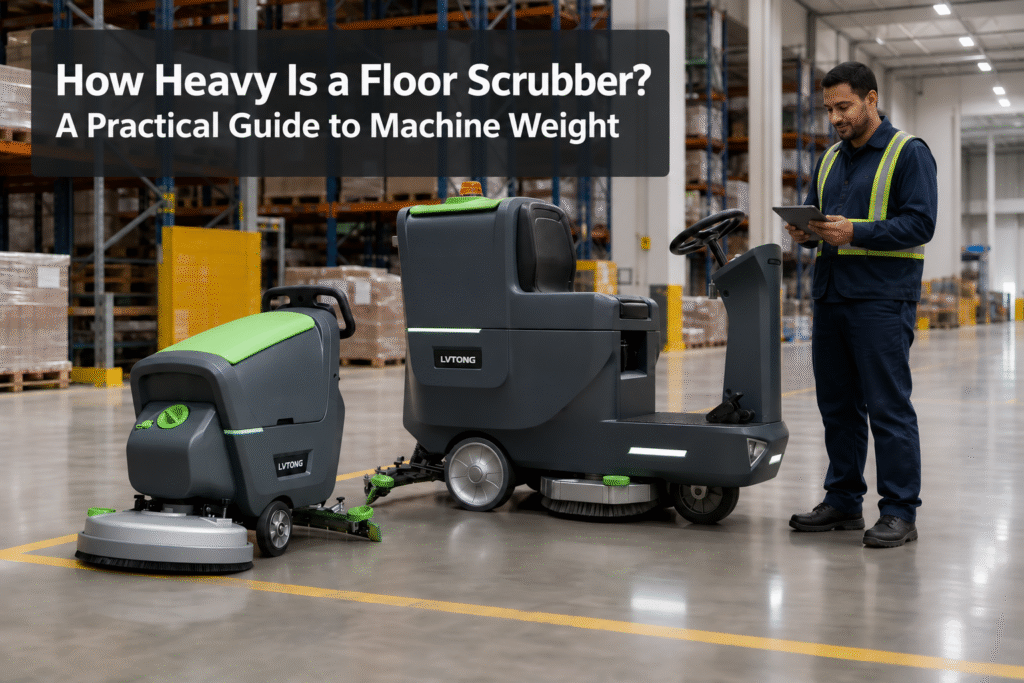
Most facilities choose between a walk-behind floor scrubber and a ride-on floor scrubber. The difference is not just machine size. It is how the operator works and how the machine moves through the route.
A walk-behind floor scrubber is usually better for small to medium areas, narrow aisles, divided rooms, supermarkets, workshops, schools, healthcare corridors, and areas with many obstacles. It takes less storage space and is easier to move through tight layouts. It is also a good choice when the cleaning route changes often.
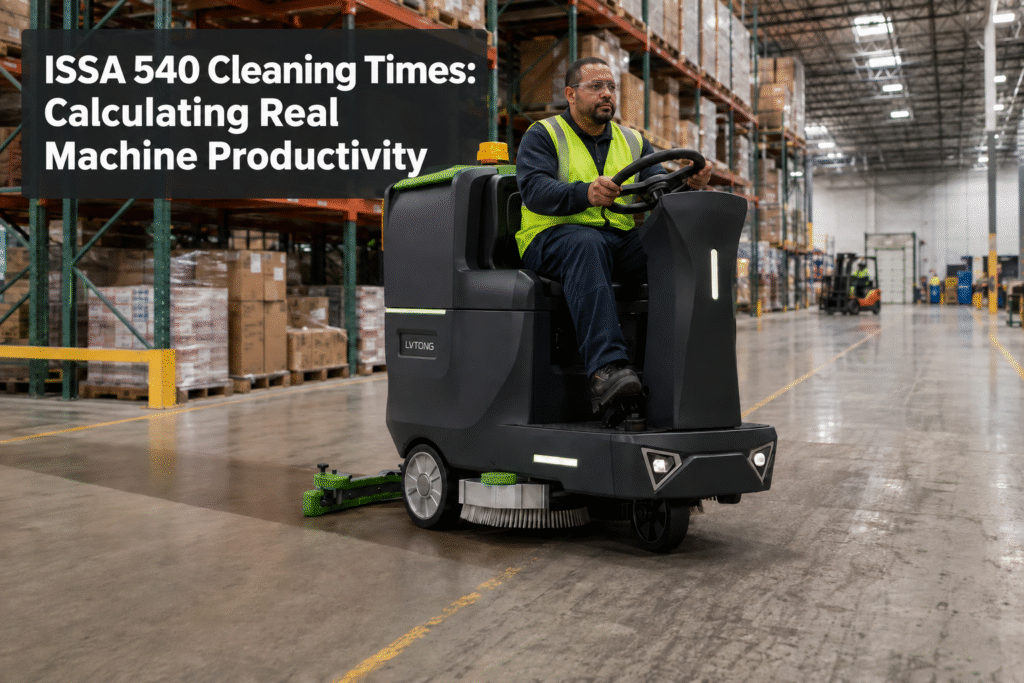
A ride-on floor scrubber is usually better for large facilities with long, open cleaning routes. It reduces operator fatigue and can clean more floor per shift when the layout allows it. Warehouses, logistics centers, airports, large workshops, parking areas, and shopping centers often benefit from ride-on machines because the operator can cover more ground with less physical strain.
The decision should come from the route. If the machine is too wide for the aisles, too long for the turns, or too heavy for certain areas, higher rated productivity will not help. On mixed sites, it is common to use a ride-on scrubber for open areas and a compact walk-behind machine for edges, aisles, and smaller rooms.
How to Estimate Floor Scrubber Productivity
Floor scrubber productivity depends on cleaning width, working speed, and actual route efficiency. The rated number gives a useful starting point, but real performance is usually lower because operators must slow down for obstacles, turns, refilling, draining, and traffic.
A simple way to think about productivity is:
Theoretical productivity (m²/h) = cleaning width (m) × operating speed (km/h) × 1,000.
Practical productivity is lower because the route includes turns, overlap, obstacles, refilling, wastewater disposal, edge cleaning, and travel between zones. Compare machines using one complete route rather than a short straight pass.
For example, a wide ride-on machine may be very efficient in an open warehouse aisle, but the same machine may lose time in a crowded production area. A compact walk-behind scrubber may have a lower rated output, yet perform better where the operator must clean around shelves, machines, or corners.
This is why a site test is valuable. If possible, test the scrubber on the actual floor, with the actual operator, during the normal cleaning window. Watch how often the operator stops, how well the squeegee picks up water, and whether the machine reaches the areas that usually stay dirty.
Evaluate Tank Capacity, Runtime, and Water Recovery Together
Tank capacity, battery runtime, and water recovery should be evaluated together. If one part is weak, the whole cleaning process slows down.
Size the solution tank, recovery tank, battery package, and discharge plan as one operating system. Larger tanks can reduce interruptions, but only when the battery can complete the route and the site provides practical refill and drain access. During a trial, check not only how long the machine runs, but also whether the squeegee leaves the floor acceptably dry after straight passes, turns, and changes in floor level.
For U.S. general-industry workplaces, OSHA 29 CFR 1910.22(a)(2) requires each workroom floor to be maintained in a clean and, to the extent feasible, dry condition. Where wet processes are used, drainage and, where feasible, dry standing places are also required. A floor scrubber does not by itself establish OSHA compliance; water recovery, spill response, drainage, inspection, and site procedures must be considered together.
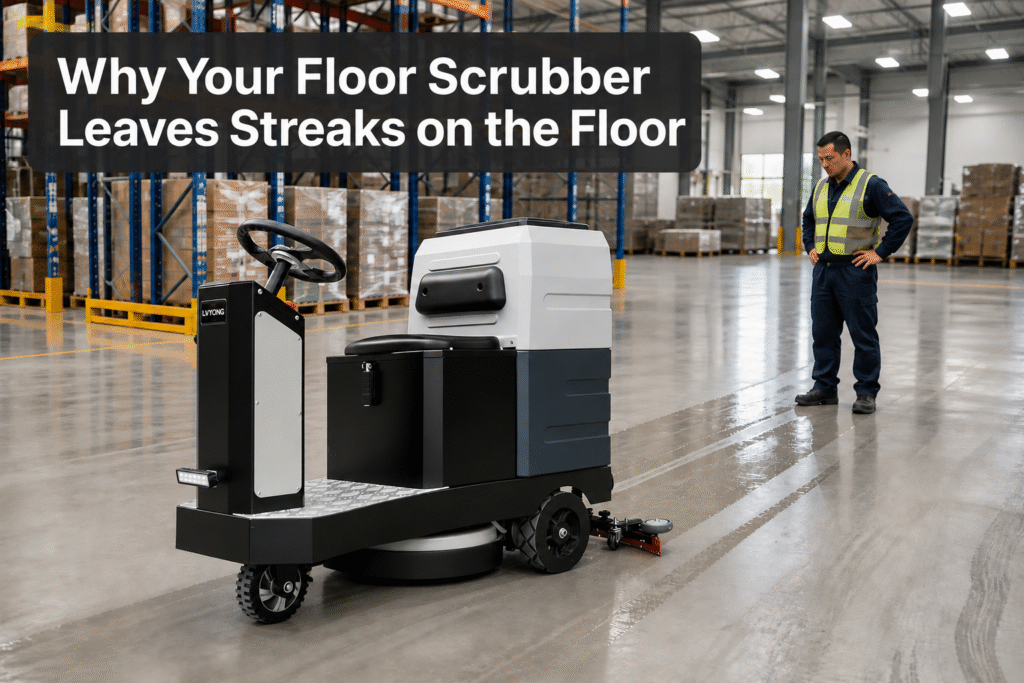
When testing a machine, watch the floor behind the squeegee. If it leaves streaks, wet edges, or puddles after turns, check the squeegee blade, vacuum hose, tank seal, detergent foam, and operating speed. A machine with good scrubbing power but weak water recovery can create extra work after the cleaning pass.
Match Brush System, Chemical, and Floor Material
The brush system determines how the machine contacts the floor. LVTONG’s floor scrubber accessories guide explains how disc brushes, roller systems, pads, and squeegee components should be matched to floor conditions. Some roller brush systems are designed to combine scrubbing with debris collection, making them suitable for rough surfaces and industrial environments where loose debris may appear.
Brush pressure also matters. Low pressure may fail to remove oil film or compacted dust. Too much pressure may wear brushes quickly or damage sensitive surfaces. For marble, polished tile, coated floors, or epoxy surfaces, it is better to test a small area first.
Follow the floor manufacturer, detergent supplier, and machine manual when selecting chemicals. Use a low-foam product compatible with the floor finish, seals, hoses, and recovery system; do not assume that neutral or alkaline chemistry is suitable for every surface or soil. Oil-contaminated floors may require a compatible degreaser, but concentration and dwell time should follow the approved instructions. Test the selected brush or pad and chemical on an inconspicuous area before full-scale use.
The most reliable cleaning result comes from matching floor material, brush type, detergent, and water recovery. If one of these choices is wrong, the machine may leave residue, streaks, foam, or uncleaned soil behind.
How to Match a Floor Scrubber to Different Facilities
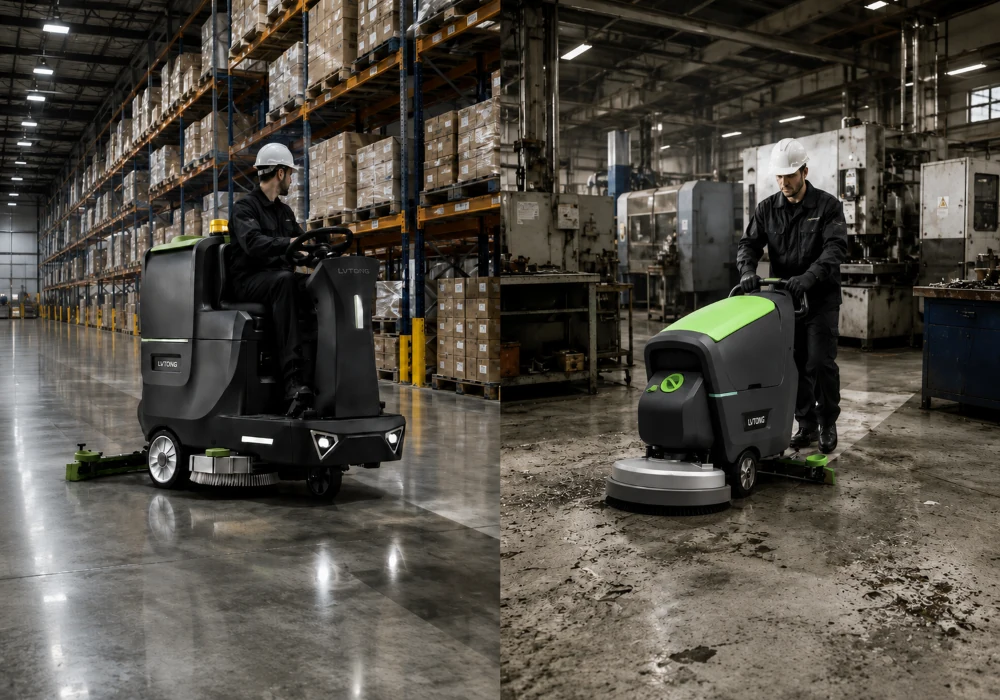
Different facilities create different cleaning problems. A warehouse or logistics center usually has long routes, forklift traffic, tire marks, dust, and occasional oil stains. In this type of facility, a ride-on scrubber may be useful for open routes, while a walk-behind machine may still be needed for aisles, corners, and loading areas.
Facility |
Main challenge |
Recommended starting point |
|---|---|---|
Warehouse or logistics center |
Dust, tire marks, long routes, loading areas |
Ride-on for open routes; walk-behind for aisles and corners |
Factory workshop |
Oil, dust, metal debris, equipment-dense areas |
Walk-behind or ride-on depending on layout |
Supermarket |
Aisles, customer traffic, food-area residue |
Walk-behind for aisles; ride-on for large open sections |
Airport or transport hub |
Large floor area, high traffic, strict drying needs |
Ride-on for terminal halls; walk-behind for waiting areas |
Hotel or healthcare facility |
Noise, floor protection, fast drying |
Compact walk-behind with reliable water recovery |
The logistics-industry cleaning guide explains how open aisles, forklift traffic, loose debris, and route length affect equipment selection. For factories, the best choice depends on floor material, contamination, route layout, cleaning frequency, hygiene standard, and required drying result. These are the kinds of details that should be collected before asking for a quote.
Avoid Common Floor Scrubber Buying Mistakes
Sizing by floor area alone. Include the route, obstacles, clearances, refill points, drain points, and cleaning window.
Checking the scrub deck but not the dry-back. Inspect water pickup on straight passes, turns, edges, and transitions between floor levels.
Choosing a ride-on model without a clearance test. Measure doors, aisles, lifts, ramps, storage space, and turning zones before confirming the machine.
Comparing purchase price without operating cost. Ask the supplier to separate the machine, battery and charger, initial brushes or pads, squeegee blades, filters, hoses, recommended spare-parts pack, preventive-maintenance requirements, warranty scope, parts lead time, training, freight, and expected downtime arrangements. Compare annual labor hours and stop time using the site-trial record; do not publish a labor-saving or payback percentage unless the baseline, calculation period, and assumptions are shown.
Annual TCO = equipment cost allocation + battery and charger + consumables + maintenance and repair parts + labor + water, chemical, and electricity + downtime or backup equipment + freight and service travel.
Using unapproved chemicals. Follow the machine, chemical, and flooring instructions and control foam in the recovery system.
Check the Supplier Behind the Machine
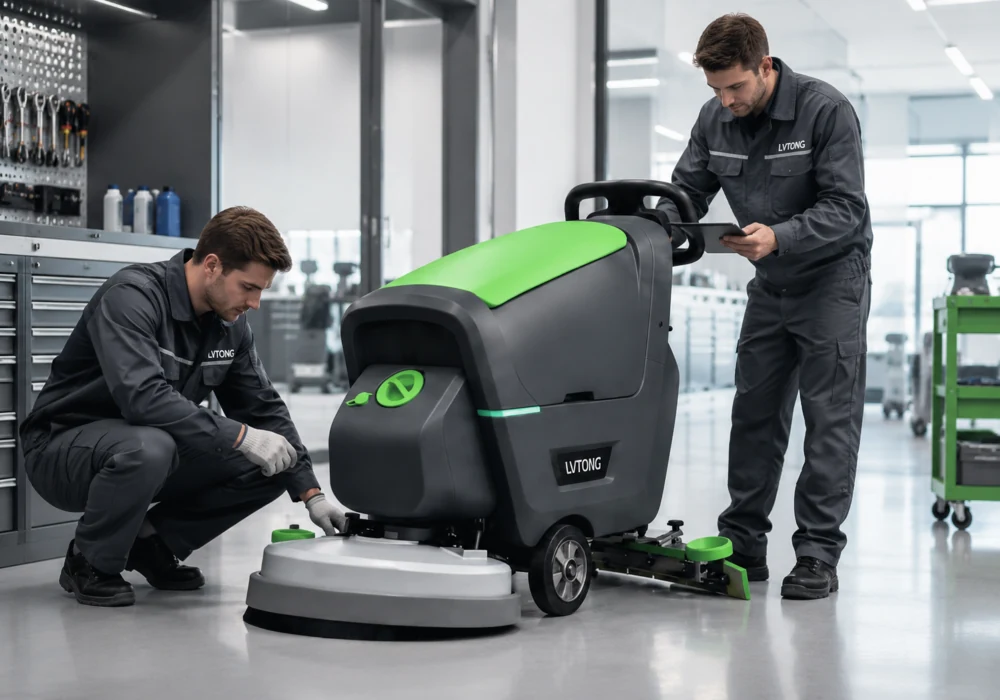
For facility managers, choosing a floor scrubber also means checking the support behind it. For distributors, this part becomes even more important because one machine may be sold into many different facility types.
If you are buying for resale, rental, or multiple locations, ask about spare parts availability, brush and squeegee replacement, battery support, technical documents, training materials, after-sales response, and whether the supplier can support different facility applications. Product range also matters. A distributor may need compact walk-behind machines for small sites, ride-on scrubbers for larger facilities, and different configurations for factories, supermarkets, schools, and logistics customers.
We recommend starting with the end-user application, even when a distributor requests several models at once. Share the industries served, common floor materials, recurring soils, route restrictions, battery and charging conditions, local parts capability, and service expectations. These details turn the discussion from a price-list comparison into a model-and-configuration shortlist.
What to Check During a Site Trial
A useful trial reproduces one complete cleaning route rather than a short straight pass. Record route time, refill and drain stops, battery remaining, missed edges, turning behavior, water left behind, and any need for touch-up cleaning. Test the actual floor, soil, detergent, and operator whenever possible.
For a publishable trial record, divide the route into open passes, turns, narrow sections, and refill or drain stops. Record the model and configuration, test date, floor material, soil type, brush or pad, detergent and dilution, operator, start and finish time, stop count and duration, battery state before and after, missed-edge areas, and wet trails after straight passes and turns. Keep the test conditions unchanged when comparing a second model.
Use Product Specifications as a Final Check
Product specifications are useful after you understand the facility conditions. They should confirm the fit, not replace the evaluation. The models below show how different route conditions map to different machine classes. Use each linked model page as a starting point, then confirm the final technical datasheet and quotation for the selected configuration before purchase.
Model |
Machine type |
Published specifications to verify |
Evaluation focus |
|---|---|---|---|
Walk-behind auto scrubber |
50L solution tank; 1980㎡/h cleaning efficiency; product FAQ lists a cleaning range covering 2000㎡ |
Small malls, food processing plants, hardware workshops, narrow cleaning areas |
|
Walk-behind floor scrubber |
Cleaning Width 530 mm; 62L solution tank; 65L recovery tank; 2100㎡/h cleaning efficiency; 1000-4000㎡ applicable area; 3-5 hours working time |
Narrow aisles, workshops, supermarkets, medium hard-floor areas |
|
Ride-on floor scrubber |
130L clean water tank; 135L sewage tank; 860mm wide brush plate; 6800㎡/h cleaning efficiency; product FAQ lists a 10000-15000㎡ cleaning area |
Large warehouses, workshops, airport and logistics-style floors |
|
Ride-on scrubber |
135L water tank; 5-hour battery life; 6800m²/h cleaning capacity; product FAQ lists 4-6 hours continuous operation and 65-70dB noise information |
Large industrial or commercial environments with frequent dust or oil cleaning |
Use the same definitions when comparing models: scrubbing width, solution-tank capacity, recovery-tank capacity, published theoretical productivity, and recommended application area. Brush-deck width, scrubbing width, and squeegee width are not interchangeable. Final values should follow the approved technical datasheet for the quoted configuration.
Final Recommendation
Choose the machine that completes the real route within the available cleaning window and leaves the floor acceptably dry. Walk-behind models generally suit divided layouts, narrow clearances, and frequent turning, while ride-on models become more useful as routes become longer and more open. Mixed facilities may need zone-based equipment rather than one oversized machine.
Send us your floor plan or route dimensions, floor material, main soil, cleaning window, narrowest clearance, refill and drain locations, and charging conditions. These details help us narrow the model, battery, brush or pad, and initial spare-parts configuration. Request a model recommendation.
FAQ
1. What size floor scrubber do I need for my facility?
The right size depends on your daily cleanable area, layout, aisle width, cleaning frequency, and drying requirement. For narrow or divided spaces, a walk-behind floor scrubber is often easier to use. For long, open routes, a ride-on floor scrubber may reduce operator fatigue and finish the job faster.
2. Should I choose a walk-behind or ride-on floor scrubber?
Choose a walk-behind floor scrubber if your facility has narrow aisles, small rooms, shelves, or many obstacles. Choose a ride-on floor scrubber if the cleaning route is large, open, and repeated often. The route should decide the machine type, not the floor area alone.
3. How long can a floor scrubber run on one charge?
Runtime depends on the model, battery type, cleaning mode, floor condition, and workload. For example, the LT-S530X product page lists 3-5 hours working time, while LT-S860X product information includes a 4-6 hours continuous operation reference. Always confirm runtime against the actual cleaning route before purchase.
4. Can a floor scrubber remove oil stains?
Yes, but oil cleaning depends on the brush system, brush pressure, detergent, and water recovery. For heavy oil or grease, a low-foam alkaline degreaser is usually more suitable than a neutral daily cleaner. Rough floors or machining workshops may also need a stronger brush system than smooth commercial floors.
5. How often should floor scrubber brushes and squeegee blades be replaced?
Do not replace disc brushes and squeegee blades by one universal calendar interval. Inspect brush wear, bristle deformation, blade edges, hardening, tears, streaking, and water pickup. Replace the affected part when wear changes floor contact or recovery performance, and use the model’s maintenance schedule as the controlling reference.