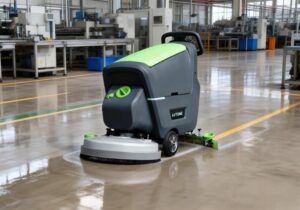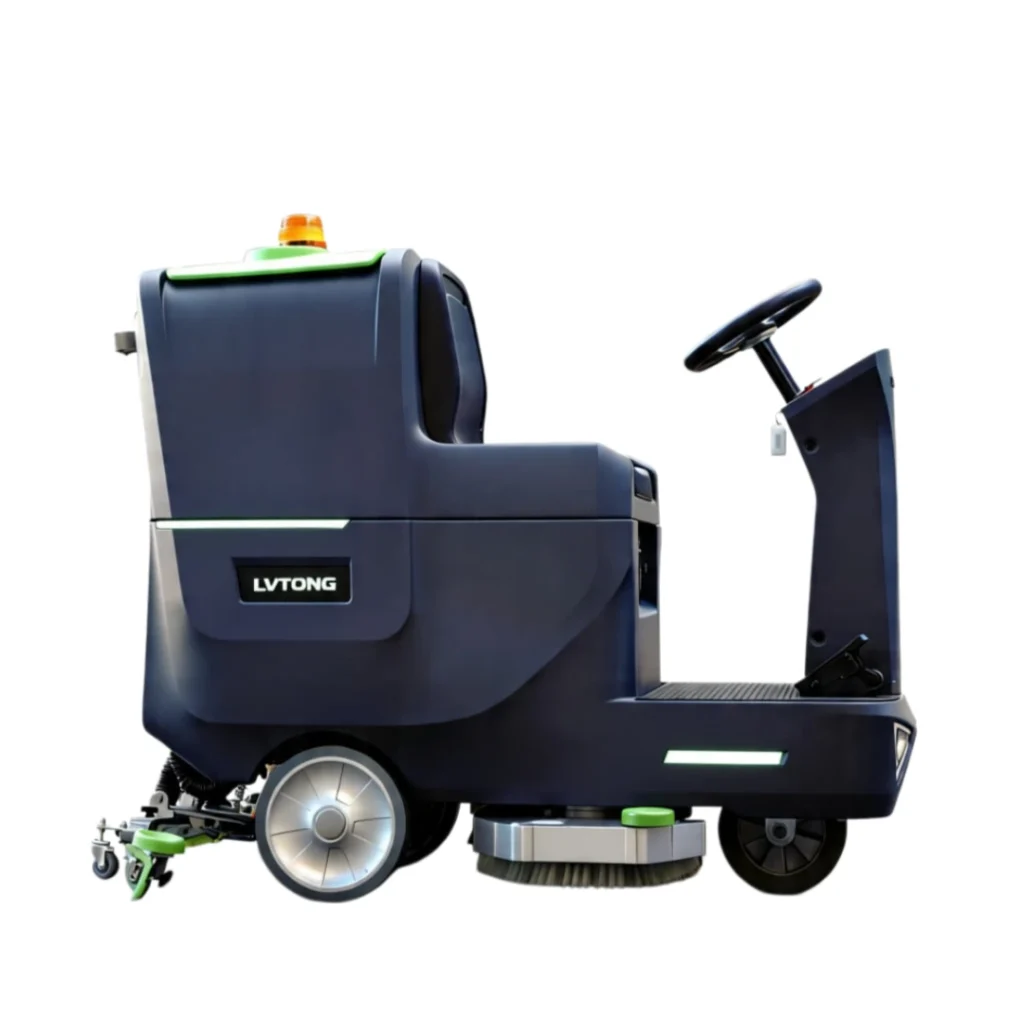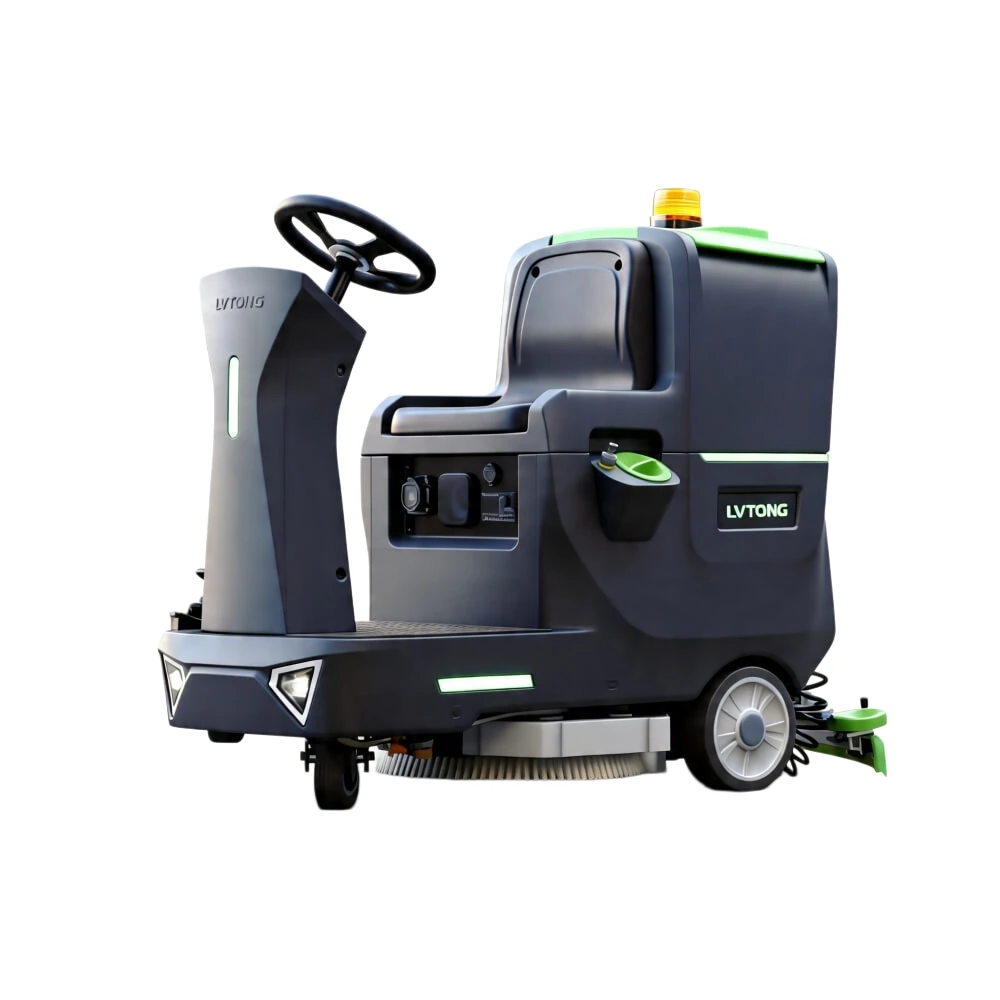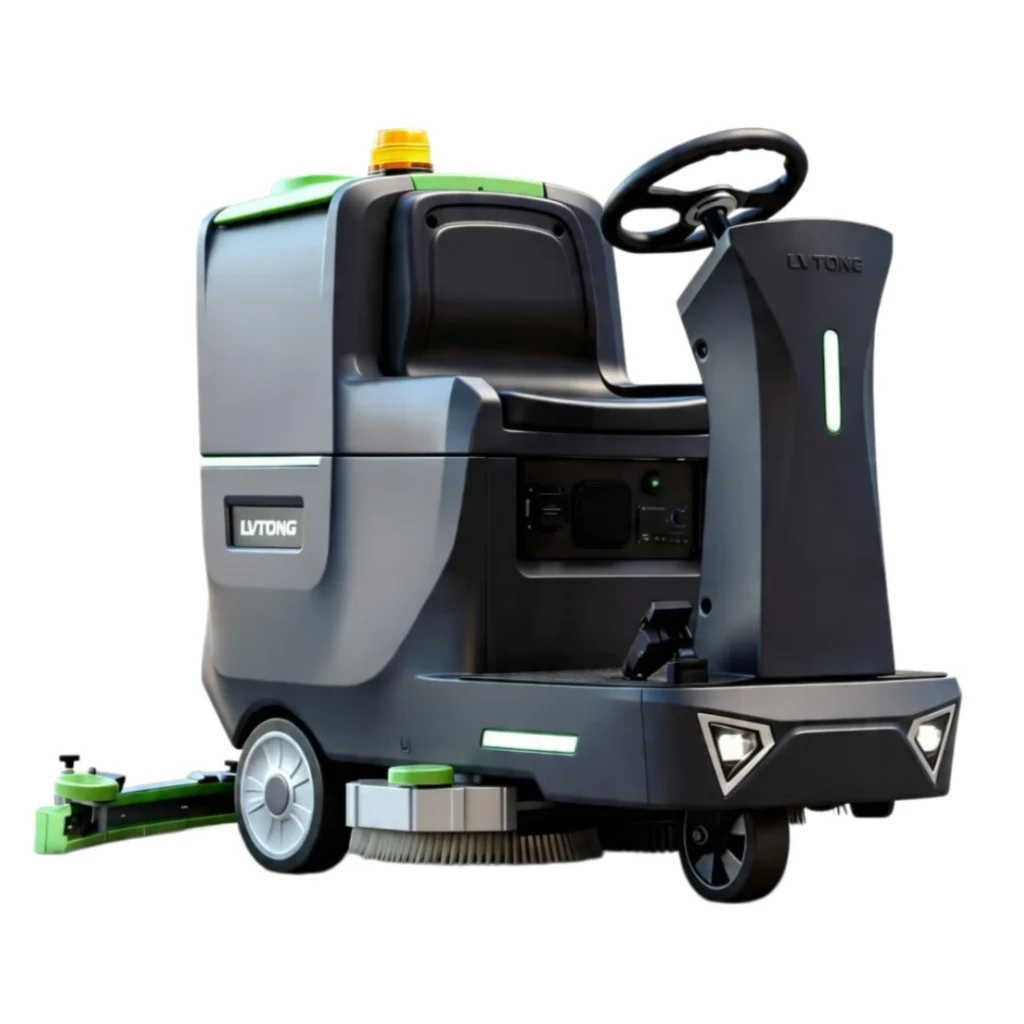
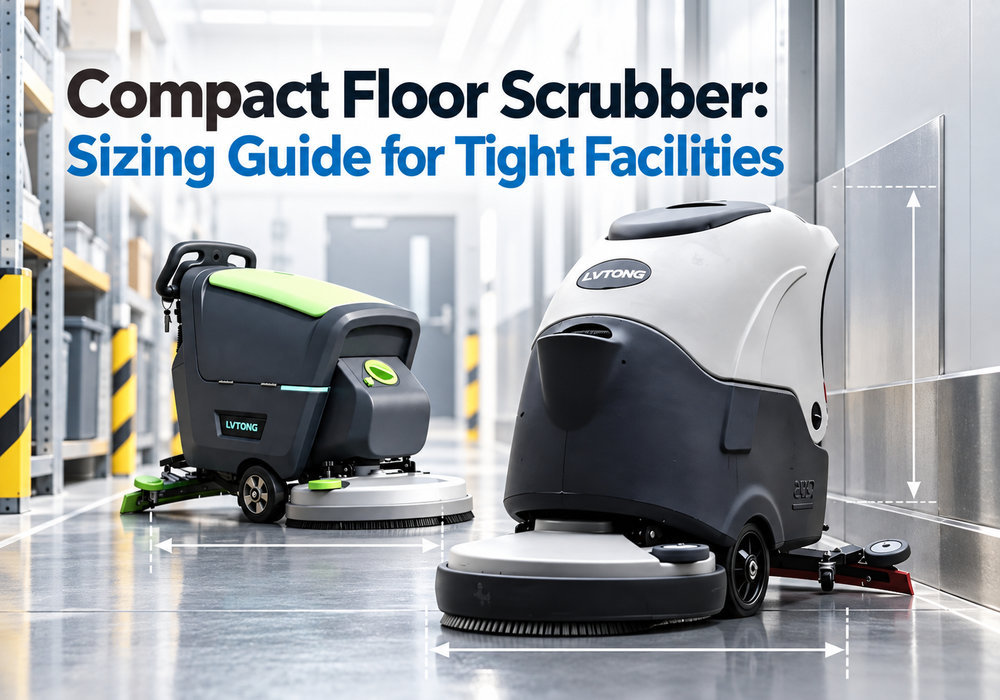
An epoxy floor never fails because it got dirty. It fails because the top few microns of the coating were ground away by the tool meant to protect it. Choosing an epoxy floor cleaning machine is therefore a coating-life decision: the parameters that decide the outcome are brush pressure, pad type, water flow and squeegee recovery — not colour or badge.
QUICK ANSWER
Match the machine to the coating system, not to the dirt. Pure epoxy, epoxy with a urethane topcoat, and broadcast (gritted) systems tolerate very different levels of mechanical action, and the wrong brush or pad removes gloss long before it removes soil.
- Identify the coating first. Epoxy-only, epoxy + urethane topcoat, and broadcast systems each need different pad aggression.
- Treat gloss loss as the cost driver. Abrasion and cyclic recoating usually cost more over the asset life than the cleaning labour.
- Hold pressure, water and recovery in balance. Raising one to fix a cleaning complaint usually transfers the problem to the coating.
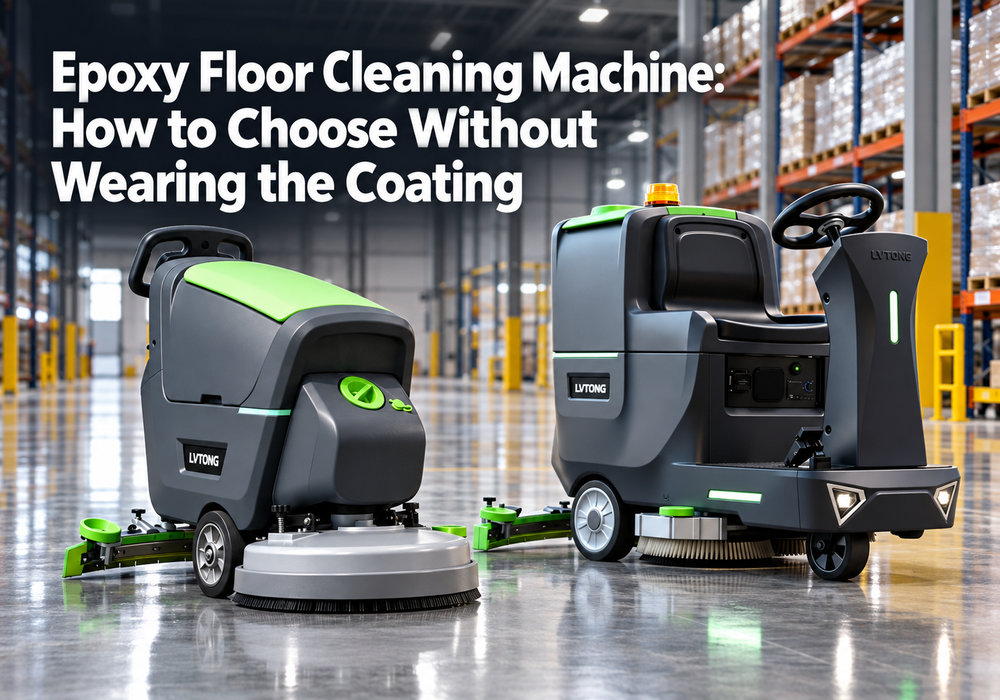
- Choose ride-on for open runs, walk-behind for mixed geometry — but check point load and aisle width against the coated area.
The sections below walk through coating identification, the selection parameters that actually protect the finish, and the mixed-floor routing question most warehouses get wrong.
Why Does an Epoxy Floor Need a Different Machine Strategy?
Because the failure mode is abrasion and gloss loss, not soil load — the same pad that is harmless on uncoated concrete can dull a thin epoxy sealer within weeks.
Uncoated concrete is a sacrificial surface: you can scrub it hard, and if you remove material the substrate simply gets rougher, which is usually acceptable in a warehouse. A coated floor behaves differently. The coating is a thin film bonded to the slab, and once that film is scuffed, hazed or worn through at the traffic lanes, no amount of cleaning brings the appearance back. Repair means recoating, and recoating means taking the area out of service.
So the brief for a coated floor is not “the biggest scrubber that fits the aisle” but “the lowest mechanical aggression that still meets the cleanliness and dryness requirement”. A walk-behind scrubber with the right pad and a correctly set squeegee often protects an epoxy floor better than a heavier machine of the same nominal width.
Which Coating System Are You Actually Cleaning?
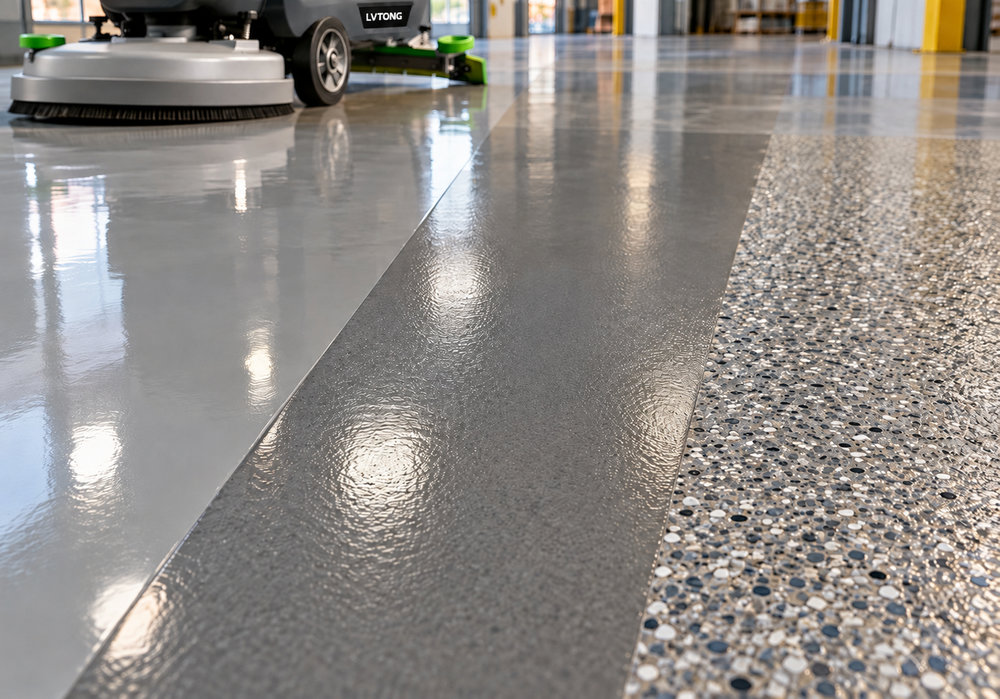
Four systems behave differently under a scrubber: epoxy-only, epoxy sealed with a urethane topcoat, broadcast (gritted) epoxy, and worn epoxy with exposed aggregate.
Confirm which you have before any specification work — one facility often has two or three of these side by side.
| System | What it is | Machine implication |
|---|---|---|
| Epoxy only | A pigmented resin film over prepared concrete, often 2–4 coats — see the American Coatings Association for how coatings are classified. | Most sensitive to aggressive pads. Fine-pad or soft brush, low down-pressure. |
| Epoxy + urethane topcoat | An epoxy base finished with a urethane wear layer that carries the gloss and chemical resistance. | Topcoat protects aesthetics but scratches visibly; keep pads clean and grit-free. |
| Broadcast / gritted | Aggregate broadcast into the wet resin for slip resistance — common in food and wet process areas. | Texture holds grit and resists sweeping; needs more water and brush contact to flush. |
| Worn epoxy | Traffic lanes worn through to the concrete, patches of bare slab exposed. | The mixed surface is the problem — one setting cannot suit both areas. |
If the coating history is unknown, a small test patch on a low-visibility area — one pass with the proposed pad and chemical at the proposed dilution — tells you more than any datasheet.
What Actually Protects the Coating: Pressure, Pad, Water, Recovery
Four settings decide whether a machine cleans or abrades — brush pressure, pad or brush type, water flow, and squeegee recovery. They must be tuned together.
These four settings are coupled. More pressure shifts a stubborn mark but raises friction heat and film removal. More water carries away soil but can over-wet the coating and leave a trail that dries into haze. A more aggressive pad removes the gloss you were preserving. The productive approach: fix pad and chemistry for the coating, then use pressure and dwell time as the smallest possible adjustments.
Cleaning result = f(coating type) × f(pad aggression) × f(down-pressure) × f(water flow) × f(recovery)
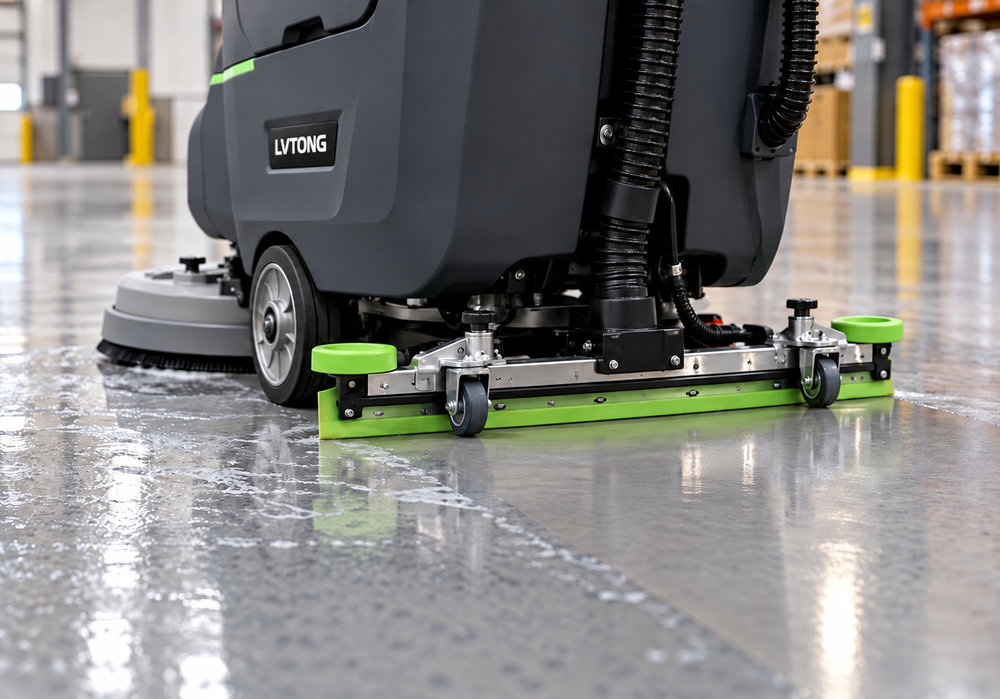
On coated floors, mechanical scrubbing pressure should stay at the low end of what the machine allows. Cylindrical brush machines can be gentler than disc machines on some finishes because the contact is intermittent and self-clearing, but they also lift water toward the machine and can fling debris; where the coating is thin, a disc machine with a soft pad and a properly tracking squeegee is often the safer default. Whatever the format, the squeegee is not a finishing detail — a trailing wet film is the single most common cause of a “the machine ruined my floor” complaint, because pooled water and dissolved residue dry into a dull film that looks like damage.
Why Gloss Loss Is the Real Cost Line
On a coated floor, the recurring cost is not detergents or labour alone — it is the abrasion that shortens the recoat interval.
Facility managers tend to track cleaning labour, water and chemicals because those appear monthly. The larger number is usually the recoat: coating renewal means surface preparation, dust containment, product, cure time and lost use of the area. Every unnecessary unit of abrasion applied during routine cleaning quietly shortens the interval between two recoats, and that interval is what determines the true cost per square metre per year of owning a coated floor.
The consequence for machine selection is that the cheapest machine to buy is rarely the cheapest to own. One that cleans at low aggression, recovers water completely and lets the operator hold a consistent pass pattern usually beats a lower-priced unit whose pad pressure cannot be dialled back. This is the total-cost logic in our guide to evaluating floor scrub machine cost-effectiveness, applied to a coated surface.
Walk-Behind or Ride-On for a Coated Floor?
Ride-on for long, open, lightly obstruled runs; walk-behind where geometry is tight or where point load on the coating matters.
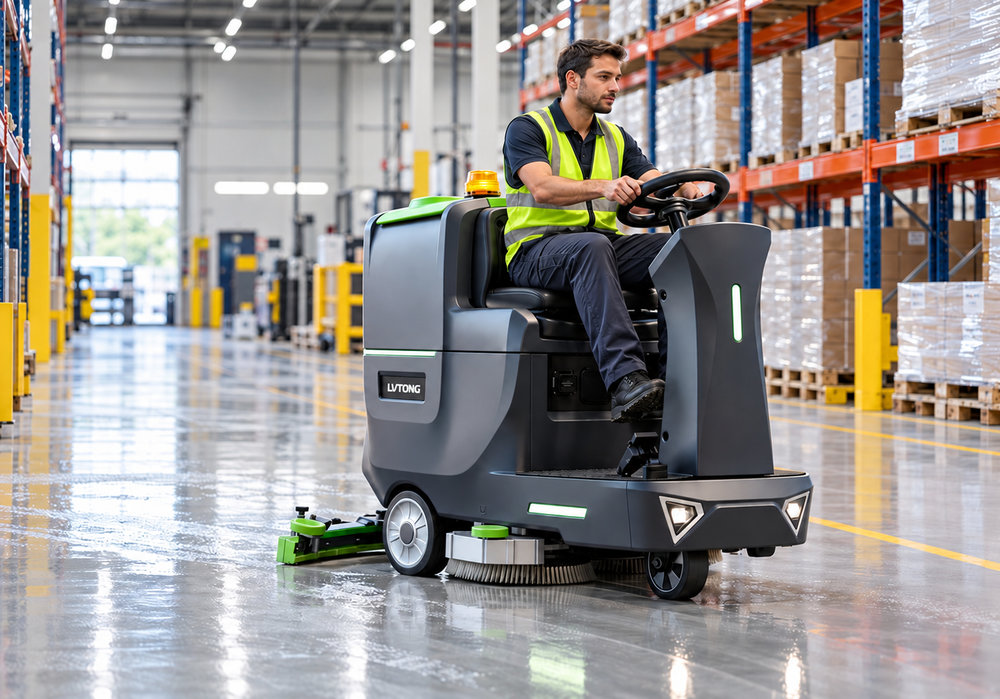
The choice follows the route, not the floor area. Long straight aisles with generous turning radius suit a ride-on machine, which covers ground quickly and keeps labour per square metre low. Areas with racking, door thresholds, mixed floor systems and cross-traffic suit a walk-behind machine, which the operator can position precisely and which applies a lower point load per wheel or brush.
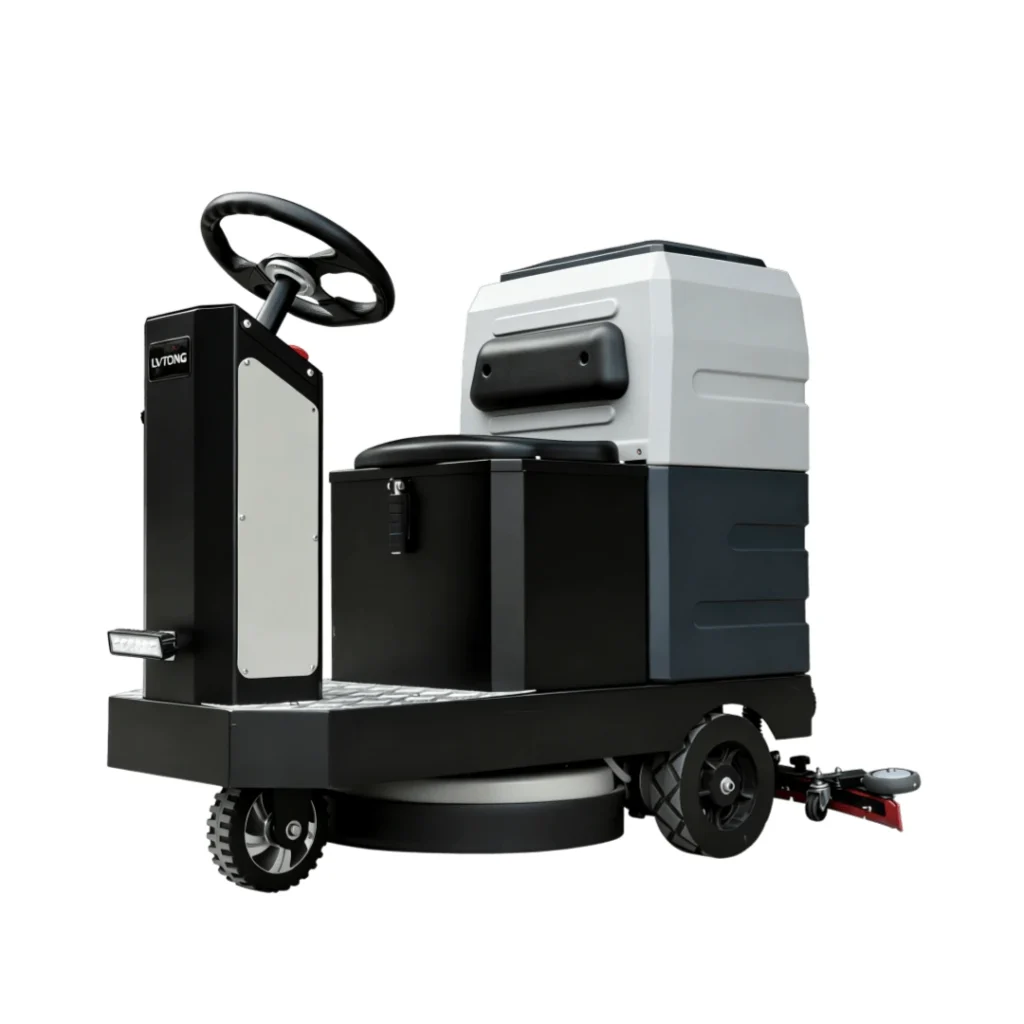
Point load matters on coated floors: a heavily loaded ride-on epoxy warehouse floor scrubber can mark a soft or thin coating under its drive wheels, especially in warm conditions. Where the coating is new or thin, check machine weight and tyre type against the floor before committing a fleet. For narrow-aisle coated areas, a compact unit such as the LT-S530X walk-behind floor scrubber — a 50 cm body width for 0.8 m aisles — keeps the route efficient without stressing the finish.
Which Epoxy Floor Cleaner Machine Suits Which Scale?
Scale the epoxy floor cleaner machine to the metrage and the openness of the route: compact walk-behind for tight coated zones, ride-on for continuous coated runs over roughly 5,000 m².
As a working rule, coated areas under a few thousand square metres with complex geometry are usually best served by a compact walk-behind machine; continuous, unobstructed coated runs from roughly 5,000 m² upward justify a ride-on machine, where the labour saving compounds over a shift. Where a facility has both, the sensible fleet is one ride-on for the main coated runs plus one compact machine for the tight and mixed zones, so that the aggressive high-productivity machine is never forced into an area where its size, pressure or water volume would damage the finish.
Productivity is width times realistic passes per hour, adjusted for turns, obstacles and the dry-back requirement — our note on cleaning times and machine productivity shows how to adjust published coverage figures for real routes.
How Do Mixed Floors Change the Selection?
If coated aisles meet uncoated concrete, aggregate or polished concrete, one machine setting cannot suit both — route the machine, don’t compromise the pad.
Most warehouses are not a single surface. A coated storage aisle often meets uncoated concrete at the loading dock, an aggregate-textured wet area near a wash bay, or a burnished polished concrete in an office transition — the polished concrete case is where a polished concrete floor cleaner machine sits in a different specification bracket, since the wear layer there is the concrete itself and the finish is a mechanical polish rather than a film.
The failure pattern is predictable: one pad and one pressure setting are chosen for the worst area and then applied everywhere, so the coated zone is over-abraded while the concrete zone is under-cleaned. The fix is routing discipline — define surface zones on a simple plan, assign pad, chemistry and pressure per zone, and change over at fixed points rather than improvising. Where changeover is frequent, a machine with quick pad changes and low-pressure operation pays for itself.
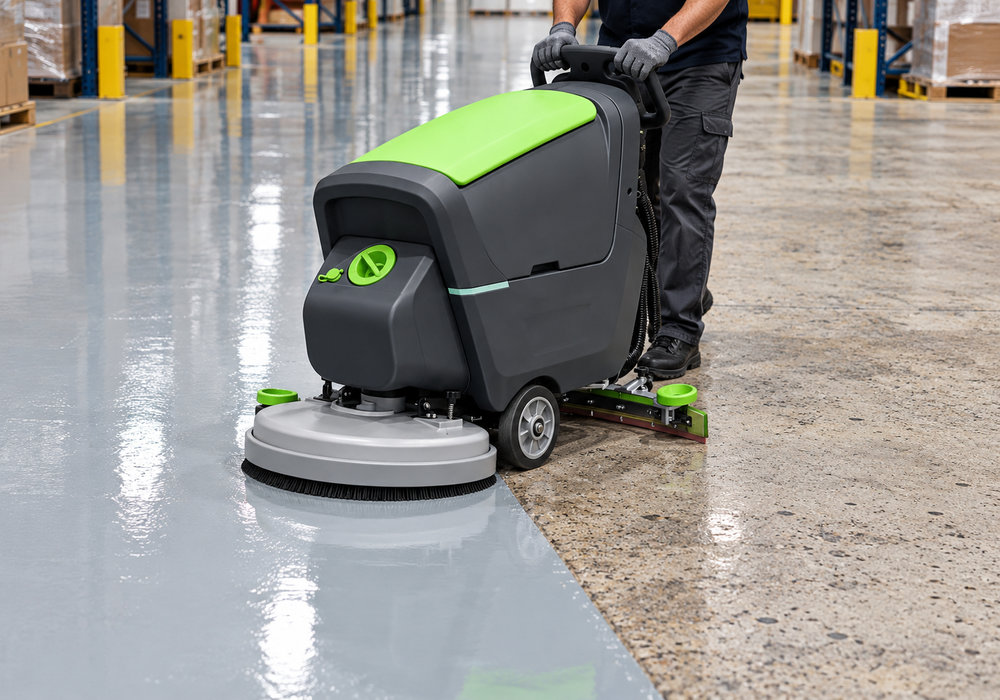
Putting the Selection Decision Together
Decide in this order: coating type → required dryness → route and geometry → machine format → then pressure, pad and water settings.
Working in that sequence prevents the most common error, which is choosing a machine on price or width first and discovering the coating problem afterwards. The coating type narrows the acceptable aggression. The dryness requirement — driven by safety and by what the area is used for — sets the recovery standard. The route and geometry then pick walk-behind versus ride-on. Only then do the fine settings matter, and by that point they are a matter of tuning rather than repair.
Where a coated floor must be kept in service with minimal downtime, our published V6 ride-on floor scrubber scenario is a useful reference point: in a 10,000 m² epoxy warehouse, two V6 scrubber dryers were deployed against forklift tyre marks and dust, and the reported result was higher cleaning efficiency and a shorter cleaning time. The point for coated-floor selection is not the specific model but the pairing of ride-on format with complete water recovery on a large coated run.
Frequently Asked Questions
Can I use a ride-on scrubber on an epoxy floor?
Often yes, provided the coating is sound, the machine’s point load is acceptable for that coating specification, and pressure and pad are set for a coated surface. Ride-on machines are most appropriate on long, open coated runs. Check weight and tyre type against thin or newly applied coatings before committing.
What brush or pad should I use on an epoxy floor?
A soft pad or a soft brush at low down-pressure is the usual starting point, adjusted to the coating system. Avoid aggressive pads and high-pressure scrubbing on thin or glossy epoxy, where the risk is gloss loss rather than insufficient cleaning.
Will a floor scrubber damage my epoxy coating?
Not if the pad, pressure, water and recovery are matched to the coating. Damage typically comes from over-aggressive pads, excessive down-pressure, grit dragged under the pad, or a poorly tracking squeegee that leaves residue drying into a dull film.
Coated floors reward a process that starts with the coating and ends with settings, not a purchase that starts with the machine and ends with a complaint. Where a facility is planning machines for coated and uncoated areas together, we can help match format, pressure and recovery to the surface mix — start from the cleaning equipment range or ask about distributor and OEM programmes.