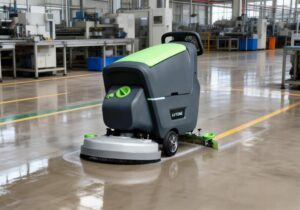
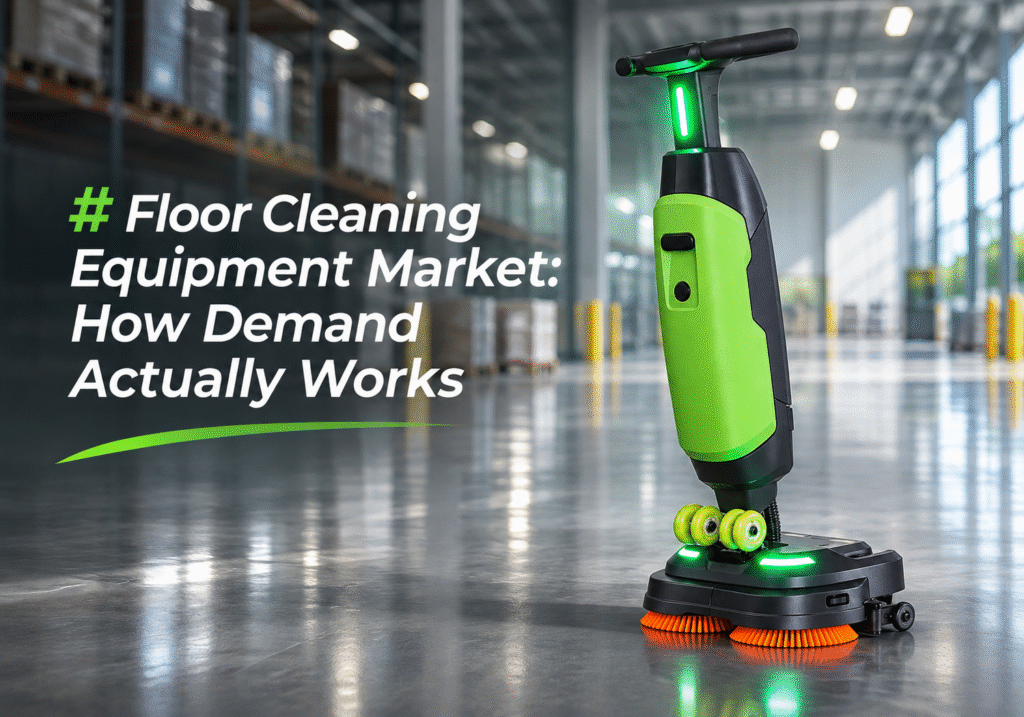
A compact floor scrubber is a walk-behind scrubber-dryer built for floors broken into rooms, aisles and doorways rather than open bays — usually a 50 cm class scrub path on a body narrow enough to turn inside a shelving aisle. It is the class most small and mid-size facilities need, and the one most often specified from total floor area alone, which is how buyers end up with a machine that cannot reach half the building. This guide works through the numbers that decide the answer — scrub path, body width, tank volume and runtime — and the coverage and fleet arithmetic built on them.
QUICK ANSWER
Choose a compact floor scrubber by the tightest opening it must pass and the longest run it must finish, not by total building area.
- Measure before you size. The narrowest doorway or aisle between racking sets the maximum body width, and that caps the scrub path you can run.
- Coverage sets the machine count. A unit rated at 2,100 m²/h delivers roughly half that as sustained output once turns, refills and emptying are counted.
- Tank volume sets the refill interval. A 50–65 L tank implies a dump point inside the route, not at the far end of it.
- Runtime must outlast the shift. A 24 V 100 Ah pack on a compact walk-behind runs about 3–5 hours; a split shift hides the shortfall.
The sections below cover the defining numbers, aisle fit, coverage and fleet math, tanks and runtime, the ride-on crossover point and an RFQ checklist.
What Counts as a Compact Floor Scrubber
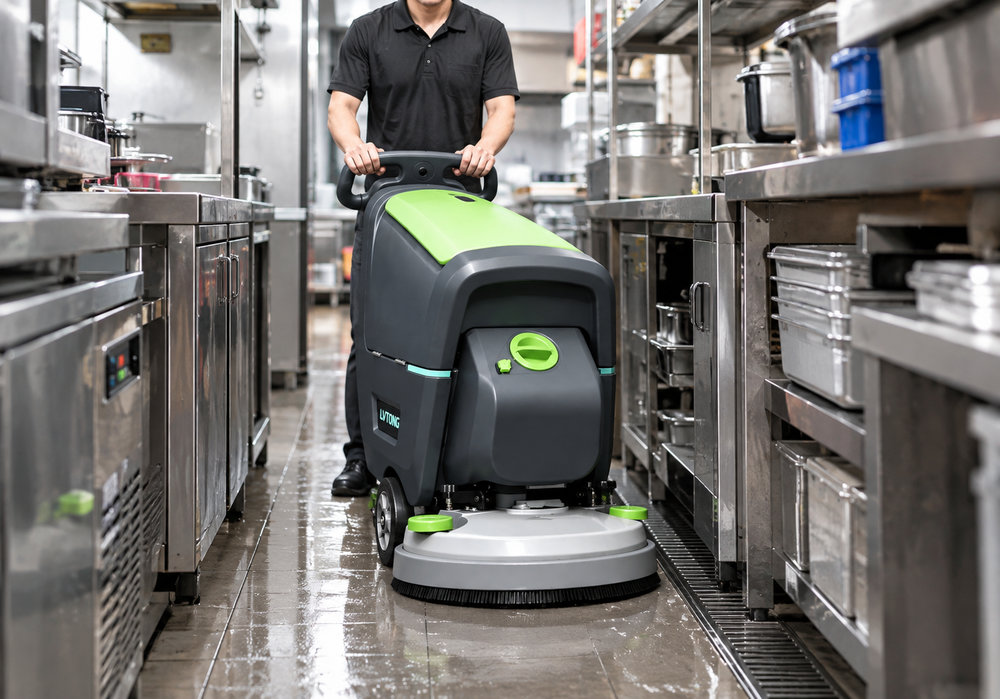
A compact floor scrubber is a walk-behind scrubber-dryer in roughly the 43–55 cm scrub path range, with a tank one operator can handle alone and a body narrow enough to clear standard doorways.
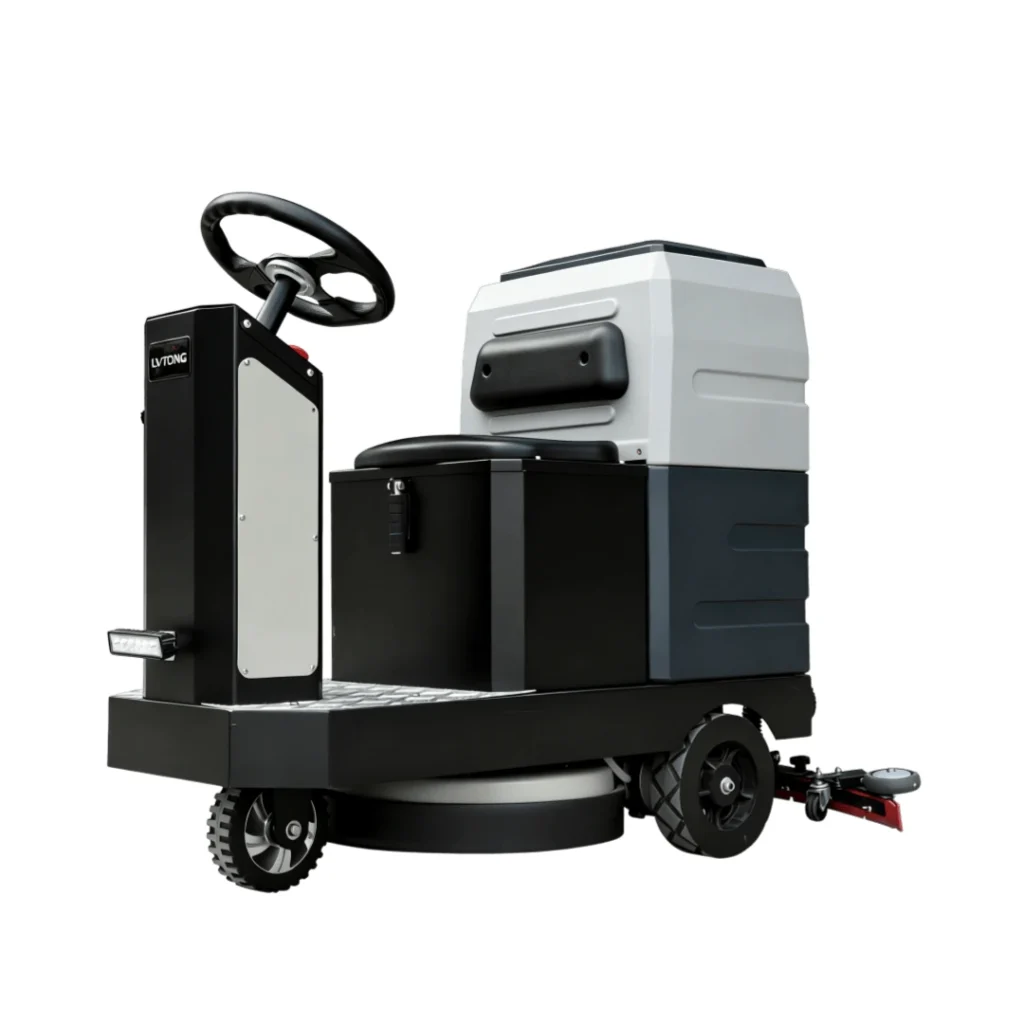
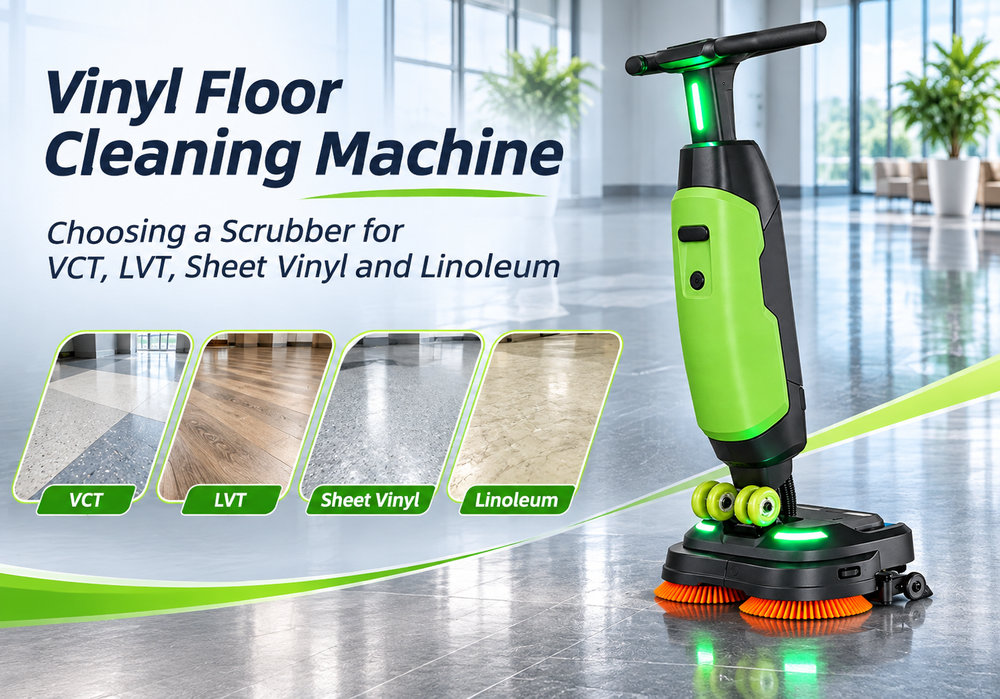
The hardware is the familiar scrubber-dryer format: brush or pad deck, solution tank, squeegee, recovery tank. What makes a machine compact is the combination of a narrow deck, a light chassis and a tank sized to be emptied by one person rather than by hose at a fixed point. Trade listings call the same class a compact auto floor scrubber, a compact auto scrubber or a compact automatic floor scrubber.
That combination sets the working envelope. The class suits short, frequently interrupted routes: offices, clinics, classrooms, small retail, restaurant front-of-house. It becomes the wrong tool when those routes turn long and uninterrupted, because tank and battery capacity run out before cleaning quality does.
Matching Scrub Path to Your Narrowest Aisle
Aisle fit is decided by the narrowest clear opening on the route — usually a door frame, a checkout lane, or the gap between racking and a wall.
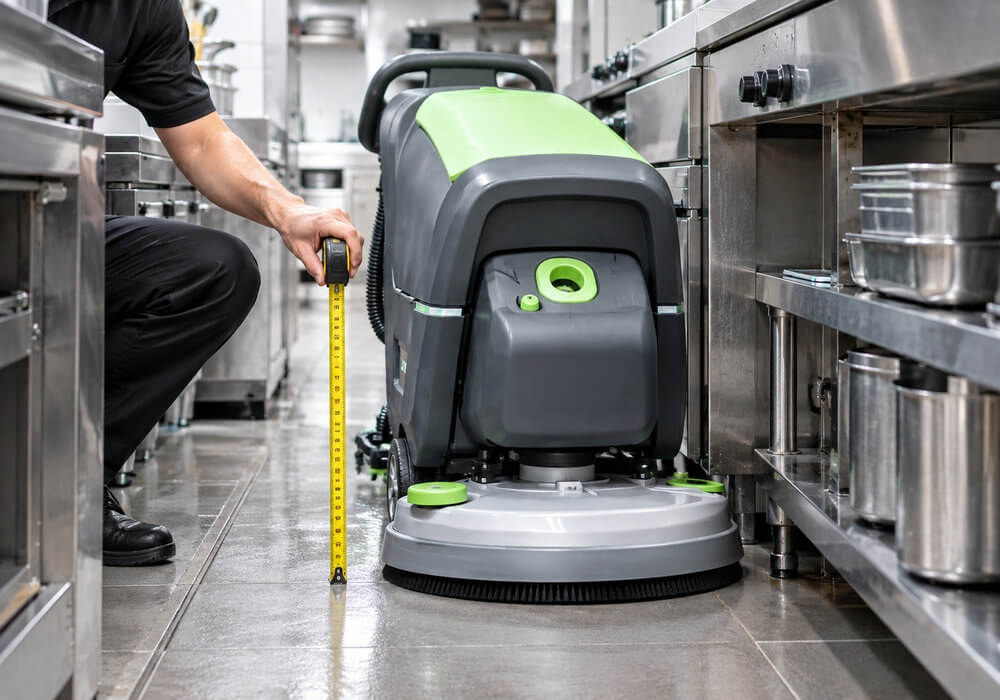
Measure with the door open and fixtures in place, and plan about 15 cm of clearance each side so the deck can follow a straight line; a compact walk behind floor scrubber that only just fits is slower to use than one that fits comfortably. Check the turning space too — the pivot point at the end of a run is usually a vestibule or aisle crossing, not open floor.
| Narrowest clear opening | Planning allowance | Machine that fits | Note |
|---|---|---|---|
| 0.8 m aisle | 50 cm body + ~15 cm each side | 50 cm class walk-behind | LVTONG publishes the LT-S530X as entering a 0.8 m aisle with its 50 cm body |
| 0.9–1.1 m | Same rule, verified on site | 50–55 cm class | Door frames and door swings consume 5–10 cm of the nominal width |
| 1.2 m and above | Turning radius replaces width as the limit | Wider walk-behind or ride-on | The constraint shifts to the pivot point at each end of the run |
Where the floor is also an access route, confirm the required clear width against the facility’s own fire and safety documentation first. In the United States, keeping walking and working surfaces clear is an employer obligation under 29 CFR Part 1910 Subpart D.
Coverage Math: What One Compact Scrubber Cleans per Hour
Treat the rated coverage rate as a ceiling. Real output is the rated figure multiplied by a duty factor for turns, obstacle detours, refills and emptying — commonly 50–65%.
Worked example on a compact floor scrubber machine rated at 2,100 m²/h: at a 60% duty factor for an aisle-heavy route, sustained output is about 1,260 m² per working hour, or roughly 4,500–5,000 m² across a four-hour window. If that overruns your cleaning window, the machine is too small, however good the rated figure looks.
The duty factor is worth testing on your own floor rather than accepting a supplier’s figure. The cleaning-times method used across the industry — summarised in our note on cleaning times and machine productivity — rests on exactly this split between a machine’s theoretical rate and the productive rate a real route allows.
Fleet Sizing: How Many Compact Machines a Building Needs
Divide the area to be cleaned by sustained hourly output multiplied by the hours in the window, round up, then add margin.
- Machines needed = area ÷ (sustained m²/h × hours in the window), rounded up.
- Worked example: 4,000 m² in a three-hour nightly window. Sustained output 1,260 m²/h × 3 h = 3,780 m², so one machine covers it only with no margin — the realistic answer is two.
Fleet planning on the compact class is about layout as much as square metres: in a compartmented building two operators in separate wings never queue at the same doorway. LVTONG builds lithium walk-behind and ride-on scrubbers from specifications rather than brochure claims; the OEM manufacturing page covers fleet standardisation and private-label programmes.
Tank Volume, Runtime and the Cleaning Window
Tank volume decides how far one operator gets before stopping; runtime decides whether the shift finishes. Size both against the route, not against the shift.
A 50 L solution tank is no constraint when a service point sits inside the route, and becomes one when the only drain is at the far end of the building. Walk the route and mark where a machine can be refilled and emptied; that number sets the real cycle time more than the datasheet does.
Recovery capacity deserves equal attention. A recovery tank that fills before the solution tank empties forces an early stop, and a full tank carried past its limit starts leaving water behind. Compact machines with matched tanks — the LT-S530X pairs 62 L with 65 L — run a predictable cycle.
On power, a 24 V 100 Ah lithium pack on a compact walk-behind is typically good for about 3–5 hours depending on chemistry and deck load. Lithium holds voltage across the discharge curve better than lead-acid, so the last hour of a shift performs closer to the first. Opportunity charging between shifts extends daily availability without a larger pack.
Q5 vs LT-S530X: Two Compact Walk-Behind Platforms
Both are 2,100 m²/h compact walk-behinds on a 50 cm class body; tank volume, runtime and deck adjustment decide which routes each suits.
| Item | Q5 | LT-S530X |
|---|---|---|
| Scrub path / body | 50 cm cleaning width | 530 mm class scrub path, 50 cm body width |
| Rated coverage | 2,100 m²/h | 2,100 m²/h |
| Tanks | 50 L solution | 62 L solution + 65 L recovery |
| Runtime | Up to about 4 hours | About 3–5 hours, chemistry dependent |
| Deck | Adjustable disc brush, angle and height | High-density disc brush, LED work light |
| Aisle fit | Cleans narrow areas without obstacle contact | Published as entering a 0.8 m aisle |
| Suits | Single-floor compact sites, offices, clinics, small retail | Longer narrow routes that need fewer dumps |
On one tight, obstacle-heavy floor, the Q5’s adjustable deck and lighter tank keep both machine and operator agile. Where routes are longer but still narrow, the LT-S530X walk-behind scrubber trades some deck flexibility for a larger recovery tank and fewer stops over the same route.
When a Compact Floor Machine Is Not Enough
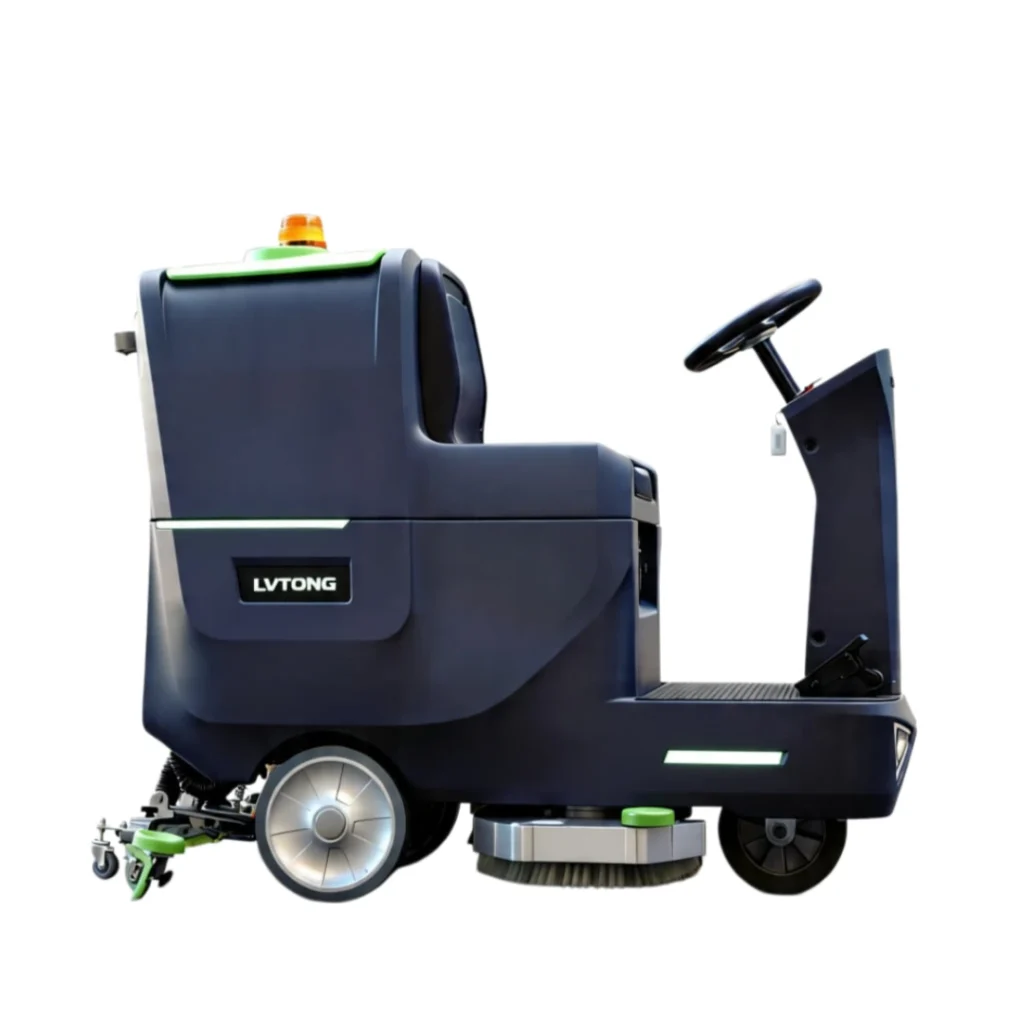
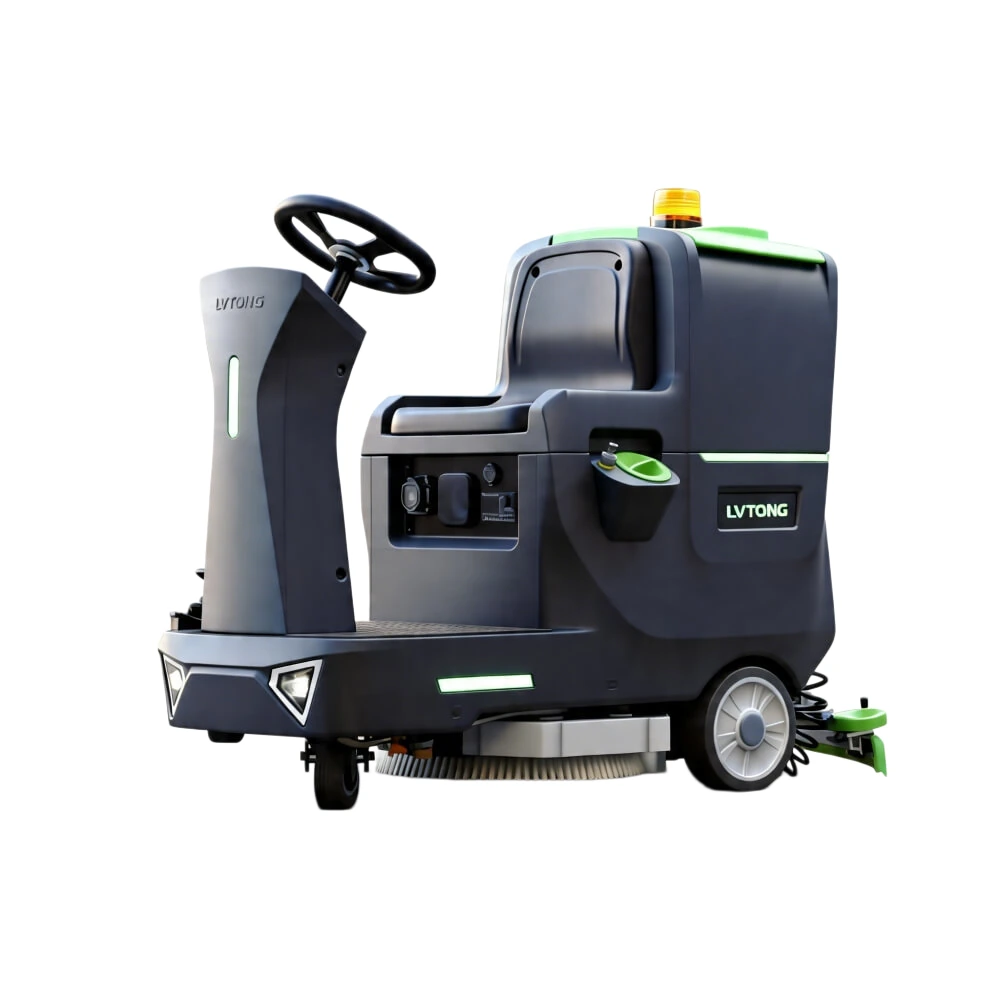
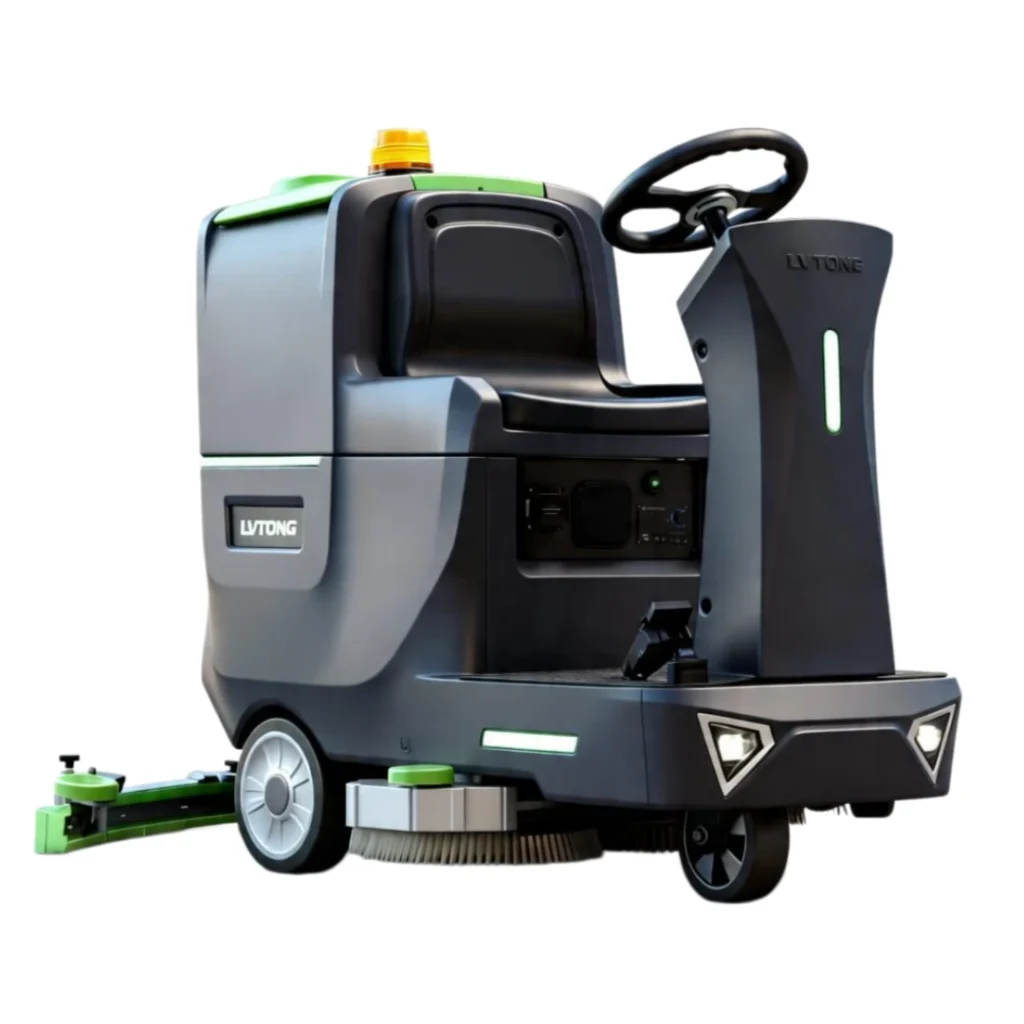
Step up when one machine cannot finish the route inside the window, when the longest continuous run outlasts a single tank, or when the floor is open enough that a wider deck cuts passes without losing access.
The first two are arithmetic and can be settled with the coverage and fleet numbers above. The third is a judgement about layout: a ride-on earns its cost on long uninterrupted surfaces — supermarket sales floors, warehouse aisles, airport concourses — where a wider squeegee cuts passes rather than obstacles.
The move up is rarely about cleaning quality. A compact floor machine cleans as well as a larger one; it needs more passes and more stops to cover the same floor. Compare total route time, not scrub path alone, and confirm the wider machine still turns inside the tightest point of the building.
Below this class the constraint changes again — a building that cannot fit a 50 cm body needs a different starting point, which the companion guide on mini floor scrubber classes covers.
Specifying a Compact Floor Scrubber for a Fleet
Send the tightest opening, the largest continuous run, the cleaning window and your dump and charge points. A supplier who cannot work from those four inputs is guessing.
- Scrub path and body width, with confirmation the machine clears your narrowest doorway.
- Sustained coverage for your route, with the duty factor behind it.
- Tank volumes against your measured dump interval, plus runtime and charge time.
- Deck type, squeegee width relative to scrub path, and blade availability in your market.
Standardising on one platform across several sites reduces spare-part variety, simplifies training and makes service predictable — usually worth more over a fleet’s life than a marginal gain on one machine. Two compliance points belong in the same conversation: how recovery water is disposed of locally, since floor-cleaning wastewater falls under the same discharge rules as other industrial sources (see the EPA stormwater programme), and the appliance safety standard the machines are built to, IEC 60335-2-72.
Frequently Asked Questions
Is a compact floor cleaner the same as a compact auto scrubber?
They describe the same walk-behind class. Compact floor cleaner and compact auto scrubber are trade shorthand for a compact floor scrubber: a machine that lays solution, agitates with a disc brush or pad, and recovers the water in one pass. What differs between models is scrub path, tank volume and runtime, not the name.
What size is a compact floor scrubber?
Typically a scrub path of roughly 43–55 cm on a body about 50 cm wide, with solution and recovery tanks around 40–65 L each. That combination lets one operator clean around obstacles and through standard doorways.
How do I know if a compact scrubber will fit my aisles?
Measure the narrowest clear opening with fixtures and doors in place, then allow about 15 cm of clearance on each side. A 50 cm body is the usual match for a 0.8 m aisle; below that, the route needs a smaller class or a layout change.
How many square metres can one compact scrubber clean per hour?
Work from sustained output, not the rated figure. A machine rated at 2,100 m²/h delivers roughly 1,000–1,300 m² per working hour at a 50–65% duty factor, so a four-hour window is realistically worth about 4,500–5,000 m².
When should I move up from a compact to a ride-on scrubber?
When one machine cannot finish the route inside the window, when the longest continuous run outlasts a single tank, or when the floor is open enough that a wider deck cuts passes without losing access.
Next Step: Match Machine, Route and Window
Send the tightest opening on your route, the largest continuous floor area, your cleaning window and where the machine can be refilled and emptied. We will map the scrub path, tank volume and runtime that fit, including a first-pass test protocol so the numbers are checked on your own floor. Compact class specifications are listed through the floor scrubber supplier page.