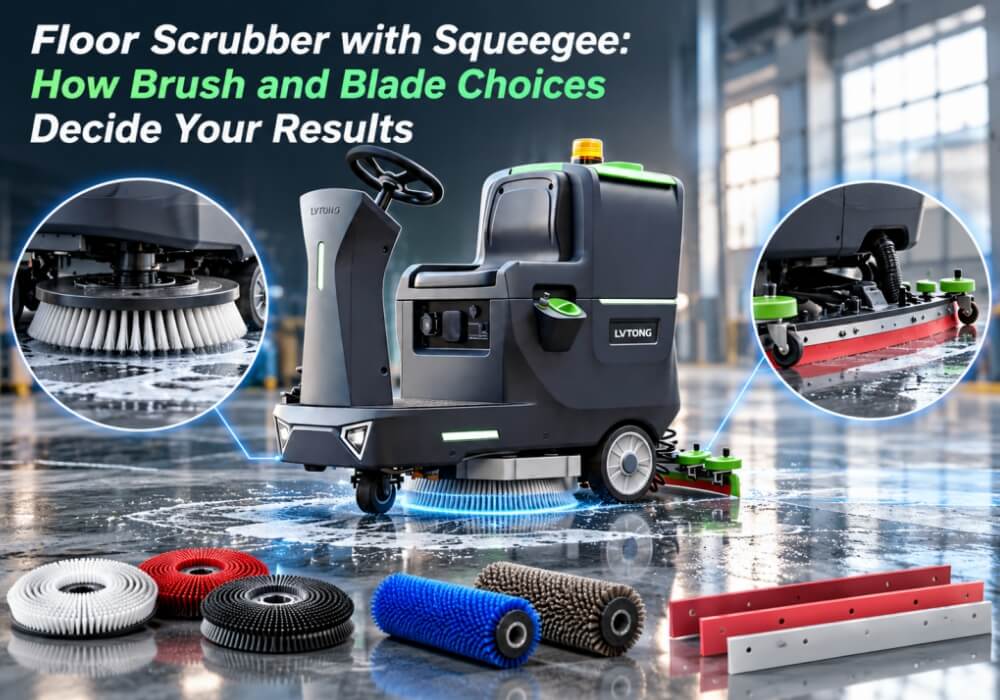
QUICK ANSWER
A concrete floor scrubber is safe only when its brush, pad, pressure and water are matched to the slab’s surface state — unsealed, sealed or polished. Concrete is alkaline, porous and abrasive, so the wrong setup does not just clean badly; it wears the floor and the machine.
- Identify the surface state first — a one-minute water-drop test tells you whether the slab drinks, beads or shines; everything follows from that.
- Unsealed slabs dust. A weak surface layer regenerates powder no matter how hard you scrub; agitation discipline and sealing beat pressure.
- Sealed slabs scar. Aggressive pads cut through protective films and turn maintenance into a re-sealing project.
- Polished slabs need partners. A scrubber cleans them; gloss work belongs to burnishing equipment.
Below: the three states, both failure modes, a four-parameter matching table, sealing economics, and a six-line supplier-ready specification.

Why Generic Scrubber Advice Fails on Concrete
Concrete is not one floor — an unsealed slab, a sealed slab and polished concrete are three different surfaces, and each sets its own limits on brush, pad and pressure.
Concrete looks indestructible, which is why so much advice about it fails. The material is alkaline, porous and full of hard aggregate, and the finished surface on top ranges from bare power-troweled slab to glossy densified floor. A floor scrubber for concrete floors therefore cannot be chosen by floor size alone, the way a generic hard-floor purchase often is. One machine can safely scrub a sealed warehouse aisle, dust an unsealed workshop floor and scratch a polished showroom — three outcomes, one setup.
The Three Surface States That Decide Your Machine
Identify the surface state before you compare machines — the setup that cleans polished concrete safely can dust an unsealed slab, and what cleans an unsealed slab can strip a sealer.
| Surface state | What it is | Machine implication |
|---|---|---|
| Unsealed / bare | Power-troweled slab, no coating; absorbs water quickly, powders under traffic | Most forgiving, but generates dust and slurry; medium-stiff brush, expect grit loading |
| Sealed (film-forming) | Acrylic, polyurethane or epoxy film on top of the slab | Film is the wear surface; soft-medium brush or pads, low pressure |
| Densified / polished | Chemically hardened, honed surface with a measurable sheen | Hard and smooth; soft pads, neutral chemistry, gloss maintained separately |
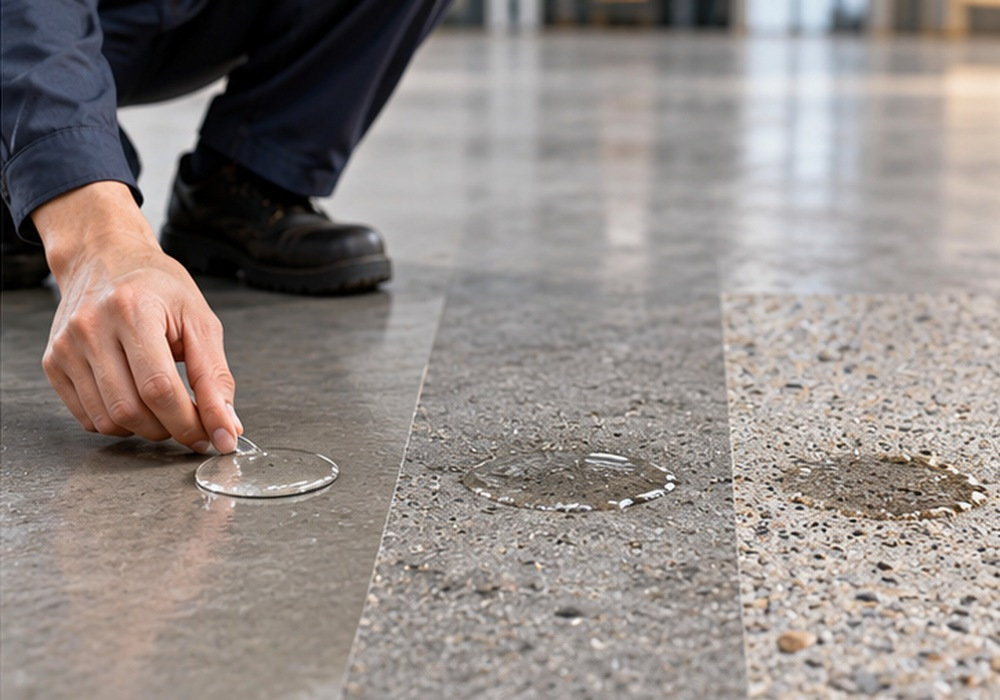
The field test takes a minute: drop water on a clean spot. If it darkens and vanishes in seconds, the slab is unsealed. If it beads, a film or densifier is doing its job; if it beads and the floor reflects light, you are on polished concrete. Curing and surface preparation standards from bodies such as the American Concrete Institute exist because surface quality varies slab to slab — your machine choice inherits that variation.
Dusting and Laitance: The Wear Cycle on Unsealed Slabs
On an unsealed slab the enemy is dusting — a weak surface layer that no amount of harder scrubbing removes permanently; manage it with gentler agitation, water and sealing, not pressure.
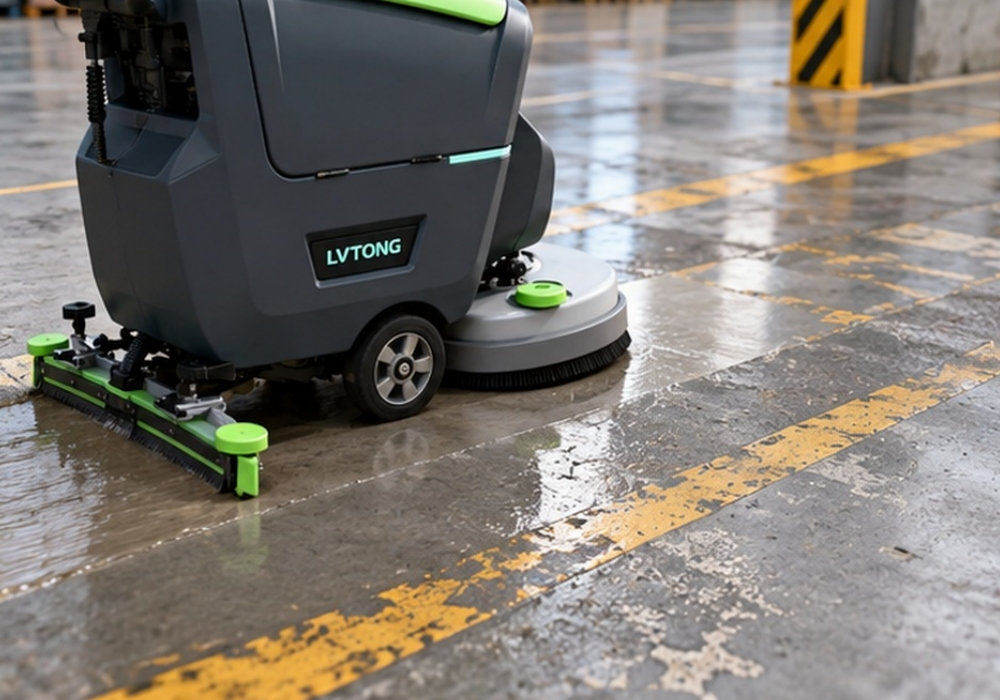
New slabs carry laitance, a soft cement-rich skin left by finishing; under forklift wheels it breaks down into the fine powder facility managers know as dusting. The instinctive response — scrub harder, stiffer brush, more passes — makes it worse, because concrete floor scrubbing on a friable surface simply manufactures the next layer of dust while the machine’s squeegee and vacuum motor eat the grit. Grit under a machine also acts as grinding compound, wearing brushes and squeegees far faster than coated floors do.
The working discipline is the opposite of instinct: dry-sweep heavy grit, scrub with medium agitation and generous water, change the recovery water early — and seal the slab, the only step that stops the cycle at its source (economics below).
Sealer Wear-Through: The Most Expensive Mist a Scrubber Can Make
A scrubber cannot tell a protective film from soil — pads that cut through the film turn a routine cleaning job into a re-sealing project worth many times the cleaning contract.
Film-forming sealers — acrylics, polyurethanes and epoxies in the coating families catalogued by the American Coatings Association — are sacrificial layers, typically a few mils thick. They are designed to wear so the concrete underneath does not. When a machine runs an aggressive pad or excessive brush pressure over them, the film wears through in traffic lanes, at forklift turn points and along wall lines. The symptom is easy to misread: the same lanes “look dirty again” every week, when the sealer is actually gone and the bare concrete beneath is dusting through the gaps.
Penetrating treatments behave differently — silicate densifiers react inside the slab, so there is no film to strip, though grit can still scratch the honed finish. Where the slab carries a full epoxy system, machine selection and coating economics are covered in our epoxy floor cleaning machine guide; the same wear-through logic applies to any coated surface.
Matching Brush, Pad, Pressure and Water to the Surface
Set four parameters by surface state, not by machine default — on sealed and polished slabs, soft agitation and low pressure are the safe starting triangle.
| Parameter | Unsealed / bare | Sealed (film) | Polished / densified |
|---|---|---|---|
| Brush / pad | Medium-stiff brush; grit-resistant | Soft-medium brush or red/white pads | Soft pads only; white or finer |
| Down pressure | Standard to moderate | Low; watch traffic lanes | Lowest setting that still cleans |
| Water flow | Generous; flushes grit | Moderate; film needs less | Moderate; streak control matters |
| Chemistry | pH-neutral to mild alkaline | pH-neutral; confirm with sealer maker | Neutral only; no acids, ever |
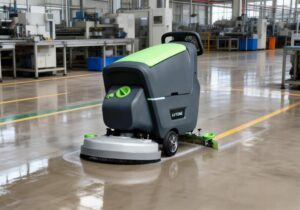
These ranges are industry-typical starting points, not machine ratings — pad systems and down-pressure scales differ by brand, so confirm against the supplier’s brush specification. A compact concrete floor scrubber — the LVTONG LT-S530X walk-behind model, with a disc-brush head and curved squeegee — gives operators a single controllable contact point. For the full operating procedure, follow our step-by-step concrete scrubbing guide, which stays at the operating level this article avoids repeating.
The Economics: Seal the Slab or Just Buy a Gentler Machine?
A sealer is usually the cheaper line item — it moves wear from the concrete, which cannot be cheaply patched, onto a renewable film, and lets a standard commercial concrete floor cleaner do the work.
Run it as two budgets. An unsealed slab never stops dusting: labor hours stay high for the life of the floor, consumables wear fast on grit, and the slab itself loses surface — a loss only diamond grinding reverses, at project-level cost. A sealed slab budgets a re-sealing cycle on your schedule plus ordinary scrubbing in between: illustratively, the dusting cycle ends within weeks of treatment, and a commercial concrete floor cleaner then maintains the film instead of fighting the slab.
One caution is about safety, not cost: film sealers change slip behavior under dust or water. Specify a sealer with documented traction performance, referencing bodies such as the National Floor Safety Institute for public areas — a floor that is clean, sealed and slippery has traded one problem for a costlier one.
Polished Concrete: Where Scrubbing Stops and Burnishing Begins
Polished concrete is maintained with soft pads and neutral chemistry by a scrubber — the gloss itself is renewed by burnishing, which is polishing equipment’s job, not a concrete floor scrubber’s.
Densified and polished floors are the easiest to keep clean and the easiest to ruin cosmetically: daily work is low-agitation scrubbing with soft pads, and the reflective finish is restored by high-speed burnishing at separate intervals. When a buyer asks for a polished concrete floor cleaner machine, the honest specification splits in two: a scrubber for soil, a burnisher for gloss. Speed, grit sequence and gloss measurement belong to our floor scrubber and polisher guide — mixing those into a scrubbing spec is how polished floors lose their sheen in the first month.
Slurry and Wash Water: The Concrete-Specific Disposal Duty
Concrete floor scrubbing on bare slabs produces grit-laden wastewater that clogs tanks and squeegees quickly — and storm drains will not accept it.
Unsealed slabs shed fine cementitious solids into the recovery tank, where they settle into a sediment that blocks filters, squeegee channels and dump valves if rinsing is skipped. Treat it as a three-part routine: strain coarse grit at the tank, rinse tanks and the squeegee assembly each shift, and discharge through a sanitary drain or approved settling route — never a storm drain, where wash water is regulated under programs such as EPA’s NPDES. The full operating loop — refill water quality, biofilm control — lives in our floor scrubber water tank guide; concrete slurry simply raises the stakes on every habit there.
A Six-Line Specification for a Concrete Floor Scrubber
Six specification lines prevent most concrete-floor disappointment — send them to suppliers as-is and compare answers line by line.
| # | Specification line | Why it matters on concrete |
|---|---|---|
| 1 | Brush type and down-pressure range | Determines whether the machine can run gentle on sealed slabs and firm on bare ones |
| 2 | Pad compatibility and size range | Pad choice is the main softness control on polished and sealed surfaces |
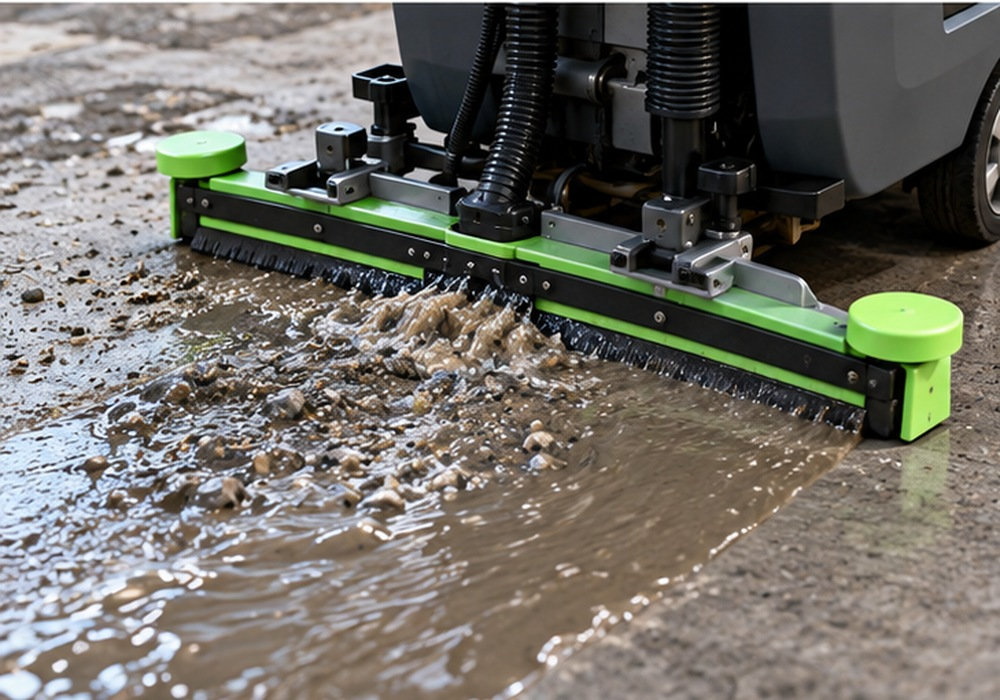
| 3 | Squeegee material and geometry | Grit-laden water on bare slabs chews standard blades; curved or abrasion-tolerant liners last longer |
| 4 | Tank material and drain design | Cementitious sediment must be rinseable; small outlets clog first |
| 5 | Battery platform and runtime | Lithium machines keep full suction and brush speed through the shift instead of fading |
| 6 | Consumables availability and support | Brushes, pads and squeegee blades wear 2–3× faster on bare concrete; confirm lead times before purchase |
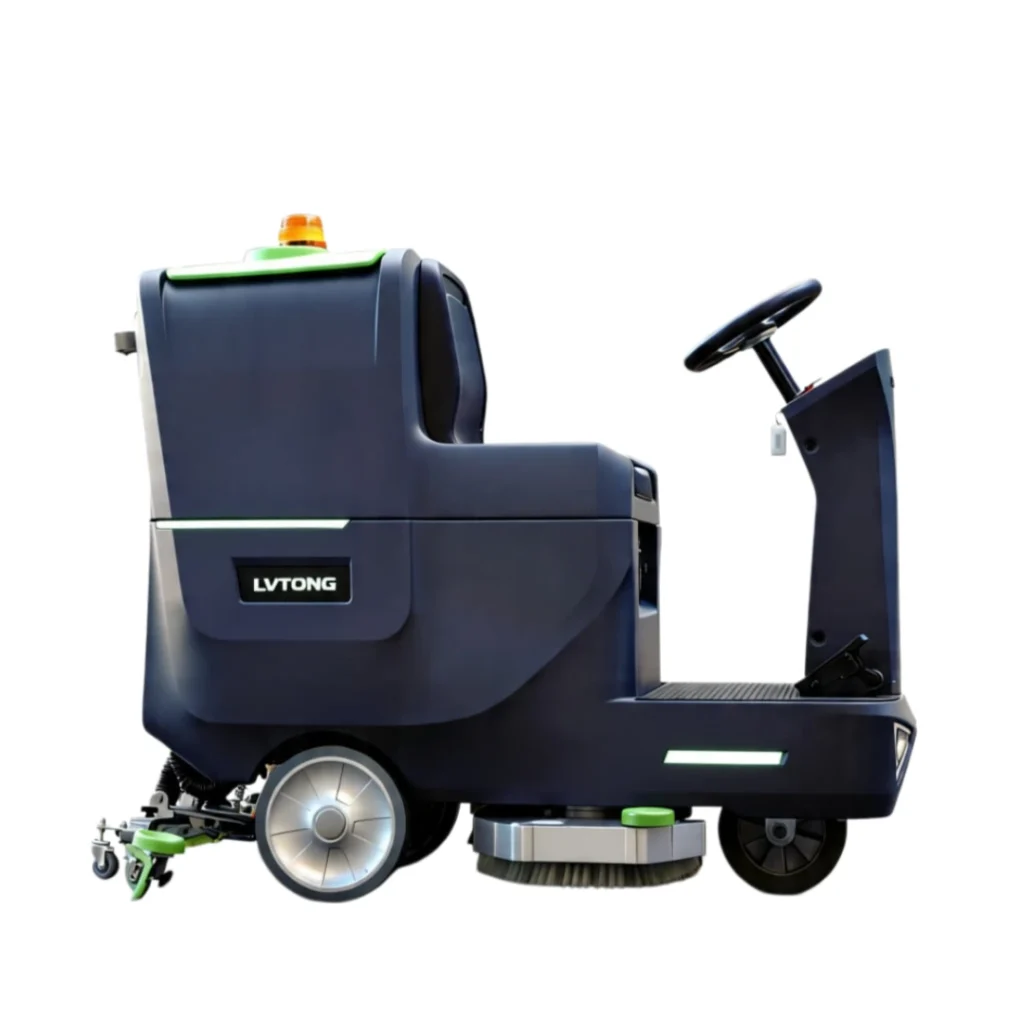
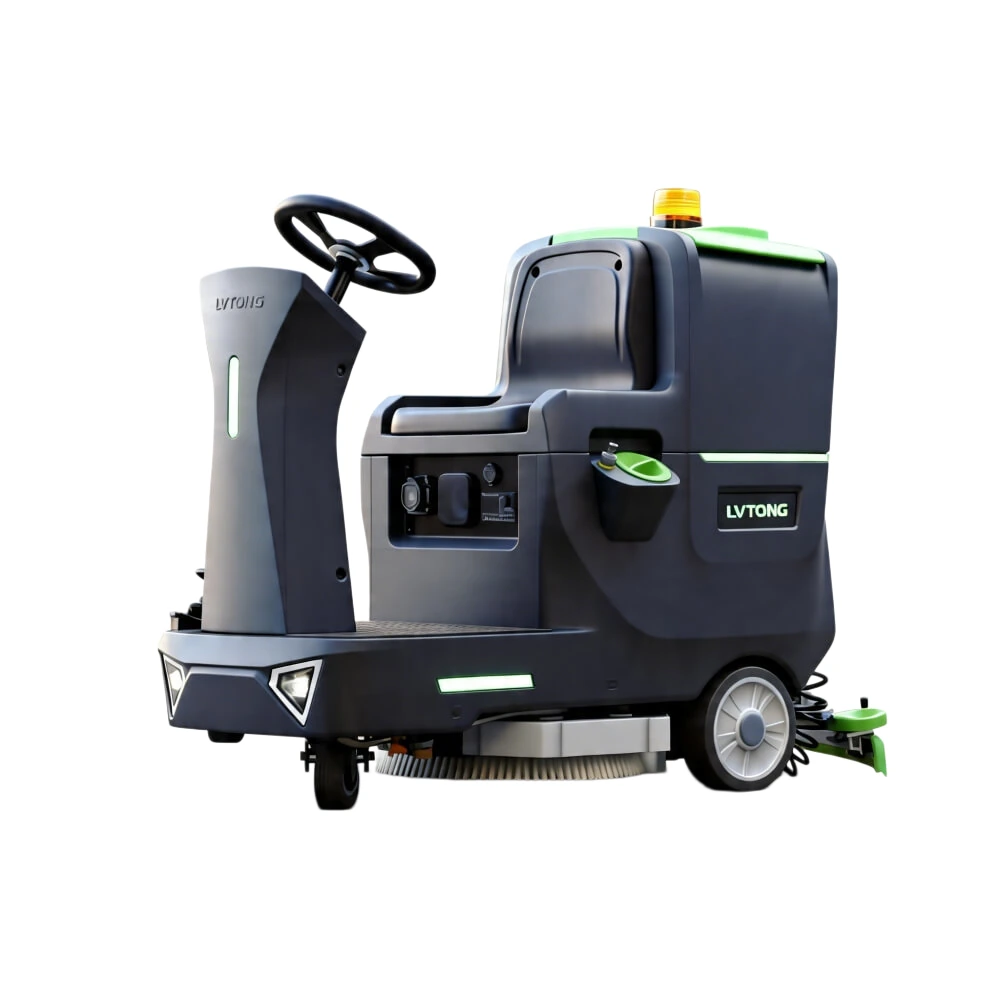
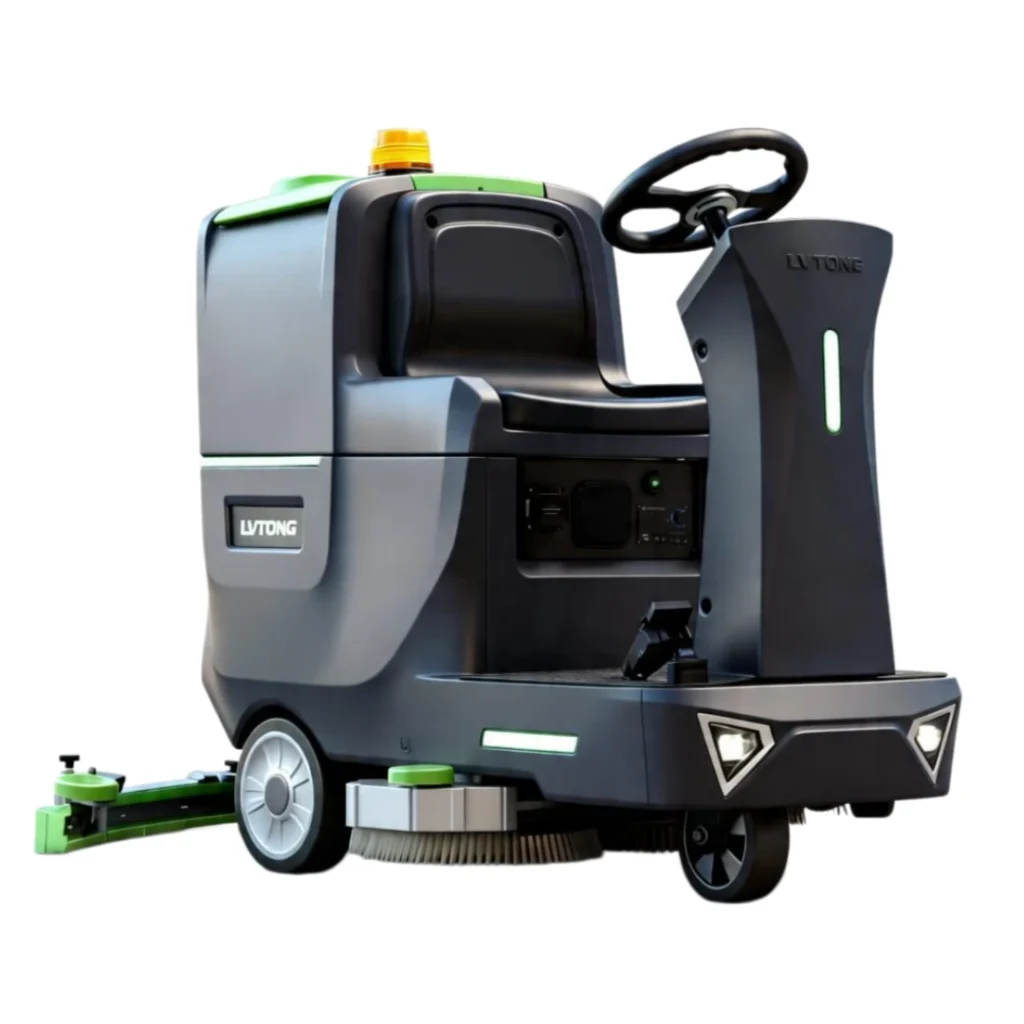
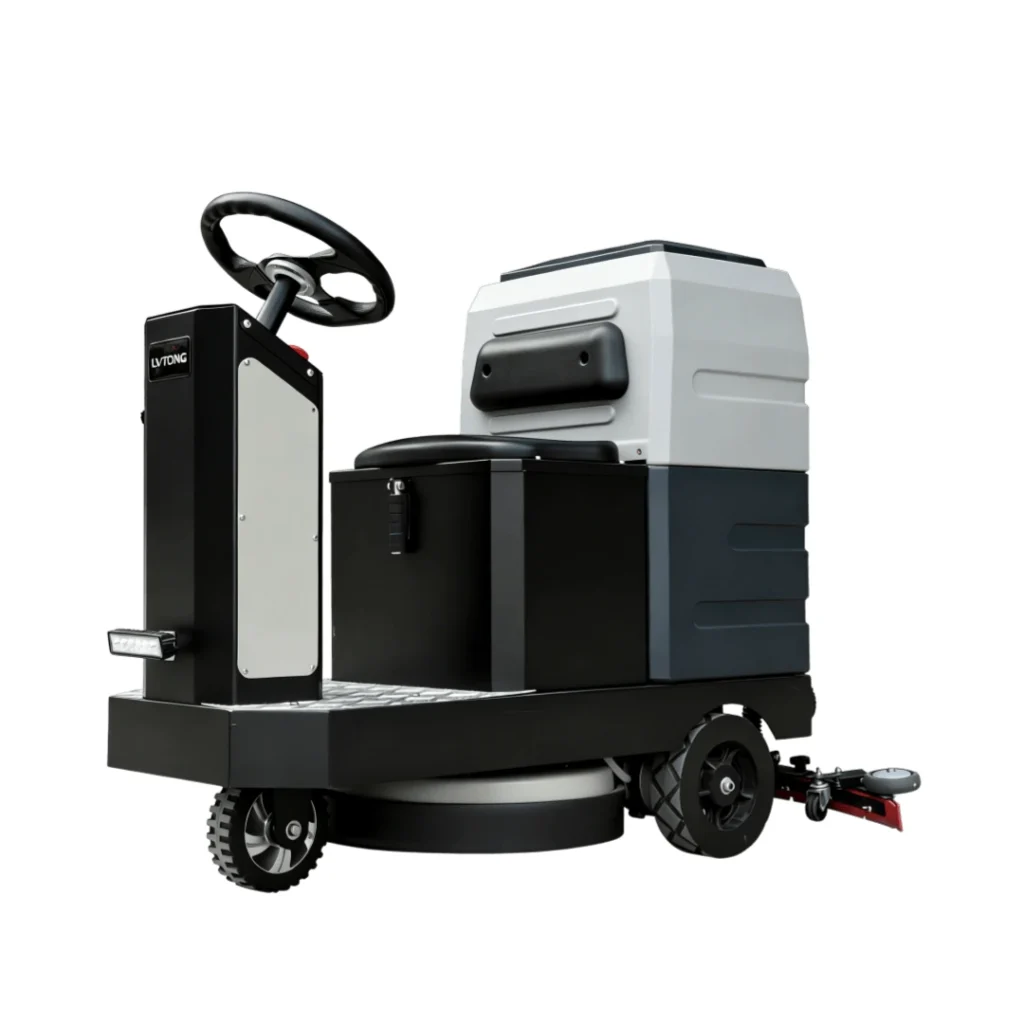
Match format to area behind the spec: a walk-behind floor scrubber for concrete suits facilities up to a few thousand square meters per shift; ride-on machines pay off in long warehouse aisles. There is rarely one best commercial floor scrubber for concrete across all three surface states — the honest answer is the six lines above, answered for the slab you actually have. A concrete floor cleaner machine specified this way stays on your floor, on a film still intact, years after a mismatched one is exiled to the yard’s roughest corner.
If you are weighing bare, sealed and polished specifications for one facility — or inheriting mixed slabs in a single plant — send us your floor states and areas, and we will map each zone to a machine and consumable plan before you commit one setup to all of it.
Frequently Asked Questions
Can a floor scrubber damage a concrete floor?
Yes, in two ways: an over-aggressive setup dusts an unsealed slab faster and grinds grit into it, and stiff pads wear through sealer films. Matched brush, pad and pressure remove the risk on all three surface states.
Do I need to seal my concrete floor before machine scrubbing?
Sealing is not a prerequisite — machines clean bare slabs every day — but it is usually the economic choice, because it ends the dusting cycle, cuts consumable wear and gives you a renewable surface instead of an eroding one.
What is the best commercial floor scrubber for concrete floors?
The one whose brush type, pad range, down pressure and squeegee are specified for your surface state and area — walk-behind machines for smaller or congested sites, ride-on machines for long aisles. Judge candidates against the six-line specification rather than by floor size alone.
How often should concrete floors be scrubbed?
Frequency follows traffic and surface state, not a calendar. Unsealed slabs in dusty industrial traffic may need several passes a week to stay ahead of dusting, while sealed or polished floors in moderate traffic typically hold appearance with one or two scheduled scrubs — adjust by what the recovery water tells you.
What chemicals are safe on concrete?
Neutral cleaners are safe on every surface state. Mild alkaline degreasers lift oil and tire marks on bare slabs; acids are off-limits on polished and densified floors and attack both films and the cement paste. Confirm chemistry against the sealer or densifier maker.