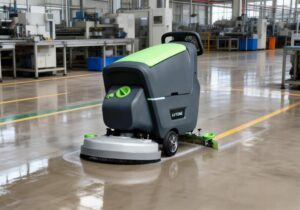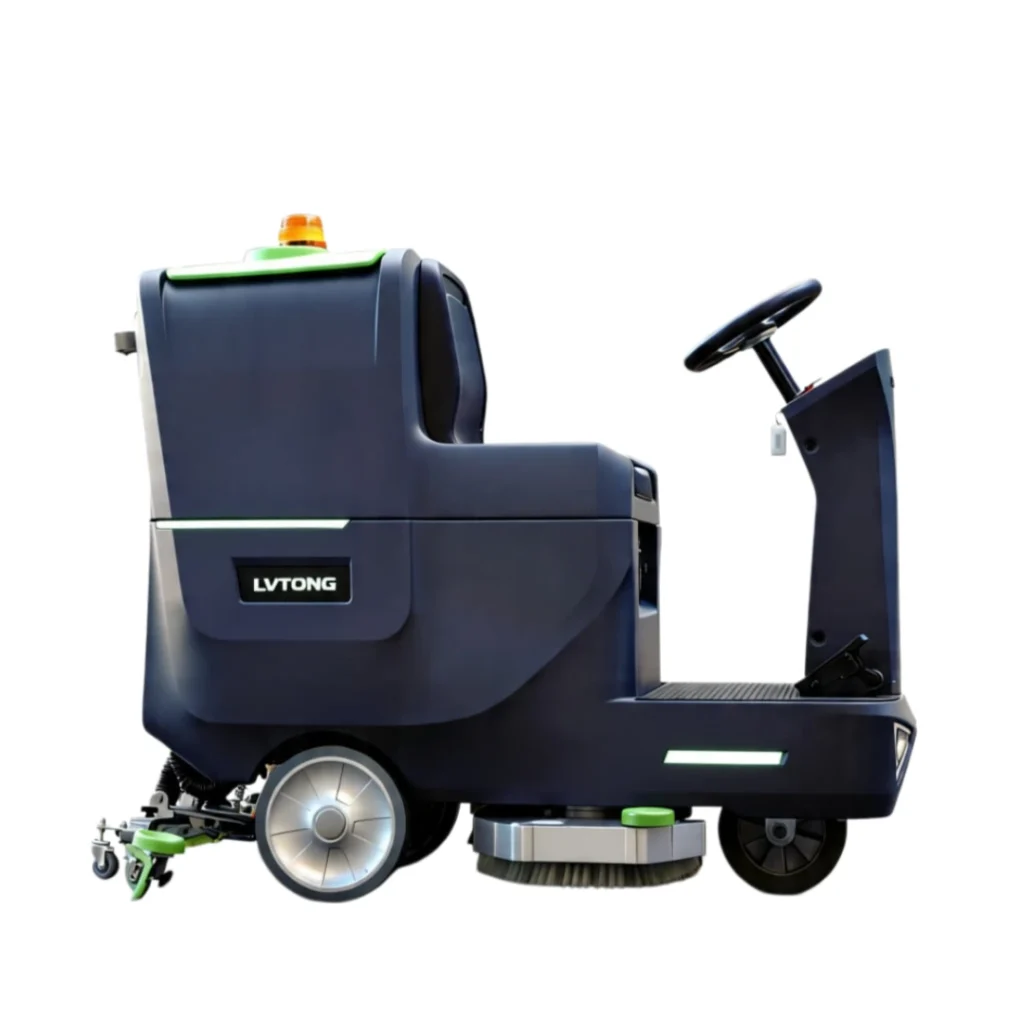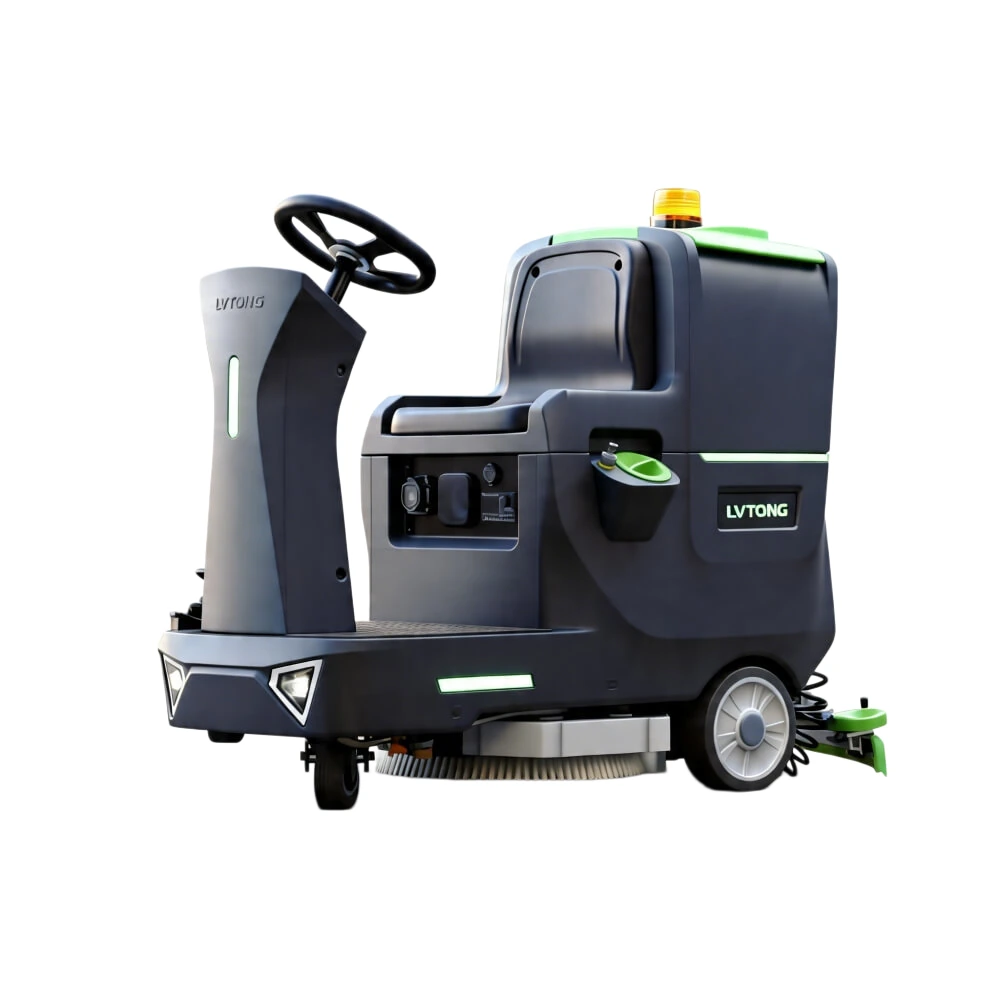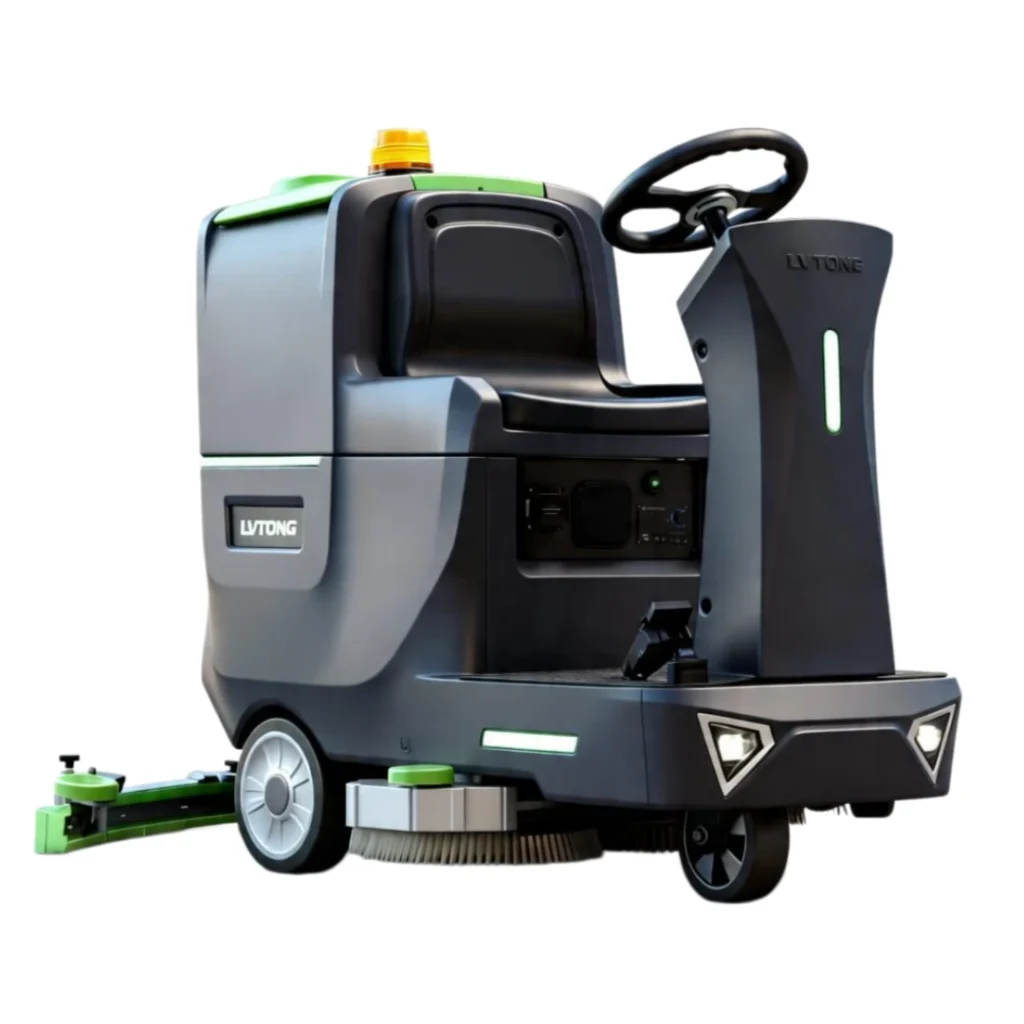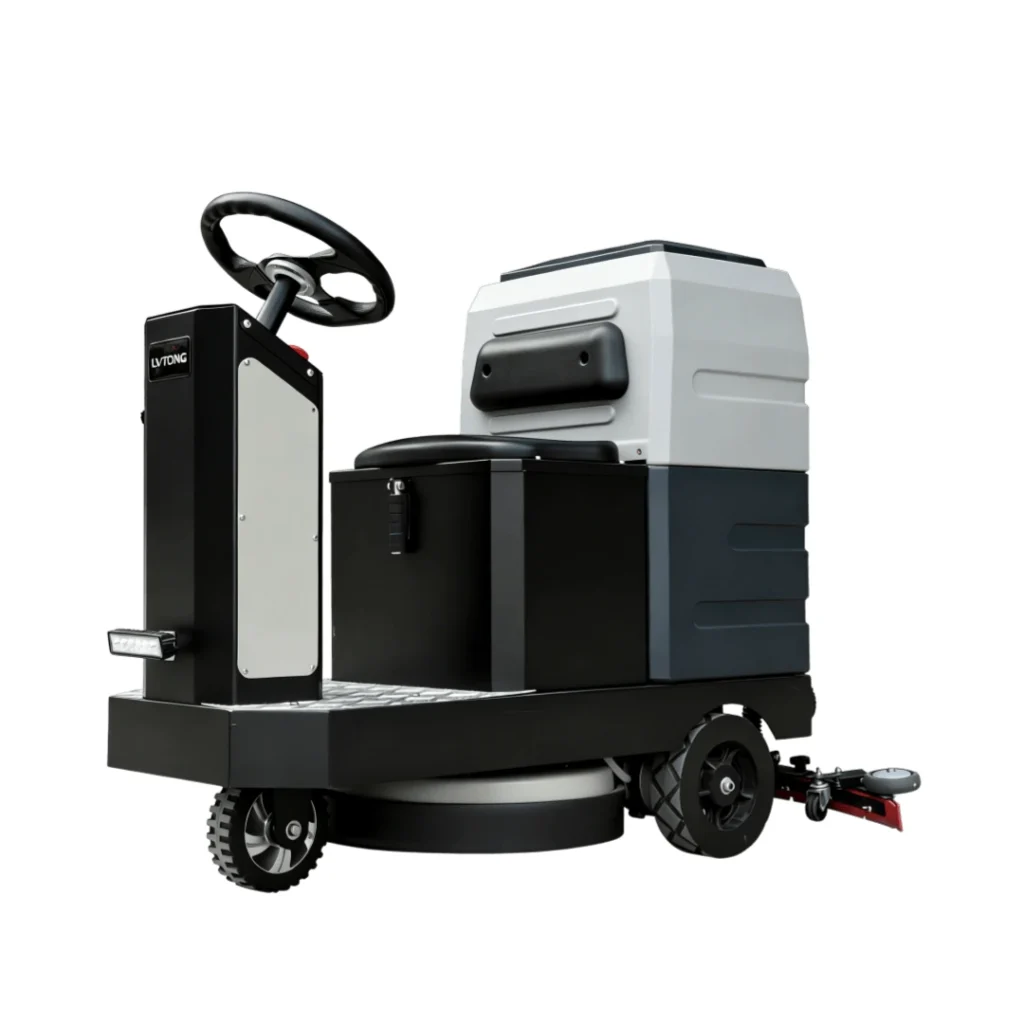
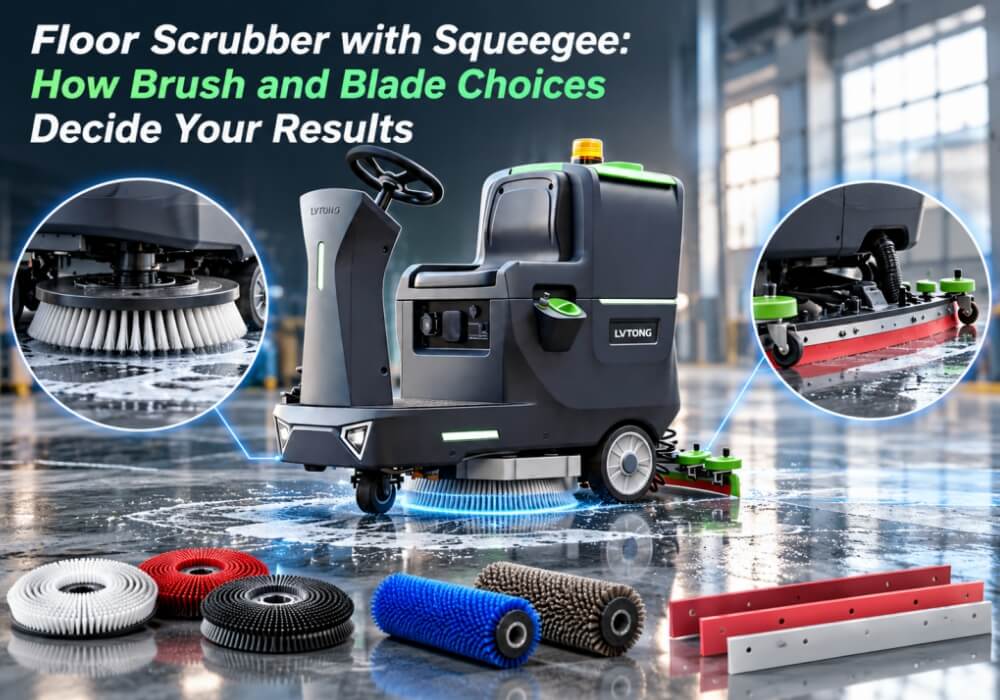
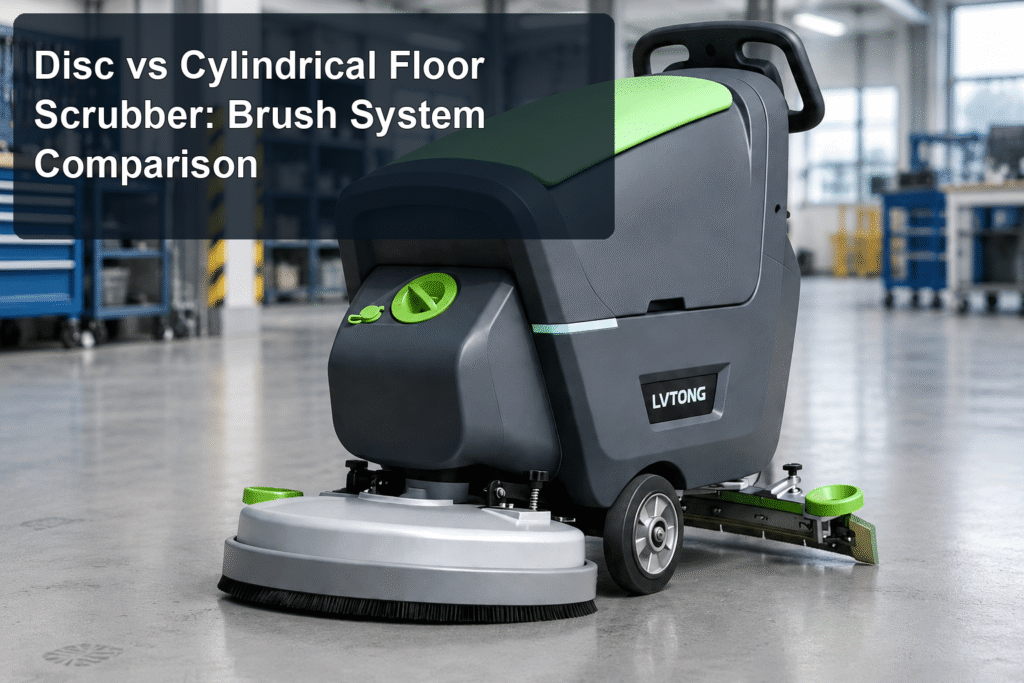
Most floor scrubbers get compared on width, tank size and price. On a hospital ward, a hotel floor full of sleeping guests or an open-plan office, none of those decides whether the machine can work at all — the deciding number is how loud it is. A genuinely quiet floor scrubber is not a niche product; it is the difference between a machine that can only run at 2 a.m. and one that cleans while the building carries on working.
Quick Answer
Noise decides when a floor scrubber can run, and when it can run decides its return on investment. Four points shape a sensible purchase:
- Three sound sources — brush motor, vacuum motor and wheels on the floor; the vacuum usually dominates the soundscape.
- Ask for dB(A) at 1 metre — a noise figure without a measurement distance and weighting is marketing, not a specification.
- Match the machine to the most sensitive zone it must serve, not to its average route.
- Night routes cost more than they look — premiums, lighting, security and fatigue all price into the “free” quiet hours.
The sections below turn sound into the same kind of checkable specification you already use for weight and water.
Why Noise Is a Buying Criterion, Not a Comfort Detail
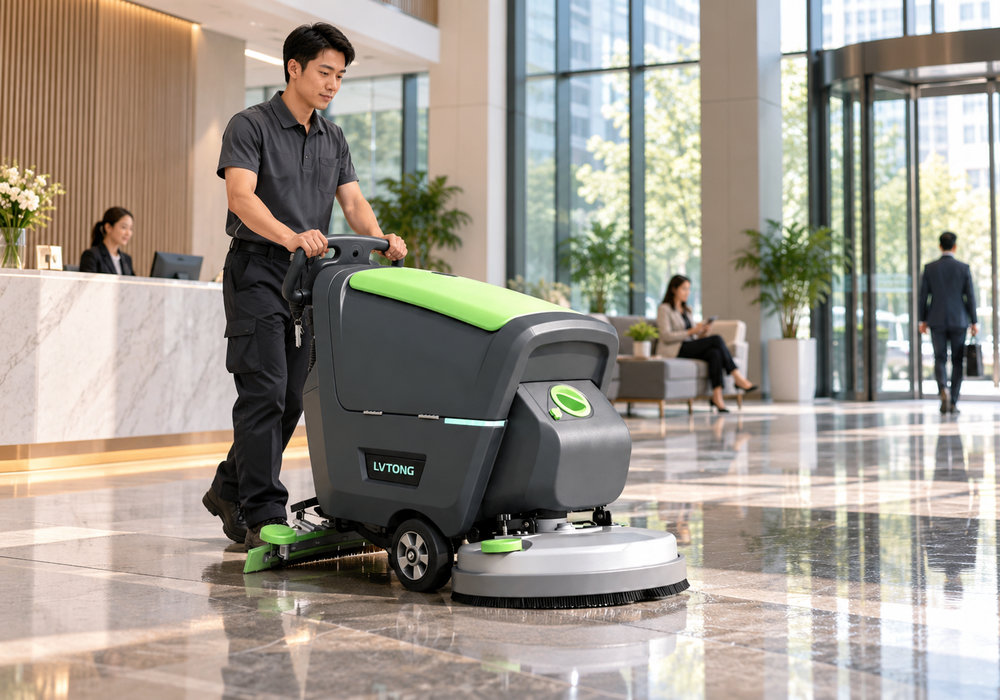
In occupied buildings, the usable hours of a floor scrubber are set by its noise — a quiet floor scrubber works hours no other machine can, and usable hours, not brush width, determine how much cleaning one machine delivers.
A scrubber that must wait for closing time inherits the whole night-shift cost stack: premium wages, lighting, security access, and a tired operator. A low noise floor scrubber can work through morning lobbies, retail hours and ward corridors, cutting the machine-per-floor count in multi-shift buildings. Yet noise is the least specified number in most quotations, because most buyers never ask for it in a measurable form. Fixing that costs one line in a purchase order — the rest of this page explains which line, and what the numbers mean.
Where the Sound Comes From: Three Sources in One Machine
A floor scrubber makes noise in three places, and they are not equally quietable — know which one you are paying to reduce.
- Brush or pad motor — load-dependent: it gets louder on aggressive pads, high down-pressure and rough concrete, quieter on soft pads and smooth vinyl.
- Vacuum motor — usually the loudest steady component; it spins fast and sits close to the operator’s ears. Better sealing, slower impeller speeds and insulated squeegee hoses all reduce it.
- Chassis and wheels — hard wheels over joints and thresholds click and rumble; non-marking soft compounds roll noticeably quieter.
This decomposition matters for buyers because it explains why “quiet” is not a single switch. A machine can have a quiet brush drive and a screaming vacuum, and only a specified floor scrubber noise level for the whole machine reveals the combination.
Floor Scrubber Decibels: Reading the Numbers Right
Every quoted decibel figure needs two qualifiers — the distance it was measured at and the weighting used — or it cannot be compared between machines.
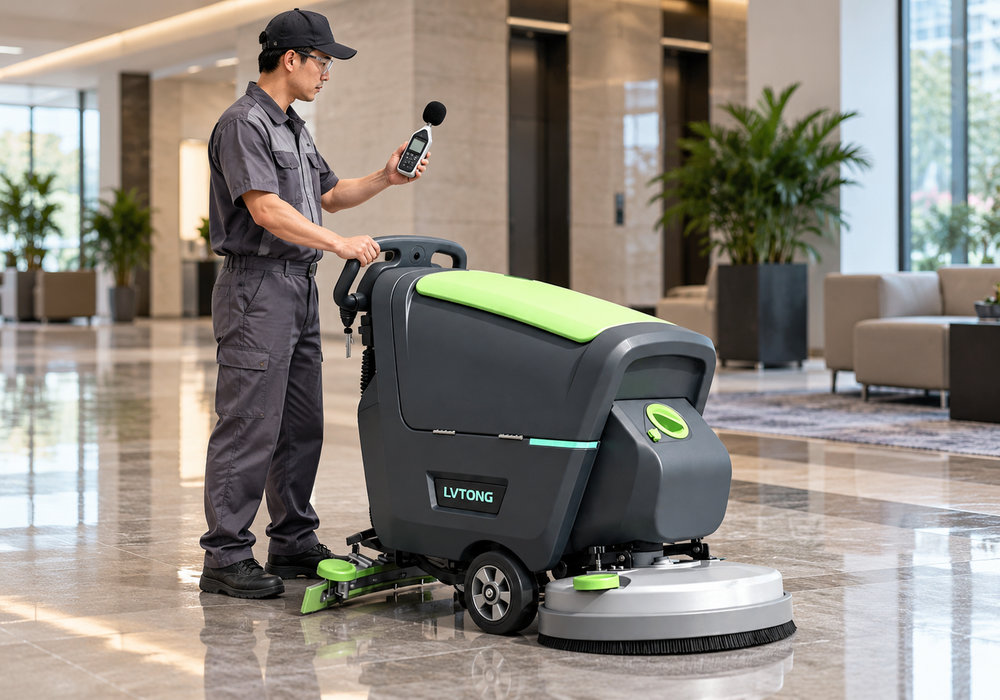
Typical illustrative ranges for context: a quiet library sits near 40 dB(A), normal conversation near 60, older commercial scrubbers often run in the low-to-mid 70s at the operator’s position, and machines designed for daytime use aim for the mid 60s or below. Decibels are logarithmic: every 10 dB(A) drop sounds roughly half as loud to the ear. That is why “a bit quieter” and “specified 8 dB(A) lower” are different purchasing outcomes. The measurement convention to request is dB(A) at 1 metre, machine running on its usual floor; figures quoted “at full power in open space” or without a distance are not comparable. When shortlisting, ask each supplier for the floor scrubber decibels figure in exactly that form — the discipline of asking filters out half the marketing noise before any demonstration.
Who Cares How Loud You Are: Matching Machines to Sensitivity Tiers
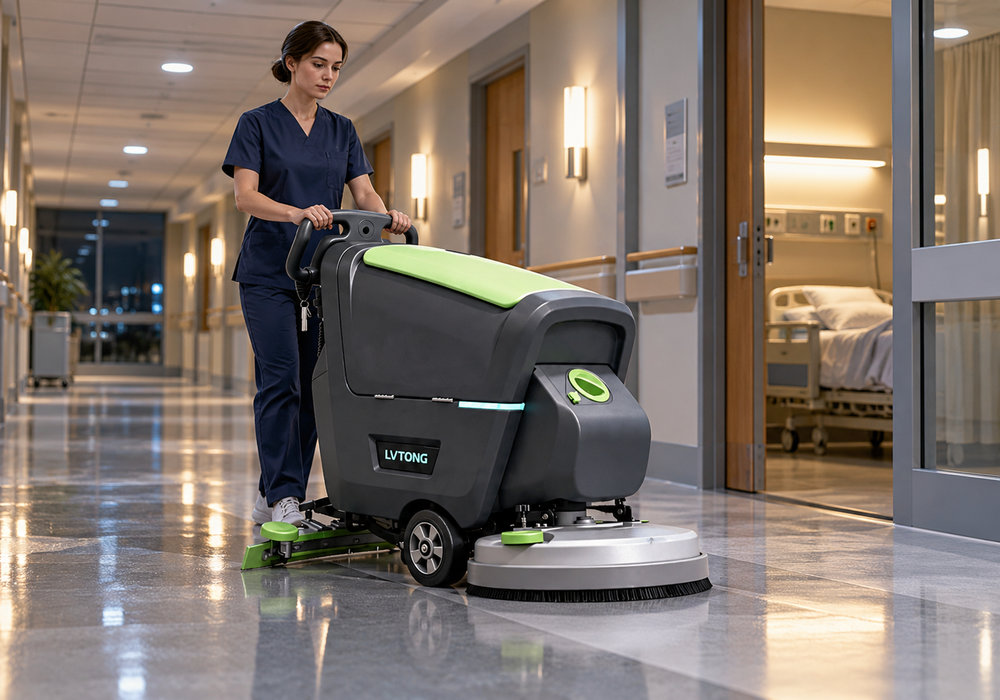
The right machine is the one tolerable in the most sensitive zone on its route — a floor scrubber for noise sensitive areas is specified zone-first, not route-first.
| Environment tier | Constraint | Typical implication |
|---|---|---|
| Hospital wards, elder care | Patient sleep and clinical quiet hours | Night use needs quietest tier; daytime passes restricted to corridors and service zones |
| Hotel guest floors | Sleeping guests behind thin doors | Daytime work in back-of-house; guest-floor passes scheduled and short |
| Open-plan offices, schools | Concentration and teaching | Day cleaning feasible only with quietest tier; otherwise early/late edges |
| Retail, malls during trading | Customer experience, announcements | Quiet machines workable off-peak; standard machines wait for closing |
| Transport hubs, parking | Ambient noise already high | Noise rarely the binding constraint — schedule around traffic instead |
Malls sit in an interesting middle: trading hours forbid loud machines, yet corridors stay busy almost all day. Our mall floor scrubber guide covers the scheduling side; the machine side is the decibel specification above.
Day Cleaning vs Night Cleaning: The Real Trade-off
Day cleaning trades a wage premium and schedule discipline for machine capital; night cleaning trades sleep disruption, lighting and security for cheaper machines.
The day cleaning floor machine argument has grown with office-density trends: buildings stay occupied longer, and paying security staff to babysit one scrubber at midnight rarely beats buying a machine that can run at 10 a.m. The honest comparison has three rows. First, labour: night shifts carry premiums and higher turnover. Second, machine: day-capable machines cost somewhat more for the same width. Third, risk: a daytime machine shares space with the public, so it needs pedestrian-aware routing, visible warning lights and trained operators — the training side is exactly what our operator training program guide covers. Night routes are not free either; our office cleaning guide shows how lifts, security and noise rules shape after-hours routes even before the machine’s own sound enters.
Buying Quiet: The Specification Lines That Actually Matter
Four spec lines buy more quiet than any brochure adjective — demand numbers, not adjectives.
- Noise figure in dB(A) at 1 metre, on a floor type you name — the anchor line; without it nothing else is verifiable.
- Vacuum motor description — impeller speed class, squeegee hose insulation, lid sealing; the vacuum is where most daytime violations are born.
- Pad/brush flexibility range — soft pads run quieter on smooth floors; a machine that only takes stiff brushes is locked into its loudest mode.
- Wheel compound — non-marking soft compounds cut rumble on terrazzo and sealed concrete.
LVTONG publishes complete per-model specification sheets on request; see the LT-S530X walk-behind scrubber page for the format, and ask for the acoustic line of any model you shortlist — a low noise floor scrubber earns its name on paper before it earns it on your lobby floor.
Operating Quiet: Route Design and Operator Behaviour
Half of real-world noise is operational — the same machine can be acceptable or offensive depending on route and settings.
Four field habits keep a compliant machine compliant. Route the most sensitive zones first, while occupants are still absent or least active, and save echoing hard-surface areas for later. Drop brush pressure and down-speed on smooth floors; the cleaning result barely changes, the sound does. Keep recovery-tank lids seated — a half-open lid turns the vacuum into a horn. And brief operators that daytime passes are walking-speed passes: fast laps through a quiet office are the fastest way to lose day-cleaning permission. These habits belong in the standard training pack, not in a one-off reminder.
Hearing Safety: The Operator’s Own Limits
A machine can be quiet for the building and still loud for the person pushing it eight hours a day — hearing protection follows exposure, not building complaints.
Occupational limits in US workplaces put the 8-hour exposure action level at 85 dB(A) under eCFR 29 CFR 1910.95, with the framework for occupational noise set out in 29 CFR 1910 Subpart G. Most modern scrubbers idle well below that at the operator’s position, but worn vacuum motors, loose panels and hard-floor settings push exposure up over a full shift. Community and building acoustics follow different logic — the World Health Organization environmental noise guidance and the hearing-health resources of the American Speech-Language-Hearing Association are the usual reference points for hospitals, schools and residential managers. The safe summary for a purchase file: the machine’s dB(A) line is a building courtesy, the operator’s exposure is a compliance duty, and one number does not substitute for the other.
The Noise Line of Your Purchase Order
Add five lines to the order and the acoustic question closes itself.
| # | Specification line | What it pins down |
|---|---|---|
| 1 | Noise level: dB(A) at 1 m on [your floor type] | Comparability between suppliers |
| 2 | Sound sources: brush, vacuum, wheel — with noise-reduction features named | Where the quiet comes from |
| 3 | Pad flexibility range and minimum down-speed setting | Quiet operating modes |
| 4 | Intended zones: quietest tier the machine must serve | Schedule feasibility |
| 5 | Operator exposure note and hearing-provision statement | Compliance closure |
Send us your most sensitive zone and the hours you want the machine to run, and request the acoustic specification sheet for the models on your shortlist — a quiet floor scrubber quote from LVTONG starts with those two facts. Pair the result with the facility selection guide to settle width, water and power on the same sheet of paper.
Frequently Asked Questions
How many decibels does a floor scrubber produce?
Illustratively, modern commercial machines commonly run from the mid 60s to the mid 70s dB(A) at the operator’s position, with daytime-oriented designs at the lower end. The only useful figure is dB(A) at 1 metre on your floor type — ask each supplier for that exact line.
Can you use a floor scrubber during business hours?
Yes, where the machine’s noise level suits the most sensitive zone on the route and operators follow day-cleaning practices: soft pads, reduced pressure, walking speed and lid sealed. Offices, schools and hospitals usually add scheduling rules on top.
What makes a floor scrubber quiet?
Three components decide whether a machine earns the quiet floor scrubber label: a well-sealed vacuum system, a brush drive that accepts soft pads at low speed, and soft non-marking wheels. Ask for the dB(A) at 1 metre figure and the three component descriptions rather than trusting the word “quiet”.
Are ride-on scrubbers louder than walk-behind models?
Not necessarily. Ride-on machines move the operator away from the vacuum and can be quieter at the seat, though their larger motors can carry further in a quiet building. Compare measured figures per model rather than assuming by class.