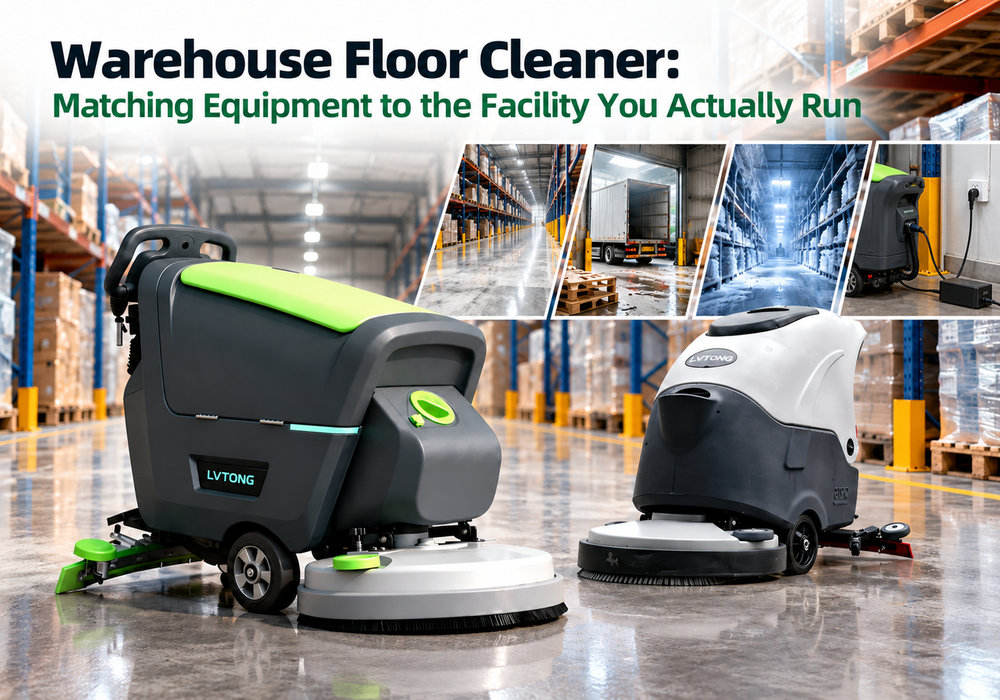
QUICK ANSWER
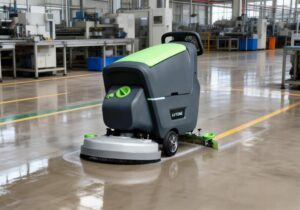
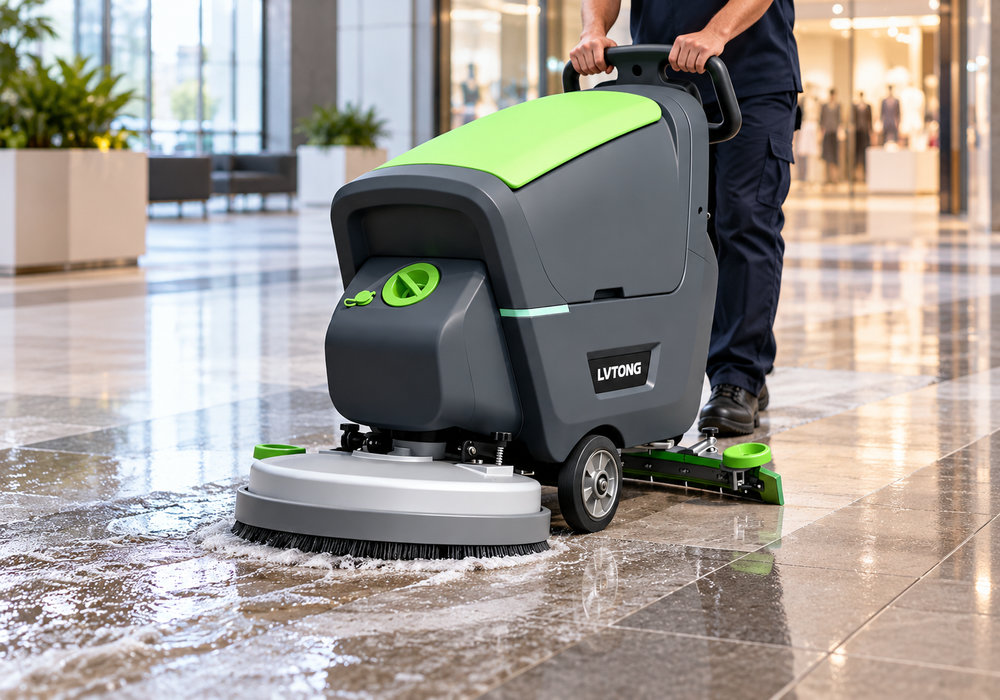
What is a floor scrubber? It is a walk-behind or ride-on machine that dispenses cleaning solution, agitates it with a brush or pad, and vacuums the dirty water into a recovery tank — all in a single pass over the floor. Where a mop spreads soil around and a broom only moves dry debris, a scrubber removes both and leaves the surface dry.
- One pass, three actions — solution, agitation and recovery happen together, which is why scrubbed floors dry in minutes, not hours.
- Two formats — walk-behind machines suit compact facilities; ride-on machines serve warehouses, malls and parking structures.
- Not a sweeper, not a buffer — scrubbers wash; sweepers collect dry debris; buffers restore shine.
- What does a floor scrubber do for daily operations? It replaces hours of mopping with consistent, measurable machine coverage.
Below: the precise definition, how does a floor scrubber work subsystem by subsystem, the main formats, honest limits, and the six specification lines every first-time buyer should learn to read.
What Is a Floor Scrubber? The Working Definition
A floor scrubber is a floor-cleaning machine that dispenses solution, scrubs with a brush or pad, and recovers the dirty water in one pass — the defining feature is that it picks up what it loosens.
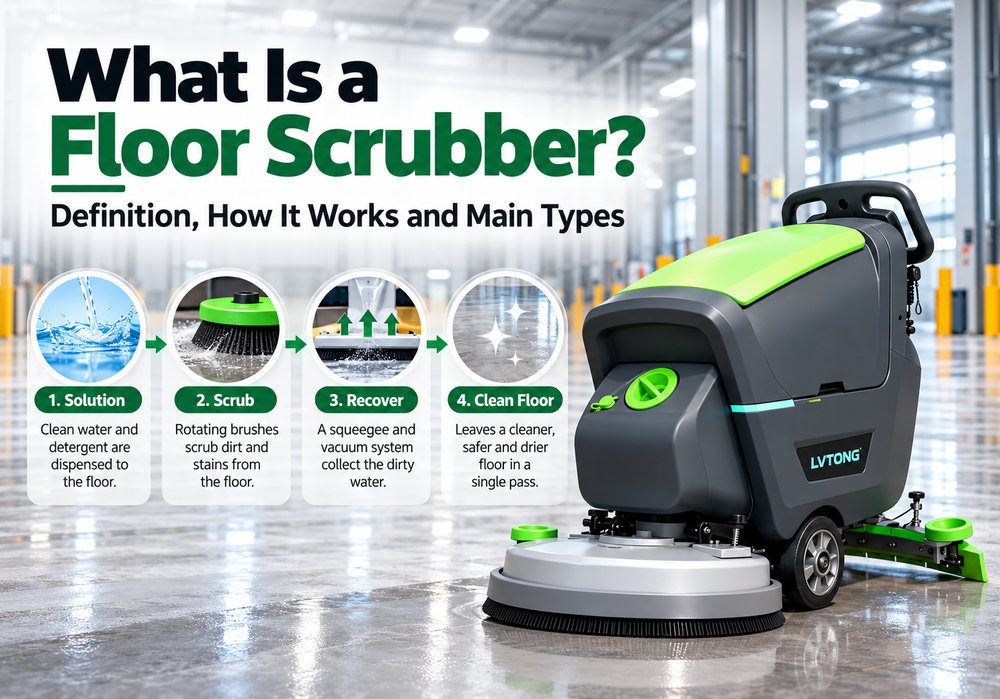
Ask ten facility managers and most will describe a machine they have seen but never had defined. So, what is a floor scrubber in precise terms? It is a self-contained cleaning machine built around a closed loop: a solution tank feeds clean water (often with a neutral detergent) to a spinning brush or pad; the deck presses that brush against the floor under controlled pressure; and a curved squeegee at the rear, working with a vacuum motor, lifts the resulting slurry off the floor and into a recovery tank. Nothing is left on the floor except a thin, drying film of clean water.
That loop is what separates the category from every tool it replaces: a mop deposits dirty water back onto the floor; a broom shifts dust into the air; and a buffer builds gloss over an already-clean floor, while a scrubber’s job ends at clean.
What Does a Floor Scrubber Do That Mopping Cannot?
It does three things a mop cannot: applies consistent downward pressure across every square meter, recovers the soil it loosens instead of redistributing it, and leaves the floor dry enough to walk on immediately.
The pressure point matters more than it sounds: a mop operator’s downward force varies with fatigue, so heavily soiled entrances stay dirty even after being “mopped” twice. A machine applies the same deck pressure in the far corner as at the entrance, and its coverage can be measured, scheduled and audited. Recovery is the second half: because the slurry goes into a tank rather than back onto the floor, greasy residue does not migrate one aisle over. The third benefit is safety — a floor dry within minutes sharply reduces slip exposure, which is why facilities often reference traction guidance from bodies such as the National Floor Safety Institute when documenting their cleaning program.
How Does a Floor Scrubber Work? The Four Subsystems
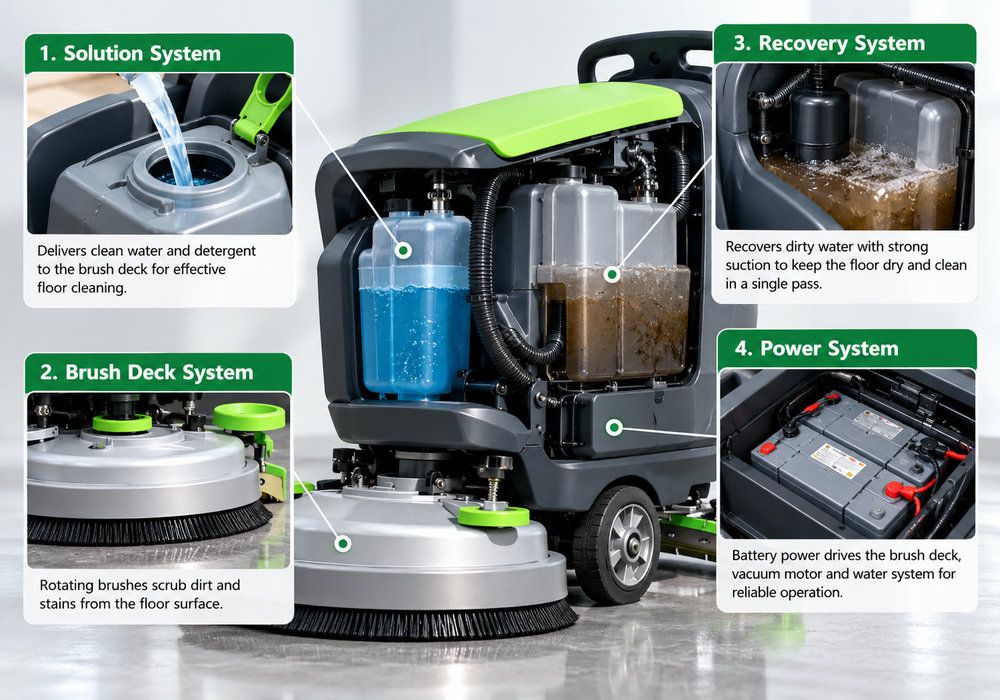
Every floor scrubber — from a 50 cm compact unit to a ride-on floor machine — runs the same loop: dispense, scrub, recover, repeat, delivered by four subsystems you should be able to name before you compare quotes.
- Solution system — a clean-water tank and a feed valve or pump. Tank size decides how often the operator stops to refill; a compact machine such as the LVTONG LT-S530X carries 62 L of clean water against a 2,100 m²/h rated output.
- Deck and agitation — a disc brush or pad holder spinning under adjustable downward pressure. Brush stiffness is matched to the floor: soft pads for polished surfaces, abrasion-tolerant brushes for textured concrete.
- Recovery system — a curved squeegee that channels the slurry and a vacuum motor that lifts it into the recovery tank. The LT-S530X pairs its 65 L recovery tank with a curved squeegee system sized wider than the brush so no strip of dirty water survives a pass.
- Power and drive — battery-driven on every modern machine. Lithium packs dominate current designs because one charge covers a working shift without the watering and equalizing routine of old lead-acid units.
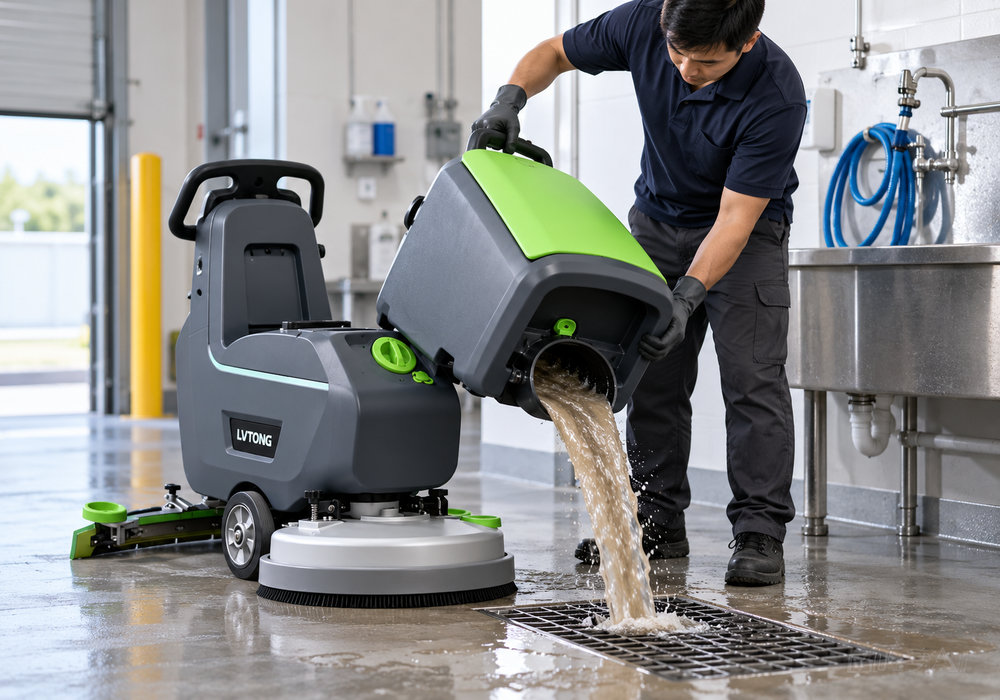
Two notes follow from the loop: recovery tanks, squeegee blades and filters need daily rinsing or performance decays within weeks; and the recovered water has a legal destination — a sanitary drain or approved settling route, never a storm drain, where wash-water discharge falls under programs such as EPA’s NPDES.

The Main Types of Floor Scrubbers
Format is the first decision, and it follows area: walk-behind machines cover small and mid-size facilities; ride-on machines take over when the shift math stops closing.
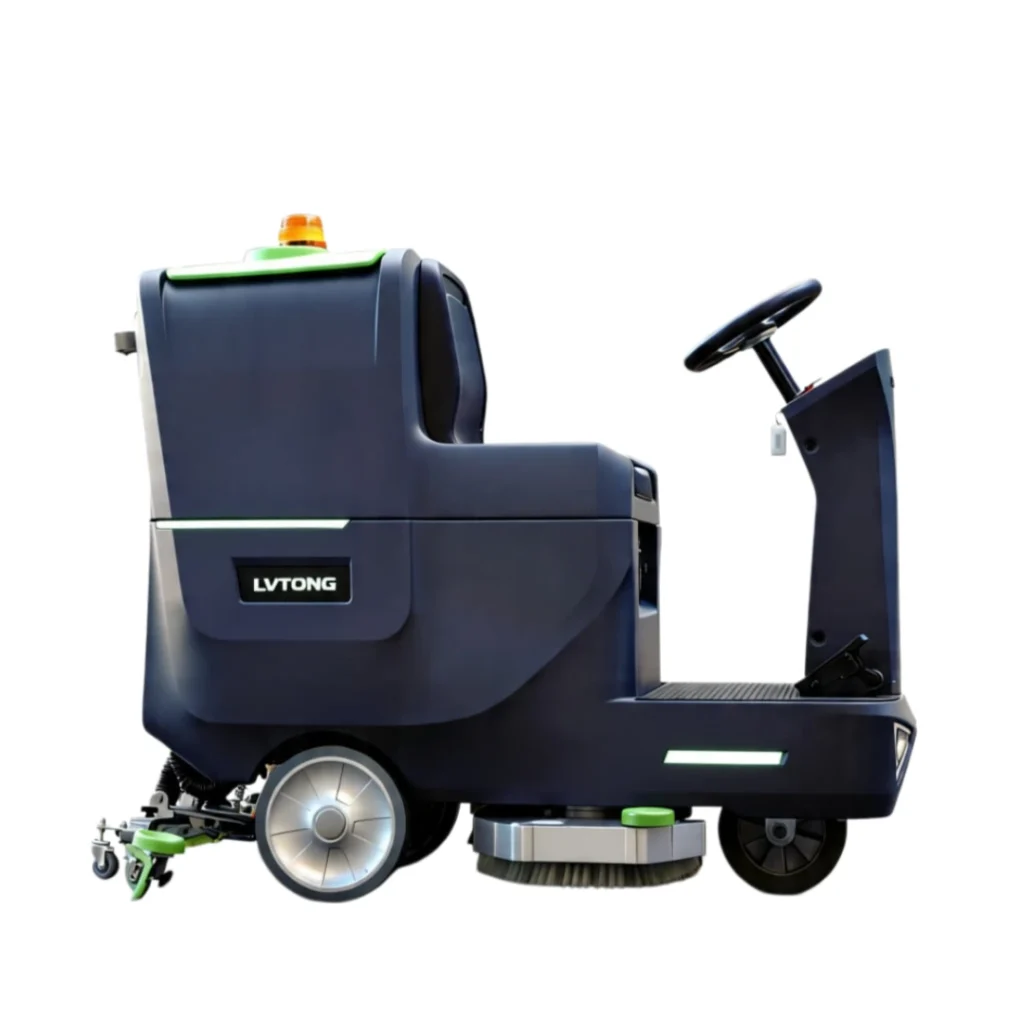
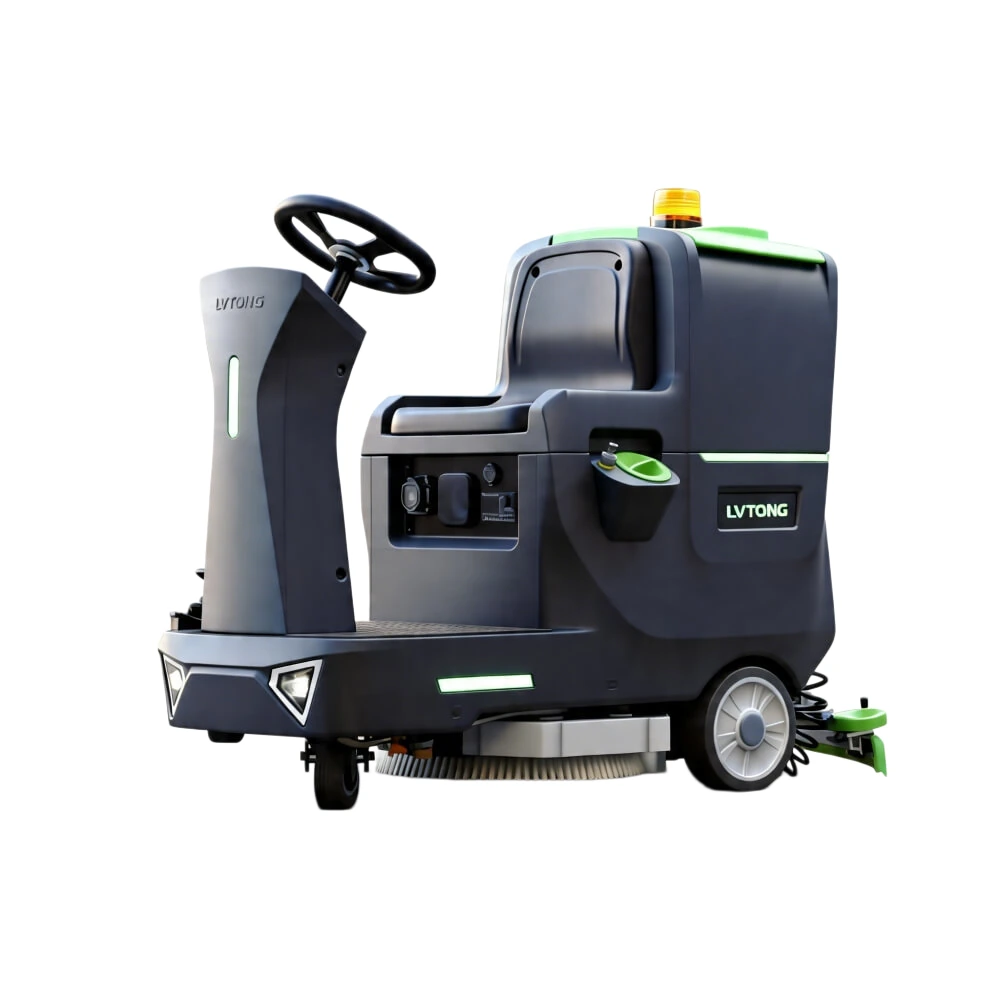
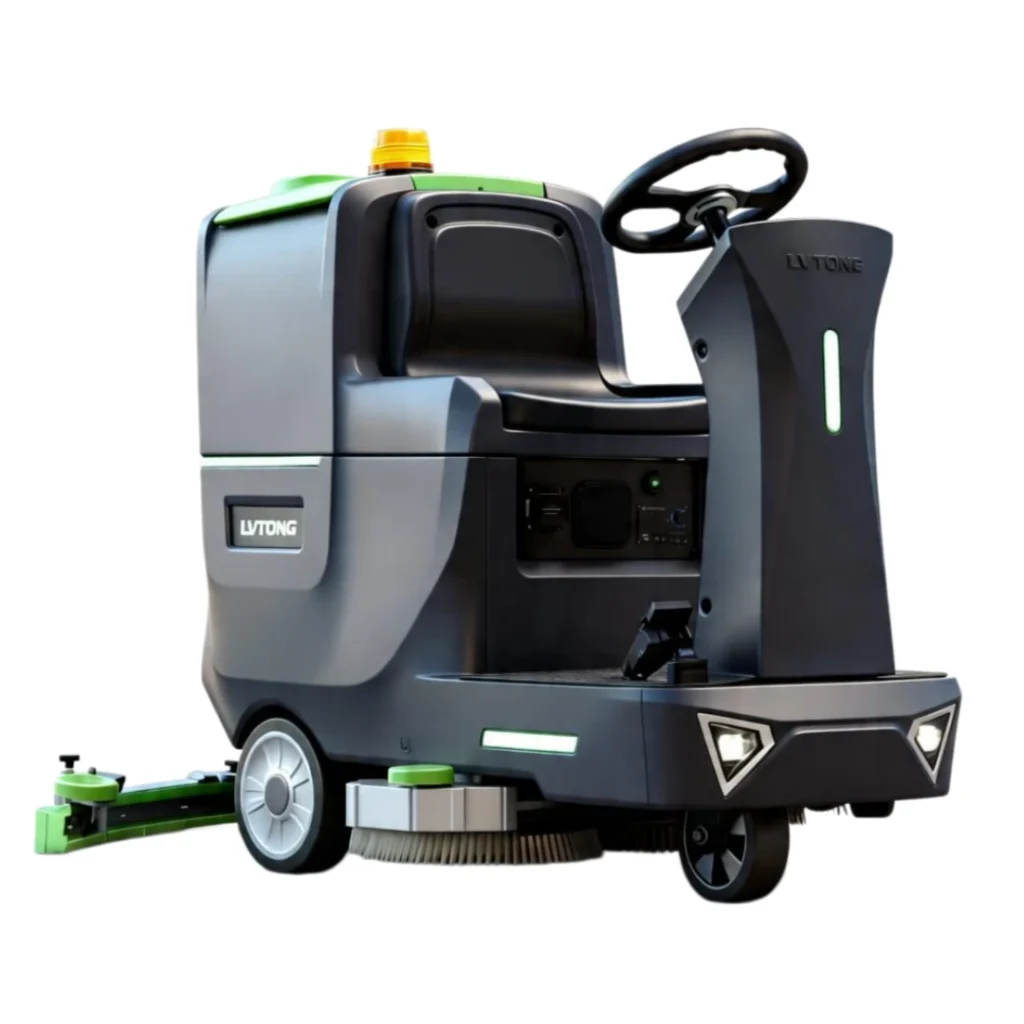
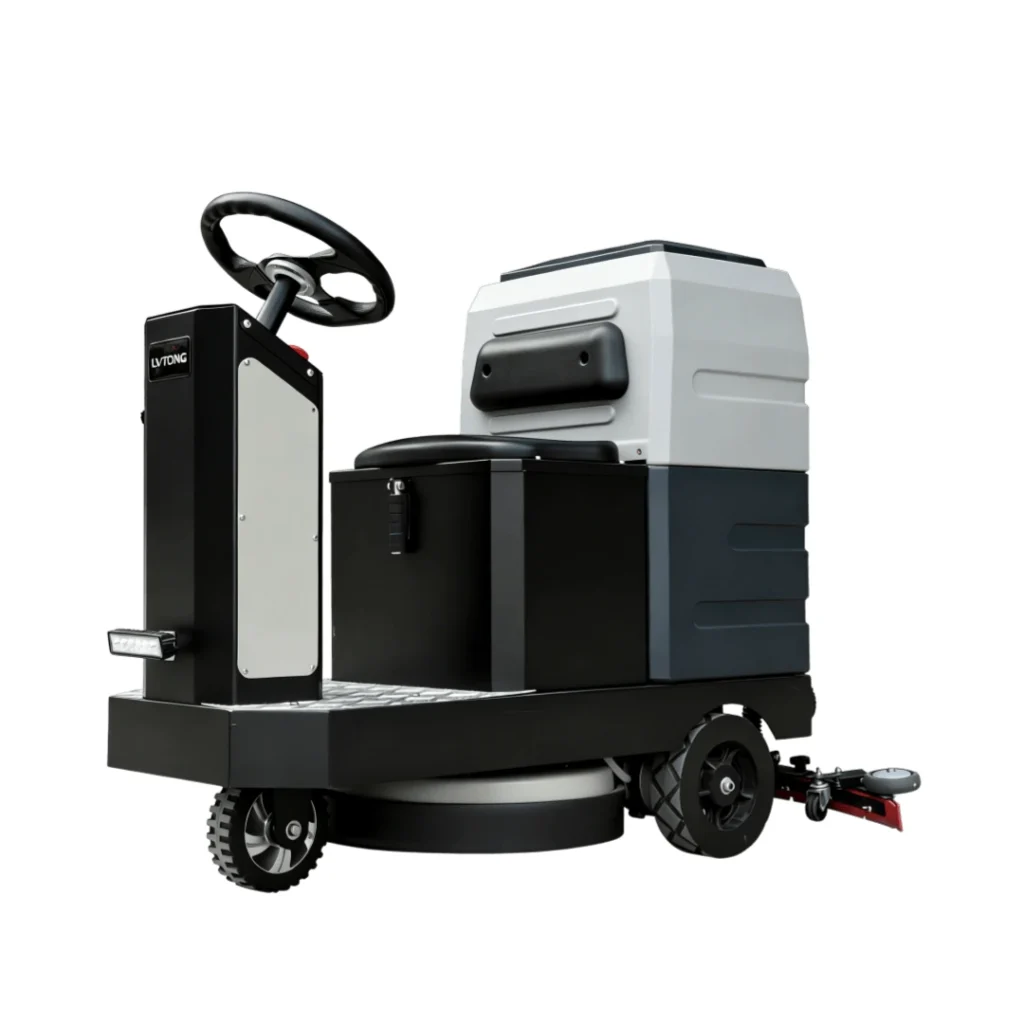
The two dominant types of floor scrubbers divide on one question — who provides the propulsion. A walk behind floor scrubber is guided by the operator at walking pace; it is the default for retail floors, clinics, schools and single-level facilities up to roughly 2,000 m² per shift. For beginners who want one format explained end to end — components, operating sequence, first-user tips — our walk-behind floor scrubber guide for beginners does exactly that. A ride-on scrubber carries the operator and trades footprint for speed: mid-size riders such as the LVTONG V6 (rated up to 4 hours per charge) are built for the aisle networks of warehouses, malls and parking structures. Between and beyond these sit niche formats — mini, compact and stand-on machines — each solving the same loop from a different posture. Whatever the format, commercial-duty machines should comply with the applicable safety standard for powered floor-treatment machines, IEC 60335-2-72; ask any supplier to state it.
Floor Scrubber vs Sweeper vs Buffer: The Three-Machine Triangle
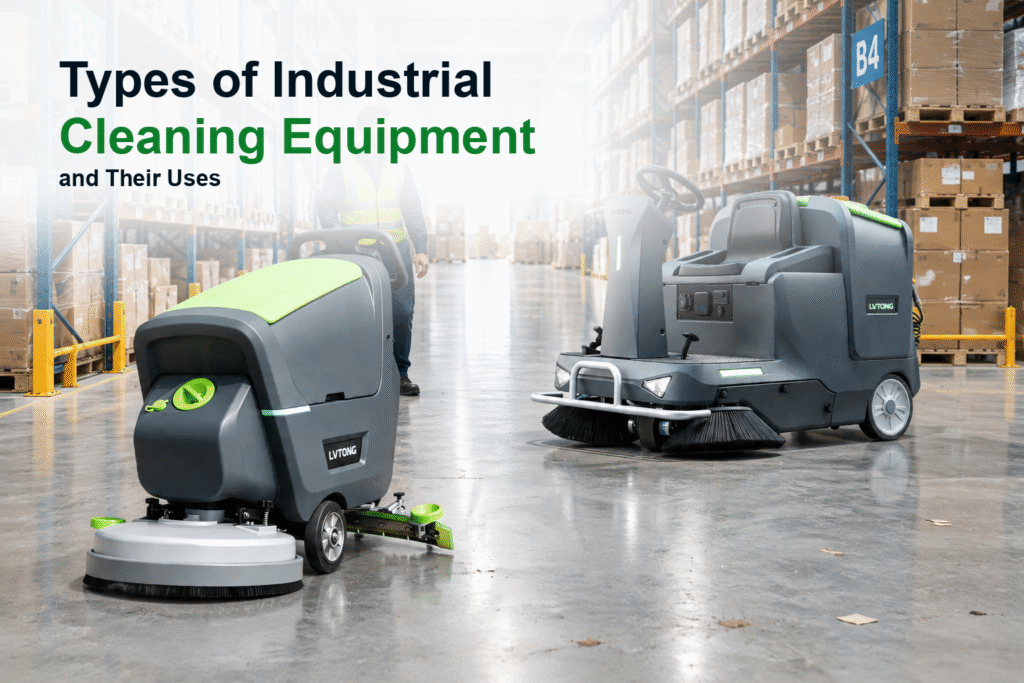
A sweeper handles dry debris, a buffer builds shine, a scrubber washes — and most facilities above a few thousand square meters eventually own more than one of the three.
The floor scrubber vs sweeper question comes first, because the two look similar from the driver’s seat: a sweeper carries brushes and a dust hopper but no water system, making it the right tool for dust, sand, wood chips and litter — and it often runs ahead of a scrubber where grit would otherwise become slurry. The floor scrubber vs buffer question comes second: a buffer (or its high-speed cousin, the burnisher) runs a pad over clean floors to build gloss — it cleans nothing and recovers nothing. The floor sweeping machine guide defines the sweeper category in full, and our floor buffer vs floor scrubber comparison walks the buffer side of the triangle machine by machine. The short version for a new buyer: sweepers solve dry problems, buffers solve appearance problems, and scrubbers solve the soil that water can carry away.
What a Floor Scrubber Does Not Do
Honest limits: a scrubber does not collect dry litter well, it does not reach into corners and stair edges without help, and it needs water and charging logistics planned like any other building service.
Three boundaries prevent first-time-buyer disappointment. Dry debris is the first — the squeegee that seals against wet slurry chokes on litter and shavings, which is why gritty facilities pre-sweep or pair machines. Geometry is the second: no disc reaches the last centimeter against walls and stair noses, so edges keep a handheld. Logistics is the third: the machine consumes clean water, produces dirty water and needs a charging point, and sites that never planned those flows spend their first month solving them instead of cleaning. None of these limits argue against the machine — only for writing them into the site plan first.
What Is a Floor Scrubber Used For — and When Does a Business Need One?
What is a floor scrubber used for in practice? Sealed hard floors in retail, healthcare, education, warehousing, manufacturing and parking — and the trigger to buy is usually the moment manual mopping can no longer cover the floor inside the labor hours available.
The category map is broad because the loop is universal: any impervious hard floor that gets dirty in a repeatable way is a candidate. Retailers run compact machines before opening; hospitals value the recovery loop because it removes rather than spreads soil; warehouses and plants ride machines through shift changes; schools clean corridors between bells. The trigger is arithmetic, not industry: when a crew spends a shift-limiting block of hours mopping, or complaints repeat in the same zones, the machine question has arrived — as an illustrative band, from roughly 1,500–2,000 m² of hard floor upward. What follows is about format and configuration, not definition, and our team can help map a specific facility — contact us with your floor plan and shifts.
Key Specifications Explained for First-Time Buyers
Six specification lines cover most of a first purchase — learn to read them and quotes from different suppliers become directly comparable.
| Specification | What it tells you | First-time reading note |
|---|---|---|
| Cleaning path width | The brush width — productivity scales with it | Wider is faster only if aisles actually fit it |
| Solution / recovery tanks | How long the machine works between refills and dumps | Read the pair, not one; a big clean tank with a small recovery tank just moves the stop |
| Coverage rate | Theoretical m²/h at nominal speed | Discount for turns, edges and refill stops |
| Runtime per charge | Battery endurance under working load | Match to the shift window, not the calendar day |
| Brush pressure and type | Down-force on the deck and disc-vs-roller layout | Match to the hardest floor you clean, not the average one |
| Weight and dimensions | Transport, elevators, ramps and storage | Check against doorways and lifts before ordering |
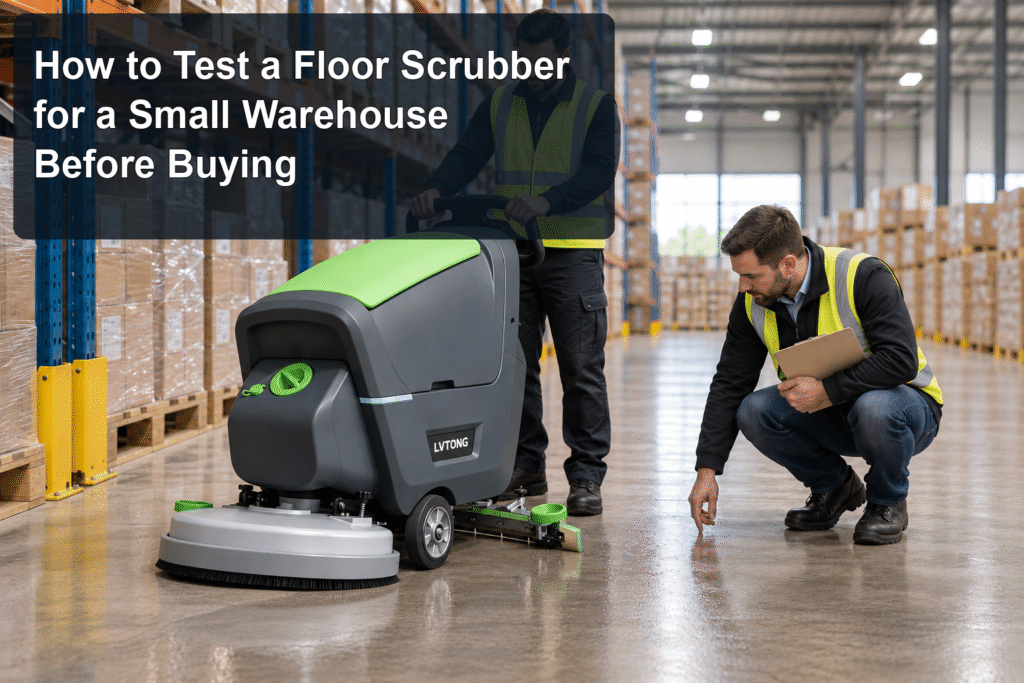
Two caveats keep the table honest: rated values assume nominal conditions, so a demonstration on your own floor beats any brochure; and the machine should arrive with commercial-appliance paperwork — certification from bodies such as UL or an IEC-based test report — because import buyers inherit the compliance file. With the definitions clear and the six lines readable, the next step is structured selection, and our floor scrubber selection guide takes that decision from here.
Frequently Asked Questions
What is a floor scrubber used for? In one line: cleaning sealed hard floors — concrete, tile, vinyl, stone, terrazzo and sealed wood-look surfaces — wherever they get dirty on a schedule. It replaces mop-and-bucket work whenever area, soil load or hygiene standards exceed what mopping delivers consistently.
Can one machine both sweep and scrub? Combination machines exist in the market, but the mainstream configuration is two dedicated machines run in sequence — a dry sweep first, then a wet scrub. For most facilities, matching each pass to its job outperforms one compromised machine.
How long does a floor scrubber run on one charge? Lithium machines are typically rated for a working shift: the LVTONG Q5 and V6 are rated up to 4 hours per charge, and a 3–4 hour band is a fair planning figure (illustrative; confirm per model).
What floor types should a floor scrubber not touch? Unsealed wood, damaged coatings and any surface whose sealant is already failing are poor candidates — water is the working medium, so the surface has to tolerate it. Material-specific guides on this site cover hardwood, vinyl, epoxy, stone and concrete in depth.