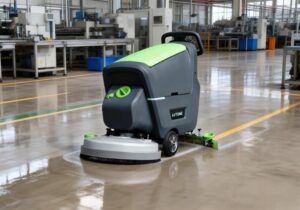
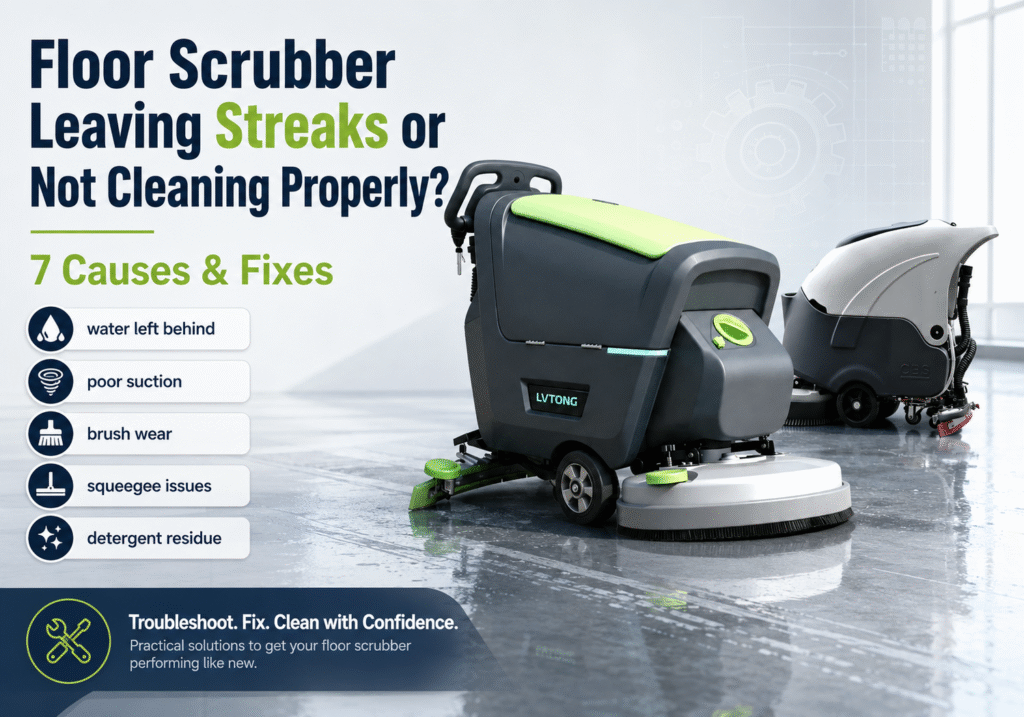
Cleaning large commercial spaces with a mop is slow, labor-intensive, and difficult to manage consistently. For warehouses, shopping malls, factories, supermarkets, schools, hospitals, and other large facilities, learning how to use a floor scrubber correctly can improve cleaning efficiency, reduce labor pressure, and help keep floors safer and drier after cleaning.
A floor scrubber is designed to apply cleaning solution, scrub the surface, and recover dirty water in one cleaning process. When used properly, it can clean large floor areas faster than manual mopping while reducing water residue, missed spots, and operator fatigue.
This guide explains how to use a floor scrubber for large spaces step by step, including how to prepare the area, choose the right brush or pad, set water flow, adjust the squeegee, plan cleaning paths, use double scrubbing for stubborn stains, and maintain the machine after use.
Step 1: Choose the Right Floor Scrubber for the Space
Walk-Behind Scrubber: Best for Medium Areas and Obstacle-Dense Spaces

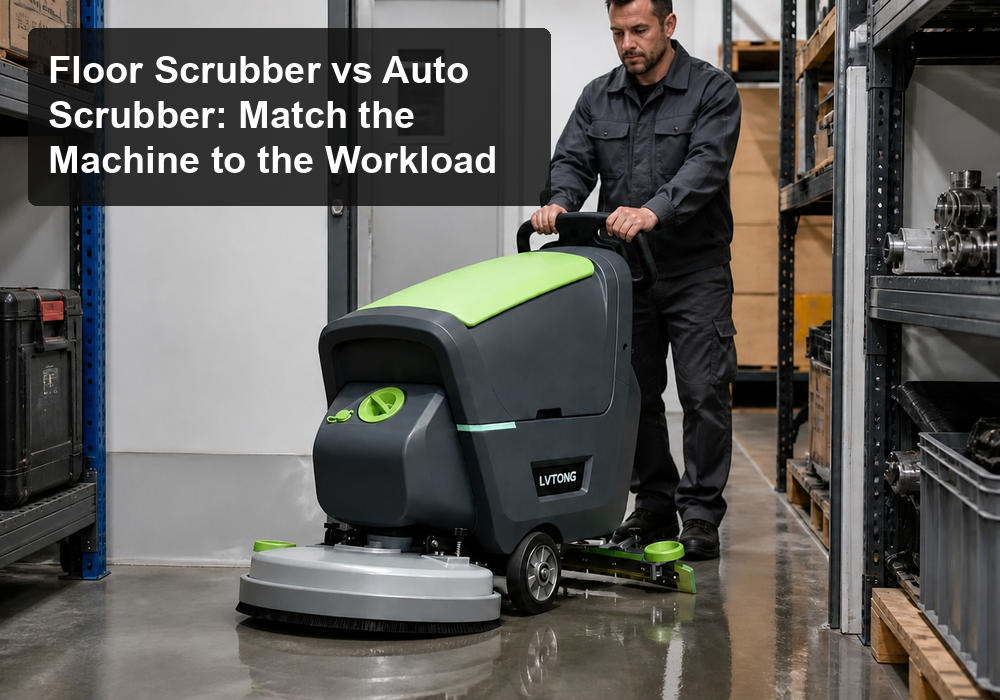
A walk-behind scrubber is suitable for medium-sized areas or facilities with many obstacles, such as retail stores, school hallways, hospitals, restaurants, and narrow corridors. The operator walks behind the machine and guides it through the cleaning route.
Choose this type of scrubber when the cleaning area is relatively compact, the layout includes shelves or furniture, or the machine needs to pass through tight spaces such as elevators, corridors, and small rooms. It offers better maneuverability for corners and edges, but it still requires continuous operator control.
Ride-On Scrubber: Best for Large Open Spaces

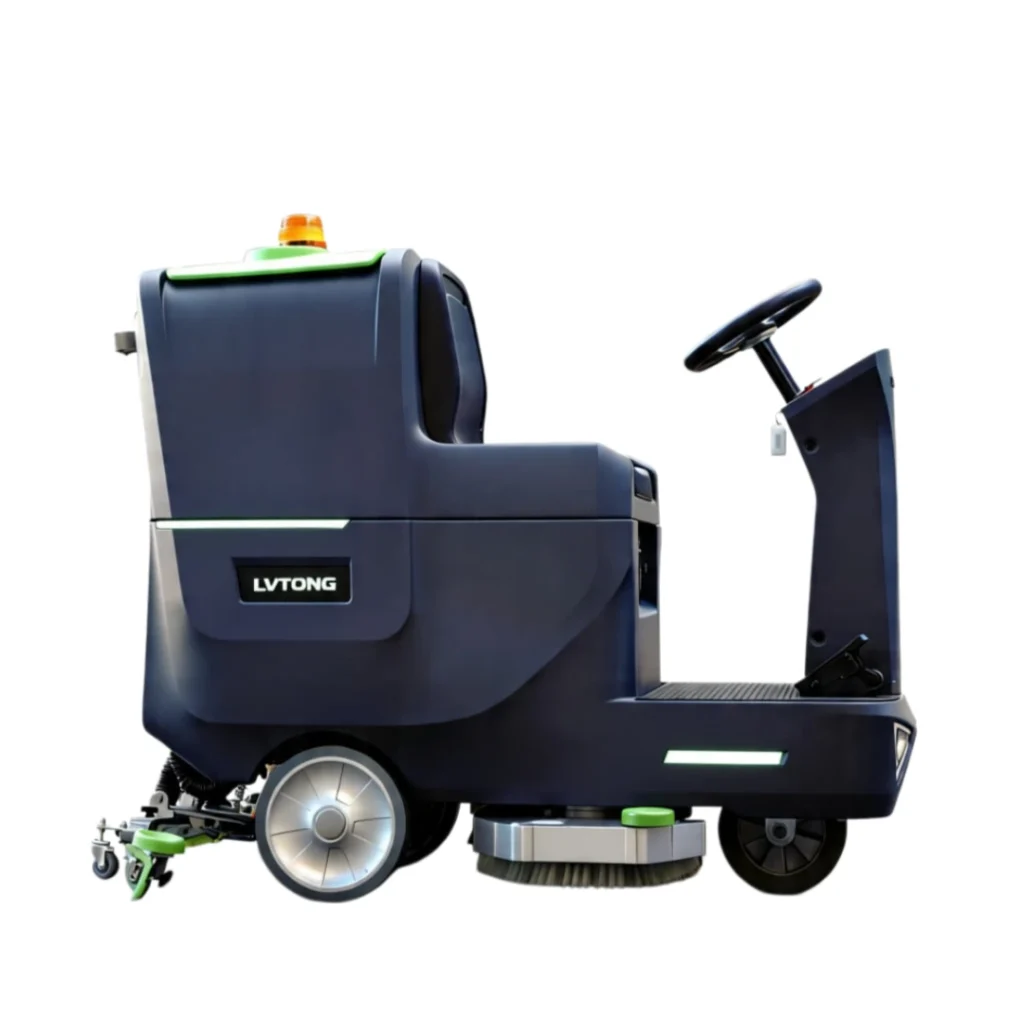
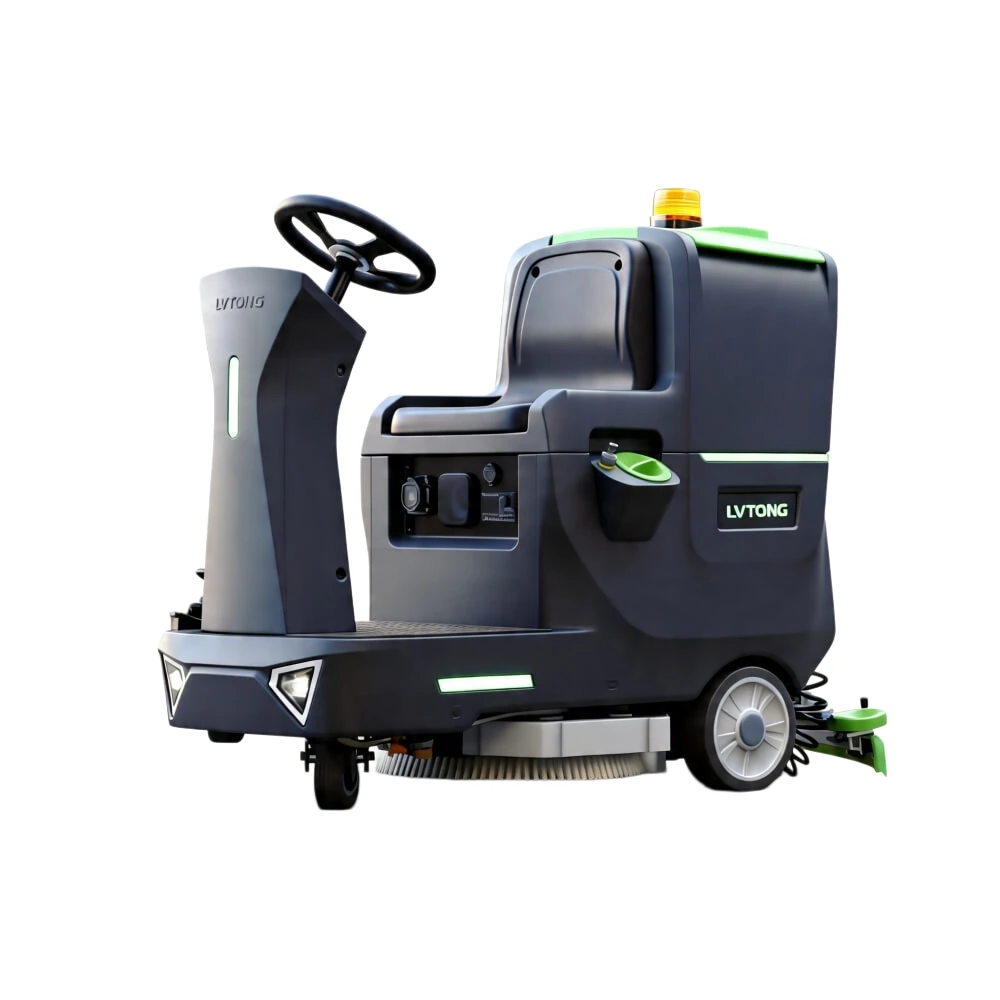
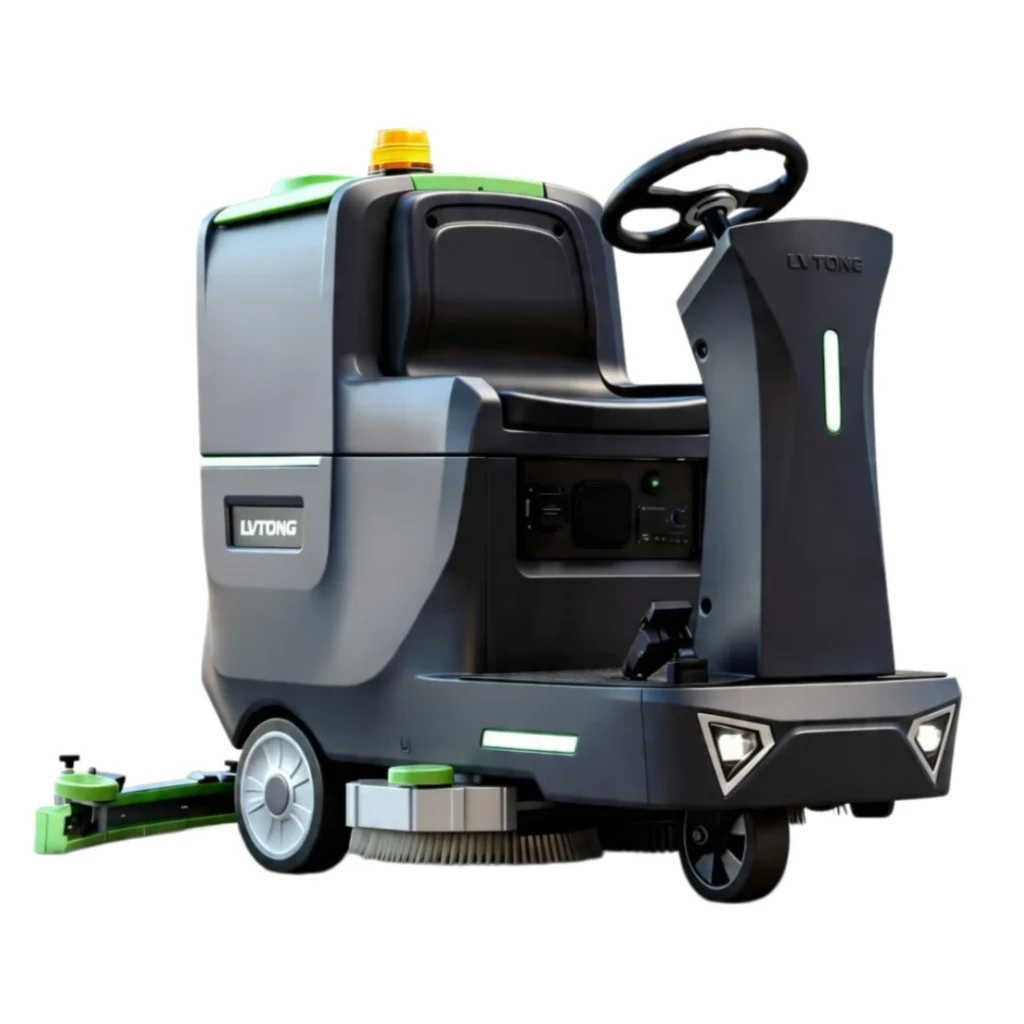
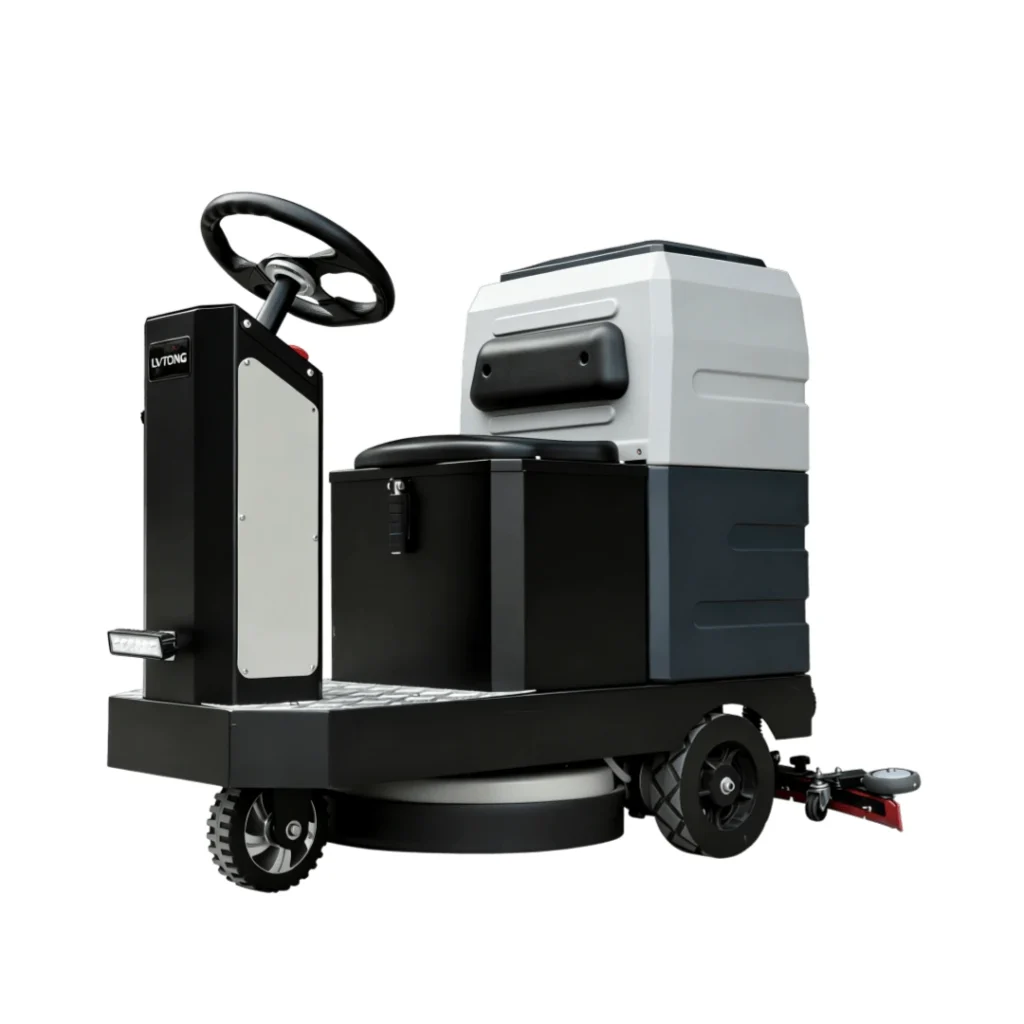
A ride-on scrubber is better for large open spaces where the operator needs to clean continuously for several hours. It is commonly used in warehouses, factories, shopping malls, airport terminals, logistics centers, and large parking areas.
Compared with walk-behind models, ride-on scrubbers usually provide a wider cleaning path, larger solution and recovery tanks, and better operator comfort for long cleaning shifts. Choose this type of machine when the floor area is large, the cleaning route is open, and the goal is to reduce labor time across wide spaces.
For very large facilities, the most important factors are cleaning width, tank capacity, battery runtime, turning radius, water recovery, and the operator’s ability to follow an efficient cleaning path without leaving missed areas.
Step 2: Prepare the Area Before Using a Floor Scrubber

Before using a floor scrubber, prepare the cleaning area first. Remove large debris, screws, packaging tape, wood chips, pallet fragments, dust piles, and other objects from the floor with a broom, dustpan, or sweeper.
This step is important because large debris can block the squeegee, damage the brush or pad, scratch the floor, or reduce water recovery performance. For large spaces, also move temporary obstacles, place wet floor signs where needed, check pedestrian routes, and divide the area into clear cleaning zones before starting the machine.
Step 3: Choose the Right Brush, Pad, and Cleaning Solution

For concrete floors, cement floors, and warehouse epoxy floors, choose a durable brush or suitable scrubbing pad based on the soil level. Heavier dirt, forklift tire marks, oil stains, and industrial dust may require stronger brush action, slower machine speed, and controlled water flow.
For tile, marble, terrazzo, vinyl, or polished commercial floors, use a softer brush or appropriate floor pad to reduce the risk of scratches. When cleaning customer-facing spaces such as shopping malls, hotels, schools, or healthcare facilities, prioritize floor protection, even water recovery, and a clean, streak-free finish.
Use a low-foam cleaning solution that is compatible with the floor material and the type of soil being removed. Oil stains, dust, tire marks, food residue, and general dirt may require different detergents. Always dilute the cleaning solution according to the supplier’s instructions. Too much foam can reduce suction performance, leave residue, affect water recovery, and increase the risk of machine problems.
Step 4: Operate the Floor Scrubber Safely and Efficiently
Adjust the Squeegee for Better Water Recovery
Before cleaning, check the squeegee angle, blade condition, and pressure setting. The squeegee should contact the floor evenly so the machine can recover dirty water effectively and leave the floor as dry as possible.
In public spaces, always consider pedestrian movement before operating the machine. Place wet floor signs around the cleaning zone, reduce speed near people, and avoid leaving water behind in entrances, aisles, checkout areas, ramps, or other high-traffic locations.
Step 5: Plan the Best Cleaning Path for Large Spaces
Use an S-Shaped Cleaning Path
For large open areas such as warehouses, factories, halls, and shopping mall corridors, use an S-shaped cleaning path. Move the machine in long, steady passes and overlap each pass slightly, usually around 10–15 cm, to avoid missed strips and unnecessary repeat cleaning.
This method helps improve coverage consistency, especially when cleaning wide floors where it is easy to lose track of finished and unfinished areas.
Clean Edges First, Then Open Areas
For large rooms, warehouses, supermarkets, and areas with shelves, clean along walls, corners, edges, and shelf lines first. After the boundary areas are cleaned, move to the open center area and follow a planned route.
This method prevents corners and edges from being ignored at the end of the job. It also helps operators manage the cleaning route more clearly in large spaces
Divide Very Large Floors into Zones
For very large spaces such as logistics centers, warehouses, factories, airport terminals, or exhibition halls, divide the floor into smaller cleaning zones. Clean one zone at a time and track progress by area.
Zone cleaning makes it easier to manage labor, battery runtime, water refilling, recovery tank draining, and quality checks. It also reduces the chance of missed areas in large facilities.
Step 6: Adjust Speed, Water Flow, and Cleaning Pressure
Adjust machine speed, water flow, and brush pressure according to the floor condition. In lightly soiled areas, use moderate speed and lower water flow to improve efficiency and reduce drying time. In heavily soiled areas, slow down the machine, increase water flow if needed, and allow more contact time between the brush, cleaning solution, and floor surface.
The goal is to balance cleaning performance, water recovery, and floor drying speed. Using too much water may leave residue or increase slip risks, while moving too fast may reduce scrubbing results.
When turning, slow down and avoid sharp movements. If the machine design requires it, lift the squeegee before making a tight turn and lower it again after the turn. This helps prevent water streaks, curved watermarks, and uneven recovery at the turning point.
For narrow aisles or obstacle-dense spaces, reduce speed and make wider, controlled turns whenever possible.
Step 7: Use Double Scrubbing for Stubborn Stains
Double scrubbing is useful for stubborn stains such as forklift tire marks, oil residue, rubber marks, and heavy industrial dirt. In the first pass, lower the brush or pad and scrub the stained area without using the water recovery function. Allow the cleaning solution to stay on the surface for 1–2 minutes so it can loosen the dirt.
In the second pass, clean the same area again with both scrubbing and water recovery turned on. This allows the machine to remove the loosened dirt and recover the dirty solution. Double scrubbing improves cleaning results in heavy-soil areas, but operators should control water use and make sure the floor is left as dry as possible after the final pass.
Step 8: Clean and Maintain the Floor Scrubber After Use
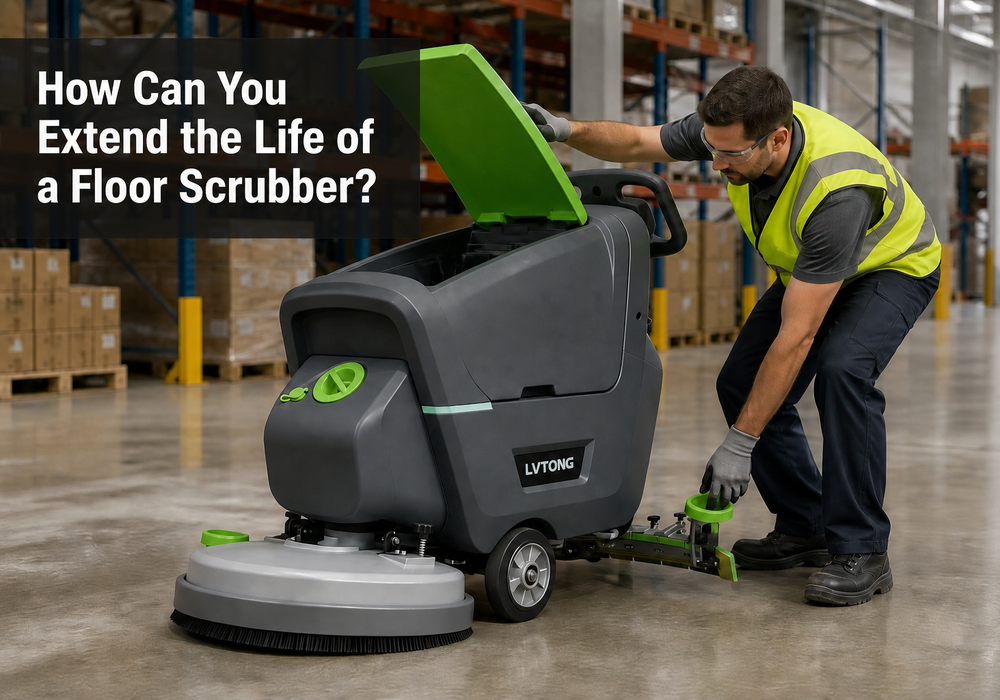
The cleaning job is not finished when the floor is clean. Post-use maintenance is essential for keeping the floor scrubber reliable, reducing odor, protecting the battery, improving water recovery, and extending machine life. Operators should clean the tanks, brushes, pads, and squeegee after each use.
Empty and Rinse the Recovery Tank
After cleaning, move the machine to an approved drain area and empty the recovery tank. Rinse the tank with clean water to remove dirty water, sediment, foam, and residue.
Do this after each use to reduce odor, bacteria growth, and buildup inside the tank. If the machine has a solution tank with leftover cleaning solution, drain and rinse it according to the machine instructions to prevent chemical buildup and blockage.
Clean the Brush, Pad, and Squeegee
Remove the brush or pad and rinse it with clean water. Check for hair, tape, thread, plastic, or debris wrapped around the brush deck. Let the brush or pad dry before the next use if required.
Wipe the squeegee blades with a damp cloth and check for cracks, wear, deformation, or debris. A worn or dirty squeegee can leave water behind, reduce drying performance, and increase slip risks. Replace damaged squeegee blades in time.
Charge and Store the Machine Correctly
After use, charge the battery according to the manufacturer’s instructions so the machine is ready for the next cleaning task. Check the charger, cable, and charging area for safety before charging.
Store the floor scrubber in a dry, well-ventilated area. Lift the brush deck and squeegee when storing the machine to prevent deformation from long-term contact with the floor. Keep the machine away from standing water, heavy dust, and areas with poor ventilation.
Conclusion
Knowing how to use a floor scrubber correctly is essential for cleaning large commercial spaces efficiently. The right process includes preparing the area, choosing the correct brush or pad, using the proper cleaning solution, adjusting the squeegee, planning an efficient cleaning path, controlling water flow, using double scrubbing for stubborn stains, and maintaining the machine after each use.
For warehouses, shopping malls, factories, supermarkets, schools, hospitals, and other large spaces, proper floor scrubber operation can reduce labor time, improve cleaning consistency, keep floors safer, and extend equipment life.
Need Help Choosing the Right Floor Scrubber for Your Facility?
If you manage a warehouse, factory, or commercial facility, choosing the right floor scrubber depends on your area size, floor type, and cleaning frequency. With its excellent performance and wide applicability, the LVTONG floor scrubber is your ideal commercial
If you manage a warehouse, factory, shopping mall, supermarket, school, hospital, hotel, airport, or other large facility, choosing the right floor scrubber depends on your floor area, floor type, cleaning frequency, operator skill, route layout, and maintenance requirements.
LVTONG provides floor scrubber solutions for different commercial and industrial cleaning needs. Our team can help you compare machine size, cleaning width, tank capacity, battery runtime, brush system, water recovery, and application requirements before choosing a model.
FAQ
How do you use a floor scrubber to clean large areas efficiently?
To clean large areas efficiently, prepare the floor first, remove large debris, choose the right brush or pad, set the proper water flow, and follow a planned cleaning path. For open spaces, use an S-shaped route with slight overlap between passes to reduce missed areas and repeated work.
What should you do before using a floor scrubber?
Before using a floor scrubber, remove large debris, check the brush or pad, inspect the squeegee, confirm the solution tank and recovery tank are ready, place wet floor signs if needed, and make sure the cleaning route is clear of obstacles.
Do you need to sweep before using a floor scrubber?
Yes. Sweeping or removing large debris before using a floor scrubber helps prevent squeegee blockage, brush damage, poor water recovery, and machine downtime. A scrubber is designed for washing and recovering dirty water, not for collecting large trash.
What is the best cleaning path for a floor scrubber in large spaces?
For large open spaces, an S-shaped cleaning path is usually effective. Each pass should overlap slightly to avoid missed strips. For areas with walls, shelves, or corners, clean the edges first and then clean the open center area.
What is double scrubbing with a floor scrubber?
Double scrubbing is a two-pass cleaning method for stubborn stains. In the first pass, scrub the floor without water recovery and let the cleaning solution loosen the dirt. In the second pass, scrub again with water recovery turned on to remove the dissolved soil.
Why is my floor scrubber leaving water behind?
A floor scrubber may leave water behind because of a worn squeegee blade, incorrect squeegee angle, blocked suction hose, dirty recovery tank, excessive foam, or moving too fast. Check the squeegee, suction system, water flow, and cleaning solution dilution first.
How do you clean a floor scrubber after use?
After use, empty and rinse the recovery tank, clean the brush or pad, wipe the squeegee blades, check for debris, rinse the solution tank if needed, charge the battery, and store the machine in a dry, ventilated area.