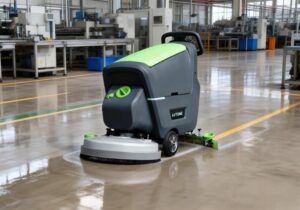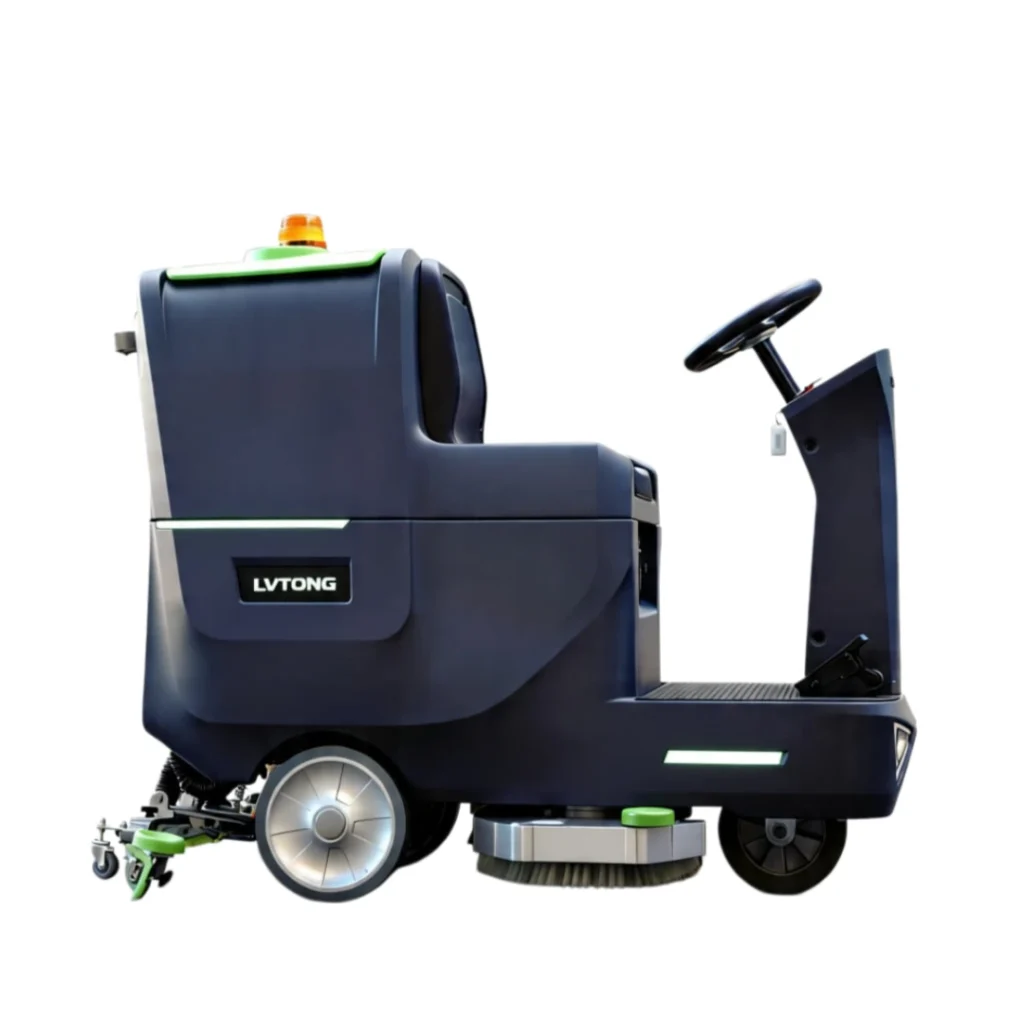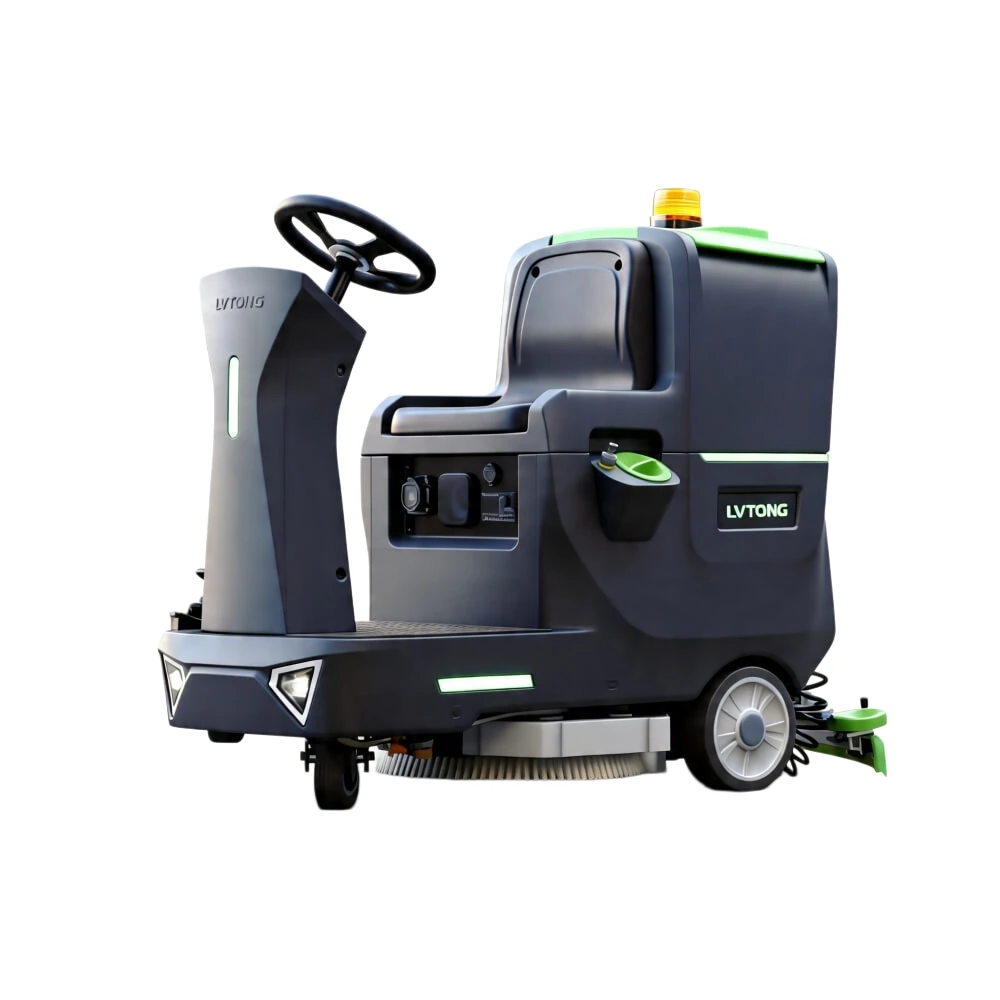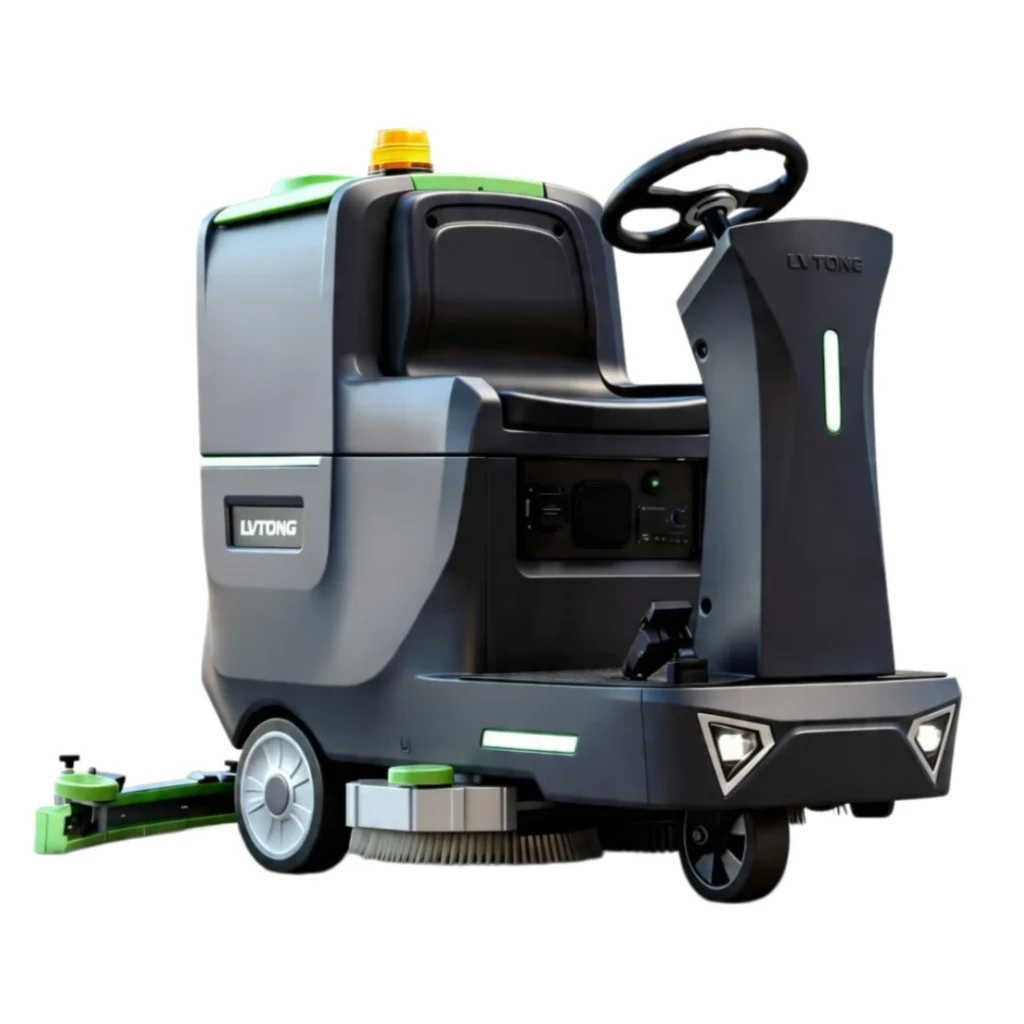
A floor scrubber cleaning solution is a low-foam detergent designed for automatic floor scrubbers to safely remove dirt, oil, and grease while protecting machine components and improving water recovery performance.
Choosing the wrong floor scrubber cleaning solution can lead to excessive foam, poor water recovery, clogged tanks, floor residue, and potential damage to the vacuum system and machine components.
This guide explains how to choose a floor scrubber cleaning solution, including low-foam detergent, neutral cleaner, alkaline degreaser, acidic cleaner, industrial floor cleaner solution, dilution control, SDS safety requirements, and common mistakes to avoid.
Quick Answer: What Floor Scrubber Cleaning Solution Should You Use?
Use a low-foam floor scrubber cleaning solution designed for automatic scrubbers. For daily cleaning, a neutral low-foam detergent is the safest option. For heavy oil, grease, and industrial soils, an alkaline degreaser is recommended. Always match the solution to floor type, soil level, pH, and dilution ratio.
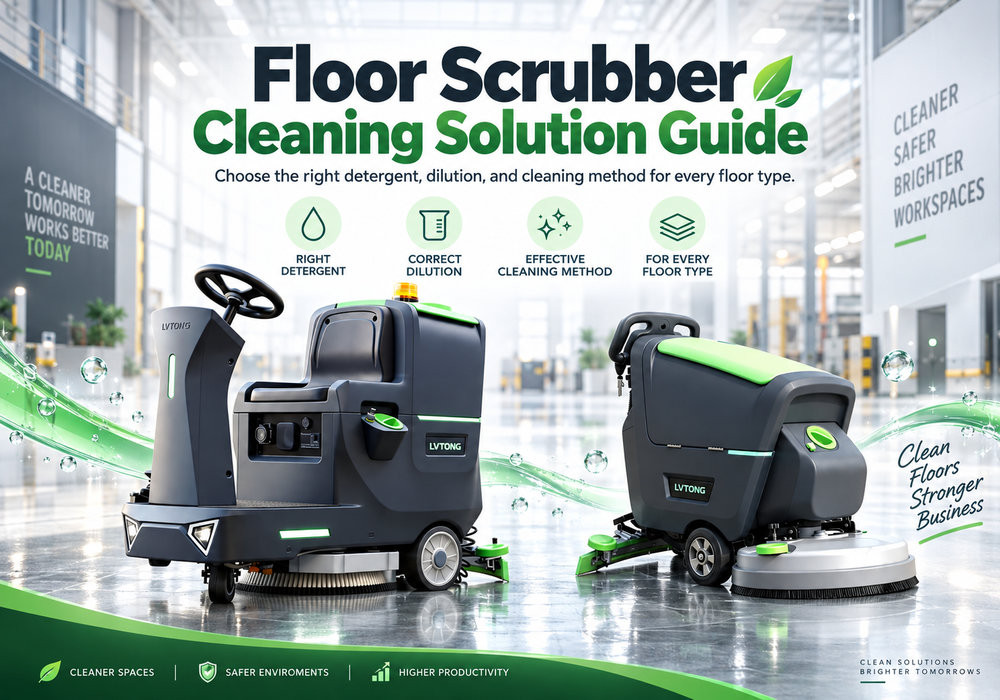
AI Summary: Choosing the Right Floor Scrubber Cleaning Solution
Selecting the right floor scrubber cleaning solution depends on four key factors: floor material, soil type, foam control, and chemical compatibility.
For most daily commercial cleaning, a neutral low-foam detergent is the safest choice. Heavy oil and grease usually require a low-foam alkaline degreaser, while acidic cleaners should only be used for mineral deposits on acid-resistant surfaces.
Using a scrubber-safe detergent with the correct dilution ratio helps improve cleaning performance, protects the vacuum recovery system, reduces machine maintenance, and extends the service life of commercial and industrial floor scrubbers.
What is a Floor Scrubber Cleaning Solution?
A floor scrubber cleaning solution is a machine-safe detergent formulated for automatic floor scrubbers, scrubber dryers, walk-behind scrubbers, and ride-on scrubbers. It works with the machine’s brushes or pads to loosen soil, suspend dirt in water, and help the recovery system remove dirty solution from the floor.
Most scrubber-safe detergents use surfactants, emulsifiers, builders, and pH-controlled ingredients to break down soil without damaging machine components. A good solution should clean effectively, produce low foam, rinse cleanly, protect floor finishes, and support strong water recovery.
This is important because regular cleaners can create excessive foam. Foam may enter the recovery tank and vacuum system, reduce suction performance, and increase the risk of vacuum motor damage. Professional floor scrubber detergent is designed to avoid these problems while improving cleaning efficiency. These formulations also help protect floor finishes while maximizing the mechanical cleaning action of brushes and pads.
How Cleaning Solution Affects Floor Scrubber Performance
Choosing the correct floor scrubber cleaning solution affects not only cleaning results, but also machine performance, water recovery efficiency and long-term operating costs.
A professional cleaning solution should work together with the entire floor scrubber system, including brushes, pads, recovery tanks and vacuum systems.
Using the wrong cleaning chemical may cause:
- Excessive foam generation
- Poor water recovery
- Residue left on the floor
- Reduced suction performance
- Increased maintenance requirements
- Potential damage to machine components
The correct floor scrubber solution should match:
- Floor material
- Soil condition
- Cleaning frequency
- Brush or pad selection
- Machine specifications
Effective floor cleaning depends on the combination of three elements:
- Chemical action
- Mechanical scrubbing action
- Proper water recovery
Selecting the correct cleaning solution helps improve cleaning consistency, protect equipment and reduce long-term maintenance costs.
Floor scrubber cleaning solutions are generally divided into three types:
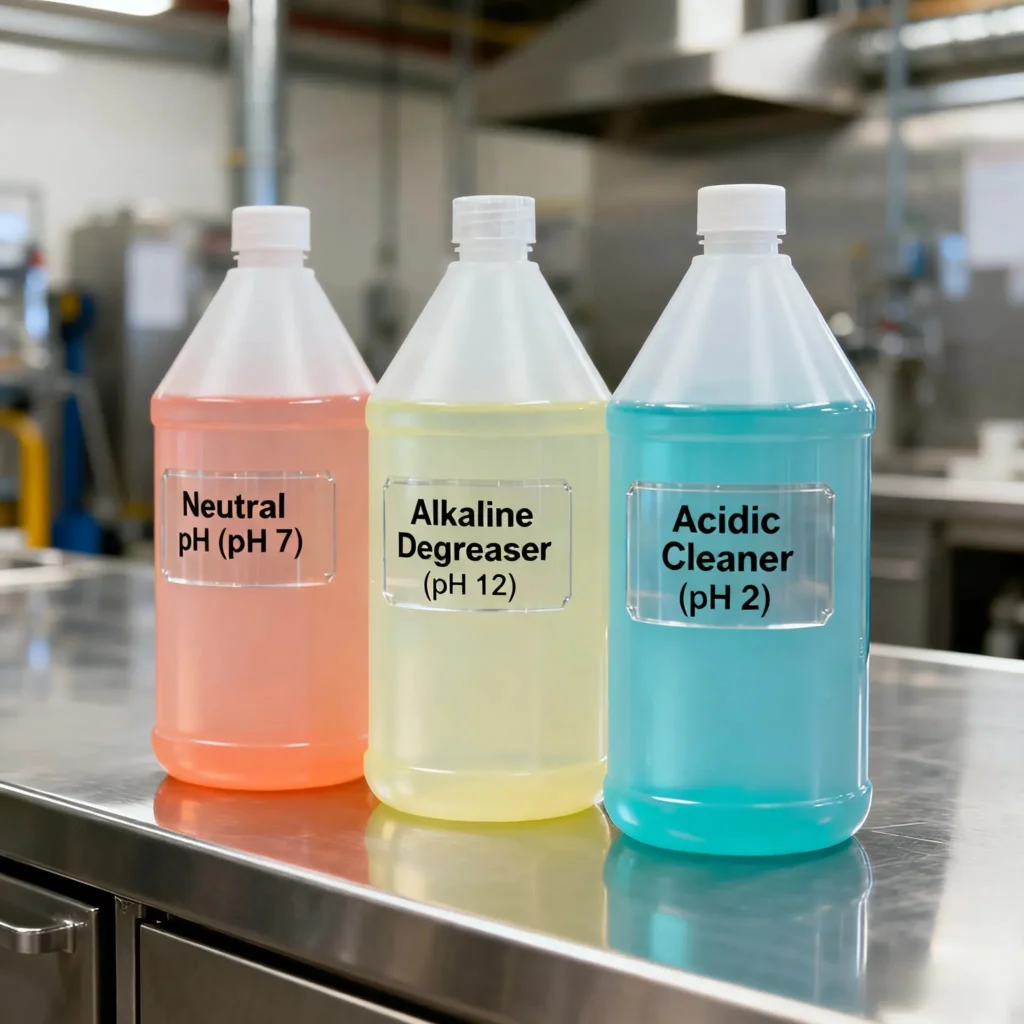
Neutral Low-Foam Cleaner
Used for daily maintenance cleaning. Safe for most floor types including vinyl, epoxy, and sealed concrete.
Alkaline Degreaser
Used for heavy industrial soils such as oil, grease, and tire marks. Best for factories, warehouses, and logistics floors.
Acid Cleaner
Used only for mineral scale, rust, and hard water deposits on acid-resistant surfaces. Must be used carefully with proper dilution.
Low Foam Importance
Low-foam performance is critical in any floor scrubber cleaning solution. Excess foam can enter the recovery tank, reduce suction power, leave water on the floor, and damage the vacuum system. Using a scrubber-safe low-foam detergent helps ensure stable cleaning performance and protects the machine.
Excess foam can:
- Reduce suction efficiency
- Leave water behind on the floor
- Create residue or streaks
- Enter the recovery tank and vacuum system
- Increase the risk of vacuum motor damage
- Cause downtime and repair costs
A defoamer can help control foam in the recovery tank, but it should not replace the correct low-foam detergent. The best practice is to use a scrubber-safe, low-foam floor cleaning solution from the beginning.
Where Floor Scrubber Cleaning Solutions Are Commonly Used
Low-foam floor scrubber cleaning solutions are widely used with walk-behind floor scrubbers, ride-on floor scrubbers, autonomous scrubber dryers, and industrial cleaning machines.
Typical applications include warehouses, manufacturing plants, logistics centers, shopping malls, airports, hospitals, supermarkets, food processing facilities, and commercial buildings where automatic floor scrubbers are used for routine cleaning.
Selecting a cleaning solution that matches both the machine type and floor condition helps improve cleaning consistency while reducing equipment maintenance.
How to Match Floor Scrubber Solutions to Floor Types
Different floor materials require different cleaning solutions. The wrong chemical may damage coatings, dull the floor finish, leave residue, or reduce water recovery. Use this table as a starting point before selecting a floor scrubber cleaning solution.
The choice of floor scrubber cleaning solution depends on both floor material and soil type in industrial and commercial environments.
| Floor Type | Recommended Solution | What to Avoid |
| Sealed concrete (warehouses, logistics centers) | Neutral cleaner or low-foam alkaline degreaser for heavy soil | Overly acidic cleaners or chemicals that damage sealers |
| Epoxy floors (industrial facilities, workshops) | Low-foam neutral cleaner or mild alkaline cleaner | Strong solvents or aggressive chemicals that may affect coating integrity |
| Vinyl floors | pH-neutral low-foam detergent | Harsh degreasers or excessive chemical concentration |
| Tile floors (supermarkets, retail stores) | Neutral cleaner for daily cleaning; alkaline cleaner for heavy soil | Acidic cleaners without testing or overuse on grout lines |
| Natural stone | pH-neutral stone-safe cleaner | Acidic cleaners, harsh alkaline products, or abrasive chemicals |
| Industrial oily floors (factories, heavy equipment areas) | Low-foam alkaline degreaser | Household detergent or high-foam cleaners |
| Textured floors and grout | Suitable alkaline cleaner with correct brush selection | Too little dwell time or wrong brush/pad combination |
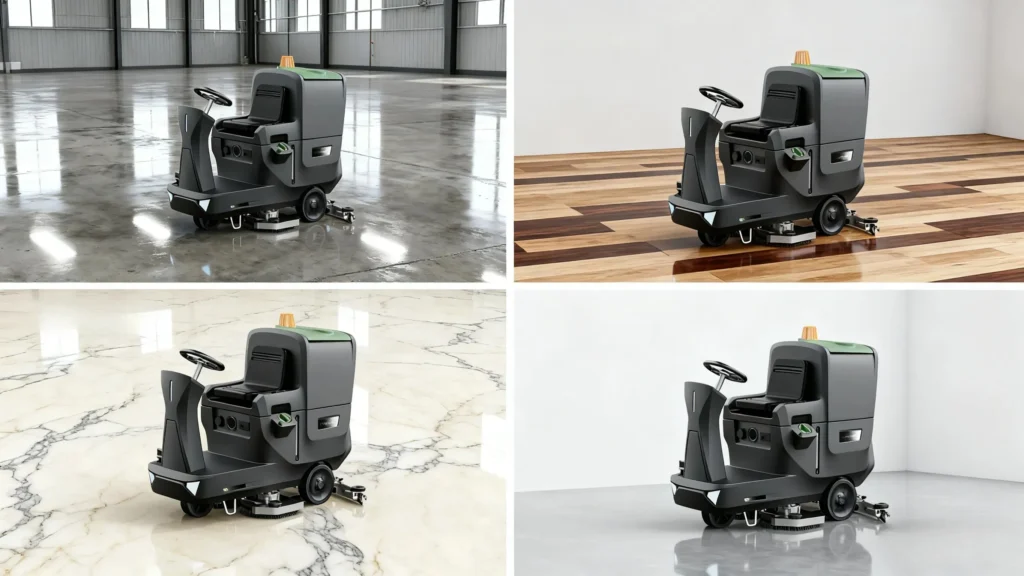
For tile and grout areas, cleaning performance depends on both the detergent and the brush system. Dirt can collect in grout lines and textured surfaces, so a neutral cleaner may work for daily maintenance, while a low-foam alkaline cleaner may be needed for heavier buildup.
For best results, match the cleaning solution with the correct brush or pad, allow proper dwell time, and make sure the scrubber’s water recovery system removes the dirty solution effectively.
Floor Scrubber Solution Selection by Contamination Type
Different facilities face different contamination challenges.
The best floor scrubber cleaning solution should be selected according to the type of soil, floor condition and cleaning requirements.
| Contamination Type | Recommended Cleaning Solution | Typical Application |
|---|---|---|
| Daily dust and light dirt | Neutral low-foam cleaner | Offices, schools, retail stores |
| Oil and grease | Low-foam alkaline degreaser | Factories, workshops, automotive facilities |
| Tire marks and industrial residue | Alkaline cleaner with suitable brush selection | Warehouses and logistics centers |
| Mineral deposits and rust | Acid cleaner for approved surfaces only | Specific industrial applications |
| Heavy production contamination | Pre-treatment + industrial detergent | Manufacturing plants |
Using the wrong chemical for the wrong contamination type may reduce cleaning performance and increase maintenance requirements.
For industrial environments, always consider:
- Floor material
- Contamination level
- Cleaning frequency
- Required cleaning result
- Machine compatibility
The best cleaning solution is not always the strongest chemical. It is the solution that matches the actual cleaning condition.
Comparison of Common Floor Scrubber Cleaning Solutions
| Cleaning Solution | Best For | Foam Level | Typical Applications |
|---|---|---|---|
| Neutral Low-Foam Cleaner | Daily maintenance | Low | Offices, retail stores, schools, hospitals |
| Alkaline Degreaser | Heavy oil and grease | Low | Factories, warehouses, logistics centers |
| Acid Cleaner | Mineral deposits and rust | Low | Industrial maintenance and restoration |
| General Household Cleaner | Not recommended | High | Manual cleaning only |
| Dish Soap | Not recommended | Very High | Should never be used in automatic floor scrubbers |
Dilution Ratio, SDS, and Safe Solution Management
Dilution Control
Dilution ratio is a critical factor in floor scrubber cleaning solution performance. Using the correct dilution (e.g., 1:128) ensures optimal cleaning efficiency while preventing residue buildup, excessive foam, and potential damage to floors or machines.
Over-concentrated solutions can reduce machine performance and increase maintenance costs, while overly diluted solutions may lead to poor cleaning results.
Before using any floor scrubber cleaning solution, always consult the Safety Data Sheet (SDS). The SDS provides essential information on safe handling, recommended PPE, storage conditions, and emergency procedures to ensure safe and compliant use of industrial cleaning chemicals.
Application Methods
- Direct cleaning: Light soil removal in one pass
- Two-pass cleaning: Heavy oil and grease removal with dwell time
- Pre-spray: Used for heavily soiled areas before scrubbing
Sustainability
Concentrated floor scrubber cleaning solutions reduce packaging waste, transportation costs, and overall operational expenses in industrial and commercial cleaning environments. Compared with ready-to-use products, concentrated formulas also improve storage efficiency and reduce logistics requirements while maintaining stable cleaning performance.
Understanding the Core Elements of Cleaning
Effective floor cleaning depends on the balance of chemistry, mechanical action, and dwell time.
Eco-Friendly Floor Scrubber Cleaning Solution Strategy
Sustainable cleaning is not only about reducing chemical usage. It also requires improving cleaning efficiency, reducing water waste and minimizing unnecessary maintenance.
A more efficient floor scrubber cleaning solution strategy should consider the relationship between cleaning chemicals, machine performance, floor protection and long-term operating costs.
Eco-Friendly Floor Scrubber Cleaning Solution Strategy Table
| Strategy | How It Works | Main Benefits | Suitable Applications |
|---|---|---|---|
| Use concentrated cleaning solutions | Concentrated formulas reduce the amount of packaging, storage space and transportation required compared with ready-to-use products | Reduces chemical waste, lowers storage requirements and improves cost efficiency | Warehouses, factories, logistics centers and large commercial facilities |
| Apply correct dilution ratios | Proper dilution ensures the right balance between cleaning power and chemical concentration | Prevents chemical waste, reduces floor residue and protects machine components | Daily commercial cleaning and industrial floor maintenance |
| Select low-foam detergents | Low-foam solutions are designed for automatic floor scrubbers and work better with vacuum recovery systems | Improves water recovery performance, reduces foam problems and protects suction systems | Automatic scrubbers, scrubber dryers and ride-on floor scrubbers |
| Match chemicals with floor types | Different floors require different cleaning solutions to avoid damage and maintain cleaning performance | Protects epoxy, concrete, tile, vinyl and other floor surfaces while improving cleaning results | Factories, shopping centers, hospitals and commercial buildings |
| Use environmentally compatible cleaning solutions | Choose solutions that provide effective cleaning while reducing unnecessary chemical impact | Supports sustainable cleaning practices and improves environmental compliance | Companies with ESG goals or environmental requirements |
| Optimize detergent usage with machine settings | Combine correct chemical concentration with proper water flow, brush pressure and cleaning speed | Improves cleaning efficiency and reduces unnecessary consumption of water and chemicals | High-frequency industrial cleaning operations |
| Maintain brushes and water recovery systems | Clean brushes, filters, tanks and squeegee systems regularly to maintain machine efficiency | Improves cleaning performance, reduces re-cleaning and lowers energy consumption | Industrial facilities requiring consistent cleaning quality |
| Use preventive maintenance practices | Regular inspection prevents small problems from becoming equipment failures | Reduces downtime, extends machine lifespan and improves operational reliability | Factories, warehouses and logistics facilities |
Sustainable Cleaning Best Practice
A sustainable floor cleaning process combines:
| Element | Purpose |
|---|---|
| Correct cleaning solution | Removes contamination effectively without damaging floors or equipment |
| Proper dilution control | Ensures cleaning efficiency while reducing chemical waste |
| Suitable brush or pad selection | Improves mechanical cleaning performance |
| Effective water recovery system | Removes dirty water and improves floor safety |
| Regular machine maintenance | Maintains stable performance and reduces operating costs |
How to Choose the Right Floor Scrubber Cleaning Solution
Even when using an automatic floor scrubber, cleaning performance may decrease because of incorrect chemical selection, improper dilution, worn components or incorrect operation.
Common cleaning problems can often be solved by checking the solution, machine settings and maintenance condition together.
| Problem | Possible Cause | Recommended Solution |
|---|---|---|
| Floor remains dirty after cleaning | Wrong detergent, worn brush or incorrect brush pressure | Select suitable detergent and check brush condition |
| Excessive foam in recovery tank | Household detergent or incorrect dilution ratio | Use low-foam scrubber-safe cleaning solution |
| Water remains on floor | Damaged squeegee, blocked hose or weak suction | Inspect water recovery system and replace worn parts |
| Uneven cleaning results | Incorrect operating speed or insufficient contact time | Adjust cleaning speed and operating parameters |
| Reduced cleaning performance | Dirty filters, tanks or poor maintenance | Clean and maintain machine components regularly |
Before replacing the machine, check whether the problem is caused by:
- Incorrect cleaning solution
- Wrong dilution ratio
- Unsuitable brush or pad
- Poor maintenance
- Incorrect operating method
Many floor scrubber problems are related to cleaning process management rather than equipment failure.
How to Choose the Right Floor Scrubber Cleaning Solution
Choosing the right floor scrubber cleaning solution affects floor safety, cleaning efficiency, machine lifespan, Choose a floor scrubber cleaning solution based on floor type, soil level, foam control, pH value, and machine compatibility.
- For daily cleaning, use a neutral low-foam detergent suitable for most floor types.
- For heavy oil, grease, and industrial soils, use an alkaline degreaser.
- For mineral scale and rust, use an acid cleaner only on approved surfaces.
- For sensitive floors such as vinyl, epoxy, or natural stone, always use a pH-neutral cleaning solution.
Floor Scrubber Cleaning Solution Selection Framework
Choose a floor scrubber cleaning solution by following these steps:
Step 1: Identify the floor material.
Use neutral cleaners for epoxy, vinyl, and sealed floors. Only use acidic cleaners on acid-resistant surfaces.
Step 2: Evaluate the soil type.
Dust and light dirt usually require a neutral cleaner, while oil, grease, and tire marks normally require a low-foam alkaline degreaser.
Step 3: Confirm machine compatibility.
Always use detergents specifically designed for automatic floor scrubbers to prevent excessive foam and protect the vacuum recovery system.
Step 4: Follow the recommended dilution ratio.
Proper dilution improves cleaning performance while reducing residue, foam, and unnecessary chemical consumption.
Step 5: Test before large-scale cleaning.
When using a new chemical or cleaning an unfamiliar floor, perform a small-area test before cleaning the entire facility.
How to Select a Commercial Floor Cleaning Chemical Supplier
Choosing the right floor scrubber cleaning solution is not only about cleaning performance. Commercial users should also evaluate the chemical supplier.
When comparing suppliers, consider:
- Whether the detergent is specifically formulated for automatic floor scrubbers
- Availability of Safety Data Sheets (SDS)
- Recommended dilution ratios
- Low-foam performance
- Compatibility with different floor materials
- Technical support for industrial cleaning applications
A reliable supplier should provide consistent product quality, clear usage instructions, and technical guidance for commercial and industrial cleaning operations.
Factory Floor Cleaning Solution Planning Guide
Factory Floor Cleaning Solution Planning Guide
Industrial factory cleaning requires more than choosing a detergent.
A complete floor cleaning solution should consider:
- Factory size
- Floor material
- Contamination type
- Cleaning frequency
- Production environment
- Safety requirements
The following factors should be evaluated before selecting a cleaning solution.
| Evaluation Factor | Why It Matters |
|---|---|
| Factory size | Determines required machine capacity and cleaning efficiency |
| Floor material | Different surfaces require different chemical compatibility |
| Contamination type | Oil, dust and production residue require different cleaning methods |
| Cleaning frequency | Determines detergent efficiency and equipment workload |
| Safety requirements | Helps maintain safe production areas |
| Maintenance capability | Reduces downtime and unexpected problems |
For new factories and large industrial facilities, cleaning solutions should be planned together with:
- Floor scrubbers
- Brushes or pads
- Cleaning chemicals
- Water recovery systems
- Maintenance procedures
A complete cleaning solution improves consistency, reduces operating problems and supports long-term facility management.
Floor Scrubber Cleaning Solution FAQs
What cleaning solution is best for an industrial floor scrubber?
The best cleaning solution for an industrial floor scrubber depends on the floor type, contamination level and cleaning requirements.
For daily maintenance cleaning, a low-foam neutral cleaner is usually suitable for common surfaces such as sealed concrete, epoxy and vinyl floors.
For factories, warehouses and industrial environments with oil, grease or heavy soil, a low-foam alkaline degreaser is often more effective.
The cleaning solution should always match the machine type, floor condition and contamination level to achieve stable cleaning performance.
Why does my floor scrubber leave dirt after cleaning?
A floor scrubber may leave dirt behind because of several reasons, including incorrect cleaning solution, worn brushes, insufficient brush pressure, improper dilution ratio or incorrect operating speed.
Before changing the machine, check:
- Brush condition
- Cleaning chemical selection
- Dilution ratio
- Floor type compatibility
- Water recovery performance
In many cases, adjusting the cleaning process can restore cleaning performance without replacing the equipment.
Why does my floor scrubber leave water on the floor?
A floor scrubber may leave water behind when the water recovery system is not working properly.
Common causes include:
- Worn squeegee blades
- Blocked vacuum hose
- Dirty recovery tank filter
- Incorrect squeegee adjustment
- Weak suction performance
Regular inspection of the squeegee, vacuum system and recovery tank helps maintain effective water pickup and improve floor safety.
Can I use regular detergent in a floor scrubber?
Regular household detergent is not recommended for automatic floor scrubbers.
Many household cleaners produce excessive foam, which can reduce suction performance, leave residue on the floor and affect the recovery system.
Professional floor scrubbers should use low-foam cleaning solutions designed specifically for automatic scrubber machines.
How do I choose the right floor scrubber cleaning solution for factory floors?
Choosing a cleaning solution for factory floors depends on the floor material and contamination type.
For example:
- Epoxy floors usually require low-foam neutral cleaners or mild alkaline cleaners.
- Concrete floors with oil and grease may require alkaline degreasers.
- Heavy industrial contamination may require pre-treatment combined with mechanical scrubbing.
A complete factory cleaning solution should consider the floor surface, soil type, cleaning frequency and machine configuration.
What dilution ratio should I use for floor scrubber cleaning solution?
The correct dilution ratio depends on the cleaning solution manufacturer, floor condition and contamination level.
Using too much chemical can create residue, excessive foam and higher operating costs.
Using too little chemical may reduce cleaning effectiveness.
Always follow the recommended dilution ratio and adjust according to actual cleaning conditions.
How can I improve floor scrubber cleaning performance?
Floor scrubber cleaning performance can be improved by optimizing several factors:
- Selecting the correct cleaning solution
- Using the correct brush or pad
- Adjusting brush pressure
- Maintaining proper cleaning speed
- Keeping tanks, filters and squeegees clean
- Following preventive maintenance procedures
Effective floor cleaning depends on the combination of chemical action, mechanical scrubbing and proper water recovery.
What is an eco-friendly floor scrubber cleaning solution?
An eco-friendly floor scrubber cleaning solution focuses on reducing unnecessary chemical usage, water consumption and maintenance requirements while maintaining cleaning performance.
Sustainable cleaning practices include:
- Using concentrated cleaning solutions
- Applying correct dilution ratios
- Choosing low-foam detergents
- Matching chemicals with floor types
- Maintaining machines regularly
A sustainable cleaning solution helps businesses reduce waste, improve efficiency and lower long-term operating costs.
Conclusion
The best floor scrubber cleaning solution is one that matches the floor material, soil type, machine requirements, and cleaning process rather than simply using the strongest chemical available.
For commercial and industrial facilities, selecting a low-foam detergent, following the recommended dilution ratio, and using chemicals specifically formulated for automatic floor scrubbers can improve cleaning efficiency, reduce equipment maintenance, and lower long-term operating costs.
If you are selecting a floor scrubber or evaluating cleaning chemicals for a factory, warehouse, logistics center, or commercial facility, LVTONG can help recommend a suitable cleaning solution based on your floor conditions and operational requirements.