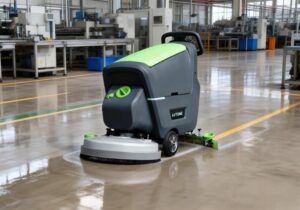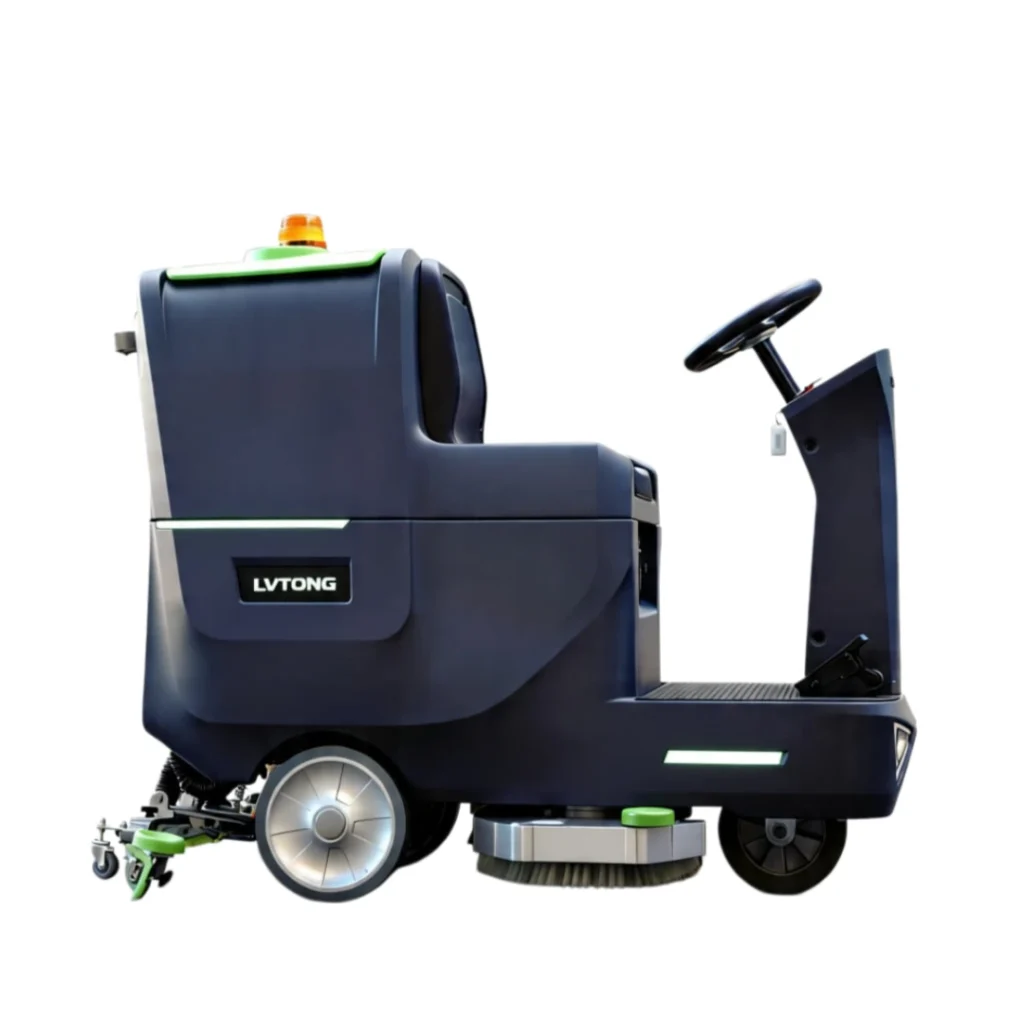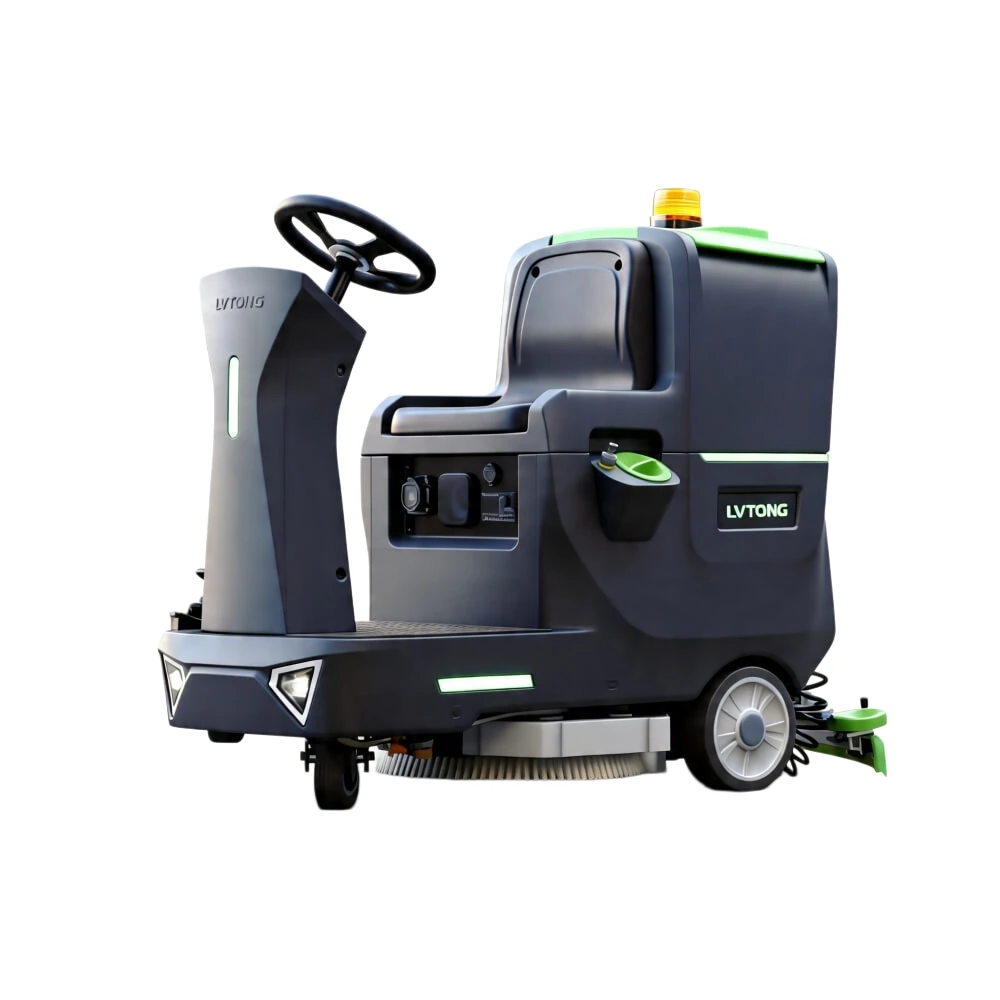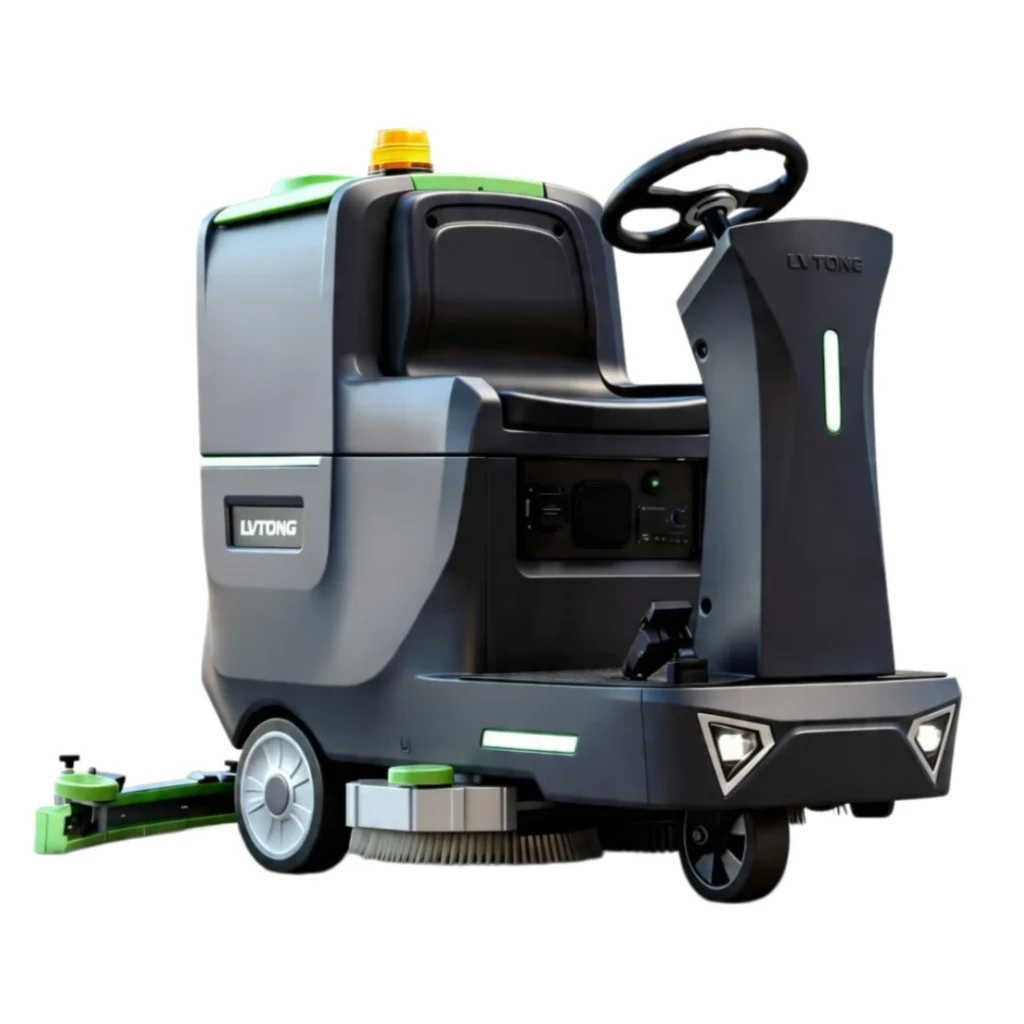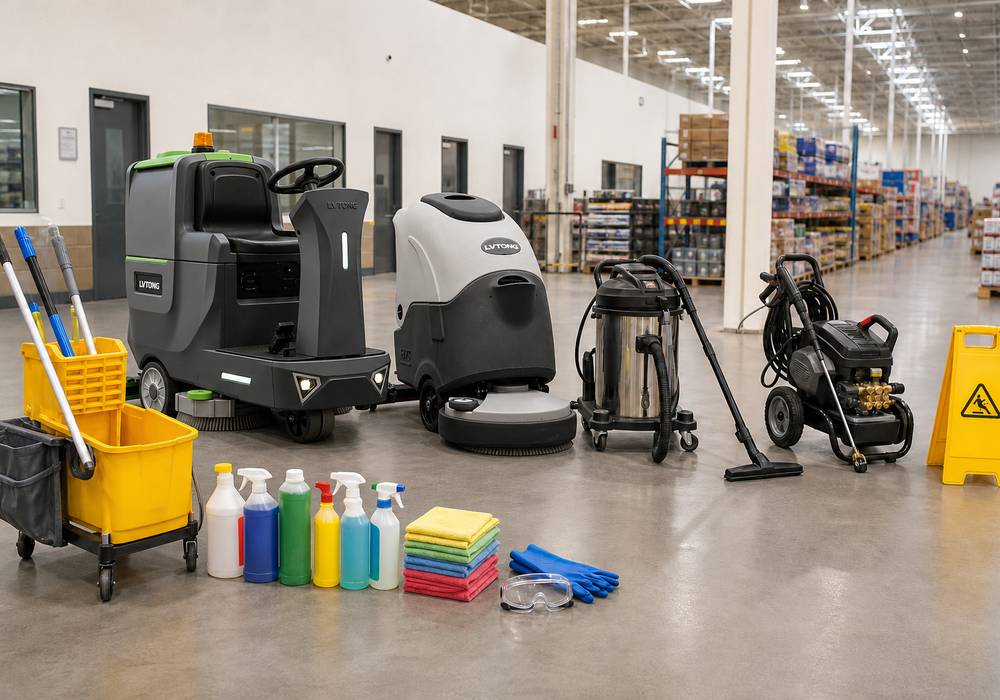
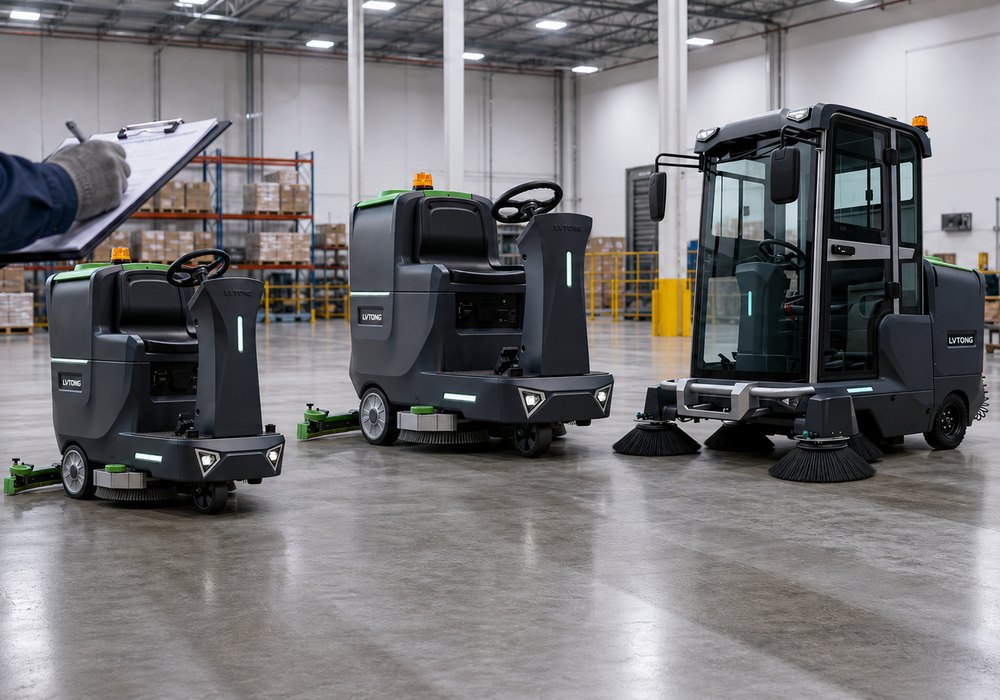
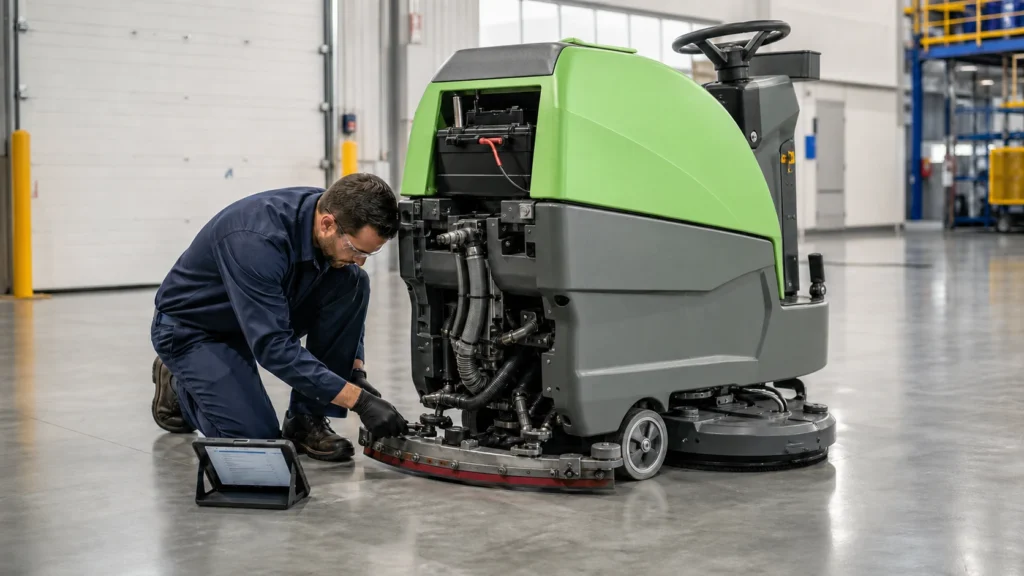
يعتمد اختيار آلة تنظيف أرضيات المستودعات المناسبة على حجم المنشأة، وعرض الممرات، ونوع الأرضية، ومستوى الأوساخ، وتكرار التنظيف، ومعدل التغطية العملي. قد يحتاج المستودع الصغير ذو الممرات الضيقة إلى آلة تنظيف أرضية يدوية صغيرة الحجم، بينما يحتاج مركز التوزيع الكبير أو أرضية المستودع المفتوحة عادةً إلى آلة تنظيف أرضية آلية لزيادة الإنتاجية.
لا ينبغي لآلة تنظيف أرضيات المستودعات الجيدة أن تنظف الأرضية فحسب، بل يجب أن تقلل أيضًا من إجهاد المشغل، وتحسن استعادة المياه، وتتحكم في وقت التنظيف، وتخفض إجمالي تكلفة التشغيل على مدار عمر خدمة الآلة.
يشرح هذا الدليل كيفية اختيار آلة تنظيف أرضيات المستودعات بناءً على حجم المستودع، وعرض الممرات، ونوع الأرضية، ومستوى الأوساخ، ونظام الفرش، وسعة الخزان، ومعدل التغطية، والتكلفة الإجمالية للملكية. كما يقارن بين آلات تنظيف أرضيات المستودعات اليدوية والآلية، مما يُمكّن مديري المرافق من اتخاذ قرار شراء أكثر فعالية.
إجابة سريعة
ينبغي اختيار آلة تنظيف أرضيات المستودع بناءً على حجم المنشأة، وعرض الممرات، ونوع الأرضية، ومستوى الأوساخ، ومعدل التغطية العملي. تُعدّ آلات التنظيف اليدوية أفضل للمستودعات الصغيرة والممرات الضيقة، بينما تُعدّ آلات التنظيف الآلية أكثر كفاءة للمساحات المفتوحة الكبيرة التي تزيد مساحتها عن 20,000 قدم مربع.
ما هي آلة تنظيف أرضيات المستودعات؟
آلة تنظيف أرضيات المستودعات هي آلة مصممة لغسل وتجفيف أرضيات المستودعات باستخدام فرش أو وسادات، وماء، ومنظف، ونظام استعادة. تُستخدم عادةً لإزالة آثار إطارات الرافعات الشوكية، والغبار، والأوساخ، والانسكابات، والأوساخ اللزجة من الخرسانة، والإيبوكسي، وغيرها من أسطح الأرضيات الصناعية.
على عكس معدات الكنس الجاف، تُستخدم آلة تنظيف أرضيات المستودعات عندما تحتاج الأرضية إلى تنظيف رطب، وضغط تنظيف عالٍ، واستعادة مياه الصرف. وهذا يجعلها مفيدة للمنشآت التي تحتاج إلى أرضيات أنظف وأكثر جفافًا وأمانًا أثناء العمليات اليومية.
كيفية اختيار آلة تنظيف أرضيات المستودع حسب الحجم وعرض الممر ونوع الأرضية
العامل الأول هو حجم المستودع. عادةً ما تكون المستودعات التي تتراوح مساحتها بين 5000 و20000 قدم مربع مناسبةً لآلات تنظيف الأرضيات اليدوية، نظرًا لمرونتها في الممرات الضيقة والمساحات الصغيرة. أما المستودعات التي تزيد مساحتها عن 20000 قدم مربع، فعادةً ما تستفيد أكثر من آلات تنظيف الأرضيات الآلية، لأنها توفر معدلات تغطية عملية أعلى، وخزانات أكبر، وإجهادًا أقل للمشغل.
يُعدّ عرض الممرّ عاملاً بالغ الأهمية. فالممرّات الضيقة، ومناطق التخزين المزدحمة، والمناطق المحيطة، تتطلّب آلات صغيرة الحجم ذات نصف قطر دوران صغير. أما المساحات المفتوحة الواسعة، ومناطق الشحن، ومراكز التوزيع الكبيرة، فتتطلّب مسارات تنظيف أوسع وخزانات محاليل وخزانات استرجاع أكبر.
اختر حسب نوع أرضية المستودع ومستوى المخلفات
| حالة أرضية المستودع | نوع الفرشاة الموصى به | لماذا ينجح؟ |
|---|---|---|
| أرضيات خرسانية ملساء | آلة تنظيف أرضيات المستودعات القرصية | ضغط فرشاة أعلى للأسطح المستوية |
| أرضيات الإيبوكسي | فرشاة تنظيف قرصية مزودة بوسادة مناسبة أو فرشاة ناعمة | ينظف دون إتلاف الأسطح بشكل مفرط |
| أرضيات مستودعات مليئة بالحطام | فرشاة تنظيف أسطوانية | يزيل الحطام الصغير قبل التنظيف |
| الخرسانة الخشنة أو غير المستوية | آلة تنظيف الأقراص المزودة بفرشاة خشنة أو أداة تثبيت الوسادة المرنة | تلامس أفضل مع الأسطح غير المستوية |
| ممرات المستودع الضيقة | آلة تنظيف الأرضيات التي تُدفع باليد أو آلة تنظيف الأرضيات المدمجة | سهولة أكبر في الانعطاف وإمكانية وصول أفضل |
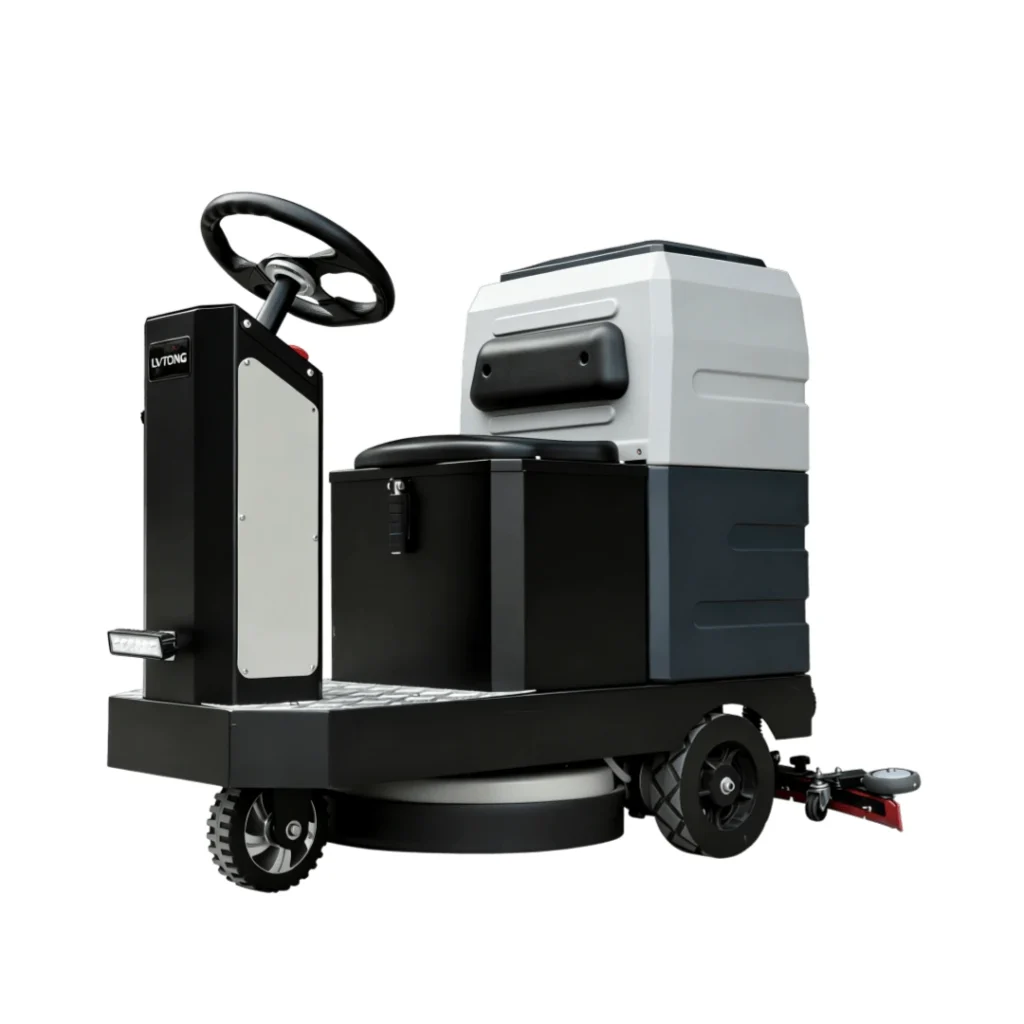
| أرضيات مستودعات مفتوحة واسعة | آلة تنظيف أرضيات المستودعات التي يمكن ركوبها | معدل تغطية أعلى وإجهاد أقل للمشغل |
ثلاثة عوامل تحدد كفاءة آلة تنظيف أرضيات المستودعات
ينبغي تقييم آلة تنظيف أرضيات المستودعات بناءً على ثلاثة عوامل عملية:
- معدل التغطية العملي: المساحة الفعلية التي يتم تنظيفها في الساعة بعد المنعطفات والتداخلات وإعادة تعبئة الخزانات والعوائق.
- سهولة المناورة والوصول: قدرة الآلة على تنظيف الممرات الضيقة والمناطق المحيطة ومناطق التحميل وتصميمات المستودعات المزدحمة.
- التكلفة الإجمالية للملكية: التكلفة الكاملة للآلة، بما في ذلك سعر الشراء، والعمالة، والصيانة، والمواد الاستهلاكية، وعمر الخدمة.
آلة تنظيف أرضيات المستودعات التي تُدفع باليد مقابل آلة التنظيف التي تُركب عليها: أيهما يجب أن تختار؟
بالنسبة للمستودعات الصغيرة والممرات الضيقة ومناطق التخزين المزدحمة، عادةً ما تكون آلات تنظيف الأرضيات اليدوية أسهل في المناورة. أما بالنسبة للمستودعات الكبيرة ومراكز التوزيع والمساحات المفتوحة الواسعة، فإن آلات تنظيف الأرضيات الآلية توفر عادةً إنتاجية أعلى وإجهادًا أقل للمشغل.
للممرات الضيقة، ومناطق التخزين المدمجة، وتصميمات المستودعات المزدحمة،, آلات تنظيف أرضيات المستودعات التي تُدفع يدويًا عادة ما تكون أسهل في المناورة وأكثر عملية لتنظيف الأرضيات اليومي.
| الميزة | آلة تنظيف أرضيات المستودعات التي تُدفع باليد | آلة تنظيف أرضيات المستودعات ذاتية القيادة |
|---|---|---|
| عرض التنظيف | 17 – 32 بوصة (43-81 سم) | 28 – 48 بوصة (71-122 سم) |
| معدل التغطية النظرية | 18000 – 35000 قدم مربع/ساعة | 30,000 – 96,800 قدم مربع/ساعة |
| معدل التغطية العملية (مؤسسة ISSA) | حوالي 10000 - 20000 قدم مربع/ساعة | حوالي 22000 - 65000 قدم مربع/ساعة |
| سعة خزان الحل/الاسترداد | 10 – 25 جالون | 30 – 70+ جالون |
| نطاق الضغط السفلي | 50-150 رطلاً (يدوي أو مشغل) | 150 – 400+ رطل (وزن الجهاز) |
| حجم المنشأة المثالي | 5000 – 20000 قدم مربع | 20,000 – 200,000+ قدم مربع |
| تكلفة الاستحواذ (تقديرية) | $8,000 – $15,000 | $20,000 – $50,000+ |
| إجهاد المشغل | معتدلة إلى عالية | قليل |
| القدرة على المناورة | ممتاز في المناطق الضيقة والمزدحمة | متفوقة في المساحات المفتوحة، محدودة في الممرات الضيقة (< 6 أقدام) |
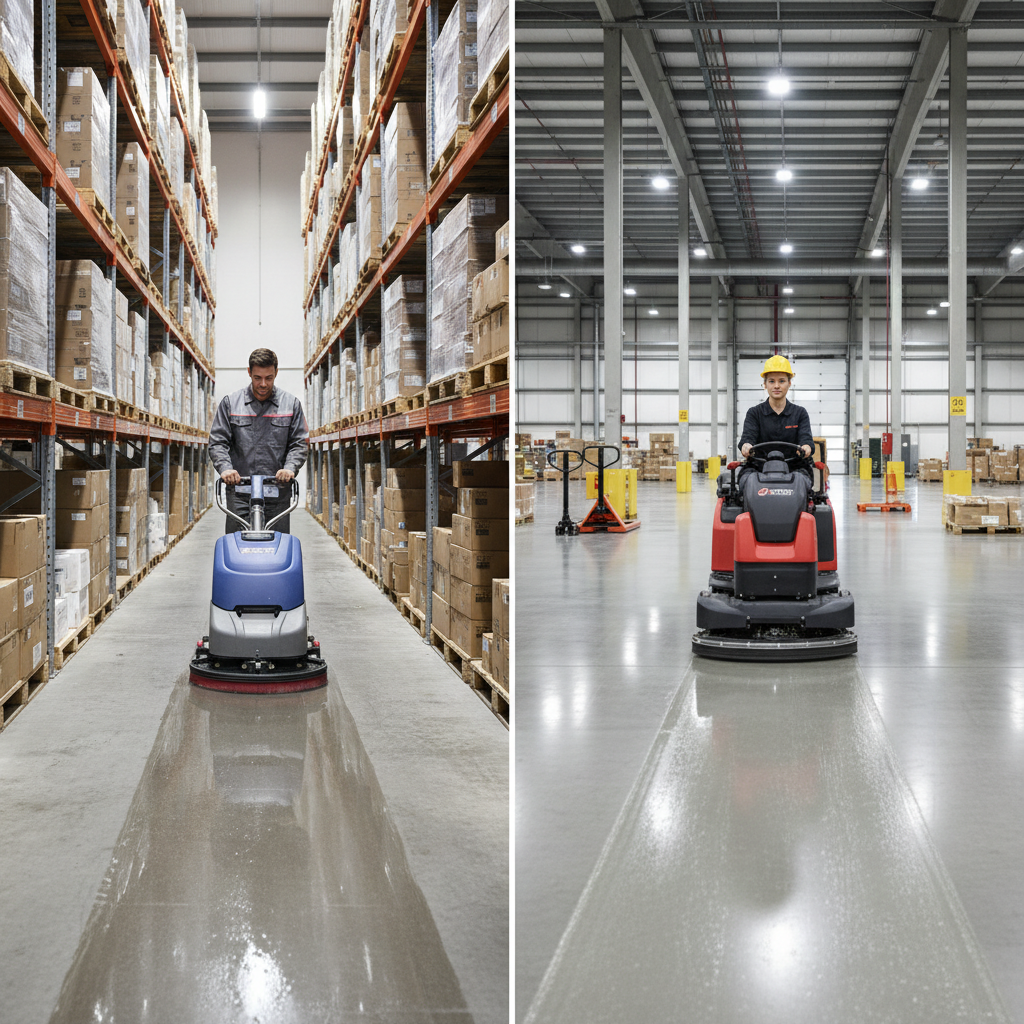
لمقارنة خيارات المنتجات الحقيقية، يمكنك مراجعة المنتجات المدمجة آلات تنظيف أرضيات المستودعات التي تُدفع يدويًا للممرات الضيقة و آلات تنظيف أرضيات المستودعات التي يمكن ركوبها للمساحات المفتوحة الأكبر. يعتمد الخيار الأمثل على مساحة الأرضية، وتصميم الممرات، وسعة الخزان، ووقت التنظيف المطلوب.
ما مقدار ضغط الفرشاة الذي تحتاجه آلة تنظيف أرضيات المستودعات؟
يجب أن يتناسب ضغط الفرشاة مع نوع الأرضية ومستوى اتساخها. عادةً ما يتطلب الغبار الخفيف على أرضيات المستودعات الملساء ضغط فرشاة متوسطًا. أما آثار إطارات الرافعات الشوكية والأوساخ الزيتية والمناطق شديدة الاتساخ فقد تحتاج إلى ضغط فرشاة أعلى، ومنظف مناسب، وسرعة تنظيف أبطأ.
تتميز آلات تنظيف الأرضيات اليدوية بضغط منخفض، مما يجعلها مثالية للمساحات الضيقة. أما آلات تنظيف أرضيات المستودعات التي تُركب عليها، فتعتمد على وزن الآلة وأنظمة فرش أكبر لتوفير أداء تنظيف أقوى في مناطق المستودعات ذات الحركة المرورية العالية.
كيفية حساب معدل تغطية آلة تنظيف أرضيات المستودعات
ينبغي قياس الإنتاجية الحقيقية لآلة تنظيف أرضيات المستودعات بمعدل التغطية الفعلي، وليس فقط بمعدل التغطية النظري. يُظهر معدل التغطية النظري أقصى إنتاجية تنظيف ممكنة، لكن عملية تنظيف أرضيات المستودعات الفعلية تتأثر بتصميم الممرات، والمنعطفات، والعوائق، وتداخل المسارات، وإعادة تعبئة الخزانات، وتفريغ مياه الصرف، وسرعة المشغل.
1. معدل التغطية النظري
يُقدّر معدل التغطية النظري الحد الأقصى للمساحة التي يمكن لآلة تنظيف أرضيات المستودعات تنظيفها في ساعة واحدة في ظل الظروف المثالية.
صيغة:
معدل التغطية النظري = عرض التنظيف (بوصة) × سرعة التشغيل (ميل/ساعة) × 440
في هذه الصيغة،, 440 هو عامل تحويل يحول عرض التنظيف وسرعة الآلة إلى أقدام مربعة في الساعة.
على سبيل المثال، إذا كانت آلة تنظيف أرضيات المستودعات التي يتم ركوبها مزودة بعرض تنظيف يبلغ 36 بوصة وتعمل بسرعة 3.5 ميل في الساعة:
معدل التغطية النظري = 36 × 3.5 × 440 = 55,440 قدم مربع/ساعة
هذا الرقم مفيد لمقارنة الآلات، ولكن لا ينبغي استخدامه كتقدير نهائي لوقت تنظيف المستودع الفعلي.
2. معدل التغطية العملي
يُعد معدل التغطية العملي الرقم الأكثر فائدة لتخطيط تنظيف المستودعات. فهو يُقدّر المساحة الفعلية التي يمكن لآلة تنظيف الأرضيات تنظيفها بعد مراعاة عمليات الدوران والتداخل وإعادة التعبئة والتفريغ وقيود التخطيط.
صيغة:
معدل التغطية العملي = معدل التغطية النظري × عامل الكفاءة
بالنسبة للعديد من تصميمات المستودعات، فإن عامل الكفاءة هو 0.45–0.65 وهو أكثر واقعية من الحد الأقصى النظري.
| تخطيط المستودع | عامل الكفاءة المقترح | سبب |
|---|---|---|
| مستودع مكتظ للغاية | 0.45 | المزيد من المنعطفات والعقبات ومسارات التنظيف المتقطعة |
| مستودع رفوف قياسي | 0.55 | الانعطافات العادية في الممرات، والتداخلات، ووقت إعادة تعبئة الخزان |
| مستودع مفتوح أو مركز توزيع | 0.65 | عدد أقل من المنعطفات ومسارات تنظيف مستقيمة أطول |
باستخدام نفس مثال آلة تنظيف أرضيات المستودعات التي يبلغ عرضها 36 بوصة:
معدل التغطية العملي = 55,440 × 0.55 = 30,492 قدم مربع/ساعة
يُعد معدل التغطية العملي هذا هو الرقم الذي يجب على مديري المرافق استخدامه عند تقدير وقت التنظيف وتكلفة العمالة وإنتاجية الآلات.
3. كيفية استخدام معدل التغطية عند اختيار آلة تنظيف أرضيات المستودعات
لاختيار آلة تنظيف أرضيات المستودع المناسبة، قارن معدل التغطية العملي للآلة مع منطقة التنظيف الفعلية وجدول التنظيف الخاص بك.
على سبيل المثال، إذا كان مستودعك يحتاج إلى تنظيف 100000 قدم مربع يوميًا وكان معدل التغطية العملي لآلة التنظيف حوالي 30000 قدم مربع في الساعة، فإن مهمة التنظيف ستستغرق حوالي 3.3 ساعات قبل إضافة وقت الفحص وإعادة التعبئة والتفريغ وصيانة الآلة.
في المستودعات ذات المساحات المفتوحة الواسعة، عادةً ما يكون معدل التغطية العملي الأعلى أهم من أقل سعر شراء. أما في الممرات الضيقة أو مناطق التخزين المزدحمة، فقد تكون سهولة المناورة ونصف قطر الدوران أهم من أقصى عرض للتنظيف.
سعة الخزان، ووقت التشغيل، وتكرار إعادة التعبئة
في مجال تنظيف أرضيات المستودعات، تُقلل خزانات المحلول وخزانات الاسترداد الأكبر حجماً من وقت التوقف عن العمل. وهذا أمر بالغ الأهمية، خاصةً في المنشآت الكبيرة حيث قد يحتاج المشغل إلى قطع مسافة طويلة لإعادة تعبئة المياه النظيفة أو تفريغ مياه الصرف الصحي.
تؤثر سعة الخزان بشكل مباشر على وقت التشغيل. فآلة تنظيف أرضيات المستودعات المزودة بخزان محلول أكبر يمكنها التنظيف لفترة أطول قبل إعادة التعبئة، بينما يساعد خزان الاسترداد الأكبر على تجميع كمية أكبر من مياه الصرف قبل التخلص منها. وهذا يقلل من الانقطاعات ويحسن إنتاجية التنظيف العملية.
تشمل نطاقات سعة الخزانات النموذجية ما يلي:
- أجهزة تنظيف الأرضيات الصغيرة التي تُدفع باليد: 10-15 جالونًا
- أجهزة تنظيف كبيرة تعمل بالدفع اليدوي: 20-30 جالونًا
- آلات تنظيف أرضيات المستودعات التي يمكن ركوبها: 40-70+ جالون
يمكنك تقدير عدد مرات إعادة التعبئة باستخدام هذه الصيغة:
المدة بين عمليات إعادة التعبئة = سعة خزان المحلول ÷ معدل تدفق المحلول
على سبيل المثال، يمكن لآلة تنظيف أرضيات المستودع المزودة بخزان محلول سعة 40 جالونًا والتي تستخدم 0.75 جالونًا في الدقيقة أن تعمل لمدة 53 دقيقة تقريبًا قبل إعادة التعبئة:
40 ÷ 0.75 = 53.3 دقيقة
يحتاج جهاز التنظيف الأصغر حجماً المزود بخزان سعة 10 جالونات والذي يستخدم 0.5 جالون في الدقيقة إلى إعادة التعبئة بعد حوالي 20 دقيقة:
10 ÷ 0.5 = 20 دقيقة
يُعدّ هذا الاختلاف مهمًا في المستودعات الكبيرة، لأنّ كلّ عملية إعادة تعبئة أو تفريغ لمياه الصرف الصحي تُقلّل من وقت التنظيف المُنتج. بالنسبة للمستودعات الصغيرة أو الممرات الضيقة، قد يكون الخزان الصغير كافيًا. أما بالنسبة للمستودعات الكبيرة ومراكز التوزيع والمساحات المفتوحة الواسعة، فإنّ الخزانات الأكبر حجمًا تُحسّن عادةً من وقت التشغيل وتُقلّل من هدر العمالة.
عند مقارنة آلات تنظيف أرضيات المستودعات، يجب تقييم سعة الخزان جنبًا إلى جنب مع عرض التنظيف، ومعدل التغطية العملي، وأداء استعادة المياه، وجدول التنظيف اليومي.
الميزات الأساسية لتنظيف أرضيات المستودعات ذات الحركة المرورية العالية
أنظمة الفرشاة
- أجهزة تنظيف القرص: مناسب للأرضيات الخرسانية الملساء والأرضيات الإيبوكسية حيث يلزم ضغط فرشاة أعلى.
- أجهزة تنظيف أسطوانية: مناسبة لأرضيات المستودعات ذات المخلفات الكثيرة لأنها تستطيع جمع المخلفات الصغيرة قبل التنظيف.
- فرش صناعية: مفيد عند الحاجة إلى مقاومة كيميائية.
- وسادات التنظيف: مفيد لإزالة آثار الإطارات والأوساخ والبقع المتوسطة على الأرضيات الملساء.
استعادة المياه
يُساعد نظام استعادة المياه الفعال على تقليل مخاطر الانزلاق ووقت التجفيف. في المستودعات التي تشهد حركة مرور كثيفة للرافعات الشوكية، ومناطق تحميل، وعمليات تشغيل مستمرة، تُعدّ سرعة استعادة المياه أمرًا بالغ الأهمية، لأن الأرضيات المبللة قد تُؤخر العمل وتُشكّل مخاطر على السلامة.
الفرش والممسحات
عادةً ما يتم استبدال الفرشاة والممسحة وفقًا للجدول التالي:
- المناطق ذات حركة المرور الكثيفة: التقييم الشهري
- الاستخدام القياسي: الاستبدال ربع السنوي
- الخدمة الخفيفة: التفتيش نصف السنوي
أي نوع من آلات تنظيف أرضيات المستودعات يجب أن تختار بناءً على حجم المنشأة؟
| حجم المستودع أو تصميمه | فرشاة التنظيف الموصى بها | لماذا |
|---|---|---|
| 5000–20000 قدم مربع | آلة تنظيف أرضيات المستودعات التي تُدفع يدويًا | أفضل للممرات الضيقة والمساحات الصغيرة |
| 20,000–50,000 قدم مربع | آلة تنظيف كبيرة يدوية أو آلة تنظيف صغيرة قابلة للركوب | يوازن بين القدرة على المناورة والإنتاجية |
| 50,000–200,000+ قدم مربع | آلة تنظيف أرضيات المستودعات التي يمكن ركوبها | معدل تغطية أعلى وإجهاد أقل للمشغل |
| مساحات مفتوحة واسعة | آلة تنظيف الأرضيات التي يمكن ركوبها | معدل تغطية عملي أفضل |
| ممرات ضيقة يقل عرضها عن 6 أقدام | آلة تنظيف الأرضيات التي تُدفع باليد أو آلة تنظيف الأرضيات المدمجة | تحسين عملية الانعطاف والوصول |
مستودعات صغيرة (5000-20000 قدم مربع)
بالنسبة للمستودعات الصغيرة التي تتراوح مساحتها بين 5000 و20000 قدم مربع، تُعدّ آلة تنظيف الأرضيات اليدوية خيارًا عمليًا نظرًا لسهولة التحكم بها في الممرات الضيقة ومناطق التخزين وزوايا التحميل والمناطق المزدحمة. كما يُمكن للطرازات المدمجة ذات مسار التنظيف الأضيق تنظيف الأرضيات حول الرفوف والعوائق دون الحاجة إلى نصف قطر دوران كبير.
على سبيل المثال، يمكن أن تكون آلة تنظيف الأرضيات المدمجة التي يتم دفعها سيرًا على الأقدام مناسبة للمستودعات ذات عرض الممرات المحدود والتغييرات المتكررة في التصميم.
المرافق متوسطة الحجم (20,000-50,000 قدم مربع)
بالنسبة للمستودعات متوسطة الحجم التي تتراوح مساحتها بين 20,000 و50,000 قدم مربع، يمكن لمديري المرافق مقارنة آلة تنظيف الأرضيات الكبيرة التي تُدفع يدويًا بآلة تنظيف الأرضيات الصغيرة التي تُركب. ويعتمد القرار على عرض الممرات، وعدد مرات التنظيف، وعبء العمل على المشغل، ومساحة الأرضية المفتوحة التي تحتاج إلى التنظيف يوميًا.
العمليات الكبيرة (50,000+ قدم مربع)
بالنسبة للمستودعات الكبيرة التي تزيد مساحتها عن 50,000 قدم مربع، تُعدّ آلة تنظيف الأرضيات ذاتية القيادة أكثر كفاءةً عادةً، لأنها توفر مسار تنظيف أوسع، وخزانات أكبر للمحلول والاسترداد، ومعدل تغطية عملي أعلى، وإجهاد أقل للمشغل. وتُعدّ هذه الآلات مفيدة بشكل خاص في مراكز التوزيع، ومحطات الشحن، والمستودعات ذات المساحات المفتوحة الواسعة.
هل آلة تنظيف الأرضيات ذات الفرشاة الواحدة مناسبة للمستودعات؟
تُعدّ آلة تنظيف الأرضيات ذات الفرشاة الواحدة مناسبة للمستودعات الصغيرة والممرات الضيقة والأرضيات المتسخة بشكل خفيف إلى متوسط. وعادةً ما تكون أسهل في التشغيل وأكثر إحكامًا من الآلات الأكبر حجمًا. أما بالنسبة للمستودعات الكبيرة ومراكز التوزيع والمساحات المفتوحة الواسعة،, آلات تنظيف أرضيات المستودعات التي يمكن ركوبها توفر عادةً معدل تغطية عملي أعلى، وسعة خزان أكبر، وإجهاد أقل للمشغل.
آلة تنظيف المستودعات مقابل آلة الكنس: أيهما تحتاج؟
تستخدم آلة تنظيف أرضيات المستودعات الماء والمنظفات والفرش ونظام استعادة المياه لغسل وتجفيف الأرضية. وهي مثالية لإزالة آثار الإطارات والأوساخ والبقع اللزجة، وتلبية احتياجات التنظيف الرطب، والمناطق التي تتطلب استعادة المياه.
صُممت آلة كنس المستودعات لإزالة المخلفات الجافة مثل الغبار، ونفايات التغليف، ونشارة الخشب، والجسيمات المتناثرة. إذا كان مستودعك يحتوي على مخلفات جافة وبقع أرضية، فإن الكنس أولاً ثم التنظيف بالفرك عادةً ما يُعطي نتائج أفضل.
مثال: كيف يمكن لمركز التوزيع تقليل وقت التنظيف
غالباً ما يواجه مركز التوزيع الكبير الذي يشهد حركة مرور كثيفة للرافعات الشوكية مخاطر تراكم آثار الإطارات والغبار والأرضيات المبللة. عندما تكون مساحة التنظيف كبيرة جداً بحيث لا تتسع لآلات التنظيف الصغيرة التي تُدفع يدوياً، فإن التحول إلى آلة تنظيف أرضيات المستودعات التي تُركب عليها المركبات يمكن أن يقلل من وقت التنظيف، ويحسن من استعادة المياه، ويخفف من إجهاد المشغل.
في هذا النوع من المنشآت، يجب أن تشمل المقارنة الرئيسية معدل التغطية العملي، وسعة الخزان، وضغط الفرشاة، وأداء استعادة المياه، وإجمالي ساعات العمل لكل دورة تنظيف.
التكلفة الإجمالية لامتلاك آلة تنظيف أرضيات المستودعات: كيفية مقارنة التكلفة على المدى الطويل
ينبغي أن تركز عملية الشراء الاستراتيجية على التكلفة الإجمالية للملكية، وليس فقط على سعر الشراء. فقد تكون تكلفة آلة تنظيف أرضيات المستودعات منخفضة السعر أعلى على المدى الطويل إذا تطلبت ساعات عمل أكثر، أو صيانة أكثر، أو استبدالًا متكررًا للفرش، أو دورات تنظيف أطول.
صيغة التكلفة الإجمالية للملكية:
التكلفة الإجمالية للملكية = تكلفة الاستحواذ + [(تكلفة العمالة السنوية + تكلفة الصيانة السنوية + تكلفة المواد الاستهلاكية السنوية) × العمر الافتراضي للأصل]
لا يمثل سعر الشراء سوى جزء واحد من تكلفة آلة تنظيف أرضيات المستودعات. فوقت العمل، والصيانة، والمواد الاستهلاكية، واستبدال البطارية، وتآكل الفرشاة والممسحة، ووقت التوقف، ودعم الخدمة، كلها عوامل تؤثر على التكلفة الحقيقية على المدى الطويل.
تُعدّ تكلفة العمالة السنوية عادةً العامل الأكبر. ويمكن لآلة تنظيف أرضيات المستودعات الأكثر إنتاجية أن تقلل ساعات العمل من خلال زيادة معدل التغطية الفعلي، وتقليل وقت إعادة التعبئة، وتحسين استعادة المياه، وتقليل إجهاد المشغل.
على سبيل المثال، إذا احتاج مستودع إلى تنظيف 100,000 قدم مربع يوميًا بمعدل أجر يبلغ $20 في الساعة:
- قد تتطلب آلة التنظيف القياسية التي يتم دفعها سيرًا على الأقدام والتي تبلغ معدل تغطيتها العملي 15000 قدم مربع/ساعة حوالي 6.7 ساعات لكل دورة تنظيف.
- تكلفة العمالة السنوية: 6.7 ساعات × $20 × 260 يوم عمل = حوالي $34,840 سنويًا.
- قد تتطلب آلة تنظيف أرضيات المستودعات التي تعمل بالركوب والتي تبلغ معدل تغطيتها العملي 30000 قدم مربع/ساعة حوالي 3.3 ساعات لكل دورة تنظيف.
- تكلفة العمالة السنوية: 3.3 ساعات × $20 × 260 يوم عمل = حوالي $17,160 في السنة.
في هذا المثال، يمكن لآلة تنظيف الأرضيات ذاتية القيادة أن توفر حوالي 17,680 جنيهًا إسترلينيًا سنويًا في تكاليف العمالة. لهذا السبب، يجب أن تشمل التكلفة الإجمالية لامتلاك آلة تنظيف أرضيات المستودعات تكاليف العمالة والصيانة والمواد الاستهلاكية وعمر الخدمة، بدلاً من سعر الشراء الأولي فقط.
عند مقارنة الآلات، ينبغي على مديري المرافق تقييم تكلفة الشراء، ومعدل التغطية العملي، وسعة الخزان، واستبدال الفرشاة والممسحة، وعمر البطارية، واحتياجات الصيانة، ووقت التنظيف اليومي المتوقع.
الاستنتاج: اتخاذ قرارات اختيار أجهزة التنظيف بناءً على البيانات
يتطلب اختيار آلة تنظيف أرضيات المستودعات المناسبة أكثر من مجرد مقارنة حجم الآلة أو سعر الشراء. ينبغي على مديري المرافق تقييم مساحة الأرضية، وعرض الممر، ونوع الأرضية، ومستوى الحطام، وتكرار التنظيف، ومعدل التغطية العملي، وسعة الخزان، واستعادة المياه، وإجهاد المشغل، والتكلفة الإجمالية للملكية.
تُعدّ آلات تنظيف أرضيات المستودعات اليدوية أفضل عادةً للمستودعات الصغيرة والممرات الضيقة والمناطق المزدحمة. أما آلات تنظيف أرضيات المستودعات التي تُركب عليها السيارات، فهي عادةً أكثر كفاءة للمنشآت الكبيرة ومراكز التوزيع والمساحات المفتوحة الواسعة.
تساعد عملية الاختيار القائمة على البيانات المستودعات على تحسين إنتاجية التنظيف، وتقليل وقت التوقف، والتحكم في تكلفة العمالة، والحفاظ على ظروف أرضية أكثر أمانًا.
هل تحتاج إلى مساعدة في اختيار آلة تنظيف أرضيات المستودع المناسبة؟ تواصل مع LVTONG لمقارنة الموديلات المناسبة بناءً على حجم مستودعك، وعرض الممر، ونوع الأرضية، ومستوى الحطام، وسعة الخزان، وجدول التنظيف.
بصفتي مورد آلات التنظيف في الصين, بإمكان شركة LVTONG مساعدة المستودعات والمصانع ومرافق الخدمات اللوجستية في اختيار معدات تنظيف الأرضيات العملية للعمليات اليومية.