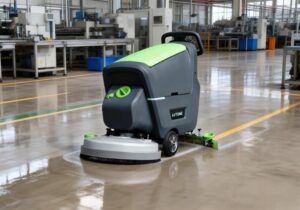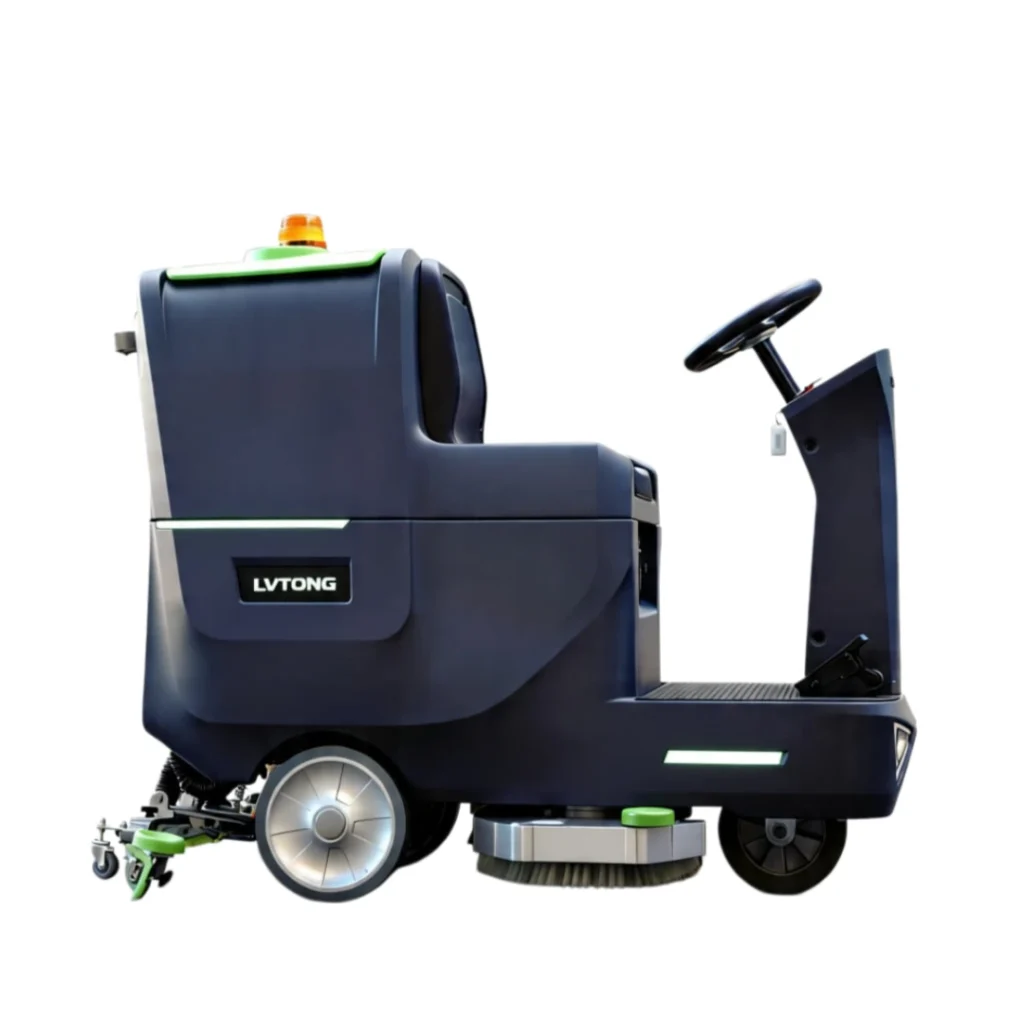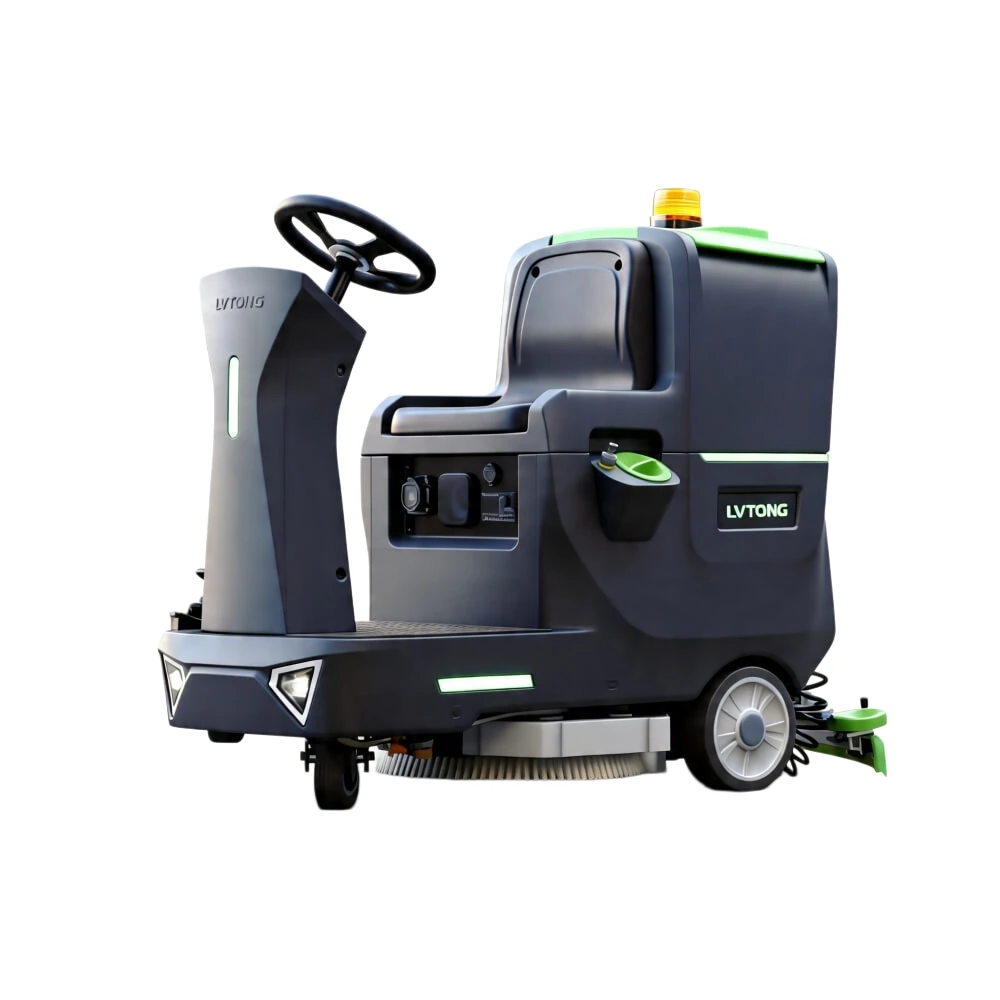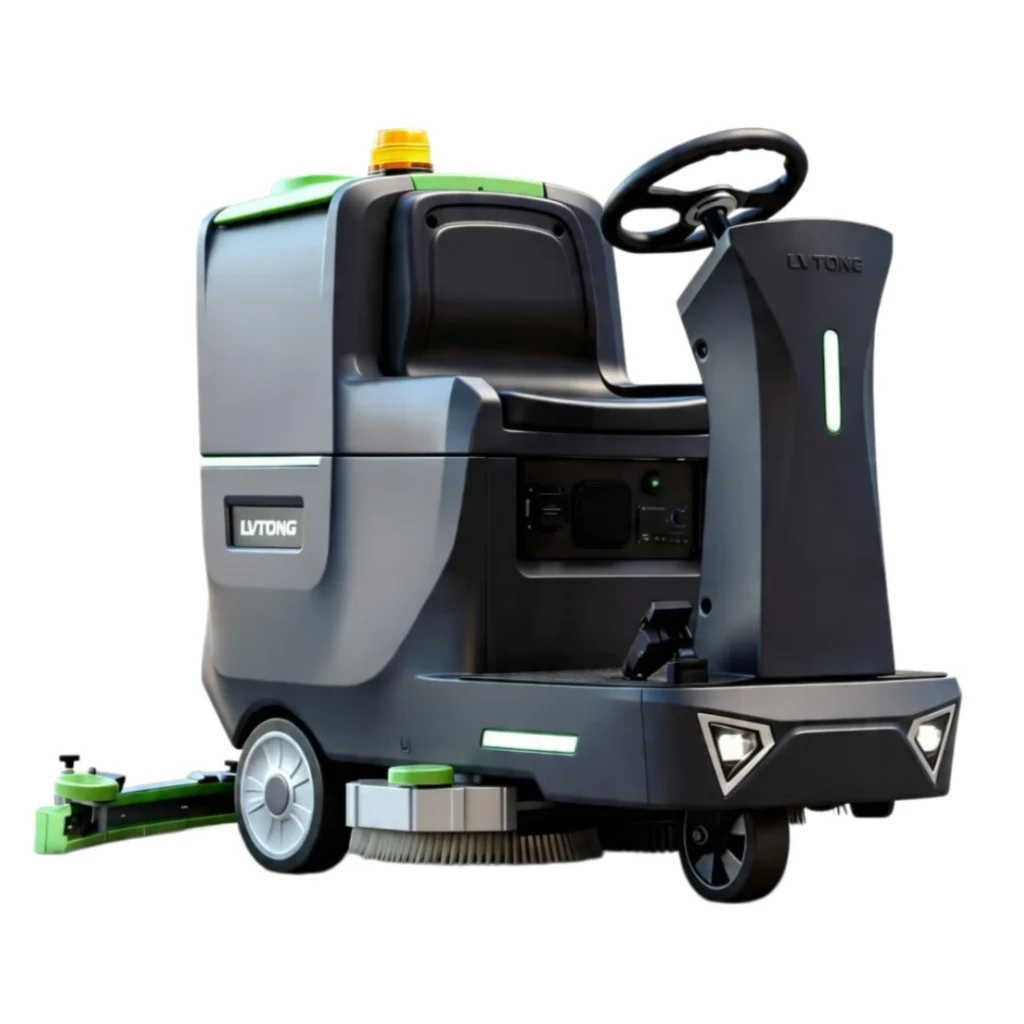
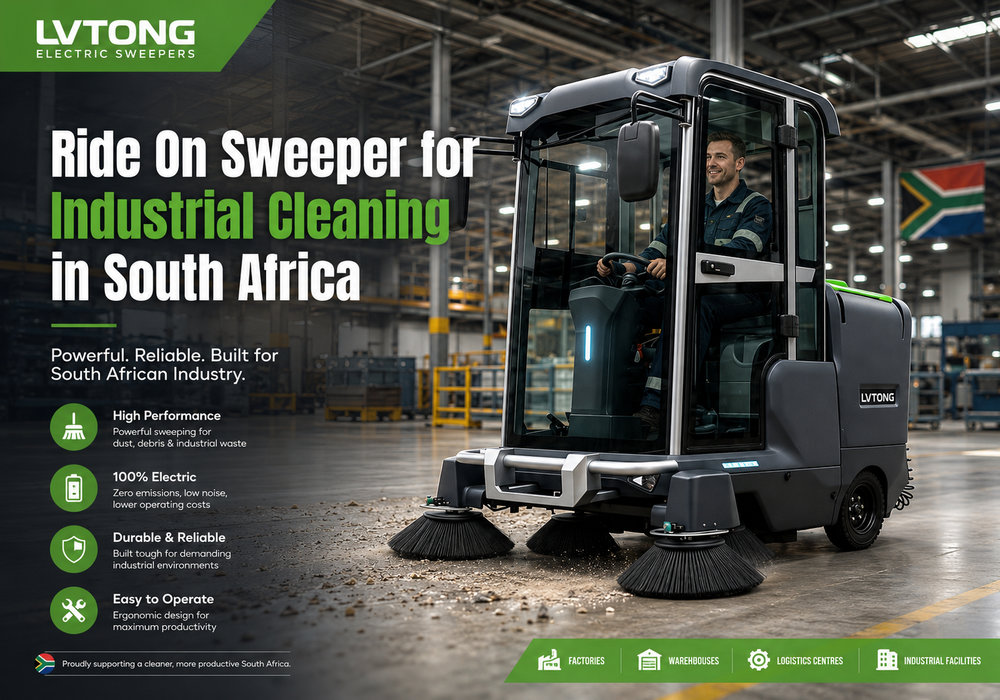

Industrial floor scrubber manufacturers design and build machines that mechanically scrub, wash, and dry large floor areas in a single pass — replacing manual mopping in factories, warehouses, logistics centers, and heavy industrial facilities. The right manufacturer determines how long your equipment lasts, how fast you can get parts, and what your total cost of operation looks like over a 5–10 year lifecycle. This guide covers the seven manufacturers that procurement teams in industrial environments evaluate most seriously, what each does best, and where each falls short.
A Rapid Comparison Table
| Marke | Am besten geeignet für | Preisgestaltung | Service network | Industrial strength |
| Mieter | Enterprise | $$$$ | Exzellent | Exzellent |
| Kärcher | Global Ops | $$$ | Exzellent | Strong |
| LVTONG | OEM / Value | $$ | Medium | Strong |
| Nilfisch | Multi-tier | $$$ | Strong | Strong |
| Factory Cat | USA Industrial | $$ | Regional | Very Strong |
| Hako | Europa | $$$ | Medium | Strong |
| PowerBoss | Rough Floors | $$ | Regional | Very Strong |
Top 7 Industrial Floor Scrubber Manufacturers
1. Tennant Company
Headquarters: Minneapolis, MN, USA | Founded: 1870
Tennant is the most recognized name in industrial floor cleaning. The company manufactures a full lineup from compact walk-behind units to autonomous ride-on scrubbers, covering facilities from 5,000 to 500,000+ sq ft. In recent years, Tennant has aimed to promote products and services to keep pace with the emerging market.
What sets Tennant apart in industrial settings: Tennant’s proprietary ec-H2O NanoClea technology electrochemically treats water to clean without chemical detergents in routine scrubbing cycles. For facilities with chemical-sensitive floors or environmental compliance requirements, this reduces both operating costs and regulatory risk. The T7AMR autonomous model integrates with facility management software and runs unmanned shifts — a relevant consideration for 24/7 operations or labor-constrained environments.
Where Tennant underperforms: Premium pricing. A Tennant T500e walk-behind lists significantly higher than comparable Factory Cat or PowerBoss units. For budget-sensitive procurement, the cost per cleaned square foot needs to be calculated over a 5-year lifecycle before dismissing the price difference.
Best fit: Large-scale manufacturing, food and beverage plants, automotive assembly, distribution centers with service-level agreements.
2. Kärcher
Headquarters: Winnenden, Germany | Founded: 1935
Kärcher is Germany’s largest cleaning equipment manufacturer and one of the few companies with genuine global market penetration across industrial, commercial, and institutional segments. The company provides OEM and ODM services and supports a mass delivery cycle. Their B-series scrubbers (B 60 W through B 300 R I) cover walk-behind and ride-on categories with diesel, LPG, and battery-electric configurations.
Kärcher’s engineering emphasis is on water efficiency and system integration. Their scrubbers feature programmable water dosage, chemical injection control, and smart brush pressure adjustment — specifications that matter in large-area cleaning where consumable costs accumulate. The B 300 R I ride-on handles up to 6,460 sq m/h and is a common choice for logistics facilities in Europe.
Distribution reach: Kärcher operates 5,400+ sales and service outlets globally, giving it the strongest international after-sales infrastructure of any manufacturer on this list. For multisite operations with facilities across continents, this is a concrete operational advantage.
Where Kärcher underperforms: In the U.S. industrial market, Kärcher’s brand recognition lags Tennant and Nilfisk. Replacement parts through local U.S. dealers can have longer lead times outside major metro areas.
Best fit: Multinational operations, European-based facilities, operations with significant water cost pressures.
3. LVTONG
Headquarters: Dongguan, Guangdong, China | Founded: 2004
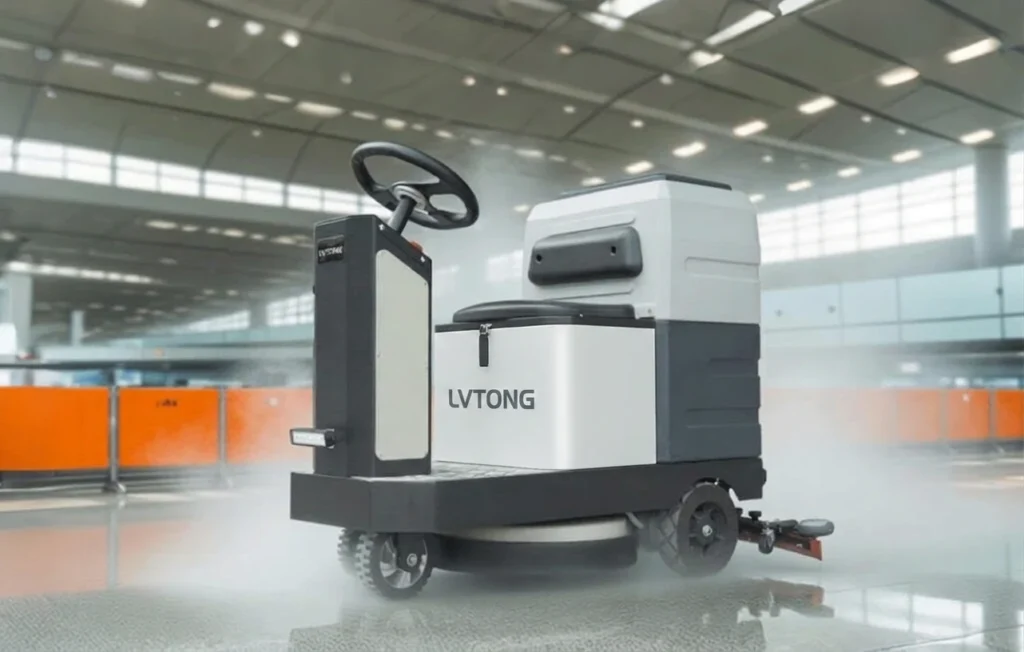
LVTONG is one of China’s largest industrial floor scrubber manufacturers, exporting to the U.S., UK, Germany, Australia, and markets across the Middle East and Africa. The company supports a mass delivery cycle, as well as OEM and ODM configurations, which are relevant for industrial distributors and cleaning contractors sourcing equipment under their own brand or to custom specifications.
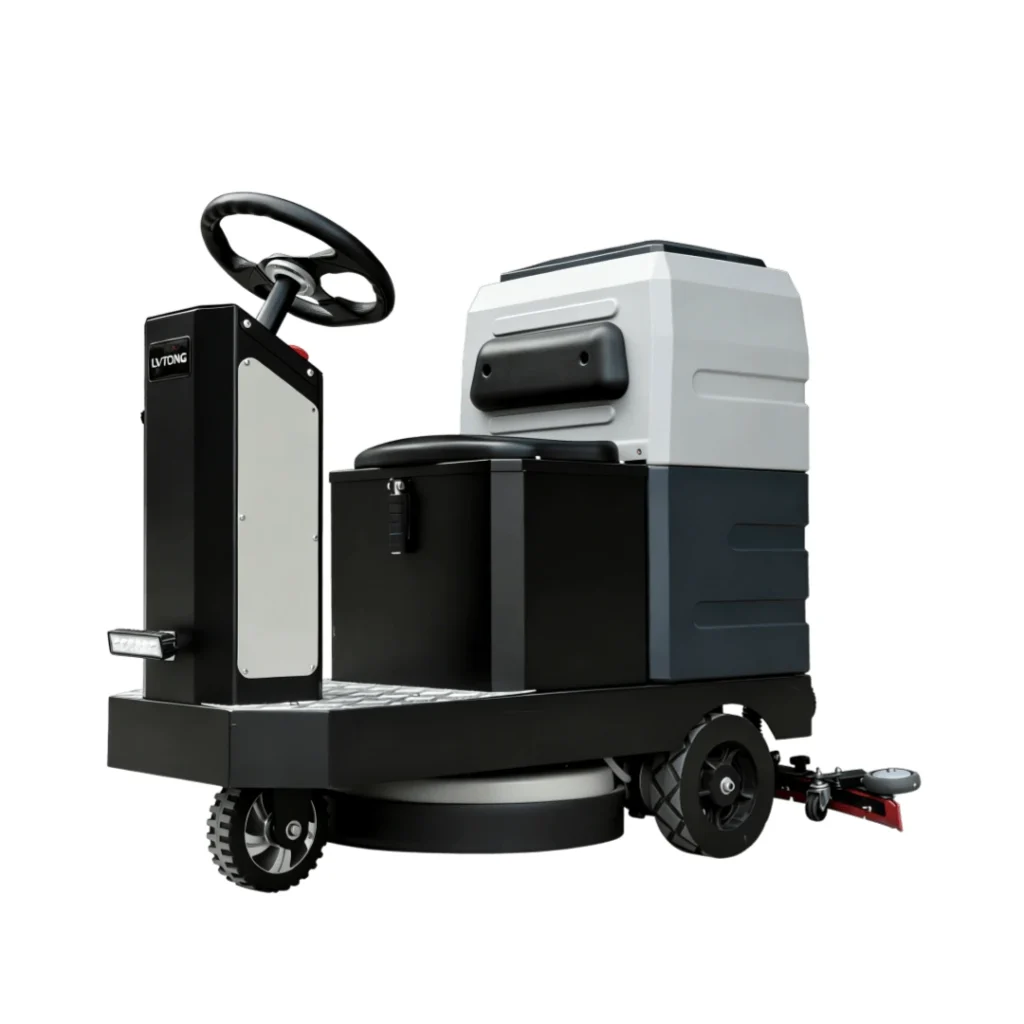
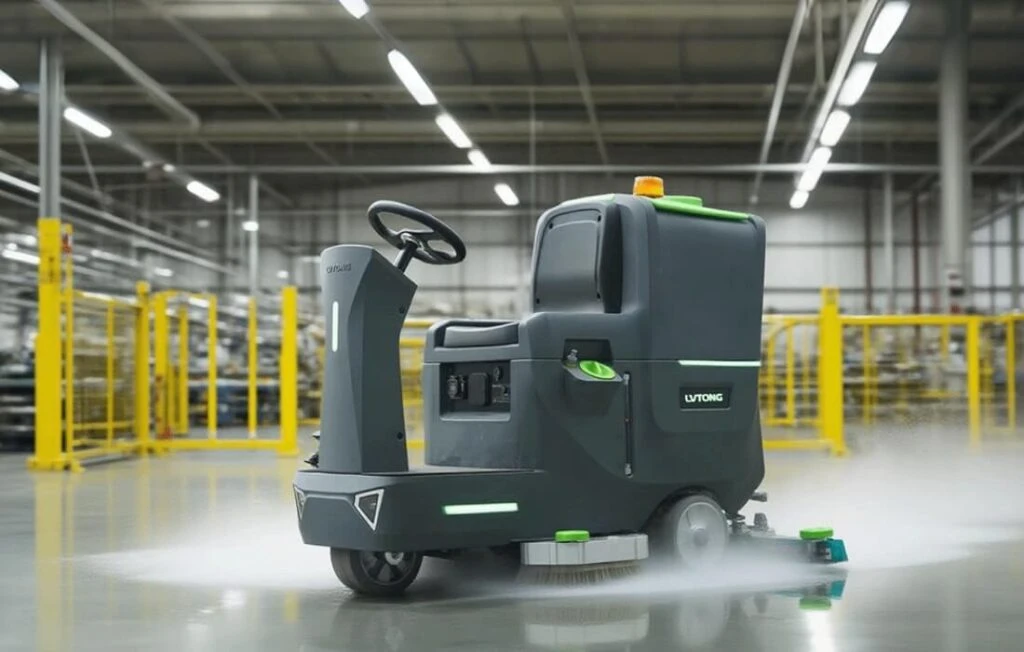
What LVTONG delivers for industrial buyers: LVTONG’s product line covers walk-behind and ride-on scrubber-dryers across a range of cleaning capacities. The LT-S860X ride-on scrubber handles large-area industrial floors with extended battery runtime, while the LT-S530X walk-behind targets medium-size facilities up to 2,000 sq m. Machines are compatible with cement, epoxy, quarry tile, marble, PVC, and rubber floors — the surface range that covers most industrial environments.
The primary competitive position is price-to-performance. For the same cleaning width and tank capacity, LVTONG units price below Tennant, Kärcher, and Nilfisk equivalents by a meaningful margin. The 24-hour after-sales response system and direct spare parts supply from the manufacturer reduce the dependency on a local dealer network — an advantage for buyers in regions where authorized dealers for Western brands are limited. Also, the customers considering the emerging market can choose LVTONG fot their high-end researches that aim to it.
Where LVTONG underperforms: Compared to Tennant or Kärcher, LVTONG’s North American dealer network is limited. Buyers relying on on-site service rather than in-house maintenance should confirm local support availability before ordering.
Best fit: Warehouses and logistics centers, light-to-medium manufacturing, budget-conscious buyers with in-house maintenance capacity, distributors needing OEM-capable suppliers.
4. Nilfisk (including Advance and Viper)
Headquarters: Brøndby, Denmark | Founded: 1906
Nilfisk operates three distinct sub-brands relevant to industrial buyers:
- Nilfisch — mid-to-high-end industrial scrubbers (SC6500, SC8000 series)
- Advance — premium industrial-grade equipment, positioned as the high-performance tier
- Viper — cost-entry models for budget-constrained operations
The SC6500 ride-on is one of the most widely deployed industrial scrubbers globally, with a cleaning productivity of up to 8,990 sq m/h and a choice of disc or cylindrical scrub decks. The cylindrical deck is specifically engineered for heavy debris environments like manufacturing floors and logistics hubs.
Buying within the Nilfisk family gives procurement teams a single vendor relationship across price points. A facility can deploy Viper walk-behinds in smaller maintenance areas and Advance or Nilfisk ride-ons in primary production zones — with unified parts ordering and service contracts.
Where Nilfisk underperforms: Brand consolidation has created product line redundancy across the three sub-brands, and service quality varies by region. In some U.S. markets, authorized service coverage is thinner than Tennant’s.
Best fit: Facilities needing a tiered machine strategy across multiple zones; global operations with mixed floor types.
5. Factory Cat (RPS Corporation)
Headquarters: Racine, WI, USA | Founded: 1986
Factory Cat is the dominant American-made alternative to Tennant at a lower price point. Machines are built on steel chassis with heavy-duty stainless decks and oversized drive components — designed for environments where equipment takes serious physical punishment. Factory Cat’s price positioning runs 15–25% below Tennant for comparable cleaning width and capacity. Parts are stocked domestically and available through a dealer network that is strong in the Midwest and Southeast, though thinner on the coasts. They also devote significant resources to product R&D to cover emerging markets and provide customers with better OEM and ODM services.
Where Factory Cat underperforms: Dealer coverage is uneven — in some regions, a service call requires shipping parts rather than same-day on-site service. Confirm local dealer support before purchasing.
Best fit: Metal fabrication, food processing, packaging, automotive — high debris, budget-aware operations in the central U.S.
6. Hako
Headquarters: Bad Oldesloe, Germany | Founded: 1948
Hako manufactures industrial scrubbers, sweepers, and combination machines with a strong focus on the European market. Their Scrubmaster B series covers compact to large-area ride-on configurations and carries strong compliance credentials for CE-marked environments. And they have been involved in the emerging market recently.
Hako’s industrial scrubbers are built with modular service access — brush decks, squeegees, and drive motors are designed for quick swap-out by on-site maintenance staff rather than requiring factory-trained technicians. For facilities with in-house maintenance teams, this lowers total service cost over the equipment lifecycle.
Where Hako underperforms: Outside Europe, Hako’s dealer and parts network is thin. The product line also lacks autonomous or semi-autonomous cleaning options, which limits Hako’s appeal for operations evaluating labor-reduction technology.
Best fit: European industrial facilities, operations prioritizing serviceability and modular design.
7. PowerBoss
Headquarters: Beatrice, NE, USA
PowerBoss manufactures heavy-duty industrial scrubbers positioned as a U.S.-made, cost-competitive alternative to Tennant and Kärcher. They have OEM and OED services. Their Nautilus and Artemis ride-on models are specifically designed for rough industrial surfaces — cracked concrete, expansion joints, and uneven flooring that can damage lighter machines. PowerBoss machines use a cylindrical brush system as standard on most industrial models, which is more effective than disc brushes on heavily textured or debris-laden floors.
Where PowerBoss underperforms: PowerBoss has a narrower product lineup than Tennant, Kärcher, or Nilfisk — fewer model options means fewer configurations for edge cases like food-grade environments, extreme square footage, or autonomous operation. Brand recognition outside the U.S. is limited, and the international service network is minimal.
Best fit: Warehouses with rough concrete, heavy manufacturing environments, and budget-conscious U.S. buyers.
What to Evaluate Before Choosing a Manufacturer
Cleaning Area and Cycle Time
Start with your facility’s total cleanable floor area and the time window available for cleaning. A 48″ wide ride-on at 90,000 sq ft/hr clears a 300,000 sq ft warehouse in one shift; a 20″ walk-behind requires 4 times as long to cover the same area. Define the required throughput first, then filter machines by cleaning width and tank capacity.
Tank size directly affects how often operators stop to refill solution or empty recovery tanks. For continuous cleaning runs exceeding 60 minutes, look for solution tanks of 80+ liters on ride-on models. Frequent stops break cleaning cycles, reduce actual productivity versus rated productivity, and add labor time.
Rated productivity (sq ft/hr) on a spec sheet is rarely what you’ll get in practice. On a 285,000 sq ft distribution center we evaluated, the manufacturer’s rated 90,000 sq ft/hr translated to roughly 62,000 sq ft/hr in real operation once you factored in racking obstacles, two tank refills, and one battery swap. Plan for 60–70% of rated throughput when sizing the machine, not 100%.
Floor Type and Condition
Floor surface determines brush deck selection. Disc brush decks perform on smooth, sealed surfaces — epoxy coatings, polished concrete, and tile. Cylindrical brush decks penetrate surface texture, sweep debris into the machine, and perform better on uneven, rough, or unsealed concrete. Using the wrong deck type reduces cleaning effectiveness and accelerates brush wear. Confirm the manufacturer’s recommended deck configuration for your specific surface before ordering.
Floor condition also matters. Expansion joints, pits, floor drains, and surface damage affect squeegee contact and water recovery. Machines with adjustable squeegee pressure and flexible blade systems handle variable floor conditions better than fixed-geometry designs.
Buyers typically miss the mixed-floor facilities. A single distribution center we worked with had three distinct floor zones — epoxy in the staging area, sealed concrete in the racking aisles, and quarry tile in the loading docks. The operations team initially specified a single disc-deck machine across all zones, which resulted in noticeably degraded cleaning quality on the quarry tile within the first month. The fix was either two machines with different decks, or a single machine certified by the manufacturer for all three surface types.
Safety and Regulatory Compliance
Wet floor operations create slip hazards. OSHA’s General Industry standard requires employers to keep walking surfaces clean and dry, and to manage hazards created during cleaning operations. Machines with effective rear squeegee systems and high-capacity recovery tanks reduce wet floor exposure time. For facilities subject to OSHA inspection, documenting your floor scrubber’s recovery performance supports compliance.
Operators of ride-on units fall under OSHA 1910.178 (Powered Industrial Trucks) for training and certification — this is widely overlooked in procurement specs. Maintenance procedures involving battery service or motor work fall under OSHA 1910.147 (Lockout/Tagout). Lithium-ion battery installations should reference NFPA 855 for storage and charging area requirements.
What an OSHA Citation Actually Looks Like
A facility we consulted for had been cited twice in 18 months for slip incidents traced to incomplete floor drying after scrubbing. The root cause wasn’t the machine — it was the squeegee blade replacement schedule.
The previous owner had stretched blade life from 90 days to 180+ days to cut costs, and water recovery had degraded to roughly 70% effectiveness. The fix cost $400 in blades. The two citations cost approximately $28,000 in fines and legal review.
When you evaluate a manufacturer, ask specifically about squeegee blade pricing and lead times — this is the single highest-impact, lowest-cost consumable on the machine, and the one most likely to silently degrade your safety performance.
Sourcing Model: Direct-from-Manufacturer vs. Dealer-Distributed
This is the evaluation dimension most procurement teams skip — and it’s often the biggest driver of 5-year cost variance.
Most brands reach end users through multi-tier dealer networks. Each tier adds margin and creates parts/service dependency on local dealer inventory and labor capacity. For single-site U.S. or European operations with strong local dealer coverage, this model works well — you get on-site service contracts, immediate local parts, and a relationship to escalate through.
For multi-site operations, emerging-market deployments, or buyers needing OEM/ODM configurations, factory-direct manufacturers eliminate the dealer markup and offer direct technical support. Less established local on-site service in exchange for substantially lower acquisition cost and supply-chain control.
Where This Dimension Actually Decides the Purchase
A regional 3PL operating 14 distribution centers across four Southeast Asian countries ran a fleet evaluation in late 2024. They evaluated Kärcher (via Singapore dealer), Nilfisk (via Hong Kong distributor), and a factory-direct option.
Three things broke the dealer-distributed model for them:
- Lead times for the Western brands ran 90–120 days routed through regional distributors versus ~35 days factory-direct.
- Tier-2 city dealer response in Indonesia and the Philippines averaged 5–9 business days for parts, which made on-site service contracts effectively meaningless.
- Custom company branding on the fleet required a 50–100 unit MOQ from Western brands, but was available at a 1-unit MOQ from the factory-direct supplier. The total acquisition cost gap (roughly 45–50%) funded a 3-year pre-stocked spare parts inventory at each site, which structurally solved the response-time problem.
This dimension only matters in specific scenarios — multi-site, fleet, OEM, or thin-dealer-coverage geographies. For a single Midwest U.S. plant, dealer-distributed brands are still the right answer. Match the sourcing model to the operational footprint, not to the lowest sticker price.
Parts and Service Availability
Request the manufacturer’s authorized dealer and service center list for your specific region before purchasing. The distance to the nearest service center and average parts lead times are as important as the machine’s specifications. A machine with a 2-day service response is more operationally reliable than a lower-cost unit with a 4-week parts backorder.
Ask for the lead time on drive motors and battery chargers, not just brushes and squeegees. Consumables are stocked everywhere; powertrain components often aren’t. We’ve seen facilities sit on a non-functional ride-on for 5–7 weeks waiting for a drive motor that wasn’t in regional inventory, while the same machine’s brush kit shipped overnight. Powertrain lead time is the real measure of a service network. If a vendor can’t quote drive motor lead time within one phone call, assume it’s longer than they want to admit.
Batterietechnologie und Laufzeit
Lead-acid batteries (wet cell, AGM) remain common in lower-cost machines. They require watering maintenance, off-gassing ventilation during charging, and replacement every 3–5 years. Lithium-ion batteries charge in 2–3 hours versus 8+ hours for lead-acid, tolerate opportunity charging without capacity degradation, and last 8–10 years. Lithium installations should also be reviewed against NFPA 855 for charging-area requirements and UL 583 for battery-powered industrial truck certification.
The argument that wins is rarely about battery longevity; it’s about the watering labor. A maintenance team weekly-watering 6 lead-acid machines spends roughly 2.5 hours/week on battery maintenance — that’s ~130 hours/year. Lithium drops to near zero. Add the avoided ventilation requirements for the charging area, and the payback often lands inside 36 months even on single-shift operations. Run that calculation explicitly when you present the procurement case — the spec sheet alone won’t make the argument.
Total Cost of Ownership
Unit price is the least reliable basis for the selection of a manufacturer. Calculate total cost of ownership over 5 years: machine purchase price, battery replacement (lead-acid at year 3–5; lithium rarely within 5 years), brush and squeegee consumables, annual service contracts, operator labor time, and estimated downtime cost.
A Wisconsin metal stamping facility (65,000 sq ft, single shift, rough sealed concrete with heavy oil and metal-shaving debris) ran a 5-year TCO across three options:
- a premium U.S. brand walk-behind (~$14,500 acquisition)
- a U.S. heavy-duty alternative (~$11,200)
- a factory-direct option (~$7,300).
The premium brand looked most expensive on paper. Over 5 years, the heavy-duty U.S. option won — it is because of two factors:
- A cylindrical brush deck designed for metal debris extended brush life by ~40% on this specific surface.
- Local dealer 90 miles away delivered 48-hour parts SLA, eliminating downtime cost that the factory-direct option couldn’t match for this single-site, debris-heavy use case.
TCO is not a universal ranking — it’s a function of operational footprint. Run the calculation against your actual scenario, not against an industry average.
Häufig gestellte Fragen
1. What is the difference between an industrial and a commercial floor scrubber?
Industrial floor scrubbers are built for concrete, heavy debris, oil, and chemical exposure, and continuous multi-shift use. Commercial scrubbers are designed for tile, polished concrete, and lighter-duty cleaning in retail, office, or institutional settings.
2. How long do industrial floor scrubbers last?
With proper maintenance, industrial-grade machines typically last 7–12 years. Lead-acid battery systems require replacement every 3–5 years; lithium-ion batteries are rated for 8–10 years with proper charging protocols.
3. What is the average cost of an industrial floor scrubber?
Walk-behind industrial scrubbers range from $5,000–$18,000. Ride-on units range from $18,000–$60,000+. Autonomous models start at $60,000. Total cost of ownership, including batteries, brushes, squeegees, and service contracts, adds 20–40% over 5 years.
4. Do industrial floor scrubber manufacturers offer rental or lease options?
Yes, most regional dealers offer operating leases and rental programs. For facilities with variable cleaning needs or limited capital budgets, a lease with a maintenance package is often more cost-effective than outright purchase.
5. How do I calculate how many floor scrubbers my facility needs?
Divide your total cleanable floor area by the machine’s rated cleaning productivity per shift. A 200,000 sq ft warehouse cleaned once per shift at 90,000 sq ft/hr needs roughly one ride-on scrubber per shift with buffer time for obstacles and tank refills. Facilities with multiple zones, floor types, or access restrictions often need one machine per zone rather than scaling up a single unit.
6. How often do industrial floor scrubbers require maintenance?
Consumable parts need inspection after every 50–100 operating hours depending on floor condition and debris load. Battery maintenance schedules depend on chemistry: lead-acid batteries require weekly water checks and equalization charges; lithium-ion batteries are largely maintenance-free. Full mechanical service intervals are typically every 500–1,000 hours.
Abschluss
Manufacturer selection in the industrial floor scrubber category is a procurement decision with 7–12-year consequences. The machine that performs well on a demo is not necessarily the machine that delivers the lowest cost per square foot over its operating life.
Tennant and Kärcher lead in service infrastructure, technology, and long-term support. Nilfisk gives buyers tiered pricing under one vendor. LVTONG offers strong value for cost-conscious operations with in-house maintenance capacity. Factory Cat and PowerBoss are the best U.S.-made alternatives at competitive price points. Hako serves European facilities prioritizing field serviceability.
Shortlist two or three manufacturers based on your facility size, floor type, and regional service availability. Request demos under your actual cleaning conditions, verify parts lead times, and confirm warranty coverage on chassis, drive motor, scrub deck, and battery before committing.