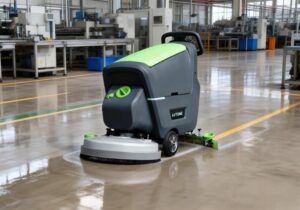
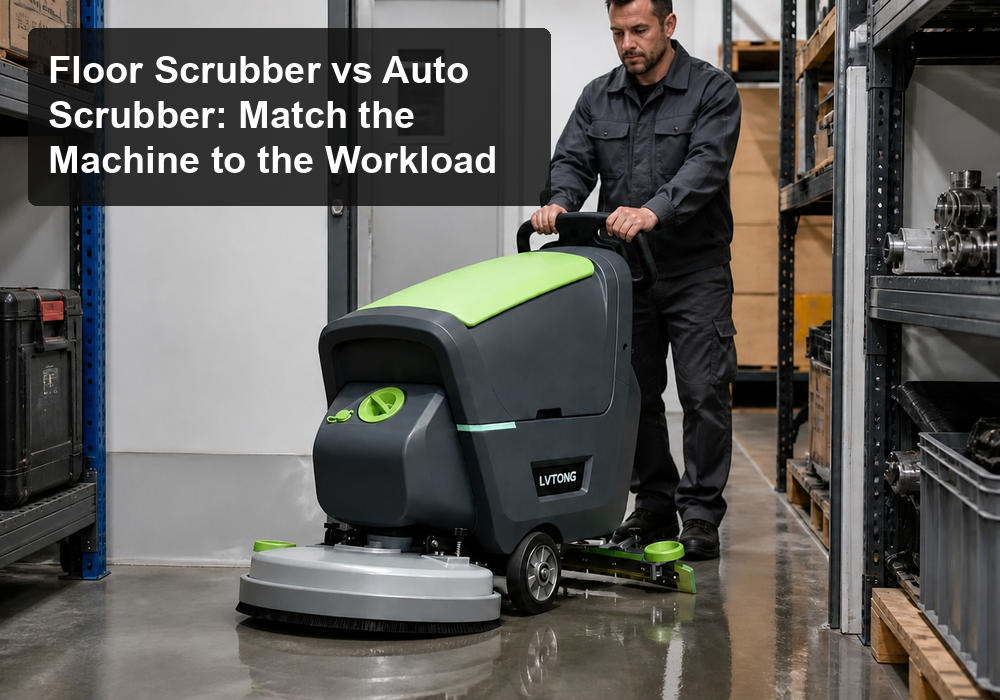
Las fregadoras de suelos lavan suelos duros y recuperan el agua sucia en un único proceso de limpieza. Sin embargo, existen diferentes configuraciones de máquinas diseñadas para distintas superficies, distribuciones, condiciones del suelo y requisitos de productividad.
Para elegir la máquina adecuada es necesario evaluar la superficie a limpiar, el ancho del pasillo, el material del suelo, el nivel de suciedad, la frecuencia de limpieza, la duración de la batería y el coste de la mano de obra.
Respuesta rápida:
Los principales tipos de fregadoras de suelos incluyen las compactas, las de conductor acompañante, las de conductor de pie, las con asiento y las robóticas. También se pueden clasificar según su tecnología de limpieza, como las de disco, las cilíndricas y las orbitales.
El tipo de fregadora de suelos más adecuado depende del tamaño de las instalaciones, la distribución del suelo, el estado de la superficie, la frecuencia de limpieza y los requisitos de productividad. Las fregadoras de suelos de conductor acompañante suelen ser apropiadas para zonas estrechas o con muchos obstáculos, mientras que las fregadoras de suelos con conductor a bordo son preferibles para grandes instalaciones abiertas que requieren una mayor eficiencia de limpieza.
LVTONG es un fabricante de equipos de limpieza industrial de suelos, especializado en fregadoras industriales y comerciales. Su gama de productos incluye fregadoras de suelos de conductor acompañante, fregadoras de suelos con conductor a bordo y fregadoras-secadoras diseñadas para fábricas, almacenes, centros logísticos, centros comerciales e instalaciones comerciales.
¿Cuáles son los principales tipos de fregadoras de suelos?
Los principales tipos de fregadoras de suelos comerciales son:
- Fregadoras de suelos compactas o micro
- Fregadoras de suelo con operador a pie
- Fregadoras de suelos con plataforma para el conductor
- Fregadoras de suelo con operador a bordo
- Fregadoras de suelos robóticas o autónomas
Las fregadoras de suelos también se pueden clasificar según su plataforma de fregado:
- Fregadoras de suelos de disco
- Fregadoras de suelos cilíndricas
- Fregadoras orbitales de suelos
Estos diferentes tipos de fregadoras de suelos están diseñados para distintos entornos de limpieza. Las máquinas compactas priorizan la maniobrabilidad, los modelos de conductor acompañante equilibran la flexibilidad y la productividad, las fregadoras con conductor a bordo maximizan la eficiencia de la limpieza y las fregadoras robóticas se centran en rutas de limpieza repetitivas y automatizadas.
El formato operativo afecta principalmente a la productividad, la maniobrabilidad, la carga de trabajo del operario y los requisitos de almacenamiento. La plataforma de fregado influye principalmente en cómo la máquina gestiona la tierra, los residuos sueltos, las juntas de lechada, las superficies texturizadas y los acabados de suelo.
Tipos de fregadoras de suelos: una visión general
| Tipo fregadora de suelos | Puesto de operador | Aplicaciones adecuadas | Ventaja principal | Limitación principal |
|---|---|---|---|---|
| Compacto o micro | Camina detrás o al lado de la máquina. | Baños, tiendas pequeñas, cocinas y espacios confinados | Excelente maniobrabilidad | Tanques pequeños y camino de limpieza estrecho |
| de empuje | Camina detrás de la máquina | Escuelas, tiendas minoristas, clínicas, talleres y pasillos estrechos | Control preciso alrededor de los obstáculos | Mayor cantidad de caminatas del operario durante turnos largos |
| De pie | Se asienta sobre una plataforma integrada. | Instalaciones de tamaño mediano y diseños mixtos. | Diseño compacto con mayor productividad | Gama de productos más reducida que en otros formatos. |
| Correpasillos | Se sienta y maneja la máquina. | Almacenes, fábricas, aeropuertos y grandes instalaciones públicas | Mayor cobertura y menor fatiga del operador. | Requiere más espacio para girar y almacenar. |
| Robótico | Supervisa el funcionamiento autónomo | Rutas de limpieza predecibles y repetibles | Reduce la conducción manual repetitiva | Requiere idoneidad de la ruta y supervisión humana. |
Fregadora de suelos vs. barredora de suelos: ¿Cuál es la diferencia?
Una fregadora de suelos aplica la solución de limpieza, agita el suelo con un cepillo o una almohadilla y recoge la solución sucia con un sistema de aspiración y rasqueta.
Una barredora de suelos recoge principalmente polvo seco, arena, material de embalaje y otros residuos sueltos. Normalmente no lava el suelo de la misma manera que una fregadora.
Algunas máquinas industriales combinan las funciones de barrido y fregado. Sin embargo, no se debe esperar que una fregadora de suelos estándar recoja grandes cantidades de residuos sueltos. En instalaciones con abundante polvo, virutas de madera, fragmentos metálicos o residuos de embalaje, puede ser necesario barrer antes de fregar o bien optar por una máquina cilíndrica o combinada diseñada para la recogida de residuos limitados.
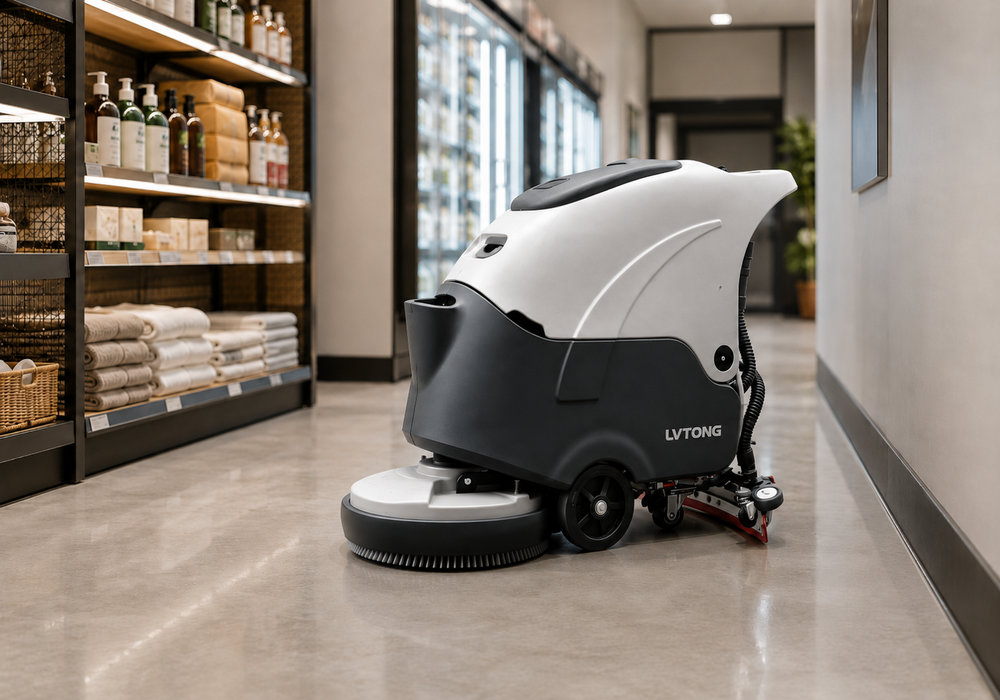
Tipos de fregadoras de suelos según la configuración del operador
1. Fregadoras de suelos compactas y micro
Las fregadoras de suelos compactas están diseñadas para áreas pequeñas o muy concurridas donde una máquina comercial convencional podría ser difícil de operar.
Se utilizan comúnmente en:
- baños
- Pequeñas tiendas minoristas
- cocinas comerciales
- Cafeterías y restaurantes
- Consultorios clínicos
- Entradas
- Ascensores
- Áreas alrededor de muebles o equipos fijos
Su principal ventaja es la maniobrabilidad. Una máquina compacta puede acceder a espacios reducidos, girar en un radio pequeño y ocupar menos espacio de almacenamiento.
La desventaja radica en la capacidad. Los depósitos de solución y recuperación más pequeños requieren llenados y vaciados más frecuentes. Además, un ancho de limpieza reducido implica que cubrir una superficie amplia lleva más tiempo que con una máquina más grande, ya sea de conductor a pie o con asiento.
Por lo tanto, los equipos compactos son más eficaces cuando la ruta de limpieza es estrecha, está dividida o es de difícil acceso, y no simplemente cuando el edificio en su conjunto es pequeño.
2. Fregadoras de suelos autopropulsadas
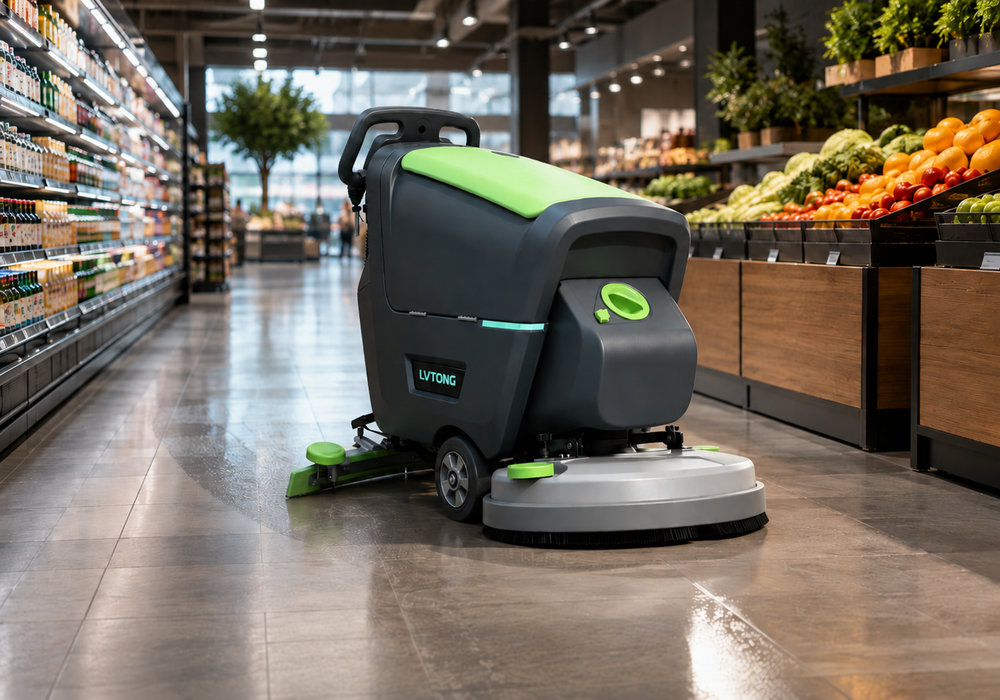
Una fregadora de suelos autopropulsada se controla mediante un operario que camina detrás de la máquina. Algunas unidades cuentan con asistencia de cepillo, mientras que los modelos más grandes pueden incluir tracción motorizada para reducir el esfuerzo necesario para mover la máquina.
Las fregadoras de conductor acompañante se utilizan habitualmente en:
- Supermercados y tiendas minoristas
- Escuelas e instalaciones educativas
- Hospitales y clínicas
- Fábricas pequeñas y medianas
- Talleres
- Áreas de procesamiento de alimentos
- Almacenes con pasillos estrechos
- Instalaciones con muchas columnas, estanterías u obstáculos fijos.
La principal ventaja de una máquina autopropulsada es el control. El operario permanece cerca de la plataforma de fregado y puede reaccionar rápidamente ante esquinas, equipos, estanterías y cambios en las condiciones del suelo.
Los equipos de empuje también suelen requerir menos espacio para maniobrar y almacenar que los modelos con asiento. Por lo tanto, pueden seguir siendo la mejor opción en instalaciones relativamente grandes si la ruta de limpieza está muy dividida o contiene muchos obstáculos.
Su principal limitación es la carga de trabajo del operador. Durante turnos largos, el empleado debe recorrer toda la ruta de limpieza. La capacidad del tanque y el ancho de limpieza también suelen ser menores que los de las máquinas más grandes con asiento. Las instalaciones que priorizan la maniobrabilidad, el control preciso del operador y el acceso a rutas estrechas pueden comparar LVTONG con Gama de fregadoras de suelos autopropulsadas.
Las opciones de aspiradoras autopropulsadas de LVTONG incluyen los modelos Q5 y LT-S530X. El Q5 es un modelo compacto de cepillo de disco para rutas comerciales e industriales ligeras, mientras que el LT-S530X está diseñado para aplicaciones que requieren mayor capacidad sin sacrificar la maniobrabilidad de una aspiradora autopropulsada.
3. Fregadoras de suelos con plataforma para el operador
Una fregadora de suelos con plataforma para el operario utiliza una pequeña plataforma integrada en lugar de un asiento convencional. El operario se sitúa de pie sobre la máquina y puede subir o bajar rápidamente.
Este formato ocupa una posición intermedia entre los equipos de empuje y los de asiento.
Las fregadoras con plataforma para el conductor pueden ser adecuadas para:
- Instalaciones de tamaño mediano
- Diseños mixtos, abiertos y congestionados.
- Rutas que requieren entrada y salida frecuentes
- Zonas más estrechas donde una máquina de tamaño normal con asiento resulta poco práctica.
- Operaciones que requieren mayor productividad que una unidad convencional de operador a pie.
La principal ventaja reside en la combinación de un tamaño relativamente compacto y una menor necesidad de que el operario tenga que desplazarse.
Sin embargo, las máquinas de operador a pie son menos comunes que los modelos de operador a pie o con asiento. Por lo tanto, antes de elegir una, se deben considerar la disponibilidad del producto, el servicio técnico local y las preferencias del operador.
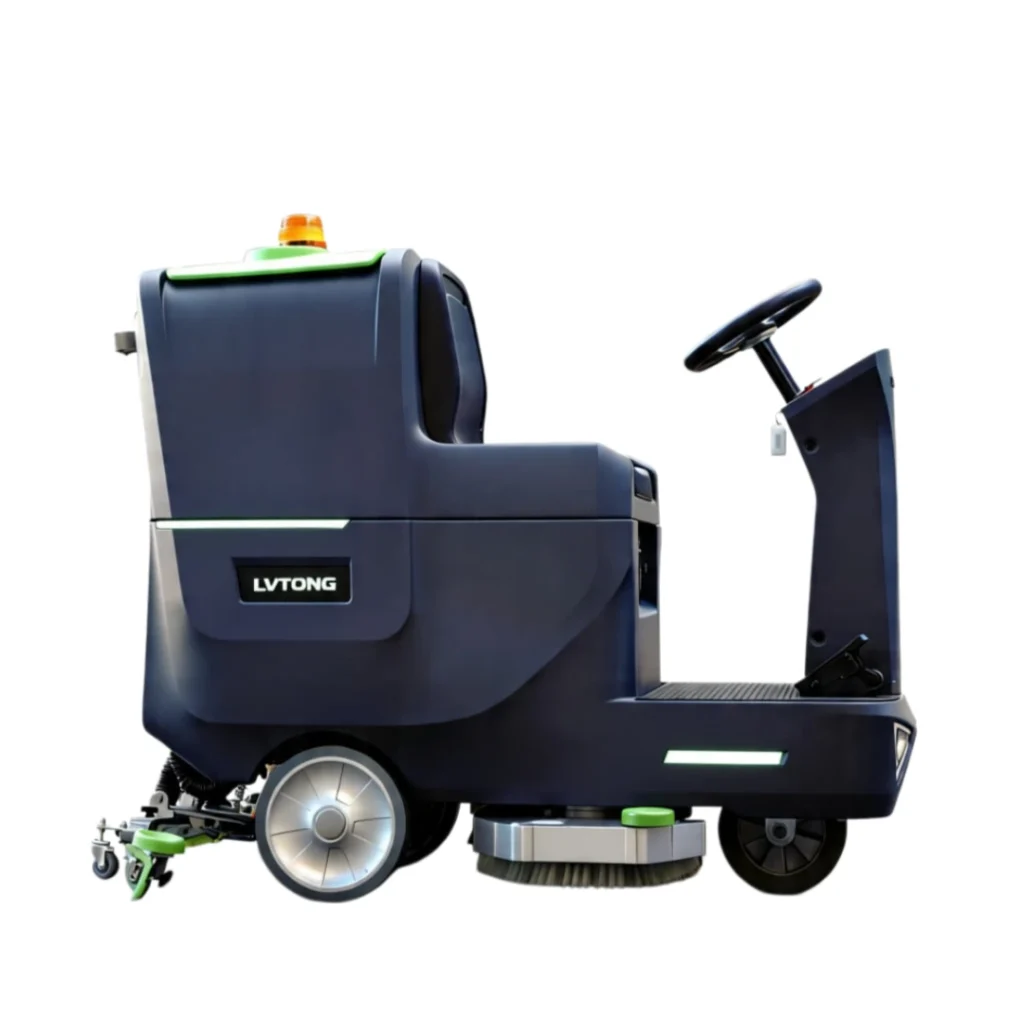
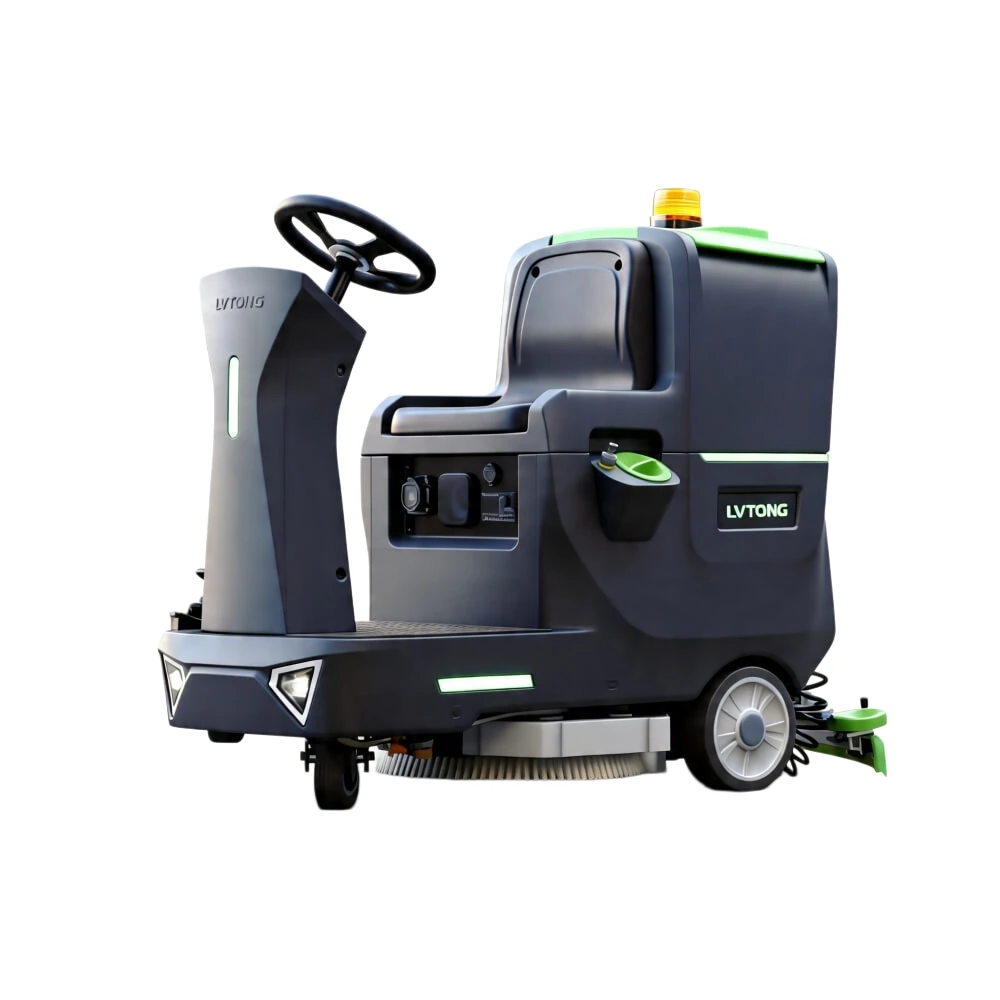
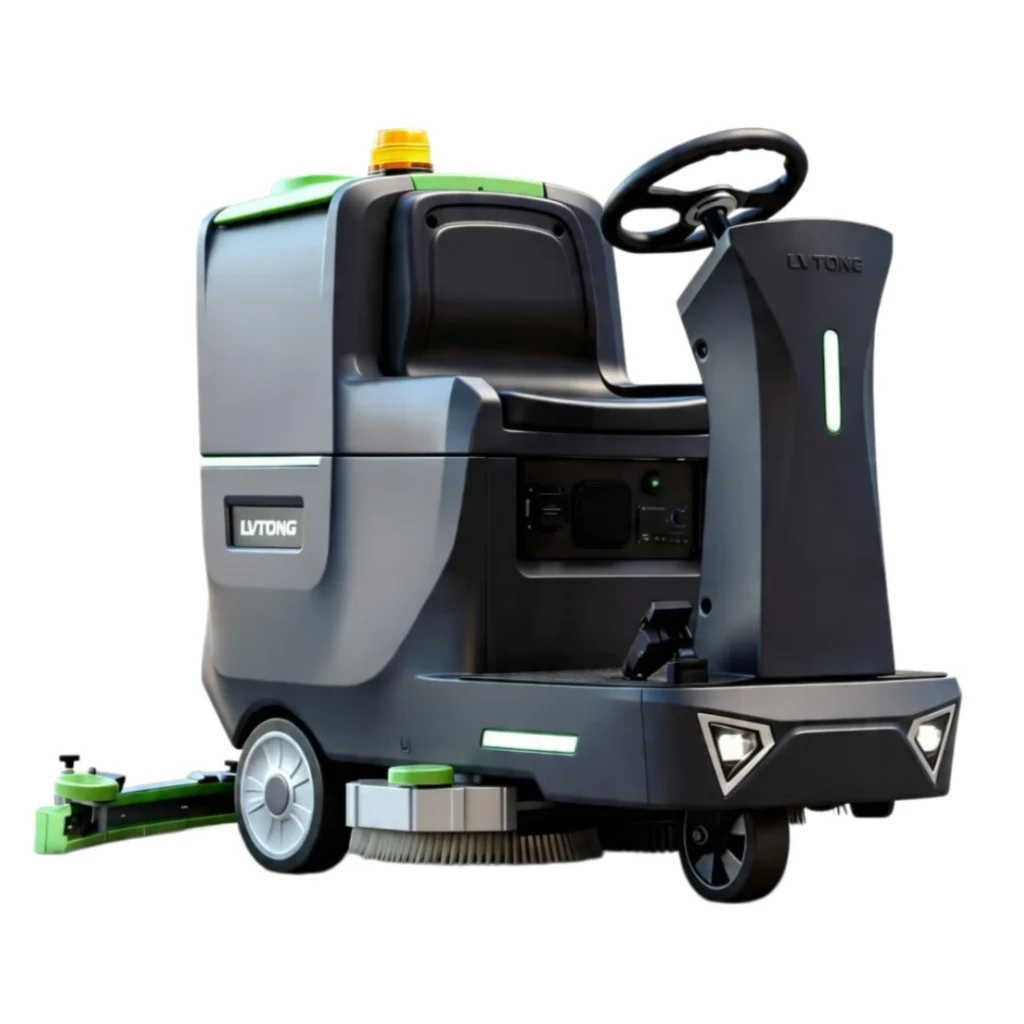
4. Fregadoras de suelos con conductor
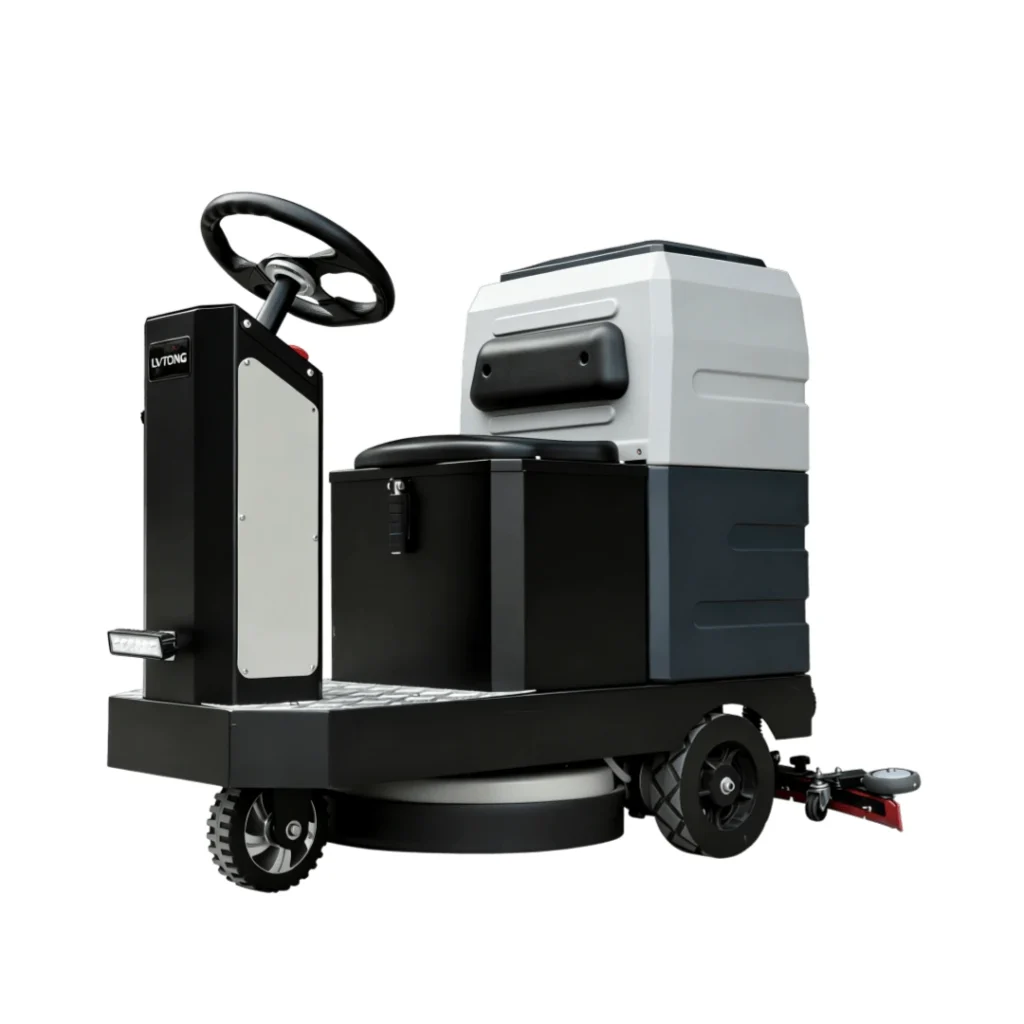
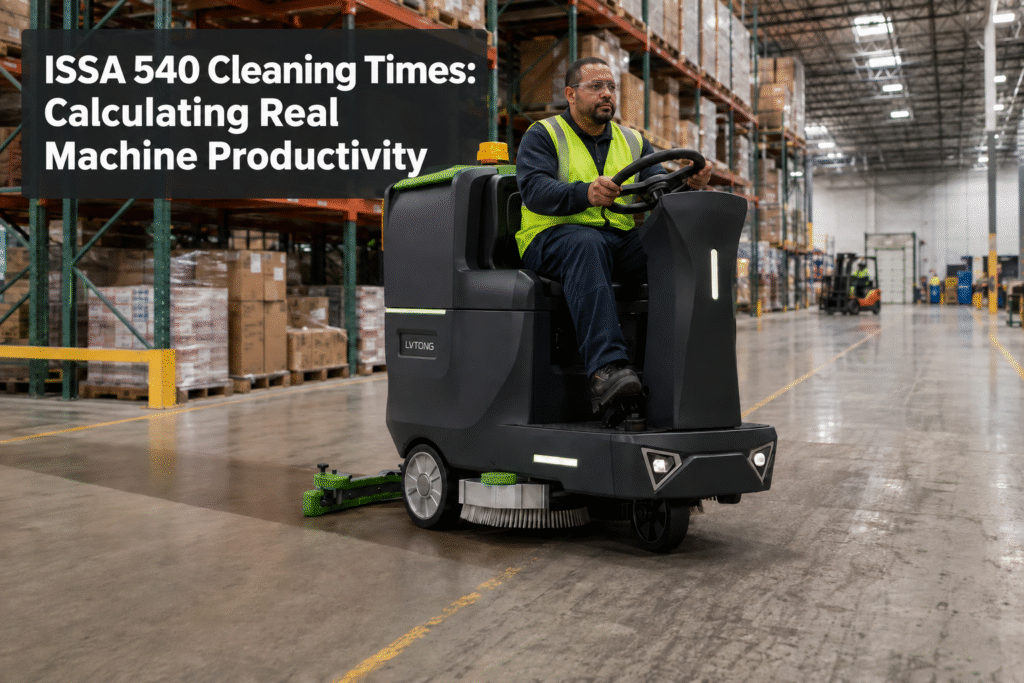
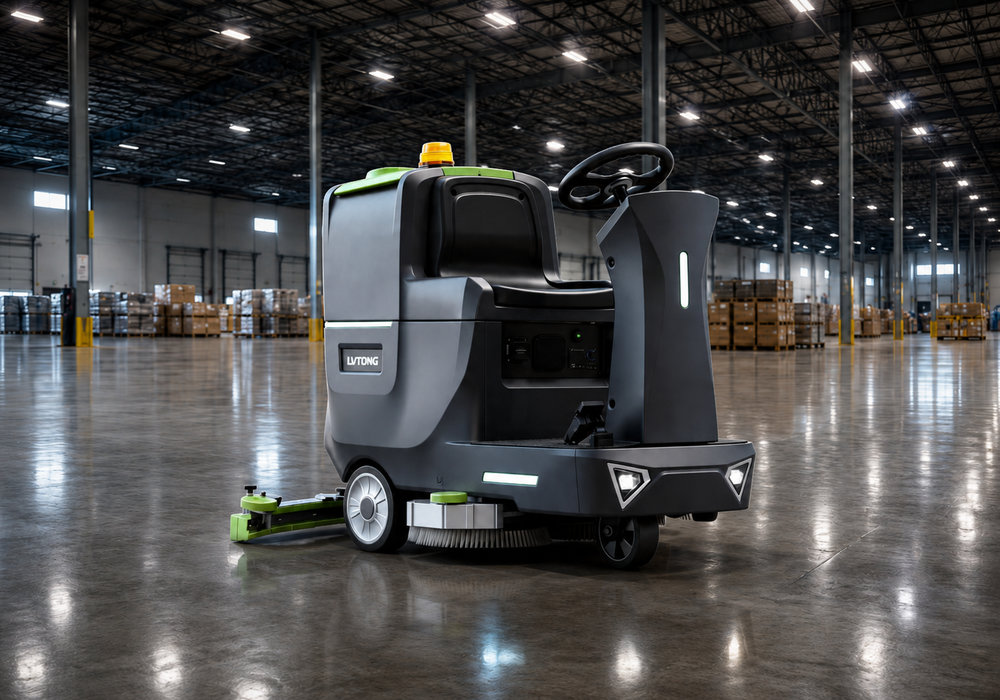
Una fregadora de suelos con conductor permite al operario sentarse y manejar la máquina. Estas unidades suelen ofrecer mayor ancho de limpieza, depósitos más grandes y mayor capacidad de batería que los equipos de conductor a pie.
Las fregadoras autopropulsadas se utilizan habitualmente en:
- almacenes
- Centros de logística y distribución
- Plantas de fabricación
- Aeropuertos
- centros comerciales
- Instalaciones de estacionamiento
- salas de exposiciones
- Grandes escuelas y edificios públicos
Su principal ventaja radica en la productividad durante rutas largas y continuas. Los depósitos de mayor capacidad reducen las interrupciones por recarga y vaciado, mientras que la posición de trabajo sentada disminuye la distancia que se debe caminar durante los turnos de limpieza prolongados.
Sin embargo, una máquina con conductor no es automáticamente la opción correcta para todos los edificios grandes. La máquina debe caber por las puertas, girar en los pasillos, sortear los equipos y llegar al área de almacenamiento y carga requerida.
Un modelo compacto con conductor a bordo puede funcionar eficazmente en una instalación de tamaño mediano con rutas abiertas, mientras que un edificio grande con pasillos estrechos y obstruidos puede requerir aún equipos que se empujen desde el conductor.
Las opciones de barredoras autopropulsadas LVTONG incluyen los modelos LT-S560X, LT-S710X, V6 y LT-S860X. Estos modelos se adaptan a diferentes anchos de limpieza, capacidades de tanque y entornos operativos, por lo que la selección debe basarse en la ruta real y no solo en la superficie total del edificio.
Para rutas de limpieza extensas o continuas, compare LVTONG. modelos de fregadoras de suelos con conductor por ancho de limpieza, capacidad del tanque, tiempo de funcionamiento y requisitos de giro.
5. Fregadoras de suelos robóticas y autónomas
Las fregadoras de suelos robóticas utilizan sensores, sistemas de mapeo y software de navegación para limpiar rutas definidas con una mínima intervención directa del operario.
Son más adecuados para:
- Diseños de planta amplios y predecibles
- Rutas de limpieza repetitivas
- Instalaciones con horarios diarios consistentes
- Áreas donde se puede reasignar la mano de obra a tareas de limpieza detallada
- Operaciones capaces de supervisar equipos autónomos
Una fregadora robótica no elimina por completo la limpieza manual. Los empleados siguen siendo necesarios para preparar la ruta, atender incidencias, mantener la máquina, rellenar o vaciar los depósitos y limpiar las zonas a las que el robot no puede llegar.
Por lo tanto, los equipos robóticos deben considerarse como una parte de la flota de limpieza. Una instalación puede usar una máquina autónoma para rutas abiertas y reservar equipos compactos o de conductor acompañante para esquinas, habitaciones y áreas congestionadas.
Para obtener una visión más detallada de la navegación, la cartografía, la evitación de obstáculos y la planificación de rutas, lea nuestra guía sobre... tecnología de fregadora de suelos autónoma.
Tipos de fregadoras de suelos de Scrub Deck
La configuración del operador y la plataforma de limpieza son decisiones independientes.
Las máquinas de limpieza manual, de pie, con asiento o robóticas pueden utilizar diferentes tecnologías de cepillado. Seleccionar el formato de funcionamiento sin evaluar la plataforma de fregado puede resultar en un rendimiento deficiente sobre la superficie del suelo.
Los tres tipos más comunes de plataformas de limpieza son las de disco, las cilíndricas y las orbitales.
Fregadoras de suelos de disco
Las fregadoras de discos utilizan uno o más cepillos o almohadillas giratorias horizontales. Se utilizan ampliamente para la limpieza rutinaria de suelos duros y lisos.
Las aplicaciones comunes incluyen:
- Hormigón liso
- Hormigón pulido
- Suelos de epoxi
- Baldosa compuesta de vinilo
- Azulejo de cerámica
- Mármol y otras superficies duras selladas
Los sistemas de discos ofrecen una amplia compatibilidad con almohadillas y cepillos. Los operarios pueden seleccionar materiales más blandos para el mantenimiento rutinario o opciones más agresivas para suciedad más incrustada, según los requisitos del fabricante del pavimento.
Las fregadoras de discos funcionan especialmente bien en suelos que ya han sido barridos. Son menos adecuadas para recoger grandes cantidades de residuos sueltos, ya que el cabezal giratorio puede desplazar los materiales más grandes en lugar de recogerlos.
Elija un fregador de discos cuando:
- El suelo es relativamente liso.
- La cantidad de escombros sueltos es limitada.
- Se requiere limpieza general.
- La flexibilidad del cepillo o la almohadilla es importante.
- Se necesita una mayor presión de contacto para suelos adheridos.
Fregadoras de suelos cilíndricas
Las fregadoras cilíndricas utilizan cepillos de rodillo horizontales que giran sobre el suelo. La acción del cepillo permite acceder a la textura de la superficie, las ranuras poco profundas y las juntas de las baldosas con mayor eficacia que algunos sistemas de discos planos.
A menudo se consideran para:
- Hormigón texturizado
- Suelos de seguridad
- Azulejos y lechada
- Suelos industriales con irregularidades en la superficie
- Áreas que contienen cantidades limitadas de pequeños escombros sueltos.
Algunas fregadoras cilíndricas incluyen una bandeja recolectora de residuos que permite recoger material ligero mientras se friega el suelo. Esto puede reducir la necesidad de una pasada previa de barrido en condiciones adecuadas.
Sin embargo, una fregadora cilíndrica no sustituye a una barredora industrial cuando el suelo contiene una cantidad considerable de residuos de embalaje, fragmentos de metal o escombros pesados.
Elija un depurador cilíndrico cuando:
- El suelo tiene textura, juntas o surcos poco profundos.
- Se deben recoger los pocos escombros pequeños que haya.
- La agitación de la línea de lechada es importante
- La ruta de limpieza combina el lavado y la recogida de residuos ligeros.
Fregadoras orbitales para suelos
Los depuradores orbitales utilizan una almohadilla que se mueve con un patrón orbital pequeño y rápido. En lugar de depender únicamente de la rotación circular, la almohadilla produce una agitación mecánica constante en toda la superficie de contacto.
Los sistemas orbitales pueden ser útiles para:
- Suelos duros y lisos
- Limpieza centrada en los bordes
- Limpieza profunda con almohadillas específicas para cada aplicación.
- Preparación de la superficie
- Procedimientos seleccionados para la eliminación del acabado del suelo
- Aplicaciones que requieren contacto controlado con la almohadilla
El rendimiento depende en gran medida de la almohadilla seleccionada, el acabado del suelo, el proceso químico y el diseño de la máquina. Por lo tanto, las afirmaciones sobre decapado sin productos químicos o grandes ahorros de agua deben evaluarse para la máquina y la aplicación específicas, en lugar de aplicarse a todas las fregadoras orbitales.
Elija un depurador orbital cuando:
- El acceso perimetral es una prioridad.
- Se requiere un proceso específico basado en almohadillas.
- Es importante una agitación constante en toda la almohadilla.
- El fabricante de pisos y acabados aprueba el proceso.
Fregadoras de suelos de disco, cilíndricas y orbitales
| Cubierta de fregado | Superficie más adecuada | Manejo de escombros sueltos | Suelos y lechada texturizados | Fortaleza principal | Limitación principal |
|---|---|---|---|---|---|
| Desct | Suelos duros y lisos | Bajo | Moderado | Opciones versátiles de cepillo y almohadilla | Por lo general, requiere un barrido previo eficaz. |
| Cilíndrico | Suelos texturizados o irregulares | Moderado | Alto | Alcanza las ranuras y puede acumular residuos ligeros. | Más componentes del cepillo para inspeccionar y mantener |
| Orbital | Suelos lisos y procesos específicos para cada tipo de almohadilla. | Bajo | Moderado | Agitación constante y mejor acceso a los bordes. | Los resultados dependen en gran medida de la selección de la almohadilla y del proceso. |
Fregadoras de suelos de empuje frente a fregadoras de suelos con asiento
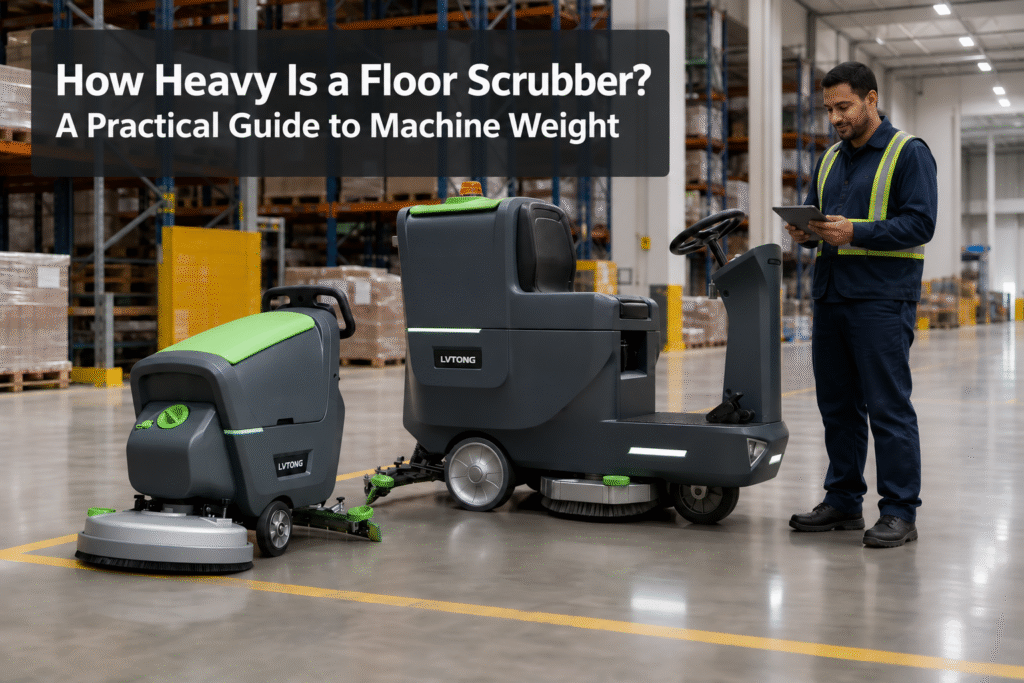
Una fregadora de empuje suele ser más adecuada para espacios reducidos, divididos o con muchos obstáculos. Una fregadora con asiento suele ser más adecuada para rutas de limpieza largas y abiertas, donde una mayor cobertura y una menor necesidad de desplazamiento del operario justifican el uso de una máquina más grande.
No existe un umbral de superficie universal a partir del cual todas las instalaciones deban pasar de equipos de empuje a equipos con asiento.
La elección correcta depende de la superficie real que se puede limpiar por turno, la distribución del espacio, la frecuencia de limpieza, el coste de la mano de obra, el ancho de las puertas, el espacio para maniobrar, la capacidad del depósito, el tiempo de funcionamiento y las condiciones de almacenamiento.
| Factor de selección | Fregadora de empuje | Fregadora con conductor a bordo |
|---|---|---|
| Diseño preferido | Estrecho, dividido o con muchos obstáculos. | Grande, abierto y continuo |
| Maniobrabilidad | Alto | Moderado |
| Operador caminando | Requerido | Mínimo |
| Ruta de limpieza | Generalmente más estrecho | Generalmente más ancho |
| Capacidad del tanque | Generalmente más pequeños | Generalmente más grande |
| Frecuencia de recarga | Generalmente más alto | Generalmente más bajo |
| Inversión inicial | Generalmente más bajo | Generalmente más alto |
| Comodidad en jornadas largas | Moderado | Más alto |
| Requisitos de almacenamiento | Baja | Más alto |
| Beneficio de selección primaria | Control y flexibilidad | Reducción de la productividad y de las horas de trabajo |
Tabla de decisiones para la selección de fregadoras de suelos
| Situación de las instalaciones | Tipo de fregadora de suelos recomendada | Razón |
|---|---|---|
| Habitaciones pequeñas, baños y áreas estrechas | Fregadora de suelos compacta o de empuje | Mayor maniobrabilidad y acceso más fácil |
| Fábricas y talleres de tamaño mediano | Fregadora de empuje o compacta con asiento | Flexibilidad y productividad equilibradas |
| Grandes almacenes e instalaciones de fabricación. | fregadora de suelos con conductor | Mayor eficiencia de limpieza y menor fatiga del operario. |
| Rutas de limpieza repetitivas | Fregadora de suelos robótica | Reduce las operaciones manuales repetitivas |
| Suelos texturizados y juntas de lechada | Fregadora de suelos cilíndrica | Mejor rendimiento de limpieza en superficies irregulares. |
| Suelos lisos de epoxi o pulidos | Fregadora de suelos de disco | Selección flexible de cepillos y almohadillas |
El formato de la máquina es solo una parte de la decisión de compra. Para una evaluación completa del tamaño de la máquina, el sistema de cepillos, la capacidad del tanque, la duración de la batería, el costo total y el soporte de servicio, consulte nuestra Guía de compra de fregadoras de suelos comerciales.
Cómo elegir entre diferentes tipos de fregadoras de suelos
Marco de selección de fregadoras de suelos
Elegir la fregadora de suelos comercial adecuada se puede simplificar en seis pasos:
- Mida la superficie real del suelo que se puede limpiar, en lugar de solo la superficie total del edificio.
- Verifique el ancho del pasillo, el espacio libre en las puertas, el espacio para maniobrar y las condiciones de almacenamiento.
- Identifique el material del suelo y el tipo de contaminación.
- Determinar la productividad de limpieza requerida y las horas de funcionamiento diarias.
- Compare la duración de la batería, los requisitos de carga y las necesidades de mantenimiento.
- Evaluar el costo total de propiedad, incluyendo mano de obra, consumibles, reparaciones y tiempo de inactividad.
Seguir este marco de trabajo ayuda a las empresas a seleccionar una fregadora de suelos que se adapte a su entorno de trabajo real, en lugar de elegir una máquina basándose únicamente en el tamaño o el precio de compra.
1. Calcular el área real que se puede limpiar.
No seleccione una máquina basándose únicamente en la superficie total del edificio.
Un edificio de 10 000 m² puede incluir oficinas, estanterías de almacenamiento, equipos, moqueta y zonas inaccesibles. La superficie real de suelo duro que requiere limpieza diaria puede ser considerablemente menor.
Registro:
- Superficie total de suelo duro
- Área limpiada durante cada turno
- Frecuencia de limpieza
- Tiempo de limpieza disponible
- Áreas que requieren pases repetidos
- Áreas que requieren una máquina diferente
Esto genera un requisito más útil que el tamaño total de las instalaciones.
2. Mida los pasillos, las puertas y el espacio para girar.
Mida los puntos más estrechos a lo largo de toda la ruta de limpieza, incluyendo:
- Puertas
- Pasillos de almacén
- Ascensores
- Rampas
- Espacios entre máquinas
- Entradas de almacenamiento
- Zonas de carga de baterías
- Ubicaciones de drenaje y llenado
Compare estas medidas con el ancho total de la máquina, el ancho de la escobilla de goma, la longitud y el radio de giro, no solo con su ancho de limpieza nominal.
Una máquina que puede limpiar la planta principal pero no puede entrar en un almacén, pasar por una puerta o girar al final de un pasillo generará problemas operativos.
3. Identificar la tierra y los escombros.
El estado del suelo influye tanto en el tipo de máquina como en la selección del cepillo.
Los contaminantes comunes incluyen:
- Polvo fino
- Arena y gravilla
- partículas de alimentos
- fragmentos de embalaje
- Grasa y aceite
- marcas de neumáticos de montacargas
- Polvo metálico
- residuo químico
- Suelo general arrastrado por el suelo
Los sistemas de discos suelen ser eficaces para la suciedad adherida en suelos relativamente lisos y previamente barridos. Los sistemas cilíndricos pueden resultar ventajosos en superficies texturizadas o en rutas con poca suciedad ligera.
Los escombros sueltos y pesados normalmente deben retirarse con una barredora o mediante un proceso de barrido previo independiente.
4. Adapte la máquina a la superficie del suelo.
Inspeccione el material y el estado del suelo antes de seleccionar un cepillo o una almohadilla.
Las superficies importantes incluyen:
- Hormigón liso
- Hormigón pulido
- Epoxy
- Azulejo de cerámica
- Azulejos y lechada
- Baldosa compuesta de vinilo
- Mármol
- Suelos de seguridad texturizados
- Pavimento industrial sellado
El material del cepillo, la agresividad de la almohadilla, la presión ejercida, el detergente y el caudal de agua deben ser compatibles con la superficie.
Es preferible probar la configuración propuesta en un área representativa a basarse únicamente en recomendaciones generales.
5. Compare la productividad real, no solo la productividad nominal.
Los fabricantes suelen publicar la productividad teórica en función del ancho de limpieza y la velocidad de desplazamiento. La productividad real es menor porque la limpieza real incluye:
- Torneado
- Evitar obstáculos
- Rellenar el depósito de la solución
- Vaciar el tanque de recuperación
- Repetición de secciones muy sucias
- Desplazarse entre zonas de limpieza
- Cambiar cepillos o almohadillas
- Carga o reemplazo de la batería
- comprobaciones del operador
Una evaluación práctica debería comparar la superficie que la máquina puede limpiar durante un turno normal en condiciones reales de la instalación.
Una máquina más ancha puede no ofrecer mejores resultados si pierde mucho tiempo girando en pasillos estrechos. Por el contrario, una máquina compacta con conductor a bordo puede reducir significativamente el tiempo de limpieza en una ruta continua y abierta.
6. Evaluar la duración de la batería y la infraestructura.
Para máquinas alimentadas por batería, tenga en cuenta lo siguiente:
- Horas de funcionamiento requeridas por turno
- Tipo de batería
- Tiempo de carga
- Ubicación de carga
- suministro eléctrico
- Requisitos de mantenimiento de la batería
- Cobro de oportunidad
- Costo de reemplazo
- Disponibilidad de baterías de repuesto
El tiempo de funcionamiento requerido debe incluir un margen operativo razonable. Una máquina que solo cumple con la duración de la ruta en condiciones ideales podría no completar el turno si la presión del cepillo, la pendiente, la antigüedad de la batería o la limpieza repetida aumentan el consumo de energía.
La química de la batería, los hábitos de carga, la profundidad de descarga, la temperatura y el mantenimiento pueden afectar el tiempo de funcionamiento útil y los intervalos de reemplazo. Consulte nuestra Guía de duración de la batería de la fregadora de suelos Para una comparación detallada entre baterías de litio y de plomo-ácido.
7. Comparar el costo total de propiedad
El precio de compra más bajo no siempre se traduce en el menor coste operativo.
Una comparación de costos totales debe incluir:
- Precio inicial del equipo
- Mano de obra del operador
- Reemplazo de la batería
- Cepillos y almohadillas
- Cuchillas de limpiacristales
- Detergente y agua
- mantenimiento preventivo
- Refacción
- Falta del tiempo
- Capacitación
- Vida útil prevista
- Valor de reventa o valor residual
Antes de comprar una fregadora de suelos, prepare esta información.
Antes de seleccionar una fregadora de suelos comercial, los compradores deben preparar la siguiente información:
- Superficie total construida
- Superficie real del suelo que se puede limpiar
- Material del suelo
- Principales contaminantes como polvo, aceite, grasa o residuos.
- Ancho del pasillo más estrecho y tamaño de la puerta
- Horas de limpieza requeridas por día
- Condiciones de carga de la batería
- Expectativas de mantenimiento
- Presupuesto disponible para limpieza
Proporcionar estos detalles permite a los fabricantes recomendar el tipo de fregadora de suelos, el ancho de limpieza, la configuración de la batería y la capacidad de la máquina adecuados.
Una máquina con conductor puede tener un costo inicial mayor, pero reduce las horas de trabajo en rutas extensas y abiertas. Un modelo de conductor a pie puede resultar más económico en áreas congestionadas donde una máquina con conductor no puede aprovechar eficazmente su mayor ancho de limpieza.
Selección de fregadoras de suelos según el tipo de instalación.
| Instalación o diseño | Punto de partida recomendado | Condiciones importantes |
|---|---|---|
| Baños y áreas muy pequeñas | Cepillo compacto o micro | Almacenamiento, acceso por los bordes y tamaño del tanque |
| tiendas minoristas | Compacto o de empuje | Tráfico de clientes, ruido y obstáculos |
| Escuelas y clínicas | Vehículo de empuje o vehículo compacto con asiento | Maniobrabilidad, ruido y rendimiento de secado |
| Pasillos estrechos en el almacén | Vehículo de empuje o vehículo compacto con asiento | Ancho total de la máquina y radio de giro |
| Gran almacén abierto | Con ruedas o robótico | Nivel de escombros, continuidad de la ruta y tiempo de ejecución |
| Fábrica | De empuje o con asiento | Tipo de suelo, estado del piso y disposición de los equipos |
| Aeropuerto o sala de exposiciones | Con ruedas o robótico | Rutas largas, tráfico público y horario de funcionamiento |
| Instalación de diseño mixto | Flota combinada | Separe las rutas abiertas de las zonas confinadas. |
| Áreas de azulejos y lechada | Sistema de discos cilíndricos o adecuados | Profundidad de la lechada, tipo de cepillo y estado de la superficie |
| Epoxi liso o hormigón pulido | Disco o sistema orbital | Tipo de suelo, selección de la plataforma y requisitos de acabado |
¿Puede una instalación necesitar más de un tipo de fregadora de suelos?
Sí. Muchas instalaciones obtienen mejores resultados con una flota mixta que obligando a una sola máquina a limpiar todas las áreas.
Por ejemplo:
- Una fregadora autopropulsada puede limpiar el suelo principal del almacén.
- Una máquina de limpieza manual puede limpiar pasillos estrechos y áreas de producción.
- Una fregadora compacta puede limpiar baños y habitaciones pequeñas.
- Un robot de limpieza puede gestionar una ruta abierta predecible.
- Una barredora puede eliminar una cantidad considerable de residuos secos antes de fregar.
Una flota mixta puede mejorar la cobertura de las rutas y reducir las limitaciones que supone utilizar una máquina demasiado grande para zonas confinadas o demasiado pequeña para espacios abiertos continuos.
Ejemplos de tipos de fregadoras de suelos LVTONG
LVTONG suministra fregadoras de suelos, tanto de conductor acompañante como con asiento, para aplicaciones comerciales e industriales.
Fregadora de suelos autopropulsada Q5
En Fregadora de suelos autopropulsada Q5 Es una fregadora de discos compacta, de manejo manual, diseñada para rutas que requieren maniobrabilidad, aplicación controlada de agua y recuperación de agua en una sola pasada.
Puede considerarse para tiendas minoristas, talleres, áreas de procesamiento de alimentos y otras instalaciones con rutas de limpieza moderadas y espacio limitado.
Fregadora de suelos autopropulsada LT-S530X
En Fregadora de suelos industrial autopropulsada LT-S530X Ofrece un formato más grande de acceso manual para entornos industriales y comerciales.
Está diseñada para usuarios que requieren mayor capacidad que la que ofrece una máquina compacta, manteniendo al mismo tiempo un control preciso por parte del operario en pasillos, talleres y zonas con muchos obstáculos.
Fregadora de suelos autopropulsada LT-S560X
En Fregadora de suelos autopropulsada LT-S560X de 560 mm Es un modelo compacto con asiento para instalaciones que requieren operación con asiento pero que no pueden acomodar a los usuarios industriales más grandes.
Puede evaluarse para centros comerciales, talleres y rutas medianas o grandes con pavimento duro donde el espacio para maniobrar sigue siendo una limitación importante.
Fregadora de suelos autopropulsada LT-S710X
En Fregadora de suelos autopropulsada LT-S710X Está diseñado para aplicaciones de limpieza más extensas y continuas.
Su configuración con plataforma para el operador y su sistema de tanque de mayor capacidad lo hacen idóneo para usuarios que comparan equipos para almacenes, plantas de fabricación, instalaciones logísticas y otras rutas de gran cobertura.
La selección de la máquina debe confirmarse utilizando las medidas reales del suelo, las dimensiones de los pasillos, las condiciones de la superficie, el tipo de suelo, el programa de limpieza y el tiempo de funcionamiento requerido.
Preguntas frecuentes
Conclusión
Las fregadoras de suelos deben clasificarse primero según la configuración del operador y luego según la plataforma de fregado.
Las máquinas compactas, de empuje, de pie, con asiento y robóticas se adaptan a diferentes necesidades de diseño, productividad y mano de obra. Las plataformas de disco, cilíndricas y orbitales se adaptan a diferentes superficies, tipos de suciedad y procesos de limpieza.
Para áreas estrechas o divididas, comience evaluando una fregadora compacta o de conductor acompañante. Para rutas largas y abiertas, y turnos prolongados, compare equipos con operador a bordo. Para rutas estables y repetitivas, los equipos robóticos pueden formar parte de la flota de limpieza.
La decisión final debe basarse en la superficie real que se puede limpiar, el ancho del pasillo, el espacio para girar, la superficie del suelo, los residuos, la capacidad del depósito, la duración de la batería y el coste operativo total.
Para recibir una recomendación sobre la máquina más adecuada, proporcione a LVTONG la superficie de su piso, el ancho del pasillo más estrecho, el material del piso, los principales contaminantes, la frecuencia de limpieza requerida y el tiempo de funcionamiento disponible.