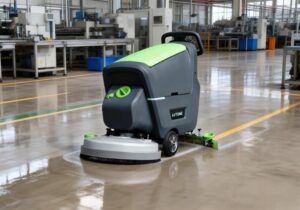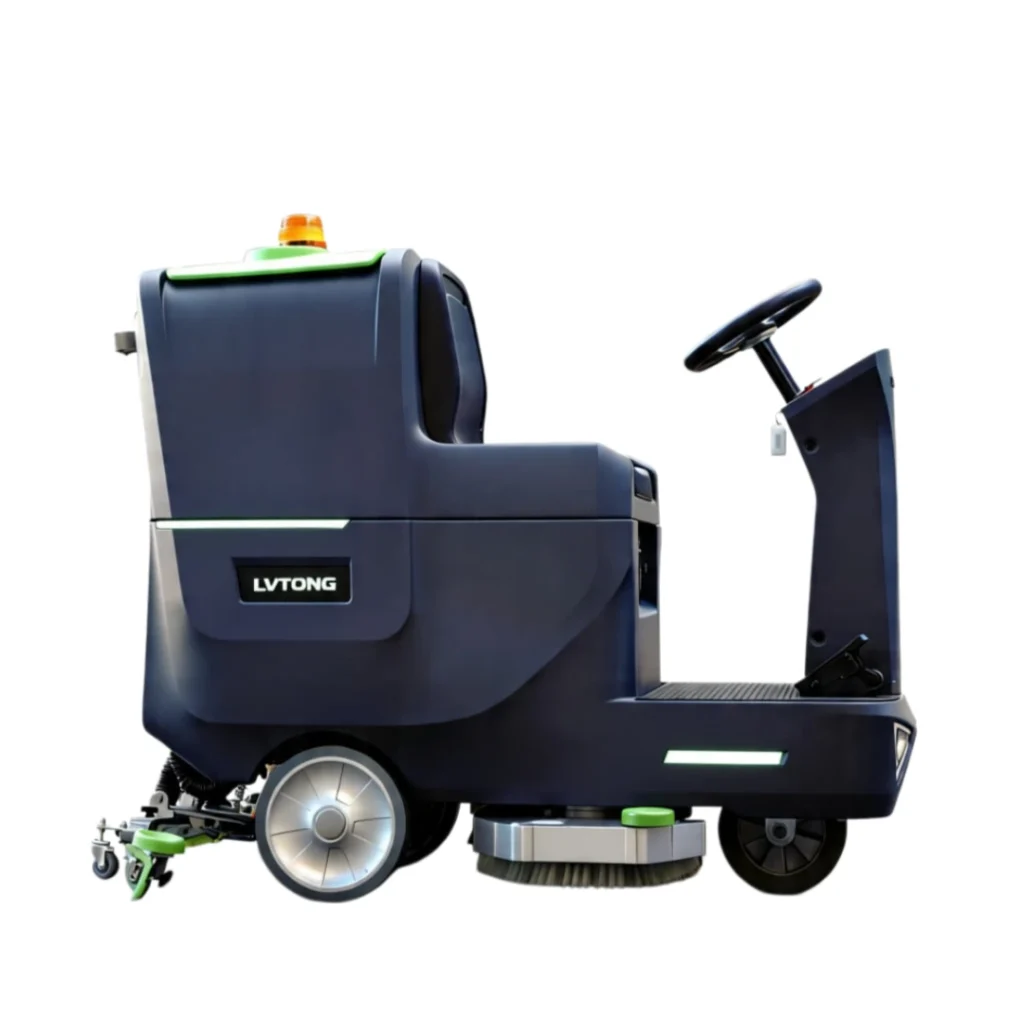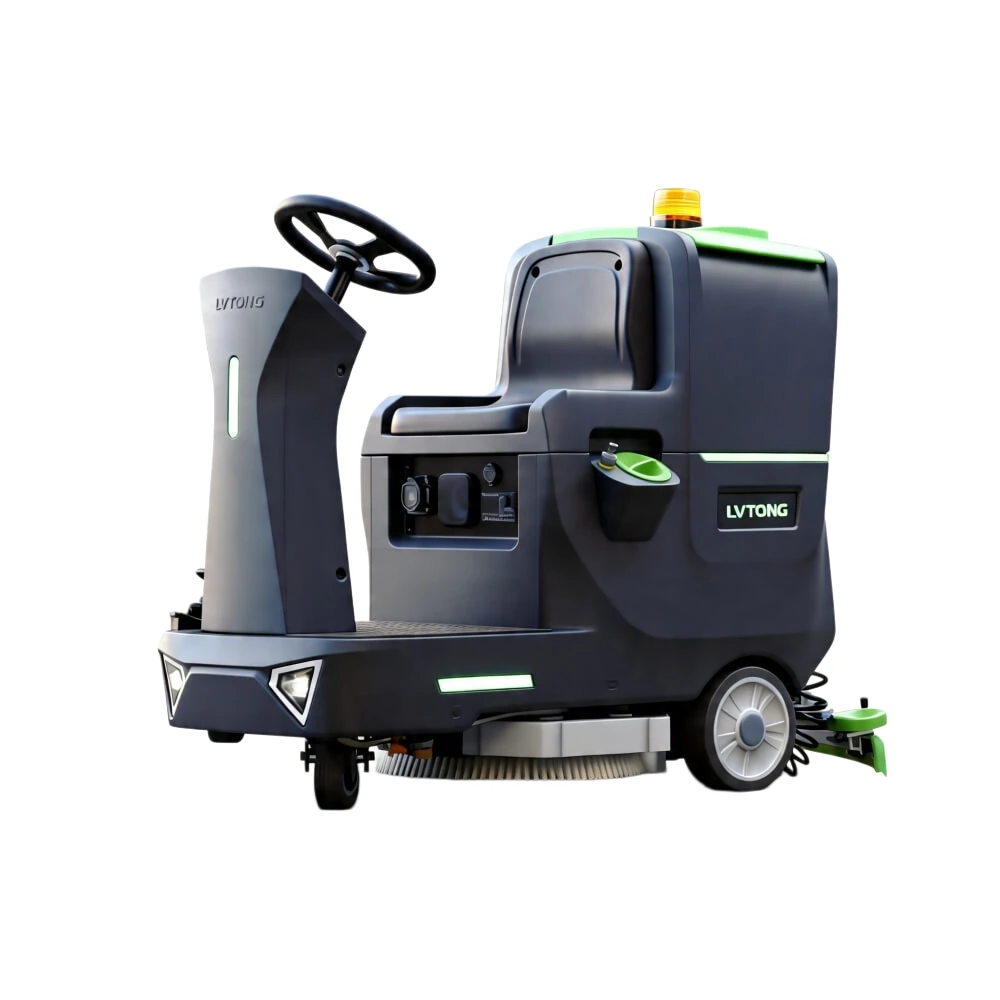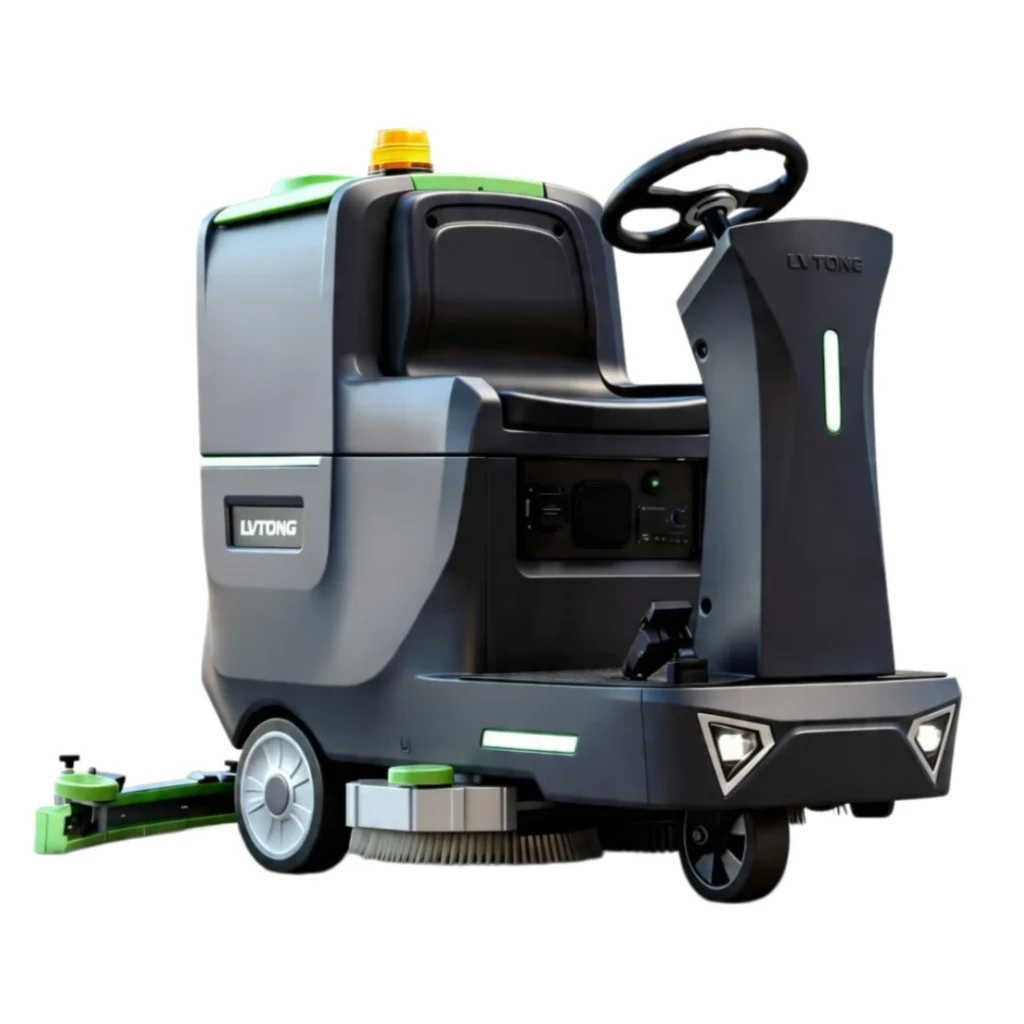
Aprender a usar un fregadora de suelos con conductor a pie Si se utiliza correctamente, puede ayudarle a limpiar suelos comerciales e industriales más rápido, reducir la carga de trabajo, eliminar manchas con mayor eficacia y recuperar el agua sucia en una sola pasada. En comparación con las fregonas y los cubos, una fregadora-secadora autopropulsada combina el fregado, el flujo de agua, la succión y el secado en una sola máquina.
A fregadora de suelos con conductor a pie Se utiliza habitualmente en centros comerciales, supermercados, hoteles, escuelas, hospitales, fábricas, almacenes, centros logísticos, pasillos y otros espacios de tamaño pequeño a mediano. Para obtener los mejores resultados, los operarios deben conocer el funcionamiento de la máquina, preparar la solución de limpieza, inspeccionar la zona de trabajo, utilizar correctamente el cepillo y la escobilla, y limpiar la máquina después de su uso.
¿Qué es una fregadora de suelos de conductor acompañante?
Una fregadora de suelos autopropulsada es una máquina de limpieza de suelos comercial que combina en un solo sistema las funciones de cepillado, aplicación de solución limpiadora, aspiración y secado. Los operarios se sitúan detrás de la máquina y controlan la dirección de limpieza, el funcionamiento del cepillo, el caudal de agua y el proceso de recuperación.
A diferencia de los métodos de fregado tradicionales, una fregadora de suelos autopropulsada puede eliminar la suciedad y recoger el agua sucia al mismo tiempo, lo que ayuda a las empresas a mejorar la eficiencia de la limpieza y reducir el trabajo manual.
Para las empresas que buscan soluciones de limpieza comercial fiables, LVTONG ofrece fregadoras de suelos autopropulsadas diseñadas para almacenes, fábricas, hospitales, supermercados, hoteles, escuelas y otras aplicaciones de gestión de instalaciones.
Las fregadoras de suelos autopropulsadas LVTONG integran funciones de limpieza, recuperación de agua y secado para ayudar a los usuarios profesionales a lograr un mantenimiento de suelos más seguro y eficiente.
Esta guía explica paso a paso cómo utilizar una fregadora de suelos autopropulsada, incluyendo las comprobaciones previas al uso, la configuración del depósito de solución, la recuperación del agua, la planificación de la ruta, el uso de la escobilla de goma, la limpieza de manchas difíciles y el mantenimiento posterior al uso.
Respuesta rápida: Cómo usar una fregadora de suelos de conductor acompañante
Para utilizar una fregadora de suelos de conductor acompañante, siga seis pasos básicos: prepare el suelo, inspeccione la máquina, llene el depósito de solución, ponga en marcha el sistema de limpieza, haga funcionar la fregadora en pasadas superpuestas y realice el mantenimiento posterior al uso.
Tras la preparación, encienda la máquina, baje el cepillo y la escobilla, active el flujo de agua y avance a velocidad constante. Limpie en línea recta, superponiendo las pasadas para evitar zonas sin limpiar. Una vez finalizada la limpieza, cierre el flujo de agua, levante el cepillo y la escobilla, vacíe el depósito de recuperación, enjuague los depósitos, limpie el cepillo y la escobilla, cargue la batería y guarde la máquina en un lugar seco y ventilado.
¿Adónde va el agua en una fregadora de suelos de conductor acompañante?
En una fregadora de suelos autopropulsada, el agua limpia y el detergente se almacenan en el depósito de solución. Durante la limpieza, la máquina libera la solución limpiadora sobre el suelo cerca del cepillo o la almohadilla. El cepillo frota el suelo y afloja la suciedad, las manchas y los residuos.
Tras el fregado, el sistema de limpieza recoge el agua sucia del suelo. A continuación, el motor de aspiración la dirige al depósito de recuperación. Por eso, una fregadora de conductor acompañante puede lavar y secar el suelo en una sola pasada.
En términos sencillos:
| Etapa de agua | Adónde va |
| Agua limpia y detergente | Almacenado en el tanque de solución |
| Solución de limpieza durante el funcionamiento | Se derramó en el suelo cerca del cepillo o la almohadilla. |
| Agua sucia después de fregar | Recogido por la escobilla |
| Agua sucia recuperada | Succionado hacia el tanque de recuperación por el motor de vacío. |
¿Cómo funciona una fregadora de suelos autopropulsada?
Una fregadora de suelos autopropulsada funciona mediante tres procesos de limpieza principales:
- Aplicación de la solución: Se vierte agua limpia y detergente sobre el suelo.
- Fregado mecánico: Los cepillos o almohadillas giratorias eliminan la suciedad y las manchas.
- Recuperación de agua: La escobilla de goma y el motor de aspiración recogen el agua sucia y la depositan en el depósito de recuperación.
Este proceso de tres etapas permite que la máquina limpie y seque los suelos en una sola pasada.
Partes de la fregadora de suelos de conductor acompañante que debe conocer antes de usarla.
Antes de utilizar una fregadora de suelos de conductor acompañante, es importante comprender sus partes principales y la función de cada una.
| Parte | Función |
| Tanque de solución | Contiene agua limpia y detergente para fregar suelos antes de la limpieza. |
| Cepillo o almohadilla | Friega el suelo y elimina la suciedad, las manchas y los residuos. |
| Cubierta de cepillo | Sujeta y dirige el cepillo o la almohadilla durante la limpieza. |
| Conjunto de escobilla de goma | Recoge el agua sucia del suelo después de fregar. |
| tanque de recuperación | Almacena el agua sucia y los escombros recuperados del suelo. |
| Motor de vacío | Crea succión y aspira el agua sucia hacia el tanque de recuperación. |
| Panel de control o manija | Permite al operador controlar la potencia, el cepillo, la succión, el flujo de agua y el movimiento. |
| Control del flujo de soluciones | Ajusta la cantidad de solución limpiadora que se libera en el suelo. |
| Indicador de batería | Muestra la energía restante de la batería durante el funcionamiento. |
| Interruptor de apagado de emergencia | Detiene la máquina rápidamente en caso de emergencia. |
Sistema de alimentación: Es el “corazón” de la máquina.
- Batería: La mayoría de las fregadoras de suelos de conductor acompañante utilizan baterías como fuente de energía para poder funcionar sin cables y ofrecer una mayor flexibilidad. La duración de la batería y el rendimiento del cargador son fundamentales para la eficiencia del aparato.
- Interruptor de cierre de emergencia: Puede cortar la corriente inmediatamente en caso de emergencia y dejar de funcionar.
- Motores:
- Motor de escobillas: Acciona los cepillos o las almohadillas para que giren, proporcionando la fuerza mecánica necesaria para la limpieza.
- Motor de vacío: Genera una potente succión para arrastrar el agua sucia al depósito de recuperación.
- Motor de accionamiento: Las fregadoras de suelos de conductor acompañante se dividen en dos tipos: de transmisión asistida por cepillo y de conducción autónoma. La transmisión asistida requiere que el operador aplique una cierta cantidad de empuje. Este último puede controlar la máquina para que avance o retroceda controlando el botón o la palanca del panel de control.
- Ruedas: Soporta toda la máquina y permite un movimiento suave.
¿Dónde se puede utilizar una fregadora de suelos de conductor acompañante?
Una fregadora de suelos de empuje es adecuada para espacios pequeños y medianos, distribuciones compactas, pasillos estrechos y zonas de mucho tránsito. Resulta especialmente útil donde una fregadora con conductor es demasiado grande o difícil de maniobrar.
Las áreas de aplicación comunes incluyen:
- Espacios comerciales y públicos: centros comerciales, supermercados, vestíbulos de hoteles, estaciones de tren, aeropuertos y puertos.
- Entornos industriales y de almacén: fábricas, centros logísticos, almacenes y talleres.
- Instalaciones sanitarias: hospitales, clínicas, residencias de ancianos y áreas sensibles a la higiene.
- Instalaciones educativas y públicas: escuelas, salas de conferencias, gimnasios, pasillos y corredores públicos.
Fregadora de suelos de empuje frente a fregadora de suelos con asiento
| Característica | Fregadora industrial de operador a pie | Fregadora con operador a bordo |
|---|---|---|
| Mejor aplicación | Áreas pequeñas y medianas | Grandes instalaciones |
| Puesto de operador | Caminando detrás de la máquina | Sentado en la máquina |
| Maniobrabilidad | Excelente para espacios estrechos | Más adecuado para zonas abiertas. |
| Costo de inversión | Inversión inicial más baja | Mayor inversión inicial |
| Usuarios comunes | Hoteles, escuelas, almacenes, tiendas | Aeropuertos, grandes fábricas, centros de distribución |
Lista de verificación previa al uso antes de operar una fregadora de suelos de conductor acompañante
Antes de usar una fregadora de suelos autopropulsada, prepare la zona de trabajo, compruebe el funcionamiento de la máquina, utilice el equipo de protección adecuado y prepare correctamente la solución de limpieza. Una buena preparación mejora los resultados de la limpieza y reduce los riesgos para la seguridad.
1. Inspeccione el área de limpieza.
Retire piedras, papel, trozos de plástico, residuos de envases y otros desechos antes de usar la fregadora. Una fregadora autopropulsada está diseñada para fregar y recuperar el agua sucia, pero no debe usarse como recolector de basura.
Coloque señales de advertencia de piso mojado o de limpieza alrededor del área de trabajo para evitar resbalones y mantener a los peatones alejados de la ruta de limpieza activa.
- Haz un barrido rápido: Antes de comenzar la limpieza, asegúrese de que el área de trabajo esté libre de residuos, como piedras, trozos de papel u otros objetos que puedan atascarse en la máquina. Esto no solo protege la fregadora, sino que también facilita su funcionamiento. Recuerde que su fregadora es una experta en lavar y fregar, pero no es un camión de basura.
-

- Coloca señales de advertencia: Como vas a trabajar con agua, el suelo estará húmedo. Por lo tanto, conviene colocar señales de advertencia en las zonas de limpieza, como letreros de “suelo resbaladizo” o “limpieza”. Esto recordará a los transeúntes la importancia de la seguridad y evitará resbalones accidentales.
-


2. Compruebe el estado de la máquina.
Compruebe que el cepillo o la almohadilla estén bien instalados y que no presenten desgaste visible. Inspeccione la escobilla de goma para asegurarse de que recoge el agua correctamente. Antes de usar el equipo, revise el depósito de recuperación, el depósito de solución, las mangueras, el nivel de la batería y la función de parada de emergencia.
- Comprobar la integridad de los componentes: Compruebe que el disco o la almohadilla del cepillo estén bien instalados y que no presenten desgaste visible. Compruebe si el El rascador de la escobilla de goma está intacto para garantizar un rascado eficaz. Ajuste la presión y la altura del cepillo en función del tipo de suelo.
-
- Comprueba la carga de energía: Antes de poner en marcha el equipo, es necesario comprobar si la batería es suficiente. Así se evitan interrupciones durante la limpieza por quedarse sin batería.
-


3. Utilice equipo de protección personal.
Use guantes al manipular productos químicos de limpieza y calzado antideslizante al caminar sobre suelos húmedos. El equipo de protección ayuda a reducir el contacto con productos químicos y el riesgo de resbalones.
- Use guantes: Al llenar el depósito, es posible que manipules productos químicos de limpieza. Siempre es buena idea llevar un par de guantes para proteger la piel.
-
- Lleve calzado de seguridad: Caminarás sobre una superficie que estará momentáneamente mojada. Por lo tanto, usa calzado antideslizante para evitar resbalones accidentales.
-


4. Prepare la solución de limpieza.
Elija un detergente para fregadoras de suelos de baja espuma adecuado según el tipo de suelo y el nivel de suciedad. Siga la proporción de dilución recomendada y vierta la solución en el depósito. No lo llene en exceso. Si el detergente hace mucha espuma, utilice un antiespumante siguiendo las instrucciones del fabricante.
- Elija el limpiador adecuado: Elija un limpiador especializado neutro o ligeramente alcalino en función del material del suelo (como baldosas, hormigón, suelos epoxídicos, etc.) y del tipo de suciedad.
-
- Formulación proporcional: Siga estrictamente las instrucciones del producto, añada una cantidad adecuada de detergente al depósito de agua limpia y añada agua limpia. No supere la marca máxima de agua para evitar desbordamientos.
- Aviso: Si tiende a generar espuma, no olvide añadir un antiespumante para evitar que se forme demasiada espuma durante el funcionamiento.
-


Por último, realice una prueba de seguridad antes de utilizar la máquina para asegurarse de que el botón de parada de emergencia y otros controles responden y son fiables. Planifica tu ruta de limpieza para evitar tener que limpiar con demasiada frecuencia y descuidar algunas zonas.
Paso a paso: Cómo usar una fregadora de suelos autopropulsada
El procedimiento operativo estándar para una fregadora de suelos de conductor acompañante incluye la preparación, la configuración de la máquina, la operación de limpieza y el mantenimiento posterior a la limpieza.
Seguir un procedimiento operativo uniforme ayuda a mejorar el rendimiento de la limpieza, reducir el desperdicio de agua y prolongar la vida útil de la máquina.
Una vez finalizados los trabajos de preparación, siga estos pasos para operar la fregadora de suelos autopropulsada de forma segura y eficiente.
Paso 1: Encienda la máquina.
Gire la llave a la posición de encendido o pulse el botón de encendido según las instrucciones de la máquina. Compruebe que el panel de control, el indicador de batería y las funciones de seguridad funcionan correctamente.
Paso 2: Baje la plataforma del cepillo y la escobilla de goma.
Baje la plataforma del cepillo a la posición de trabajo para que el cepillo o la almohadilla puedan entrar en contacto con el suelo. Baje el conjunto de la escobilla de goma para que pueda recoger el agua sucia durante la limpieza.
Paso 3: Iniciar el flujo de agua
Abra la válvula de control de flujo de la solución para liberar el líquido limpiador del depósito hacia la zona del cepillo. Ajuste el flujo según el estado del suelo. Use menos solución para suciedad ligera y más para suciedad más incrustada, pero evite mojar demasiado el suelo.
Paso 4: Planificar la ruta de limpieza
Empiece desde el extremo más alejado de la zona y avance hacia la salida. Esto le ayudará a evitar caminar o conducir sobre las zonas que ya han sido limpiadas. Planifique rutas rectas y evite giros innecesarios.
Paso 5: Avanza a velocidad constante
Empuja o conduce la fregadora hacia adelante a una velocidad constante. Si la mueves demasiado rápido, se reducirá el tiempo de fregado y quedará suciedad. Si la mueves demasiado lento, se desperdiciará agua y detergente.
Paso 6: Limpiar en líneas rectas y superpuestas.
Limpia en líneas rectas y superpón ligeramente cada pasada para evitar dejar zonas sin limpiar. Este método ayuda a conseguir una limpieza uniforme en todo el suelo.
Paso 7: Cómo tratar las manchas difíciles
Para manchas difíciles, reduzca la velocidad, deje actuar el producto durante más tiempo o limpie la zona una segunda vez. Utilice el cepillo o la almohadilla adecuados para el tipo de suelo y el nivel de suciedad.
Paso 8: Limpie cuidadosamente las esquinas y los bordes.
Las fregadoras de suelos de empuje son más versátiles que las de conductor acompañante en espacios reducidos y estrechos. Para esquinas y bordes difíciles, reduzca la velocidad, ajuste la máquina con cuidado y limpie manualmente si la máquina no puede alcanzar la zona de forma segura.
Cómo finalizar la limpieza y apagar la máquina.
Cuando hayas terminado la tarea de limpieza, sigue estos pasos:
- Cierre el flujo de agua.
- Si es necesario, mantenga la aspiradora en marcha brevemente para recoger el agua sucia restante.
- Levante la plataforma de cepillos y la escobilla de goma.
- Traslade el depurador de nuevo al área de almacenamiento o mantenimiento.
- Gire la llave o el interruptor principal a la posición de “Apagado”.”
- Vacíe y limpie el depósito de recuperación lo antes posible.
Mantenimiento de la fregadora de conductor acompañante después de su uso.
El mantenimiento posterior al uso garantiza el correcto funcionamiento de la fregadora de suelos autopropulsada y ayuda a prolongar su vida útil. Limpie los depósitos, el cepillo, la almohadilla, la escobilla de goma y la carcasa exterior después de cada uso, y cargue la batería antes de la siguiente tarea de limpieza.
1. Vacíe y enjuague el tanque de recuperación.
Traslade la máquina a una zona de drenaje adecuada y vacíe el depósito de recuperación. Enjuague el depósito con agua limpia para reducir el olor, los residuos y el crecimiento bacteriano. Realice esta limpieza inmediatamente después de limpiarlo, en lugar de dejar agua sucia en su interior.
2. Enjuague el tanque de solución.
Enjuague el depósito de la solución con agua limpia para evitar la acumulación de detergente. Esto ayuda a mantener limpio el sistema de flujo de agua y reduce el riesgo de obstrucciones.
3. Limpie el cepillo o la almohadilla.
Retire el cepillo o la almohadilla y enjuáguelo bien. Quite el pelo, los hilos, el plástico o cualquier residuo que esté enredado en el cepillo. Deje que el cepillo o la almohadilla se sequen antes de volver a colocarlos o guardarlos.
4. Limpie e inspeccione la escobilla de goma.
Limpie la hoja del limpiacristales con un paño húmedo para eliminar la suciedad o los residuos. Si la hoja está desgastada, agrietada o deja residuos de agua, reemplácela a tiempo para garantizar una buena absorción del agua.
5. Carga la batería correctamente.
Tras su uso, conecte el aparato al cargador correcto según las instrucciones del fabricante. Asegúrese de que la batería esté suficientemente cargada antes del siguiente uso. Evite almacenarlo con poca carga durante largos periodos.
6. Almacene la máquina correctamente.
Guarde la fregadora en un lugar seco y bien ventilado. Levante el cepillo y la escobilla de goma durante el almacenamiento para evitar deformaciones causadas por el contacto prolongado con el suelo.
7. Compruebe las piezas habituales.
Revise el exterior de la máquina, las ruedas, las mangueras, los depósitos, la plataforma de cepillos, el conjunto de la escobilla de goma y el panel de control para detectar si hay holgura, daños o fugas. Las inspecciones periódicas ayudan a detectar problemas a tiempo y evitar reparaciones costosas.
Consejos de mantenimiento profesional
Según la experiencia de los profesionales en equipos de limpieza de suelos, los problemas más comunes con las fregadoras de suelos de conductor acompañante se deben a proporciones incorrectas de detergente, cuchillas de goma desgastadas, limpieza deficiente del depósito de recuperación y mantenimiento insuficiente de la batería.
La inspección periódica y la formación adecuada del personal pueden mejorar significativamente la eficiencia de la limpieza y prolongar la vida útil de los equipos.
Errores comunes que se deben evitar al usar una fregadora de suelos de conductor acompañante.
- Utilizar el depurador sin retirar primero los residuos grandes.
- Utilizar detergente normal de alta espuma en lugar de detergente para fregadoras de suelos de baja espuma.
- Moverse demasiado rápido y no darle al cepillo suficiente tiempo para frotar.
- Olvidar bajar la escobilla durante la limpieza.
- Utilizar una escobilla de goma desgastada y dejar agua.
- Llenado excesivo del tanque de solución
- No vaciar el depósito de recuperación después de su uso.
- Olvidar cargar la batería después de limpiarla
- Almacenar la máquina con el cepillo o la escobilla de goma presionados contra el suelo.
Conclusión
El uso correcto de una fregadora de suelos autopropulsada mejora la eficiencia de la limpieza, reduce el trabajo manual, elimina la suciedad con mayor eficacia y recupera el agua sucia en una sola pasada. Los pasos clave son sencillos: inspeccionar la zona, comprobar la máquina, preparar la solución de limpieza, bajar el cepillo y la escobilla, limpiar con movimientos superpuestos y uniformes, y realizar el mantenimiento de la máquina después de su uso.
Una fregadora de suelos autopropulsada, bien operada, es ideal para la limpieza de instalaciones comerciales, industriales, sanitarias, educativas, almacenes y públicas. Con un funcionamiento y mantenimiento adecuados, contribuye a un proceso de limpieza de suelos más limpio, seguro y eficiente.
Cómo elegir la fregadora de suelos autopropulsada adecuada
La elección de la fregadora de suelos autopropulsada adecuada depende del entorno de limpieza, el tipo de suelo, la carga de trabajo diaria y los requisitos operativos.
| Requisito de limpieza | Solución recomendada |
|---|---|
| Pequeñas tiendas y oficinas | Fregadora compacta de conductor acompañante |
| Almacenes y fábricas | Limpiador de baterías de alta capacidad |
| largas jornadas de limpieza | Modelo con batería de gran capacidad |
| Pasillos estrechos y zonas concurridas | Modelo compacto y maniobrable |
| suciedad industrial pesada | Modelo con mayor presión de cepillo |
Antes de comprar, las empresas deben tener en cuenta el ancho del cepillo, la duración de la batería, la capacidad del depósito, el material del suelo, la frecuencia de limpieza y el servicio de asistencia posventa.
Preguntas frecuentes sobre fregadoras de suelos de conductor acompañante
¿Cómo se utiliza una fregadora de suelos autopropulsada?
Para usar una fregadora de suelos autopropulsada, inspeccione el suelo, retire los residuos sueltos, coloque señales de advertencia, revise el cepillo y la escobilla, llene el depósito de solución, encienda la máquina, baje el cepillo y la escobilla, active el flujo de agua y limpie con movimientos superpuestos y uniformes. Después de usarla, vacíe el depósito de recuperación, limpie el cepillo y la escobilla, cargue la batería y guarde la máquina correctamente.
¿Dónde se guarda el agua en una fregadora de suelos?
El agua limpia y el detergente se almacenan en el depósito de solución. Durante la limpieza, la solución se vierte en el suelo cerca del cepillo. Tras fregar, la escobilla recoge el agua sucia y el motor de aspiración la introduce en el depósito de recuperación.
¿Necesito barrer antes de usar una fregadora de suelos manual?
Sí. Debe retirar los residuos sueltos, piedras, papel, trozos de plástico y partículas grandes antes de usar la fregadora. Esto protege la máquina y evita que los residuos se atasquen en el cepillo, la escobilla de goma o el sistema de recogida.
¿Cómo preparo la solución de limpieza para una fregadora de suelos?
Utilice un detergente para fregadoras de suelos de baja espuma y siga la proporción de dilución recomendada. Añada agua limpia y detergente al depósito de la solución sin sobrepasar la marca de llenado máximo. Evite los limpiadores de alta espuma, ya que esta puede afectar la recuperación del agua y el rendimiento de la máquina.
¿Por qué mi fregadora de suelos deja residuos de agua?
Una fregadora de suelos puede dejar residuos de agua debido al desgaste de la escobilla, al llenado del depósito de recuperación, a una potencia insuficiente del sistema de aspiración, a una bajada incorrecta de la escobilla o a una superficie irregular. Revise y limpie la escobilla, vacíe el depósito de recuperación e inspeccione el sistema de aspiración.
¿Puede una fregadora de suelos autopropulsada limpiar los suelos de un almacén?
Sí. Una fregadora de suelos autopropulsada se utiliza ampliamente en suelos de almacenes, fábricas, talleres y centros logísticos. Es especialmente adecuada para áreas pequeñas y medianas donde la flexibilidad y la maniobrabilidad son importantes.
¿Cómo elijo una fregadora de suelos autopropulsada?
Al elegir una fregadora de suelos autopropulsada, tenga en cuenta el tamaño de la zona a limpiar, el tipo de suelo, la duración de la batería, el ancho del cepillo, la capacidad del depósito de recuperación, la frecuencia de limpieza y si necesita un funcionamiento manual o autopropulsado.
¿Una fregadora de suelos de conductor acompañante es una fregadora automática?
Sí. Una fregadora de suelos de empuje es un tipo de fregadora automática que se maneja caminando detrás de la máquina. Las fregadoras automáticas incluyen modelos de empuje y de conductor a bordo.
¿Necesita una fregadora de suelos autopropulsada para sus instalaciones?
Si necesita una solución de limpieza de suelos eficiente y fiable, las fregadoras de suelos autopropulsadas LVTONG pueden facilitar la limpieza diaria en almacenes logísticos, hospitales, hoteles, escuelas, aeropuertos, fábricas, supermercados e instalaciones públicas.
Se pueden utilizar en diversos tipos de suelos, como cemento, resina epoxi, baldosas cerámicas, mármol, PVC, caucho y suelos industriales resistentes al desgaste. Al combinar fregado, aspiración y secado en una sola máquina, una fregadora de conductor acompañante mejora la productividad, reduce los costes laborales y facilita una limpieza de suelos más segura.