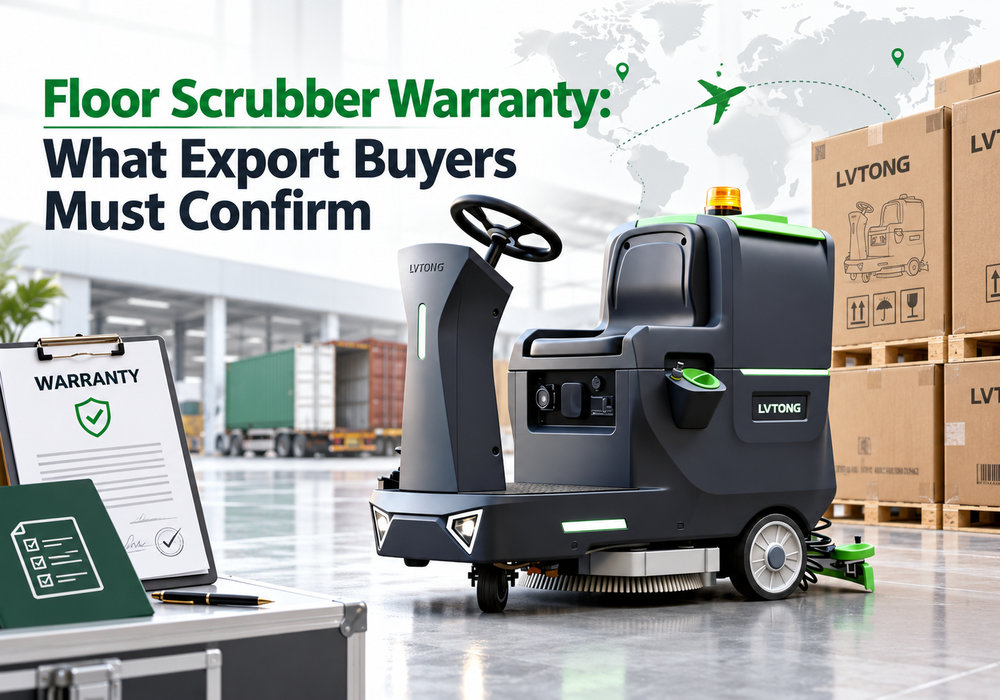
Les limites du nettoyage manuel des sols
Maintenir la propreté d'un entrepôt n'est pas aussi simple qu'il n'y paraît. Les grandes surfaces au sol, la circulation constante des marchandises et l'accumulation de poussière font du nettoyage une tâche longue et laborieuse.
De nombreuses entreprises ont encore recours au balayage manuel, mais à mesure que leurs activités se développent, cette méthode devient rapidement inefficace et coûteuse. C'est pourquoi de plus en plus d'entreprises se tournent vers les balayeuses autoportées, une solution plus intelligente et plus évolutive.
Les défis du nettoyage des sols de grands entrepôts
Les environnements d'entrepôt présentent des défis de nettoyage uniques :
- Grandes surfaces qui prennent des heures à nettoyer manuellement
- Poussière, débris et déchets d'emballage continus
- Coûts de main-d'œuvre élevés pour les tâches de nettoyage répétitives
- Qualité de nettoyage inconstante
Le balayage manuel peut convenir aux petits espaces, mais dans les entrepôts, il entraîne souvent une perte de temps et une augmentation des coûts.

Qu'est-ce qu'une balayeuse autoportée ?
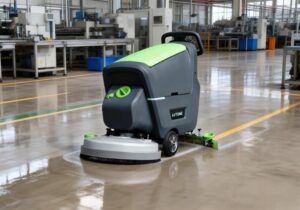
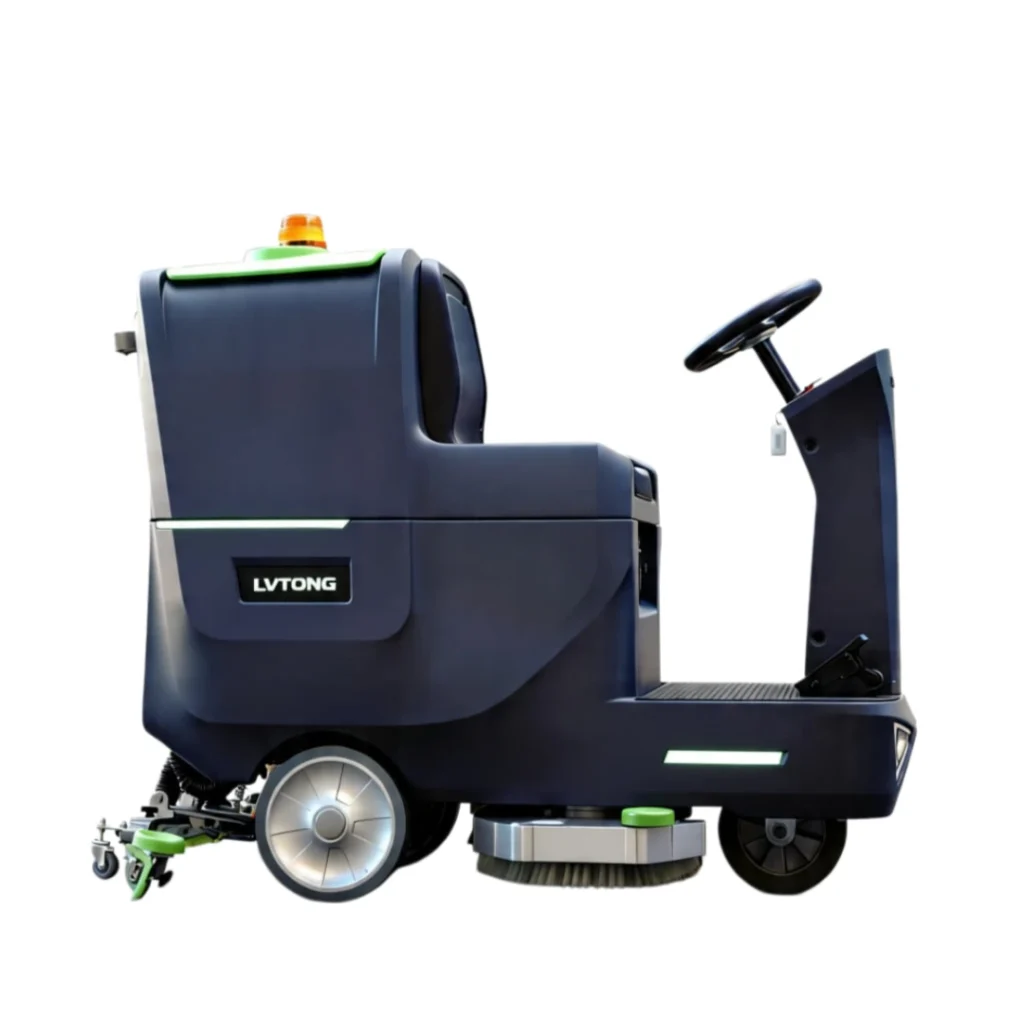
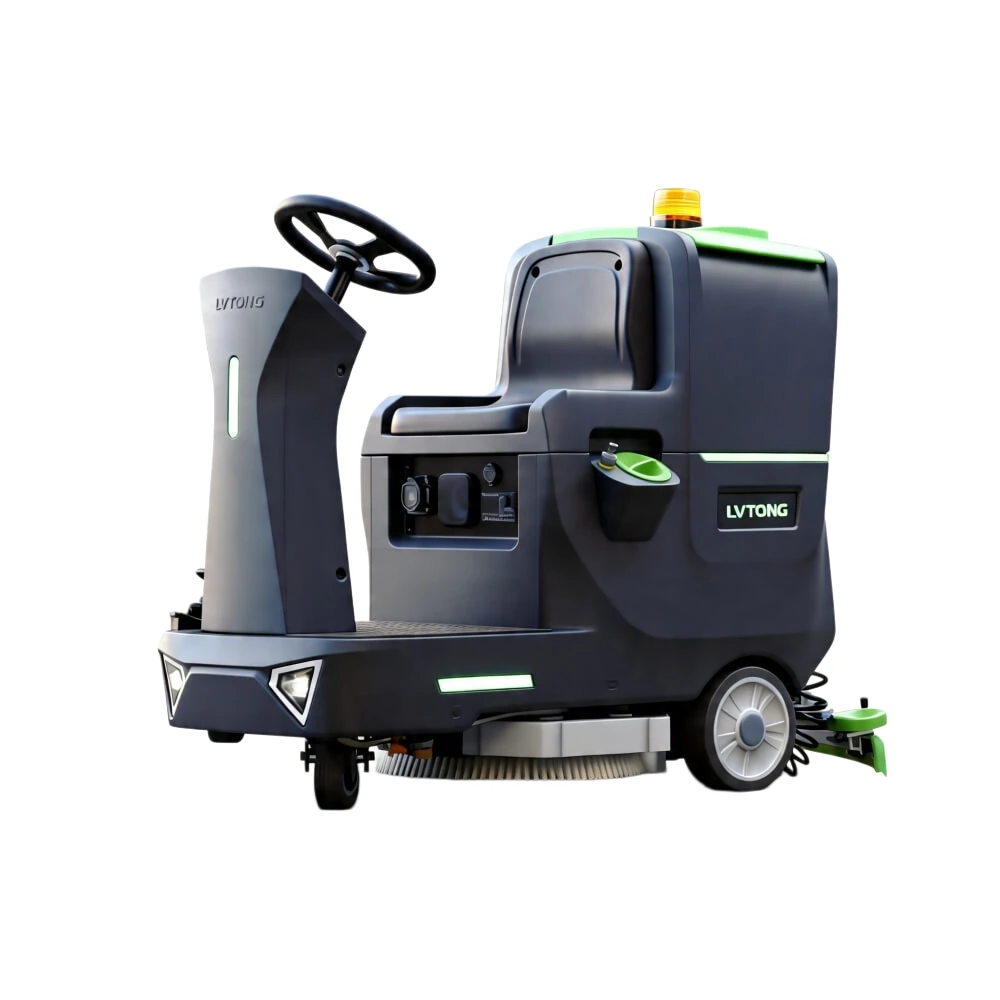
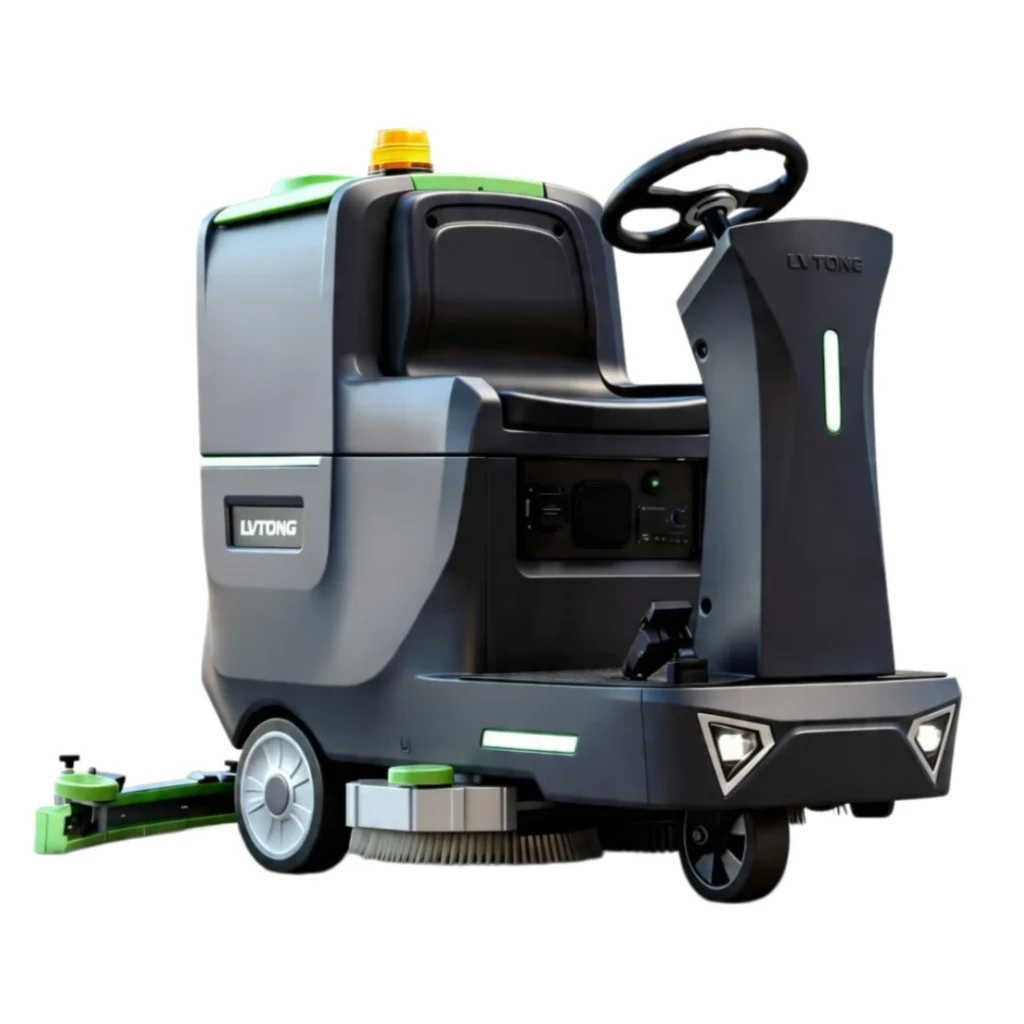
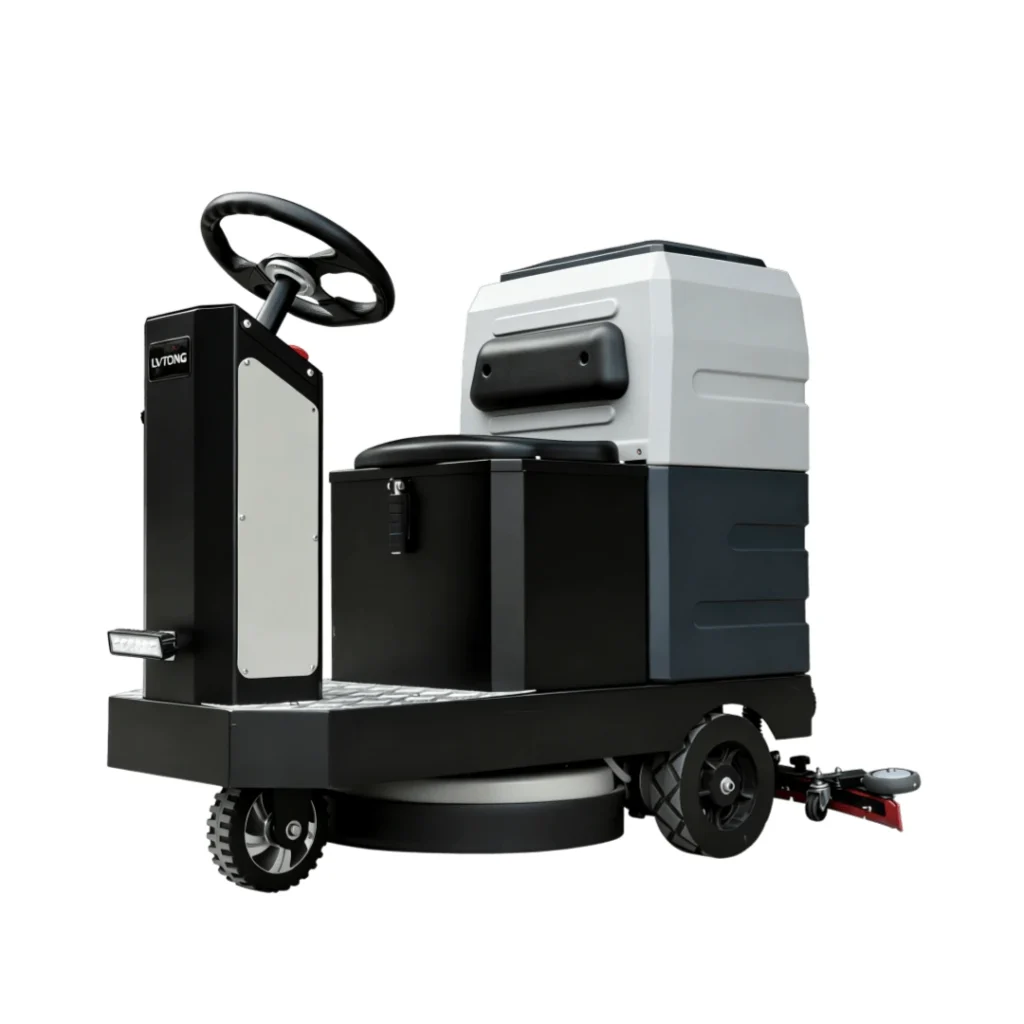
Une balayeuse autoportée est un type de équipement de balayage de sols industriels Conçue pour le nettoyage à grande échelle, cette machine permet aux opérateurs de s'asseoir dessus et de nettoyer rapidement de vastes surfaces grâce à ses brosses et son système d'aspiration intégrés.
Comparée aux outils traditionnels, une balayeuse de sol offre :
- vitesse de nettoyage plus rapide
- Meilleure maîtrise de la poussière
- Des résultats constants
Les balayeuses de sol électriques sont particulièrement appréciées pour une utilisation en entrepôt en raison de leur faible niveau sonore et de l'absence d'émissions.
Principaux avantages de l'utilisation d'une balayeuse autoportée
Améliorer considérablement l'efficacité du nettoyage
Une balayeuse autoportée peut nettoyer des milliers de mètres carrés par heure, surpassant de loin la productivité du balayage manuel.
Réduire les coûts de main-d'œuvre
Au lieu de plusieurs ouvriers qui balayent pendant des heures, un seul opérateur peut effectuer le travail efficacement.
De meilleurs résultats de nettoyage
Des systèmes de brossage et d'aspiration perfectionnés garantissent une collecte optimale de la poussière et des débris, réduisant ainsi les particules en suspension dans l'air.
Fonctionnement simple
Les machines modernes sont conçues pour une utilisation simple, ne nécessitant qu'une formation minimale.
Nettoyage écologique
Électrique balayeuses de sol Elles ne produisent aucune émission et sont idéales pour les environnements intérieurs.

Balayeuse autoportée vs nettoyage manuel
|
Facteur |
Balayage manuel |
Balai autoporté |
|
Efficacité |
Faible |
Haut |
|
Coût de la main-d'œuvre |
Haut |
Faible |
|
Qualité du nettoyage |
Incompatible |
Cohérent |
|
Contrôle de la poussière |
Pauvre |
Excellent |
Pour les grands entrepôts, le balayage manuel est inefficace et difficile à mettre en œuvre à grande échelle.
Comment balayer correctement le sol d'un entrepôt (étape par étape)
Le balayage manuel reste une pratique courante dans de nombreuses installations. Voici comment se déroule généralement le processus :
Étape 1 : Dégager la zone
Enlevez les obstacles et les gros débris avant de balayer.
Étape 2 : Choisir les bons outils
Utilisez les balais appropriés en fonction du type de poussière et de l'état du sol.
Étape 3 : Balayer par sections
Divisez la zone en zones gérables pour assurer une couverture complète.
Étape 4 : Ramasser les débris
Rassemblez la poussière et les déchets en tas pour les éliminer.
Étape 5 : Éliminer correctement
Enlever les débris accumulés pour maintenir la propreté.
Bien que cette méthode fonctionne, elle devient extrêmement chronophage dans les grands entrepôts.

À quelle fréquence faut-il balayer les sols d'un entrepôt ?
La fréquence de nettoyage dépend de l'activité de l'entrepôt :
- Entrepôts à fort trafic : Balayage quotidien
- Zones à trafic moyen : 2 à 3 fois par semaine
- Zones à faible circulation : Nettoyage hebdomadaire
Cependant, le balayage manuel fréquent augmente considérablement les coûts de main-d'œuvre, notamment dans les grandes installations.
Le problème du balayage manuel dans les grands entrepôts
Même lorsqu'elle est effectuée correctement, la méthode de balayage manuel présente des limites importantes :
- Long à mettre en œuvre sur de grandes surfaces
- Nécessite beaucoup de main-d'œuvre et est coûteux
- Résultats de nettoyage incohérents
- La poussière reste souvent en suspension dans l'air.
C’est pourquoi de nombreuses entreprises passent à la technologie supérieure. équipement de balayage de sols industriels pour une meilleure efficacité et de meilleures performances.
Meilleures applications pour les balayeuses autoportées
Les balayeuses autoportées sont idéales pour :
- Entrepôts
- centres logistiques
- installations de fabrication
- Aires de stationnement
Elles sont conçues pour traiter les grands espaces où les méthodes de nettoyage traditionnelles sont insuffisantes.

Comment choisir la balayeuse autoportée adaptée
Lors du choix d'une machine, tenez compte des éléments suivants :
- Surface au sol et zone de nettoyage
- Type de débris (poussière, sable, déchets d'emballage)
- Capacité et autonomie de la batterie
- Utilisation intérieure vs extérieure
Choisir le bon équipement de balayage des sols garantit une efficacité maximale et des économies à long terme.
Comment choisir la balayeuse autoportée adaptée
Lors du choix d'une machine, tenez compte des éléments suivants :
- Surface au sol et zone de nettoyage
- Type de débris (poussière, sable, déchets d'emballage)
- Capacité et autonomie de la batterie
- Utilisation intérieure vs extérieure
Choisir le bon équipement de balayage des sols garantit une efficacité maximale et des économies à long terme.

L'achat d'une balayeuse autoportée est-il judicieux ?
Pour la plupart des entrepôts, la réponse est oui.
Bien que l'investissement initial puisse paraître élevé, les avantages à long terme comprennent :
- coûts de main-d'œuvre réduits
- Temps de nettoyage plus rapides
- Amélioration de la propreté des lieux de travail
- Meilleure efficacité opérationnelle
A balayeuse autoportée Ce n'est pas qu'un simple outil de nettoyage, c'est un investissement pour la productivité.
Améliorez le nettoyage de votre entrepôt dès aujourd'hui
Si votre entrepôt utilise encore le balayage manuel, il est peut-être temps d'envisager une solution plus efficace.
A balayeuse autoportée peut transformer votre processus de nettoyage, réduire les coûts et améliorer les performances globales.
Contactez-nous dès aujourd'hui pour obtenir une recommandation gratuite ou demander un devis pour votre établissement.

FAQ
Comment choisir le modèle adapté aux différentes tailles d'entrepôt ?
Nous recommandons de choisir les modèles en fonction de la zone de nettoyage, de la fréquence de fonctionnement et du type de débris.
Les modèles compacts conviennent aux petits entrepôts, tandis que les machines de grande capacité sont idéales pour les environnements à fort trafic ou de grande superficie afin de réduire les temps d'arrêt et d'améliorer l'efficacité.
Proposez-vous des services de personnalisation ou OEM/ODM ?
Oui. Nous proposons des services de personnalisation OEM/ODM, notamment des options de batterie (plomb-acide ou lithium), la configuration du système de balais, le réglage de la capacité et la personnalisation de la marque, ce qui convient aux distributeurs et aux achats liés à des projets spécifiques.
Dans quelle mesure la maintenance est-elle facile et les pièces de rechange disponibles ?
Nos machines sont conçues avec une structure modulaire pour faciliter la maintenance.
Les pièces d'usure telles que les brosses, les filtres et les composants d'aspiration sont facilement disponibles, et nous fournissons également une assistance technique pour minimiser les temps d'arrêt des machines.
Proposez-vous des formations et un support technique après-vente ?
Oui. Nous fournissons des supports de formation complets, incluant manuels et vidéos. Une assistance technique à distance est également disponible pour garantir une installation, un fonctionnement et des performances optimales sur le long terme.