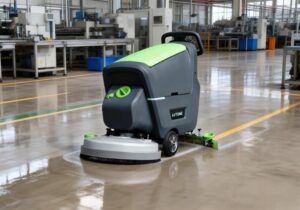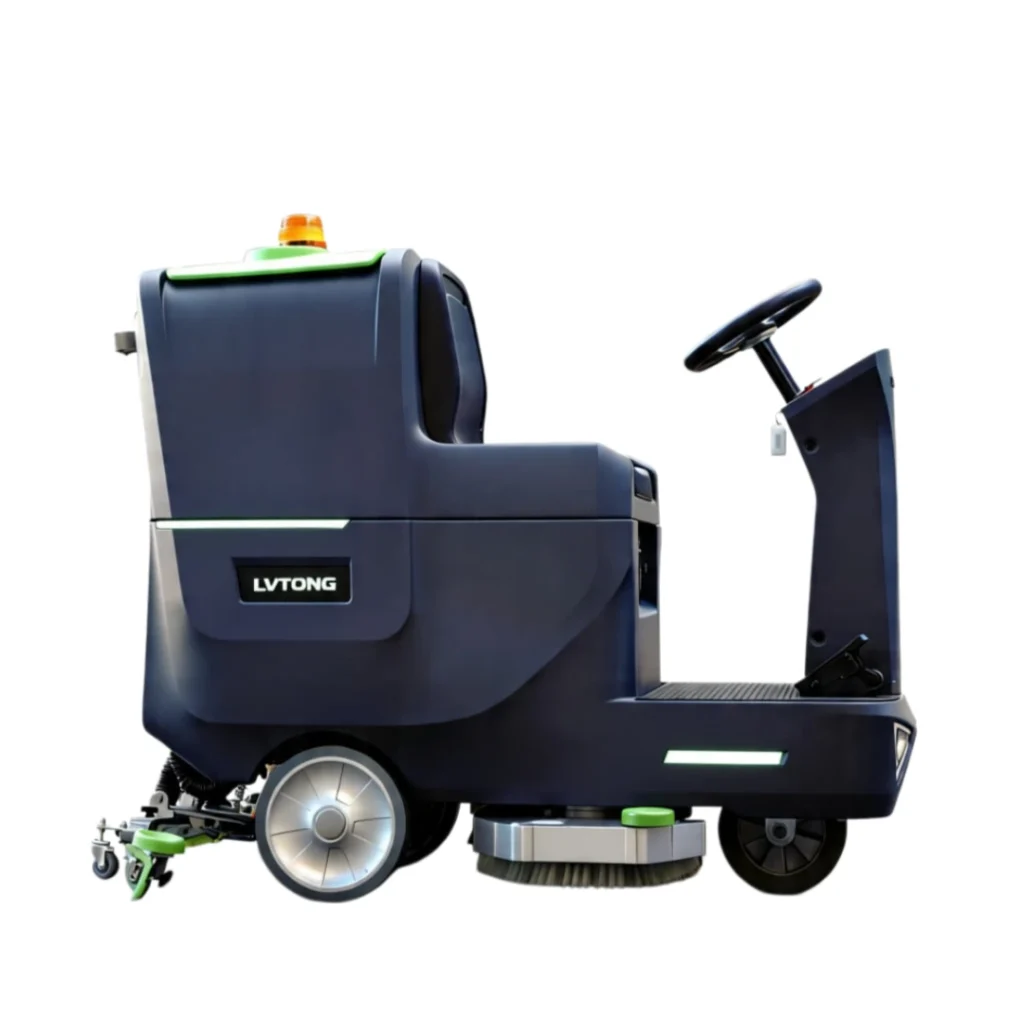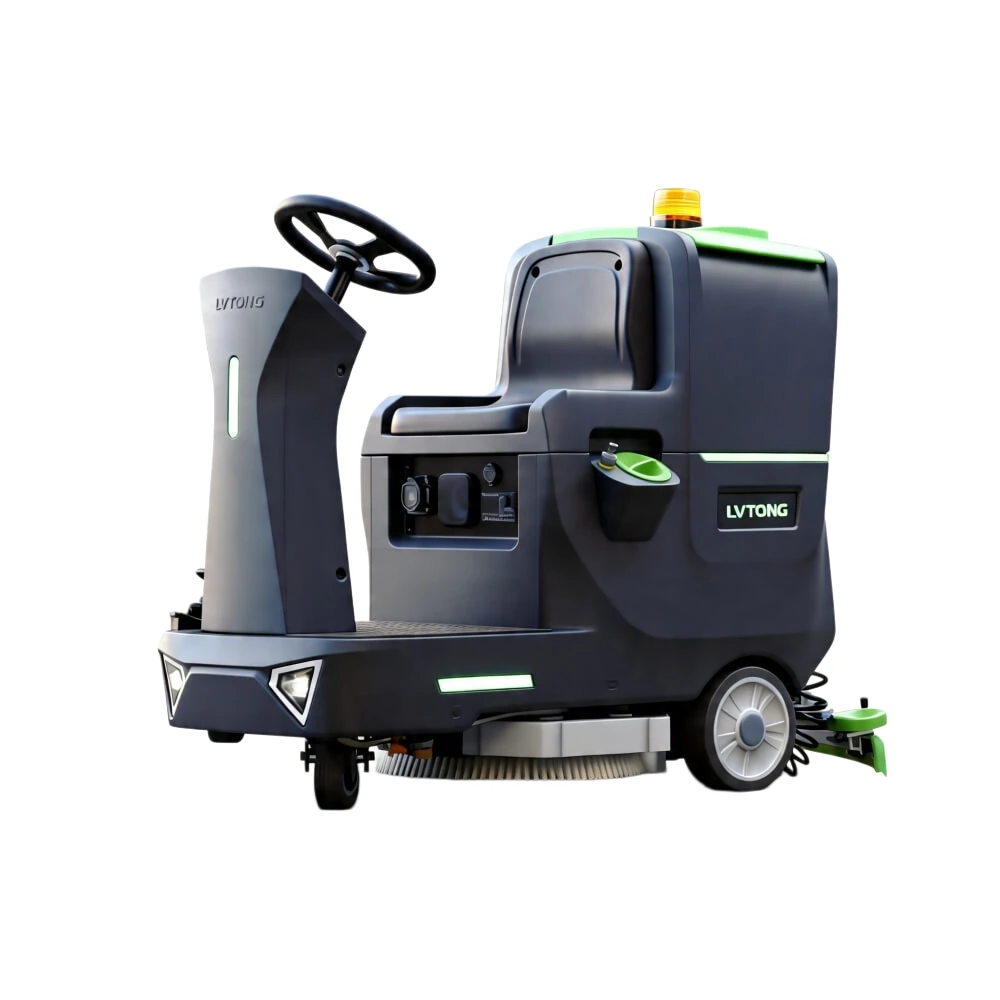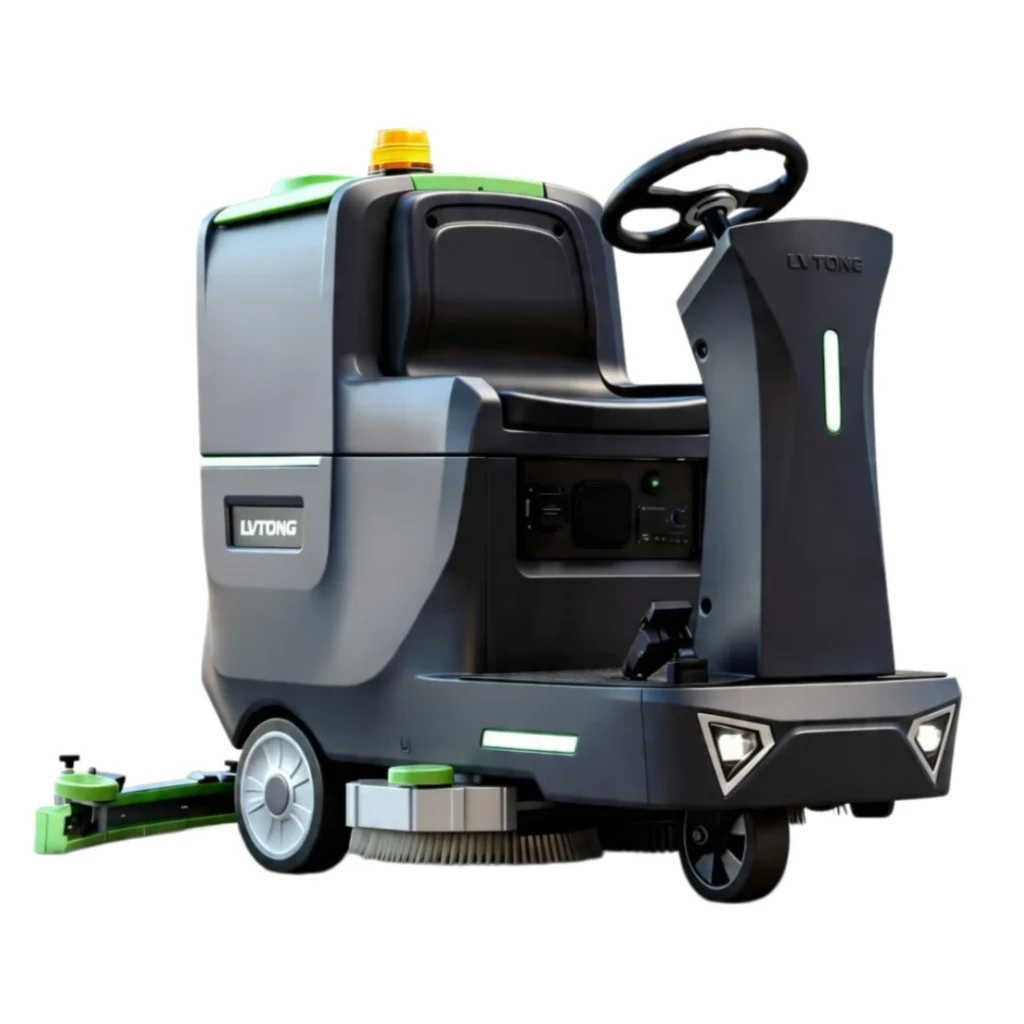
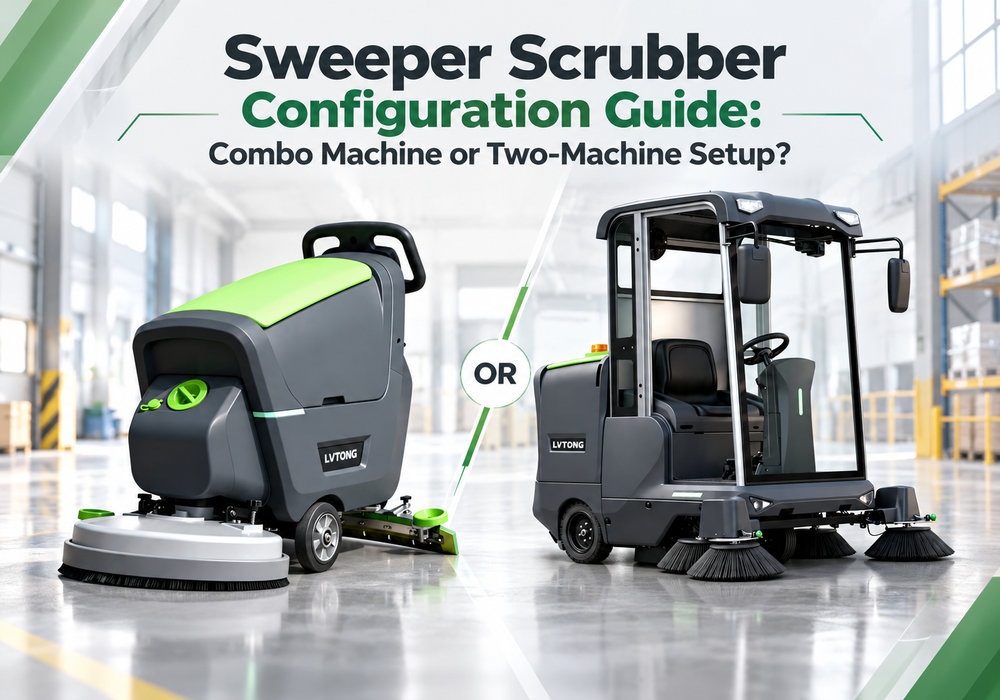
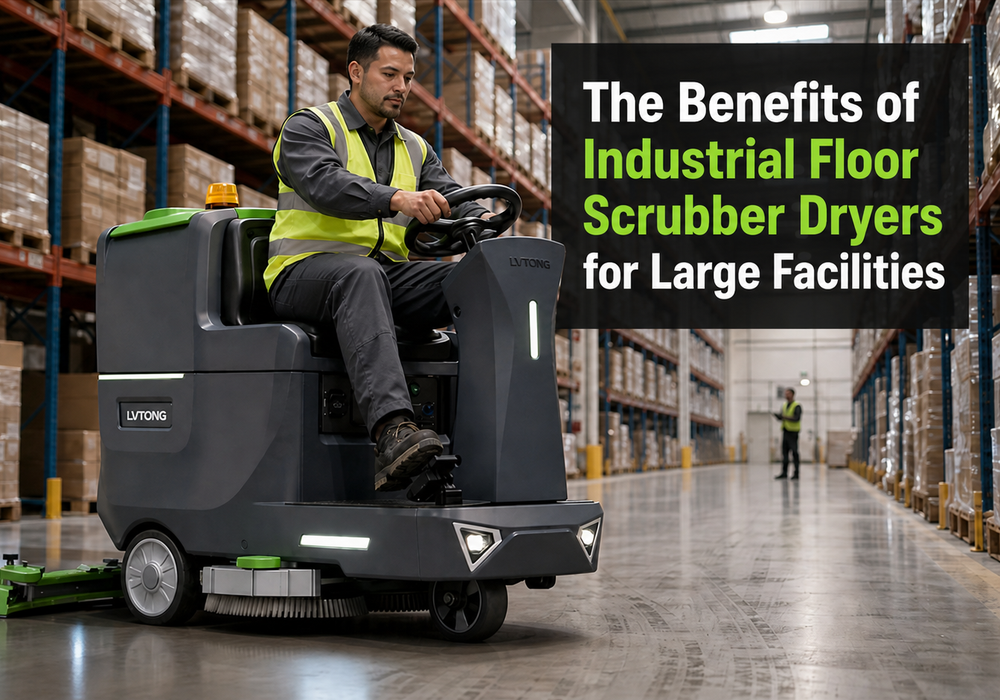
Une autolaveuse-sécheuse permet aux grandes installations de nettoyer une plus grande surface au sol avec moins de main-d'œuvre, une meilleure récupération d'eau et une remise en service plus rapide après le nettoyage. Dans les entrepôts, les usines, les aéroports, les supermarchés, les centres logistiques et les bâtiments publics, son principal atout réside dans la simplification de la planification, de la répétabilité et du suivi du nettoyage des sols : itinéraires, temps de travail, vitesse de séchage et coût par mètre carré nettoyé.
Chez LVTONG, nous examinons généralement d'abord les avantages liés au parcours, tels que la surface au sol, la largeur des allées, le niveau de trafic, le type de saleté, la fréquence de nettoyage, l'accès à l'eau et le délai avant la réouverture de l'étage.
Qu'est-ce qu'une autolaveuse-sécheuse fait de différent d'un simple lavage à la serpillière ?
Une autolaveuse-sécheuse combine trois opérations en un seul passage : application de la solution nettoyante, lavage de la surface et récupération des eaux usées par aspiration et raclette. Le lavage manuel a souvent pour conséquence de répandre l'eau et les saletés sur une plus grande surface avant que le sol ne sèche. Une autolaveuse-sécheuse est conçue pour évacuer rapidement ces eaux usées, un atout essentiel dans les établissements à forte activité où les sols mouillés ne peuvent rester longtemps.
Sur de nombreux grands sites, le délai après le nettoyage fait partie intégrante du coût. Un couloir, une zone de chargement, une allée de production ou l'entrée d'un supermarché peuvent devoir rouvrir en quelques minutes. Nous expliquons cette différence plus en détail dans notre guide. Autolaveuses versus autolaveuses de sol.
Quand un bâtiment est-il trop grand pour un nettoyage manuel des sols ?
Le nettoyage manuel devient difficile à maîtriser lorsque le trajet dépasse les capacités du personnel. Lors de nos consultations en entrepôt et logistique, le problème réside rarement dans un seul point oublié, mais dans le trajet lui-même. Allées longues, circulation de chariots élévateurs, poussière, traces de pneus et changements d'équipes successifs contribuent à l'accumulation de saletés avant même qu'une équipe manuelle ait terminé son passage.
Le point de bascule survient souvent lorsque les gestionnaires constatent ces signes :
- Les équipes de nettoyage ont besoin de plusieurs personnes pour effectuer un seul parcours.
- Les sols sont encore humides lorsque le personnel, les chariots, les chariots élévateurs ou les clients reviennent.
- La saleté revient avant que le précédent circuit de nettoyage ne soit totalement maîtrisé.
- Les superviseurs ne peuvent pas garantir une qualité de nettoyage homogène dans toutes les zones.
- Le nettoyage de nuit empiète sur l'heure d'ouverture ou le démarrage de la production.
À ce stade, la méthode de nettoyage doit s'adapter au trafic, au niveau de salissure et au rythme d'exploitation de l'établissement. C'est généralement le moment idéal pour envisager l'acquisition d'une autolaveuse industrielle. Grâce à une machine et un plan de nettoyage adaptés, l'établissement peut raccourcir les trajets de nettoyage, réduire les heures de travail, optimiser la récupération de l'eau, garantir des résultats plus constants et minimiser les perturbations au cours des opérations quotidiennes.
7 avantages pratiques des autolaveuses-sécheuses industrielles pour les grandes installations
1. Nettoyage plus rapide des longues allées d'entrepôt
Une application logistique documentée sur notre page LT-S710X a utilisé trois autolaveuses autoportées LT-S710X pour de longs trajets en entrepôt. Dans ce cas précis, le résultat indiqué est une efficacité de nettoyage 12 fois supérieure au nettoyage manuel, avec une réduction du taux d'accidents de 90%. Ces résultats étant spécifiques à ce site (longueur des allées, effectifs, gestion du trafic et configuration des machines), nous les considérons comme une référence particulière.
Nous considérons cela comme un exemple de planification d'itinéraire, et non comme une garantie absolue. Dans le cadre de nos projets de planification logistique, nous cartographions en priorité les allées et les zones de quai de chargement, car ce sont généralement ces zones qui présentent le plus de traces de pneus, de poussière d'emballage et de gravillons. Pour les entrepôts comportant de longues allées et des zones de quai de chargement poussiéreuses, le principal avantage réside dans la possibilité pour un seul opérateur de parcourir l'itinéraire en limitant les arrêts pour le réapprovisionnement et les allers-retours.
2. Réouverture plus rapide des zones dans les aéroports et les plateformes de transport
Dans les aérogares et les plateformes de transport, le nettoyage est souvent effectué par petites sections plutôt que pendant une longue période. Un couloir d'embarquement, une voie de fret ou une entrée peut n'être disponible que brièvement avant le retour des passagers, des chariots ou des véhicules de service. Une autolaveuse-sécheuse est idéale dans ce type de créneau horaire car elle nettoie et récupère l'eau sale en un seul passage.
Une application aéroportuaire documentée sur notre page LT-S710X Six autolaveuses autoportées LT-S710X ont été déployées pour le nettoyage de vastes zones du terminal. Sur la page produit mentionnée, le MTBF (temps moyen entre les pannes) est indiqué à 1 800 heures, tandis que l'efficacité de nettoyage annoncée de la LT-S710X est de 6 800 m²/h. Nous distinguons ces deux valeurs car la fiabilité et la productivité annoncée influencent différemment la réouverture des zones. L'efficacité doit être interprétée en fonction des changements de direction, des fermetures de lignes, des points de remplissage et du trafic passagers. Ces éléments sont essentiels pour la réouverture des zones, car l'équipe de nettoyage a besoin d'une récupération d'eau rapide et d'un fonctionnement fiable des machines lorsque les lignes sont ouvertes et fermées en fonction de la circulation des passagers.
Une autolaveuse doit toujours être utilisée conjointement avec la signalisation, la gestion du trafic, la formation des opérateurs et l'inspection des sols. Ces mesures de sécurité restent essentielles. L'intérêt de la machine en matière de sécurité réside dans la réduction du temps pendant lequel une zone nettoyée reste humide lorsque des personnes et du matériel attendent de circuler. Cela contribue à l'objectif pratique sous-jacent. Règle de l'OSHA sur les surfaces de marche et de travail, qui stipule que les sols des lieux de travail doivent être maintenus propres et, si possible, secs.
3. Meilleur contrôle des traces d'huile, de poussière et de pneus dans les usines
Lors de nos échanges sur le nettoyage en usine, nous commençons par identifier la source de la saleté, puis nous adaptons le nettoyage au type de sol, au type de brosses, au détergent et aux exigences de récupération. Les zones d'assemblage de véhicules nécessitent souvent un contrôle précis des films d'huile et des débris métalliques. Les allées d'atelier requièrent généralement une approche plus systématique pour éliminer les traces de pneus et les poussières fines. Sur les sols en béton, en époxy, en sable diamanté et en carrelage, nos recommandations d'application en usine ajustent la méthode de nettoyage en fonction de ces conditions.
La page LT-S710X présente un exemple concret d'application en usine. Dans une usine de pièces automobiles, le taux de non-conformité aux contrôles qualité des sols a diminué de 341 000 tonnes après l'utilisation d'une autolaveuse autoportée améliorée et personnalisée. Pour les responsables d'usine, les avantages vont bien au-delà de la simple amélioration de la propreté des surfaces. Un sol plus stable permet aux superviseurs de maintenir les lignes de production au plus près des normes de contrôle requises, et ce, d'un quart de travail à l'autre.
4. Un nettoyage avant ouverture plus fiable pour les supermarchés
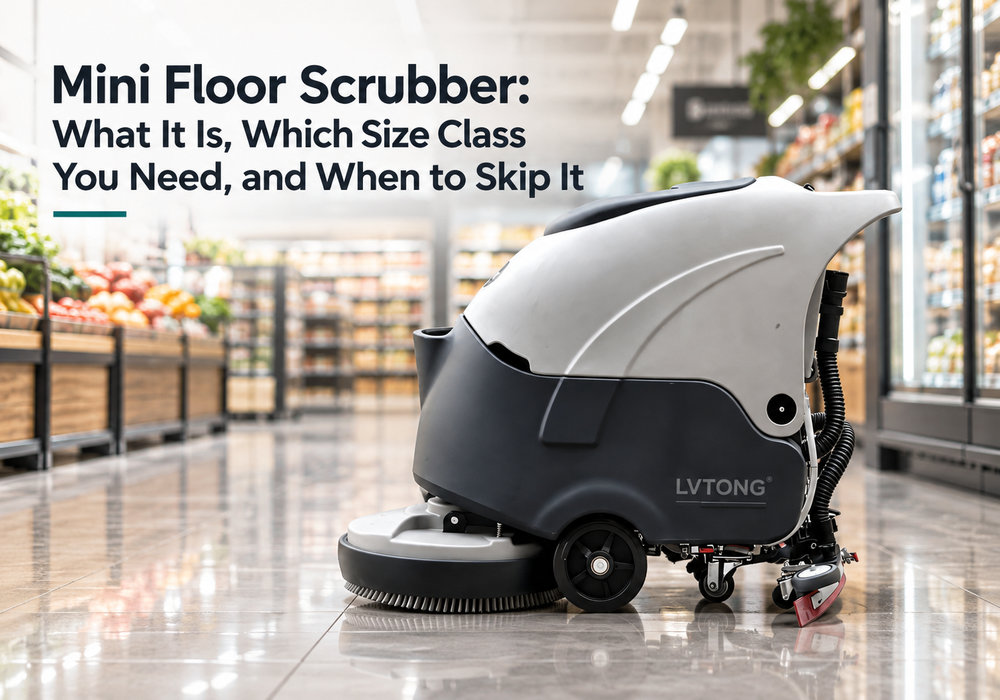
Pour le nettoyage avant ouverture des supermarchés, nous procédons généralement par zones. Les comptoirs de produits frais nécessitent un rinçage rapide à l'eau et l'élimination des résidus. Les allées de rayonnages doivent être dégagées et les zones de passage principales doivent être impeccables avant l'arrivée des clients. conseils pour les supermarchés Prenons un exemple concret : dans un supermarché de 10 000 m², une autolaveuse industrielle peut nettoyer les sols en une à deux heures environ, selon le parcours et les réglages de la machine.
Pour les magasins de plus de 8 000 m², les mêmes recommandations préconisent l’utilisation de plusieurs machines fonctionnant par zone. Cette approche permet de mieux tirer parti des avantages de la préouverture que de demander à une seule machine de couvrir chaque allée, chaque comptoir, chaque entrée et chaque zone de service avant l’ouverture des portes.
5. Moins d'interruptions pour le remplissage et la vidange
Sur les longs trajets, un arrêt pour le remplissage du réservoir d'eau prend plus de quelques minutes. Dans les parkings, les couloirs des terminaux et les allées de production, l'opérateur peut être amené à quitter la zone de nettoyage, vidanger l'eau récupérée, remplir le réservoir de solution, retourner à son poste et reprendre son rythme de travail, alors que la zone suivante est déjà en attente.
Le modèle LT-S710X est équipé d'un réservoir de solution de 130 L et d'un réservoir de récupération de 135 L. Cette capacité permet à l'opérateur de prolonger son trajet et de réduire les temps d'arrêt imprévus liés aux remplissages et aux vidanges.
6. Réduire la fatigue de l'opérateur lors du nettoyage quotidien répété
Le nettoyage répété des sols devient rapidement fatigant sur les longs trajets, notamment dans les parkings, les couloirs d'hôpitaux et les allées d'entrepôts où l'opérateur emprunte le même chemin plusieurs fois au cours d'un même poste. Il peut être amené à pousser un balai et un seau, à se baisser dans les angles, à essorer les balais, à soulever des bidons d'eau et à revenir sur ses pas à plusieurs reprises.
Une autolaveuse-sécheuse réduit considérablement la charge de travail grâce à son propre système de nettoyage. La brosse ou le disque de brossage assure la pression, le réservoir de solution contient l'eau propre et le réservoir de récupération recueille l'eau sale grâce au système d'aspiration et de raclette. Sur les longs axes dégagés, une autolaveuse autoportée est encore plus performante car elle permet à l'opérateur de nettoyer en position assise au lieu de suivre la machine à chaque passage.
En fin de poste, l'avantage est une cadence de travail plus régulière. La machine transporte l'eau, applique une pression de lavage et récupère les eaux usées, ce qui réduit la charge de travail liée aux gestes manuels répétitifs. Guide d'ergonomie du NIOSH Il est important de prendre en compte les efforts de poussée, de traction, de levage et les postures inconfortables comme de véritables facteurs de charge de travail lors du choix du matériel de nettoyage des sols.
7. Des résultats plus homogènes selon les équipes et les sous-traitants
Les grandes installations font souvent appel à différentes équipes de nettoyage selon les horaires de jour, de soir et de nuit. Lors de nos consultations en nettoyage d'installations, des problèmes de cohérence apparaissent fréquemment après les changements d'équipe. Une équipe peut nettoyer plus rapidement, une autre peut utiliser plus d'eau, et un prestataire peut négliger une allée peu fréquentée lorsque le planning est serré.
Cette régularité est facilitée par la possibilité pour les superviseurs de contrôler le travail effectué après chaque tournée, et non plus seulement d'évaluer l'état du sol à l'œil nu. Après chaque poste, ils peuvent comparer le registre de tournée ou la liste de contrôle avec le parcours de nettoyage prévu, vérifier la récupération normale des eaux usées, contrôler les traces de raclette dans les virages et en bout d'allée, et repérer les zones à retoucher pour le prochain passage. Grâce à la régulation automatique de la pression des brosses, de la largeur de nettoyage, du débit d'eau et de la vitesse de tournée par la machine, les équipes mixtes disposent d'une procédure plus claire à suivre et à contrôler.
Les superviseurs disposent de points de contrôle plus précis après chaque quart de travail, notamment l'itinéraire suivi, les réglages de la machine, la récupération de l'eau et les zones de retouche. Pour les équipes mixtes ou les sous-traitants, le contrôle de la qualité est ainsi facilité et reproductible.
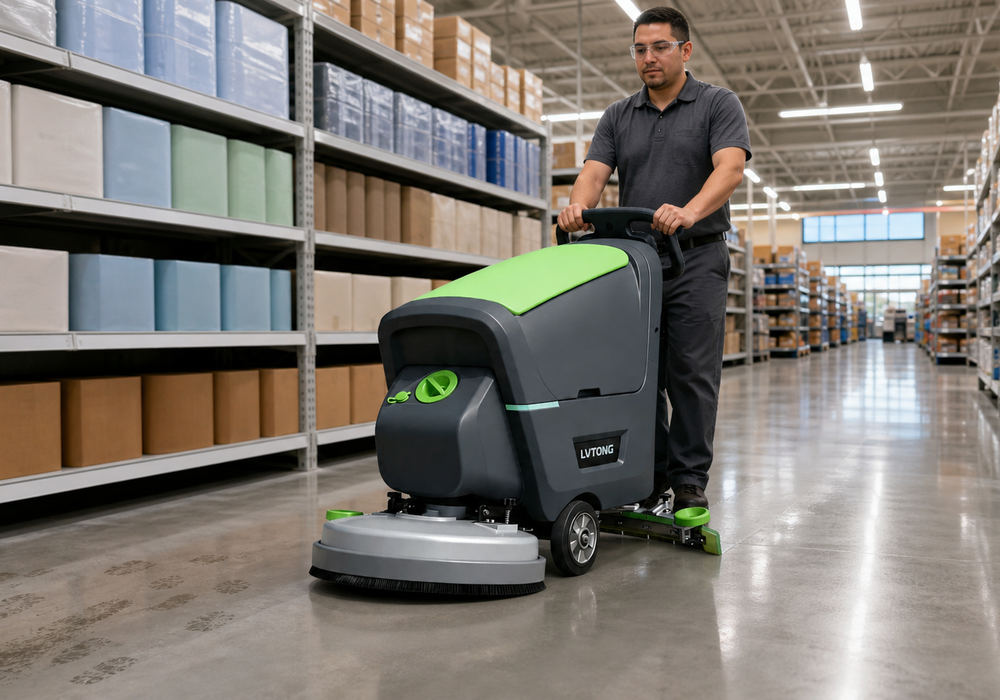
Tondeuse autoportée ou tondeuse à conducteur porté : laquelle offre les meilleurs avantages ?
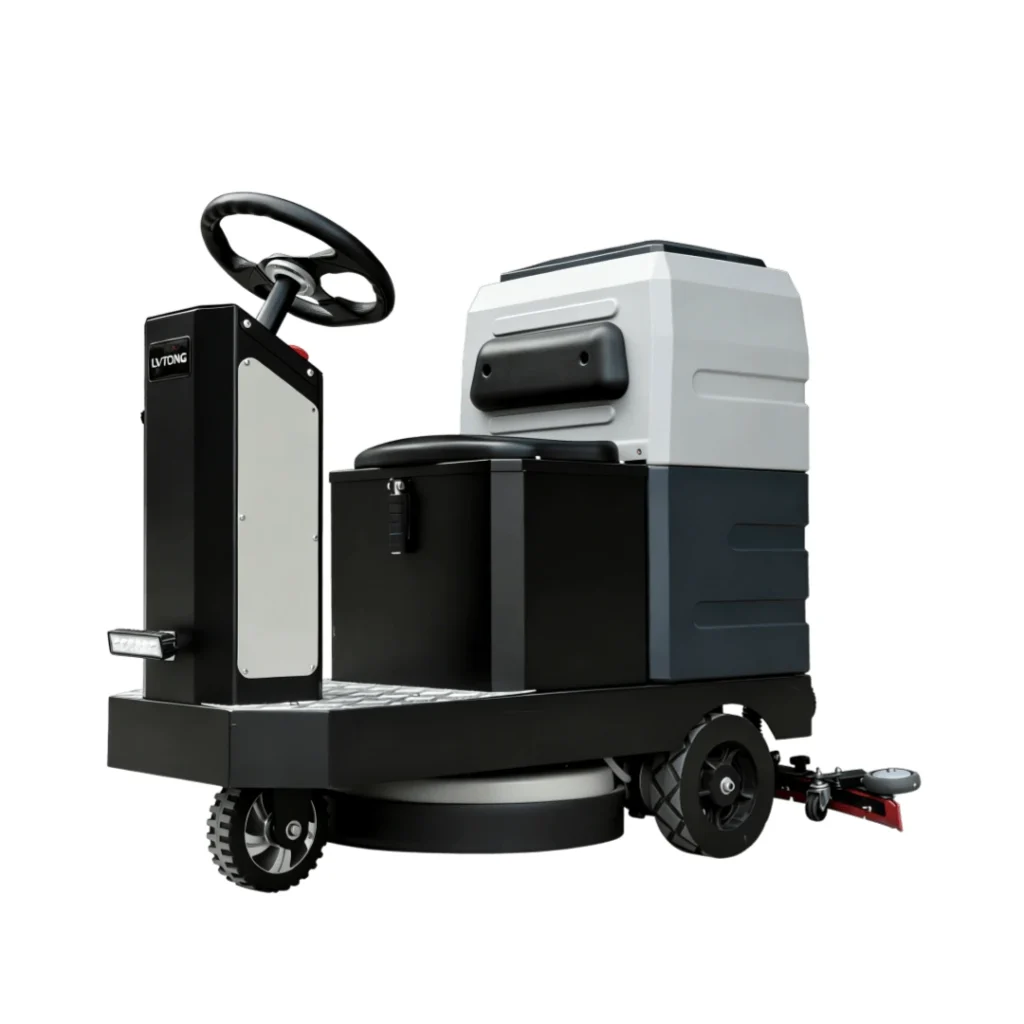
Les autolaveuses autoportées offrent généralement une meilleure maniabilité dans les espaces restreints, tandis que les autolaveuses autoportées permettent un nettoyage plus large, grâce à des réservoirs plus grands et une position de conduite assise, idéale pour les grandes surfaces. Ces caractéristiques déterminent si la machine apporte les avantages escomptés en termes de réduction de la main-d'œuvre, de vitesse de nettoyage et de diminution de la fréquence des ravitaillements.
| Facteur | Autolaveuse à conducteur marchant | Autolaveuse autoportée | Impact des avantages |
|---|---|---|---|
| Poste d'opérateur | L'opérateur marche derrière la machine | L'opérateur est assis et conduit | Les modèles à pédales réduisent la fatigue sur les longs trajets. |
| largeur de nettoyage | Généralement plus étroit, mieux adapté aux allées et aux angles. | Généralement plus large, mieux adapté aux espaces ouverts | Des voies plus larges réduisent le nombre de passages |
| Capacité du réservoir | Réservoirs de solution et de récupération de petite à moyenne taille | Réservoirs de solution et de récupération plus grands | Les réservoirs plus grands réduisent les arrêts de remplissage et de vidange |
| Type d'itinéraire | Étagères, pièces, recoins étroits, espaces divisés | Zones à espaces ouverts et à longs parcours | Le format de la machine suit le parcours de nettoyage |
| Manœuvrabilité | Plus résistant dans les espaces restreints ou irréguliers | Plus performant sur les longs parcours ouverts | Un meilleur ajustement évite d'acheter une machine qui ralentit le parcours. |
| Meilleure adaptation LVTONG | Modèles LT-S530X ou modèles compacts à conducteur marchant | Modèles autoportés LT-S710X ou LT-S860X | Le type de machine est directement lié à la taille de l'installation et aux besoins d'acheminement. |
Les acheteurs qui comparent les deux formats peuvent commencer par le type d'itinéraire. Pour les allées de rayonnages, les réserves et les points de service, l'étape suivante est le catégorie des autolaveuses autoportées. Pour les allées d'entrepôt, les terminaux, les parkings et les voies de production ouvertes, catégorie autolaveuses autoportées permet de mieux comprendre le lien entre la taille du routage et le format de la machine avant de comparer les modèles individuels.
Comment calculer le retour sur investissement d'une autolaveuse-sécheuse
Le retour sur investissement est l'un des avantages les plus évidents pour une grande installation, car les heures de travail, la fréquence de nettoyage et la surface au sol peuvent être mesurées.
- Économies annuelles de main-d'œuvre = (heures de travail manuel par cycle de nettoyage − heures de travail machine par cycle de nettoyage) × coût horaire de main-d'œuvre (charges comprises) × nombre de cycles de nettoyage par an
- Économies nettes annuelles = économies annuelles de main-d'œuvre − coûts annuels d'exploitation et d'entretien des machines
- Délai de récupération = investissement initial en machine ÷ économies nettes annuelles
| Entrée ROI | Que faut-il enregistrer ? | Pourquoi c'est important |
|---|---|---|
| Investissement unique | Prix de l'autolaveuse-sécheuse, livraison, installation de la batterie ou du chargeur, brosses initiales, raclettes et formation de l'opérateur inclus. | Établit la base de retour sur investissement |
| base de référence du travail | Nombre actuel d'opérateurs par itinéraire, heures de nettoyage manuel, heures de nettoyage machine, coût de main-d'œuvre total et cycles de nettoyage par an | Indique d'où proviennent les économies de main-d'œuvre mesurables |
| coûts d'exploitation annuels | Détergent, brosses, raclettes, batteries, entretien planifié, services publics et consommables | Empêche la surestimation du retour sur investissement. |
| Risque lié à l'itinéraire et aux temps d'arrêt | Temps de remplissage et de vidange, fermetures de circulation, fenêtres de production ou d'ouverture, besoins en machines de secours et assistance technique prévue | Démontre si la machine peut générer des économies dans des conditions réelles d'installation. |
Le retour sur investissement d'un grand entrepôt nettoyé une fois par jour sera différent de celui d'un centre commercial nettoyant plusieurs zones publiques avant l'ouverture et après la fermeture. Le calcul final doit donc tenir compte de la longueur du parcours, du niveau de salaire, de la fréquence de nettoyage, de l'utilisation des machines et du plan de maintenance propres au site.
Dans Notre guide actuel des prix et du retour sur investissement des autolaveuses, Nous utilisons un exemple illustratif de retour sur investissement (RSI) pour expliquer le calcul. Cet exemple compare le coût annuel actuel du nettoyage manuel (24 000 $US) au coût annuel prévisionnel de la main-d'œuvre pour l'utilisation de machines (14 000 $US), auquel s'ajoutent 2 500 $US pour la maintenance annuelle, les consommables et les charges. Avec un investissement initial de 8 600 $US (machine, livraison et formation), l'exemple montre des économies nettes annuelles de 7 500 $US, un RSI indicatif de 871 000 $US la première année et une période de récupération d'environ 14 mois. Le RSI réel doit être calculé en fonction du taux horaire de l'établissement, du nombre de jours de nettoyage, du temps de parcours, du taux d'utilisation des machines et du plan de maintenance.
Liste de vérification des spécifications pour obtenir les avantages de nettoyage attendus
Avant de choisir une autolaveuse, assurez-vous que ses spécifications correspondent au parcours de nettoyage. Lors de notre service de sélection de produits, nous prenons en compte la surface au sol, la largeur des allées, le type de salissure, la plage horaire de nettoyage, l'accès à l'eau et la charge de travail de l'opérateur avant de recommander un modèle.
- Largeur de nettoyage : Adaptez-la à la largeur du parcours. Les allées étroites nécessitent un espace suffisant pour le contrôle et les manœuvres ; les entrepôts ouverts, les terminaux et les centres commerciaux bénéficient de parcours de nettoyage plus larges.
- Capacité des réservoirs de solution et de récupération : vérifiez si la capacité des réservoirs permet de parcourir le trajet prévu sans arrêts fréquents de remplissage ou de vidange.
- Autonomie de la batterie : Vérifiez que la machine peut effectuer la totalité du cycle de nettoyage, y compris le temps de déplacement, les rotations, le remplissage et les pauses de l’opérateur.
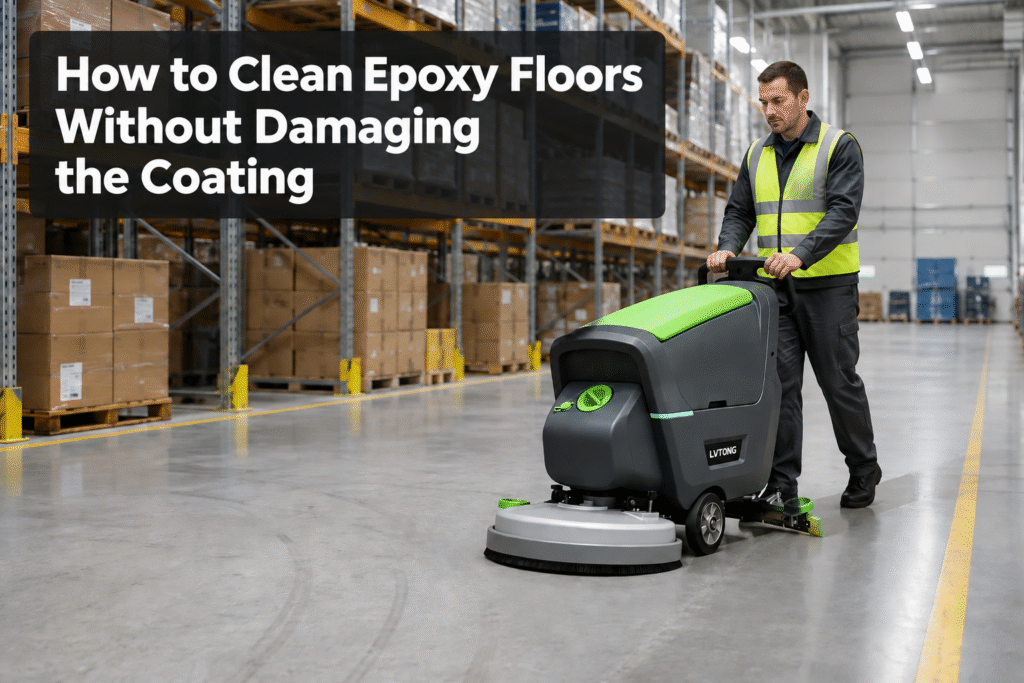
- Type et pression de la brosse : Choisissez une brosse adaptée au type de sol et de saleté. Huile, poussière, béton, époxy, carrelage texturé et traces de pneus peuvent nécessiter des réglages de brosse différents.
- Performances de la raclette et de l'aspiration : vérifiez si la machine peut récupérer l'eau sale suffisamment rapidement pour que la zone puisse rouvrir en toute sécurité et dans les délais prévus.
- Rayon de braquage : comparez-le aux allées, rayonnages, ascenseurs, réserves et angles avant de choisir une machine plus grande.
- Compatibilité avec les détergents : Utilisez une solution de nettoyage peu moussante adaptée au type de sol et de saleté, car une mousse excessive peut réduire les performances de récupération et laisser des résidus.
Erreurs courantes qui réduisent les avantages
L'erreur la plus fréquente est d'acheter une machine trop petite pour le trajet réel. Elle peut sembler moins chère sur le papier, mais cet avantage se perd ensuite à cause des passages supplémentaires, des arrêts de ravitaillement plus fréquents et des temps de service plus longs.
D'autres erreurs apparaissent après l'achat :
- Utiliser une brosse inadaptée aux sols gras ou texturés.
- Ignorer l'usure de la raclette, puis blâmer la machine pour les traces d'humidité.
- Comparer le prix d'achat plutôt que le coût total de possession.
- Utiliser une seule machine dans des zones nécessitant des méthodes de nettoyage différentes.
- Considérer la formation des opérateurs comme facultative.
- Utilisation d'un détergent à haute mousse dans la cuve d'une autolaveuse.
- Omettre le nettoyage quotidien des réservoirs de récupération, des filtres et des raclettes.
La maîtrise des sols mouillés mérite une attention particulière. HSE Il est important de noter que le nettoyage peut engendrer des risques de glissade et de trébuchement lorsque les sols humides, l'accès, le matériel, le timing et le séchage sont mal gérés. Lors de l'utilisation d'une autolaveuse, il convient de vérifier simultanément l'état de la raclette, la performance d'aspiration, le choix du détergent et la planification du parcours afin que le processus de nettoyage produise les résultats escomptés.
Quel modèle d'autolaveuse-sécheuse LVTONG convient aux grandes installations ?
Pour choisir une machine adaptée à une grande installation, nous commençons par analyser le parcours de nettoyage. Nous examinons la surface nettoyable, l'allée la plus étroite, l'espace de manœuvre, le type de salissure, l'accès aux points de remplissage et d'évacuation, ainsi que le temps disponible avant la remise en service de la zone.
Pour les routes étroites ou à voies multiples, notre Autolaveuse industrielle autoportée LT-S530X Doté d'un châssis compact de 50 cm, il peut se faufiler dans des allées d'une largeur minimale de 0,8 m. Nous le recommandons pour des surfaces d'application de 1 000 à 4 000 m², ce qui en fait une option pratique pour les allées de rayonnages, les ateliers et autres espaces où la maniabilité est essentielle.
Pour les longs trajets ouverts dans les entrepôts, les usines, les centres logistiques et les installations de transport, Autolaveuse autoportée LT-S710X est mieux adapté aux opérations où la réduction des déplacements des opérateurs et la limitation des interruptions pour le réapprovisionnement sont importantes. Pour les installations d'une superficie de 10 000 à 15 000 m², le Autolaveuse autoportée LT-S860X Il comprend des fonctionnalités telles que la connectivité IoT et l'alerte intelligente en cas de panne. Les acheteurs peuvent comparer le domaine d'application, les conditions de parcours, les fonctions de contrôle et la configuration requise de la machine avant de choisir entre les deux modèles autoportés.
Le modèle le plus adapté est celui qui permet de réaliser le trajet prévu avec un minimum de virages, d'arrêts pour le remplissage et de passages de retouche. Il convient donc de vérifier conjointement les dimensions de la machine, la capacité du réservoir, le dégagement pour les virages, l'autonomie et la longueur du trajet avant de choisir une autolaveuse.
FAQ sur les autolaveuses-sécheuses
Faut-il balayer les débris avant d'utiliser une autolaveuse ?
Oui. Les déchets d'emballage, le gravier, les cailloux, les résidus alimentaires et les copeaux de métal doivent être retirés avant le nettoyage à l'eau. Une autolaveuse est conçue pour frotter les saletés incrustées et récupérer l'eau sale, mais les débris peuvent obstruer le passage de la raclette, réduire l'aspiration, rayer les sols fragiles ou laisser des traces. Lors de nos tournées de contrôle, nous séparons généralement le ramassage des débris du nettoyage à l'eau aux quais de chargement, dans les allées d'atelier et les zones de préparation des supermarchés.
Pourquoi une autolaveuse laisse-t-elle des traces humides ?
Les traces d'humidité proviennent généralement de l'usure de la raclette, d'un mauvais contact avec celle-ci, de filtres de récupération obstrués, d'une quantité excessive de mousse, d'un sol irrégulier ou d'un débit d'eau trop élevé par rapport à la vitesse de lavage. La machine peut continuer à laver correctement, mais le système de récupération peut présenter un dysfonctionnement. Vérifier l'état de la raclette, le conduit d'aspiration, le niveau de mousse de détergent et la vitesse de l'opérateur est généralement la première étape du dépannage.
La productivité théorique est-elle identique à la productivité réelle du trajet ?
Rarement. La productivité théorique est généralement basée sur la largeur de nettoyage et la vitesse de déplacement. La productivité réelle du parcours inclut également les virages, les obstacles, les arrêts pour le remplissage et la vidange, la gestion du trafic, l'utilisation des ascenseurs, les pauses des opérateurs et les retouches. Pour les grandes installations, le retour sur investissement doit être calculé en fonction du temps de parcours réel et non pas uniquement sur la base du chiffre nominal de surface nettoyée par heure.
Peut-on utiliser le même pinceau sur de l'époxy et du béton rugueux ?
Parfois, mais cela ne doit pas être systématique. Les sols en époxy nécessitent généralement une brosse ou un tampon pour protéger leur finition, tandis que les sols en béton brut ou texturés peuvent exiger un brossage plus vigoureux pour atteindre les zones difficiles d'accès et éliminer les saletés incrustées. Lors de nos tests d'adéquation des produits, le choix de la brosse dépend du matériau du sol, du type de saleté, du détergent utilisé et du résultat souhaité après nettoyage.
Quand une grande installation a-t-elle besoin à la fois de machines à conducteur marchant et de machines autoportées ?
Un parcours mixte nécessite souvent les deux types d'autolaveuses. Les autolaveuses autoportées sont plus adaptées aux longs parcours dégagés où la vitesse, la capacité du réservoir et le confort de l'opérateur sont primordiaux. Les autolaveuses à conducteur marchant conviennent aux allées de rayonnages, aux angles, aux locaux techniques, aux ascenseurs et aux espaces cloisonnés où la maniabilité prime sur la couverture maximale. Les grands supermarchés, les plateformes logistiques, les usines et les centres de transport ont souvent intérêt à segmenter le parcours plutôt que d'utiliser une seule machine pour l'ensemble des zones.
Conclusion
Le principal avantage d'une autolaveuse-sécheuse dans une grande installation réside dans le contrôle. Elle offre aux responsables un plan de tournée plus clair, une utilisation de la main-d'œuvre plus stable, une récupération d'eau plus rapide et une meilleure estimation des coûts de nettoyage. L'autolaveuse-sécheuse industrielle idéale doit correspondre aux exigences de la tournée, à l'état du sol, aux besoins de séchage et au plan de maintenance. Pour affiner votre choix, veuillez nous communiquer, via notre outil de sélection, la surface nettoyable, la largeur des allées, le type de salissure, la fréquence de nettoyage, l'accès à l'eau et au drainage, ainsi que les plages horaires disponibles pour le nettoyage. Formulaire de consultation pour autolaveuse-sécheuse. Nous pouvons utiliser ces détails pour vous recommander un modèle à conducteur marchant ou à conducteur porté avant même que vous n'ayez à investir.