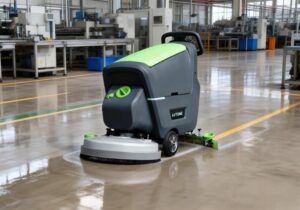
Choosing the best commercial floor scrubber requires more than comparing brands or maximum productivity figures. The right machine must match your usable floor area, aisle width, floor material, soil type, cleaning frequency, runtime requirements and maintenance resources.
This guide compares five commercial floor scrubber machines for 2026 using manufacturer specifications, machine format, cleaning width, tank capacity, runtime, intended application and operating limitations. The goal is to identify the best-fit option for different facilities—not to suggest that one machine is best for every user.
Quick Answer: Best Commercial Floor Scrubber Machines for 2026
The best commercial floor scrubber is the machine that fits your actual cleaning route—not simply the model with the widest scrub deck or highest theoretical productivity.
For large warehouses and factories with long, open routes, start with a heavy-duty ride-on scrubber such as the Factory Cat XR or a high-capacity model such as the LVTONG LT-S710X. For medium and large commercial facilities that need a more compact rider, the Tennant T7 is a practical starting point. For retail stores, clinics, schools, offices and divided layouts, the Nilfisk SC500 walk-behind scrubber offers better maneuverability.
Choose the LVTONG V6 when your facility needs ride-on operation for medium-to-large open areas but does not require the footprint or tank capacity of a heavy industrial machine. Autonomous scrubbers are worth considering only when routes are repetitive, layouts are stable and local software and service support are available.
| Facility need | Recommended starting point | Why |
|---|---|---|
| Large warehouse or factory | Factory Cat XR | Heavy-duty construction, large tanks and multiple scrub-deck options |
| Medium or large commercial facility | Tennant T7 | Compact ride-on format with two cleaning-width options |
| Retail, healthcare, school or office | Nilfisk SC500 | Walk-behind maneuverability and compact 53 cm cleaning width |
| Medium-to-large open public facility | LVTONG V6 | Compact ride-on operation with moderate tank capacity |
| Large mixed-use or industrial facility | LVTONG LT-S710X | Wide cleaning path and high-capacity tanks |
| Stable repetitive routes | Autonomous scrubber | Potential labor support, subject to software, supervision and service evaluation |
How to Use This Commercial Floor Scrubber Comparison
This comparison is designed for facility managers, warehouse operators, cleaning contractors and procurement teams who need to move from product research to practical machine selection.
Instead of reading the ranking as a universal “best to worst” list, use it as a decision framework:
- Start with your real cleanable floor area, not only total building size.
- Confirm whether the route is open, narrow, divided or full of obstacles.
- Identify the floor surface and the type of contamination.
- Compare tank capacity, battery runtime, water recovery, brush system and turning space together.
- Evaluate service support, spare parts availability and long-term operating cost before requesting a quotation.
The best commercial floor scrubber is the machine that can complete your actual cleaning route reliably with acceptable labor, maintenance, downtime and total cost.
How We Selected and Compared These Floor Scrubbers
We compared the five machines using the same nine criteria:
- Machine type: walk-behind or ride-on
- Verified cleaning path
- Solution and recovery tank capacity
- Manufacturer-stated runtime
- Theoretical productivity
- Floor and application suitability
- Maneuverability and storage requirements
- Maintenance and replacement-parts support
- Main advantages and limitations
Unless otherwise stated, specifications in this guide are manufacturer-published figures rather than independent LVTONG test results. Actual productivity and runtime depend on floor condition, obstacles, turning, water-flow settings, battery condition, refilling and wastewater disposal.
Editorial Disclosure
LVTONG manufactures and sells the V6 and LT-S710X models included in this comparison. These models are evaluated using the same criteria applied to competing machines.
Testing Disclosure
A result is described as “tested by LVTONG” only when the test location, machine configuration, floor material, soil type, brush or pad, operating time, measurement method and test date are documented.
What Is a Commercial Floor Scrubber Machine?
A commercial floor scrubber is a powered hard-floor cleaning machine that applies water or cleaning solution, agitates the floor with brushes or pads, and recovers dirty water through a squeegee and vacuum system.
Commercial scrubbers are generally available as walk-behind, ride-on and autonomous machines. The correct format depends on floor layout, usable cleaning area, cleaning frequency and operator requirements.
Floor Scrubber vs. Scrubber Dryer vs. Auto Scrubber
The terms commercial floor scrubber, floor scrubber dryer, scrubber dryer and auto scrubber are often used for overlapping categories of professional hard-floor cleaning equipment.
A scrubber dryer generally describes a machine that applies cleaning solution, mechanically scrubs the floor and recovers dirty water with a squeegee and vacuum system in the same cleaning pass. In North America, these machines are commonly called floor scrubbers or auto scrubbers, while the term scrubber dryer is widely used in other markets.
An auto scrubber does not necessarily mean a robotic scrubber. Most conventional walk-behind and ride-on machines are operator-controlled auto scrubbers. A robotic or autonomous floor scrubber adds navigation, mapping, sensors and software that allow the machine to complete predefined cleaning routes with reduced direct operator control.
When comparing machines, focus on the actual cleaning system, brush or pad configuration, water-recovery system, machine format and operating requirements rather than the product name alone.
Commercial, Industrial, Electric and Autonomous Floor Scrubbers: What Buyers Should Know
uyers may also compare commercial, industrial, electric and autonomous floor scrubbers during the same purchasing process.
A commercial floor scrubber is normally selected for offices, schools, retail stores, hospitals, supermarkets and general commercial floors. An industrial floor scrubber is usually designed for larger areas, heavier soil, longer working hours, stronger construction and more demanding environments such as warehouses, factories, logistics centers and parking facilities.
An electric floor scrubber usually refers to the power source. Many walk-behind and ride-on scrubbers are electric or battery-powered. Therefore, “electric” does not automatically mean small, and “industrial” does not always mean non-electric.
Autonomous or robotic floor scrubbers add sensors, mapping, route planning and software. They may support repetitive cleaning routes, but they should be evaluated by route stability, obstacle density, water recovery, supervision, software support and local service capability.
Before choosing a model, define the machine category clearly. This helps avoid comparing a compact electric walk-behind scrubber with a heavy-duty industrial ride-on scrubber or a robotic system designed for a completely different cleaning workflow.
What Specifications Don’t Tell You: 7 Reliability and Usability Checks
Cleaning width, tank capacity and theoretical productivity are useful for narrowing down commercial floor scrubbers, but these specifications do not show how well a machine will perform during daily operation.
Before purchasing a floor scrubber, evaluate the following seven practical factors.
| Reliability or usability factor | What buyers should check |
|---|---|
| 1. Water recovery | Test whether the machine consistently recovers dirty water during straight-line cleaning and turns. Check the squeegee blades, vacuum hose, recovery filter and squeegee adjustment, because poor recovery can leave streaks or standing water. |
| 2. Brush and pad system | Confirm that suitable brushes or pads are available for the actual floor surface and soil. Check whether brush pressure can be adjusted and how quickly brushes or pads can be inspected and replaced. |
| 3. Controls and operator interface | Frequently used functions should be easy to identify and operate. Check the control layout, operating modes, warning indicators and emergency-stop controls, especially when several employees will share the machine. |
| 4. Maneuverability | Do not evaluate maneuverability from machine dimensions alone. Test the scrubber in the actual aisles, doorways, corners and turning areas that operators will encounter. |
| 5. Operator comfort and visibility | For ride-on scrubbers, evaluate seat position, forward and side visibility, steering and pedal layout. For walk-behind machines, consider handle position, pushing effort and control accessibility during longer cleaning routes. |
| 6. Battery and charging system | Compare realistic operating time with the required cleaning shift. Confirm battery type and capacity, charger requirements, charging time, replacement cost and whether the facility has an appropriate charging area. |
| 7. Maintenance and serviceability | Check how easily operators can access squeegee blades, brushes, pads, filters, hoses, tanks and batteries. Also confirm that common wear parts are available without excessive delivery delays. |
Run a Site Test Before Final Selection
Whenever possible, ask the supplier to demonstrate the machine under your actual operating conditions rather than relying only on theoretical productivity.
A useful site test should include the real floor surface, representative dirt or contamination, typical aisles and corners, normal operator speed and the brush, pad and detergent configuration expected in daily use.
During the test, evaluate cleaning quality, dirty-water recovery, maneuverability, noise, operator visibility, ease of control and the amount of time required for filling, emptying and routine maintenance.
The objective is not simply to determine which machine cleans fastest. It is to determine which machine can complete the required cleaning route consistently with acceptable labor, maintenance and operating costs.
Commercial Floor Scrubber Site Test Scorecard
During a site test, buyers should record more than whether the machine “looks powerful.” Use a simple scorecard to compare each model under the same operating conditions.
| Test Item | What to Check |
|---|---|
| Cleaning quality | Does the machine remove the actual soil, oil, footprints or tire marks in one pass? |
| Water recovery | Does the squeegee recover dirty water during straight movement and turns? |
| Maneuverability | Can the machine pass through the narrowest aisles, doorways and turning areas? |
| Runtime | Can the battery support the planned cleaning shift without unexpected downtime? |
| Tank interruptions | How often does the operator need to refill clean water or empty recovery water? |
| Brush or pad fit | Is the brush or pad suitable for the floor surface and contamination level? |
| Operator comfort | Can the operator control the machine safely and comfortably for the full route? |
| Maintenance access | Can brushes, pads, squeegee blades, filters, hoses and tanks be inspected easily? |
| Service support | Are common wear parts, training and technical support available after purchase? |
A site test should compare practical cleaning results, not only catalogue specifications. The best machine is the one that completes the real route consistently with fewer interruptions.
Walk-Behind vs. Ride-On Floor Scrubber: Which Is Best for Your Facility?
Your first and most important decision is choosing the right machine format for your facility’s unique layout and size. This choice directly impacts your team’s productivity and cleaning effectiveness.
| Comparison | Walk-Behind Scrubber | Ride-On Scrubber |
|---|---|---|
| Best layout | Small, divided or congested areas | Large, mostly open areas |
| Operator position | Walks behind the machine | Seated or standing on the machine |
| Maneuverability | Better in narrow aisles | Better on long, open routes |
| Tank capacity | Generally smaller | Generally larger |
| Storage requirement | Lower | Higher |
| Initial investment | Generally lower | Generally higher |
| Operator walking | More | Less |
| Main limitation | Lower productivity on long routes | Larger footprint and turning requirement |
A ride-on machine is not automatically the best choice for every large building. Evaluate usable open floor area, aisle width, turning space, obstacles, elevator access, storage and cleaning frequency.
Match the Floor Scrubber Type to Your Cleaning Scenario
Different facilities may need different floor scrubber formats even when the total floor area looks similar.
| Cleaning Scenario | Recommended Starting Point | Why It Fits |
|---|---|---|
| Small rooms, narrow aisles, clinics, offices or divided layouts | Compact walk-behind floor scrubber | Easier to maneuver in tight spaces, doorways and divided rooms |
| Medium commercial areas with mixed open and narrow spaces | Large walk-behind or compact ride-on floor scrubber | Balances cleaning productivity with flexibility in mixed layouts |
| Large warehouses, factories and logistics centers | Ride-on floor scrubber | Reduces operator walking and improves efficiency on long, open cleaning routes |
| Heavy industrial soil, tire marks or intensive cleaning | Heavy-duty industrial ride-on scrubber | Provides stronger construction, larger tanks and better support for demanding cleaning tasks |
| Textured floors, grout lines or light debris before scrubbing | Cylindrical or suitable brush configuration | Helps match the brush system to the floor surface and debris condition |
| Stable repetitive cleaning routes | Autonomous floor scrubber, after testing mapping, safety and service support | Suitable only when the route is predictable and technical support is available |
This helps buyers avoid choosing a machine only because it has a larger tank, wider cleaning path or higher theoretical productivity.
Top 5 Best Commercial Floor Scrubber Machines for 2026
The following machines represent different commercial cleaning requirements rather than one universal ranking. Each recommendation is based on machine format, verified specifications, intended application and operating limitations.
Factory Cat XR: Best Heavy-Duty Industrial Floor Scrubber
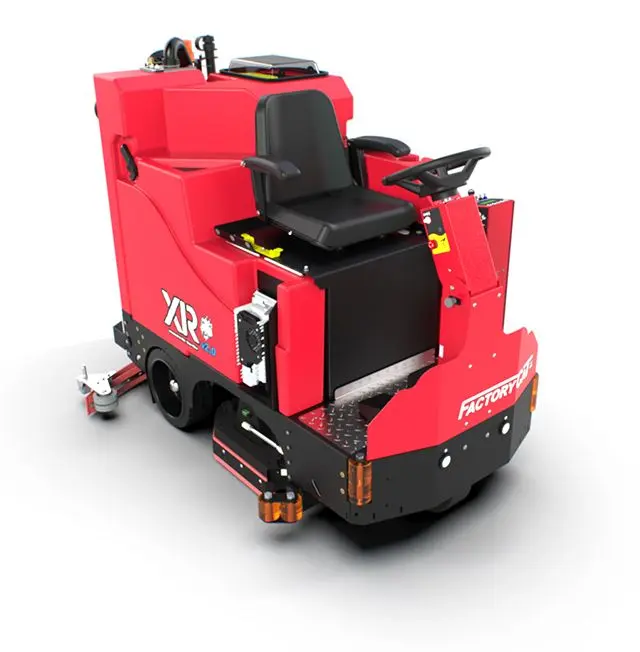
The Factory Cat XR is the heavy-duty industrial option in this comparison. Its large tank capacity, available disc or cylindrical scrub systems, and ride-on configuration make it suitable for demanding cleaning routes in warehouses, manufacturing facilities and distribution centers.
Why It Was Selected
The XR is designed for facilities where large tank capacity, long cleaning routes and industrial construction are more important than compact machine dimensions. It is available with different scrub-deck configurations, allowing buyers to select a setup based on cleaning width, floor condition and debris type.
Verified Specifications
| Specification | Factory Cat XR |
|---|---|
| Machine type | Battery-powered ride-on floor scrubber |
| Cleaning path | 40–46 in, depending on configuration |
| Solution tank | 65 gal |
| Recovery tank | 78 gal |
| Manufacturer-stated runtime | Up to 5 hours |
| Available scrub systems | Disc or cylindrical |
| Best fit | Large warehouses, factories and distribution facilities |
Specifications may vary by scrub-deck, battery and optional-equipment configuration. Buyers should confirm the exact model specification before requesting a quotation.
Main Advantages
- Large solution and recovery tanks reduce refill and wastewater-disposal interruptions.
- Disc and cylindrical scrub systems are available for different floor conditions.
- The ride-on design reduces operator walking on long cleaning routes.
- The machine is designed for large commercial and industrial floor areas.
Best Suited For
The Factory Cat XR is best suited to:
- Large warehouses
- Manufacturing plants
- Distribution centers
- Automotive facilities
- Convention centers
- Facilities with long, open cleaning routes
Limitations
The XR has a larger footprint than compact ride-on and walk-behind scrubbers. It may be less practical in facilities with narrow aisles, limited doorway clearance, tight turning areas or restricted storage space.
Before purchasing, confirm the selected cleaning-deck width, doorway clearance, turning space, charging area, transportation requirements and local service and parts availability.
Who Should Choose It?
Choose the Factory Cat XR if your facility requires a high-capacity industrial ride-on scrubber for long cleaning routes and large open floor areas.
Consider a smaller ride-on or walk-behind scrubber if maneuverability, compact storage or narrow-aisle access is more important than maximum tank capacity.
Best Overall Ride-On Floor Scrubber: Tennant T7

The Tennant T7 is the mid-size ride-on option in this comparison. It is best suited to medium and large facilities that need greater open-area productivity than a walk-behind machine but do not need the footprint and tank capacity of a heavy industrial rider.
Its 26-inch and 32-inch cleaning configurations allow buyers to balance maneuverability against cleaning coverage. Tennant lists a 29-gallon solution tank, a 29-gallon recovery tank and a manufacturer-estimated runtime of up to 4.5 hours, depending on configuration and operating conditions.
| Specification | Tennant T7 |
|---|---|
| Machine type | Ride-on |
| Cleaning path | 26 or 32 in |
| Solution tank | 29 gal |
| Recovery tank | 29 gal |
| Stated runtime | Up to 4.5 hours |
| Theoretical productivity | Up to 56,320 sq ft/h |
| Main down pressure | Up to 160 lb |
| Best fit | Medium and large commercial facilities |
What Makes It Stand Out:
The Tennant T7 offers 26-inch and 32-inch cleaning configurations, moderate tank capacity and a relatively compact ride-on format. It is suitable for facilities that need more open-area productivity than a walk-behind machine but do not require the size of a heavy industrial rider.
Optional technologies and battery configurations vary, so buyers should confirm the exact machine specification and service package before comparing prices.
Who Should Choose It?
Choose the Tennant T7 if your facility has medium-to-large open floor areas, needs a compact ride-on format and has sufficient turning and storage space.
Consider the Nilfisk SC500 if the cleaning route includes narrow aisles, divided rooms or frequent obstacles. Consider a heavier industrial rider if tank capacity and uninterrupted cleaning time are more important than compact dimensions.
Source Note
Specifications are based on current Tennant T7 product and technical information. Buyers should confirm the final cleaning width, battery, charger and optional technology package before ordering. Last reviewed: August 2026.
Nilfisk SC500: Best Walk-Behind Option for Commercial Facilities
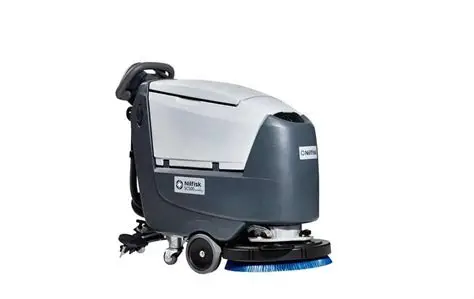
The Nilfisk SC500 is the walk-behind option in this comparison. Its 53 cm scrubbing width, 45 L solution tank and 45 L recovery tank make it suitable for facilities where maneuverability, compact storage and access through divided spaces matter more than maximum open-area productivity.
Nilfisk states that selected SC500 configurations can operate for up to five hours in light applications. Actual runtime will depend on the battery package, floor condition, water-flow setting and operating pattern.
| Specification | Nilfisk SC500 |
|---|---|
| Machine type | Walk-behind |
| Scrubbing width | 53 cm |
| Solution tank | 45 L |
| Recovery tank | 45 L |
| Stated runtime | Up to 5 hours in light applications |
| Main system | SmartFlow / Ecoflex, depending on configuration |
| Best fit | Retail, healthcare, schools and offices |
What Makes It Stand Out:
The Nilfisk SC500 is the only walk-behind model in this comparison. Its compact format, 53 cm cleaning width and solution-control features make it suitable for retail stores, healthcare facilities, schools, restaurants and offices.
Its main limitation is lower open-area capacity compared with ride-on models. It is better suited to divided layouts and narrow aisles where maneuverability is more important than maximum productivity.
Who Should Choose It?
Choose the Nilfisk SC500 if your facility includes narrow aisles, small rooms, lifts, furniture or other obstacles that make a ride-on scrubber difficult to maneuver.
Consider a compact ride-on machine if the facility has longer open routes and reducing operator walking is a higher priority.
Source Note
Specifications are based on current Nilfisk SC500 product information. Available batteries, Ecoflex options and scrub-deck configurations may vary by market. Last reviewed: August 2026.
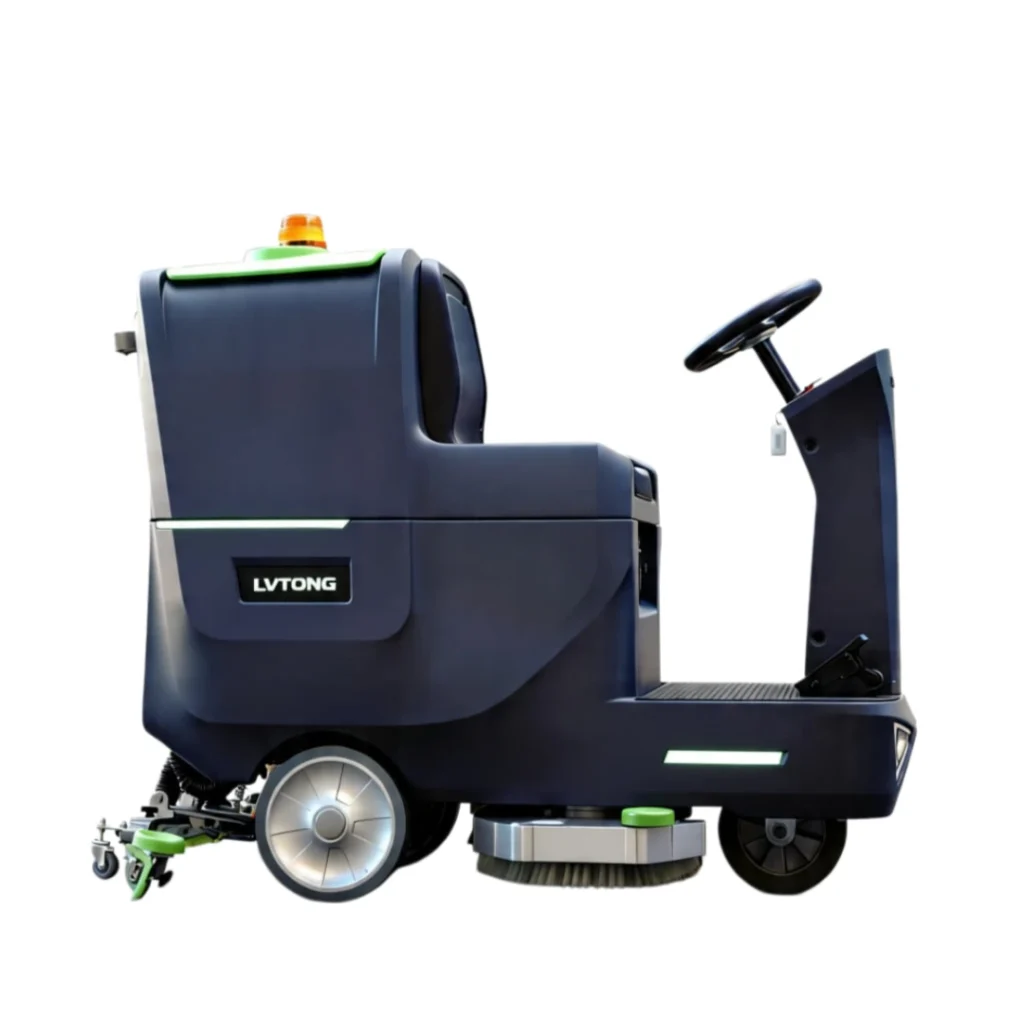
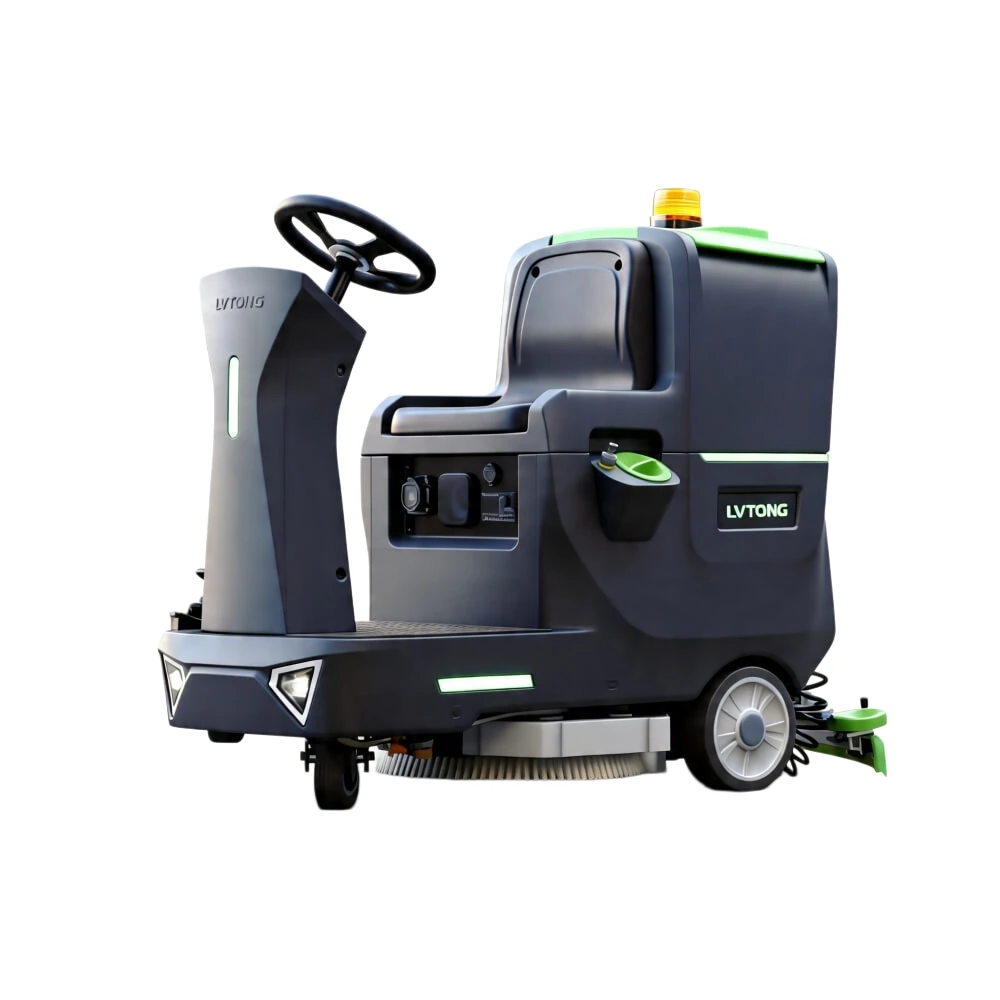
LVTONG V6: Best Compact Ride-On Option for Public Facilities
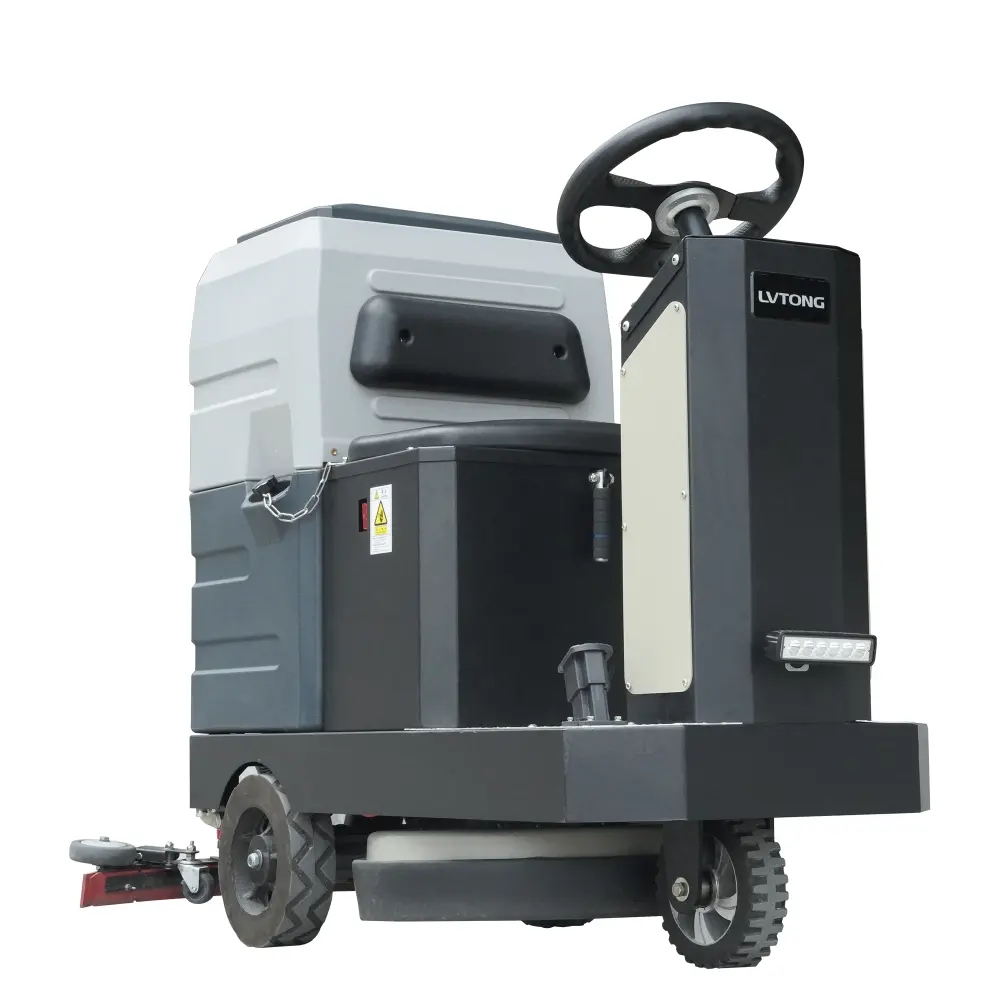
The LVTONG V6 is a battery-powered ride-on floor scrubber designed for medium-to-large commercial and public floor areas. Its seated operating position, simple control layout and integrated scrubbing and water-recovery system make it suitable for facilities that need more productivity than a walk-behind machine without using a larger heavy-industrial rider.
Why It Was Selected
The V6 was selected as the compact LVTONG ride-on option in this comparison because it combines ride-on operation with moderate tank capacity and a footprint intended for commercial cleaning routes.
It is best suited to facilities with open floor areas, sufficiently wide aisles and regular wet-cleaning requirements. The machine can scrub the floor and recover dirty water in one operating pass, helping reduce operator walking and repeated manual cleaning.
Verified Specifications
| Specification | LVTONG V6 |
|---|---|
| Machine type | Battery-powered ride-on floor scrubber |
| Recommended cleaning area | 2,000–4,000 m² |
| Solution tank | 60 L |
| Recovery tank | 55 L |
| Battery configuration | Two 100 Ah batteries |
| Typical operating time | Approximately 3–4 hours |
| Maximum theoretical productivity | Up to 3,200 m²/h |
| Main function | Integrated floor scrubbing and dirty-water recovery |
| Best fit | Shopping centers, public buildings, warehouses and transportation facilities |
The figures above are manufacturer-stated specifications. Actual runtime and productivity depend on battery condition, floor contamination, water-flow settings, turning, obstacles, refilling and wastewater disposal.
Main Advantages
- The ride-on design reduces operator walking during extended cleaning routes.
- The 60 L solution tank supports medium-to-large commercial cleaning tasks.
- The curved rear squeegee and vacuum-recovery system collect dirty water after scrubbing.
- The simple control panel can reduce the amount of operator training required.
- Integrated lighting supports operation in warehouses, parking areas and other low-light environments.
- The seated operating position can improve comfort during longer cleaning shifts.
Best Suited For
The LVTONG V6 is suitable for:
- Shopping centers and retail facilities
- Public buildings
- Warehouses with open aisles
- Airport and railway-station areas
- Schools and sports facilities
- Manufacturing workshops
- Underground parking facilities
Limitations
The V6 requires sufficient aisle width, turning space and storage area. It may not be the most practical option for small rooms, heavily congested layouts or facilities with very narrow passages.
Its stated productivity is a theoretical maximum. Actual cleaning output will normally be lower because of turning, obstacles, water refilling, wastewater disposal and travel between cleaning zones.
Buyers should confirm the final battery, scrubbing-width, squeegee-width, tank and charger configuration before purchase because available specifications may vary by production batch and market.
Who Should Choose It?
Choose the LVTONG V6 if your facility needs a ride-on floor scrubber for regular cleaning of medium-to-large open floor areas and wants to reduce operator walking compared with a walk-behind machine.
Consider a walk-behind floor scrubber if your facility has narrow aisles, small rooms or many obstacles. Consider a larger high-capacity ride-on scrubber if the cleaning route requires larger tanks, a wider scrubbing path or longer uninterrupted operation.
Specification Source
Specifications were reviewed using current LVTONG product and application information. Last verified: June 2026.
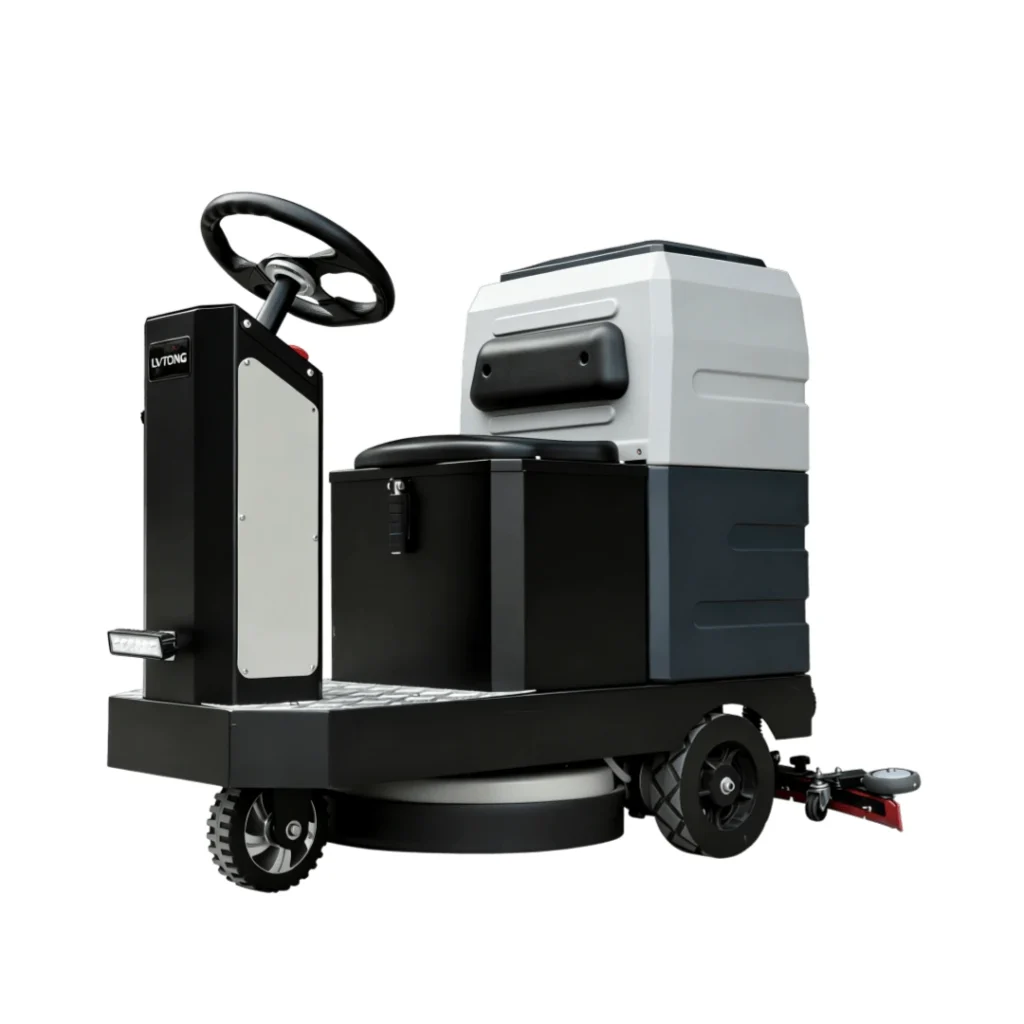
Best Multi-Surface Commercial Floor Scrubber: LT-S710X Ride-On Floor Scrubber
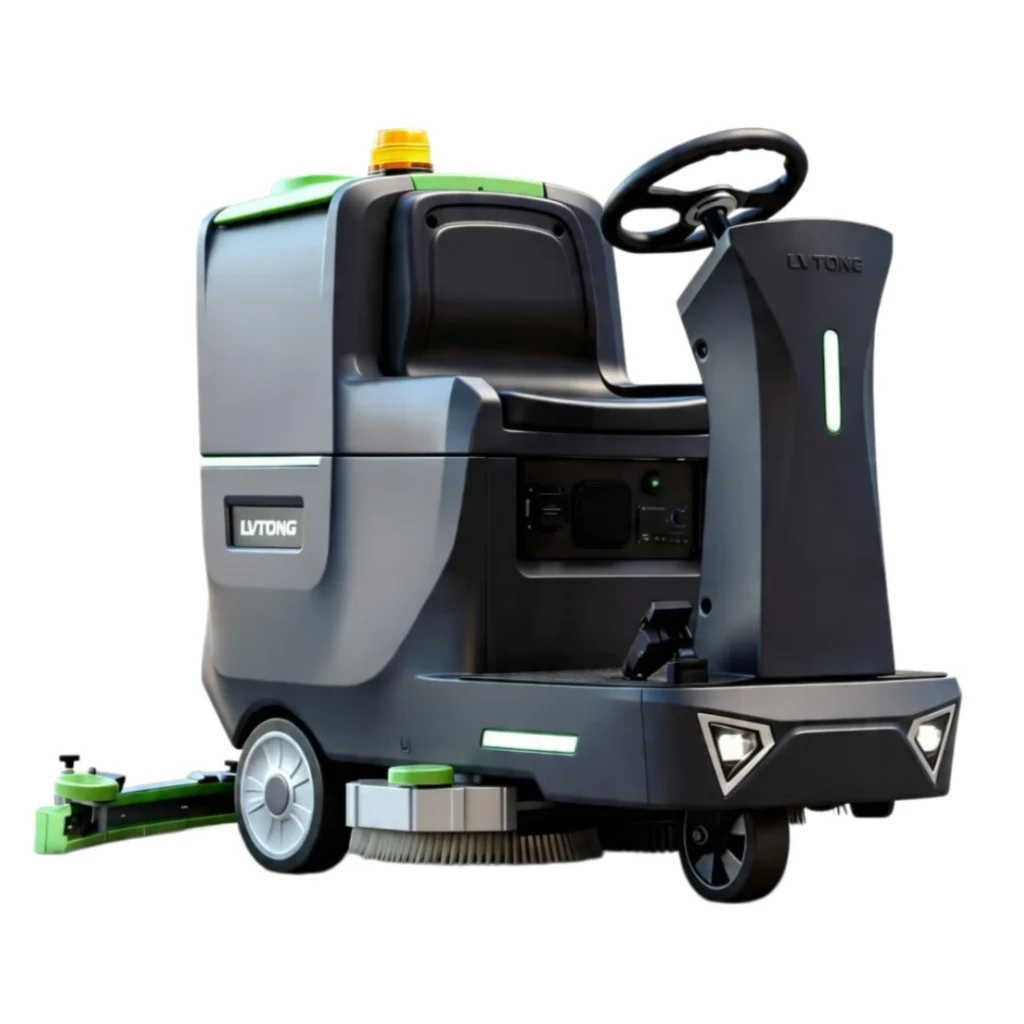
The LVTONG LT-S710X is a battery-powered ride-on floor scrubber designed for large commercial and industrial floor areas. Its dual-brush cleaning system, large water tanks and integrated wastewater-recovery system make it suitable for facilities with long, open cleaning routes.
Why It Was Selected
The LT-S710X was selected as the large-area LVTONG option in this comparison because it combines a wide scrubbing path, higher tank capacity and ride-on operation.
It is intended for facilities where reducing refill stops and operator walking is more important than compact machine dimensions. The machine scrubs the floor and recovers dirty water in a single operating pass.
Verified Specifications
| Specification | LVTONG LT-S710X |
|---|---|
| Machine type | Battery-powered ride-on floor scrubber |
| Scrubbing width | 710 mm |
| Squeegee width | 1,130 mm |
| Solution tank | 85 L |
| Recovery tank | 95 L |
| Battery capacity | 24 V / 100 Ah |
| Maximum theoretical productivity | Up to 5,600 m²/h |
| Manufacturer-stated operating time | Approximately 3–5 hours |
| Recommended cleaning area | Approximately 10,000–15,000 m² |
| Cleaning system | Dual-brush scrubbing and wastewater recovery |
Specifications may vary by battery, charger, brush and production configuration. Buyers should confirm the current technical specification before ordering.
Main Advantages
- The 710 mm dual-brush scrubbing path supports efficient cleaning of large open floors.
- The 85 L solution tank and 95 L recovery tank reduce refill and wastewater-disposal interruptions.
- The 1,130 mm squeegee supports wastewater collection across the cleaned path.
- The ride-on design reduces operator walking during long cleaning routes.
- Multiple cleaning settings allow operators to adjust the machine according to the floor condition and level of contamination.
- The integrated scrubbing and wastewater-recovery system cleans and collects dirty water in one pass.
Best Suited For
The LVTONG LT-S710X is suitable for:
- Large warehouses
- Manufacturing facilities
- Shopping centers
- Campus buildings
- Transportation facilities
- Underground parking areas
- Large workshops
- Commercial facilities with long, open cleaning routes
Floor Compatibility
The LT-S710X can be used on common hard-floor surfaces such as epoxy, concrete, ceramic tile, marble and wear-resistant flooring when the correct brush or pad, cleaning chemical and operating setting are selected.
The machine does not automatically identify every floor type. Operators should select the appropriate brush, pad, pressure and water-flow setting for the actual floor surface.
Limitations
The LT-S710X requires sufficient aisle width, turning space, doorway clearance and storage area. It may not be suitable for narrow aisles, small rooms or heavily congested layouts.
The stated productivity is a theoretical maximum. Actual cleaning productivity will normally be lower because of turning, obstacles, refilling, wastewater disposal, edge cleaning and travel between cleaning zones.
Buyers should confirm the final cleaning width, tank capacity, battery package, charger, squeegee width and local parts availability before purchase.
Who Should Choose It?
Choose the LT-S710X if your facility has large, open hard-floor areas and requires a ride-on scrubber with greater tank capacity and cleaning coverage than a compact commercial machine.
Consider a smaller ride-on or walk-behind floor scrubber if your facility has narrow aisles, divided rooms, elevators or limited storage space.
Specification Source
Specifications are based on the current LVTONG LT-S710X technical specification section. Last reviewed: June 2026.
Best Commercial Floor Scrubber Specification Comparison
| Model | Type | Cleaning Path | Tank Capacity | Runtime | Best Fit | Main Limitation |
|---|---|---|---|---|---|---|
| Factory Cat XR | Ride-on | Confirm selected 34–46 in configuration | Verify configuration | Verify configuration | Heavy industrial sites | Large footprint |
| Tennant T7 | Ride-on | 26 or 32 in | 29/29 gal | Up to 4.5 h | Medium-large facilities | Higher initial investment |
| Nilfisk SC500 | Walk-behind | 53 cm | 45/45 L | Up to 5 h in light use | Retail and healthcare | Lower open-area capacity |
| LVTONG V6 | Ride-on | Verify current specification | Verify current specification | Verify current specification | Public and commercial sites | Requires turning space |
| LVTONG LT-S710X | Ride-on | 710 mm | 85/90 L | Verify current specification | Large mixed-use facilities | Larger storage requirement |
Should You Consider an Autonomous Floor Scrubber?
Autonomous floor scrubbers may be suitable for facilities with repetitive cleaning routes, stable layouts and frequent scheduled cleaning.
They are not automatically the best option for every facility. Buyers should evaluate mapping reliability, obstacle detection, remote monitoring, software fees, staff supervision, service support and the need for manual edge and detail cleaning.
Autonomous machines should be compared by their effect on the complete cleaning workflow rather than by labor-reduction claims alone.
Autonomous Floor Scrubber Fit Checklist
Autonomous floor scrubbers can be valuable when the facility and cleaning workflow are suitable for automation. Before investing, compare the operating environment with the following conditions.
| Good candidate for autonomous cleaning | Requires additional evaluation |
|---|---|
| Repetitive cleaning routes | Layout changes frequently |
| Stable and predictable floor plan | Heavy or unpredictable pedestrian traffic |
| Long open corridors or floor zones | Frequent temporary obstacles |
| Scheduled cleaning at consistent times | Cleaning routes change from shift to shift |
| Reliable charging opportunities | Long operating periods with limited charging access |
| Strong software and technical support | Limited local technical or software support |
| Clearly defined cleaning zones | Significant edge, corner or detail cleaning requirements |
An autonomous machine should also be evaluated as part of the complete cleaning process rather than as a direct one-for-one replacement for an operator.
What to Ask for During an Autonomous Scrubber Demonstration
Before purchasing, ask the supplier to demonstrate:
- Initial mapping and route creation
- Detection and avoidance of people and obstacles
- Recovery after the planned route is blocked
- Operation around narrow passages and changing traffic conditions
- Manual takeover and emergency-stop procedures
- Charging or docking workflow
- Remote machine status and cleaning reports
- Cleaning around walls, edges and corners
- Software-update and technical-support procedures
The best autonomous floor scrubber is not necessarily the machine with the most sensors or software functions. It is the machine that can repeatedly complete the required cleaning route while fitting the facility’s supervision, charging, maintenance and service capabilities.
When Autonomous Scrubbers Should Not Be the First Choice
Autonomous scrubbers should not be selected only because automation sounds more advanced.
They may not be the first choice when a facility has constantly changing layouts, frequent temporary obstacles, heavy pedestrian traffic, unpredictable forklift movement, limited charging opportunities, weak local technical support or many edges and corners that still require manual detail cleaning.
In these cases, an operator-driven walk-behind or ride-on scrubber may provide better flexibility and lower operational risk.
Why Similar Floor Scrubbers Can Have Very Different Prices
Two commercial floor scrubbers with similar dimensions or cleaning widths can have significantly different purchase prices because machine cost is determined by more than size alone.
| Price driver | What buyers should compare |
|---|---|
| Battery package | Battery chemistry, capacity, charger, expected operating time, charging requirements and future replacement cost |
| Scrub, vacuum and drive systems | Scrub motor, vacuum system, traction system and the configuration required for the actual floor and workload |
| Electrical controls and protection | Control system, warning and protection functions, operating environment and ease of troubleshooting |
| Construction and duty cycle | Frame, tanks, squeegee assembly, wheels, frequently used components and suitability for the expected daily workload |
| Included accessories | Brushes, pads, squeegee blades, charger and other equipment included in the quotation |
| Warranty and service | Warranty coverage, technical support, training and access to qualified repair assistance |
| Parts availability | Availability and lead time for batteries, brushes, pads, squeegee blades, hoses, filters and other replacement components |
A lower purchase price can be attractive, but it should be evaluated together with operating cost, maintenance, battery replacement, consumables, equipment downtime and expected service life.
Before Comparing Quotations, Standardize the Information
Ask competing suppliers to quote the same basic requirements whenever possible. Each quotation should clearly identify:
- Exact machine model and cleaning configuration
- Scrubbing width and squeegee width
- Solution and recovery tank capacity
- Battery type, battery capacity and included charger
- Brushes or pads included with the machine
- Warranty period and warranty exclusions
- Recommended maintenance requirements
- Prices for common wear parts and consumables
- Expected spare-parts lead time
- Operator training and technical support included
- Shipping, tax or other charges that are not included in the equipment price
Comparing quotations on the same basis makes it easier to distinguish a genuinely better-value machine from a lower initial price that excludes important equipment or support.
Floor and Soil Matching Guide
The correct brush, pad, chemical and operating setting depends on both the floor material and the type of contamination. Use the following table as a starting point and confirm the final configuration with a site test.
| Floor or cleaning condition | What to evaluate |
|---|---|
| Smooth epoxy floors | Confirm a compatible brush or pad, appropriate water flow and sufficient dirty-water recovery without using unnecessary aggressive pressure. |
| Rough or unfinished concrete | Evaluate brush aggressiveness, available down pressure and whether the squeegee can maintain consistent water recovery across an uneven surface. |
| Polished floors | Use a compatible non-aggressive brush or pad and verify that the selected cleaning method will not damage the surface finish. |
| Ceramic tile and grout lines | Check brush contact with the surface and grout areas and confirm that the squeegee can recover water effectively from the actual floor profile. |
| Oil, grease or tire marks | Test the actual contamination with a floor-compatible detergent and suitable brush or pad instead of selecting the machine by pressure alone. |
| Loose dust, stones or packaging debris | Sweep before wet scrubbing, or evaluate whether a cylindrical or combined sweeping-and-scrubbing system would better fit the application. |
| Multiple floor surfaces in one facility | Select a machine that supports compatible brushes or pads and practical adjustment of water flow and cleaning settings. |
Brush and pad selection should follow one practical rule: use the least aggressive option that can remove the soil effectively.
For smooth or coated floors such as epoxy, vinyl or PVC, start with a soft nylon brush or non-aggressive pad. For general hard-floor cleaning, a medium nylon or polypropylene brush is usually a practical starting point. For rough concrete, textured floors or embedded industrial soil, a stiffer or grit brush may be evaluated, but it should always be tested first to avoid unnecessary floor damage.
Always confirm chemical compatibility with the floor manufacturer or facility requirements. A more aggressive brush, higher pressure or stronger detergent is not automatically better and can be unsuitable for some floor finishes.
Service Support Questions to Ask Before Buying
Maintenance support should be evaluated before the machine is purchased, not after the first breakdown.
Ask every supplier the following questions:
| Question | Why it matters |
|---|---|
| Who provides technical support after delivery? | Clarifies who is responsible when an operating or technical problem occurs. |
| Which wear parts are normally stocked? | Frequently replaced components such as brushes, pads and squeegee blades can affect machine availability. |
| What is the normal spare-parts lead time? | Long parts delays can turn a minor repair into extended equipment downtime. |
| Are operating and maintenance documents supplied? | Clear procedures can reduce operating mistakes and improve routine maintenance. |
| Is operator and maintenance training available? | Training is especially important when multiple employees or shifts use the same machine. |
| Is remote troubleshooting available? | Basic diagnosis by phone, video or remote support may resolve some issues without waiting for an on-site visit. |
| What does the warranty cover and exclude? | Warranty length alone is not enough; buyers should understand coverage for parts, labor, batteries and wear components. |
| How long will replacement parts remain available? | Long-term parts availability affects the useful service life of commercial cleaning equipment. |
For facilities where floor cleaning is operationally critical, expected downtime should be treated as part of total cost of ownership. A machine with competitive specifications can become expensive if a common component takes weeks to replace.
Indicative Commercial Floor Scrubber Price Ranges in 2026
Commercial floor scrubber prices vary depending on machine size, tank capacity, battery type, cleaning width, brand, automation level, and after-sales support. Buyers should compare the purchase price together with labor savings, maintenance cost, parts availability, battery replacement, and long-term ROI.
Prices are indicative estimates for new commercial equipment and may vary by region, battery package, charger, brush or pad configuration, shipping, tax, warranty and dealer support. Confirm current pricing directly with the manufacturer or authorized distributor.
| Machine Type | Typical Price Range | Best For |
| Compact walk-behind floor scrubber | $3,000–$8,000 | Small businesses, restaurants, clinics, and retail stores |
| Mid-size walk-behind floor scrubber | $8,000–$15,000 | Schools, offices, supermarkets, and medium commercial spaces |
| Ride-on floor scrubber | $15,000–$50,000+ | Warehouses, factories, shopping malls, and large facilities |
| Autonomous floor scrubber | Higher upfront cost | Repetitive routes, labor-saving programs, and smart facility cleaning |
The lowest price is not always the best value. A machine with a higher upfront cost may deliver better ROI if it reduces labor hours, covers more floor area per hour, lowers refill frequency, or improves long-term reliability.
Rent, Lease or Purchase: Which Option Fits Your Cleaning Plan?
Before buying a commercial floor scrubber, some businesses may compare rental, leasing and direct purchase.
| Option | Best Suited For | Main Advantage | Main Consideration |
|---|---|---|---|
| Rent | Temporary projects, seasonal cleaning, emergency replacement or machine testing | Lower upfront cost and flexible short-term use | Repeated rental fees may become expensive if the machine is needed frequently |
| Lease | Medium- or long-term use with predictable payments | Easier budgeting with scheduled payments | Buyers should check contract term, service coverage, ownership terms and support |
| Purchase | Daily or frequent long-term cleaning | More control over machine availability, operator training and maintenance | Higher upfront cost, but often better for stable long-term cleaning needs |
Renting can be useful when cleaning demand is uncertain or when a company wants to test a machine before purchase.
Purchasing is usually stronger when the machine will be used every day, cleaning demand is stable, operators need consistent training, and the facility has storage, charging and maintenance capability.
When comparing rent, lease and purchase, include delivery, pickup, usage limits, consumables, battery condition, maintenance coverage, spare parts, downtime and total cost over the expected use period.
How to Choose the Best Commercial Floor Scrubber
There is no single best commercial floor scrubber for every facility. The right machine should be selected according to the actual cleaning route, floor condition, operating schedule and long-term support requirements.
Before comparing individual models, evaluate the following six factors.
1. Usable Floor Area and Layout
Do not choose a floor scrubber based only on the total building size. Measure the actual cleanable floor area and consider aisle width, doorway clearance, turning space, ramps, elevators, shelving, furniture and other obstacles.
A walk-behind scrubber is generally more practical for narrow aisles, divided rooms and congested layouts. A ride-on scrubber is usually more efficient for long, open cleaning routes with sufficient turning and storage space.
2. Floor Material and Soil Type
Identify both the floor surface and the contamination that must be removed. Concrete, epoxy, ceramic tile, vinyl and polished floors may require different brushes, pads, pressure settings and cleaning solutions.
Facilities with grease, oil, tire marks or bonded soil may require stronger scrubbing action. Floors with large amounts of loose dust, stones or packaging debris should normally be swept before wet scrubbing.
3. Cleaning Path and Turning Radius
A wider cleaning path can increase productivity in large open areas, but it also increases the machine footprint and turning-space requirement.
For narrow aisles and areas with frequent obstacles, a smaller cleaning path and tighter turning radius may provide better practical productivity than a larger machine. Buyers should compare scrubbing width, squeegee width, overall machine dimensions and turning clearance.
4. Tank Capacity and Runtime
Larger solution and recovery tanks can reduce refill and wastewater-disposal interruptions, but they also increase machine size and weight.
Compare the stated runtime with the length of the actual cleaning shift, charging opportunities and the availability of spare batteries. Manufacturer-stated runtime and productivity are normally maximum figures; actual results depend on floor condition, water-flow settings, turning, obstacles and battery condition.
5. Maintenance and Parts Support
Before purchasing, confirm the availability of brushes, pads, squeegee blades, hoses, filters, batteries, chargers and other replacement parts.
Also evaluate maintenance access, warranty terms, technical support, local service capability and expected parts-delivery time. A machine with suitable specifications may still create operational problems if replacement parts or service support are difficult to obtain.
6. Total Cost of Ownership
Do not compare machines by purchase price alone. Total cost of ownership may include:
- Operator labor
- Water and cleaning chemicals
- Brushes, pads and squeegee blades
- Routine maintenance
- Battery and charger replacement
- Repair and service costs
- Equipment downtime
- Expected service life
A machine with a higher initial price may provide better long-term value if it reduces labor time, refill interruptions and maintenance downtime. However, these savings should be calculated using the facility’s actual cleaning schedule rather than general productivity claims.
Quick Selection Guide
| Facility Condition | Recommended Starting Point |
|---|---|
| Narrow aisles, small rooms or many obstacles | Compact walk-behind scrubber |
| Medium-sized facility with a mixture of open and divided areas | Large walk-behind or compact ride-on scrubber |
| Large facility with long, open cleaning routes | Ride-on floor scrubber |
| Heavy industrial soil or frequent intensive cleaning | Heavy-duty industrial ride-on scrubber |
| Multiple hard-floor surfaces | Machine with compatible brush or pad options and adjustable settings |
| Stable and repetitive cleaning routes | Consider an autonomous scrubber after evaluating software, supervision and service support |
The final decision should be based on practical cleaning conditions rather than one specification alone. Compare machine size, maneuverability, tank capacity, runtime, maintenance support and operating cost together before requesting a quotation.
For a complete step-by-step selection process, see our commercial floor scrubber buying guide.
What Information Should You Prepare Before Requesting a Quote?
To receive a more accurate commercial floor scrubber recommendation, prepare the following information before contacting a supplier:
- Cleanable floor area
- Floor material, such as concrete, epoxy, tile, vinyl or polished floor
- Main soil type, such as dust, oil, grease, tire marks or daily dirt
- Aisle width, doorway clearance and turning space
- Daily or weekly cleaning frequency
- Available cleaning window during the day or night
- Battery runtime and charging requirements
- Preferred walk-behind, ride-on or autonomous operation
- Water recovery and drying expectations
- Budget range and expected ownership period
- Local service, spare parts and operator training requirements
You can also review LVTONG’s commercial floor scrubber dryers to compare walk-behind, ride-on and industrial scrubber dryer options before requesting a custom recommendation.
Conclusion: Choosing the Best Commercial Floor Scrubber
There is no single best commercial floor scrubber for every facility.
The Factory Cat XR is the strongest starting point in this comparison for heavy industrial sites with long, open cleaning routes. The Tennant T7 is better suited to medium and large facilities that need a more compact ride-on machine. The Nilfisk SC500 is the most practical option here for retail, healthcare, schools, offices and other divided layouts.
The LVTONG V6 is intended for medium-to-large commercial and public areas that need ride-on productivity without moving to a heavy industrial machine. The LVTONG LT-S710X is better suited to larger open facilities where wider cleaning coverage and higher tank capacity are priorities.
Before requesting a quotation, confirm usable floor area, aisle width, floor material, soil type, cleaning frequency, runtime, battery and charger requirements, maintenance support and total cost of ownership.
The best commercial floor scrubber machine is the one that can complete your real cleaning route reliably, fit through the facility, use locally available parts and deliver an acceptable operating cost—not simply the machine with the largest tank or highest theoretical productivity.
Commercial Floor Scrubber FAQs
What is the best commercial floor scrubber for warehouses?
The best commercial floor scrubber for warehouses is usually a heavy-duty ride-on model with a wide cleaning path, large solution and recovery tanks, long battery runtime, strong brush pressure, and durable construction. These features help reduce cleaning time across large concrete or epoxy floors.
Is a ride-on floor scrubber better than a walk-behind scrubber?
A ride-on floor scrubber is better for large open spaces because it improves productivity and reduces operator fatigue. A walk-behind scrubber is better for smaller areas, narrow aisles, clinics, restaurants, offices, and congested layouts where maneuverability is more important than maximum speed.
How much does a commercial floor scrubber cost?
Commercial floor scrubber prices vary by size, battery type, tank capacity, cleaning width, brand, and automation level. Compact walk-behind scrubbers may cost a few thousand dollars, while ride-on and autonomous scrubbers can require a much higher investment. Buyers should compare price with labor savings and ROI.
What specs matter most when choosing a commercial floor scrubber?
The most important specs include cleaning path, tank capacity, battery runtime, productivity rate, brush pressure, water recovery, floor type compatibility, turning radius, maintenance needs, and service support. These factors determine whether the machine fits your facility and cleaning schedule.
What is the best commercial floor scrubber for concrete floors?
For concrete floors, choose a commercial floor scrubber with strong brush pressure, durable construction, good water recovery, and suitable brushes or pads for industrial soil. Warehouses, factories, and distribution centers often benefit from heavy-duty ride-on scrubbers for concrete surfaces.
Are autonomous floor scrubbers worth the cost?
Autonomous scrubbers may be worthwhile in facilities with repetitive routes, stable layouts and frequent cleaning. Buyers should also account for software, supervision, obstacle handling, service support and manual detail cleaning.
Why is actual productivity lower than the manufacturer’s maximum?
Manufacturer figures are normally theoretical maximums. Actual productivity is reduced by turning, obstacles, refilling, wastewater disposal, edge cleaning, battery condition and travel between cleaning zones.
What makes a commercial floor scrubber reliable?
A reliable commercial floor scrubber should provide consistent scrubbing and dirty-water recovery while remaining practical to operate and maintain. Important factors include the brush or pad system, squeegee and vacuum performance, battery reliability, control simplicity, access to wear parts and availability of technical support.
Reliability should be evaluated under the facility’s actual operating conditions. A machine with excellent theoretical specifications may still be a poor choice if it leaves water during turns, is difficult to maneuver, requires frequent maintenance or has limited replacement-parts support.
How do I choose a floor scrubber for a large, wide-open space?
For a large facility with long, open cleaning routes, a ride-on commercial floor scrubber is usually the first machine type to evaluate. However, total building area alone should not determine the machine size.
Measure the usable cleaning area and confirm aisle width, doorway clearance, turning space, cleaning path, tank capacity, realistic battery runtime, charging opportunities and wastewater-disposal requirements. A larger machine can improve practical productivity when the route is open enough to use its capacity, but an oversized scrubber can lose that advantage in areas with frequent obstacles or restricted turning space.
What is the difference between an operator-driven and robotic floor scrubber?
An operator-driven floor scrubber requires a person to control navigation and make cleaning decisions throughout the route. This includes most conventional walk-behind and ride-on commercial floor scrubbers.
A robotic or autonomous floor scrubber uses sensors, mapping, navigation software and predefined routes to perform part of the cleaning process with reduced direct operator control. Autonomous machines still require evaluation of obstacle handling, route reliability, charging, software, supervision, maintenance, technical support and manual edge or detail cleaning.
The better option depends on the facility. Operator-driven machines offer greater flexibility in frequently changing environments, while autonomous scrubbers may be more suitable for stable and repetitive cleaning routes.
Should I rent, lease or buy a commercial floor scrubber?
Renting can be useful for temporary projects, seasonal cleaning, emergency replacement or machine testing. Leasing may fit businesses that want predictable payments over a longer period. Purchasing is usually more suitable when the machine will be used daily or frequently, because the facility can control availability, training, maintenance and long-term operating cost.
What information should I provide before asking for a floor scrubber quote?
Before requesting a quote, prepare your cleanable floor area, floor material, soil type, aisle width, doorway clearance, turning space, cleaning frequency, available cleaning window, battery runtime requirement, preferred machine type, water recovery expectations, budget range and service-support needs. This helps the supplier recommend a machine that fits the real working environment.
References
https://en.wikipedia.org/wiki/Tennant_Company