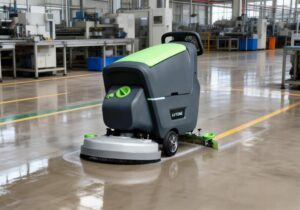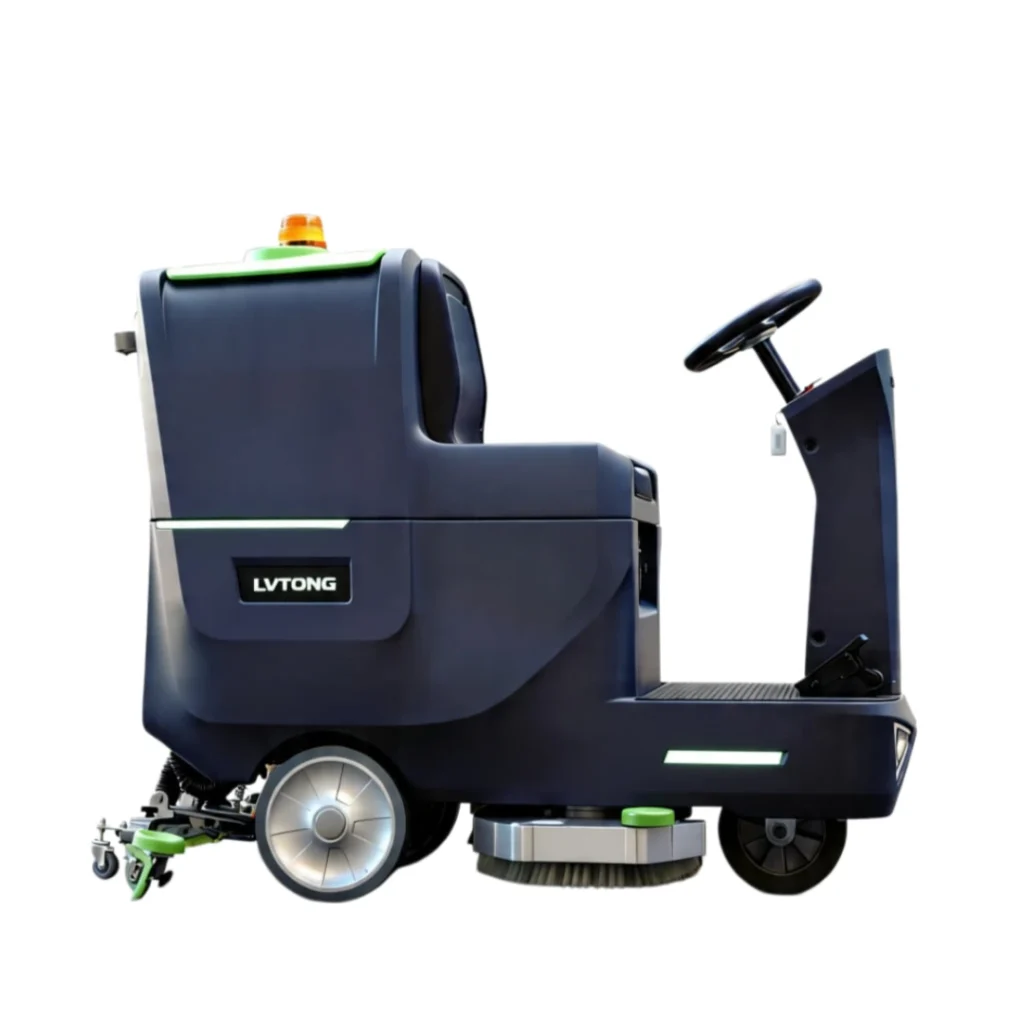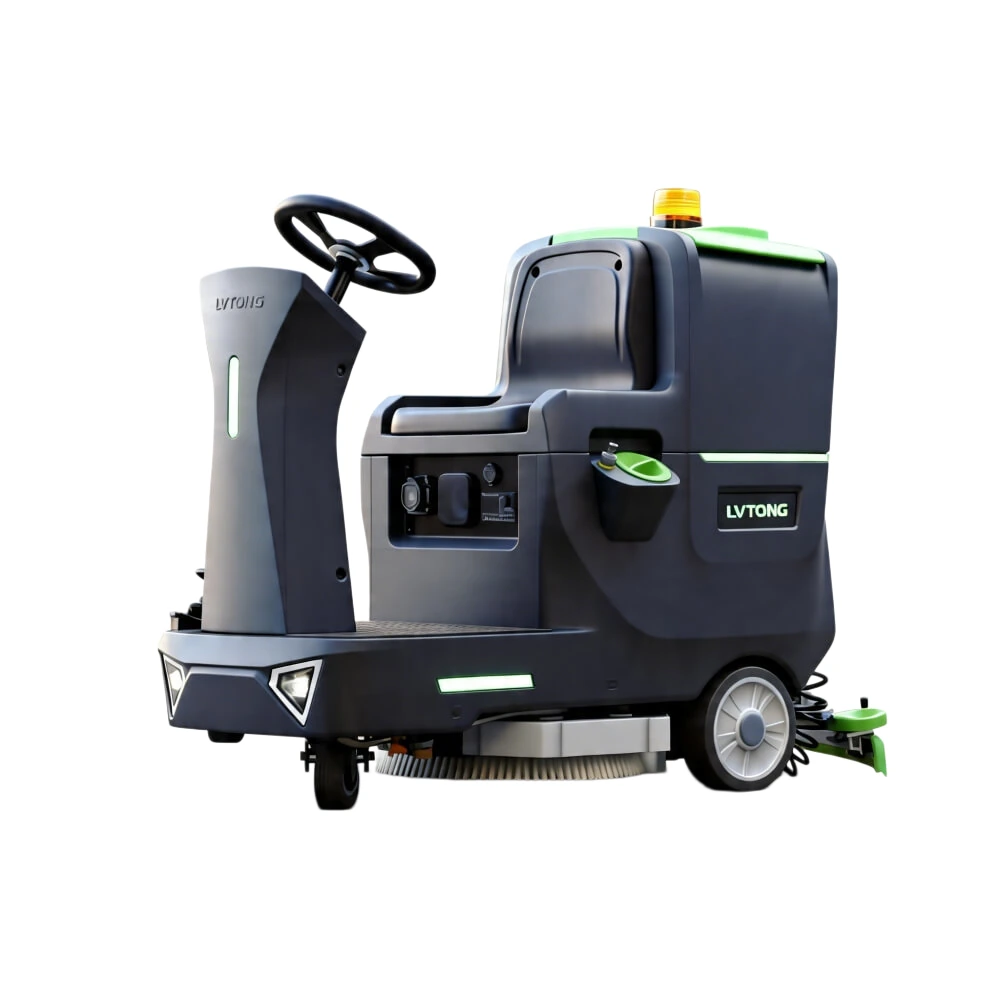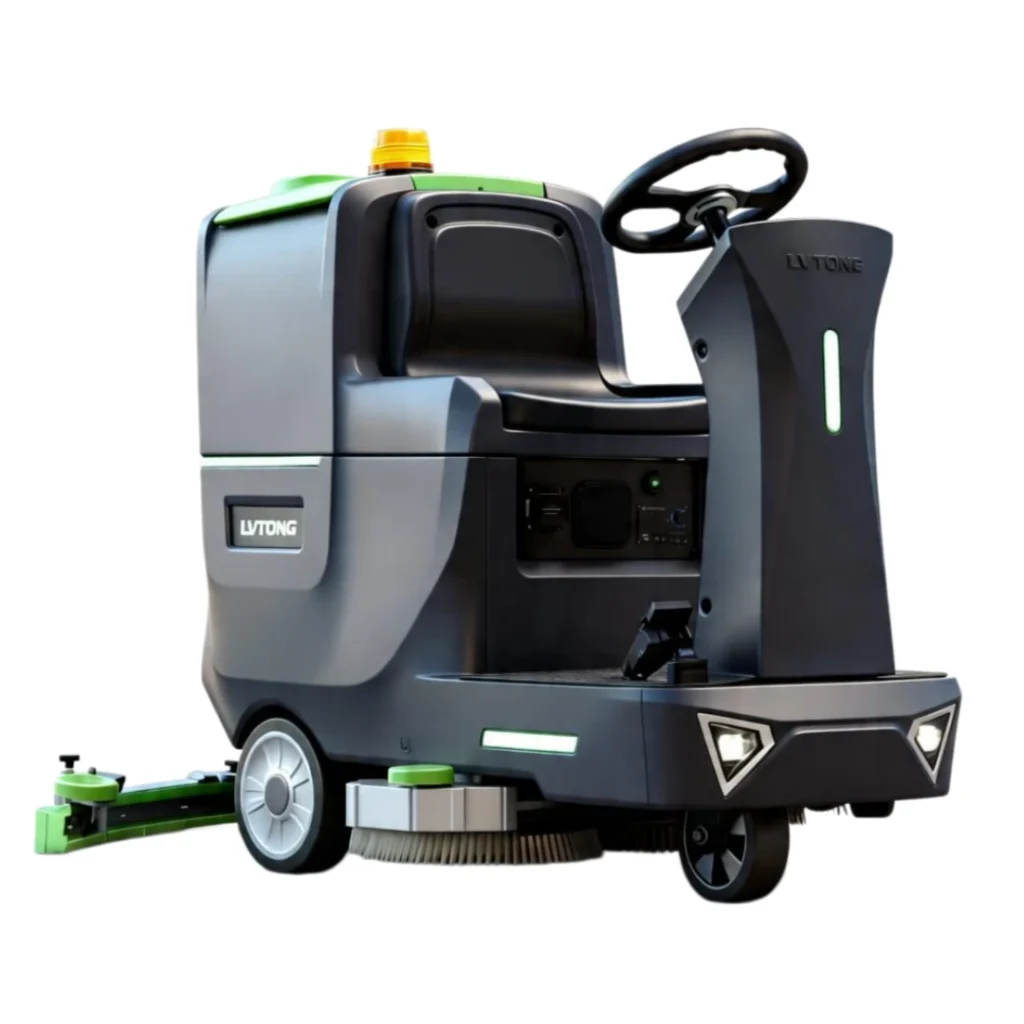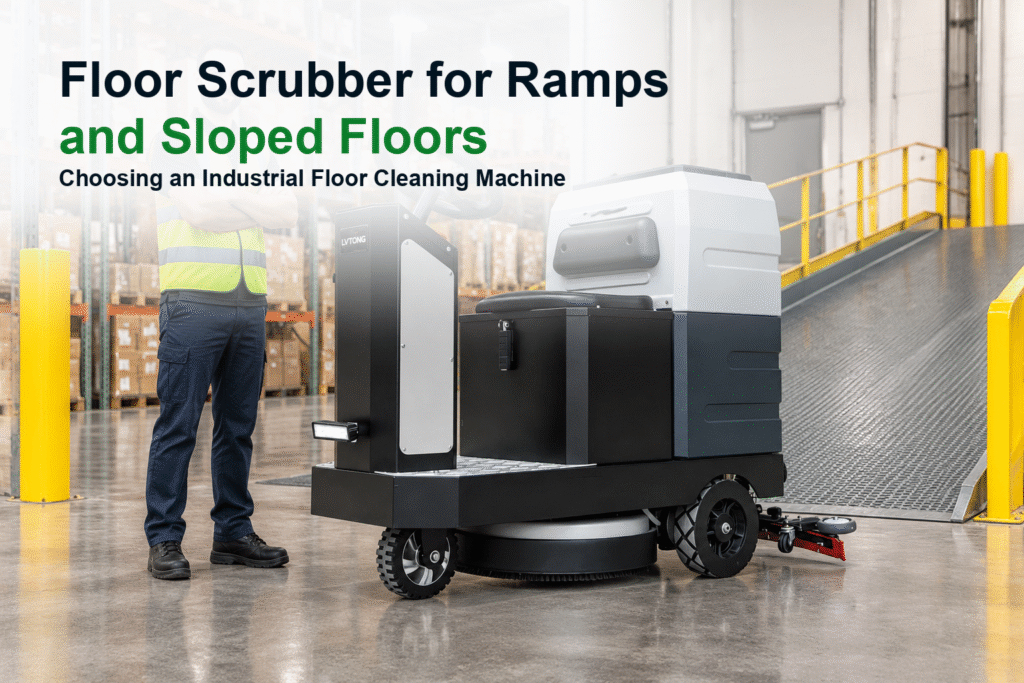

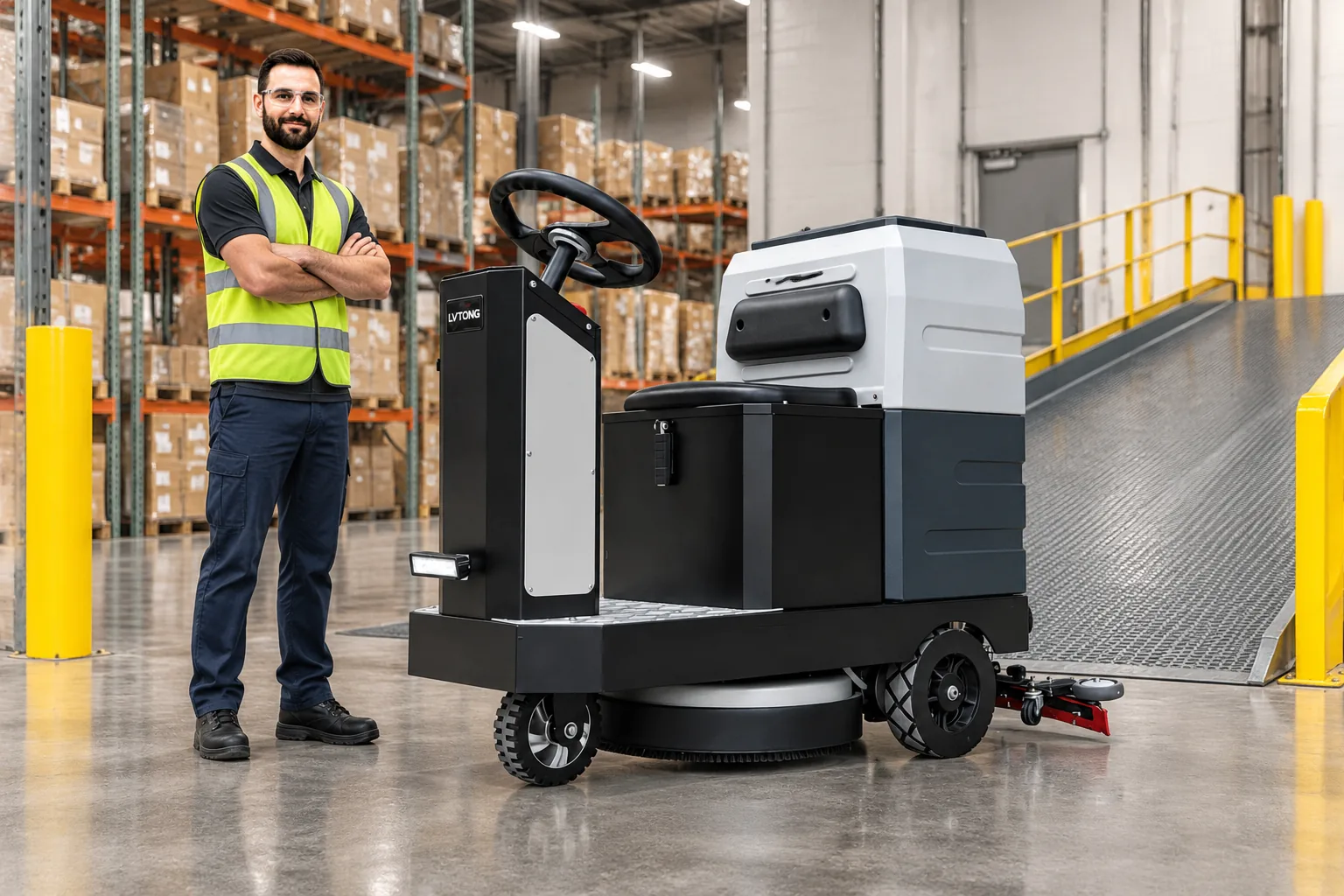
A floor scrubber can clean a ramp when the slope falls within its approved scrubbing limit and the machine maintains traction, controlled travel, and effective water recovery. The best industrial floor cleaning machine for this work combines suitable propulsion and braking with a brush, solution setting, and squeegee matched to the surface. A climbing specification alone leaves several questions unanswered: whether the tanks are loaded, whether the floor is wet, and whether the brushes are operating.
We approach sloped floors as a complete cleaning route. The incline matters, and so do the landing, the transition into the next aisle, and the water left behind. LVTONG’s range gives you different options for compact work areas and large industrial floors. This guide explains how those options fit together, where powered travel helps, and which performance details make a ramp-cleaning plan practical for your operators throughout an ordinary shift in a busy facility.
Why Ramps and Sloped Floors Require Different Cleaning Equipment
On a level floor, solution generally stays close to the brush until the squeegee collects it. A slope introduces downhill flow. Water can escape toward one side, collect at the bottom, or reach a traffic lane before the machine recovers it.
Surface texture changes the problem. Grooved concrete can retain dirty liquid in its channels; a smooth coating may become slippery under an oily film. A machine that leaves a clean strip on a warehouse floor can leave a wet edge on the connecting ramp.
Nosso guia de seleção de lavadoras de piso para armazém connects floor conditions, aisle access, and water recovery with machine selection. On a sloped route, those same factors need to be assessed together. For your cleaning team, the useful result is a surface with soil removed and residual water controlled. That result determines when normal traffic can resume.
How to Match Floor Scrubber Gradeability to Your Facility’s Slopes
Gradeability describes a machine’s ability to handle an incline under specified conditions. A transport rating covers movement; a scrubbing rating covers cleaning with the working equipment engaged. These operating conditions can have different limits.
A clear example appears in the scrubbing and transport slope limits in Tennant’s M20 operator manual: Always verify the exact rating in the manufacturer’s manual. For example, the Tennant M20 manual lists a 14% maximum rated incline for scrubbing and 18% during transport. Loading and unloading limits should be checked separately against the relevant manual instructions. Those figures illustrate the distinction; each LVTONG configuration needs its own operating limits.
Units matter, too. A ramp rising 1 foot over 10 feet of horizontal distance has a 10% grade, equivalent to about 5.7 degrees. A 10-degree incline is approximately a 17.6% grade. Writing both the number and its unit prevents a substantial mismatch.
We also separate lengthwise slope from cross-slope. A machine traveling straight up an incline faces different loading and recovery conditions from one leaning sideways toward a drain. The steepest section and the change in angle at each landing deserve particular attention.
A short, sharp transition can lift the squeegee edge or bring the brush deck close to the floor even when the main ramp has a modest grade. Clearance through that transition belongs in the evaluation alongside the slope number.
Key Features in an Industrial Floor Cleaning Machine for Ramps
Propulsion, braking, and water pickup need to work together. More motor power offers little benefit if the tires lose contact or the squeegee leaves wash water across the route.
Controlled drive and braking
A dedicated traction motor moves the machine independently of the cleaning brush. This helps distinguish a powered machine from a pad-assisted model, where brush contact contributes to forward movement. Our comparison of floor scrubber drive systems explains that difference. On an approved incline, the controls should support predictable acceleration, deceleration, and stopping with the intended operating load.
Tires and surface contact
Tire condition belongs in the daily inspection. Embedded grit, oil contamination, cuts, and wear all affect contact with the floor. Anti-slip tread is one component of the setup; the surface, detergent film, load, and travel speed also influence grip.
Solution control and recovery
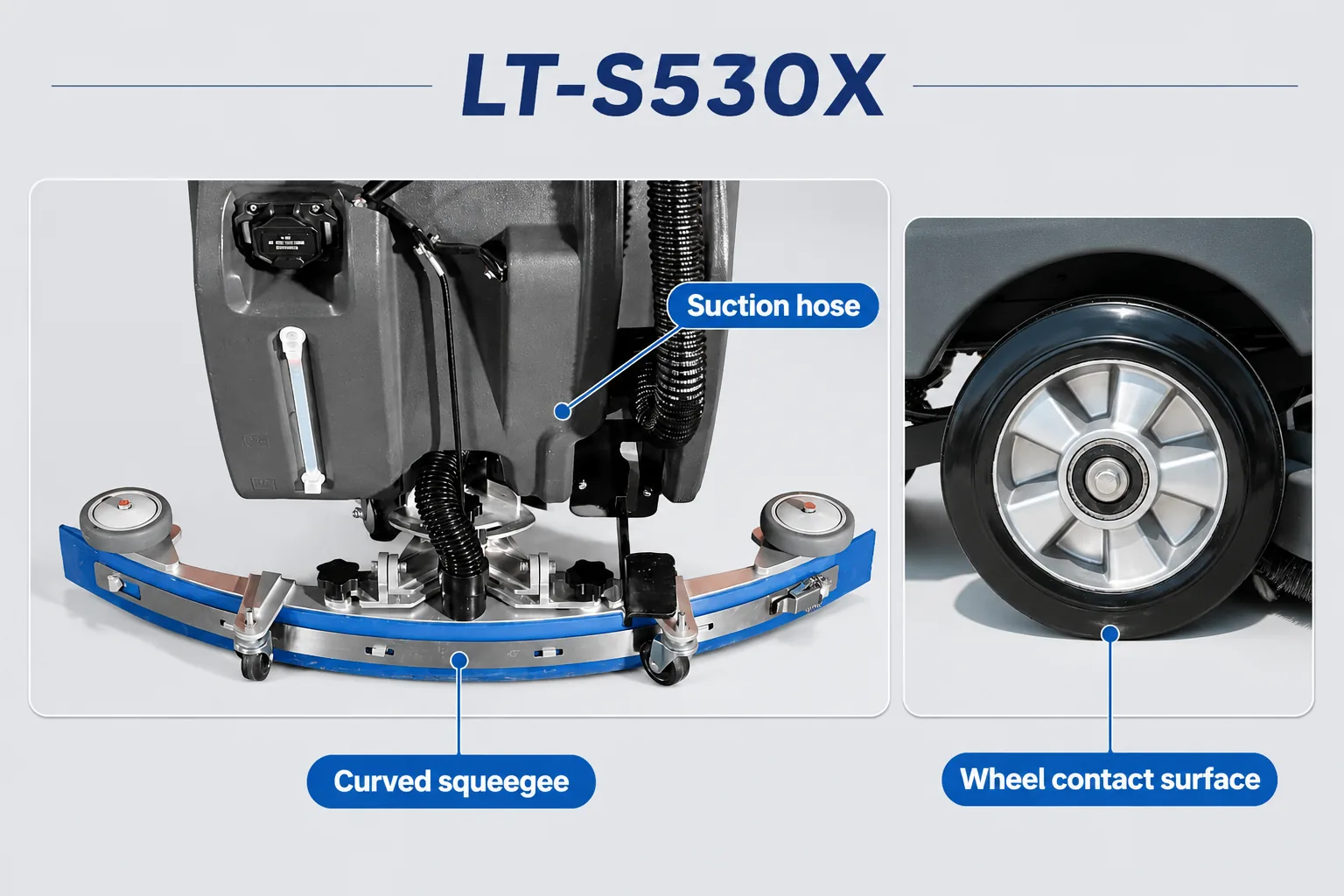
Our LT-S530X product details include a curved squeegee and a closed drainage pipeline. The squeegee collects liquid during cleaning; the pipeline handles discharge from the tank afterward. Keeping those functions distinct helps operators trace a wet-floor problem to the right component.
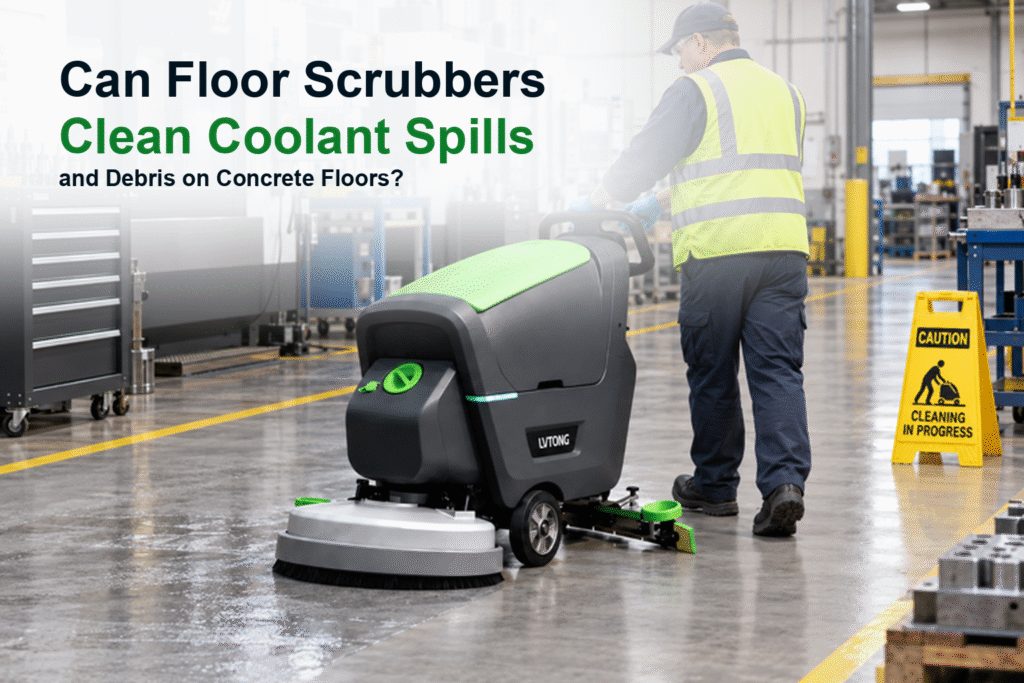
Excess solution increases the liquid the recovery system must collect. A clean blade, clear suction hose, sound tank seal, and suitable flow setting are useful starting points when a machine leaves streaks. More brush pressure alone will leave the recovery fault unresolved.
Walk-Behind vs. Ride-On Floor Scrubbers: Which Fits Your Cleaning Route?
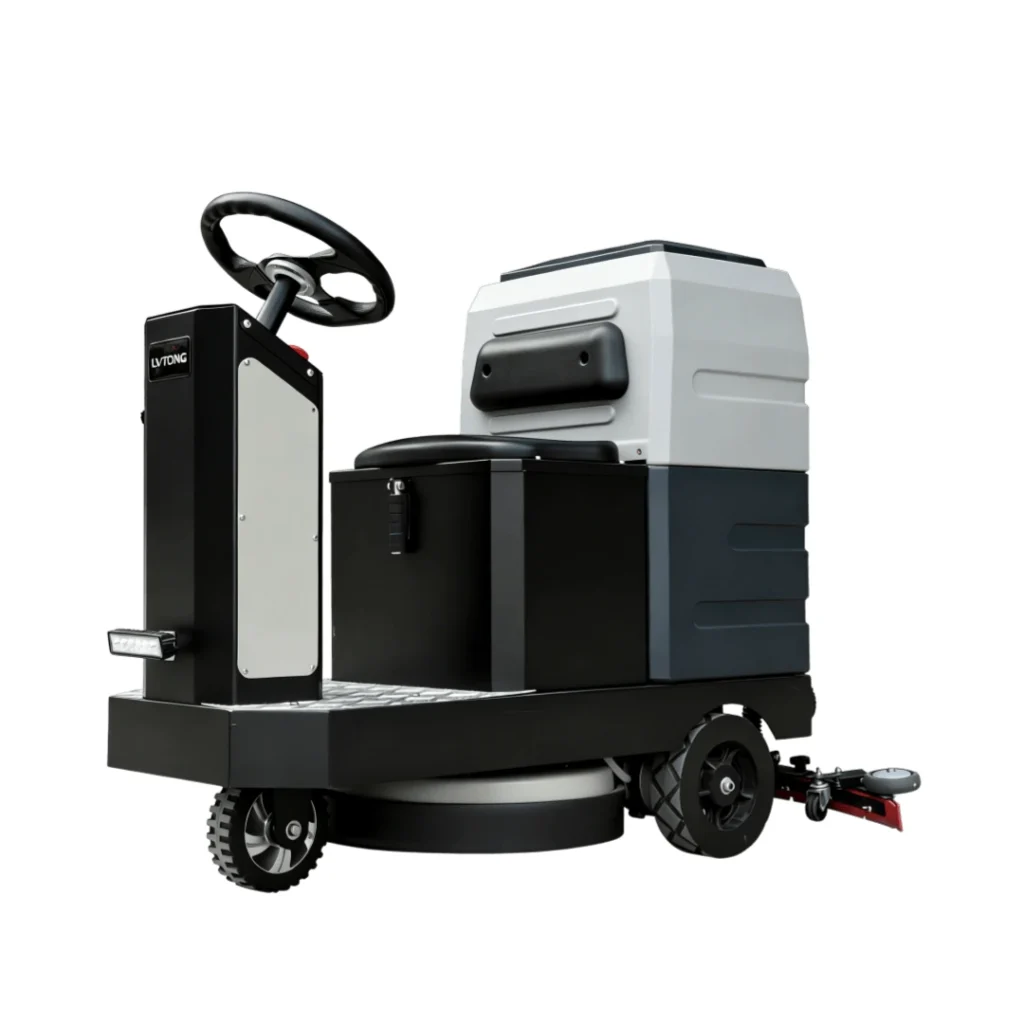
A powered walk-behind can suit a restricted route when its documented working limits cover the incline. A ride-on can reduce walking across larger connected floors. The landing and turning space often decide which format fits.
Within our range, the LT-S530X represents the compact push-machine option. Its published applications include narrow aisles and manufacturing workshops. We use it as an example of access-focused selection; its compact size alone establishes no ramp-cleaning capability.
Modelo LVTONG | Published product details | Relevance to route planning |
|---|---|---|
Push-machine format; 62 L solution tank and 65 L recovery tank | Compact cleaning zones and narrow approaches; slope suitability remains a separate criterion | |
Seated operation; 85 L solution tank and 90 L recovery tank | Connected hard-floor areas where seated travel and fewer water stops help the route | |
Dual-brush configuration, lithium battery, and fault alerts | Larger industrial cleaning zones with room for the machine and its working equipment |
Our LT-S860X product page presents anonymous application scenarios for an 80,000-square-meter Shanghai shopping mall and a Guangzhou airport cargo area. The cargo-area description identifies concrete floors, dust mixed with oil, and frequent vehicle traffic. Those conditions explain the value of brushing combined with liquid recovery. These examples describe large-area applications; they provide no measured ramp test.
A mixed site can therefore justify two cleaning zones: a larger machine for the open floor and a separately assessed method for the ramp. One machine earns its place across both zones only when it meets both sets of conditions.
Nosso parking structure scrubber selection guide treats ramp turns, overhead obstructions, and wastewater collection as linked constraints. The same reasoning helps in split-level warehouses: a wide brush can save passes on the open floor, while its squeegee and turning envelope still need room at the ramp exit.
How to Plan Cleaning Operations on Ramps and Sloped Floors
A workable routine keeps liquid under control from the first pass through reopening. For an industrial floor cleaning machine operating within its approved conditions, we recommend building the shift routine around these checks:
Isolate the cleaning area from pedestrians and vehicles, including the lower landing where liquid could collect.
Remove loose grit and absorb concentrated spills before machine scrubbing.
Inspect tires, brakes, brushes, squeegee edges, suction hoses, and recovery-tank seals.
Use a compatible low-foam detergent at its labeled dilution and the lowest effective solution flow.
Follow the model’s approved travel direction and speed, keeping turning maneuvers on suitable level landings.
Inspect the cleaned path, edges, grooves, and bottom landing before restoring access.
The direction of cleaning depends on the machine instructions and site assessment. A universal “uphill only” or “downhill only” rule overlooks differences in drive layout and recovery design. Operators need one clear procedure for their particular machine and route.
For U.S. facilities, Requisitos da OSHA para superfícies de trabalho e circulação call for clean surfaces, dry floors to the extent feasible, and protection against unresolved hazards. That makes the final floor inspection part of the cleaning job. A completed pass is only useful when the resulting surface is ready for its intended traffic.
What to Verify Before Purchasing a Floor Scrubber for Ramps
The purchase decision becomes clearer when the acceptance criteria describe the whole job. We recommend assessing controlled travel, cleaning quality, liquid recovery, landing clearance, and time to finish the route. A short demonstration of climbing answers just one of those questions.
For a meaningful evaluation, the configuration and conditions should match the intended work: battery type, brush or pad, detergent dilution, tank load, surface, and cleaning speed. Record the outcome at the steepest approved section and at the transitions. Include refill, drain, and inspection time when comparing route productivity.
Tank capacity makes the trade-off tangible. The LT-S560X carries 23 liters more fresh solution than the LT-S530X, equivalent to about 51 pounds of additional water at a full fill. That comparison concerns water alone; batteries, chassis, operator weight, and the changing distribution between tanks also belong in the operating-load assessment. Larger capacity earns its value when it reduces interruptions without compromising the approved route.
LVTONG’s product services include configuration support, replacement parts, and technical assistance. These become practical ownership considerations when a worn blade or drive-wheel issue interrupts a scheduled shift. The industrial floor cleaning machine you choose should be maintainable by the team responsible for using it.
Frequently Asked Questions About Ramp Cleaning
Does cleaning ramps reduce floor scrubber battery runtime?
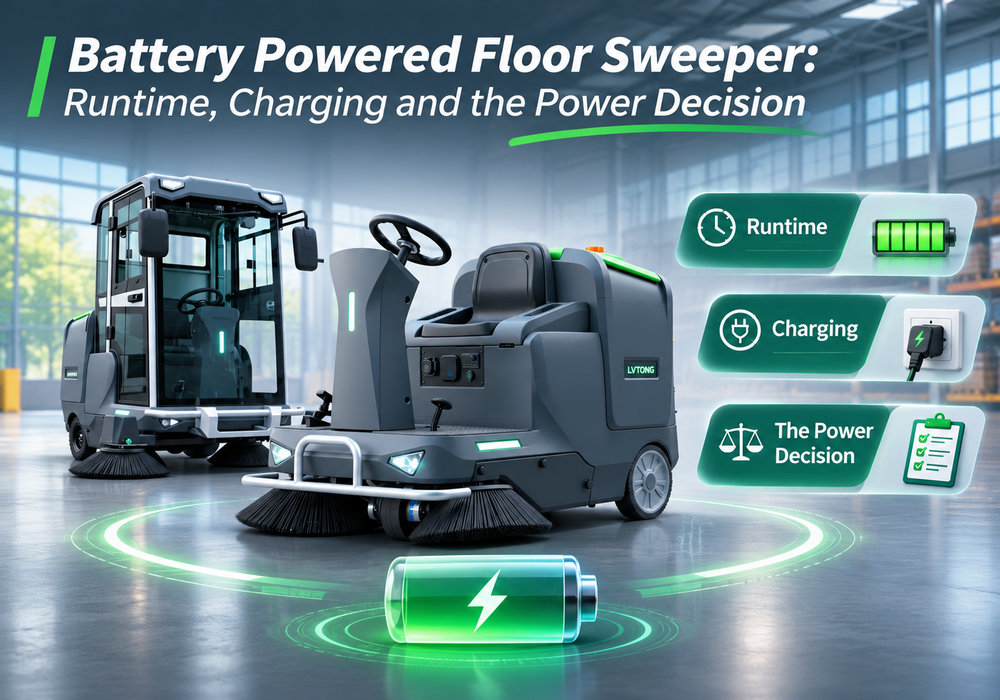
Yes. Climbing adds demand to the drive motor, which can shorten runtime on routes with repeated inclines. Brush pressure, floor resistance, and battery condition also affect energy use. We account for these loads when matching a LVTONG scrubber to a cleaning shift, so the battery capacity suits the full route. Our floor scrubber weight guide explains how operating load affects energy demand.
Can a floor scrubber be parked on a ramp?
We recommend a designated level area for parking, refilling, and routine maintenance. This keeps the machine stable while the operator is away from the controls. Our LT-S860X operating instructions specifically prohibit parking on slopes. Its electronic brake supports machine control during use; storage belongs on level ground.
Is a floor scrubber or pressure washer better for cleaning ramps?
For routine cleaning on compatible hard-floor ramps, we favor a scrubber that combines brushing with wastewater recovery. A pressure washer can help with embedded dirt on suitable outdoor concrete. It also requires a separate plan for containing and collecting runoff. We match the method to the surface, soil, and drainage conditions.
Can robotic floor scrubbers clean ramps automatically?
Suitability depends on the model’s approved autonomous operating conditions. The Tennant AMR Best Practices guide excludes ramps and sloped flooring from autonomous routes. We assess each model’s autonomous-mode restrictions separately, including permission for wet scrubbing on an incline. Manual climbing capability alone does not establish that permission, and Tennant’s guidance applies to the machines it covers.
Where should wastewater from ramp cleaning be disposed of?
We recommend collecting dirty solution in the recovery tank and emptying it through the facility’s designated wastewater disposal route. Ramp wash water can contain detergent, oil, sediment, and tire residue. Disposal may involve an approved sanitary connection or off-site treatment, depending on the waste and local requirements. Storm-drain discharge requires specific authorization and controls.
Conclusão
A ramp often connects areas that people and vehicles depend on throughout the day. A well-planned cleaning routine helps keep that connection usable, with fewer wet patches and less dirt carried onto adjoining floors. We see the strongest equipment choice as one that fits naturally into this routine and gives operators consistent control over the finished surface.
If you are considering an industrial floor cleaning machine for ramps and sloped floors, our team would be happy to discuss suitable LVTONG configurations. We can help you compare options around your facility’s layout, floor conditions, and daily cleaning workload.