БЫСТРЫЙ ОТВЕТ
Three things decide whether an office hard-surface floor mopping pass leaves the floor clean: how clean the water is by the last room, how the chemical was diluted, and whether tools are isolated by zone. The mop itself decides almost nothing.
- A mop transfers soil into water; it does not extract it, so water quality is the real ceiling.
- Microfiber flat mops beat string mops in offices on water control, pad changes and finish.
- Restroom tools must never travel back into work areas — colour coding is the cheapest fix.
- Wet film is the slip window; controlling water volume beats placing warning signs.
- Area, frequency or wastewater handling past a threshold means it is time for a machine.
Below: the physical limit of a mop, the zone map, tools, chemistry, isolation, frequency, slip risk and the point where mopping stops being viable.

What office hard-surface floor mopping actually removes
A mop moves soil from the floor into the water. It removes nothing from the room. The cleanest result any mop can reach is set by the bucket at the end of the route, not by the mop head.
Cleaning reduces to four variables: time, agitation, chemical concentration and temperature. A mop supplies contact time and a little agitation, the solution supplies concentration, and temperature is whatever comes out of the tap. What a mop never supplies is extraction — the step where a scrubber’s vacuum lifts soil-laden water into a recovery tank. Every pass therefore leaves a film behind. If the bucket already carries soil from six rooms, the mop is not cleaning the seventh; it is redistributing the first six across it.
Why mopping is not a cheaper scrubber
A scrubber sprays, brushes and extracts in one pass. A mop only spreads. They are different trades, and the reason machines have not replaced the mop is geometry, not cost.
Whether mopping or scrubbing costs less is a separate question — that arithmetic is set out in the cost comparison between mopping and scrubbing. The process difference: a scrubber removes soil in one pass, while a mop removes it only when someone carries the bucket to a drain. That is why office cleaning machines have not replaced the mop: geometry, not cost. What a mop wins is access and response time — under a desk cluster, into a 90 cm breakroom aisle, a spilled coffee handled in four minutes without moving furniture.
The zone map: where mopping wins in an office
Mopping wins where furniture density is high, the area is small, or response time matters. It loses on continuous open floor. Split the building by zone before choosing a method.
Which zones can take a machine at all, and what each one needs, is covered in the office floor cleaner guide; this section assigns only the mopping half.
| Зона | Dominant method | Типичная частота | What decides the result |
|---|---|---|---|
| Entrance and lobby | Mop, spot and full | Several times per shift | Grit removed before it spreads |
| Open plan desk areas | Mop (furniture density) | Daily to alternate days | Water cleanliness across the run |
| Meeting rooms | Mop or small scrubber | Daily, plus after use | Time window, not area |
| Breakroom | Mop, dedicated tools | Daily, plus spill response | Sugar and oil film |
| Restroom and anteroom | Mop, isolated tools | Several times per shift | Tool isolation above all |
| Corridors | Scrubber where width allows | Ежедневно | Continuous area; wet film |
Those intervals are typical ranges, not standards. A building with 200 daily visitors and one with 2,000 need different frequencies, and a fixed schedule usually produces over-service in quiet zones and under-service at the door.
Tool selection: flat mop, microfiber, or string mop
For offices, a flat mop with replaceable microfiber pads is the default. String mops hold too much water, cannot be swapped mid-route, and are why lobbies are left visibly wet.
Microfiber works by capillary action and static attraction rather than by flooding the surface: split fibres trap particles until the pad is laundered. A properly wrung microfiber flat mop therefore cleans with a fraction of the water a cotton string mop needs.
| Tool | контроль воды | Mid-route change | Best use in an office |
|---|---|---|---|
| Flat mop, microfiber pad | High — wrung to damp | Yes, seconds | Desks, meeting rooms, lobbies |
| String mop, cotton or blend | Low — holds excess | No, one head per bucket | Spills, heavy soil, back-of-house |
| Microfiber string mop | Середина | Ограниченный | Where a contract requires string |
| Dust mop or microfiber sweeper | None — dry | Да | Grit removal before any wet pass |
Two details beat the category. Pad width should cover a normal aisle without moving furniture twice — 40 cm and 50 cm heads cover most layouts. Handle length should let the operator stand upright; a short handle forces a bent posture and uneven pressure across a shift.
The two numbers that decide the result: dilution and water change
Wrong dilution wastes the chemical or leaves a film. Late water changes spread soil back across clean floor. Both are measured, not judged by eye.
Dilution comes from the label and must be measured, not poured. Over-concentration leaves a sticky residue that attracts soil within days and shows as a dull patch under light; under-concentration forces harder scrubbing, which shortens pad life. Either way the symptom gets blamed on the mop. Water change is the more expensive error: set the rule in rooms rather than hours, because a fixed interval per bucket is what makes a route repeatable. Two buckets, one for solution and one for wringing, roughly halve the soil returning to the floor. A dripping pad turns a routine pass into standing water and a slip exposure.

Cross-contamination: the route matters more than the chemical
Restroom tools must be isolated and colour-coded, and the route should move from the cleanest zone to the dirtiest. No chemical strength compensates for a restroom mop carried into a desk area.
Colour coding is the cheapest control: one colour for restrooms and anterooms, one for breakrooms, one for general office floor, one for glass and surfaces. The point is that a pad cannot be quietly moved between zones when a shift runs late. Route order does the rest — top floor down, cleanest room toward dirtiest, so soil is not tracked backwards. Pads should be laundered by zone and dried fully; a damp pad in a closed cupboard is a reservoir spread across the first room of the next shift. Cross-contamination in an office is a storage and routing problem, not a chemistry problem.

How often: frequency by zone and traffic
Frequency follows zone grade and traffic, not a single daily pass. Entrance, restroom and breakroom carry most of the soil load and need the shortest intervals.
Office hard-surface floor mopping frequency is usually written into a contract as a schedule, and that is where it goes wrong. Performance specifications — a stated condition, checked at defined intervals — survive better than a pass count, because they let the contractor shift effort toward the door. The Building Service Contractors Association International publishes guidance on this style of specification. The load follows people: an entrance loses its finish first because grit acts like sandpaper under every later pass, a breakroom accumulates a sugar film that plain water spreads rather than removes, and a meeting room is governed by booking gaps rather than area.
Wet film and slip risk: the minutes after the pass
The risk window is the wet film itself, controlled by how much water goes down, not by where the sign is placed. A damp pad and a split route remove most of the exposure.
Slip resistance is measured as dynamic coefficient of friction, and specifications commonly reference a wet threshold around 0.42 for level surfaces — the figure published by the Национальный институт безопасности полов. A floor that passes dry can fall below it under a film of water, which is why the pass creates the hazard. Two habits reduce it: wring pads to damp rather than wet, and split the route so one half of a corridor dries while the other is worked. Where a full-width pass is unavoidable, schedule it outside peak arrival.
When mopping stops being viable
Three thresholds end the argument: continuous area beyond a walkable route, frequency above several passes a day, and any requirement to account for where the wastewater goes. Past any one, a machine costs less than the labour.
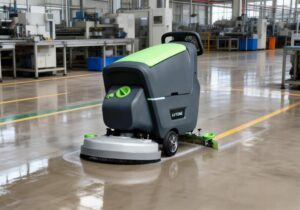
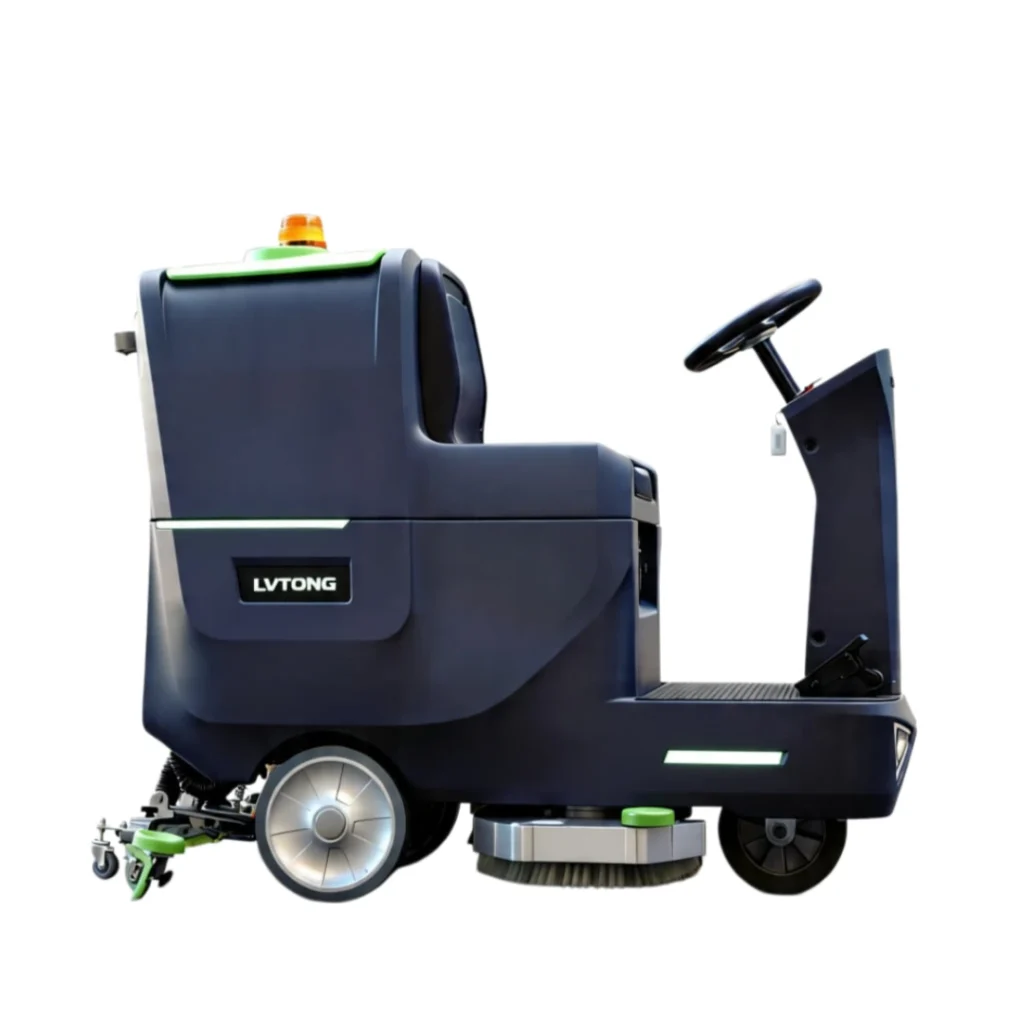
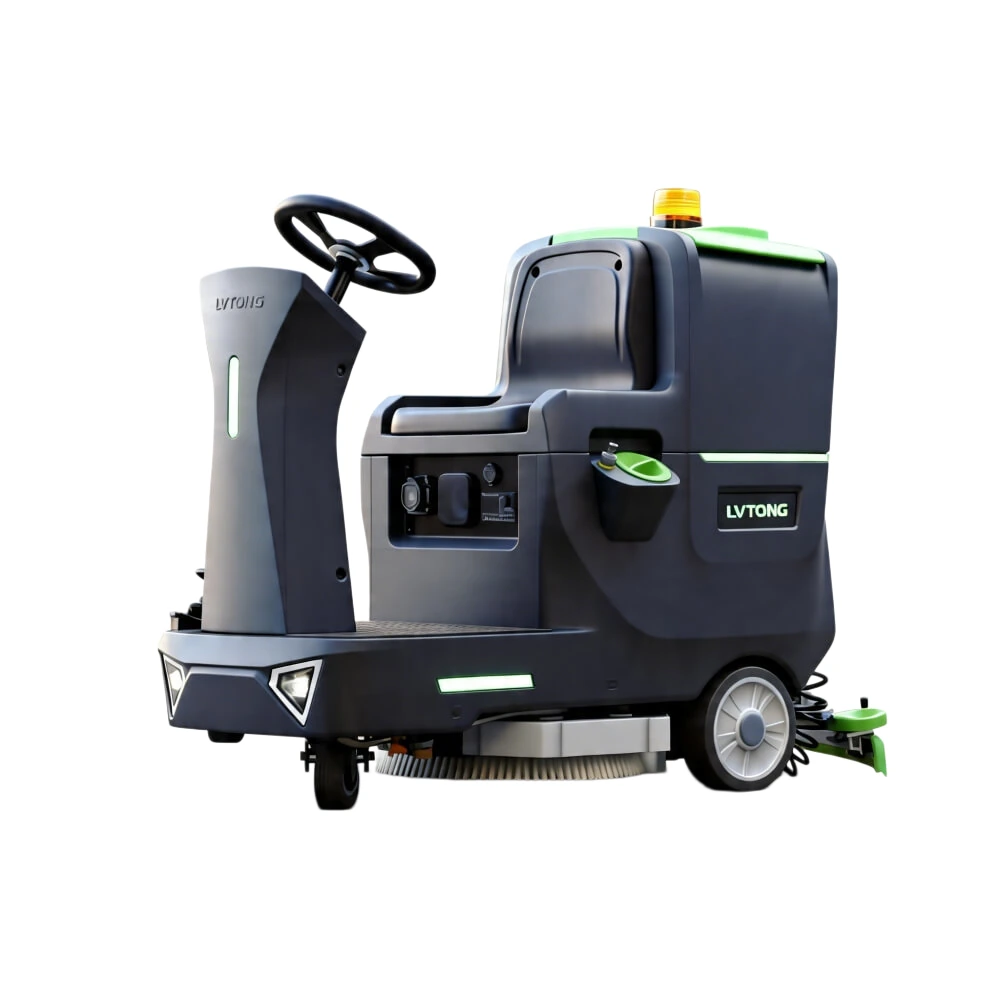
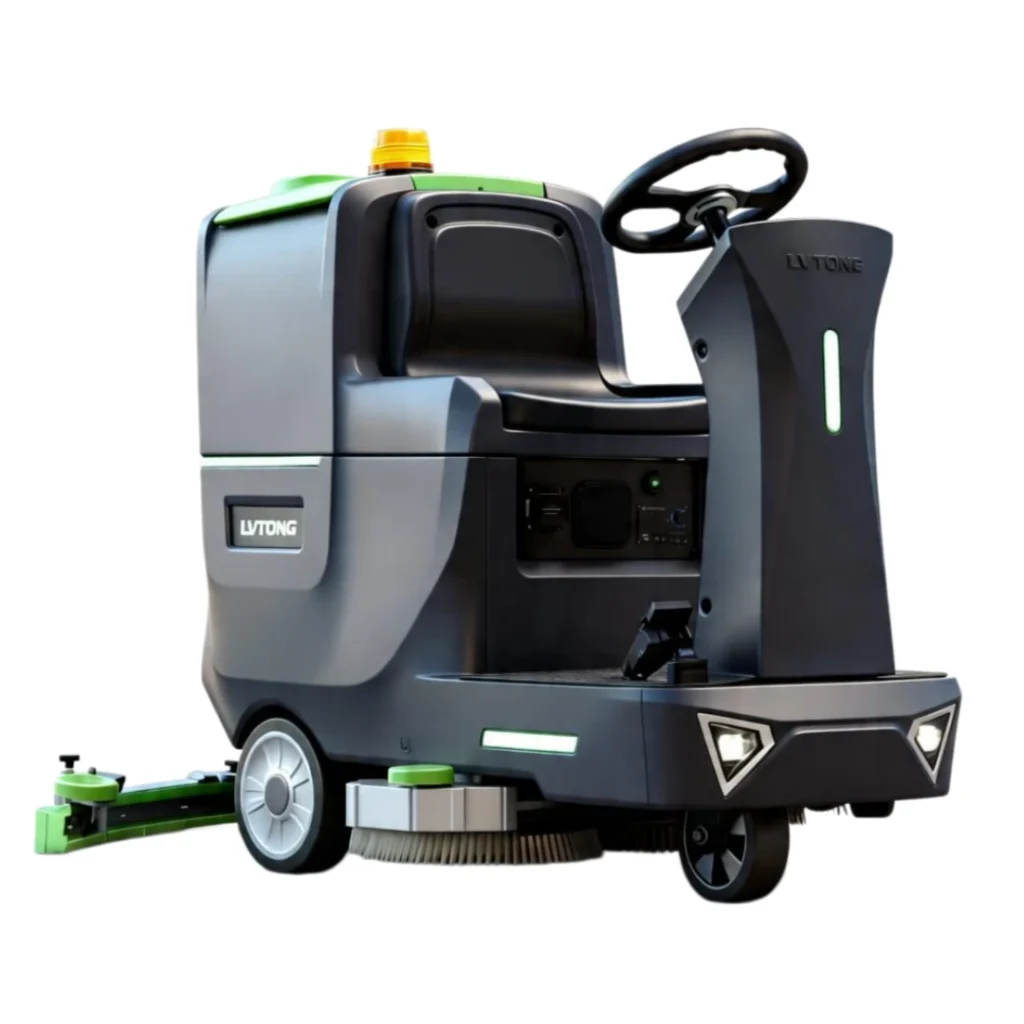
The area threshold is about route length, not square metres: when one operator cannot complete a wet and a dry pass inside the available window, the method is already failing. The frequency threshold appears at entrances and restrooms, where the interval collapses to hours and labour cost per square metre stops falling. The third is regulatory — mop water is wastewater, and discharge rules start with the Программа EPA NPDES. The comparison then switches to machine formats: a walk-behind unit such as the Поломоечная машина LT-S530X с ручным управлением covers the continuous areas and leaves the mopping half untouched. Sizing that decision is set out in the руководство по выбору объектов, and machines sold into regulated markets fall under МЕК 60335-2-72 — the standard to name when a tender asks for a safety reference.
The six-line mopping specification
Six lines make office hard-surface floor mopping repeatable: zone, tool, chemistry, water, isolation, acceptance. Without them, results depend on who is on shift.
An office floor mopping procedure need only be specific enough that two operators produce the same result: each line carries a number or a named product family, never an adjective.
| Линия | Что нужно указать | Weak version to avoid |
|---|---|---|
| Зона | Named areas with boundaries on a floor plan | “All office floors” |
| Tool | Pad type, head width, pads per zone | “Mop and bucket” |
| Химия | Product family, dilution ratio, dwell time | “Floor cleaner” |
| Вода | Change point in rooms; two-bucket rule | “Change when dirty” |
| Isolation | Colour per zone; laundering and drying rule | “Use separate mops” |
| Acceptance | Raking-light check, dry-film check at the door | “Clean to satisfaction” |
Once those six lines exist the gaps become visible: a zone with no realistic frequency, a tool that cannot be swapped in time, an acceptance test nobody runs. They are also the honest input for any conversation about bringing a machine in. LVTONG builds battery-electric scrubbers for the areas this method cannot hold; the ассортимент уборочного оборудования shows the formats, and route numbers can be sent to the factory for a configuration review.
Часто задаваемые вопросы
Is office hard-surface floor mopping enough without a scrubber?
In furniture-dense, small-area and response-driven zones, yes — provided water is changed often enough and tools are isolated by zone. On continuous open floor with daily traffic, the finish degrades regardless of effort.
How often should office floors be mopped?
Entrances and restrooms usually need several passes per shift, breakrooms daily plus spill response, desk areas daily to alternate days, meeting rooms after use. The right interval maintains a stated condition rather than copying a count.
What dilution should be used for mopping office floors?
Whatever the label states for the soil type, measured with a cup or dispenser. Over-dilution leaves a film that attracts soil; under-dilution forces harder scrubbing. The ratio belongs in the written specification.
How to mop office floors without leaving them wet?
Wring the pad to damp, work in sections so a dry path always exists, and run a dry microfiber pad over the film where traffic is immediate. Standing water is a slip exposure, and drying time is what a sign should state.