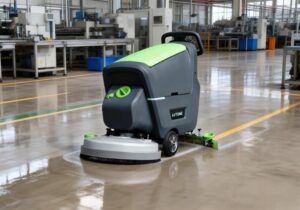
Quick Answer: What Is the Best Floor Scrubber for Tile and Grout?
The best floor scrubber for tile and grout is a machine that combines the right brush type, enough down pressure, strong suction, and fast water recovery. For smooth ceramic tile, a disc brush scrubber is often enough. For deep grout lines, quarry tile, or heavily soiled commercial floors, a cylindrical or orbital scrubber usually performs better. Small spaces usually need walk-behind models, while large tile areas are better suited to ride-on scrubbers.
Based on our experience serving commercial facilities such as supermarkets, warehouses, hospitals, schools, and manufacturing plants, selecting the correct brush type and down pressure has a greater impact on tile and grout cleaning performance than simply choosing a larger or more expensive machine. Matching the scrubber to the floor material and soil level usually delivers better cleaning results and lower long-term operating costs.
What is a Specialized Tile Floor Scrubber?
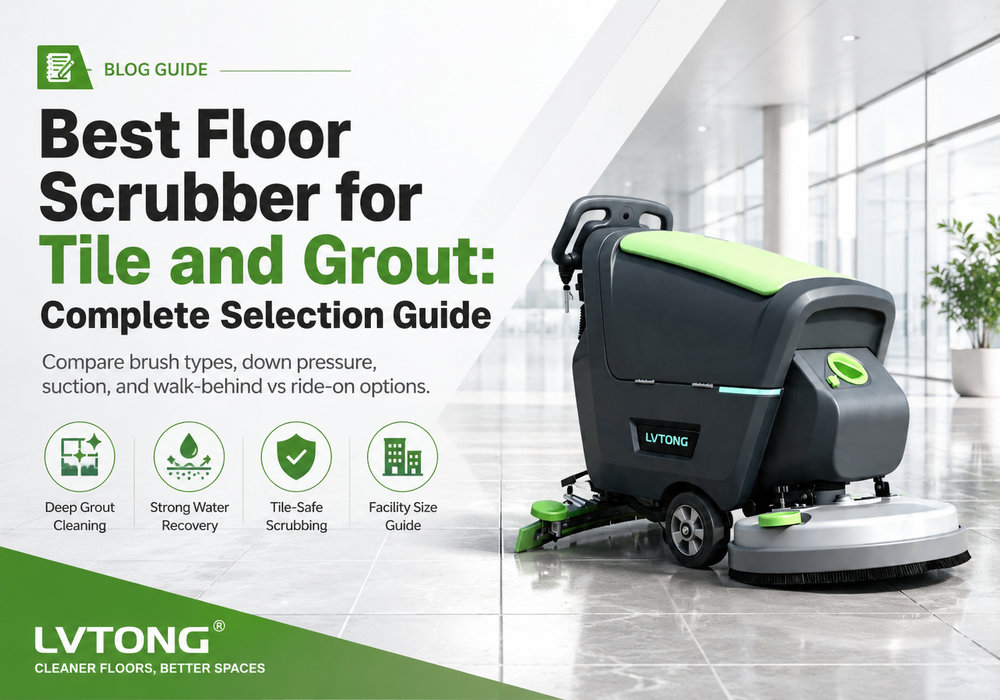
Choosing the best floor scrubber for tile and grout requires more than comparing machine size or price. Tile floors need the right brush pressure, suction power, and water recovery system to remove dirt from grout lines without damaging ceramic, porcelain, quarry, or natural stone surfaces. This guide explains how to choose a tile floor scrubber by brush type, down pressure, RPM, facility size, and walk-behind vs ride-on operation.
In this guide, we will help you learn about the powerful cleaning machine and choose the right one for creating a cleaning environment for your tile floor.
Why Tile and Grout Need a Specialized Floor Scrubber
Tile and grout floors are harder to clean than smooth vinyl or sealed concrete because dirt, grease, and moisture can settle into recessed grout lines. A specialized tile floor scrubber applies cleaning solution, agitates the surface with brushes or pads, and recovers dirty water in one pass. This helps improve grout cleaning, reduce wet-floor risks, and keep commercial tile surfaces cleaner during daily operation.
A unique tile floor scrubber works much better than old-style mopping, particularly on uneven surfaces or grout gaps. Rather than standard units, this device handles three tasks at once – squirt solution, brush tough spots, then pull back grimy liquid immediately afterward.
Tile Floor Cleaning Challenges in Commercial Facilities
Commercial tile floors face different cleaning challenges depending on the environment.
Supermarkets, hospitals, restaurants, warehouses and manufacturing facilities often experience heavy foot traffic, grease contamination, dust accumulation and frequent cleaning requirements.
The main challenges include:
| Cleaning Challenge | Common Cause | Recommended Solution |
|---|---|---|
| Dirt trapped in grout lines | Recessed grout areas collect soil, dust and moisture over time | Use suitable brush types and sufficient down pressure to reach grout lines effectively |
| Grease and oil buildup | Food residue, industrial oil or heavy contamination accumulate on tile surfaces | Use appropriate cleaning solutions combined with stronger scrubbing action |
| Uneven cleaning results | Incorrect brush selection, insufficient pressure or unsuitable machine settings | Match brush type, pressure and machine configuration with floor conditions |
| Wet floor risks after cleaning | Weak suction performance or poor water recovery | Select equipment with strong suction and effective squeegee systems |
| High labor requirements | Manual cleaning requires more time and inconsistent results | Use commercial floor scrubbers to improve productivity and cleaning consistency |
| Frequent floor maintenance | Incorrect cleaning methods may accelerate floor wear | Choose suitable cleaning methods based on tile material and contamination level |
A successful tile cleaning solution requires matching:
- Floor material
- Brush system
- Cleaning solution
- Machine capability
- Operating environment
Key operational parameters, which are often aligned with industry standards like the ISSA (International Sanitary Supply Association) cleaning guidelines, include:
| Key Spec | Recommended Range | Why It Matters for Tile and Grout |
|---|---|---|
| Scrubbing path | 16–28 inches / 40–71 cm | Wider paths improve productivity, while narrower paths fit corridors and small rooms |
| Brush speed | 140–500 RPM | Higher RPM helps remove surface dirt, while lower RPM may be safer for sensitive surfaces |
| Down pressure | Up to 25–30 kg | Higher pressure helps brushes reach recessed grout lines and remove grease or mineral buildup |
| Suction power | Strong water recovery required | Reduces wet-floor risks and prevents dirty water from staying in grout gaps |
| Brush type | Disc, cylindrical, or orbital | Different brushes suit smooth tile, quarry tile, grout lines, and deep cleaning tasks |
| Tank size | Match facility size | Larger tanks reduce refill and drain stops in large commercial tile areas |
Key Benefits of Using a Dedicated Tile Scrubber
Switching to a special tile cleaner boosts results – fewer accidents, less wear on equipment, while getting jobs done quicker.
- Deep Grout Penetration: With adjustable down pressure reaching 25–30 kg, these machines provide the mechanical force required to dislodge biofilm, grease, and mineral deposits from porous grout lines, a task unachievable with manual methods.
- High efficiency: A 28-inch ride-on scrubber handles big spaces fast – over 28,000 square feet each hour – as shown by ISSA’s 540 Cleaning Times rule. That’s roughly 10 to 15 times quicker than using just a mop and bucket.
- Enhanced Floor Safety: Wet floors? Not here – this machine sucks up nearly all liquid fast, so people won’t slip right after cleaning. Since it dries quickly, germs don’t get a chance to grow. Fewer slips mean fewer accidents, which helps meet safety rules without extra hassle.
- Asset Preservation: Cleaning machines regularly helps protect your floors. Because dirt and harsh chemicals get wiped away, tiles plus grout don’t wear out fast. That means they last longer – so you won’t need new ones soon. Over time, this saves money on repairs or swaps.
Tile Floor Types and Recommended Scrubbing Solutions
Tile floors are widely used in commercial buildings, factories, supermarkets, hospitals and public facilities because of their durability and easy maintenance.
However, different tile surfaces require different cleaning approaches. Choosing the correct floor scrubber configuration helps improve cleaning performance while protecting the floor surface.
The following table explains common tile types and suitable cleaning approaches.
| Tile Floor Type | Common Cleaning Challenge | Recommended Cleaning Approach |
|---|---|---|
| Ceramic Tile | Daily dust, stains and surface dirt | Use neutral cleaning solution with soft or medium brush |
| Porcelain Tile | Fine dirt inside textured surfaces and grout lines | Use higher-efficiency scrubbing with suitable brush pressure |
| Quarry Tile | Oil, grease and heavy contamination | Use industrial floor scrubber with stronger cleaning capability |
| Glazed Tile | Protecting surface finish while removing dirt | Use suitable pads and avoid excessive pressure |
| Textured Tile | Dirt accumulation in uneven surfaces | Use deeper scrubbing action and proper water recovery |
Selecting a tile floor scrubber should consider not only the tile material but also contamination level, cleaning frequency and facility environment.
The right combination of machine, brush and cleaning solution provides better results and reduces unnecessary maintenance.
Essential Components for Effective Tile Cleaning
Disc vs Cylindrical vs Orbital Brushes for Tile Floors
| Brush Type | Best For | Not Ideal For | SEO Target |
|---|---|---|---|
| Disc brush | Smooth ceramic tile, porcelain tile, daily cleaning | Deep grout lines or uneven quarry tile | disc brush floor scrubber for tile |
| Cylindrical brush | Grout lines, quarry tile, textured tile, light debris | Very delicate polished surfaces | cylindrical brush floor scrubber for grout |
| Orbital scrubber | Deep cleaning, finish removal, chemical reduction | Areas needing debris pickup | orbital scrubber for tile and grout |
| Soft pad | Polished tile or light daily cleaning | Greasy grout or recessed grout lines | tile floor scrubber pad selection |
For smooth ceramic or porcelain tile, a disc brush scrubber is usually enough for daily cleaning. For deep grout lines, quarry tile, or greasy commercial kitchen floors, a cylindrical or orbital scrubber is often a better choice because it provides stronger agitation and better contact with uneven surfaces.
Brush RPM and Down Pressure for Grout Cleaning
Brush RPM and down pressure affect tile and grout cleaning in different ways. RPM controls how fast the brush agitates the surface, while down pressure controls how strongly the brush reaches into grout lines and textured tile. For light daily cleaning on smooth ceramic tile, moderate RPM and lighter pressure may be enough. For heavily soiled grout, quarry tile, or greasy commercial floors, higher down pressure can improve mechanical cleaning performance.
Cleaning Power Index, or CPI, can be used as a simple internal comparison method:
Cleaning Power Index (CPI) = Brush RPM × Down Pressure (kg)
Example:
Machine A (Light Duty): 175 RPM × 15 kg = 2,625 CPI
Machine B (Heavy Duty): 220 RPM × 30 kg = 6,600 CPI
This is not an official industry rating, but it can help buyers compare the mechanical cleaning potential of different machines when evaluating tile and grout cleaning tasks. A higher CPI may indicate stronger scrubbing potential, but buyers should also consider brush type, suction performance, floor sensitivity, and the actual soil level before choosing a tile floor scrubber.
Walk-Behind vs Ride-On Tile Floor Scrubber: Which One Is Right for Your Facility?
| Feature | Walk-Behind Tile Floor Scrubber | Ride-On Tile Floor Scrubber |
|---|---|---|
| Ideal environment | Small rooms, corridors, stores, kitchens, hallways | Airports, malls, warehouses, factories, convention centers |
| Facility size | Under 15,000 sq ft | Over 15,000 sq ft |
| Best tile cleaning use case | Tight tile areas with grout lines and obstacles | Large open tile floors requiring high productivity |
| Productivity rate | 15,000–22,000 sq ft/hr | 28,000–45,000+ sq ft/hr |
| Tank capacity | 3–16 gallons | 18–50+ gallons |
| Maneuverability | High | Lower |
| Operator fatigue | Moderate to high | Low |
| Core advantage | Access and flexibility | Maximum productivity |
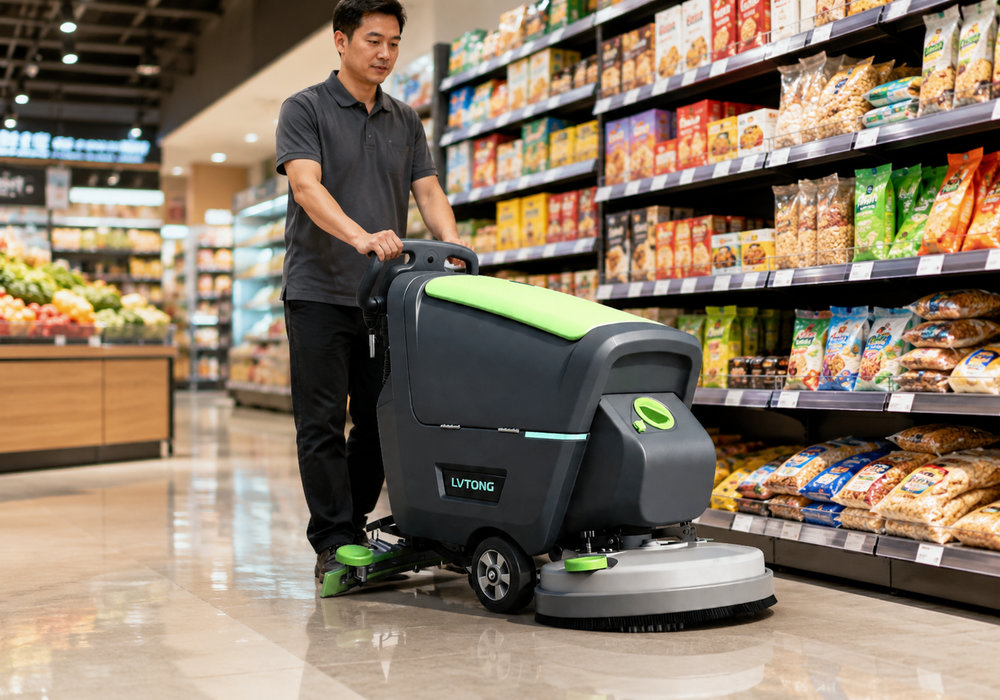
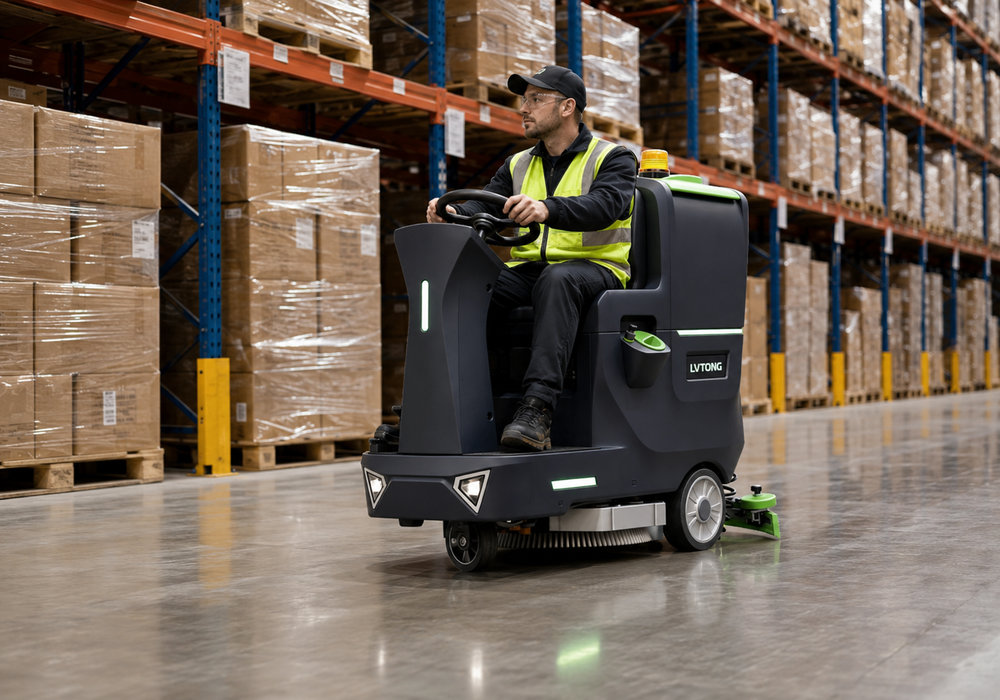
Choose a walk-behind tile floor scrubber when the area has narrow aisles, small rooms, kitchen corners, or many obstacles. Choose a ride-on tile floor scrubber when the tile area is large, open, and cleaned for several hours per shift.
For retail stores, restaurants, corridors, and medium tile areas, the LVTONG LT-S530X walk-behind tile floor scrubber offers a 530 mm cleaning width and flexible maneuverability. It is suitable for daily tile and grout cleaning where operators need to move around shelves, counters, corners, or narrow passages.
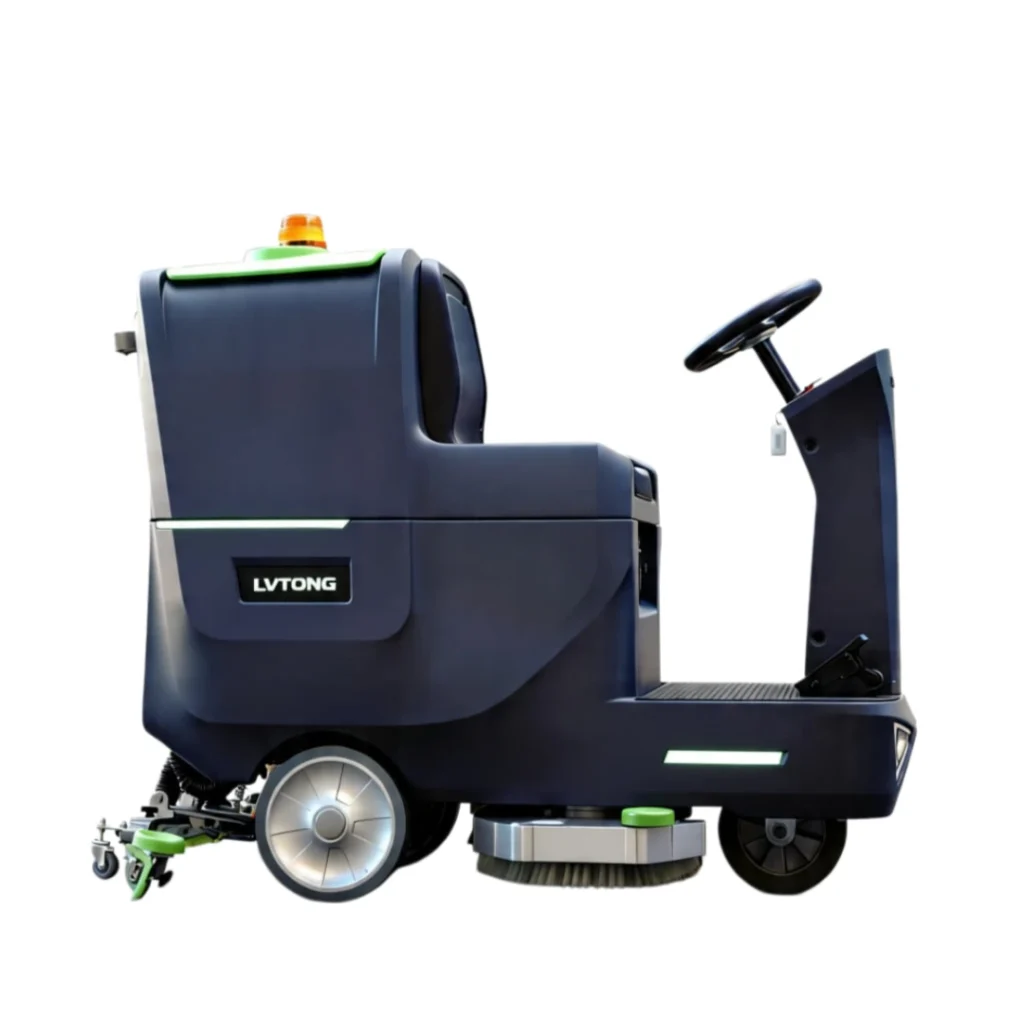
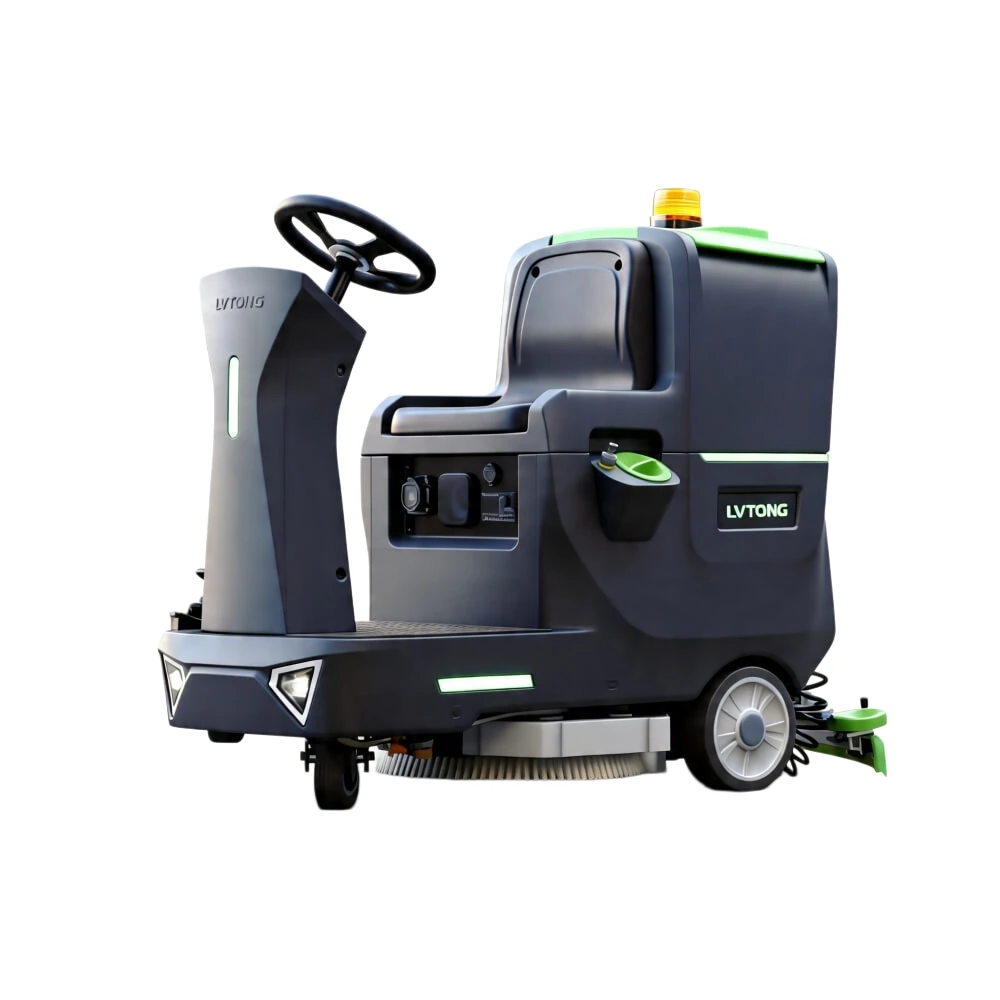
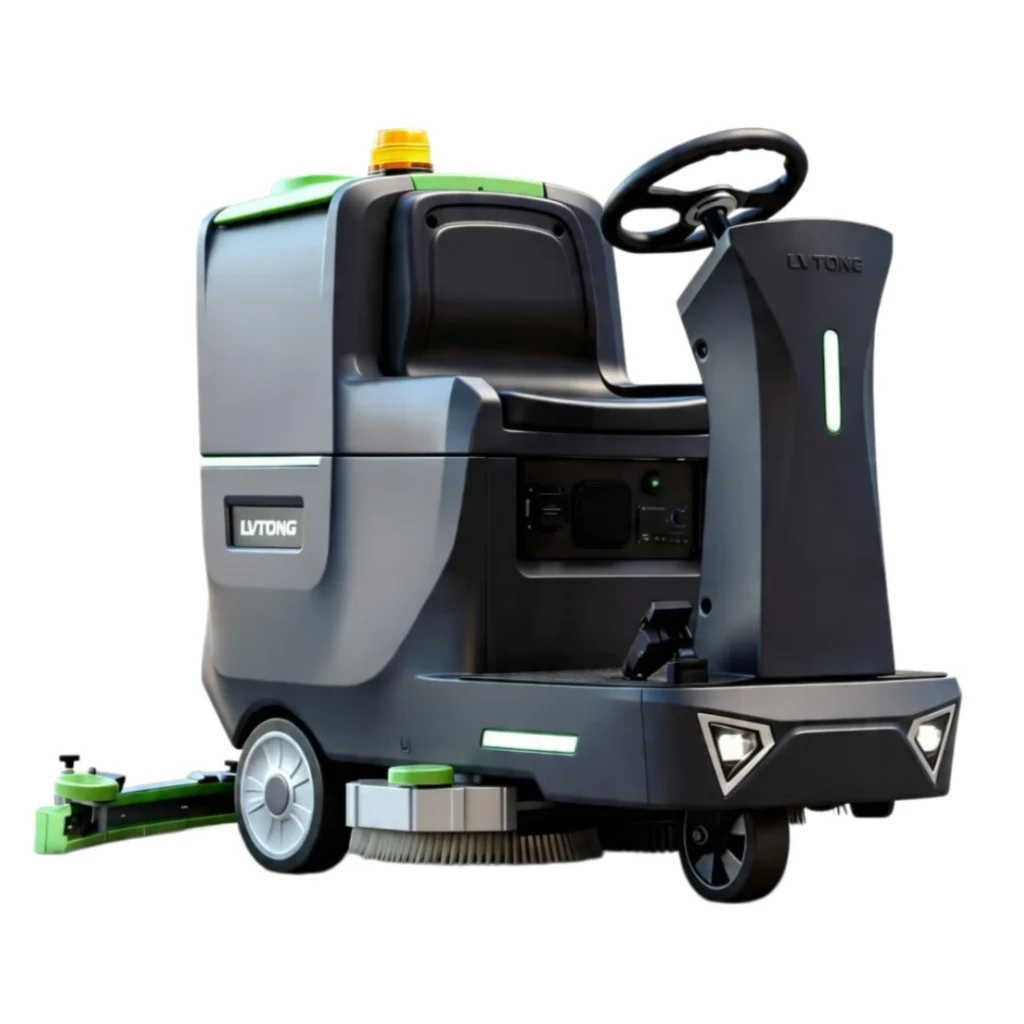
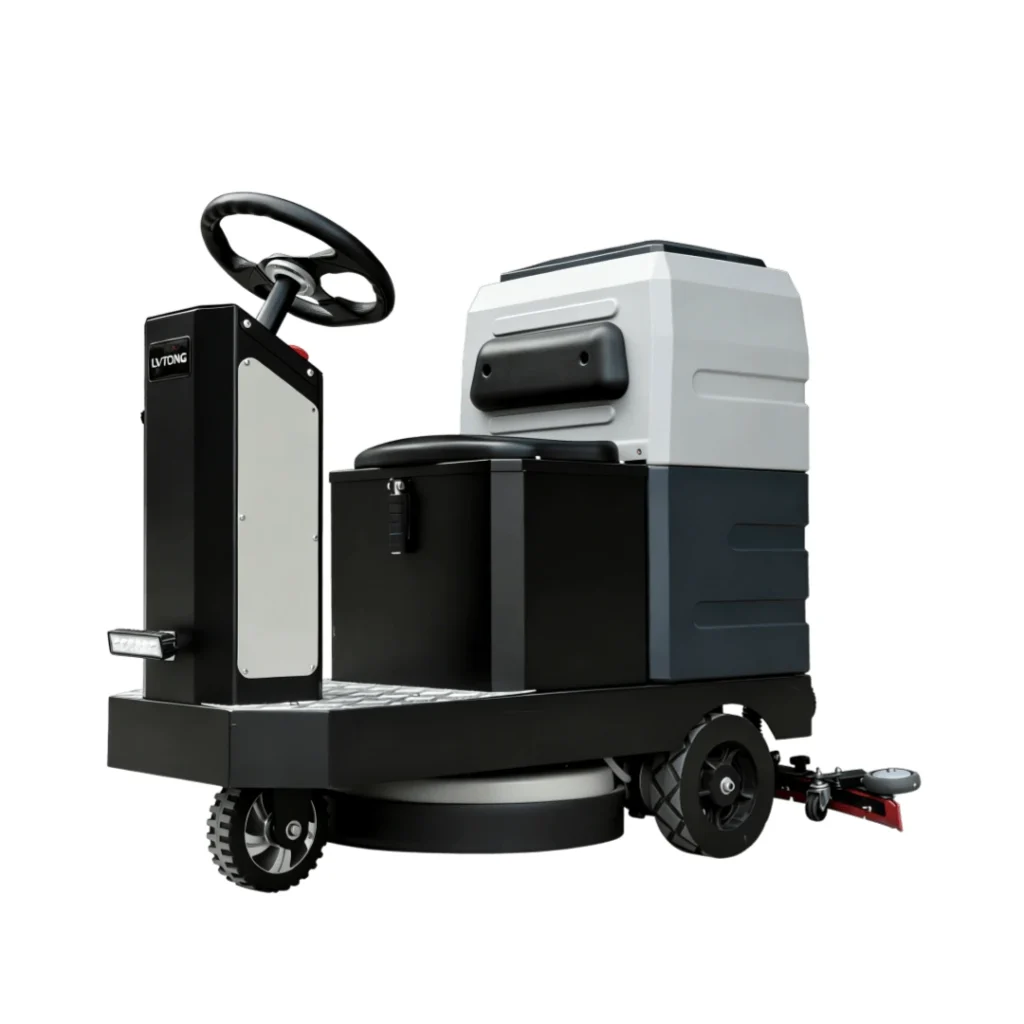
For airports, warehouses, malls, and other large tile floor areas, the LVTONG LT-S710X ride-on tile floor scrubber provides higher productivity, larger tank capacity, and seated operation. It is better suited for long cleaning routes where reducing operator fatigue and refill frequency is important.
What’s the link between squeegee shape and cleaning grout lines?
Articulated or double-blade squeegees work better on bumpy tiles because they follow dips in grout lines, so no water gets left behind. Regular straight blades tend to hop over grooves – this traps wet spots where germs might grow. When picking tools for kitchens or production zones, it’s smart to match guidelines from groups such as ISSA. These rules help keep things safe and clean under real-world conditions.
Tile Floor Scrubber Selection Framework
Follow these four steps to choose the best floor scrubber for tile and grout.
Step 1
Identify your floor material.
- Ceramic or porcelain tile → Disc brush
- Quarry or textured tile → Cylindrical brush
- Natural stone → Lower RPM with soft brush
Step 2
Evaluate the amount of dirt.
- Light daily cleaning → Moderate brush pressure
- Heavy grease or grout buildup → Higher down pressure
Step 3
Measure your cleaning area.
- Small facilities → Walk-behind scrubber
- Large facilities → Ride-on scrubber
Step 4
Consider operating hours.
- Short daily cleaning → Standard battery capacity
- Long shifts → Larger battery capacity and larger solution tanks
How to Choose a Tile Floor Scrubber by Facility Size and Floor Type
Consider these critical factors when choosing a tile floor scrubber:
1. Surface Type:
- Glazed ceramic: 175-220 RPM, lighter pressure
- Unglazed quarry needs about 25 to 30 kg of force, along with a faster spinning speed
- Natural stone: 140-175 RPM, pH-neutral solutions only
| Tile Surface | Recommended Scrubber Setup | Why |
|---|---|---|
| Glazed ceramic tile | Disc brush or soft pad, lighter pressure | Cleans daily dirt without damaging smooth surfaces |
| Porcelain tile | Disc brush or soft pad | Suitable for polished or dense tile surfaces |
| Unglazed quarry tile | Cylindrical brush, 25–30 kg down pressure | Better contact with rough surfaces and grout lines |
| Natural stone tile | Lower RPM, lighter pressure, pH-neutral solution | Reduces risk of etching or surface damage |
| Anti-slip tile | Cylindrical or orbital scrubber | Reaches textured surfaces more effectively |
| Commercial kitchen tile | Heavy-duty scrubber with strong suction | Removes grease and reduces slip risks |
2. Facility Size:
- Up to 5,000 sq ft (≈500 m²): Go for small 16–20″ walk-behind units instead. Take the LVTONG Q5 walk-behind scrubber – it’s got a 510 mm cleaning width – great for keeping restaurant floors tidy every day or handling store upkeep; runs nonstop 3.5 to 4 hours while warning you when water gets low.
- For spaces from 5,000 to 15,000 sq ft (500–1,400 m²), go with 20–28″ walk-behinds – they handle it well. Instead of others, the LT-S650X moves smoothly on medium tile floors using its 650 mm cleaning width.
- More than 15,000 sq ft (over 1,400 m²): You’ll need a ride-on scrubber. Take the LT-S860X – it handles up to 8,000+ m² per hour because it’s got two brushes working at once. That makes it great for big areas with ceramic or stone tiles.
| Facility Size | Recommended Tile Floor Scrubber | Why |
|---|---|---|
| Up to 5,000 sq ft / 500 m² | Compact walk-behind scrubber | Easy to store and maneuver in small rooms |
| 5,000–15,000 sq ft / 500–1,400 m² | Medium walk-behind scrubber | Balances productivity and maneuverability |
| Over 15,000 sq ft / 1,400 m² | Ride-on tile floor scrubber | Higher productivity and less operator fatigue |
| Over 10,000 m² | Large ride-on scrubber | Suitable for airports, malls, warehouses, and large public buildings |
3. Operational Requirements:
- Daily runtime needs
- Chemical compatibility
- Storage space availability
Tile Floor Scrubber Selection Checklist
Before purchasing a tile floor scrubber, facility managers should evaluate the following factors:
| Selection Factor | Key Question |
|---|---|
| Floor material | Is the surface ceramic tile, porcelain tile, quarry tile, natural stone or another material? |
| Grout condition | Are there deep grout lines or textured surfaces requiring stronger cleaning capability? |
| Cleaning area size | How large is the area that needs to be cleaned and how frequently is cleaning required? |
| Contamination level | Is the main challenge dust, grease, oil, stains or heavy industrial soil? |
| Brush system | Does the machine provide the correct brush type for the tile surface? |
| Down pressure | Is enough mechanical pressure available for difficult grout and textured tile cleaning? |
| Suction performance | Can the machine recover dirty water effectively and reduce wet floor risks? |
| Battery runtime | Can the machine complete the required cleaning route without interruption? |
| Tank capacity | Is the solution and recovery tank size suitable for the facility area? |
| Maintenance support | Are spare parts, technical support and service available after purchase? |
Choosing a tile floor scrubber based on these factors helps avoid selecting a machine that is too small, too powerful or unsuitable for the actual cleaning environment.
Common Mistakes When Choosing a Tile Floor Scrubber
| Mistake | Why It Matters |
|---|---|
| Choosing only by price | Low-cost machines may have weak suction, low pressure, or limited parts support |
| Using soft pads on deep grout lines | Pads may clean tile surfaces but fail to reach recessed grout |
| Using too much pressure on natural stone | Sensitive stone surfaces may be scratched or damaged |
| Ignoring suction and water recovery | Dirty water can remain in grout gaps and increase slip risks |
| Buying a ride-on scrubber for narrow corridors | Large machines may not fit tight tile areas |
| Using the wrong cleaning solution | Harsh chemicals may damage grout sealers or stone surfaces |
| Ignoring brush replacement | Worn brushes reduce grout cleaning performance |
Tile Floor Cleaning Equipment for Different Industries
Different industries have different tile cleaning requirements.
The best floor scrubber depends on:
- Facility environment
- Cleaning frequency
- Floor condition
- Contamination type
- Productivity requirements
| Industry | Common Cleaning Challenges | Recommended Scrubber Consideration |
|---|---|---|
| Supermarkets | High customer traffic, food residue and daily cleaning requirements | Choose machines with good maneuverability, efficient water recovery and consistent cleaning performance |
| Hospitals | Hygiene requirements, frequent cleaning and safety concerns | Select reliable machines with controlled chemical usage and effective cleaning results |
| Restaurants | Grease, spills and kitchen contamination | Use scrubbers with strong cleaning capability and suitable detergent compatibility |
| Warehouses | Large floor areas, long cleaning routes and dust accumulation | Choose ride-on scrubbers with larger tanks and higher productivity |
| Manufacturing Plants | Oil, grease, dust and industrial contamination | Select heavy-duty machines with strong brush pressure, suction performance and durability |
| Shopping Malls | Large public areas requiring regular maintenance | Choose high-efficiency machines that reduce cleaning time and operator fatigue |
Selecting equipment based on industry requirements helps businesses achieve better cleaning performance and lower long-term operating costs.
Advanced Features Worth Considering
- Switch modes easily – use heavy-duty scrubbing when needed, or go light for regular upkeep
- Automated Chemical Dosing: Ensures consistent solution strength across large areas
- Heated Solution Systems: Improve biofilm removal efficiency by 40-60%
- Dual-Function Recovery: Simultaneous scrubbing and water extraction
Buying Recommendations
If you are selecting the best floor scrubber for tile and grout, avoid choosing only by machine size or price.
Instead, prioritize:
- Brush type for your tile surface
- Down pressure for grout cleaning
- Suction performance for faster drying
- Tank capacity for your cleaning area
- Walk-behind or ride-on design based on facility size
Choosing the right combination will usually provide better cleaning performance and lower operating costs than simply purchasing a larger machine.
Conclusion
Picking a good floor scrubber means thinking about what kind of tiles you have, where it’ll be used, also how tough the job is. Match the brushes and pressure to your tile setup instead of guessing – size matters just as much as power when covering large areas. Go for features that fit your space so cleaning works well without wearing down the floors over time.
Are you ready to select the best tile floor scrubber for your facility? Browse LVTONG’s complete range of professional scrubber-dryers or contact our team for free space-specific recommendations.
FAQ
What is the best floor scrubber for tile and grout?
The best floor scrubber for tile and grout depends on the tile type, grout condition, cleaning area and contamination level.
For smooth ceramic or porcelain tile, a disc brush floor scrubber is usually suitable for daily cleaning.
For deep grout lines, quarry tile or heavily contaminated commercial floors, cylindrical or orbital scrubbers often provide better cleaning performance because they offer stronger agitation and better contact with uneven surfaces.
Large facilities usually benefit from ride-on tile floor scrubbers, while smaller areas may require walk-behind models for better maneuverability.
Can a floor scrubber clean tile grout effectively?
Yes. A properly selected floor scrubber can effectively clean tile grout by combining mechanical scrubbing action, suitable brush pressure and efficient water recovery.
Cylindrical and orbital brush systems are often more effective for recessed grout lines because they provide better contact with uneven surfaces.
The final cleaning result depends on brush type, down pressure, cleaning solution and the condition of the grout.
What brush type is best for cleaning tile floors?
The best brush type depends on the tile surface and cleaning requirement.
Disc brushes are commonly used for smooth ceramic and porcelain tiles during daily cleaning.
Cylindrical brushes are suitable for grout lines, quarry tiles and textured surfaces because they provide deeper cleaning contact.
Orbital scrubbers are often used for intensive cleaning applications where stronger mechanical action is required.
How do I choose between a walk-behind and ride-on tile floor scrubber?
The choice between a walk-behind and ride-on tile floor scrubber depends mainly on facility size, cleaning frequency and workspace layout.
Walk-behind scrubbers are suitable for smaller areas, narrow aisles, stores and locations with many obstacles.
Ride-on scrubbers are better for large tile floors in warehouses, airports, shopping malls and factories because they provide higher productivity, larger tank capacity and improved operator comfort.
What floor scrubber is best for ceramic tile floors?
For ceramic tile floors, the best floor scrubber depends on whether the surface is smooth, textured or heavily contaminated.
Smooth ceramic tiles usually work well with disc brushes or softer pads combined with suitable cleaning solutions.
For commercial ceramic tile areas with heavy traffic or embedded dirt, a machine with adjustable brush pressure and strong water recovery provides better results.
What floor scrubber is suitable for porcelain tile floors?
Porcelain tile floors usually require cleaning equipment that can remove dirt effectively while protecting the surface finish.
Disc brush scrubbers with suitable pressure settings are commonly used for porcelain tiles.
The selected machine should avoid excessive pressure or aggressive brushes that may affect polished or sensitive surfaces.
How do I choose a commercial tile floor scrubber for my business?
Choosing a commercial tile floor scrubber requires evaluating several factors:
- Floor material
- Cleaning area size
- Grout condition
- Contamination level
- Required cleaning frequency
- Brush type
- Water recovery performance
- Battery runtime and tank capacity
Businesses should select a machine based on their actual cleaning environment instead of choosing only by price or machine size.
What factors affect tile floor scrubber cleaning performance?
Tile floor scrubber cleaning performance depends on multiple factors, including brush type, brush speed, down pressure, suction power, water recovery, cleaning solution and operator settings.
A larger machine does not always provide better results.
The best cleaning performance comes from matching the machine configuration with the tile material, soil level and facility requirements.