Introduction
In reality, if a production line is halted due to cleaning delays, hundreds of dollars in productivity are lost per hour. A preventable slip can lead to employee injuries, production stoppages, and increased insurance premiums. Therefore, factory floor cleaning is far more than a hygiene issue—It is a critical operation that directly impacts productivity, safety, and profitability.
Traditional cleaning methods are no longer sufficient to meet the demands of modern industry. This article will delve into the five core challenges that plague factory floor maintenance and demonstrate how modern industrial floor scrubbers can provide comprehensive and efficient solutions.
Challenge 1: Low Cleaning Efficiency and Production Time Occupation
Problem: The low efficiency of manual cleaning is a common phenomenon. Preparing, cleaning, and drying large areas require a significant amount of labor. Cleaning work usually needs to be carried out during shift changes or after work, occupying valuable production or maintenance time. Every minute spent on cleaning is a minute that has not been used for production.
Influence: Inefficient cleaning can create bottlenecks. Moreover, delays in cleaning up production lines or areas may delay production plans, which will result in missed delivery deadlines and revenue losses.
Solution: Use an industrial floor scrubber
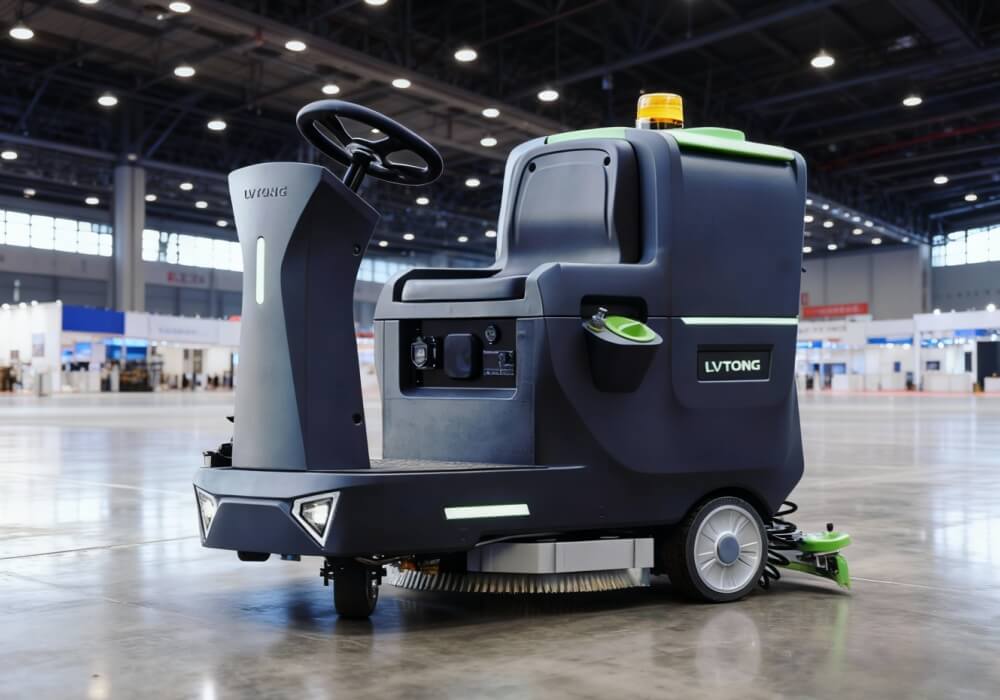
Industrial floor scrubbing machines integrate the entire cleaning process of spraying, scrubbing, and wastewater recovery into a complete operation. Driving floor scrubber cleaning efficiency can reach 10000m²/hour. This speed allows cleaning work to be integrated into shorter rest periods or carried out simultaneously with non conflicting activities, thereby maximizing equipment operating time. Secondly, compared to manual cleaning methods, it can reduce cleaning time by up to 80%.

Challenge 2: Stubborn Stains and Industrial Oil Pollution
Problem: The factory floor is a gathering place for various stubborn pollutants, such as grease, hydraulic oil, metal debris, chemical residues, and carbon black. Mops only spread these dirt around or push them into gaps, and cannot achieve deep and hygienic cleaning.
Influence: Residual oil film and stains not only affect aesthetics. They can damage ground materials (such as epoxy flooring), causing persistent slip risks, and pose serious pollution risks in sensitive environments such as food processing.
Solution: Use an industrial floor scrubber
Industrial floor scrubbing machines are designed specifically for powerful cleaning. They use high downforce brush discs or needle discs that can stir and peel off the most stubborn embedded dirt. In addition, combined with optional specialized compliant cleaning agents, they can effectively decompose oil stains. The synchronized sewage recovery system immediately thoroughly removes suspended pollutants, leaving a truly clean and residue free surface.
Challenge 3: Expensive Labor and Operating Costs
Problem: The cost of manual cleaning is very high, including wages, benefits, training, management expenses, and high turnover rates. In addition, traditional methods are extremely wasteful. Moreover, if using excessive amounts of water and chemicals, it will ultimately become expensive wastewater treatment costs.
Influence: Cleaning is viewed as an ongoing and uncontrollable cost, rather than an optimizable process. With budgets remaining tight, sustainable development goals are difficult to achieve.
Solution: Use industrial floor scrubbers
A floor cleaning equipment can be operated by one person to complete the cleaning of a large area. Modern floor scrubbers are equipped with advanced wastewater recycling systems that can efficiently circulate clean water and recycle wastewater, reducing water and chemical usage by up to 70%. This significantly reduced water and electricity costs as well as wastewater treatment expenses. Although the initial investment cost is high, the return on investment is fast.
In general, the investment can be recouped within 12-24 months.

Challenge 4: Workplace Safety Hazards
Problem: Wet and slippery surfaces are the main cause of slipping in industrial environments. Power cords on hand-operated equipment, buckets, and warning signs on slippery surfaces can also pose tripping hazards.
Influence: Slip accidents result in direct costs such as worker compensation, medical expenses, and significant indirect costs such as lost productivity and investigation time.
Solution: Use an industrial floor scrubber
The industrial floor scrubber machine has excellent safety. Its powerful water absorbing scraper can quickly dry the ground and immediately restore traffic after cleaning, almost eliminating the risk of slipping. In addition, ergonomically designed ride-on floor scrubbers can reduce operator fatigue. A consistently cleaner floor not only improves overall visibility but also makes other potential hazards, such as leaks or dropped tools, easier to detect.

Challenge 5: Poor Results and Lack of Record Keeping
Problem: The manual cleaning quality depends entirely on the worker's sense of responsibility, training, and level of effort on that day. Its cleaning effect may not be very good. Cleaning is a significant challenge for facilities regulated by GMP, FDA, ISO, or OSHA.
Influence: Inconsistent cleaning may lead to audit failures, product contamination, regulatory fines, and reputational damage. The inability to provide cleaning records is a key weakness.
Solution: Use an industrial floor scrubber
Advanced industrial floor scrubber machines bring data and consistency to ground care. Programmable models can follow optimization paths to achieve comprehensive coverage. Some models are equipped with remote information processing and reporting software, which can record key data such as time, date, cleaning area, machine running time, etc. As auditable evidence of clean compliance, it can bring unprecedented transparency and traceability to the maintenance department.

Conclusion
Modern industrial floor scrubbers are not just cleaning tools, they are strategic investments in excellent operations. It can simultaneously address all five major challenges, transforming ground maintenance from a cost center to a driving factor for improving efficiency, safety, and compliance.
The next step is to find a suitable floor scrubber based on the facility area, layout, floor type, and dirt type.