Many facility managers spend weeks comparing walk-behind floor scrubbers only to buy the wrong machine. They focus on price or cleaning speed without measuring their actual facility spaces. This guide explains how to select the best scrubber for small to medium spaces. You will learn about facility measurement, battery types, and machine maintenance. We focus on practical facts to help you choose a tool that lowers costs and improves floor safety.
Measure Your Facility for the Right Fit
You should not buy a floor scrubber based on floor area only. The physical layout of your building determines which machine can actually do the job. Before looking at scrubbers, measure and check the narrowest parts of your facility first.
Doorways
A standard commercial door is 36 inches wide. Most 20-inch to 24-inch scrubbers fit easily. However, if you have a narrower door, you must look at compact or smaller models.
Aisle Width
If you work in a place with racking or aisles, measure the distance between the floor beams. Your machine needs at least 4 inches of clearance on each side to prevent the squeegee.
Turning Radius
To turn a 180-degree corner, most walk-behind scrubbers need a space that is roughly 1.5 times their own length. If your hallways are tight, look for machines with a short wheelbase design.

Match the Machine to Your Facility
Different environments require different machine features. There are some frequent usage situations.
Retail Stores, Supermarkets, and Mixed-Obstacle Environments
Retail is the hardest environment to clean well. Store aisles are 8 to 12 feet wide, checkout lanes narrow down to 3 to 4 feet, and product displays pop up and move without warning. Most cleaning happens during business hours, which means the machine shares the floor with customers. Two things matter more than raw cleaning power: maneuverability and fast drying for slip safety.
What to Prioritize
- Compact deck (17–20 inches). Smaller is better here. A 26-inch machine cleans more square feet per hour in an open floor, but retail rarely gives you an open floor.
- Pad-assist drive, not traction drive. Pad-assist lets the operator dial speed up or down instantly by hand pressure. Traction drive is faster in a straight line but harder to modulate as a customer steps into the aisle.
- Lithium-ion battery. This matters more in retail than people realize. Retail cleaning happens in short windows — a 30-minute lunch break, an hour before opening. Lithium charges in 2–3 hours and tolerates partial charging, so you can plug in during any break. AGM batteries take 8–10 hours and shorten their life if you top them up partially.
- Water lift of 55–65 inches minimum. The floor must be dry within seconds of the squeegee passing. A customer slipping on a wet trail is one of the largest liabilities in retail cleaning.
- Gum rubber (tan) squeegee blades. VCT, polished stone, and sealed concrete are the most common flooring types in retail. Gum rubber gives the tightest seal on smooth floors. Switch to Linatex only if you have heavy grouted tile.
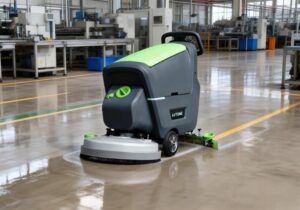
Our recommendation: LT-Q5. We designed the Q5 specifically for this environment. The compact body clears tight checkout lanes, the pad-assist drive gives operators instant speed control around displays, and the lithium-ion option supports the short-charge cycles retail scheduling demands.
Schools, Clinics, Offices, and Healthcare Corridors
These buildings have the opposite problem from retail. Hallways are long — frequently 150 feet-plus — and open layouts enable you to mix it up. But the floor is shared with classes, patients, and meetings, so two things become non-negotiable: low noise and fast-drying.
What to Prioritize
- Mid-size deck (20–22 inches). Long straight runs reward a wider path. Turning radius is less of a constraint here.
- Tank capacity: 15+ gallon solution, 18+ gallon recovery. Stopping to refill in the middle of a 150-foot corridor interrupts the cleaning flow and increases labor time by 20 to 30%. The higher capacity tanks are worth the environment — they last the full service time without exhausting.
- Low-noise vacuum motor. Anything under 65 dB(A) is acceptable for daytime cleaning in populated corridors.
- High airflow, not just high water lift. The water lift pulls dirty water up the hose. Airflow evaporates the microscopic moisture left in floor pores. Fast-drying floors are what keep populated corridors safe.
- Linatex (red) squeegee blades. The best all-purpose material for the mixed floors in these buildings is vinyl, sealed concrete, grouted tile, or terrazzo. Linatex is tear-resistant on rough surfaces and handles heavy-duty cycles.
Our recommendation: LT-S530X. The S530X was built around tank capacity, low-noise operation, and strong water recovery. In a long-corridor facility, its 21-inch brush plate and larger tanks let a single operator complete the cleaning without refilling.
Small Warehouses and Light Industrial Workshops
Concrete floors in warehouses and workshops always collect embedded soil in the pore structure, black tire marks from forklifts and pallet jacks, and oil or grease. Brush is a crucial factor.
What to Prioritize
- Cylindrical brush deck, not a pad. Cylindrical brushes spin forward and scrub aggressively into the pores. Disc pads polish the surface, but they leave the dirt below.
- Polyurethane (clear or blue) squeegee blades if oil is present. This is not optional. Standard gum rubber swells and warps within hours when it contacts oil or grease. Polyurethane resists both. Machine shops, auto bays, and food processing floors all need polyurethane.
- Traction drive. Warehouse operators work longer cleaning sessions and are comfortable with mechanical equipment. Traction drive reduces physical strain across a full shift.
- AGM is acceptable; lithium-ion is better for multi-shift operations. If the machine only runs one shift per day, AGM keeps the purchase price down. If it runs two shifts, lithium’s fast charging and longer cycle life pay off quickly.
- Strong water lift (65+ inches). Warehouse recovery water is gritty and heavy. A weaker vacuum will leave streaks.
Our recommendation: LT-S530X with the cylindrical brush configuration. The S530X platform accepts both disc and cylindrical decks; for warehouse use, we ship the 21-inch cylindrical brush deck and polyurethane squeegee blades for facilities with oil exposure.
When a Walk-Behind Is No Longer the Right Tool
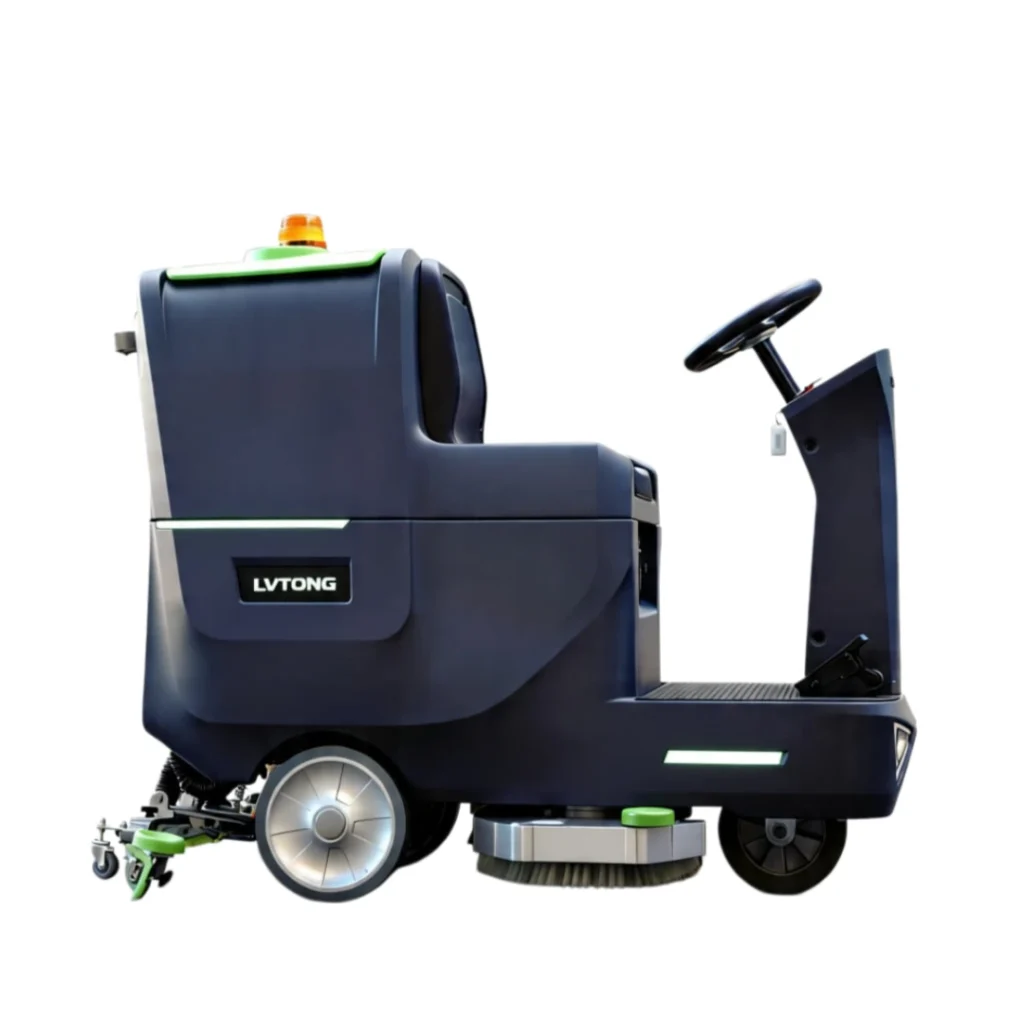
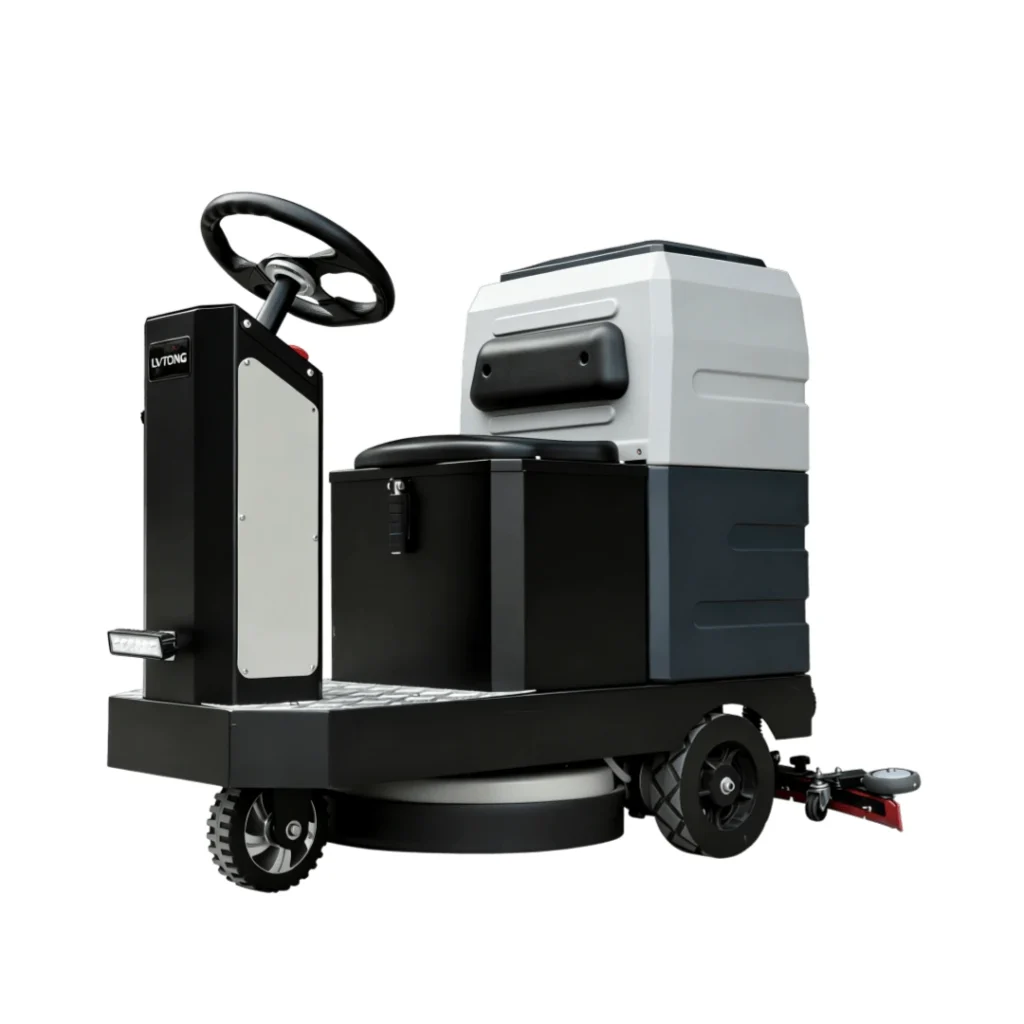
Walk-behind scrubbers lose efficiency once a facility exceeds roughly 30,000 square feet of continuous floor, or when the operator spends more time walking the machine than cleaning. At that point, a ride-on scrubber is the right investment.
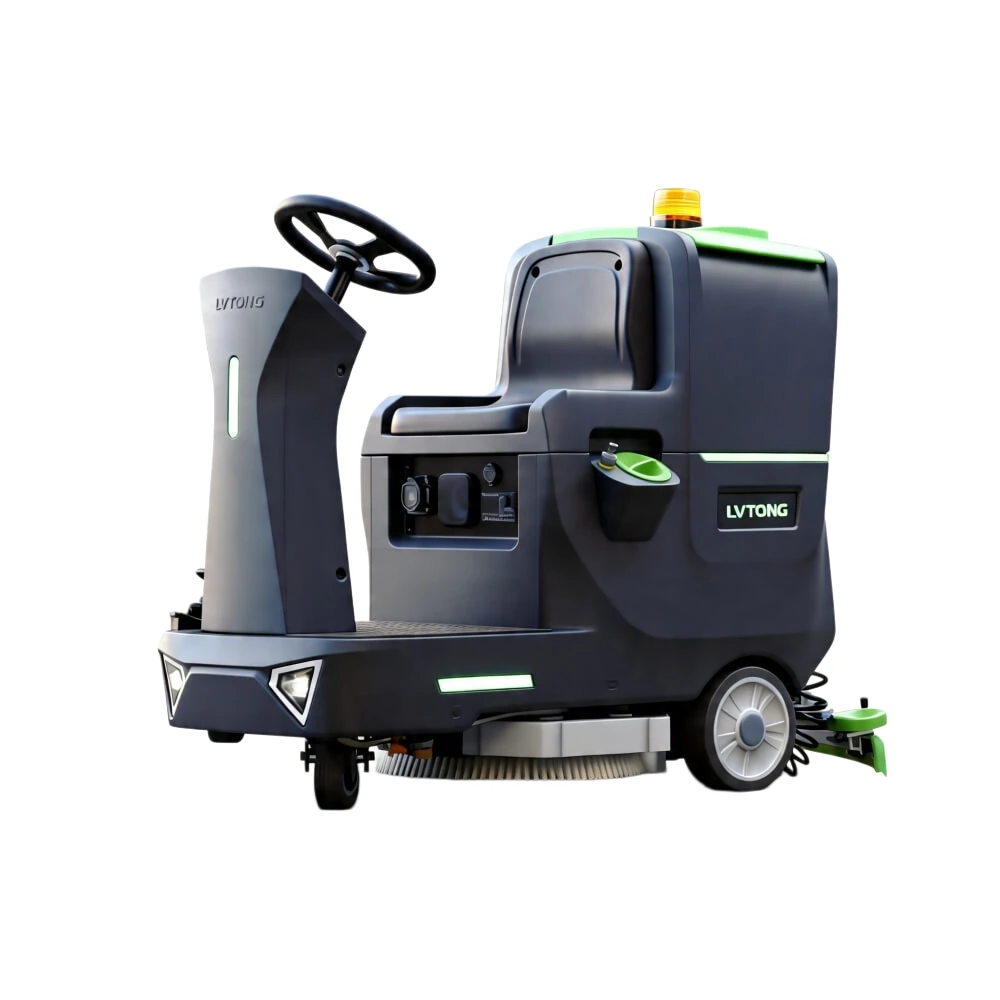
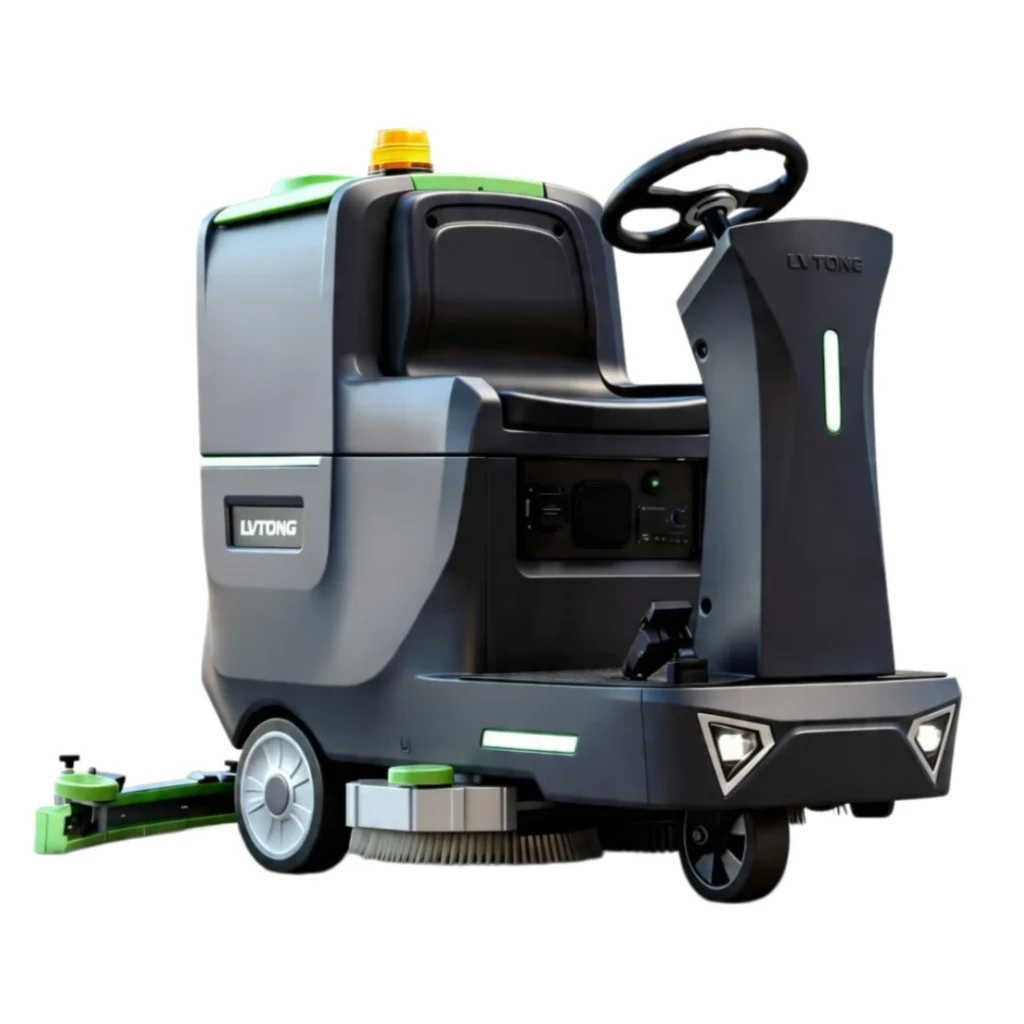
Our LT-S560X ride-on is the natural next step for facilities that have outgrown a walk-behind. Larger tanks, higher productivity per operator, and meaningfully lower labor cost per square foot once the daily cleaning area beyond the 30,000-square-foot.
The Battery Decision: Lithium vs. AGM
The battery is the heart of your scrubber. As wet lead-acid batteries require too much maintenance, most buyers now choose between AGM and Lithium-ion models.
AGM Batteries: The Standard Choice
AGM (Absorbent Glass Mat) batteries are sealed and maintenance-free. You do not need to add water. They are reliable and fit most budgets for machines in the $3,000 to $6,000 range. However, they usually last about 500 charge cycles and take 8 to 10 hours to charge fully.
Lithium-Ion: The High-Performance Choice
Lithium-ion batteries are the best option for high-traffic facilities. While the initial cost is higher, they last 2,000 to 5,000 cycles (5+ years). They are much lighter, making the machine easier to maneuver. And they offer fast charging, typically needing 2 to 3 hours. This means you can plug the machine in during a 30-minute lunch break to gain extra runtime.
The Functionality Choice: Solution and Recovery Tank
Every walk-behind scrubber holds a dual-tank system to ensure you are always scrubbing with clean water—a major upgrade over the traditional mop and bucket.
Solution Tank: The Intake Tank
This stores your clean water and concentrated chemicals. High-end machines often feature auto-dosing systems, where the chemical is stored in a separate small cartridge and mixed as it reaches the brush. This prevents chemical burn on the tank walls and saves on detergent costs.
Recovery Tank: The Waste Tank
This collects the dirty, silty water vacuumed up by the squeegee. Because this water contains suspended grit and foam, recovery tanks require more maintenance and specific design features like baffles to prevent foam from reaching the vacuum motor.
Summary for the Buyer
For the small to medium places, prioritize a machine with at least a 15-gallon solution tank and an 18-gallon recovery tank. This allows you to finish most of your floor without stopping to refill, effectively reducing your labor time by 20–30%.
Tip: Always choose rotomolded tanks to ensure your investment lasts the full 10-year expected lifecycle.
The Safeguarding: Water Absorption Function
According to IEC standards for floor treatment machines, a professional scrubber must leave the floor slip-resistant within seconds of passing. If a machine leaves even small streaks of water behind, it creates a slip-and-fall hazard and allows dirt to dry back onto the floor. So choosing a scrubber with a water absorption function is important.

The Vacuum Motor: Water Lift vs. Airflow
Don’t just look at the power of the vacuum motor. For industrial floor drying, you need to understand two metrics:
- Water Lift: This measures the motor’s ability to lift heavy, dirty water from the hose and into the tank. Look for a machine with at least 55 to 65 inches of water lift.
- Airflow: This is the volume of air moving through the system. High airflow helps dry the floor faster by evaporating any microscopic moisture left in the pores of the concrete or tile.
Squeegee Blade Materials
The rubber blades are the tires of your scrubber. Choosing the wrong material for your specific floor type will lead to poor water pick-up.
- Gum Rubber (Tan color): The most flexible and best for smooth, indoor floors like VCT or polished stone. They offer the best seal but degrade quickly if they touch oil or grease.
- Linatex (Red color): A premium, high-durability material. It resists tearing and works exceptionally well on uneven floors or grouted tile. It is the best all-purpose choice for 2026.
- Polyurethane (Clear/Blue color): These are oil-resistant. If you are cleaning a machine shop, an auto garage, or a food processing plant where fats and oils are present, you must use polyurethane. Standard rubber will swell and warp in hours if exposed to oil.
Conclusion
Choosing a walk-behind floor scrubber is a smart way to protect your facility and your budget. By measuring your space correctly and picking the right battery system, you ensure that your cleaning crew is efficient and safe. Investing in a high-quality scrubber is not just about clean floors; it is about building a professional environment that lasts.
FAQ
1. How much does a walk-behind floor scrubber cost?
Most professional models for small to medium spaces cost between $3,500 and $7,500. Price varies based on the battery type and whether the machine is self-propelled.
2. Is a 20-inch scrubber better than a 26-inch for a medium warehouse?
It depends on your aisles. While a 26-inch machine cleans faster in open areas, it is much harder to turn in tight corners. For most medium facilities, a 20-inch machine is a great choice for speed and agility.
3. How often should I replace the squeegee blades on a walk-behind scrubber?
In medium-traffic environments, flip your blades every 2–3 months and replace them entirely every 6 months.
4. Can a walk-behind scrubber be used on grouted tile?
Yes, but you must use a nylon brush rather than a pad. Brushes allow bristles to penetrate the grout lines, whereas pads only clean the surface of the tile.
5. Can I use one scrubber to clean different facility types?
Yes, but with compromises. Pad-drive machines with interchangeable pad options are the most versatile. For facilities with mixed floors, consider two smaller machines over one versatile larger one.