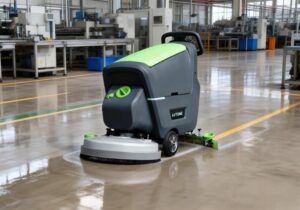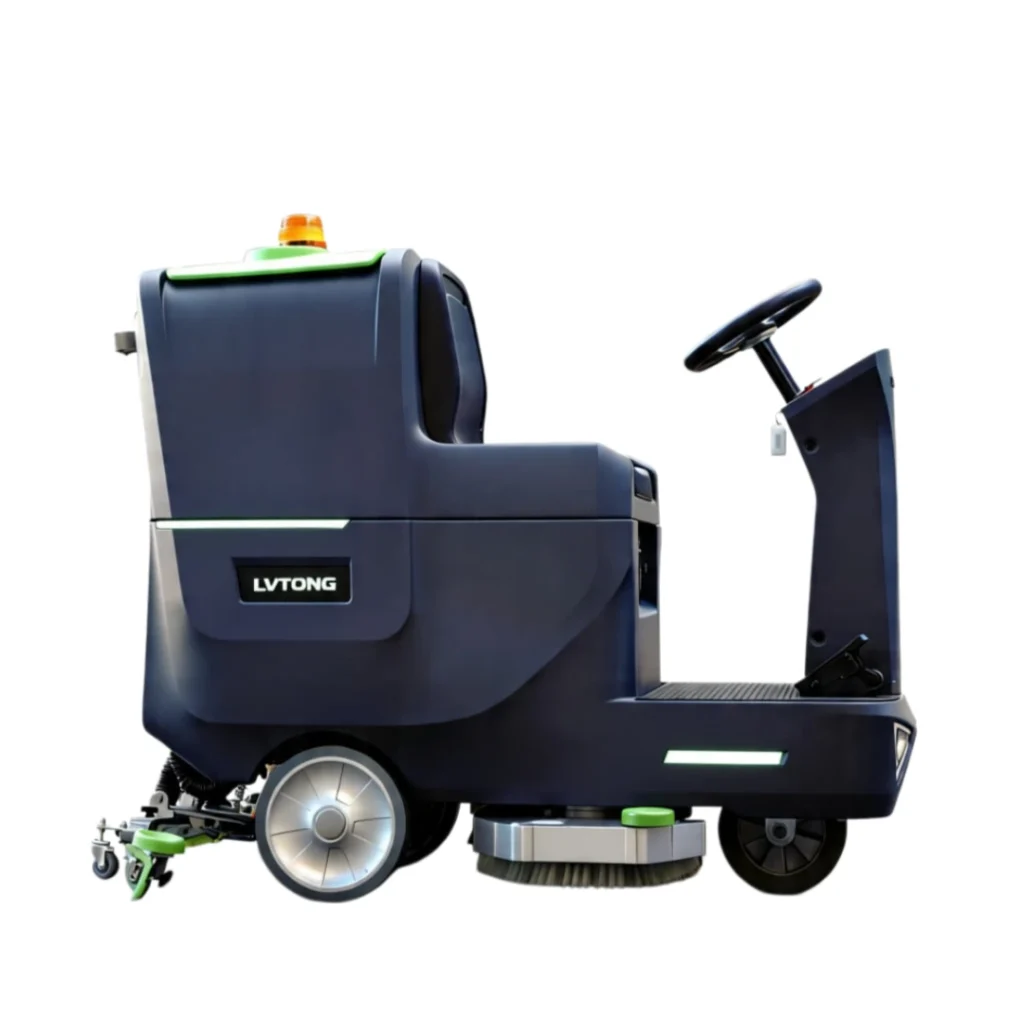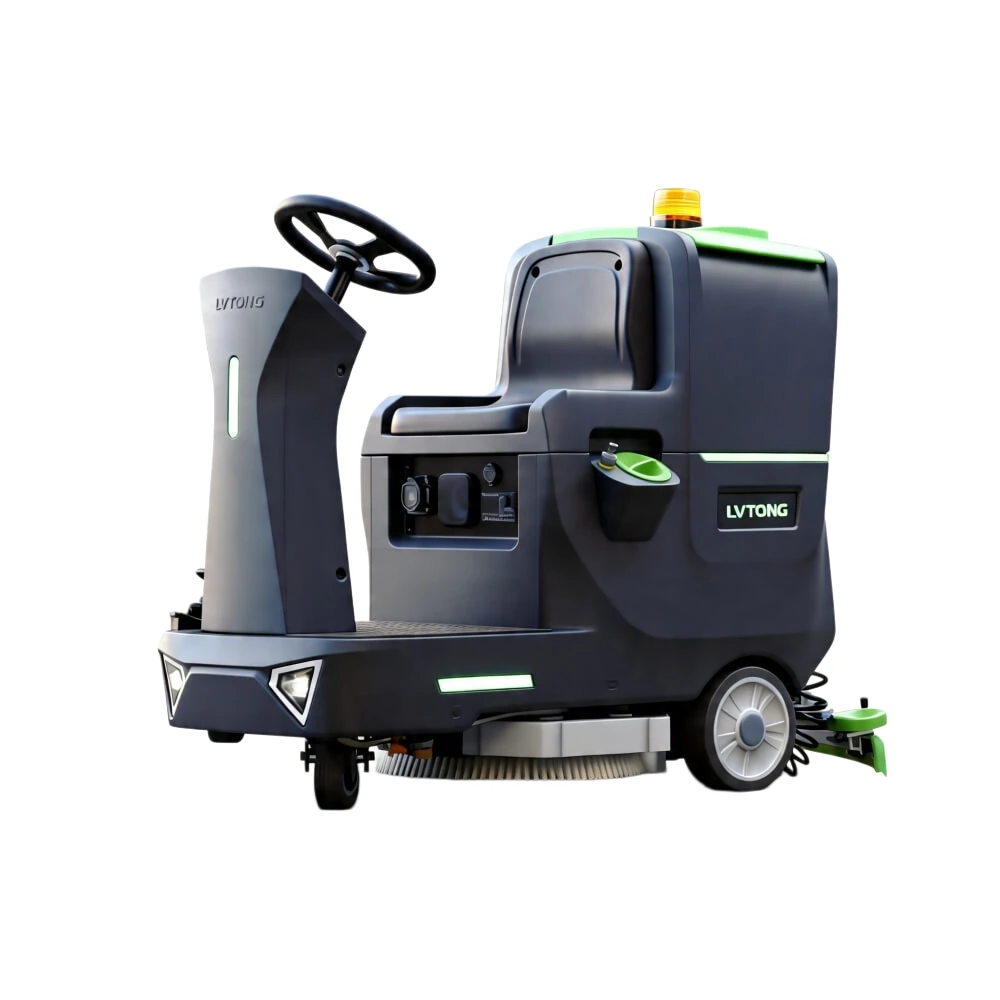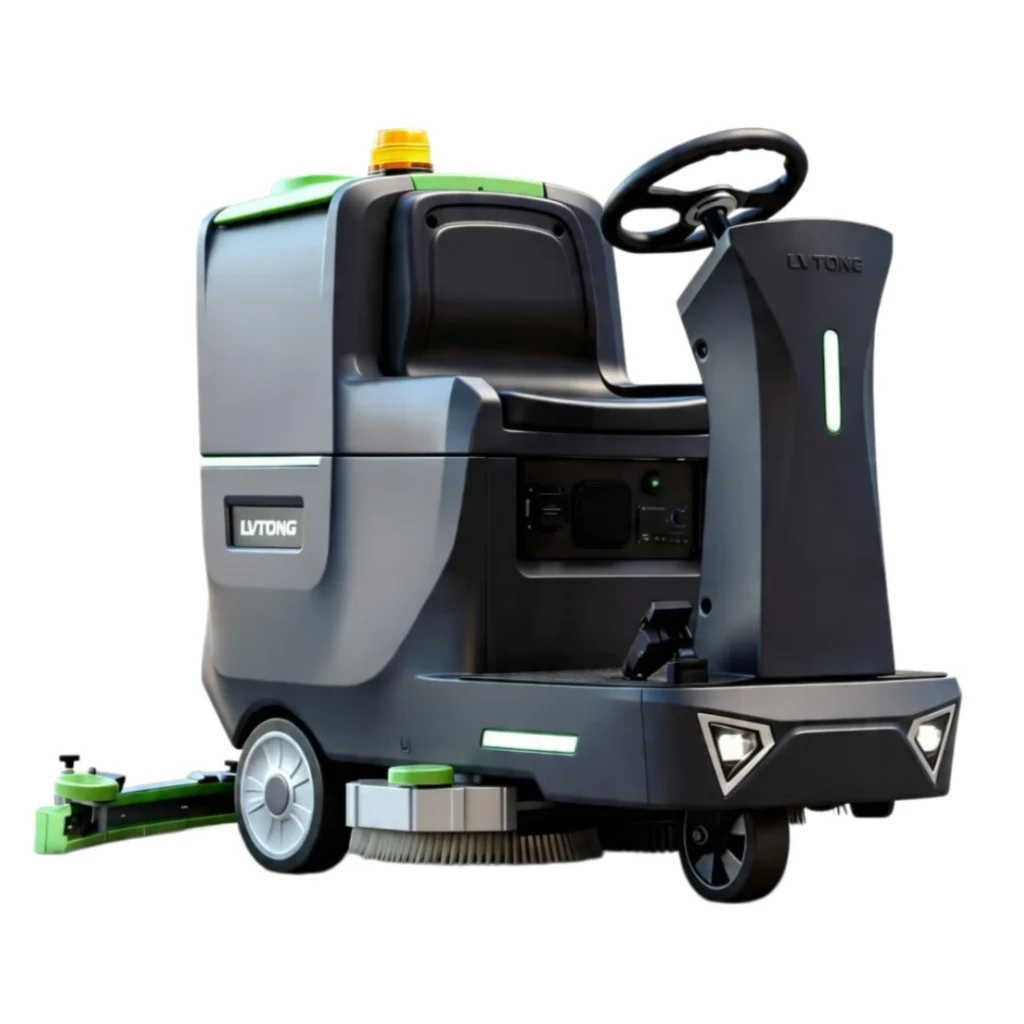
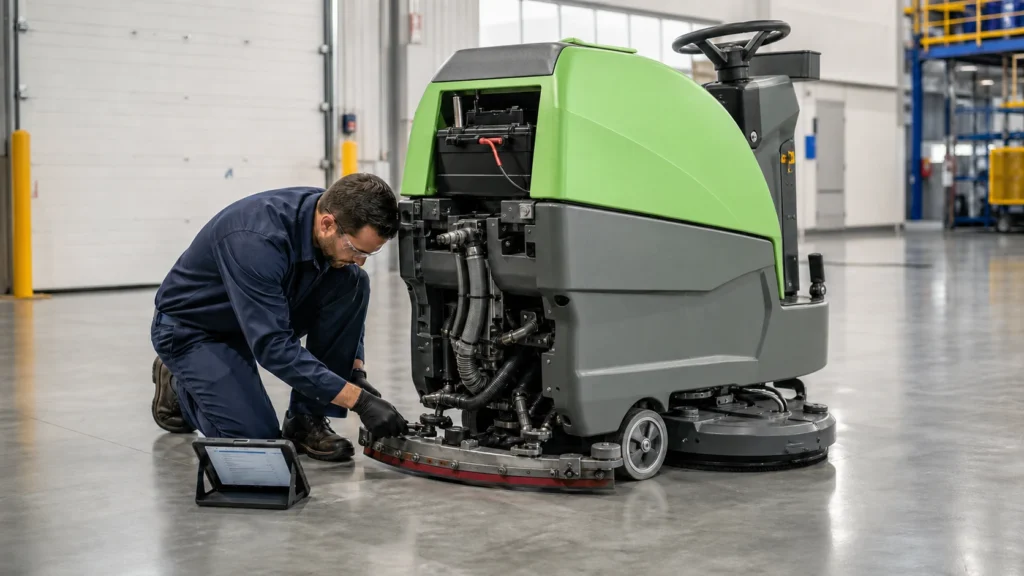
A robotic floor scrubber is a commercial cleaning machine that uses sensors, mapping, and autonomous navigation to scrub, wash, recover dirty water, and clean floors with limited manual operation. For retail stores, warehouses, shopping malls, hospitals, schools, logistics centers, and other facilities with repeated cleaning routes, robotic and autonomous floor scrubbers can help reduce labor pressure, improve cleaning consistency, and support safer floor maintenance.
Choosing the right model is not only about machine size or price. Buyers should compare facility layout, floor type, cleaning route, obstacle density, battery runtime, tank capacity, brush system, water recovery performance, safety sensors, mapping function, remote monitoring, and long-term service support. This guide explains how to select a robotic floor scrubber for retail stores, warehouses, and facilities with multiple floor types.
Key Takeaways
- Retail stores should prioritize obstacle detection, low-noise operation, and pedestrian safety.
- Warehouses should prioritize runtime, tank capacity, navigation stability, and route planning.
- Facilities with multiple floor types should focus on brush system compatibility and water recovery performance.
- The best robotic floor scrubber is the one that matches your cleaning route, floor conditions, and operational goals.
- ROI is typically highest in facilities with predictable and repeatable cleaning schedules.
Quick Answer: How to Choose a Robotic Floor Scrubber
To choose a robotic floor scrubber, start with your facility layout and floor types. For retail stores, prioritize pedestrian safety, obstacle detection, low-noise operation, compact maneuverability, and stable cleaning around shelves, displays, and checkout areas. For warehouses, prioritize long runtime, route planning, large tank capacity, reliable navigation, and remote monitoring. For multiple floor types, compare brush systems, brush pressure, water recovery, and compatibility with tile, sealed concrete, epoxy, vinyl, terrazzo, and textured floors.
A good robotic scrubber should match your daily cleaning route, not just your total square footage. The best choice is the machine that can complete the required cleaning area safely, consistently, and with minimal downtime. Common users of robotic floor scrubbers include facility managers, warehouse operators, retail chains, airport maintenance teams, healthcare facilities, educational institutions, logistics providers, commercial cleaning contractors, and property management companies.
Robotic vs Automatic vs Autonomous Floor Scrubbers
Many buyers use the terms automatic, robotic, and autonomous floor scrubber interchangeably, but they do not always mean the same thing. An automatic floor scrubber may still require a human operator, while a robotic or autonomous floor scrubber uses sensors, mapping, and route planning to clean predefined areas with limited manual control.
Walk-Behind Scrubbers

Automatic floor scrubbers and walk-behind scrubbers are still useful for small and mid-size areas, but they are not the main focus of this guide. A walk-behind scrubber usually requires continuous operator control, making it suitable for narrow aisles, small rooms, schools, clinics, and retail stores with limited cleaning routes. However, when a facility needs repeatable routes, lower labor dependency, and smarter cleaning management, a robotic floor scrubber may be a better long-term solution.
Ride-On Scrubbers

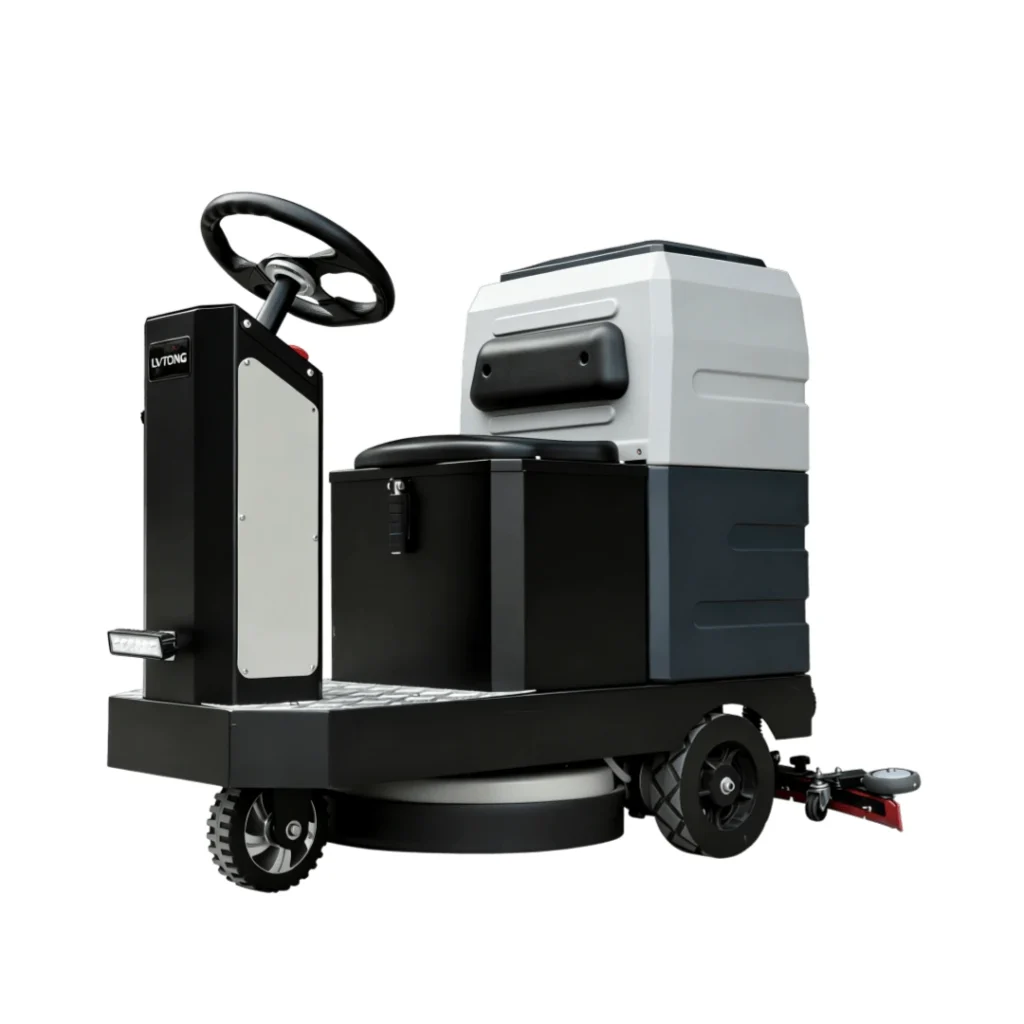
Ride-on automatic scrubbers are useful for large open areas such as warehouses, factories, logistics centers, and shopping malls. They improve productivity compared with walk-behind machines, but they still require an operator during cleaning. For facilities with predictable cleaning routes and labor shortages, a robotic or autonomous scrubber can further reduce repeated manual work while keeping cleaning results more consistent.
A ride-on scrubber may still be the better choice when the environment changes frequently, when manual control is required, or when the cleaning task is irregular. A robotic floor scrubber is usually more suitable for repeated routes, open public areas, retail aisles, and warehouse zones that can be mapped and cleaned on a schedule.
Robotic and Autonomous Scrubbers
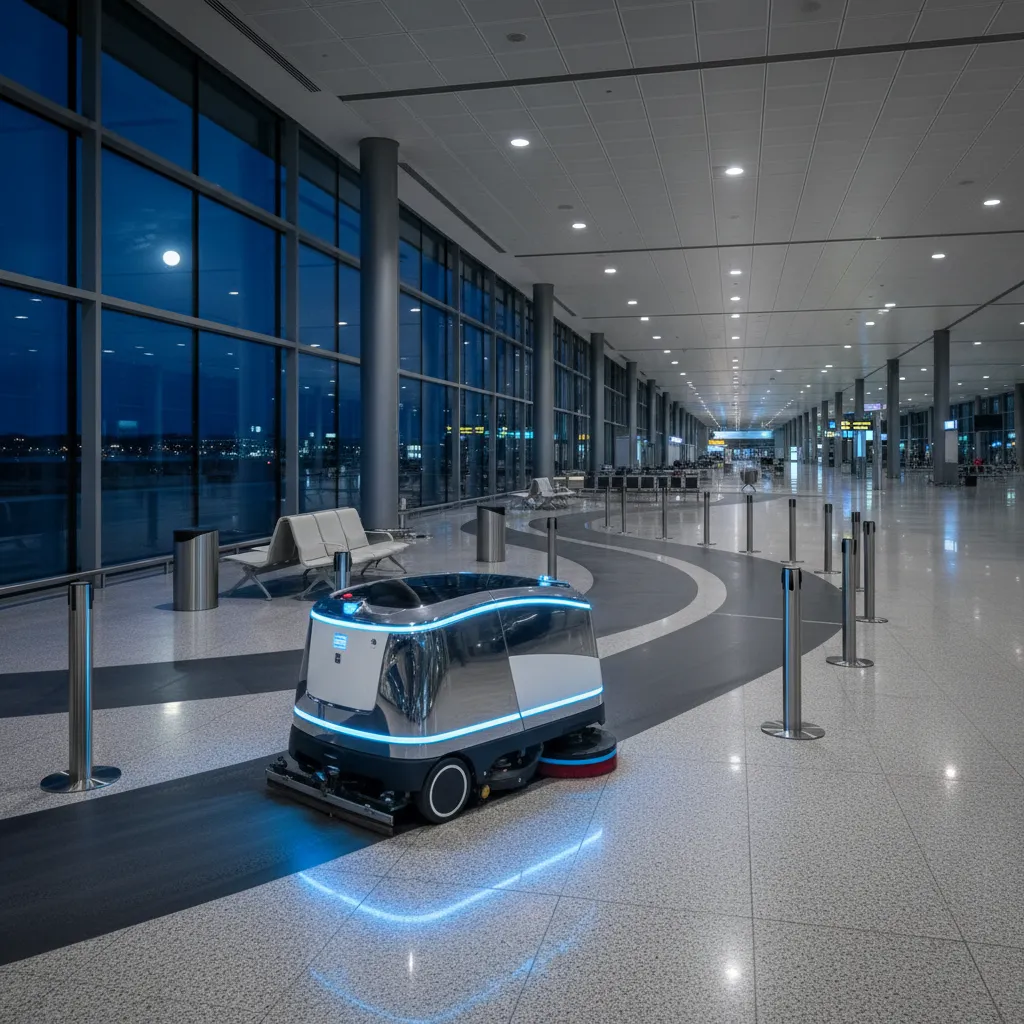
Robotic and autonomous floor scrubbers are designed for facilities that need repeatable cleaning routes, reduced labor pressure, and smarter cleaning control. These machines use smart navigation, obstacle detection, safety sensors, mapping, and route planning to clean floors with limited manual operation.
They are especially useful in retail stores, warehouses, shopping malls, hospitals, schools, airports, and logistics centers where cleaning tasks are frequent and predictable. When choosing an autonomous floor scrubber, buyers should compare navigation stability, pedestrian safety, obstacle detection, runtime, tank capacity, brush system, water recovery, and service support.
| Machine Type | What It Means | Best For | Main Limitation |
|---|---|---|---|
| Automatic floor scrubber | Scrubs, washes, and recovers dirty water automatically, but usually still needs a human operator | General commercial cleaning | Does not always include self-driving navigation |
| Walk-behind automatic scrubber | Operator walks behind the machine while it cleans | Small areas, narrow aisles, schools, clinics, and stores | Requires continuous operator labor |
| Ride-on automatic scrubber | Operator sits on the machine and drives it manually | Large open areas, warehouses, factories, and malls | Still requires an operator |
| Robotic floor scrubber | Uses sensors, mapping, and route planning to clean planned routes | Retail stores, warehouses, malls, schools, and repeat cleaning routes | Needs route setup and periodic supervision |
| Autonomous floor scrubber | A self-driving commercial scrubber designed for predefined routes | Facilities with labor shortages and predictable cleaning schedules | May need human support in complex or changing environments |
How to Estimate Robotic Floor Scrubber Productivity
Manufacturers often provide coverage rates, but real-world productivity for a robotic floor scrubber depends on more than cleaning width and operating speed. Practical productivity also depends on route design, obstacle density, turning frequency, battery runtime, refill cycles, water recovery, and the level of human supervision required.
A simple theoretical productivity formula is:
Coverage Rate = Cleaning Width × Operating Speed × Conversion Factor
This formula provides a useful baseline for open-area cleaning. However, robotic floor scrubbers should also be evaluated by practical productivity and route completion rate. A machine may have a strong theoretical coverage rate, but its actual output will be lower if the facility has many shelves, pallets, pedestrians, turns, floor transitions, or temporary obstacles.
For robotic scrubbers, buyers should compare both theoretical productivity and real route performance. If possible, test the machine in the actual facility before purchase. A demo route can show whether the scrubber can handle aisles, floor transitions, obstacles, pedestrian traffic, and daily cleaning frequency.
Key Specifications to Compare in a Robotic Floor Scrubber
| Specification | What to Check | Why It Matters |
| Navigation system | Mapping method, route planning, and autonomous driving stability | Determines how accurately the machine follows cleaning routes |
| Obstacle detection | Sensors, cameras, LiDAR, bumpers, and safety response | Helps avoid people, carts, shelves, pallets, and temporary obstacles |
| Safety sensors | Emergency stop, pedestrian detection, edge detection, and warning systems | Important for retail stores, hospitals, schools, and public areas |
| Battery runtime | Cleaning time per full charge | Determines whether the machine can complete the planned route |
| Charging time | Full charging time and opportunity charging options | Affects downtime and multi-shift cleaning |
| Cleaning width | Brush path width and overall machine width | Affects productivity and aisle compatibility |
| Tank capacity | Solution tank and recovery tank size | Larger tanks reduce refill and drain stops |
| Brush system | Disc, cylindrical, orbital, or dual-brush system | Determines floor type compatibility and cleaning performance |
| Water recovery | Squeegee design, suction performance, and dry-floor results | Helps reduce wet floors and slip risks |
| Remote monitoring | App, dashboard, cleaning reports, or fleet management | Helps managers track cleaning progress and machine status |
| Service support | Spare parts, training, warranty, and technical response | Reduces downtime after purchase |
How to Choose a Robotic Floor Scrubber by Application
How to Choose a Robotic Floor Scrubber for Retail Stores
Retail stores need robotic floor scrubbers that can work safely around shoppers, shelves, product displays, carts, checkout areas, and changing floor conditions. The best model should be compact enough for aisles but stable enough to clean open sales floors efficiently.
For retail environments, prioritize:
- Obstacle detection for shoppers, carts, shelves, and displays
- Low-noise operation for cleaning during business hours
- Compact body size for aisles and checkout zones
- Reliable water recovery to reduce wet-floor risks
- Route planning for daily repeat cleaning
- Safe operation around pedestrians
- Easy manual control when needed
- Brush systems suitable for tile, vinyl, epoxy, or polished floors
Key Features for Smart Autonomous Warehouse Floor Scrubbers
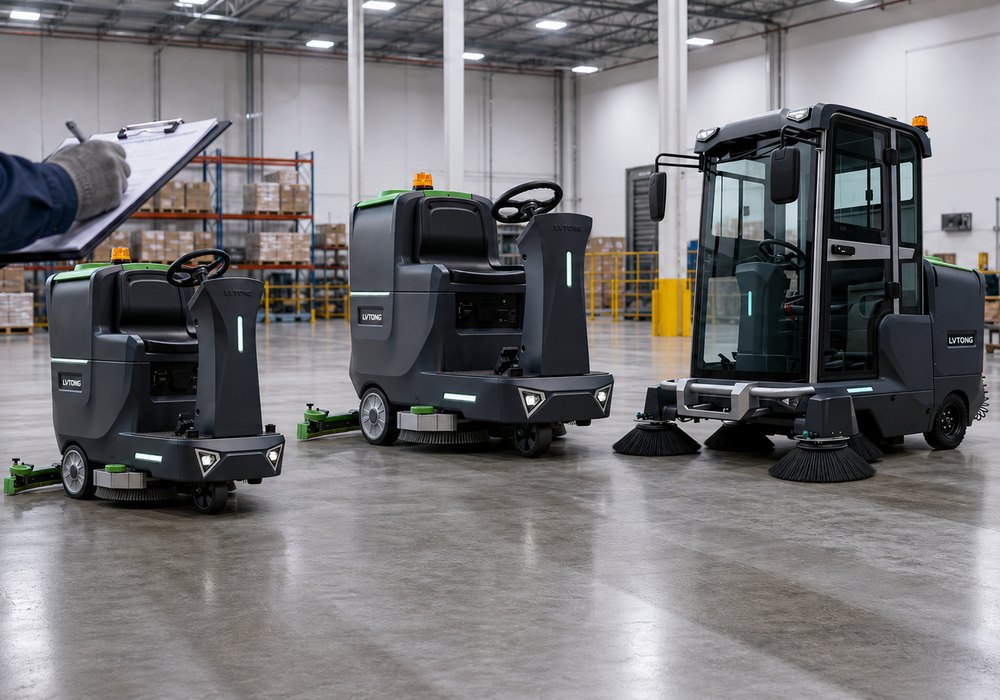
Warehouses and logistics centers need smart autonomous floor scrubbers that can clean large floor areas, avoid obstacles, and operate on predictable routes. These environments may include pallets, forklifts, racks, loading zones, pedestrian lanes, and changing traffic patterns.
For warehouse cleaning, compare:
- Long battery runtime for extended cleaning routes
- Large solution and recovery tanks to reduce stop time
- Stable autonomous navigation in open spaces
- Route planning for aisles, dock areas, and storage zones
- Obstacle detection for pallets, forklifts, carts, and workers
- Wide cleaning path for large floor coverage
- Durable brush system for concrete or epoxy floors
- Remote monitoring for cleaning reports and fleet control
- Manual override for complex or high-traffic areas
A smart autonomous warehouse floor scrubber should balance productivity and safety. In large facilities, the biggest value often comes from reducing repeated manual cleaning routes and improving consistency across daily or nightly cleaning schedules.
Robotic Floor Scrubbers for Healthcare, Schools, and Public Facilities
Healthcare, education, and public facilities need robotic floor scrubbers that support safe, quiet, and consistent cleaning. These environments often include corridors, lobbies, cafeterias, classrooms, waiting areas, and other spaces where people may be present during cleaning.
For these facilities, prioritize:
- Low-noise operation for daytime cleaning
- Strong water recovery to reduce wet-floor risks
- Safety sensors for pedestrians, patients, students, and staff
- Route planning for corridors and public areas
- Easy cleaning reports for facility managers
- Brush and pad options for tile, vinyl, terrazzo, or sealed floors
- Simple maintenance procedures for daily use
- Reliable after-sales support and operator training
The goal is not only cleaning speed. In healthcare and education environments, safety, consistency, water recovery, and predictable operation are often more important than maximum coverage rate.
How to Select a Robotic Floor Scrubber for Multiple Floor Types
Many facilities have more than one floor surface. A store may combine tile, vinyl, and polished concrete. A warehouse may include sealed concrete, epoxy, textured zones, and entrance areas. A hospital or school may include corridors, cafeterias, lobbies, and utility rooms with different cleaning needs.
When choosing a robotic scrubber for multiple floor types, compare the brush system, brush pressure, water flow control, squeegee performance, and pad compatibility.
| Floor Type | Recommended Setup | What to Check |
| Smooth tile | Disc brush or soft pad | Consistent pressure and good water recovery |
| Sealed concrete | Disc or cylindrical brush | Soil level, surface texture, and brush pressure |
| Epoxy floors | Soft pad or suitable disc brush | Avoid aggressive pads that may damage the finish |
| Vinyl floors | Soft pad or low-pressure brush setup | Protect surface coating and reduce streaking |
| Terrazzo | Suitable pad and controlled water flow | Maintain shine and avoid residue |
| Textured floors | Cylindrical brush | Better contact with grooves and surface texture |
| Grout lines | Cylindrical brush | Better performance in recessed lines and uneven surfaces |
| Mixed commercial floors | Adjustable brush and water settings | Flexibility across different cleaning zones |
Brush Systems, Water Recovery, and Floor Compatibility
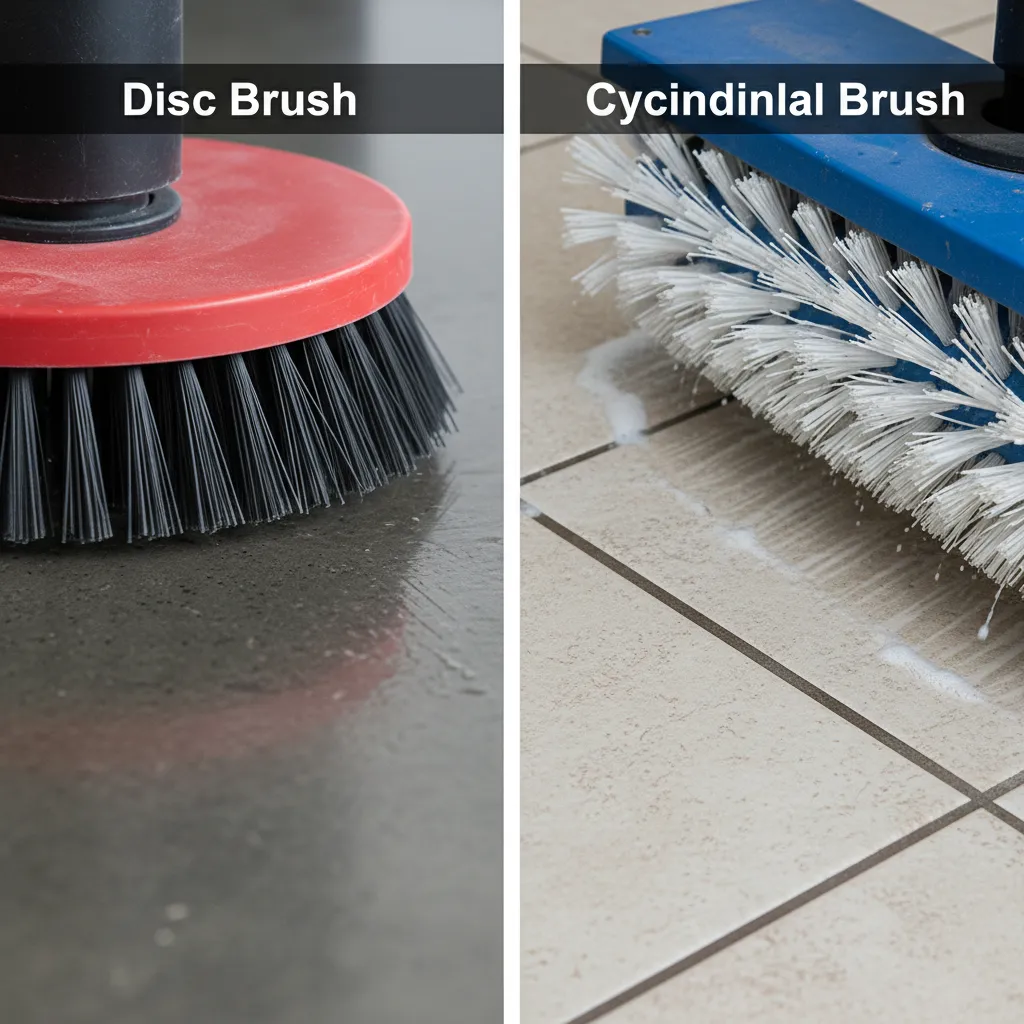
Brush technology is one of the most important factors when selecting a robotic floor scrubber for multiple floor types. The right brush system depends on floor material, soil level, surface texture, cleaning frequency, and the need for water recovery.
Disc brush systems are commonly used on smooth floors such as tile, sealed concrete, epoxy, and vinyl. They apply direct downward pressure and work well for daily cleaning, general soil removal, and polished commercial floors.
Cylindrical brush systems are better for textured floors, grout lines, and light debris pickup. Because the brushes rotate at higher speeds, they can clean uneven surfaces and recessed lines more effectively than standard disc systems.
Orbital systems can create strong cleaning action with controlled movement, making them useful for certain deep-cleaning tasks or specific floor finishes. Dual-brush systems can increase cleaning width and improve productivity in larger areas.
Water recovery is equally important. A robotic floor scrubber should leave floors dry enough for safe walking, especially in retail stores, healthcare facilities, schools, and public buildings. Buyers should compare squeegee design, suction performance, recovery tank capacity, and floor drying results before choosing a model.
| Brush System | Best For | Main Advantage |
| Disc brush | Smooth tile, sealed concrete, epoxy, and vinyl | Stable daily cleaning and direct downward pressure |
| Cylindrical brush | Textured floors, grout lines, and light debris | Better contact with grooves and uneven surfaces |
| Orbital system | Certain deep-cleaning tasks and floor finish maintenance | Strong cleaning action with controlled movement |
| Dual-brush system | Large areas and wider cleaning paths | Higher productivity and broader floor coverage |
Runtime, Charging, Mapping, and Remote Monitoring
Battery Runtime and Charging Time
Battery runtime affects how much area a robotic floor scrubber can clean before stopping for recharge. A facility with short routes may only need moderate runtime, while warehouses, shopping malls, and large retail stores may require longer operating time or planned charging windows.
Charging time also matters. If the machine is used across multiple shifts, buyers should ask whether the battery supports faster charging, opportunity charging, or scheduled charging between cleaning routes. For commercial environments, buyers should also check electrical safety, battery protection, charger compatibility, and service support before purchase.
Mapping and Route Planning
Mapping and route planning determine how well the robotic scrubber repeats its cleaning tasks. A good system should allow operators to create, save, edit, and repeat cleaning routes. For changing environments, the machine should respond safely to temporary obstacles without losing route stability.
For retail stores, route planning should support aisles, entrances, checkout zones, and public areas. For warehouses, it should support open floors, storage aisles, dock areas, and traffic zones. For facilities with multiple floor types, route planning should also consider floor transitions and cleaning mode changes.
Remote Monitoring and Cleaning Reports
Remote monitoring can help facility managers track cleaning progress, machine status, battery level, error alerts, route completion, and maintenance needs. This is especially useful for large buildings, multi-site businesses, and facilities using more than one robotic scrubber.
Cleaning reports can also help managers evaluate whether the machine completed the planned route, how long each task took, and where manual follow-up may still be needed.
Water Recovery and Solution Control
A robotic floor scrubber should not only clean the floor; it should also recover dirty water effectively. Strong water recovery helps floors dry faster and reduces slip risks in public spaces.
Buyers should compare solution flow control, recovery tank capacity, squeegee design, vacuum suction performance, foam control, water usage per cleaning route, cleaning solution compatibility, and wastewater management requirements.
Efficient water and chemical control can reduce refill frequency, chemical waste, and operating cost. It can also support sustainability goals by reducing water use and wastewater volume.
Maintenance, Sensors, and Software Checks
Robotic floor scrubbers require both standard cleaning-machine maintenance and smart-system maintenance. A good maintenance plan should cover tanks, brushes, squeegees, batteries, sensors, software, and navigation systems.
| Frequency | What to Check |
| Daily | Empty and rinse solution and recovery tanks |
| Daily | Clean squeegee blades and inspect water recovery |
| Daily | Remove debris from brushes, pads, and scrub deck |
| Daily | Wipe sensors, cameras, and safety detection areas |
| Weekly | Check brush wear, pad condition, and squeegee alignment |
| Weekly | Review error alerts, route issues, and cleaning reports |
| Monthly | Inspect battery condition, charging behavior, and connectors |
| Monthly | Test emergency stop and safety sensors |
| As needed | Update software, recalibrate maps, and adjust cleaning routes |
Sensor cleanliness is especially important. Dust, water spots, or debris on sensors may affect obstacle detection, navigation accuracy, and route performance.
Robotic Floor Scrubber Selection Framework
Facilities smaller than 20,000 sq.ft. with narrow aisles and limited maneuvering space often benefit from compact robotic floor scrubbers that provide better navigation and flexibility.
For facilities larger than 50,000 sq.ft. with predictable cleaning routes, a larger autonomous floor scrubber with extended runtime and higher tank capacity can deliver stronger productivity and ROI.
Locations with multiple floor surfaces should prioritize adjustable brush systems, water flow control, and floor-specific cleaning modes to maintain consistent cleaning performance across different areas.
When labor shortages are a major operational challenge, navigation reliability, route automation, remote monitoring, and cleaning report capabilities become key selection factors.
Robotic Floor Scrubber Buying Checklist
Use this checklist before selecting a robotic floor scrubber.
| Checklist Item | Questions to Ask |
| Facility layout | Are there narrow aisles, open areas, elevators, ramps, shelves, or many obstacles? |
| Floor types | Does the machine need to clean tile, concrete, epoxy, vinyl, terrazzo, or textured floors? |
| Cleaning route | Is the route predictable and repeatable enough for autonomous cleaning? |
| Navigation system | Does the machine support mapping, saved routes, and route editing? |
| Obstacle detection | Can it detect people, carts, pallets, displays, and temporary objects? |
| Safety features | Does it include emergency stop, warning lights, pedestrian safety sensors, and manual override? |
| Battery runtime | Can one charge complete the planned cleaning route? |
| Charging time | Does charging fit your cleaning schedule or shift plan? |
| Tank capacity | Will the solution and recovery tanks reduce unnecessary stops? |
| Brush system | Is the brush type suitable for your floor surfaces and soil level? |
| Water recovery | Will the floor dry quickly enough for safe use? |
| Remote monitoring | Can managers view cleaning status, route completion, and alerts? |
| Maintenance | Are brushes, squeegees, sensors, batteries, and software easy to maintain? |
| Service support | Are spare parts, training, warranty, and technical support available? |
| ROI | How many labor hours can the robotic scrubber save each week or month? |
Who Should Invest in a Robotic Floor Scrubber?
A robotic floor scrubber is often a strong investment for facilities that clean the same routes daily, struggle with labor shortages, operate across multiple shifts, or manage large commercial floor areas.
Typical buyers include retail chains, warehouse operators, shopping malls, airports, schools, hospitals, logistics centers, manufacturing facilities, and commercial cleaning service providers.
Facilities with predictable cleaning schedules generally achieve the fastest return on investment.
Robotic Floor Scrubber ROI and Labor Savings
Robotic Floor Scrubber vs Traditional Cleaning
| Factor | Robotic Floor Scrubber | Manual Cleaning |
|---|---|---|
| Labor Requirement | Low | High |
| Cleaning Consistency | High | Variable |
| Route Repeatability | Excellent | Limited |
| Reporting Capability | Available | Usually unavailable |
| Productivity | High | Moderate |
| Long-Term Labor Savings | Significant | Limited |
The return on investment for a robotic floor scrubber depends on labor cost, cleaning frequency, route length, facility size, and how much manual work can be reduced. Facilities with repeated cleaning routes usually see the clearest value because the same route can be cleaned consistently every day.
When estimating ROI, compare current manual cleaning hours, cleaning frequency per week, labor cost per hour, machine purchase or lease cost, battery cost, brush and squeegee replacement, maintenance cost, training time, downtime risk, route completion rate, expected machine lifespan, and service support.
A robotic floor scrubber may not replace all cleaning work. Staff may still handle edges, corners, spills, restrooms, stairs, and irregular cleaning tasks. The best ROI usually comes from using robotic scrubbers for predictable open areas while staff handle detail cleaning and exception tasks.
Need Help Choosing a Robotic Floor Scrubber?
Selecting the right robotic floor scrubber requires more than comparing one specification sheet against another. The right model should match your floor type, facility layout, cleaning schedule, obstacle level, staffing needs, and long-term operating goals.
LVTONG can help commercial buyers evaluate robotic and autonomous floor cleaning requirements, including retail store cleaning routes, warehouse and logistics center cleaning, multi-surface floor compatibility, brush system selection, battery runtime, tank capacity, water recovery, navigation requirements, obstacle detection, service support, training, maintenance planning, and ROI evaluation.
If you are choosing a robotic floor scrubber for retail stores, warehouses, shopping malls, schools, hospitals, or facilities with multiple floor types, contact the LVTONG team for application guidance and model recommendations.
Robotic Floor Scrubber FAQs
How do I choose a robotic floor scrubber?
Choose a robotic floor scrubber by comparing facility layout, floor type, cleaning route, obstacle density, battery runtime, tank capacity, brush system, water recovery, navigation, sensors, and service support. For the best results, test the machine in your actual facility before purchase.
How do I choose an autonomous floor scrubber for retail stores?
For retail stores, choose an autonomous floor scrubber with strong obstacle detection, low-noise operation, compact maneuverability, reliable water recovery, and safe pedestrian response. The machine should handle aisles, checkout areas, shelves, displays, and customer traffic without disrupting daily operations.
How do I select a robotic floor scrubber for multiple floor types?
For multiple floor types, compare brush systems, brush pressure, pad options, water flow control, and squeegee performance. Disc brushes are usually suitable for smooth floors, while cylindrical brushes are often better for textured surfaces, grout lines, and light debris.
What features should I look for in a smart autonomous warehouse floor scrubber?
A smart autonomous warehouse floor scrubber should offer long battery runtime, large tank capacity, stable navigation, route planning, obstacle detection, remote monitoring, and durable cleaning components. It should also operate safely around pallets, forklifts, racks, workers, and changing warehouse traffic.
What is the difference between a robotic floor scrubber and an automatic floor scrubber?
An automatic floor scrubber usually scrubs and recovers water automatically but may still require full manual operation. A robotic floor scrubber includes autonomous navigation, sensors, mapping, and route planning, allowing it to clean predefined routes with limited operator control.
How long does a robotic floor scrubber typically last?
Most commercial robotic floor scrubbers have an expected service life of 5–10 years, depending on usage frequency, maintenance quality, battery condition, and operating environment.
Can a robotic floor scrubber completely replace cleaning staff?
No. Robotic floor scrubbers are designed to automate repetitive floor cleaning tasks. Staff are still needed for edge cleaning, restrooms, stairways, spill response, and detailed sanitation work.
Quick Buyer Summary
Retail environments often require compact robotic floor scrubbers with advanced obstacle detection, quiet operation, and dependable pedestrian safety features.
In warehouse and logistics facilities, longer runtime, stable navigation, route planning, large tank capacity, and remote monitoring are usually the most important selection criteria.
For sites with tile, concrete, epoxy, vinyl, terrazzo, or other mixed floor surfaces, brush compatibility, water control, and floor-specific cleaning settings should be carefully evaluated.
Rather than focusing only on machine size, buyers should select a robotic floor scrubber that aligns with their cleaning routes, floor conditions, staffing requirements, and long-term maintenance goals.
Conclusion
Choosing the right robotic floor scrubber starts with understanding your facility, not just comparing machine size or price. Retail stores need safe navigation, low noise, and strong obstacle detection. Warehouses need runtime, route planning, tank capacity, and remote monitoring. Facilities with multiple floor types need the right brush system, water control, and water recovery setup.
The best robotic floor scrubber is the one that matches your cleaning route, floor surfaces, staffing needs, safety requirements, and long-term operating cost. By comparing navigation, sensors, runtime, tank capacity, brush system, water recovery, ROI, and service support, buyers can select a smarter cleaning solution for daily commercial floor maintenance.