Introduction
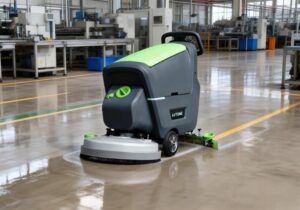
Floor scrubber machine prices vary widely because different machines are designed for different cleaning areas, floor conditions, operating hours, and productivity requirements.
A compact or walk-behind scrubber usually has a lower initial price, while ride-on, heavy-duty, and autonomous models generally require a larger investment because of their cleaning width, tank capacity, battery system, drive components, and control technology.
However, the purchase price is only one part of the budget. Buyers should also consider delivery, batteries, chargers, brushes, squeegees, maintenance, repairs, electricity, water, labor, downtime, warranty coverage, and expected service life.
This guide explains what affects floor scrubber machine price, how to compare different machine types, and how to calculate Total Cost of Ownership, cleaning cost per square meter, ROI, and payback period for daily commercial use.
Quick Answer
A floor scrubber machine budget should include more than the purchase price. Buyers should calculate the machine, battery and charger, delivery, operator training, brushes, squeegees, filters, maintenance, repairs, electricity, water, cleaning solution, labor, downtime, and expected residual value.
For a machine that runs daily, compare annualized Total Cost of Ownership, cleaning cost per square meter, expected labor savings, and payback period.
A lower-priced machine is not always the most economical choice. A higher-quality machine may provide better long-term value when it delivers higher practical productivity, fewer repairs, easier parts replacement, and less downtime.
Floor Scrubber Machine Price at a Glance
The following table shows the relative price position of common machine categories. It does not represent a fixed quotation because actual prices vary by configuration, destination, battery, accessories, warranty, and order quantity.
| Machine Type | Relative Price Position | Best Application | Main Price Factors |
|---|---|---|---|
| Portable or compact scrubber | Entry level | Small stores, offices, restaurants, clinics, and narrow areas | Power source, brush size, machine weight, and water capacity |
| Basic walk-behind scrubber | Entry to mid-range | Schools, retail stores, workshops, and medium-sized facilities | Cleaning width, battery, tank size, and manual or powered traction |
| Self-propelled walk-behind scrubber | Mid-range | Hospitals, factories, commercial buildings, and frequent daily cleaning | Traction motor, runtime, brush pressure, water recovery, and operator controls |
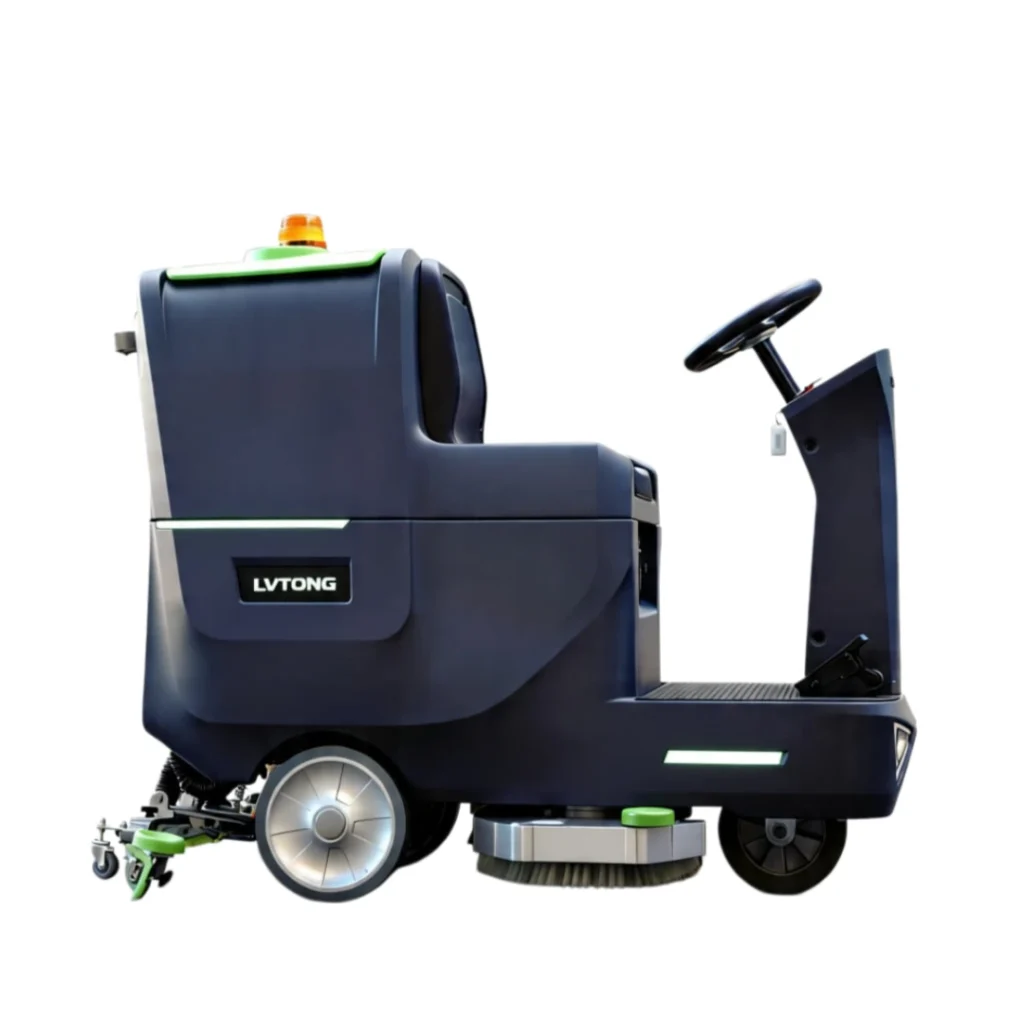
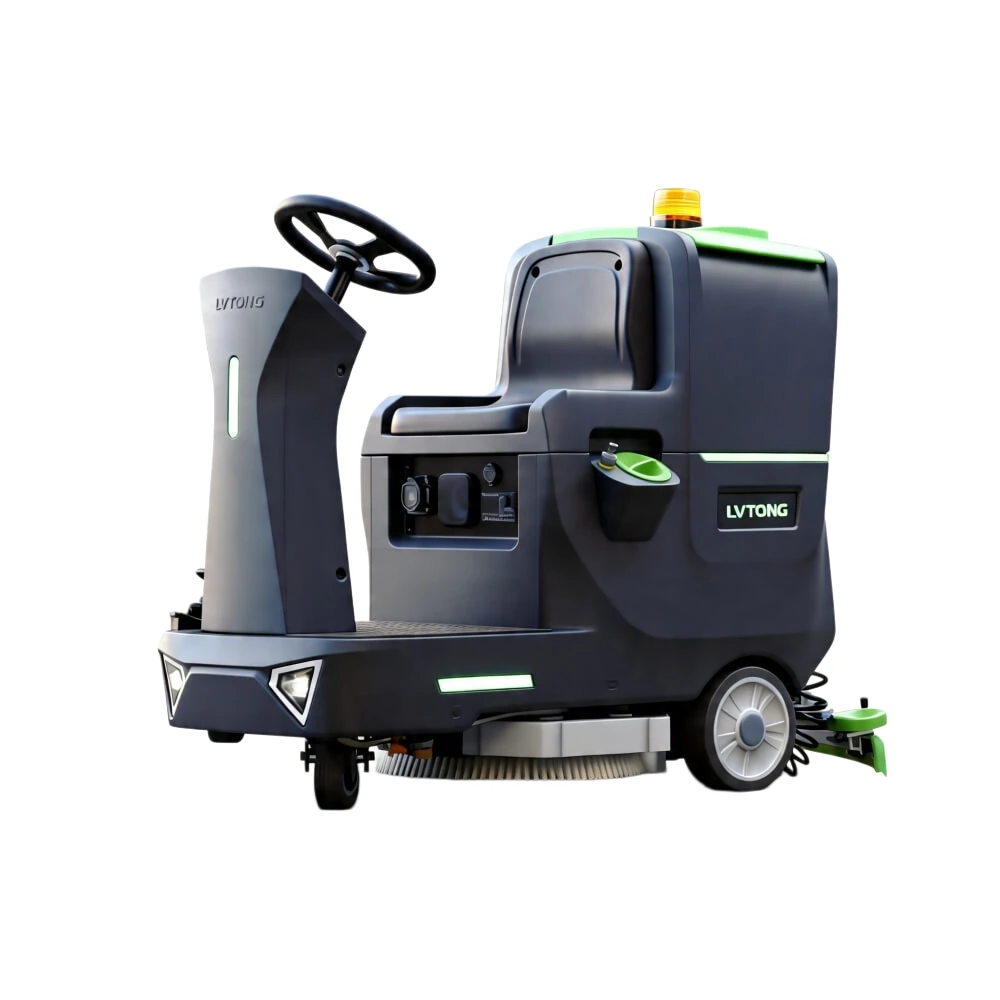
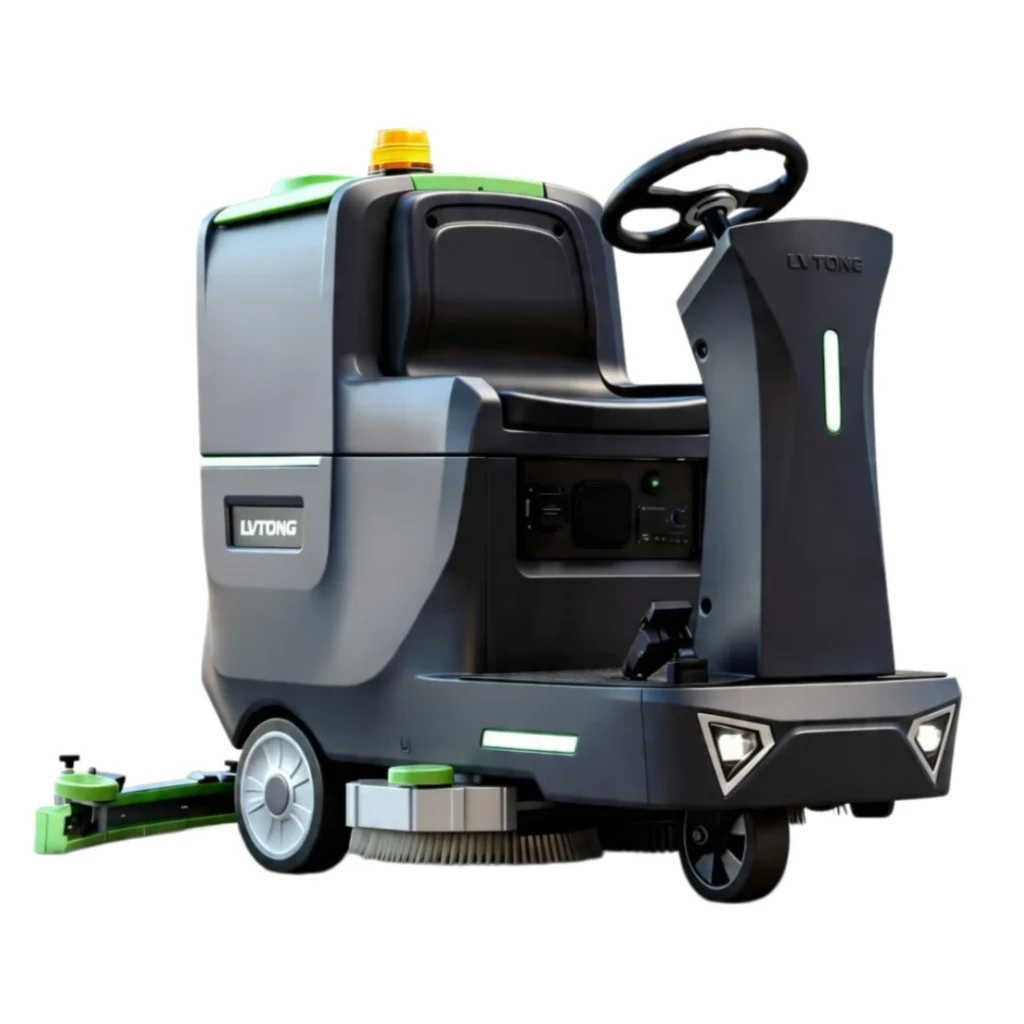
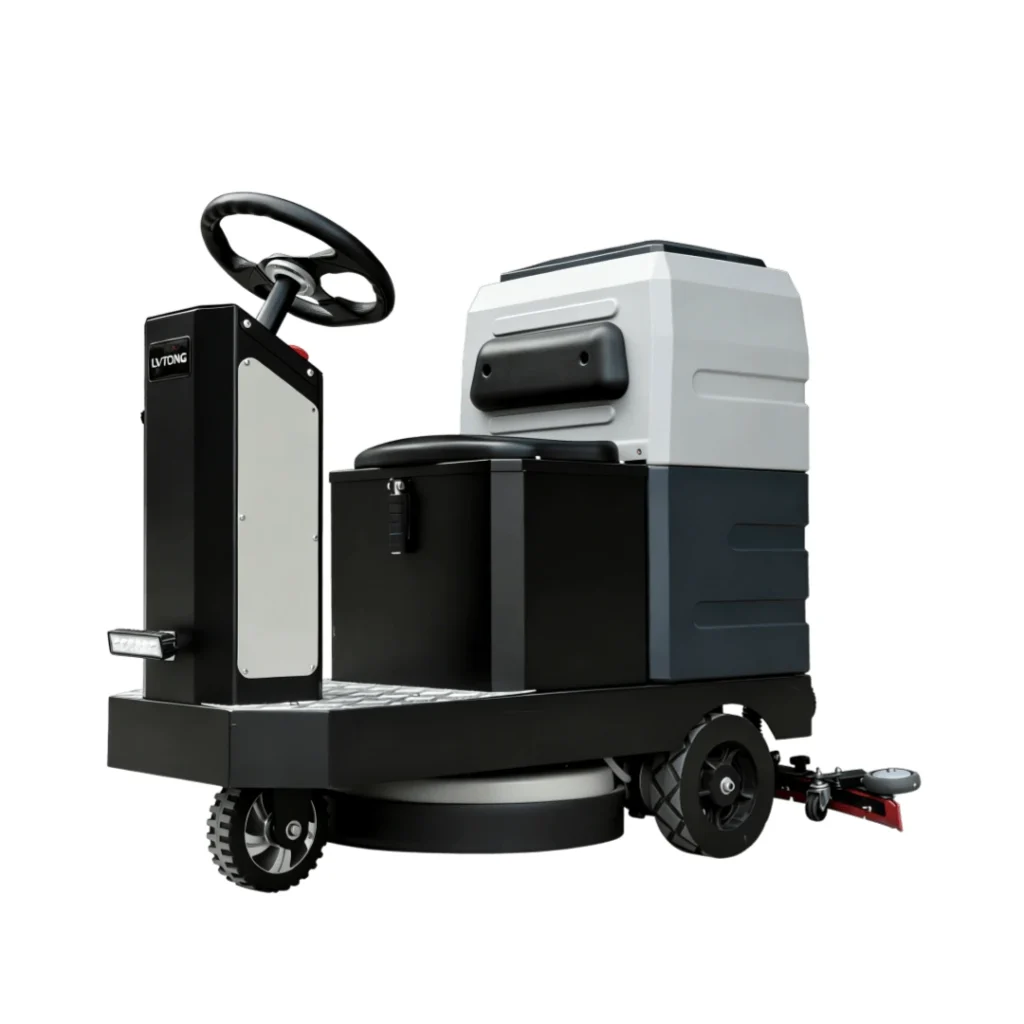
| Ride-on floor scrubber | Mid to high range | Warehouses, logistics centers, shopping malls, and large factories | Cleaning width, tank capacity, drive system, battery capacity, and operator platform |
| Heavy-duty industrial scrubber | High range | Manufacturing plants, demanding floors, and high-frequency cleaning | Structural strength, motor protection, brush pressure, component durability, and service support |
| Autonomous floor scrubber | Premium range | Large facilities requiring automated or scheduled cleaning | Sensors, navigation, mapping, software, remote monitoring, deployment, and service plans |
These categories should be used to identify the correct machine type before requesting a quotation. Comparing the price of a compact scrubber with a large ride-on machine is not meaningful because the machines are designed for different workloads.
Before comparing quotations, review the main types of floor scrubbers to understand how compact, walk-behind, ride-on, stand-on, and robotic machines differ in productivity, maneuverability, storage requirements, and initial investment.
What Should a Floor Scrubber Machine Quotation Include?
A low advertised price may exclude essential components. Buyers should request a written quotation showing what is included and what must be purchased separately.
| Quotation Item | What a Complete Quotation Should State | Why It Matters |
|---|---|---|
| Base machine | Exact model, cleaning width, tank capacity, motor system, and standard configuration | Prevents buyers from comparing different specifications as if they were identical |
| Battery | Battery type, voltage, capacity, quantity, brand, and warranty | Battery configuration affects runtime, replacement cost, and daily productivity |
| Charger | Charger voltage, charging current, plug type, connector, and compatibility | An unsuitable charger may cause charging problems or additional replacement expense |
| Brushes or pad holders | Quantity, brush material, pad-holder size, and included accessories | Some quotations include only one standard brush |
| Squeegee blades | Blade material, quantity, reversibility, and replacement options | Squeegees directly affect water recovery and floor drying |
| Packaging | Carton, wooden case, pallet, or export packaging | Packaging affects transport safety and freight cost |
| Delivery | Shipping method, destination, unloading responsibility, and delivery terms | Freight can be a significant part of the total purchase cost |
| Taxes and duties | Whether taxes, customs duties, and clearance charges are included | Prevents unexpected costs after shipment |
| Installation | Assembly, setup, inspection, and initial commissioning | Large machines may require preparation before operation |
| Operator training | Operation, charging, cleaning, maintenance, and safety training | Correct operation reduces misuse and premature component wear |
| Warranty | Duration, covered parts, exclusions, and claim procedure | Warranty terms affect financial risk after purchase |
| Spare parts | Recommended spare-parts list, prices, inventory, and delivery time | Long parts lead times can create expensive downtime |
| Technical support | Remote support, local service, response time, and service language | Support availability affects repair speed |
| Documentation | Manual, maintenance schedule, parts catalogue, and electrical diagrams | Documentation supports safe operation and future maintenance |
A complete quotation allows buyers to compare the real delivered cost rather than only the advertised machine price.

Floor Scrubber Machine Price vs Long-Term Value
The lowest floor scrubber machine price does not always produce the lowest cleaning cost.
A machine with a lower initial price may become more expensive when it requires frequent repairs, early battery replacement, repeated cleaning passes, difficult-to-source parts, or longer operator hours.
| Low-Price Purchasing Decision | Possible Long-Term Result | Better Evaluation Method |
|---|---|---|
| Selecting the smallest machine | Longer cleaning time and more operator hours | Compare daily cleaning area with practical productivity |
| Selecting the lowest-capacity battery | Cleaning interruptions and additional charging | Calculate the runtime required to finish one planned route |
| Accepting weak water recovery | Wet floors and repeated passes | Test squeegee performance and floor-drying results |
| Ignoring spare-parts availability | Longer repair delays and downtime | Request a parts list and expected delivery times |
| Choosing an unsuitable brush system | Poor cleaning or excessive brush pressure | Match the brush or pad to the floor and soil type |
| Comparing only motor wattage | Larger numbers may not equal better efficiency | Compare cleaning results, suction, runtime, and productivity |
| Ignoring service support | Greater repair risk after purchase | Confirm warranty procedures and technical response |
| Choosing lightweight construction for heavy use | Faster wear in demanding environments | Inspect frame, tanks, brush deck, wheels, and service access |
| Buying features that are not needed | Higher investment without useful productivity | Match features to the real cleaning application |
Long-term value should be evaluated by cleaning output, operating cost, reliability, service support, and expected ownership period—not by purchase price alone.
What Affects Floor Scrubber Machine Price?
1. Machine Type and Cleaning Width
Machine type is one of the main factors affecting price. Compact and walk-behind machines generally require fewer structural and drive components, while ride-on machines include larger tanks, wider brush decks, traction systems, operator controls, and seating.
| Configuration Factor | Effect on Price | Buyer Evaluation |
|---|---|---|
| Compact, walk-behind, or ride-on design | Larger and more complex machines usually cost more | Select the design that matches the facility size and route layout |
| Cleaning width | Wider brush decks require larger structures and motors | Compare practical hourly coverage, not width alone |
| Squeegee width | Wider recovery systems require larger assemblies | Ensure the squeegee can recover water across the full cleaning path |
| Number of brushes | Multiple brushes increase components and coverage | Confirm whether multiple brushes are needed for the floor condition |
| Manual or powered traction | Self-propelled systems add motors and controls | Powered traction can reduce operator fatigue during long shifts |
| Turning radius | Compact steering systems may increase design complexity | Check maneuverability around aisles, racks, pillars, and equipment |
| Machine dimensions | Larger machines increase materials, storage, and transport needs | Confirm door width, elevator size, storage space, and loading access |
A wider machine may have a higher price but can reduce labor time in large open areas. In narrow facilities, the same machine may be difficult to operate and provide little additional value.
To match cleaning width, tank capacity, battery runtime, brush system, and after-sales support to the actual facility, follow our commercial floor scrubber buying guide.
2. Battery System and Runtime
Battery type, voltage, capacity, charger configuration, and expected runtime affect both the initial price and long-term ownership cost.
| Battery Factor | What Buyers Should Compare | Financial Impact |
|---|---|---|
| Battery chemistry | Machine compatibility, charging requirements, and working environment | Different systems have different purchase and replacement costs |
| Battery capacity | Whether one charge can complete the planned cleaning route | Insufficient capacity increases charging interruptions |
| Battery voltage | Compatibility with motors, controls, and charger | Incorrect specifications may require additional replacement parts |
| Charger type | Charging profile, voltage, current, connector, and plug | A charger may be included or sold separately |
| Charging time | Time required before the machine can return to service | Long charging periods may require another machine or battery |
| Replacement availability | Local supply, lead time, and installation requirements | Difficult-to-find batteries can increase downtime |
| Battery warranty | Duration, capacity conditions, and exclusions | Warranty terms influence replacement risk |
| Charging environment | Temperature, ventilation, power supply, and safety requirements | Some facilities may require charging-area modifications |
| Usage monitoring | Battery level, runtime display, and charging records | Monitoring helps identify declining performance earlier |
The correct battery system depends on daily operating hours, charging windows, facility temperature, replacement support, and total ownership cost. Battery chemistry alone should not determine the purchasing decision.
For a detailed comparison of battery chemistry, runtime, charging requirements, cycle planning, maintenance, and replacement cost, read our floor scrubber battery life guide.
3. Tank Capacity and Cleaning Productivity
Larger solution and recovery tanks allow operators to work longer between refilling and emptying. However, larger tanks also increase machine size, weight, structure, transport requirements, and price.
| Productivity Factor | What to Check | Why It Affects Value |
|---|---|---|
| Cleaning width | Actual floor coverage per pass | Wider coverage may reduce cleaning time in open spaces |
| Solution-tank capacity | Frequency of water and solution refilling | Smaller tanks create more interruptions |
| Recovery-tank capacity | Frequency of wastewater disposal | Recovery capacity should match solution use |
| Battery runtime | Whether the machine can complete the planned area | Runtime limits practical daily productivity |
| Operating speed | Safe cleaning speed under actual conditions | Published maximum speed may not reflect real cleaning |
| Water recovery | Whether the floor is dry after one pass | Poor recovery may require repeated work |
| Brush pressure | Ability to clean different soil levels | Excessive pressure can increase wear and energy use |
| Turning radius | Ability to work around fixed obstacles | Frequent turns reduce theoretical productivity |
| Refill location | Distance to water and wastewater disposal points | Long travel distances increase non-cleaning time |
| Operator experience | Training and consistency | An untrained operator may reduce machine output |
Buyers should compare practical productivity under real operating conditions rather than relying only on theoretical square-meter-per-hour figures.
4. Build Quality and Durability
Machine construction affects purchase price, reliability, repair frequency, and expected ownership period.
| Component | What to Evaluate | Possible Cost Risk |
|---|---|---|
| Machine body | Impact resistance, chemical resistance, and cleaning access | Cracks or difficult cleaning can shorten usable life |
| Frame | Structural strength and corrosion protection | Weak or corroded frames may require major repair |
| Solution and recovery tanks | Sealing, material quality, drainage, and access | Leaks create downtime and floor-safety problems |
| Brush deck | Stability, adjustment, lifting system, and protection | Damage can affect cleaning pressure and brush alignment |
| Squeegee assembly | Adjustment, blade replacement, and floor contact | Poor recovery may require repeated passes |
| Wheels and bearings | Durability, traction, and replacement access | Worn components can increase resistance and noise |
| Vacuum system | Hose quality, seals, filter access, and motor protection | Air leaks or blockages reduce water recovery |
| Electrical system | Cable protection, connectors, water resistance, and labeling | Electrical faults may be difficult and expensive to diagnose |
| Control panel | Ease of operation, warnings, and component availability | Complex proprietary controls may increase repair cost |
| Service access | Access to batteries, motors, filters, hoses, and valves | Difficult access increases service time and labor cost |
A more durable machine may have a higher initial price but can reduce repairs, parts replacement, and downtime over its ownership period.
5. Maintenance, Consumables, and Spare Parts
Routine maintenance and consumables directly affect the annual operating budget.
| Cost Item | What Buyers Should Confirm | Cost-Control Recommendation |
|---|---|---|
| Brushes and pads | Price, material, expected wear, and availability | Match the brush to the floor to avoid premature wear |
| Pad holders | Size, compatibility, and replacement cost | Confirm whether standard pads are available locally |
| Squeegee blades | Material, reversibility, price, and availability | Reversible blades may provide more usable edges |
| Filters | Cleaning method, replacement interval, and price | Use washable filters where appropriate |
| Vacuum hoses | Diameter, length, material, and replacement availability | Keep a replacement hose for high-frequency operations |
| Seals and gaskets | Model compatibility and supply lead time | Replace damaged seals before they affect suction |
| Batteries | Replacement price, installation, and disposal requirements | Include battery replacement in the TCO calculation |
| Motors and controls | Repairability and component lead time | Confirm whether individual components can be replaced |
| Service labor | Local labor rate, travel cost, and response time | Compare service charges before purchase |
| Preventive maintenance | Recommended tasks and inspection frequency | Planned service can reduce emergency repairs |
| Cleaning solution | Dilution ratio, floor compatibility, and foam control | Incorrect chemicals may damage components |
| Emergency parts | Recommended stock for brushes, blades, filters, and hoses | Basic stock can reduce downtime |
Before purchasing, request a consumables and spare-parts price list. A lower machine price may not provide better value when replacement parts are expensive or difficult to obtain.
To estimate recurring maintenance work and reduce avoidable repair costs, use this floor scrubber maintenance checklist covering daily cleaning, weekly inspection, monthly maintenance, battery care, and scheduled service.
6. Warranty and After-Sales Support
Warranty and service coverage can affect both the quotation and the financial risk of ownership.
| Service Factor | What Buyers Should Confirm | Why It Matters |
|---|---|---|
| Warranty duration | Start date and total coverage period | Prevents disagreement over when coverage begins |
| Covered components | Motors, batteries, charger, controls, tanks, and structural parts | Different components may have different warranty periods |
| Warranty exclusions | Wear parts, misuse, water damage, chemicals, and transport damage | Exclusions affect the buyer’s real protection |
| Claim procedure | Required photos, videos, serial numbers, and service records | A clear process reduces claim delays |
| Response time | Expected time for technical diagnosis | Slow support increases downtime |
| Remote technical support | Video guidance, manuals, and troubleshooting assistance | Remote support can solve simple issues quickly |
| Local service | Availability of technicians or service partners | Local service may reduce transport and repair time |
| Spare-parts inventory | Common parts in stock and replenishment time | Parts supply affects machine availability |
| Operator training | Initial and refresher training | Training reduces misuse and avoidable damage |
| Repair turnaround | Expected diagnostic, parts, and repair time | Long repairs may require temporary equipment |
| Service language | Language used for manuals and technical communication | Clear communication reduces repair errors |
A clear warranty and reliable parts supply can reduce unexpected repair expenses and cleaning downtime.

How the Cleaning Application Affects Machine Price
The correct configuration depends on where and how the machine will be used.
| Application | Recommended Configuration | Main Price Considerations |
|---|---|---|
| Small stores and offices | Compact or basic walk-behind scrubber | Machine size, maneuverability, storage, and simple battery configuration |
| Schools and public buildings | Quiet walk-behind or compact ride-on scrubber | Noise, safety, ease of operation, and water recovery |
| Hospitals and healthcare facilities | Quiet machine with reliable drying and easy-to-clean tanks | Noise control, hygiene, floor safety, and chemical compatibility |
| Warehouses and logistics centers | Ride-on scrubber with suitable runtime and turning radius | Cleaning width, tank capacity, battery runtime, and operator productivity |
| Manufacturing plants | Industrial walk-behind or ride-on scrubber | Durability, motor protection, brush pressure, and spare-parts support |
| Food processing areas | Machine with controlled water use and effective recovery | Tank hygiene, chemical resistance, squeegee performance, and drainage |
| Oily industrial floors | Suitable brush system, pressure control, and detergent compatibility | Brush deck, seals, water recovery, and component protection |
| Shopping malls | Quiet ride-on or walk-behind machine with strong drying performance | Noise, appearance, maneuverability, and pedestrian safety |
| Large commercial facilities | High-productivity ride-on scrubber | Operator time, cleaning width, runtime, and daily frequency |
| Automated cleaning projects | Autonomous floor scrubber | Mapping, sensors, software, deployment, connectivity, and support |
A machine becomes unnecessarily expensive when it includes capacity or technology that the facility does not need. It can also become costly when an undersized machine requires excessive operating hours, repeated cleaning, or additional labor.
Low Purchase Price vs Better Long-Term Value
| Evaluation Factor | Low Initial Price Machine | Better Long-Term Value Machine |
|---|---|---|
| Purchase price | Usually lower | May be higher |
| Machine capacity | May be selected mainly by price | Selected according to the actual cleaning area |
| Practical productivity | May be limited | Balanced with route, tank, runtime, and floor conditions |
| Battery and charger | Basic or separately priced | Matched to the daily operating schedule |
| Water recovery | May require repeated passes | Designed for reliable recovery and drying |
| Consumable availability | May be uncertain | Prices and availability are documented |
| Maintenance access | Components may be difficult to reach | Routine inspection and replacement are easier |
| Technical support | Limited or unclear | Warranty and service procedures are defined |
| Downtime risk | Potentially higher | Lower when parts and support are available |
| Labor-saving potential | Limited if productivity is low | Higher when machine capacity matches the area |
| Cost forecasting | Difficult when costs are unclear | Easier with parts lists and maintenance schedules |
| Total Cost of Ownership | May increase over time | More predictable and controllable |
This comparison does not mean that the most expensive machine is always the best choice. The best value comes from selecting a machine whose capacity, durability, service support, and operating cost match the actual facility.
How to Calculate Floor Scrubber Total Cost of Ownership
Total Cost of Ownership measures the complete cost of purchasing, operating, maintaining, and eventually replacing or reselling the machine.
Total Cost of Ownership Formula
TCO =
Purchase Price
+ Financing Cost
+ Delivery and Training
+ Battery Replacement
+ Consumables
+ Maintenance
+ Repairs
+ Electricity, Water, and Cleaning Solution
+ Labor
+ Downtime Cost
− Residual Value
TCO Cost Categories
| TCO Category | Costs to Include | Recommended Data Source |
|---|---|---|
| Initial investment | Machine, battery, charger, accessories, and taxes | Supplier quotation |
| Delivery and setup | Freight, unloading, installation, and training | Supplier and logistics quotation |
| Financing | Interest, payment fees, and financing charges | Finance agreement |
| Consumables | Brushes, pads, squeegees, filters, and solution | Supplier parts list and facility records |
| Preventive maintenance | Scheduled inspections, adjustments, and service labor | Maintenance schedule |
| Repairs | Parts, labor, transportation, and emergency service | Repair history or supplier estimate |
| Battery replacement | Battery, installation, charger changes, and disposal | Battery quotation |
| Utilities | Electricity, water, and cleaning chemicals | Facility utility records |
| Labor | Operator time, supervision, and training | Payroll and operating schedule |
| Downtime | Lost cleaning hours, overtime, and temporary equipment | Facility operations records |
| Residual value | Expected resale or trade-in amount | Dealer or used-equipment estimate |
Illustrative Five-Year TCO Example
The following example demonstrates the calculation method only. It is not a market quotation or a guaranteed operating result.
| Five-Year Cost Item | Illustrative Amount |
|---|---|
| Machine purchase price | US$8,000 |
| Delivery, setup, and operator training | US$600 |
| Battery replacement | US$1,500 |
| Brushes, pads, squeegees, and filters | US$2,000 |
| Preventive maintenance | US$2,500 |
| Repairs and replacement parts | US$1,200 |
| Electricity, water, and cleaning solution | US$2,500 |
| Operator labor | US$50,000 |
| Estimated downtime cost | US$1,000 |
| Less expected residual value | −US$1,000 |
| Five-year TCO | US$68,300 |
Annualized TCO
US$68,300 ÷ 5 years = US$13,660 per year
The example shows why labor, maintenance, batteries, consumables, and downtime may be more important than the initial machine price.
How to Calculate Floor Scrubber Cost per Square Meter
Cost per square meter helps buyers compare machines with different prices, productivity levels, and ownership periods.
Annualized TCO
Annualized TCO =
Lifetime TCO ÷ Expected Ownership Years
Annual Cost per Square Meter
Annual Cost per Square Meter =
Annualized TCO ÷ Annual Cleaned Area
Illustrative Cost-per-Square-Meter Example
| Calculation Item | Illustrative Data |
|---|---|
| Daily cleaning area | 1,500 m² |
| Cleaning days per year | 300 days |
| Annual cleaned area | 450,000 m² |
| Expected ownership period | 5 years |
| Lifetime cleaned area | 2,250,000 m² |
| Five-year TCO | US$68,300 |
| Annualized TCO | US$13,660 |
| Annual cost per square meter | Approximately US$0.030/m² |
| Lifetime cost per square meter | Approximately US$0.030/m² |
The annual and lifetime results are the same in this example because both calculations use the same five-year workload and cost assumptions.
How to Calculate Floor Scrubber ROI and Payback Period
Return on Investment compares the financial benefit created by the machine with the investment required.
Annual Net Savings
Annual Net Savings =
Current Annual Cleaning Cost
− New Annual Labor Cost
− Annual Machine Operating Cost
ROI
ROI (%) =
Annual Net Savings ÷ Initial Investment × 100
Payback Period
Payback Period =
Initial Investment ÷ Annual Net Savings
Illustrative ROI Example
| ROI Item | Illustrative Amount |
|---|---|
| Current annual manual-cleaning cost | US$24,000 |
| Expected annual machine labor cost | US$14,000 |
| Annual maintenance, consumables, and utilities | US$2,500 |
| Annual net savings | US$7,500 |
| Initial machine, delivery, and training investment | US$8,600 |
| Illustrative first-year ROI | Approximately 87% |
| Illustrative payback period | Approximately 1.15 years |
| Approximate payback in months | Approximately 14 months |
This example is for calculation guidance only. Actual ROI depends on labor rates, cleaning frequency, machine utilization, operator training, maintenance, and practical productivity.
How to Budget for a Floor Scrubber Machine Used Daily
A machine used every day requires a different budget from equipment used only occasionally. Daily operation increases battery cycles, consumable wear, maintenance frequency, and the financial impact of downtime.
| Daily-Use Budget Factor | What to Calculate | Why It Matters |
|---|---|---|
| Daily cleaning area | Total square meters cleaned each day | Determines required machine productivity |
| Cleaning days per year | Number of scheduled operating days | Converts daily use into annual workload |
| Operating hours per day | Cleaning time plus refilling and disposal time | Helps estimate labor and battery demand |
| Number of operators | Staff required for each shift | Determines annual labor cost |
| Current labor rate | Hourly wage plus related employment cost | Major input for ROI calculations |
| Machine productivity | Practical area cleaned per hour | Determines whether the machine is correctly sized |
| Charging cycles | Expected charging frequency | Helps forecast battery use and replacement |
| Brush and pad use | Expected annual replacement quantity | Supports consumable budgeting |
| Squeegee replacement | Expected annual blade use | Affects water recovery and drying |
| Preventive maintenance | Scheduled inspection and service costs | Reduces emergency repair risk |
| Repair reserve | Budget for unexpected parts and labor | Prevents unplanned expense |
| Spare-parts stock | Brushes, blades, filters, hoses, and fuses | Reduces downtime |
| Battery replacement plan | Expected timing and replacement price | Prevents a large unexpected expense |
| Downtime plan | Temporary machine, overtime, or alternative cleaning | Protects daily cleaning operations |
| Ownership period | Expected number of operating years | Required for annualized TCO |
| Residual value | Expected resale or trade-in value | Reduces net ownership cost |
A ride-on machine is not automatically more cost-effective. Its higher productivity creates value only when the facility has enough open floor area, cleaning frequency, and operator hours to use that capacity.

New vs Used Floor Scrubber Machine Cost
| Evaluation Factor | New Machine | Used Machine |
|---|---|---|
| Purchase price | Higher | Usually lower |
| Warranty | Full or clearly defined | Limited, expired, or unavailable |
| Battery condition | New and documented | May require testing or replacement |
| Service history | Not required | Should be reviewed carefully |
| Component wear | Minimal | Brushes, squeegees, bearings, and motors may be worn |
| Technology | Current controls and features | May use older components |
| Parts availability | Usually supported | Parts may be discontinued |
| Repair risk | Lower during early ownership | Potentially higher |
| Financing | More likely to be available | May be limited |
| Residual value | More predictable | Depends strongly on condition |
| Best application | Daily or long-term planned use | Limited budgets or occasional use with proper inspection |
A used machine should be inspected for battery condition, motor noise, brush-deck wear, squeegee performance, tank leakage, control faults, service history, and replacement-parts availability.
Rent vs Buy a Floor Scrubber Machine
| Decision Factor | Renting | Purchasing |
|---|---|---|
| Initial payment | Lower short-term commitment | Higher initial investment |
| Usage period | Short-term, seasonal, or project-based | Regular and long-term operation |
| Maintenance responsibility | Often handled by rental provider | Usually handled by the owner |
| Machine availability | Depends on rental inventory | Machine is available when required |
| Model selection | Limited to available rental equipment | Can be selected for the exact application |
| Long-term cost | May become expensive with continuous use | Can provide lower long-term cost when highly utilized |
| Storage and charging | May still be required during rental | Must be planned permanently |
| Custom accessories | Usually limited | Can be configured for the facility |
| Downtime support | Depends on rental replacement policy | Depends on warranty and service support |
| Best use case | Temporary demand or uncertain workload | Stable daily or weekly cleaning demand |
The correct decision depends on usage frequency, rental terms, maintenance responsibility, machine availability, and expected ownership period.
Businesses comparing short-term rental costs with long-term ownership expenses can review our floor scrubber rent vs buy guide before calculating TCO and payback period.
Floor Scrubber Machine Price Comparison Checklist
Use the following checklist when reviewing supplier quotations.
| Comparison Item | Minimum Information Required | Warning Sign |
|---|---|---|
| Exact model | Full model number and specification sheet | Quotation lists only a generic machine name |
| Cleaning width | Brush and squeegee widths | Width is not stated clearly |
| Tank capacity | Solution and recovery capacities | Only total tank size is shown |
| Battery | Type, voltage, capacity, quantity, and brand | Battery is shown as optional without price |
| Charger | Voltage, current, connector, and plug | Charger compatibility is unclear |
| Runtime | Test conditions and expected working range | A runtime number is provided without conditions |
| Productivity | Theoretical and practical productivity | Only maximum theoretical output is shown |
| Brushes and pads | Type and quantity included | Consumables are not listed |
| Squeegee blades | Material and replacement options | Blade prices are unavailable |
| Freight | Shipping terms and destination | Delivery cost is excluded without explanation |
| Installation | Setup and commissioning responsibility | Buyer must assemble the machine without guidance |
| Training | Operator and maintenance training | No operating support is included |
| Warranty | Period, coverage, and exclusions | Warranty wording is vague |
| Spare parts | Parts list, prices, and lead times | Common parts are unavailable |
| Technical support | Response method and expected timing | No defined support contact |
| Maintenance cost | Recommended schedule and estimated parts | Supplier cannot provide a maintenance plan |
| Battery replacement | Price and expected supply availability | Replacement battery is proprietary or difficult to source |
| TCO information | Expected recurring costs over the ownership period | Comparison focuses only on purchase price |
| References | Product tests, customer cases, or application experience | Performance claims cannot be supported |

Floor Scrubber Machine Price Comparison Framework
Use this process when comparing different machines:
- Record the daily and annual cleaning area.
- Identify the floor type, dirt condition, aisle width, obstacles, and drying requirements.
- Determine whether a compact, walk-behind, ride-on, heavy-duty, or autonomous machine is suitable.
- Confirm what each supplier quotation includes.
- Compare cleaning width, tank capacity, runtime, and practical productivity.
- Check batteries, chargers, brushes, squeegees, accessories, delivery, and training.
- Estimate annual labor, utilities, maintenance, consumables, and repair costs.
- Calculate expected battery and major-component replacement costs.
- Calculate Total Cost of Ownership using the same ownership period.
- Calculate annual and lifetime cost per square meter.
- Estimate annual net savings, ROI, and payback period.
- Compare warranty coverage, spare-parts supply, and technical response.
- Evaluate downtime risk and alternative cleaning arrangements.
- Select the machine with the best overall value for the facility—not simply the lowest quotation.
Common Floor Scrubber Machine Budgeting Mistakes
| Mistake | Why It Creates Financial Risk | Better Approach |
|---|---|---|
| Comparing only purchase price | Ignores batteries, labor, maintenance, and downtime | Calculate TCO over the same ownership period |
| Choosing a machine that is too small | Increases cleaning hours and operator cost | Match practical productivity to daily area |
| Choosing a machine that is too large | Pays for unused capacity | Evaluate route width, storage, and utilization |
| Ignoring batteries and chargers | Creates unexpected replacement expense | Include the complete power system in the quotation |
| Using theoretical productivity only | Ignores turns, obstacles, refilling, and operator speed | Estimate practical productivity in the real facility |
| Ignoring consumable prices | Increases ongoing brush, pad, and squeegee costs | Request a complete consumables price list |
| Failing to confirm parts availability | Creates longer repair delays | Check inventory and lead times before purchase |
| Ignoring warranty exclusions | Transfers repair risk to the buyer | Review covered and excluded components |
| Using an unrealistic ownership period | Distorts annualized cost calculations | Use the same realistic period for all machines |
| Ignoring downtime | Underestimates the cost of breakdowns | Include overtime or replacement-equipment cost |
| Comparing different configurations | Produces an inaccurate price comparison | Standardize battery, charger, accessories, and delivery |
| Publishing ROI without documented inputs | Creates unreliable payback expectations | Record all labor and operating assumptions |

FAQ
How much does a floor scrubber machine cost?
Floor scrubber machine price depends on machine type, cleaning width, tank capacity, battery system, runtime, structural design, accessories, warranty, delivery, and technical support. Buyers should request a complete quotation rather than comparing only the base machine price.
Will the Scrub Floor Machine Wear out Quickly Every Day?
A daily-use budget should include the machine, battery and charger, delivery, training, brushes, squeegees, filters, maintenance, repairs, electricity, water, cleaning solution, labor, and downtime. Annualized TCO provides a more reliable budget than purchase price alone.
What is normally included in a floor scrubber machine quotation?
A quotation may include the base machine, batteries, charger, brushes, squeegees, accessories, packaging, delivery, training, warranty, and technical support. Buyers should ask the supplier to list all included and excluded items.
Why do floor scrubber machine prices vary so much?
Prices vary because machines differ in cleaning width, tank capacity, battery runtime, traction system, brush pressure, motor configuration, structural durability, automation, warranty, and service support.
Is a walk-behind or ride-on floor scrubber more cost-effective?
A walk-behind machine may provide better value for small or narrow facilities. A ride-on machine may be more cost-effective for large areas when its higher productivity reduces operator hours and cleaning time.
How do I calculate floor scrubber Total Cost of Ownership?
Add the purchase price, delivery, training, batteries, consumables, maintenance, repairs, utilities, labor, and downtime, then subtract the expected residual value. Use the same ownership period when comparing machines.
How do I calculate floor scrubber cost per square meter?
Divide annualized TCO by the total floor area cleaned during the same year. For a lifetime calculation, divide lifetime TCO by the total area cleaned throughout the ownership period.
How long does a floor scrubber take to pay back?
Payback period equals the initial investment divided by annual net savings. The result depends on labor cost, daily cleaning area, machine productivity, operating expenses, and machine utilization.

Conclusion
Floor scrubber machine price is only the starting point of a purchasing decision. The real cost also includes batteries, delivery, operator training, consumables, maintenance, repairs, utilities, labor, downtime, and eventual replacement or resale.
To compare machines accurately, buyers should calculate Total Cost of Ownership, annualized cost, cleaning cost per square meter, ROI, and payback period under the same workload and ownership period.
A compact or walk-behind machine may provide better value for small and narrow facilities, while a ride-on or heavy-duty machine may reduce labor costs in large warehouses, factories, and commercial buildings.
The best floor scrubber is not automatically the cheapest or the most expensive model. It is the machine that delivers the required cleaning result, practical productivity, reliable service, and controllable long-term cost for the actual facility.
Buyers evaluating a large-area ride-on model can review the LT-S710X ride-on floor scrubber price and specifications before requesting a configuration-based quotation.
Contact LVTONG to compare floor scrubber machine configurations, batteries, cleaning widths, tank capacities, accessories, and long-term operating requirements for your application.