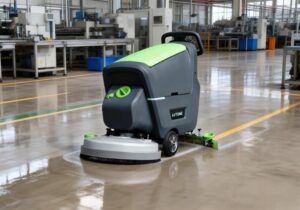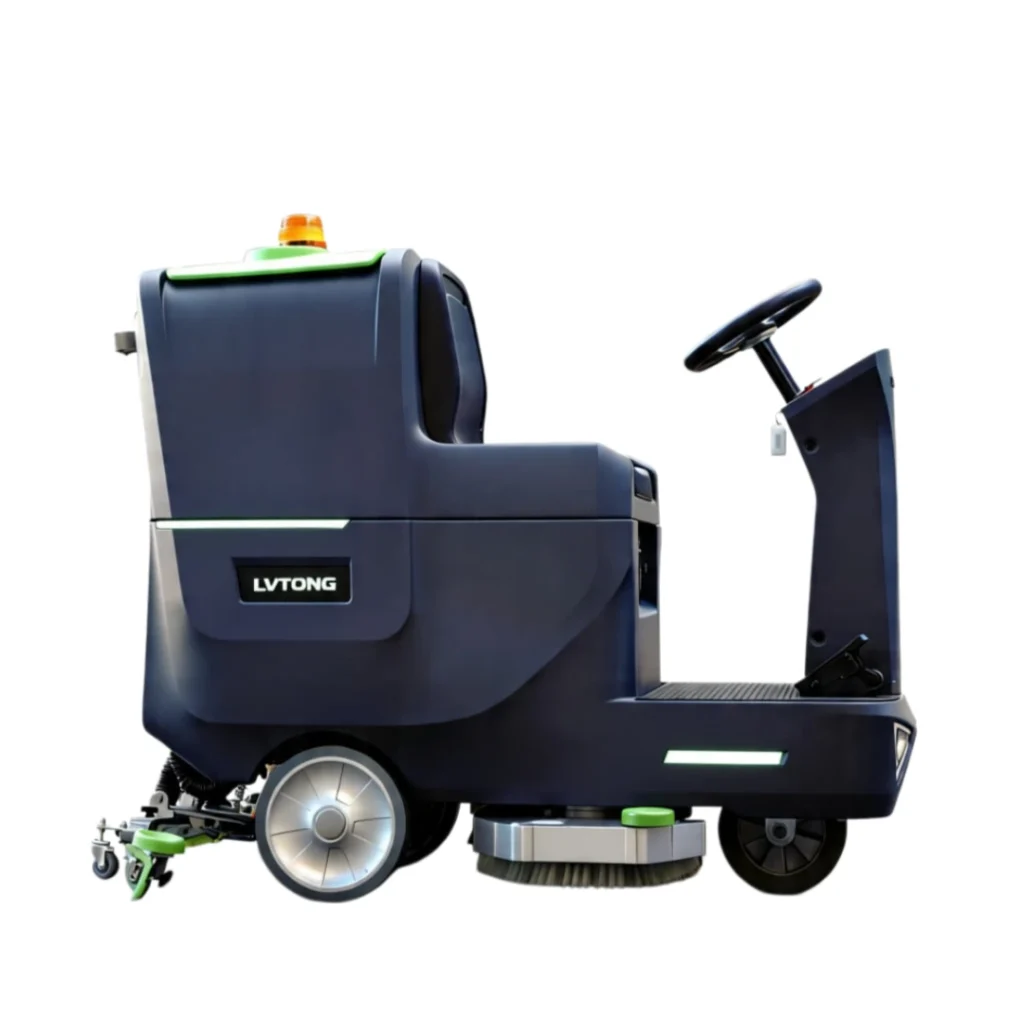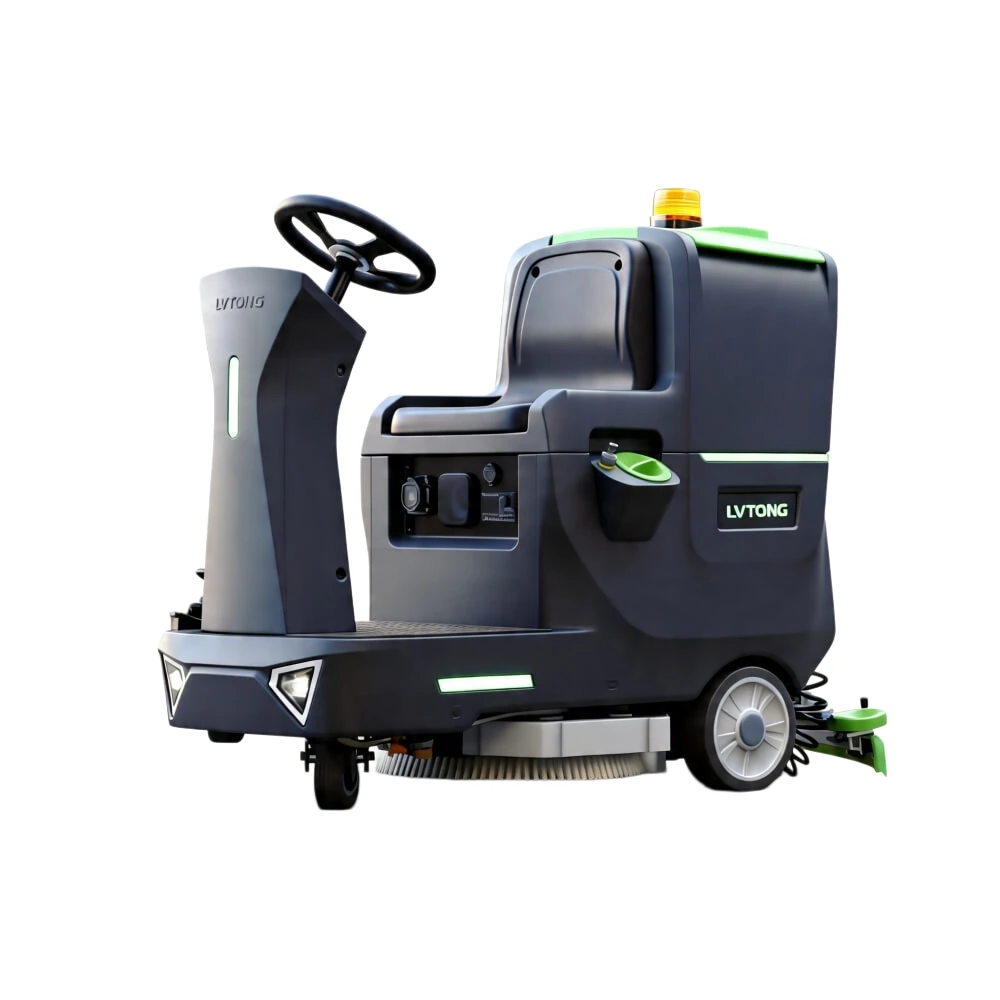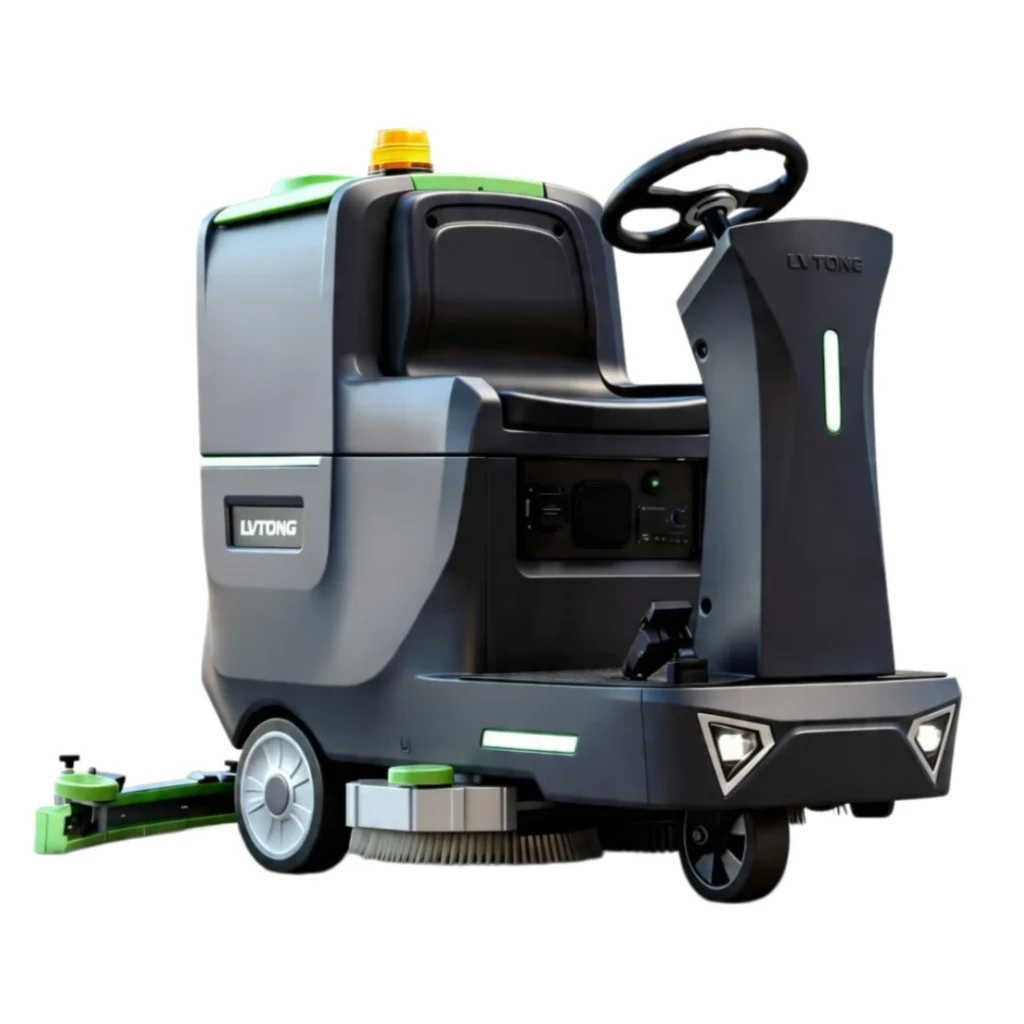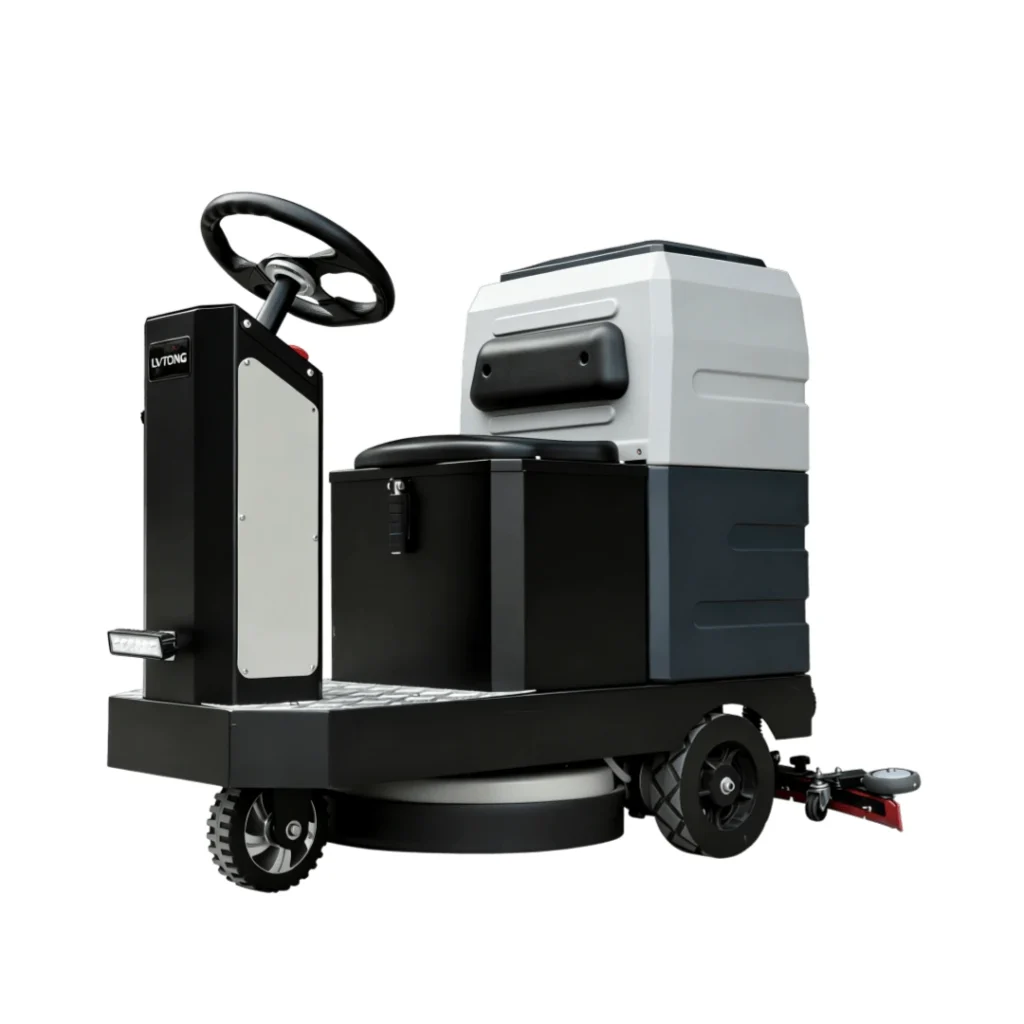
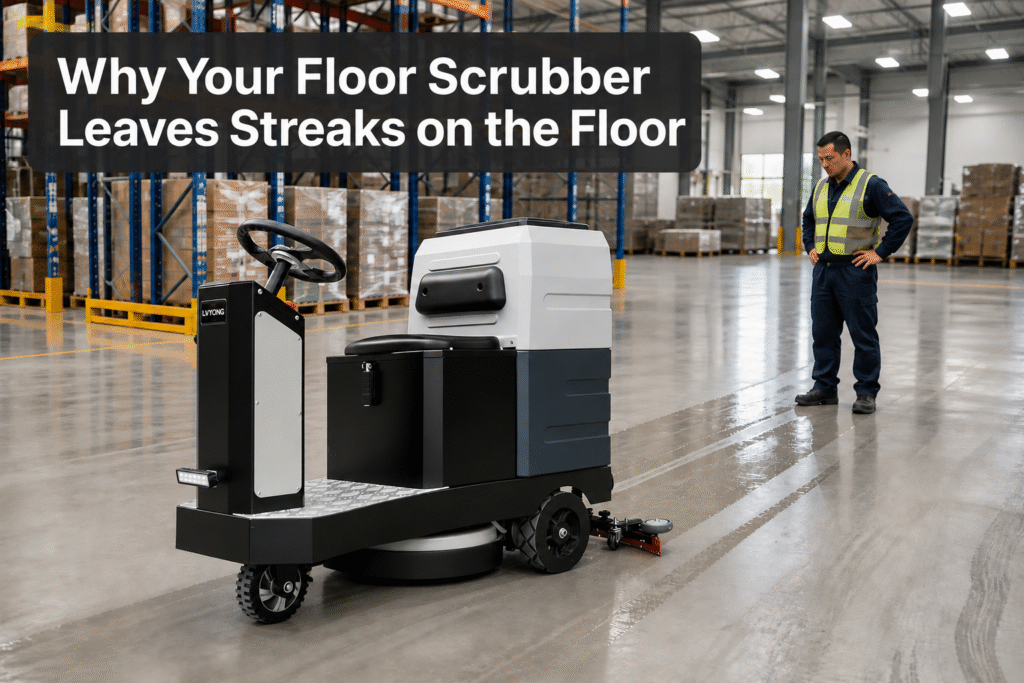


Floor scrubber streaks are easier to diagnose when you start with the mark pattern. A thin wet line usually points to the rear squeegee blade, such as trapped grit, a damaged edge, or uneven floor contact. A wide wet trail usually means the machine is not recovering water properly, so the tank, hose, filter, lid seal, and vacuum system all need checking.
If the floor dries with a hazy or sticky film, review the detergent dilution, foam level, and water quality. If the mark looks like a dirty band, check whether the pad or brush is dragging loose soil or oil through the cleaning lane. Match the streak pattern with the floor material, soil level, cleaning route, and machine settings before deciding whether to clean a part, replace a worn item, request service, or adjust the scrubber setup.
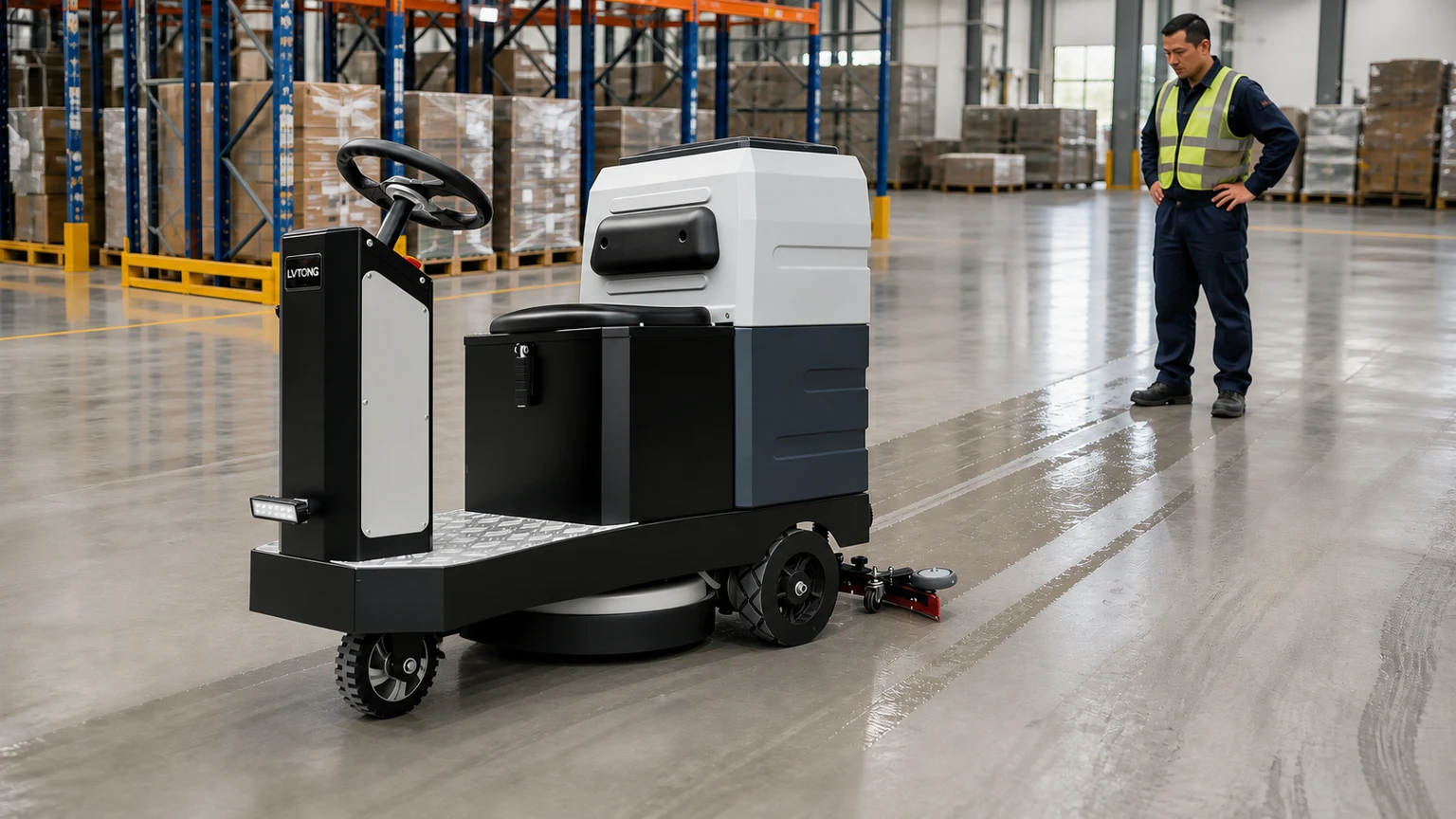
Match Each Streak to Its Inspection Point
Streak pattern | Likely problem | Check on site | What to do |
|---|---|---|---|
One thin wet line | Small squeegee contact gap | Wipe the blade, then repeat the usual pass | Remove debris, inspect the blade edge, adjust contact |
Wide wet trail | Weak water recovery | Empty the recovery tank and check the suction path | Inspect the float, hose, filter, lid seal, and vacuum pickup |
Hazy or sticky film | Detergent residue, foam, or water minerals | Run a clean-water rinse pass | Correct dilution, use low-foam detergent, review water quality |
Dirty stripes | Loose soil or oily residue stays in the lane | Sweep the area, then use a clean pad or brush | Match brush, pad, detergent, and pre-cleaning method |
Marks on turns | Speed, tracking, or blade deflection | Drive the turn more slowly and watch the drying line | Review squeegee tracking and operator technique |
Streaks returning each shift | Routine or setup gap | Review the next shift after full end-of-shift cleaning | Build a tank, blade, hose, and pad maintenance schedule |
On concrete or epoxy floors, dust, tire marks, and oil can change how the scrubber cleans and recovers water. The concrete floor scrubber guide explains how to match the floor, soil, brush or pad, detergent, water flow, and wastewater recovery before treating the streak as a machine fault.
Inspect the Squeegee and Recovery Path
Water pickup depends on the squeegee edge and the recovery path working together. The rear squeegee is the first inspection point, and its blade should maintain continuous contact from end to end. Grit, tape, hair, cuts, hardened rubber, or uneven wear can lift one section and leave a narrow wet line. Water remaining across the cleaned path despite even blade contact shifts the inspection to the recovery system. Interrupted water flow in the recovery hose or an abnormal vacuum-motor sound narrows the check to a full recovery tank, stuck float, loose lid seal, blocked hose, dirty filter, or air leak.
The squeegee inlet, hose, filter, tank, float, lid seal, and vacuum pickup work as one system. Debris on a local section calls for cleaning; cuts, hardened rubber, or uneven wear call for blade replacement. Weak pickup across the full path after the recovery components are cleaned indicates a recovery-system fault that requires service.
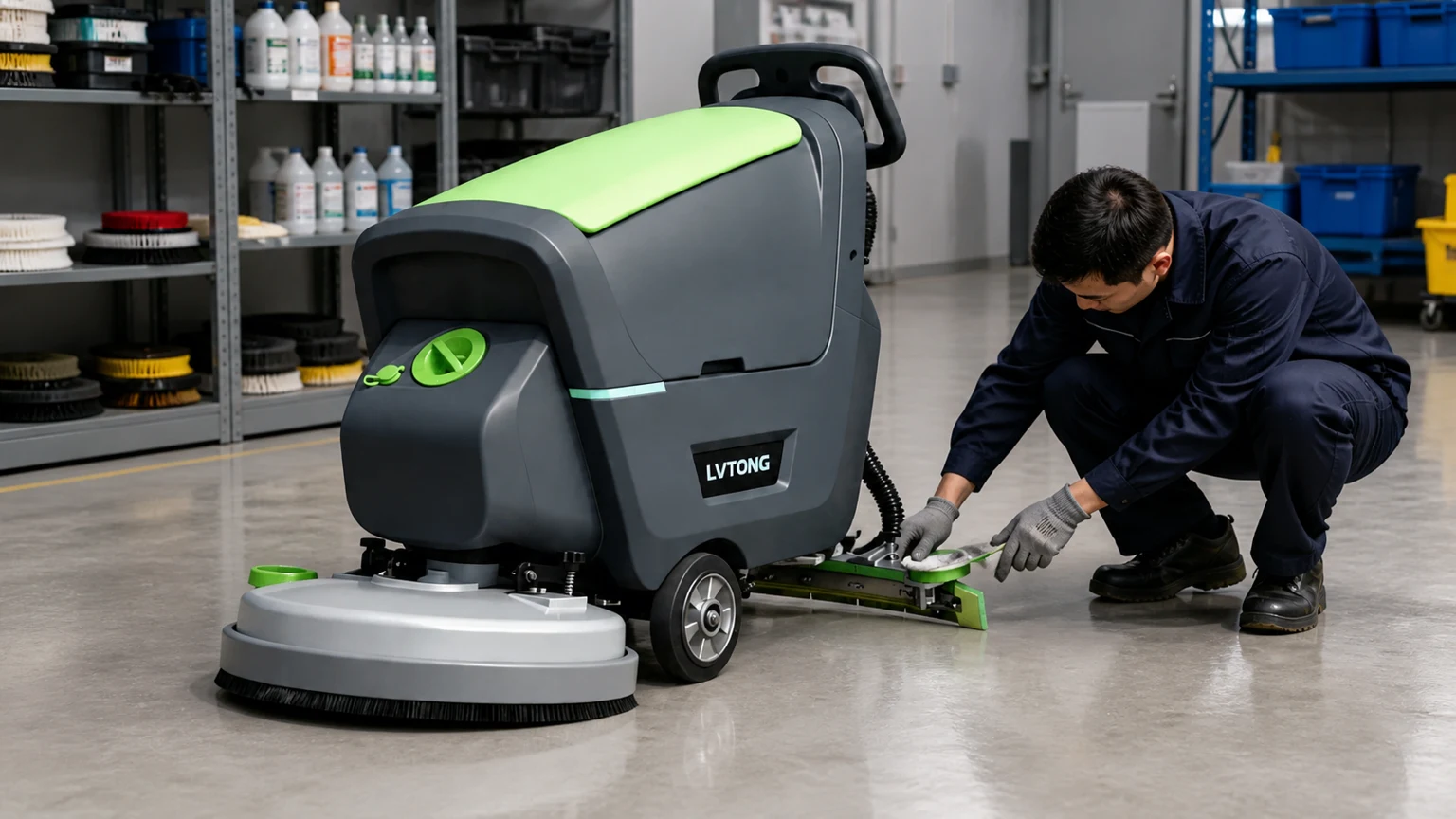
Correct the Cleaning Mix and Remove Loose Soil
Residue and dirty marks usually point to the cleaning process. On glossy supermarket tile, strong detergent dilution, excess foam, or poor rinsing can leave a pale or sticky film after drying. Hard water can leave mineral marks that remain after ordinary dilution correction, so water quality and floor-safe descaling also belong in the review.
On warehouse epoxy, forklift dust and tire marks should be removed before wet cleaning. The brush or pad, cleaning solution, contact pressure, and water recovery all need to match the floor and soil.
Our floor scrubber cleaning solution guide explains why low-foam detergent and the correct dilution matter for water recovery.
Keep Maintenance and Operating Settings Consistent
Marks that return on the next shift often reflect a handover gap. Record blade wiping, tank emptying, hose rinsing, filter cleaning, and brush or pad condition beside the machine so the next operator knows its working condition.
Speed, turn radius, and pass overlap also affect water pickup. Fast travel gives the recovery system less time to collect water, while sharp turns can pull the squeegee away from its drying path.
An area that still holds water is not ready for foot traffic, even after the machine has completed the pass. The wet lane remains isolated with barriers or closed doors while the cause is corrected. Normal traffic resumes only after the floor is dry and the cause of the wet lane has been resolved, whether that means restoring water pickup or adjusting the cleaning method and recleaning the area. This approach is consistent with OSHA’s walking-working-surfaces requirements and HSE guidance for cleaning operations.
Choose Routine Correction, Service, or Setup Review
Keep It in Daily Cleaning
Keep the fix in daily cleaning when regular care or an operating adjustment restores an even drying line. Record the change in the shift handover.
Send It to Service or Replace a Worn Part
Send the machine to service or replace a worn part when the same mark remains after routine care, water pickup is weak, or visible wear affects contact or recovery.
For LVTONG machines, our floor scrubber maintenance checklist sets out daily checks and periodic service points for the squeegee assembly, recovery hose, filter, and brush or pad setup. The results help determine whether cleaning is enough, a service part needs replacing, or the machine requires service. Adjust the schedule for floor roughness, soil load, cleaning frequency, and operator hours.
Review the Machine Against the Route
A machine can struggle on an oversized route, tight turns, heavy loose soil, oily floors, textured surfaces, or the wrong brush or pad.
Total floor area alone does not tell us whether a scrubber fits the route. Our review compares the actual cleaning area, narrowest aisle, turning radius, cleaning width, floor material, soil type, brush or pad selection, squeegee configuration, solution flow, and water recovery performance before recommending a different setup. These findings show whether the machine is suited to the route or whether the current setup is contributing to the uneven result.
Our V6 ride-on floor scrubber page uses its “Epoxy Floor Warehouse (10000㎡)” scenario as an example. The page identifies forklift tire marks and dust as difficult to clean and presents two V6 scrubber dryers as the solution. This example shows why cleaning width, brush or pad contact, solution flow, and water recovery need to be considered together when assessing equipment for a specific route.
What to Send LVTONG for Streak Diagnosis
The close-up shows its shape, the wider view shows whether it runs across the cleaned path, and the squeegee or recovery-area photo helps distinguish a local blade issue from a broader water-recovery fault.
The diagnostic record needs the floor material and main soil, cleanable area, aisle width, cleaning frequency, current machine model and setup, detergent, and dilution. When the mark appears only during operation, a short video of a normal pass shows how speed, turns, overlap, and water pickup affect the result.
Send the complete record through our commercial floor scrubber quote form. The combined record lets our team decide whether the issue is a squeegee or recovery fault, a cleaning-method problem, or a mismatch between the machine and the route.
FAQ
Can you keep using a floor scrubber when wet streaks appear?
Pause cleaning in active traffic lanes when water remains on the floor. Dry or isolate the area and correct the cause before normal traffic resumes. Limited use belongs only in a low-traffic area where the wet surface can be kept away from people and vehicles.
How does LVTONG tell whether the problem comes from the machine or the cleaning method?
Diagnosis starts with the mark and the cleaning pass that produced it. A narrow line sends the review to squeegee contact, while water across the full path sends it to recovery airflow. Improvement after cleaning, speed, overlap, solution-flow, or pad adjustment points to the operating method; an unchanged pattern sends the review to machine condition, wear parts, or configuration.
When should we ask for support?
Contact our team when the same mark returns after regular cleaning and adjustment, water pickup weakens, or visible wear appears. We can narrow the cause before further parts changes or lost cleaning time.
How should we photograph and record a streak for diagnosis?
A low-angle close-up should keep the full wet line or film visible. The wider image should show the cleaned path and any affected turn, while a squeegee or recovery-area photo should match the type of mark. When the streak appears only during operation, one complete pass on video is enough to show the effect of speed, turning, overlap, and water pickup.
Conclusion
At LVTONG, we use the streak pattern together with the machine’s working conditions to decide whether the issue belongs in daily cleaning, service, or a different scrubber setup. Send a clear photo of the streak, the cleaned path, and the relevant floor, route, detergent, and machine details through our LVTONG floor scrubber support. These details give our team enough context to discuss the next step before repair or replacement.