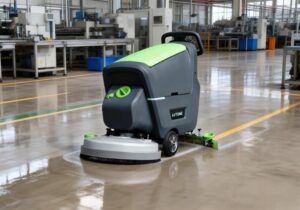
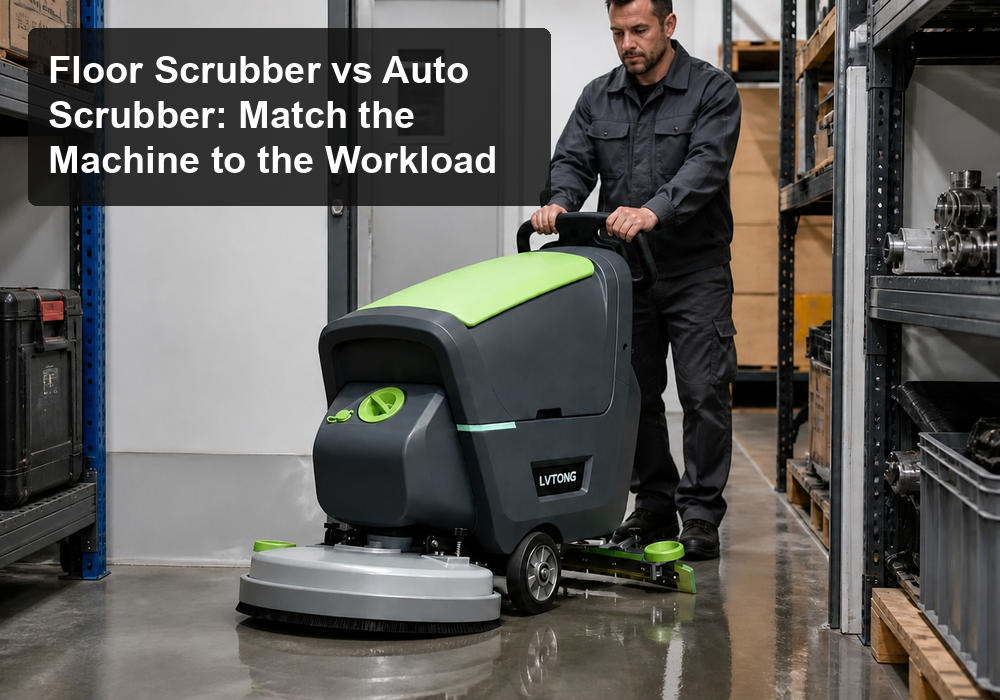
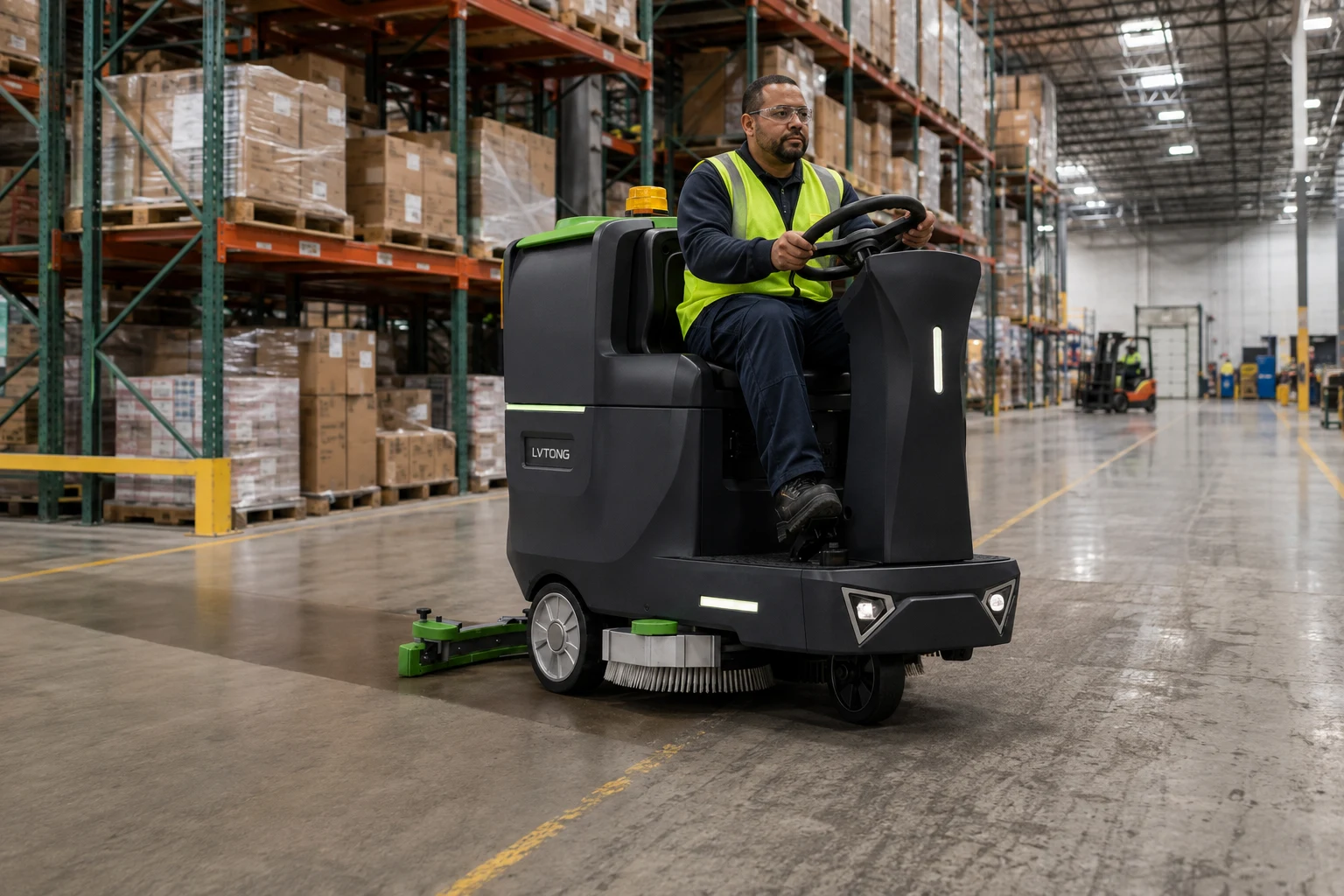
ISSA 540 provides a benchmark, not a stopwatch result. To estimate real machine productivity, start with cleanable route area, working width, travel speed, and an efficiency factor, then account for overlap, turns, obstacles, refills, dumping, setup, and quality rework. When we help customers evaluate scrubbers, we treat published productivity as a planning ceiling; accepted-cleaned area per productive hour is the figure we use for staffing and ROI decisions.
For a 100,000-square-foot warehouse, a scrubber listed at 43,056 square feet per hour would need about 3.4 productive hours if a site trial confirms 68% route efficiency. Detailing, pre-sweeping, and shift support still sit outside that figure. The method below shows how we translate an ISSA 540 cleaning-time benchmark into a defensible site rate, compare our machines without confusing maximum output with measured output, and build a pilot that facility managers, operations teams, and cleaning crews can trust.
What ISSA 540 Measures—and What It Does Not
“ISSA 540” is commonly associated with earlier ISSA cleaning-time resources used for facility workloading. ISSA now publishes The Official ISSA Cleaning Times: Tasks, Tools & Workloading Resource, currently listed as its eighth edition. Although the publication has evolved, its core operating principle remains the same: use standard cleaning times as a planning baseline, then validate them against conditions in the facility being evaluated.
ISSA’s own guidance describes cleaning times as average benchmarks for estimating and workloading, not a substitute for an on-site study. The resource connects five elements: task, tool, time, total units, and training. That last point matters. A rate for a trained operator using a specified scrubber on an open floor cannot be transferred unchanged to a new operator working around racks, pedestrians, dock plates, and oil spots.
We use the Official ISSA Cleaning Times to establish a common baseline, then replace general assumptions with site-specific route measurements. This approach preserves the value of the standard while keeping the final labor plan grounded in actual facility conditions.
Three Productivity Numbers to Keep Separate
Theoretical productivity is the geometric maximum created by deck width and travel speed. It assumes continuous straight-line motion, full-width contact, no overlap, and no interruptions.
Practical productivity is a reduced planning rate. It accounts for normal losses such as turning, overlap, tank service, and travel to the water point. For planning purposes, we separate theoretical output from a reduced practical rate for single-pass machines so that early productivity estimates remain realistic.
Verified effective productivity is the accepted-cleaned route area divided by the time consumed within an agreed test boundary. We recommend this figure for staffing, machine comparisons, and payback calculations. “Accepted-cleaned” means that the floor meets the defined result without requiring an unplanned second pass.
The Cleaning Productivity Formula
For an imperial calculation:
Theoretical productivity (sq ft/hr) = cleaning width (in) × travel speed (mph) × 440
For a metric calculation:
Theoretical productivity (m²/hr) = cleaning width (m) × travel speed (km/hr) × 1,000
Then convert the maximum into a planning figure:
Practical productivity = theoretical productivity × route efficiency ÷ required passes
Finally, verify the result in the field:
Verified effective productivity = accepted-cleaned route area ÷ measured elapsed time
Use the same time boundary in every comparison. If filling and dumping are included for one machine, include them for every machine. If pre-sweeping is treated as a separate task, record it separately. Our commercial floor scrubber selection guide explains how deck type, tank capacity, route width, and floor conditions can change the appropriate test boundary.
A Worked ISSA 540 Machine Example
Consider a warehouse with 100,000 square feet of cleanable hard floor. A candidate ride-on scrubber is listed at 4,000 m²/hr, equal to about 43,056 sq ft/hr. Assume a controlled route trial produces the following illustrative record:
accepted-cleaned area: 48,000 sq ft
total test time: 98 minutes
refill and dump time included: 11 minutes
one unplanned second pass: 3,200 sq ft
trained operator and normal daytime traffic
The verified effective productivity is 48,000 ÷ (98/60), or about 29,388 sq ft/hr. Dividing that rate by the published figure produces a route efficiency of roughly 68%. The full 100,000-square-foot route therefore requires about 3.4 hours of machine time. Adding 35 minutes for edges, inspection, and handwork brings the scheduled task to approximately four hours.
Where Maximum Output Is Lost in Real Facilities
During an ISSA 540 productivity trial, record each of the following sources of lost output:
Route geometry: turns, dead ends, ramps, thresholds, elevators, and narrow aisle transitions.
Overlap and edge work: deliberate path overlap, wall clearance, corners, and areas finished by hand.
Floor and soil: grout, damaged concrete, oil, tire marks, dust load, and any need to pre-sweep.
Traffic and access: pedestrians, forklifts, locked zones, production pauses, and safety spotters.
Tank cycle: fill flow, solution use, recovery capacity, the approved dump location, and travel distance.
Operator and setup: inspection, pad or brush installation, adjustment, cleaning, charging, and handoff.
Quality acceptance: pickup, streaking, residual soil, dryness, and any second pass required to meet the acceptance standard.
No single efficiency percentage represents every facility. Until site data are available, begin with a conservative assumption and replace it after a representative pilot.
Matching LVTONG Models to the Route
Our published specifications help narrow the candidate list. They are not interchangeable with verified site productivity. The table below uses current site-listed figures as screening inputs, followed by the field question that matters most.
Model | Site-listed work efficiency | Cleaning width / tank | Best screening fit | What to validate on site |
|---|---|---|---|---|
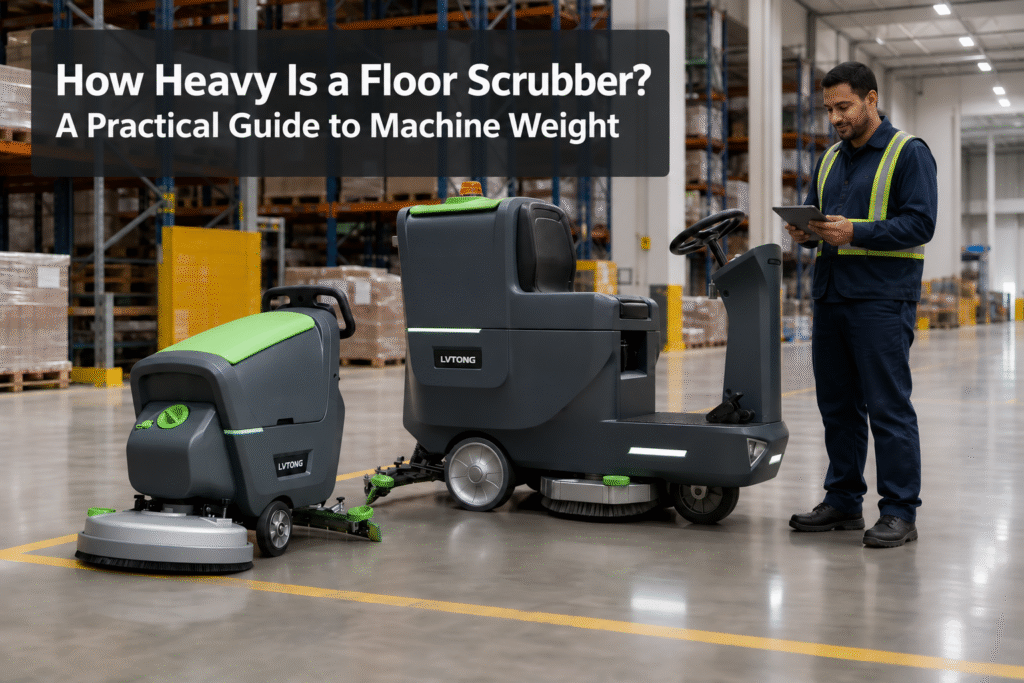
LT-S530X walk-behind | 2,100 m²/hr (22,604 sq ft/hr) | 530 mm / 62 L solution tank / 65 L recovery tank | Congested aisles, smaller commercial routes | Turning loss, operator pace, refill interval |
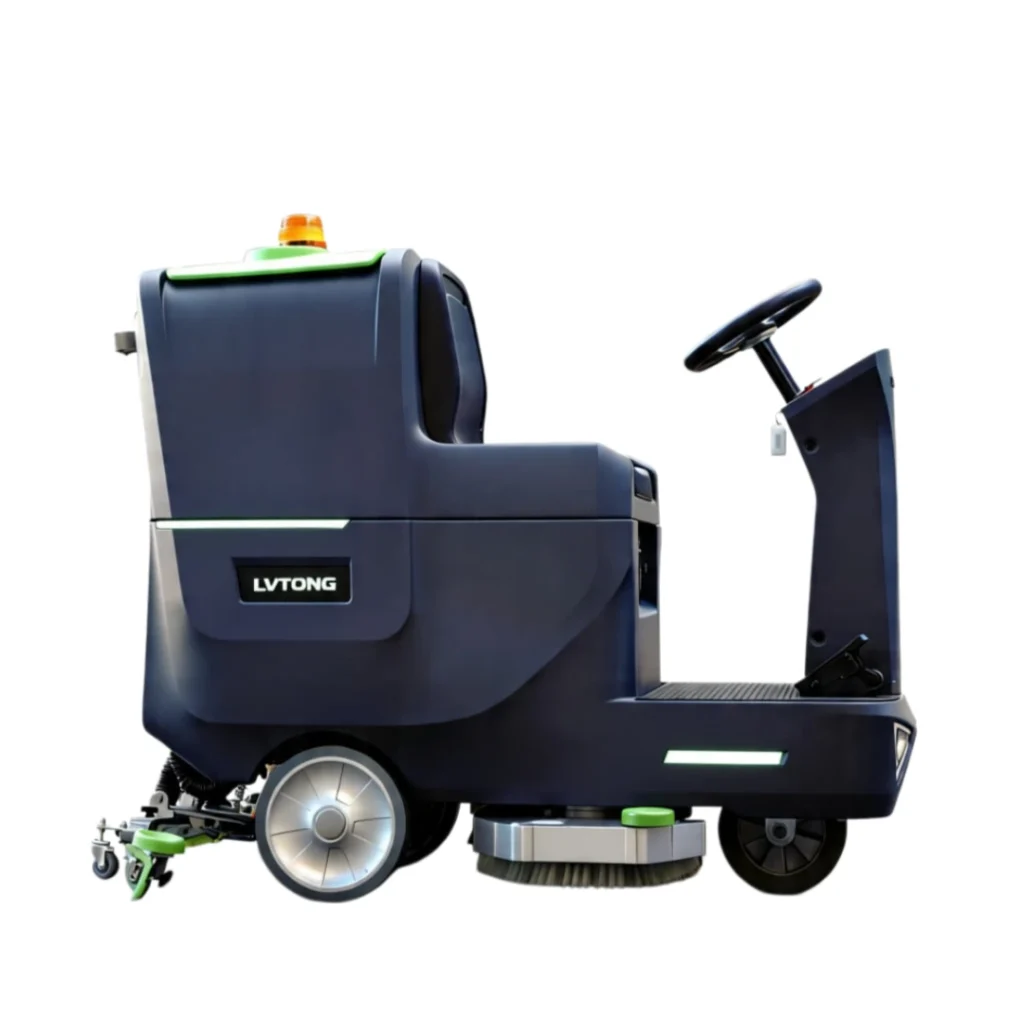
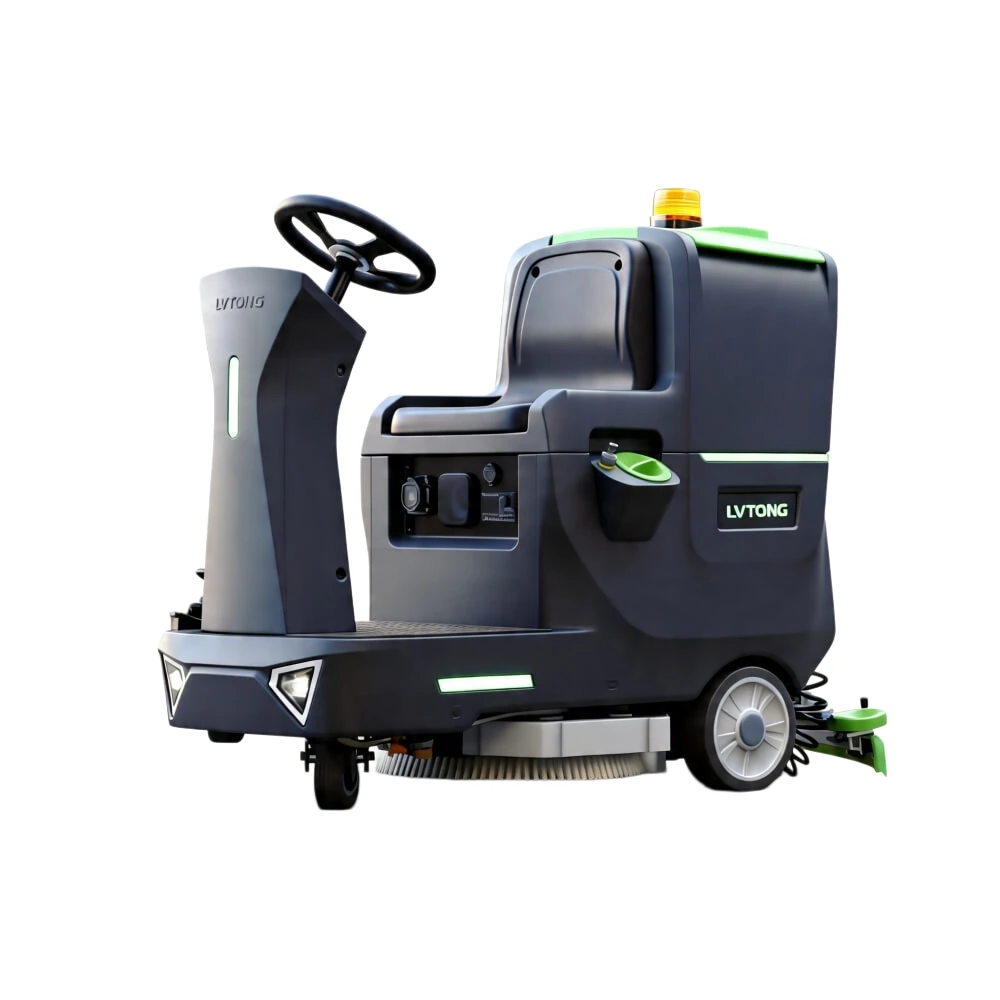
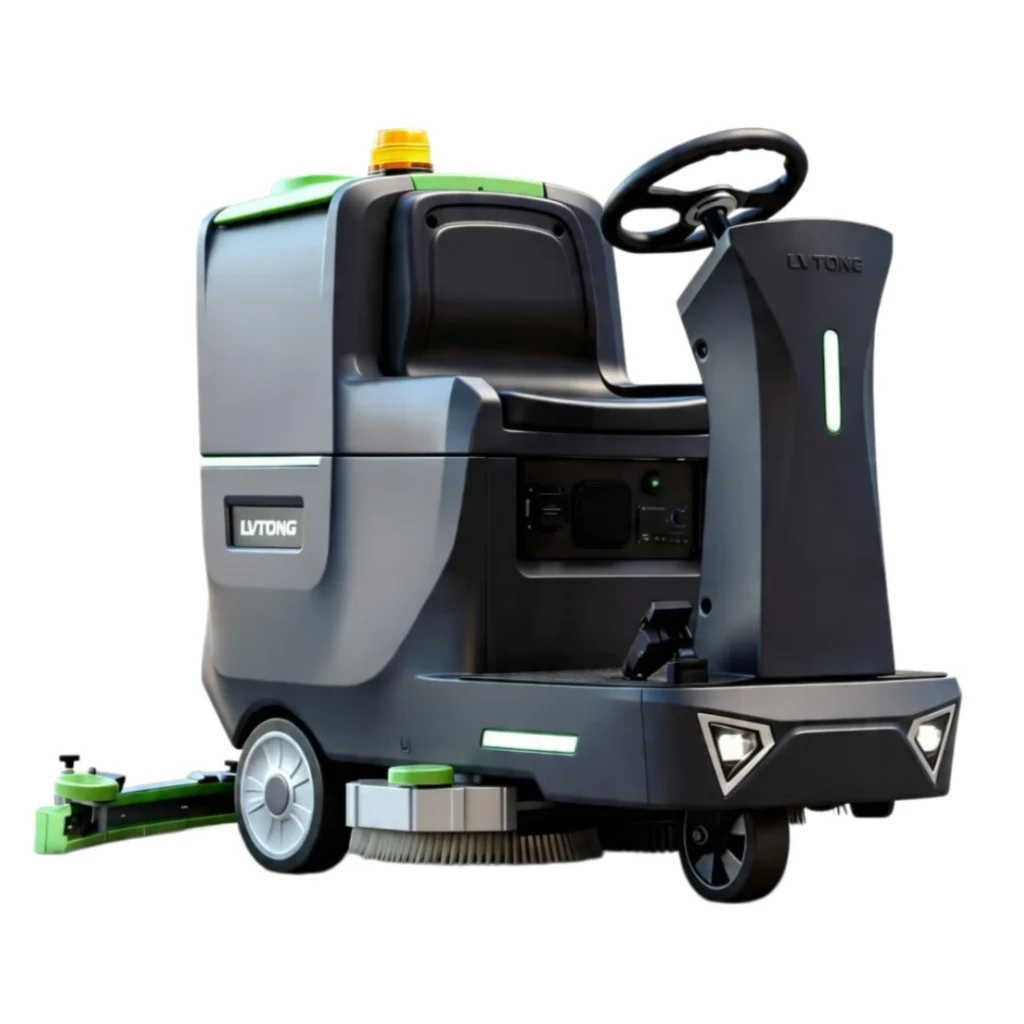
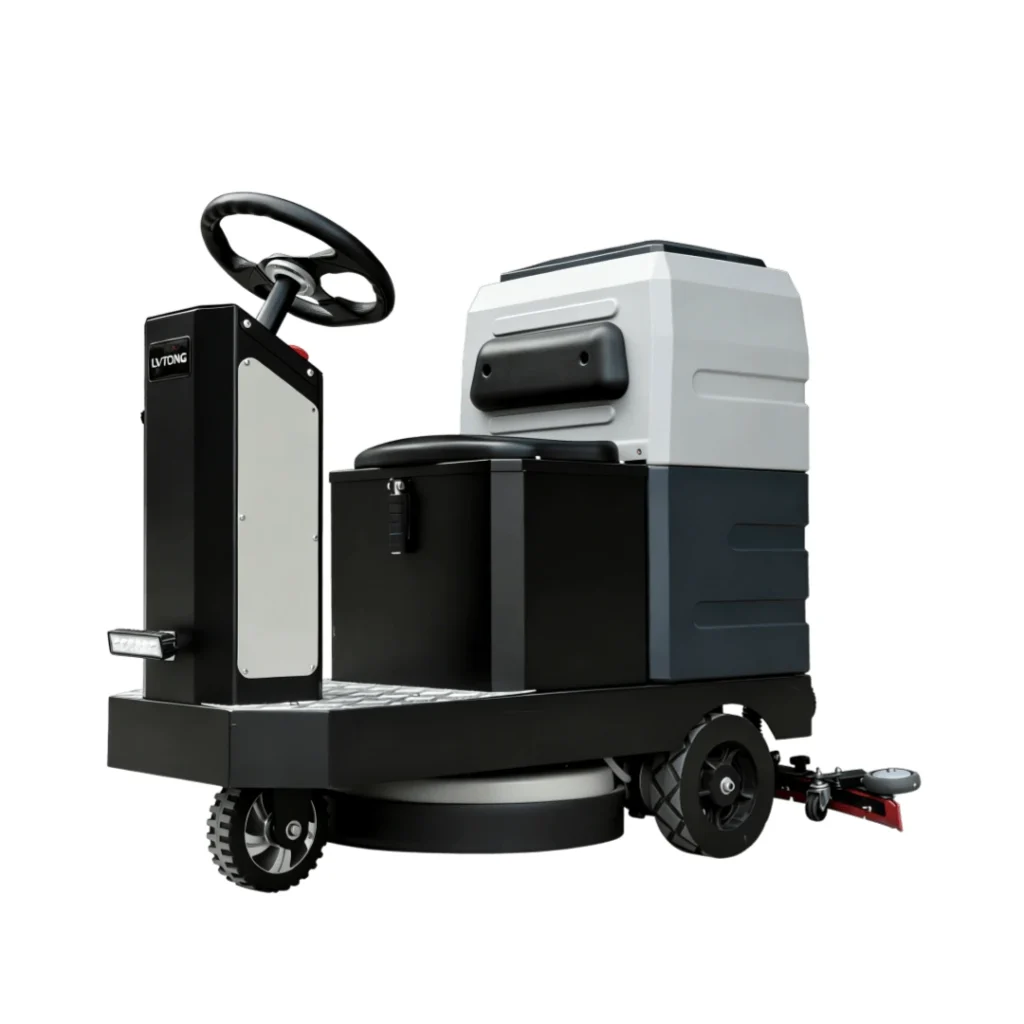
LT-S860X ride-on | 6,800 m²/hr (73,194 sq ft/hr) | 860 mm / 130 L solution tank / 135 L recovery tank | Large warehouses, terminals, and broad aisles | Clearance, edge work, long-route water balance |
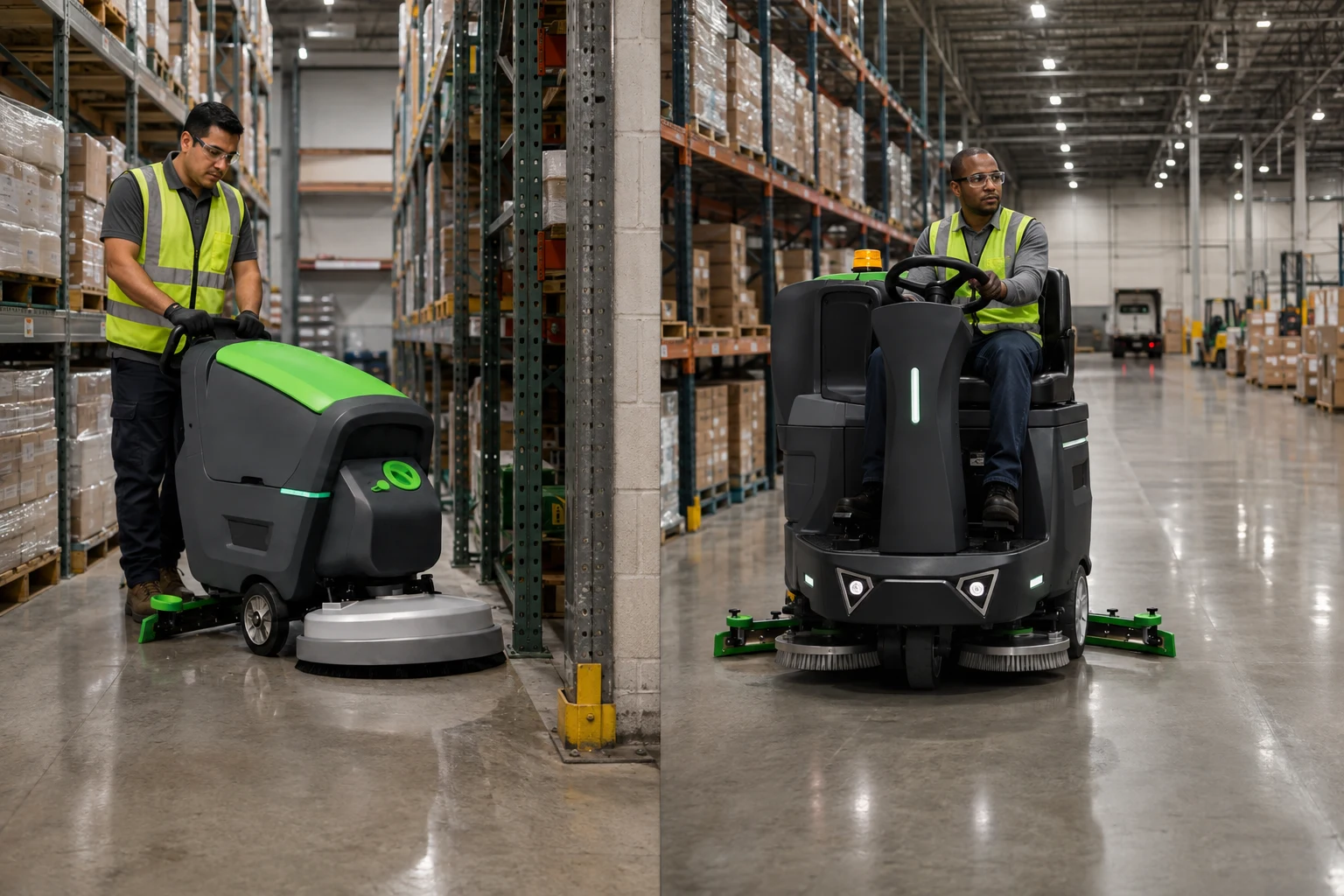
Application scenario 1—working in narrow aisles: Traditional equipment with a large turning radius could not reach enough of the route. The LT-S530X walk-behind floor scrubber has a body width of only 50 cm, allowing it to enter and clean aisles as narrow as 0.8 m. In this application, cleaning coverage increased from 65% to 90%.
Application scenario 2—an 80,000 m² shopping center in Shanghai: The facility needed to clean a large floor area affected by a mixture of oil and dust, while manual cleaning delivered low productivity. The LT-S860X ride-on scrubber used synchronized water spraying and wastewater suction to clean the floor efficiently. The project reported an approximately 400% increase in daily cleaning efficiency, meaning that substantially more floor area could be covered within the available daily cleaning window.
For narrow-aisle routes, prioritize machine width, turning radius, and the percentage of the route the scrubber can actually reach. For large-area routes, prioritize tank-cycle length, travel time to filling and dumping points, and whether the machine can complete the planned area within the available cleaning window.
Need to compare additional configurations before planning a trial? Explore our full cleaning equipment range to review more walk-behind and ride-on models for different route sizes and operating conditions.
How to Interpret a Real LVTONG Floor Scrubber Case
One project in our industrial floor scrubber machine buying guide describes a Malaysian precision-parts plant where several employees spent approximately four hours per day cleaning an oily, dusty workshop floor. After an S7 ride-on scrubber was introduced, project records show that the daily cleaning time fell to about 1.5 hours while the labor required for routine floor cleaning also decreased. We present this result as an example of route improvement, not as a universal productivity multiplier.
The case still requires a clear denominator: accepted area, whether pre-sweeping was included, elapsed time versus machine-on time, and consistent cleanliness criteria. A credible pilot should preserve the same before-and-after scope and record both machine time and total labor time.
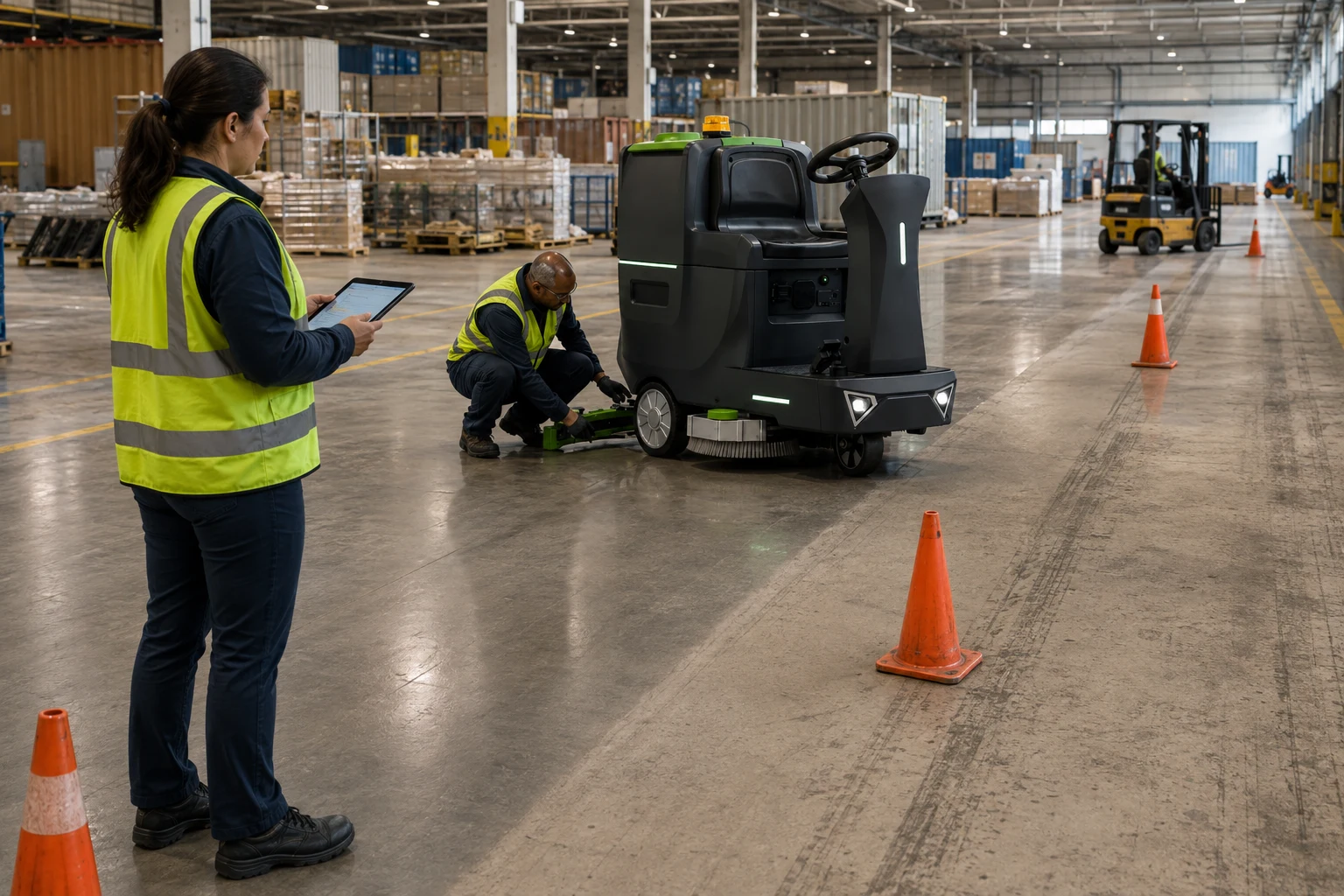
How to Run a 60-Minute Site Trial
Map a representative route that includes open runs, turns, obstacles, and normal soil conditions.
Define the acceptance result before the machine starts: visible soil removed, solution recovered, no unacceptable streaking, and the floor ready for normal traffic.
Use a trained operator together with the brush, pad, chemical, and solution settings intended for daily operation.
Timestamp filling, scrubbing, interruptions, dumping, rework, and post-use cleaning.
Measure the accepted-cleaned area and calculate effective productivity.
Repeat the route on another shift or day before setting the labor standard.
Keep the raw trial record so the final rate can be traced to a route, date, operator, machine configuration, and acceptance decision. If the rate declines later, the same record may help identify worn squeegees, battery deterioration, incorrect pads, or heavier soil conditions.
Why Your Productivity Standard Must Include Quality and Safety
A fast pass that leaves water or soil behind is not productive for you. Your acceptance check should cover the cleaning result, pickup, and any need for rework. It should also reflect your site’s written safety program and the machine manufacturer’s operating instructions.
In the United States, OSHA walking-working surfaces requirements call for surfaces to be clean, orderly, sanitary, and, to the extent feasible, dry. The rule does not set a scrubber productivity target for you; it reinforces why pickup and floor condition belong in your acceptance standard.
Using Verified Productivity in Staffing and ROI Decisions
Once effective productivity has been verified, the rest of the staffing and ROI model becomes clearer:
Machine hours per service = route area ÷ verified effective productivity
Total labor-hours per service = machine hours + detailing + setup + inspection + support labor
Monthly labor-hours = total labor-hours per service × services per month
Compare alternatives using the same cleaning scope, labor burden, service frequency, maintenance allowance, and useful life. A machine with a higher published rate can still lose its advantage in a specific building because of turns, dump travel, or access delays.
We recommend repeating a representative route trial when squeegee wear or replacement changes water pickup, the cleaning route or filling and dumping point changes, the soil load increases materially, or declining battery runtime begins to interrupt route completion. Record the new accepted-cleaned area and elapsed time under the same test boundary before replacing the productivity rate used in the staffing and ROI model.
FAQ
How does battery runtime affect commercial floor scrubber productivity?
Battery runtime determines whether your machine can finish the route inside the cleaning window without an unplanned charging stop. Test runtime under your normal brush pressure, vacuum load, floor condition, gradients, and traffic rather than relying only on a nominal rating. If your route requires a battery change, charging pause, cooling period, or opportunity charge, include that downtime in the shift plan. We also suggest tracking runtime over time, because declining battery capacity can reduce route completion even when the machine’s hourly cleaning rate appears unchanged.
Can one commercial floor scrubber clean epoxy, concrete, tile, and VCT?
One machine may cover several hard-floor types, but you should not assume the same brush, pad, chemical, pressure, or productivity rate will suit all of them. Epoxy can require a less aggressive pad, textured tile may need a brush that reaches grout lines, and rough or porous concrete can increase water use and slow pickup. Ask us to help you test each floor zone with the intended consumables and solution. Record a separate accepted productivity rate for each materially different surface so your labor plan reflects the floor you actually maintain.
How often should a commercial floor scrubber be serviced?
Follow the service intervals in the manufacturer’s manual and on the hour meter. For productivity calculations, recheck the site rate whenever maintenance or component wear affects brush pressure, water delivery, vacuum pickup, traction, or battery capacity. Log the maintenance event and repeat a representative route trial before continuing to use the previous rate for staffing decisions.
How should verified productivity change a rent-or-buy decision?
Calculate monthly productive machine hours from the verified site rate and service frequency, then compare the resulting labor savings with rental charges or total ownership costs. Renting is useful while route performance and utilization remain uncertain. Buying becomes easier to justify when repeated trials show a stable site rate, frequent use, and recurring labor savings sufficient to offset purchase, maintenance, and downtime costs. Use the same machine configuration and cleaning scope in both calculations.
Conclusion
A useful ISSA 540 productivity figure should remain consistent beyond a single calculation. When theoretical capacity, route efficiency, cleaning quality, and total elapsed time are evaluated together, you can compare machines on equal terms, establish realistic staffing targets, and identify where floor conditions, maintenance, or operating practices are reducing performance. This turns machine productivity into a measurable operating standard that can support safer floors and better-informed equipment investments.
Ready to verify productivity in your own facility? Contact our team with your route area, aisle width, floor conditions, and cleaning window. We can help you select a suitable LVTONG model and plan a site trial before you make an equipment decision.