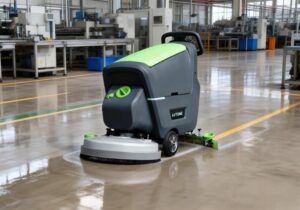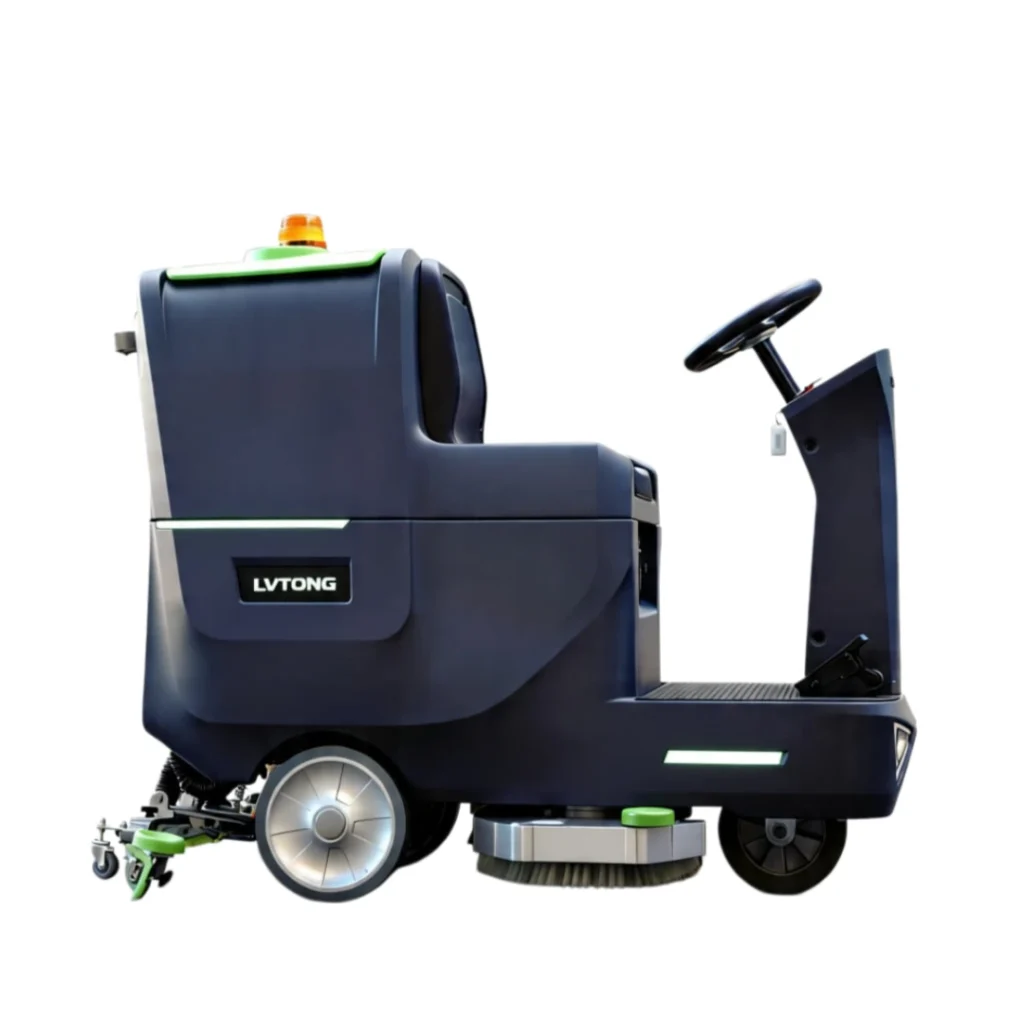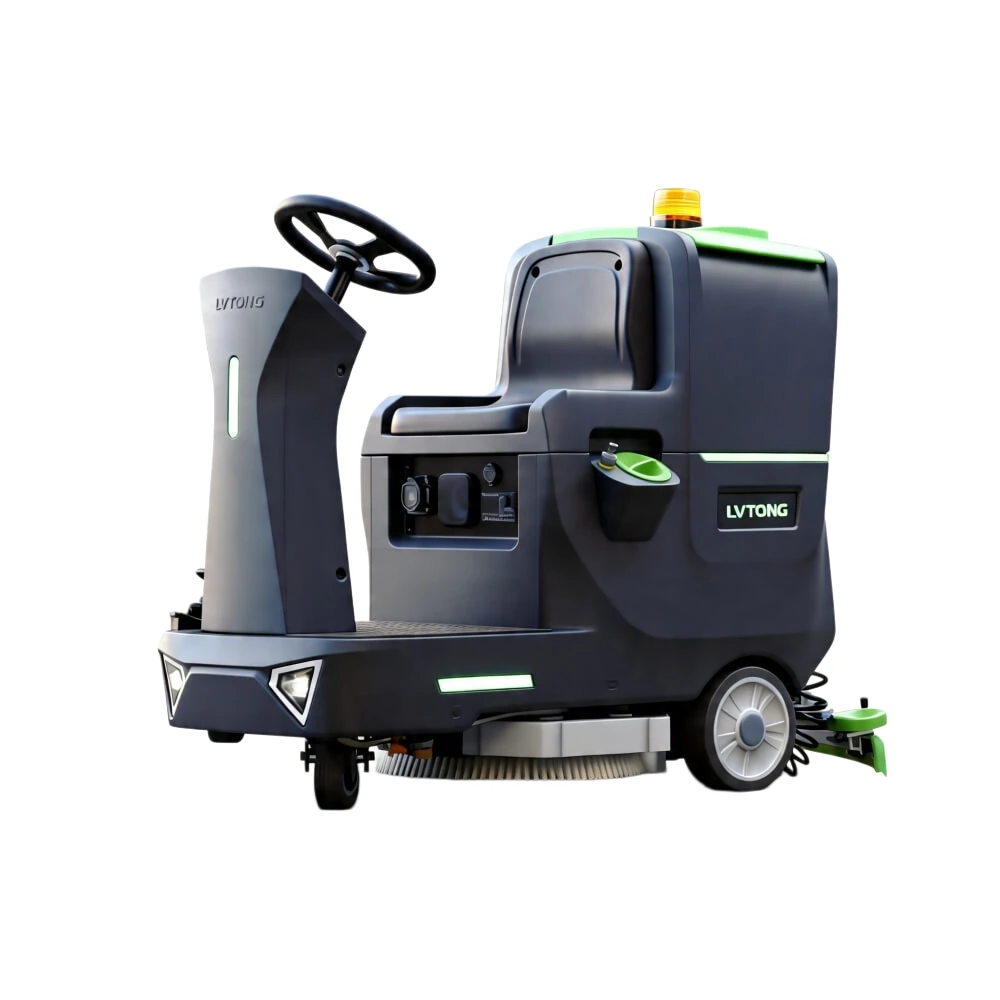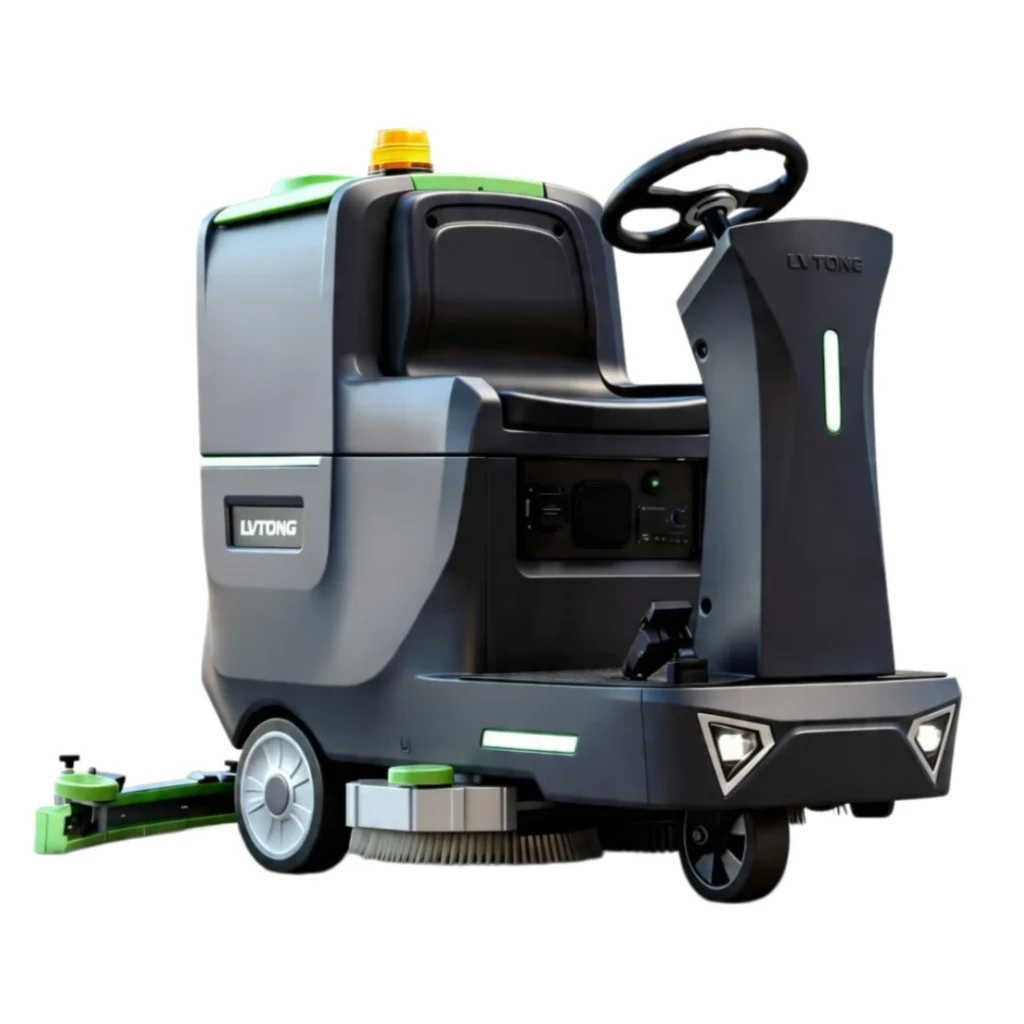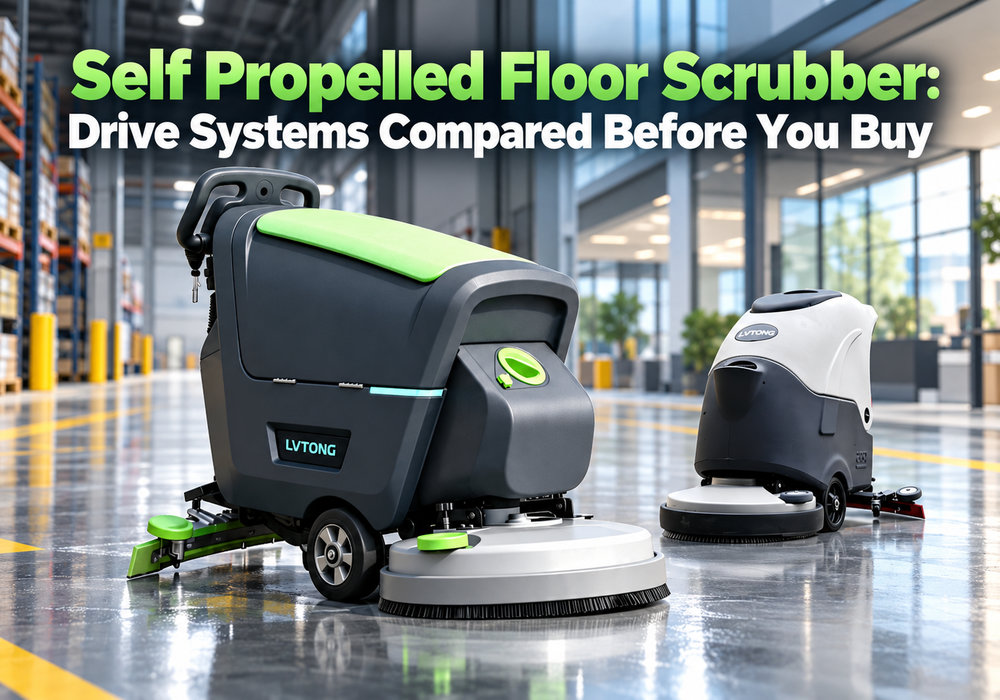
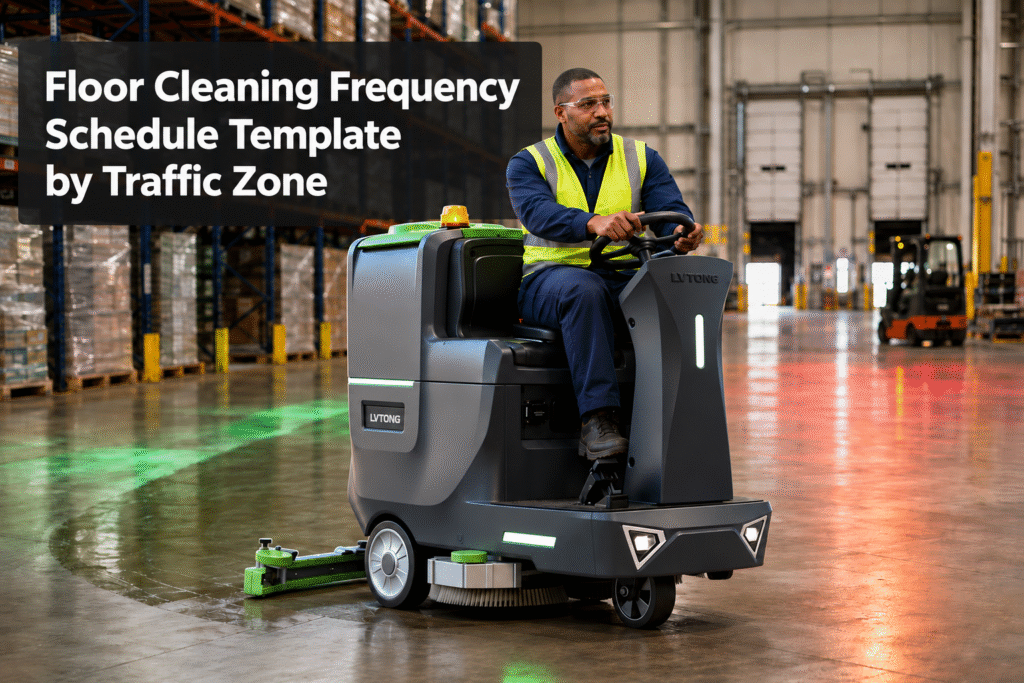
A self propelled floor scrubber is worth its higher price only when the route, the shift or the gradient makes pushing unsustainable. This guide separates the three drive systems — manual push, pad-assist and true traction drive — and shows where each one earns its cost.
QUICK ANSWER
Buy a self propelled floor scrubber only when route length, shift duration or a floor gradient makes pushing unsustainable; below that threshold a low-effort push machine cleans the same floor for less.
- Manual push — cheapest and lightest; best for short routes and tight rooms.
- Pad-assist — the brush or pad grip nudges the machine forward; a middle option for medium daily routes.
- Traction drive — a motor turns a drive wheel; handles long routes, gradients and reverse work.
- The trade — every drive system adds weight, battery draw, a wider turning circle and service points, so it is a trade rather than a free upgrade.
The sections below take the drive system apart, then map the decision onto walk-behind and ride-on classes.
What “Self-Propelled” Actually Means on a Floor Scrubber
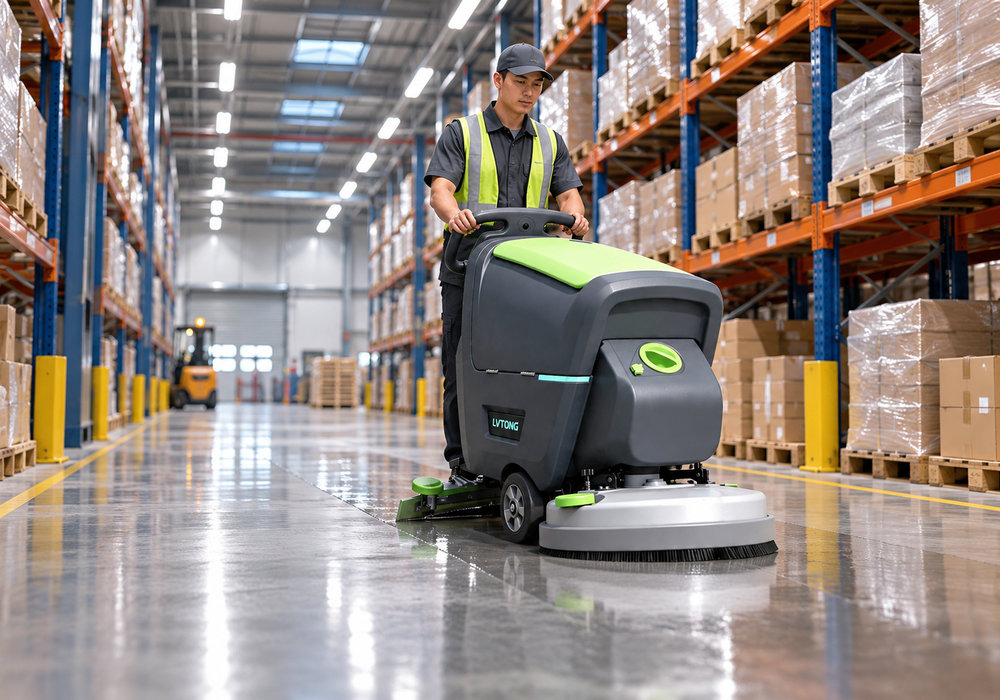
Self-propelled means the machine supplies its own forward motion through a drive system, so the operator steers and controls rather than pushes — but the label covers two very different mechanisms.
On a floor scrubber the term is used loosely. In the first design the brush or pad grips the floor and drags the machine forward, so the drive is a side effect of cleaning. In the second a separate traction motor turns a drive wheel and the machine moves under its own power, independent of brush load. Both are sold as self-propelled, yet they behave differently on a wet ramp, in a tight turn and across a long shift. Before comparing prices, find out which design you are being quoted; a useful reference is our walk-behind floor scrubber guide, which splits propulsion into manual, pad-assist and self-propelled rows.
The Three Propulsion Architectures Compared
There are three practical architectures — manual push, pad-assist and traction drive — and each suits a different route length and effort budget.
| Architecture | How it moves | Operator effort | Best suited to |
|---|---|---|---|
| Manual push | Operator pushes; the machine rolls on castors | Highest | Short routes, tight rooms, budget-led buys |
| Pad-assist drive | Brush or pad grip pulls the machine forward | Medium | Medium daily routes, mixed floor types |
| Traction drive | A motor turns a drive wheel; the machine propels itself | Lowest | Long routes, long shifts, gradients, reverse work |
The first row is the machine most buyers picture: light, inexpensive and easy to store. A self propelled floor scrubber machine in the middle row is a compromise — a pad-assist floor scrubber uses the brush grip to do some of the pushing, so the operator’s arms get relief but not a full drive system. The third row is what a self propelled floor cleaner should really mean: an independent drive that moves the machine at a controlled speed whatever the floor is doing. Only the third design gives you a machine that holds its pace on a slope or reverses out of a dead-end aisle.
What Changes When the Machine Drives Itself
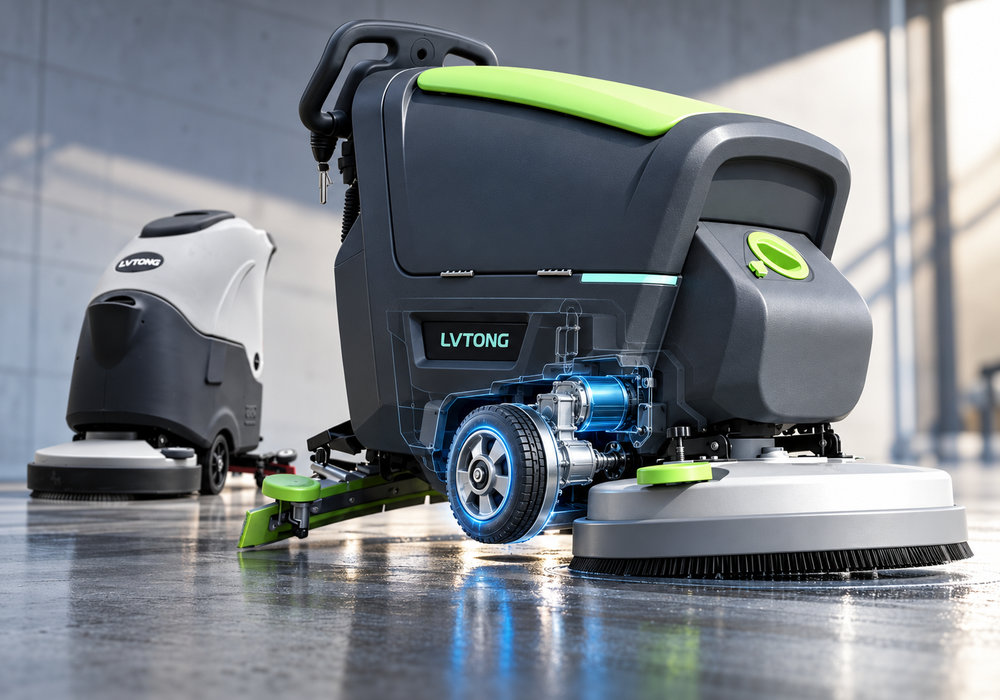
Once the machine propels itself, the operator’s job shifts from pushing to steering, so long routes become sustainable — but the machine gains weight, cost and maintenance points.
A traction drive floor scrubber changes the shift more than the cleaning. Pushing a walk-behind for three hours is physical work; steering the same machine for three hours is not, so the drive system extends how long one operator can keep a consistent standard. That consistency, not speed, is usually the real return. The same motor, though, adds a component to every maintenance interval and a weight to every doorway. Treat the drive system as a trade, not an upgrade.
Ramps, Grades and Dock Bays: Where Traction Earns Its Cost
On ramps, sloped loading bays and dock approaches only a traction drive holds a stable, safe pace; a pushed machine becomes a control problem rather than a cleaning tool.
Any site with a ramp — a sloped loading bay, a split-level warehouse, a parking-deck link — tests the drive system hardest. A traction drive holds a constant speed up and down the slope and lets the operator keep both hands on the controls. A push machine on the same slope is a braking problem as much as a pushing one. Grade is also a safety question: on a wet or oily ramp the surface is at its most slippery, so the walkway itself should meet recognised slip-resistance practice — the guidance published by the National Floor Safety Institute is a starting point, and the walking-working-surfaces rules in 29 CFR 1910 Subpart D set the aisle and floor-condition expectations for the building. Check the machine’s rated gradient rather than assuming any self-propelled unit climbs any ramp.
Turning Radius, Weight and Battery: The Traction Trade-Offs
A drive system adds a drive wheel, extra weight and a power draw, which narrows the turning circle, shortens run time and can rule out the tightest rooms.
Three costs rarely appear on the specification sheet. The first is turning radius: a drive wheel and its housing add a metre or so to the circle the machine needs, which matters once racking, doorways and plant rooms are close together. The second is weight — a traction machine loads ramps and mezzanine floors more than its push equivalent. The third is battery draw: the motor that moves the machine is one more load on the same pack, so the runtime you read on the spec sheet is measured under lighter duty than a full shift of scrubbing. Budget the pack for the drive as well as the brush.
Dead-Man Control and Reverse: Handling and Safety
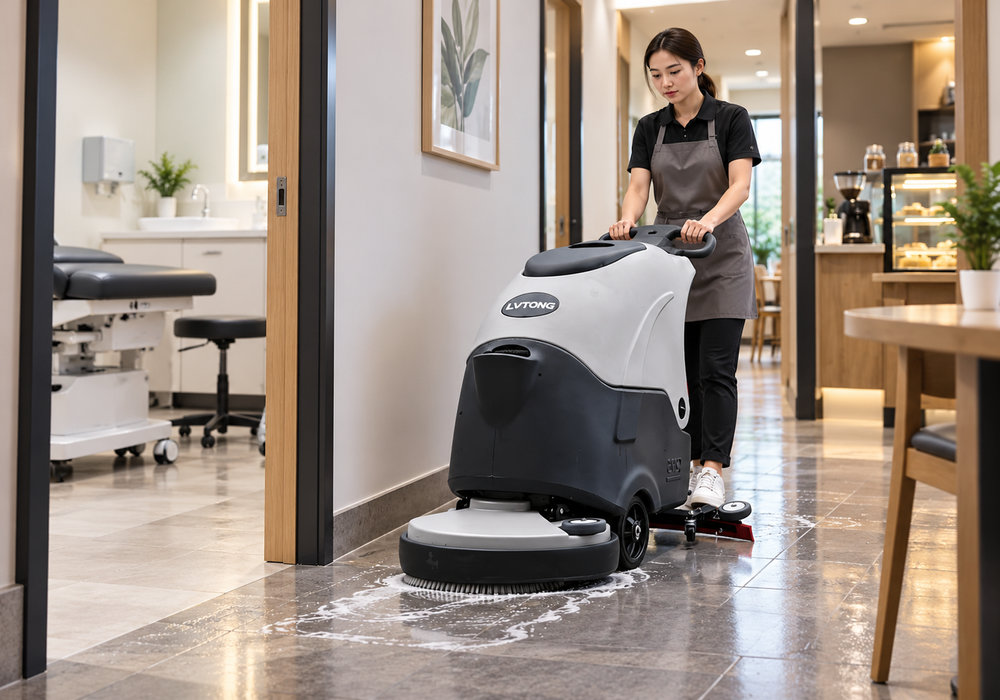
Confirm that the drive has a dead-man control — release the handle and the machine stops — and a working reverse, because these decide whether one operator can work safely around people and racking.
A self-propelled drive is only as good as its control logic. The dead-man function, where the machine stops the moment the operator lets go, is the difference between a machine that is safe in a busy aisle and one that keeps rolling. Reverse matters just as much: a driven machine can back out of a dead-end aisle that would leave a push model stranded. When you compare machines, ask for the safety standard they are built to; the floor-treatment-machine requirements in IEC 60335-2-72 cover the electrical and control side, and an independent verification body such as UL Solutions is where those claims are checked.
Drive-Wheel Maintenance: The Component Nobody Plans For
Drive wheels, motors and gearboxes wear, so a self-propelled machine adds service points — tyre and pad replacement, motor checks and gearbox inspection — that a push machine never has.
A push machine has almost nothing to service below the deck beyond castors and a squeegee. Add a drive and you add a maintenance cadence: drive wheels that elate and lose grip, a motor that needs its brush checked, a gearbox that needs its oil watched. None of it is difficult, but it belongs in the total-cost picture. Ask how the drive wheels are replaced and how long the parts stay available before you compare purchase prices, and weigh it against the buyer’s guide to floor scrubber cost-effectiveness.
When Self-Propelled Does Not Pay Back
Below a few hours of scrubbing per shift, on flat floors with short routes, a push machine costs less, stores smaller and lasts as long — the push vs self propelled floor scrubber question has a clear answer at that scale.
The drive motor pays back through route length and shift duration. If a single operator scrubs for roughly an hour a day on one flat level, the machine never travels far enough to make pushing a problem, and the extra weight and cost buy nothing. The same logic applies where storage is tight, where the charging area is shared, or where several small rooms break the route into stop-start work that a drive system cannot smooth. In those cases a low-effort push machine — lighter, simpler, cheaper to service — is the higher-value buy, and the money is better spent on the right brush and squeegee. Productivity per hour, not drive type, is what the cleaning-times productivity method actually measures.
Matching the Drive to the Route: A Decision Framework
Score the route on length, shift duration, gradient and operator turnover, then choose the propulsion type that clears the threshold — and only then choose a model.
| Route profile | Drive that fits | Why |
|---|---|---|
| Short, flat, broken into small rooms | Manual push | Drive adds cost and weight without relieving fatigue |
| Medium daily route, one flat level | Pad-assist | Partial effort relief at moderate cost |
| Long route or full multi-hour shift | Traction drive | Operator can hold standard to the end of the shift |
| Ramps, dock bays or split levels | Traction drive | Only a driven machine holds a safe, stable pace |
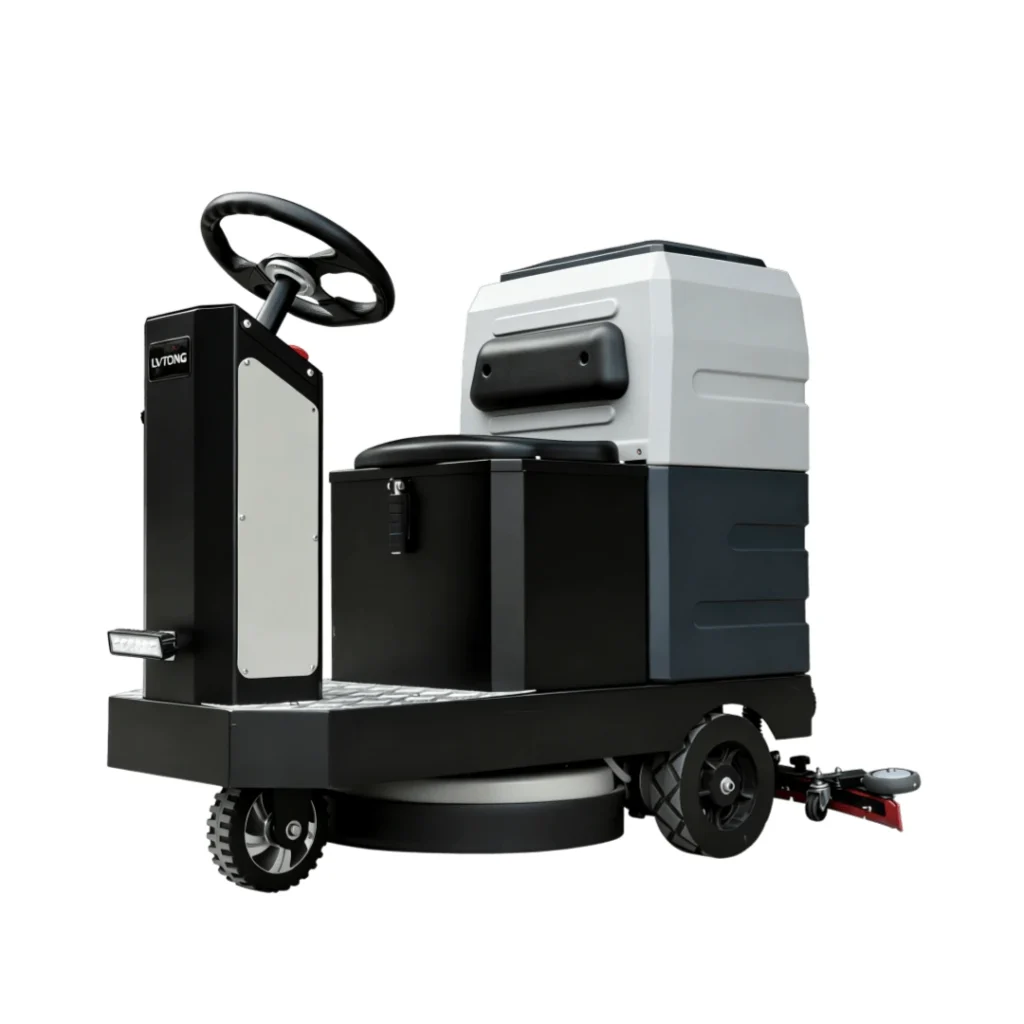
LVTONG’s walk-behind class — the LT-S530X and Q5 — is built as a push machine with reduced push resistance (the S530X case study cites a 50% cut in push effort), which is the right side of the decision for short and broken routes. Where a route genuinely needs the machine to move itself, the answer in the lineup is the ride-on class, starting with the V6 ride-on floor scrubber. A self-propelled walk behind scrubber earns its place on long, flat, single-level routes where an operator would otherwise push for hours; on anything shorter, the push machine wins. Match the drive to the route first; the model follows from the drive.
Frequently Asked Questions
Is a self propelled floor scrubber worth the extra cost?
Only when the route or the shift makes pushing unsustainable. On a flat level cleaned in an hour a day, a push machine does the same floor for less and is cheaper to service.
What is the difference between pad-assist and traction drive?
Pad-assist uses the brush or pad grip to pull the machine forward; traction drive uses a separate motor and drive wheel. Only traction drive holds a set speed on a gradient or reverses under power.
Can a self propelled floor scrubber climb a ramp?
Only up to the gradient it is rated for. Check the manufacturer’s rated slope rather than assuming; a wet ramp also needs slip-resistant flooring and a machine that holds a constant pace.
Does the drive motor shorten battery run time?
It adds a load to the same pack, so a driven machine can run shorter than a push model of similar tank size. Size the battery for the drive as well as the brush.