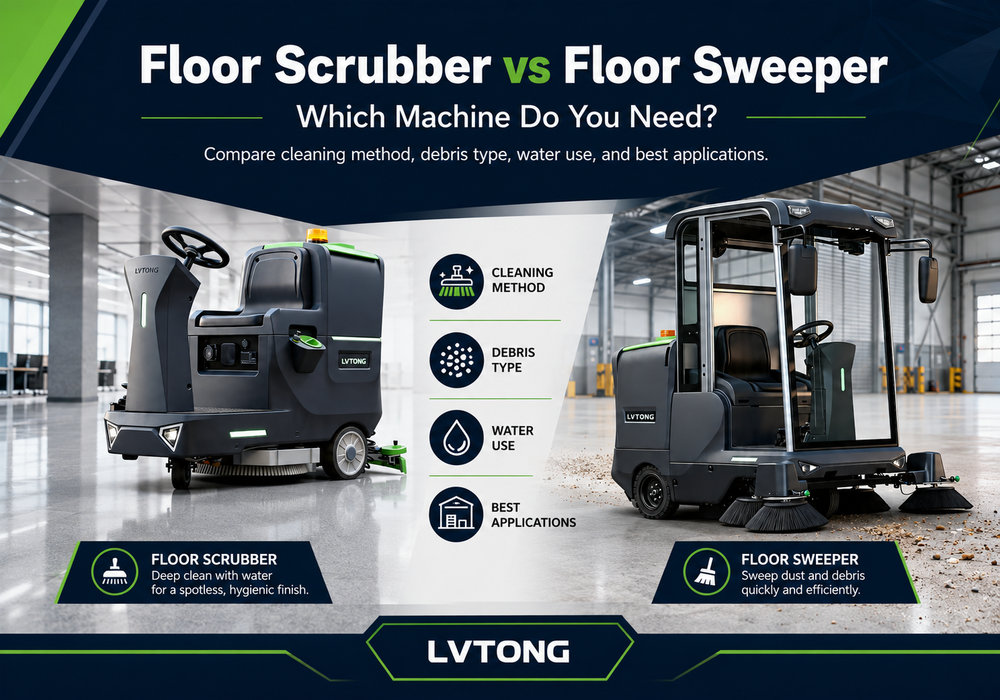
Kurzantwort: Scheuersaugmaschine vs. Kehrmaschine
Eine Kehrmaschine sammelt losen, trockenen Schmutz wie Staub, Sand, Blätter, Metallspäne und Verpackungsmüll. Eine Scheuersaugmaschine trägt Wasser oder Reinigungsmittel auf, löst festsitzenden Schmutz und saugt das Schmutzwasser mithilfe eines Abziehers und eines Saugsystems ab.
Verwenden Sie eine Kehrmaschine für trockenen Schmutz. Für Fett, verschüttete Flüssigkeiten, Reifenspuren und klebrige Rückstände eignet sich eine Scheuermaschine. Bei losen Verschmutzungen und öligem oder fest anhaftendem Schmutz kehren Sie zuerst und schrubben anschließend.
Bodenschrubber vs. Bodenkehrmaschine: Ein kurzer Vergleich
Eine Kehrmaschine sammelt losen, trockenen Schmutz wie Staub, Sand, Blätter, Metallspäne und Verpackungsmüll. Eine Scheuersaugmaschine trägt Wasser oder Reinigungsmittel auf, löst festsitzenden Schmutz und saugt das Schmutzwasser mithilfe eines Abziehers und eines Saugsystems ab.
Verwenden Sie eine Kehrmaschine für trockenen Schmutz. Für Fett, verschüttete Flüssigkeiten, Reifenspuren und klebrige Rückstände eignet sich eine Scheuermaschine. Bei losen Verschmutzungen und öligem oder fest anhaftendem Schmutz kehren Sie zuerst und schrubben anschließend.
| Vergleich | Bodenkehrmaschine | Bodenschrubber |
|---|---|---|
| Hauptzweck | Lose Trümmer einsammeln | Böden waschen und gründlich reinigen |
| Reinigungsmethode | Trockenfegen | Nasswäsche und Abwasserrückgewinnung |
| Am besten geeignet für | Staub, Sand, Blätter, Späne und Verpackungsabfälle | Fett, verschüttete Flüssigkeiten, Reifenspuren und klebrige Rückstände |
| Verwendet Wasser | Normalerweise nicht | Ja |
| Hauptkomponenten | Seitenbürsten, Hauptbürste, Trichter und Filter | Reinigungsmitteltank, Bürstendeck, Abzieher und Schmutzwassertank |
| Abfallentsorgung | Trockene Abfälle gelangen in einen Trichter. | Die verschmutzte Lösung gelangt in einen Auffangbehälter. |
| Endergebnis | Der Boden wird gefegt, aber nicht gewaschen. | Der Boden wird gewaschen und fast trocken gelassen. |
| Für den Innenbereich geeignet | Ja | Ja |
| Für den Außenbereich geeignet | Gemeinsam | Abhängig von den Boden- und Abwasserbedingungen |
| Hauptverschleißteile | Besen, Filter und Staubschürzen | Bürsten, Pads und Abzieherklingen |
| Vorreinigungsanforderung | Normalerweise nicht erforderlich | Große, lose Trümmer sollten zuerst entfernt werden. |
| Kann man das andere ersetzen? | Nein | Nein |
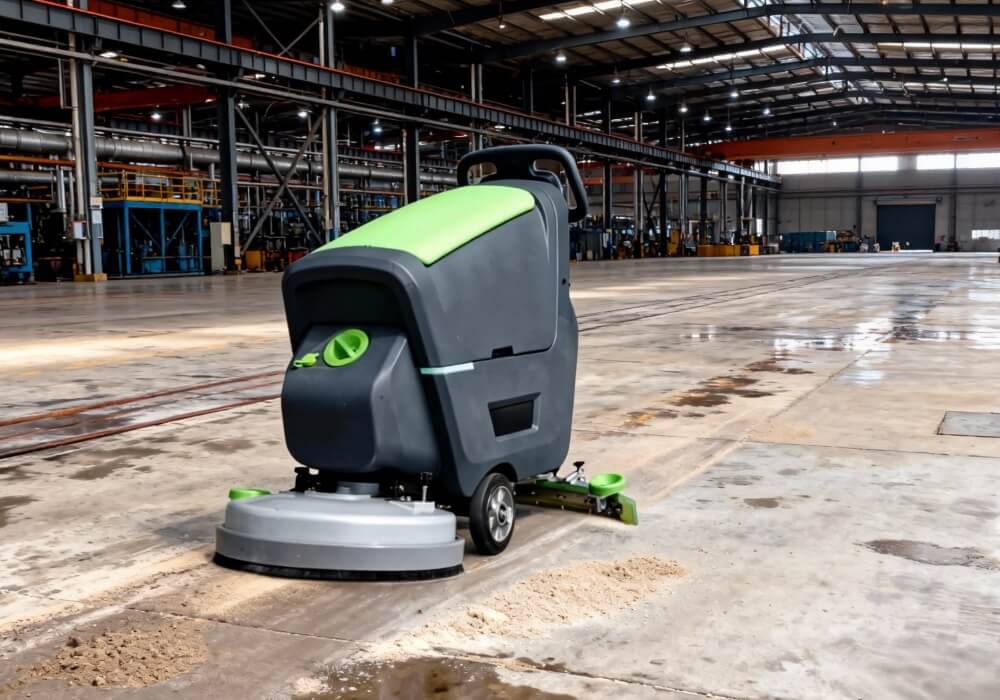
Was ist eine Bodenschrubbmaschine?
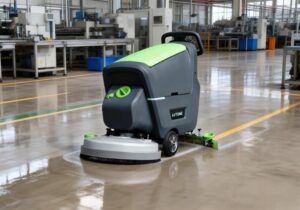
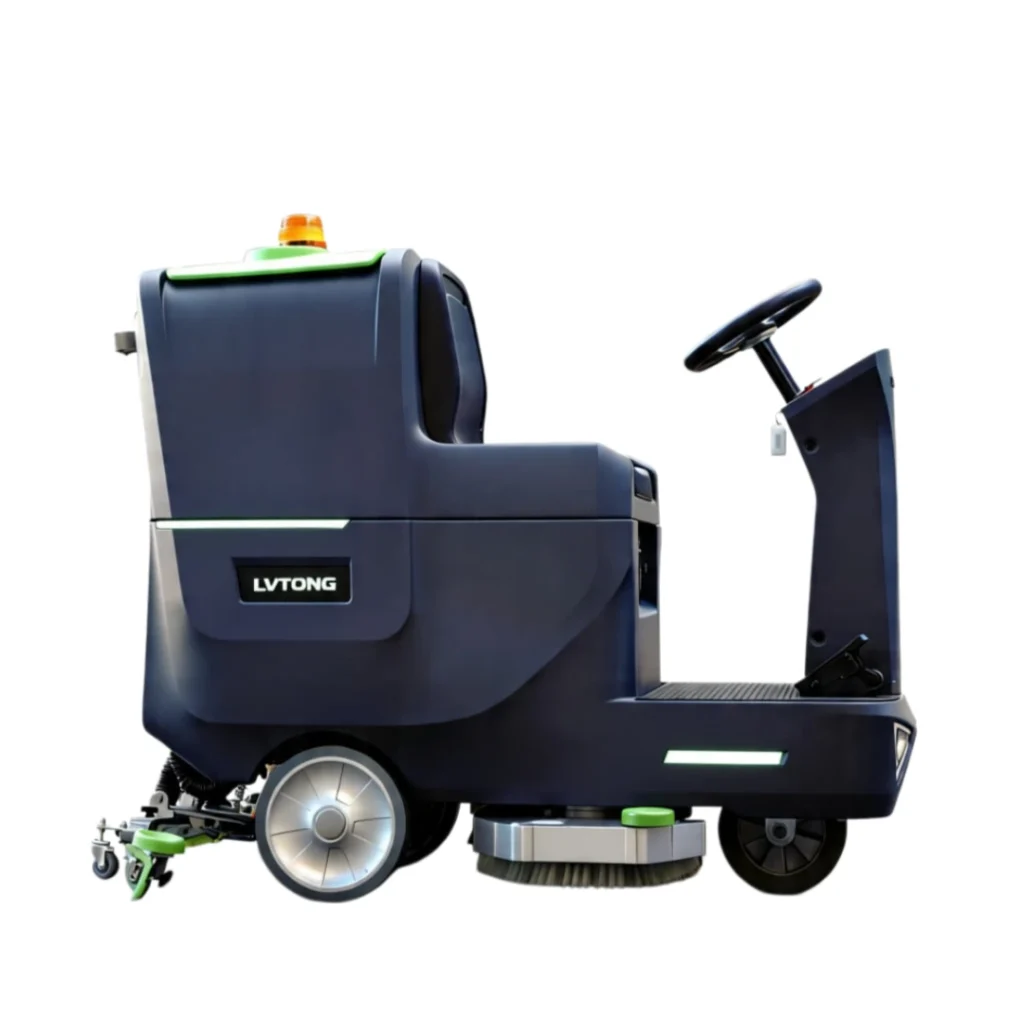
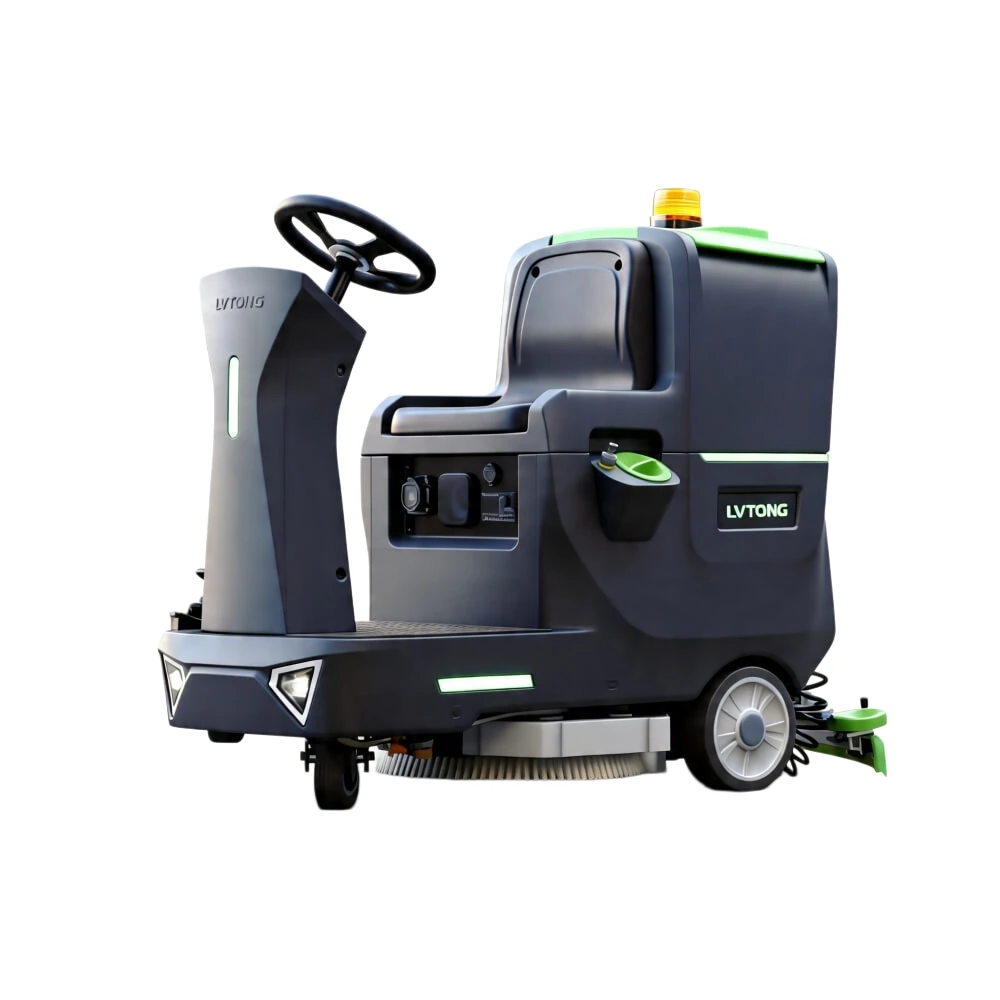
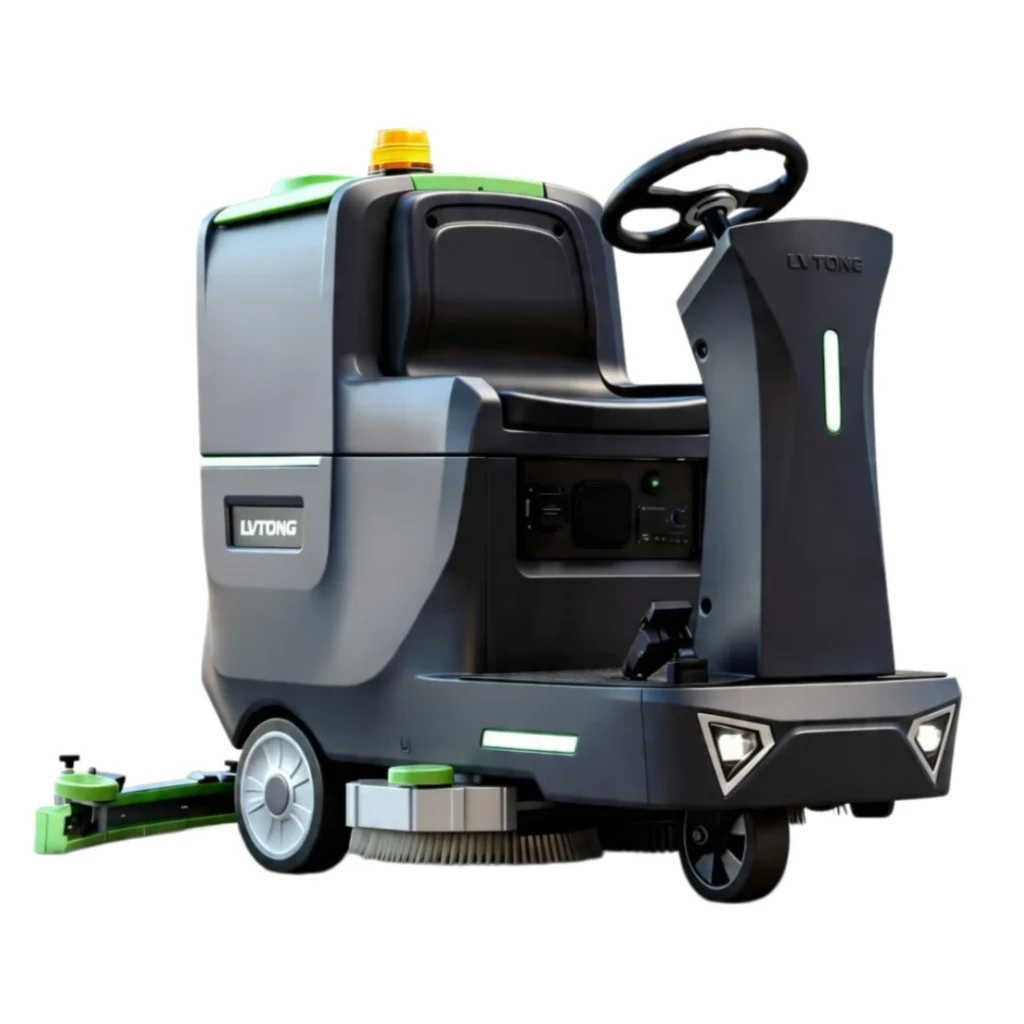
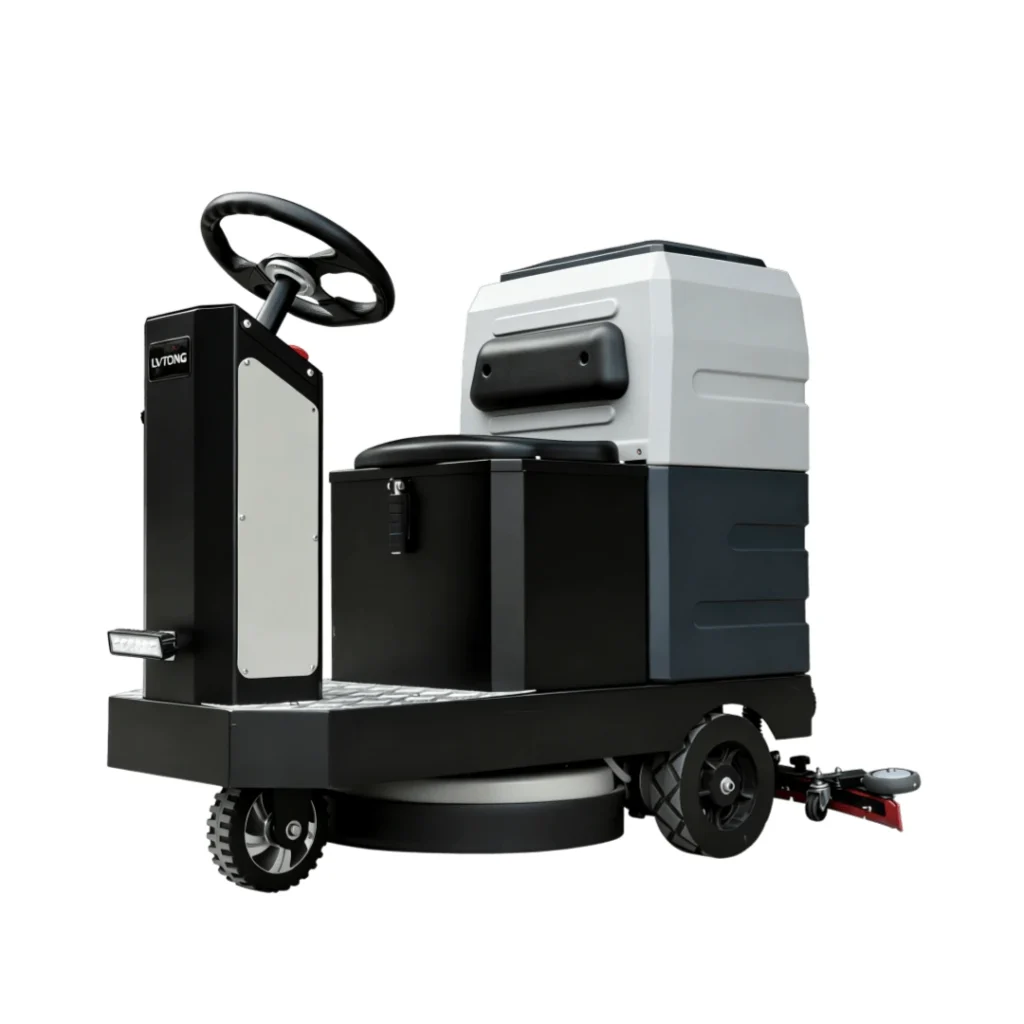
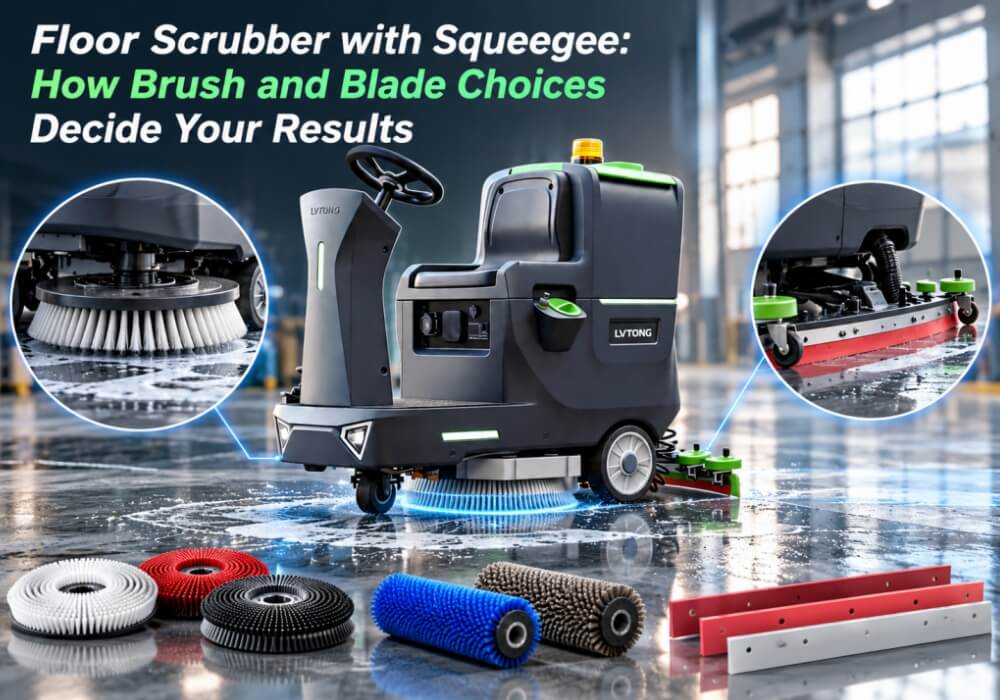
Eine Scheuersaugmaschine ist eine Nassreinigungsmaschine, die Wasser oder Reinigungslösung aufträgt, den Boden mit rotierenden Bürsten oder Pads bearbeitet und das Schmutzwasser über einen hinteren Abstreifer und ein Vakuumsystem aufnimmt.
Bodenreinigungsmaschinen sind dafür konzipiert, Fett, verschüttete Flüssigkeiten, Reifenspuren, Speisereste und anderen Schmutz von Bodenoberflächen zu entfernen. Normalerweise hinterlassen sie den Boden nahezu trocken, wobei die tatsächliche Wasseraufnahme vom Zustand des Bodens, der Einstellung des Abstreifers, der Maschinengeschwindigkeit und der Wartung abhängt.
Hauptkomponenten
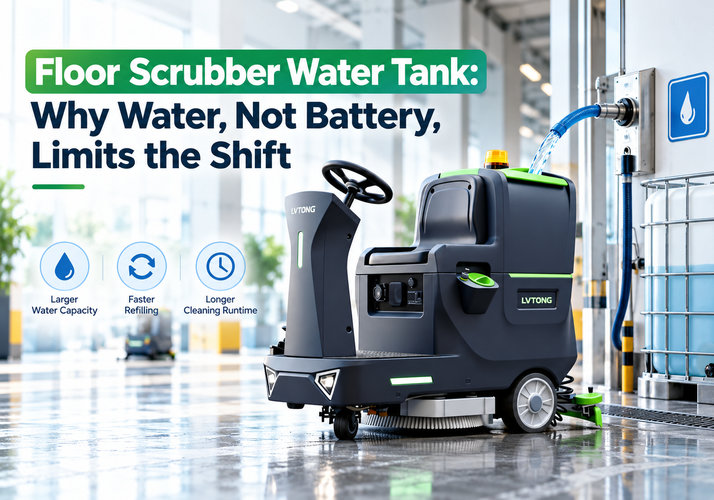
- Lösungstank
- Scheiben- oder Zylinderbürstendeck
- Reinigungsbürsten oder -pads
- Heckabstreifer
- Staubsaugermotor
- Auffangbehälter
Beste Anwendungen
- Fertigungswerkstätten
- Lebensmittelverarbeitungsanlagen
- Pharmazeutische und Elektronikanlagen
- Tiefgaragenplätze
- Gewerbliche Böden mit Fett, verschütteten Flüssigkeiten oder Reifenspuren
Hauptbeschränkung
Von einer Scheuersaugmaschine sollte man nicht erwarten, dass sie große Mengen losen Schmutz aufnimmt. Steine, Verpackungsabfälle, Metallteile und grober Staub sollten normalerweise vor dem Nasswischen weggefegt werden.

Was ist eine Bodenkehrmaschine?
Eine Kehrmaschine ist eine Trockenreinigungsmaschine, die losen Schmutz von Hartböden aufnimmt. Seitenbürsten befördern den Schmutz zur Maschinenmitte, während eine Hauptbürste ihn in einen Auffangbehälter befördert. Ein Filtersystem reduziert die Staubentwicklung während des Betriebs.
Bodenkehrmaschinen eignen sich am besten für Staub, Sand, Laub, Verpackungsmüll, kleine Steine und andere lose Materialien. Sie reinigen den Boden normalerweise nicht und entfernen auch kein anhaftendes Fett und klebrige Rückstände.
Hauptkomponenten
- Seitenbürsten
- Hauptzylinderbesen
- Schuttbehälter
- Staubfilter
- Staubschutzblenden
- Antriebs- und Lenksystem
Beste Anwendungen
- Lagerhallen
- Logistikzentren
- Fabrikgelände
- Parkplätze
- Straßen im Freien
- Staubige Umgebungen mit Sand und losem Schutt
Hauptbeschränkung
Eine Kehrmaschine kann die Nassreinigung nicht ersetzen, wenn der Boden Öl, verschüttete Flüssigkeiten, Reifenspuren oder klebrige Verunreinigungen aufweist.
Wie man zwischen einer Scheuersaugmaschine und einer Kehrmaschine wählt
Wählen Sie eine Bodenschrubbermaschine für Fett, verschüttete Flüssigkeiten und klebrigen Schmutz.
Auswahlvorschlag:
Wählen Sie eine Scheuersaugmaschine, wenn das Hauptproblem Fett, Öl, wasserbasierte Rückstände, Reifenspuren oder hartnäckiger Schmutz auf dem Boden sind. Die Maschine reinigt die Oberfläche und nimmt die kontaminierte Lösung in einem Arbeitsgang auf.
Eine handgeführte Scheuersaugmaschine ist in der Regel praktischer in kleinen oder beengten Bereichen, während eine Aufsitz-Scheuersaugmaschine besser für große, offene Flächen und häufige Reinigungsintervalle geeignet ist.
Anwendbare Szenarien:
- Maschinen- und Kfz-Werkstätten
- Lebensmittelverarbeitungsbereiche
- Pharmazeutische und Elektronikanlagen
- Tiefgaragenplätze
- Fertige Gewerbeböden
Wählen Sie eine Kehrmaschine für Staub, Sand und losen Schmutz.
Empfehlungen für die Auswahl:
Wählen Sie eine Kehrmaschine, wenn die Hauptverschmutzung aus losen, trockenen Materialien wie Staub, Sand, Blättern, Verpackungsabfällen, kleinen Steinen oder Metallspänen besteht.
Elektrische Kehrmaschinen eignen sich für Lagerhallen und Logistikeinrichtungen in Innenräumen, während größere Aufsitzkehrmaschinen auf Werksstraßen, Parkplätzen und industriellen Außengeländen eingesetzt werden können.
Anwendbare Szenarien:
- Lagerhäuser, Logistikzentren
- Fabrikstraßen
- Parks im Freien, Parkplätze
- Baustoffe, Hardware-Verarbeitungsbereiche
Bei Mischverunreinigungen zuerst fegen und dann schrubben.
Empfohlene Lösung:
Wenn ein Boden sowohl losen Schmutz als auch ölige oder klebrige Verunreinigungen aufweist, sollte ein zweistufiges Reinigungsverfahren angewendet werden.
- Zuerst fegen, um Staub, Sand, Steine und größere Verunreinigungen zu entfernen.
- Im zweiten Schritt schrubben, um Fett, Verschmutzungen und anhaftenden Schmutz zu entfernen.
Durch das Entfernen von losem Schmutz vor dem Schrubben werden Bürste und Abziehersystem geschützt, das Risiko von Verstopfungen verringert und der Schrubber kann sich auf die Nassreinigung konzentrieren.
Typische Anwendungsszenarien:
- Schwerindustrielle Fertigungsanlagen
- Produktionslinien für Kraftfahrzeuge und Kraftfahrzeugteile
- Werkstätten mit gemischtem Betrieb und mehreren Prozessen
Was ist eine Kehr- und Scheuersaugmaschine?
Eine Kehr- und Scheuersaugmaschine führt Trockenkehren und Nassschrubben in einem Arbeitsgang durch. Sie umfasst üblicherweise Kehrbesen, einen Schmutzauffangbehälter, Scheuerbürsten, Reinigungs- und Schmutzwassertanks sowie ein Abstreifsystem.
Kombinationsmaschinen können in großen Industrieanlagen den Bedarf an zwei separaten Reinigungsdurchgängen reduzieren. Sie sind jedoch in der Regel größer, teurer und wartungsintensiver als Kehr- oder Scheuersaugmaschinen.
Eine zylindrische Scheuersaugmaschine mit kleinem Schmutzbehälter sollte nicht automatisch als vollwertige Kehr- und Scheuersaugmaschine betrachtet werden. Ihr Schmutzaufnahmevermögen ist in der Regel geringer.

8 wesentliche Unterschiede zwischen einer Scheuersaugmaschine und einer Kehrmaschine
1. Reinigungsprozess
Eine Kehrmaschine sammelt mit Bürsten und Luftstrom trockenen Schmutz in einem Auffangbehälter. Eine Scheuersaugmaschine trägt Reinigungslösung auf, bearbeitet den Boden und sammelt das Schmutzwasser in einem separaten Tank.
2. Boden- und Abfallart
Kehrmaschinen eignen sich für lose Materialien wie Staub, Sand, Laub und Verpackungsmüll. Scheuermaschinen sind für Fett, verschüttete Flüssigkeiten, Reifenspuren und anhaftenden Schmutz konzipiert.
3. Wasserverbrauch
Die meisten Kehrmaschinen arbeiten ohne Wasser, einige nutzen jedoch einen leichten Sprühnebel zur Staubbindung. Scheuersaugmaschinen benötigen Wasser oder Reinigungsmittel und daher Befüll- und Abwasserentsorgungsstellen.
4. Abfallsammelsystem
Eine Kehrmaschine sammelt trockenen Schmutz in einem Trichter. Eine Wäscheranlage sammelt kontaminierte Flüssigkeit mithilfe ihres Abstreifers und Vakuumsystems in einem Auffangbehälter.
5. Bodenkompatibilität
Beide Maschinen können auf vielen Hartbodenbelägen eingesetzt werden. Die Auswahl sollte sich nach Bodenbeschaffenheit, Oberflächenbeschaffenheit, Art der Verschmutzung, Kompatibilität mit Bürsten oder Pads und der Zulässigkeit der Wasserverwendung richten.
6. Reinigungsproduktivität
Kehrmaschinen können lose Verschmutzungen schnell auf großen Flächen aufnehmen, ohne dass ein Zwischenstopp zur Wasserentsorgung erforderlich ist. Wäscher kombinieren Waschen und Abwasseraufbereitung in einem Arbeitsgang, ihre Produktivität wird jedoch durch Tankkapazität, Wasserdurchfluss, Wendemanöver und Abwasserentsorgung beeinflusst.
7. Wartungsanforderungen
Die Wartung von Kehrmaschinen umfasst die Hauptbürste, Seitenbürsten, Staubfilter, Schürzen und den Auffangbehälter. Die Wartung von Scheuersaugmaschinen umfasst Bürsten oder Pads, Abstreifer, Reinigungsmittelfilter, Tanks, Schläuche und das Saugsystem.
8. Gesamtbetriebskosten
Kehrmaschinen können geringere Wasser- und Chemikalienkosten verursachen, während Scheuersaugmaschinen den Arbeitsaufwand bei regelmäßiger Nassreinigung reduzieren können. Die Gesamtkosten hängen vom Anschaffungspreis, der Nutzung, den Verbrauchsmaterialien, dem Batteriewechsel, der Wartung, dem Arbeitsaufwand und der Anzahl der erforderlichen Reinigungsdurchgänge ab.

Bodenschrubber vs. Bodenkehrmaschine nach Anwendungsbereich
| Anwendung | Empfohlene Ausrüstung | Grund |
|---|---|---|
| Staubiges Lagerhaus | Bodenkehrmaschine | Sammelt Staub, Verpackungsmüll und losen Schutt |
| Lagerhalle mit Reifenspuren und verschütteten Flüssigkeiten | Erst fegen, dann schrubben. | Erfordert die Entfernung von trockenem Schmutz und eine Nassreinigung. |
| Fertigungswerkstatt mit Öl | Bodenschrubber | Entfernt Fett und anhaftende Rückstände |
| Werksgelände oder Freistraße | Bodenkehrmaschine | Geeignet für Sand, Laub und losen Schmutz im Freien |
| Lebensmittelverarbeitungsanlage | Bodenschrubber | Unterstützt Nassreinigung und Abwasserrückgewinnung |
| Logistikzentrum | Kehrmaschine oder beides | Hängt von den Trümmer- und Verschmutzungsbedingungen ab |
| Tiefgarage | Beides könnte erforderlich sein. | Staub und Sand können zusammen mit Reifenspuren und verschütteten Flüssigkeiten vorkommen. |
| Schwerindustrieanlage | Einzelmaschinen oder Kombinationsgerät | Gemischte Verunreinigungen erfordern möglicherweise Kehren und Schrubben. |
Die Art der Anlage allein bestimmt nicht die richtige Maschine. Die Entscheidung sollte auf der Art der zu entfernenden Verunreinigungen basieren.
Häufige Fehler bei der Auswahl von Reinigungsgeräten
Aus unserer Erfahrung in der Unterstützung von Käufern industrieller Reinigungsgeräte wissen wir, dass folgende Auswahlfehler häufig vorkommen:
Auswahl allein nach dem Preis
Ein niedrigerer Kaufpreis garantiert keine geringeren Reinigungskosten. Arbeitskosten, Verbrauchsmaterialien, Wartung und der Bedarf an zusätzlichen Reinigungsdurchgängen müssen ebenfalls berücksichtigt werden.
Fokus auf die Grundfläche, aber Vernachlässigung des Grundrisses.
Die Gesamtgröße des Gebäudes ist weniger aussagekräftig als die tatsächlich zu reinigende Fläche, die Gangbreite, der Wenderaum und die Anzahl der Hindernisse.
Auswahl nur nach Bodenbelag
Epoxidharz, Beton und Fliesen lassen sich oft mit beiden Maschinen reinigen. Die Art der Verschmutzung und das gewünschte Ergebnis sind dabei meist wichtiger.
Die Erwartung, dass eine Maschine jeden Schadstoff bewältigen kann
Eine Kehrmaschine kann festsitzendes Fett nicht entfernen, und ein Scheuersauggerät sollte nicht als Ersatz für die Aufnahme von grobem, trockenem Schmutz verwendet werden.
Wartung und Teileverfügbarkeit ignorieren
Bitte prüfen Sie vor dem Kauf die Verfügbarkeit von Bürsten, Filtern, Abziehern, Batterien, technischem Support und Ersatzteilen.

Abschluss
Eine Scheuersaugmaschine und eine Kehrmaschine erfüllen unterschiedliche Reinigungsaufgaben und sollten nicht als austauschbare Maschinen betrachtet werden.
Wählen Sie eine Kehrmaschine, wenn es sich hauptsächlich um losen Staub, Sand, Laub, Verpackungsmüll oder andere trockene Verschmutzungen handelt. Verwenden Sie eine Scheuersaugmaschine, wenn der Boden mit Fett, verschütteten Flüssigkeiten, Reifenspuren oder klebrigen Verunreinigungen bedeckt ist. Sind beide Arten von Verschmutzungen vorhanden, kehren Sie zuerst und schrubben Sie anschließend.
Vor der Geräteauswahl sollten Sie die Art der Verschmutzung, die nutzbare Bodenfläche, die Gangbreite, die Bedingungen (Innen- oder Außenbereich), die Wasserverfügbarkeit, die Reinigungshäufigkeit und den Wartungsaufwand bewerten. Einrichtungen mit großen, gemischt verschmutzten Bereichen können auch eine Kehr- und Scheuersaugmaschine oder ein Reinigungsverfahren mit zwei Maschinen in Betracht ziehen.
Häufig gestellte Fragen
Worin besteht der Hauptunterschied zwischen einer Scheuersaugmaschine und einer Kehrmaschine?
Eine Kehrmaschine sammelt losen, trockenen Schmutz in einem Auffangbehälter. Eine Scheuersaugmaschine trägt Wasser oder Reinigungsmittel auf, löst den anhaftenden Schmutz und sammelt das Schmutzwasser auf. Kehrmaschinen werden für Staub und Schmutz verwendet; Scheuersaugmaschinen für Fett, verschüttete Flüssigkeiten und hartnäckigen Schmutz.
Sollte ich vor dem Einsatz einer Scheuersaugmaschine fegen?
Ja, wenn der Boden Steine, Sand, Verpackungsmüll oder größere Mengen losen Schmutzes enthält. Vor dem Reinigen mit dem Fegen werden Bürste, Abzieher und Rückgewinnungssystem der Scheuersaugmaschine geschützt und das Nassreinigungsergebnis verbessert.
Kann eine Scheuersaugmaschine auch trockenen Schmutz aufnehmen?
Einige zylindrische Scheuersaugmaschinen können kleine Partikel in einer Schmutzauffangschale sammeln, aber eine Standard-Scheuersaugmaschine ist kein Ersatz für eine Kehrmaschine. Grober oder schwerer Schmutz sollte vor dem Schrubben entfernt werden.
Kann eine Kehrmaschine Öl und Fett entfernen?
Nein. Eine Kehrmaschine kann zwar trockenes Material aufnehmen, aber festsitzendes Öl, Fett oder klebrige Rückstände nicht von der Oberfläche entfernen. Für diese Verunreinigungen ist normalerweise eine Scheuersaugmaschine und ein geeignetes Reinigungsmittel erforderlich.
Welche Maschine eignet sich besser für ein Lager?
Eine Kehrmaschine eignet sich für Lagerhallen, in denen hauptsächlich Staub, Sand und Verpackungsreste vorkommen. Eine Scheuersaugmaschine ist besser geeignet, wenn häufig Verschmutzungen wie Verschüttetes, Reifenspuren und festsitzender Schmutz auftreten. Lagerhallen mit gemischter Verschmutzung benötigen möglicherweise beide Maschinen.